




Abstract
The current research examines the possibilities of music education in supporting the well-being of families living in demanding life situations. The context for the study is Family Sound Hammock, a 3-year research and development project that took place in the metropolitan area of Finland from 2020 to 2023. The project aimed at systematically supporting the well-being of families especially by strengthening their capacities for interaction in and through music education activities. This phenomenological-hermeneutic research focusses on the affordances emerging in family music activities, asking the following: What kinds of affordances can be recognised in and through music activities as part of family social work? The findings are presented in three categories: (1) Experiential environment of music education practice, (2) Social interaction and (3) Experiences of consistency that each highlight the potential of music education for redirecting agency, participation and inclusion of parents and children. The findings emphasise the professional facilitation of an inviting and safe musico-pedagogical environment applying pedagogical sensitivity.
Introduction
This research aims to deepen understanding of how music education practices can support the well-being of families living in demanding life situations. Pertaining research shows that music activities support family interaction and strengthen capacities to cope with challenges (e.g., Bind et al., 2023; Jacobsen et al., 2014; Perkins et al., 2018; Pitt & Hargreaves, 2017; Yang, 2016); yet people in challenging life situations may have limited possibilities for accessing cultural services or engaging with the arts (e.g., Kaattari & Suksi, 2019). Therefore, the broader context for this study stems from the enactment of cultural rights, that, together with the implementation of the rights of children, justify the development of new kinds of services for families (UN/The United Nations, 1966, 1989). The justification aligns with the approach in Finland to music education professionalism which is flexible, and music educators work in various contexts beyond schools and music institutions.
Family social work services are offered when parents are exhausted, have concerns about their children’s upbringing and well-being or have faced some other crisis that threatens the family’s well-being. The number of family social work clients with children in Finland has increased from around 2% to 3% of the total population over the last 10 years (Sotkanet, 2023). This means that around 16,600 families collaborated with family social work in 2023. When referring to families collaborating with social work professionals because of various hardships, we use the expression of families living in demanding or challenging situations. Social work clients often have low incomes, which increases concerns in their daily lives. Prolonged scarcity may result in problematic cognitive and behavioural neglect (Zhao & Tomm, 2018), where everyday life focusses more on private space and short-term goals (Isola et al., 2021). The family stress model framework emphasises that low-income impacts parents’ mental health and parenting and further impedes children’s transition into adulthood, causing, for instance, school dropouts (Barnett, 2008; Vauhkonen et al., 2016). As an implication of the vicious circle caused by scarcity or other challenges, creative capacities to make a change may be out of reach when needed.
This phenomenological-hermeneutic research focusses on affordances (Gibson, 1979) emerging in family music activities, asking the following: What kinds of affordances can be recognised in and through music activities as part of family social work? The context for this research is Family Sound Hammock, a 3-year research and development project (2020–2023). It took place in the Helsinki metropolitan area, centred around its three largest cities: Helsinki, Espoo and Vantaa, which together essentially form one large urban area. This social service has been created in collaboration with a university, research institute and city, aligned its goals with the Social Welfare Act (1301/2014) and is the first of its kind in the country. It systematically supports the well-being of families with the aim of alleviating demanding situations and strengthening families’ capacities, a sense of security and social inclusion. Drawing on the concept of communicative musicality (Malloch & Trevarthen, 2009; Trevarthen & Malloch, 2000), the current study seeks to understand the potential of music activities to support families through their property of providing affordances (Gibson, 1979). The findings from the phenomenological-hermeneutic analysis (van Manen, 2014) of semistructured interview data with the parents involved in the Family Sound Hammock project are discussed through the lens of the bioecological model of human development (Bronfenbrenner & Morris, 2006).
Affordances in and through family music activities
Family is the primary condition of human development, but it is interlinked with sociocultural environments and the processes beyond it. The net of dependencies and implication chains that families are part of in their environment and society can be viewed through Bronfenbrenner’s (1979, 1986) ecological systems theory and its later bioecological model, in which Bronfenbrenner highlights the significance of proximal processes (Merçon-Vargas et al., 2020). These ‘engines of development’ are described as ‘progressively more complex reciprocal interaction between an active, evolving biopsychological human organism and the persons, objects and symbols in its immediate external environment’ (Bronfenbrenner & Morris, 2006, p. 797). Real-life music-related activities are complex situations with a variety of interrelated factors, actors, circumstances and processes (DeNora & Ansdell, 2014; Västfjäll et al., 2012). In this paper, we approach music education primarily 1) as an activity, 2) taking place within the complex system of social situations and contexts and 3) co-created by those listening, playing or singing together (see Acord & DeNora, 2008; Allsup, 2016; DeNora & Ansdell, 2014; Huhtinen-Hildén & Pitt, 2018; Kivijärvi, 2021). Aligning with the ethos of the Finnish music education system as a whole, we approach music teaching from the perspective of ‘opening possibilities for learning’ – a concept relying on socio-constructionist learning theories (Huhtinen-Hildén & Pitt, 2018). The concept of communicative musicality (Malloch & Trevarthen, 2009; Trevarthen & Malloch, 2000) explains the basis of human companionship with the interest and capacity people are born with: ‘’musical’ narratives allow adult and infant, and adult and adult, to share a sense of sympathy and situated meaning in a shared sense of passing time’ (Malloch & Trevarthern, 2009, p. 4).
Music activities provide opportunities to engage and interact with elements and other beings, thus create affordances for change (Gibson, 1979). From focussing primarily on motor actions, the concept can be understood as comprising a wider understanding of emerging possibilities (Rietveld & Kiverstein, 2014). Rietveld and Kiverstein (2014) suggest that more attention should be paid ‘to the skill of being open to the detection of unconventional but relevant affordances’ (p. 350). In the same vein, Glăveanu (2020) widens the meaning of action potential to comprise ideas: the dialogue between two perspectives may ‘open up many new venues for thought and further action’ (p. 349). In light of this, it is all the more interesting to explore the possibilities for affordances related to engaging with music. Krueger (2014) argues that ‘musical affordances grant access to kinds of experiences otherwise inaccessible’ (p. 4). The concept of a musically extended (emotional) mind explains the process where ‘musical affordances provide resources and feedback that loop back on to us and, in so doing, enhance the functional complexity of various motor, attentional and regulative capacities responsible for generating and sustaining emotional experience’ (Krueger, 2014, p. 4).
Research has for example suggested opening up new ways to support interaction with music activities in the families having children with communication difficulties (Pitt & Welch, 2023), facilitating recovery from postnatal depression (Bind et al., 2023; Perkins et al., 2018), and strengthening social capital among participants with a variety of abilities (e.g., Kivijärvi & Poutiainen, 2020). Research findings that arise from studies related to music therapy settings imply the use of music activities to support family interaction, emotional communication and attachment also inform music education practice and research (Jacobsen et al., 2022). For example, music activities support parent–child interactions by facilitating parental responsiveness and child-initiated communication and advancing parent–child synchrony and parenting skills (Yang, 2016) as well as improving emotional communication between parents and children and reducing parental stress (Jacobsen et al., 2014). Music experiences have also been explained in relation to social bonding (Savage et al., 2020), which is supported by research findings, for example, of how engaging with music enhances children’s linguistic and communication skills (Linnavalli et al., 2021; Pitt & Welch, 2023). Synchronous interactions have been shown to generate empathy (Levy & Feldman, 2019) and taking part in shared music activities advances spontaneous cooperative and supportive behaviour towards peers (Kirschner & Tomasello, 2010).
To summarise, people’s socio-biological capacities enable them to utilise the opportunities generated by music activities, which can widen their being, acting, feeling and thinking possibilities and then again create new affordances. The driving force for a deeper understanding of affordances within family group music activities is the potential that acting upon emerging affordances may have: How might the processes (initiated by affordances) possibly benefit families? The question can be viewed through Glăveanu’s (2020) perspective–affordance theory of creativity, which highlights the interdependence of self and other, person and context: being exposed to unfamiliar positions and perspectives fosters creativity by offering new ways to be and act.
Methodology and methods
This research aims to capture the meaning of experiences in group music activities and, through this, answer the following research question: What kinds of affordances can be recognised in and through music activities as part of family social work? We apply van Manen’s (1990) approach to the interconnectedness of pedagogy and phenomenology, acknowledging that pedagogy ‘requires a hermeneutic ability’ to understand people and their actions in changing situations while phenomenology involves a ‘research process [that] contribute[s] to one’s pedagogic thoughtfulness’ (p. 2).
Participants and data construction
The research data were constructed during 2020 to 2023 in the Family Sound Hammock (Musiikkikehto, in Finnish) project organised by Metropolia University of Applied Sciences, Finnish Institute for Health and Welfare and the Family Social Services department of one city in Southern Finland. The participants for this study were recruited by the Family Social Services department staff that organised a wider social services intervention under which the Family Sound Hammock took place. Over the course of 3 years, eight family music group processes were offered involving 25 families. Each of the family music group processes lasted for 3 months and consisted of group sessions (40–50 min each) once a week. Out of the 25 families, 13 were willing to participate in the research.
Music group sessions were facilitated by a music educator (BA, specialised in early childhood music education) and supported by the participation of the family social work professionals. In practice, the family music group sessions consisted of welcoming activities, where the main purpose was for the parents and children to orient themselves to the situation and general strengthening of the interaction. The core activities consisted of playful music and movement activities, body percussion, singing and improvisation with and without instruments. Parents were encouraged to explore variations in tempo, dynamics and expression and playful use of voice and movement in creative interaction with their children. This holistic experiential approach aimed to enhance cooperative engagement with the parents and their children and within the group as a whole. The participating children were babies and toddlers. One caregiver per each family participated with the child or children in the music educational sessions. The COVID-19 pandemic did not have major impacts on the music educational practices held with the families participating in the study; all sessions took place live with emphasised hygiene efforts regarding instruments and hand disinfection.
The research project was first introduced by the family social work practitioners known to the client families, followed by printed information and consent forms. The parents were familiarised with the aims, activities, process and methods of data construction and analysis, especially highlighting the voluntary nature of participation and making clear that the participants could withdraw from the research at any stage of the process without any consequences regarding the general social service benefits available to them. The research was conducted following the guidelines of the Finnish National Board of Research Integrity (TENK/Finnish National Board on Research Integrity, 2012, 2019), meeting the criteria for research with human participants. The required permissions were obtained before data construction (research permit from the Social and Health Services authorities of the city in question, approved on May 11, 2022; Data Processing Impact Assessment process conducted in Metropolia University of Applied Sciences Autumn 2022).
The first author conducted all 13 individual interviews with the parents (12 mothers and one father). The interviews contained the following themes: (1) Experiences of music educational practices; (2) Meanings related to music educational practices; and (3) Suggestions for the further development of the family social services. The interview process in itself involved a dialogic reflection on the participants’ statements and suggestions for developing the family social services where music education is involved. After careful reflection, it was decided that member-checking was not suitable in this study as such practice would have added an undue burden for families living in challenging life situations. The interviews were recorded, transcribed (72 pages) and pseudonymised.
Data analysis
The interview data were analysed through the conceptual lens of affordances (Gibson, 1979; Glăveanu, 2020). The process is illustrated in Figure 1. As proposed by van Manen (2017), the insights and understanding cannot be guaranteed by following strict procedures but instead conducting the analysis in a manner that fits the studied phenomenon and utilising the phenomenological underpinnings of the suspension of the natural attitude (epoché) and reduction (van Manen, 2017; also Gallagher & Zahavi, 2021). This approach allowed the first author to grasp meaningful aspects of a phenomenon or event (van Manen, 2017). The research data were approached with the research question. Answers for this question may not have been expressed directly; words can point towards the meaning or sometimes also hide the essence of the experience (Gallagher & Zahavi 2021; van Manen, 2014). One must be able to imagine and ‘surrender to a state of wonder’ (van Manen, 2014, p. 27) to catch the appearance of the experience and essence of it in its environment (Gallagher & Zahavi, 2021). The findings have been interpreted utilising the bioecological model, specifically the significance of proximal processes (Bronfenbrenner & Morris, 2006).
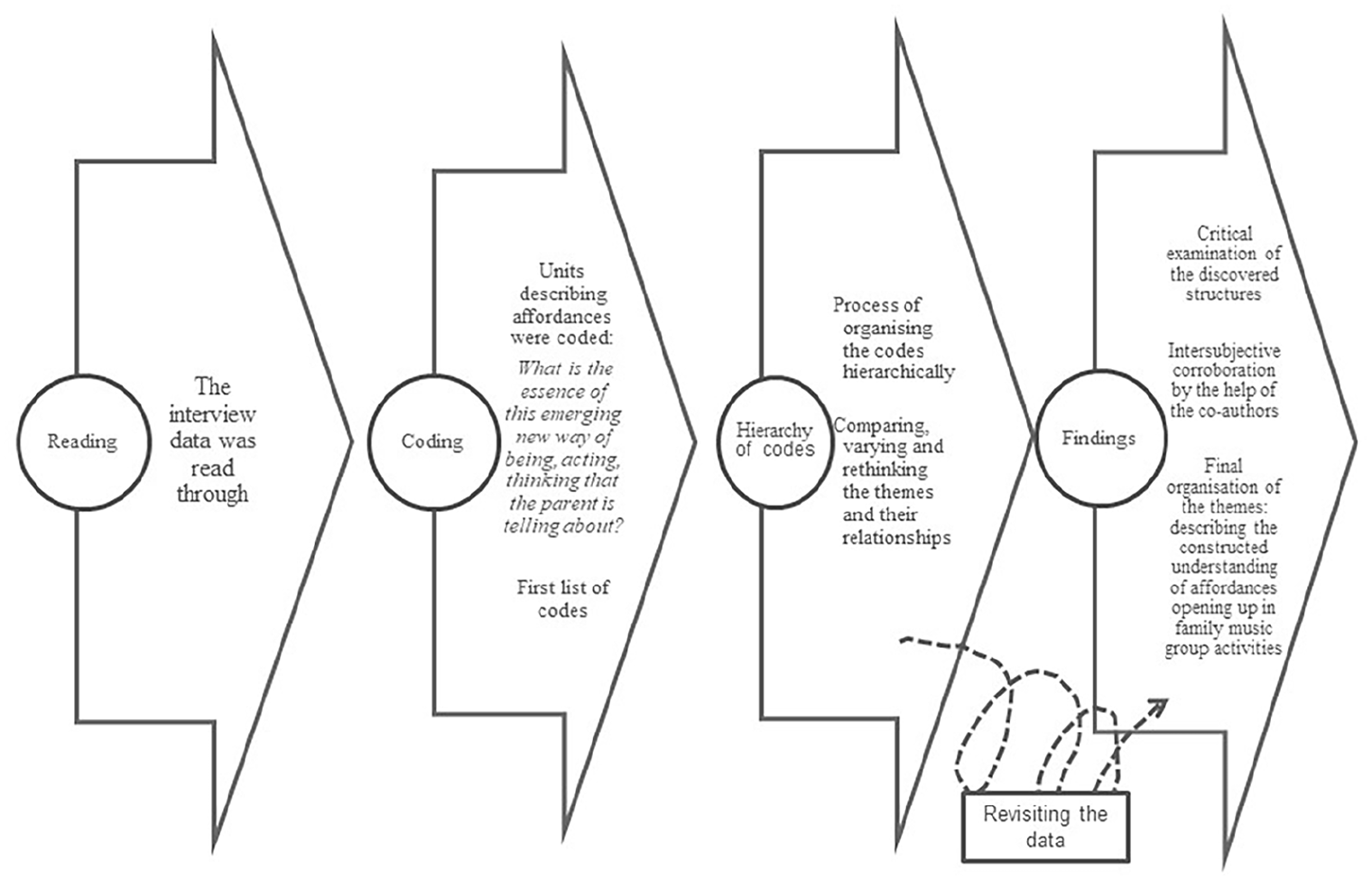
The analysis process.
The guiding thought in the analysis (Figure 1) was to understand the possibilities that music group activities may open up for participating families and to utilise ‘identification, critical examination and eloquent elaboration of themes that help the reader recognise the meaningfulness’ of experienced affordances in the family music context (van Manen, 2017, p. 777).
The first step was to read through all interviews, reflecting the participants’ experiences with phenomenological attitude (Gallagher & Zahavi, 2021). After having the overview, the units describing affordances were coded (e.g., musico-pedagogical actions; thoughts related to parenting; emotions; interaction; coping in everyday life). The hierarchy of the first list of codes was developed and nuanced by sub-categories in the third phase of analysis, including comparing, varying and rethinking these themes and their relationships in light of the data. The fourth phase of the analysis was to illustrate the findings as figures. Especially here, the intersubjective corroboration with the help of the co-authors was utilised, allowing critical examination of the discovered structures (see Gallagher & Zahavi, 2021). The final organisation of the themes – overall understanding of the affordances opening up in family music group activities – was constructed. The key findings are presented through three categories in Figures 2 to 4 and summarised in Figure 5.
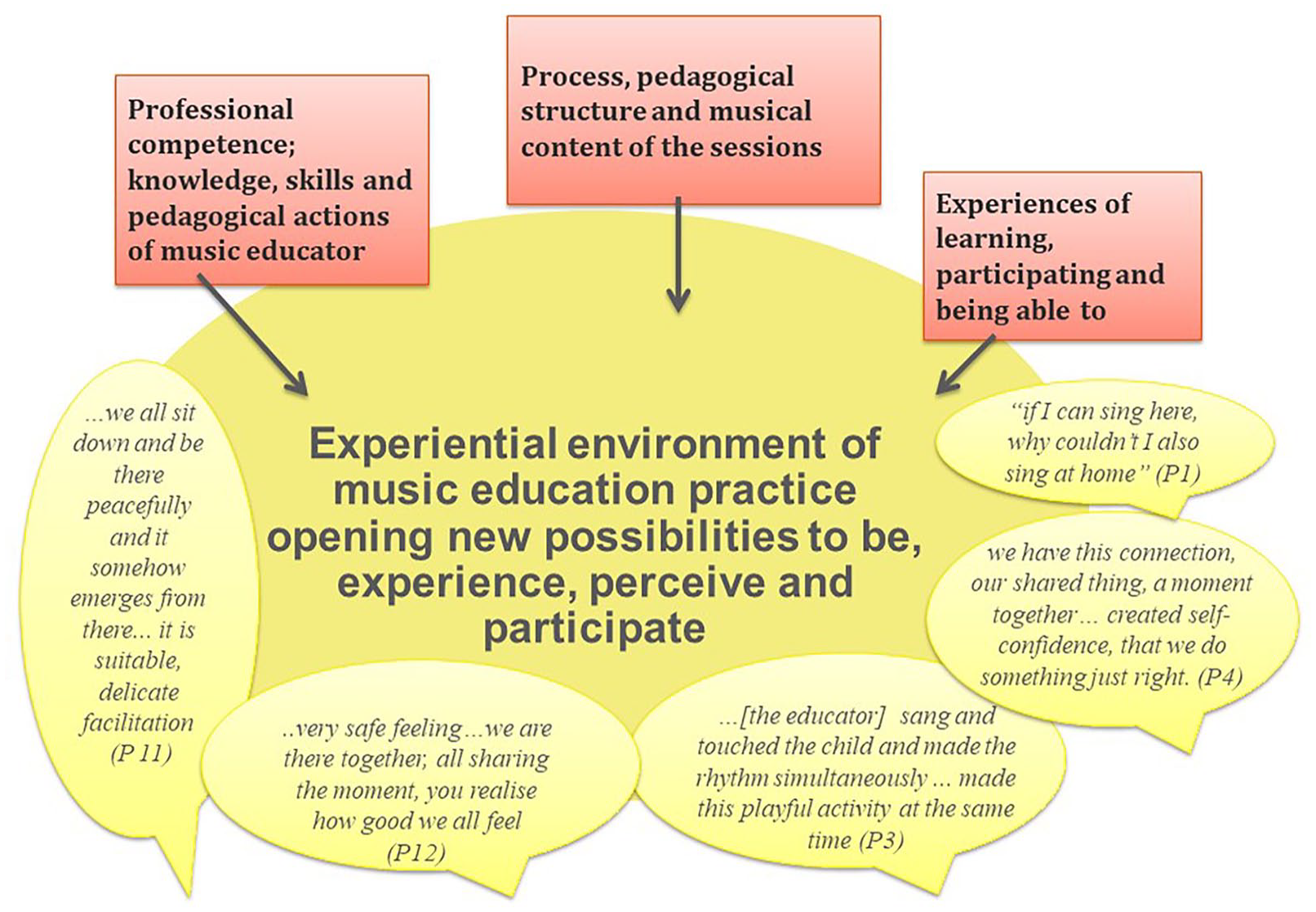
Affordances generated by the experiential environment of music education practice.
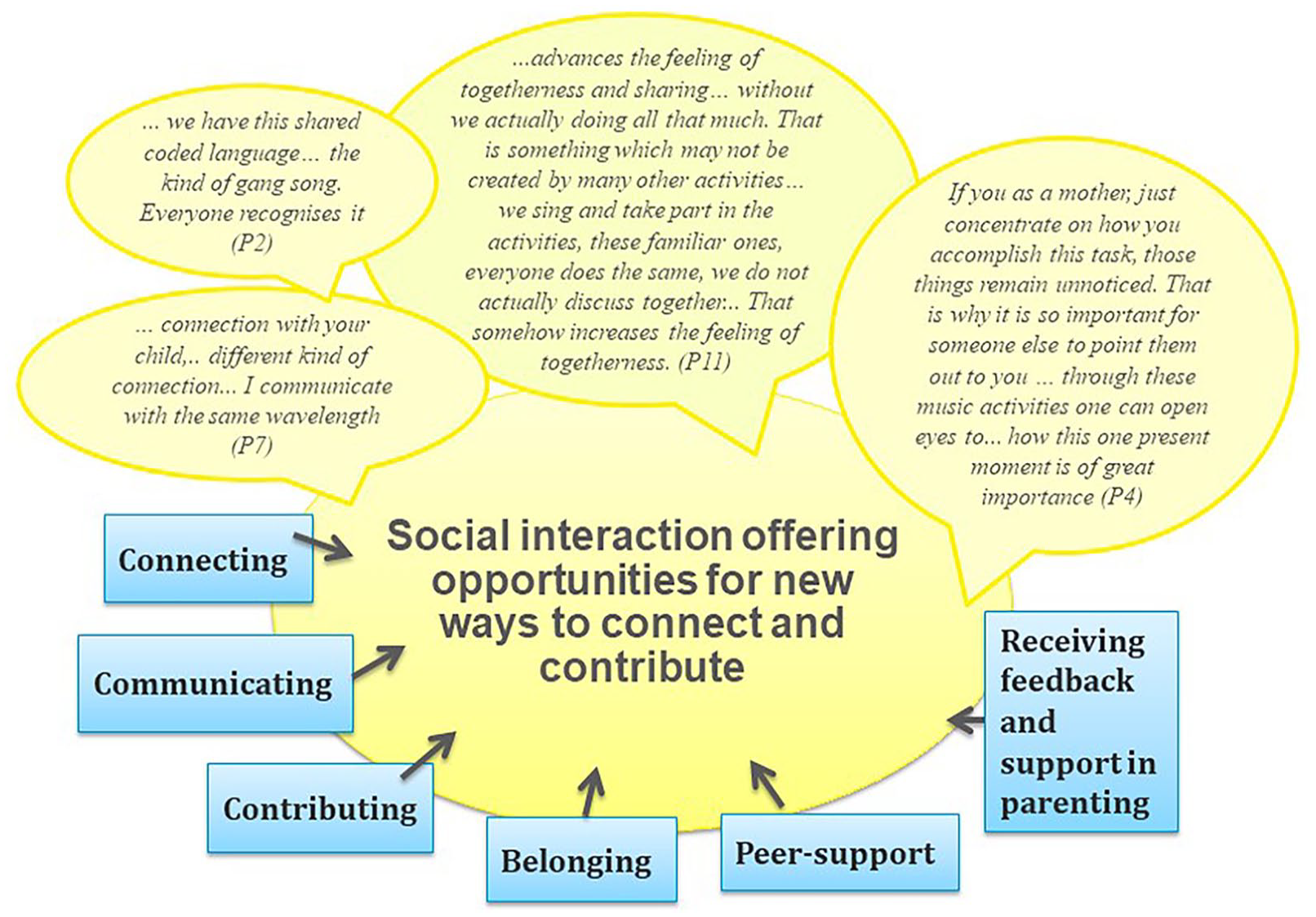
Affordances generated by social interaction.
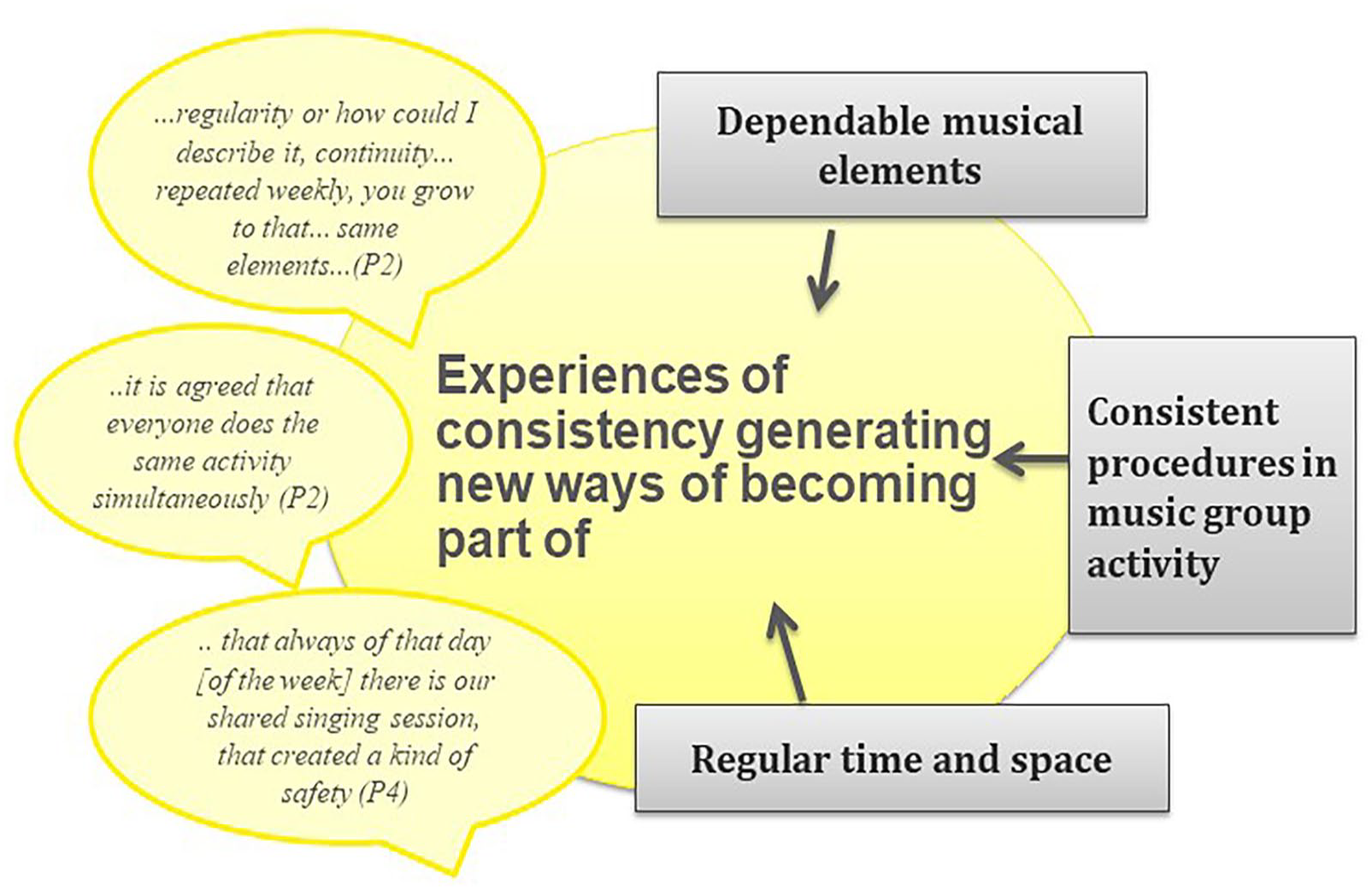
Affordances generated by experiences of consistency.
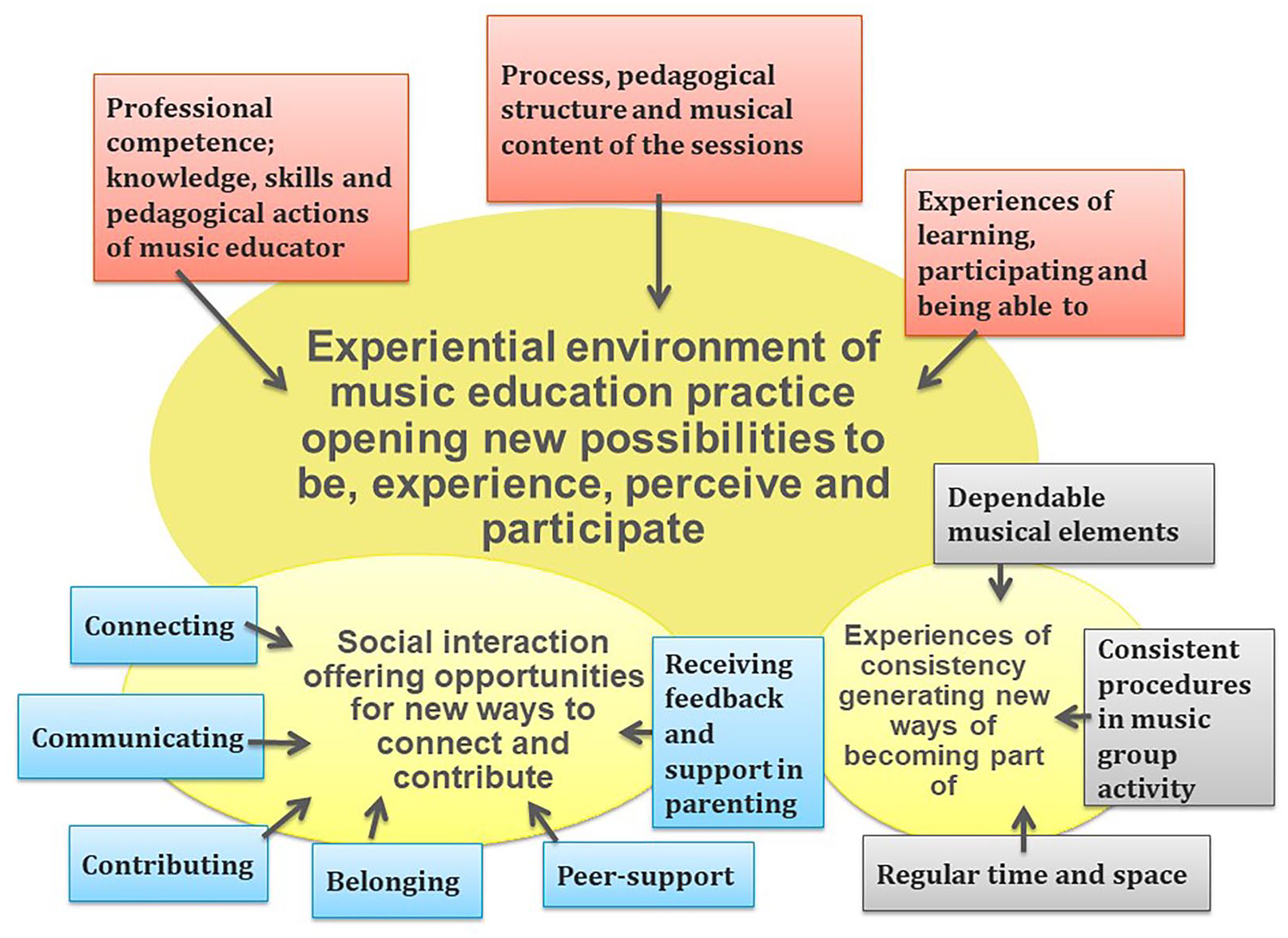
Affordances emerging in and through family group music activities.
In the analysis process, the roles of the researchers were different. The first author conducted the analysis while the others acted as a sounding board, strengthening the quality and trustworthiness of analysis. Researcher triangulation assisted ‘to produce phenomenological insights through the inceptive and heuristic process of abduction’ (van Manen, 2014, p. 345) and supported both creative and critical thinking abilities of the principal investigator conducting the main part of the analysis. Van Manen (2014) calls phenomenology a ‘method of questioning’ (p. 29); a researcher must be able to ask fruitful questions to guide the mindful process of deepening the understanding of the phenomenon. In addition, the critical questions related to prejudice, bias and presumptions are needed for the researcher to focus on the experience and its meaning for the subject (Gallagher & Zahavi, 2021). The co-authors in this study offered an extra layer to the critical examination of the discovered structures.
Findings
The data analysis shows that the affordances emerging in and through music activities are generated from the 1) Experiential environment of music education practice, 2) Social interaction and 3) Experiences of consistency that each highlight the potential of music education for redirecting agency, participation and inclusion of parents and children. These categories are in hierarchical order, with the first one being the most overarching.
Experiential environment of music education practice
The parents are seeking expressions to capture the overall meaning of Family Sound Hammock activities for themselves and their children. All 13 parents (P) describe affordances (Gibson, 1979) that, in various ways, point towards the significance of professional music education practice (Figure 2). The experiences that the parents refer to are, for example, the relaxed feeling and welcoming, safe atmosphere; however, these attributes are continued with an emphasis on more detailed explanations, which link them to the pedagogical approaches, structures or actions.
The affordances emerging because of the various aspects of professional music education practice are described by implying professional competence, for example, how songs and activities are taught. In addition, the importance of acknowledging both children and adults as individuals and finding ways to recognise all participants are highlighted. For example, Parent 8 describes that ‘. . . [the educator] did not just begin to play and sing, but we first learned the song and after that started singing [together]’. Also, Parent 3 stated that ‘. . . [the educator] acknowledged us individually and asked for example suggestions for songs’.
The professional facilitation and teaching approaches are also described in relation to supporting actions and verbal encouragement of parents in activities with their children and in the parents’ own musical participation. Pedagogical approaches are highlighted in relation to utilising bodily gestures, words and musical facilitation (e.g., supporting singing, participation and pulse) and navigating the subtle interaction within the group processes, where in one moment doing things were done together and in another, emphasis was on participants’ initiatives (see Huhtinen-Hildén & Pitt, 2018). For example, Parent 11 suggests that ‘The educator leading the session creates the relaxed feeling . . . can use their being as an example . . . somehow, we all sit down and be there peacefully and it somehow emerges from there . . . it is suitable, delicate facilitation’. Parent 3 states regarding the same issue that ‘. . . [the educator] sang and touched the child and made the rhythm simultaneously . . . made this playful activity at the same time’. Parent 11, then, describes that ‘. . . in a way it is the leader . . . all kinds of things are bound to happen in the group, also things that one has not planned’.
Music group sessions are experienced as safe, enabling and welcoming environments, with implications for musico-pedagogical structure, lived process and the musical content of the sessions. All parents describe how the situation feels safe, supportive and allows them to relax and focus on experiencing the moment. In addition, the musical process with the structure that offers scaffolds for experiences and activities together with its multidimensional nature has enabled children and parents to be and participate in a musical environment in their own ways. Parent 13 describes ‘. . . I feel relaxed . . . Music bath’. Parent 6 explains that ‘Warm and comfortable moments for singing and playful activities, where everyone can just be. You don’t have to be afraid of negative feedback . . . You can be yourself’. Along the same lines, parent 12 contemplates:
. . .somehow very safe feeling, that we are there together and . . . all sharing the moment, you realise how good we all feel, parents and children there together. This Family Sound Hammock is very illustrating, a kind of cradle . . . nest-like, safe space.
Singing and playing in a group offers a multitude of affordances for children. Observing children acting upon these affordances creates affordances for parents. This chain effect is implied in many of the interviews: observing their child to take part in the activity (singing, playing an instrument or moving to the music) generates strong positive feelings and also advances the experience of participation and its meaningfulness for the parent. Parent 2 describes that ‘. . . when encountering familiar songs, [the child] just like wakes up, really becomes active’. Also, Parent 12 describes that ‘. . . when [the child] gets excited . . . like lightens up . . . it is always wonderful to notice’.
Experiences of learning and being able to participate are a rich source of affordances for parents. Providing examples and guidance for supporting the child and being encouraged in singing and participation is meaningful for the parents. Increased learning and becoming more confident in relation to what is expected in group activities have assisted in being less scared of making mistakes. The parents mention the importance of the manner in which the songs have been taught, giving the feeling of mastering both the musical and activity aspects (see Glăveanu, 2020). The participants expressed that the songs and playful activities felt like invitations to join in. Based on the analysis, it can be identified that the musico-pedagogical environment generates the feelings of being welcomed, valued and accepted. Familiarity with both the process and behaviour in sessions has led to relaxing in the moment and being able to focus on one’s child and the group interaction. Many parents report that they have had doubts related to their musical or parenting abilities and that the music sessions have eased their minds and given them confidence in both areas (see Glăveanu, 2020). Parent 1 says how this experience has provoked the thought of being able to do something new: ‘if I can sing here, why couldn’t I also sing at home’. Parent 4 states that ‘. . . when I noticed that we have this connection, our shared thing, a moment together, that [the child] enjoyed . . . it made me feel good. It created self-confidence that we do something just right’.
Social interaction
The findings suggest that the social aspects of group music activities play a vital role in opening up new possibilities to connect and contribute (Figure 3).
Parent 11 describes experiencing connection and belonging to the group and peer support:
. . . advances the feeling of togetherness and sharing . . . without we actually doing all that much. That is something which may not be created by many other activities . . . we sing and take part in the activities, these familiar ones, everyone does the same, we do not actually discuss together . . . That somehow increases the feeling of togetherness. (P11)
Parents 3 and 7 point out moments where they have experienced special connection with their children (see Acord & DeNora, 2008) as follows: ‘I found it important . . . very intimate, dear moment with your children’. (P3) and ‘. . . connection with your child, other than just everyday caring tasks . . . different kind of connection . . . that I communicate with the same wavelength [with the child]’ (P7). Parent 10 illustrates noticing the babies seeking connection in and through musical activities in a group: ‘. . . a moment, when you see babies looking at each other every now and then and looking also at other parents, searching for contact’.
Learning new ways to communicate has widened the possibilities of contributing (see Rietveld & Kiverstein, 2014). For example, Parents 2 and 4 describe the same event, how the shared repertoire—the welcome song—has provided an invitation to join and created a shared code, a language even, for the community to emerge. Parent 2 mentions that ‘. . . [the other mother from the group] started singing this welcome song and then I joined in and our children were really excited . . . we have this shared coded language. . . the kind of gang song. Everyone recognises it 100 percent’. Parent 4: ‘. . . when we met with this other mum . . . we sang them this song . . . it was great, such a small thing that has stayed with us . . . when I sang this at home, suddenly my husband asked what song is that . . . and . . . also started to sing it. . . .’
Creating new perspectives and receiving feedback from other parents and professionals related to parenting has been meaningful (see Pitt & Welch, 2023). The parents describe supportive moments, where another parent, music educator or family social work professional in the group has pointed out a special reaction, moment of connection, interaction or learning.
. . . [the educator] noticed [the child] was especially interested or liked something. They are such small things, but they boost your good feeling . . . If you, as a mother, just concentrate on how you accomplish this task, those things remain unnoticed. That is why it is so important for someone else to point them out to you . . . through these music activities one can open eyes to . . . how this one present moment is of great importance. (P4)
Experiences of consistency
The third category consists of experiences that relate to coherence, self-regulation and consistency, which can be found in all the individual interviews (Figure 4).
The rhythmic element of music sessions has provided affordances for experiencing and being able to produce consistency. The rhythmic aspects relate to musical content, dependable musical elements as well as consistent procedures and structural elements in the music group (see Huhtinen-Hildén & Pitt, 2018).
Having experiences of regular time and space of weekly sessions seems to have an effect on other aspects of life: Acting upon affordances seems to lead to coherence related to other aspects of everyday life as well, such as regularity in family routines or searching for similar weekly routines outside family social services. Parent 4 describes ‘. . . that always of that day [of the week] there is our shared singing session, that created a kind of safety’. Along the same lines Parent 2 contemplates: ‘. . . it is agreed that everyone does the same activity simultaneously’. and ‘. . . regularity or how could I describe it, continuity . . . repeated weekly, you grow to that . . . same elements’.
Discussion
This study explored the potential of music education to support the life of families with young children living in demanding life situations, asking: What kinds of affordances can be recognised in and through music activities as part of family social work? The findings were presented through three categories in Figures 2 to 4 and are summarised in Figure 5. The results indicate the key aspects to generate affordances in family music group activities: (1) Experiential environment of music education practice, (2) Social interaction and (3) Experiences of consistency.
Enriching family interaction
Musico-pedagogical environments can enable systemic, contextual, dynamic and sociocultural interaction that is situated in a multilayered bioecological system of development (e.g., Bronfenbrenner & Morris, 2006). Based on the findings we suggest that musico-pedagogical interaction may generate affordances by allowing experiences beyond daily routines in the family system. Acting on emerging affordances may then support well-being by enriching family interaction, supporting child development and redirecting participation of parents and children. Unfamiliar positions and perspectives afforded by family music group activities and experiences open up new ways of being, acting and behaving as a parent or child, which, in turn, may lead to perceiving oneself, others and interactions differently and advance everyday creativity (see also Acord & DeNora, 2008; Glăveanu, 2020; Savage et al., 2020). Increased everyday creativity can assist in challenging life situations and extend families’ resources and resilience to cope (Huhtinen-Hildén & Isola, 2019). Richards (2010) highlights that the manifestation of creativity in everyday life may advance capacities for developing creative responses to problems more widely in systems.
Professional facilitation
The findings contribute to generating a deeper understanding related to music education practitioners’ professional competences in new music education contexts and transdisciplinary settings. They highlight the importance of tactful, creative and experiential environment that is generated by sensitive music pedagogy tuned to support family interaction. In particular, the facilitation of an inviting and safe musico-pedagogical environment applying pedagogical sensitivity is of utmost importance (Huhtinen-Hildén, 2012; Van Manen, 1991, 2008). Navigating the musico-pedagogical interaction within family music group activities can be approached through the concepts of positioning (Langenhove & Harré, 1999) and educators’ autonomy (Kivijärvi, 2021). Positioning oneself in relation to others and being positioned by others – takes place in verbal, nonverbal, musical and playful actions (Langenhove & Harré, 1999). The findings show examples of how nonverbal, careful facilitation of the social-musical process relies on managing the balance of solid plans and pedagogical structure and exercising pedagogical improvisation that enables for the participants to be present in the moment and, for example, to take spontaneous initiatives for participants to be woven into the process (see Huhtinen-Hildén & Pitt, 2018; Sawyer, 2011). In addition, the transdimensional aspect is vital in creating an experiential environment that is as creative as possible. Viewing music education through these lenses, the numerous tasks of an educator become evident, showing the needs of the participants and co-constructing the environment for meaningful learning experiences within the complex system of musico-pedagogical interaction. The effectiveness of utilising group music activities to support the well-being of families and, in particular, those in challenging life situations, relies strongly on professional competences of those working with these families (see also Perkins et al., 2018; Tuomi et al., 2021).
Suggestions for further research
There are some limitations to this study. First, the parents participating in this research were mainly mothers (12 mothers and 1 father), thus, it would be useful to analyse in more depth fathers’ and other caregivers’ perspectives. Second, both the music education system and social services in Finland may differ from those in other countries, particularly because they are publicly funded and as a result, issues of equity and access are especially important. Inclusion of music education in social services outside the Nordic contexts would form a fruitful topic for future research. It would also be interesting to explore how culture specific characteristics and contexts in other countries may affect working with families in social services. In addition, future research could focus on developing ways to explore very young children’s experiences alongside the parents’ experiences and interpretations.
Conclusions – Towards compassion-infused music education
The project was named as Sound Hammock to describe the safe and welcoming space vital to music group activities in family social services context. This study focussed on family social work and suggests that music education professionals must actively seek contexts beyond traditional environments to support people in challenging life situations. Based on the findings of this study, we suggest development of music educational practices for families with young children as part of social services.
As a conclusion, we argue that music education as a field and practice should address people and contexts beyond schools and traditional educational institutions. Furthermore, music education as a field should develop compassion-infused environments and pedagogical approaches. The potential that music education may have in making the world a better place relies on pedagogical sensitivity, compassion-infused environments and meaningful experiences for participants. Developing music education practice and research should focus on diversity, equity and inclusion which would create new ways of being and acting for the larger population in the societies.
Footnotes
Author contribution(s)
Declaration of conflicting interests
The author(s) declared no potential conflicts of interest with respect to the research, authorship, and/or publication of this article.
Funding
The author(s) received no financial support for the research, authorship, and/or publication of this article.
