




Abstract
This article presents the results of the “Jazz Alumni” survey conducted in 2022 on the career beginnings of the musicians who obtained a jazz master’s degree at HEMU—Haute école de musique in French-speaking Switzerland between 2011 and 2017. Based on a mixed-methods diachronic approach, the study included 45 graduates (38 men and 7 women). Like most performing artists, they experience professional instability and are faced with low incomes compared to their level of training. Our study indicates that jazz graduates predominantly rely on teaching to mitigate the risks associated with the precarious nature of their profession, thereby improving their working conditions and generally avoiding non-musical work. Further findings identify two distinct approaches to balancing teaching and performing. Possible explanations for these different career paths include socialization to different national regulatory regimes and gender inequalities.
Keywords
Introduction
HEMU—Haute École de Musique covers the French-speaking Swiss cantons of Vaud, Valais, and Fribourg, offering bachelor’s and master’s degrees in classical music, jazz, and popular music. It is one of two music universities in French-speaking Switzerland, but the only to offer jazz and popular music programs. Since the launch of the Jazz Master’s curriculum in 2006, around 65 students have obtained the degree.
The instability of music careers—accentuated since the COVID-19 pandemic and the prolonged closure of concert venues throughout Europe which exacerbated socio-economic inequalities (Spiro, 2021; Vance et al., 2023)—is a challenge for graduates and training institutions alike (Canham, 2022). Unlike in the world of classical music, there are few stable jobs in jazz and contemporary music and hence precarity is greater there (Banks, 2012; Becker, 1963). The early career phase of young musicians, which is generally particularly unstable, can last up to 10 years, stabilizing toward the end of their twenties (Buscatto, 2004; Coulangeon, 2004; Perrenoud & Bataille, 2019). To investigate how jazz graduates find their way in the early years of their career, a survey was conducted by researchers from HEMU and the Institute of Social Sciences at the University of Lausanne. The data collected in 2022 to 2023 as part of the Alumni Jazz project relate to career entry and development, and this contribution presents the project’s context, research questions, survey design, and key findings, focusing on career paths.
Framing the survey: Context, literature, questions, and methods
Local and institutional context
Switzerland, with a population of 8.5 million, is divided into three distinct linguistic regions: a German-speaking majority in the East and center (65% of the population), an Italian-speaking region in the South (10%), and a French-speaking region in the West (25%). The country enjoys a high standard of living, with median income levels more than twice as high than those of its neighbors, which corresponds to the equally high cost of living. Switzerland is highly attractive to skilled workers and foreign students, with 25% of its population being foreign nationals (OCDE, 2022). Each linguistic region shares strong cultural ties with its respective neighboring country—Germany, France, or Italy. In terms of the musical landscape, the French-speaking part of Switzerland functions as a cross-border cultural region encompassing the Lake Geneva basin and extending into nearby French territories, including Ain, Haute-Savoie, Grenoble, and Lyon. This region, while forming a cultural whole, features a “dual” musical labor market, shaped by distinct regulatory frameworks and significant disparities in size. In Switzerland, the small size of the domestic concert market is often insufficient for a sustainable income (Perrenoud & Bataille, 2019). Most musicians in Western Switzerland thus occupy hybrid professional roles, combining independent contractor status for live performances with employment status for teaching. The independent contractor status in Switzerland, originally designed for liberal professions (Bonvin et al., 2023), provides limited protection for artists, as it yields low income and lacks crucial social security benefits, e.g., coverage for illness, accidents, unemployment, and retirement. This explains the interest and importance of contract teaching, which does offer these relative advantages. In contrast, France has nearly ten times the population and number of concert venues of Switzerland and not only offers a more extensive market for performances, but also a more robust system for performing artists through its special unemployment benefit scheme for intermittent workers in the entertainment industry (“intermittents du spectacle”). Musicians in France are typically salaried employees at the venues where they perform. If they accumulate sufficient working days within a 10-month period, they qualify for unemployment benefits during periods without performances (culture.gouv.fr, 2012; Menger, 2005). This public support was established in the 1950s and remains a critical element of French cultural policy, ensuring a basic financial safety net for artists and fostering the vitality of the performing arts.
Another noteworthy difference between Switzerland and France concerns amateur music practice. According to the Swiss Federal Statistical Office (OFS, 2019), 18% of Swiss residents over the age of 15 years play a musical instrument—twice the European average and significantly more than in France. This widespread amateur musicianship influences the professional integration of jazz graduates, a topic to be explored later. Finally, the institutionalization of jazz education in French-speaking Switzerland began later than in other parts of Europe or in the German-speaking region of Switzerland, where jazz schools first appeared in the 1960s (Perrenoud & Güsewell, 2017). Although groundbreaking, the early programs were not recognized by the Swiss Confederation and did not constitute official professional certification. It wasn’t until 2006 and the establishment of the jazz department at the Conservatoire de Lausanne—now part of HEMU—Haute école de musique (HEMU)—that the French-speaking part of Switzerland officially launched its first bachelor’s degree programs in jazz (Piecek & Güsewell, 2017).
Overview of jazz musicians’ sociological literature in Switzerland, and beyond
According to the academic literature, the field of musical work is marked by significant inequality and precariousness (Canham, 2022). In Switzerland, musicians generally hold higher levels of education but earn lower incomes than the national average (Perrenoud & Bataille, 2019). This trend mirrors findings from international research, which consistently show that musicians and artists in Western countries tend to have high educational qualifications but face declining income levels (Canham, 2022; Moore, 2016 in the USA; Umney, 2017 in the UK; Ardizzone & Barbarito, 2012 in Italy; Coulangeon, 2004 in France; Throsby, 2001 in Australia).
Researchers have identified two distinct career trajectories in music (Isbell, 2008; Mark, 1998). One path is performance-focused, typically characterized by low and unpredictable income. The other path is centered around music teaching, offering more stable financial prospects but often complicating the formation of a professional identity as a “musician”. Studies on jazz musicians’ professional education and integration in Germany, France, and Switzerland emphasize the prevalence of portfolio careers—combining multiple jobs, including freelance work, self-employment, and short-term contracts—and the critical role of teaching (Lab, 2020; Läubli, 2007; Renz, 2016). Those surveys also highlight that being a graduate of a tertiary training institution seems to facilitate the double path of musician-teacher among jazz and popular musicians and to serve as prevention against the greatest precarity. This precarity can be both material and symbolic and is strongly associated with mental and public health challenges (Visser & Law-van Wyk, 2021).
Objectifying musical work and employment
It appears that there is a significant gap in the literature regarding the process of jazz graduates’ professional integration, due to the lack of diachronic studies examining their career trajectories. Our research seeks to help fill that gap by examining the professional pathways of jazz graduates and the evolution of their activities after graduation. It addresses the following key questions: What are the professional trajectories of jazz graduates in the 6 years following their degree, specifically in terms of musical activities (teaching, performing, and other musical pursuits), non-musical occupations, time allocated to these activities, employment status, and income? And additionally: What social factors shape the career paths of alumni, influencing the distribution of their activities and the allocation of time across different types of work?
Mixed methods, diachronic perspective, and data analysis
We employed a mixed-methods approach inspired by the Musicians’ LIVES survey, which studied the professional musical network in Western Switzerland (Perrenoud & Bataille, 2019), combining “life-calendar” interviews to track career development from the year of graduation with a short socio-demographic questionnaire.
The “life calendar” (Adriansen, 2012; Freedman et al., 1988) captures individual career trajectories over time, a method particularly suited to the fragmented and informal music sector, where multiple jobs are often combined. This longitudinal tool enables precise analysis of work patterns, including gaps and transitions, at the same time engaging participants by having them annotate the calendar directly (Barbeiro & Spini, 2017). To mitigate the limitations of memory recall and to ensure accuracy, participants were requested to bring supporting documents (e.g., calendars, CVs, and contracts). We focused on concrete data regarding work hours, income, and employment status, supplemented by qualitative insights from open-ended questions. Our life calendar (Figure 1) mainly addressed musical work (i.e., gigs, teaching, and other activities, musical, or otherwise) including detail on not only work hours, earnings, employment status, but also major biographical events. Interviews were recorded and data standardized (through a LimeSurvey input mask completed after each interview). Using TraMinR software (Studer & Ritschard, 2016), we analyzed the 6-year professional integration period, coding sequences of various activities (performances, teaching, and non-musical work) and conducting descriptive and cluster analyses to identify trends in career paths.
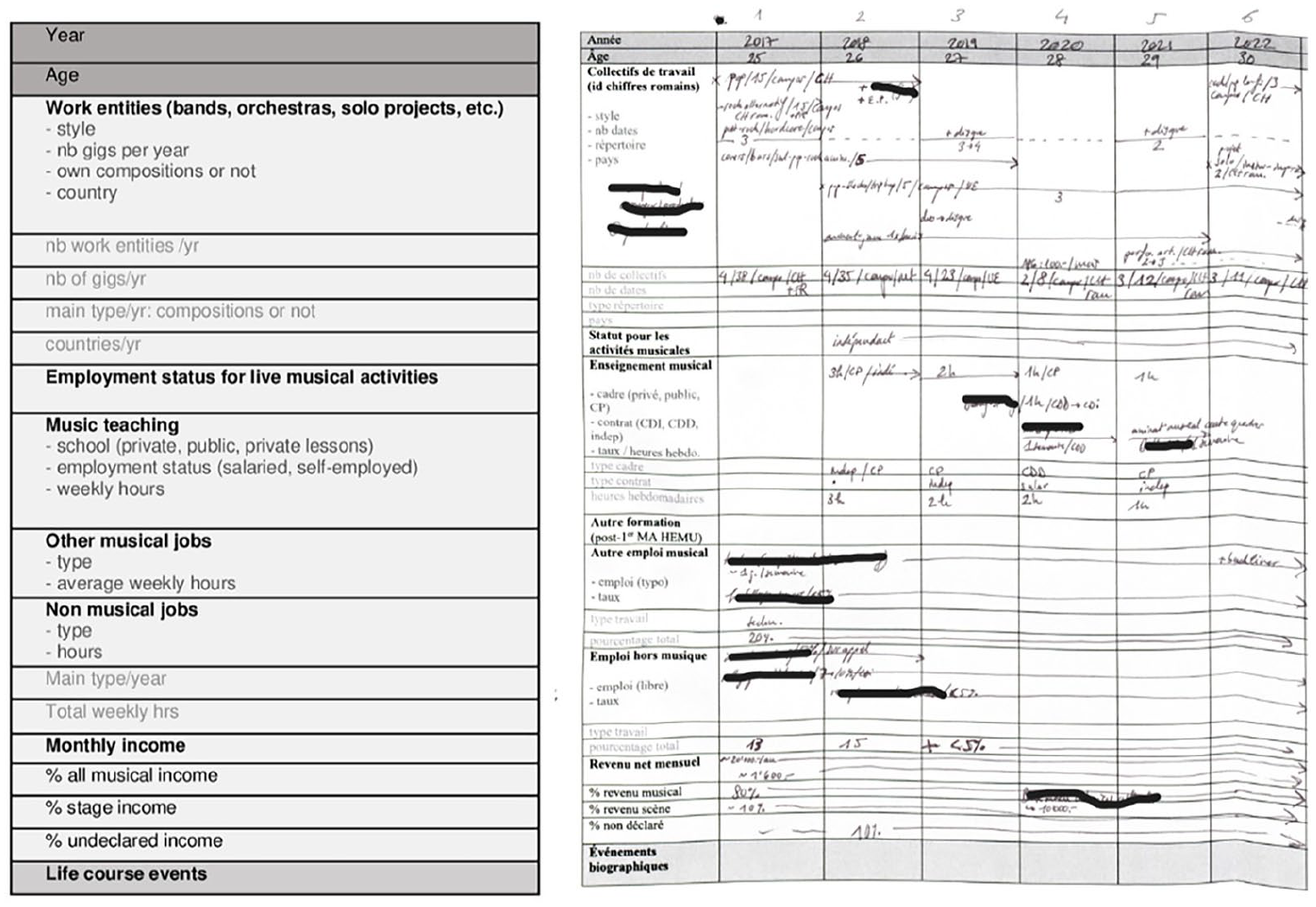
Anonymized life calendar depicting the first 6 years post-graduation (right), with enlarged and translated view of the first column (left).
In the qualitative part of the study, we conducted 45 semi-structured interviews (lasting between 35 min and 1 hr) to explore participants’ reflexivity regarding their career paths.
Ethical concerns
Participation was voluntary. Alumni were informed about the study, data usage, confidentiality, and their right to withdraw on the day of the interview, and they signed an informed consent form. Given the close-knit jazz community in French-speaking Switzerland, confidentiality was crucial in securing participation. Only the two research assistants conducting the interviews had access to recordings and transcribed the interviews. Anonymized life calendars were linked to raw data through a secure coding system, with the list of codes kept under lock and key. Interview recordings were stored on a secure server and deleted at the project’s conclusion. The survey protocol—including the consent form that had to be signed by each study participant—was approved by the HEMU Research Committee.
Outline of the Jazz alumni population
This section presents descriptive statistical analyses of socio-demographic data, comparing them with two robust data sets from: the Federal Office of Statistics (OFS, 2019, 2020, 2021, 2022), covering the entire Swiss population, and the Musicians’ LIVES survey (Perrenoud & Bataille, 2019) focusing on musicians in French-speaking Switzerland. Interpretation of these comparisons is provided in the Discussion section.
Gender, citizenship, age, career stage, and socio-economic background
Our study involved all individuals who completed the Master’s in Jazz at HEMU between 2011 and 2017. Of the 65 graduates, 10 declined participation and 10 did not respond, resulting in an effective sample of 45 graduates and a response rate of 69%. We interviewed 38 men and 7 women from a total of 57 men and 8 women who obtained a Jazz Master’s degree at HEMU. The proportion of women (14%) is significantly lower than in the overall Swiss workforce (about 45%) and among French-speaking musicians (23%), highlighting the barriers women face in the professional jazz world (Aschbacher, 1997; Buscatto, 2007).
Around two-thirds of alumni are Swiss nationals, a higher percentage than in the general population, even in urban areas where foreign nationals represent over 40% (OFS, 2022). Most foreign graduates come from France. Alumni typically began their music studies right after secondary education, graduating between the age of 20 and 32 years, with a median age of 26 years for the 2011 to 2017 cohorts, in line with Swiss higher education norms (OFS, 2022). At the time of interviews (end of 2022), alumni were aged 29 to 41 years. Most alumni have affluent social backgrounds, with an overrepresentation of upper-middle class professions among both parents. Over 75% of alumni’s fathers work in upper-level professions (i.e., physicians, lawyers, and university professors) and enjoy mainly upper-middle class positions, a higher education degree and good income. Higher-level professions are also over-represented among their mothers’ occupations, making up a third of the cases, with intermediary professions (i.e., nurses, schoolteachers, and technicians) accounting for another third. The “intellectual” fraction (in opposition to the “economic” fraction, Bourdieu, 1986; Flemmen et al., 2017) of the upper-middle classes, which forms the background of 62% of the Jazz Alumni population, is thus overrepresented, compared to 23% in the general Swiss population and 35% in the French-speaking musicians’ population. Alumni are also predominantly urban, with 25 out of 29 Swiss-based alumni living in the Lake Geneva region, a cultural hub.
First results
This section outlines the key trends in the professional integration paths of our alumni.
Income
Despite the high level of education, Jazz Alumni incomes remain low. Notwithstanding some increase over time, their earnings have never reached the Swiss average (CHF 6,775, OFS 2019), with 80% falling below the minimum subsistence level (CHF 4,033 according to the Permanent Mission of Switzerland to UNOG, 2024). Over two-thirds of alumni earn less than CHF 3,000 per month 4 to 6 years after graduation—an amount comparable to income levels from the mid-2010s Musicians’ LIVES survey, despite rising living costs. Unlike the broader Musicians’ LIVES population, our alumni focus almost exclusively on music teaching and live performances, with no outside employment. Two years post-graduation, 90% of them earn over 75% of their income from music. However, within a year of graduating, more than half earn less than 25% from live performances, a trend that intensifies over the 6 years, with nearly three-quarters earning less than 25% from live gigs. Figure 2 illustrates the aggregated income sequences for 45 alumni, showing the proportion from live performances.
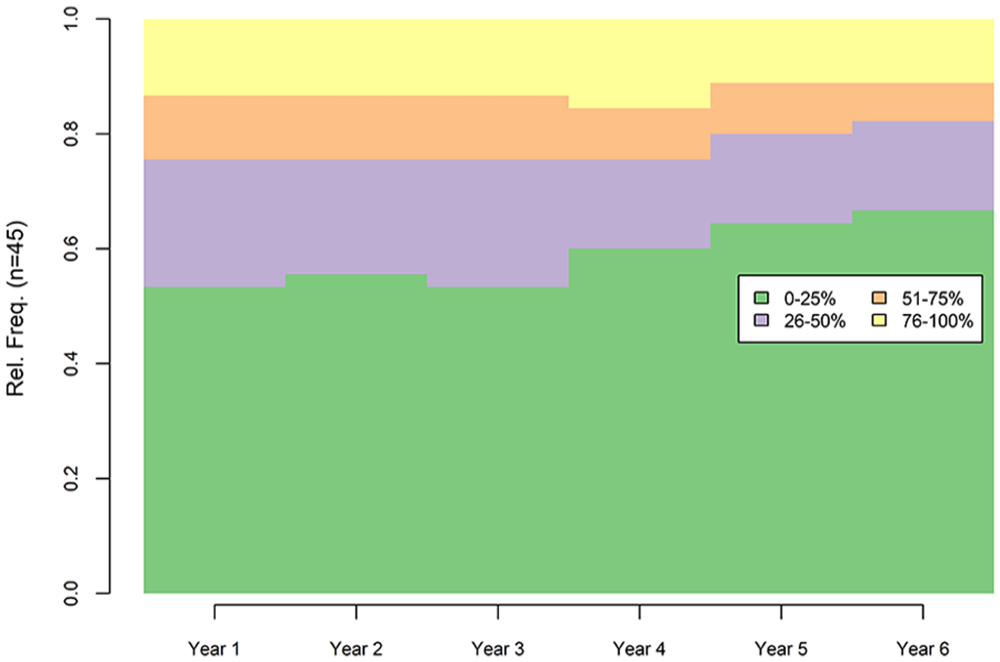
Percentage of total income derived from live performances over the 6-year period. X-axis: years post-graduation (+1–+6). Y-axis: percentage of alumni (1.0 = 100%).
Teaching as a path to stability
Teaching is a pathway to stability in the otherwise precarious careers of musicians. Over time, more alumni turn to teaching to secure stable employment and income (Figure 3).
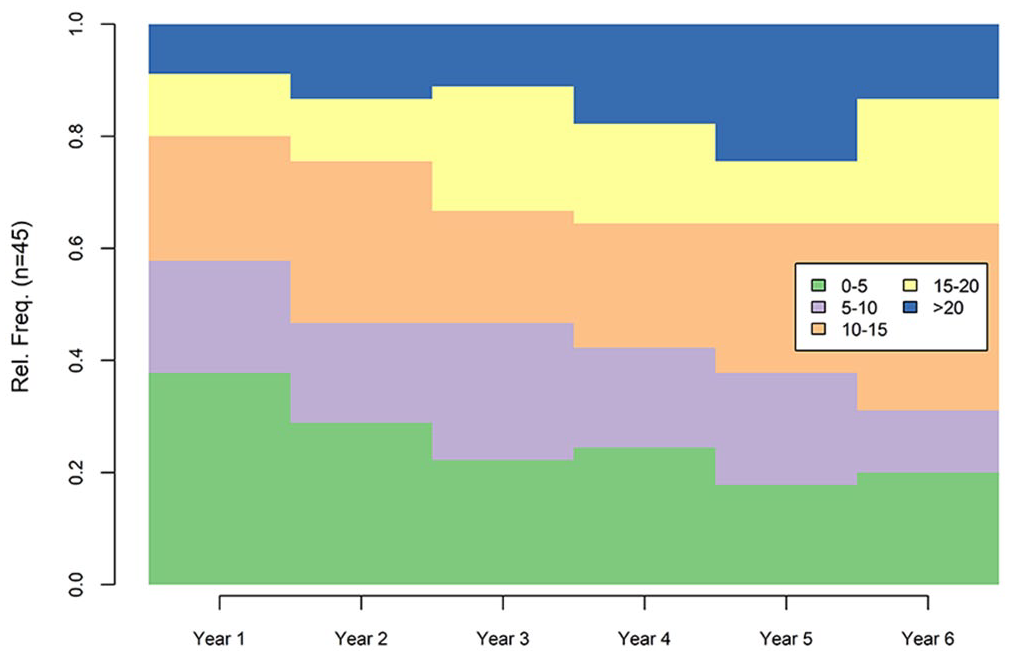
Weekly musical teaching hours (per person) over the 6-year period.
In Switzerland, a full-time teaching schedule includes 24 to 28 hr of face-to-face teaching, depending on the canton. Figure 3 shows that, as professional integration progresses, salaried teaching hours increase. Early in their careers, about 40% of alumni teach zero to 10 hr per week, but this figure drops to 20% after 6 years, while the proportion who teach 10 to 20+ hr steadily rises. Three years after graduation, more than half of the alumni teach at least 10 hr weekly; after 6 years, this figure grows to over two-thirds. Salaried teaching jobs provide access to social security and offer a stable income. Over time, many alumni secure positions in public schools, which offer better pay and a more stable situation. Less than a quarter teach in public institutions right after their degree, but this proportion increases to over a half by the 6-year mark. The trend is most notable among those with a master’s in music pedagogy, which opens access to positions in subsidized schools, unlike performance or composition degrees.
Although salaried employment is mainly tied to teaching, most alumni maintain a hybrid employment status, combining salaried teaching with an independent contractor status for performing or operating informally, if they are earning under CHF 2,000 CHF annually. Overall, teaching hours increase as alumni seek job stability, although this trend is not broadly uniform, as we will see in the next section.
Further findings
This section shifts from a longitudinal focus to a comparative one. We will distinguish two career paths: teaching versus performing. Moreover, we will examine the differences between these two types of career and their associated social characteristics, concentrating on how they structure the population into distinct subgroups.
Playing or teaching, an unevenly distributed distinction
As noted earlier, we can distinguish musicians who focus primarily on teaching (10+ hr/week) from those who concentrate on live performances with minimal teaching. Over half of our participants planned a teaching career when enrolling at HEMU: among the 45 graduates in our study, 26 specialized in pedagogy, while 28 were primarily engaged in teaching by the end of the 6-year period, all at subsidized music schools. These “teaching musicians” usually remain active on stage (20 out of 28 perform more than once a month). Although this performing part of their business generates little revenue and only supplements the income from teaching activities, it has an important symbolic function, as it helps build and maintain a musician’s identity (Isbell, 2008; Mark, 1998). Only 30% remain highly active in live performances (50+ gigs per year) and can be classified as “performing musicians.” These career paths are further influenced by sociodemographic factors, such as national origin and gender, as we will see.
Influence of biographical socialization on career orientation
Comparing the career paths of Jazz Alumni from Switzerland and abroad reveals significant differences. Teaching-oriented careers are more common among those raised in Switzerland, whereas graduates from France generally have fewer teaching hours. 1 For “Swiss” alumni, teaching hours increase significantly over time, reaching high rates for some of them. In contrast, “French” alumni often start with very little teaching activity, which also increases over time, but more toward medium rates. 2
Figure 4 highlights the differences in teaching rates between alumni having grown up in France or in Switzerland. “Swiss” graduates show a steady increase in teaching hours over 6 years, with a significant rise in those working 15+ hr/week. Initially, 20 of 28 “Swiss” alumni teach more than 5 hr weekly, with lower and medium teaching hours being common. Conversely, “French” alumni predominantly fall into the very low teaching rate category (0–5 hr) right after graduation, with only 6 out of 14 having higher teaching rates. Over time, “French” alumni show a reduction in very low teaching rates and an increase in medium rates (10–15 hr), yet few teach 15+ hr per week (Figure 5).
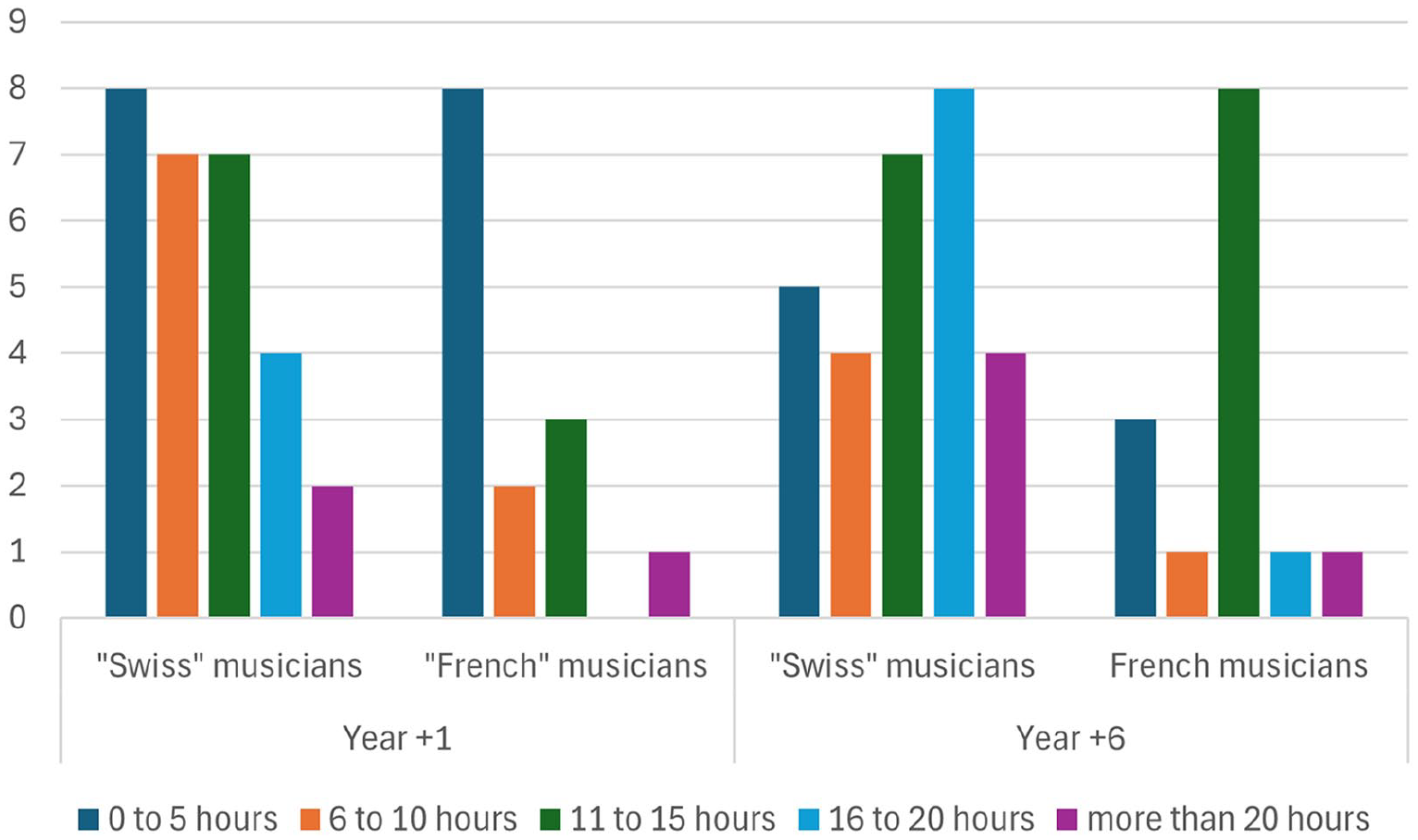
Comparison of weekly teaching hours at Year +1 and +6 by country of socialization (Switzerland vs. France).
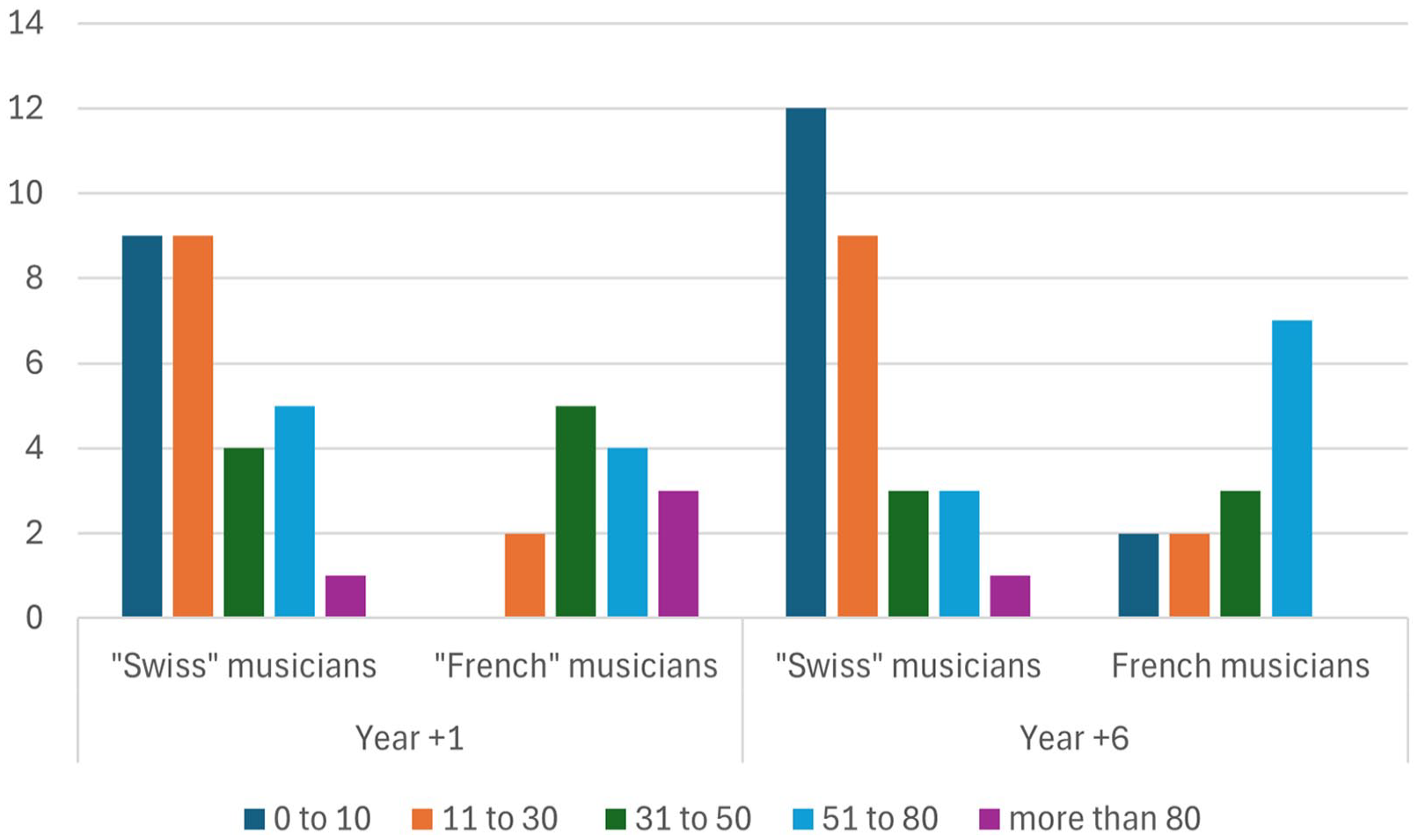
Comparison of annual number of live performances at Year +1 and +6 by country of socialization (Switzerland vs. France).
Musicians who grew up in Switzerland tend to perform on stage less frequently than those who grew up in France. One year after graduation, many “Swiss” musicians fall into the zero to 10 performances per year category, which is not observed among French musicians. “Swiss” musicians often show a decline in high-frequency performances and a rise in lower-frequency categories. In contrast, nearly all “French” musicians perform 30+ times annually right after graduation, with their number of performances either increasing or remaining stable but not exceeding 80 per year. The focus for “French” musicians seems to be on maintaining a high-quality presence rather than maximizing the number of performances. These individuals derive a significant proportion of their income from the stage, and rely on concerts to make a living, from the outset after graduation. Despite an increasing trend over the years, the careers focusing on live performances are characterized by incomes lower than the sample average, with cases of extreme precarity at certain times. The COVID-19 period of 2020 to 2021 is particularly striking in this respect. Individuals who draw a significant part of their income from teaching were more likely to resist the chaos caused by the pandemic and by the closure of live concert venues for almost a year, because they were eligible for unemployment benefits, unlike those who relied solely on live performances. This became particularly apparent during the years when concert opportunities plummeted, when teaching quickly picked up again—often at a distance. Careers focusing primarily on gigs involve a broader exportation of live performances, not only in France, but also across Europe. “French” alumni are more likely to tour extensively in Europe and across Switzerland, whereas “Swiss” musicians primarily perform within the French-speaking region. The reliance on local networks is stronger among those who grew up in Switzerland; they primarily play in the French-speaking part of Switzerland and have limited international reach. Nearly 40% of the “French” musicians toured in Europe, about one-third performed in both Switzerland and France, and the remaining musicians toured across Switzerland and internationally. In contrast, almost half of the “Swiss” musicians primarily toured within the French-speaking part of Switzerland.
Influence of gender on career orientation
Due to the low number of women in our sample, the results concerning women’s careers should be interpreted cautiously. That said, there is a consistent trend toward teaching visible among all the women included in our study, regardless of nationality. All the female musicians in our study focus on teaching rather than live performances. One year after graduation, 2 out of 7 women teach over 20 hr/week, compared to only 2 out of 38 men. For these women, teaching offers stability, with a master’s in pedagogy facilitating access to subsidized teaching positions (Figure 6).
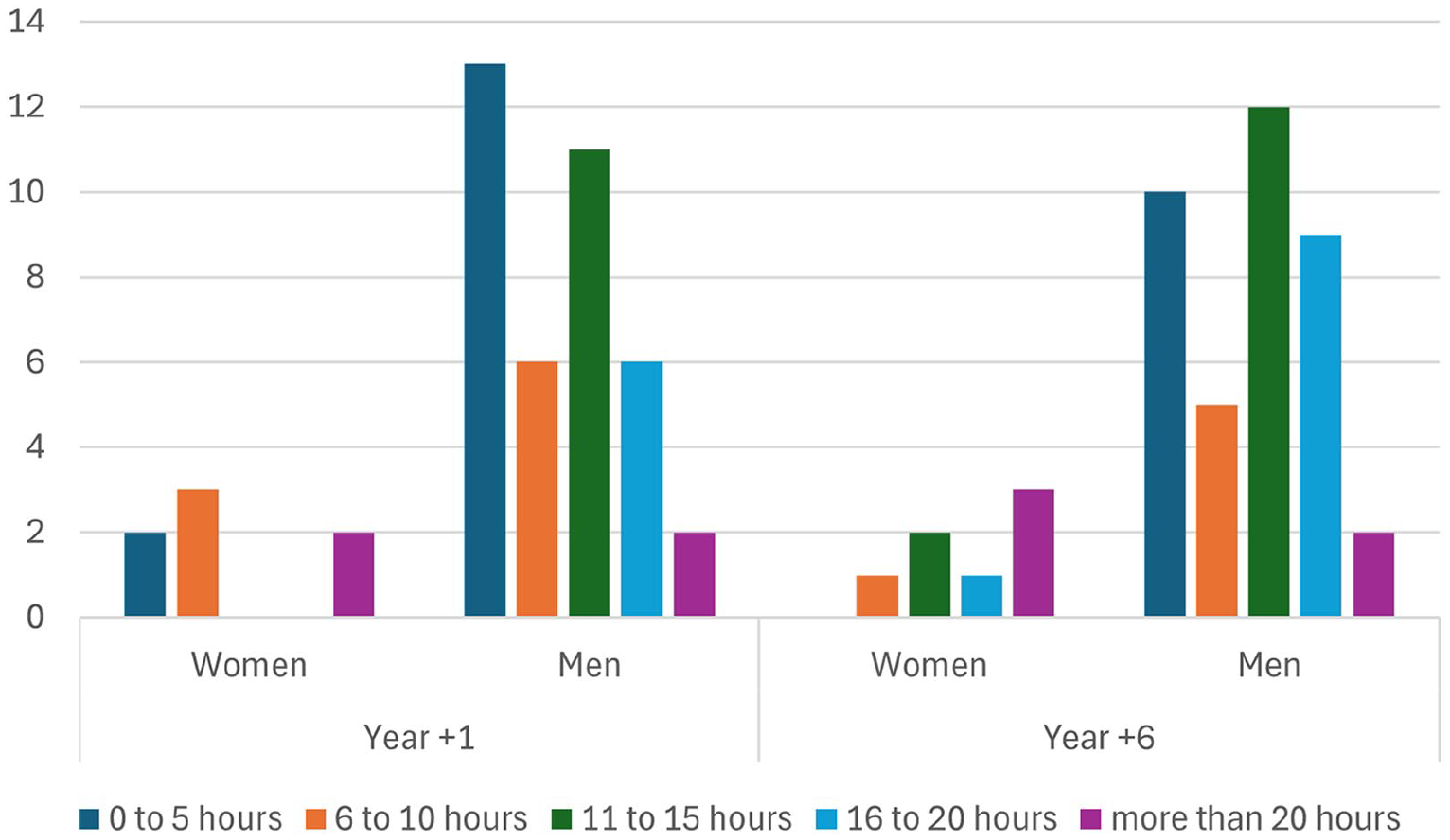
Comparison of weekly teaching hours at Year +1 and +6 according to gender.
Over time, women show a shift from low teaching rates to more part-time (10+ hr) and full-time (20+ hr) roles, while men tend to increase their part-time teaching. Directly after graduation, two women taught 20+ hr/week, compared to only three men. After 6 years, all women are engaged in teaching, with three teaching 20+ hr/week, highlighting the crucial role teaching plays in their careers. Women’s average number of annual performances is 16, significantly lower than the 45 for men, and none have performed 80+ times a year. All women play locally, and none indicates having performed outside Europe. Although few women participated in the study (N = 7, all interviewed), the qualitative analysis revealed some patterns, particularly regarding parenthood. The findings highlight how gender shapes experiences in the live performance sector, revealing dynamics not captured by quantitative analysis. Women reported subtle forms of exclusion, with challenges particularly pronounced for mothers. Delphine, a 34-year-old from an upper-class background, had avoided mentioning her child to colleagues, fearing it would exclude her from professional opportunities. As a music teacher, she worried that being seen as a mother would reinforce others identifying her as a teacher rather than a musician. This highlights the challenges women face returning to the job market after pregnancy. In contrast, men do not appear to encounter the same obstacles. Despite teaching commitments, most maintain their artistic identity and continue performing. Indeed, 20 out of 28 male “teaching musicians” performed regularly, underscoring the gendered disparities in career progression and artistic recognition.
Female musicians face significant challenges in balancing professional and family responsibilities due to the demands of their profession (irregular hours, night work, and low pay) and the lack of institutional support, unlike fields such as theater. For instance, Delphine noted the difficulties of touring with a newborn, including the absence of breastfeeding facilities.
These challenges reflect a gendered division of labor, whereby women disproportionately bear domestic and parental duties, leaving them to reconcile work and family life, whereas their male partners are less impacted. This imbalance was evident in a heterosexual musician couple from the study, where the woman, Clara, managed most of the childcare, adversely affecting her career.
In her case, the interview revealed an unequal distribution of parental responsibilities in which she, the woman, consistently took on more childcare duties despite an agreed schedule. Her partner assumed she would manage childcare and failed to consult her regarding his commitments, leading to a stark career disparity: he performed regularly, while she struggled to perform even once a year. By combining her narrative with the life-course data on her work trajectory after having a child, it becomes clear that this moment represents a “turning point” in terms of inequality: she had not performed at all since becoming a mother, and her income had decreased (from CHF 3,500 in Year +1 to CHF 3,200 in Year +6), whereas her husband’s income had increased (from CHF 2,000 in Year +1 to CHF 4,500 in Year +6). Due to her assignment to parental responsibilities, Clara had fewer paid working hours and lacked savings, unlike her husband, who could work more and had greater financial resources.
Discussion
Our research examined the professional integration of Jazz Alumni, focusing on their career trajectories and the evolution of activities in the first 6 years post-graduation. We analyzed trends in musical activities (teaching and performing), time allocation, employment status, and income. We also explored how social factors, including socialization to national regulatory regimes and gender, influence these career paths and the distribution of activities.
Overall trends regarding teaching and income
As we met the respondents 6 to 12 years after their graduation, and as they were between 30 and 40 years at that time, we can assume that they had completed, or were about to complete, their professional integration process. It is remarkable that our respondents graduated at 26 years old (on average) which corresponds to the average age for obtaining a master’s degree in Switzerland. Consequently, we can consider that this master’s in jazz was a real career choice, and not undertaken ‘post hoc’ by experienced musicians for easier access to the music labor market (mainly for teaching in state schools, where a diploma is now the rule 3 ). Most of our respondents already held both a performance or composition degree and a master’s degree in teaching in their 20s, challenging the cliché of musicians abandoning the stage and folding back on teaching after turning 40 years old. Even among the performing musicians, all respondents had undertaken some teaching activity during the study period. Teaching is particularly important in Switzerland, because—as indicated in the first section—the domestic stage market is fairly small, but the demand for music lessons is very high. Furthermore, it grants access to social security.
Two main trends emerged: a decrease in gig frequency, indicating a shift toward higher-quality gigs (i.e., being able to choose gigs) and an increase in teaching hours across all careers. Teaching serves as a strategy to stabilize income, despite the high level of education, but this is common to most artistic professions (Menger, 1999). Nonetheless, there is a trend toward better professional integration compared to the broader musician population in French-speaking Switzerland (Perrenoud & Bataille, 2019). Notably, none of our respondents exited the music field during the study period, suggesting that a jazz master’s degree may positively impact career longevity and that their survival in the profession is thanks to their strong socio-cultural and economic backgrounds.
Influence of the national regulatory system
Our findings underscore the impact of national contexts on the career trajectories of Jazz Alumni. In France, the intermittent employment system supports artists during periods of unemployment, prioritizing live performances over teaching activities. In contrast, Switzerland fosters an environment where teaching forms an integral part of many musicians’ careers (Perrenoud & Bataille, 2017, 2019). Consequently, the construction of professional identity diverges accordingly.
Musicians who grow up in Switzerland primarily perform in the French-speaking region, leveraging local networks despite the relatively small Swiss market. Even if playing frequently in public is favorable to nurturing professional identity as a musician, the interviews confirm that making a living by accumulating (often cheap) gigs in multiple places (in or outside Switzerland) is not necessarily seen as desirable, because this often entails lower pay, but more time and greater travel expenses. The ability to cultivate multiple activities locally provides independence from economic pressures, allowing these alumni to be discerning in their live engagements. The prevalence of “Swiss” profiles engaging in musical activities other than performing and teaching, or even in non-musical employment, signals a preference for higher-paying, stable job opportunities, enabling an individual to maintain a creative identity aligned with “artistic authenticity” rather than mere financial gain alone (see also Perrenoud & Bataille, 2019). This strategic approach to career development reflects a socially situated rationality, fostering recognition and social valorization. Those inclined toward live performances, mostly alumni who grew up in France, often find themselves expanding their networks beyond French-speaking Switzerland due to the limited opportunities within the local market. Yet, the French-speaking region remains an attractive option due to higher fees, emphasizing the importance of maintaining connections. These musicians often face precarious employment situations, exacerbated by the lack of social security benefits. The COVID-19 pandemic starkly highlighted these vulnerabilities, with salaried teaching contracts providing a more stable source of income compared to gigs. Ultimately, teaching emerges as a pragmatic necessity in both career paths, providing financial stability, while live performances serve as a symbolic declaration of one’s identity as a musician.
Gender inequalities
Jazz and popular music spaces, including the Jazz Master’s program at HEMU, continue to exhibit significant gender inequalities (Van Vleet, 2021). The proportion of women in the Jazz Master’s program at HEMU has remained consistently low, like previous years (Güsewell & Piecek, Perrenoud & Bataille, 2019). This may be partly due to a lack of role models; among 32 jazz teachers at HEMU, only two are women—one is a classical piano teacher who also teaches jazz and the other is a singer—in line with the usual gender-instrument patterns (Buscatto, 2004, 2007). This situation is complex, obviously multifactorial, and clearly beyond the scope of this study (for an extensive approach see, e.g., Bartlett and Tolmie, 2018). Although the low number of women included in our study precludes generalizations about women’s career paths and hinders attempts to explain why they rely almost exclusively on teaching to develop their musical careers, a tentative interpretation is possible.
However, the interviews have provided insights into the reasons that prevent women from pursuing and maintaining a career in performing. The demanding lifestyle of frequent travel, irregular hours—often at night and on weekends—and unstable income comes into conflict with traditional gender roles, which assign a greater share of domestic responsibilities to women (Baghdadi, 2010). Women often view pedagogical qualifications as a safety net, as the lifestyle of a performing musician is challenging to reconcile with traditional roles, particularly in Switzerland which is known for its conservative stance compared to other European countries and for its limited childcare options (Giraud & Lucas, 2009; Minesso, 2021). As a result, many women reduce or stop their performance activities after having children, with the arrival of the first child often marking a turning point (Le Goff & Lévy, 2016). The structural assignment of care work to women disproportionately burdens them, particularly those from working-class backgrounds, who lack resources to outsource domestic responsibilities (Bessière & Gollac, 2020).
Societal pressures on women to bear children in their thirties—coinciding often with the start of their careers—further influence these choices, as they anticipate the mental and logistical demands of parenting before entering the workforce. This dynamic significantly affects women’s professional trajectories, complicating the maintenance of or return to an artistic identity post-parenthood.
Gender inequalities in housework and their impact on work are not unique to this field, but they are amplified due to the unsociable hours (nighttime and weekend), making childcare even more challenging. This division of labor results in less artistic recognition for women, as they move away from the performing aspect of the profession (Buscatto, 2007).
Implications for research
Our findings underscore the relevance of mixed-methods approaches for analyzing gender relations. They provide a fine-grained understanding that goes beyond quantitative findings, allowing for the integration of multiple data sources to capture more of the material consequences of gender inequalities on life trajectories. On the one hand, they reveal women’s narratives about the mental load and the reallocation of their time to the benefit of others (children and husbands). On the other hand, they enable an objective analysis of work dynamics and, from a longitudinal perspective, the impact of key life events—such as the birth of a first child—on gender inequalities. Moreover, they allow for a joint analysis of these events alongside the narratives surrounding them, as illustrated in the case of Clara.
Our findings also help fill a gap identified in the literature review: the lack of longitudinal data on the process of professional integration, or rather on the career paths of young jazz musicians in the years following their graduation. Such data opens the way to a better understanding of the processes and factors that contribute to the construction and development of career plans, and this, in turn, is invaluable in helping tertiary music training evolve.
Footnotes
Acknowledgements
The authors wish to thank Coline Wileczelek and Gaspard Colin for their important work as research assistants during the data collection phase. Finally, their gratitude is extended to the participants who agreed to share their experiences through in-depth interviews, which involved the devotion of a considerable amount of time.
Author contributions
Declaration of conflicting interests
The author(s) declared no potential conflicts of interest with respect to the research, authorship, and/or publication of this article.
Funding
The author(s) disclosed receipt of the following financial support for the research, authorship, and/or publication of this article: This research project was only made possible thanks to the financial support of HES-SO University of Applied Sciences and Arts Western Switzerland.
