



Abstract
It is a strange paradox that whilst music is increasingly considered an important part of health and wellbeing, musicians themselves endure physical and psychological challenges within a competitive industry. We compared music student wellbeing in two higher education schools of music; one in the UK, the other in Switzerland, to explore cultural similarities and differences. The study was completed in German (78%) and English (22%) via an online survey and hard copy using a range of psychometric measures. When using the WHO QoL BREF, we found both schools scored lower than norms for physical and psychological health (p < .001), but higher than norms for social relations (p < .01) and the Swiss school also for the environment (p < .001). Self-efficacy predicted physical health (12.3%) whilst psychological health was predicted by self-efficacy and fixed mindset (23.1%). 95% of participants stated that their institution was at least 20% responsible for the wellbeing. This study suggested more similarities than differences between schools of music in different countries in terms of student wellbeing. Whilst physical and psychological health remain risk areas for musicians, the environment and social culture of the school plays an important supportive role in wellbeing and should be considered when preparing music students for professional life.
Keywords
Extensive research has provided evidence on the prevalence of physical and mental health challenges such as repetitive strain injuries and music performance anxiety (MPA) faced by music students and professional musicians (e.g. Cruder et al., 2020, Fishbein et al., 1988; Gross & Musgrave, 2016; Vermeersch et al., 2023). The situation is especially acute following the COVID-19 pandemic given the already precarious nature of professional musicianship (Shaughnessy et al., 2022). The paradox of suffering for one’s art whilst others profit can be clearly seen during this time when music provided comfort and connectedness to many, yet musicians endured financial and psychological hardship, with some eventually surrendering their calling and changing careers (Spiro et al., 2021). Whilst music-making may be therapeutic, ‘making a career out of music is destructive’ (Gross & Musgrave, 2016, p. 12). Loveday et al. (2023) agree that there is an urgent need for further focus on musicians’ health and wellbeing, not only in the music industry, but also in higher music education.
Physical issues tend to be the most well-researched in the field and primarily consider playing-related musculoskeletal disorders (PRMDs) which have a direct negative impact on the ability to play (Kenny & Ackermann, 2016; Zaza & Farewell, 1997). Fishbein et al. (1988) found that 67% of players from 47 American orchestras suffered with self-reported PRMDs. Recently Cruder et al. (2020) estimated the rate of self-reported PRMDs among Higher Education (HE) music students across 20 European countries to be 48%. Hearing disorders and vocal strain can also be considered within the physical health domain (Ackermann et al., 2014; Schink et al., 2014). Alongside high levels of fatigue and sleep disruption, physical injuries that are non-performance related (e.g. carrying heavy equipment) are also reported by musicians on tour (Ackermann, 2002; Ackermann et al., 2012).
Music students have been reported to fall below their target body mass index and have cardiovascular fitness which is described as low to average (Matei et al., 2018). Pain causing the cessation of playing tends to be focussed on the upper arm/elbow, both hands and in the back (Matei et al., 2018). However, another UK study (Araújo et al., 2020) reported more hopeful signs suggesting that 79% of music students (N = 483) exceed the recommended amount of weekly activity. Whilst lung function, range of motion, grip strength and cardiovascular fitness were all within age-appropriate norms, mobility and pain in the right shoulder and lack of core strength were also apparent. The authors suggest that differences between types of musicians may lead to specific injuries or pain but may also provide certain protective factors (e.g. brass players showed greater lung function than other music students).
Mental health concerns are also prevalent among musicians. One survey in the UK revealed that 71% of professional musicians and music industry professionals self-reported experiencing anxiety and panic-attacks, and 66% self-reported having depression (Gross & Musgrave, 2016). Nevertheless, certain aspects of life as a musician may also enhance wellbeing by providing positive emotions, meaningful experiences and social relations within a supportive environment (Ascenso et al., 2018; Philippe et al., 2019). In a qualitative study investigating how musicians feel about the impact of their art on their minds and bodies, Schoeb and Zosso (2012) found that healthy musicians tended to have an holistic approach to their health, seeking support from their whole community, suggesting that social and environmental factors are important for musicians’ health and wellbeing.
The equivocal nature of these findings highlights the importance of context (i.e. place, individual and group perspectives) and approach to research (e.g. positive psychology, medical models of health and frameworks of wellbeing). Here we use the phrase ‘health and wellbeing’ to promote an holistic perspective that includes aspects of physical and mental health, alongside a sense of (eudaimonic and hedonic) wellbeing as per previous studies (Alessandri et al., 2020; Rose et al., 2021). This salutogenic approach (Antonovsky, 1979) acknowledges that some aspects of hardship (e.g. stress) are a part of life and do not need to be pathologised. Moreover, because both internal and external environments are important in salutogenesis, using this approach enables us to probe conceptual differences between perceptions of responsibilities for health and wellbeing amongst music students, including self-determination theory (SDT), self-efficacy and mindset. This is important because for many musicians, studying music is highly performance oriented and managing stress can be considered an adaptive skill (e.g. linked to experiences of ‘flow’) rather than a problem per se.
Our response to this observation was to design a collaborative study which ran at two separate music institutions (one in the north of England and the other in central Switzerland); this enabled us to directly compare standardized measures of health and wellbeing between music students in different countries, but also with the findings of other published studies. For a general measure of wellbeing we used the WHO-5, but as we wanted to gain deep and rich insights, we included the multi-factored WHO QoL BREF (which includes separate measures of physical and psychological health, as well as environment and social relations).
Talent in musicians has long been a subject of vociferous debate, specifically in relation to innate ability versus deliberate practice (Howe et al.,1998; Macnamara et al., 2014). In view of the focus on the dangers of over-practice in relation to physical health (Cruder et al., 2020; Wijsman & Ackermann, 2018) and the worrying findings about the pressures students face in relation to their psychological health, we wanted to explore the concept of mindset in relation to wellbeing. Dweck and Master (2012) suggests that being an entity theorist (i.e. having a fixed mindset) means that a person believes that even if they learn new things, their basic level of intelligence will remain the same. Having a fixed mindset has been associated with having negative judgements about the self and can have a debilitating effect on academic performance and mental health (Yeager & Dweck, 2023). In contrast, incremental theorists (growth mindset) believe that they can increase their level of intelligence through efforts in learning. People with growth mindsets tend to focus on behavioural factors and work to develop strategies that will enable them to achieve mastery of the task (de Castella & Byrne, 2015). Extending this idea to the sphere of music, a music student might believe themselves to either have an innate level of talent regardless of the amount of practice they do, or the ability to improve their talent through practising skills, techniques and developing their understanding of theory, for example.
Two closely related concepts that are important to educational and social psychology are self-efficacy (Bandura, 1977) and self-determination theory (SDT; Ryan & Deci, 2000). Self-efficacy captures an individual’s general belief about their power to affect situations and their capacity to reach certain goals. For musicians, having a strong sense of self-efficacy may provide some protection against the potential impact of social comparisons with others (Burland et al., 2022). SDT is a framework that encompasses autonomy, competence and relatedness as three pillars of motivation for human behaviour and a previous study has shown that having a sense of personal competence is a key factor predictive of musicians’ wellbeing (Rose et al., 2021).
Within this context, we predicted that the music students would have lower wellbeing compared to normative values in each country; we wanted to explore which aspects of wellbeing were being challenged by vocation (WHO QoL BREF) and whether a brief general measure (WHO 5) would reflect any such findings in the pursuit of parsimony. We also wanted to explore the nuances between self-efficacy and mindset; therefore we adapted items from a measure related to the concept of intelligence and learning (de Castella & Byrne, 2015; Dweck & Master, 2012) to reflect concepts of talent and ability in music (Burland & Pitts, 2007; Burland, 2020). Whilst we expected self-efficacy to predict wellbeing, we were not sure whether our measure of mindset would sufficiently differentiate (between fixed and growth) or whether this would provide any further explanatory power (i.e. not be associated with self-efficacy). Finally, we included some open and novel items attempting to distinguish between playing-related and general malaise, frequency of playing whilst in pain and to probe student beliefs about personal versus institutional responsibility for wellbeing.
The research questions can be summarised as follows:
RQ1: How do music students perceive their health and wellbeing, and how does this compare to normative values within each country?
RQ1A: What was the impact of the COVID-19 pandemic on musicians’ perceptions of their health and wellbeing?
RQ2: What are students’ beliefs about personal versus institutional responsibility for health and wellbeing?
RQ3: What are the roles of self-efficacy and growth mindset in relation to perceived health and wellbeing?
Methods
Research design
We report a cross-sectional research design conducted using questionnaires during Autumn 2020 and Spring 2021.
Participants
The inclusion criteria allowed for students over 17 years old (the earliest age for HE study in Switzerland) enrolled on a music focussed HE course. In Switzerland recruitment took place during the start of academic year (Autumn 2020) via an introductory course on musicians’ health and wellbeing for first semester bachelor and master students and again later in the year (Spring 2021) for master’s students. In the UK, participants were recruited across this period through personal invitation of the second author, both individually to students but also via networking with colleagues teaching at the institution.
School context
The School of Music at University of Leeds is one of the largest university music departments in the UK, based in northern England. It offers a broad range of programmes at both undergraduate and postgraduate levels, providing a diverse range of pathways through the programme with a wide range of music and industry-related courses. In addition to performance and composition, students can choose from many aspects of musical study including music history, aesthetics, technology, psychology, enterprise and management.
The School of Music at Lucerne University of Applied Sciences and Arts is based in a German speaking area of central Switzerland, surrounded by the Alps. It is one of seven such music departments in Switzerland and provides a range of pre-college, graduate and post-graduate level courses including music research and theory but focussing on performance and pedagogy in classical and contemporary western art music, jazz, folk and church music.
Procedure
The questionnaire was presented either in hard copy or online as per Philippe et al. (2019). This dual-data collection method was chosen to help with recruitment; the hard copy versions were completed either during or after class whilst the online versions could be accessed any time (accessed using Qualtrics (Provo, UT, 2021)). The study was conducted in English language in the UK, and in English and German languages in Switzerland. Elena Alessandri (Author 4) is multi-lingual enabling translation for analyses.
Ethics
The study was approved by the appropriate ethics body in each institution: the Ethikkommission der Hochschule Lucerne (Protocol Number EK-HSLU 001 M21) and Faculty of Arts, Humanities and Cultures Research Ethics Committee at the University of Leeds (LTMUSC-119. All participants were fully informed prior to completing the survey on a voluntary basis and were debriefed following completion of the questionnaire.
Measures
The survey included general demographic variables to characterise the sample such as age, gender, place of residence, level of study, current semester, type of course, hours of general study per week and information about having a part-time job whilst studying (Yes/No, sector + hours per week). Additionally, music student specific information was requested such as main instrument, years of playing, style/genre of music, number of gigs played in past 5 years (prior to COVID-19 pandemic) and hours of music practice per week.
We included three standardised tests; the WHO-5 (Topp et al., 2015) is a five item generic rating scale of subjective wellbeing (Cronbach’s alphas ranged .81 to .90, Lara-Cabrera et al., 2022); the WHOQoL-BREF (WQB; Skevington et al., 2004; Whoqol Group, 1998) is a 26 item subjective measure of general health (1 item), quality of life (1 item) and four domains: Physical Health (7 items), Psychological health (6 items), Social Relationships (3 items) and Environment (7 items) with respective Cronbach alpha values of .68, .75, .64 and .74, DeVellis, 2003) and the Self-Efficacy Scale–Short form (Allgemeine Selbstwirksamkeit Kurzskala (ASKU) in German, Beierlein et al., 2012) that contains three items with McDonald’s Omega values between .81 and .86 that Beierlein et al. (2013) interpreted as sufficient in terms of reliability. These measures have been used previously in studies of musicians’ health and wellbeing (see Alessandri et al., 2020; Philippe et al., 2019; Rose et al., 2021). Based on earlier research (Alessandri et al., 2020; Rose et al., 2021), it was apparent that physical and psychological issues related to playing specifically needed to be drawn out over and above more general health and wellbeing items for musicians. Therefore, we included three bespoke items described below (answers in brackets):
1. I suffer and/or have suffered from playing related psychological discomfort (for example: symptoms of depression, anxiety. . .(Currently, In the past, Never).
2. I suffer and/or have suffered from playing related physical discomfort (for example: muscle aches, joint pains or other pains, cramps. . . (Currently, In the past, Never).
3. Over the last 6 months: How often, approximately, did you practice on your main instrument, despite physical discomfort?(Less than once a month, 1–3 times per month, 1–3 times per week and Almost daily).
Due to the timing of the research, with different states of precaution in each country, we asked participants ‘Are you currently concerned that the COVID-19 pandemic could have a negative impact on your musical activity?’ (Yes/No).
Finally, to probe student beliefs (mindsets) about the malleability of musical ‘talent’ in relation to self-efficacy we adapted four items from a scale that measures such beliefs about intelligence (de Castella & Byrne, 2015). We adapted the text, replacing the concept of intelligence with that of musical talent to make sense in English and German as follows:
‘The following questions consider the extent to which students believe they can influence their musical talent themselves. There are no right or wrong answers. We are only interested in your opinion. Please indicate the extent to which you agree with each of the statements below.’
1. My musical talent is something about me that I personally can’t change very much
2. I believe that I have the ability to change my basic musical talent considerably over time.
3. I don’t think that I personally can do much to increase my musical talent
4. No matter how much musical talent I currently have, I believe I am capable of changing it significantly.
The scale was scored 1 to 6 (Strongly agree to strongly disagree with no neutral point). Items 1 and 3 were reverse coded so that a higher score means more disagreement with each mindset. For a complete description of this process please see Supplemental Materials.
We also wanted to explore music student beliefs about responsibility for wellbeing and so we included an item as so:
Please slide the markers (left or right) to the percentages that most closely reflect the degree of responsibility you feel for your wellbeing during your studies of music, and for what proportion should (your Music Institution) be responsible. There are no right or wrong answers, but try to make your answer total 100%!
Finally, we asked participants to rank the following terms 1 in order of their relevance to their musical and professional success (1 = most important, 2 = middle and 3 = least important).
Talent
Luck and/or Coincidence
Practicing/Studying/Working
Data preparation
Analysis was conducted using IBM SPSS Statistics (Version 28). Where data were missing, averages were not inputted (hence some differences in n reported). Where appropriate, median rather than mean values are reported. Where comparing to normative data, one-sample t tests were used. Where comparing schools we used Welch’s t-test due to the differences in sample sizes (Derrick et al., 2016; Tomarken & Serlin, 1986). In addition to Cohen’s d as an estimate of effect size (where 0.2 is considered small, 0.5 as medium and 0.8 as large; Cohen, 1988), we report 95% confidence intervals and the actual p-value where relevant and in relation to adjustments of multiple comparisons.
Results
To provide context, we first present basic data compare the two schools against each other and against normative data (RQ1).
General descriptives
Table 1 presents the main descriptive variables. There were no significant differences between schools for age (p > .9), gender (p > .05) or level of study (p > .7).
Descriptive data for whole sample and by School of Music.
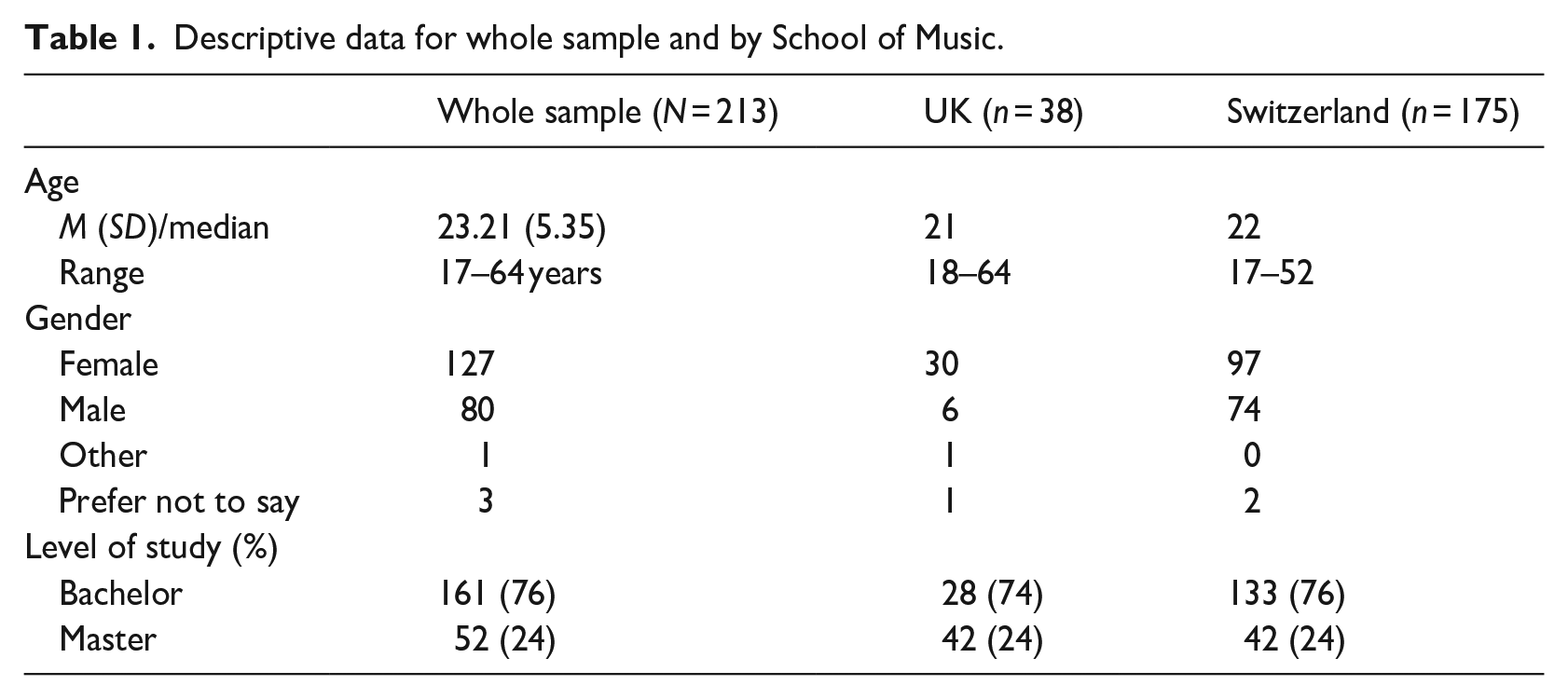
Of the whole sample (N = 213), 167 (78%) participants completed the questionnaire in German and 46 (22%) in English. Of the German respondents, 68 (41%) completed the questionnaire on paper and 99 (59%) and online. Of the English respondents, in Switzerland, 8 (4%) participants completed the questionnaire in English (online) and the rest of the English participants were from the UK (n = 38, 18% of the total sample).
In both schools of music, 70% were from their respective countries and 30% came from overseas. See Supplemental Table 1 for full description of participant nationalities. See Supplemental Table 2 full description of music courses per school.
Overall, 67% of the sample reported that they studied Western art music, 20% jazz, 7% Western pop and rock, 2% folk and 4% studied multiple music genres according to pre-classified options. Most participants studied voice (24%), strings (26%) or piano (keyboard 19%), though the sample included contemporary (e.g. electric bass), and folk instruments (e.g. Schwyzerörgeli, yodelling).
Inferential statistics
The mean number of years spent playing the main instrument did not differ between schools (p > .5, Mean for schools combined = 12.87 (SD = 5.57). In the UK, the Mean was 13.37 (SD = 8.66) and in Switzerland 12.76 years (SD = 4.67). Students reported playing from 0 to more than 40 concerts per year prior to the COVID-19 pandemic, with 47% playing between 7 and 20 concerts per year. However, schools did differ significantly in the number of concerts their students reported playing on average per year (pre-Covid), t(53.90) = −2.59, p = .006, d = 0.47, CI [−0.16, −1.27]. In the UK, most students reported playing 1 to 3 concerts per year, whereas in Switzerland, students played between 7 and 20 concerts per year. See Supplemental Tables 3 to 5 for full descriptives.
As shown in Table 2, although there were no statistically significant differences between schools for general study, significant differences were apparent for music practice (hours per week). Related to this in terms of potential impact on health and wellbeing, we also investigated students’ side jobs. Overall, more than half of the students (55%) reported having a side job (Mean hours per week = 9.25, SD = 6.14). Although the number of students who had side jobs did not differ between schools (p > .3: UK = 47%, Switzerland = 56%, the number of hours per week (hpw) doing the side job did. Although fewer students in the UK had a part-time job compared to Switzerland, they worked on average 4.5 more hours per week. See Supplemental Table 6 for further details about the types of part-time jobs music students reported doing.
Work, study and music practice hours by school.
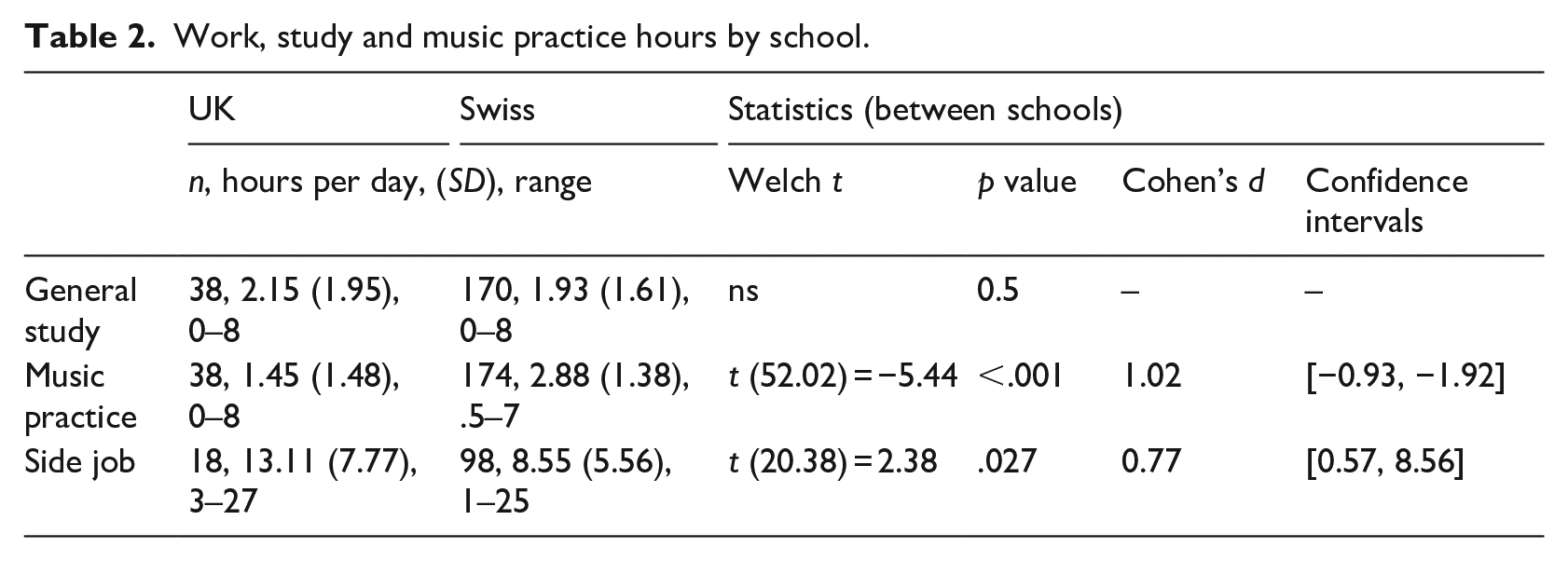
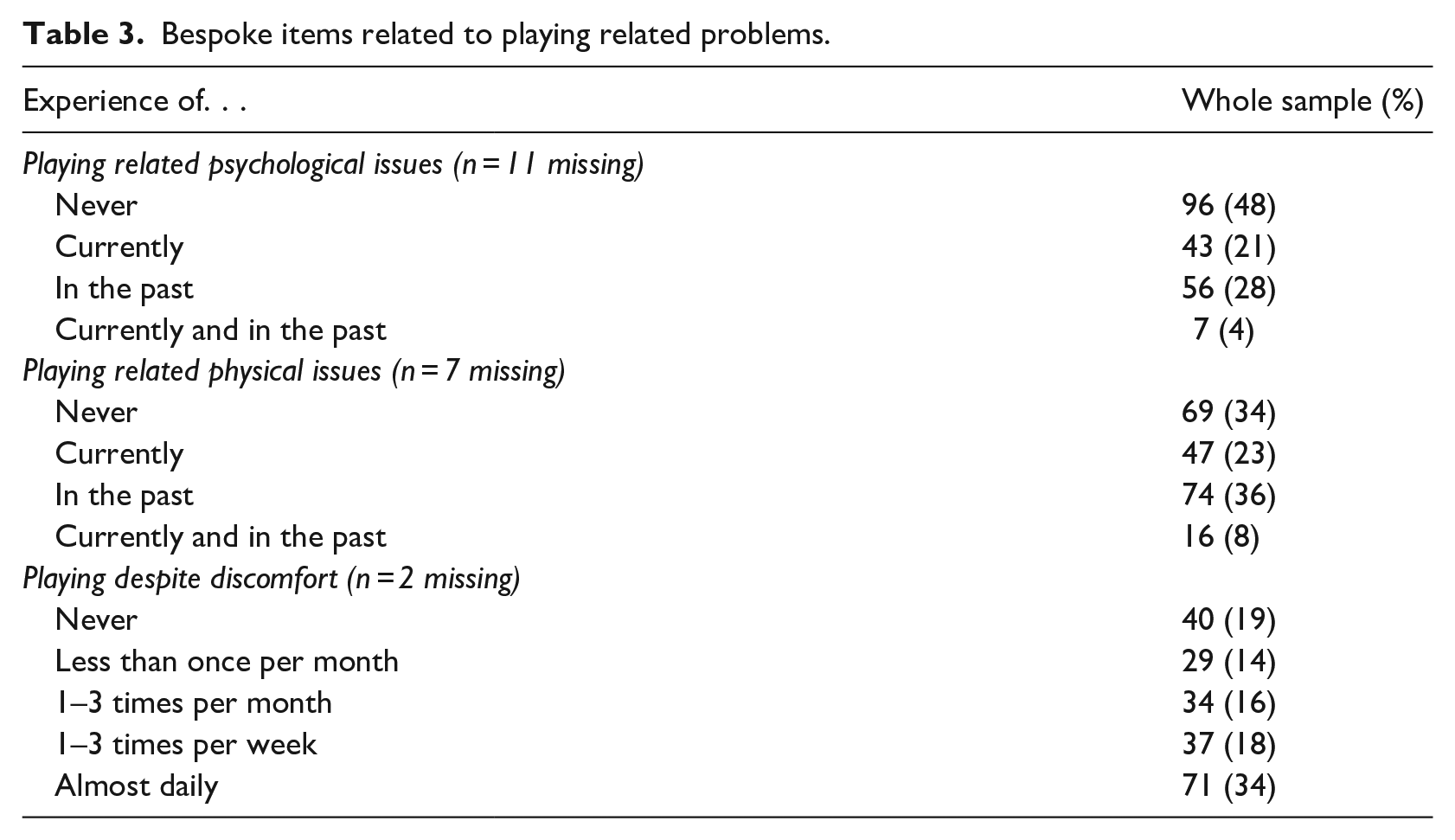
Table 3 shows the results for the whole sample for the bespoke items for playing-related experiences. Overall, 53% of students reported suffering with psychological playing-related issues either currently or in the past and 67% reported suffering with physical playing-related issues either currently or in the past. Moreover, 51% of students reported continuing to play their instruments despite physical discomfort at least once per week (34% almost daily). There was a significant difference between schools for playing-related psychological issues, t(49.05) = −2.99, p = .002, d = 0.61, CI [−0.80, −0.21]. More music students at the UK school (41.2%) reported currently suffering with their psychological health than at the Swiss school (16.5%), and a high proportion of Swiss school students (54.3%) stated within this item that they had never suffered with psychological health concerns. There were no significant differences between schools for music-related physical health concerns (p > .2) or practising despite discomfort (p > .3).
Bespoke items related to playing related problems.
COVID-19 (RQ1A)
Overall, 145 (68%) students reported they were concerned that COVID-19 could have a negative impact on their musical activity. Students in the UK were more concerned about the negative impact of COVID-19 on their musical activity than in Switzerland (UK = 36 (95%), Switzerland = 109 (62%), t(122.19) = −6.25, p < .001, d = 0.72, CI [−0.22, −0.43].
The WHO-5
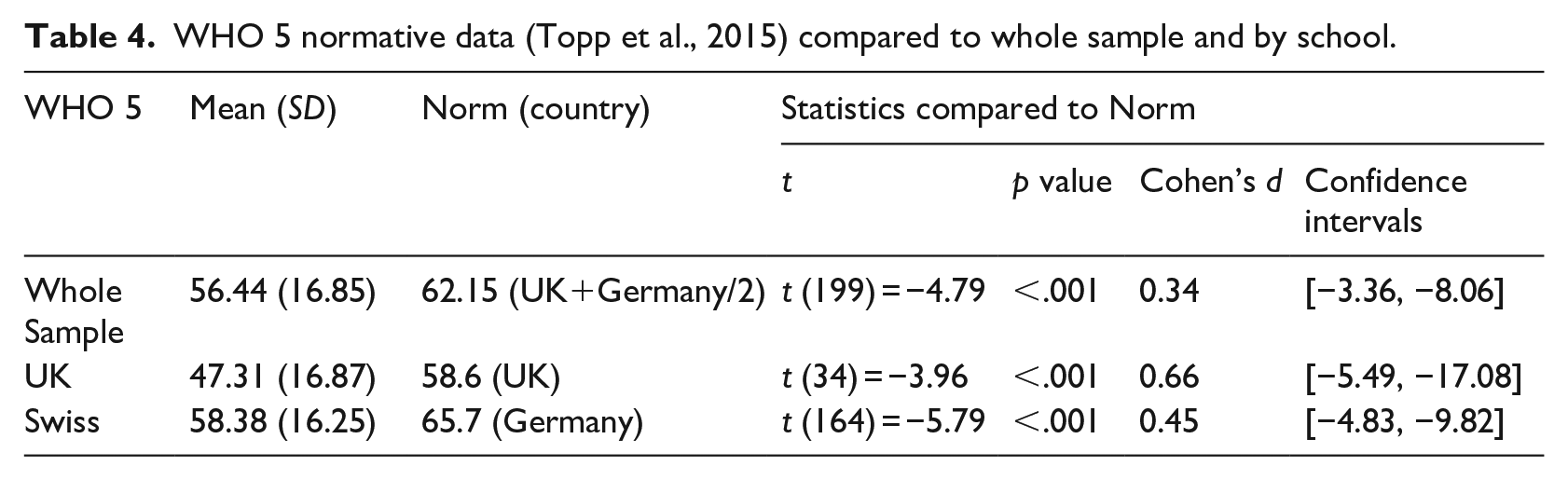
As a general measure of wellbeing, we compared scores against the normative data published for the WHO-5 in Topp et al. (2015, Supplemental Table 2). As shown in Table 4, the mean score of the schools combined was significantly lower than the mean of the combined published norm (UK/Germany) suggesting that students in both schools scored lower than population norms. There was also a significant difference between schools, t(48.30) = -3.55, p < .001, d = 0.68, CI [−5.06, −17.06]. The mean percentile score in the UK (M = 47.31, SD = 16.87) was lower than for Switzerland (M = 58.38, SD = 16.25). The WHO-5 scores did not significantly differ according to gender, level of study (Bachelor’s/Master’s), whether the student had a side-job or not, or according to type of instrument/musical genre played.
WHO 5 normative data (Topp et al., 2015) compared to whole sample and by school.
The WHO QoL-BREF
The WHO QoL BREF provides domain scores within the framework of wellbeing, and these can also be measured against population norms per country.
Students in both schools scored significantly below German and UK norms for Physical and Psychological health but both schools scored significantly higher (and did not differ from each other) for Social Relations and Environment as shown in Table 5.
WHO QoL BREF comparison against normative scores (Skevington et al., 2004) by school and country.
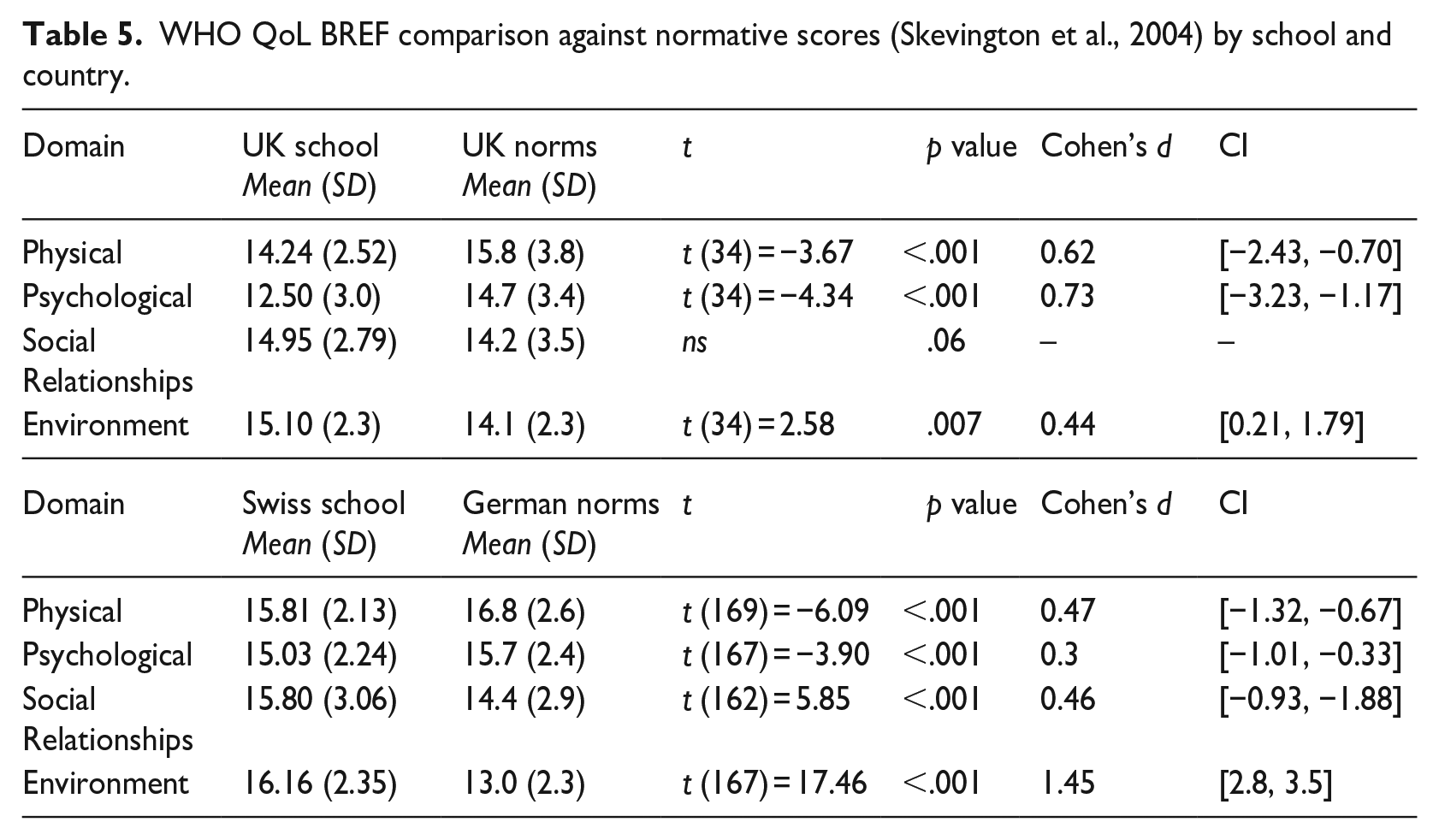
Between schools, the UK scored significantly lower than Switzerland, in the Physical (t(44.56) = −3.42, p < .001, d = 0.71, CI [−0.15.49, −4.01]) and Psychological domains (t(42.18) = −4.72, p < .001, d = 1.06, CI [−22.58, −9.06]). There was no significant difference between schools for Social Relationships (p < .1), nor for the Environment (p < .02) once adjusted for multiple comparisons.
Responsibility for wellbeing (RQ2)
Schools did not differ in terms of their beliefs about the ratio of self/institutional responsibility for their wellbeing (p > .05). As shown in Figure 1, there was a bi-modal split in beliefs about whether the self or the institution had responsibility for wellbeing. Nevertheless, at least 95% of students believed their institution had at least a 20% responsibility for their wellbeing.
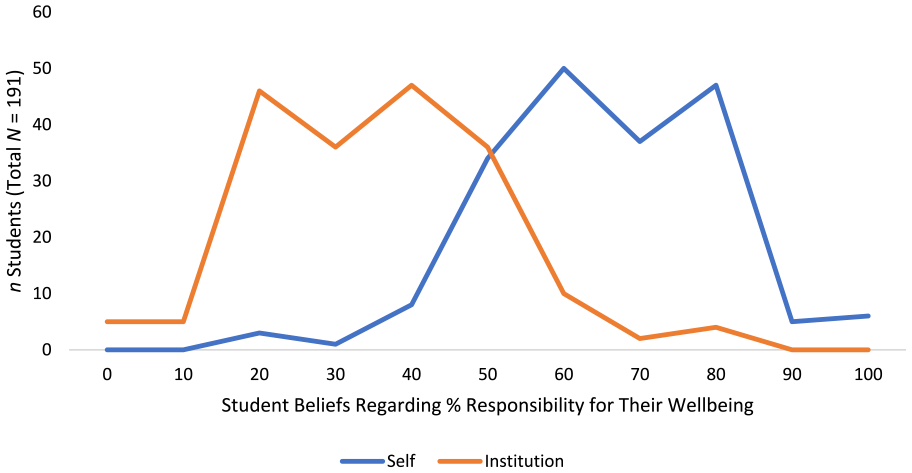
Music student assessment of locus of responsibility for their wellbeing (self/institution).
Ranking of factors in success (RQ2)
In response to our task asking participants to rank, in order of importance, the three concepts of talent, luck and practice in relation to their success as musicians, there was a significant difference between schools t(192) = 2.52, p = .012, Mean diff = 0.82, CI [0.18, 1.49], but this statistic did not withstand adjustment for multiple comparisons. For full transparency, the first position rankings are illustrated in Figure 2. Music students in the UK school ranked Talent as the most important factor in success, whereas music students in Switzerland ranked Practice as the most important factor in success.
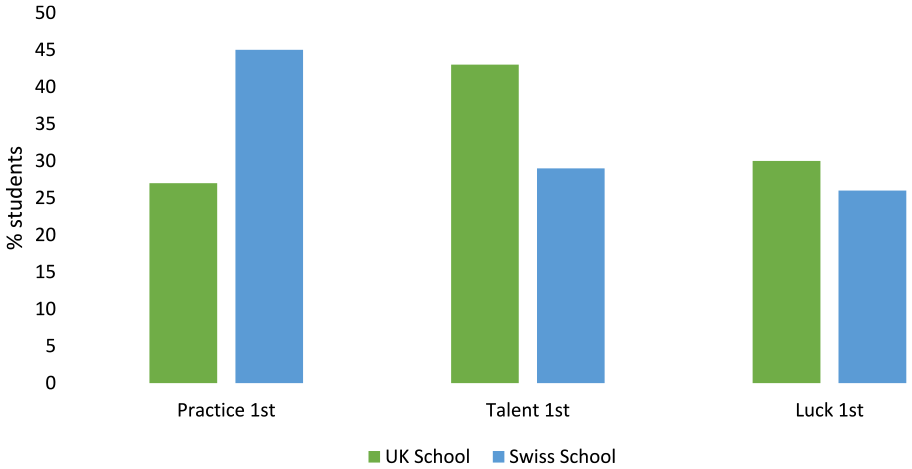
Music student rankings of three factors related to their success as musicians.
The following measures were used in relation to RQ3.
Self-efficacy (ASKU)
The ASKU is a German tool and we can therefore only compare our data with a German norm (M = 4.21, range 1–5). There was no difference between schools (p > .6): UK M = 3.69, SD = 0.57, Switzerland M = 3.75, SD = 0.71). We therefore compared the whole sample (M = 3.74, SD = 0.69) against the German norm and found a significant difference, t(201) = −9.72, p < .001, d = 0.69, CI [−0.38, −0.57] with the sample mean lower than the German norm for this measure of self-efficacy.
Mindset (in relation to musical talent)
As this was a newly adapted test for this study, we conducted Cronbach alpha tests on the data. For the UK only sample, Cronbach’s alpha = .78 and for Switzerland = .84. Once the datasets were combined (N = 213), Cronbach’s alpha = .84 suggesting the measure has satisfactory internal consistency (Tavakol & Dennick, 2011). Scores for items 1 and 3 were summed to produce a score for Fixed (Entity) mindset. Scores on items 2 and 4 were summed to produce a score for a Growth (Incremental) mindset. The range of scores possible for each domain was therefore 2 to 12, with a higher score suggesting more disagreement with that mindset. Reassuringly, the mindset scores were highly negatively correlated r(202) = −.79, p < .001. However, neither mindset was associated with the ASKU score of self-efficacy (Fixed p > .5, Growth p = .058).
There were significant differences between schools for both mindsets:
Fixed (entity), t(103.98) = −7.4, p < .001, d = 0.93, CI [−1.71, −3.81]: UK M = 4.42, SD = 1.72, Switzerland M = 7.18, SD = 3.18.
Growth (incremental), t(75.75) = 5.35, p < .001, d = 0.78, CI [1.52, 3.32] equal variance not assumed: UK M = 9.05, SD = 2.3, Switzerland M = 6.63, SD = 3.26.
Overall, the difference between mindsets was not significant, p > .3. Music students were just as likely to have a Growth (incremental, whole sample M = 7.09, SD = 3.24) as they were a Fixed mindset (entity, whole sample M = 6.66, SD = 3.15).
To explore this new measure further, we conducted a series of correlational analyses to try to understand which, if any, of the other variables were associated with a particular mindset. The only significant findings were that Covid career concern was associated positively with a fixed mindset, r(213) = .307, p < .001 and negatively with having a growth mindset r(202) = −.291, p < .001. Neither age, gender, nationality, instrument type nor music genre were associated with either mindset.
Regression
Using the whole sample data, we undertook multiple regression anaylsis to explore which factors predicted physical and psychological health (Domains 1 and 2 from the WHO QoL BREF). Collinearity diagnostics were in acceptable ranges for all statistics reported below.
The only significant predictor of physical health was self-efficacy F(1, 199) = 29.02, p < .001) with the adjusted R2 value indicating that 12.3% of variance was explained by the ASKU score of self-efficacy (β1 = 7.41, p < .001).
A significant model was also found for psychological health F(1, 193) = 30.02, p < .001) with the adjusted R2 value indicating that 23.1% of variance was explained by two predictors; the ASKU score of self-efficacy (β1 = 10.58, p < .001) and the Fixed Mindset score (where a higher score denotes disagreement with that mindset; β1 = 1.15, p < .001).
Finally, using the WHO-5 percentile score as the outcome variable in a multiple regression analyses, a significant model, F(2, 196) = 113.51, p < .001) indicated that 53.7% of the variance could be explained by Physical Health (β1 = .247, p < .001) and Psychological Health (β1 = .607, p < .001) as unique contributors to predicting wellbeing in music students in HE.
Discussion
This study aimed to explore music students’ perceptions of their health and wellbeing. Our findings highlight that over half of the sample had experienced physical or psychological health concerns and were likely to continue performing or practising despite experiencing physical pain or discomfort (RQ1). The ASKU measure of self-efficacy and disagreement with having a fixed mindset were both predictive factors of music students’ psychological health. At this stage it is not possible to say that a high score for a fixed mindset (i.e., disagreement with that mindset) is the same as having a growth mindset. Therefore, we have focussed on the ASKU measure of self-efficacy as this also predicted physical health, and replicates the findings of Cohen and Panebianco (2022) (RQ3). Further research is needed on this topic in order to explore the extent to which cultural norms in mindset may potentially impact on musicians’ perceptions of their health and wellbeing (Lou & Li, 2023).
The replication of the finding that self-efficacy is a key predictor of musicians’ health is an important step forward in understanding how to better support students (Burland et al., 2022). Research exploring teaching practices which support students’ self-perceptions as musicians provides some support for this finding. For example, Bonneville-Roussy et al. (2020) have demonstrated that autonomy-supportive teaching practices support a sense of wellbeing in music students. This type of teaching means that, rather than exerting a controlling influence on music students, teachers instead provide a supportive structure that enables individualisation of content according to students’ self-identified requirements.
Autonomy is one of the three pillars of self-determination theory (SDT, Ryan & Deci, 2000). SDT suggests that self-perceptions of autonomy, competence and relatedness are important components of self-actualisation. In the present study, we found that whilst music students in both schools scored lower than normative data for Physical and Psychological health according to the WHO QoL BREF, they scored higher than norms for the factors of Social Relations and Environment. This suggests that musicians’ networks and the places within which they work and study afford some psychological capital and offer some protection from risk factors related to physical and psychological health. Knowing this can provide a mandate for HE music institutions to build non-competitive social activities to promote peer support.
This approach could be part of a wider agenda to promote health and wellbeing in music schools, especially as almost all students, both in the UK and Switzerland, consider their home institution to be responsible for at least 20% of their development in this area (RQ2). The social culture of the school inevitably impacts on its students and is an important source of communication regarding key values, principles and pedagogical models that could boost self-efficacy and more effectively prepare music students for their professional lives (Chesky et al., 2006; Kelley et al., 2022).
We have also provided an insight into music student health and wellbeing across two HE institutions during the COVID-19 pandemic (RQ1A). Although music students reported physical and psychological wellbeing below normative data, it should be acknowledged that the normative data was collected 7 years prior to the pandemic. Whilst we cannot know whether large scale studies of population wellbeing will provide us with more accurate comparison data, we are continuing to collect data pertaining to music student health and wellbeing. Such longitudinal studies will help us understand the direct and long-term impact of the COVID-19 pandemic on musicians. Although we did not ask specifically about the impact of Covid on physical and psychological wellbeing, we did ask whether music students were concerned about the impact of the pandemic on their careers. The majority (68%) were, though there was a noticeable and significant difference between music students in the UK (95% concern) and in Switzerland (62% concern) where lock-down protocols were much less severe than in the UK.
The only directly measured effect of the Covid career concern variable was a positive correlation with a fixed mindset and a negative correlation with having a growth mindset. This suggests that when students disagreed with having a fixed mindset, they had more concern about the effects of Covid on their music career; where students reported agreement with a growth mindset, they were less concerned about the effects of Covid on their music career. In the present study, while the data showed a continuum of beliefs about both mindsets, music students in the UK school appeared to lean towards a growth mindset, while those in Switzerland were divided between growth and fixed mindsets.
The roles of mindset and self-efficacy as predictors of musicians’ health offer valuable insight into the kinds of learning experiences that might be prioritised within teaching activities. Providing opportunities for students to learn from others (e.g. peers and mentors), to seek and use feedback constructively, to try new things (and potentially fail safely), to have opportunities to feel competent and successful and to recognise the value of reflecting on how they learn may be important tools for educators to weave more routinely into their teaching practices (whether they happen in an individual vocal/instrumental lesson or in a lecture theatre or seminar group) (Matei & Ginsborg, 2022; Panebianco-Warrens et al., 2015). Being prepared for uncertainty or the need to adapt and be flexible is an oft reported characteristic of musicians’ work (Blackstone, 2019), so the ability to adapt to new challenges is critical as we saw during the pandemic when musicians rapidly adapted and developed new ways of working and teaching. As we grapple with the implications of Artificial Intelligence and digital innovation it is only right that educators reflect on the ways in which they are able to respond in order to support students with the right skills and attributes to meet the challenges they may face as they navigate their working lives.
There are several limitations to this study, not least the lack of comparison group, but also the difference in sample sizes between schools. Nevertheless, we were struck by the similarities and some of the differences apparent in the data. Greater contextualisation of the institutions (e.g. in relation to teaching and learning activities, and wider social and environmental features of the different courses and institutions) would have been useful for understanding some of the observed differences and would have further enhanced the potential implications of the research. Integrating opportunities to hear more about individual student stories, with a qualitative approach, would have also enriched our insight into key influences and experiences in relation to perceptions of health and wellbeing. Further research is currently being conducted in both institutions to both challenge and support these findings.
Conclusion
To summarise, we conducted a cross-sectional study comparing the self-reported health and wellbeing of music students in two HE institutions based in Switzerland and the UK. The music student samples were broadly similar with both groups scoring significantly lower than normative scores for general health and wellbeing: Two thirds of the participants reported physical playing-related concerns, and half reported psychological playing-related concerns. At this time (2020/21), music students in the UK (95%) were more concerned about the impact of COVID-19 on their careers than those in Switzerland (62%). Offering some areas for optimism, the music students scored significantly higher than normative values for the specific domains of ‘environment’ and ‘social relations’ in relation to quality of life, and believed there was a partnership between themselves and their institutions regarding responsibility for health and wellbeing. Moreover, higher levels of self-efficacy predicted overall health and wellbeing in music students suggesting the potential value of programmes which focus on empowering students through good practice. We included a novel measure of musical mindset to explore the potential contribution of beliefs about the malleability of musical talent in relation to health and wellbeing. A higher score on fixed mindset (denoting disagreement) seemed to predict health and wellbeing, though we did find a significant difference between schools (UK = growth, Switzerland = evenly spread between fixed and growth) which suggests that cultural differences may play a role. As more than half of the students continued to play despite discomfort (34% of these on a daily basis), further research regarding the mindset of music students in relation to talent, skill and health and wellbeing, may provide insights about vocation-specific stressors in higher music education.
Supplemental Material
sj-docx-1-ijm-10.1177_02557614241262798 – Supplemental material for Investigating the health and wellbeing of music students: Perspectives from schools of music in Switzerland and the UK
Supplemental material, sj-docx-1-ijm-10.1177_02557614241262798 for Investigating the health and wellbeing of music students: Perspectives from schools of music in Switzerland and the UK by Dawn Rose, Karen Burland, Kate Blackstone and Elena Alessandri in International Journal of Music Education
Footnotes
Author Note
Presentation of preliminary results at ICMPC 2021 (spoken presentation – online)
Author contributions
Declaration of conflicting interests
The author(s) declared no potential conflicts of interest with respect to the research, authorship, and/or publication of this article.
Funding
The author(s) disclosed receipt of the following financial support for the research, authorship, and/or publication of this article: This project was supported by Lucerne University of Applied Sciences and Arts and University of Leeds.

Supplemental material
Supplemental material for this article is available online.
Notes
References
Supplementary Material
Please find the following supplemental material available below.
For Open Access articles published under a Creative Commons License, all supplemental material carries the same license as the article it is associated with.
For non-Open Access articles published, all supplemental material carries a non-exclusive license, and permission requests for re-use of supplemental material or any part of supplemental material shall be sent directly to the copyright owner as specified in the copyright notice associated with the article.
