




Abstract
This article investigates musical grit and sisu, inner fortitude, as predecessors of flow, flourishing and personal growth. Grit has been identified as an important factor for success. Our aim was to increase knowledge of the benefits of intensified music education for building grit, resilience and fortitude. Data were collected with mixed methods in 2020 from two schools and 96 children. Surveys were filled out by students in both music and regular classes. Qualitative data about music education experiences were collected through interviews and writing tasks from the music class students and interviews with their teachers. Music classes scored higher than regular classes in perseverance, certain dimensions of flow and musical flourishing. Musical flourishing correlated with playing years and had high correlation with self-efficacy, flow experiences and general well-being. The sequence of facing, but also beating, challenges as a group in musical performances and then feeling flow and flourishing seemed to be beneficial for children’s personal growth. Students in music classes learned not only musical skills, but also resilient and optimistic thinking related to their challenges. The theoretical model of Trust, Hope and Love was revised to display how sisu, the inner fortitude, advances flourishing.
Background
Introduction
Many Finnish comprehensive schools maintain music classes. They offer children the possibility to study all school subjects with other music lovers from third to ninth class. Common to all these classes is that they perform as a group regularly and have more music lessons in their curriculum. Some schools still follow an old tradition, where each music class forms an orchestra, and pupils take extracurricular playing lessons financed by their families. All Finnish classes sing and play at school, but in recent years, active attendance to extracurricular, self-funded playing lessons has declined compared to earlier decades of the history of music classes (Törmälä, 2013). As part of this study, extracurricular, voluntary playing studies were also made accessible in a highly multicultural school by the Start Playing! (2016–2022) project funded by the Finnish Ministry of Culture and Education.
Prior research in music education has identified that playing and learning music can have a variety of positive impacts on children’s intellectual development, self-confidence, social skills, well-being, concentration, and self-discipline (Hallam, 2010; Wolff, 2004). The meta-analysis of Román-Caballero et al. (2022) showed a connection between playing as a hobby and school success. In this study we focused on the particular aspect of grit and resilience as a potential benefit of playing and performing.
This article references an investigation from 2020, which examined whether intensified, well-structured music education—the combination of music class studies and extracurricular instrument studies—would relate to children’s musical grit, ways to feel flow, self-efficacy, musical flourishing, general flourishing, general school zest or even general perseverance. In the area of competitive sports, it has been noticed that intensive long-term work around one’s passion has the capacity to support children’s mental strength (Röning, 2023). The current study took place during the COVID-19 pandemic and was set up to increase knowledge on whether and how intensive and well-organized music education would support children’s resilience, inner fortitude, and thereby their positive growth. The study resulted in a newly constructed theoretical model of sisu as a special aspect of grit in a music educational context.
Theories of grit and sisu
According to Duckworth et al. (2007), grit consists of two elements: passion and perseverance. There has, however, also been criticism directed toward the dichotomy of the grit theory. Datu et al. (2018) have presented a triadic model, in which the third component of grit is adaptability to situations. Valdez and Datu understand that the capacity for emotion regulation and cognitive reappraisal mediates perseverance, gratitude and flourishing and enables bouncing back emotionally after failures (Valdez & Datu, 2021). According to Dweck (2006), having a “growth mindset”—trust in one’s own capacity to make progress—is important for good learning from the grit perspective. There are also some existing music educational studies about grit, but none of these provide a comprehensive theoretical explanation of the role of grit and the inner fortitude, sisu, in long music educational processes (Harpaz & Vaizman, 2023; Hospital et al., 2018; Persellin & Davis, 2017).
In facing extremely large challenges, one makes a choice between giving up and persevering in the borderlands of one’s endurance. For the latter option, one needs sisu. Lahti (2015) notes that sisu can be understood as a special type of grit. She defines sisu as a psychological capacity that helps one rise above one’s current resources. It is a kind of volitional state of action that arises within a person. Lahti (2022) has created the basis for the sisu theory in her dissertation. She understands sisu as an inner fortitude and gentle power that helps people to adjust their own behavior, to survive, and to find elevation. Sisu also has aspects of transcendence and interconnectedness; using it can even be understood as a way of building a better life (Lahti, 2022, 2023). For Daisley (2022), the concept of fortitude means both resilience and inner strength. Based on a vast number of studies, he concludes that human fortitude develops by taking responsibility as a member of some community, by finding a positive identity and by having a feeling of control.
Flow as an element of flourishing
According to the PERMA theory, human flourishing consists of the following elements: positive emotions (P), engagement (E), relationships (R), meaning (M), and accomplishment (A) (Seligman, 2011). Well-organized musical activities have been noted to have a capacity to promote human well-being in all these dimensions (Olander & Saarikallio, 2022; Croom, 2015). The research of Lee et al. (2017) displayed how investments in music making in schools led to PERMA-related well-being.
Csikszentmihalyi (1990) studied how people feel when an experience is at its most positive. He realized that flow (engagement) activated and intensified talented teenagers’ zest and grit to practice (Csikszentmihalyi et al., 1997). According to the flow theory, certain factors are typical of the flow experience. These include a sense of control, merging to action, losing reflective self-consciousness, distortion of temporal experience, and feeling the activity as intrinsically rewarding (autotelic experience). An important prerequisite for flow is that the task be challenging—in somewhat of a discomfort zone, but not overmatching existing skills (Csikszentmihalyi, 1993). Flow has been found to produce many benefits, such as a subjective experience of well-being (Fritz & Avsec, 2007), satisfaction with life, and a general feeling of happiness (Csikszentmihalyi, 1990). While playing music, a person can feel one with the music in a flow mode (Araújo & Hein, 2019). Anyone can experience the state of flow. It does not necessarily have to be connected to performance in art, science, or sports. When a person focuses their full attention on the present moment in a state of flow, the problems and worries that otherwise drain psychic energy usually disappear. People who have been able to experience the flow state often want to invest a lot of energy to experience it again (Csikszentmihalyi et al., 1997).
Trust, hope and love as maintainers of grit
The grit model of Trust, Hope, and Love zooms deeper into the two basic components of grit—perseverance and passion (Duckworth & Quinn, 2009)—in a music educational context. The model displays a situation in which one has intrinsic motivation to attain an autonomously chosen, meaningful goal. The perseverance component gets supported by Received love and Trust, whereas the passion component gets supported by Hope and Shared love. (Figure 1).
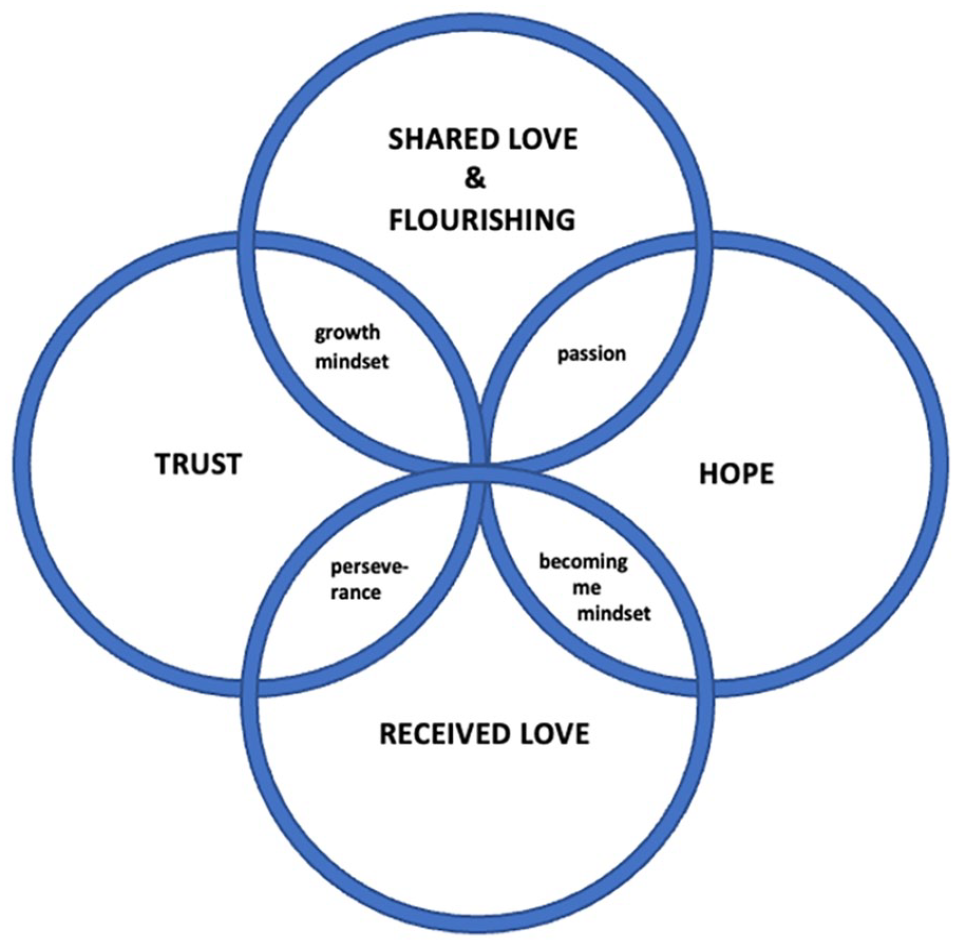
The grit model of Trust, Hope, and Love, a simplified version of the Model of Positive Music Education and grit, based on Olander & Saarikallio, 2022, 87–109.
Received love is about social and material support and culture. Values are adopted. Children see role models and get opportunities to experience various things that feel interesting and appealing. This part of the model emphasizes the importance of good support from home, school, society, etc. for the development of grit. Support is also needed for learning good habits of deliberate practice (Miksza & Tan, 2015).
With Trust, one believes that the goal is attainable and that enough support and resources exist to reach the long-term goal. According to Guo et al. (2023), trust, self-control, optimism and energy are the most important skills for academic and life success. Growth mindset (Dweck, 2006) provides trust in one’s own capacity to learn. Received love and Trust are especially important for the perseverance side of grit, even though all parts of the model are interconnected (Olander & Saarikallio, 2022).
Hope represents a person’s autonomous will to attain a meaningful and interesting long-term goal, skill or dream. The becoming me mindset refers to the idea that long-term goals also build one’s identity (Kroger et al., 2010; Tuomela & Tossavainen, 2015). Teenagers can have competing long-term goals (e.g. music vs. sports), in which pursuing one goal sometimes takes away the grit necessary to learn or improve at the other. According to Marcia (2002), it is beneficial for achieving a mature identity that teenagers question their old identity models from childhood. The new becoming me mindset component of the model is placed between Hope and Received love, because adopted values set the basis for the long process that in many cases leads to the search for authentic self (Csikszentmihalyi, 1993; James, 2015). With increased self-knowledge, both Trust and Hope can become either stronger or weaker in relation to the self-chosen long-term goal or dream.
Shared love represents an optimal state, which is carried in the minds of passionate and persistent people. It offers possibilities for both doing good (Martela & Ryan, 2020) and receiving good by using one’s personal strength or talent. In performing music, it is typical that artists offer enhancing experiences to the audience but also get enjoyment and feelings of flow themselves (Viljoen, 2018). We concluded that the component of Shared love and flourishing “ignites” Hope, by analyzing the following characteristics of PERMA-related flourishing in the context of children’s musical experiences: (1) emotions and compassion, (2) engagement and flow, (3) relationships and relatedness, (4) meaning and esthetic experiences, (5) accomplishment and self-expression, and (6) mind-body connection and health (Olander & Saarikallio, 2022).
Received love, Trust, Hope, and Shared love and flourishing are all relevant and mutually contributing aspects of grit in a music educational context. Adversity or meeting big challenges doesn’t have to lead to a total abandoning of one’s passion, dream, or long-term goal. Resilient thinking and optimism (Seligman & Schulman, 1986) or just keeping a volitional action mindset with sisu (Lahti, 2023) can help in beating the challenge, getting further, and learning new things. Continuous or unbeatable adversities often lead to fine-tuning the big goal a bit, which then can raise new hope and open a wiser path to the final goal and flourishing.
Resilience, hope, and optimism
Resilience is the psychological quality that allows people to heal emotionally, bounce back after meeting adversities, and come back at least as strong as before. Resilience is partly determined by genes, early life experiences and luck, but skills for building it can also be learned. Psychologists have identified optimism, ability to regulate emotion, and seeing failure as helpful feedback as factors that appear to make people more resilient (Masten & Reed, 2002). Resilience allows people to adapt to obstacles in a way that they can continue striving for their goals, which corresponds to the way Datu et al. (2018) include adaptability to situations as part of the concept of grit.
Anticipatory emotions, such as hope, are emotions about things that have not yet happened (Snyder et al., 2005). The studies of Day et al. (2010) show that hope can predict, even better than intelligence or previous success, future academic performance and success in studies. A correlation has been found between hope and perceived well-being (Alarcon et al., 2013). Optimism is about seeing the future positively. It gives energy and is also good for health (Hefferon & Boniwell, 2011; Peterson, 2000; Schacter & Addis, 2007; Seligman, 2011). Seligman and Schulman (1986) have developed an explanatory-style theory: Explanatory style means a tendency to offer similar kinds of explanations for different events. When people meet adversities, they create an interpretation of why these negative or positive things happen and whether the cause is internal or external, stable or unstable, and global or specific. Under this their theory, optimistic people conclude that the causes of setbacks are only external, changeable, or specific (Seligman & Schulman, 1986), whereas pessimistic explanations can escalate to catastrophizing (Reivich & Shatte, 2003).
According to Eisenberger (1998) students adopt “learned industriousness” by rewarding them for high effort and by giving them demanding tasks. This tendency to increased effort will then be generalized to new behaviors as well. The research of Fisher and Noble (2004) showed that “the effect of effort on positive emotions was fully mediated through performance, whereas interest had an effect on emotions beyond performance” (Fisher & Noble, 2004, 145).
Aim
The current study leans on an idea of “positive music education” as a new area of study that focuses on better understanding the mechanisms of music educational processes that promote experiences of living a good life and flourishing. In this study we first tested whether attendance at a music class relates to grit and grit-related constructs. We then elaborated on the potential mechanisms of the observed connections by investigating whether and how these constructs appeared in the experiences of music class participants. The specific research questions of this study were:
Are music classes higher than regular classes in grit-related factors including perseverance, passion, self-efficacy, flourishing, musical flourishing, and flow experiences?
In terms of psychological benefits (e.g. mental strength, personal growth and flourishing), what are the rewards of combining intensified, goal-oriented music activities with children’s normal school days? What are the roles of sisu and flow in this long-term process?
As a whole, this study was designed to provide new understanding of the specific role of sisu and flow as elements of a music educational process that can mutually promote learning and well-being.
Method and data collection
The current study was conducted using a mixed methods approach. Both quantitative and qualitative data were collected to provide complementary perspectives to the studied phenomenon. Quantitative investigation increased knowledge on what types of benefits specifically relate to being in a music class and having playing as a hobby, and qualitative data provided further elaboration at the conceptual level.
Participants
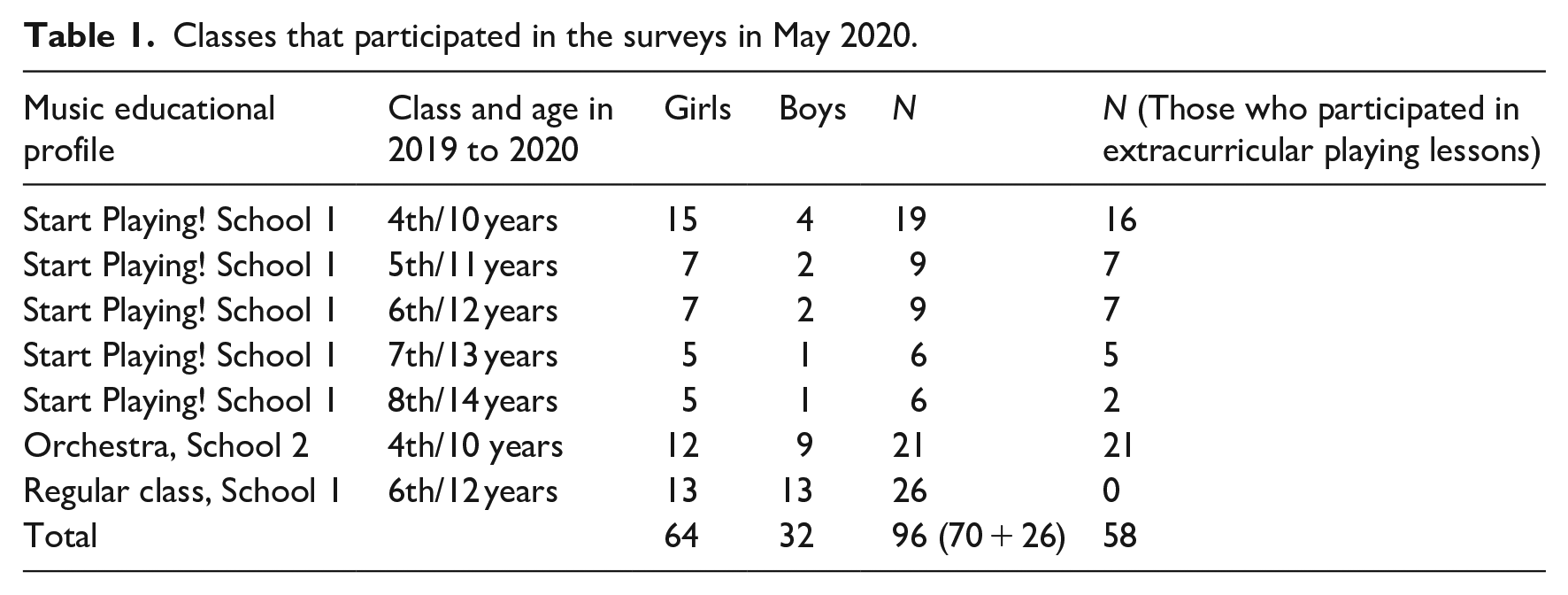
Research permissions were acquired from the school principals and the Human Science Ethics Committee of the University of Jyväskylä. Children and their parents were informed about the study and provided their consent in line with the ethical principles. Two schools, seven classes, and 96 children participated. Seventy of them studied at music classes, and 37% of those were boys. It is typical for boys to form a minority in music- and art-emphasized classes (Kuroila & Rimaila, 2017). The majority of the music class students (58 out of 70) also took extracurricular playing lessons as a hobby, while none of the students in regular classes did (Table 1).
Classes that participated in the surveys in May 2020.
Both schools were located in somewhat disadvantaged suburbs of the capital city area and followed the same overall curriculum. Ordinary classes had only one music lesson per week, whereas music classes had three or four.
Data collection
Data were collected through a mixed methods approach:
1) Children (N = 96) answered a questionnaire that was conducted in 2020. Grit was measured by using the Grit Scale (Duckworth et al., 2007; 10 items, 5-point Likert). Flourishing was measured using the Flourishing Scale (Diener et al., 2009; 8 items, 7-point Likert). Musical flourishing was measured by using a questionnaire prepared by Olander and Saarikallio (2022), based on the PERMA theory (5 items, 7-point Likert). Flow was measured with 7 items (4-point Likert), formulated based on Csikszentmihalyi’s (1990) definition and reflecting the contents of the Flow Short Scale (Rheinberg et al., 2003). Self-efficacy was measured with Jerusalem and Schwarzer’s (1992) general self-efficacy scale (GSE; 10 items, 4-point Likert).
2) Children (N = 16) from the sixth and seventh music class who volunteered were additionally interviewed about their relationship with music and their concert and flow experiences.
3) In autumn 2020, 13-year-old children from the seventh music class (N = 15) wrote about their experiences and thoughts about facing difficulties in learning music.
4) Semi-structured interviews were conducted with five music class teachers. Teachers were asked about their experiences of the music class operational culture including the goal-oriented preparation for performances.
Analysis
Analyzes were conducted in line with the mixed methods approach. Quantitative data from the surveys were analyzed using exploratory and comparative statistics. T-tests were used to compare mean ratings of perseverance, passion, self-efficacy, well-being, musical flourishing and flow between music class students and normal class students. Correlations (Pearson) were calculated to explore whether musical flourishing relates to general flourishing, perseverance, self-efficacy, and flow, as well as to the years of playing. The quantitative measures provided a way to explore how various aspects of sisu and flow-related experiences were linked to music class activities.
Qualitative analysis of the writing tasks and interviews focused on providing deeper conceptual explanations for the potential relatedness of music class activity and musical grit and flourishing. The music-education-focused grit theory of trust, hope and love (Figure 1) served as a basis for a theory-driven content analysis (Tuomi & Sarajärvi, 2018). Particular focus was placed on the appearance and role of experiences of sisu, flow and flourishing in this context in order to offer deeper knowledge about the specific role of sisu and flow as dialogical aspects of grit in the context of music education. The qualitative data were categorized according to these pre-existing theoretical concepts. Olander conducted the analysis, but in dialogue with Saarikallio about the interpretations in cases where the categorization choice was unclear. Student and teacher descriptions mainly aligned with the existing concepts and provided elaboration on how the expected concepts manifested in a music-educational context. However, during the analysis it was constantly evaluated whether the data were in accordance with former theories, or whether some new insight could be found about the content and relatedness of the concepts in order to allow emergent insight to complement the pre-existing conceptual understanding.
Finally, all data, both qualitative and quantitative, were used to refine a model about the role of sisu in a music education context. The combined results from the qualitative and quantitative analyses led to integrating the concepts of sisu as an essential predecessor of flow, growth, and flourishing.
Results
Music classes had higher general perseverance at the beginning of the pandemic
The last music class concerts before the lockdown were held in February 2020. After that, all singing and playing together became impossible for several months. Children responded to a set of surveys when they finally returned to school in May 2020.
Music class students appeared to have higher perseverance (measured by the Grit Scale) compared to the students of the control group. They also experienced more flourishing caused by music (Table 2). A trend could be observed for music classes also having higher mean scores for general flourishing, flow, and self-efficacy, but these differences remained non-significant in two-tailed tests.
Comparison of music classes and normal classes in perseverance, passion, self-efficacy, well-being, musical flourishing, and flow (2020).
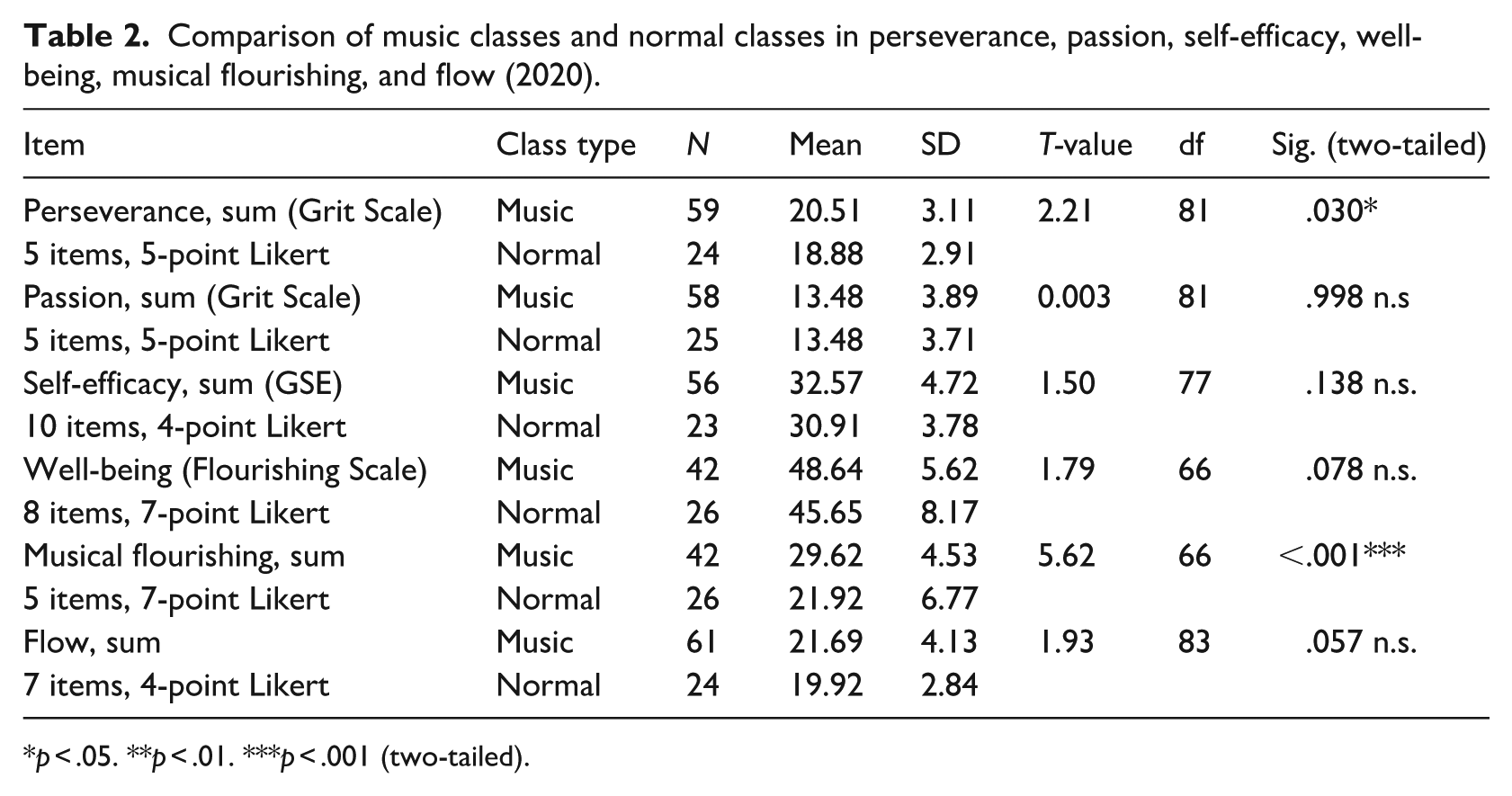
p < .05. **p < .01. ***p < .001 (two-tailed).
Sisu, the optimistic and resilient attitude in facing challenges, emerged as a characteristic feature of children’s experiences
Qualitative data provided knowledge on how the observed perseverance may develop as a result of music class participation. In autumn 2020, the students of the seventh music class of the multicultural school (school 1) in this study were asked to write and explain how they talked to themselves when they confronted adversities in learning music. These 13-year-old children had already benefited from 4 years (2016–2020) of accessible playing lessons offered by the Start Playing! project. The grit model of Trust, Hope, and Love (Figure 1) worked as a basis for this analysis. Learning to play well and performing music to audiences is often about challenging oneself. Children’s answers revealed processes (components of the model) that got activated in facing such challenges, reflecting high grit and sisu. An overall finding of the data was that these children demonstrated high optimism and efficient coping strategies in responding to setbacks and challenges, which helped to maintain their self-efficacy and willingness to learn new skills.
First, we detected a tendency to interpret challenging situations in an optimistic way. Some children used a strategy to simply keep their growth mindset and practice more. They understood that it is totally acceptable and normal that learning just takes its time. This way of thinking supported trust in the fact that learning is controllable (Seligman & Schulman, 1986):
- I only think that it is practicing that makes a master. (Growth mindset)
- I thought that I will learn this soon! (Trust)
- It is ok to be lousy at first, because nobody is excellent in anything right away. (Becoming me mindset)
Difficulties could be seen as new learning opportunities; after analyzing the causes of errors, it is possible to learn from mistakes. Long-term music studies with many experiences of beating difficulties had taught this girl learned industriousness:
- Everything has not been easy, but you can learn from everything. (Growth mindset)
The next writer might be familiar with catastrophizing (Reivich & Shatte, 2003), but he says to himself that he is not that kind of a person. With such self-efficacy, the whole world doesn’t seem to collapse just because of some possible small mistakes.
- I’m not that kind of a person that immediately thinks that everything goes wrong. (Trust)
This child has a strategy of trying to relax herself consciously. Part of her coping strategy was the awareness that the final cause of her stage fright might be the fear of mistakes (maybe just her own perfectionism). She tries to relax, and then she decides not to condemn herself if mistakes happen during the performance:
- I have always suffered from stage fright. I always try to relax myself and think why I am nervous, and I say to myself that it doesn’t matter if I make mistakes. (Trust & Received love, self-compassion)
These children had developed trust that they will learn. They built optimism by saying to themselves that situations are changeable and controllable. They had experiences of meeting difficulties, but also of beating them, which had built a kind of trust in the fact that if you just keep on practicing, you’ll learn:
- I think that I can do this! (Trust & Hope)
- Usually I try so long, till I succeed. (Perseverance)
One strategy was to look at everything from a bigger perspective. If some little mistakes happen, that doesn’t mean that all the charm of the performance is gone. This answer shows strong trust in the performer’s own skills:
- I have more success than mistakes in my playing. (Trust)
Being able to forget and just go on with one’s studies is also important for building trust. Rumination or continuous thinking about failures would only lead to helplessness. This child understood that. She analyzed her mistakes and tried to learn from them. After that, her strategy was to try to forget those mistakes, so that they wouldn’t have any negative emotional function:
- If something goes wrong, I try to think how I could do better, and I try to forget. (Growth mindset & Hope)
Music itself and its healing functions were very important to this girl. A pure passion for music made her practice with grit.
- Music is the thing in life that makes me feel better, and if I wouldn’t succeed in something, I just think that it doesn’t matter. I continue and develop my skills. You cannot always succeed. (Passion & Shared love)
Children had developed various coping strategies for maintaining their optimism and grit. They showed ability for cognitive reappraisal (Valdez & Datu, 2021). Learning music at music classes is goal-oriented, but learning happens in a safe, familiar group and in an encouraging environment. It can be interpreted that this healthy combination of challenges and successes in the area these students had passion for had activated their courage to solve problems and helped them to keep their curiosity and zest in learning. Having good musical skills is valued inside music class groups; that environment supported keeping hope and maintaining trust, regardless of facing some musical challenges and adversities as well.
Music class students reported higher scores on certain aspects of flow
Next, we tested whether music class participation would relate to experiences of flow. The idea of flow was carefully explained to the children when answering the flow questionnaire. The children could think about any action (from a football match or school examination to music class concerts) in which they had had to concentrate intensively, and for which the challenge had been at the same time hard but still in balance with their skills. It was also explained to the children that flow can be experienced in any area of life (Habe et al., 2021; Nakamura & Csikszentmihalyi, 2002, pp. 89–105). The mean ratings of each individual item of the Flow Scale were compared between the music class students and normal class students (Table 3).
Comparison of the Flow Scale items between music classes and normal classes (2020).
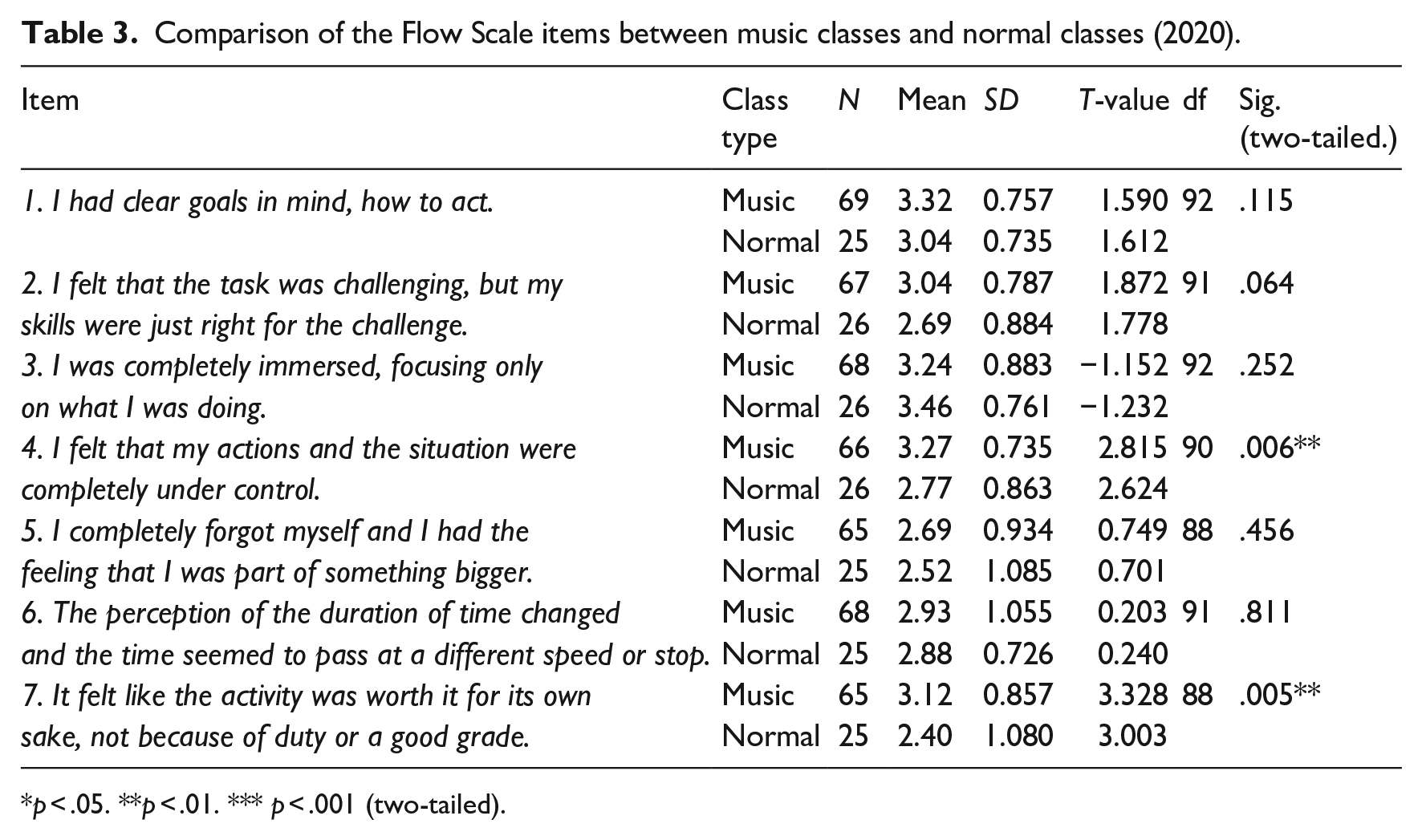
p < .05. **p < .01. *** p < .001 (two-tailed).
Differences were found in two flow dimensions as measured by the single-item ratings. Music classes felt more often that they had (4) feelings of control and (7) feelings of doing an activity for its own sake—from pure passion and not because of duty or trying to get a good grade. Music classes thus demonstrated higher scores on items addressing both control and passion. The item about working with something challenging and having skills just right for the challenge (2) also approached significance.
Musical performances and goal-oriented rehearsals offered ambitious and meaningful shared goals
Qualitative data provided insight into the potential development process of flow experiences as part of the music class activities. The descriptions painted a picture of an important path from the shared, goal-oriented, and ambitious rehearsals all the way to rewarding performances. For instance, at school 2 in this study, music classes had 2 hr of orchestra rehearsals every week, situated inside normal schooldays. These rehearsals for these 10-year-old kids seemed to inspire both teachers and children to try their best and enjoy of the challenge—sometimes in a little bit of a discomfort zone:
I sang as a model, so when a chord comes, the saxophones know how to count and then, how the drummer plays (duu-tschut-shu, duu-tschut-shu. .) with swing. Then we were grinding almost one student at a time that one bar with chromaticism, and with triplets. That’s how it was practiced, so that everyone knew what tunes were there. It also went well, when the piece was played to the Texans (foreign visitors to the school) – slower, at the training tempo – but they were absolutely astonished, just like me!
Clear structures supported maintaining a high artistic level and the culture of grit. This is how one teacher explained the system:
If you have already been in the B choir during the second class, music class students can get to A choir directly, because they have already been tested. But then from other classes you can also apply for the A choir if you have sung in another choir for a year.
Preparing for concerts was very goal-oriented and ambitious at both schools in this study. When children were well trained for concerts, this freed up resources for interpretation and enjoying of the performance.
Music class concerts seemed to offer children rewarding experiences of participation and flourishing, and very positive memories. This girl from the ninth class of the multicultural school had attended an ambitious school musical project, which was made in collaboration between music classes and a local music institute that organized the Start Playing! project.
Well, that reminded me of all those songs and those funny lyrics. And then maybe the best thing about it was that I got to be with so many people at the same time and I could sing with all my might. And there were so many different songs with that special humor in them. The lyrics were super funny, so it was really fun to perform. It left a lot of good memories! It was wonderful! Mom was truly hyped. She was just that. . oh my god, you have performed with X (the name of a Finnish pop star legend).
Finally, it is important to note that the children’s descriptions of the concerts were not only about memorable and rewarding flow experiences for themselves. The concerts essentially offered a forum to share this joy with family members (Shared love), and they served as places to foster and demonstrate home support (Received love). This type of support was not dependent on the families’ education or financial situation, but the relevant aspect was that the children who studied at music classes came from families that loved and valued (and increasingly learned to value) music. At the music class concerts (of school 1) there were parents from many cultures, and one could sense high encouragement from the students’ homes.
Intensive music studies afford musical flourishing, which correlates significantly with well-being, flow and self-efficacy
As a final step, we took a deeper look into musical flourishing. Music classes perceived more music-based flourishing in all areas of PERMA (i.e. experiencing music as a source of positive emotions, engagement, relationships, meaning, and accomplishment; Table 4), even though music gave positive emotions and good feelings to all classes.
Comparison of music classes and normal classes in Musical Flourishing (2020).
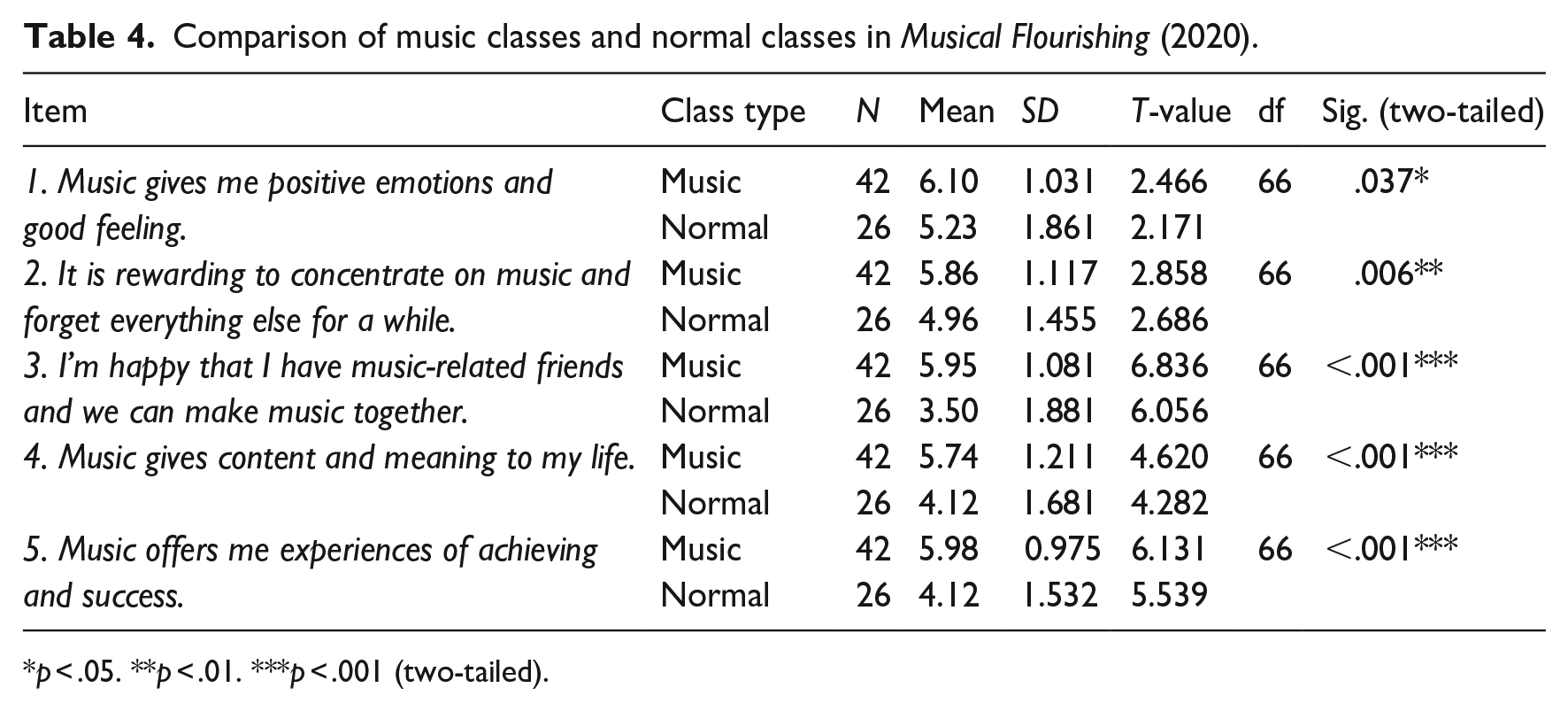
p < .05. **p < .01. ***p < .001 (two-tailed).
A correlation analysis also showed that the number of years that the student had spent at extracurricular instrument studies (= showing high musical grit) had a significant correlation with musical flourishing. The musical flourishing then further significantly correlated with higher general flourishing (well-being), higher general self-efficacy, and higher general flow experiences (Table 5).
Correlations (Pearson) of musical flourishing, perseverance, self-efficacy, general flourishing, flow and playing years in May 2020.
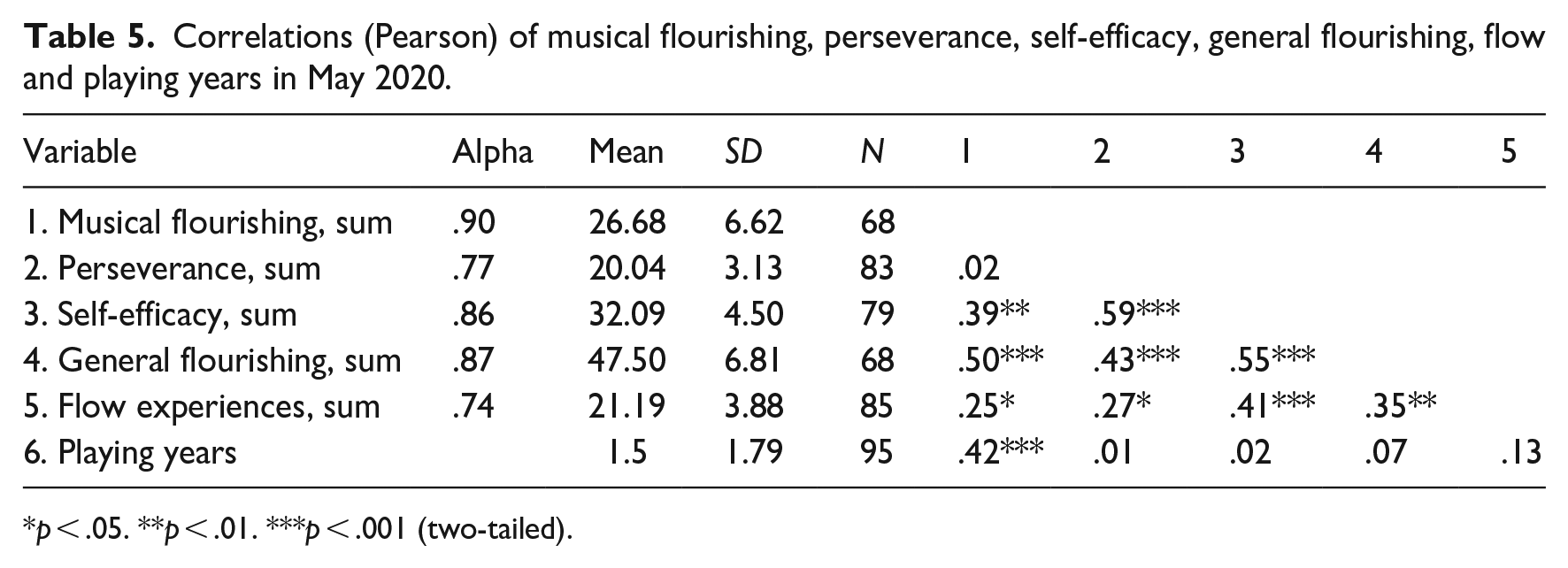
p < .05. **p < .01. ***p < .001 (two-tailed).
Integrating sisu and flow into the grit theory of trust, hope and love
Music classes seemed to offer a grit-supportive environment. Findings drawn from both quantitative and qualitative data provided new knowledge about the particular role of sisu, the inner fortitude, and flow. As a result, the concepts of flow and sisu were integrated into the grit model of Trust, Hope, and Love (Figure 2).
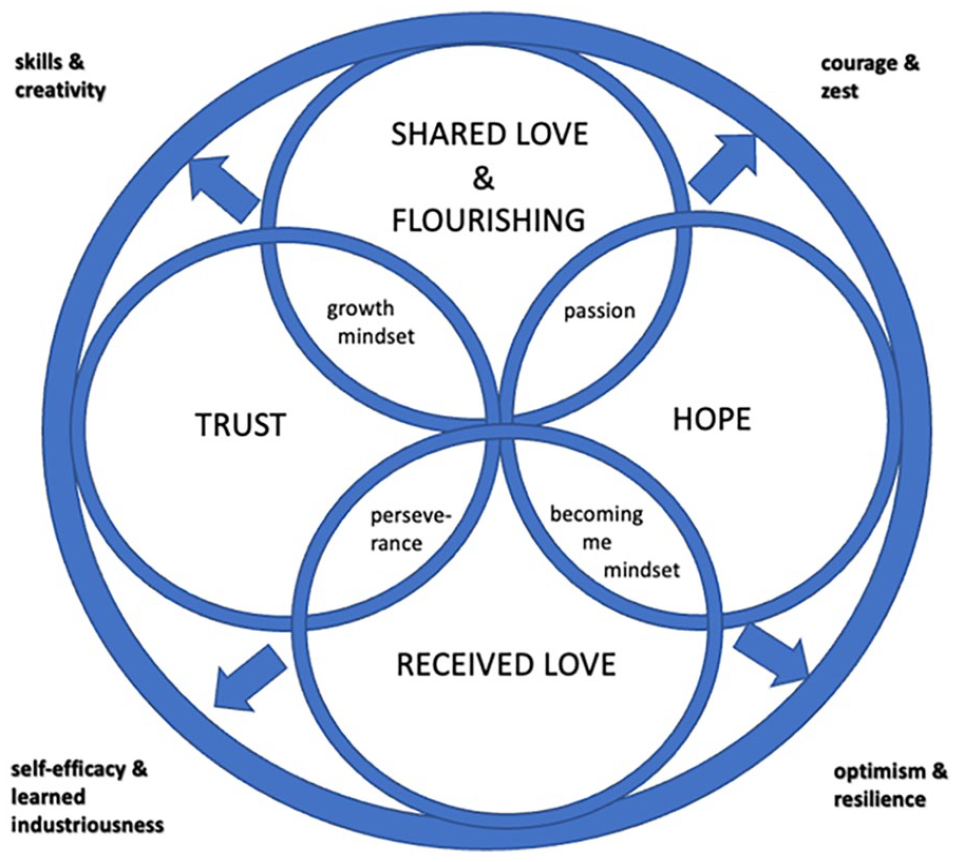
Illustration of the role of sisu (arrows), the inner fortitude, as a component of the music education-focused grit model of Trust, Hope, and Love.
An optimal kind of music education supports trust by offering tasks that are challenging enough, but still achievable. Hope can be supported in music education by constructing musically interesting projects and a culture where everyone participates and has opportunities to use their special strengths and share enthusiasm. Such a culture encourages groups to prepare for occasions like musical performances, where people then want to do their best. Concert situations, in which all the preparatory work is brought into use and everybody concentrates intensively, offer optimal conditions for flow. In the flow moments, it’s possible to get a feeling of being one with the music, so that only the “transcendental” component of shared love and flourishing is left—for a moment. While the shared goals are important for maintaining grit, they also include the possibility of failure and making mistakes. Therefore, on those occasions one needs sisu—courage to stay in the discomfort area for a while. In facing adversities, one has two choices: either give up or adopt the sisu mode, inner force and fortitude (Lahti, 2022), and find extra energy for fighting. Sisu boosts the effort. It is a choice to retain trust (growth mindset and perseverance) and hope (passion and becoming me mindset), and then target all concentration just to the task and music.
The arrows of Figure 2 show the power of sisu in helping to take extra mental resources into use, so that the challenge or adversity can be met. Adversities may include concerns over having adequate skills, self-confidence, optimism or courage. Based on the results of the current study, the valuable sisu experiences in pupils’ own strength and interests seemed to offer many “good fruits”:
Courage and zest. Good concert experiences as groups strengthened musical passion. Children showed the courage needed for walking to the stage, even if they had stage fright. They were not so afraid of social situations or making mistakes.
Optimism and resilience. Music classes were higher than regular classes in perseverance, and the qualitative descriptions showed that children in music classes had adopted many resilient learning strategies in meeting adversities in learning music. They didn’t give up easily, and the whole culture, with similar goals and dreams, supported them.
Self-efficacy and learned industriousness. Music educators in this study worked like flow managers in rehearsing ambitious music class concerts. They were, in a way, catalyzing learned industriousness and self-efficacy—at least in relation to musical challenges. And musical flourishing correlated with self-efficacy.
Skills and creativity. Learning new skills and control are often seen as the main reasons that grit is considered an important success factor in life (Duckworth et al., 2007). Music class students demonstrated high interest in learning and scored high on both the control and passion aspects of flow.
Discussion and summary
The current study provided new knowledge about the role of grit in the context of music classes. Children who study in Finnish music classes get extra support for developing their musical strength from third to ninth class. Long-term studies in an area of one’s own interest seem to benefit the development of grit. Music class students scored higher than non-music class students on perseverance, even though distance learning during the COVID-19 pandemic couldn’t offer them as much motivative music educational support as usual (Wieser & Müller, 2022). In the dimensions of flow, music classes demonstrated higher feelings of control and passion than regular classes. A noteworthy issue is that the perception of music as a source of one’s flourishing was also higher in music classes. Musical flourishing correlated with higher general self-efficacy, higher general flourishing, and more flow experiences. A strong correlation was found between long-term playing studies and musical flourishing.
The qualitative analysis provided insight into how these observations could be explained by the specific characteristics of music class studies. Both quantitative and qualitative data were used to revise a model, which displays different ways that the nourishment of one’s own special strength in a highly supportive environment empowers people to use sisu and to step voluntarily into their discomfort zone (e.g. before the audience to perform) and make their own peak performance. None of the existing grit models have particularly zoomed in to explain how sisu and flourishing relate to each other in the context of long-term music studies.
According to Csikszentmihalyi (1993), flow furthers human evolution. Flow experience (like other dimensions of PERMA) is the “reward” one gets after working hard, challenging oneself, concentrating and working on one’s own upper limits. The flow experience is not the only benefit of the learned ability to use the innate power, sisu. This study lists some perceived benefits of finding this inner fortitude (sisu) to energize personal growth and situates them to a logical place to the grit model of Trust, Hope, and Love (Figure 2). These benefits include courage, optimism, self-efficacy, and acquiring new skills.
Achieving personal goals and dreams is based on hard work and grit. Social and material support (received love), trust and hope are essential in maintaining passion and perseverance in practicing. Performances, games and competitions include the possibility to fail, but this preparatory gritty work makes one finally ready to step bravely into one’s own discomfort zone. Taking on these fears means taking the power of sisu into use. Finding that inner fortitude (and thereby resilience, bravery, and confidence) can be supported by attending pleasurable, voluntary, but well-structured long-term hobbies (like playing some instrument or training in competitive sports). In music and sports, beating pain, stress and adversity often leads to flow as well as deep feelings of flourishing.
Studying and performing as a group with others who share the same interests appear to make achievement goal orientation, vision of certain goals, more stable (Tuominen-Soini et al., 2011) and build exactly those elements that Daisley (2022) considers essential for inner strength and fortitude: control, identity and community. The current study is also solidly in accordance with the study of Tang et al. (2019) that observed that the combination of consistency of interest (passion) and high persistence in the face of difficulties (perseverance) predicted academic success and well-being. They summarized that in order to nurture children’s grit at school, students should experience that their learning goals are important and meaningful. School should also “serve as a place where it is safe to fail and learn to cope with setbacks. One must not be discouraged by setbacks, but draw strength and new energy from them.” (Research Council of Finland, 2019; Tang et al., 2019).
Offering meaningful, shared goals around children’s own special strengths and interests is the most characteristic feature of Finnish music class studies. Teachers organize musical challenges and train children well to perform ambitious concert programs. Acquiring musical skills and playing are not easy. Children also learned to face challenges and adversities, but instead of frustration, these highly goal-oriented music educational processes usually led to feelings of flow and musical flourishing at group performances. Stable, consistent groups and structures (like having weekly orchestral rehearsals during the regular music lessons) managed to build strong habits, which supported the culture of grit and offered children possibilities to push their own limits and grow.
In music educational research, there has already been quite a lot of investigation about the ways to support children’s intrinsic motivation, but less about the ways to support perseverance or inner strength. As a result of the current study, the role of sisu and flow as part of musical grit was clarified. This led us to formulate a sisu and flow variant of the grit model of Trust, Hope and Love. This revised model is well in accordance with Lahti’s (2023) idea that at the very essence of sisu are growth and self-understanding. To build fortitude, one needs not only long-term grit (as displayed in Figure 1) but also experiences of going voluntarily into one’s discomfort zone and meeting and beating challenges—and thereby getting stronger (Figure 2).
Certain limitations should be mentioned. The current study was not an experiment but rather was based on cross-sectional analyses. We therefore cannot fully rule out the possibility that the differences between music classes and regular classes may be due to inherent differences rather than the impacts of music education (i.e. children with certain characteristics may be more likely to apply for music classes). Highly educated parents are more active in bringing their children to music class entrance tests (Palkoaho, 2023). That’s why music classes’ good general school performance is often explained by children’s more beneficial family background, even if the music class entrance tests measure solely musicality. However, the design of the current study somewhat minimized the family background effect. Before the Start Playing! project, only about 20%–25% of the children who studied in music classes at the multicultural school could play some instrument as an extracurricular hobby because of their high price. This situation was changed in 2016 to 2022, when children were offered long-term opportunities to attend accessible extracurricular playing lessons.
It is also good to note how the concept of flow was measured in the current study. Children were asked to think about their own flow experiences in any area of interest (from football games to musical performances). Also, the current study did not use a previously validated scale, and only one item was used to measure each flow dimension. Nonetheless, all items were grounded in the flow theory and reflected similar metrics that have been used to measure these flow dimensions in prior studies (e.g. Habe et al., 2021; Rheinberg et al., 2003).
Overall, the current study provides new information about the role of grit in music education. Music class engagement and having music as a hobby can provide many rewards, and in this context sisu and flow appear to mutually affect each other as related processes. The findings clearly show that music engagement relates to musical flourishing, but they also provide some indication that these experiences may transfer to psychological benefits even beyond musical context. Such transfer effects provide an interesting area for future research with experimental designs.
The findings of the current study speak for the importance of providing supportive structures for grit development. The element of “Received love,” both educational and home support, can benefit the building of trust and hope and create well-structured paths for approaching meaningful musical goals and dreams. When these supportive, goal-oriented, gritty processes regularly lead to experiences of flow, shared love and flourishing at group performances, music education has managed to build valuable resources for positive growth to children’s lives.
Supplemental Material
sj-docx-1-ijm-10.1177_02557614241232653 – Supplemental material for Finnish music class studies and extracurricular playing in promoting grit and sisu, the inner fortitude: Reconceptualizing sisu as a predecessor of flow, growth and flourishing
Supplemental material, sj-docx-1-ijm-10.1177_02557614241232653 for Finnish music class studies and extracurricular playing in promoting grit and sisu, the inner fortitude: Reconceptualizing sisu as a predecessor of flow, growth and flourishing by Katri Olander and Suvi Saarikallio in International Journal of Music Education
Supplemental Material
sj-docx-2-ijm-10.1177_02557614241232653 – Supplemental material for Finnish music class studies and extracurricular playing in promoting grit and sisu, the inner fortitude: Reconceptualizing sisu as a predecessor of flow, growth and flourishing
Supplemental material, sj-docx-2-ijm-10.1177_02557614241232653 for Finnish music class studies and extracurricular playing in promoting grit and sisu, the inner fortitude: Reconceptualizing sisu as a predecessor of flow, growth and flourishing by Katri Olander and Suvi Saarikallio in International Journal of Music Education
Supplemental Material
sj-docx-3-ijm-10.1177_02557614241232653 – Supplemental material for Finnish music class studies and extracurricular playing in promoting grit and sisu, the inner fortitude: Reconceptualizing sisu as a predecessor of flow, growth and flourishing
Supplemental material, sj-docx-3-ijm-10.1177_02557614241232653 for Finnish music class studies and extracurricular playing in promoting grit and sisu, the inner fortitude: Reconceptualizing sisu as a predecessor of flow, growth and flourishing by Katri Olander and Suvi Saarikallio in International Journal of Music Education
Footnotes
Author contribution(s)
Katri Olander: Conceptualization; Data curation; Formal analysis; Funding acquisition; Investigation; Methodology; Project administration; Resources; Software; Visualization; Writing—original draft. Suvi Saarikallio: Conceptualization; Methodology; Supervision; Validation; Writing—original draft.
Funding
The author(s) disclosed receipt of the following financial support for the research, authorship, and/or publication of this article: The University of Jyväskylä offered one year of funding for Katri Olander for finalizing thise research. Professor Suvi Saarikallio has worked for this article as part of the Centre of Excellence funded by the Research Council of Finland, project number: 346 210.

Supplemental material
Supplemental material for this article is available online.
References
Supplementary Material
Please find the following supplemental material available below.
For Open Access articles published under a Creative Commons License, all supplemental material carries the same license as the article it is associated with.
For non-Open Access articles published, all supplemental material carries a non-exclusive license, and permission requests for re-use of supplemental material or any part of supplemental material shall be sent directly to the copyright owner as specified in the copyright notice associated with the article.
