




Abstract
Although studying music at school can be an enriching and enjoyable experience, it is an unpopular choice for many Hong Kong senior secondary students. The purpose of this study was to examine the rationale behind the low enrolment of music as a Hong Kong Diploma of Secondary Education (HKDSE) subject. A questionnaire was conducted among senior secondary school students (N = 121) studying music at the HKDSE level, collecting information about their learning experiences and their perceptions of the curriculum. The results provided evidence supporting the difficulties and struggles faced by the students, including degrees of familiarity with, and confidence about, subject matters of different musical cultures, which subjects were prioritised when it came to studying, and the amount of prior specialist knowledge needed as part of the decision-making process. Tensions were revealed between the driving forces behind curriculum change and the readiness of students to cope with these changes, along with perceptions of music as an elitist subject with low utilitarian value. Socio-cultural interventions, such as making music education more accessible for all, while simultaneously ensuring that stakeholders’ voices are heard as part of the decolonisation process, remain fundamental challenges facing the curriculum.
Introduction
Amid growing interest and evidence that learning music can benefit the intellectual, social and personal development of young people (Hallam, 2010), efforts have been made over the past few decades to remove barriers and make music education available to everyone (e.g. Baker, 2014; Krupp-Schleußner & Lehmann-Wermser, 2018). However, despite the perception that music is relatively easy when compared with core subjects such as mathematics, science and language (McPherson & O’Neill, 2010), interest in its study is difficult to sustain beyond basic education, as reflected by the low enrolment figures among students taking music as a subject in the public examinations for university entrance (Lamont & Maton, 2008; C. C. Leung et al., 2008; Wright, 2002). Previous literature has suggested a number of rationales behind the low enrolment, including influences from peers and parents, an ‘irrelevance’ between music within and beyond the school curriculum and the ‘elite code’ perceived by students (Bray, 2000; Lamont & Maton, 2008; C. C. Leung et al., 2008). Contextualisation of the issue invites discussion not only about the subject matter, but also the sociocultural factors, which can vary widely from one country or culture to another. In Hong Kong, for example, despite having an educational policy and school curriculum that are largely modelled on those of the UK, its 100-year-long coloniser, the apparent similarity between the two locations in terms of the unpopularity of music within the senior secondary curriculum is as much the result of the hybrid identity of Hongkongers as it is the values informed by the deeply rooted Chinese culture.
The complexity is further compounded by the fact that music encompasses a broad range of styles, all with their own underlying cultural references and societal understandings. Learning music in school helps foster students’ creativity and ability to handle diversity in everyday life, while also developing different kinds of musicianship connected to their personal musical identities within a globalised world (Kertz-Welzel, 2018). Schools around the globe have increasingly sought to integrate other cultures and styles into their music curricula design in an effort to counteract the dominance of Western classical music and preserve and transmit their local traditional cultures. Negotiating these proportions among various musical cultures can be both problematic and political, especially in regions where cultural conflicts are present. To better understand the influence of multicultural integration and other dynamics, such as students’ prior musical experiences, on their subsequent perception of the curriculum, the study presented in this paper aimed to examine the rationale behind the unpopularity of music as an examination subject at the Hong Kong senior secondary level. It is hoped that the research findings can help with the design of a music curriculum that responds to students needs, helps them to better understand non-Western and local musical culture through the lens of music and develops their musicianship in ways that are relevant to 21st century musical practices.
School music curriculum in Hong Kong
It has been a quarter of a century since Hong Kong’s handover from the United Kingdom back to China. This transfer of sovereignty not only established Beijing’s rule over Hong Kong, but also created the unique identity of ‘Hong Kong Chinese’ citizenship (Fok, 1997). Since then, initiatives have been made to strengthen a sense of national identity and decolonise the curriculum, including an attempt to introduce ‘Moral and National Education’ as a compulsory school subject, a stronger focus on Chinese history and the inclusion of the National Anthem in school education as suggested in the recently-enacted National Anthem Law (Cheng, 2020; Morris & Vickers, 2015). The 3–3–4 education reforms of 2009 resulted in drastic changes being made to the structure of secondary school education, the Hong Kong Diploma of Secondary Education (HKDSE) replacing the Hong Kong Certificate of Education Examination (HKCEE) and the Hong Kong Advanced Level Examination (HKALE) as the major entrance examination for further education being undertaken by nearly all students, in so doing shifting 1 year of study from the secondary to the tertiary level.
In response to globalisation, and as part of the process of addressing local cultures, the curriculum changes in music, when considered alongside the educational reforms, reflect a shift from the homogeneity of Western classical music to a more inclusive curriculum that also includes Cantonese, Chinese and popular music (Curriculum Development Council, 2015). The holistic reforms also advocate for the integration of listening, performing and creating activities in teaching units in order to achieve the learning targets of the secondary music curriculum and the overall aims of the arts education key learning area set by the authority (see Table 6; Curriculum Development Council, 2017).
Music has long been an elective subject as part of the HKCEE and HKALE examination systems, which were established during the colonial period for students to pursue continued education. Although these early music examinations focused mostly on Western classical music, elements of Chinese music were increasingly included and in 1989 the term ‘Chinese music’ was first mentioned in an official document by the Examination Authority (Fung, 1997). By 1995, candidates were allowed to choose between being tested on Chinese traditional music and contemporary music. Towards the end of the millennium, world music was also included on the HKALE examination syllabus, although it was noticeably smaller (0.5%–0.8%) than either Chinese (34%–36%) or Western classical (63%–66%) music. Music as a subject within the HKDSE consists of three compulsory components: Listening (40%), Performing I (20%) and Creating I (20%), the second and third giving candidates the option of performing and composing Western classical, Chinese or even other genres such as popular, jazz and electronic, music. The listening component consists of two parts divided into four paper examinations, namely: (1) Music in the Western classical tradition (20%); (2) Chinese instrumental music (8%); (3) Cantonese operatic music (6%); and (4) Local and Western popular music (6%). The percentage share of Western classical music, therefore, is the same as the other three musical cultures combined. Long underemphasised in the music curriculum when compared with Western classical music (Ho, 1997; B. W. Leung, 2021), the recognition of the unique subject matters of Chinese instrumental music, Cantonese opera and local popular music was an important catalyst in strengthening an understanding of national identity and the promotion of local culture, while simultaneously attempting to increase the relevance of music as a subject within students’ daily lives, as directed by the education policy (Curriculum Development Council, 2017). In addition to the three compulsory components, candidates are required to select one elective component from among three options: Special Projects, Performing II and Creating II. Over 90% of candidates choose Performing II because they can apply for an exemption and a grade conversion based on the recognition of instrumental examination qualifications given by awarding bodies such as the Associated Board of the Royal Schools of Music (ABRSM), the Trinity Guildhall Music Examinations and the Central Conservatory of Music, Beijing. These instrumental examinations are very popular among many Hong Kong children as a means of enriching their profile for entry into some elite schools (Lee & Leung, 2020).
Contextual issues in Hong Kong senior secondary music education
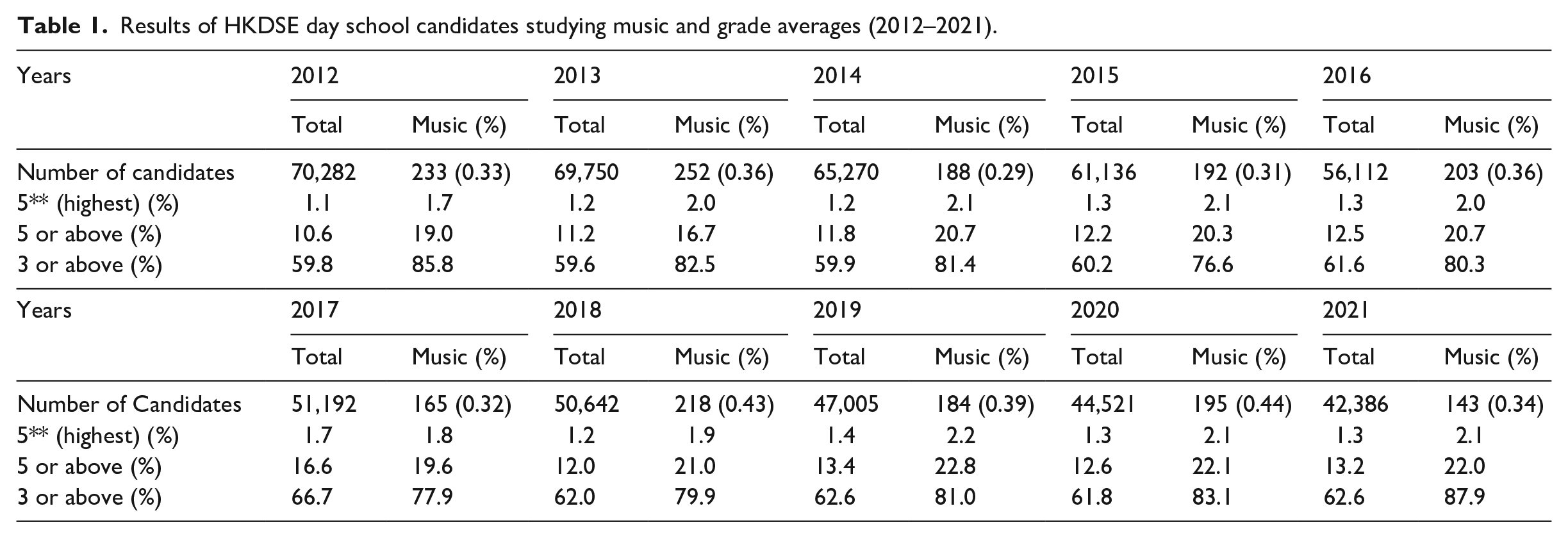
While the curriculum reform has endeavoured to strike a balance between the dominant, Western classical tradition and local musical cultures with more opportunities to make music a part of their everyday lives, the enrolment among students studying music at the senior secondary level remains low. Table 1 shows the number of enrolments in music as a subject compared to the overall number of HKDSE day school candidates over the past 10 years. Less than 0.5% of the day school candidates selected music as one of their elective subjects; the visual arts, also considered a ‘cultural subject’, attracted more than 5% of the day school candidates, while popular choices, such as science subjects, were chosen by more than 25% (Hong Kong Examinations and Assessment Authority, 2021). The table also shows the grade distributions of music as a subject compared with the overall grade distributions of all other subjects, where 5** is the highest grade and 3 the minimum passing grade. The higher grade distribution suggests that it is much easier to get a pass or a better grade in music, yet this is not reflected by a correspondingly high(er) number of students taking up the subject.
Results of HKDSE day school candidates studying music and grade averages (2012–2021).
‘Elite code’
Previous scholarly works have suggested some reasons behind the low enrolment. A major concern, which is specific to music as a school subject, is the ‘elite code’ suggested by Lamont and Maton (2008) and based on their views of the low uptake rates of music within the General Certificate of Secondary Education (GCSE) in the UK:
. . .earlier stages of the music curriculum emphasise either musical knowledge or musical dispositions of knowers, but music at GCSE level represents an ‘elite code’ where achievement depends upon both possessing specialist knowledge and being the right kind of knower. (p.267)
This view is shared by Bray (2000), who argued that students may be deterred from choosing music as their GCSE optional subject because they feel prior training, such as specialist music lessons, are important in order to succeed. Wright’s (2002) study provided additional evidence for this hypothesis, in which music was viewed by students as being an elitist subject. Thompson (2019) further elaborated that students from economically deprived backgrounds could be disadvantaged, which limited the likelihood of them considering music as a viable option for higher study in the Hong Kong context. The survey by McPherson and O’Neill (2010) provided more research evidence for this view, whereby students with prior instrumental learning experience considered music an easier subject than their non-music learning peers.
Value
Music is often regarded as a ‘cultural subject’, as opposed to the more dominant ‘academic subjects’ such as languages, mathematics and science (Cheung, 2004). ‘Academic subjects’ are considered to be useful and important for future study or career prospects, while ‘cultural subjects’ are more suitable as leisure pursuits (B. W. Leung & McPherson, 2010). This view is supported by Bray (2000), who suggested that music may be viewed by parents as unimportant because it lacks vocational value, a message they may transmit to their children. F. Y. F. Ng and Morris (1998) conducted a study on music as a secondary school subject and found that that the schooling environment in Hong Kong was highly academic, and ‘one in which music had a marginal status’ (p. 196).
Deeply rooted Chinese socio-cultural values also play a role in the marginalisation of music as a school subject, higher esteem being placed on academic subjects that can lead to careers in certain favoured professions and highly remunerated work in the service-based economy (Morris, 1997). Schools and universities have increasingly come under pressure to produce the skilled workers necessary for a service-based economy, which places a lower value on ‘cultural subjects’ such as music (B. W. Leung & McPherson, 2010).
Integration of Chinese and local musical cultures
Despite socio-political pressures to encourage Chinese music and the global trend to include diverse musical cultures, how to integrate these non-Western musical cultures into the curriculum remains a challenge for music education in Hong Kong (Ho & Law, 2009). It has also led to a growing concern regarding the flexibility of the music curriculum to adapt to such changes (Ho, 2007a). Typically, although students learn to play Western instruments, such as the piano, violin and flute, both inside and outside school, they rarely play Chinese musical instruments (Ho, 2003a, 2003b; B. W. Leung, 2001). However, survey results have also revealed that students agree they should be learning more about the music of other cultures (Ho, 2007b). While primary students tend to accept Cantonese opera as a component of their music curriculum, secondary students exhibit negative perceptions towards the genre due to its socio-cultural attributions (B. W. Leung & Leung, 2010).
Readiness of teachers
Since the influence from teachers and the overall musical atmosphere in schools are contributing factors that affect senior secondary students’ decision as to whether or not to take music as an elective subject (C. C. Leung et al., 2008), the readiness of music teachers to deliver multicultural music content may also be accountable for the low enrolment numbers. B. W. Leung’s (1997) study revealed that most of the music teachers in Hong Kong were well trained in Western classical music, but not in Chinese music or other musical cultures. This finding is echoed by Law and Ho (2004), who argued that many music teachers in Hong Kong receive far less professional training in Chinese music compared to Western classical music, despite its emphasis in higher music education. B. W. Leung (2021) conducted another study to investigate the relationship between the teaching of Cantonese opera in schools and teacher variables, such as their musical backgrounds and interests. The results found that teachers were moderately interested, confident and knowledgeable about teaching the genre, and that there was a significant relationship between their musical backgrounds and their interest in Cantonese opera. Nevertheless, the study also revealed that music teachers in Hong Kong are unfamiliar with the genre because of insufficient training, which has led to a lack of confidence in teaching.
Teacher training plays a prominent role in the delivery of multicultural music content in schools that excels beyond the over-emphasised western classical tradition. While the music teacher training programmes in Hong Kong have been packed with contemporary agenda in the education sector such as inclusive education (Wong & Chik, 2016), interdisciplinary and experiential learning (Chen & Lo, 2019), technological integration (Leong & Cheng, 2014) and emergency remote teaching (Cheng & Lam, 2021), the increase of Chinese and local musical cultures in the curriculum has been slowly progressing. Together with the aforesaid prior knowledge and training recieived, these factors contribute to music teachers’ incompetence and the lack of confidence in teaching non-Western music (B. W. Leung, 2014). On a more positive note, this situation is believed to have improved in recent years as a result of more teacher-artist partnerships, training programmes and pedagogical models for higher education (e.g. B. W. Leung, 2014, 2020).
Aim
While scholars have looked at the links between low enrolment and the difficulties in teaching and learning music at the senior secondary level in Hong Kong, there is a dearth of research investigating the issue from the students’ perspective. A mixed-method study by C. C. Leung et al. (2008) was designed with such a purpose in mind, but was conducted based on the previous HKCEE syllabus and the older senior secondary music curriculum. The study presented in this paper aimed to examine the rationale behind the unpopularity of music as a public examination subject in Hong Kong senior secondary levels based on the following four research questions:
What are the relationships between students’ prior music experiences and their self-assessed difficulties in music as a subject?
How are students’ study priorities related to their interest in, and perceived difficulty of, music?
What difficulties do students find with regard to the subject matters of Chinese music and Cantonese opera covered in the music curriculum?
How do students assess their achievements in relation to the aims and learning targets of the music curriculum?
Methodology
In accordance with the purposes of the research, a survey was conducted to collect data from those senior secondary students (N = 121) in Forms 5 and 6 (equivalent to years 12 and 13) who had selected music as one of the elective subjects for their HKDSE studies; 74 of the participants were female and 47 were male. The questionnaire was distributed to participants who took part in two workshops preparing students for the HKDSE, and was held by the university where the author was working. Confidentiality and anonymity as part of the ethical procedure were assured via an information sheet and consent form, along with being informed about the voluntary nature of their participation. No personal data, except the demographic information necessary for the data analysis and the name required on the consent form, were collected.
The questionnaire consisted of three parts. The first collected demographic information, including the participants’ gender, instrumental and ensemble experience. The second assessed their familiarity and confidence with the different components of the subject, as well as the degree to which they prioritised their musical studies compared to other subjects. The third required the participants to assess their achievements with regard to the learning targets and curriculum aims.
Findings
Instrumental and ensemble experience
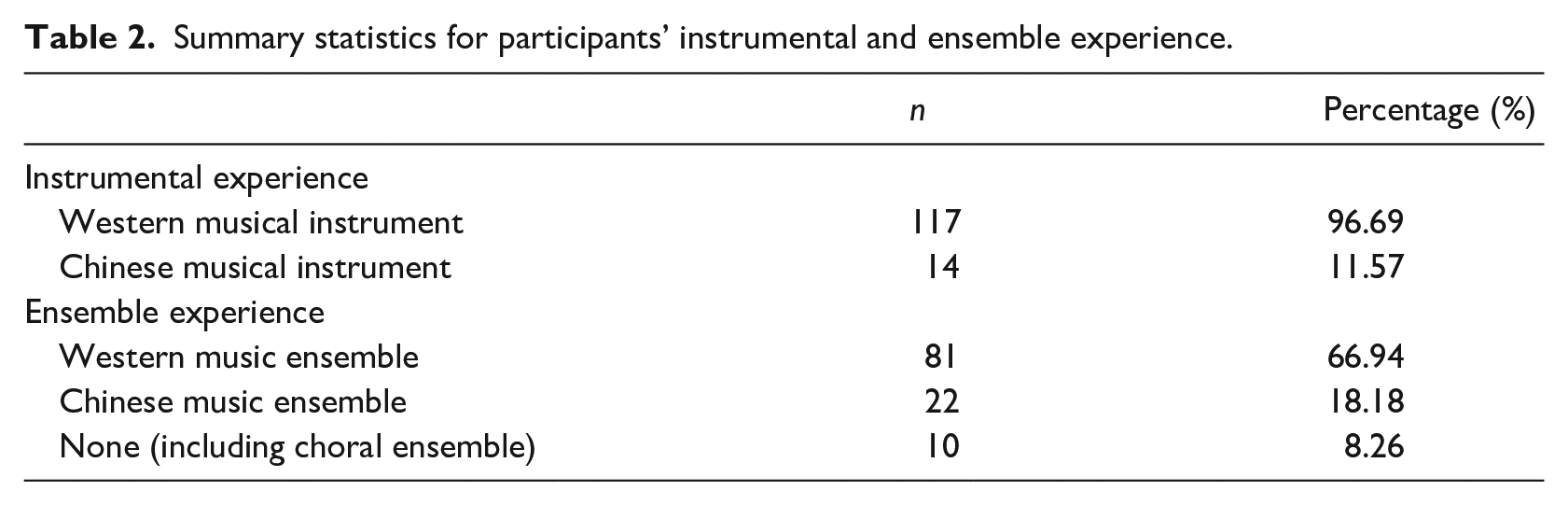
Table 2 summarises participants’ instrumental and ensemble experience. Instrumental learning experience is determined by whether participants have attained a qualification of at least ABRSM Grade 5 (or its equivalent) in any of the aforementioned graded examinations. Most of them were learning Western musical instruments (96.69%), as opposed to Chinese musical instruments (11.57%) and all of them had achieved a graded examination qualification. Similarly, most of the participants reported that they were a member of one or more Western music ensembles (66.94%), such as an orchestra or symphonic wind band. The number of participants who were also members of a Chinese music ensemble (18.18%) was higher than those who were learning a Chinese musical instrument only, the reason being that Western percussion instruments and lower strings are able to join Chinese music ensembles, for example Chinese orchestra. Around a quarter of the participants (25.62%) had not joined either a Western or a Chinese music ensemble, and less than one-tenth (8.26%) reported that they had no ensemble experience at all, including choral. Because of a lack of variability, no further statistical analyses were conducted on participants’ instrumental and ensemble experience.
Summary statistics for participants’ instrumental and ensemble experience.
Priority of study
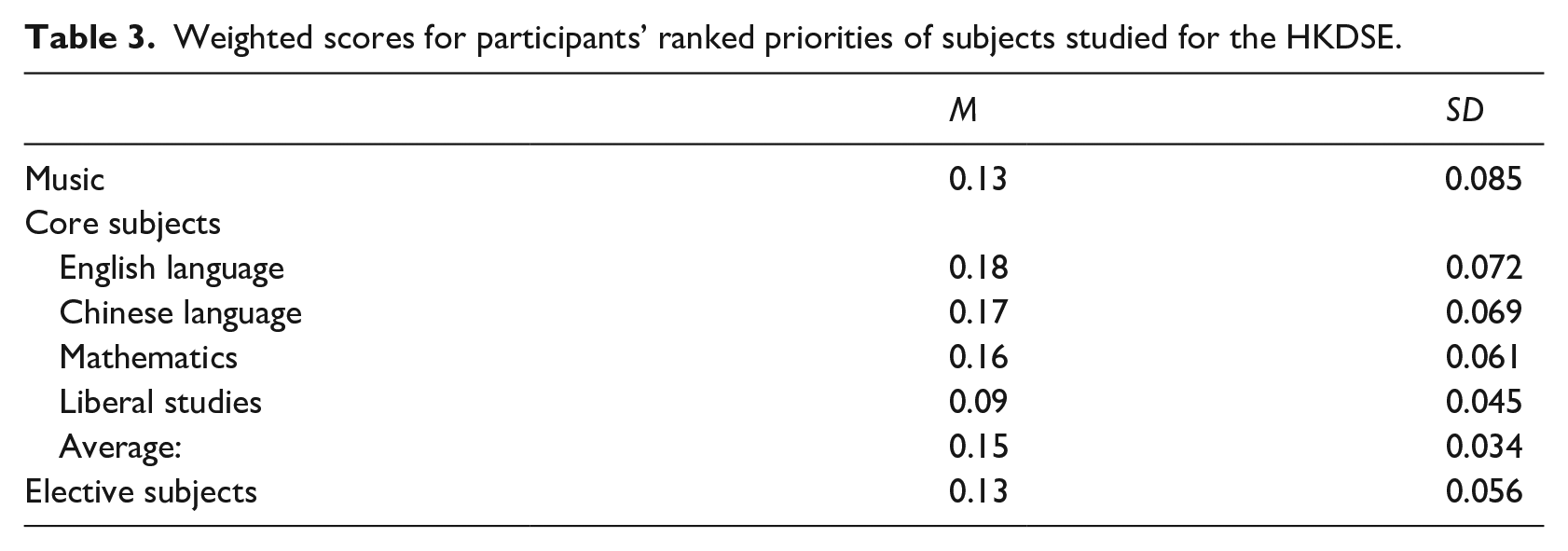
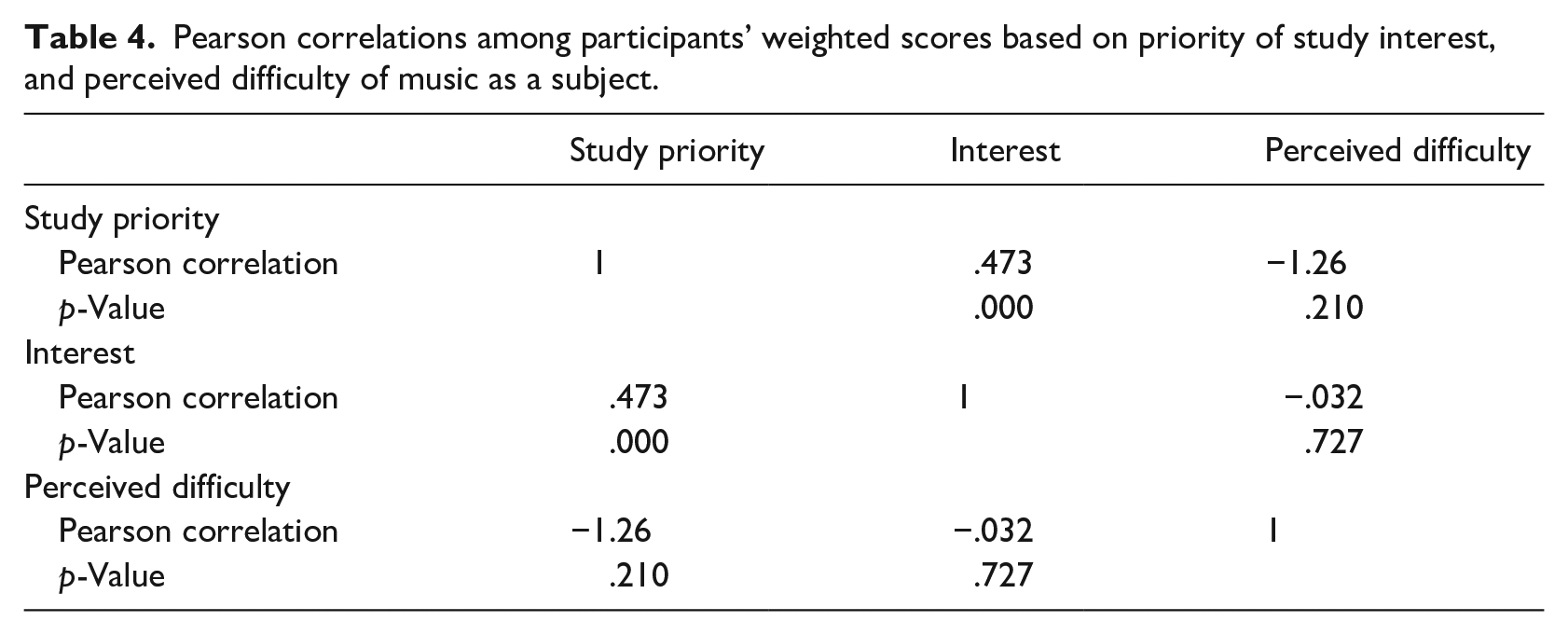
Participants were asked to rank their priorities based on the core and elective subjects that they were studying. The rankings were converted into weighted scores and are presented in Table 3. Descriptive analysis shows that participants ranked the core subjects (M = 0.15, SD = 0.034) higher than music (M = 0.13, SD = 0.085; Liberal Studies actually ranked the lowest amongst all subjects, but it will soon be replaced (Chan et al., 2021)); music actually scored similarly to other elective subjects on average (M = 0.13, SD = 0.056). Bivariate analysis was then conducted in a bid to examine the effect of participants’ study priorities on their interest in, and perceived difficulties of, music as a subject (Table 4). There was a significant relationship between participants’ weighted scores based on priority and interest (r = .473, p < .001), in which the Pearson correlation coefficient revealed a medium and a positive relationship. No significant relationships were found between study priority and perceived difficulty (r = −1.26, p = .473); this also applied to interest and perceived difficulty (r = −.032, p = .727).
Weighted scores for participants’ ranked priorities of subjects studied for the HKDSE.
Pearson correlations among participants’ weighted scores based on priority of study interest, and perceived difficulty of music as a subject.
Familiarity and confidence
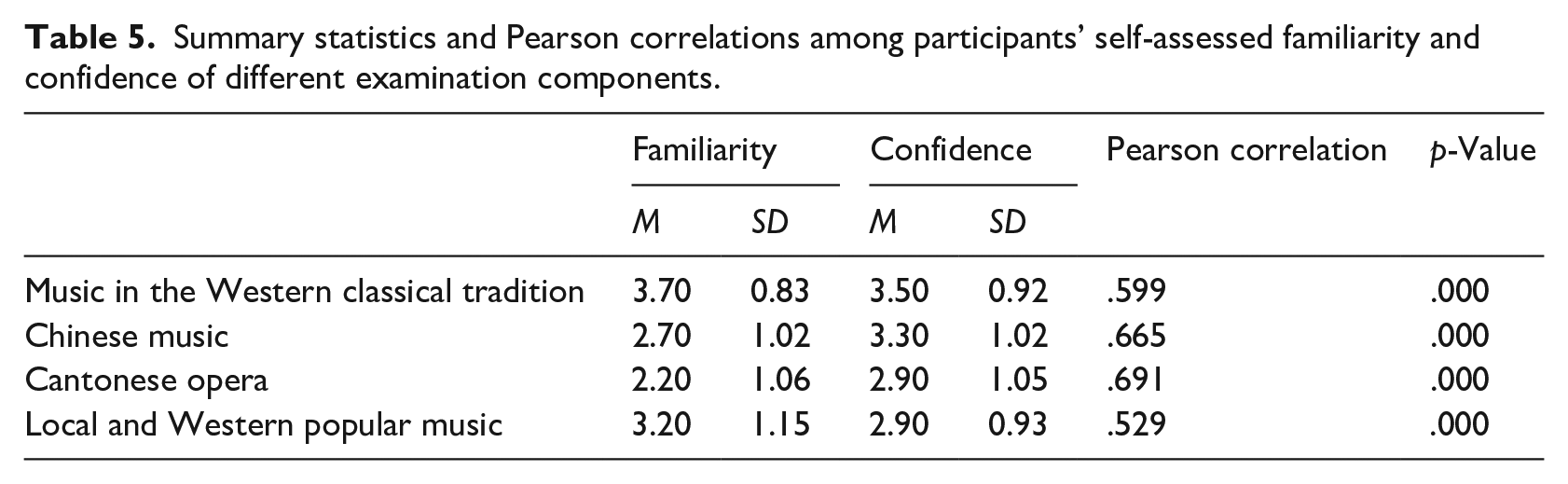
Table 5 summarises the participants’ self-assessed familiarity and confidence in relation to different musical cultures that correspond to the components of HKDSE music. Adopting a 5-point Likert scale approach, Western classical music rated highest in both familiarity (M = 3.70, SD = 0.83) and confidence (M = 3.50, SD = 0.92); Cantonese opera rated lowest in terms of familiarity (M = 2.20, SD = 1.06). In general, the mean rating scores for participants’ confidence in coping with different musical cultures in the curriculum was higher than that of their self-assessed familiarity, which exhibited a larger discrepancy. However, the statistics also reflected participants’ unfamiliarity with Chinese music and Cantonese opera, and the associated (lack of) confidence in coping with the subject matter. Pearson correlations from bivariate analysis revealed stronger and more positive relationships between the mean rating scores of participants' self-assessed familiarity and confidence across all components of HKDSE music.
Summary statistics and Pearson correlations among participants’ self-assessed familiarity and confidence of different examination components.
Curriculum aims and learning targets
Table 6 summarises participants’ perceived achievements as they pertain to the aims and learning targets prescribed in the curriculum documents. Further to the responses being given on a 5-point Likert scale, Cronbach’s alpha was used to estimate the reliability of the two sets of data, both of which contained multiple items that measured the same constructs to achieve the learning goals in the arts education key learning area. The alpha coefficients were rated as ‘good’ for the curriculum aims (α = .86) and ‘excellent’ for the learning targets (α = .90) in terms of internal reliability (George & Mallery, 2003). The percentage of mean rating scores for the curriculum aims ranged from 74.05% to 80.99%, while those for the learning targets ranged from 72.89% to 79.50%.
Summary statistics for participants’ self-assessed achievement for curriculum aims and learning targets.
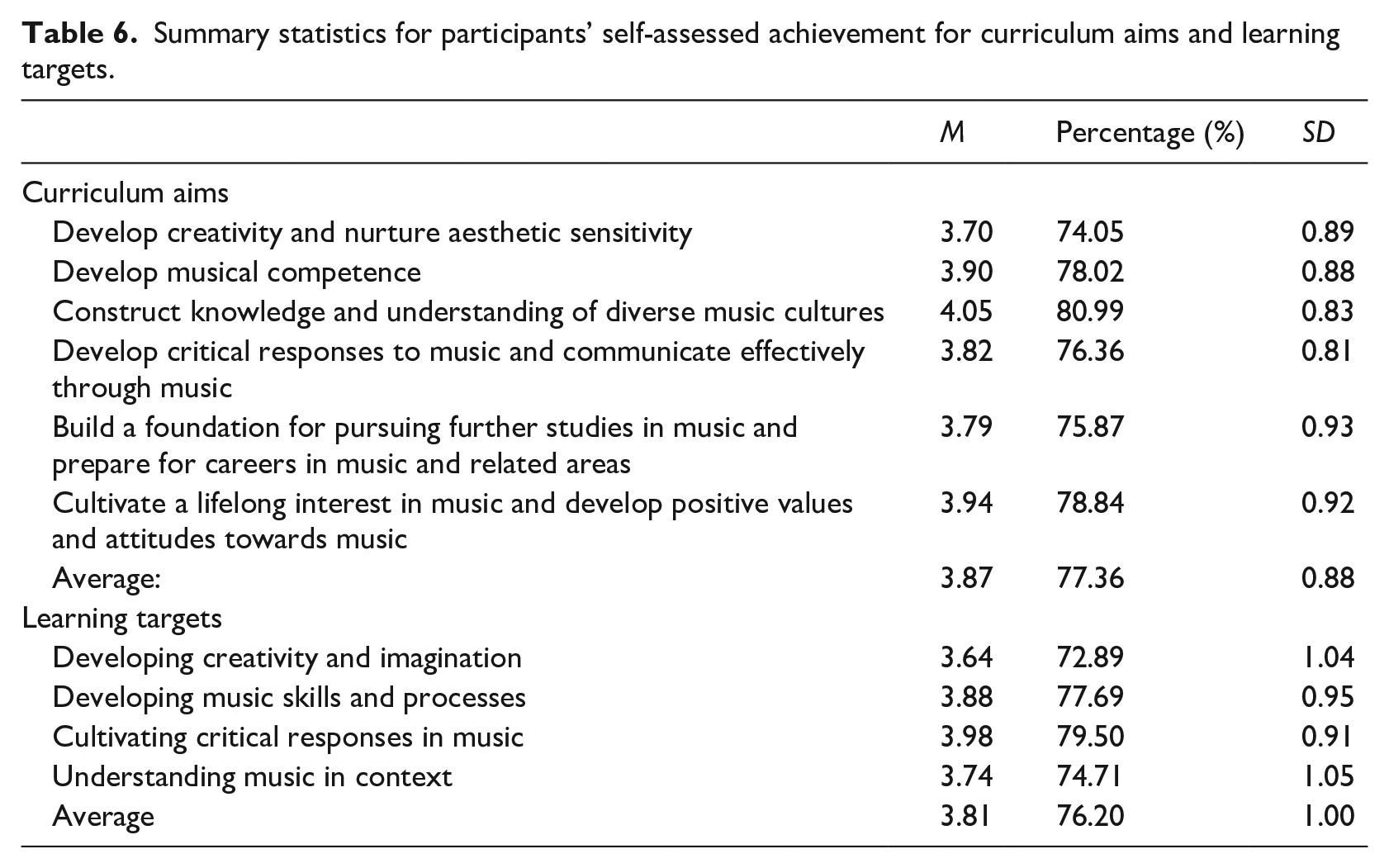
Participants’ high rating scores for the items in the curriculum aims and learning targets confirmed the vertical alignment of the subject matter with the overall goals of the music curriculum, thereby forming the backbone facilitating students’ achievement of excellence in all-round music learning. Scores for the construction of students’ knowledge and understanding of diverse music cultures (M = 3.50, SD = 0.92) were the highest, indicating a recognition of their learning achievements and the efforts being undertaken to address local cultures beyond the Western canon.
Discussion
The findings of this study provide insights for the low enrolment of music as a public examination subject in Hong Kong senior secondary levels, which reveal the relationships among students’ prior music experience, their interest and perceived difficulty in different subject matters. A number of potential explanations for the unpopularity of the music subject emerge:
Prior instrumental and ensemble experience
Apart from the curriculum design, which places more emphasis on Western classical music, students’ prior instrumental experience is a major contributing factor. Learning a musical instrument is one of the most straightforward ways for students to develop musical knowledge and skills, while understanding of a particular musical culture can also be cultivated through the musical process of instrumental training. Although this study was unable to draw any conclusions concerning the relationship based on students’ instrumental and ensemble experiences because of a lack of variability, it did reveal that there are far more participants learning Western musical instruments than Chinese musical instruments. This is consistent with findings by Ho (2003a) and C. C. Leung et al. (2008), meaning that the situation has not changed over the course of almost two decades.
Unfamiliarity with Chinese music and Cantonese opera
Low rating scores were found for both Chinese music and Cantonese opera in this study. Previous scholarly works have suggested a number of reasons for the disinclination of Chinese musical cultures, including students’ lack of exposure to non-Western classical music styles, insufficient support for Chinese music in Hong Kong, an absence of teacher training in Chinese classical music and young people’s negative perceptions (Ho, 1999, 2003a; B. W. Leung, 2017). Some of these factors are also applicable to Cantonese opera, which has an advantage for its relevance to students’ local culture because it shares the same roots, including the Hong Kong dialect (W. C. Ng, 2015). The inclusion of Cantonese opera as a standalone component within the HKDSE syllabus, while addressing the need for the preservation, sustainability and transmission of the genre as an Intangible Cultural Heritage (ICH), has still to overcome a reputation for being outdated and old-fashioned (B. W. Leung & Leung, 2010). Socio-cultural influences are undoubtedly needed to reconcile these misconceptions on Chinese music and Cantonese opera. Efforts could be made to recognise local musical cultures as a means of decolonising school music education and shaping it to become more diversified; other approaches to engage students with this genre could also include school partnership schemes and technological integration (Cheng & Leung, 2020; B. W. Leung, 2014). On the other hand, artists and practitioners in the field are striving hard to modernise Cantonese opera as a means to attract younger audiences and eliminate the negative perception of this genre (B. W. Leung & Fung, 2022).
While socio-cultural efforts take longer time to yield the desired outcomes, short-term planning could be formulated in terms of curricular intervention and teacher training. A well-planned music curriculum could cultivate students’ interest and develop their competence in appreciating Chinese music and Cantonese opera from a young age (B. W. Leung & Fung, 2022), which could help build up a smooth learning curve transiting their learning to secondary school and higher education levels of learning. Pre-service teacher training and in-service teacher professional development programmes could allocate more curriculum time and resources to equip music teachers with the necessary knowledge and skills. As a role model for the members of the young generation in schools and the fact that music teachers have a great influence on students’ music learning (Law & Ho, 2006), the preparedness and confidence of music teachers could shape students’ perception of and stimulate their learning motivation in unfamiliar subject matters, such as Chinese music and Cantonese opera.
Elitist perceptions of the music subject
In addition to the impact of the subject matter, participants’ instrumental experiences echo the idea of music as an ‘elite code’ highlighted by other scholars (Lamont & Maton, 2008; Wright, 2002). Since the curriculum reform included performance as one of the assessment tasks, higher scores can be achieved if students are able to demonstrate high levels of musicianship and instrumental skills. Given that musicianship training requires long-term commitment, and the fact that instrument-learning students consider music an easier subject than their non-instrumental peers (McPherson & O’Neill, 2010), the latter are therefore unlikely to select music as one of their elective subjects. This argument is supported by the findings in this study, in which all participants had already acquired graded instrumental examination qualifications before the assessment. While efforts such as subsidised school schemes have made group instrumental learning more accessible (C. C. Leung, 2003), the same kind of tuition is more likely to take place outside such institutions when an individual reaches a more advanced level (B. W. Leung & McPherson, 2010), which in turn requires family financial support (Ho, 2011). All these causal relationships contribute to students’ elitist perceptions and discourage those from lower social classes from pursuing music at the senior secondary level.
Marginalisation of music subject
The lower priority ranking by the participants towards studying music is in keeping with its marginalisation in schools globally (Aróstegui, 2016). The study by B. W. Leung and McPherson (2010) yielded similar results, whereby students ranked music the lowest in terms of perceived value among five ‘academic’ and ‘cultural’ subjects. While the priority ranking of music in this study would appear to be higher than other, similar elective subjects, it should be noted that the participants in this study were those already studying music for their HKDSE. They formed a very small group of students who had a deep interest in music, who had the courage to ‘go against the grain’, and who perhaps would also choose to continue their pursuit of music as part of their future studies and / or career. Their feelings can also be explained by the grading requirements of the HKDSE and the corresponding strategy for successful university entrance. In order to meet the minimum entry requirements, candidates must attain a minimum of level 3 in two language subjects and level 2 in Mathematics and Liberal Studies (i.e., ‘3322’). Many local universities and individual programmes also accord a higher weighting to language and mathematics when screening applicants, which means that despite the advantages for those who have chosen music as their elective subject, the overall effect is often not as attractive as putting more effort into core or other subjects. While the literature has extensively discussed the marginalisation of music within the context of broader themes, such as career aspirations and school management, a case for the immaterial nature of music as a subject can also be found in the examination-oriented context contained within this study. Although there is generally no entry requirement for students opting to study music in the senior secondary curriculum, the perceived utilitarian value of the subject may discourage them from pursing their musical studies, especially those from underprivileged backgrounds.
Concluding remarks
The present study examined the reasons for the low enrolment of music as an examination subject at the Hong Kong senior secondary level. While global, national and local agenda have been incorporated into the educational reforms in ways that have shaped the subject to become more diversified and thus meet the learning needs of the 21st century, struggles remain for those music teachers and students trained in the Western classical tradition but who have otherwise yet to adapt to the latest, national and local cultural elements of the curriculum. The study also highlighted the issue of inequality in the examination syllabus, whereby students without prior instrumental experience feel disadvantaged and less likely to opt to study music. Tensions between priority, interest and pressure from the meritocratic learning environment have resulted in music as a subject being weighed on its perceived utilitarian, rather than its educational, value. How music education can be made more equal, accessible and flexible to meet students’ learning needs, as well as how to strike a balance between these elements and students’ interests, abilities, perceptions and intentions, are all challenges currently faced by the subject.
Just as importantly, these are challenges which require socio-cultural interventions beyond simple curriculum reform. In the short term, efforts should be made to optimise music teacher training and professional development programmes in order to incorporate more teaching content and skills that cater to the increasingly diversified curriculum. Equipping teachers with sufficient content knowledge and pedagogical skills would improve the readiness, along with building the confidence, of both teachers and students in order to cope with the challenges. Another viable suggestion based on the findings of this study would be to stimulate students’ interest in music, thereby increasing the likelihood of prioritising the subject for study. However, long-term commitment is still needed to make music education more equitable by removing the barriers for future generations. Advocacy and value recognition, both delivered with a view to recognising its importance and raising people’s awareness of the empowering nature of music, can together serve to pave the way for music education to flourish.
