




Abstract
Purpose of the Review:
Bollywood (Hindi cinema) is a powerful global medium that shapes public attitudes toward mental healthcare. This scoping review systematically maps and characterizes the portrayal of mental health professionals (MHPs) in contemporary Bollywood films to identify dominant stereotypes, representational patterns, and potential gaps in representation.
Collection and Analysis of Data:
A scoping review was conducted in accordance with the Arksey and O’Malley framework. A systematic search of online databases identified Hindi-language films released between 2011 and 2024. Inclusion criteria were applied to select films featuring MHP characters. Data from each portrayal were systematically charted to analyze demographics, professional competence, ethics, and narrative function. Thirty-five films featured 42 distinct MHP portrayals. The findings revealed a consistent pattern of negative representation. MHPs were presented as minor, unnamed characters with ambiguous professional status. MHPs were frequently portrayed with clinical incompetence (>70%) and major ethical violations (>73%), with these harmful stereotypes appearing persistent over the decade. A culturally specific pattern emerged where supernatural narratives frequently invalidate MHP expertise. Psychotherapy, though depicted, was often caricatured or undermined, and treatment outcomes were typically ineffective. A significant gap was identified concerning the lack of nuanced or positive MHP role models.
Conclusions:
The systematic misrepresentation of MHPs in Bollywood portrayals risks reinforcing harmful stereotypes, trivializing professional care, and discouraging help-seeking in a country already facing a vast treatment gap. This review highlights an urgent need for the film industry to move beyond caricature and to create more accurate, ethical, and humanizing portrayals that can contribute positively to public mental health literacy.
Media representations are not mere reflections of societal attitudes; they are active agents in shaping healthcare decisions, influencing perceptions of treatment efficacy, and constructing trust (or distrust) in healthcare professionals. 1 In India, where a staggering treatment gap persists for mental health disorders (estimated at 70% by the National Mental Health Survey of India), 2 Bollywood’s influence as a mass medium cannot be overstated.
Historically, Hindi cinema’s engagement with mental health has often been problematic. In the pre-media-convergence era (pre-digital amalgamation of audiovisual and print media), mental health professionals (MHPs) were frequently depicted as figures of fear or ridicule. Mental illness was often conflated with supernatural phenomena or demonic possession. At the same time, psychiatrists and therapists were caricatured as eccentric, unethical, or even malevolent figures, described by Pathak and Biswal 3 as “shamans in white aprons.” These narratives often weaponize psychiatric care, portraying it as a dystopian tool for erasing memories or inducing insanity, thereby deepening public mistrust and deterring help-seeking in a cultural landscape where traditional or spiritual healing methods are often preferred over biomedical approaches. 3 While the post-convergence era (post-2010) has witnessed a tentative shift toward more empathetic MHP portrayals, these representations remain fragmented and critically understudied.
Globally, media studies have consistently documented harmful stereotypes of MHPs as incompetent, unethical, or mentally unstable.4–8 In India, research has focused predominantly on stigmatized depictions of mental illness itself,9,10 neglecting the professionals central to care delivery. Banwari’s 11 seminal study analyzing the portrayal of psychiatrists in Bollywood (2000–2010) remains a key contribution, revealing pervasive negativity but predating the industry’s recent surge in mental health narratives and policy reforms. Subsequent works, such as Kaur’s 12 analysis of schizophrenia and psychiatrists in Bollywood, and Sharma and Malik’s 13 critiques of Electroconvulsive therapy (ECT) misrepresentation, highlight persistent inaccuracies and ethical breaches but lack a holistic examination of MHP roles and their evolving representation.
Therefore, a significant gap exists in the literature regarding a comprehensive mapping of MHP portrayals in contemporary Bollywood, particularly since the implementation of the Mental Healthcare Act (MHCA), 2017. This study aimed to conduct a scoping review to explore and characterize these portrayals systematically. This review was guided by the methodological framework developed by Arksey and O’Malley 14 and mapped (a) how MHPs are depicted in contemporary Bollywood films, (b) identify recurring stereotypes or themes, and (c) highlight gaps to inform future research and advocacy.
Methods
This scoping review was conducted using the five-stage framework developed by Arksey and O’Malley 14 and is reported in accordance with the Preferred Reporting Items for Systematic reviews and Meta-Analyses (PRISMA) Extension for Scoping Reviews (ScR) guidelines (see supplementary online material).
Identifying the Research Questions
The research questions that guided this review were:
What are the demographic and professional characteristics of MHPs portrayed in Bollywood films from 2011 to 2024? What are the dominant themes related to their professional competence, ethical conduct, and depicted treatment modalities? What recurring stereotypes and narrative patterns emerge from these portrayals?
Identifying Relevant Films
A systematic search was conducted to identify relevant films. The information sources included online databases such as Internet Movie Database, Box Office India, and Google Search. The search strategy combined keywords such as “psychiatrist,” “psychologist,” “therapist,” “MHP,” “mental health,” “psychiatric social worker,” “psychiatric nurse,” and “Bollywood” with the specified year range (2011–2024). This search was supplemented by the research team’s collective knowledge of Hindi cinema to ensure comprehensive coverage.
Film Selection
Films identified through the search were screened for eligibility based on predefined criteria.
Inclusion criteria: (a) Hindi-language feature film; (b) theatrically released in India between 1 January 2011 and 31 December 2024 (with one exception made for Atrangi Re [2021] due to its production for theatrical release); and (c) featured one or more characters identified as an MHP.
Exclusion criteria: (a) Films released exclusively on Over-The-Top (OTT) platforms (e.g., Amazon Prime Video, Disney+ Hotstar, Netflix); and (b) short films, documentaries, or television series.
Rationale: OTT content was excluded to maintain a homogeneous and analytically comparable dataset. Theatrical releases in India are governed by the Central Board of Film Certification. In contrast, OTT productions operate under distinct self-regulatory frameworks (e.g., IT Rules Information Technology (Intermediary Guidelines and Digital Media Ethics Code), 2021), resulting in significant differences in governance, runtime, and narrative structure. Moreover, the extensive and rapidly expanding volume of OTT content would exceed the manageable scope of this review, complicating direct comparison with feature-length theatrical films. The selection process is detailed in the PRISMA-ScR flowchart (see Figure 1).
PRISMA-ScR Flow Diagram Detailing the Film Identification and Selection Process.

Charting the Data
A data charting form was developed to extract relevant information from the included films systematically. Each film was viewed multiple times, and data were extracted for each of the 42 distinct MHP portrayals. The charted variables included: MHP demographics, professional designation, narrative role, professional competence, ethical violations, treatment modalities, and treatment outcomes. To ensure methodo- logical rigor and minimize single- observer bias, the first author initially charted the data. Subsequently, the coding decisions and emerging interpretations were critically reviewed in consensus meetings with all the members of the research team. These discussions facilitated cross-checking, enhanced reflexivity, and helped resolve interpretive discrepancies, thereby strengthening the final analytic insights. The results of the data charting are summarized in Tables 1, 2, and 3.
Bollywood Movies Included in the Study (2011–2024) (n = 35).
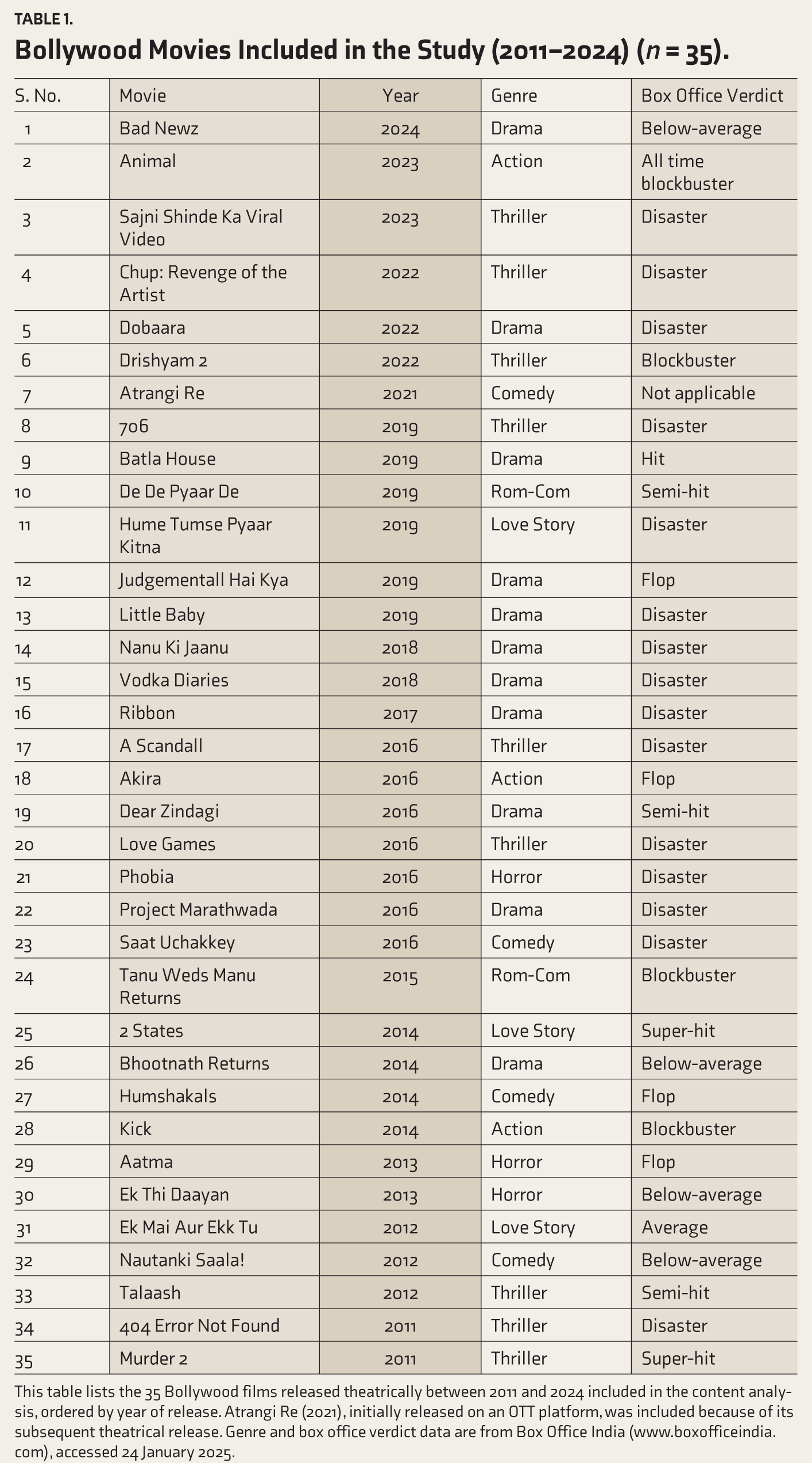
This table lists the 35 Bollywood films released theatrically between 2011 and 2024 included in the content analysis, ordered by year of release. Atrangi Re (2021), initially released on an OTT platform, was included because of its subsequent theatrical release. Genre and box office verdict data are from Box Office India (
Demographic and Professional Characteristics of MHPs (n = 42).

This table presents the demographic and professional characteristics of the 42 mental health professionals (MHP) portrayed across 35 Bollywood films (2011–2024).
Treatment Settings, Modalities, Outcomes, and Ethical Violations (n = 35).

This table presents the frequency of treatment settings, modalities, outcomes, and ethical violations depicted across 35 Bollywood films (2011–2024). Percentages may exceed 100% as films may depict multiple instances of each category. Unconventional/experimental methods include “immersive” experiment, hypnosis, and virtual reality therapy.
Results
The film selection process yielded 35 films containing 42 distinct portrayals of MHPs. A quantitative summary (frequencies and percentages) of the portrayals’ characteristics was first conducted. This was followed by a qualitative thematic analysis to identify, synthesize, and report on the dominant themes and recurring stereotypes.
Demographics and Professional Characteristics
As shown in Table 2, the gender distribution of MHP characters was relatively balanced, with 52.38% female and 47.62% male portrayals. However, other professional characteristics revealed significant disparities. A substantial proportion of MHPs (40.48%) were unnamed, and in nearly half of the portrayals (42.85%), their specific professional designation was not stated, creating ambiguity about their qualifications. This can negatively impact public perception of different MHPs, with portrayals often blurring the distinctions between psychiatrists, psychologists, and counselors, leading to a general distrust of the entire field. Among designated roles, psychiatrists were overrepresented (35.71%) compared to psychologists or therapists (14.28%), suggesting a bias toward medicalized models of mental health. MHPs were predominantly relegated to minor roles (64.29%), further restricting insight into their characters beyond their functional role. This combination of being unnamed, ambiguously designated, and confined to minor roles works synergistically to diminish the MHP’s narrative weight and credibility. Such a pattern suggests a framing technique in which MHPs are often treated as interchangeable plot devices or background figures rather than as complex individuals, making it easier to attach simplistic, usually negative, stereotypes and hindering the presentation of nuanced portrayals that could challenge these stereotypes.
Professional Competence and Ethical Behavior
A majority of MHPs were portrayed negatively (59.52%), with even higher proportions depicted as professionally incompetent (71.43%) and engaging in unethical behavior (73.81%). The most frequent ethical violations included incompetence or negligence (37.14%), inappropriate or harmful treatment (34.29%), and manipulation, coercion, or exploitation (25.71%). These portrayals undermine the credibility of MHPs and the therapeutic process itself.
Treatment Modalities and Outcomes
Psychotherapy was the most frequently depicted treatment modality (48.57%), but the substantial presence of unconventional or experimental methods (20%) raises concerns about the accuracy of mental health treatment portrayals. Treatment outcomes were predomin- antly unhelpful (51.43%) or difficult to evaluate (17.14%), reinforcing the narrative of MHP ineffectiveness and the futility of seeking professional mental healthcare.
Discussion
This scoping review mapped and characterized the portrayal of 42 MHPs across 35 Bollywood films (2011–2024). The findings reveal a systematic undermining of the credibility and dehumanizing MHPs, extending beyond mere inaccuracies, with significant implications for mental health literacy, help-seeking, professional image, and mental healthcare in India.
This pattern of misrepresentation echoes Banwari’s 11 analysis of psychiatrists in Hindi cinema (2000–2010), which documents a significant presence of negative portrayals, particularly concerning clinical incompetence and ethical breaches. This study, encompassing a broader range of MHPs (including psychologists, counselors, and psychiatric nurses) and a recent period (2011–2024), reveals a concerning trend: These negative portrayals not only persist but also appear to have worsened. While Banwari 11 found that 42.4% of psychiatrists were depicted as clinically incompetent and 39.4% breached professional ethics, our findings reveal even higher rates of incompetence (71.43%) and ethical violations (73.81%). This indicates a potential regression in cinematic portrayals despite growing public mental health awareness. From a Cultivation Theory perspective, 15 such consistent, long-term exposure to negative MHP depictions in a highly popular medium such as Bollywood likely cultivates distrust and negative attitudes toward the profession among viewers, shaping their perceived social reality of mental healthcare.
Our finding of a balanced MHP gender distribution departs from previous research that highlights male dominance.11,12 This shift, however, does not necessarily translate to more positive or nuanced portrayals. It suggests gender is not a primary moderator of these harmful stereotypes. Instead, the negative portrayals seem inherent to the cinematic construction of the MHP role itself, regardless of the character’s gender. Furthermore, the actual impact of these portrayals lies in qualitative analysis, where recurring themes reveal a deeply ingrained cultural ambivalence, if not outright hostility, toward MHPs.
Incompetence and Ineffectiveness
A pervasive theme is MHP incompetence and ineffectiveness (71.43%), undermining trust in professional support. In Atrangi Re, Dr Madhusudan’s simplistic explanations and ethically dubious medication practices reinforce the “pill-pusher” stereotype and erode psychiatric credibility. The film further implies “love” supersedes psychiatric intervention, trivializing mental health conditions and professional help. Similarly, in Phobia, a therapist’s failure with Virtual Reality (VR) therapy leads to her declaring “nothing can be done,” fostering notions of therapeutic futility, particularly for newer modalities. This resonates with India’s cultural context, where modern mental healthcare faces suspicion compared to traditional practices. It also contributes to audience schemas of MHPs as ineffective and may lead individuals to anticipate poor outcomes from therapy, thus lowering their motivation to seek professional help.
Furthermore, depictions of institutionalization are often negative. Humshakals portrays it punitively and chaotically, while Tanu Weds Manu Returns suggests visiting mental health facilities risks unwarranted confinement. Hume Tumse Pyaar Kitna features a protagonist who deceives mental health staff for years, thereby questioning the competence and vigilance of MHPs. These portrayals align with research showing media often depict mental health treatment as ineffective or harmful,5,8 potentially deterring individuals from seeking necessary care.
Ethical Violations and Manipulation
The alarmingly high prevalence of ethical violations (73.81%) is a central and deeply concerning finding that goes beyond simple character flaws. These violations range from relatively minor breaches of professional boundaries to egregious acts of manipulation and exploitation. The psychiatrist-client romantic entanglement in Kick exemplifies the damaging nature of dual relationships. The film’s dialogue explicitly defines a psychiatrist as “someone who manipulates the feelings of people and plays with their psychology,” further reinforcing negative perceptions. 706 escalates this, showing an MHP engaging in a sexual relationship with a patient and manipulating medication, leading to the patient’s death, portraying MHPs as capable of gross power abuse. Financial exploitation in De De Pyaar De and Ek Mai Aur Ekk Tu portrays MHPs as greedy and opportunistic.
Akira offers another egregious exa- mple. Dr Santosh Tiwari is corrupt, manipulative, and administers excessive ECT at a corrupt officer’s behest. This perpetuates harmful misconceptions of ECT as punitive, not therapeutic, painting psychiatrists as easily manipulated and complicit in abuse. His unprofessional personal conduct (drinking alcohol, watching cartoons) further undermines his credibility. His past cover-up of an ECT-related death cements his unethical image. Ultimately, his murder by the protagonist reinforces the dangerous myth of inherent risk in working with mental health patients, also seen in Judgementall Hai Kya, where a patient assaults a psychiatrist.
In Vodka Diaries, an MHP’s unconventional experiment blurs professional lines. A Scandall showcases blatant confidentiality breaches. Such portrayals likely activate negative stereotypes of MHPs as manipulative, untrustworthy, or even dangerous. This directly attacks the foundation of the therapeutic alliance of trust and safety, potentially deterring help-seeking due to fears of exploitation or harm.
Supernatural Forces Overshadowing MHPs
In films in which supernatural or paranormal events are central to the plot, MHPs are often cast as obstacles to “truth” or “reality.” Their attempts to provide rational explanations for unusual experiences are frequently dismissed or undermined by supernatural occurrences. This trivializes mental health interventions and reinforces a dichotomy between “rationality” and “the supernatural,” often favoring the latter. In Talaash and A Scandall, psychiatric methods are contrasted with and deemed inferior to psychic consultations, suggesting spiritual interventions are more promising than evidence-based practice. Nanu Ki Jaanu and Dobaara similarly render MHP diagnoses irrelevant via supernatural elements. In Aatma and Ek Thi Daayan, the psychiatrist is not only dismissed but killed by a spirit, starkly depicting the supernatural triumphing over scientific approaches. This tendency to position MHPs against the supernatural not only renders their expertise irrelevant but also subtly implies that they deserve such a fate for attempting to disprove or denigrate these forces. This bizarre logic rationalizes the ridicule and mockery of MHPs, further contributing to stigma and portraying them as targets for derision.
The recurring theme of MHPs being overshadowed by supernatural forces is particularly striking and culturally relevant. 16 This reflects a deeper tension between traditional beliefs and modern mental health care in India. This unique misrepresentation can have significant implications, further eroding public trust in professional help and potentially encouraging individuals to seek alternative, potentially harmful solutions grounded in spiritual or supernatural beliefs. This is a crucial distinction from portrayals of all other medical professionals; one rarely sees a surgeon being defeated by a ghost or a cardiologist’s treatment negated by a psychic, highlighting the specific vulnerability of MHPs to this type of misrepresentation. This can also trivialize the rigorous scientific training and evidence-based practices that underpin mental health training.
Recurring Stereotypical Portrayals
Beyond these dominant themes, other overlapping stereotypes reinforce harmful misconceptions (see Table 4). These include trivializing therapy, biomedical reductionism, reductionist MHP portrayals, diagnostic oversimplification, passive or token MHPs, pathologizing MHPs, idiosyncratic practitioners, and MHPs as derogatory caricatures. While perhaps less prominent individually, they collectively contribute to a negative image. For example, the “passive notetaker” (2 States) reduces therapy to administration, ignoring active listening and guidance. Depicting MHPs as “crazy” (404: Error not found) perpetuates stigma, associating professionals with illness. The “quick diagnosis” or “mind-reading” trope (Chup; Murder 2) misrepresents the complex and nuanced process of mental health assessment, creating unrealistic expectations about the speed and ease of diagnosis. This can lead to disappointment and distrust when individuals encounter the more thorough and time-consuming process of real-world mental health care. Overall, these stereotypes function as cognitive shortcuts (heuristics), allowing audiences to quickly categorize and evaluate MHPs based on preexisting, media-reinforced biases. They can limit the potential for audiences to develop a more complex and accurate understanding of MHP roles and the therapeutic process.
Recurring Stereotypes and Misconceptions of Mental Health Professionals in Bollywood Movies.

Positive Portrayals
A few Bollywood movies occasionally offer glimpses of more nuanced MHP portrayals, though even these are often entangled with problematic tropes. Dear Zindagi dedicates significant screen time to the therapeutic relationship, but presents an idealized therapist. His distinct persona, marked by ripped jeans and unconventional practices (beachside sessions or bike riding), sharply distinguishes him from the often- stereotyped image of the traditional, detached MHP. This “cool” and relatable persona, however, risks romanticizing the therapeutic process and setting unrealistic expectations for viewers regarding the accessibility and informality of real-world therapy. Interestingly, the stigmatization of MHPs is acknowledged through Dr Khan’s revelation that his family is ashamed of his profession, preferring to conceal his work from relatives, highlighting courtesy stigma. 17 Nautanki Saala presents a supportive psychiatrist, but the therapeutic setting primarily serves plot exposition rather than depicting active therapy. While avoiding overt negativity, these portrayals fail to fully challenge stereotypes, either idealizing MHPs or minimizing their complexity. This limits opportunities for positive parasocial contact,18,19 which could mitigate negative stereotypes. The lack of relatable, realistically portrayed, competent, and ethical MHPs means that audiences have few positive models to counter the overwhelming negativity, hindering the media’s potential to facilitate stereotype reduction through positive exemplars. Progress requires complex, human MHP characters reflecting professional realities.
Socio-legal Context and Regional Comparisons
The findings of this review gain further nuance when situated within India’s wider cinematic and socio-legal landscape. Although this study focuses on Hindi- language Bollywood films, evidence from regional industries suggests that problematic portrayals of MHPs are not unique to Bollywood. Research on Malayalam,20,21 Kannada, 22 Tamil, 23 and Bengali 24 cinema documents similar patterns, including psychiatrists depicted as caricatures, saviors, or antagonists; sensationalized treatment methods; and recurrent boundary violations. Recent qualitative interviews with practicing therapists similarly caution that OTT platforms, despite their greater narrative flexibility, often reproduce the simplified and ethically inconsistent portrayals seen in mainstream cinema, even as some regional films have begun to model more sensitive and ethical representations. 25 This inconsistency highlights that progress remains fragmented rather than systemic. While these parallels point toward a pan-Indian pattern, the available research is limited, and much of it predates major policy reforms, underscoring the need for updated, systematic comparative research.
The review period (2011–2024) spans the introduction of the MHCA 2017, a landmark shift toward rights-based, patient-centered care. Despite this progressive legal framework, our analysis suggests that cinematic portrayals have been slow to incorporate these reforms. A preliminary comparison of films before and after 2017 reveals no consistent movement toward rights-congruent representation. Several post-MHCA releases continue to rely on coercive interventions, exaggerated ECT sequences, and ethical violations as dramatic devices. Rights-based films, whether centered on human rights or mental health rights, remain peripheral to mainstream cinema. Filmmakers may perceive realistic or rights-aligned depictions as commercially not viable, risky, and even vulnerable, whereas rhetorically charged and sensationalized narratives are often considered safer and more “salable.” Parallel to this, conversations about harmful tropes, stigma, and the need for sensitive representation have become increasingly visible in professional social media, advocacy campaigns, and news media, yet have only begun to gain sustained traction within academic research. Anecdotal accounts from clinicians further suggest that misrepresentations of diagnosis, risk, and treatment can meaningfully shape patient fears and expectations, reinforcing mistrust of services or avoidance of care.
This disconnect between progressive legal reform and regressive cinematic storytelling highlights a “cultural lag” in translating policy advances into cultural narratives. While this review cannot empirically examine whether cinematic representation varies according to regional differences in mental health infrastructure, our findings point to an important future research direction: Comparative studies investigating whether states with stronger mental health systems, progressive policies, or higher mental health literacy produce films that portray MHPs and treatment settings differently than those with more constrained resources. Such work could add valuable socio-political depth to the study of cinematic representation in India.
Implications for Mental Health in India
These findings, contextualized by media portrayal literature and India’s sociocultural landscape, carry significant implications. Historically, attitudes toward mental illness in Indian cinema have mirrored socio-political trends.26,27 Despite increased mental health discourse and policy advancements, the potential regression in MHP representation suggests that media portrayals may lag behind or even counteract public health efforts. While some studies note more sympathetic portrayals of individuals with mental illness,27–29 the persistent negative depiction of MHPs highlighted here is concerning. This disconnect is problematic in India, where stigma significantly hinders help-seeking. Negative MHP portrayals can exacerbate this stigma,30,31 discouraging individuals from seeking support due to fears of judgment, mistreatment, or ineffectiveness. This can delay care and worsen outcomes. Furthermore, these portrayals can negatively impact MHP morale and professional identity, contributing to burnout and discouraging entry into the field.32–34
While negative MHP tropes exist globally, the specific configuration found in contemporary Bollywood with high incompetence, severe ethical breaches, and frequent invalidation by supernatural beliefs warrants attention. Bollywood has a powerful reach and influence, shaping public perceptions and attitudes toward mental health. Rather than viewing MHPs as mere plot devices or caricatures, filmmakers can create complex, relatable characters that challenge existing stereotypes and foster a more informed understanding of mental health. The issues raised in this study extend beyond the realm of cinema. The negative portrayals of MHPs in Bollywood films are not simply a reflection of artistic license; they are indicative of broader societal attitudes toward mental health and those who provide care that needs to be discussed more and addressed promptly. Achieving responsible representation requires deeper engagement with the cultural context, the artistic imperatives of filmmaking, and the complex interplay between entertainment, education, and social change. This includes fostering a culture of self-reflection within the film industry, encouraging filmmakers to critically examine their own biases and assumptions regarding mental health, and providing resources and support to create more accurate and sensitive portrayals of MHPs. Rather than relying on harmful stereotypes as narrative crutches, there is an opportunity to develop characters that foster mental health literacy and reflect the profession’s complexities. The challenge lies in balancing the need for accurate and sensitive portrayals with the creative freedom of filmmakers and the entertainment expectations of audiences. Simply demanding the elimination of negative stereotypes risks sanitizing narratives and potentially undermining the dramatic impact of storytelling.
The MHPs and mental health organizations can play a crucial role in this process by providing expert consultation, developing media guidelines, and conducting public education campaigns. The “Judgementall Hai Kya (Are you judgmental)” title change, from the initially stigmatizing “Mental Hai Kya (Are you mental),” demonstrates the power of advocacy in challenging harmful representations. Ultimately, the goal is not to eliminate all negative portrayals but to create a cinematic landscape where MHPs are represented with greater depth, complexity, and humanity, reflecting the diverse realities of their profession and contributing to a more informed and compassionate understanding of mental health. As Gabbard and Gabbard 30 and, echoing them, Niemiec and Wedding 35 argue, “The only thing worse than being portrayed in movies negatively is not being portrayed in movies at all.”
Strengths
The primary strength of this study lies in its rigorous and systematic methodological design. As the first comprehensive scoping review to examine the MHPs in contemporary Hindi cinema, it moves beyond fragmented anecdotal commentary to provide a structured, transparent, and replicable evidence map. The use of a formal scoping review protocol minimizes selection bias and enables precise categorization of professional roles, representational tropes, and thematic patterns. The study also establishes a robust empirical baseline spanning the pre- and post-implementation phases of the MHCA 2017, allowing insights into representational continuity and change during a pivotal policy period. By delineating current portrayals and identifying critical gaps such as the invisibility of allied professionals and the persistent “cultural lag” in rights-based narratives, this review offers a data-driven foundation for future comparative, regional, and longitudinal research.
Limitations
This review also has several intentional limitations that define its scope. The findings of this review are limited to mainstream Hindi films released in theaters. They therefore cannot be generalized to the extensive and evolving body of content on OTT platforms or India’s rich, diverse regional cinemas. OTT platforms, particularly after the post-COVID surge in viewership, have become a major site of consumption and cultural influence. Their longer runtimes, episodic formats, and flexible censorship norms often allow for more layered and nuanced portrayals of mental illness and MHPs representing dimensions that fall outside the scope of the present analysis. Future research should examine whether OTT or regional cinema depictions diverge from or challenge those found in theatrical Bollywood cinema, and how these differences shape public understanding of mental health.
It is also acknowledged that the portrayals examined in this review are mainly limited to psychiatrists and clinical psychologists. While the study aimed to include all categories of MHPs, the films in the final dataset offered very few or no depictions of psychiatric nurses, psychiatric social workers, or other allied professionals. As a result, the analysis reflects the doctor-centric narratives familiar in mainstream cinema. It cannot be generalized to the broader multidisciplinary mental health care workforce, which remains largely invisible in these portrayals.
Methodologically, the review is desi- gned to map media content and does not measure the actual psychological impact or audience reception of these portrayals. Consequently, the discussion of real-world effects, such as on public stigma or help-seeking, is an interpretation grounded in established media effects theories rather than in direct empirical data from viewers. Further research should examine the impact of these media depictions on the morale and professional identity of MHPs. For instance, methodologies such as the “movie club approach” could be adapted from existing work 34 to directly explore these professional impacts in the Indian context. Final, intervention studies examining the differential impact of positive versus negative portrayals could provide valuable evidence to guide more responsible media practices.
Conclusions
This scoping review systematically mapped the portrayal of MHPs in con- temporary Bollywood cinema (2011–2024), revealing a consistent and troubling pattern of negative representation. The key characteristics identified were pervasive clinical incompetence, unethical conduct, and therapeutic ineffectiveness. A culturally specific trope where supernatural forces invalidate MHP expertise was also a prominent finding. This evidence suggests that, despite growing societal mental health awareness, harmful cinematic misrepresentations have not only persisted but have potentially worsened despite policy reforms.
Interpreted through psychological and media theories, the patterns map- ped in this review are not harmless entertainment but a significant public health concern. Such consistent exposure is likely to cultivate public distrust, reinforce harmful stereotypes, and exacerbate the stigma surrounding mental healthcare in India. Consequently, these cinematic depictions risk deterring individuals from seeking necessary professional help, thereby threatening to widen the nation’s critical mental health treatment gap.
Ultimately, this review serves as a call for a critical reconsideration within the film industry. Collaborative efforts between filmmakers, MHPs, and advocates are urgently needed to foster more nuanced, accurate, and responsible depictions. By moving beyond caricature and embracing complexity, Bollywood can transition from perpetuating stigma to promoting understanding and trust. As India strives for greater mental health equity, its most influential cultural medium must become a partner in progress—one that, at a time, offers an ethical, humanizing portrayal of mental health.
Supplemental Material
Supplemental material for this article is available online.
Footnotes
Acknowledgements
The authors gratefully acknowledge the filmmakers whose creative works form the basis of this content analysis. Their portrayals of MHPs in films provide valuable material for understanding societal perceptions and representations within popular culture. All opinions expressed in this manuscript are solely those of the authors and do not represent the official stance of the Indian Psychiatric Society—South Zonal Branch, the editorial board, or the publisher of the journal.
Appropriate Permissions from the Concerned Authorities
We confirm that no copyrighted psychological instruments were used in this study. The analysis of films was conducted under the principle of “fair dealing” for the purpose of academic criticism and scholarly review. This constitutes a transformative use of the source material.
Declaration of Conflicting Interests
The authors declared no potential conflicts of interest with respect to the research, authorship, and/or publication of this article.
Declaration Regarding the Use of Generative AI
The authors used an AI tool (ChatGPT-4o) solely to enhance language and improve the article’s readability. No section of the article was AI- generated. The authors take full responsibility for the integrity and content of the article.
Data Sharing Statements
Data available on request from the corresponding author.
Ethics Committee Details
Due to the nature of the review, ethical approval is not required.
Funding
The authors received no financial support for the research, authorship, and/or publication of this article.
Informed Consent/Assent
Not applicable.
Prior Presentations
The abstract of this study has been accepted for presentation at the 3rd Global Conference on Psychology, to be held from 24 to 26 October, 2025 in Oxford, United Kingdom.
PROSPERO/CTRI Details
Nil.
Registration
Not applicable.
Simultaneous Submission to Another Journal or Resource
The manuscript is not under consideration elsewhere and has not been submitted to any other journal or resources.
Status of Your Study (for Study Protocol)
Not applicable.
References
Supplementary Material
Please find the following supplemental material available below.
For Open Access articles published under a Creative Commons License, all supplemental material carries the same license as the article it is associated with.
For non-Open Access articles published, all supplemental material carries a non-exclusive license, and permission requests for re-use of supplemental material or any part of supplemental material shall be sent directly to the copyright owner as specified in the copyright notice associated with the article.
