




Abstract
Purpose of the Review:
Guilt, a complex emotional experience pervading many lives, takes on an intricate form when intertwined with psychiatric conditions. As a multifaceted concept, guilt represents a key diagnostic feature in depression and is an integral part of obsessive compulsive disorder (OCD). This systematic review aimed to synthesize empirical research on the varied dimensions of guilt across these two mental illnesses, where guilt is emphasized as a pathognomonic factor.
Collection and Analysis of Data:
A systematic computer-based literature search was conducted, using a rigorous set of eligibility criteria and specific keyword combinations to ensure relevant and exhaustive coverage of the topic. Following Preferred Reporting Items for Systematic Reviews and Meta-Analysis guidelines, a comprehensive literature search spanning multiple databases identified 12 eligible studies on guilt in OCD and 8 in depression. The findings revealed 20 distinct guilt constructs measured across the two disorders. Notably, 5 unique guilt subtypes and 15 themes for OCD and 6 exclusively studied guilt for depression emerged, reflecting potential disorder-specific manifestations of guilt.
Conclusion:
Delineating such guilt profiles holds the potential to untangle the role of guilt in the onset, perpetuation, and clinical course of OCD and depression. This comprehensive mapping of guilt constructs provides an empirical foundation for elucidating disorder-specific pathways influenced by guilt, thereby informing the development of targeted psychological interventions tailored to the distinct guilt patterns underpinning these debilitating conditions.
Guilt is a multifaceted construct that manifests in distinct yet intricate ways across OCD and depression. This systematic review is a comprehensive taxonomy of 20 different types of guilt identified strictly on the clinical population of these two disorders that are documented in the literature. Despite the theoretical and clinical relevance of guilt, specialized, multidimensional measures of guilt are lacking, and a unified conceptual framework is needed to guide future research and inform more effective assessment and intervention strategies targeting guilt-related mechanisms in these disorders.Key Messages:
Persistent, irrational, and maladaptive guilt has been associated with many internalizing disorders and symptoms of mental illnesses. Guilt is elucidated through various perspectives, majorly revolving around the violation of one’s internal set of standards and rules.1-3 Other than obsessive compulsive disorder (OCD) and depression, psychopathologies such as post-traumatic stress disorder,4-6 generalized anxiety disorder, 7 and eating disorder 8 have been closely linked with the guilt construct and have been the focus of the researchers. Empirical evidence strongly suggests that individuals with psychiatric disorders tend to experience heightened feelings of guilt9-11 and that exaggerated feelings of guilt are qualitatively distinct compared to individuals without such conditions.12,13
Different Types of Guilt
Different theorists divide guilt into different subtypes, and no two subtypes are the same. Guilt can be objective, arising when an individual breaches a rule established by a state, religion, community, or social group. By definition, that person may be labeled as guilty when they have violated such a rule, potentially resulting in reprimand or punishment. 14 Meanwhile, subjective guilt is derived from a negative reflection of self-concerning others, accompanied by the transgression of one’s moral code of conduct. 15 Tilghman-Osborne et al. 16 coded prominent features noticed in individuals experiencing guilt, including moral and social transgression, self-inclusion or exclusion, experience or lack of reference of the presence of an actual or fictionalized audience, behavior or activity (action or inaction), maladaptivity and adaptivity, remorse or apology, reparation, specificity (a transient experience that cannot be generalized), painfulness, and an implausible sense of responsibility. Guilt is a complex and vexatious emotion that can be adaptive or maladaptive. Tangney et al. 17 differentiated between adaptive and maladaptive guilt. Adaptive guilt is an emotional response triggered by a specific behavioral transgression, leading to remorse and promoting positive social functions such as conflict resolution and altruism. However, maladaptive guilt can be counterproductive and contribute to psychopathological conditions.
Guilt in Obsessive Compulsive Disorder and Depression
In OCD, extreme guilt experiences are commonly reported, and numerous studies have established a positive correlation between OCD and guilt.18,19 Cognitive models propose that the primary objective of OCD symptoms is to avert or counteract the potential experience of guilt.20-22 Individuals with OCD feel the need to police themselves morally, and minor violations of their moral code become unacceptable. Guilt in depression is a symptom included in diagnostic criteria, rating scales, and phenomenological conceptualizations.23-27 Rado 28 viewed depression as a self-inflicted punishment emerging from guilt, while Freud 29 theorized severe guilt as the causal factor of introjected anger in depression. Clinically, guilt is often seen as a symptom associated with the severity of depression, and numerous studies have consistently demonstrated positive associations between quantitative measures of guilt and self-reported depressive symptoms.30-32
Need for the Review
Guilt has been a longstanding focus of scholarly investigation, with early reviews exploring its interpersonal nature 33 and intrapsychic or interpersonal dimensions. 34 While these were guilt-centric reviews, later reviews and meta-analyses have portrayed guilt as a peripheral phenomenon, mostly intertwined with shame.35-37 This holds even when guilt is examined in relation to OCD 38 and depression. 39 Furthermore, the literature exists where depression and guilt were phenomenologically analysed 40 or investigations into one specific subtype of guilt in OCD were focused on. 41 Despite its theoretical and clinical relevance, an in-depth contrastive analysis of guilt across clinically diagnosed OCD and depression remains a largely unexplored area of research. An intriguing question that remains to be probed is the extent to which different subtypes of guilt have been studied in the context of OCD and depression within the existing literature. Do they exhibit similar or distinct patterns of guilt manifestation? This literature review highlights the dearth of systematic efforts to integrate the various subtypes of guilt across various measures, with the overarching aim of elucidating the diverse yet potentially overlapping nature of guilt in OCD and depression.
Methods
Sources and Search Strategy
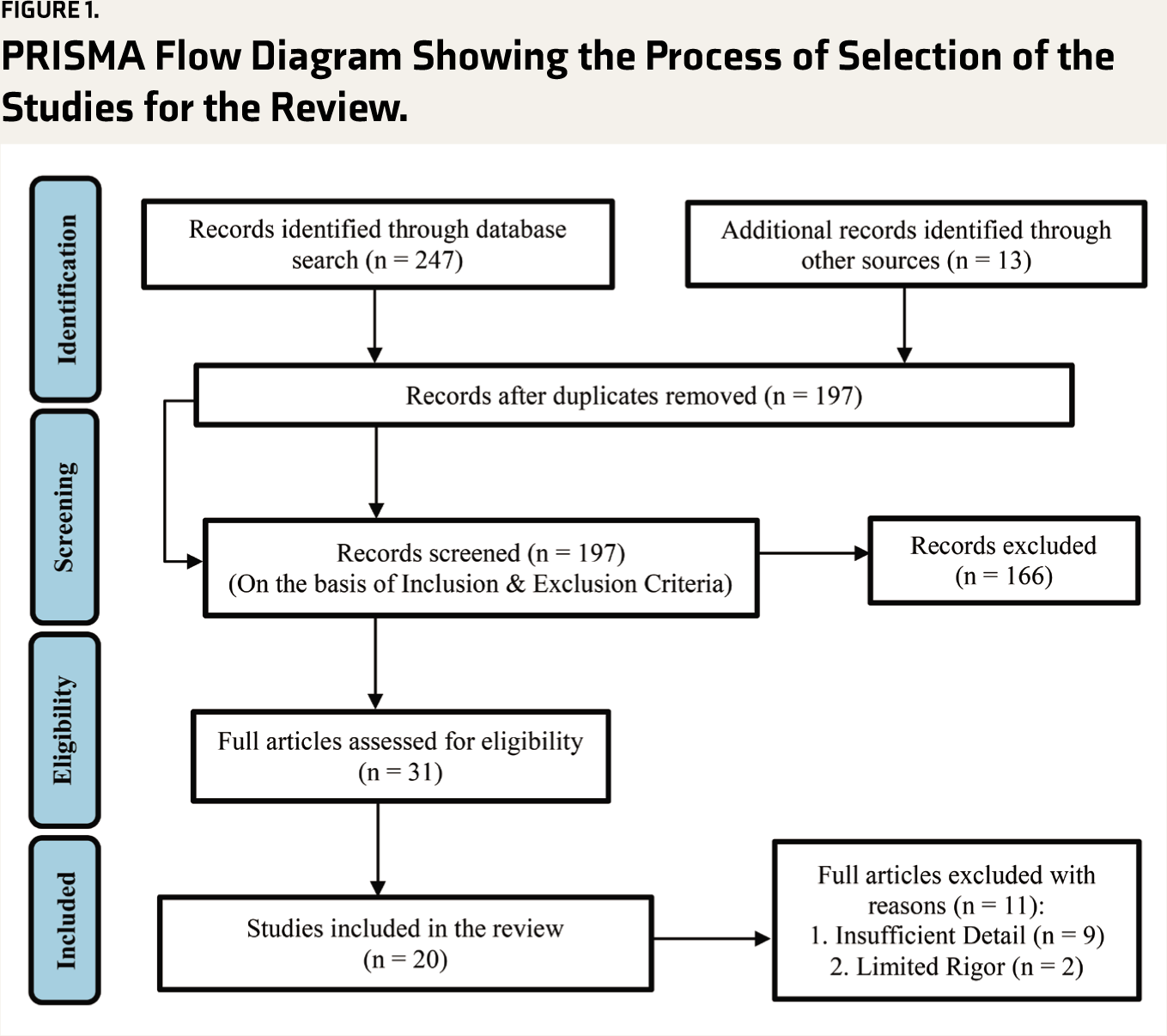
For evidence-based reporting, this review followed the Preferred Reporting Items for Systematic Reviews and Meta-Analysis (PRISMA) by Page et al. 42 (Figure 1). Time specifiers were set from August 1990 until February 2024. For this article, electronic databases, including PubMed-NCBI, Directory of Open Access Journals, Web of Science, Scopus, ScienceDirect, Semantic Scholar, and Sage databases, were used. Searching keywords like “guilt,” “types of guilt,” “nature of guilt,” and “impact of guilt” in combinations with “OCD,” “depression,” or “major depressive disorder (MDD),” relevant Boolean operators such as “AND” and “OR” were applied. All articles finally included in this review were sourced exclusively from peer-reviewed journals. Studies in English relevant to the focus of the review were included, tabulated, and critically reviewed by all the authors.
PRISMA Flow Diagram Showing the Process of Selection of the Studies for the Review.
Eligibility Criteria and Selection Process
This review strictly included studies that (a) explicitly examined at least one (preferably more) distinct dimension(s) of guilt in relation to OCD and/or depression; (b) involved clinical samples with a formal diagnosis of OCD or depression, established through standardized diagnostic criteria; (c) were adult population-based; (d) clearly articulated their aims, methodologies, and outcomes, upholding superior research quality standards; and (e) were published in the English language. We excluded studies that (a) evaluated other guilt-related constructs such as shame, worry, or self-blame, and not specifically focused on assessing guilt; and (b) reviewed articles, abstracts of conference proceedings, and editorials.
Data Collection Process
Three reviewers (including both the authors) independently selected articles on the basis of their titles and abstracts. After identifying them, the reviewers screened them according to the inclusion and exclusion criteria. The full texts of 20 shortlisted articles were manually reviewed to ensure compliance with eligibility criteria.
Results
Data Synthesis
This review synthesized evidence from a wide spectrum of research designs, with a predominance of quantitative studies encompassing cross-sectional, longitudinal, experimental, randomized controlled trials, observational, and comparative designs. Given the stringent inclusion criteria and the limited number of available studies in this field, we also retained qualitative research, including a phenomenological approach, single case study, and case series.
Nature of Guilt in OCD from Literature
The divergent conceptualizations of guilt and its various operational methods of assessment make it hard to categorize it discreetly. One of the most common ways to categorize guilt is by evaluating the current affective state of guilt (state guilt) versus guilt as a dispositional tendency (trait guilt). Trait guilt refers to an individual’s predisposition or personality trait toward experiencing guilt that extends beyond immediate circumstances, resulting in a persistent sense of guilt proneness. As Donald L. Mosher 43 described it, trait guilt is “the disposition to respond under certain circumstances with a class of behaviors which may be described as guilty.” It is a self-conceptualization arising from one’s subjective perception and broad understanding of oneself.
In contrast, state guilt is the current emotional state or subjective feeling of guilt—a transitory, situation-specific condition that evokes guilt in a person 44 . Research has evaluated trait guilt along with state guilt, moral standards, interpersonal guilt, norm-violation guilt, and risk aversion related to guilt. Shafran et al. 18 conducted a seminal study comparing individuals with OCD and community participants. Utilizing the Guilt Inventory 3 and they found that the OCD group reported significantly higher levels of state guilt, trait guilt, and heightened moral standards than normal controls. While a close association was observed between guilt, depression, and obsessional complaints, the results were tempered by the fact that guilt is an integral component of depression, and participants were not screened for comorbidity. Notably, trait guilt significantly predicted obsessional complaints, independent of anxiety and depression, in both groups. Using the Guilt Inventory, D’Olimpio et al. 45 explored the interplay between guilt, disgust propensity, and OCD symptoms. Their study included 73 individuals with OCD (11 washers, 49 checkers, and 13 both), 19 with other anxiety disorders, and 87 healthy controls. A significant correlation emerged between guilt and disgust proneness with the severity of obsessive compulsive symptoms. Checkers, washers, and the mixed group exhibited inflated propensities toward guilt feelings and disgust, displaying stronger inclinations toward state guilt, trait guilt, moral standards, and disgust than anxious and nonclinical controls. Building on similar domains, Melli et al. 46 examined the distinct features of trait guilt and disgust propensity within different OCD symptom dimensions, controlling for depression and anxiety. With a large clinical sample of 98 individuals with OCD, they utilized the Trait Guilt Short Scale (TGSS), an 11-item self-report measure derived from the Guilt Inventory. The results indicated significant but weak correlations between trait guilt and certain OCD symptom domains, such as liability for harm, mistakes, and undesirable thoughts. Unexpectedly, regression analyses did not find a significant impact of trait guilt on OCD symptoms, contradicting previous studies highlighting the significant role of trait guilt in OCD. In an Indian clinical population, Kumar et al. 47 assessed the relationship between guilt and religiosity in OCD and their role in symptomatology and treatment outcome. A one-year prospective study with a six-month follow-up period was conducted. A positive relationship was reported between the trait guilt score (a subcomponent of the Guilt Inventory) and the initial obsession and compulsion score. The overall guilt score was also positively correlated with OCD, providing a cultural perspective on the role of guilt in OCD. Ekici et al. 48 recently examined the effectiveness of cognitive and emotional factors, including guilt, on different OCD dimensions in individuals with OCD and volunteers without psychiatric complaints.
Overall guilt was significantly associated with four OCD dimensions: contamination, unacceptable thoughts, responsibility for harming or making mistakes, and symmetry/ordering. Trait guilt specifically predicted the contamination dimension, highlighting the potential for developing guilt-specific strategies in the clinical population. Geissner et al. 49 focused on the multidimensional experience of guilt in individuals with OCD, comparing them with matched healthy controls. Guilt proneness was assessed using the State & Trait Guilt Scale 50 and the Test of Self-Conscious Affect.51-52 Additionally, a guilt-inducing scenario-based test evaluated guilt based on interpersonal responsibility, considerateness, morality/norm violation, and risk aversion. The outcome confirms the presence of more pronounced trait guilt among individuals with OCD as opposed to the matched control group with healthy participants. Participants with OCD are also clearly found to have more guilt because of interpersonal responsibility and considerateness and a stronger sense of guilt due to norm violation and risk aversion or overconsideration of morality.
Two specific kinds of guilt, that is, deontological guilt and altruistic guilt, have received attention from researchers working with OCD. These two kinds of guilt are quite palpable and encountered by individuals in their everyday affairs; they could appear alone and part of specific psychiatric disorders (OCD and depression). According to Prinz and Nichols, 53 guilt is expounded by (a) harming loved ones through action/inaction and (b) violating moral norms. In OCD, guilt stems from perceived nonaltruistic acts or moral transgressions, separately or together. One can feel altruistic guilt without violating norms or deontological guilt without victims. These two types of guilt have been extensively studied,54-57 primarily in the community population. Basile et al. 58 , however, conducted a functional magnetic resonance imaging (fMRI) study to investigate how individuals with OCD process stimuli, inducing deontological and altruistic guilt.
A validated fMRI paradigm involving emotional facial expressions and contextual sentences was used on OCD and healthy participants. The results revealed heightened levels of state and trait guilt in OCD participants compared to controls. Interestingly, individuals with OCD exhibited abnormal brain activation patterns, particularly reduced activity in the anterior cingulate and frontal gyrus regions when experiencing guilt. Furthermore, while deontological guilt elicited decreased activation in the anterior cingulate gyrus, altruistic guilt did not show the same pattern, suggesting selective dysfunctional processing in OCD. Mancini and Gangemi 59 compared altruistic guilt in their research to elucidate whether individuals with OCD exhibit a greater tendency to avoid deontological guilt. In two studies of their research, participants were presented with hypothetical scenarios requiring moral decision-making. The findings indicated that individuals with OCD displayed a preference for omission over consequentialist options, particularly in scenarios involving deontological guilt. This inclination toward avoidance of deontological guilt was more pronounced in OCD participants than clinical and nonclinical control groups. While both deontological guilt and altruistic guilt play significant roles, individuals with OCD may exhibit a heightened sensitivity to deontological guilt, leading to avoidance behaviors. To summarize, the findings of this study demonstrated that individuals with OCD are more inclined toward averting feelings of deontological guilt than toward prioritizing altruistic guilt.
The next study explored three different guilt types, that is, interpersonal harm guilt, norm violation guilt, and self-control failure guilt, measured with the Problematic Situations Questionnaire (PSQ). 2 Steketee and White 19 delved into the interplay between guilt, religiosity, and the severity of OCD symptoms. Comparing individuals with OCD to those with other anxiety disorders, they found a positive correlation between religiosity, guilt (particularly interpersonal harm guilt), and OCD severity. This suggests that religiously devout individuals with OCD may experience heightened guilt, especially related to interpersonal harm, compared to those with different anxiety disorders. The next three early categories of guilt found in the literature are sexual guilt, hostility guilt, and a guilty conscience. While these types of guilt have been studied in healthy populations,60,61 they were recently explored in a clinical population by Audhya et al. 62 This study evaluated guilt, coping, and regret in individuals with OCD and compared them with individuals in conflict with the law. The Revised Mosher Guilt Inventory63,64 was used to assess the three types of guilt. It was reported that individuals with OCD reported significantly higher levels of guilty conscience than those in conflict with the law. No notable differences were observed between the two groups in terms of sexual guilt and hostility guilt. Although the study lacked a healthy control group, the significant implication of guilty conscience in OCD is evident. Mancini et al. 65 introduced the Moral Orientation Guilt Scale, a newly devised instrument assessing four factors of guilt propensities, namely moral norm violation, moral dirtiness, empathy, and harm. Using the scale, Mancini et al. 66 conducted a study in Rome and evaluated the relationship between different diagnostic groups (OCD and non-OCD groups) and moral orientation guilt. Their findings revealed that individuals with OCD scored higher on guilt related to moral norm violation and moral dirtiness. These subscales measured feelings of guilt for defying authority, feeling unclean when guilty, and experiencing self-loathing.
Additionally, OCD symptom severity was positively associated with guilt for infringing on moral norms. The diverse and mixed nature of the non-OCD sample group and the absence of a healthy control group in the present study may have restricted the overall impact of guilt in the genesis of psychopathology in general. However, the clinical implementation of guilt on OCD in this study had been insightful.
Various studies that measured guilt through questionnaires accounted for the self-reported version of persons with OCD or analyzed therapeutic reports of them and revealed positive correlations between OCD and guilt experiences. Savoie 67 took a unique phenomenological approach to understanding guilt in OCD. Through an unstructured, in-depth interview with specific emphasis on the importance of guilt, their encounter with guilt, and OC symptoms as experienced by them, 15 descriptive themes were derived, capturing the personalized nature of guilt experiences in OCD. These themes ranged from forbidden thoughts and feelings to interpersonal isolation and waste. This qualitative research posited that the significance of guilt in OCD is profoundly personalized, with guilt potentially occurring before, driving, ensuing, and resulting from the manifestation of OC symptoms. While the study’s generalizability and predictive value may be questioned, it offered meaningful reflection on the experiences of guilt in individuals with OCD, which can also be very significant for intervention purposes. Table 1 provides an overview of studies on the nature of guilt in OCD, ordered chronologically by publication date.
Summary of Studies on the Nature of Guilt in OCD.
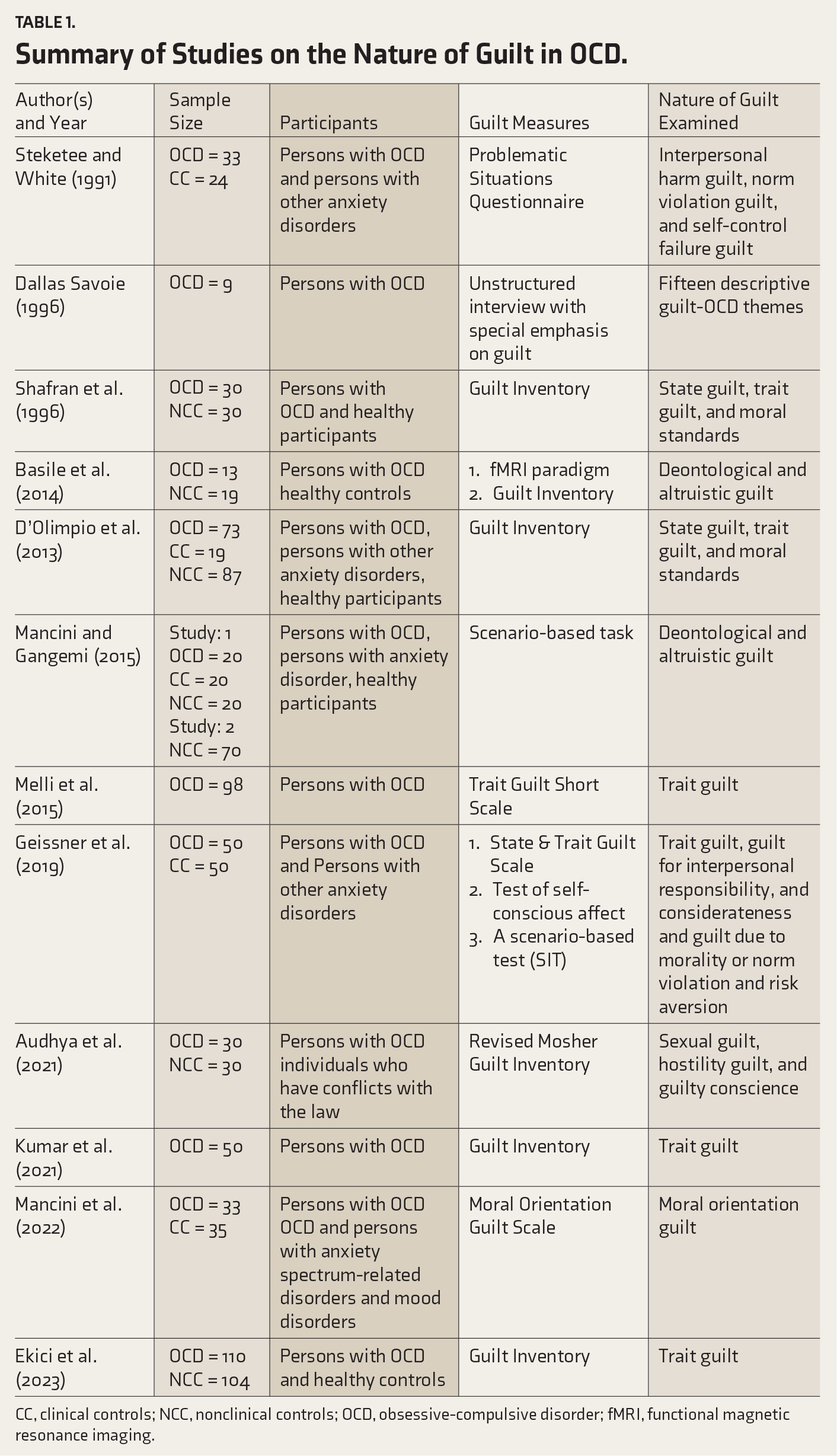
CC, clinical controls; NCC, nonclinical controls; OCD, obsessive-compulsive disorder; fMRI, functional magnetic resonance imaging.
By delving into the existing literature, it is evident that a comprehensive body of research consisting of 12 studies has been exclusively conducted on individuals with OCD that have centered on unraveling the intricate nature of guilt experienced by them.
Nature of Guilt in Depression from Literature
The literature on guilt in depression presents a scattered categorization, making it challenging to recapitulate under a single framework. The intensity of guilt appears to be influenced by the severity of depression, and dysfunctional guilt emerges as a crucial aspect of the subjective experience of depression. Early studies, like Prosen et al., 68 documented the occurrence of severe feelings of guilt in individuals diagnosed with MDD, although without the use of dedicated scales or specific guilt categories.
Ghatavi et al. 69 conducted a comprehensive study investigating distinct characteristics of guilt in patients with MDD. They compared individuals with current major depressive episodes, past MDD (currently euthymic), chronic cardiac illness, and healthy controls. Using the Guilt Inventory, they measured state guilt, trait guilt, and moral standards. The results revealed that individuals with current and past depression experienced higher levels of state and trait guilt than the other two groups. Notably, those with current depressive episodes had more state guilt than those with past depression. However, moral principles appeared similar across all groups. The findings suggested that the intensity of guilt is strongly influenced by the severity of depression, highlighting the subjective experience of guilt associated with depression over time. Jarrett and Weissenburger 70 assessed situational guilt among nonpsychotic, unipolar depressed outpatients, and nondepressed individuals using the Situational Guilt Scale (SGS),71,2 offering a situational self-prediction format utilized to generate an alternative self-report measure of guilt empirically. Depressed outpatients reported higher levels of guilt across all three empirical subscales: interpersonal harm guilt, self-control failure guilt, and norm violation guilt. Significant differences were also found in categories such as unintentional harm-doing, failure to meet needs for help or interaction, self-control failure, and disregard for relationships. This study contributed to establishing clinical standards for the SGS in unipolar, nonpsychotic MDD outpatients and opened new avenues for investigating dysfunctional guilt in depression. More recently, Mukherjee and Ganguly 72 evaluated the association between guilt and anger expression among adults with depression recruited from a psychiatric hospital in Kolkata, India. Using the revised Mosher Guilt Inventory, they measured sexual guilt, hostility guilt, and a guilty conscience. The findings revealed that individuals with severe depression had higher levels of a guilty conscience than those with mild or moderate depression.
The literature on depression has explored several unique forms of guilt that are distinct from the guilt conceptualizations in other disorders like OCD. Three such unique guilt types are survivor guilt, omnipotent responsibility guilt, and separation guilt. Survivor guilt arises from the fear of harming others by pursuing one’s own goals, characterized by the pathological belief that achieving success and happiness will cause others to suffer simply by comparison. It is an illogical presumption that the lack of favorable outcomes in others’ lives is an unjust disparity. 73 Separation guilt, on the other hand, is defined by the pathogenic belief that separating from loved ones is an act of disloyalty or will consequently cause their loved ones to suffer. Altruism can give rise to a sense of omnipotent responsibility and guilt, encompassing a selfless concern for others’ well-being and an inflated sense of responsibility. While omnipotent guilt may occur independently, individuals who experience survivor guilt and/or separation guilt have consistently been found to encounter a certain degree of omnipotent responsibility guilt. O’Connor et al. 74 compared various self-focused motivations, including interpersonal guilt and empathy, in depression. Specifically, they investigated survivor guilt’s contribution to feelings of inferiority and fear of negative evaluation in individuals with depression. Using the Interpersonal Guilt Questionnaire-67, 75 they evaluated survivor guilt, separation guilt, and omnipotent responsibility guilt in a nonclinical group of students and a clinical group of individuals hospitalized for depression. Along with survivor guilt, omnipotent responsibility guilt, submissive behavior, fear of envy, fear of negative evaluation, and empathic distress were found to be significantly higher in individuals with depression than in the nonclinical group. This research shed light on the notion that survivor guilt could potentially serve as a significant psychological mechanism linked to depression, warranting further investigation into its pathogenic impact.
Delusional guilt and affective guilt are two other forms of guilt observed in individuals diagnosed with depression. Delusional guilt is a pathological feeling of guilt where patients become fixated on a perceived misdeed, either imagined or a minor transgression, which they appraise as negative, leading to a profound sense of guilt. Clinically, this phenomenon is termed “delusional guilt,” as either the wrongdoing itself is fictitious or its impact is exaggerated. In contrast, affective guilt is a clear declaration of heavy guilt without a specified misdeed. Berrios et al. 76 developed a new scale to evaluate feelings of guilt in individuals with depression, focusing on delusional guilt (guilt experienced over a specific action) and affective guilt (a general feeling of unworthiness). The study was conducted in two stages in both clinical and nonclinical populations who were evaluated by administering the statements from the new guilt scale and depression rating scales. The results showed that cognitive or attitudinal factors involving concerns of being found out or judged correspond to “delusional guilt,” demonstrating a significant association with psychomotor retardation scores in individuals with depression. While the limited sample size in this study may limit generalization, the specific outlook on these two guilt constructs may potentially serve as a plausible measurement of guilt in the future.
An exclusively reported form of guilt in depression is masturbatory guilt. Masturbation, although a prevalent sexual behavior, is perceived unfavorably in various cultural contexts and prohibited by nearly all religious doctrines. Many individuals experience profound guilt due to the prohibition of masturbation. Several case studies have attempted to address this type of guilt in depression, although without quantitative measurements. Chakrabarti et al. 77 reported a case demonstrating the detrimental consequences of masturbatory guilt, contributing to severe depression and erectile dysfunction in a 23-year-old married man. The individual developed the belief that masturbation led to physical debilitation and difficulties in sexual intercourse with his partner. The subsequent occurrence of erectile dysfunction, arising from guilt and fear of failure due to masturbatory practices, resulted in the individual avoiding intimacy with his spouse, leading to severe depressive symptoms and numerous suicidal attempts. An aspect that was revealed from the report is that the severe degree of masturbatory guilt was not a cause of depressive episodes but rather the effect of longstanding guilt. In another report, Aneja et al. 78 explored whether masturbatory guilt could lead to severe psychopathologies in a series of cases. Two out of three cases met the criteria for recurrent depressive disorder (RDD), and one was diagnosed with undifferentiated Schizophrenia with comorbid severe depression without psychotic symptoms. Individuals with RDD exhibited an intensified sense of masturbatory guilt, which presented as a clinical expression of depression. In one case, masturbatory guilt served as a triggering factor for the first episode of depression, underscoring the significance of inquiring about such guilt when evaluating individuals with severe mental disorders. Albobali and Madi 79 documented a case involving a 17-year-old Muslim boy exhibiting severe depression associated with masturbatory guilt. The guilt stemmed from the belief that masturbation had negatively impacted his life and the conviction that engaging in such an act was forbidden in Islam. Despite progress in his symptoms, he persisted in maintaining the belief that there existed a causal relationship between masturbation and his illness, amplifying the relevance of masturbatory guilt. These unique guilt conceptualizations in depression highlight the complex and multidimensional nature of guilt in this disorder. Table 2 chronologically lists studies examining the nature of guilt in depression.
Summary of Studies on the Nature of Guilt in Depression.
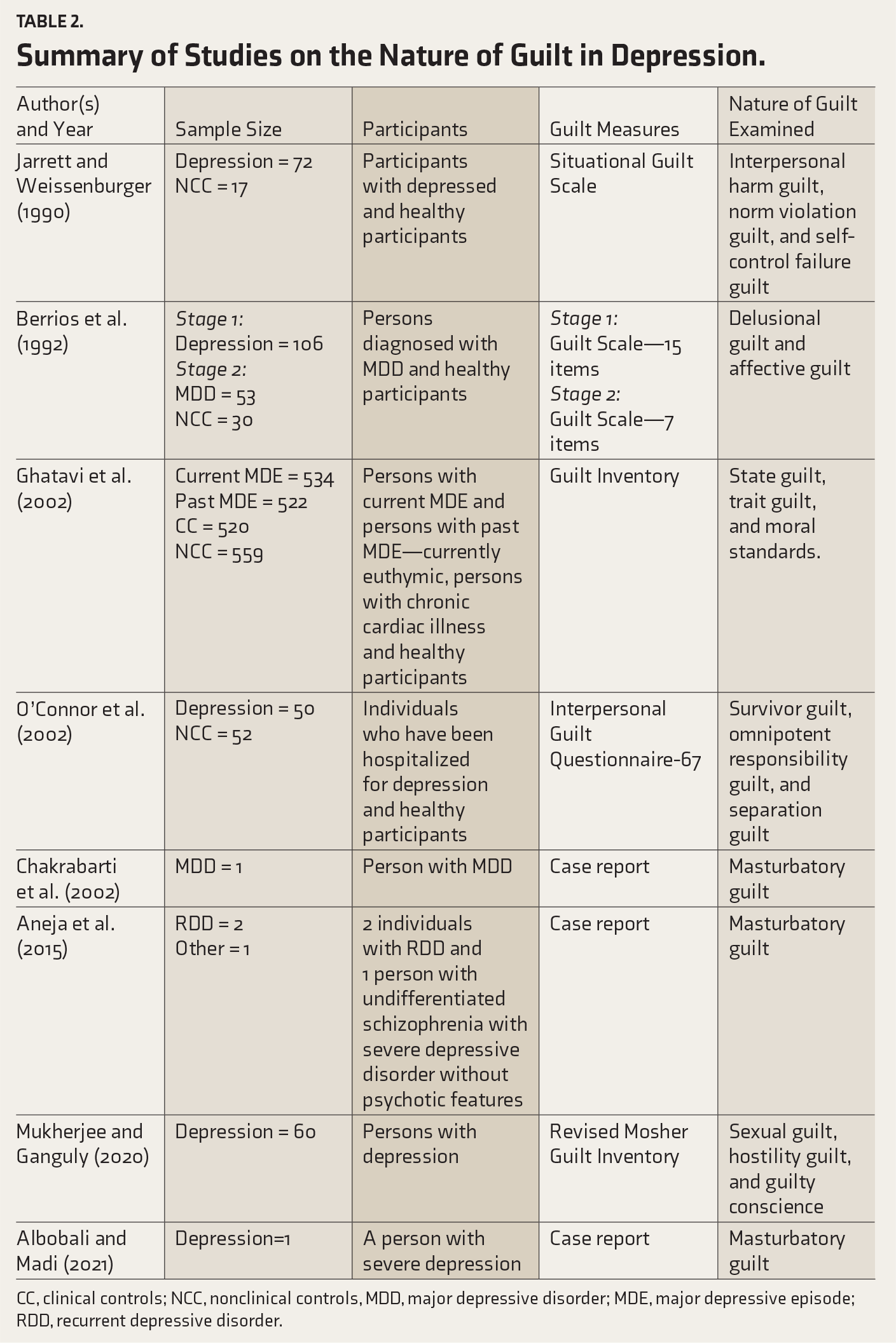
CC, clinical controls; NCC, nonclinical controls, MDD, major depressive disorder; MDE, major depressive episode; RDD, recurrent depressive disorder.
Through an extensive exploration of the available literature, it is apparent that eight scholarly articles solely focused on elucidating the complex nature of guilt in individuals with depression. Table 3 provides a concise illustration of subtypes of guilt observed in various studies among individuals with OCD and depression.
Comprehensive Depiction of Various Types of Guilt in OCD and Depression.
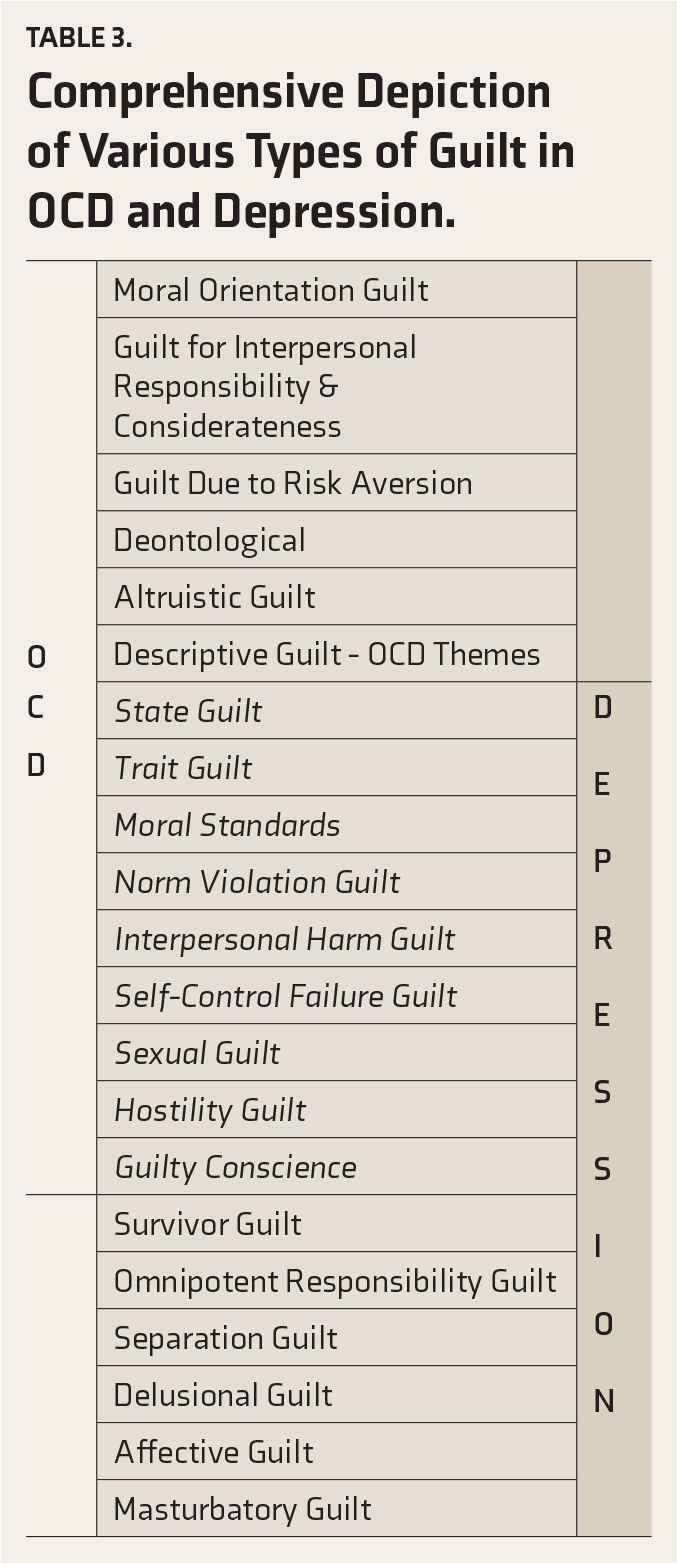
This review critically amalgamated the abiding literature on the diverse guilt dimensions assessed in OCD and depression, elucidating similarities, distinctions, and potential implications. This review comprehensively cataloged the different guilt constructs explored in the literature for these two disorders. We found a sum of 20 types of guilt and 15 themes (for OCD) in the literature that have been assessed in both OCD and depression. Moreover, 5 types of guilt and 15 themes of guilt were exclusively studied for the OCD population, and 6 types of guilt were only evaluated among persons with depression.
Limitations
The review only included studies published in English, potentially needing to include relevant research published in other languages. This review adhered to rigorous criteria for identifying, screening, and including studies from high-quality peer-reviewed journals to ensure the incorporation of robust research. However, a formal quality assessment tool may be necessary to ensure the reliability of the conclusions drawn from the included studies. Formal statistical tests could not be conducted, and gray literature could not be included to address publication bias. This implies that the possibility of the findings being influenced by publication bias cannot be ruled out, which may affect the overall conclusions of the review.
Conclusion
This review was an attempt to synthesize the empirical research in the varied areas of guilt in two mental illnesses where guilt is emphasized as a pathognomonic factor. Despite its importance, our findings reveal a paucity of specialized, guilt-centric measurement tools tailored for clinical populations. In literature, guilt has predominantly been portrayed as a peripheral construct, but it is essential to devote attention to guilt as an individual unit. The synthesis of extant literature highlights several key gaps. First is the need for robust, multidimensional measures of guilt that capture disorder-specific manifestations and elucidate shared guilt processes across these conditions. Second, dedicated research efforts must be directed toward an in-depth delineation of how guilt functions distinctly or similarly attributes in the emergence, persistence, or outcome of OCD and depression. Third, a unified conceptual framework concerning guilt is still lacking.
By systematically mapping the diverse guilt constructs studied in relation to these disorders, this review provides an empirical foundation for such future initiatives. Crucially, it calls for transcending siloed approaches to examining guilt through an integrative cross-disorder lens. Only through such concerted research focus we can achieve a comprehensive understanding of guilt as a pathogenic force, ultimately guiding more effective assessment and psychological intervention refinement targeting guilt-related mechanisms in OCD and depression.
Supplemental Material
Supplemental material for this article is available online.
Footnotes
Acknowledgements
The authors express their sincere gratitude to all the esteemed researchers and scholars whose invaluable contributions have significantly advanced the understanding of this specialized area of research.
Declaration of Conflicting Interests
The authors declared no potential conflicts of interest with respect to the research, authorship, and/or publication of this article.
Declaration Regarding the Use of Generative AI
None used.
Funding
The authors received no financial support for the research, authorship and/or publication of this article.
References
Supplementary Material
Please find the following supplemental material available below.
For Open Access articles published under a Creative Commons License, all supplemental material carries the same license as the article it is associated with.
For non-Open Access articles published, all supplemental material carries a non-exclusive license, and permission requests for re-use of supplemental material or any part of supplemental material shall be sent directly to the copyright owner as specified in the copyright notice associated with the article.
