




Abstract
Background:
To guide and provide orientation to research on student suicide, this study aimed to analyze the research status on student suicide with the help of bibliometric analysis. Utilising bibliometric methodology, this study complements existing literature by giving a comprehensive, reliable thematic representation of this topic.
Method:
A Scopus search was done and all published research papers were reviewed. A total of 187 papers published between 1959 and 2021 were analyzed. We identified the most influential journals in this field, the most prolific nations and institutions, as well as the years with the most publications, the most cited papers, notable authors, and most researched areas, It was followed by use of the VOSviewer software (version 1.6.18) to construct and visualize the bibliometric networks like co-authorship network map, inter-country co-authorship network map, and keywords co-occurrences network maps.
Results:
The analysis reveals the current research trend where the number of publications on ‘student suicide’ reflects an overall upward trend over the years, suggesting that research on student suicidology is fast evolving but the pace is slow. The maximum publications were in the year 2020. The United States made the largest contribution (n = 85). The most productive institution was the University of Rochester, New York (n = 10). Allan J Schwartz was the most prolific author, with nine research papers. Journal of College Student Psychotherapy (n = 13) was the journal and Medicine (n = 118) was the discipline with the highest number of publications.
Conclusion:
The study potentially has important implications for designing more comprehensive screening and assessment tools for suicide risk. Future work should pay more attention to developing effective intervention programs for students. The results also highlight the need for more research work on student suicidology. More research in this area is needed to create awareness among students. Consequently, this study can be a big critique and torch bearer at the same time.
Research publication on student suicide has increased almost four fold in the last ten years. Most of the research on student suicide is undertaken in the US and the UK, underscoring that the student-suicide crisis even exists in developed nations.Key Message:
Suicide is a major public health problem worldwide, accounting for around 1.5% of all deaths. As per the definition of the National Institute of Mental Health, suicide is “death caused by self-directed injurious behavior with intent to die as a result of the behavior.” 1 In 2020, suicides comprised more than 2.4% of the global burden of disease, which is a substantial ratio of global deaths. Suicide is considered the second leading cause of death for people aged 10–24 years. 2 A report by World Health Organization, 2019, classified suicide as one of the top five mental health problems among university students across the globe 3 and student suicide as the fourth leading reason of death globally. In India, as per the report of National Crime Records Bureau, 2020, suicides have alarmingly spiked among young students (a person formally engaged in learning, especially one enrolled in a school or college). 4 Undoubtedly, it should be a matter of concern for everyone.
A bibliometric analysis is a statistical tool used to understand the distribution dynamics of research publications over time and across topics by employing empirical and quantitative data.5, 6 Reviewing scientific output on student suicidality would help contribute to the creation of academic knowledge and cognizance about the topic. An extensive review of the available literature revealed that bibliometric analysis of “student suicide” was never tried before and that previous research on the topic is scarce. These limitations justify the need for the present research. Hence, we aimed to answers questions such as which journals published the maximum number of papers on student suicide, what is the annual research publication trend, who are the most prolific authors, which papers have the maximum number of citations, which countries and institutions are the most productive, which is the most prominent research area, which are the most frequently appearing keywords, and also evaluated the other structure of information like analysis of the coupling of authors and countries and co-occurrence of keywords.in this research field.
Materials and Methods
This study was conducted on 29th April 2022. The Preferred Reporting Items for Systematic Reviews and Meta-Analyses (PRISMA) technique (Figure 1) was followeded to obtain data for the bibliometric review. 7 There are four phases to identifying and extracting data for a bibliometric review using the PRISMA technique.
The Preferred Reporting Items for Systematic Reviews and Meta-Analyses (PRISMA) Technique to Obtain Data for the Bibliometric Review.
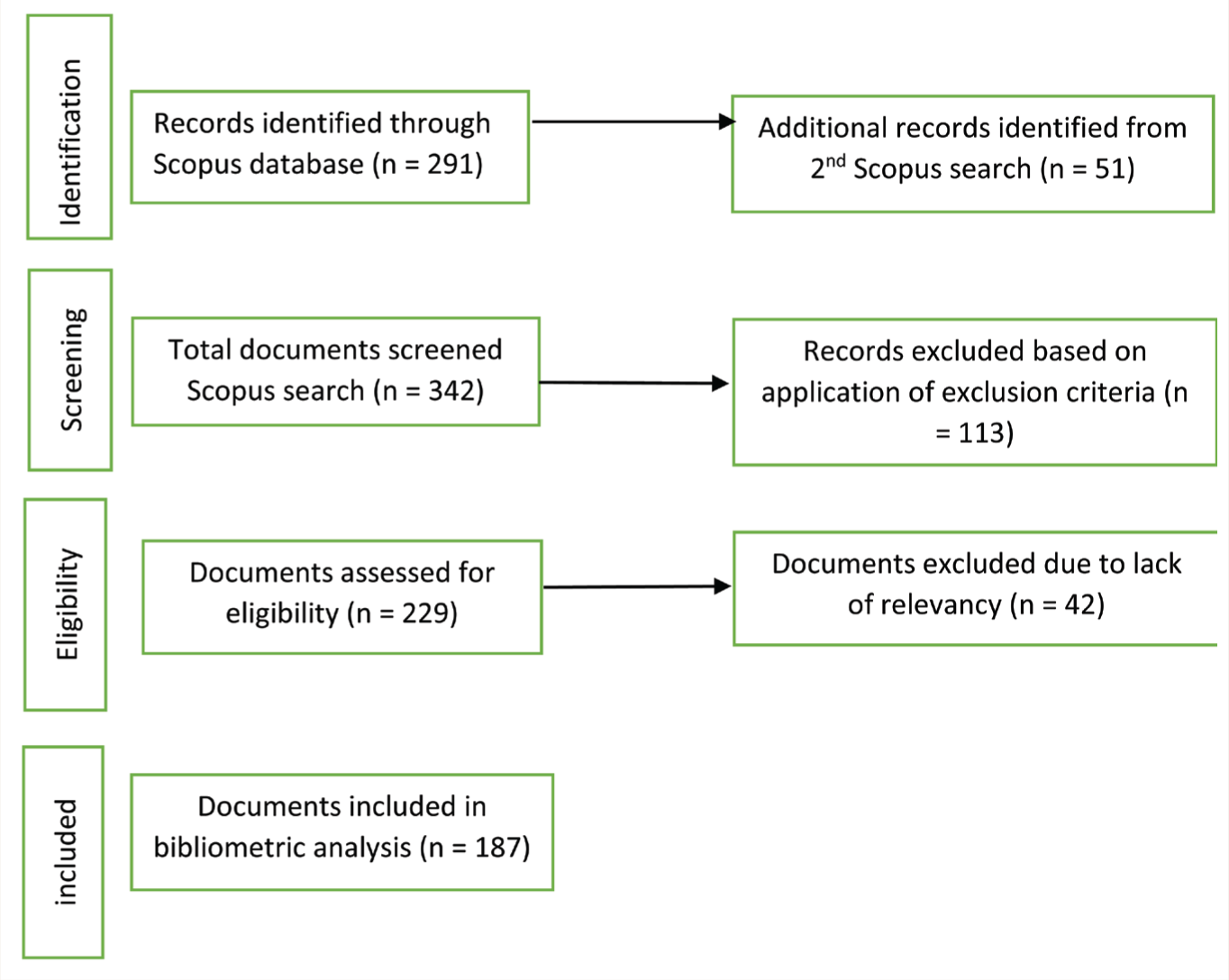
Identifying the articles linked to student suicide is the first stage in the PRISMA technique. This stage is called as identification stage. We employed “student suicide” as a keyword to screen the Scopus database for documents published between 1959 and 2021. Many researchers have carried out their bibliometric study solely on Scopus.8–12 It is the biggest abstract and citation database of peer-reviewed literature and covers quality publications with authentic research information from across the world. In the Scopus database, 60.3% are active journals, 8% are active book series, and 1.5% are active trade journals. 13 The site provides smart tools that help to track, evaluate, display, categorize, and improve the search results and to quickly pinpoint specific documents, helping to extract the desired ones.
The terms were enclosed in quotation marks as when searched separately, most articles discovered did not address the searched subject. Search was done using the ‘Article title’, ‘abstract’, and ‘keywords’ options.Two hundred ninety-one documents were found. Using the same criteria, we conducted a second Scopus search using the filters “students suicide” and “student suicides” to further prevent the omission of any research work. That revealed another 51 documents. The second stage is the screening stage where the content of these 342 documents was tabulated and analyzed by reading the titles and summaries of each one. Subsequently, 113 documents that either did not have the theme of student suicide as their primary content or were duplicate entries were excluded. Another 42 documents were removed due to lack of relevance in the third stage known as eligibility stage. Thus, in the final included stage, the database contained 187 documents, including 143 articles (research papers), 13 letters, 11 review papers, eight book chapters, three errata, three remarks, two conference papers, two books, and two editorials.
The VOSviewer application was used to generate a more comprehensive and graphic representation of the data. 14 It integrates even the most disparate bibliometric data and arranges them on network maps that aid in the depiction of the contents under investigation. 15 In this study, the distance-based approach of VOSviewer was used to construct and visualize the bibliometric networks like co-authorship network map, inter-country co-authorship network map, and keywords co-occurrences network maps, to thoroughly understand the logical networks of the research domain. 16
Results
Top Journals with Maximum Publications
Information about journals that have published research papers on “student suicide” helps researchers to figure out which publications to refer for a literature review and which journals are addressing student-related concerns. All the 175 documents were published in 116 journals. The Journal of College Student Psychotherapy of Taylor & Francis published the highest number (n = 13) of research papers. British Medical Journal, Journal of the American College Health Association, and Suicide And Life Threatening Behavior published six research papers each. Journal of American College Health published five. Asian Journal of Psychiatry and Crisis had published four articles each.
Year-Wise Publication
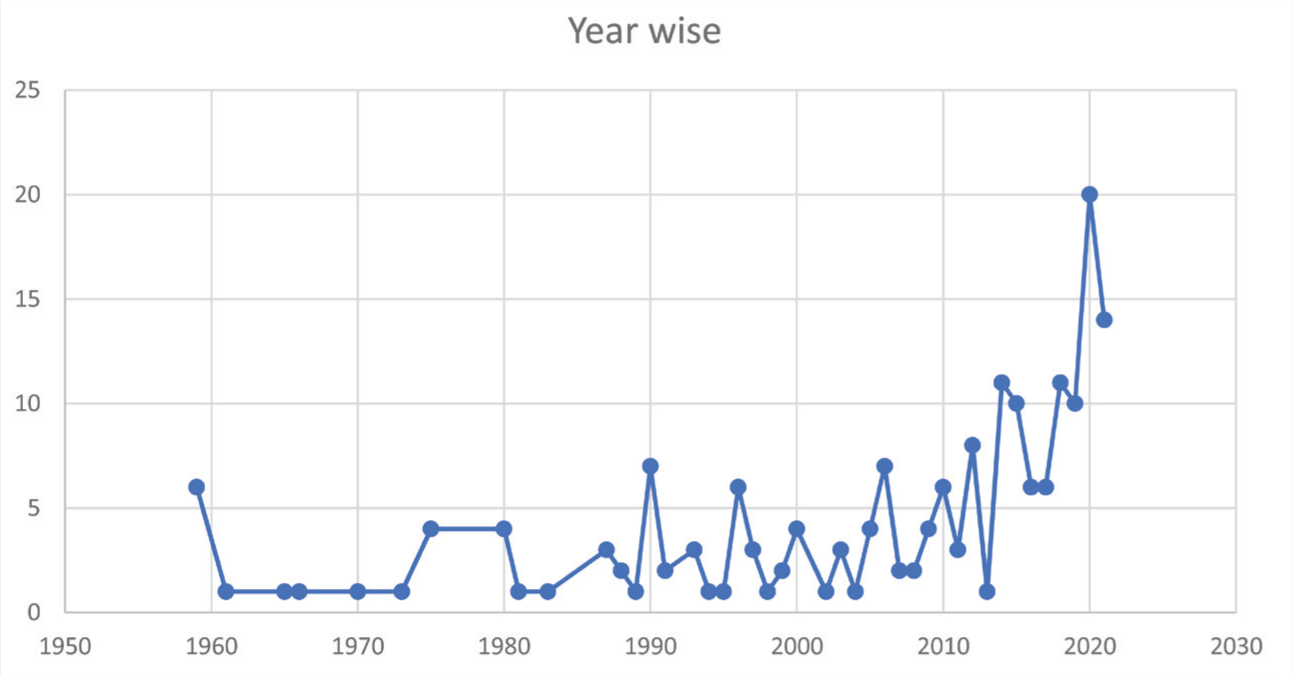
Figure 2 shows the year-by-year publications. From 1959 to 2013, the number of articles published was quite low, but since 2014, a substantial number of papers have been published on a regular basis. In 2020, there was a significant increase in publication on student suicide, with 20 articles. The greatest number of publications occurred in the previous two years, indicating that researchers have only recently started giving importance to this topic.
The Year-by-Year Publications on Student Suicide.
Most Prolific Authors
Allan J Schwartz, with nine research articles, was the most productive author. He currently works at the University Counseling Center at the University of Rochester as an Associate Professor of Clinical Psychiatry and Senior Staff Psychologist. Six authors shared the second position, with four papers each: Jo Bell, a Lecturer at the University of Hull, England; Sharon Mallon, from the Department of Adult Health and Social Care, The Open University, Milton Keynes, England; Mohammed A. Mamun, Director of CHINTA Research, Dhaka, Bangladesh; Jill Manthorpe, from King’s College London’s Social Care Workforce Research Unit; and Nicky Stanley from the UCLAN School of Social Work at the University of Central Lancashire. All other authors have less than 4 research papers in this area.
Most Cited Papers
Table 1. Lists the top 10 papers that have been highly cited.
The Most Cited Research Papers on Student Suicide.
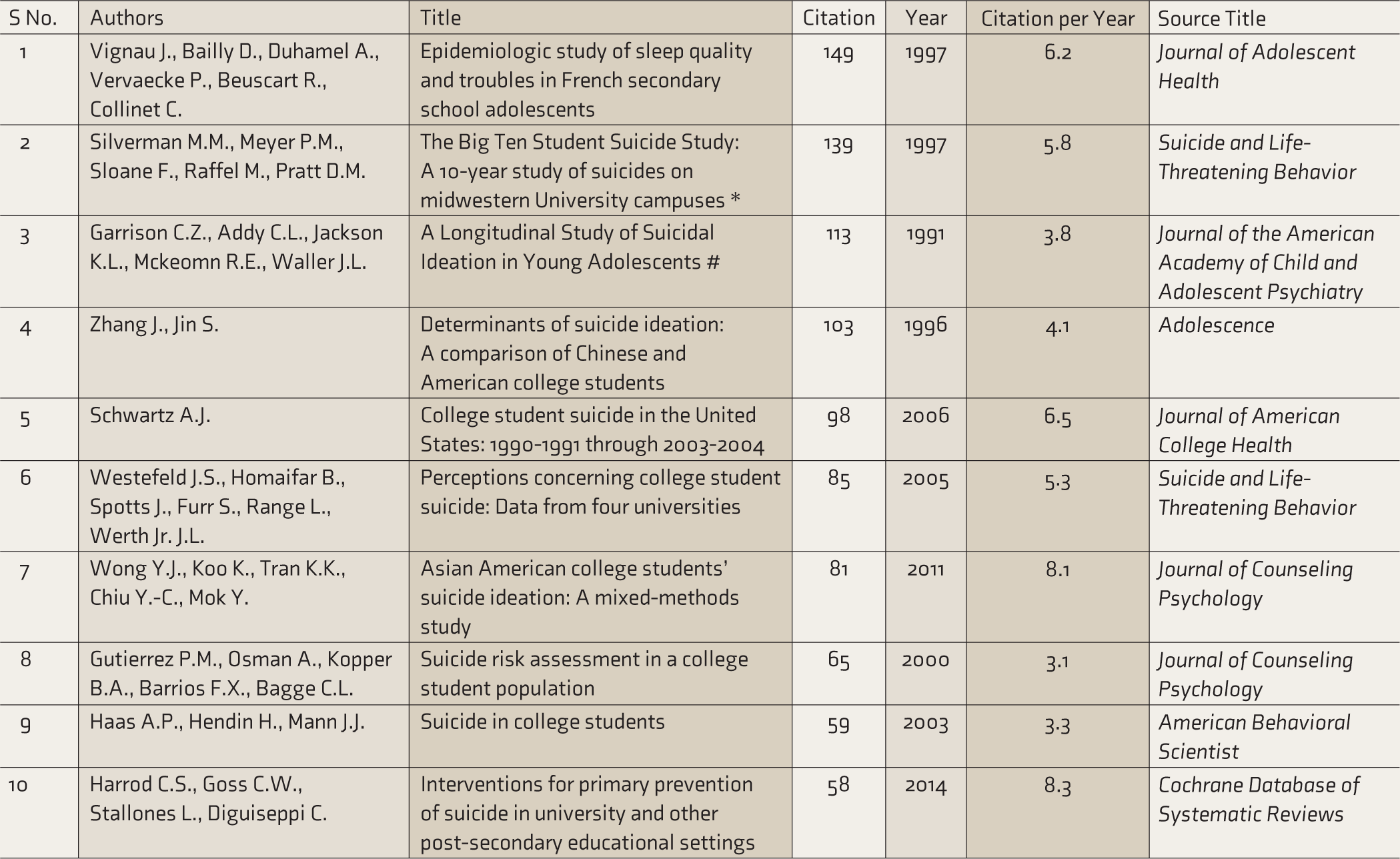
*Conducted from 1980 to 1990 to evaluate the suicide rates in big 10 university campuses. # Gender, undesirable life events, family adaptability, and family cohesion were all shown to be significant but inconsistent predictors of suicide scores.
Most Productive Countries and Institutions
There were 207 different nations represented among the authors. With 85 research papers, the United States of America came first. The United Kingdom was the second, with 25 papers. Hunter Dogmore, the first author of a paper published in 1959, is from the United Kingdom. Australia, China, and Hongkong were the next top countries with 9, 9, and 6 articles respectively. They were followed by Canada (n = 5), India (n = 5), South Korea (n = 5), Bangladesh (n = 4), and Turkey (n = 4).
With ten articles, the University of Rochester in New York was the most productive institute. With five papers, King’s College London, England, came second. Six institutions — Nottingham Trent University, Nottingham, UK; The University of Hong Kong, Pok Fu Lam, Hong Kong; The Jahangirnagar University at Savar, Dhaka, Bangladesh; University of Hull, Hull, England; University of Central Lancashire, Preston, England; and CHINTA Research Bangladesh, Gerua, Dhaka, Bangladesh — has four publications each.
Disciplines That Did the Most Research
Researchers from Medicine contributed 44% (n = 118) of the research. Those from Psychology, Social science, Arts and humanities, and Nursing contributed 27%, 18%, 3%, and 3%, respectively. In the study of student suicide. Researchers from computer science, neuroscience, business management and accounting, dentistry, engineering, allied health professions, multidisciplinary research, and veterinary research all contributed less than 3%.
Keyword Occurrence Analysis
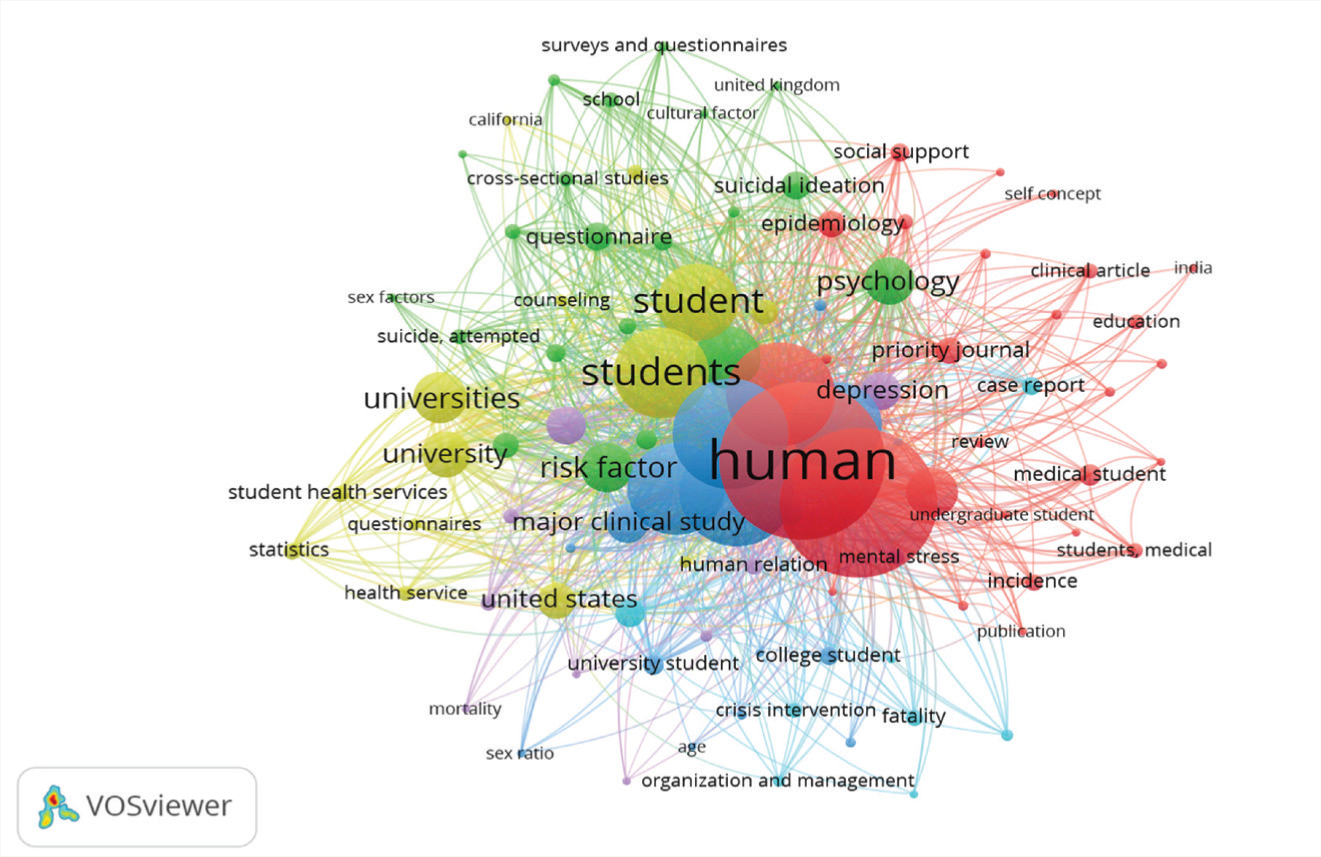
The occurrence analysis of keywords gives a sense of the study subjects and themes the researchers are most interested in. A total of 161 keywords were discovered, with a total of 1642 occurrences. The term “suicide” occurred 116 times. “Students” and “Student” appeared 56 and 49 times, respectively.
The VOSviewer analysis approach displayed a text-mining-based map (Figure 3). 17 The map illustrates the many lines that connect the various keywords. A smaller gap between two or more words indicates a stronger link. 18 To develop the map, only 75 words that appeared more than five times in the our dataset were chosen. These terms appeared together in many publications, as shown by the lines. The map revealed that nearly every other maximum-appearing keyword had co-occurred with “student suicide” and its synonyms.
Keyword Co-occurrence Network Map.
Co-Authorship Network Analysis
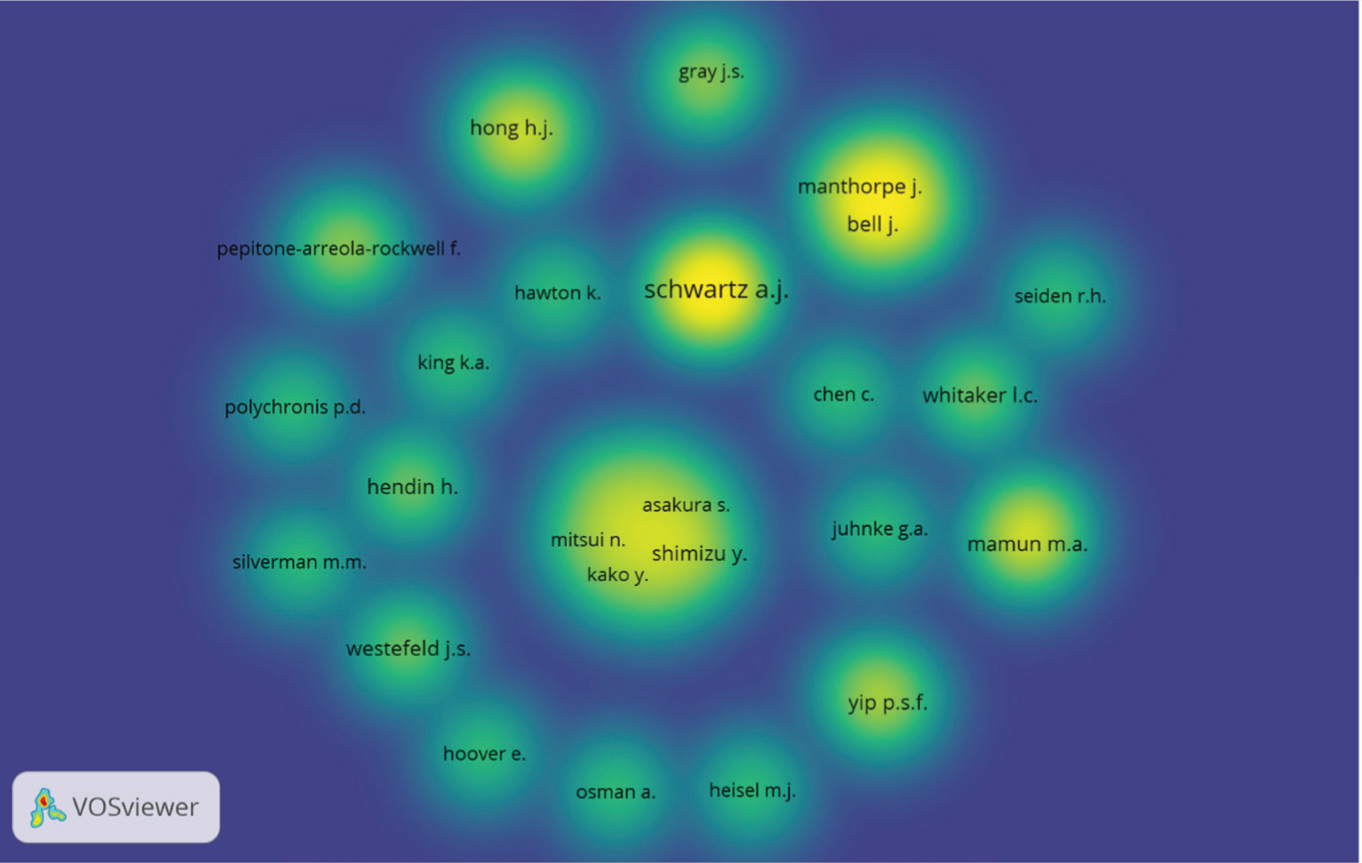
The total number of authors in the data set was 460. To build this network diagram (Figure 4), the software chose authors who had co-authored with at least two additional authors in the data set and found 39 such authors.
Created using VOSviewer software.
In the technological implementation of density visualization, the items in the item density visualization are represented by their labels in the same manner that they are in the network and overlay visualizations. The density of items is displayed by the color at that point. By default, the colors range from blue to green to yellow. The larger the appearance of the number of items near a point along with the higher the weights of the nearby items, the color of the point is closer to yellow. Similarly, when there is a smaller number of items near a point and the weights of the nearby items are lower, the color of the point is closer to blue.
The software categorizes the authors into several clusters. The presence of authors in the same cluster indicates that they are closely linked in terms of co-authorship. There were 21 clusters in total, with a total of 50 links and a total link strength of 112. The authors who have co-authored with maximum numbers of authors were “asakura s.”, “fujii y.”, “inoue t.”, “kako y.”, “kitagawa n.”, “kusumi i.”, “mitsui n.”, “shimizu y.”, and “tanaka t,” with a total link strength (the total strength of a researcher’s co-authorship ties with other researchers) of 16. Cluster 1 included all of them. Cluster 1 had the most writers (nine), followed by clusters 2 and 3, which included four and three authors, respectively. The clustering approach in VOSviewer is discussed in great depth in the literature. 19
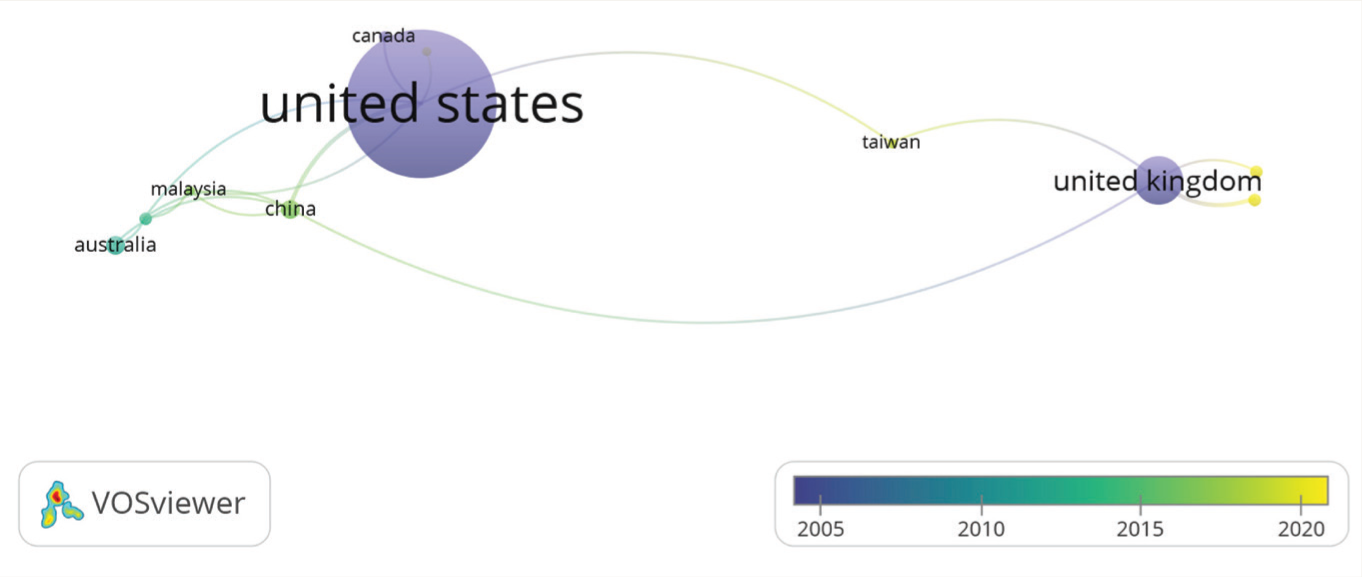
Inter-country Co-Authorship Network Analysis (Figure 5)
This analysis is carried out to determine which countries’ authors have collaborated with most other countries’ authors. The data set included a total of 38 nations. The VOSviewer tool discovered that 17 of these had co-authorship relationships with one another. Three clusters were created after the analysis: cluster-1 (Australia, China, Hong Kong, and Malaysia); cluster-2 (Bangladesh, India, Taiwan, and the United Kingdom); and cluster-3 (Canada, Israel, and the United States).
Created using VOSviewer software.
Discussion
This paper examined the research on student suicide, using a bibliometric approach. We found that the number of research articles published on student suicide has steadily increased significantly in the past eight years, the highest being in 2020. With 149 citations, “Epidemiologic investigation of sleep quality and problems in French secondary school teenagers” by Vignau et al. (1997) was the most cited paper. With nine publications, Allan J Schwartz from the University of Rochester was the most prolific author. The University of Rochester in New York produced the most articles. The Journal of College Student Psychotherapy of Taylor & Francis published the most articles (n = 13). The United States contributed to the highest number of publications, illustrating the country’s substantial presence in the intercountry co-authorship network. The keywords ‘suicide’, ‘students’, and ‘student’ occurred 116, 56, and 49 times, respectively. Analysis of the inter-country co-authorship network revealed three clusters, with the United States being the most dominant.
To our knowledge, this is the first bibliometric research on student suicide. Our results have several implications: firstly, the increase in articles published year-by-year, as well as the most cited publications, indicates the topic’s significance among academicians and can further kindle research interest. Secondly, research scholars might uncover studies and new research avenues by reviewing publications by specific authors and journals that published numerous studies on the topic. Our findings of publications from numerous institutions from diverse countries and the observation that multiple countries have collaborated on several studies reveal that student suicides is a subject of global interest Thirdly, results of the keyword occurrence analysis would help future scholars identify the most studied and “hot” areas for further research. An article’s primary objective may be represented by its keyword, as well as the frequency with which it appears, revealing the framework and evolution of research themes. Research is more impactful when it encompasses a large geographic region and offersresults that are globally relevant. Similarly, the results of co-authorship network analysis and intercountry co-authorship network analysis allow researchers to cooperate with other professionals both outside and within a country. These findings can also help explore research, publications, and other relevant topics in the field of student suicide over time, as we have established the baseline data for future comparisons.
Our findings have practical implications, too. If these findings encourage more research work, it may also help spread awareness among the students. It may also help recognize the rising unmet mental health needs of students that eventually lead to suicide. Our education system should understand the psychological and behavioral aspects of students. 20 It has been suggested that the higher education system must thoroughly examine how students think about suicide and empathize with them, to solve this issue. 21 Suicidality is studied in isolation from the situations in which students live, which means that others are looking at it through the incorrect end of the telescope. 22 The metaphorical telescope should be pointed in the appropriate direction if the aim is to investigate the “vast constellation of issues” 23 that impact higher education. One cannot continue to observe suicide from a distance because it is one among the stars in the constellation. Therefore,. Therefore, to address the epidemic of student suicides, an effort is needed to consider, design, and implement effective interventions among groups that are at high risk.
Moreover, since 2019, student suicides spiked by 21.19% due to the COVID-19 pandemic. The possible reasons cited include a sense of social isolation, dissatisfaction in studies, financial distress due to a decline in parent’s income, and job-related stresses.24, 25 These developments demand more research on this topic.
Despite its numerous strengths, our study has certain limitations that future studies should try to overcome. Researchers may search more databases in the future, such as Web of Science and Google Scholar. Only a single keyword, “student suicide” was used. Synonyms such as “student self-harm”, “student self-injury”, “student suicidology”, and “students suicidality” could have been used. Future studies could also look for more keywords that are relevant to the theme of suicide research, to acquire a better understanding of the domain. Some criteria, such as financing, were not considered for bibliometric analysis. We followed the multi-country approach(manuscript having multiple authors and belonging to different countries), which may have influenced the country-level demographics of the study . Future researchers can include more network diagrams for diving deep into the topic. The bibliometric approach emphasizes more on numbers and investigates the relationship between authors, associations, and ideas. A future study might look at global studies conducted on student suicide, the risks and protective measures associated with it, and university-based interventions to counteract it. Follow-up studies should be conducted to find the research trend on students’ mental health during COVID-19.
Footnotes
Declaration of Conflicting Interests
The authors declared no potential conflicts of interest with respect to the research, authorship, and/or publication of this article.
Funding
The authors received no financial support for the research, authorship, and/or publication of this article.