




Abstract

India is one of the ten most disaster-prone countries in the world. In India, the lifetime prevalence of mental and behavioral disorders was 13.7%, and a huge treatment gap, ranging from 70% to 92%, was also reported for all psychiatric disorders. 1 The socio-economic and geo-climatic conditions make a substantial population vulnerable to mental health adversities, including increased suicide rates, secondary to disasters. 2 In terms of gross domestic product, the government expenditure on healthcare is just 1.6% in 2020, which continues to be low. 3 COVID-19 pandemic has caused havoc in the healthcare service delivery across the world, including in India. The implementation of immediate lockdown was praised as tough and timely by the World Health Organization. However, this decision led to its own set of unforeseen challenges later, significantly affecting multiple strata of the society.4–7
Over the last four decades, National Institute of Mental Health and Neurosciences (NIMHANS), Bangalore, India, has been involved in providing psychosocial support and mental health services for disaster survivors. To further expand and strengthen these services, the Ministry of Health and Family Welfare (MoHFW), Government of India (GoI), sanctioned the Centre for Psychosocial Support in Disaster Management (CPSSDM) in August 2019. 8 In this article, we provide details of the efforts and initiatives taken by CPSSDM (under the title Samaashraya) in order to reach all the sections in the country. The word Samaashraya means “seeking protection or shelter” or “equal support to all.”
Initiatives
National Helpline for Psychosocial Support and Mental Health Services
NIMHANS is one of the first institutes in India to start a national helpline for psychosocial support and mental health services—our Samaashraya online clinic was started on March 29, 2020, on behalf of the MoHFW, GoI. This helpline attempted to combat the psychosocial crisis that people in the country were going through during the nationwide lockdown. It is a 24×7 toll-free helpline (080-4611 0007). The helpline was handled by mental health professionals (MHPs)—initially from the institute and later by volunteers from across the country. Now, more than 600 MHPs from various states are connected to the helpline. 9
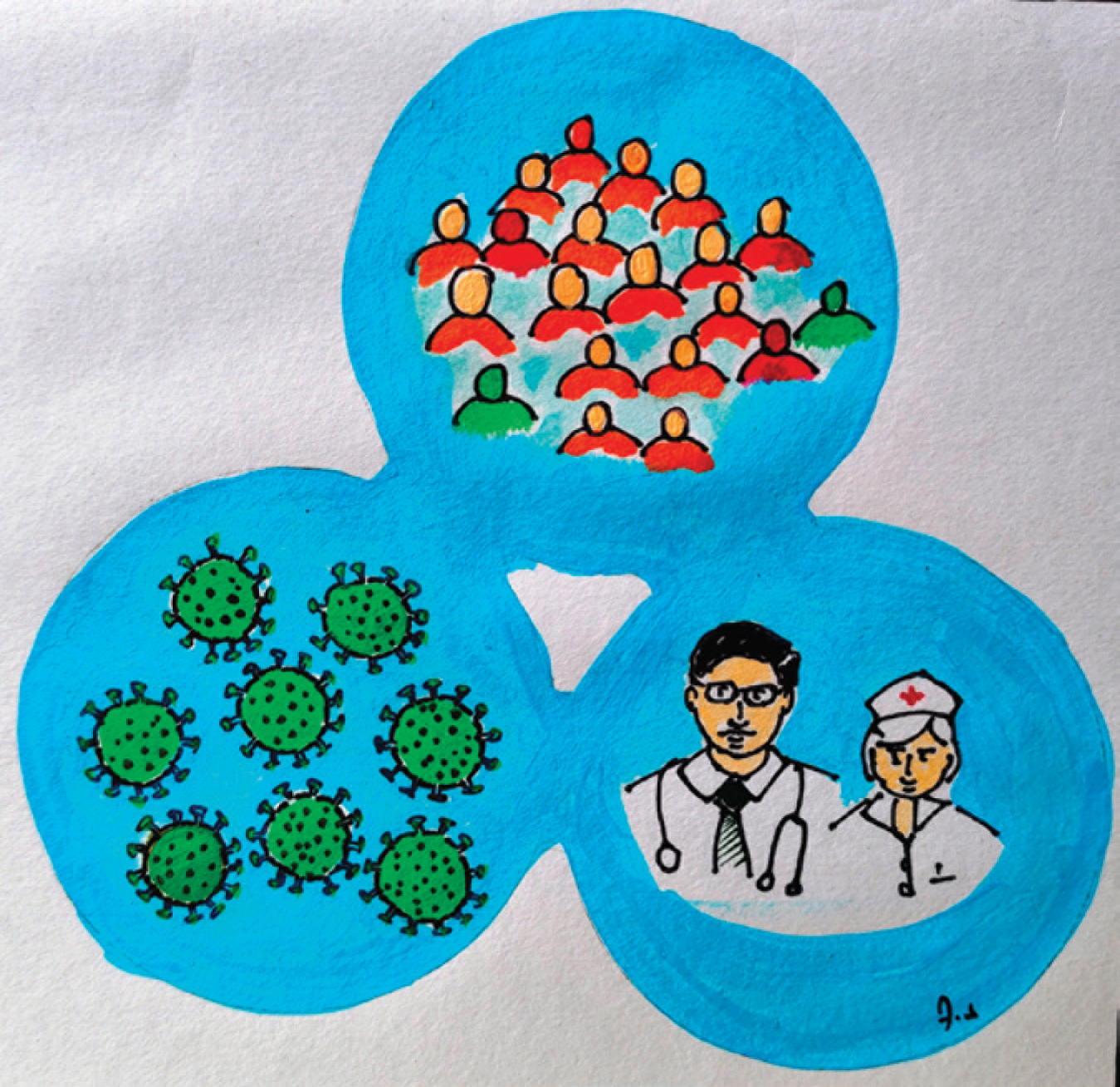
Developments in the Working of Helpline: The helpline uses an interactive voice response system set up by a company iKontel under the corporate social responsibility initiative. To guide the caller to the key-press options, the system uses 13 primary languages: English, Hindi, Kannada, Telugu, Tamil, Malayalam, Assamese, Bengali, Marathi, Bhojpuri, Nepali, Mizo, and Khasi.
The Number of Distress Calls Received Under the Helpline: The helpline has received a total of 335,137 calls (from March 29 to December 29), of which 52,563 callers were provided with psychosocial interventions. The main reasons for not being able to answer the rest of the calls were the lack of human resources, calls disconnecting automatically, and unusually high number of phone calls during the first and second lockdown. Details of the concerns received through the calls are provided in Table 1.
Details of the Concerns and Interventions Done via Helpline Services

DMHP: District Mental Health Programme, BBMP: Bruhat Bengaluru Mahanagara Palike (Greater Bengaluru City Corporation).
Other Developments
Outpatient Clinic: In addition, an outpatient-based care center called Psychosocial Care Clinic for Disaster Survivors (Samaashraya Clinic) was started at the NIMHANS outpatient services in October 2020, following the relaxations of travel restrictions. It is the first of its kind in the country. The clinic specializes in addressing the psychosocial crisis due to disasters, focusing on the holistic intervention care model. The clinic has a multidisciplinary team consisting of psychiatrists, psychiatric social workers, clinical psychologists, and mental health nurses. It covers medical and psychosocial (in-person- and tele-counselling and psychotherapy) services and focuses on socio-economic, rehabilitative, and reconstructive activities, aiming to normalize survivors’ lives. The various services provided on an outpatient basis consist of screening for mental illness, psychological assessments, psychosocial care, and psychosocial rehabilitation of survivors, using a holistic approach and spectrum of care.
Training and Resource-Building Efforts: Since the beginning of the pandemic, the center has been providing training and resource-building activities to schools, colleges, government institutes, and nongovernmental organizations. The center has been involved in suicide prevention programs, stress management programs, and life skills education for children. This involvement has been through video conferencing as well as in-person sensitization. Faculty and staff of the center have also prepared different types of Information, Education, and Communication materials on COVID-19-related psychosocial and mental health issues. 10
We believe that the center’s efforts will continue to address the distress of many people directly or indirectly affected by the COVID-19 pandemic. Furthermore, the center is working toward implementing innovative ways to combat these individuals’ concerns and distress, for example, the inception of virtual OPDs and online certification programs in disaster management for medical officers, clinical psychologists, and psychiatric social workers. This will go a long way in reducing the treatment gap and improving the mental health of the affected population.
Footnotes
Acknowledgements
The authors would like to thank the MoHFW, GoI, for their support. The authors express sincere gratitude to the volunteers for their hard work and sincere efforts in the successful functioning of this helpline.
Declaration of Conflicting Interests
The authors declared no potential conflicts of interest with respect to the research, authorship, and/or publication of this article.
Funding
The authors received no financial support for the research, authorship, and/or publication of this article.