



Abstract
This study analyses the cognitive function of myths about partner violence against women in the social perception of a case that caused a media frenzy in Spain: the documentary story ‘Rocío Carrasco. Contar la verdad para seguir viva’ (‘Rocío Carrasco: Telling the Truth to Stay Alive’). We studied the relationship between these myths and the credibility and blame attributed to Rocío Carrasco. We also tested different explanatory mechanisms of these associations: the warmth/competence qualities of the victim and the different motivations attributed to her in the documentary (monetary, the quest for justice, revenge and emotional recovery). The results showed that the participants (N = 295) who adhered more to the myths attributed less credibility and more blame to Rocío Carrasco. Moreover, we found that her perceived warmth (but not her competence) and the attribution of different motivations mediated these relationships. Using a current media case, these findings enable us to learn more about both the cognitive function of myths about the perception of gender violence and possible explanatory mechanisms.
On 21 March 2021, the documentary in which Rocío Carrasco, a famous Spanish host and daughter of the famous singer Rocío Jurado, recounted her history of gender violence was released. The broadcast of the documentary gained a large viewership in Spain, with an audience of 2.5 million spectators (Álvarez, 2021) and a flurry of activity on social media. The huge repercussions of the story divided the opinion of Spanish society and prompted a major public debate on gender violence and the credibility, blame and possible motives regarding why Rocío Carrasco had made the documentary. Some of the main social consequences of the broadcast of the documentary were the numerous positionings on the case taken by public figures and the 41.9% increase in telephone inquiries on gender violence (‘016’) in the week after the first two chapters were broadcast (Ministry for Equality, 2021).
These major media repercussions on a case of gender violence (henceforth called IPVAW for Intimate Partner Violence Against Women) are a prime opportunity to understand more about the role that certain prejudicial ideas or myths play (Megías et al., 2018; Peters, 2008) in the way it is socially perceived. This study is based on the hypothesis that these myths work as mental schemes for interpreting information on IPVAW (in this case, Rocío Carrasco’s story) with top-down processing that imbues assessments of the case with prejudicial content, thus changing the bottom-up processing guided by the available information (Temkin & Krahé, 2008). Therefore, we will analyse what some authors have called the ‘cognitive function of myths’, which until now has primarily been studied in the sphere of the social perception of sexual violence (e.g., Bohner et al., 2009; Temkin & Krahé, 2008) but has scarcely been taken into account in social judgements of IPVAW. We will particularly analyse the influence of myths about the perception of the victim (in this case, Rocío Carrasco), specifically on the credibility given to her testimony and the tendency to blame her for her response to the violence. Additionally, we will examine the potential mediating role in these relationships of certain perceived characteristics of the victim (i.e., not fitting the traditional gender stereotype) and her possible motivations for publicly airing the violence from which she has suffered.
Myths about IPVAW
IPVAW encompasses a series of violent behaviours which occur within intimate couple relationships and do or may cause women physical, sexual and/or psychological damage (Heise & Garcia-Moreno, 2002). This violence is considered to be gender-based, that is, based on the customary patterns of interaction established between men and women in all historical periods and societies (Alberdi & Matas, 2002), asymmetrical power relations that still exist today. This conceptualization has gained international consensus after different international conferences held in the 1990s, the most important one being the Fourth World Conference on Women held in Beijing (UN, 1995). The World Health Organization (WHO) estimates that more than 30% of women around the world have suffered from some type of physical or sexual abuse from their partners or ex-partners (WHO, 2021). Even though there is some variability, the prevalence of IPVAW is significant in all regions and countries where it has been studied. In Spain, 32.4% of women over the age of 16 acknowledge having experienced at least one of the various forms of IPVAW at some point in their lives (Ministry of Equality and Government Delegation against Gender Violence, 2019).
Despite the seriousness revealed by the figures, IPVAW is often perceived with prejudice (Canto et al., 2020; Megías et al., 2018; Peters, 2008), primarily due to the influence of certain attitudes in the perceivers which have been categorized as myths about different aspects of this kind of violence (e.g., Bosch & Ferrer, 2012; Peters, 2008). The myths about IPVAW can be defined as a ‘set of descriptive or prescriptive attitudes on the conception, causes, consequences, context, victim, and perpetrator that are used to deny, minimize, or justify IPV of men against women’ (Megías et al., 2018, p. 47).
Even though the functions of myths about IPVAW have not yet been fully delimited, we can expect them to resemble those found for myths about sexual aggression (rape myth acceptance, or RMA). Bohner et al. (2009) identified three functions of these latter myths: cognitive, affective and behavioural. The cognitive function refers to the influence of the content of the myths about the interpretation of the available information in cases of sexual violence. This function can particularly be seen when the information is ambiguous or departs from the stereotyped view of episodes of sexual violence. According to Bohner et al. (2009), this function results from the merger between selective processing of the available information or the inference of this information and the prejudicial content of the myths stored in memory. Thus, whoever has a higher RMA chooses certain information or infers certain aspects about the sexual violence that were not presented and then matches them to the content of these prejudicial attitudes. An example of this would be certain perceivers’ tendency to exonerate the perpetrator and blame the victim (St. George, 2021; van der Bruggen & Grubb, 2014).
The affective function of the myths can particularly be found in women and is related to the attenuation of feelings of threat and vulnerability when faced with a sexual attack. In this sense, high scores on RMA in women are related to a stereotyped view of sexual violence, such as the belief that only ‘some’ women (those who behave ‘inappropriately’) can experience it. In this way, not only do the myths function as buffers of emotions like fear and anxiety by making some women believe they are less vulnerable to sexual assault, but they may even mitigate the negative consequences of a sexual assault on the victim’s mental health. In this regard, the study by Valdespino-Hayden (2021) found that having suffered from sexual aggression was significantly associated with higher symptoms of post-traumatic stress disorder (PTSD) among participants with a low adhesion to RMA, while this association was only marginal in those with high scores on RMA. The authors note that these results may be due to the conceptualization held by the survivors of sexual violence, such that those with a high adhesion to myths (e.g., ‘the rape wasn’t real’) may be less likely to believe that the aggression they experienced was rape, and this, in turn, may protect them from adverse effects on their mental health (i.e., developing PTSD).
Finally, the behavioural function of these myths is related to the way men rationalize their sexually aggressive behaviours and acts by trivializing and justifying them. In this sense, these myths are associated with men’s tendency or proclivity to commit these acts (Megías et al., 2011).
Some empirical data support a possible functional parallelism between myths about IPVAW and RMA. For example, myths about IPVAW are also related to a minimized perception of the prevalence and seriousness of IPVAW (Alfredsson et al., 2016), with men’s proclivity to perpetrate it (Herrero et al., 2017) and even with the assumption that there is a type of woman whose ‘irresponsible’ or ‘provocative’ behaviour means that she deserves it (Alfredsson et al., 2016). Furthermore, just like with RMA, myths about IPVAW generate at least two main consequences in the perceivers, especially when the victims do not match the traditional gender stereotypes: (a) less credibility is attributed to their testimony; and (b) they are more likely to be blamed for what happened (e.g., Eigenberg & Policastro, 2016; Epstein & Goodman, 2019; Harsey & Freyd, 2020).
Gender stereotypes and perception of IPVAW
To further explore the role of gender stereotypes on the perception of IPVAW, we should consider the Stereotype Content Model (Fiske et al., 1999, 2002). According to this model, people can be classified by two dimensions: warmth or sociability and competence. Applied to women, a woman who matches the traditional gender stereotype (e.g., housewife) would be perceived as high in warmth but low in competence. To the contrary, a woman who does not match the traditional gender stereotype (e.g., CEO of a company) would be considered highly competent but not very warm (Fiske et al., 1999, 2002). Continuing with this analysis, Capezza and Arriaga (2008) found that people attributed more blame and competence but less warmth to women who are the victims of psychological IPVAW and do not meet the traditional gender stereotype. Furthermore, this lower perceived warmth in non-traditional women, though not their higher competence, was related to a more negative view of them.
In the case of Rocío Carrasco, the fact that she does not match the traditional gender stereotype of a ‘good mother’, especially because of the repeated news on her poor relationships with her children, may have played a prominent role in her social perception. Therefore, in line with what Capezza and Arriaga (2008) found, the adhesion to myths may be related to Rocío Carrasco’s perceived warmth and competence, which may also be associated with the credibility of her testimony and the blame attributed to her.
Motivations attributed to the victim
Myths about IPVAW may also influence the social assessment of the victims’ responses. Women who are the victims of IPVAW are seldom passive in the face of this type of violence and often engage in multiple confrontational behaviours, such as physical and/or cognitive resistance or seeking help from their families or a professional (Melendez-Rhodes & Košutić, 2021). However, there is a widely shared social belief that women show a passive attitude towards IPVAW (Monterrosa, 2021), a connotation which matches the use of the term ‘victim’ instead of the alternative ‘survivor’ (Romero-Sánchez et al., 2020). Therefore, when a woman does not meet this expectation of being a passive victim, she may be blamed and viewed more negatively (Capezza & Arriaga, 2008). In this sense, myths may make people identify negative motivations (e.g., getting revenge on their partner or obtaining monetary benefits) with women’s active behaviours to violence, and this may consequently detract from the credibility of their testimonies and lead them to be blamed. In any case, we do not have empirical evidence to firmly support this hypothesis, given that studies on motivations in the realm of IPVAW have primarily focused on those underlying the perpetrators’ violent behaviours (Whitaker, 2014; Zapata-Calvente & Megías, 2017). However, the case of Rocío Carrasco also enables us to inquire into this perception of the motivations attributed to the victims that report this violence. What is more, it makes it possible to further explore the possible explanatory role of these motivations in the relationship between the myths of the perceivers and the judgements of the victim (credibility and blame).
Overview of this research
Therefore, in this study we will analyse the cognitive function of myths about IPVAW, focusing on the Rocío Carrasco media case. Specifically, we will examine the relationship between the adhesion to myths about IPVAW and the credibility and blame attributed to the victim. People with stronger adhesion to the myths are expected to show: (a) a lower tendency to believe Rocío Carrasco’s testimony (Hypothesis 1a); and (b) a higher tendency to blame her for publicly airing her story (Hypothesis 1b). Additionally, we will analyse the possible mediating role in these relationships of both traditional gender stereotypes (expressed in terms of the victim’s warmth and competence) and the different motivations attributed to her for publicly airing her situation. According to the study by Capezza and Arriaga (2008), we hypothesize that the myths will be related to lower perceived warmth in Rocío Carrasco (but not her competence) and this, in turn, will lead her to be believed less (Hypothesis 2a) and blamed more (Hypothesis 2b). Regarding motivations, we will conduct an exploratory analysis of whether the myths lead the perceivers to see primarily socially reprehensible motivations in Rocío Carrasco’s behaviour (i.e., money, revenge) instead of positive social motivations (i.e., quest for justice, emotional recovery) and whether these assessments of her motivations in turn affect her credibility (Hypothesis 3a) and the extent to which she is blamed (Hypothesis 3b).
Method
Participants
Using the software G*Power 3.1 (Faul et al., 2009), a minimum sample size of 193 participants was calculated for bivariate correlations, with a typical/moderate effect size = .20 (α = .05) and a statistical power of 80%. The minimum sample size required for the multiple linear regression analyses (10 predictors), with an effect size of f = 0.15, level of significance of α = .05 and statistical power of 80%, was 118 participants.
The final sample was comprised of 295 people (168 women, 124 men and three who preferred not to state their gender; Mage = 35.41, SD = 12.69, range 18–71), predominantly single (52.9%) and married or in common-law relationships (43.7%), with university studies (61%), employed (55.3%) and politically left-leaning (M = 2.48; range from 1 to 7). The inclusion/exclusion criteria and other sociodemographic characteristics of the sample can be seen in greater detail in the supplementary materials.
Instruments
Myths about IPVAW
The Spanish version of the Acceptance of Myths about Intimate Partner Violence Against Women scale (AMIVAW; Megías et al., 2018) was administered. This measure assesses overall adherence to myths about IPVAW. It contains a total of 15 items (i.e., ‘If women who experience domestic violence really wanted to put an end to the relationship, they would leave their partners’) with a seven-point Likert response format (1 = ‘Totally disagree’; 7 = ‘Totally agree’). The Cronbach’s alpha coefficient was .91.
Familiarity with the case
The participants’ overall familiarity with the case was assessed via the item ‘How much do you know about the Rocío Carrasco case?’ (1 = ‘Nothing’; 5 = ‘A lot’), along with the degree to which they had watched both the documentary (‘How many chapters of the documentary “Rocío. Contar la verdad para seguir viva” have you seen?’) and the subsequent TV debates (‘How many debates after each chapter in the documentary have you seen?’). In both cases, we used a five-point Likert response format (1 = None; 2 = 1–3; 3 = 4–6; 4 = 7–9; 5 = 10–12). Additional measures on familiarity with the case (knowledge of how many children she has, the belief that Antonio David — her ex-partner — was the victim prior to the documentary and the belief that Rocío Carrasco was the victim prior to the documentary) can be seen in Table 1 of the supplementary materials.
Credibility
The degree of credibility attributed to Carrasco’s testimony was measured with the item ‘Do you think that Rocío Carrasco is telling the truth in the documentary?’, which was adapted from Bohner and Schapansky (2018). The response choices ranged between 1 (‘Totally disagree’) and 7 (‘Totally agree’).
Blame of the victim
To assess the blame assigned to Rocío Carrasco, a measure comprised of 14 items was developed (e.g., ‘The documentary exaggerates by calling the common problems any couple may have gender violence’), based on a previous measure (Megías et al., 2018) and adapted based on a content analysis of the case that appeared in the press and on social media (Jiménez, 2021; Meca, 2021; Mucientes, 2021). All the items can be seen in the supplementary materials. The participants responded on seven-point Likert scale (1 = ‘Totally disagree’; 7 = ‘Totally agree’). The Cronbach’s alpha of this scale was .94.
Warmth and competence
A version of Fiske et al.’s (2002) scale of the perception of warmth and competence in gender stereotypes translated into Spanish was administered. It was translated by the authors of this study and later debated and consensually agreed to with two experts in gender issues and methodology. This scale assessed both of these dimensions via the features ‘sincere’, ‘warm’, ‘tolerant’ and ‘good natured’ (Warmth; α = .91) and ‘independent’, ‘competitive’, ‘intelligent’, ‘confident’ and ‘competent’ (Competence; α = .68). The features of both categories were randomized and presented on a five-point Likert scale in which the participants were asked to what extent they would use those words to describe Rocío Carrasco on a range from 1 (‘Not at all’) to 5 (‘Extremely’).
Victim’s motivations
Four items assessed the participants’ opinions on the motivations that led Rocío Carrasco to tell her story in a documentary. Their content also sought to reflect the main motivations cited on social media and in journalistic articles on the case (Jiménez, 2021; Meca, 2021; Mucientes, 2021): (1) monetary motivation (‘Rocío Carrasco wanted to earn monetary profits by making the documentary’); (2) justice motivation (‘Rocío Carrasco wanted to seek justice with her case by making the documentary’); (3) revenge motivation targeted at her former partner (‘Rocío Carrasco wanted to seek revenge against or harm Antonio David Flores by making the documentary’); and (4) emotional recovery motivation (‘Rocío Carrasco wanted to recover emotionally by telling her story’). Responses to these items were on a seven-point Likert scale (1= ‘Totally disagree’; 7 = ‘Totally agree’).
Sociodemographic and ideological characteristics
The participants were also asked to state their sex, age, marital status, nationality, native language, educational level, work status and political orientation (‘My political ideas are mostly on the:’) on a seven-point Likert scale between 1 (‘Left’) and 7 (‘Right’).
Procedure
The study was announced as a survey on the social perception of media cases which would take around 10 minutes. It was disseminated via social media and instant messaging applications using a snowball sampling process. The online platform Qualtrics Version XM (2020) was used to administer the study. With the goal of avoiding duplicated responses, the platform recorded the participants’ IP addresses and controlled the number of times a participant could access the survey (one time). The instructions were the same for all participants, and they were guaranteed the voluntary nature and anonymity of their responses. The participants responded to the different measures in the order in which they are described above. They were offered the chance to participate in a draw for €50 for participating in the survey. This study was approved by the ethics committee of the university with which the authors are affiliated.
Analysis strategy
First, the descriptive statistics (i.e., mean and standard deviation) of the different variables of interest and the Pearson’s correlation coefficients were calculated (Table 1). Next, hierarchical regression analyses were conducted for the credibility and blame criterion variables. In the first step of the regression analyses, the variables in our study which the literature has related to attitudes towards IPVAW, namely gender, age, educational level and political ideology, were included as control variables. Men tend to show more prejudicial attitudes towards IPVAW than women (i.e., Megías et al., 2018). Some studies have also related age to these attitudes, albeit not consistently (i.e., Gracia et al., 2020). Likewise, people with a higher educational level (i.e., León & Aizpurúa, 2021) and those who identify with left-leaning political ideologies (Helmke et al., 2014) tend to show a lower adhesion to myths about violence towards women. Furthermore, we included other control variables specifically related to the case which we believed could affect the way it was perceived: overall familiarity with the case, having seen chapters in the documentary, having seen the debates and previously believing that Antonio David or Rocío Carrasco are victims. In the second step, we included the scores on myths. To interpret the effect size of each step, the standardized regression effect sizes were calculated (Δf2 ⩾ 0.02, 0.15 and 0.35 correspond to small, moderate and high effects, respectively; Cohen, 1988).
Likewise, to examine the possible mediating role played by the characteristics of warmth and competence and the different motivations in the relationship between myths and credibility and blame, we used the macro PROCESS v3.4.1. for SPSS (model 4; Hayes, 2013) and found both the indirect effects (IE) and the standard errors (SE) or confidence intervals (CI) using the bootstrap method (resampling: 10,000 samples). The statistical analyses were performed with version 25.0 of the software Statistical Package for the Social Sciences (SPSS).
Results
Descriptive statistics and correlational analyses
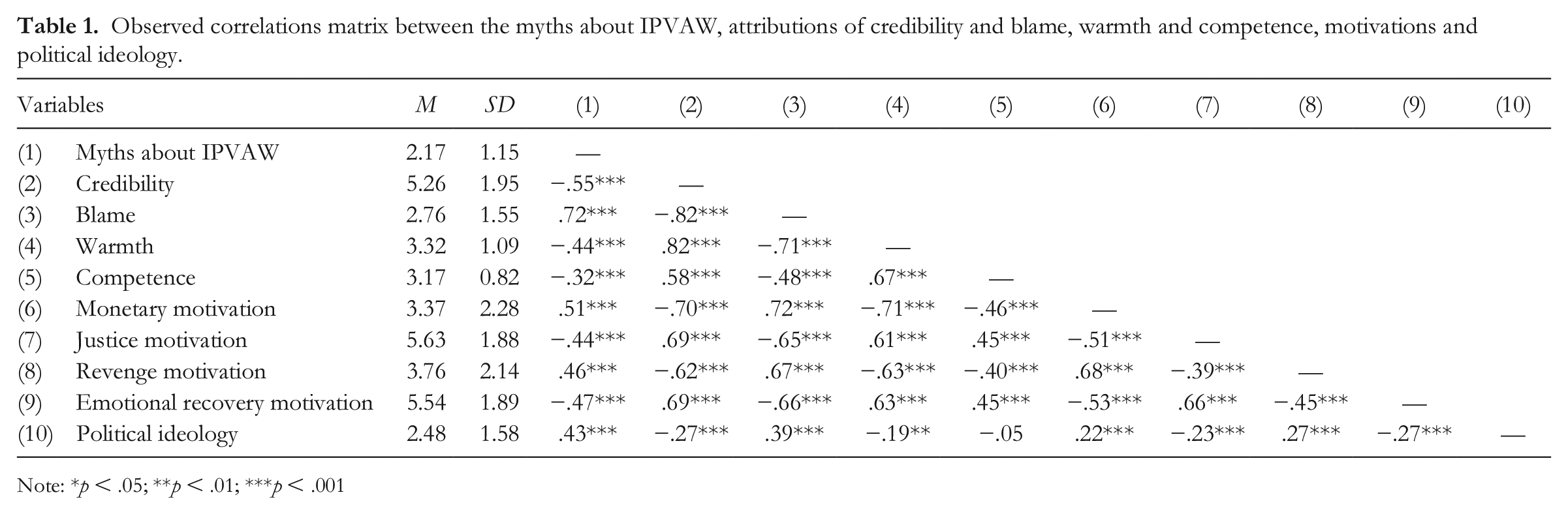
Table 1 shows the means and standard deviations of the variables that are the focal point of interest in each of the measures, as well as the correlations among the main variables of interest. As it illustrates, the participants showed low/medium scores on myths about IPVAW (M = 2.17, range from 1 to 7), perceived Rocío Carrasco’s testimony as fairly credible (M = 5.26, range from 1 to 7), attributed little blame to her (M = 2.76, range from 1 to 7), rated her moderate on warmth and competence (M = 3.32 and 3.17; range from 1 to 5) and believed that her statements were primarily motivated by issues of justice (M = 5.63) and emotional recovery (M = 5.54) more than revenge (M = 3.76) or monetary considerations (M = 3.37) (range from 1 to 7). With regard to the correlations, the participants who had more myths perceived Rocío’s story as less credible, blamed her more, regarded her as less warm and competent, saw more monetary and revenge motivations and fewer justice and emotional recovery motivations and had a more right-leaning political ideology. Likewise, credibility was positively associated with warmth, competence and justice and emotional recovery motivations, and negatively with monetary and revenge motivations and political ideology. Finally, blame was associated with the same variables, but inversely.
Observed correlations matrix between the myths about IPVAW, attributions of credibility and blame, warmth and competence, motivations and political ideology.
Note: *p < .05; **p < .01; ***p < .001
Relationship between myths and credibility/blame
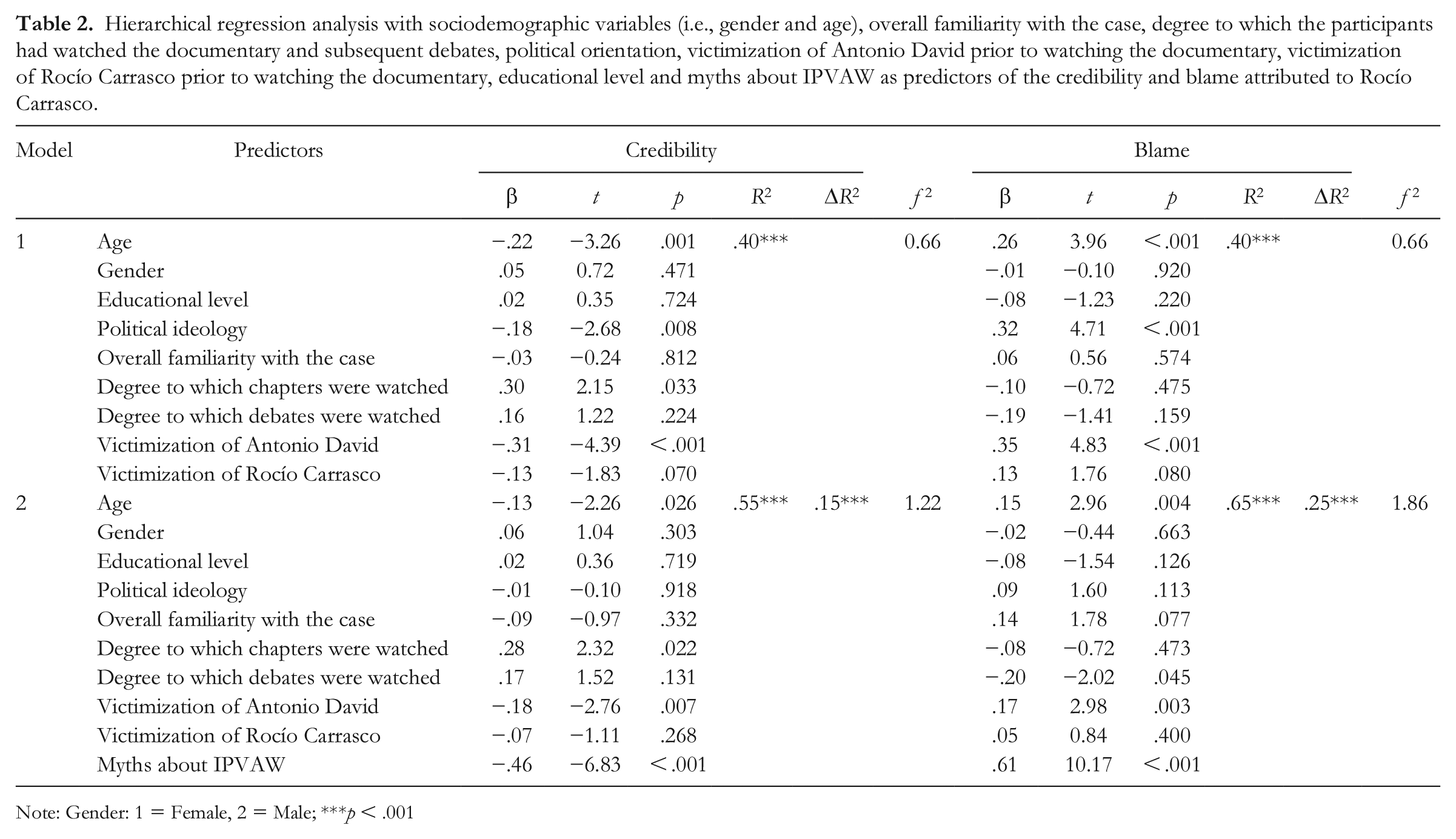
Table 2 shows the hierarchical regression analyses performed to examine the relationship between myths and credibility/blame (Hypotheses 1a and 1b).
Credibility
The results for the first step in the regression showed that younger people (β = −.22, p = .001), those who identified with a left-leaning political orientation (β = −.18, p = .008), those who had seen more chapters (β = .30, p = .033) and those who had less of a prior idea that Antonio David had been the victim of Rocío Carrasco’s acts (β = −.31, p < .001) were more likely to believe Rocío Carrasco’s testimony. The second step in the regression showed that the myths were a significant negative predictor (β = −.46, p < .001) of credibility scores (Hypothesis 1a) beyond what the other variables could explain; the addition of the myths explained an additional 15% of the variance in credibility, ∆F(1, 144) = 45.68, p < .001, (Δf2 = 0.33).
Blame
Regarding blame (Table 2), the results in the first step of the regression showed that the older participants (β = .26, p < .001), those that more strongly identified with right-leaning political ideas (β = .32, p < .001) and those who thought that Antonio David had been the victim of Rocío Carrasco’s acts before seeing the documentary (β = .35, p < .001) tended to blame Rocío Carrasco more. However, the second step in the regression showed that adhesion to the myths significantly predicted (β = .61, p < .001) a stronger tendency to blame Carrasco beyond what these variables could explain (Hypothesis 1b). The addition of the myths in the second step of the regression explained an additional 25% of the variance in blame, ∆F(1, 144) = 103.37, p < .001, (∆f2 = 0.71).
Hierarchical regression analysis with sociodemographic variables (i.e., gender and age), overall familiarity with the case, degree to which the participants had watched the documentary and subsequent debates, political orientation, victimization of Antonio David prior to watching the documentary, victimization of Rocío Carrasco prior to watching the documentary, educational level and myths about IPVAW as predictors of the credibility and blame attributed to Rocío Carrasco.
Note: Gender: 1 = Female, 2 = Male; ***p < .001
Possible mediating role of the characteristics of warmth and competence and of motivation 1
Figure 1 shows the results of the parallel mediation performed to test Hypothesis 2a. Age, degree to which the participants had watched the chapters and the victimization of Antonio David were included as covariables. Regarding the indirect effects, the results showed that warmth (IE = −.34, SE = .08 (95% CI [−.50, −.20]) but not competence (IE = −.01, SE = .03 (95% CI [−.07, .04]) played a role in the relationship between myths and credibility. The participants who adhered more strongly to the myths perceived Carrasco as less warm, and this was, in turn, related to lower credibility attributed to her testimony (Figure 1).
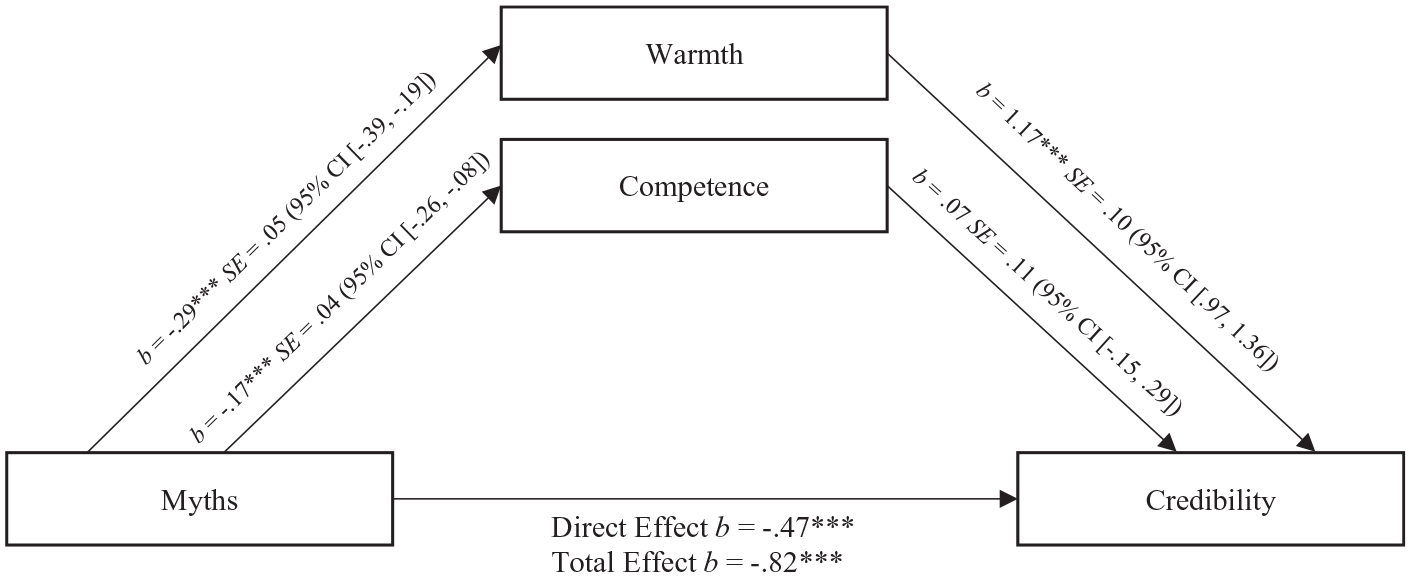
Mediation model with the characteristics warmth and competence as mediators in the relationship between the myths about IPVAW and credibility. Covariables: age, degree to which chapters were watched and victimization of Antonio David.
Figure 2 shows the results of the parallel mediation analysis performed to check Hypothesis 2b. Age, degree to which the participants had watched the chapters and the victimization of Antonio David were included as covariables. Regarding the indirect effects, the results showed that Carrasco’s perceived warmth mediated (IE = .23, SE = .05 (95% CI [.14, .34]) the relationship between myths and blame. Just like with credibility, competence did not have a significant indirect effect (IE = .00, SE = .02 (95% CI [−.04, .04]). The participants who showed a stronger adhesion to the myths perceived Rocío Carrasco as less warm, which was, in turn, related to blaming her more (Figure 2).
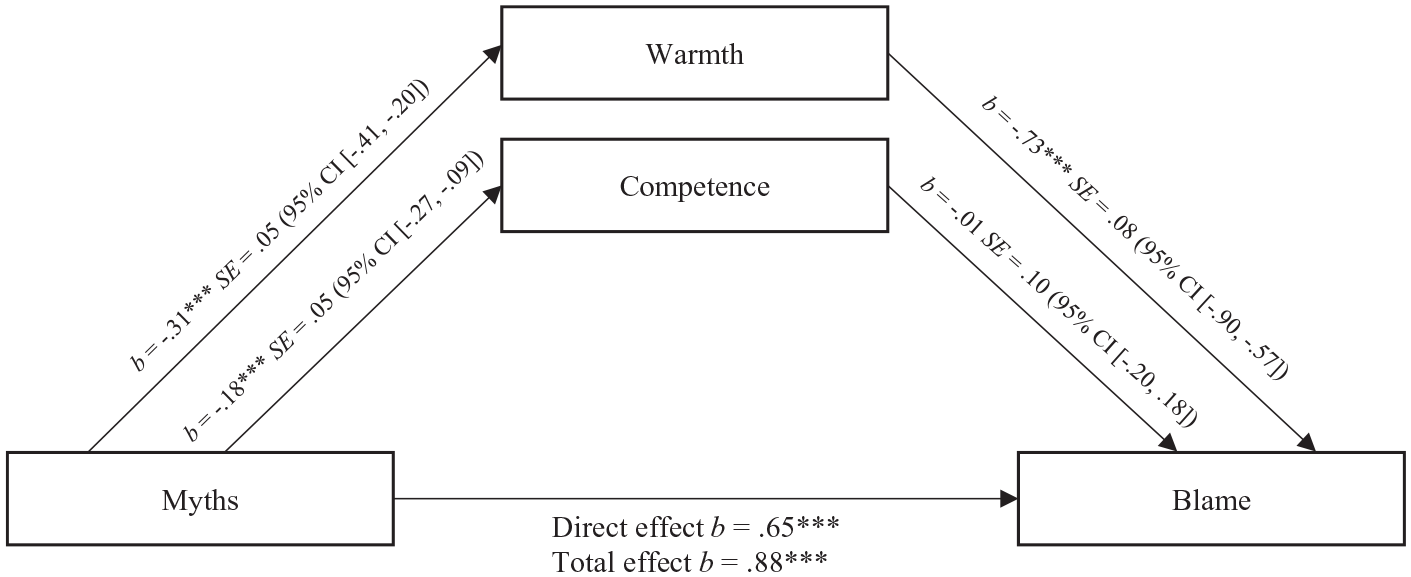
Mediation model with the characteristics warmth and competence as the mediators in the relationship between myths about IPVAW and blame. Covariables: age, degree to which chapters were watched and victimization of Antonio David.
Figure 3 shows the results of the parallel mediation performed to check Hypothesis 3a. Age, degree to which the participants had watched the chapters and the victimization of Antonio David were included as covariables. Regarding the indirect effects, all the motivations attributed to the release of the documentary acted as mediators in the relationship between the myths and credibility: (a) monetary (IE = −.22, SE = .06 (95% CI [−.36, −.11]); (b) justice (IE = −.12, SE = .05 (95% CI [−.23, −.02]); (c) revenge (IE = −.09, SE = .03 (95% CI [−.17, −.03]); and (d) emotional recovery (IE = −.18, SE = .06 (95% CI [−.32, −.07]).
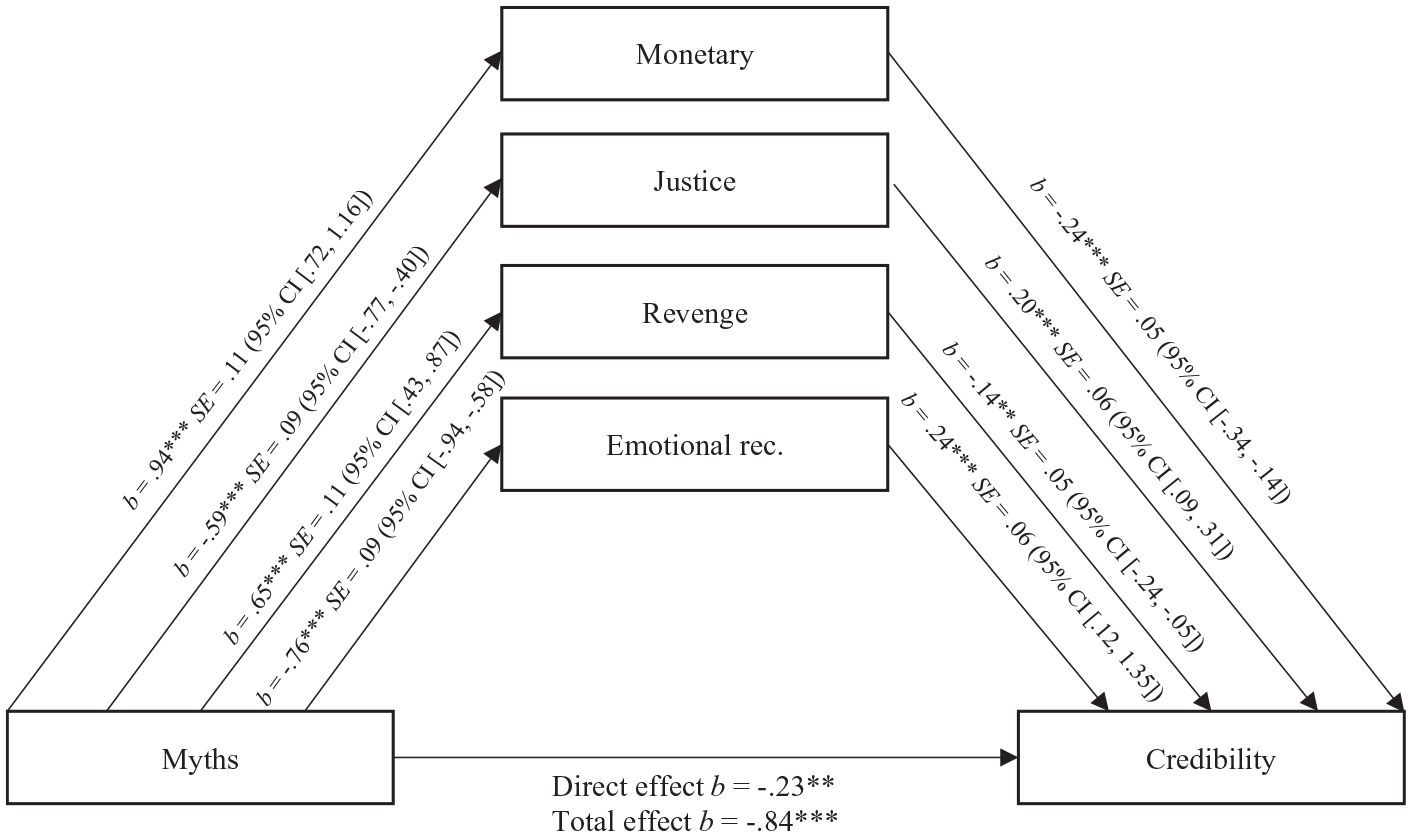
Mediation model with the different motivations as mediating variables in the relationship between myths about IPVAW and credibility. Covariables: age, degree to which chapters were watched and victimization of Antonio David.
As shown in Figure 3, the participants who more strongly adhered to the myths were more likely to attribute economic and revenge motivations and less likely to attribute justice and emotional recovery motivations to releasing the documentary. This, in turn, contributed to these participants being less likely to believe Rocío Carrasco’s testimony.
Figure 4 reflects all the paths in the parallel mediation model that examines Hypothesis 3b. Age, degree to which the participants had watched the chapters and the victimization of Antonio David were included as covariables. Regarding the indirect effects, the results also showed that all the motivations considered mediated the myths-blame relationship: (a) monetary (IE = .16, SE = .04 (95% CI [.07, .25]); (b) justice (IE = .17, SE = .03 (95% CI [.01, .14]); (c) revenge (IE = .11, SE = .03 (95% CI [.06, .18]); and (d) emotional recovery (IE = .13, SE = .04 (95% CI [.06, .23]).
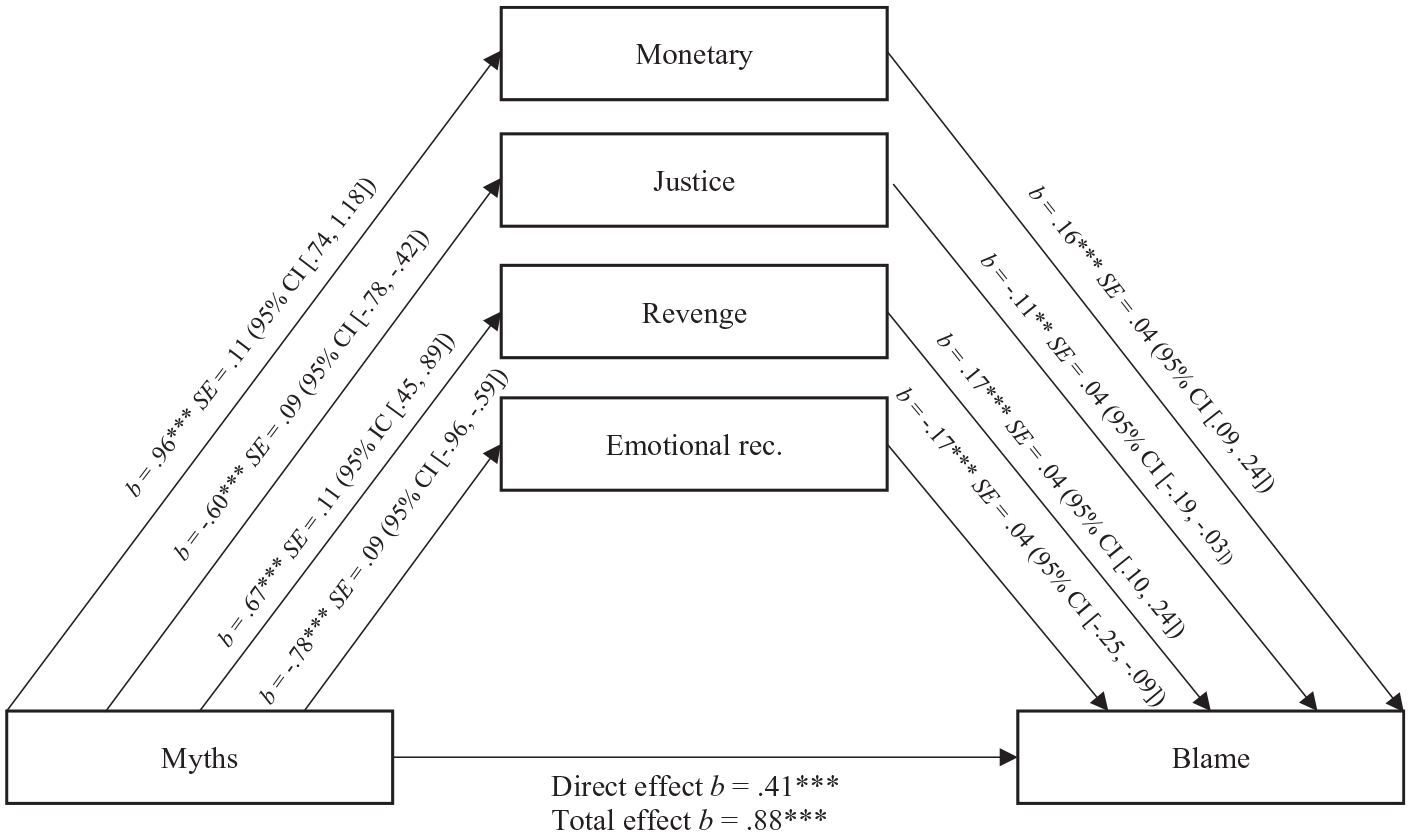
Mediation model with the different motivations as mediating variables in the relationship between myths about IPVAW and blame. Covariables: age, degree to which chapters were watched and victimization of Antonio David.
In short, the participants with a stronger adherence to the myths were more likely to blame Rocío Carrasco because they at least partly attributed her as having higher monetary and revenge motivations and lower justice and emotional recovery motivations.
Discussion
The case of Rocío Carrasco was a prominent national event in the social discussion on IPVAW. The elements that introduce some degree of ambiguity in the case and the debate it prompted are the ideal opportunity to further explore the role of myths as schemas through which IPVAW is interpreted.
Similar to what was found in the prior literature on myths about sexual aggression (i.e., Bohner et al., 2009; St. George, 2021), and based on the expectations of Hypotheses 1a and 1b, stronger adhesion to myths about IPVAW was related to lower credibility of the testimony and higher blame of the IPVAW victim. To our knowledge, these results are the first empirical evidence on the relationship between myths about IPVAW and the credibility of a woman’s testimony. In contrast, regarding blaming the victim, these findings replicate, in a real case, what was previously found in the literature in fictitious IPVAW scenarios (Giger et al., 2017; Lelaurain et al., 2019; Megías et al., 2018; Yamawaki et al., 2012). The tendency that perceivers who more strongly adhere to the myths are less likely to believe the woman’s story and more likely to blame her more also concurs with the main conclusions drawn from the literature on myths about sexual aggression (Bohner & Schapansky, 2018; van der Bruggen & Grubb, 2014). Our results also showed that the additional percentage of variance on blame explained by the myths was higher than on credibility, which could be related to the negativity bias (Norris, 2021), given that blame is a negative assessment while credibility is formulated in positive terms.
We also found that older participants and those with a more right-leaning political orientation believed the victim less and blamed her more. Prior studies have found similar age and political orientation relationships in both IPVAW (Webster et al., 2018) and RMA (Süssenbach & Bohner, 2011). In our case, these relationships between age and credibility and blame may reflect a greater sensitivity to IPVAW among younger people, the outcome of the awareness-raising efforts that have been made in Spain in recent years, especially with the younger generations (e.g., Ministry of Health, Social Services and Equality, 2017). Regarding political orientation, affiliation with right-leaning ideologies is closer to ideologically intolerant positions, like right-wing authoritarianism or social dominance orientation, which have, in turn, been associated with prejudicial attitudes towards different forms of violence against women (Canto et al., 2020; Süssenbach & Bohner, 2011). However, it is important to mention that after including myths in the regression equation, political orientation ceased to be a significant predictor of both credibility and blame. That is, myths about IPVAW were more relevant than political ideology when predicting the credibility/blame assigned to the victim. Similarly, within the context of another media case that occurred some years ago (the rape accusation against Dominique Strauss-Kahn, former managing director of the International Monetary Fund), Helmke et al. (2014) found that the participants’ RMA scores had a higher predictive capacity for the tendency to exonerate the perpetrator than their political ideology.
On the other hand, people who reported having seen more chapters of the documentary were more likely to believe Rocío Carrasco’s story. This relationship remained significant even after incorporating myths into the regression analysis, so it deserves a tentative explanation, even though it is difficult to come up with a solid hypothesis given the correlational nature of the study. On the one hand, perhaps the people who believe her more were more likely to invest their time in listening to her testimony. On the other, it is possible that when one listens to the testimony of an IPVAW survivor, it becomes easier to empathize with her and consequently to believe her. If confirmed, this second possibility would provide interesting ways of raising the public’s awareness of violence against women.
Likewise, another significant predictive variable, beyond the influence of myths, was the belief that Antonio David Flores was the victim of Rocío Carrasco’s acts prior to watching the documentary. The people who saw the documentary when they already held this belief were less likely to believe Rocío Carrasco’s testimony and more likely to blame her. These results may indicate that viewing the documentary was not enough to eliminate the influence of some of the perceivers’ prior beliefs about the case (i.e., victimization of Antonio David). However, it was enough to minimize the influence of prior beliefs about the victimization of Rocío Carrasco.
In addition to empirically confirming the unique contribution of myths about IPVAW on predicting credibility and blame within the context of a real media case, this study also provides explanations for these findings. Thus, as expected (Hypotheses 2a and 2b), the mediation analyses showed that warmth (but not competence) was an indirect explanation of the relationship between the myths and both the credibility and blame attributed to Rocío Carrasco. These are similar to the findings of Capezza and Arriaga (2008) in a study with fictitious scenarios. These authors found that women who were IPVAW victims but did not conform to the traditional gender role (i.e., a lawyer) were blamed more for the violence from which they suffered than ones who did (i.e., housewife) or who actively reacted to the violence (i.e., being critical). This blame was partly due to the lower degree of warmth that the participants attributed to the victim. In line with the findings of our study, Capezza and Arriaga (2008) did not find that competence played a mediating role in the relationship between gender roles and blaming the victim. One possible explanation for the mediating role of warmth but not competence may be the fact that in the process of forming impressions, warmth is assessed prior to competence and seems to be more salient when developing an impression (Capezza & Arriaga, 2008; Fiske et al., 2007; Wojciszke et al., 1998). Another possible interpretation can be found in the stereotype content model (Fiske et al., 2002). Specifically, according to the positive relationship found between adherence to the myths and the warmth attributed to Rocío Carrasco, people who more strongly adhere to the myths may believe that her behaviour is nothing like the warmth women should have, which may in turn lead them to think that this lack of warmth is actually what provoked the violence (Alfredsson et al., 2016). In this way, they would view her testimony as less credible and find justification for blaming her for telling her story, as shown by the negative relationship found between the credibility attributed to her testimony and the degree of blame assigned to her.
Regarding the motivations attributed to Rocío Carrasco, our data show that each of them at least partially contributes to explaining the relationship between the myths and the credibility and blame assigned to her (Hypotheses 3a and 3b). Stronger adhesion to the myths about IPVAW was related to attributing more monetary and revenge motivations to Rocío Carrasco, as well as lower justice and emotional recovery motivations; in turn, all of this was associated with lower credibility and a stronger tendency to blame the victim. Based on the widespread social belief that women who are IPVAW victims show passive behaviour towards this violence (Monterrosa, 2021) and that active responses to it may lead them to be viewed negatively (Capezza & Arriaga, 2008), one could argue that people who more strongly adhere to the myths show a higher degree of cognitive dissonance when faced with the woman’s active response. Given this interpretative ambiguity, myths may play a preponderant role in the way the case is interpreted. Therefore, individuals with a strong adhesion to the myths would fit the information received (woman’s active response) into their prejudicial schema about IPVAW and try to justify the victim’s active response to the violence with more hostile motivations (monetary and revenge vs. quest for justice and emotional recovery).
Limitations and future lines of research
Despite the relevance of the findings of this study, it is essential to mention some of its limitations. Generalizing the results may be limited due to the fact that non-probabilistic sampling was used (i.e., snowball) and that most of the participants had a high educational level. Consequently, future studies focused on the cognitive functions of these myths should aspire to use more representative samples. We should also mention that the fact that the study has a transversal-correlational design prevents us from inferring causal relationships among the variables studied. In this sense, future studies should further explore the cognitive functions of the myths via experimental designs. On the other hand, the fact that credibility was assessed with just one item, compared to the 14 items included in the measure on the blame attributed to the victim, means that the results for the credibility variable should be taken with caution.
Furthermore, this study did not take into account the participants’ possible identification with the figure of Rocío Carrasco, an aspect that plays an important role in forming impressions or changing attitudes and beliefs (Cohen, 2006; Green & Brock, 2000; Slater et al., 2006), nor did we include the degree of credibility or trust in the medium (i.e., Telecinco TV channel) that aired the documentary on the case. Future studies should address the impact of television personalities on the attitudes of receivers that should assess both their identification with them and the credibility of the medium that airs the case or documentary.
Finally, given that to date there is little literature on victims’ responses to IPVAW and their possible motivations, it would be worthwhile to continue studying the role of the myths when interpreting both aspects.
Conclusions
This study contributes to our knowledge about the cognitive functions of the myths about IPVAW based on the media case of Rocío Carrasco. Specifically, it reveals that stronger adherence to these myths is associated with lower credibility and more blame of this IPVAW victim who responded to that violence by publicly recounting her story. Furthermore, both Carrasco’s perceived warmth and the motivations attributed to her for publicly airing the violence she had suffered from seem to play an important explanatory role in these relationships.
Footnotes
1.
The mediators were included separately in this analysis, first analysing the traits and later the motivations, and then jointly. Given that the results were similar in both analyses, they are presented separately with the goal of simplifying the information.