




Abstract
This research employs the meta-analysis method to examine the reading comprehension, reading fluency and listening comprehension skills of students using cochlear implants and their hearing peers. The effect size of 35 studies that met the inclusion criteria was calculated. An examination of overall effect size reveals that students using cochlear implants perform poorly compared to their hearing peers in reading comprehension, reading fluency and listening comprehension skills. Additional analyses demonstrate that cochlear implant age and chronological age do not account for the difference in reading comprehension skills. In contrast, chronological age seems to be the underlying reason for the difference in reading fluency performance. Further, it has become clear that there is a need for various studies that can explain this difference regarding listening comprehension skills. Based on the research findings, it can be suggested that the assessment of the reading skills of students using cochlear implants may require a holistic approach encompassing not only reading comprehension skills but also reading fluency and listening comprehension with an eye to curriculum development improvement.
The use of cochlear implants (CIs) among children with hearing loss has increased gradually over the last 30 years (Antia et al., 2020; Lederberg et al., 2019). CIs are a surgical intervention for children with severe and profound hearing loss who cannot benefit from hearing aids (Naples & Ruckenstein, 2020). CI intervention before the age of two, which is the critical period for language development, enables the development of listening and speaking skills of children with hearing loss by providing qualified transmission of auditory stimuli (Easterbrooks & Lederberg, 2021). The progression of oral language abilities is expected to have a direct impact on reading skills over time, leading to the anticipation that children with hearing loss might achieve reading performance comparable to their hearing peers (Mayer & Trezek, 2024). This expectation is supported by certain studies (Harris, 2016; Johnson & Goswami, 2010; Skrbic et al., 2023), whereas others suggest that CI users continue to underperform relative to their hearing peers in reading proficiency (Lund, 2016; Mayer & Trezek, 2024; Nittrouer et al., 2018). Research on reading skills with students using CI mostly focuses on reading comprehension skills (Pooresmaeil et al., 2019; Wass et al., 2019; Wu et al., 2015). However, researchers emphasize that focusing solely on reading comprehension performance when assessing the reading skills of students using CIs constitutes a limited evaluation, and that reading abilities should be approached from a holistic perspective (Nicastri et al., 2022; Skrbic et al., 2023). As demonstrated in Wang et al.’s (2021) study, limitations in decoding skills and vocabulary directly affect reading comprehension abilities; therefore, it is essential to address the skills that directly influence comprehension in assessments. It has been reported that students who can decode text fluently tend to perform better in reading comprehension (Ecalle et al., 2021). Nonetheless, a limited number of studies have investigated the role of listening comprehension, which both reflects oral language development and predicts reading comprehension, in contributing to reading skills (Nicastri et al., 2022; Walker et al., 2020). Studies highlight significant relationships between reading comprehension performance and the skills of reading fluency and listening comprehension in students using CIs. (Easterbrooks & Lederberg, 2021; Nelson, 2008; Socher et al., 2022; Walker et al., 2020). The current study discusses the meta-analytic findings on the reading comprehension skills of students using CIs in the light of other research findings that significantly affect reading comprehension, such as reading fluency and listening comprehension.
Listening comprehension skills in students using cochlear implants
Listening comprehension skills, a variable that contributes to the reading comprehension skills of students using CI as well as hearing students, is the ability to integrate previous knowledge with the information acquired from the listening script and create meaning. (Griffin et al., 2020; Nelson, 2008). It is emphasized that this skill, which children acquire at earlier stages of their schooling, influences reading comprehension at later stages and is, in fact, one of the earliest predictors of reading comprehension (Gunning, 2003; Walker et al., 2020). Research contends that students with hearing loss perform poorly and inconsistently compared with their hearing peers even in the most appropriate listening settings (Griffin et al., 2020; Walker et al., 2020). This is because listening comprehension does not just require the auditory ability to distinguish words but also the ability to decipher sentences, paragraphs and the text as a whole using language cueing systems. A survey of the existing literature reveals that research on the listening skills of students with hearing loss focuses more on the auditory ability to distinguish words (Nicastri et al., 2022) and that the number of studies on listening comprehension is limited (Lieu et al., 2010; Walker et al., 2020).
Reading fluency skill in students using cochlear implants
Reading fluency, which is one of the fundamental skills that a good reader needs (Ecalle et al., 2021), is the ability to read a text quickly and accurately (National Early Literacy Report [NELP], 2008). Although the ultimate target of the act of reading is comprehension, the role of reading fluently in the integration of knowledge and creation of meaning should not be overlooked (Easterbrooks & Lederberg, 2021). Studies conducted with students with typical hearing demonstrate that reading fluency develops gradually in the first years of elementary school and it directly correlates with reading comprehension (Castejón et al., 2015; Veenendaal et al., 2015). While it is commonly reported that students with hearing loss experience delays in the development of reading fluency due to auditory deprivation (Park et al., 2013; Socher et al., 2022), Zhao et al. (2019) report that only students with severe hearing loss lag behind their hearing peers in reading fluency. Some studies underline the relationship between the CI age and reading fluency (Löfkvist et al., 2012), whereas others find that the two variables do not correlate and students with hearing loss score similarly in reading fluency with their hearing peers as their chronological age advances (Skrbic et al., 2023). On the contrary, Zhang et al. (2021) disagree that chronological age affects the reading fluency of students using CIs. These contradictory findings in the literature suggest that it is necessary for reading comprehension achievement to examine the effect size of the difference between the results in reading fluency skills of students using CI and their hearing peers and which variables affect this difference.
Reading comprehension skills in students using cochlear implants
Reading is a process that begins with decoding and concludes with comprehension. The primary purpose of reading is to understand the text (Gillet et al., 2008). Successful completion of the reading process requires extracting meaning from the text. Skilled readers recognize words, perceive sounds, decode them and comprehend the text based on the decoded words (Adams, 1994; Gunning, 2003). The development of reading comprehension skills in students using CIs is influenced by the cognitive and individual characteristics of the reader, environmental factors such as home, school and social context, as well as other reading-related skills including early literacy, vocabulary, reading fluency and listening comprehension (Nittrouer et al., 2012; Wang et al., 2021; Wass et al., 2025). In addition to these factors, audiological variables such as early diagnosis, age at onset of hearing loss, CI age, severity of hearing loss and access to early intervention services also play a significant role (Bell et al., 2019; Easterbrooks & Lederberg, 2021; Mayer & Trezek, 2024). Mayer and Trezek (2018) noted that early CI leads to positive changes in reading comprehension skills. Wass et al. (2025) emphasized that the success of early cochlear implantation varies depending on student-related factors, the type of hearing loss and environmental influences. Although early CI may enable students with hearing loss to naturally acquire certain skills, it does not, by itself, guarantee that they will achieve reading comprehension outcomes comparable to their hearing peers (Johnson & Goswami, 2010; Mayer & Trezek, 2024; Pooresmaeil et al., 2019; Wass et al., 2025).
Current study
Several studies indicate that reading outcomes in students using CIs are shaped by factors such as early diagnosis, age at implantation and chronological age (Árnason et al., 2015; Lund, 2016; Nittrouer, 2016b; Weisi et al., 2013). However, the findings on reading comprehension and related skills remain inconclusive (Easterbrooks & Lederberg, 2021). Lund (2016) confirms this uncertainty and highlights the lack of comprehensive research in the field. Wang et al. (2021) conducted a meta-analysis on the reading skills of students using CIs, examining components related to reading comprehension; however, they did not address listening comprehension. Research identifies listening comprehension as an early predictor of reading comprehension (Gunning, 2003; Walker et al., 2020). Nicastri et al. (2022) also emphasize that listening comprehension has yet to be explored as a core reading skill in CI users. Although literature points to strong associations between reading comprehension and both reading fluency and listening comprehension (Griffin et al., 2020; Nelson, 2008; Socher et al., 2022), studies integrating these skills remain limited.
This study is the first comprehensive meta-analysis to bring together the effect size of the differences in reading comprehension, reading fluency and listening comprehension of students using CIs and their hearing peers. It systematically examines the extent to which the assessment results of students using CIs differ from those of their hearing peers in reading skills. This result provides educators with information about what to expect from students using CIs regarding their current and future reading skills and may serve to better understand the difficulties experienced by students with hearing loss in reading skills and to make inferences to develop their educational programmes. This research aims to conduct a meta-analytical examination of the reading comprehension, reading fluency and listening comprehension skills of students using CI and their hearing peers. With all this in mind, this study aims to answer these questions: (a) Do the findings on reading comprehension, reading fluency and listening comprehension skills of students using CIs and their hearing peers display any significant variations? (b) Does age of implantation and chronological age significantly relate to the magnitude of the difference in reading skills between students using CIs and hearing students?
Methodology
Meta-analysis, a research synthesis technique that allows for search and analysis replication, was selected for this review. Meta-analysis is a method of combining the results of multiple, independent studies on a specific subject and performing statistical analysis of the research findings (Field & Gillett, 2010). In line with the research objective, the Rstudio program was used to conduct the meta-analysis. The following section describes the search strategy, inclusion criteria, effect sizes and moderator variables in detail.
Research strategy
Databases used include the American Psychological Association (APA), Eric, Ebscohost, Dergipark, Elsevier, Jstor, Oxford Journals, Proquest, Sage Journals, Science Direct, Scopus, SpringerLink, Taylor & Francis, Tr Index, Web of Science and Wiley. The abstracts and the titles in the databases were filtered using the keywords ‘hearing loss’, cochlear implants’, ‘deaf’, ‘reading’, ‘reading comprehension’, ‘listening comprehension’ and ‘reading fluency’. Since CI application has become more widely used in the world after 2000 and its results in educational environments have begun to be examined (Mayer & Trezek, 2024), research results from 2000 to the present have been included in this study.
Study inclusion criteria
Inclusion criteria for this study were determined as (a) because the formal reading period begins at age six (Lumentut & Lengkoan, 2021), participants had to be between the ages of six and 15 to examine their literacy skills, (b) there being a comparison between students using CIs and their hearing peers, (c) availability of mean and standard deviation values for at least one of the following skills: reading fluency, reading comprehension, or listening comprehension, (d) inclusion of common variables required for subgroup (moderator) analyses, (e) there being no accompanying handicaps in the sample group and (f) the studies being published in English. After a gradual filtering process per the inclusion criteria, 35 studies were chosen for further analysis. PRISMA flow diagram, which is one of the ‘Preferred Reporting Items’ in meta-analyses, has been added for the search procedure (Figure 1).
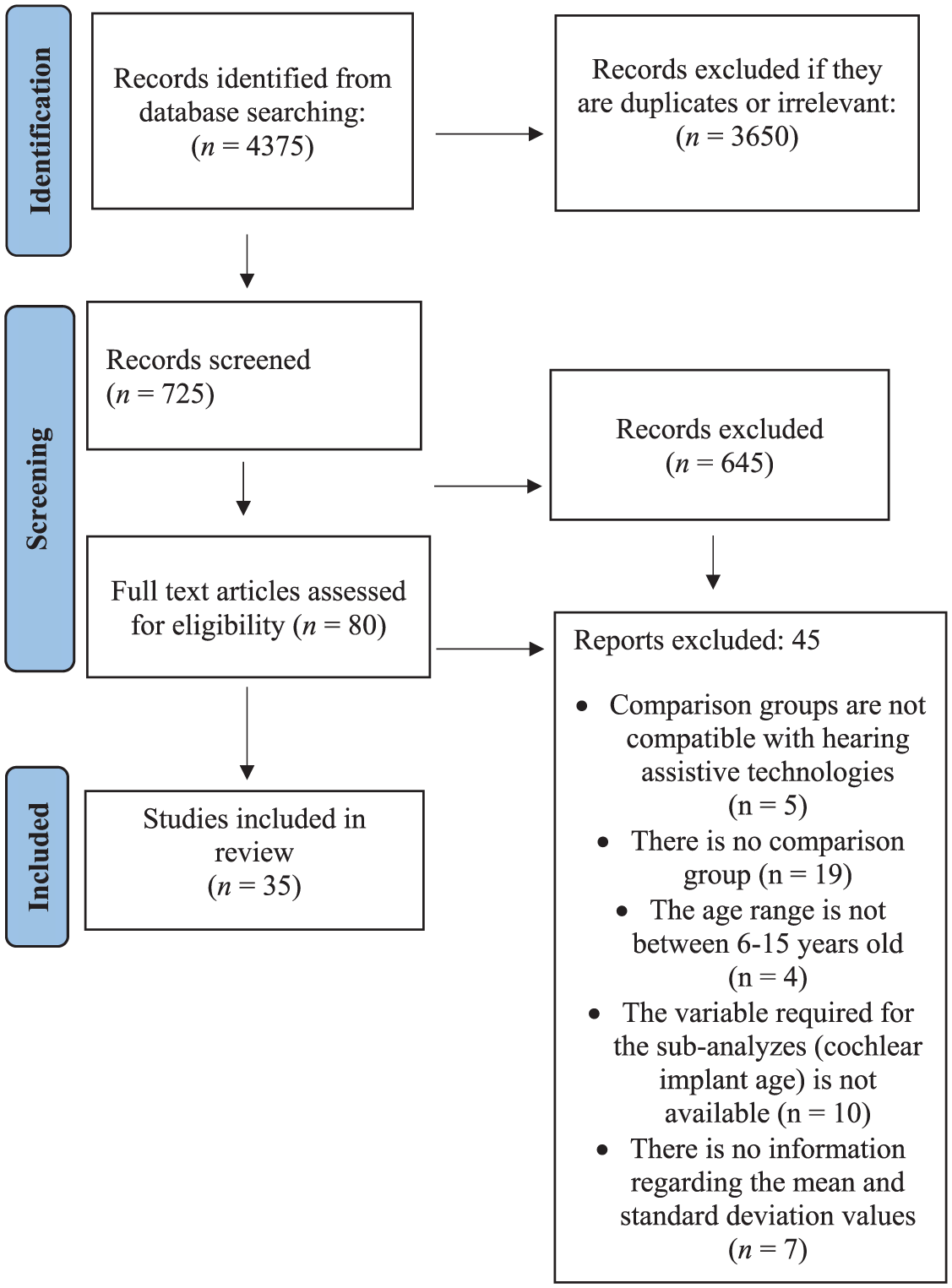
The flow of study analysis through the different stages of meta-analysis.
Table 1 shows the characteristics of the included studies.
Included works.
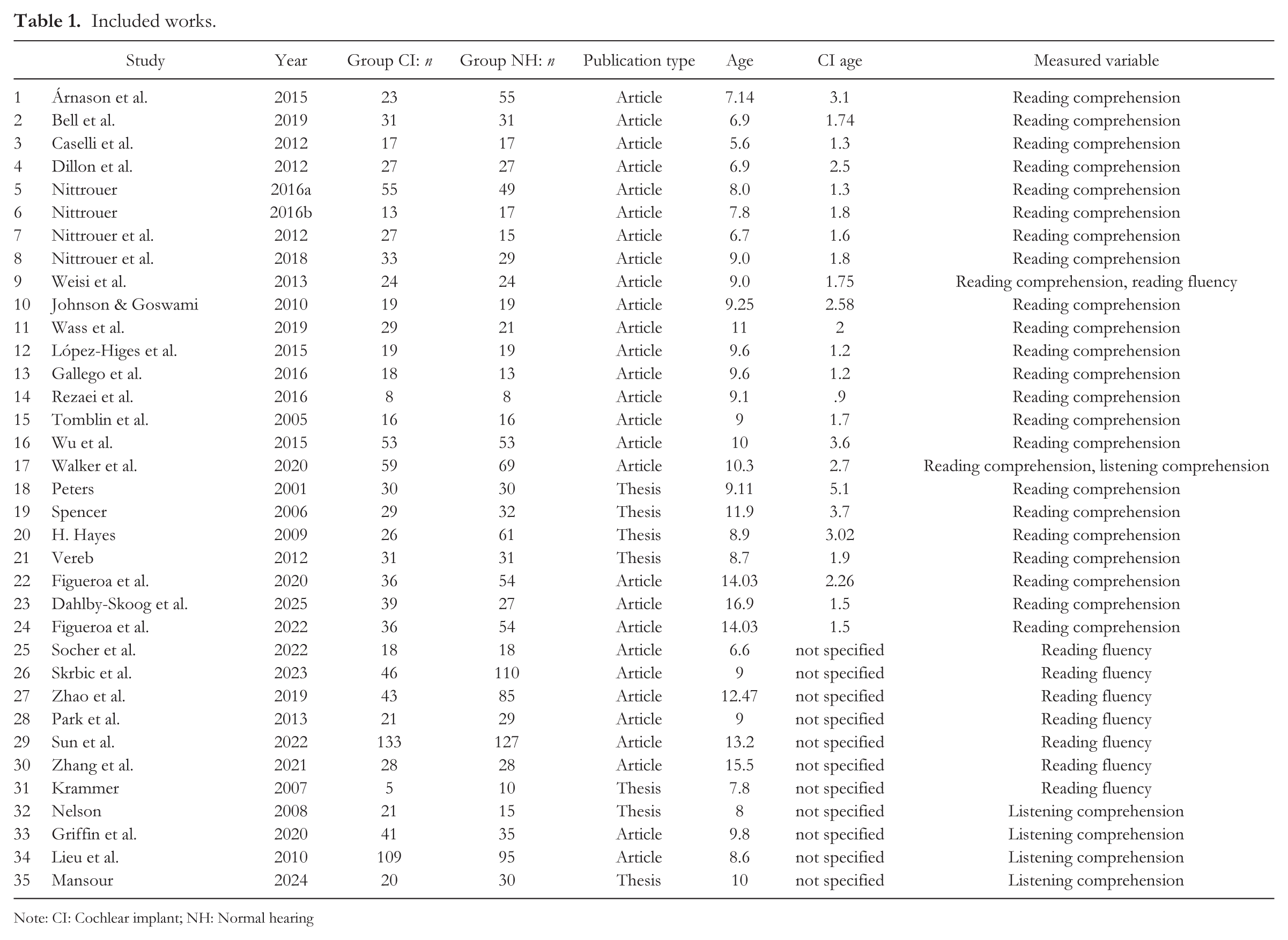
Note: CI: Cochlear implant; NH: Normal hearing
Data management and coding
The coding process was conducted using a researcher-developed form based on the literature and relevant variables. An expert in deaf education coded the studies included in the analysis. Reliability checks were conducted and 30% of the studies were crosschecked by the other decoder, and inter-rater reliability and the moderator’s coding were calculated as 100%. Moderator variables in the studies on reading comprehension skills were determined as cochlear implant age (CI age) and chronological age. In the studies on listening comprehension and reading fluency, chronological age was determined as the only moderator variable since CI age was not available in these studies. Meta-regression analysis was performed for moderator analyses. Meta-analysis processes all effect sizes independently and therefore each study may yield more than one independent sample.
Statistical procedure
Effect size
Following the selection of studies for the meta-analysis, the effect size metric was determined. Commonly used effect sizes include standardized mean differences, correlations and odds ratios. For two-group comparisons, standardized mean differences are employed (Borenstein et al., 2021). In this study, standardized mean differences were calculated to compare reading skills between students using CIs and hearing peers. Using sample sizes, means and standard deviations from 35 articles, 37 effect sizes were derived. Overall and moderator-specific effect sizes were computed using the meta 4.15-1 package in R 3.6.2. This study examines three distinct skills variables (reading comprehension, reading fluency and listening comprehension). The effect size for each skill was calculated with the Hedge-G value. Since the characteristics of the studies varied, a random effect size model was used for statistical analyses (Field & Gillett, 2010). The effect size of the group designs was determined as negligible for values between .00 and .20, moderate between .20 and .50, large between .50 and .80 and very large for values over .80 (Cohen, 1988).
Publication bias
Testing for publication bias in the average effect size is crucial to ensure the findings’ reliability and validity (Song et al., 2013). To mitigate publication bias, unpublished studies were included. Publication bias occurs because studies with larger effect sizes are more likely to be published than those with smaller ones (Hedges, 1989). Common methods to assess publication bias include funnel plots, Egger’s test, rank correlation (Begg & Mazumdar, 1994) and Rosenthal’s N calculation. The funnel plot visually assesses bias, where symmetry suggests absence and asymmetry indicates presence of publication bias. However, funnel plots may yield subjective interpretations (Harrer et al., 2021). Rosenthal’s (1979) N value estimates the number of missing studies needed to nullify the meta-analytic effect, calculated as 10 more than five times the number of studies, and compared to the observed number (Orwin, 1983; Rosenberg, 2005). In this study, publication bias was assessed using a funnel plot generated with the Mad R package (Del Re & Hoyt, 2014). Although funnel plot asymmetry suggests publication bias, it is not definitive evidence (Harrer et al., 2021). When asymmetry was observed, Rosenthal’s Fail-Safe N was computed to estimate the number of studies required to offset the bias (Rosenthal, 1979).
Heterogeneity analysis and moderator analyses
The first step in meta-analysis is calculating the overall effect size; however, considerable heterogeneity may exist among included studies. Heterogeneity refers to variability in effect size distributions across studies. It is essential to assess heterogeneity using Cochran’s Q and I2 statistics. The Q statistic follows a chi-square distribution with k-1 degrees of freedom. Significant heterogeneity is indicated when Q’s p-value is below the alpha threshold of .001; otherwise, studies are considered homogeneous (Field & Gillett, 2010; Wasserman, 2013). I2 is a percentage value calculated from the Q statistic. The higher the percentage value, the more heterogeneity is interpreted. I2 ⩽ 50% indicates low heterogeneity, I2 between 50–75% indicates medium heterogeneity, otherwise all figures indicate high heterogeneity (Borenstein et al., 2021). If there is heterogeneity and this difference is significant (p < .001), possible sources of this heterogeneity are investigated. For this, moderator analysis is performed by collecting some characteristic features of the studies. Moderator analysis, as one type of subgroup analysis, allows for the classification of variables reported in the studies based on specific categorical variables and enables the calculation of separate effect sizes for each group (Borenstein et al., 2021; Lipsey & Wilson, 2001). Moderator analyses provide information about which variable accounts for the difference between two groups in meta-analyses where standardized mean differences are calculated. If the alpha value in moderator analyses is less than .05, it is accepted as the reason for the difference between the two groups (Lipsey & Wilson, 2001). The current meta-analysis was conducted based on a total of 35 studies. Among the studies focusing on reading comprehension, only ‘CI age’ and ‘age’ were reported as common variables. For studies on reading fluency and listening comprehension, ‘age’ was the only common variable across all studies. The heterogeneity analysis for each reading skill has been calculated using a Q test and I2 value. Group differences in moderator analysis were tested using the intergroup Q test (Qb), and heterogeneity of effect sizes was assessed with the I2 statistic. A fixed-effect model was applied when heterogeneity was below 75%, while a random-effect model was used for values above 75% (Borenstein et al., 2021). Effect size was the dependent variable, with study characteristics (CI age and chronological age) as moderators. Both moderators were analysed for reading comprehension, but due to study limitations, only chronological age was analysed for reading fluency and listening comprehension.
Results
Publication bias
A funnel plot was initially created to assess publication bias, followed by the calculation of Rosenthal’s N value to draw conclusions. To mitigate publication bias, unpublished studies were also included. However, no objective interpretation of funnel plot symmetry could be made due to its subjective nature (Harrer et al., 2021) (Figure 2). Thus, Rosenthal’s N value was used to evaluate publication bias.
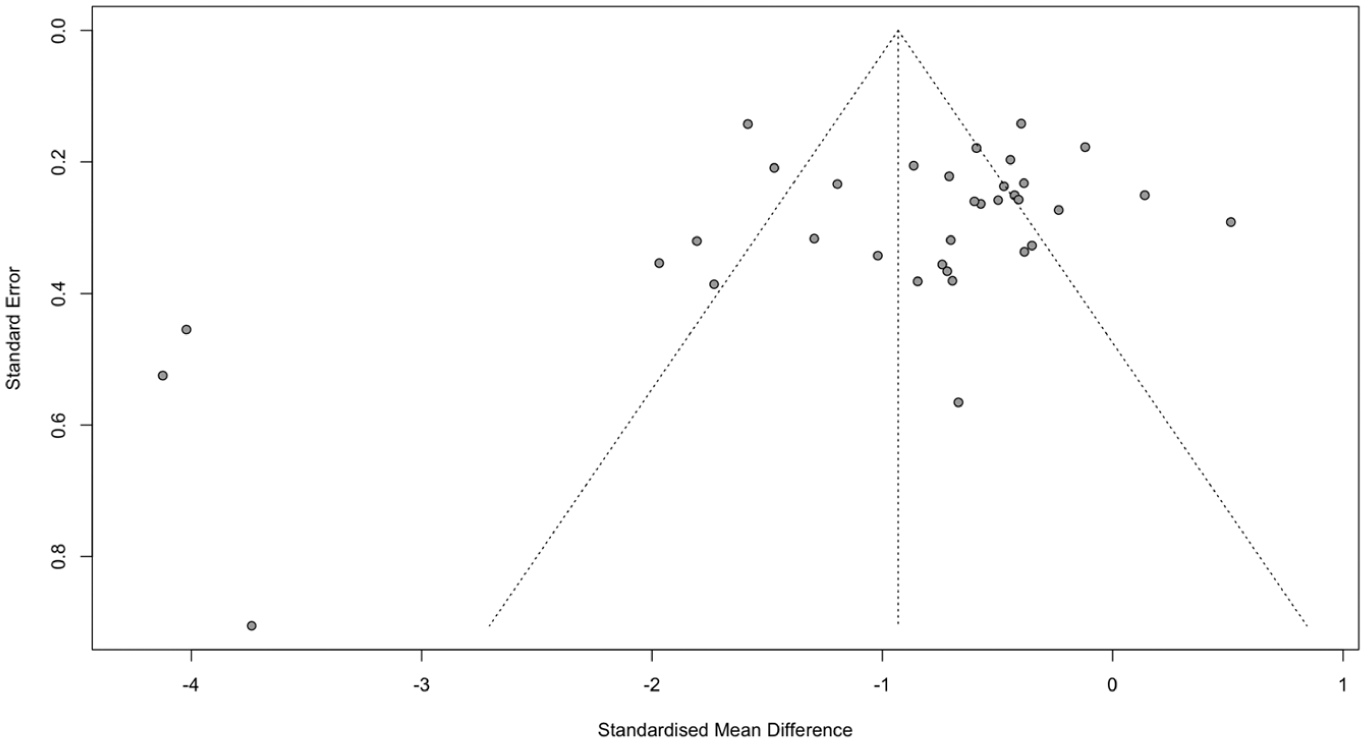
Funnel plot.
Rosenthal’s Error Safe N was calculated as 4439 indicating that this many studies would need to be added to render the cumulative effect statistically insignificant. Given that only 35 studies met the inclusion criteria and the threshold (4439) exceeds five times the available studies plus 10, it is unlikely that such a large number of studies were missed (Orwin, 1983; Rosenberg, 2005). This suggests the absence of publication bias, indicating no risk of bias in the analysis.
Overall effect size of listening comprehension and heterogeneity test
The average SMD of the overall effect size of listening comprehension skills is −.75. According to Cohen’s standard for effect size classification, the large effect value is moderate. This result suggests that students using CI have lower listening comprehension skills than hearing students (Figure 3).
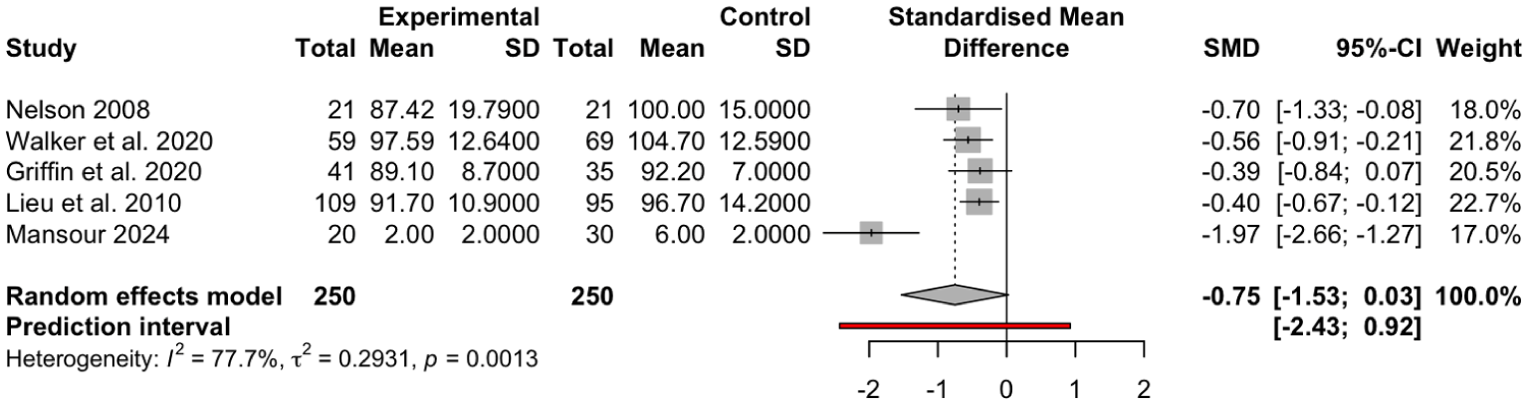
The forest plot of the average difference between the scores of the groups in listening comprehension skills.
Results of the Q test demonstrate that the difference in terms of the effect size in the studies is not significant (Q = 17.92, df = 4, p = .0013) (Table 2). Based on the findings above, this change cannot be attributed to the differences between the studies.
Heterogeneity test results.
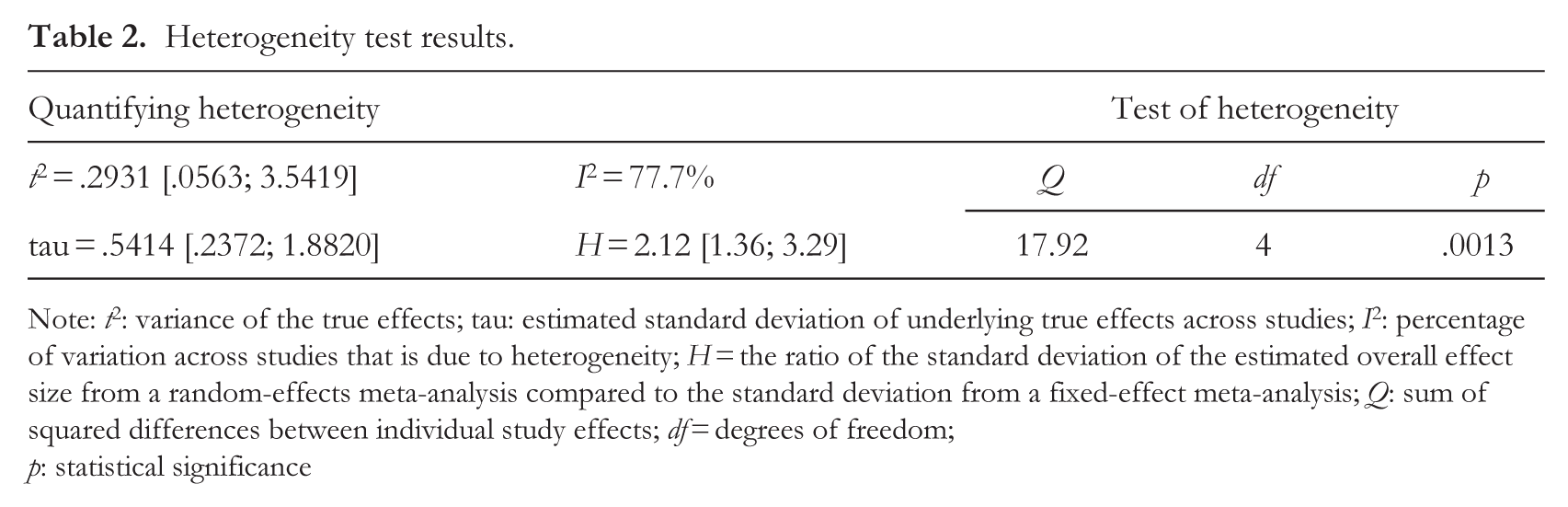
Note: t2: variance of the true effects; tau: estimated standard deviation of underlying true effects across studies; I2: percentage of variation across studies that is due to heterogeneity; H = the ratio of the standard deviation of the estimated overall effect size from a random-effects meta-analysis compared to the standard deviation from a fixed-effect meta-analysis; Q: sum of squared differences between individual study effects; df = degrees of freedom;
p: statistical significance
Overall effect size of reading fluency and heterogeneity test
The average SMD of the overall effect size of reading fluency skill is −1.26. According to Cohen’s standard for effect size classification, the overall effect value is at a high level. This result suggests that students using CI have lower reading fluency skills than hearing students (Figure 4).
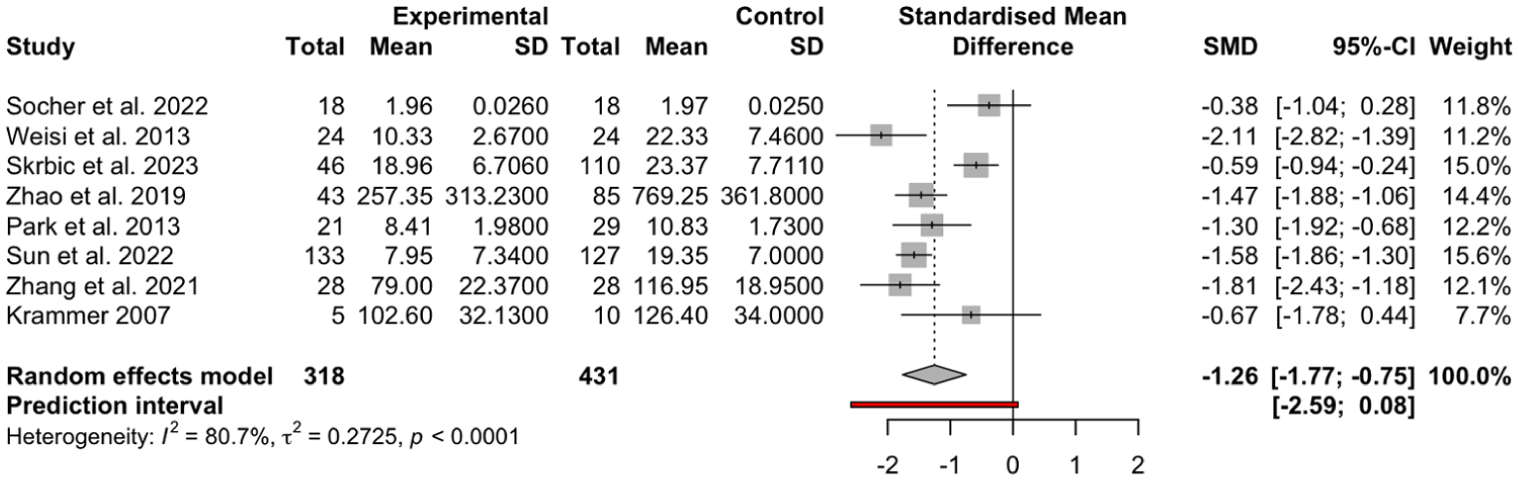
The forest plot of the average difference between the scores of the groups in reading fluency skill.
Results of the Q test demonstrate that the difference in terms of the effect size in the studies is significant (Q = 36.27, df = 7, p < .0001). The value of the I2 statistic is 80.7%, which indicates high heterogeneity (Table 3). Based on the findings above, this change can be attributed to the differences between the studies. As a result, it would be appropriate to compare the effect sizes of different moderators for further analysis.
Heterogeneity test results.
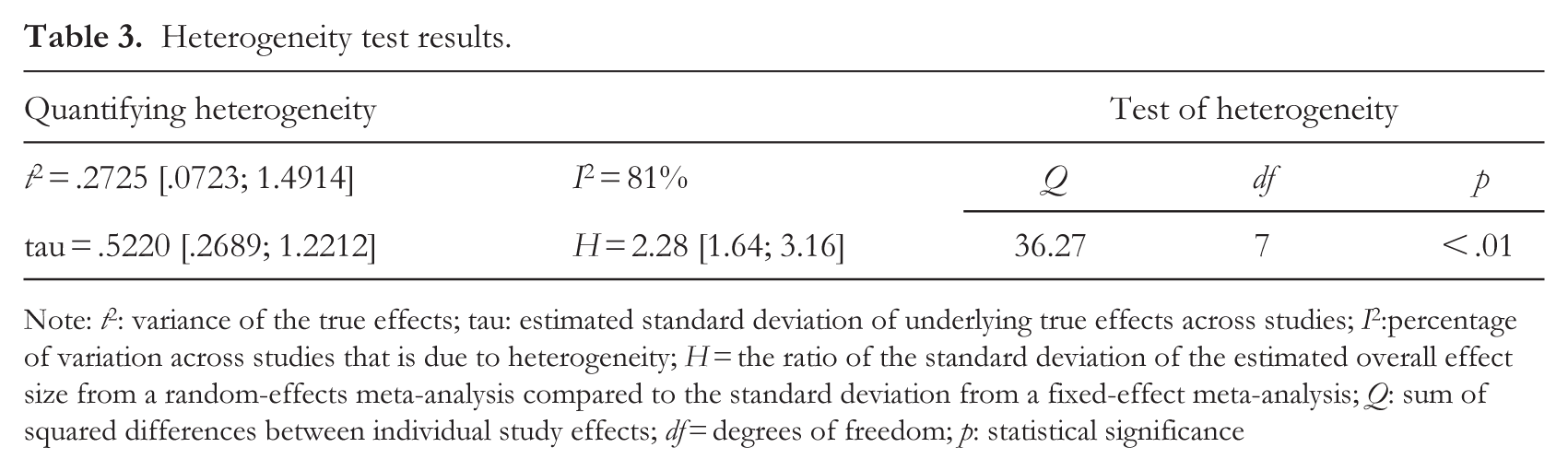
Note: t2: variance of the true effects; tau: estimated standard deviation of underlying true effects across studies; I2:percentage of variation across studies that is due to heterogeneity; H = the ratio of the standard deviation of the estimated overall effect size from a random-effects meta-analysis compared to the standard deviation from a fixed-effect meta-analysis; Q: sum of squared differences between individual study effects; df = degrees of freedom; p: statistical significance
Overall effect size in reading comprehension and heterogeneity test
The average SMD of the overall effect size of reading comprehension skill is −.91. According to Cohen’s standard for effect size classification, the overall effect value is at a high level. This result suggests that students using CI have lower reading comprehension skills than hearing students (Figure 5).
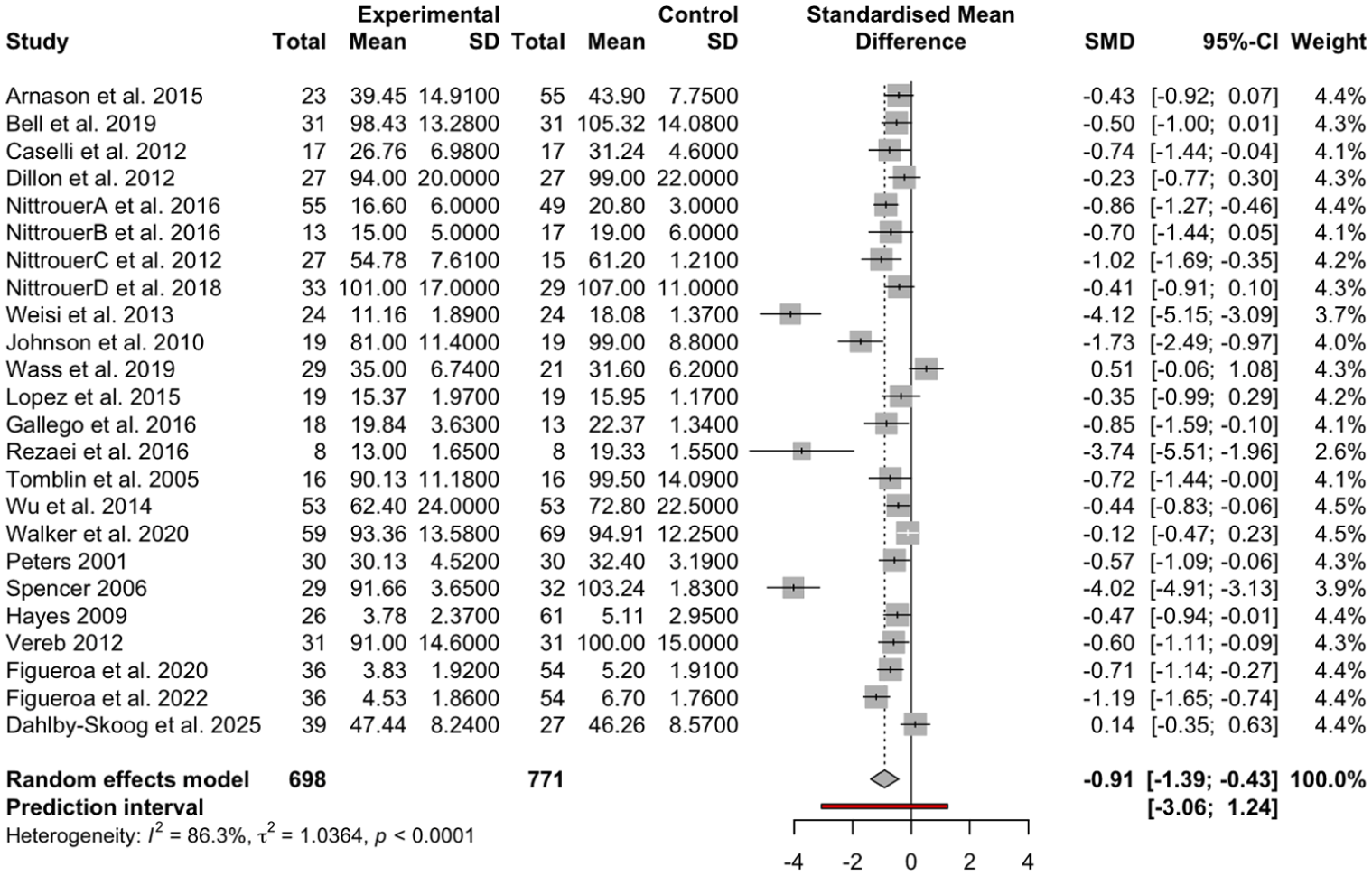
The forest plot of the average difference between the scores of the groups in reading comprehension skill.
Results of the Q test demonstrate that the difference in terms of the effect size in the studies is significant (Q = 167.81, df = 23, p < .0001). The value of the I2 statistics is 86.3%, which indicates high heterogeneity (Table 4). Based on the findings above, this change can be attributed to the differences between the studies. As a result, it would be appropriate to compare the effect sizes of different moderators for further analysis.
Heterogeneity test results.
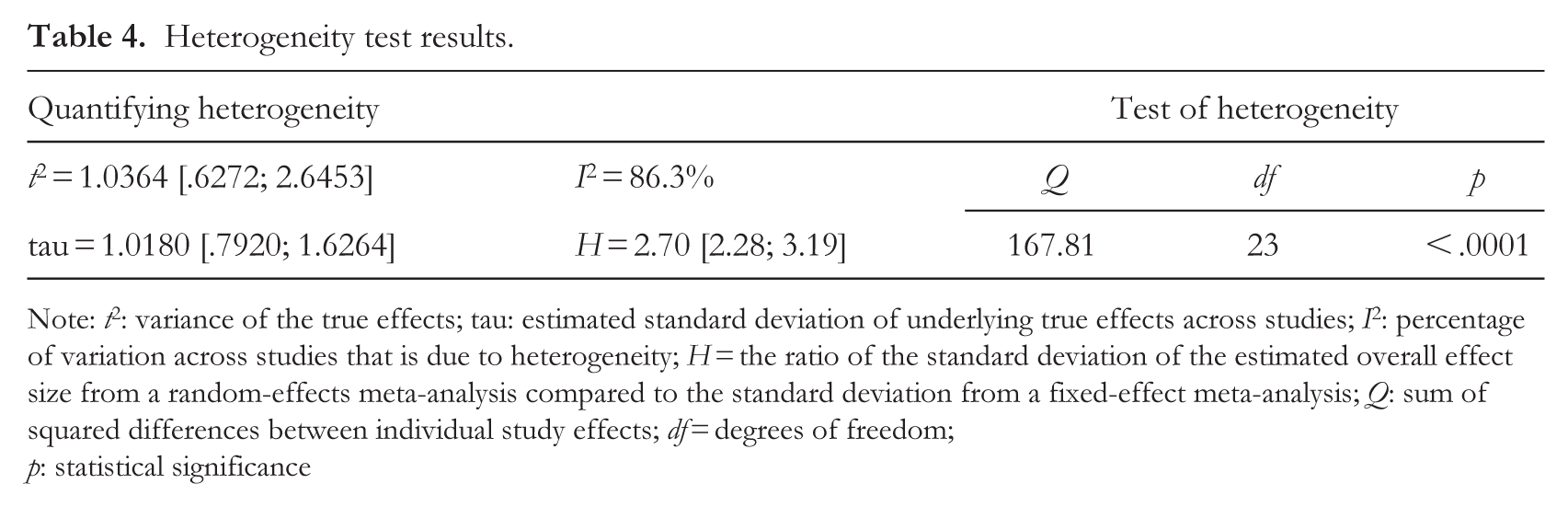
Note: t2: variance of the true effects; tau: estimated standard deviation of underlying true effects across studies; I2: percentage of variation across studies that is due to heterogeneity; H = the ratio of the standard deviation of the estimated overall effect size from a random-effects meta-analysis compared to the standard deviation from a fixed-effect meta-analysis; Q: sum of squared differences between individual study effects; df = degrees of freedom;
p: statistical significance
Moderator analysis
A meta-regression analysis was conducted to explain heterogeneity in effect sizes for reading comprehension and reading fluency. Moderators included chronological age and CI age. Results indicated no significant relationship between these moderators and weighted effect size in reading comprehension (p > .05). For reading fluency, only chronological age was analysed and found to be significantly related to effect size (p < .05). The results of the moderator variables are shown in Table 5.
Moderator analysis results.
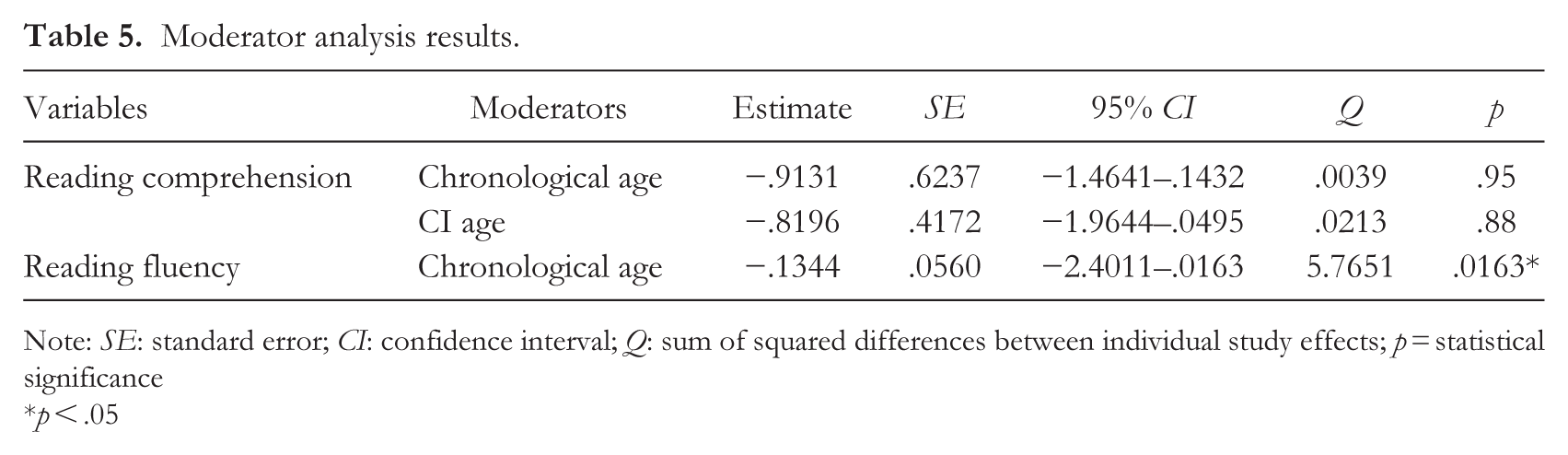
Note: SE: standard error; CI: confidence interval; Q: sum of squared differences between individual study effects; p = statistical significance
p < .05
Discussion
Studies on the reading skills of students with hearing loss prior to CI interventions focused primarily on reading performance and instructional strategies (P. Hayes & Arnold, 1992; Schirmer & Woolsey, 1997). Since the early 2000s, with the widespread adoption of CIs, research has shifted towards maximizing auditory input, developing oral language skills and exploring their impact on reading (Geers et al., 2009). These improvements were expected to enhance academic outcomes, supporting inclusive education practices. However, findings show that CI users in inclusive settings still fall behind their hearing peers in reading fluency, listening and reading comprehension (Gardner, 2023; Topaktaş et al., 2023).
Although a large effect size was found in listening comprehension between the two groups (g = −.75, p = .0013), the difference was not statistically significant. This aligns with previous research indicating that students using CIs experience delays in listening comprehension compared to their hearing peers (Lieu et al., 2010; Nelson, 2008; Nicastri et al., 2022). Nicastri et al. (2022) reported that while 61.8% of CI users scored within the normal range, 38.2% required special education or urgent intervention. They also noted that, despite early interventions and advanced technology access, children with CIs are three times more likely to have listening comprehension difficulties than their hearing peers. Walker et al. (2020) emphasized that listening comprehension is crucial for reading comprehension, particularly after third grade. Accordingly, students need sufficient listening skills to understand written texts. Nelson (2008) also found a strong positive correlation between listening and reading comprehension. Although CI users may struggle with sound discrimination and word recognition even in optimal environments (Griffin et al., 2020). Walker et al. (2020) observed that those with strong vocabulary, phonological awareness and letter-sound knowledge can perform on par with their hearing peers, even in less favourable acoustic conditions. Studies suggest that the listening comprehension skills of students using CIs are influenced by external factors like text structure, readability and acoustic environment; internal factors such as prior experiences and physical conditions; and audiological factors including the severity of hearing loss (Griffin et al., 2020; Lieu et al., 2010; Nelson, 2008; Nicastri et al., 2022). Preferential seating and FM systems that adjust sound relative to background noise have been found to support the development of listening comprehension in these students (Lieu et al., 2010).
The number of studies on the listening comprehension skills of students using CIs that meet the inclusion criteria of this meta-analysis is limited. In the studies that are included, the physical conditions of the assessment, the past knowledge and experience and the audiological background of the participants remain unknown. Still, it is clear that supporting early literacy studies, acoustic properties of the listening environment, the readability level of the texts, the severity of the hearing loss and hearing aids are influential in the development of listening comprehension skills for students using CIs. Detailed analyses of the listening comprehension skills of students using CI and their hearing peers were not included in this analysis because they did not show a heterogeneous distribution and there was no significant difference. Heterogeneity may be affected by the limited number of studies included as well as the limited number of predictor variables (Bulut, 2021). Including more studies may increase the likelihood of finding a significant difference between the two groups in listening comprehension skills (Lund, 2016). However, the existing literature on listening comprehension skills of students using CIs remains limited.
A large effect size was observed between the two groups in reading fluency (g = −1.26), with the difference being statistically significant (p < .001). Reading fluency serves as a bridge between decoding and comprehension and is considered a mediating variable (Ecalle et al., 2021; Rouet & Potocki, 2018). Accordingly, students with reading fluency difficulties are more likely to struggle with reading comprehension. Nelson (2008) reported a positive correlation between reading fluency and comprehension among students using CI. Wang et al. (2021) conducted a meta-analysis and found no significant differences in reading fluency between groups, attributing this to the limited number of studies available due to scarce literature. Their analysis, which included studies up to 2019, incorporated Rapid Automatized Naming (RAN) as part of reading fluency. In contrast, the current meta-analysis, covering studies up to 2025 with a larger sample, considered only reading fluency. Despite the limited literature on reading fluency in CI users, findings from this study align with previous research indicating that students using CIs lag behind their hearing peers in reading fluency (Krammer, 2007; Park et al., 2013; Skrbic et al., 2023; Weisi et al., 2013; Zhao et al., 2019).
Research underlines that this difference is caused by the relatively limited vocabulary knowledge of students using CIs due to the insufficiency of auditory input, which is one of the primary predictors of reading fluency. Hence, students with hearing loss who have a limited vocabulary may experience challenges in reading fluency (Socher et al., 2022). However, Skrbic et al. (2023) argue that the words in the vocabulary tests may be familiar words from the students’ past knowledge and experiences and that cognitive development, which may have a distinctive role in the process, should also be taken into consideration. The same research also suggests that students with hearing loss who have a strong short-term memory may have a more extensive vocabulary and may score better in reading fluency, which suggests that individual differences also play a role in the process. In addition, the readability levels of the texts used in the assessment of reading fluency has to be adjusted so that the syntax and length of the sentences are suitable for the students’ level. While Easterbrooks and Lederberg (2021) highlight that students using CIs who achieve early literacy also tend to perform better in reading fluency, they recommend methods such as repeated reading, small-group teaching and choral reading to improve reading fluency skills. The fact that the reading fluency skills of students using CIs do not turn out to be at the same level as those of their hearing peers in the current study may be attributed to factors such as vocabulary limitations, early literacy skills and the readability levels of the texts chosen for the assessment procedures. It follows that it is important to ensure the improvement of early literacy skills and vocabulary while choosing appropriate texts in the assessment of the reading fluency of students using CIs. It should also be noted that Antia et al. (2020) point out that students spend just one minute of their language and literacy lessons both in preschool and formal education on reading fluency practices and therefore should not be expected to master the skill with such little focus on it.
Detailed analyses indicate that differences in reading fluency between students using CIs and their hearing peers are closely linked to chronological age. This suggests that reading fluency in CI users improves with age, consistent with studies showing a significant positive relationship between the two (Castejón et al., 2015; Easterbrooks & Lederberg, 2021). Skrbic et al. (2023) attribute this pattern to vocabulary growth through accumulated knowledge and experience. Given the strong association between vocabulary and reading fluency, this finding is expected. The participants’ ages ranged widely (6–15 years), with younger groups in Socher et al. (2022) and older ones in Zhang et al. (2021). Despite variations in language exposure and experience due to age, these factors appear to positively influence reading fluency over time.
A large effect size was observed between the two groups in reading comprehension (g = −.91), with the difference being statistically significant (p < .001). This finding is similar to previous studies indicating that students using CIs experience delays compared to their hearing peers in reading comprehension (Kyle & Cain, 2015; Pooresmaeil et al., 2019; Wass et al. 2025). Research suggests that students who receive CIs before age two are likely to perform at levels comparable to their hearing peers. Early diagnosis and intervention are emphasized as crucial factors for children with hearing loss to achieve competitive listening and reading comprehension skills (Árnason et al., 2015); Easterbrooks & Lederberg, 2021; Weisi et al., 2013). This improvement in oral language skills is known to have a direct influence on reading skills during both early and formal education (Easterbrooks & Lederberg, 2021; Karasu, 2020). Therefore, students who start using CIs earlier are generally expected to perform at close levels with their hearing peers. In the studies included in this meta-analysis, it was found that the age of getting CIs varies between nine months and five years, and the average age of getting a CI is 2.2 years. This means that the average age of getting a CI for the students involved in these studies is above the age of two. Although the difference in reading comprehension between the two groups is attributed to the fact that students using CIs acquired their devices after the age of two, the subgroup analyses of the results surprisingly reveal that there is no significant relationship between the CI age and reading comprehension skills and the difference is not an outcome of CI age. Although several studies in the literature suggest a relationship between reading comprehension skills and the CI age (Johnson & Goswami, 2010; Nittrouer, 2016a), other research indicates that implantation age alone may not have a direct impact on reading comprehension. Instead, its influence appears to be significant only when examined in conjunction with other factors, such as the severity of hearing loss, early intervention practices, family socioeconomic status, vocabulary and the readability level of the text. For instance, Dillon et al. (2012) argue that the severity of hearing loss, rather than the CI age, plays a more critical role in the development of reading comprehension skills. Similarly, Nittrouer (2016b) highlights the significance of early intervention (early provision of CI and family education) in supporting the development of these skills. Fernández-Batanero and Blanco (2015) revealed that parents with high socioeconomic levels can more support the development of their children using CIs and use their self-competence attitudes more to support their children’s development. Vereb (2012) also report that the age of CI alone has a weak predictive power on reading comprehension skill and reported that the socioeconomic level of the family, the child’s literacy environment, vocabulary range and the readability levels of texts significantly influence reading comprehension. It is also noted that the readability level of the texts and the choice of appropriate reading texts to student level play a critical role in the assessment of reading comprehension skills and the attainment of reliable results (Karasu, 2020; Luo et al., 2022). Detailed analyses reveal that chronological age is also not significantly related to the difference in the reading comprehension skills between students with hearing loss and their hearing peers. Johnson and Goswami (2010) argue that the reading comprehension skill of students using CI is related to their chronological age. However, Kyle and Harris (2006) revealed that as the chronological age increases, the student’s knowledge and experience increases, their vocabulary enriches, and therefore, the development of reading skills is an expected result. However, they also concluded that development of vocabulary, early literacy skills and severity of hearing loss are more predictive of reading skills in children with CIs than age. In summary, while some studies highlight the significance of CI age and chronological age, these additional factors also play a critical role in the development of reading comprehension in students with hearing loss. It can also be concluded that CI age and chronological age alone do not guarantee reading comprehension and academic success for students with hearing loss and there are other factors that need to be taken into consideration. Unfortunately, the information in the studies included in this meta-analysis on the programmes that support the development of oral language skills, early literacy skills, the educational and socio-economical background of the families, the severity of hearing loss, and device use prior to CIs is limited to the extent that they cannot be included in the analysis.
Recent advancements in hearing technologies and educational programmes may have positively influenced the reading performance of students using CIs (Geers et al., 2009; Wass et al., 2025). This improvement is closely linked to the availability of early intervention opportunities. Early intervention involves improving auditory conditions and ensuring that educational opportunities are provided in parallel with these improvements (Harris, 2016; Mayer & Trezek, 2018). CIs make significant contributions to the improvement of auditory conditions (Mayer & Trezek, 2024). In particular, bilateral CI positively influences the development of spoken language skills, which in turn impacts subsequent academic abilities (Geers et al., 2016; Sarant et al., 2015). Early intervention opportunities can be considered to include auditory-verbal therapy, family education, updates to educational programmes and the provision of speech and language therapy support (Binos et al., 2021; DesJardin et al., 2023; Topaktaş et al., 2023). It is important to remember that the provision of any one of these conditions alone does not guarantee the development of language and reading skills in students with hearing loss (Davidson et al., 2025; Mayer & Trezek, 2024). Based on the findings of the current meta-analysis, CI age does not appear to contribute significantly to reading comprehension skills. This may be interpreted as an indication that early implantation by itself is not sufficient to ensure these improvements. Therefore, it is important that future comparative and quantitative studies consider all relevant variables together. Additionally, early intervention conditions provided to hearing-impaired students may vary across different countries. This is because some countries are able to allocate more resources to early intervention depending on their economic conditions (Sorkin & Buchman, 2016). This variation may affect the outcomes of studies evaluating the reading performance of students using CIs in different languages. However, considering the overall effect size values from studies included in the current meta-analysis across different countries, it has been shown that students using CIs lag behind their hearing peers in reading skills, with a large effect size. This finding aligns with similar results reported in the international literature regarding the development of language and reading skills in students using CIs.
Limitations and recommendations for future research
The primary limitation of this study is that, despite a comprehensive search, only 35 studies from the past 25 years comparing students using CIs and hearing peers in reading comprehension, fluency and listening were identified. Given the interrelated and predictive nature of these skills, further research is clearly needed to better understand reading development in students using CIs. Another limitation is that the studies that met the inclusion criteria are published in English and are in the databases of the universities where the researchers work. A third limitation is that reading comprehension studies meeting inclusion criteria report complete data only on CI age and chronological age, while reading fluency and listening comprehension studies share only chronological age as a common variable. Limited data have constrained moderator analyses, highlighting the urgent need for more studies that comprehensively examine factors such as educational environment, hearing loss severity, pre-CI device use, early literacy, socio-economic status, family education, home literacy environment, intelligence and working memory affecting reading development in CI users. Despite the limitations, this study contends that the idea that students using CIs can develop competitive proficiency in reading comprehension with their hearing peers is questionable. Future research is required to determine more realistic expectations and steer the developmental path of reading skills in the desired direction for students using CIs. From the researcher’s point of view, the development of the reading skills of students using CIs needs to be studied in longitudinal studies involving experimental and control groups. From the point of view of an educator, experts need additional information on the reading skills of students using CIs with respect to their individual characteristics such as the CI age, chronological age and educational programme. Experts need to identify strategies to improve the reading skills of this specific population to minimize the negative effects of the delay in reading skills development on academic success. Educators should be aware of these students’ needs for early intervention and support education in the school setting. Future research may focus on designing the right assessment tools for reading skills and the effects of meaning-based interventions for students using CIs.
Conclusion
This research concludes that students using CIs show lower success rates than their hearing peers in reading comprehension, reading fluency and listening comprehension skills. It has been found that the difference in their performance is not an outcome of the variables of the age of getting a CI or chronological age but more of internal, external and audiological factors influencing the students. Although chronological age explains the difference in reading fluency, other variables seem to be essential in the assessment of these students’ performance. As for the difference in listening comprehension performances, it was concluded that there is a need for more research in the area to include the variables that can explain the difference. Based on the research findings, it is recommended that more studies be carried out to thoroughly examine the participants’ characteristics while considering all the factors that affect these skills while assessing the reading skills of students using CIs.