




Abstract
Paraprofessionals play a significant role in the education system. However, they often need more training on specific instructional strategies to use with the students they work with. In this study, we trained two paraprofessionals working in a self-contained U.S. elementary classroom for students with high-intensity behavioral support needs. Each paraprofessional used constant time delay to support students’ learning to read grade-level sight and science words. Paraprofessionals also gathered maintenance and generalization sessions data using individualized social stories created by the classroom teacher. Not only did the four student participants meet mastery of their personalized word sets but paraprofessionals also implemented all phases with high fidelity. We discuss limitations, implications for practice, and recommendations for future research.
Keywords
The Individuals with Disabilities Education Improvement Act (IDEA, 2004) requires students with disabilities to be educated in a safe, supportive setting that is the least restrictive environment appropriate. Approximately 64% of students with Individualized Education Plans (IEPs) spend at least 80% or more of their school day within a general education classroom with same-age peers without disabilities (Giangreco et al., 2012; Office of Special Education Programs [OSEP], 2020). However, approximately 34% of students with IEPs, including 46% with Emotional Disturbances (ED), spend 20% or more of their day in smaller, self-contained classrooms (National Center for Education Statistics, 2023; OSEP, 2020). This type of setting is often called self-contained (Kurth et al., 2019; Maggin et al., 2011). For many students, these settings can ensure safety for the student and provide intensive academic and behavioral instruction (Mathews et al., 2021; Walker et al., 2020). Whether in general education classrooms or self-contained settings, students with disabilities typically require intensified support to benefit from educational services. Paraprofessionals are often on the front lines of providing such support. Thus, paraprofessionals must receive training in implementing data-based instructional strategies, particularly those that promote generalization to other contexts, to effectively assist students with disabilities in accessing and engaging with the general education curriculum (Brock & Carter, 2015; Walker et al., 2020).
Paraprofessionals comprise a significant portion of the educational workforce, with more than 300,000 providing academic and social support for students with disabilities (Brown & Stanton-Chapman, 2017; Carter et al., 2009). Yet, current training provided to paraprofessionals is limited. Teachers often need to be well-prepared to supervise and train paraprofessionals (Walker et al., 2020). Paraprofessionals are the least prepared school staff to instruct students with disabilities (Carter et al., 2009; Giangreco et al., 2010). Of the training received, 52% to 82% is conducted on the job (Carter et al., 2009). Breton (2010) surveyed paraprofessionals on their knowledge levels and training needs. About half of the paraprofessionals stated they received 10 or more hours of training, while 26% received 2 or fewer hours. This study emphasized that paraprofessionals need adequate preservice and onsite training and constant consultations with other professionals.
Paraprofessionals working with students of all ages, disability categories, and grade levels reported a need for training in the following areas: (a) basic terminology relating to students with disabilities and their programs, (b) purposes of the programs, (c) disability effects on student lives, (d) rules and procedural safeguards concerning behavior management, (e) indicators of abuse and neglect, (f) basic instructional strategies and materials, g) rights of families of children with special learning needs, and (h) technology available to students with disabilities (Carter et al., 2009). Yet, because of contractual hours, many cannot participate in teams or meet regularly with teachers (Fisher & Pleasants, 2012). For this same reason, teachers cannot provide continuous training, evaluation, and support to paraprofessionals (Fisher & Pleasants, 2012).
There are high turnover rates among paraprofessionals in the profession. The frequent turnover (Ghere & York-Barr, 2007; Giangreco et al., 2010) makes consistent routines difficult for students, often leaving them confused or even guilty and causing undue stress. In addition, constant student and programmatic changes in the classroom can contribute to problem behaviors (Trussell et al., 2008). A consistent classroom environment promotes positive behaviors and outcomes in students with high-intensity behavioral support needs. For the best possible learning outcomes, students need to develop a strong and positive relationship with each adult in the classroom. Yet, more studies are needed to evaluate the impact of interventions implemented by paraprofessionals with whom students have established relationships (Rhoads & Carter, 2023). To accomplish this goal, paraprofessionals must be trained in best practices for working with students who have high-intensity behavioral support needs. Walker and colleagues (2020) found that with proper training and coaching on instructional strategies, paraprofessionals increased their accuracy in implementing strategies learned, leading to improved job performance. Providing professional development and collaboration opportunities can effectively increase paraprofessional knowledge of roles, students, instructional strategies, and classroom management strategies (Zobell & Hwang, 2020).
Instructional Methods
Research indicates a need for investigating specific and systematic reading instruction for students with high-intensity behavioral support needs. For example, Mathews and colleagues (2021) found that special education teachers with the strongest instructional practices had the support of reliably trained paraprofessionals with time built into their classroom schedule for training. With proper training and support, paraprofessionals could systematically partner with the special education teacher to teach lessons with fidelity.
Constant time delay (CTD) is an instructional method in which implementers (e.g., researchers, teachers, paraprofessionals) use systematic instruction to control student responses. Implementers first gather baseline data on either a discrete (i.e., math facts or sight words) or a chained task. (i.e., steps to brushing teeth) to analyze which skill the student needs systematic instruction. Following the baseline phase, the interventionalist starts CTD training with several 0-second (0s) time delay sessions. These sessions consist of the interventionalist immediately giving the correct answer to their question without any delay. Then the interventionalist uses a fixed time delay between the cue and the answer, typically 3 to 10 s (Bradley & Noell, 2018), until students meet the intervention criteria. Researchers using CTD found it an effective strategy for teaching various concepts (Kroesch et al., 2020; Bradley & Noell, 2018).
With training, paraprofessionals could easily and effectively implement CTD within self-contained classrooms by providing many opportunities for students to respond and receive specific feedback, which increases student engagement (Stevens & Lingo, 2005). Importantly, students with high-intensity behavioral support needs often need intensified supports to benefit from educational strategies. A recommended practice for this population is using teacher-directed opportunities to respond (Riden et al., 2022). Stevens and Lingo (2005) also discuss that CTD is quick and easy to implement and provides students with predictability in instructional delivery. Due to these features, CTD could provide positive behavioral support for students with high-intensity behavioral support needs. A study conducted by Swain et al. (2015) used CTD to teach sight words to students with disabilities in a self-contained classroom setting and found it effective in reaching learning targets for students with Intellectual Disabilities. In addition, students generalized this skill and recognized the words in a community setting.
Teaching paraprofessionals to use CTD as an instructional strategy effectively improves student academic outcomes. Walker and colleagues (2020) conducted a study in which a special education teacher trained several paraprofessionals to use a chained task using CTD to teach students with disabilities classroom procedures. Paraprofessionals implemented the evidence-based practice with high accuracy following the training. Researchers suggest that, by using similar procedures, paraprofessionals could teach a wide variety of skills with high fidelity (Walker et al., 2020).
Purpose and Research Questions
This study aims to increase positive academic outcomes for students with high-intensity behavioral support needs by providing explicit CTD training to classroom paraprofessionals using a discrete task. Specifically, we address the following research questions:
Method
Research Design
We utilized a single-case, multiple probes across behaviors design for this study (Ledford & Gast, 2018) to evaluate the effectiveness of paraprofessionals using CTD to teach Word Sets. Students moved into the intervention phase upon baseline stability (i.e., at least 80% of the data fell within a 25% range of the median; Ledford & Gast, 2018) for a minimum of five sessions. The paraprofessionals continued to probe Word Sets 2 and 3 until students met the criteria of 80% for 3 consecutive days for Word Set 1. Word Set 1 moved to generalization and maintenance when a student met the criteria. With a stable baseline, Word Set 2 moved to intervention. Paraprofessionals continued to probe Word Set 3 words until Word Set 2 moved into generalization and maintenance after meeting the criteria. After a stable baseline, paraprofessionals moved Word Set 3 into intervention until the criteria were met.
Setting
The study occurred in a self-contained classroom in a rural elementary school in the north central area of the U.S. state of Illinois. This specific classroom had 12 students with high-intensity behavioral support needs. Within the district, 29.1% of students are designated low-income, according to the Illinois State Board of Education (2020). The four student participants, Josh, Tim, Max, and Rob (pseudonyms), received special education services for their emotional, behavioral, and academic needs. According to the classroom teacher, they received services in the self-contained room due to behaviors that were harmful to themselves and others, which impeded their learning in the general education classroom (e.g., flipping tables upside down during whole class instruction and physical behaviors to staff or other students in the classroom). Although each student received academic support using the CTD intervention to learn their sight words, all other students worked independently at their desks or at an academic station with another teacher in the classroom.
Participants
The participants in this study are two paraprofessionals, Mrs. L. and Mrs. C., and four students, Josh, Tim, Max, and Rob. All staff and students identified as white. Both paraprofessionals assisted students ages 6 to 8 with high-intensity behavioral support needs who have an IEP. Two of the study participants received services under the disability category of ED, and the other two served under other health impairments (OHI).
Mrs. C
Background
At the time of this study, Mrs. C. was a 51-year-old White female with a high school degree. She had been a paraprofessional for 15 years, four within the self-contained classroom used for this study. She had previous experience working as a preschool classroom paraprofessional for 11 years with students with autism. Mrs. C. worked with Josh and Tim. These students received core academic instruction in a self-contained classroom. They attended music, art, physical education, library, lunch, and recess with a second-grade general education class.
Josh
Josh identified as a White, 7-year-old, first-grade male student. He received services under the ED category. At the time of this study, Josh had academic and behavioral goals in his IEP. Classroom assessments indicated a reading level of a mid-year kindergarten level. He received speech and language support from a speech pathologist and started in the self-contained classroom 4 months before this intervention.
Tim
Another student participant, Tim, identified as a White 7-year-old male student in the first grade. Tim also received instruction for the disability category of ED, with instructional, behavioral, and speech and language supports in place. Academically, Tim was reading on target according to classroom assessments. Tim started in the self-contained classroom 12 months before the intervention.
Mrs. L
Background
Mrs. L. is a 48-year-old White female with a high school diploma. During this study, she acted as a one-to-one paraprofessional for a first-grade student in the self-contained classroom. She had 12 years of experience in the school district, seven as a paraprofessional. She began her career as a recess and kitchen assistant in the district before becoming a paraprofessional. She primarily worked with elementary students with high-intensity behavioral support needs at the elementary and middle school levels. Mrs. L. worked with two students during the study, Max and Rob. Both students received core academic instruction in the self-contained classroom. They attended music, art, physical education, library, lunch, recess, science, and social studies with a second-grade general education class.
Max
Max was an 8-year-old White male, a second-grade student at the time of this study. He received services under the OHI disability category. Max started in the self-contained program in December of his Kindergarten school year, approximately 2.5 years before the start of this intervention. Max’s IEP contained both academic and social-emotional goals. Academically, Max was reading at an end-of-the-year first-grade reading level.
Rob
Rob was also an 8-year-old White male, second-grade student. Like Max, he received services under the OHI category. He had a combination of academic and social-emotional goals written on his IEP. At the time of this study, classroom assessments indicated that he had a reading level of a mid-year first grader. Rob started in the self-contained classroom 7 months before this intervention began.
Data Collection
Dependent Variables
The paraprofessionals collected data on students’ ability to verbally state their Word Sets for each study condition. Students received a “+” for each correct response and a “−” for incorrect or no response. The classroom teacher, a graduate student working toward a master’s degree in special education, graphed the percentage of correct responses.
Interobserver Agreement
Using the same data collection sheets each paraprofessional used to gather data, the classroom teacher watched 100% of the videos weekly and recorded student responses. A researcher who mentored the classroom teacher/graduate student compared the paraprofessionals’ and classroom teachers’ data to calculate IOA using the following formula: The number of agreements divided by the number of agreements plus disagreements, then multiplied by 100 (Ledford & Gast, 2018). The final IOA for all phases was calculated to be 100%.
Procedures
Training
Although the classroom teacher received CTD training in their undergraduate program, they participated in a 3-hr training with a university researcher for this study. This training consisted of a PowerPoint presentation of the basics of CTD and the practice of baseline, 0s, and 3-second delay (3s) sessions, maintenance, generalization, and data collection for all phases. To train paraprofessionals, the classroom teacher received 100% accuracy on all phases for a minimum of three consecutive sessions. At the end of the training, the researcher and classroom teacher created videos of all phase sessions with similar materials paraprofessionals used in this study. At the time of the study, the classroom teacher conducted this study initially as part of their capstone project, the final project of their master’s degree. They wanted to learn to implement evidence-based interventions with fidelity.
The classroom teacher then provided CTD training to the paraprofessionals, including data collection. Training took place over 1 week and occurred each morning before the start of the school day from 7:45 to 8:00 am. Both paraprofessionals received the same training at the same time for consistency. In addition, we wanted paraprofessionals to gather baseline data at the same time to avoid carryover effects by students since students would be in the same classroom daily. The first training day consisted of an overview of the CTD strategy and the research supporting its use in the classroom. The second training day consisted of modeling the strategy with specific video examples created by the classroom teacher and researcher. Day 3 of training consisted of modeling the implementation of sight words using specific materials used in the study. On the fourth day, the paraprofessionals practiced by teaching the classroom teacher the given sight words, having to receive 100% accuracy on each phase (baseline and 0s and 3s delay intervention sessions) for a minimum of three consecutive practices. On the fifth day, the paraprofessionals continued to practice with the classroom teacher, roleplaying as a student for training purposes. Paraprofessionals had access to all materials during training and throughout the study if the classroom teacher needed to coach paraprofessionals. Our supplemental materials (Tables 1–5) contain a chart describing the implementation procedures for each phase with the paraprofessional’s implementation data.
Baseline
Once paraprofessionals concluded their weeklong training, they gathered baseline data in a one-to-one setting. Since both paraprofessionals had established a previous good working relationship with all student participants, the classroom teacher assigned the two first graders to Mrs. C. and the other two second graders to Mrs. L. for no reason except to keep the same grade levels together. During their scheduled morning reading time, paraprofessionals introduced students to 20 sight words taken from the Dolch sight word list at their instructional level, identified by the classroom teacher. Each student had their own individualized set of words. Paraprofessionals asked, “Are you ready to work?” Once the student replied (e.g., head nod or verbalized “yes”), the paraprofessional displayed each word to the student one at a time. Baseline data were taken for at least 5 consecutive school days for each student. Students did not receive correction or reinforcement during this phase.
We chose Word Sets based on words that had 0% accuracy. The first five words became Word Set 1. Additional words remained in baseline until students reached mastery, 13 out of a possible 15 (80% or higher) for three consecutive sessions. During each session, students saw each word three times. For Tim, Mrs. C. gathered data on additional words not included in Word Set 1 once per week before he received Word Sets 2 and 3. Because another five Dolch sight words could not be formed with the remaining words, Mrs. C. and Mrs. L. restarted the process of baseline data by using TCI Science Curriculum words that were not part of the student’s current unit. All three students, Rob, Josh, and Max, were highly interested in science, and the classroom teacher felt they would be motivated to learn these words.
Intervention
Zero-Second Delay
Paraprofessionals began 0s sessions with each student for Word Set 1. First, the paraprofessionals stated the task direction, “Are you ready to work?” Once the student replied (e.g., head nod or verbalized “yes”), the paraprofessional presented each word to the students and immediately stated the word verbally. The student repeated the word, and Mrs. C. or Mrs. L. gave positive, specific feedback (e.g., “Great work! That word is ‘car.’”). The paraprofessionals presented each word three times for 15 flashcards in each session. Because each paraprofessional stated the word first without allowing time for the student to state the word first, data collection remained at 0% for each 0s session.
Three-Second Delay
After three 0s delay sessions, paraprofessionals presented the flashcard words and waited 3 s between each word. Paraprofessionals presented each student with the five words they worked on during their 0s delay sessions. Each word was shown three times each for each session. If the student responded correctly within 3 s, paraprofessionals provided specific praise, “Nice work, that is the word car,” and moved to the next word. For incorrect responses or no response after a 3s delay, the paraprofessional verbally gave the correct word, the student repeated it, paraprofessionals specifically praised the student, and moved to the next word. Paraprofessionals recorded the number of correctly stated responses out of 15. Students met the criteria by reaching 13 out of 15 correct responses for at least 3 consecutive days.
Tim moved directly into the intervention phase for his next five unknown Dolch sight words. The paraprofessional restarted the baseline for Josh, Max, and Rob with a new set of words from their science curriculum. Once the baseline for a new set of 20 words was conducted, we chose five words for Word Set 2, moving the set into the intervention phase. The next five words, Word Set 3, remained in baseline until the criteria for Word Set 2 were met. Word Sets 1, 2, and 3 for all students moved into generalization and maintenance once criteria were met for each word set.
Maintenance
Maintenance data were taken weekly after each student mastered Word Sets 1 to 3. The procedures mirrored the baseline phase. Paraprofessionals asked their student participants if they were ready to work. Upon receiving a response, paraprofessionals showed their student participant a combination of the 20 words that made up each Word Set. Paraprofessionals provided no reinforcement or corrections during maintenance sessions.
Generalization
Generalization data were taken to determine if the students could correctly read the target words in context. The classroom teacher wrote an individualized Social Story for each student about a frequently discussed topic in their self-contained classroom: emotional regulation. The social stories contained each student’s individualized Word Sets. One time per week, paraprofessionals read this social story with their students. After verbally stating the attentional cue, “Are you ready to read your social story?” paraprofessionals instructed their student participant to read the word if they paused, allowing the student to verbally state it within 3 s. If a student said their word within 3s, they received a “+” on the data sheet indicating a correct response. If the student did not say the word within 3 s or stated an incorrect word, the paraprofessional would mark a “−” on the datasheet, indicating an incorrect response. They would then state the word and continue reading the story. Data were collected on a percentage of correct responses for each of the five words that previously met the criteria. Paraprofessionals used the same procedures for Word Sets 2 and 3. Maintenance and generalization data were collected on alternating data points, each once per week.
Procedural Fidelity
Paraprofessionals set up an iPad to video all sessions. The classroom teacher created a fidelity checklist of all steps for each phase to implement the intervention and student response, using the same requirements discussed during training. The researcher overseeing the study also agreed upon this checklist. The checklist contained each required step for the paraprofessional to complete in each phase, including the attentional cue, presenting each word, providing the verbal prompt (during intervention), and providing either reinforcement or error correction (during intervention). The classroom teacher reviewed each video and recorded data on a spreadsheet. If procedural fidelity fell below 80%, we planned to implement a coaching session conducted by the classroom teacher to the paraprofessional before sessions continued. We used the formula of the number of observed behaviors divided by the number of planned behaviors and multiplied by 100 (Ledford & Gast, 2018). One researcher watched at least 20% of each phase for each student implementation (i.e., baseline, intervention, maintenance, and generalization). The classroom teacher conducted no coaching sessions for this study, and the researcher and classroom teacher data matched 100% accuracy.
Results
We analyzed the data and created line graphs of the paraprofessional implementation and students’ correct responses to their Word Sets. We identified patterns within and between phases for each paraprofessional and student dyad. Between baseline and 3s delay, all four students demonstrated an immediacy effect. In addition, there was no overlap between baseline to 3s delay intervention phase, baseline to maintenance phase, and baseline to generalization phase. The only overlap displayed was during baseline to 0s since students did not have the opportunity to respond according to the intervention protocol, which is not part of the calculations of Tau-U. Tau-U’s is equal to +1, indicating a functional relation for all students. All generalization and maintenance data per student are described below.
Aside from one instance when Mrs. C. forgot to give the attentional cue before beginning a session, both paraprofessionals achieved high levels of fidelity in their implementation (M = 99.9%). Implementation fidelity data are included within the supplemental materials of this manuscript.
Mrs. C. and Tim
Word Set 1
Mrs. C. used 20 words from the Dolch first-grade sight word list with Tim. After five consecutive baseline sessions with Mrs. C, Tim did not read any of his target words correctly. This resulted in a list of 20 words for him to work on in the subsequent CTD intervention sessions. We chose five words randomly from the set of 20. Mrs. C. completed three sessions, each showing Tim the word three times, with a 0s delay. Then Mrs. C. moved into 3s delay sessions and recorded the number of words correct (five words, three times each session). For Word Set 1, Tim met the criteria of 13 out of 15 (80% or higher) correctly stating words for three consecutive sessions in five sessions. He received the following scores: 33%, 47%, 80%, 80%, 100%. See Tim’s graphed data in Figure 1.
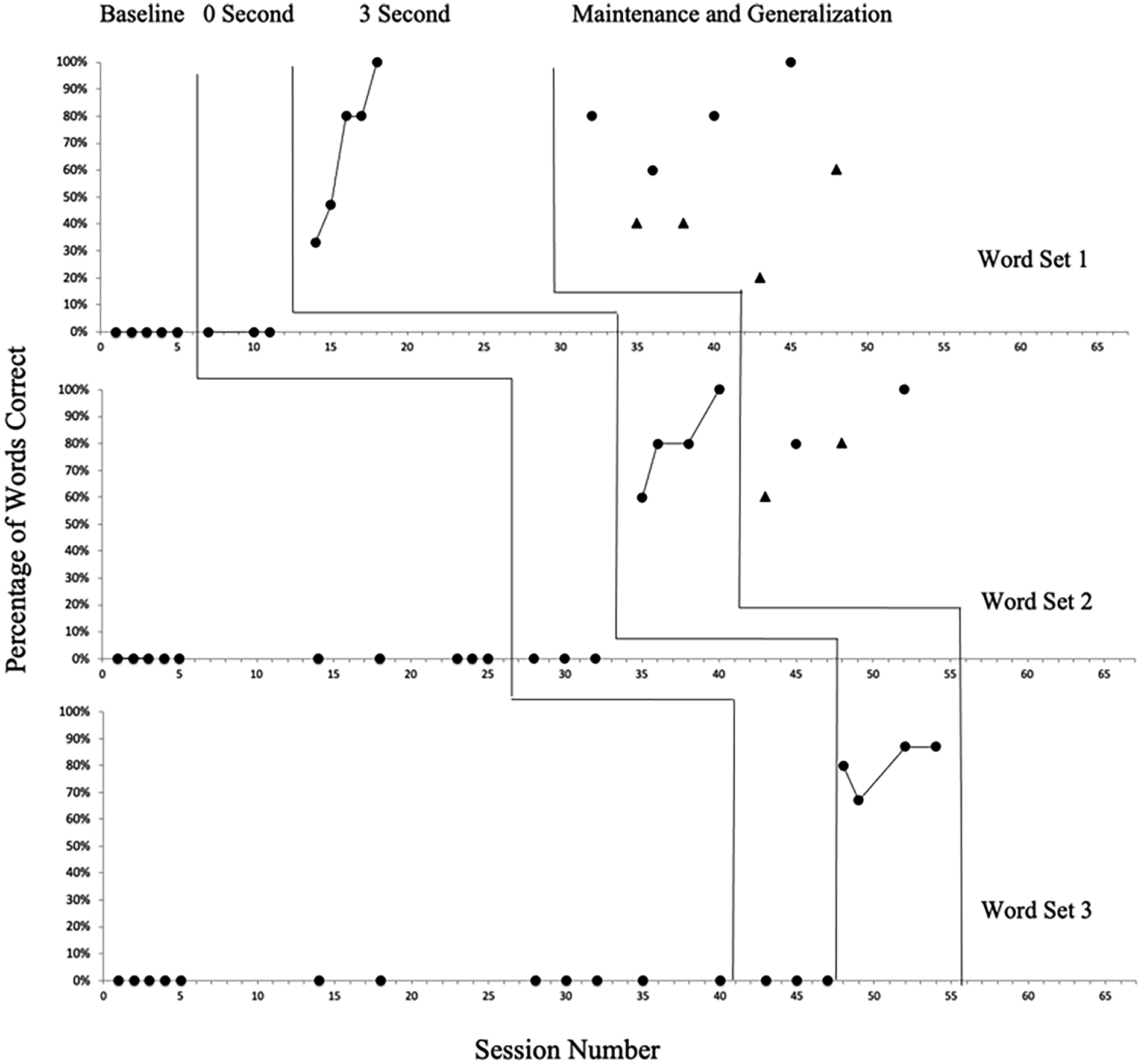
Tim Word Set Data.
After Tim met the criteria, Mrs. C. moved into maintenance sessions for Word Set 1. Mrs. C. returned the Word Set 1 words to the original pile to collect maintenance data on only Word Set 1. Tim received 80%, 60%, 80%, and 100% (M = 80%) on the four data points collected weekly for Set 1 words in the maintenance phase.
For generalization, Mrs. C. introduced Tim to a social story of a kid superhero who became frustrated and asked for help using his calm-down tool. Mrs. C. read the story with Tim once a week. When she got to one of the words from Set 1, she waited 3 s to see if Tim would state the word aloud. If he did, he got the word correct. Mrs. C. stated the word if he did not and continued reading the story. The classroom teacher included each Word Set word in his social story once. We graphed the percentage of words stated correctly (see Figure 1). For example, in this sentence from his Social Story, “Even when he got old, Tyler still remembered his tools and how to help others calm down.” The word “old” was a word from Set 1. Mrs. C. stated, “Even when he got (waited 3 s for Tim to respond) and continued with the sentence. His data remained low, unfortunately, at 40%, 40%, 20%, and 60% (M = 40%).
Word Set 2
Before implementing Word Set 2, Mrs. C. conducted four additional baseline sessions with the remaining 15 sight words about once per week. All words remained at 0%. Once Tim met mastery for Set 1, we randomly chose five more words for Set 2. Mrs. C. moved on to three sessions of 0s delay, presenting each word three times for Word Set 2. Tim’s responses for these sessions remained at 0% because Mrs. C. automatically stated the word first. Once a 3s delay started for Word Set 2, Tim reached mastery criteria after sessions, receiving the following scores: 60%, 80%, 80%, and 100%.
For maintenance sessions following mastery, Mrs. C. collected two data points for Set 2 words. Once again, Mrs. C. put Word Set 2 words into the pile of twenty words, gathering data on the correct words for Word Set 2 and Word Set 1. Tim received 80% and 100% on words stated correctly during two maintenance sessions during this phase. Using his Social Story, Mrs. C. stopped at Words Set 1 and 2 words for two sessions, and he received 60% and 80% for Word Set 2.
Word Set 3
Mrs. C. collected baseline data on the words not used within Word Sets 1 and 2. Tim continued scoring 0% on the remaining words for 12 data points. Mrs. C. chose 5 of the 10 words and graphed them to begin intervention on Word Set 3 words. Those five words during 0s delay sessions remained at 0% because Mrs. C. automatically stated the word after the word was presented. Once 3s delay sessions began, Tim received 80%, 67%, 87%, and 87%. Unfortunately, Tim started missing sessions due to absences. Therefore, he could not achieve mastery of Word Set 3 nor have maintenance and generalization sessions recorded.
Mrs. C. and Josh
Word Set 1
We initially gave Josh 20 words from the Dolch second-grade sight word list. After completing five consecutive baseline sessions, five words with the lowest percentage, 24%, respectively, became Word Set 1. Graphed are the scores from those five words (see Figure 2). Although the data trended upward, data were under 60%; therefore, we determined to continue working on those five words.
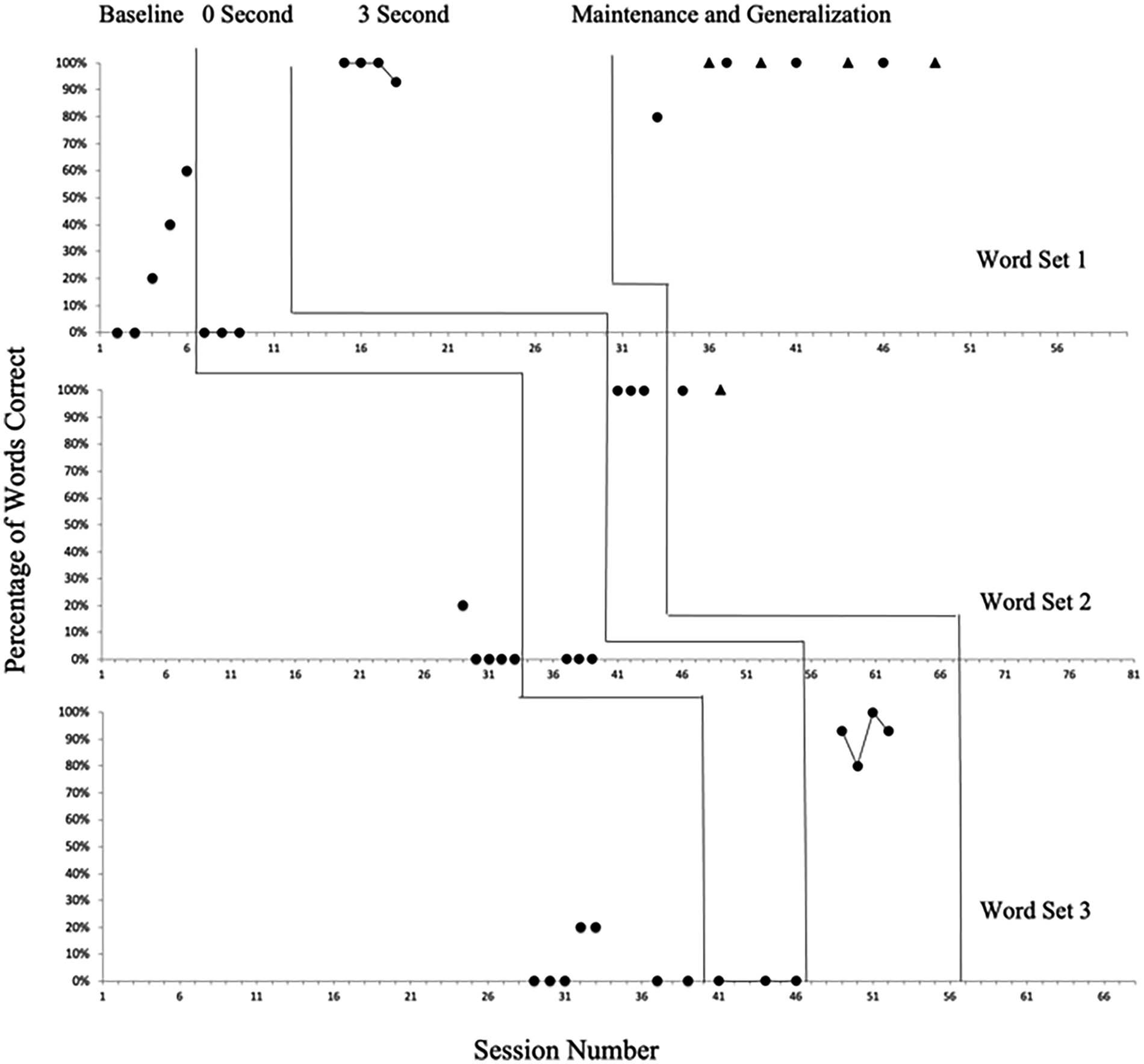
Josh Word Set Data.
Mrs. C. completed three 0s delay sessions for Word Set 1, where data remained at 0% since Josh was allowed to respond after Mrs. C. stated the word. Once 3s delay sessions began, Josh reached the criteria for Word Set 1 in four consecutive sessions, with the first three being 100% and the fourth being 93%. Although Josh achieved the criteria after three consecutive days, we determined it was best practice to collect another data point after a long weekend.
During maintenance, Mrs. C. returned the five words used for Word Set 1 to the original deck of 20 sight words; however, as with Tim, we only used words in Word Set 1 to graph maintenance data. Mrs. C. collected four data points for Josh for Word Set 1. Josh had an 80% for the first data point, and the rest were 100%, displaying he did maintain the criteria set for Word Set 1.
Like Tim, the classroom teacher developed a personalized social story that Mrs. C. read with Josh weekly for generalization purposes. His story consisted of a boy living on planet Earth with dinosaurs, a topic Josh liked. When Mrs. C. got to a sight word, she waited 3 s and collected data on the number of words correctly stated for Word Set 1. Josh read every word with 100% accuracy for 4 weeks.
Word Set 2
Since the data trended upward for the original set of Dolch sight words, we discussed using vocabulary words from his science curriculum, specifically Earth and dinosaurs, two high-interest topics. Due to his knowledge of the first set of targeted words, he entered back into baseline with a set of 20 science words from the second-grade general education science curriculum. Josh did not have prior knowledge of these words. His baseline scores were 20% and four 0%. After five baseline sessions, we randomly chose five target words for Word Set 2.
Josh participated in three 0s delay sessions before beginning 3s delay sessions for Word Set 2. During 3s delay sessions, Josh reached the criteria after three sessions. We added the five words that worked for Word Set 2 back into the original set of 20 science and included the five sight words in the pack. Mrs. C. gathered data for only one maintenance session, which was at 100%. He also only had one generalization session with his social story, which resulted in a 100% accuracy for Word Set 2.
Word Set 3
For Word Set 3, we chose a new set of five words from the 15 remaining science curriculum words. All 15 words in baseline remained low in seven baseline sessions. Therefore, Mrs. C. started intervention after Set 2 met the criteria and went into the maintenance and generalization phases. After the initial three 0s sessions, Josh received scores of 93%, 80%, 100%, and 93% during the 3s sessions. He consistently missed the word “observing.” Unfortunately, due to absences, Josh did not move into the maintenance or generalization phases for Word Set 3.
Mrs. L. and Max
Word Set 1
Max was also first given 20 words from the Dolch second-grade sight-word list. We again chose five random words to create Word Set 1 and graphed correctly stated words (see Figure 3). After the completion of five consecutive baseline sessions with Mrs. L, Max earned scores of 0% for the targeted words.
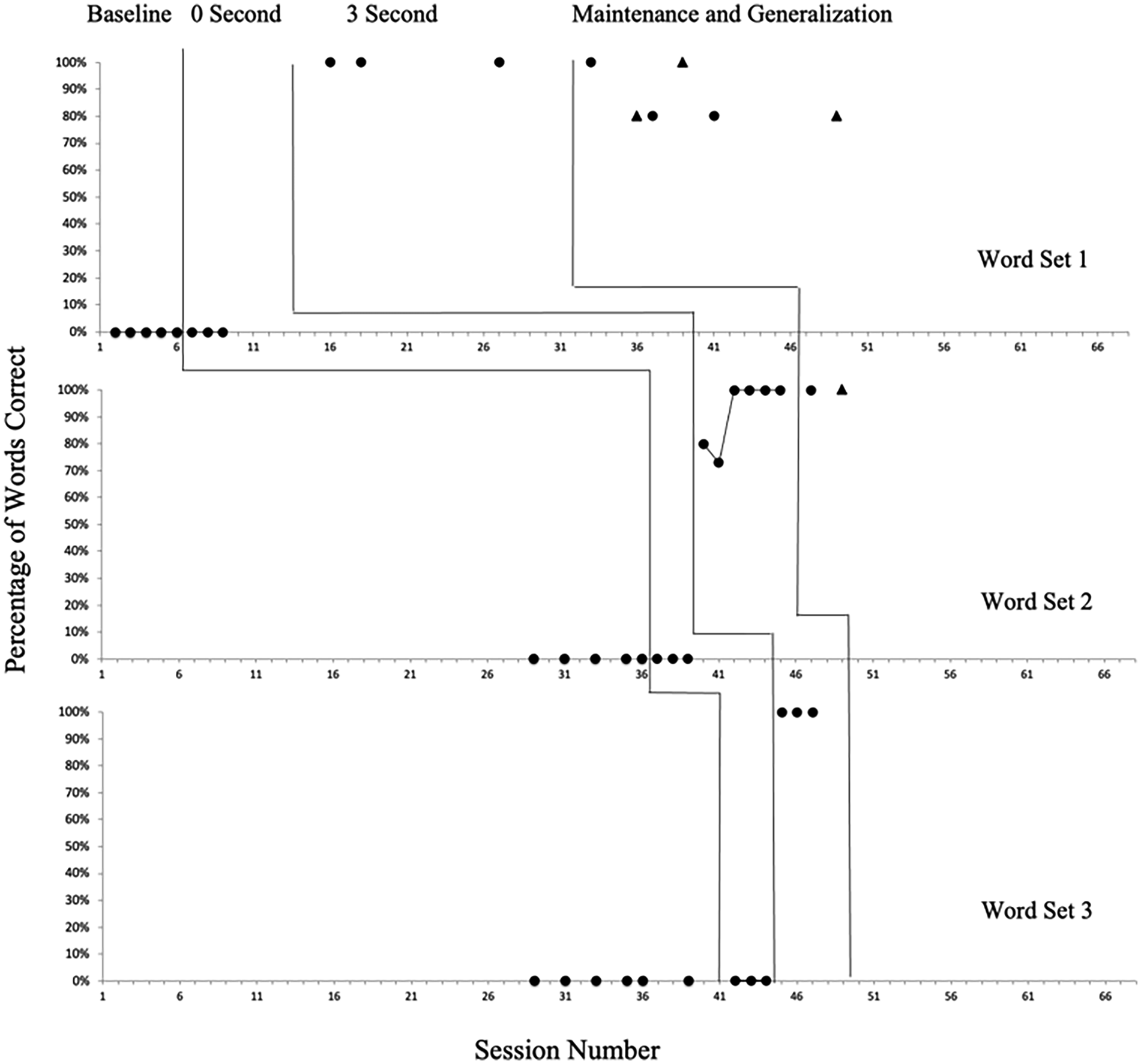
Max Word Set Data.
Max completed three consecutive 0s delay sessions with Mrs. L. before moving on to 3s delay sessions. Max correctly stated his five words within 3 s with 100% accuracy for three consecutive sessions.
After meeting the criteria, Max participated in weekly maintenance sessions for Set 1 words. He scored 100%, 80%, and 80% (average of 87%, respectively) for maintenance sessions. He missed the word “enough” each time.
Max loved dinosaurs; therefore, his classroom teacher created a Social Story about a T-Rex fighting and how “Max” helped the T-Rex by using calm-down strategies. The classroom teacher incorporated Word Sets 1, 2, and 3 for Mrs. L. to collect generalization data after mastery of Word Set 1. Max had three sessions of generalization for Word Set 1. Like Josh and Tim, Mrs. L. gave a 3s delay for Max to read the Word Set 1 sight words. Max scored an 80%, 100%, and 80% during this generalization phase for words stated correctly. Once again, he continued to miss the word “enough.”
Word Set 2
Max had yet to have another five unknown sight words from his original baseline data. Therefore, we chose 20 science curriculum words and started baseline over. From those 20 words, we chose five words for Word Set 2. Max had five baseline sessions prior to entering intervention. After receiving three sessions of 0s delay, he received a score of 80%, 73%, and four 100%, meeting the criteria in only five sessions, with an additional session falling after a weekend. Upon meeting the criteria, Max received one maintenance and one intervention session for Word Set 2, scoring 100% reading his Word Set 2 words.
Word Set 3
As Max met the criteria for Word Set 2, Mrs. L. gathered one additional baseline data point for five randomly chosen science curriculum words from the remaining ones. All five words remained low in accuracy (0%), allowing Mrs. L. to move into intervention once Max almost met the criteria for Word Set 2. He met the criteria for Word Set 3 after three sessions. Unfortunately, Max received only one maintenance session for Word Set 3, due to attendance and negative behaviors that required adult supervision within the classroom. He scored 100% on this single maintenance session.
Mrs. L. and Rob
Word Set 1
Rob was also initially given 20 words from the second-grade sight word list. After completing five consecutive baseline sessions with Mrs. L, we chose five words that Rob scored 0% on to create Set 1 and graphed those five words (see Figure 4).
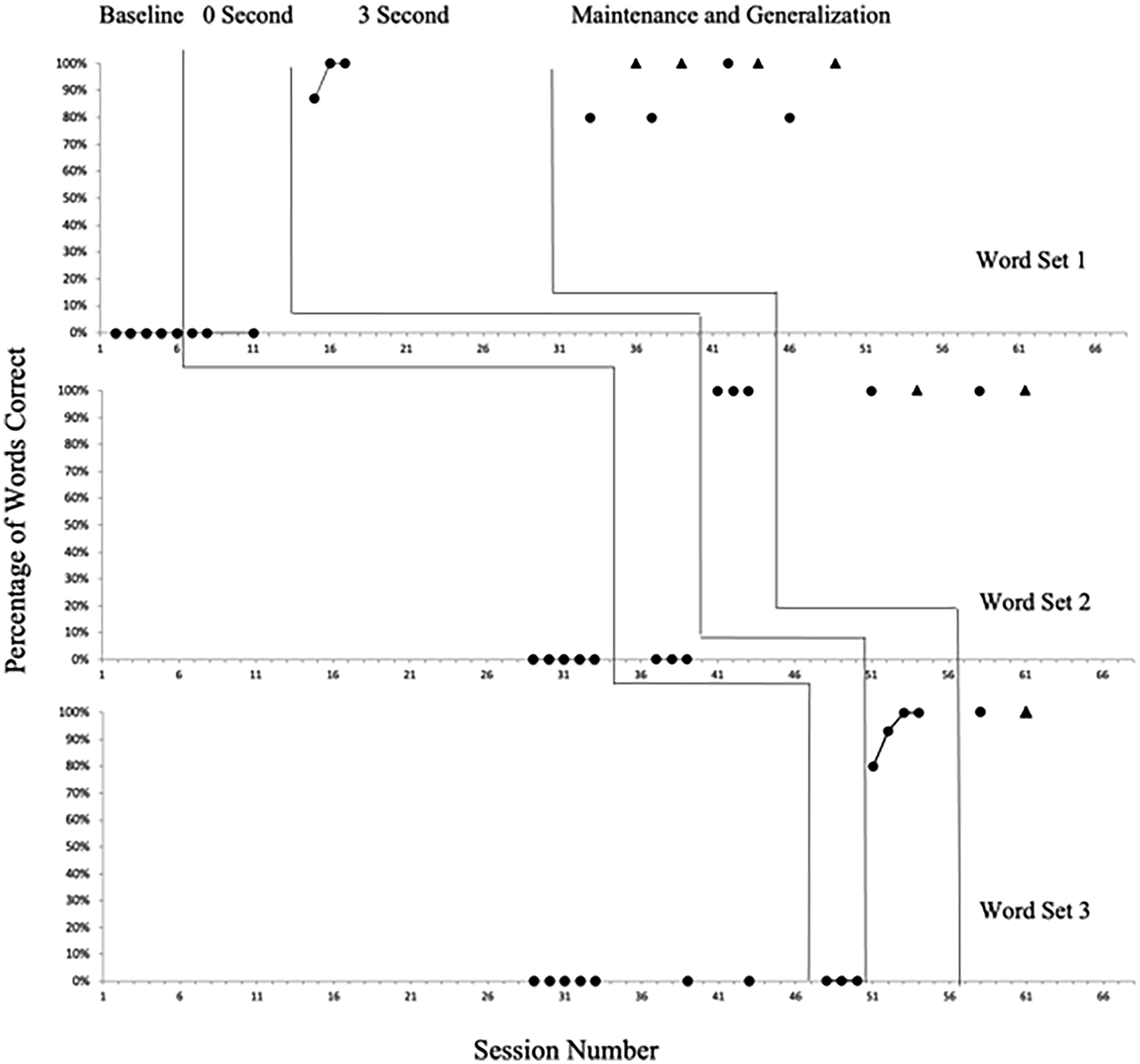
Rob Word Set Data.
Mrs. L. moved into three consecutive sessions of 0s delay with Rob on those five sight words before moving on to 3s delay sessions. Rob met the criteria of at least 13 out of 15 words read correctly after only three sessions (scores 87%, 100%, and 100%).
Upon meeting the criteria of the five second-grade sight words, Rob moved into maintenance and generalization sessions. During the weekly maintenance session, the five words were inserted into the pile to create the 20 original sight words used during baseline. We graphed Word Set 1 words (see Figure 4). Rob scored 80% for the first two maintenance sessions, 100% for the third, and 80% for his fourth.
Like the other students, the classroom teacher created a social story for Rob, including a student named “Rob” who loved magic. “Rob” visited lands to do his magic and had calming strategies when he got frustrated. Word Sets 1, 2, and 3 were built into his social story. When Mrs. L. came to a word from Word Set 1, Rob had 3 s to state the word aloud. Mrs. L. gathered data, and we graphed the data for those specific words. He received a 100% on all four generalization sets.
Word Set 2
Realizing the baseline words used in the original set could not make another group of five, the classroom teacher chose 20 second-grade general education curriculum words, starting baseline over once Word Set 1 met the criteria. We chose five 20 science curriculum words to create Word Set 2. Mrs. L. conducted five baseline sessions before the intervention began on Word Set 2. Rob had three sessions of 0s delay before entering three 3s delay sessions. Rob scored 100% on all three 3s delay sessions, moving him into maintenance and generalization sessions for Word Set 2.
We used the same procedures for maintenance and generalization sessions as previously described. For Word Set 2, Rob had 2 weekly sessions, each for maintenance and generalization, all of which he scored a 100% accuracy rate.
Word Set 3
We chose five from the 15 remaining baseline words to create Word Set 3. The baseline phase included seven total sessions. Once Rob met the criteria for Word Set 2, Word Set 3 moved into intervention. During the 3s delay sessions for these words, Rob scored 80%, 93%, and two 100%s. Mrs. L. moved into the maintenance and generalization phases, resulting in one session of each using the same procedures described previously. The maintenance and generalization session remained 100% for Word Set 3.
Discussion
The training provided by the classroom teacher, in a quick 15-min daily chunk lasting one week, proved effective for both paraprofessionals to implement the intervention with fidelity. We allowed each paraprofessional to record themselves when they worked individually with their student participant. According to federal legislation, a certified educator must supervise paraprofessionals who implement instruction (IDEA, 2004). Therefore, this method allowed the classroom teacher not to monitor paraprofessionals during the actual implementation but to supervise implementation by analyzing the fidelity of treatment video data daily (Lekwa & Reddy, 2021). This method made paraprofessionals more comfortable and less nervous, as indicated by both paraprofessionals in an informal discussion with the researcher at the end of the study.
Our generalization process became a unique way to integrate Word Sets for each student participant. All four students spent most of their day in their self-contained classroom with other students who needed significant behavior and social-emotional support. Often, students within this type of restricted classroom have behavior intervention plans that focus on increasing social skills to build relationships (Gersib & Mason, 2023; Landrum et al., 2003). All four students in our study had behavior intervention plans with this goal. The classroom teacher created individualized social stories, an intervention written within each student’s IEP. The specific social stories used in our study integrated students’ Word Sets written into the story. In order to ensure reliability, the paraprofessionals only read the social stories with the integrated Word Sets once a week. However, students remained excited to help read these stories. Using the social story and having the students read words throughout promoted appropriate social interactions that aligned with their academic instruction (Lekwa & Reddy, 2021). Our two paraprofessionals supported the students’ academic and behavioral needs, and this encouraged a deeper social connection with another essential adult in their classroom.
Limitations
Some limitations occurred throughout the implementation of the CTD intervention. Because this study occurred during the COVID-19 pandemic and spring and holiday breaks, the school experienced higher than-normal absences for paraprofessionals and students, limiting the study’s timeline and resulting in over a week of missed sessions and incomplete phases. Although paraprofessionals implemented this study with high fidelity, the findings of this study should be applied with caution, and we suggest that researchers replicate the study with students in full attendance without a global pandemic.
Timing during the school day was another limitation. Several behaviors affected sessions since this classroom specifically served students with high-intensity behavioral support needs. Specifically, students (participants and non-participants) working to regulate their emotions led to both paraprofessionals assisting with student behavior rather than the planned academics. Ensuring enough time in the school day to implement an intervention without distractions can be difficult for many classrooms, yet it must be prioritized.
Another limitation discussed in the baseline section was creating a new set of words for Josh, Max, and Rob. These students all obtained higher scores than anticipated on the baseline assessment of the Dolch sight words. Therefore, we had to repeat baseline sessions with unfamiliar words—science curriculum words—to continue with the intervention. Repeating baseline procedures for 5 school days resulted in a timing setback for these three students and a break in typical single-subject research. Although we repeated baseline sessions for these three students, all paraprofessionals’ implementation of baseline, intervention, maintenance, and generalization remained high (99.9%).
The procedures for word presentation changed between phases. In baseline, maintenance, and generalization phases, paraprofessionals exposed students to each word once to avoid instructional fatigue. During the intervention phase, students had three opportunities to respond. Therefore, we graphed using percentages to contrast the changes in student response across phases. We suggest a replication of our study with the same number of trials across each phase.
The last limitation was having Word Sets 1, 2, and 3 for each student included in their social story. Since Mrs. C. and Mrs. L. read the story to the students until they met the criteria for each Word Set, students had exposure to learning these words before entering intervention for Word Sets 2 and 3. We mitigated this by gathering baseline data before entering the intervention for all Word Sets and only using the specific social stories that integrated students’ Word Sets once a week. In addition, we had paraprofessionals gather maintenance and generalization data after students met the criteria for Word Set. However, we realize that carryover effects may contribute to the high intervention scores.
Implications for Practice
To effectively implement this intervention in another classroom, we recommend utilizing fidelity checks and subsequent coaching sessions throughout to ensure the effectiveness of the intervention. By law, paraprofessionals need supervision, and this study was an easy and effective way to check the implementation procedures of intervention through video recordings (IDEA, 2004). Teachers can use the fidelity checklist data to determine if additional coaching sessions are needed. Teachers can then provide reassurance and reminders to paraprofessionals and ensure that the intervention continues to be implemented effectively and with high fidelity.
This intervention is simple and quick if the interventionalist correctly follows procedures. Once the classroom teacher adequately trained the paraprofessionals on the procedures of CTD, they easily implemented the intervention independently, effectively, and with high fidelity. Our paraprofessionals knew the student participants, their behavior patterns, engagement strategies, and interests, and they used this information to interact with their students positively. Our student participants were sometimes triggered by being asked to read unknown words or tasks that they perceived as “too hard.” Knowing this information, the paraprofessionals were able to help students feel more comfortable and supported. Although this may have contributed to the success of the results, we recommend that training staff should happen after an established positive relationship exists.
Implications for Future Research
We utilized paper flashcards as a method to teach students the recognition of sight and vocabulary words. However, there are several implications that warrant investigation by future researchers. This includes, but is not limited to, exploring the integration of technology and changes to instructional settings. Given the increasing prevalence of technology in schools, adopting a technology-based approach to present sight or vocabulary words (such as displaying words on an iPad or tablet) could yield benefits. This approach would not only make words readily available to paraprofessionals in various settings but would also allow for application across diverse instructional contexts and grade levels (e.g., virtual learning days, core content, specialized classrooms, and community-based instructional programs).
During the generalization phase, we incorporated sight/vocabulary words into social stories tailored for each student. A possible avenue for future research involves investigating the use of multiple social stories specific to each learner. This could offer a more comprehensive assessment of how well paraprofessional delivery of sight word instruction, utilizing CTD, generalizes across different types of stories or reading materials. In addition, researchers might explore whether students with high-intensity behavioral support needs can generalize sight words in community settings or across other academic subjects during the school day. For instance, this study could be replicated using math facts instead of sight words. Furthermore, future researchers could formulate research questions aimed at identifying the specific impact of this intervention on appropriately engaged behavior in children with behavioral needs as their academic skills improve.
Supplemental Material
sj-docx-1-bhd-10.1177_01987429241231793 – Supplemental material for Paraprofessionals’ Implementation of Constant Time Delay Procedures With Elementary Students With High-Intensity Behavioral Support Needs
Supplemental material, sj-docx-1-bhd-10.1177_01987429241231793 for Paraprofessionals’ Implementation of Constant Time Delay Procedures With Elementary Students With High-Intensity Behavioral Support Needs by Allison M. Kroesch, Sarah Southall, Nancy Welsh-Young and Katherine N. Peeples in Behavioral Disorders
Footnotes
Declaration of Conflicting Interests
The author(s) declared no potential conflicts of interest with respect to the research, authorship, and/or publication of this article.
Funding
The author(s) received no financial support for the research, authorship, and/or publication of this article.

References
Supplementary Material
Please find the following supplemental material available below.
For Open Access articles published under a Creative Commons License, all supplemental material carries the same license as the article it is associated with.
For non-Open Access articles published, all supplemental material carries a non-exclusive license, and permission requests for re-use of supplemental material or any part of supplemental material shall be sent directly to the copyright owner as specified in the copyright notice associated with the article.
