




Abstract
Due to ongoing and severe teacher shortages, preparing and sustaining a skilled special education teacher (SET) workforce is a top policy priority. Understanding predictors of SETs’ intent to leave is crucial for policy makers and school leaders alike, as they seek to develop interventions to support retention efforts. In this study, we examined attrition intentions among SETs serving students with emotional and behavioral disorders (EBDs), using longitudinal survey data from a U.S. nationally representative sample of teachers in the 2019–2020 school year (fall-winter-spring). We measured teachers’ self-efficacy and burnout in fall, winter, and spring as well as teachers’ intent to leave in spring. We found all three dimensions of fall burnout (emotional exhaustion, depersonalization, and reduced personal accomplishment) had an indirect effect on spring intent to leave. All three dimensions of burnout in the spring predicted intent to leave, as did winter scores on depersonalization. Cross-time relationships between of dimensions of self-efficacy and burnout were revealed; however, at no timepoint was self-efficacy a significant predictor of intent to leave in spring, whether directly or indirectly. We discuss implications for both practitioners and researchers.
Keywords
Students with emotional and behavioral disorders (EBD) urgently need highly qualified teachers (Mitchell et al., 2019), as they achieve academically at levels below their peers (Gilmour et al., 2019; Wanzek et al., 2014), and a disproportionate proportion of students with EBD drop out before graduation (Wagner, 2014). Experienced, skilled teachers are essential for preventing and improving these outcomes (Feng & Sass, 2013; Lloyd et al., 2019). Yet, students with EBD who qualify for special education under the category of emotional disturbance are less likely to be taught by an experienced special education teacher (SET) than other students with disabilities (Billingsley et al., 2006) due to the combination of a pervasive national shortage of SETs (Bettini et al., 2023) and especially high turnover among SETs who work with students identified under this category (Gilmour & Wehby, 2020). For example, Gilmour and Wehby (2020) found the proportion of students with emotional disturbance on an SET’s caseload significantly predicted attrition, regardless of the teachers’ certifications; this was the only disability category for which this was the case. Because teacher attrition is developmentally costly to students (Billingsley et al., 2020; Ronfeldt et al., 2013) and financially costly to districts (Sutcher et al., 2019; Watlington et al., 2010), policy makers and school leaders urgently need information regarding factors that shape teachers’ decisions to remain in their positions or leave.
Extant research indicates two key factors contributing to teachers’ end of year intentions: burnout and self-efficacy (Billingsley & Bettini, 2019). However, just as most teachers do not begin the school year with an intention to leave, teachers’ levels of burnout and self-efficacy likely shift throughout the year. Thus, it is crucial for school leaders not only to understand how these psychological experiences may relate to teachers’ end of year intentions but also how they interact and change over the course of the year. In this article, we measure teachers’ burnout and self-efficacy at fall, winter, and spring and explore how these constructs change and interact throughout the year, as well as the extent to which they may predict spring intent to leave. We begin with an overview of existing research on the relations among burnout, self-efficacy, and attrition, and the theoretical framework guiding our analyses.
Burnout as a Risk Factor for Attrition Among Teachers of Students With EBD
Burnout is a negative psychological experience associated with work, which occurs when chronic stress exceeds one’s resources for coping (Maslach & Leiter, 2017). Burnout is marked by three co-occurring characteristics: exhaustion, cynicism (depersonalization), and a reduced sense of personal accomplishment (Maslach & Leiter, 2017). Given the steep emotional demands of frequent interpersonal interaction in professional settings, burnout is most prominent in organizational settings in which interpersonal interactions are at the core of employees’ work (Schaufeli et al., 2009), such as teaching. Because SETs’ work is highly collaborative (Friend, 2021) and often includes interpersonal responsibilities for students who struggle with emotional regulation (Kerr & Brown, 2016; Mackenzie, 2012; Stark & Koslouski, 2021), burnout has been a particular concern in special education, and it is not surprising many SETs report high levels of burnout (Brunsting et al., 2014; Park & Shin, 2020).
Given the complex and interwoven academic and emotional needs of students with EBD (Garwood et al., 2017), their teachers’ jobs involve intensive interpersonal collaboration among adults (Bettini et al., 2022) and relationship-building with students (Mihalas et al., 2009). Furthermore, students with EBD often struggle with regulating their own emotions and behaviors (Cumming et al., 2019), requiring their teachers to engage in the substantial emotional labor of responding calmly to a wide range of student emotions and behaviors (Stark et al., 2023; Stark & Koslouski, 2021). These demanding aspects of the job often provoke experiences of burnout among teachers of students with EBD (Brunsting et al., 2022). In a longitudinal study, Brunsting et al. (2022) found SETs serving students with EBD experienced greater emotional exhaustion compared with the nationally normed sample of teachers, though they also experienced a greater sense of personal accomplishment, and less depersonalization, that is, “the negative, callous, or excessively detached response to other people and other aspects of the job” (Maslach, 2003, p. 190).
Burnout among teachers of students with EBD likely has key implications for these SETs’ retention, as research consistently indicates a strong association between teachers’ burnout and their intent to leave their positions (e.g., Billingsley & Bettini, 2019; Madigan & Kim, 2021), which mediates relations with attrition (Nguyen et al., 2022). In a recent meta-analysis, Madigan and Kim (2021) found burnout is an important predictor of intent to leave among teachers in general, and other research confirms SETs who experience more emotional exhaustion are more likely to plan to leave (e.g., Bettini, Cumming, et al., 2020; Bettini, Jones, et al., 2017). Although some teachers who report an intention to leave wind up staying, their reported intent is strongly predictive of actual attrition, including both transferring to another school and leaving teaching altogether. Nguyen et al. (2022) found teachers who indicated they intended to leave were 400% more likely to actually leave the following year, compared with those who indicated they intended to stay, while Gersten et al. (2001) found 69% of SETs who indicated they intended to leave did indeed leave within the following 15 months. Furthermore, intent to leave mediates relations between school-based conditions (e.g., insufficient resources) and actual attrition (Nguyen et al., 2022). Thus, intent to leave is an important signal of the extent to which school-based conditions may be leading teachers to seek other positions in education or in other professions.
Although the association between burnout and intent to leave is well-established, Madigan and Kim (2021) found no longitudinal studies examining this relation, a major limitation to verifying the directionality of the relation. Furthermore, previous research regarding the relation between burnout and intent to leave among teachers of students with EBD is limited. A few cross-sectional studies have examined the relation between emotional exhaustion and intent among these teachers (e.g., Bettini, Cumming, et al., 2020), but no previous studies of SETs teaching students with EBD have examined longitudinal relations among all three dimensions of burnout and intent to leave (Brunsting et al., 2014). Understanding the unique relation of each dimension of burnout with intent to leave is important to help policy makers and school leaders focus on the aspects of burnout most likely to result in changes in teachers’ decisions to remain in their schools. Furthermore, longitudinal research is important to verify the presumed directionality of this relation (Billingsley & Bettini, 2019).
Self-Efficacy as a Protective Factor Against Attrition
Whereas burnout may be a risk factor for intent to leave, self-efficacy may act as a protective factor (Pajares, 1992). A teachers’ self-efficacy has been conceptualized as “judgment of his or her capabilities to bring about desired outcomes of student engagement and learning, even among those students who may be difficult or unmotivated” (Tschannen-Moran & Hoy, 2001, p. 783). Teacher self-efficacy is often conceptualized as having three dimensions, pertaining to different aspects of the role: efficacy for instruction, efficacy for behavior, and efficacy for engagement (Tschannen-Moran & Hoy, 2001).
Older research examining relations between self-efficacy and intent to leave or attrition is mixed. Morvant & Gersten (1995) found self-efficacy was significantly higher among SETs who stayed in teaching compared with those who left the profession, whereas analyzing a large, nationally representative sample, Miller et al. (1999) found no association between self-efficacy and SETs’ subsequent attrition. More recent scholarship has not examined the relation between self-efficacy and intent to leave; in their systematic review of research on SET intent to leave and attrition from 2004 to 2017, Billingsley and Bettini (2019) found no studies examining how self-efficacy related to intent to leave or attrition. However, recent scholarship does indicate self-efficacy is related to important outcomes, such as SETs’ self-reported use of effective instructional practices (Cumming et al., 2021). Furthermore, ample research indicates lower self-efficacy is associated with increased burnout among SETs (e.g., Boujut et al., 2017; Fu et al., 2021; Sariçam & Sakiz, 2014). For example, Cumming et al. (2021) found SETs serving students with EBD who reported weaker self-efficacy were significantly more likely to score highly on the emotional exhaustion component of burnout.
Theoretical Framework: Jobs-Demands Resources Model
In this study, we draw on the literature cited earlier and the theory of jobs-demands resources (Demerouti et al., 2001) to explore how teachers’ experiences of burnout and self-efficacy change over time and how they relate to teachers’ intentions to leave their positions. The jobs demands-resources framework suggests burnout is a product of an imbalance between the demands of the job and the resources available to meet those demands (Demerouti et al., 2001). Teachers experience burnout when they do not have the resources they need (e.g., sufficient planning time, social support from administrators, appropriate professional learning opportunities) to meet the demands of their work (e.g., preparing lessons, managing a caseload, communicating effectively with families).
Yet, the extent to which SETs perceive an imbalance between resources and demands may be associated both with the conditions of their work (e.g., the intensity of their students’ instructional needs) and their own self-efficacy within those conditions (e.g., their confidence in responding effectively to those specific needs). For example, whereas one teacher may feel confident they can meet students’ behavioral needs with their current skill set, another teacher with lower self-efficacy may feel they need more training (e.g., informational resources) to meet the same behavioral needs of students. Thus, SETs teaching students with EBD may experience burnout due to the demands of providing support to students with intensive behavioral needs (Garwood et al., 2018; Skaalvik & Skaalvik, 2017), inadequate school-based resources to effectively serve these students (Bettini, Cumming, et al., 2020), low self-efficacy to address these needs (Cumming et al., 2021), or a combination thereof (Bettini, Cumming, et al., 2017).
Theoretically, relations between self-efficacy and burnout are likely reciprocal, such that teachers experiencing higher self-efficacy may be less likely to experience burnout, whereas those experiencing burnout may be more likely to experience reduced self-efficacy. For example, a stronger sense of one’s competence may lead more efficacious teachers to adopt more effective coping strategies in response to stressful student interactions, resulting in reduced burnout overall. Similarly, self-efficacious teachers may be more likely to attribute students’ successes to their own efforts, resulting in a stronger sense of personal accomplishment. Teachers who are less emotionally exhausted may be better able to notice their own strengths and thus feel more efficacious about their work. However, to our knowledge, no prior research has explored the longitudinal relation among the three dimensions of self-efficacy and three dimensions of burnout over time.
Purpose and Research Questions
In this study, we build on a prior study, using the same data set. Brunsting et al. (2022) examined interrelations of burnout over time as well as mean differences on burnout between SETs serving PK–12 students with EBD and a national sample of U.S. educators. They found higher emotional exhaustion in fall predicted higher depersonalization in winter, and higher personal accomplishment in winter was linked with lower depersonalization in the spring. Furthermore, SETs serving students with EBD had significantly higher emotional exhaustion, but significantly lower depersonalization and significantly higher personal accomplishment than a national sample of K–12 educators. We extended this inquiry by examining interrelations among self-efficacy and burnout over time as well as the relative contribution of each to SETs’ intent to leave their position.
As shown in Figure 1, we explored how the three dimensions of self-efficacy and burnout are related across fall, winter, and spring, and whether levels of self-efficacy and burnout predict spring intention to leave. We expected dimensions of fall levels of self-efficacy and burnout would directly impact winter levels of their respective dimension; we anticipated the same relationships for variables across winter and spring. Although we did not hypothesize which specific dimensions would influence each other, we suspected there may also be some cross-construct effects (e.g., fall self-efficacy in one dimension may impact one of the winter dimensions of burnout). Thus, we considered the model and the analysis to be exploratory.
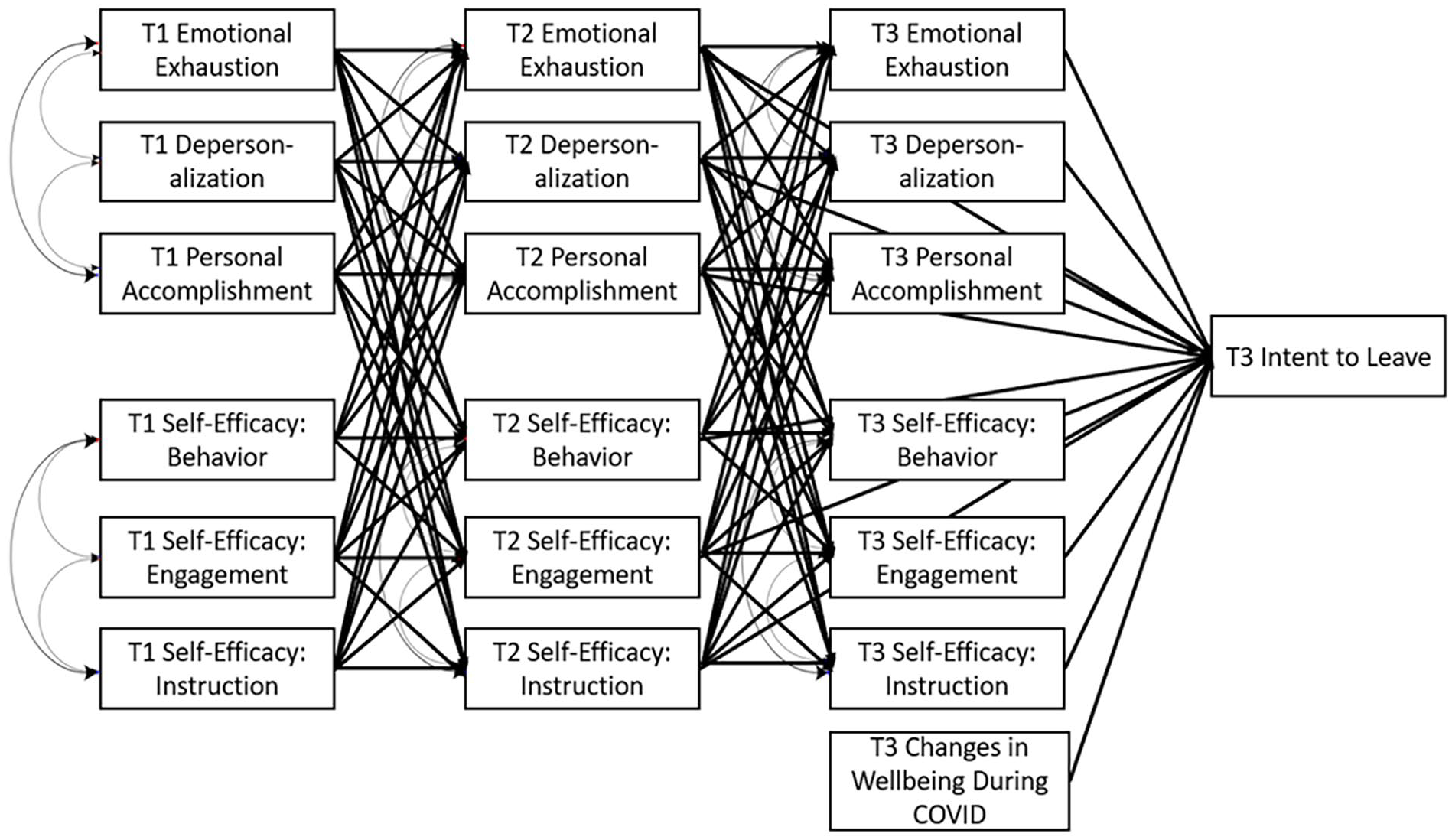
Initial Exploratory Model for Interrelations of Burnout, Teaching Self-Efficacy, and Intent to Leave Over Time.
Extant research indicates burnout may serve as a risk factor for intent to leave (Bettini, Cumming, et al., 2020) and self-efficacy may serve as a protective factor (Pajares, 1992), yet prior research has not examined complex interactions among self-efficacy and burnout. Furthermore, prior research is predominantly cross-sectional (e.g., Billingsley & Bettini, 2019; Brunsting et al., 2014), such that it does not examine how self-efficacy and burnout reciprocally contribute to one another over time. Therefore, we used structural equation modeling to explore the following research questions:
Answering these questions will provide key insights into how burnout and self-efficacy relate to one another, as well as how their development over time may contribute to SETs’ intent to continue teaching students with EBD. Given the current national shortage (Mason-Williams et al., 2020), high attrition among SETs serving students with EBD (Gilmour & Wehby, 2020), and the importance of highly effective teachers for students with EBD (Mitchell et al., 2019), understanding factors related to intent to leave is crucial for improving the likelihood students with EBD will be served by experienced teachers.
Method
Participants
Our analytic sample totaled 230 SETs serving students with EBD. Approximately 10% of the participants reported supporting only one student with EBD; the mean number of students with EBD on a participant’s caseload was 7.58 students. The demographics of participating teachers, reported in Table 1, aligned with those of another recent national sample of SETs serving students with EBD in self-contained settings (O’Brien et al., 2019).
Demographic Information for Teacher Participants.
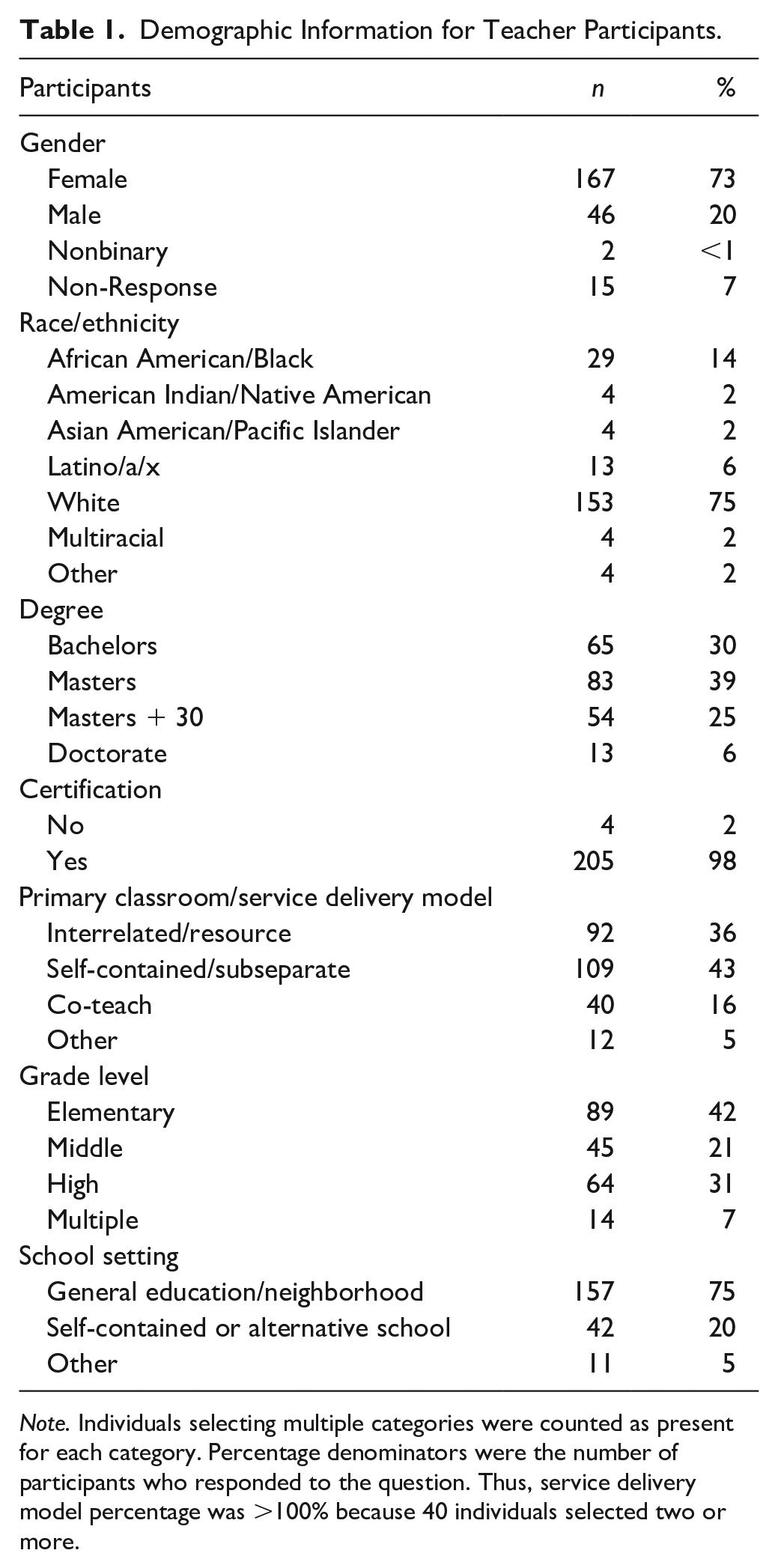
Note. Individuals selecting multiple categories were counted as present for each category. Percentage denominators were the number of participants who responded to the question. Thus, service delivery model percentage was >100% because 40 individuals selected two or more.
Sampling and Recruitment
Before initiating our study, we obtained institutional review board approval and subsequent inter-agency agreements and approvals. Seeking to obtain a nationally representative sample at the district level, we generated a sampling frame of public school district characteristics from the Common Core Dataset (Cross, 2017). We stratified districts based on both size and region of the country, then randomly selected districts for recruitment. We used phone and email contacts to inform district-level administrators about the study and ask for permission to contact all SETs serving at least one student with EBD within their district. Of the randomly selected districts in which we contacted administrators, approximately 13% of districts agreed to participate, a rate similar to previous survey research regarding SETs serving students with EBD (e.g., O’Brien et al., 2019). To examine whether districts who agreed to participate were significantly different from those who declined, we used Welch’s t-tests to examine differences in the demographics of their student populations, as well as their geographical locations. Although differences were not statistically significant, we note participating districts were more racially diverse than those who declined participation (e.g., 15% Black vs. 11%; 28% Latinx vs. 18%). Within participating districts, students’ race or ethnicity averaged 15% Black, <1% American Indian, 6% Asian American, 28% Latinx, 48% White, and 2% two or more races. Free- and reduced-price lunch rates averaged 35% across districts, English language learners 11%, and 13% of students received special education services. Participating districts spanned the four census regions of the United States: 13% Midwest, 13% Northeast, 40% South, and 33% West, which aligns with national allocations of school districts, roughly 20%, 20%, 40%, and 20%, respectively (National Center for Education Statistics [NCES], 2016). Additional details regarding our sampling procedures are available in Brunsting et al. (2022).
In total, we received research approval from 15 public school districts located within 11 states spanning all four census regions of the United States. Administrators within each participating district sent an introductory email to all SETs on their district list stating the study’s purpose and sharing district support. Administrators also provided the research team with a list of district email addresses and names of schools of all potential participants; these lists ranged from 1 to 190 potential participants across districts. Using these lists, we sent an email via Qualtrics to 516 potential participants with study information, a link to the consent letter, and the first survey. Incentives for participation included invitations to webinars on study results and a US$10 gift card for completing the surveys. At the beginning of the survey, potential participants were asked if they (a) were an SET teaching at least one student with EBD and (b) consented to participate. Those responding no to either question were thanked for their time and exited from the survey. We sent a second email to nonresponders a week after the initial email. In addition, we mailed a consent letter, survey, self-addressed stamped envelope, and a US$2 bill to nonresponders of both emails to incentivize completion and return of consent letter and survey.
The study was designed as a cohort-sequential longitudinal study; we only analyzed data from the first 2019–2020 cohort, as the challenges of COVID-19 in the 2020–2021 academic year had a detrimental impact on district and teacher participation in the second cohort. In all, 230 teachers serving students with EBD completed the fall (T1) survey in October 2019. The teacher response rate for the T1 survey was 55% (282/516), and the consent rate was 45% (230/516). In January 2020 (T2), we contacted these same 230 teachers to administer a second survey. For our second survey, the response rate was 67% (154/230). We planned to administer a third survey in April 2020 (T3) to all participants, but due to COVID-19, research moratoriums in two districts precluded us from administering the survey to 28 participants. Upon administering the survey to the remaining participants, our final T3 response rate was 55% (127/230).
Instrumentation
The surveys administered in October 2019 (T1), January 2020 (T2), and April 2020 (T3) included the same set of items assessing teachers’ self-efficacy and burnout, described in the sections below. In addition to these items, the first survey (T1) also included items regarding teachers’ demographic information, including race and ethnicity, gender, highest degree earned, and level of school taught (e.g., middle). Gender response options included female, male, nonbinary, genderqueer, and the option to self-identify. The final survey (T3) included questions regarding participants’ intent to stay or leave their jobs, as well as items capturing teachers’ perceived changes in well-being during COVID-19 (Skinner & Lansford, 2020).
Teaching Self-Efficacy
We examined teachers’ self-efficacy at each of the three timepoints with the 12-item Ohio State Teacher Efficacy Scale (OSTES; Tschannen-Moran & Hoy, 2001). This scale includes three subscales with four items each to capture three dimensions of teacher self-efficacy: efficacy for instructional strategies, efficacy for classroom management, and efficacy for student engagement. An example classroom management item is, “How much can you do to control disruptive behavior in the classroom?” Item response options range from 0 = Nothing—Not at all to 5 = A great deal. Items within the three subscales demonstrated high interrelatedness based on alphas calculated at all three timepoints (instructional: 0.81; 0.79; 0.74; classroom management: 0.89; 0.87; 0.86; engagement: 0.89; 0.86; 0.88, for T1, T2, and T3, respectively).
Teacher Burnout
We assessed burnout at all three timepoints with the 22-item Maslach Burnout Inventory—Educator Scale (Maslach et al., 1996), which contains three subscales: emotional exhaustion (nine items), depersonalization (five items), and personal accomplishment (eight items). For example, “I feel emotionally drained from work” is in the emotional exhaustion subscale. Participants indicate frequency of items on a 7-point Likert-type scale, ranging from 0 = Never to 6 = Everyday. The items within subscales for emotional exhaustion and personal accomplishment, respectively, demonstrated high interrelatedness based on alphas (α) at all three timepoints: emotional exhaustion (.91, .93, .95) and personal accomplishment (.76, .77, .77). Depersonalization was lower (.65, .62, .66), but we retained it as the Maslach Burnout Inventory–Educator Scale is a well-validated measure, and consistency of the depersonalization subscale is often between .60 and .70 in prior research (Maslach et al., 1996), indicating the measure was working with similar consistency with our sample as in prior research.
Changes in Well-Being During COVID-19
We included at the third timepoint three items from the changes in well-being during COVID-19 subscale of the full 22-item Experiences Related to COVID-19 measure (Skinner & Lansford, 2020). An example item: “I get in more arguments now than I did before the outbreak” (reverse coded). Items response options ranged on a 4-point Likert-type scale from 1 = Strongly disagree to 4 = strongly agree. Higher scores relate to higher well-being during COVID-19. The three item-subscale demonstrated high reliability (α = .74) with the current sample in a previous study (Brunsting et al., 2022).
Intent to Leave
Finally, we assessed SETs’ intent to leave on the final survey (T3) with three items: “If I were offered another job outside of education, I would leave teaching”; “I think about transferring to another school”; and “I think about transferring to work with students who do not have EBD.” Response options ranged from 1 = Strongly disagree to 5 = Strongly agree; we aggregated responses to all three items to create one continuous scale, with an alpha of 0.68. These items capture the multidimensionality of intent to leave (i.e., intent with regard to the profession, school, and student population), of which all three have concerning implications for students. For example, SETs who stay in the profession but leave their school tend to move to schools more affluent and White (Boyd et al., 2008), thus exacerbating inequities in access to experienced teachers (e.g., Goldhaber et al., 2018). These items are consistent with those used in prior studies (e.g., Bettini, Cumming, et al., 2020) and their wording aligns with Nguyen et al.’s (2022) recommendation to focus on intent to leave, as its association with actual attrition is much stronger than the association between intent to stay and retention.
Data Analysis
Once data collection was complete, we tested a series of structural models to examine whether teachers’ self-efficacy and burnout in the fall, winter, and spring predicted intent to leave in spring. We report descriptive statistics for each variable in Table 2 from the initial structural model. Prior to beginning data analysis with the full data set, we registered the longitudinal study method at Open Science Framework; however, we adapted analysis slightly based on reviewer recommendations.
Descriptive Statistics From Initial Structural Model.
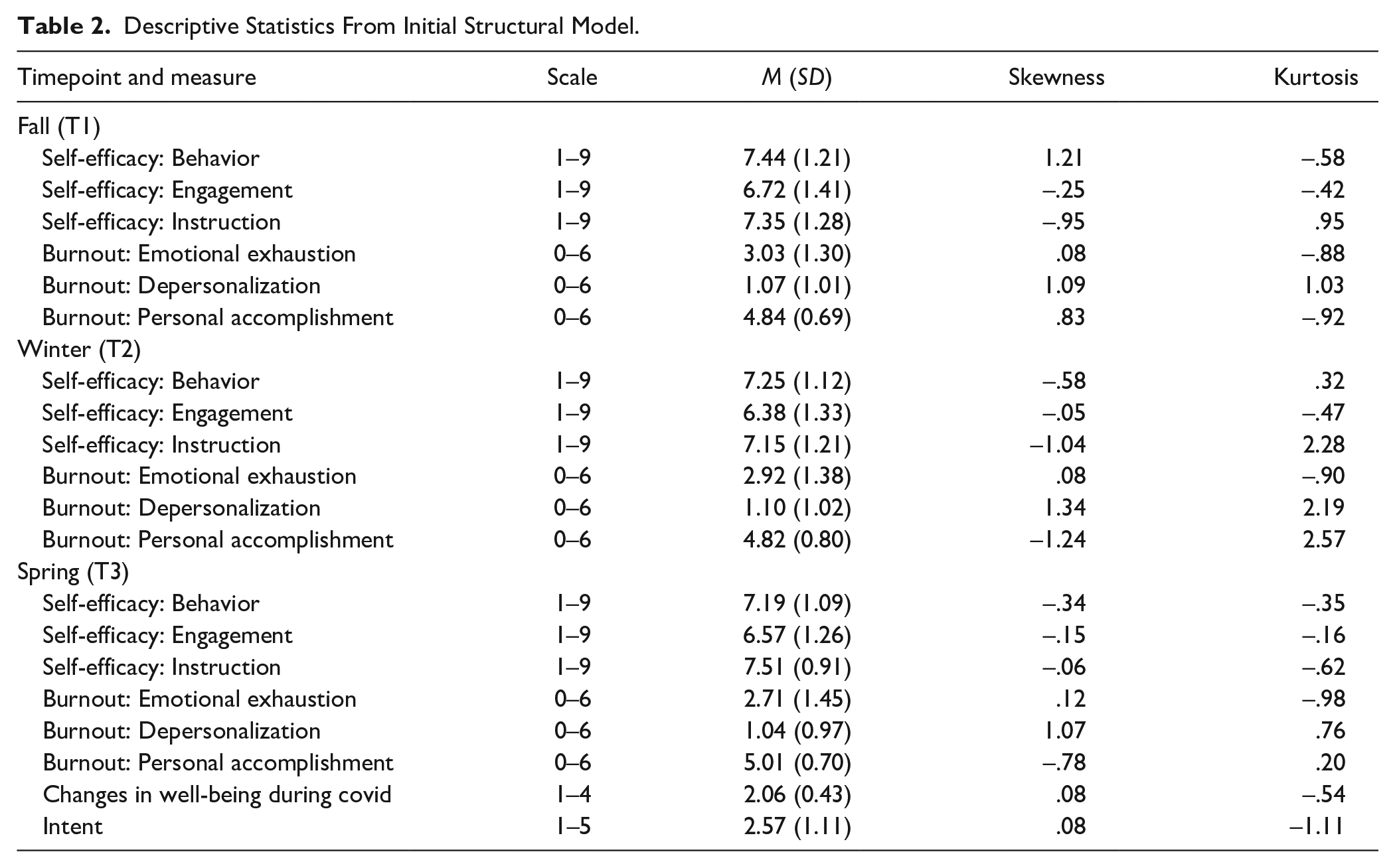
To ensure the data met assumptions for analysis, we examined outliers and missing data patterns. We identified no univariate or multivariate outliers. Structural modeling allowed for structural missing data to be estimated. Item level missing data ranged from 0% to 7%. All covariance coverage values exceeded the .10 default minimum threshold (Muthén & Muthén, 2020); thus, we elected to estimate missing data using the full information maximum likelihood estimator—robust (MLR), following Little (2013) to reduce the chance of generalization errors. We initially attempted to cluster data at the district-level to account for nested data using the CLUSTER function in Mplus; however, this analysis was not feasible as some of the smaller districts had fewer than five participants. We created composite scores for all variables by averaging scores of items for each construct to increase case-to-parameter ratio. We generated a null model with no relations between constructs specified.
We then created an initial structural model to test the relation between each dimension of burnout, each dimension of self-efficacy, and teachers’ intent to leave, as shown in Figure 1, to examine cross-lagged paths between self-efficacy and burnout as well as relations with intent to leave. As expected, the ΔCFI (i.e., change in Comparative Fit Index [CFI]) between the null model and the initial structural model was positive, indicating the initial structural model fit better (see Table 3 for model fit progression). We then removed nonsignificant paths one-by-one from the initial structural model while examining model fit, following Little (2013), until we arrived at the final model with best fit based on Hu and Bentler’s (1999) recommendation: root mean square error of approximation (RMSEA) < .06, CFI and Tucker–Lewis Index (TLI) > .95, Standardized Root Mean Square Residual (SRMR) < .08. Our final model is presented in Figure 2. In addition, we report model fit progression in Table 3, and initial structural model parameters in Table 4.
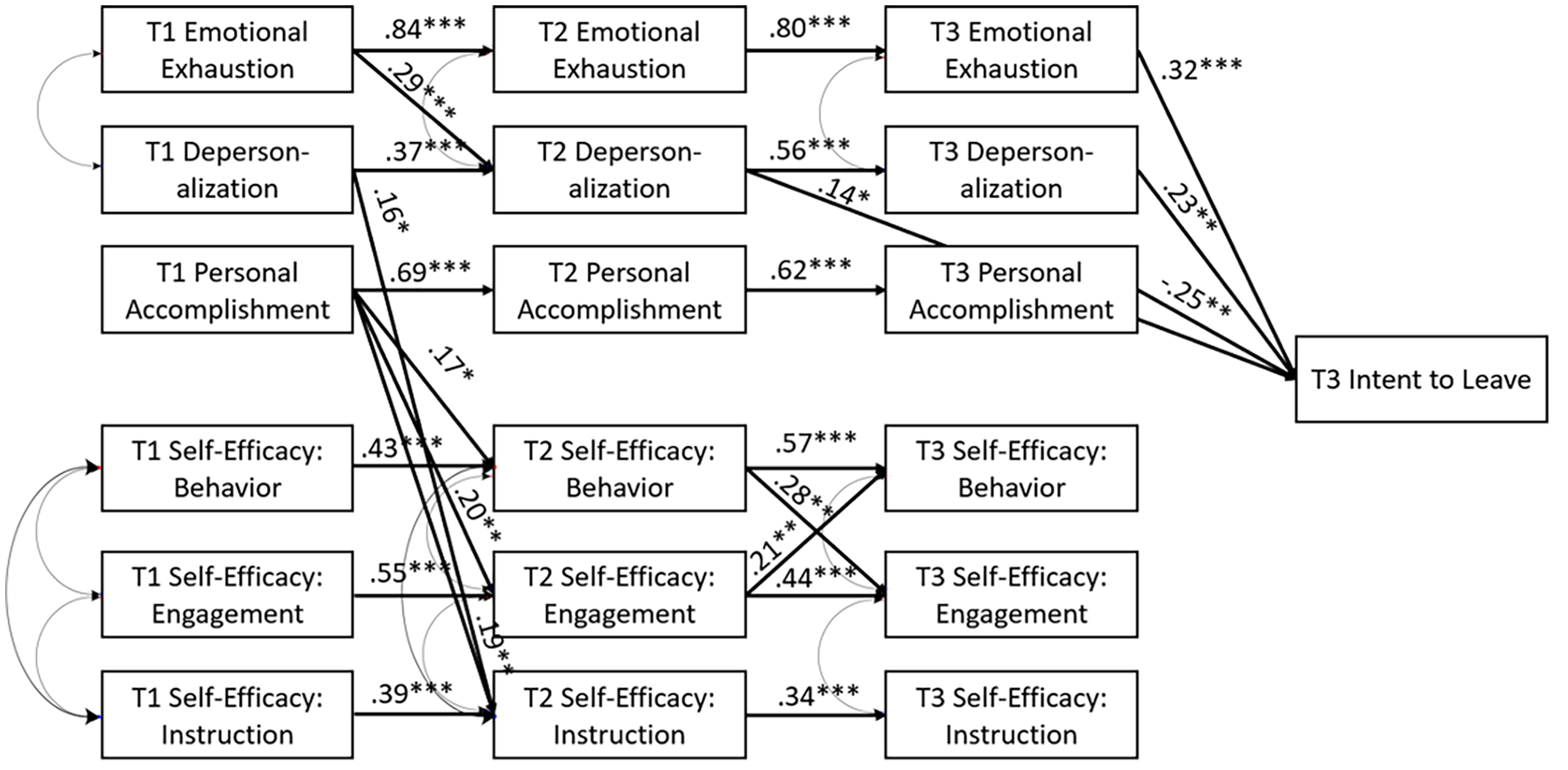
Final Structural Model for Interrelations of Burnout, Teaching Self-Efficacy, and Intent to Leave Over Time.
Model Fit Progression Examining Burnout and Self-Efficacy on Intent.

Note. CFI = Comparative Fit Index, CI = confidence interval, RMSEA = root mean square error of approximation.
Initial Structural Model (Standardized).
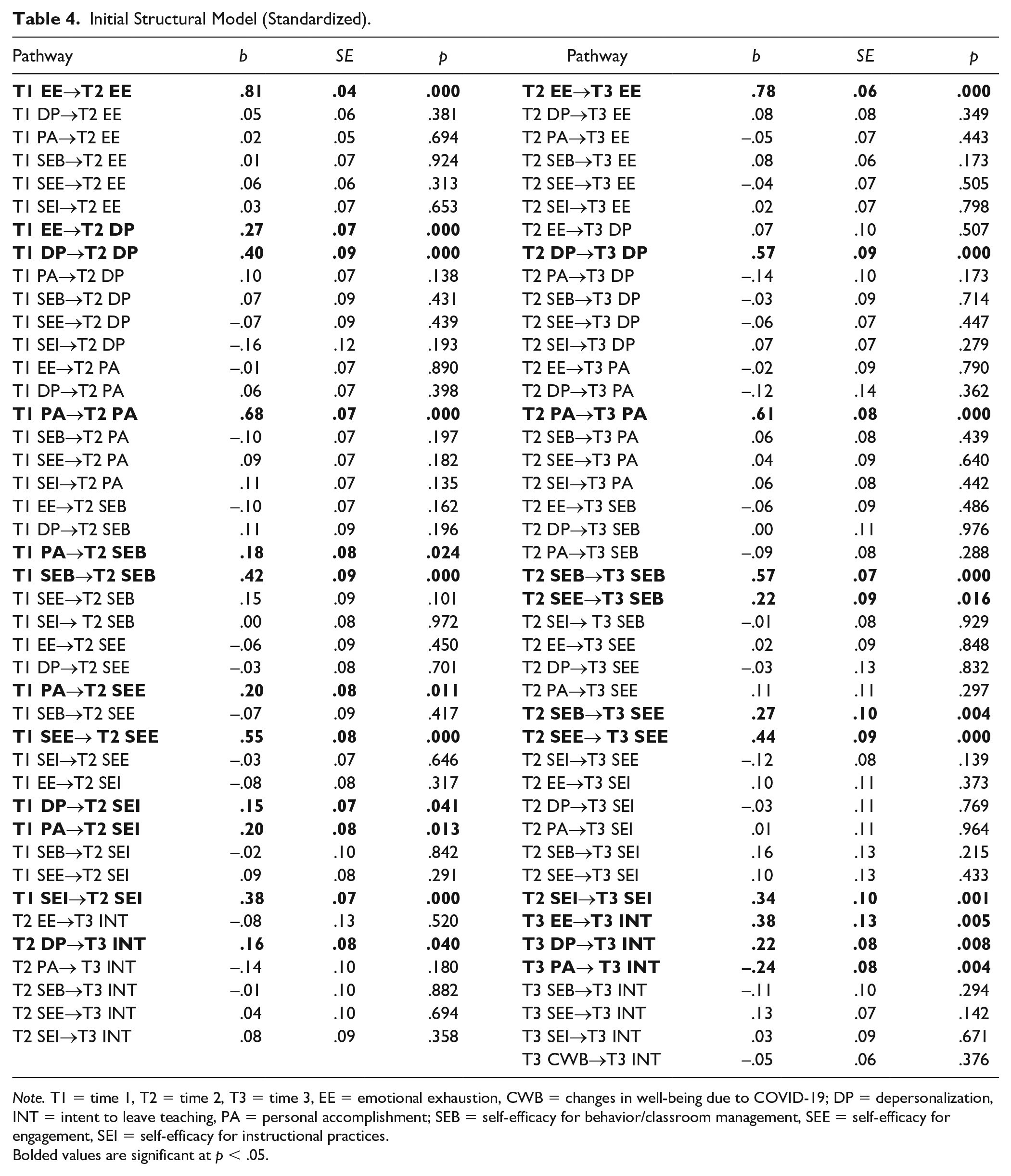
Note. T1 = time 1, T2 = time 2, T3 = time 3, EE = emotional exhaustion, CWB = changes in well-being due to COVID-19; DP = depersonalization, INT = intent to leave teaching, PA = personal accomplishment; SEB = self-efficacy for behavior/classroom management, SEE = self-efficacy for engagement, SEI = self-efficacy for instructional practices.
Bolded values are significant at p < .05.
Results
We tested a series of cross-lagged structural models to examine whether teachers’ self-efficacy and burnout in the fall and winter longitudinally predicted their intent to leave in spring. As shown in Figure 1, in our initial model, we tested relations among all three dimensions of burnout and all three dimensions of self-efficacy from T1 (Fall), T2 (Winter), and T3 (Spring). In addition, we explored relations between all three dimensions of burnout and self-efficacy at T2 and T3 with intent to leave at T3. After iteratively removing nonsignificant paths until best model fit was attained, we specified a final structural model with acceptable model fit: χ2(90) = 133.63; p = .002, RMSEA = .046 (90% confidence interval: .028, .062); CFI = .958; TLI = .927, SRMR = .056. With respect to model fits, the model met RMSEA, CFI, and SRMR recommendations; the model did not yield a nonsignificant chi-square, and was slightly under the recommendation for TLI. As shown in Figure 2, our final model included 23 significant direct effects and six significant indirect effects (see Table 5 for full final model direct and indirect effects).
Final Structural Model (Standardized).
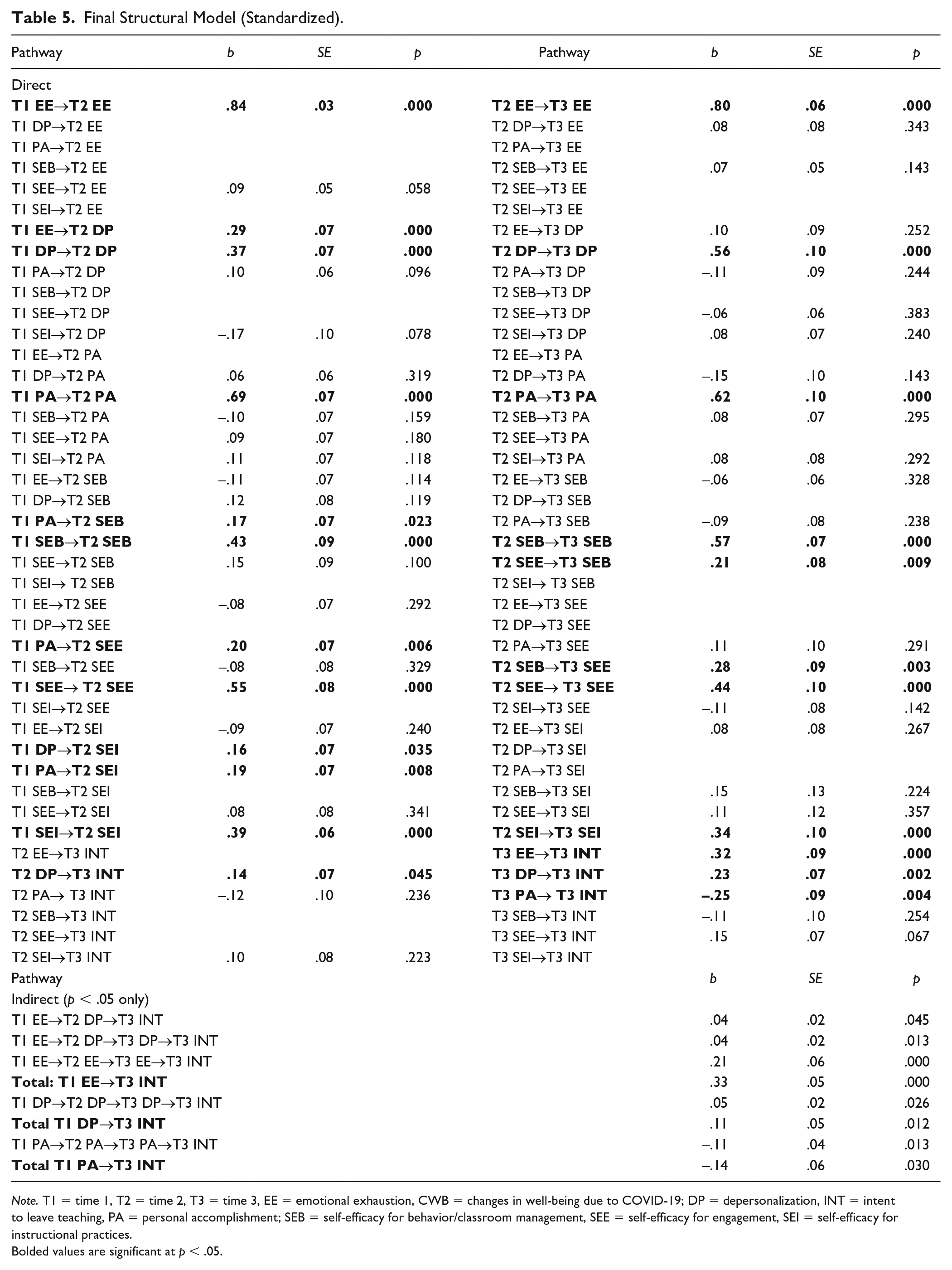
Note. T1 = time 1, T2 = time 2, T3 = time 3, EE = emotional exhaustion, CWB = changes in well-being due to COVID-19; DP = depersonalization, INT = intent to leave teaching, PA = personal accomplishment; SEB = self-efficacy for behavior/classroom management, SEE = self-efficacy for engagement, SEI = self-efficacy for instructional practices.
Bolded values are significant at p < .05.
The first research question examined longitudinal relations among teachers’ burnout and self-efficacy. We found all three dimensions of burnout at T1 had positive direct effects for their respective dimensions of T2 burnout: emotional exhaustion (b = .84, p < .001), depersonalization (b = .37, p < .001), and personal accomplishment (b = .69, p < .001). In addition, T1 emotional exhaustion had a direct effect on T2 depersonalization (b = 0.29, p < .001). Similarly, after accounting for T1 burnout, T2 burnout constructs shared direct significant relationships with their respective T3 dimensions: (b = .80, p < .001), depersonalization (b = .56, p < .001), and personal accomplishment (b = .62, p < .001). With respect to self-efficacy, we found all three dimensions of self-efficacy at T1 had a positive direct effect on their respective dimensions of self-efficacy at T2: behavior management (b = .43, p < .001), engagement (b = .55, p < .001), and instructional practices (b = .39, p < .001). Similarly, after accounting for T1 self-efficacy, all three dimensions of self-efficacy at T2 had a positive direct effect on their respective dimensions at T3. In addition, self-efficacy for engagement at T2 predicted higher self-efficacy for behavior management at T3 (b = .21, p = .009); the converse was also significant, with T2 self-efficacy for behavior management predicting higher T3 self-efficacy for engagement (b = .28, p = .003).
In regard to longitudinal relations between burnout and self-efficacy, the significant relationships were unidirectional: dimensions of burnout at earlier timepoints predicted dimensions of self-efficacy at the subsequent timepoint 4 times, while self-efficacy did not predict burnout at any later timepoints. Personal accomplishment at T1 predicted higher self-efficacy for all three dimensions at T2: behavior management (b = .17, p = .023), engagement (b = .20, p = .006), and instructional practices (b = .19, p = .008). Interestingly, T1 depersonalization predicted higher T2 self-efficacy for instructional practices (b = .16, p < .035).
Our second research question addressed whether specific dimensions of burnout and self-efficacy predicted teachers’ intent to leave in the spring. As shown in Figure 2, we found significant direct effects between teachers’ burnout in spring (T3) and teachers’ intent to leave in spring (T3) for all dimensions of burnout: emotional exhaustion (b = .32, p < .001), depersonalization (b = 0.23, p = .002), and personal accomplishment (b = −0.25, p = .004). Teachers’ depersonalization at T2 had a significant direct effect on T3 intent to leave (b = .14, p = .045), even accounting for T3 depersonalization. In addition, we found teachers’ burnout in fall (T1), across all three dimensions of burnout, also had a significant indirect effects on intent to leave in spring (T3). The relations were all in the expected directions: higher emotional exhaustion and depersonalization were associated with higher intent to leave; higher personal accomplishment was associated with lower intent to leave. With respect to self-efficacy, none of the three dimensions had significant direct or indirect associations with T3 intent to leave.
Discussion
Although previous research demonstrated relations between burnout and intention to leave among SETs generally, this is the first study to specifically model these relations for teachers serving students with EBD longitudinally. In addition, most previous studies examining the relation between burnout and intent to leave have investigated the role of emotional exhaustion (e.g., Bettini, Jones, et al., 2017). In this study we explored how all three dimensions of burnout (emotional exhaustion, depersonalization, and personal accomplishment) are related to each other and to teachers’ subsequent intent to leave in spring. Beyond expected temporal relations between burnout dimensions across time and self-efficacy dimensions across time, our analyses revealed that all three dimensions of burnout significantly predicted intent to leave cross-sectionally, accounting for prior burnout in fall and winter. In addition, after accounting for prior depersonalization, teachers’ report of depersonalization in the winter predicted increased intent to leave in the spring—a key longitudinal finding. Furthermore, all three dimensions of burnout as measured in the fall had significant indirect effects on intent to leave in the spring. These findings (a) suggest research focused on emotional exhaustion alone may not adequately capture the dimensions of burnout that shape teachers’ intent, and (b) add to cross-sectional findings linking emotional exhaustion and intent to leave (Bettini, Cumming, et al., 2020).
In contrast to burnout, we found teachers’ self-efficacy was unrelated to their intent to leave in the spring. However, similar to previous studies which demonstrated relations between self-efficacy and burnout (e.g., Aloe et al., 2014; Cumming et al., 2021; Garwood et al., 2018; Oakes et al., 2021), we found personal accomplishment in the fall predicted increased self-efficacy for all three dimensions (behavior management, engagement, and instructional practices) in the winter. Cumming et al. (2021) found decreased emotional exhaustion associated with increased self-efficacy in a cross-sectional analysis; this study adds to this finding with longitudinal associations between higher personal accomplishment and higher self-efficacy. Unexpectedly, depersonalization in the fall predicted increased self-efficacy for instructional practices in the winter. However, no dimensions of self-efficacy shared relationships across timepoints with burnout. These results indicate that to promote SETs’ intentions to continue teaching students with EBD, investments in preventing or reducing burnout should be prioritized. And while we might expect high self-efficacy to reduce burnout, it appears that other factors (e.g., working conditions, see Bettini, Cumming, et al., 2020; Brunsting et al., 2023) play a larger role.
Limitations and Future Directions
Although our study provides important insight regarding predictors of attrition among teachers serving students with EBD, it is limited in several ways. Despite our efforts to recruit a nationally representative sample, both our district participation rate and teacher response rate was less than optimal, perhaps impacted by the COVID-19 pandemic (e.g., teachers understandably more focused on supporting instruction and their own families, rather than contributing to the scientific community), and therefore was not fully representative of teachers serving students with EBD nationally. As such, our findings may not fully represent the experiences of all teachers serving in these roles. In addition to future studies using nationally representative samples, researchers could also purposively sample under-represented teachers of students with EBD, such as teachers of color or male teachers, to understand these teachers’ experiences and trajectories and inform future efforts to improve representation.
In our analysis, our alpha for intent to leave was low, which suggests although some teachers may not intend to leave teaching altogether, they may still intend to transfer to another school or transfer to work with students who do not have EBD. To understand these differences in intentions, future research could include both measures of intent and measures of attrition, especially in longitudinal and large-scale studies. Furthermore, we recommend future researchers include measures of intent to leave at all timepoints to allow for testing of alternative hypotheses (e.g., whether intent to leave in the fall but inability to do so may impact burnout).
Our model fit indices were slightly lower than Hu and Bentler’s (1999) guidelines for chi-square. We recommend exercising caution in interpretation of results. We note obtaining strong model fit meeting Hu and Bentler’s (1999) guidelines has been a challenge for other strong research of special educators’ burnout and career intent (e.g., Bettini, Cumming, et al., 2020), and believe the strength of the theory-derived associations yields a meaningful contribution to the literature. In addition, our inclusion of small districts with low numbers of SETs did not permit us to account for nesting. In addition, while theoretically driven, this study was exploratory rather than confirmatory. Thus, replication is needed to confirm the initial nonconfirmatory findings of this study; we recommend researchers consider how focusing on large districts may allow for nesting at the district and school levels.
Finally, we focused on teachers’ psychological experiences as predictors of intent, and there are many known predictors of intent to leave not included in our model (e.g., social supports and early career status). Psychological experiences like those we examined likely mediate relations between other predictors and intent (e.g., Billingsley & Bettini, 2019), thus we posit examining these independently is important for future investigations.
Implications for School Leaders
Our model suggests teacher experiences early in the school year have important implications for their experiences later in the year: for each dimension of burnout and self-efficacy, we found that how teachers feel in the fall predicted their experiences in the winter. All three dimensions of burnout had both direct and indirect effects on spring intent to leave. In addition, teachers’ cynicism and depersonalizing from students during the winter was significantly predicted increased reports of intent to change positions (e.g., general education), schools, districts, or careers.
As such, principals should consider gathering data regarding teachers’ social-emotional well-being from the beginning of the year in order to provide support proactively, rather than wait until the “difficult” times of the school year to intervene. By routinely collecting data regarding teachers’ psychological experiences (e.g., via surveys or informal conversational check-ins), school leaders can identify teachers experiencing signs of burnout in the fall and winter, then provide targeted support. Considering the challenges SETs face, the time it takes to do proactive screenings is a much less costly investment than that required to recruit and induct replacement teachers. If teachers are demonstrating signs of burnout or low self-efficacy, leaders could calibrate the job’s demands-resources balance by identifying demands that might be lessened (e.g., paperwork classified staff could complete), or resources that could help them better meet current demands (e.g., additional planning time or materials). For example, providing these teachers with targeted, systematic professional learning opportunities throughout the year may help them meet the diverse academic and behavioral demands associated with implementing evidence-based practices for students with EBD (Slate et al., 2019). As noted by Lane et al. (2021) in regard to systematic screening for students, if leaders are going to screen teachers, they need to be prepared to intervene when screenings show the need for additional support.
Relations between burnout components and intent to leave indicate decisions to leave may be long-term responses to the ongoing stressors of imbalanced resources and demands, characterizing challenging working conditions (e.g., Bettini, Cumming, et al., 2017; Bettini, Cumming, et al., 2020). As such, school leaders seeking to reduce attrition among teachers of students with EBD should focus on ameliorating the conditions that contribute to burnout. Prior research suggests burnout develops when teachers are asked to fulfill too many demands given limited time, material resources, and social supports available to them (e.g., Bettini, Cumming, et al., 2017; Bettini, Cumming, et al., 2020; Fore et al., 2002). Thus, school leaders should consider ensuring SETs’ job responsibilities are manageable, and they have appropriate resources to fulfill those demands. For example, they might consider whether the number of grades and subjects for which SETs must plan is manageable, and whether SETs’ planning time and curricular resources support them to plan in all grades and subjects for which they are responsible. Finally, given the relations we found between personal accomplishment and self-efficacy, school leaders may consider professional learning or staff conversations about vision setting, goal orientations, and positive spotlighting, to build teachers’ sense of personal accomplishment early in the school year.
Implications for Researchers
Given the strong and consistent relations between burnout and teachers’ intent to stay or leave, the most urgent priority for future research is to examine interventions to prevent and reduce burnout to support SET retention. Such interventions should target stressors teachers experience (e.g., suboptimal working conditions) and their strategies for managing stress (Stark et al., 2023). Prior research has indicated that when demands exceed resources for meeting them, teachers are more likely to experience stress and burnout (e.g., Bettini, Cumming, et al., 2020) and more likely to plan to leave (e.g., Bettini, Gilmour, et al., 2020). Thus, research should examine whether intervening to reduce demands or improve resources might contribute to reduced burnout and attrition. For example, researchers could assess whether reducing the winter caseload of teachers who have high fall burnout reduces spring intent to leave. Similarly, researchers could explore how improving social support in winter might reduce burnout and thereby reduce intent to leave among teachers who demonstrate high burnout in fall. Interventions to support teachers’ stress management could also help teachers better cope with stressors and thereby reduce their likelihood of experiencing burnout; several scholars have tested such interventions in recent years (e.g., Ansley et al., 2021), though they have not yet examined effects on burnout.
Researchers should also test longitudinal relations over multiple years of teaching. Our analysis only examined 1 year of data, but teachers’ burnout may develop over the course of multiple years, and extant research does not indicate how it develops over time. For example, how does burnout change over the first year of teaching, and how does it evolve in subsequent years as teachers develop stronger efficacy, knowledge, and skill? Furthermore, how do the trajectories of burnout development relate to the likelihood and timing of teacher attrition?
In this analysis, we found self-efficacy was not predictive of intent to leave in the spring. However, qualitative research on teachers serving students with EBD suggested teachers’ appraisals of their own personal characteristics influence how they feel in their job. For example, in interviews with experienced teachers of students with EBD, Prather-Jones (2011) found teachers perceived their retention in the field partially as a function of the alignment between their personal characteristics (e.g., enjoying variety, being flexible) and the demands of the job. Researchers could consider examining other personality characteristics, such as psychological flexibility and positive or negative attribution biases, as predictors of intent and as moderators of the relation between intent and attrition.
Conclusion
Our analysis confirmed the important relation between burnout and intent to leave among teachers of students with EBD: all three dimensions of burnout (emotional exhaustion, depersonalization, and reduced personal accomplishment) directly and indirectly predicted teachers’ intent to leave in spring. Attrition among teachers serving students with EBD, in a context of ongoing and severe teacher shortages, compromises the educational opportunities of students already vulnerable to poor academic outcomes. Information regarding predictors of attrition among this population of teachers is crucial for policy makers and school leaders seeking to develop retention interventions. These findings demonstrate the need for future research into the social-emotional well-being of SETs serving students with EBD, and the potential of proactive burnout interventions for promoting teacher retention.
Footnotes
Declaration of Conflicting Interests
The author(s) declared no potential conflicts of interest with respect to the research, authorship, and/or publication of this article.
Funding
The research reported in the article was made possible (in part) by a grant from the Spencer Foundation (No. 201900101). The views expressed are those of the authors and do not necessarily reflect the views of the Spencer Foundation. The project method was registered with Open Science Framework prior to data analysis with the full data set.
