




Abstract
Digitalization is often equated with generative social connections, inclusive civic participation and socio-economic progress in an increasingly global society. Yet, despite the widespread use of fast-evolving digital communication technologies, certain groups remain digitally vulnerable. This paper examines the ways older Filipino Australians in Victoria, Australia and their distant networks across Victoria, Australia and the Philippines use mobile devices and online channels to forge and maintain everyday connections. Deploying the socio-digital inequality lens to analyse the data based on a qualitative ethnographic study using interviews and visual methods, the paper exposes the situated and relational casualties in digital environments often deeply shaped by deep-seated, limited and asymmetrical social welfare and infrastructural support as well as the accelerated utility of online platforms for exploitative profiteering. In such contexts, older Filipino Australians and their distant networks bear the brunt of navigating mediated failures and tensions to sustain personal and familial relationships. Ultimately, by centering the ramifications of an uneven and unstable digital terrain, the paper subverts the celebratory promise of everyday and transnational connectivity in a digital-by-default landscape.
Keywords
Introduction
In an increasingly digital era, modern communication technologies, social media and a steadily growing number of mobile applications have permeated social, cultural, civic, economic, and political lives. Technological apparatuses have been equated with greater connections, civic advancements, and socio-economic progress. In a migration context, dispersed individuals have benefitted from utilizing a range of digital devices and online channels. Through swipes and clicks, migrants and their distant networks are virtually transported to a specific time and space, allowing fellowship, interactions and a sense of imagined co-presence (Baldassar 2008; Madianou and Miller 2012). Yet, these cohorts of individuals also can be disadvantaged and become vulnerable in an increasingly digital era. The promise of a rewarding and meaningful connection through digitalization can turn upside down as a result of interlocking social and structural constraints as well as exploitative and profit-driven online systems.
This paper examines the impacts of digitalization in the lives of older migrants and their dispersed networks. More specifically, it investigates the digital inequalities navigated by older Filipino Australians in Victoria, Australia and their social networks across Victoria, Australia, and the Philippines. Drawing insights from multi-sited in-depth interviews and visual methods (content elicitation and photo documentation) (2023–2025), it addresses the following questions: (1) In what ways older Filipino Australians and their distant networks use digital technologies to enable and sustain connections?; (2) Considering digital barriers and risks, what are the negative outcomes of digital media use, and how do they cope with them? (3) What do their digital experiences reveal about our understanding of digital inequalities in an increasingly transnational, ageing and networked society? To redress these questions, the study deploys and extends the socio-digital inequality lens (Helsper 2021) to analyse the data. This perspective accounts for an intersectional approach in interrogating the roots and causes of digital inequalities often deeply intertwined with social and structural conditions. However, the paper further interrogates the conceptual lens of socio-digital inequality by examining how online platform's business models and operations contribute to exploitation and disadvantages in digital spaces. As scholars have argued, online platforms record, store, filter, and process personal information and behavioral activities online for surveillance, profit making and exploitation (Andrejevic 2002; van Dijck 2013). By mapping the impacts of social, structural, and technological forces in shaping socio-digital inequalities, the paper sets a critical vantage point to caution the celebratory rhetoric of digitalization for forging and sustaining ties, especially among dispersed older Filipino Australians and their kins and peers who rely on digital devices and online channels for navigating fragmented lives.
The paper is divided into different sections. First, I engage with relevant studies on the interconnection of digital inequalities and social exclusion. Second, I extend the discussion in a migration and ageing context, particularly unpacking the prevalence of disruptions in transnational communication. This approach conveys the politics of digitizing migration infrastructure and the associated invisible casualties. Third, I briefly explain the methods and data analysis. Fourth, I articulate the key findings, rendering visible the hidden burdens of connectivity produced by the impacts of a deep-seated and limited institutional social welfare and infrastructural support as well as the accelerated co-option of online platforms for exploitative profit accumulation. I conclude the paper by recapping the main points paired with several practical and scholarly recommendations.
Digital Inequality Intersects with Social Exclusion
Differential access and usage between the have nots and haves commonly characterizes the digital divide (van Dijck 2020). As an ongoing and widening problem in a now digital-by-default society, many scholars have interrogated the roots and causes of the digital divide. In the first level of the digital divide, the issue points to access devices (van Deursen and van Dijk 2010). In the second level, Hargittai (2002) has underlined the role of skills in accessing and using media technologies, including processing and producing contents. And in the third level of the digital divide, the focus is on the range of social, economic, civic, and even political outcomes (van Deursen and Helsper 2015). The key question revolves around who benefits in accessing and using Information and Communication Technologies (ICTs). Across these studies, socio-demographics play a crucial role in shaping differing positive and negative outcomes of digital practices (van Dijck 2020).
However, Scholars Have Begun Moving Away from a Binary Outlook on examining the digital divide (van Dijck 2020; Helsper 2021). There has been a concerted push for defining exclusionary consequences in a spectrum (Warschauer 2003; Helsper 2021). This means that owning a smartphone does not guarantee inclusion especially when access and usage can be hampered by intersecting personal, cultural, economic, and political factors (van Dijck 2020) and capitals (Park 2017; Ragnedda and Muschert 2018; van Dijck 2020). In this paper, I find the conceptual lens of socio-digital inequality by Helsper (2021) as a critical and productive lens on scrutinizing the spectrum of the dynamics, meanings, and outcomes of the digital divide. Instead of using the term digital divide, she introduces the conceptual term socio-digital inequalities to foreground the influence of broader social, cultural, and structural factors shaping digital disconnections. As she writes, “… the systematic differences in the ability and opportunity of people to beneficially use (or decide not to use) ICTs …” (p. 28). She also underscores how macro structural conditions intersect with micro and meso factors in everyday digital usage and non-usage. In this paper, I follow the contention of Helsper (2021) and use the term socio-digital inequality to articulate and examine the data.
Importantly, Helsper (2021) centers an intersectional lens to better understand the consequences and casualties of socio-digital inequalities. Through intersectionality, she puts forward the influence of interlocking systems of oppression reproducing inequities in digital domains, from social identities and backgrounds to broader structural constraints. Complementing the work of Helsper (2021), many recent studies have applied an intersectional lens to interrogate the negative outcomes of digitalization among vulnerable individuals and communities (Aziz and Naima 2021; Goedhart 2021; Goedhart, Verdonk and Dedding 2022; Nemer 2022; Tsatsou 2022; Notley and Aziz 2024). Indeed, studies have shown the complexity of digital media use and non-use often moulded by social conditions and structural inequities.
In the context of migration, older migrants are often at risk to be left behind in an increasingly digital space. They face a range of hurdles in accessing and using digital technologies, including ownership of devices (Millard, Baldassar and Wilding 2018), language barriers (Rosenberg 2022; Buchert et al. 2023), declining health (Kouvonen et al. 2021), and digital illiteracies (Ekoh et al. 2023). To navigate constraints, they often rely and receive support from their family members (Selwyn et al. 2016). However, it is important to point that socio-digital inequality is not only an age-related matter. Many studies have exposed the ways socio-demographics, social conditions and environments and structural inequalities obstruct digital uptake and usage (Mariën et al. 2016; Goedhart, Verdonk and Dedding 2022). Taken together, the paper further interrogates socio-digital inequality by examining communication among older migrants and their social networks in their country of destination and origin. Additionally, it considers how a rapidly changing digital landscape impacts the contours and outcomes of digitalization. To further discuss this, I situate the conceptual lens of the socio-digital inequality within a growing body of work on the politics of embedding modern technologies as infrastructures in the lives of Filipino migrants and their networks.
The Politics of Digitized Migration Infrastructures
Migration infrastructures, consisting of commercial, regulatory, humanitarian, social, and technological dimensions shape migrants’ mobility and immobility (Xiang and Lindquist 2014; Lindquist and Xiang 2018). In a digital era, infrastructures as “socio-technical platforms for mobility” (Larkin 2013) enable movements in digital spaces. As Larkin (2013) writes, “Infrastructures mediate exchange over distance, bringing different people, objects, and spaces into interaction and forming the base on which to operate modern economic and social systems.” (p. 330). However, migration infrastructures are wrapped in power and typically produce exclusion among migrants (Lindquist 2018). This is because objects, including devices, are constructed to favor certain groups as well as economic and social value systems (Winner 1980; Star 1999).
I examine socio-digital inequality in a migration context by diving deep into Philippine transnational life. The Philippines is a labor-exporting country. According to the Philippine Statistics Authority (2023), there were 2.16 million Overseas Filipino Workers as of September 2023. In a digital society, overseas Filipinos and their distant networks heavily rely on modern communication technologies, online channels, and a multitude of mobile applications to cope with separation produced by overseas migration. Here, digital technologies allow Filipino migrants to perform transnational mothering (Parreñas 2001; Uy-tioco 2007) and fathering at a distance (Parreñas 2008; McKay 2015). Additionally, digital technologies enable multiple economic, emotional and moral care practices (Parreñas 2005; Madianou and Miller 2012; Francisco-Menchavez 2018; Cabalquinto 2022b). During COVID-19, digital communication technologies have been further relied upon to sustain transnational Filipino life, such as learning and using Facebook group chats or sharing health-related YouTube videos for forging local and transnational connections (Cabalquinto 2021, 2022a, 2022c).
Yet, there are many factors that constrain a smooth and stable digital connectivity among Filipino migrants and their distant networks. Technological asymmetry is one of the key factors in undermining the quality of trasnational communication. For instance, overseas Filipina mothers struggled connecting with their kins in the Philippines because of the disproportionate distribution and access of digital infrastructures in urban and rural Philippines (Parreñas 2005). This finding complements the work of Cabalquinto (2022b) on the ways Filipino migrants in Australia often deal with the instability of the internet for connecting to the Philippines. As a result of technological disparities, Filipino migrant tend to deploy connective strategies such as choosing text and audio communication over video or simply postponing connections (Cabalquinto 2022b). In some cases, the lack of financial resources to purchase devices and internet connectivity impede connections (Parreñas 2005; Madianou and Miller 2012; Cabalquinto 2022b). These outcomes reveal the first level of digital divide wherein basic access to a stable internet connection remain unattainable. On a second level of digital divide, the lack of technological skills and literacies to take full advantage of technological functionalities excluded Filipino migrants for participating in digital exchanges (Madianou and Miller 2012). As a result, scholars argue that transnational communication becomes one-sided (Parreñas 2014; Cabalquinto 2022b). These disadvantages in digital environments are a by-product of socio-digital inequality. The limited state support on providing accessible and stable digital infrastructures becomes a driver for poor and unstable connections.
It is not only digital access and resources that impede communicating a distance. Socio-digital inequalities emerge through asymmterical social and structural conditions. To begin with, digital technologies allow Filipino migrants to sustain familial ties, in the form of trasnational mothering (Parreñas 2001; Uy-tioco 2007; Francisco-Menchavez 2018) and fathering at a distance (Parreñas 2008; McKay 2015). Yet, social relations and expectations can stir extra burdens and demands among transnational family members. For instance, overseas Filipinos are heavily relied upon on financial support often communicated and addressed through digital technologies (Uy-tioco 2007; Cabalquinto 2022b). In most cases, Filipina mothers perform double work, providing care from afar and augmenting the family's purse strings (Uy-tioco 2007; Cabañes and Acedera 2012). Elsewhere, I have shown how older Filipino migrants are heavily leaned on for a range of support, including emotional to financial (Cabalquinto and Presto 2024). These are examples of how digital connectivity intersects with socio-economic disparaties and generates negative outcomes in a transnational and digital domain.
As to be shown in this paper, socio-digital inequality in Philippine transnational communication persists and has immensely evolved. Disruptive rhythms of everyday connections are acutely impacted by recent technological advancements. Individuals access online platforms that have a range of features, business models, and operations. Online channels often record, store, filter, and process personal information and activities online to circulate tailored contents to individual users (van Dijck 2013; Helmond 2015). Yet, in exchange for customization, data collected are often used for commercial agendas (Andrejevic 2002; Burgess et al. 2022), surveillance capitalism (Zuboff 2019) and even online scamming (Burrell 2008) and automated deception (Swartz, Marwick and Larson 2025). In such a case, the use of evolving and sophisticated devices require durable and secure infrastructures (Horst 2013), informational literacies (McCosker 2017) and institutional support (Warschauer 2003; Notley and Aziz 2024) to mitigate digital risks. As to be shown in the paper, the homeland's limited institutional social welfare and infrastrucural support to its citizens has become tightly entangled with the unregulated exploitative nature, features and operations of global online platforms. Underlining this deepens our understanding of socio-digital inequalities within the intersecting domains of digitalization, migration and ageing research.
Methods
This paper seeks to examine the ways older migrants and their distant social networks navigate socio-digital inequalities. Deploying multi-sited in-depth interviews and visuals methods, including content elicitation (Hänninen 2021) and photo documentation (Pink et al. 2016), the study involves older Filipino Australians (35), who are 65 years old and above in Victoria, Australia, their support networks in Victoria, Australia (30), and across the Philippines (31). On top of the interviews and visual methods, the study has utilized field note taking to capture observations in the field.
The participants were recruited by circulating a call for participants via online space, contacting organizations for older Filipino Australians, and snowball sampling. Initially, 35 older Filipino Australians or I refer as “main nodes” were recruited in Victoria, Australia. The social networks in Victoria, Australia (30) and across the Philippines (31) were recruited through the 35 older Filipino Australians’ recommendations. The main nodes contacted their networks and discussed the project. When the network agreed to participate, the main nodes eventually asked me to contact their network and organize an interview. The social networks in Victoria were typically the spouse, a friend, a son, and niece. In the Philippines, the social networks were typically a sibling, a friend, and a niece or nephew. In such composition, I consider the participants’ household as extended. In total, I conducted 96 in-depth interviews and 82 house visits in Victoria, Australia and in the Philippines.
Among 96 participants, 65 were women and 31 were men. The older Filipino Australians’ age ranged from 65 to 81 years old. For the social networks in Victoria, age ranged from 21 to 83 years old, and age ranged from 39 to 82 years old from social networks in the Philippines. Most of the participants (59) were retired and some were working (38). In terms of educational background, 73 completed a Bachelor's degree, 18 completed highschool only, and 5 completed certificate courses only. For the breakdown of geographical locations, there were 53 were from Metropolitan areas in Victoria and 12 were from Regional Victoria in Australia. In the Philippines, social networks were from Luzon (27), from Visayas (3), and Mindanao (1).
The interviews covered themes, including migration to Australia, relationships of older migrants with their local and transnational social networks, access and use of digital technologies and online channels, relationships with local and transnational networks, benefits and challenges of using digital technologies, as well as tactics to manage digital barriers and risks. For the content elicitation (Hänninen 2021), the participants were asked to share and reflect on five contents stored in their mobile devices that represent positive and negative experiences of using mobile devices and online channels. Photo documentation was applied to capture the objects, digital infrastructures and media practices in the home setting (Pink 2007). The photos included in this paper are used as a visual aid, complementing the sit-down interviews. In addition to the interviews and visuals, I also collected secondary resources to provide a better context for comparing the inequities embedded in local, transnational and networked communication.
To analyse the data, I deployed a thematic analysis (Clarke, Braun and Hayfield 2015). I followed the six steps of a thematic analysis, including (1) revisiting the data, (2) generating initial codes, (3) developing themes, (4) reviewing themes, (5) defining the themes, and (6) writing the output (Clarke, Braun and Hayfield 2015). Importantly, following the approach of Goedhart, Verdonk and Dedding (2022), I examined the data through an intersectional lens, analysing digital practices influenced by socio-demographics and social conditions. It is through an intersectional perspective that the study has underlined the spectrum of socio-digital inequality. To protect the privacy of the participants, I used pseudonyms and identifiable information were blurred. Presented in this paper are vignettes as well as selected quotes and photos to provide an illustrative depiction of the case study's findings and analysis. The project obtained ethics approval from Monash University Human Research Ethics Committee, with project ID: 39371.
Disparities of a Digital-by-Default Transnational Society
As discussed earlier, many scholars have contended communication at a distance as salient vantage point to interrogate disadvantages in a global and networked society. In this paper, I focus on examining the digital practices of older Filipino Australians and their social circles in Australia and the Philippines. To begin with, I provide and compare a brief overview of the digital infrastructures, interventions and issues of Australia and the Philippines. This approach provides a context to better understand the imbalances and fissures of networked communication.
In 2024, Australia had 25.21 million internet users and an internet penetration rate of 94.9 percent (Kemp 2024a). There were 20.80 social media users in the same year (Kemp 2024a). Based on the Australian Digital Inclusion Index (ADII), Australia's average Index score is 73.3 in 2023, 1 improving from 71.1 in 2021 (Thomas et al. 2024). The ADII essentially measures digital inclusion in Australia based on access, affordability and digital ability (Thomas et al. 2024). Importantly, there are major telecommunications company in Australia, including Telstra, Optus, Vodafone, and so forth. It also boasts the National Broadband Network (NBN), which deploys fiber optics for better internet speed and connectivity. Additionally, established in 2009 by the Commonwealth of Australia as a Government Business Enterprise, NBN builds and operates broadband access to support the personal and professional needs of Australians and their communities (NBN 2022). However, Australia also deals with digital exclusion, especially among vulnerable sectors of society such as older people. Based on the ADII, aged 65–74 years old scored 12.1 points below the national average, while those over 75 recorded a score of 24.6 below (Thomas et al. 2024). Australia has a growing older population, with 4.2 million older Australians (aged 65 and over) as of 30 June 2020 (Australian Institute of Health and Welfare 2024a). Drawing from the 2016 Census report, there were 1.2 million older (Australian Institute of Health and Welfare 2024b) Australians born overseas, including older Filipino Australians. Notably, a recent report released by Ethnic Communities’ Council of Victoria has uncovered the digital exclusion experienced by older migrants (65 years and above) (Borrell 2024). The reports show that older migrants lack access to digital platforms, struggle with language barrier, have difficulty finding someone to assist them with digital media use, and are vulnerable to scams (Borrell 2024).
The Philippines boasts 86.98 million internet users as of the first quarter of 2024 and with an internet penetration of 73.6 percent (Kemp 2024b). In terms of social media use, there were 86.75 million active social media users in January 2024 (Kemp 2024b). Additionally, there were 86.75 Facebook users, followed by 58.10 million users of YouTube and 49.09 users of TikTok (Kemp 2024b). Across the Philippines, there are multiple telecommunication companies that provide mobile services and fixed broadband connectivity, including PLDT, Globe, SMART, DITO Community, and so forth. As mobile communication permeates the everyday lives of Filipinos, telecommunication companies offer a range of mobile communication packages that target different segments of Philippine society (Mendes et al. 2007; Uy-Tioco 2019). However, despite the rapidly evolving digital landscape, there were 31.24 million who did not use the internet in January 2024, reflecting 26.4 percent of non-users in the country (Kemp 2024b).
Both countries are at the forefront of envisioning and actualizing a digital future. In Australia, the Department of Prime Minister and Cabinet (2021) created the Digital Economy Strategy 2023. This aims to boost the Australian economy and trade through the utilization of stable and secure digital technologies and infrastructures and improve service delivery (Department of Prime Minister and Cabinet 2021). To ensure an inclusive digital society, the Australian government has been implementing a range of digital inclusion initiatives, programs and guidelines to improve the digital access, literacies, and capabilities of Australians (Australian Digital Inclusion Alliance 2025). Meanwhile, in the Philippines, the Department of Information and Communications Technology manages and implements the National Broadband Program (NBP) to address the poor and expensive internet connection in the Philippines by deploying fiber optic cables and wireless devices especially for geographically isolated and disadvantaged areas (GIDAs). This initiative has been supported by the Marcos administration through the approval of 288 USD million Philippine Digital Infrastructure Project (Esguerra 2024). It has also received 287.24 USD million financial assistance through the a multimillion dollar loan from the World Bank (Corderro 2024). Significantly, DICT implements the Free Wi-Fi for All program, providing free internet connection in public spaces among Filipinos who do not have internet access. The program is part of the Republic Act 10929 or the Free Internet Access Program in Public Places (Philippine Information Agency 2025). The DICT reported that there were 13,462 free Wi-Fi sites in 1,401 cities and municipalities nationwide, including 3,040 GIDAs (Esguerra 2024). It is believed that 9.8 million Filipinos have already benefitted from the free public Wi-Fi program (Esguerra 2024). However, despite the design and implementation of digital inclusion programs and interventions, some individuals are disadvantaged in and beyond borders. I now turn to discussing the findings of the paper.
Uneven Digital Infrastructures Across Here and There
Most of the participants owned a smartphone. In Australia, the participants used and accessed an Apple or Samsung brand. Mobile data access was a mix of a plan and pre-paid. Back in the Philippines, the participants accessed a range of brands, including Apple, Samsung, and Google. Furthermore, I noticed that several participants used Chinese smartphone brands. A market intelligence firm International Data Corporation (IDC) released its analysis of the Philippine smartphone market in 2023, where it found that the top 5 companies are based in China: Transsion (34.2%), realme (15.9%), OPPO (12.2%), vivo (11.3%), and Xiaomi (9.8%) (Medez, Carreon and De La Cruz 2025). Budget-friendly prices without compromizing quality is the main reason cited behind the popularity of China-made phones, averaged at US$200 (Fujita and Fujino 2024). Additionally, most participants were on prepaid, revealing the continued consumption of “tingi” (sachet) mobile and internet services (Mendes et al. 2007). Only a few and working participants in the Philippines were on a mobile phone plan, an expense often covered by their employers. In such a landscape, the asymmetrical access to mobile phones and mobile phone plans was evident.
For the participants, the uneven quality of internet connection in Australia and the Philippines specifically undermined communication overseas. For most participants in Australia, connecting to the Philippines was often challenging. For example, I interviewed Carlos, 74-year-old, and his 70-year-old wife Jasmine in Australia, as well as his sister Ella, 62-year-old, in the Philippines. Through a smartphone, Carlos uses videocalling via Facebook Messenger to speak with Ella. To begin with, he reiterated that he does not have issues with their internet connection in Australia. This was confirmed by Jasmine, his wife. Yet, he raised his frustration on connecting to Ella. Back in the Philippines, I spoke to Ella, who lives in one of the provinces in Luzon. She confirmed that Carlos connects with her via videocalling on Facebook Messenger. As Carlos is often left alone in the house and the wife works part-time, Ella's videocall keeps Carlos a company.
Ella highlighted the issues with connecting to Carlos. She described her experiences of videocalling, “They couldn’t hear me sometimes. I kept on saying hello, but they couldn’t hear me. But I was speaking loud already. I could hear them but they couldn’t hear me.” Reflecting on her experiences, she blamed the infrastructural issue in the Philippines. She specifically pointed the loose installment of the internet wires causing the poor quality of internet connection. She even said that a rainy and windy day disrupts internet connection. As we spoke, she offered to show the roots of her concern. We quickly walked outside of their house and she showed the tangled internet wires connected to the lamp post (See Figure 1). She used the term “halo-halo cables” (entangled cables) to describe it. As a former employee of an electric company, she explained that “clearing” the branches and leaves that often hit the wires is important for achieving a stable internet connection. Furthermore, Ella also expressed her frustration about the weekly maintenance from their home broadband service provider, “It's frustrating. We couldn’t use the internet, make a call or even use Facebook. They keep on saying that the maintenance is needed.” As a result, her communication with Carlos would often be intermittent or re-scheduled.
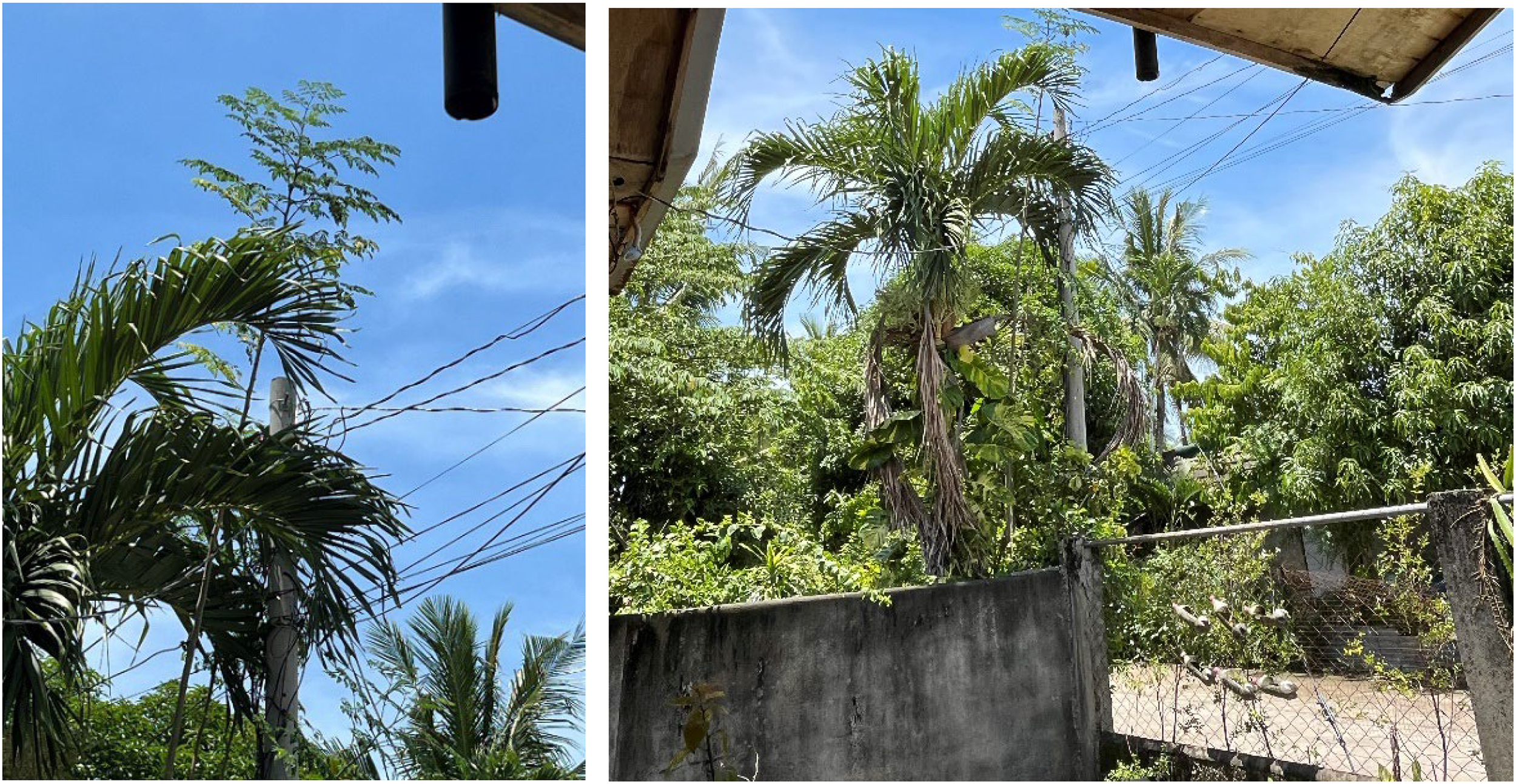
Photos of entangled wires often hit by branches and leaves.
The case of Carlos and Ella indicates exclusion despite the use of smartphones and online channels. The prolonged issue of disrupted transnational communication has already been documented in many studies on transnational Filipino communication (Parreñas 2005; Cabalquinto 2022b). Elsewhere, I have highlighted the different hearings by the Philippine Senate to address the slow internet connection in the Philippines. Government officials underlined the different factors undermining a stable internet connection, including the archipelagic nature of the Philippines, the need for communication infrastructures in rural areas, the competition between network providers, and an outdated policies on accommodating evolving technologies (Cabalquinto 2022b). More recently, the Department of Information and Communications Technology has been implementing the NBP to address the slow internet connection across the Philippines by installing fiber optic cables and wireless devices in isolated areas. While these efforts are focused on the distribution of digital infrastructures, it is important to consider the consistent regulatory interventions by the government on ensuring the delivery of a stable internet connection. Unfortunately, because of persistent internet issues, an ordinary user like Ella remains disadvantaged in everyday communication. To address constant disruptions, she and Carlos have to re-schedule the exchange when the internet connection is on a much better quality.
Differing Literacies in Navigating Predatory Platforms
One of the key components taking full advantage of a digital society is having digital skills and knowledge (Helsper 2021). In an increasingly digital and automated era, individuals need a critical literacy (Livingstone 2004; McCosker 2017) to assess, interpret and respond to multiple benefits as well as risks of datafied and automated contents (Swartz, Marwick and Larson 2025). During the conduct of my fieldwork, the pervasiveness of scamming was one of the main issues raised by the participants.
In Australia, a report reveals that Australians lost $2.7 billion to scams (Australian Competition and Consumer Commission 2024), with people aged 65 and over having the highest losses of $99.6 million (Australian Competition and Consumer Commission 2024). During the fieldwork, several participants in Australia were scammed through romance scamming, investment scams, purchase of goods and services scams, and so forth. Back in the Philippines, the participants spoke about a range of scams, including a common SMISHing or SMS/Text Message Phishing (see Figure 2). Additionally, they spoke about the left and right coverage of shutting down all Philippine Offshore Gaming Operators (POGO) which was associated to the prevalence of illegal activities—human trafficking, scamming and phishing operations—in the Philippines (Dale and Tang 2024). The POGO industry first appeared in 2016 during the time of former President Rodrigo Duterte, attracting gamblers mainly from China. At some point, the country saw 300 POGOs at their peak. By 2023, the industry employed 25,000 Filipinos and 23,000 foreigners (Lee 2024). Nonetheless, to date, an estimate 8.1 USD billion losses to scams in the Philippines (Piad 2024). Overall, most participants aged 65 years and over were often victimized by scams, echoing previous studies on the susceptibility of older people to scams based on age, lower literacy, and lower levels of cognitive function (James, Boyle and Bennett 2014).
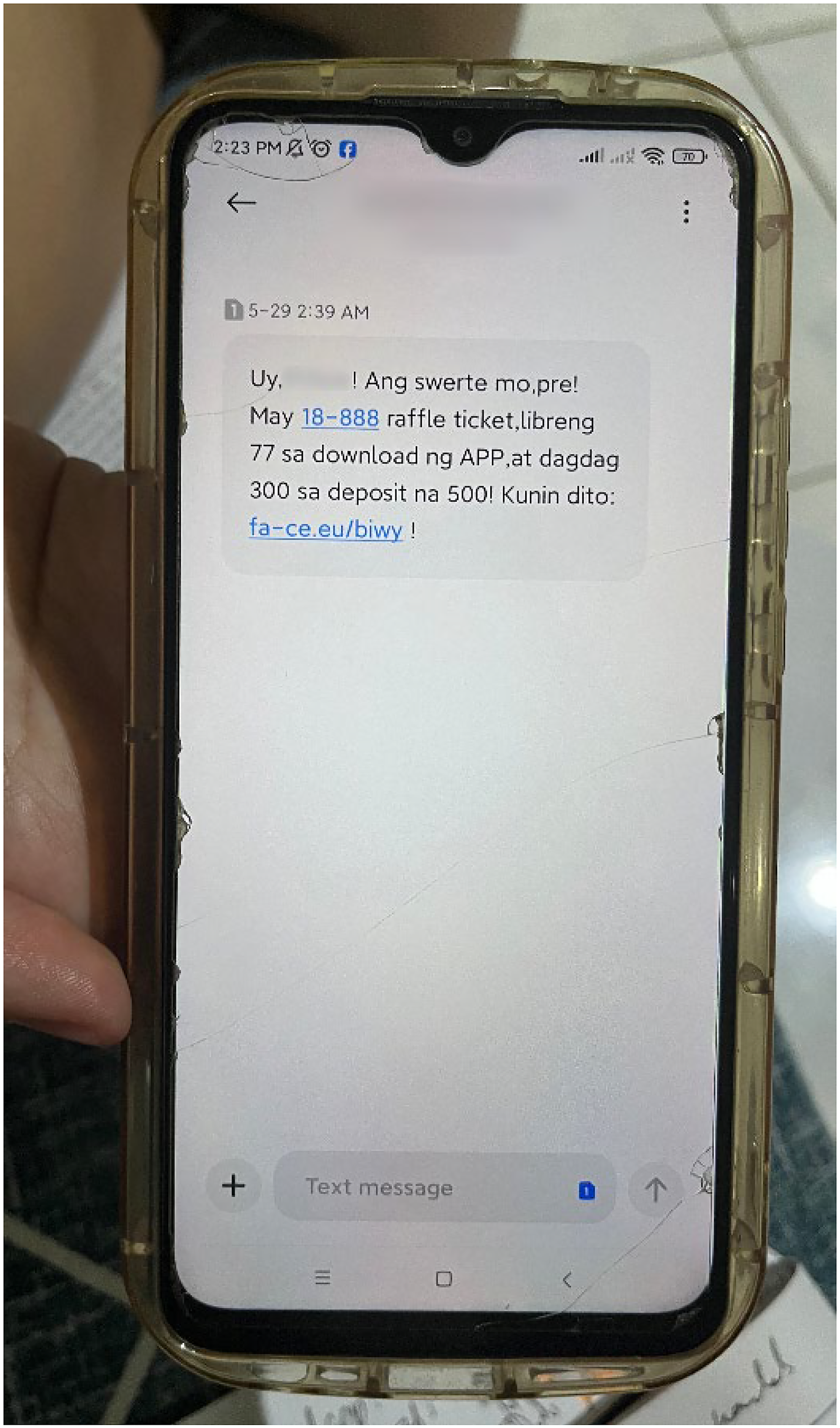
An example of an SMS scam shared by a participant in the Philippines. The participant was informed of receiving a raffle ticket and free cash to download an app.
It is important to highlight that online platforms are conduits in the circulation of tailored scams. To begin with, online channels harvest and process personal information in online spaces, leading to the coding of data and enabling algorithmic recommendations (van Dijck 2013; Narayanan 2023). In this case, the contents received by individual users are often aligned with tastes, interests, and so forth. However, the collected data can also be harnessed for automated deception (Swartz, Marwick and Larson 2025), as evident in the case of online scamming that preys on less tech savvy or vulnerable individuals like some older migrants in this study.
In Australia, I met 65-year-old Rachel and her niece, Janice, 39 years old, in Victoria, Australia. I also managed to interview Rey, Rachel's 70-year-old brother in the Philippines. During the interview in the first quarter of 2024, Rachel was recovering from a major operation. She was left with no choice but to stay at home. Stuck at home and couldn’t go to church, she listens to songs of praise on YouTube. She also reads the bible. Meanwhile, her brother Rey in the Philippines provides emotional support to her through a videocall on Facebook Messenger. He recalled what he usually said to Rachel, “Look at our brother (referring to another sibling). He had quadruple bypass. But he is still alive […] Just endure it (referring to Rachel's condition). It shall pass. And look at me. I had pain in my foot since I visited Australia in 2016. But I am still alive.”
However, Rachel shared that a random person added her to a bible group chat on Facebook Messenger (see Figure 3). She admitted that she does not know the person, “I don’t know him. But he just found me on Facebook. And he's just praying for me because I told him I’ve been sick.” I asked her how the person found her. She suspected that it was her online posts, “I share religious quotes on Facebook so that's how they found me.” Additionally, she was surprised that random people started messaging her on Facebook Messenger after joining the online group (see Figure 3). Indeed, in such a context, online platforms are not neutral or innocent because of the power they hold in accessing, sorting and processing data to predict activities and circulate tailored information (Andrejevic 2007; van Dijck 2013).
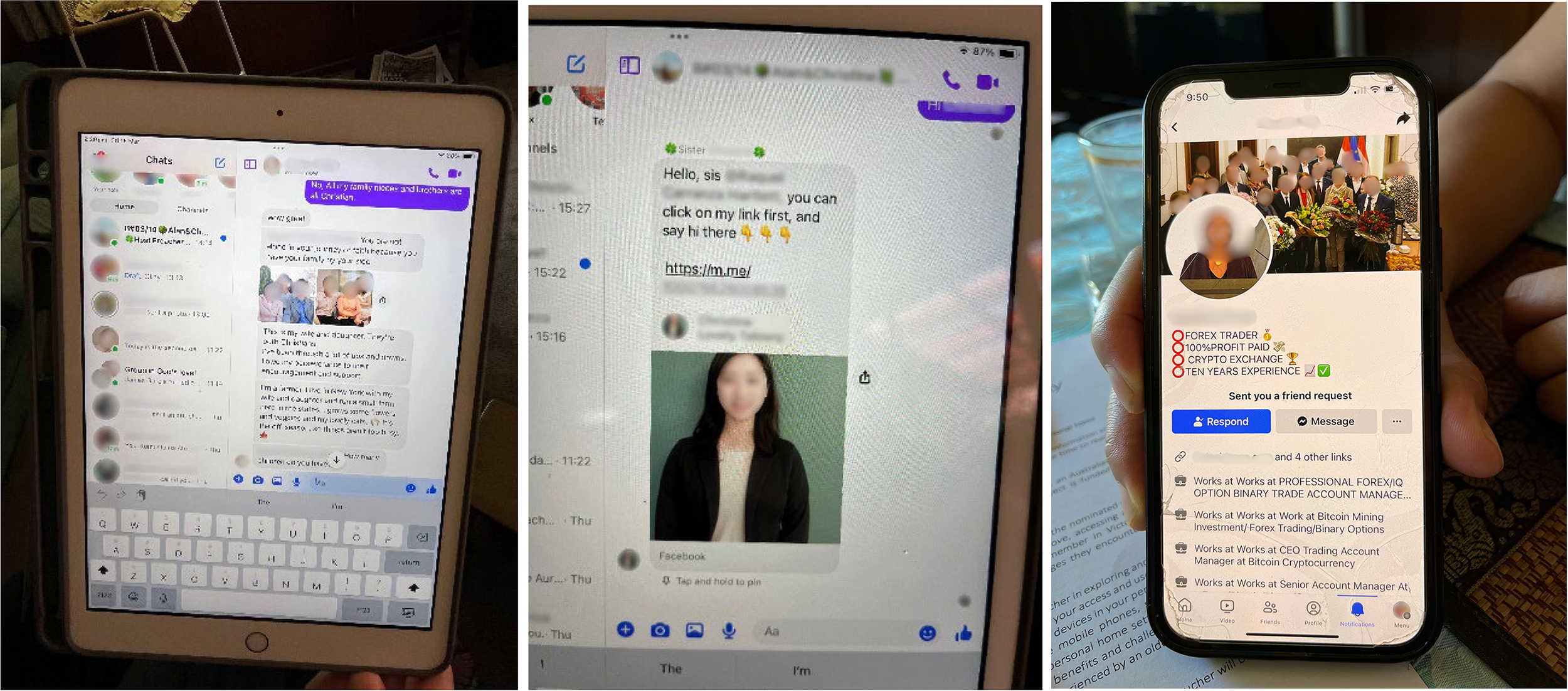
A random person telling Rachel that she's not alone in her journey, and the random person shares his experiences of being surrounded by the family (Left), a random person asking Rachel to click a link (Centre), and Janice received a random Facebook Friend Request from a Forex Trader (Right).
I interviewed Janice, the niece of Rachel. She has a strong relationship with Rachel. She regularly chats with her via Facebook Messenger. She also checks her medical condition. However, she expressed her worry for her Aunt. She commented about her Aunt's participation in an online bible study group, “You know some of them might start selling you cryptocurrency.” She then shared her prior and similar experience wherein a random person sent her a friend request on Facebook (see Figure 3), revealing the proliferation of automated contents and fake profiles across digital spaces (Swartz, Marwick and Larson 2025): I’d like you to join my group. […] And then I just joined. I said, ‘we’ll see why this person is interested in me joining. I don’t know why. Then they started chatting, and I don’t know what they’re talking about. But after that, I just had to get out.
As I wrapped up the interview, Janice reiterated that she has already advised her Aunt to be careful online. Yet, Rachel remains firm in remaining a part of the online group. She finds the prayers helpful for her recovery, reflecting a calculation of benefits over risks.
The experiences of Rachel and Janice indicate being targeted by an ‘investment scam’ on Facebook. However, the customized information pushed to their online channels was made possible through automated mediated sociality or the ways data, digital devices, algorithms, and digital features inform personalized user experiences while enhancing commercial agendas (van Dijck 2013). However, as in their case, customized contents have also been weaponized and co-opted for fraudulent activities (Swartz, Marwick and Larson 2025). In Australia, investment scams prey on both young and old Australians (Australian Competition and Consumer Commission 2024). In the case of Rachel, her religiosity and medical condition have been appropriated for the allure of an online group and content. Random religious member also messaged her to sign up a potential investment by clicking a link provided in the message. Meanwhile, Janice is also targeted by an investment scam through forex trading. Reports have revealed that Australians loss $945 million to investment scam in 2024 (Australian Competition and Consumer Commission 2024). In these cases, the knowledge and skills to discern deceptive contents are crucial for avoiding falling prey to predatory platforms.
Compounding Socio-Economic Precarities
Mobile devices, online channels and mobile applications serve as emotive conduits (Cabalquinto and Wood-Bradley 2020) for communicating needs and expressing love and care through sending remittances (McKay 2007). The constant flows of remittances also support the Philippine economy. According to Bangko Sentral ng Pilipinas (2024), cumulative remittances in January to August 2024 was 24.74 USD billion. However, behind the stream of finances and consumer goods in a transnational domain, Filipino migrants can be placed in a disadvantaged position. This is most salient when pre-existing asymmetrical socio-economic living conditions influence negative outcomes (Parreñas 2005; Uy-tioco 2007; Cabalquinto 2022b), a result of the limited or missing state support for the provision of social welfare services to its citizens (Francisco-Menchavez 2018; Cabalquinto 2022b).
In 2024, I met Esther, 67 years old. She was one of my participants who was juggling two jobs in later years. Working in the care industry, she has different shifts during weekdays and in some weekends. She lives with her husband, who is already retired. Esther does not intend to retire yet because of her financial duties. She shared that she regularly sends money via a remittance mobile app to her siblings and her 90-year-old mother in the Philippines. The money is often used for her mother's medical needs, such as check-ups, hospitalization, and other emergencies. In such a context, the accessibility of a mobile application provides convenience and efficiency in sending remittances and fulfilling obligations. But sending money religiously also makes her frustrated, “It's as if I am the only child,” reflecting on being heavily relied upon on financial support despite having six siblings in the Philippines. Additionally, she also sends money weekly to Jina, her 40-year-old daughter in the Philippines. Jina typically communicates the financial needs via Facebook Messenger. And with Esther's consent, Jina accesses and uses Esther's pension in the Philippines.
I had the opportunity to interview Jina in the Philippines. She confirmed that she regularly receives a monthly allowance from her mother. She uses the money to cover her monthly expenses. I then asked her if she is working or she is seeking a job. She began explaining that when she graduated in college, she did not apply for a job. She followed her mother's plan to bring her to Australia, and there was no need to work given their migration plans. Her three siblings managed to migrate to Australia. Unfortunately, Jina's multiple applications to migrate to Australia failed. Now at age 40 and with no work experience, she struggles to find a job. In such a case, she has become dependent on the remittances from Esther. Fortunately, her 20-year-old son Jose moved to Australia as an international student. She is hopeful that Jose can become a permanent resident and therefore petition her.
However, I found out that Esther pays for Jose's living and education expenses. For instance, she shared, “I just paid 16,000AUD to the university for his enrolment.” Given her expenses for Jose and her family back in the Philippines, she's forced to work for two jobs. And because of the expenses she shelled out for Jose's education, she constantly follows news on visa changes for international students in Australia (see Figure 4), “I sometimes get attracted about international student visa or what's the update. I want to be updated because of the stricter policies on international student visa.” Reflecting on her unwavering financial support to her family, she said, “I sometimes feel it's too much because nothing is left for me.”
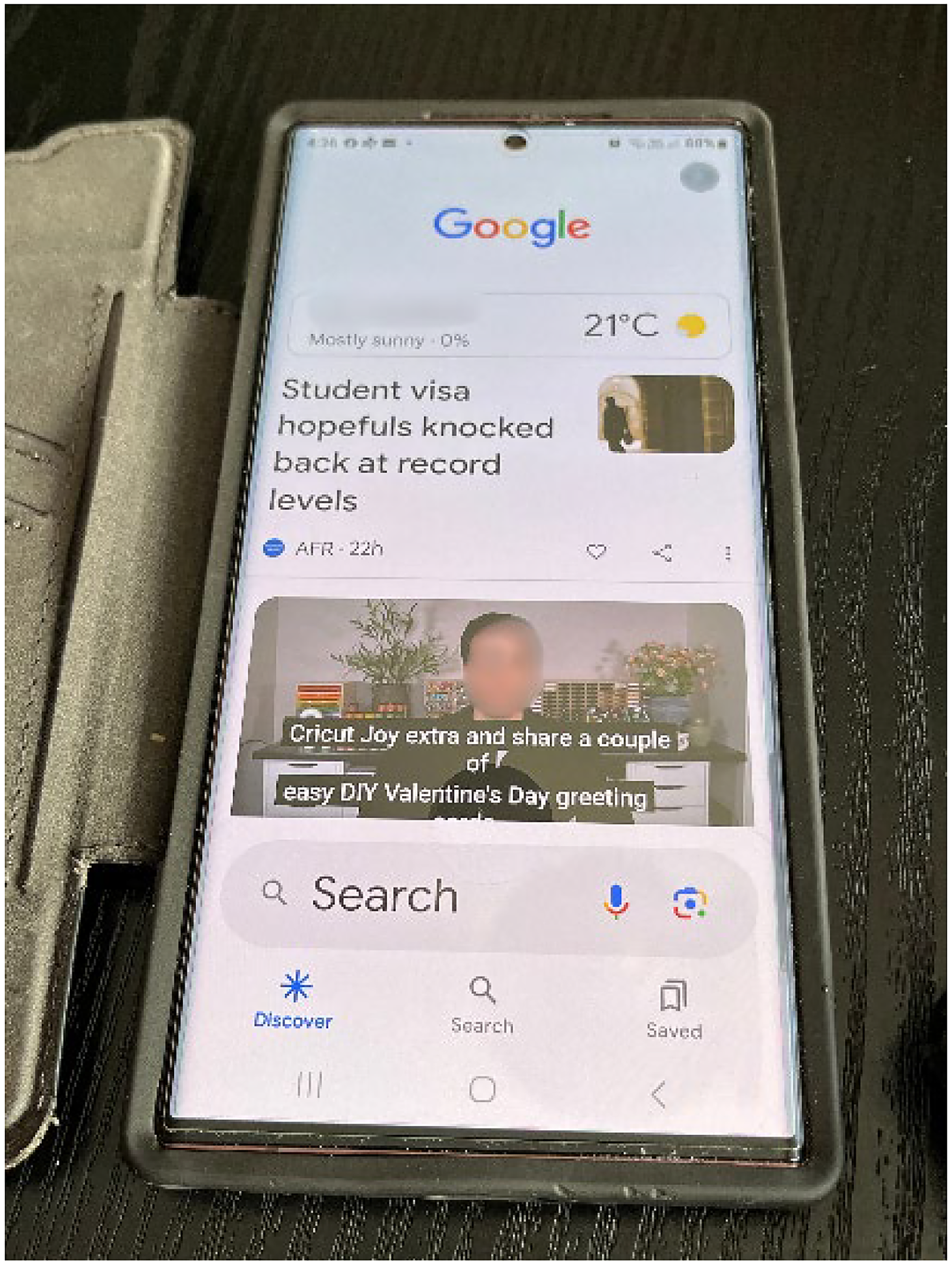
An example of information on Google.
The case of Esther reveals the ways asymmetrical socio-economic conditions cause burden and control in a networked and transnational household. Her smartphone serves as a vital tool to communicate and constantly provide for the needs of her ageing mother and her daughter Jinna in the Philippines. It also functions as a source of information on keeping track of visa changes on international student that can affect her grandson Jose and her financial decisions and actions. Yet, the accessibility and portability of a mobile technology becomes a wireless leash (Qui 2007) that controls the fulfillment of her obligations to her family and even shapes her decision to postpone her retirement plans. Indeed, in a postwelfare state (Goedhart, Verdonk and Dedding 2022), Esther enacts the self-responsibilization of support and care for her family to address the lack or limited institutionalized social welfare services for her family either through education and job opportunities in the Philippines.
Concluding Reflections
Migration scholar Dana Diminescu (2008) once coined the term “connected migrant” to conceptualize the figure of a migrant embodying the promise of connectivity and belonging in networked societies. Through presses, clicks, and swipes, a migrant settling elsewhere develops and fosters connections across spaces and time. Looking at the current digital and global landscape, the conception of the connected migrant is put to the test. Personal digital practices become political especially when institutional support for social and digital needs is missing. Indeed, to rely on its celebratory rhetoric of digitalization may obscure the casualties of rapidly evolving and asymmetrical digital societies. As shown in this paper, older Filipino Australians and their networks in Australia and the Philippines grapple with the burdens of socio-digital inequality. First, despite the ownership and use of smartphones and accessible online channels, persistent unstable internet connection disrupts connecting a distance. Second, without certain literacy levels, individuals can be victimized by exploitative and predatory platforms. Lastly, the self-responsibilization of supporting personal and familial needs facilitate exhaustion and frustrations in transnational households. Across these three outcomes, socio-digital inequalities are deeply shaped by unchanged, situated and relational social conditions, structural barriers and socio-technical systems in a postwelfare state.
To address socio-digital inequalities, we must move beyond quick fixes and account for institutionalized agendas that support the social and digital needs of older migrants and their distant social networks. First, interventions for digital inclusion must address the differential infrastructures across geographical scales that are crucial for taking advantage of digitalization. Here, there is a need to increase the provision of accessible and stable internet connection. Importantly, regulations on tracking the delivery of a reliable internet connection across places must be implemented. Second, more situated and tailored awareness campaigns and programs on interpreting and addressing online harms must be developed and delivered across state, region, and community levels. Furthermore, governments must also act on legislative reform that centers accountability among stakeholders and businesses in a digital economy and ensure individual protection against online harms (Australian Competition and Consumer Commission 2024). For example in Australia, there have been interventions that teach older people and their networks in safely and confidently using digital technologies and online channels (Good Things Foundation 2025). Lastly, more intersectional and situated research on digital inequality must be conducted to better enrich a deeper and critical understanding of the interconnectedness of digital and social exclusion. The study has used a case study approach, offering in-depth insights (Lindlof 2019) on a specific group of people and their everyday digital practices. Future research must account for comparative and quantitative studies to capture the different drivers, textures and outcomes of socio-digital inequalities across differential spatial and temporal contexts. In sum, by rendering visible the hidden injuries of digitalization, this paper underscores the frailty of a digital and transnational world that is moulded by tightly interconnected structural, social and digital constraints. It also heeds an important call to pause and reflect on the failed promise of a supposedly inclusive and secure digital-by-default global society.
Footnotes
Acknowledgements
I would like to acknowledge the participants in Victoria, Australia and across the Philippines for welcoming me into their homes and sharing their experiences about and beyond digital media use. Thank you too for the unwavering support of different organizations in Victoria, Australia for older Filipino Australians, providing support for the recruitment of participants. I would also like to extend my gratitude to Cesar Ilao III, the former research assistant of the project, who helped in managing the data and providing research support. I would like to express my appreciation for the feedback of the reviewers, contributing to sharpening the paper's arguments. Lastly, I would like to posthumously acknowledge the contribution of an older participant to the study. She passed away in 2025.

Funding
The author disclosed receipt of the following financial support for the research, authorship, and/or publication of this article: This work was supported by the Australian Research Council (ARC) (grant number DE230101380).
Declaration of Conflicting Interests
The author declared no potential conflicts of interest with respect to the research, authorship, and/or publication of this article.