




Abstract
The displacement of approximately eight million Ukrainians throughout Europe since February 2022 has had a significant impact on migration governance, and sparked important discussions within migration research. Leveraging novel data from the “Voice of Ukraine” (VOU) survey — a multifaceted longitudinal study of Ukrainian refugees deployed since June 2022 — we examine the migratory and socio-economic trajectories of this community in exile. We posit that the demographic characteristics of Ukrainian refugees, and the asylum and integration policies enacted by European countries of settlement, shape variation in migratory decisions as well as integration outcomes. Our initial analyses of the VOU data show a surprising migratory sedentariness following an initial sorting across Europe. They also reveal a potential association between policies and socio-economic integration tied to housing, education, employment, and personal finances. Our work sets the stage for further exploration of the interplay between refugee attributes and the legislative frameworks of host nations, shedding light on broader dynamics of forced displacement.
Introduction
The Russian invasion of Ukraine launched on February 24, 2022, triggered the largest displacement of people in Europe since the Second World War. At the most recently recorded peak of flight out of the country in May 2023, UNHCR (2023c) estimated that roughly 8,240,289 refugees had found safety across Europe. As typically occurs with refugee movements, Ukrainians initially fled to neighboring countries (foremost to Poland), and then subsequently migrated further afield across the European Union (EU) (foremost to Germany) (Gemenne and Thiollet 2022; UNHCR 2024a). Most notably, they benefited from the quick activation of the Temporary Protection Directive (TPD) 5 by the European Union, which permitted Ukrainian nationals to enter and settle in any member state of their choosing, with limited registration requirements for obtaining “temporary protected status” (TPS).
The massive displacement of Ukrainians raises questions about the way (European) governments and societies welcome and integrate refugees. The humanitarian response of both governements and civil societies in the Ukrainian case contrasts starkly with the 2015 “crisis of hospitality” (Lendaro, Rodier, and Vertongen 2019) that followed the arrival of roughly one million people into Europe from Africa and the Middle East (Savatic et al. 2024). 6 The EU's open borders for Ukrainian exiles in 2022, combined with an expedited form of refugee status determination, has been both credited with facilitating the smooth settlement of refugees across member states (Rasche 2022; World Bank 2023) as well as criticized for reflecting differential and racist asylum policies (Pastore 2021). In any case, the activation of the TPD played an important role in the relatively unprecedented arrival of millions of individuals in a short period of time.
At the same time, the 2022 displacements and policy responses did not take place in a vacuum: substantial Ukrainian communities were already present across Europe (in Poland, Italy, and elsewhere) and emigration from Ukraine initially began to rise following the 2014 Russian invasion of the Donbass and annexation of Crimea (Zuchowski 2023). Moreover, the activation of the TPD followed visa liberalization provisions for Ukrainians entering the Schengen Area adopted in 2017, further favoring Ukrainian emigration (Gemenne and Thiollet 2022). However, the displacement of Ukrainians since 2022 has been unique in that the population of those fleeing is overwhelmingly female (∼90% according to the UNHCR 2022a) given that able-bodied men aged 18–60 have been legally barred from leaving Ukraine following the imposition of martial law at the start of hostilities. 7 Ukrainian refugees are also often accompanied by their children or other dependents, including elderly relatives (UNHCR 2023a). 8 Moreover, those who have fled their country have relatively high levels of educational achievement (UNHCR 2023a). In all these respects, the exodus of Ukrainians simultaneously constitutes a paradigmatic and unique displacement crisis, offering an opportunity to better understand the exiles of forcibly displaced persons.
Interestingly, as we show below, despite the pan-European applicability of the TPD, the geography of refugee movements and the settlement of Ukrainian refugees across European countries are far from uniform. In other words, homogeneous legal statuses and similar conditions of integration do not fully determine migratory trajectories. Likewise, the degree to which Ukrainian refugees are able to find employment and housing, are reliant on public assistance, or are otherwise able to participate in the societies of the countries where they have settled, appears to vary substantially. This raises a number of important questions regarding refugee decision-making. In particular, what are the factors driving the itineraries of refugees as well as choices of settlement and/or return home? In a context where violence drives people into exile, what are the determinants of both the spatial and socio-economic trajectories of refugees? What can we learn from Ukrainian experiences of exile, given the specific characteristics of Ukrainian refugees and of the policy context in which they fled and settled?
We posit that answering these questions requires a direct engagement with the experiences of refugees across destination countries. Here, we present data from a longitudinal survey titled “Voice of Ukraine” (VOU) which has been implemented by the firm Verian 9 in collaboration with two research projects 10 — one funded by the EU and another by two French research institutions — starting in June 2022 and still ongoing as of this writing. 11 Following the launch of the survey, 12,023 individuals responded to an initial “recruitment” wave of questions and exactly 2,800 individuals agreed to be recontacted and replied to at least one of five subsequent waves. 12 The longitudinal and comparative nature of the survey provides us with unique data that can be used to reach novel insights into the questions raised above. Below, we present key trends from the survey and provide an initial assessment of factors that may have shaped the migratory and socio-economic trajectories of displaced Ukrainians. At the same time, we remain cautious regarding the conclusions that can be drawn from the underlying data. While surveying refugees during an ongoing crisis is useful to address humanitarian and policy challenges, we recognize the limitations it presents both with respect to data collection as well as to the contingent nature of outcomes that can change rapidly in light of new events.
We proceed by first providing an overview of existing scholarship on refugee trajectories and integration. After describing key results from the VOU survey, we then explore how the distinct demography of displaced Ukrainians, as well as the integration policies adopted across Europe, impacted the migratory trajectories and socio-economic integration of surveyed refugees. In this way, we investigate why refugees have chosen to settle in given countries (in a broader context of freedom of movement permitted by the TPD) and how refugees have integrated into the communities where they have settled. In this way, we contribute to a central field of investigation in migration studies, examining the factors influencing the directions and conditions of forced migrations. We do so by focusing on the reported experiences of a large sample of Ukrainian refugees. Ultimately, this study represents an initial step in a broader research endeavor aimed at exploring the plausibility of a preliminary set of expectations concerning the spatial trajectories and integration of Ukrainian exiles.
The Spatial and Socio-Economic Trajectories of Forced Migrants
Spatial Trajectories
Our initial domain of inquiry focuses on the spatial trajectories of forcibly displaced persons, encompassing both their current locations and future migration intentions. By examining the migrations of Ukrainian refugees, we engage with an extensive body of literature exploring the determinants of both forced and voluntary migration flows (Mesnard et al. 2024; Brekke, Roed, and Schone 2017; Docquier, Peri, and Ruyssen 2018; Helbling and Leblang 2019; Diop-Christensen and Diop 2021; Bertoli, Brucker, and Moraga 2022; Mayda 2022) and their spatial dynamics (Bacon et al. 2016; Hübl et al. 2017; Schwarz 2020). In particular, we examine the various stages of forced migration, mapping pathways from departures, to first countries of exile, to countries of settlement, to (potential) returns home.
Concerning initial places of refuge, since February 2022, most Ukrainian refugees have remained within Europe and, to a large extent, in countries neighboring Ukraine (UNHCR 2024a). As discussed above, Ukrainians have benefited from exceptional freedom of movement, highlighting the potential impact of asylum policies on migration decisions. This contrasts with the experiences of other forced migrants, who typically face significant physical and bureaucratic barriers when attempting to reach a destination of choice and apply for asylum (Mesnard et al. 2024; Savatic et al. 2024; Bacon et al. 2016; Schwarz 2020; Bertoli, Brucker, and Moraga 2022). Studies have shown that, since the 1990s, increasingly restrictive asylum policies adopted by Global North countries have created obstacles to travel for many refugees (de Haas et al. 2019). Despite the ostensible promise of universal freedom of movement for forcibly displaced persons (Gemenne and Thiollet 2022), public policies can implicitly or explicitly undermine humanitarian principles by blocking access to asylum, confining refugees to the Global South (Mesnard et al. 2024). 13
Although forced displacement is often driven by persecutions or systemic violence, research on migration drivers indicates that refugees also migrate in search of economic opportunities (Crawley and Hagen-Zanker 2019). This influences where they choose to settle as well as the probability of secondary movements and return, even in a context where refugees often remain in “protracted situations of displacement” (Etzold et al. 2019; Belloni and Massa 2022). Empirically, refugees exhibit a lower propensity to travel long distances compared to other migrants, even when their first country of asylum is not their preferred destination (Mesnard et al. 2024; Hübl et al. 2017; Fransen and de Haas 2022). This pattern reflects not only limited financial resources and otherwise limited capacities (Brel, Dustmann, and Preston 2020), but also the involuntary nature of their displacement and their intention to return home when possible. In this respect, their aspirations may differ from those of “economic” migrants with longer-term settlement goals.
Overall, the spatial trajectories of forced migrants are shaped by the social, economic, and political conditions of both first and subsequent countries of asylum. These conditions influence the ability of refugees to return to their countries of origin, circulate between their countries of origin and settlement locations, and undertake secondary movements to alternative countries of settlement, either autonomously or through formal resettlement programs. Yet, the various stages of the spatial trajectories of forced migrants have received less scholarly attention than those of “voluntary” or “economic” migrants, whose movements are often framed as responses to labor market dynamics and policies (Borjas 1989; Docquier, Peri, and Ruyssen 2018). Scholars have also increasingly critiqued traditional push-pull models of migration (Carling and Schewel 2017), instead emphasizing the role of transnational networks and communities in shaping migration geographies (Van Hear, Bakewell, and Long 2018). Despite these advances, research on the interplay of macro-, meso-, and micro-level drivers of forced migration remains relatively limited, as does critical engagement with the forced-voluntary dichotomy prevalent in migration studies (Savatic et al. 2024; Hamlin 2021). This underscores the need for continued investigation of the factors which impact refugees’ migratory trajectories across stages of displacement.
Socio-Economic Trajectories toward Integration
Our second area of enquiry pertains to the socio-economic integration of refugees. Integration is a controversial and multidimensional process (Spencer and Charsley 2021) studied across social science disciplines, with researchers only recently examining migrant and refugee integration processes together (Dustmann et al. 2017), criticizing policy obstacles, notably with respect to employment (Crawley 2017). Given that the presence of refugees is often seen as an undesired condition, both for refugees themselves and for host societies, there has been relatively limited investigation into their long-term integration in countries of settlement. Recent work has emphasized the importance of refugee integration and its relationship with socio-economic, political, and (physical and mental) health outcomes, especially in contexts of protracted exile (Hynie 2018; Agblorti et al. 2024). However, shaped by an underlying expectation that refugees seek to return home as soon as possible, these dynamics have drawn less attention than examinations of humanitarian policies, refugee camps, and repatriation.
If successful integration is defined as effective participation in local/national communities and labor markets, refugees tend to face notable challenges compared to other migrants with respect to education, employment, civic participation, and beyond (Crisp 2004; Connor 2010). Local contexts shape refugees’ integration outcomes (Bevelander and Irastorza 2021), especially when policies ban asylum seekers and/or refugees from obtaining employment for certain periods of time (Fasani, Frattini, and Minale 2021). Yet qualitative research has provided insights into refugee experiences of identity and belonging, questioning monolithic portrayals of refugees as “victims” to be supported, and emphasizing the importance of host–refugee relationships in contexts of long-term settlement (Harrell-Bond 1986; Eastmond 2007).
In particular, by focusing on the role of public policies in shaping integration outcomes, we speak to a vast scholarly literature examining such relationships (Portes and Böröcz 1989; Council of Europe 1997; Castles et al. 2002; da Lomba 2010; Phillimore 2021; Fasani, Frattini, and Minale 2022). In general, scholarship has shown that policies can be consequential (Koopmans 2010; Garcés-Mascareñas and Penninx 2016), especially when they differentiate between refugees and other migrants with respect to the provision of rights and citizenship (Bloemraad 2006) or labor market access (Fasani, Frattini, and Minale 2022). More recently, economists have analyzed labor market outcomes, measuring the short-term costs of refugee integration in contrast to the long-term benefits of investing in language and education (Dustmann et al. 2017; OECD 2017). While applying to all migrants, the issue of “brain waste” is of particular concern for refugees, as these populations are particularly at risk of being overqualified for their current employment due to diploma recognition issues (Dalmonte and Frattini 2024). This is notably the case for refugee women who face more obstacles than men in entering labor markets, especially when accompanied by dependents (Solmone and Frattini 2022).
Gendering Trajectories
Roughly 50 percent of displaced people worldwide are women and girls (UNHCR 2024c), while in Europe, only 31 percent of asylum seekers between 2008 and 2018 were women (Schiele 2024), and in 2021, 70 percent of asylum seekers in the EU were male (EUAA 2022, 2023, 2024). This contrasts starkly with the share of women and girls among Ukrainian exiles since 2022: the population of Ukrainian refugees is unique in that it is composed disproportionately of women with high levels of education, often accompanied by dependents, and often holding the role of primary caregivers while being separated from any men with whom they have familial relations or partnerships. The literature intersecting gender and migration is fairly recent but growing (Martin 1992; Piper 2006; Schmoll 2020), often focusing on the specific challenges encountered by women and girls (Freedman 2016). Studies have also explored how destination state policies or socio-demographic factors related to the social position of women within their countries of origin shape refugee trajectories (Schiele 2024). Altogether, these studies highlight the importance of focusing on the particular challenges faced by displaced women, and broadly examining the way gender influences migration experiences. The stark gendered dynamics of Ukrainian displacement offers a unique opportunity to study questions related to gender in the context of forced displacements.
Exploring How Demography and Policies Shape (Ukrainian) Spatial and Socio-Economic Trajectories
Drawing on the findings of the extant literature, we posit that the demographic and socio-economic characteristics of Ukrainian refugees, as well as the public policies adopted by European states related to integration, may have an outsized impact on both their migratory and socio-economic trajectories. As noted above, the Ukrainian refugee population is unique in that it is composed predominantly of women who have a relatively higher level of educational attainment than the national population as a whole. This is reflected in the profile of the 12,023 respondents to the VOU survey, 88 percent of whom are women, 14 while 87 percent completed some tertiary education. 15 The fact that 60 percent have indicated they are traveling with their children, 12 percent with their grandchildren, and 11 percent with their parents (who are likely elderly given that most respondents in the survey are middle-aged), further points to the unique needs and vulnerabilities of this population. 16
Altogether, these and other characteristics may shape both migration decisions as well as socio-economic integration. For example, all else equal, Ukrainian refugees may be more likely to settle in countries where there is more state aid directed toward childcare, or where it is easier to enroll children in school. Socio-economic integration, in turn, may depend on the degree to which individual refugees must care for family members, their level of education or professional expertise, and their age. All else equal, refugees with lower educational attainment and/or a higher number of dependents under their care may face greater difficulties finding employment and housing.
In turn, beyond the TPD, national public policies that regulate the rights of refugees and non-citizens across countries of destination could be highly consequential. For example, policies that determine whether, when, and how refugees can access employment and education may be involved in both the choice of ultimate country of destination as well as eventual integration outcomes. These policies govern the rights of refugees to access social services and some forms of public assistance, such as language training or other programs tied to local labor markets. Policies and institutions dedicated to the schooling and care of children may also have an outsized impact. Overall, policies which actively aim to foster the socio-economic integration of migrants may, all else equal, make certain countries more attractive to refugees and bolster positive integration outcomes.
Altogether, through the VOU survey data, we examine whether public policies and the individual characteristics of refugees are related to their spatial and socio-economic trajectories. We describe where Ukrainian refugees have settled over the course of their exile and their intentions to return home. We also analyze the reported integration of individuals across European states with respect to housing, employment, education, and personal finances. We focus on Poland and Germany, which represent the most prominent countries of destination of Ukrainian refugees, and which stand at opposite ends with regard to indicators of socio-economic integration. 17
Ultimately, the Ukrainian refugee population, given its unique characteristics, has very distinct needs and perspectives as well as vulnerabilities, both “en route” and in contexts of settlement and integration. The way publics and governments respond to refugees may affect them in distinct ways given these characteristics. Thus, our survey data and analyses offer a lens for examining issues at the intersection of demography, policy, and trajectories, highlighting, in particular, the need for gendering studies of forced migration.
The VOU Survey and Initial Analyses
Launched only a few months after the start of large-scale hostilities in Ukraine, the VOU survey represents a unique attempt to collect longitudinal data regarding the displacement of Ukrainians across Europe. 18 From June 2022 through March 2023, 12,023 unique individuals responded to a “recruitment” wave of questions. Of these, exactly 2,800 agreed to be recontacted and responded to at least one subsequent wave of questions. As of this writing, data are available from five additional waves posed to the panelists following “recruitment” roughly every 3 months starting from September 2022. 19 In addition, from February 13 to 17, 2024, as part of a seventh wave, the survey included an open question for respondents — “What message would you like to send to the institutions of the European Union?” — which solicited 784 usable responses.
The survey panelists were recruited through targeted advertisements posted on Facebook and Instagram. This recruitment strategy permitted quick outreach to individuals across Europe and the constitution of a panel only a few months after the start of the war. However, the use of social media has drawbacks that are fully acknowledged, including a lack of transparency regarding the algorithms behind the targeting of individuals by Meta (the parent company of Facebook and Instagram). Most importantly, the panelists do not represent a randomly selected representative sample of Ukrainian refugees; through every step of the study there are reasons to suspect (unobservable) selection effects that could bias results. The likelihood that individuals find out about the survey, choose to participate in the “recruitment wave,” and continue to respond to subsequent “waves,” are all likely driven by certain underlying characteristics which may also be related to outcomes in terms of migration decisions and socio-economic integration. It is certainly the case that — in contrast to the refugee population as a whole — individuals who are relatively more likely to be on social media, comfortable with information technologies, and willing to share information about their experiences are among the survey respondents. At the same time, however, the respondents are broadly representative of Ukrainian refugees across important demographic characteristics as well as geographic distribution. 20
All survey questions were provided in Ukrainian or Russian depending upon the language selected by respondents. Participation in the survey was entirely voluntary and respondents could terminate their involvement at any time. The final question of the “recruitment” wave asked if respondents were willing to be recontacted in the future. Respondents who agreed were then asked to provide a phone number at which they could be reached. No other information that could reveal their identity was collected. Responses were translated into English for use by researchers who had contributed funds for the continuation of the survey following the recruitment wave. Starting with the second wave of questions, respondents were offered €3 that they could either receive as a voucher to spend online or donate to one of the three charities: United 24, Caritas Ukraine, or the Red Cross. Roughly 66–78 percent of respondents chose to donate the money across the waves in which this financial incentive was provided. 21
In addition to the VOU survey data, we have collected additional relevant publicly available data on Ukrainian refugees, as well as census data on Ukrainians in general. In particular, we compare VOU results to data on refugee flows collected by the United Nations High Commissioner for Refugees (UNHCR), data on individuals who have obtained TPS published by Eurostat, data from the State Statistics Service of Ukraine, and to the results from the UNHCR Lives on Hold survey which is, to our knowledge, the only other pan-European longitudinal survey of Ukrainians. 22 This survey primarily focuses on return intentions and migration decisions, contrasting with the broader scope of the VOU survey, which covers these topics, socio-economic integration, political attitudes, and beyond. These alternative data sources offer an indication as to the representativeness and relevance of the VOU panel. They also provide a point of comparison and dialogue with regard to relevant findings about the Ukrainian refugee population.
Furthermore, to examine the impact of policies, we rely on the Migrant Integration Policy Index (MIPEX), which scores national policies to integrate migrants in countries across six continents (MIPEX 2024). The MIPEX score is derived from a set of indicators across eight policy areas, designed to benchmark current laws and policies against the highest standards. This framework was developed through collaboration and consultations with leading experts, scholars, and institutions involved in comparative research within their areas of expertise. The policy areas covered by MIPEX include: labor market mobility, family reunification, education, political participation, permanent residence, access to nationality, anti-discrimination, and health. Each policy area is assessed through specific indicators, which are questions relating to particular policy components. For each response, a range of values (from 0 to 100) is assigned, with the maximum score of 100 awarded when policies meet the highest standards of equal treatment. Within each of the eight policy areas, the individual indicator scores are averaged to produce a score for that area. These area scores are then averaged again to generate an overall score for each country, with higher scores indicating integration policies that are more favorable toward immigrants. 23 Using the 2019 scores of the respective host countries, we explore the relationship between policies and the integration of Ukrainian refugees into local labor markets as well as their intentions to return to Ukraine.
Ultimately, here, we conduct initial analyses into the migratory and socio-economic trajectories of refugees. We first highlight where respondents have traveled as well as self-reported integration outcomes related to housing, education, employment, and personal finances. Through Pearson's chi-squared tests, we assess whether differences in outcomes vary significantly between different countries of settlement. We also conduct an initial evaluation of the relationship between MIPEX scores and integration outcomes. In doing so, we assess how demography and public policies may have shaped the trajectories of Ukrainians since February 2022.
Results
Spatial Trajectories
Protection of Ukrainian refugees from the Ukrainian authorities, in cases of a request for deportation to Ukraine (regarded as political motives), providing refugees with documents with which they can cross the borders of other states (in cases of non-renewal of their passports by consulates or embassies of Ukraine in the EU)…
— Male respondent, answering the open question “What message would you like to send to the institutions of the European Union?” in February 2024
Ukrainian refugees have settled across Europe, with a large percentage (∼44%) choosing to remain in Poland and Germany (UNHCR 2024c). 24 Following an initial influx into the countries bordering Ukraine — Poland, Slovakia, Hungary, Romania, and Moldova — many continued to travel further west. Figure 1 depicts an alluvial plot illustrating the trajectories of survey respondents from their macro-region of origin in Ukraine, to the initial country of arrival, to the country where individuals were located when they responded to the recruitment wave. The plot reveals the diverse origins of respondents within Ukraine, although, unsurprisingly, a large number are from regions that have borne the brunt of the Russian invasion. 25 With the exception of respondents coming from the “South” region, large majorities of respondents from across Ukraine first sought refuge in Poland. 26 Nevertheless, there was a substantial dispersal of individuals from different regions of origin, both with respect to countries of initial arrival as well as first countries of settlement. While a large majority of respondents (68.1%) initially entered Poland, only 38.1 percent of those who first entered Poland subsequently remained in the country. There was likewise significant onward migration from other initial countries of entry (Hungary, Moldova, Romania, Russia, or Slovakia). It is thus clear that most respondents did not remain in the initial country of entry, but rather took advantage of the ability to settle anywhere in Europe given the opportunity to do so granted to them by the TPD. Interestingly, the proximity of the region of origin to specific border countries does not seem to account for the locations where Ukrainians sought safety in Europe — neither as the first country of entry, nor as the subsequent destination — contrary to what might be anticipated.
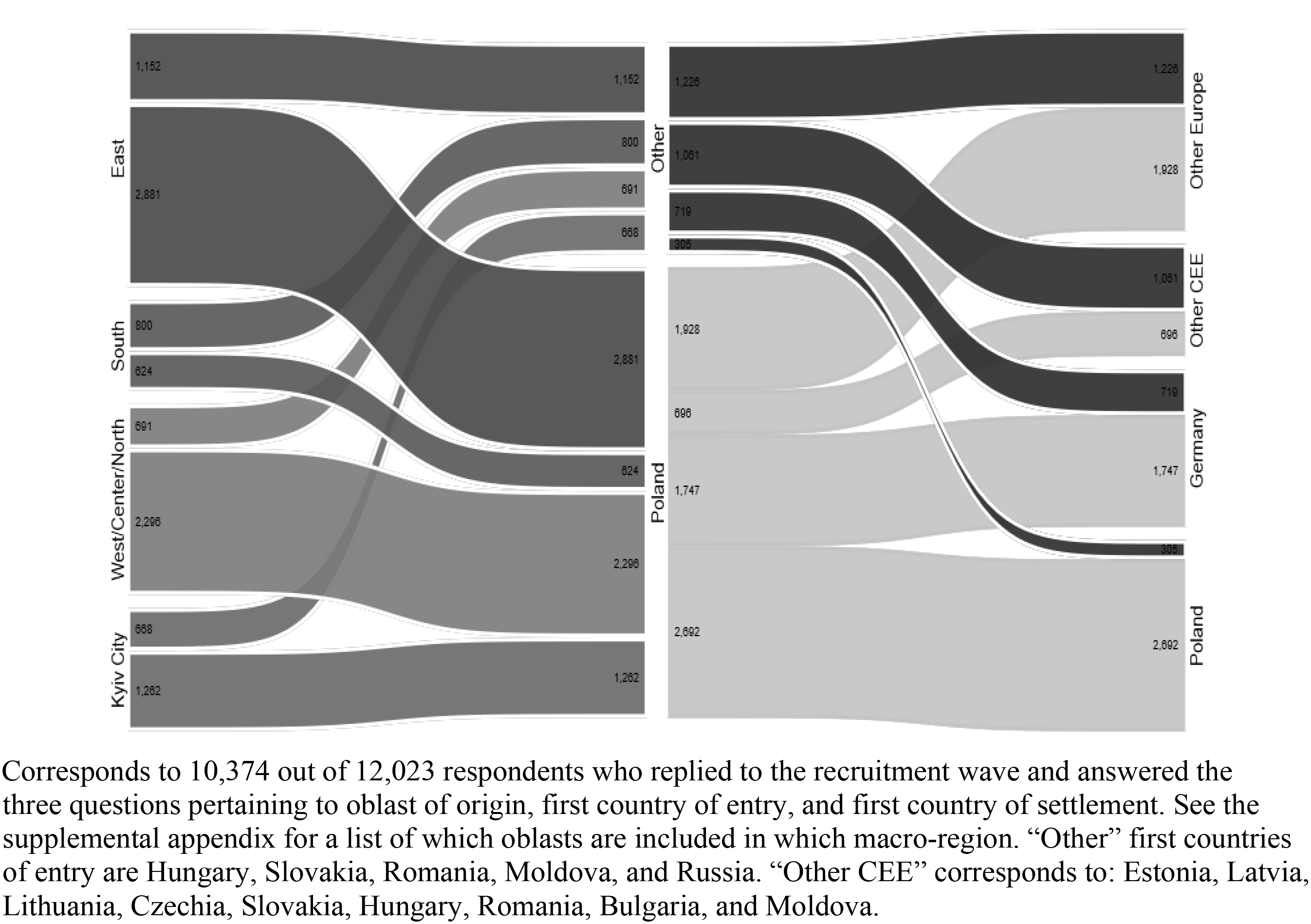
Ukrainian Region of Origin, First Country of Arrival and First Country of Settlement of VOU Survey Respondents.
In turn, Figure 2 presents an alluvial plot of the migration trajectories of 124 respondents who replied to the recruitment wave in July 2022, and then replied again to subsequent waves in April and November 2023. This plot reveals the movement of individuals across Europe as well as their potential return to Ukraine. The plot shows that respondents are primarily sedentary following an initial sorting: 94 out of the 124 individuals (75.8%) did not leave their first country of settlement. Among the others, there is some onward migration and a growing subset who have returned to Ukraine. 27
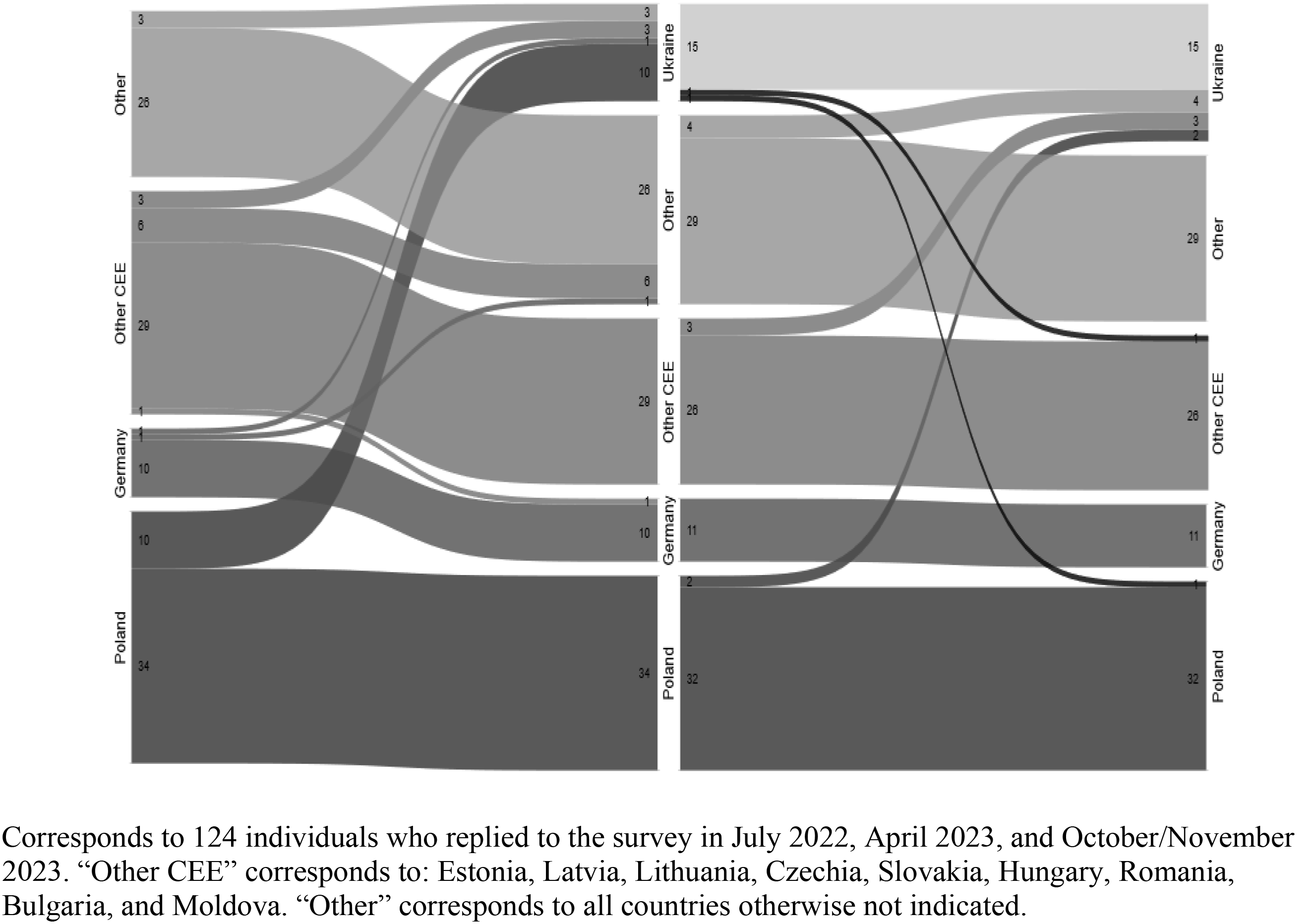
Migration Trajectories within Europe of VOU Survey Respondents.
Overall, our findings reveal a form of voluntary spatial inertia among Ukrainian refugees following an initial spatial sorting, despite a policy that has guaranteed freedom of movement. In other words, Ukrainian refugees appear to display a low propensity to change their country of settlement following some secondary movements in the first months of exile. Intercountry movements remain relatively low, and return flows remain limited. Self-imposed spatial inertia may be linked to the uncertain geopolitical context, to the cost of secondary migration even in a context of freedom of movement, and to the impossibility for migrants to envisage the end of the conflict in Ukraine. This indicates that the capacity to move is not necessarily a sufficient condition for effective movement.
Beyond the ability to move offered by the TPD, policies may affect settlement decisions by providing (or preventing) access to public services. The literature on the so-called “magnet effect” broadly rejects the existence of a correlation between the choice of destination country and those countries’ welfare policies (Allard and Danziger 2000). However, this might explain why secondary movements are relatively limited. Better access to certain services such as healthcare, access to more extensive rights in the areas of education, labor markets, or citizenship may have an impact on eventual choices to stay. Given the relationship identified in previous studies between integration policies (as measured by MIPEX) and various outcomes (Solano and Huddleston 2020), there is reason to expect that policies may have an impact on migration trajectories. While a thorough individual-level analysis of relocations, leveraging the panel nature of the survey, is needed to robustly test this expectation, for now, we conduct a preliminary assessment focusing on return intentions by destination country. We anticipate that a more welcoming institutional environment, as reflected in higher MIPEX scores, would correlate with greater intentions to stay.
Indeed, as illustrated in Figure 3, when the return intentions of Ukrainians are aggregated by country of location and correlation coefficients plotted against these countries’ MIPEX scores across four waves of the VOU survey, the results illustrate the plausibility of our expectations. Specifically, individuals living in countries with stronger integration policies tend to report lower immediate intentions to return to Ukraine as opposed to those residing in countries with higher MIPEX scores. For example, MIPEX scores are negatively correlated with the percentage of respondents indicating that they anticipate returning to Ukraine within three months and positively correlated with the percentage indicating they do not intend to return to Ukraine.
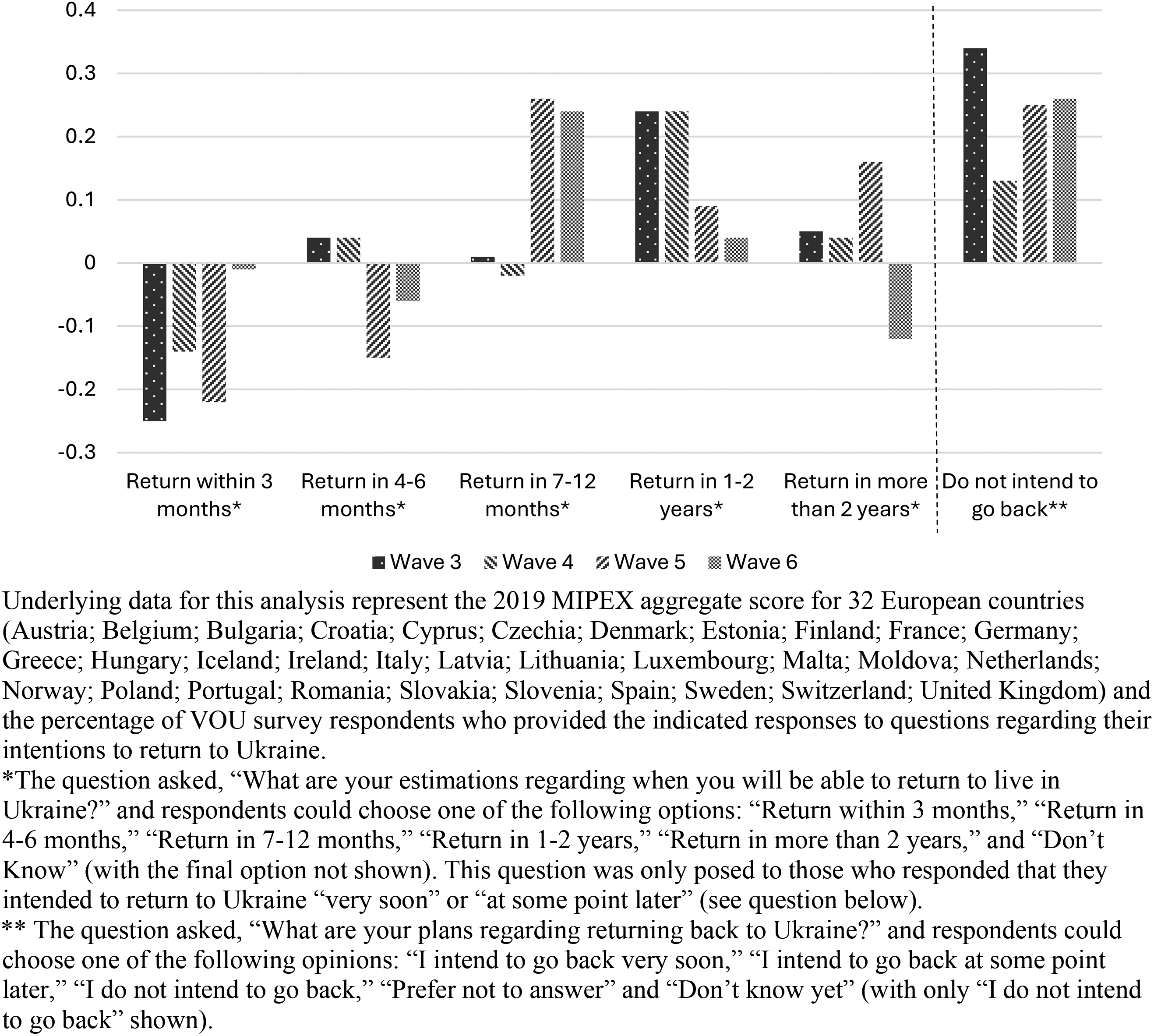
Correlation Between MIPEX Policy Scores and Return Intentions.
However, settlement decisions are not made randomly, but reflect migrant responses to opportunities in different countries. A more detailed analysis focusing on the initial migration decisions and relocation of the same individuals over time is needed to further evaluate the relationship between policies and trajectories, and to test expectations against other potential explanations. The decisions of Ukrainian refugees to return or move again beyond the initial country of exile could be affected by individual characteristics and circumstances, the size and social cohesiveness of local diaspora communities, information availability, cultural or linguistic closeness, as well as cumulative experiences in the first country of asylum. In a recent study also involving data from the VOU survey, Adema et al. (2024) find that proximity to Ukraine is related to return intentions, with those who have migrated further away exhibiting lower return intentions than Ukrainians in Poland or other Eastern European countries, with the difference increasing over time. Overall, further assessments are needed to assess the role of the integration policies. Still, this initial finding is consistent with the literature using MIPEX data and justifies further exploration of the role of national policy frameworks in shaping trajectories.
Moreover, we anticipate that the demographic characteristics of respondents may be associated with distinct migration decisions. We thus examine the demographic profile of respondents located in Poland, Germany, and other countries in the recruitment and sixth wave, as shown in Table 1. In short, respondents residing in Poland exhibit distinct characteristics in terms of their age and education levels. In both the recruitment and sixth waves, Poland has a higher proportion of younger individuals (16–34), while middle-aged individuals (35–64) are more prevalent in Germany and other European countries. As for education, a larger share of respondents has vocational degrees in Poland, while over 70 percent of respondents in Germany and other European countries hold a bachelor's, master's, or doctoral degree. In contrast, there do not appear to be major differences with respect to gender and civil status.
Demographic Characteristics of VOU Survey Respondents by Country of Location.
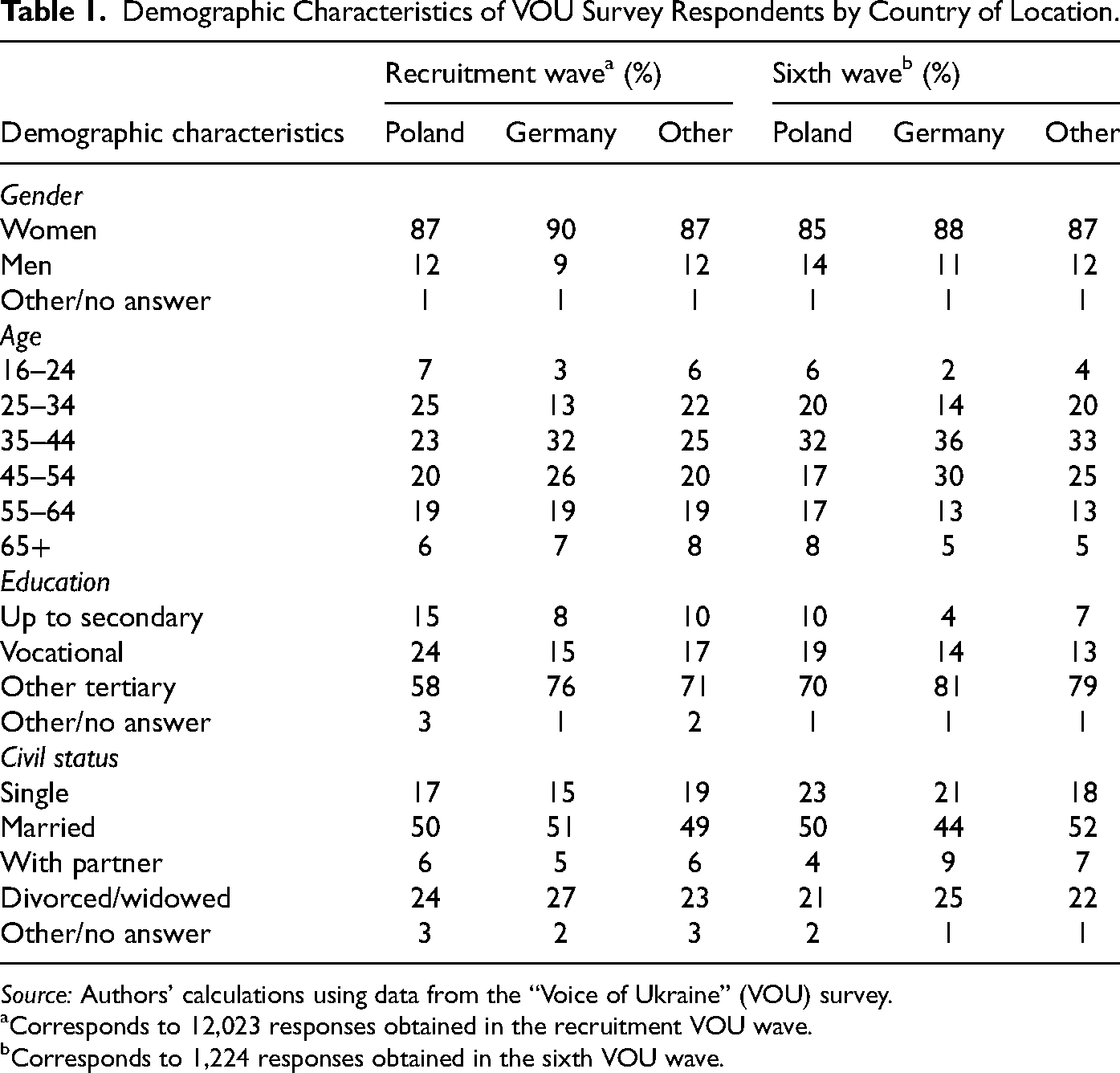
Source: Authors' calculations using data from the “Voice of Ukraine” (VOU) survey.
Corresponds to 12,023 responses obtained in the recruitment VOU wave.
Corresponds to 1,224 responses obtained in the sixth VOU wave.
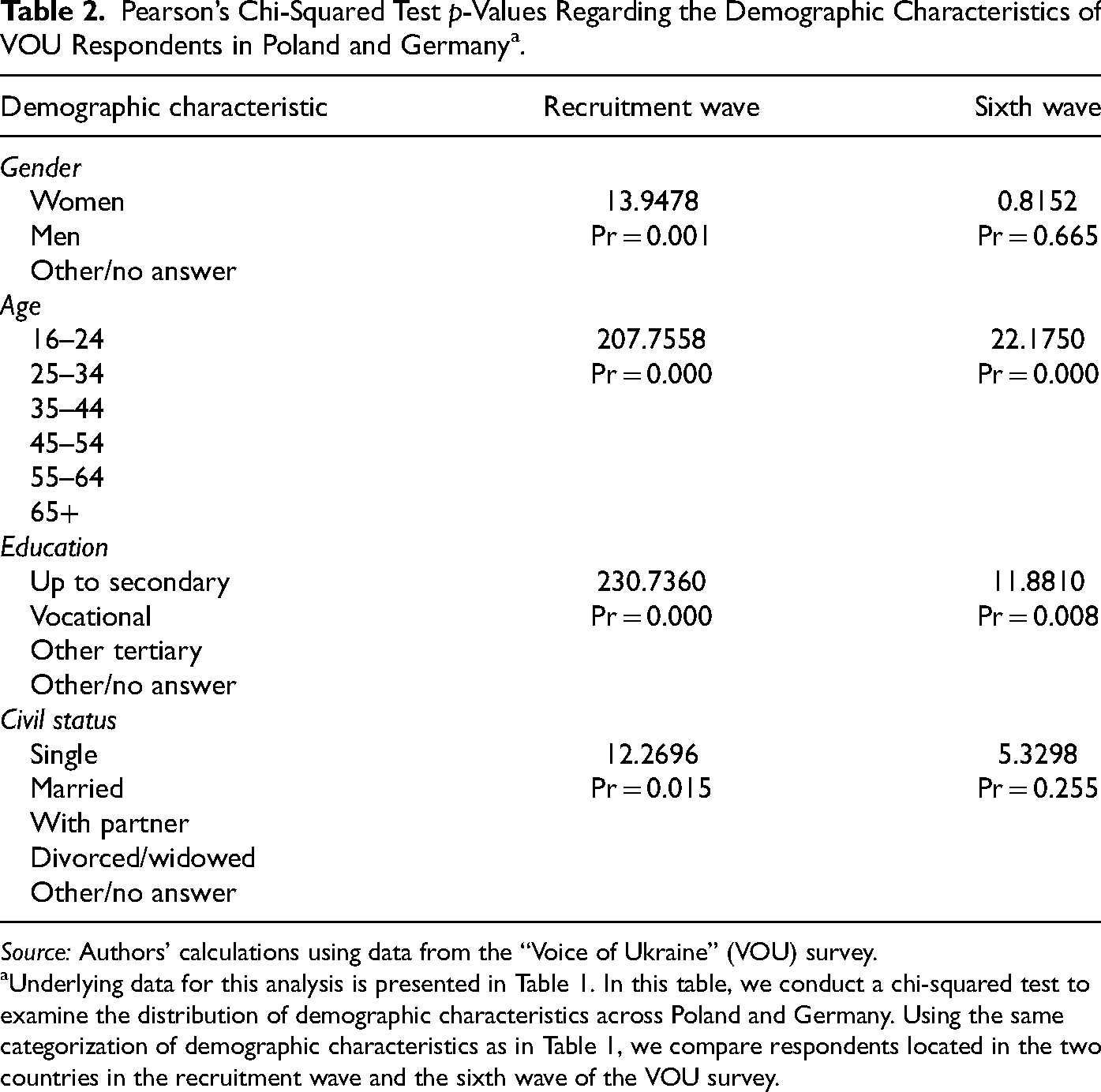
To assess the statistical significance of the differences among respondent categories, we conduct several Pearson's chi-squared tests. More specifically, we examine whether the distribution of key demographic characteristics — gender, age, education, and civil status — vary significantly between respondents from Germany and Poland across survey waves. To do so, first classified respondents across the relevant demographic categories and generated a country identifier for Germany and Poland. Our cross-tabulations and chi-squared tests identify associations between the country of destination and each demographic characteristic in the recruitment and sixth wave separately. This approach allows us to evaluate whether observed differences in respondent profiles across the two countries and across survey waves were statistically significant.
Our analysis reveals noteworthy distinctions among individuals in Poland and Germany across most demographic characteristics, as indicated in Table 2. In particular, all tests for the first wave resulted in a p-value of less than .05, emphasizing the significant heterogeneity with respect to the demographic characteristics of the people residing in the two locations. In October 2023, we observe that respondents in Poland and Germany exhibit similarities in gender and civil status, yet significant differences with respect to age and education, with p-values of .000 and .008, respectively. These findings suggest a statistical association between gender, age, education, marital status, and the two main countries of destination, especially in the first wave. Given these results, further investigation is needed to evaluate the role of individual characteristics as well as integration policies, diasporic contexts, and other contextual factors, with regards to the temporal dynamics of return, secondary migration, and settlement decision-making.
Pearson’s Chi-Squared Test p-Values Regarding the Demographic Characteristics of VOU Respondents in Poland and Germany a .
Source: Authors' calculations using data from the “Voice of Ukraine” (VOU) survey.
Underlying data for this analysis is presented in Table 1. In this table, we conduct a chi-squared test to examine the distribution of demographic characteristics across Poland and Germany. Using the same categorization of demographic characteristics as in Table 1, we compare respondents located in the two countries in the recruitment wave and the sixth wave of the VOU survey.
Socio-Economic Trajectories
Help us, skilled workers from Ukraine, to get a job [which] at least approximately corresponds to our education and experience. We can do more and can benefit the host country more than just [going] to work cleaning…
— Female respondent, answering the open question “What message would you like to send to the institutions of the European Union?” in February 2024
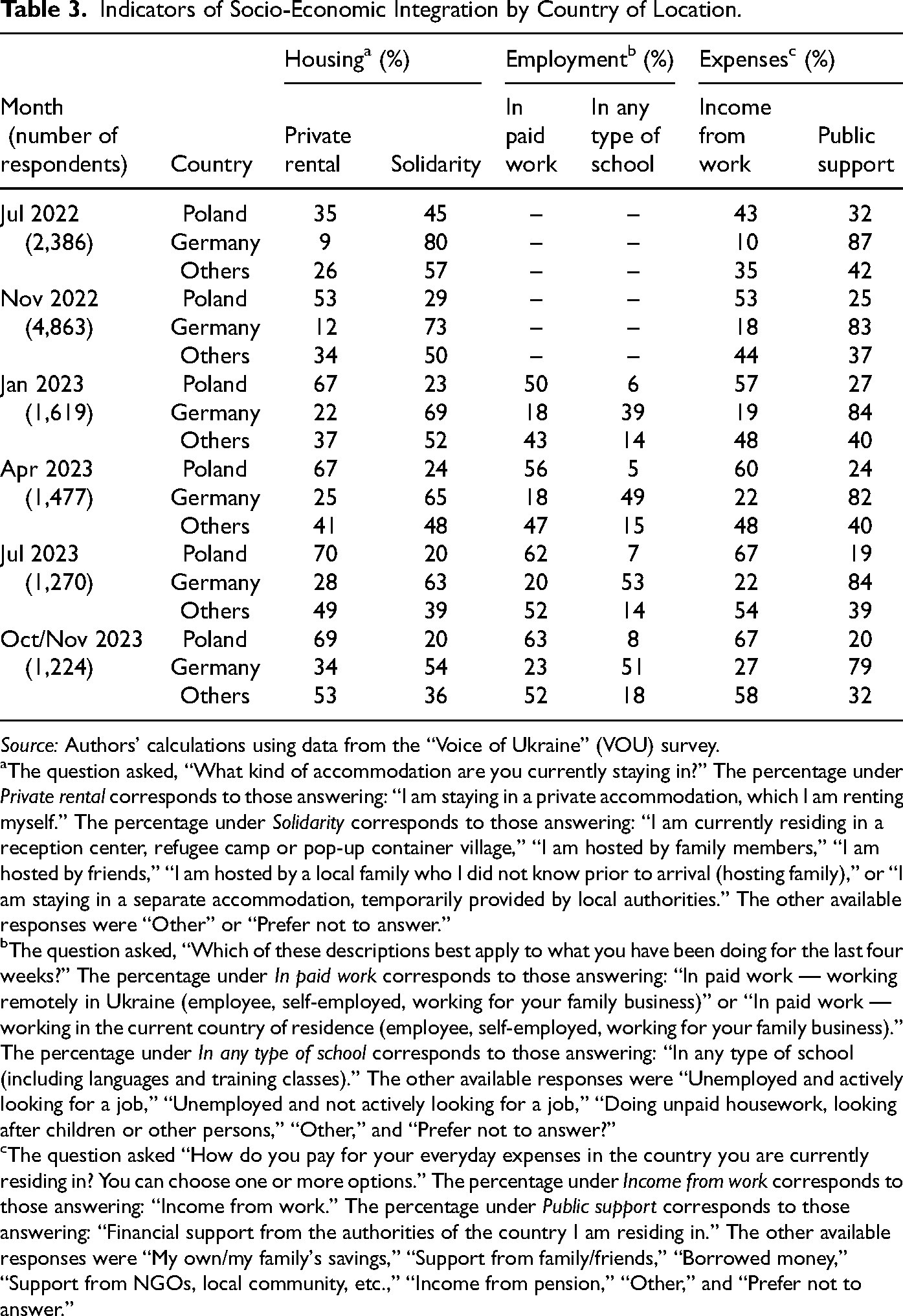
In addition to their migrations, we examine the socio-economic trajectories of Ukrainians across Europe, with a focus on Poland and Germany. Table 3 delineates responses that VOU survey respondents have given to certain questions that relate to socio-economic integration. The first column pertains to housing, indicating the percentage of respondents that report to be living in private accommodations that they are renting as opposed to some form of housing provided as an act of solidarity (by public authorities, private volunteers, or family/friends). The second column relates to employment and education, indicating the percentage of respondents who report they are in some form of employment (in their country of settlement) or are pursuing some form of education. Lastly, the third column relates to how individuals are paying for their expenses, indicating the percentage that covers them through income from work and/or through public support. Positive responses on private housing, employment, and financing through work all indicate that individuals have achieved a certain form of financial independence in their country of settlement.
Indicators of Socio-Economic Integration by Country of Location.
Source: Authors' calculations using data from the “Voice of Ukraine” (VOU) survey.
The question asked, “What kind of accommodation are you currently staying in?” The percentage under Private rental corresponds to those answering: “I am staying in a private accommodation, which I am renting myself.” The percentage under Solidarity corresponds to those answering: “I am currently residing in a reception center, refugee camp or pop-up container village,” “I am hosted by family members,” “I am hosted by friends,” “I am hosted by a local family who I did not know prior to arrival (hosting family),” or “I am staying in a separate accommodation, temporarily provided by local authorities.” The other available responses were “Other” or “Prefer not to answer.”
The question asked, “Which of these descriptions best apply to what you have been doing for the last four weeks?” The percentage under In paid work corresponds to those answering: “In paid work — working remotely in Ukraine (employee, self-employed, working for your family business)” or “In paid work — working in the current country of residence (employee, self-employed, working for your family business).” The percentage under In any type of school corresponds to those answering: “In any type of school (including languages and training classes).” The other available responses were “Unemployed and actively looking for a job,” “Unemployed and not actively looking for a job,” “Doing unpaid housework, looking after children or other persons,” “Other,” and “Prefer not to answer?”
The question asked “How do you pay for your everyday expenses in the country you are currently residing in? You can choose one or more options.” The percentage under Income from work corresponds to those answering: “Income from work.” The percentage under Public support corresponds to those answering: “Financial support from the authorities of the country I am residing in.” The other available responses were “My own/my family's savings,” “Support from family/friends,” “Borrowed money,” “Support from NGOs, local community, etc.,” “Income from pension,” “Other,” and “Prefer not to answer.”
In all three cases, the difference between the responses given by panelists in Poland and Germany are stark. Over time, in Poland, respondents are much more likely to report that they are employed, rent their own accommodation, and pay their expenses using their own earnings. In contrast, in Germany, respondents are much more likely to be living in some form of “solidarity housing,” to be pursuing education, and to be relying on public aid to pay their expenses. Respondents located elsewhere stand in the middle between the extremes represented by these two countries.
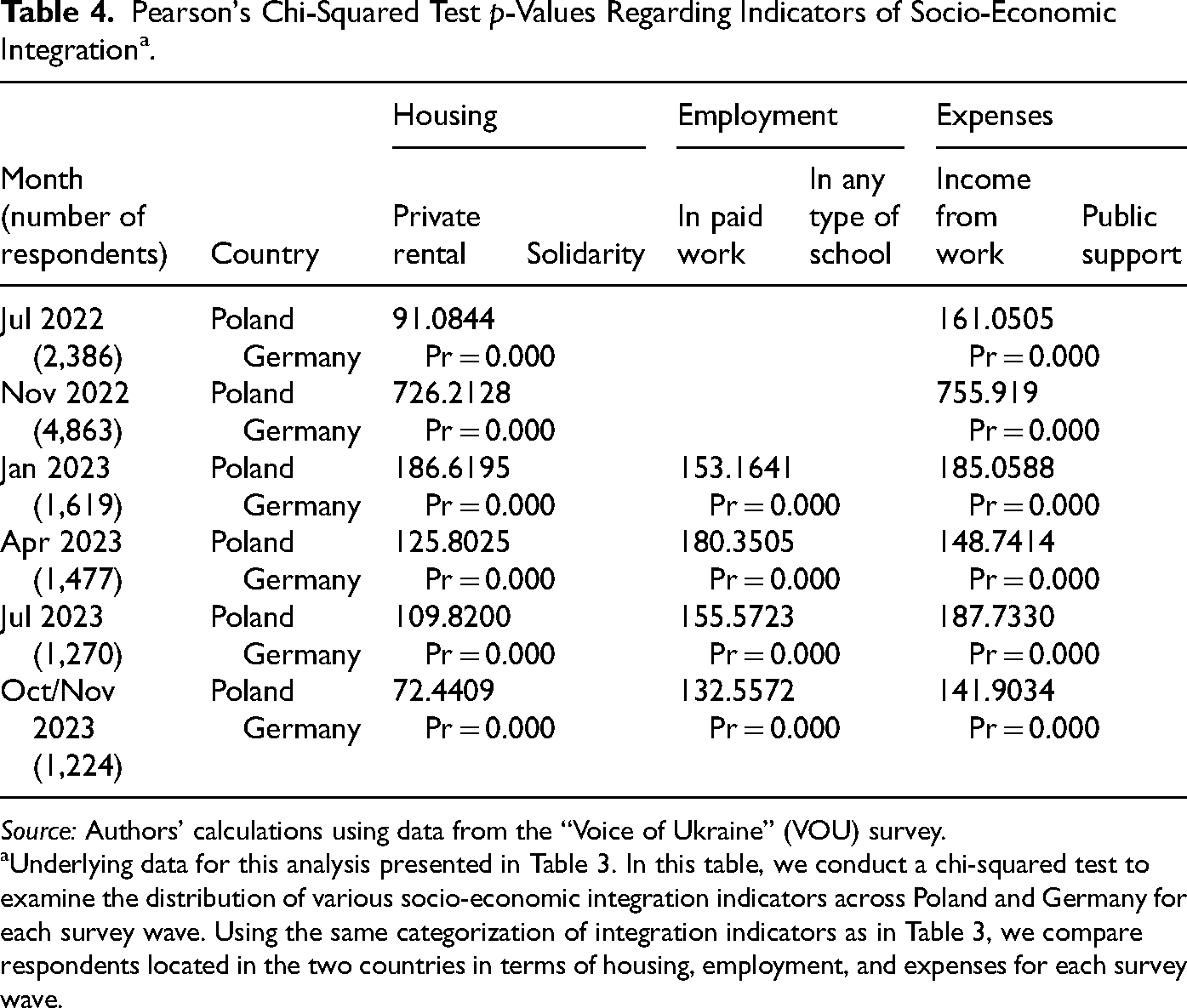
To assess whether there are statistically significant differences in self-reported integration outcomes among VOU survey respondents located in Germany and Poland, we again perform a series of Pearson's chi-squared tests. Following the approach used in Table 2, we categorize integration variables into meaningful groups and perform cross-tabulations before conducting chi-squared tests to examine statistical associations between these variables and respondents’ countries of destination across different survey waves. As shown in Table 4, the tests reveal a consistently high statistical significance (p-values of .000) across time, highlighting the pronounced disparities between countries in terms of housing, employment, education, and income sources. These results suggest that country-specific policies and economic conditions may shape the integration trajectories of migrants, with Poland offering more opportunities for employment and housing independence, while Germany providing a greater degree of social support. Overall, the clear differences between these two cases, which represent the major countries of settlement, call for explanation.
Pearson's Chi-Squared Test p-Values Regarding Indicators of Socio-Economic Integration a .
Source: Authors' calculations using data from the “Voice of Ukraine” (VOU) survey.
Underlying data for this analysis presented in Table 3. In this table, we conduct a chi-squared test to examine the distribution of various socio-economic integration indicators across Poland and Germany for each survey wave. Using the same categorization of integration indicators as in Table 3, we compare respondents located in the two countries in terms of housing, employment, and expenses for each survey wave.
In addition, we examine the education and labor market integration outcomes for all EU member state destinations across the different waves of the VOU survey and explore the relationship with MIPEX integration policy scores. As shown in Figure 4, Ukrainian refugees are more likely to pursue further education and look for jobs commensurate with their skills in countries with higher MIPEX scores, but immediately start working in countries where the scores are lower. However, the latter relationship wanes over time, as shown in the changes across survey waves. This may imply that in countries with higher integration scores migrants have better opportunities with regard to access to education and social services and slowly integrate in the labor market as time passes, potentially after having received degree equivalence and gained some language proficiency. While initially delayed and costly, this may actually result in better integration outcomes with fewer skills/qualification gaps. Due to the longitudinal nature of the VOU survey data, these relationships can be further explored comparatively across countries, tracing the changes in the responses of the same respondents across time.
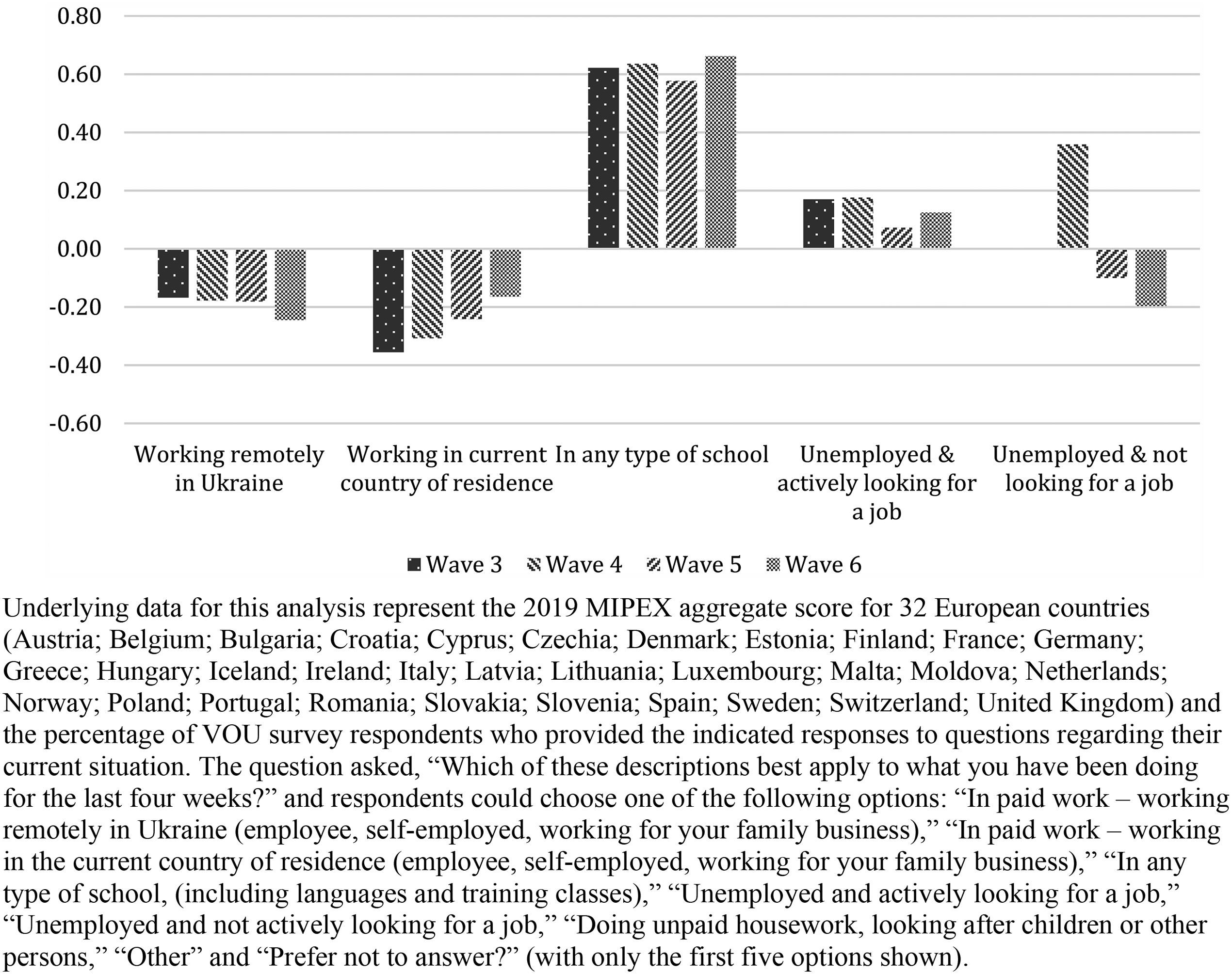
Correlation between MIPEX Policy Scores and Socio-Economic Integration.
In sum, our examination of socio-economic integration reveals the contrasting nature of integration, above all in Poland and Germany. It provides insight into how integration is facilitated and measured. For instance, the possibility to work, granted on paper by TPS, does not automatically entail effective incorporation into job markets, even for skilled workers. In this regard, we show that national policies may play a potentially decisive role in enabling or hindering the integration of refugees into new communities, particularly in terms of access to housing, employment, education, and public financial assistance. At the same time, the recognition of foreign diplomas, the availability of information, and the support of community and solidarity networks are additional factors that need to be considered beyond the provisions of extant policies.
Conclusion
The displacement of roughly eight million Ukrainians across Europe constitutes a significant challenge for societies and policymakers, as well as an opportunity for researchers to better understand forced displacements. Here, we present data from a novel longitudinal survey of 12,023 unique individuals and 2,800 panel respondents, which reveals the multifaceted nature of Ukrainian refugee experiences. Through an initial presentation of survey results, we identify surprising migration trajectories and diverse socio-economic integration outcomes. Our initial analyses show how this variation may be related to the demographic characteristics of refugees as well as the public integration policies adopted by European countries of settlement.
Through our research, we adopt a refugee-centered perspective and seek to give refugees a voice, allowing them to express their perceptions of their exile. At the foundation of refugee studies lies the idea that “the voices of refugees must be heard, their agency recognized, and their existential rights protected” (Zetter 2018). Through the VOU survey, we collect data that allow us to better capture how refugees, with their diverse experiences and characteristics, perceive their predicament and their future, as well as how they live through exile across contexts of reception. Specifically, longitudinal survey data allow us to examine the migratory and socio-economic trajectories of Ukrainian refugees.
Our initial findings offer a look at how the demographic characteristics of refugees and European asylum and integration policies may have impacted these aspects of displacement, offering new insights into the lived realities of forced migrants. The exodus of Ukrainians, who are predominantly highly educated women and their dependents, demonstrates how individual attributes and public policies could shape refugee experiences. Our investigation of migration trajectories reveals a complex interplay of factors, including policy frameworks, educational backgrounds, and the dire circumstances from which refugees are fleeing. These dynamics highlight the importance of considering forced migration as a combination of diverse individual journeys, shaped by both individual and contextual variables, rather than singular, uniform processes.
With regard to their migrations, our findings indicate that refugee migration is primarily regional. Moreover, there appears to be what we call “spatial inertia,” with individuals limiting their secondary movements (with the possible exception of return) following an initial sorting in the first few months following exile. This is possibly caused by policy environments in neighboring countries, the costs of secondary migration, and declining hopes for prompt return. Further examination of the factors driving this dynamic is warranted.
In terms of integration, our findings suggest that outcomes are sensitive to labor market integration policies. At the same time, it is important to acknowledge the specific challenges of refugee vulnerability, and the characteristics of the population in terms of gender, skills, and family responsibilities. The stark contrast between self-reported integration outcomes, particularly between respondents located in Poland and Germany, is surprising and likewise calls for further study.
Altogether, our research suggests potential avenues for further investigation into the conditions, determinants, and consequences of forced migration, considering the multidimensional complexity of the lives of refugees. Additionally, we highlight the importance of policies that not only address the immediate needs of displaced populations and focus on their return, but also support their long-term integration and participation in host societies. Ultimately, the VOU survey offers a platform for Ukrainian refugees to share their experiences, challenges, and aspirations, demonstrating the value of refugee-centric research. The insights gained from this survey can inform future scholarship and highlight the importance of policies that are responsive to the diverse needs of refugees. As Europe and the world continue to face displacement crises, the lessons learned from the Ukrainian experience may prove crucial in developing effective and humane responses to forced migration in the future.
Supplemental Material
sj-docx-1-mrx-10.1177_01979183251343888 - Supplemental material for Ukrainian Voices: Surveying the Spatial and Socio-Economic Trajectories of Ukrainian Refugees across Europe
Supplemental material, sj-docx-1-mrx-10.1177_01979183251343888 for Ukrainian Voices: Surveying the Spatial and Socio-Economic Trajectories of Ukrainian Refugees across Europe by Filip Savatic, Margherita Lazzeri, Kartika Herscheid, Thomas Lacroix, Hélène Thiollet and Başak Yavçan in International Migration Review
Footnotes
Acknowledgements
The authors would like to thank Yves Fradier for his leadership of the Voice of Ukraine (VOU) team at Verian and for his close and enthusiastic collaboration. They also thank Verian team members Anne-Sarah Chekaf, Oriane Darres, Marco Pelucchi, Francesca Chessa, Lucy Birch, and Cassandra Frost for their assistance with the implementation of the survey and data sharing. The research within this publication was presented on October 26, 2023, at the Ten-Year Anniversary Special International Conference of the Fondation croix-rouge française held at Sciences Po Paris, on April 4, 2024, at the International Studies Association (ISA) 2024 Annual Convention held in San Francisco, and on February 13, 2025, as part of the Sciences Po Paris Teaching Fellow Seminar Series held at the university's Reims Campus; the authors thank all of the participants at these events who provided comments and feedback. Lastly, the authors thank four anonymous reviewers as well as the International Migration Review editorial team for their feedback on earlier drafts of our manuscript, all of which significantly improved the quality of our work. In addition, independently of the sequence of author names, the authors would like to make the following CRediT authorship contribution statement: Filip Savatic: Methodology; Formal analysis; Data curation; Visualization; Validation; Writing – original draft, Writing – review & editing; Supervision. Margherita Lazzeri: Data curation; Investigation; Formal analysis; Visualization; Writing – review & editing. Kartika Herscheid: Data curation; Formal analysis; Writing – review & editing. Thomas Lacroix: Conceptualization; Writing – review & editing; Supervision; Project administration; Resources. Hélène Thiollet: Conceptualization; Methodology; Formal analysis; Writing – original draft, Writing – review & editing; Supervision; Project administration; Resources. Başak Yavçan: Conceptualization; Formal analysis; Methodology; Visualization; Writing - review & editing.
Declaration of Conflicting Interests
The authors declared no potential conflicts of interest with respect to the research, authorship, and/or publication of this article.
Funding
The authors disclosed receipt of the following financial support for the research, authorship, and/or publication of this article: This work was supported by the Europen Union's Horizon 2020 Framework Programme for the “Migration Governance and Asylum Crises” (MAGYC) project (grant number 822806) as well as by two French institutions, the Institut Convergences Migrations (ICM) and the Centre National de la Recherche Scientifique (IHEMI/CNRS) for the CORRIREF (Les corridors de l’asile en France) project (grant reference ANR-17-CONV-0001).
ORCID iDs

Supplemental Material
Supplemental material for this article is available online.
Notes
References
Supplementary Material
Please find the following supplemental material available below.
For Open Access articles published under a Creative Commons License, all supplemental material carries the same license as the article it is associated with.
For non-Open Access articles published, all supplemental material carries a non-exclusive license, and permission requests for re-use of supplemental material or any part of supplemental material shall be sent directly to the copyright owner as specified in the copyright notice associated with the article.
