




Abstract
With the numbers of people fleeing their home countries increasing in recent decades, the need to understand refugee flow patterns, particularly of the most vulnerable groups, is more important than ever. This study is focused on the separation of children from their parents during emergencies in the east and southern African context and highlights how populations fleeing from the same country of origin into nearby countries may be characterised by quite different rates of separation. Despite the wide range of estimates of the proportion of unaccompanied and separated children among the refugee population, in all of the cases considered here, the extent of separation is fairly stable over time, revealing a fast process of adjustment towards their long-term mean values. The findings of this study contribute to improve current knowledge of the issue of separation during emergencies and provide useful support for the monitoring of refugee population movements, and in particular for predicting the number of cases of separation, especially during periods of high variability in the number of new refugee arrivals. This is expected to strongly support the programming of related humanitarian assistance and protection for separated and unaccompanied refugee children.
Introduction
The latest decades have seen a progressive increase in the number of people on the move. Among the various groups experiencing such increased mobility, refugee movements are a particular concern. Wars, political conflicts, economic crises, natural disasters, and even climatic changes can be recognised as drivers for the observed refugee flows. Large influxes have in some cases put a heavy burden on receiving communities, which struggle to manage the inflow without additional resources and support. At the same time, while receiving countries grapple with political, economic, and social issues, related to the increasing refugee caseload, millions of refugees spend years of their lives without a durable solution, often facing discrimination and a poor quality of life (Masri and Srour 2014).
At the end of 2020, the number of refugees in the world was estimated to be 26.4 million people (UNHCR 2021). Out of them, 153,300 individuals were accounted for as unaccompanied children. 1
Current humanitarian efforts often focus on short-term solutions and fall short of the requirements presented by the increasing size of the problem. Therefore, humanitarian actors have expressed the need for an early warning system that will allow countries and mandated institutions to prepare for an influx of people before they arrive. The need to understand refugee flow patterns is more important today than ever: being able to predict such flows could help mitigate the negative consequences of a huge influx of people. A few initiatives in this direction have been put in place, and of course, many of the initial efforts in this direction are aimed at the most vulnerable groups, such as unaccompanied and separated children (UASC). 2
Children who are separated from their families and customary caregivers in an emergency face a multitude of risks, which are usually higher than those facing children who have not been separated. These children can face special challenges and risk being exploited due to their age and legal status (Celikaksoy and Wadensjo 2022; Derluyn and Broekaert 2008; Derluyn and Vervliet 2012). 3
However, the humanitarian community lacks methods to systematically capture changes in the frequency and nature of such separations (Rubenstein et al. 2015). The urgent need for appropriate methodological capacity in this regard is recognised, and the present analysis contributes to this effort. In particular, this study is focused on a specific question: do the percentages of UASC populations change during the various stages or phases of an emergency?
This article is organised as follows: the next section presents an overview of current knowledge on the topic; section three describes the methodology applied in this study; section four reports the findings, and sections five offers concluding remarks.
Literature Review
Following the guiding principles issued by the Inter-Agency Working Group on Unaccompanied and Separated Children, it is possible to argue that those separated from their parents and families because of conflict, population displacement or natural disasters are among the most vulnerable (Child Protection Working Group 2012a). Compared to children who are not separated from their families or carers, they experience higher levels of food insecurity and violence, are more likely to be exploited for labour and sex, and are at increased risk of recruitment and abduction by armed groups (Fivat et al. 2014; Hepburn 2006; Machel 1996; UNHCR 2007). Separation can also have devastating social and psychological impacts on children, including increased levels of stress and anxiety (Ajdukovic and Ajdukovic 1983; Bick et al. 2015; Bronstein, Montgomery and Ott 2013; Garbarino and Kostelny 1996; Reed et al. 2012). Identifying interim care for unaccompanied and separated children and carrying out family tracing and reunification activities are therefore among the first protective interventions that humanitarian actors provide in an emergency (Boothby et al. 2012). Such consideration has led the humanitarian community to set up policies and minimum standards to follow when establishing initiatives aimed at mitigating the specific vulnerabilities of UASC (Child Protection Working Group 2012a).
Despite the attention given to UASC, knowledge about the phenomenon of separation remains limited. 4 A specific constraint in this regard applies to its measurement. In many instances complex humanitarian emergencies involve large-scale internal and external displacement. Not only are large numbers of children on the move, they also often move substantial distances both internally and across international boundaries. Estimating their numbers and assessing the characteristics of their vulnerability is challenging, especially with their dynamic patterns of movement in often insecure environments. And yet, without good estimations of UASC numbers and timing of their arrival, humanitarian actors are often ill-equipped to provide for their protection and care. In fact, currently, there is rarely a standard assessment or monitoring of trends of separation or a systematic tracking of the changing numbers of UASC over the course of an emergency.
Some possible ranges have been proposed. A common rule of thumb suggests that practitioners and policymakers should estimate that during emergencies 3–5% of displaced children are likely to be separated or unaccompanied (Ressler, Boothby and Steinbock 1988). However, it has been remarked that such numbers have never been validated in any context (Jensen et al. 2018; Rubenstein et al. 2015; Stark et al. 2016). A recent literature review has led to the conclusion that somewhere between 2% and 6% of the total refugee and asylum-seeker population who have submitted asylum claims in an EU member state are unaccompanied and separated children. However, this estimate is followed by the consideration that disaggregation by population group and different countries of asylum produces a much wider range from 0.3% to close to 15% (Robinson and Branchini 2015). In fact, the same study acknowledges that patterns of separation are context specific and driven by many different variables, and that these estimates refer to the subset of UASC populations who have left their country and crossed an international border to seek refuge. The picture is much less clear when it comes to unaccompanied and separated children still within their country of origin who are without family care due to conflict, natural disaster or other emergency events. The same literature review highlights how when focusing on restricted environments such as refugee camps and settlements, an appropriate estimate of UASC as a percentage of total refugee population would range from 0.15% to 3.90%. In particular, in Africa, the higher-end of the range might be somewhat lower (2.89%), and in Asia somewhat higher (7.22%) than the global average (Robinson and Branchini 2015).
Recognising the relevance of contextual factors influencing the number of UASC, a few attempts have been made to propose new assessment and analytical approaches. The Child Protection Rapid Assessment Toolkit was designed to take into account context-specific information considered relevant to the case of UASC (Child Protection Working Group 2012b); however, the qualitative nature of the tool does not help when measuring the scale of separation (Ager et al. 2011). This limitation led to the launch of the Measuring Separation in Emergencies Project (MSiE), an inter-agency initiative aimed to develop a set of methods to support the measurement of UASC populations across a range of emergency settings. Results achieved so far by the MSiE Project support the assumption that separation is not a uniform phenomenon across emergencies. For instance, rates of separation estimated in a chronic emergency – i.e., the conflict in eastern Democratic Republic of Congo – were found to be significantly higher than those found in a rapid-onset emergency – i.e., post-hurricane Haiti (Stark et al. 2016, 2018).
More generally, when considering separation during displacement it is first necessary to consider the decision and process of displacement. It is not surprising that people flee from violence, it is rather more surprising that some people do not. If there were a simple relationship with violence, displacement would be homogenous in given contexts, but this is not the case (Czaika and Kis-Katos 2009). A body of literature has emerged on the causes of variation in displacement outcomes (Adhikari 2012, 2013; Davenport, Moore and Poe 2003; Engel and Ibáñez 2007), but to date, it has failed to place the choice of displacement either empirically or conceptually within a larger range of strategies for coping during periods of violence, with a few notable exceptions (Lindley 2009; Mironova, Mrie and Whitt 2014; Steele 2011). While displacement may be understood in whole or in part as an attempt to protect members of a household, child protection practitioners define some basic categories of separation:
Separation during flight: separation due to the onset of conflict, resulting from flight but also death. Preventive separation: separation before the onset of conflict, usually sending children ahead to safety (this usually occurs concurrently in contexts with separation during flight). Secondary separation: separation due to perceived benefits or opportunities, e.g., where parents or children themselves move away to look for employment (e.g., established camps). This can include secondary movement, where a child travels to a third country in search of a perceived better future. Separation due to child-specific persecution: separation due to the need for particular groups of children to leave their homes and families to escape child-specific forms of persecution such as child recruitment.
The points above illustrate the complexity of separation in emergencies and the impossibility of generalising about this phenomenon. At the same time, current work towards a better understanding of separation raises the hypothesis that its complexity does not make it unpredictable: like many social phenomena, it can be modelled and projected.
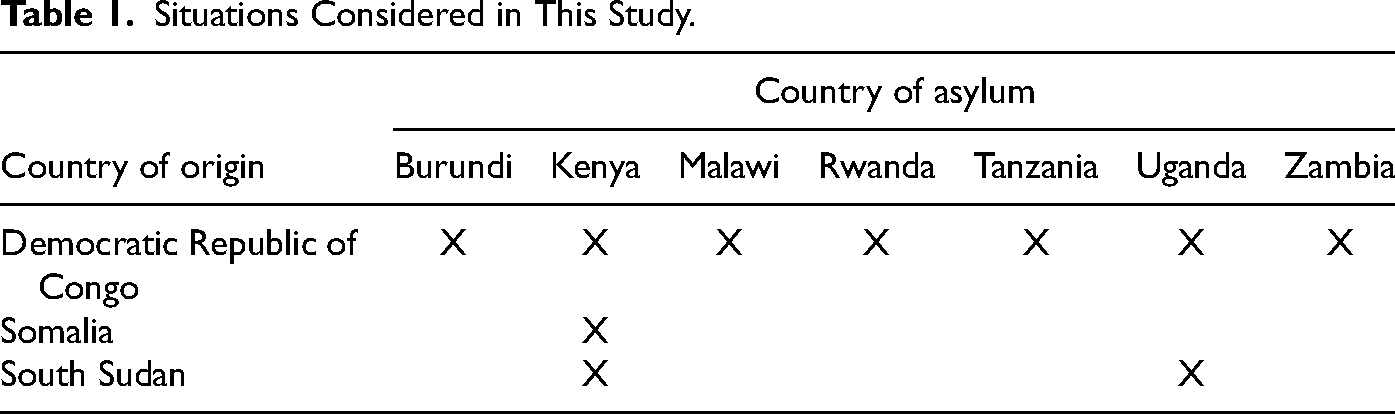
Three different refugee situations were identified to serve as the basis for this study: refugees from Somalia fleeing to Kenya, refugees from South Sudan fleeing to Kenya and Ethiopia, and refugees from DRC fleeing to seven countries in east and southern Africa (Burundi, Ethiopia, Kenya, Malawi, Rwanda, Tanzania, Uganda). 5 In all three cases, refugees are fleeing from long-term conflicts. In the Democratic Republic of Congo, armed groups have been active and have caused high levels of insecurity and large-scale violence against civilians for decades. In 2021, over 5.4 million people were internally displaced, primarily in the eastern provinces of South Kivu, North Kivu and Ituri, and over 1 million had fled to neighboring countries. 6 South Sudan gained its long-fought independence from Sudan in 2011, but has since then experienced civil war, armed unrest, and inter-communal violence which have led to over 2 million people being internally displaced and 2.3 million people seeking refuge in neighboring countries. 7 Somalia continues to face multiple challenges, including political insecurity, conflict, natural disasters such as drought, flooding, and cyclones, which have displaced almost 3 million people inside Somalia, and caused over 770,000 people to flee to other countries. 8 The situation of each country and the dynamics of displacement both internally and across international borders are unique, but in all three cases, there is long-term and continuous data on displacement, including on UASC identified during refugee registration by governments and by UNHCR, which makes them appropriate for this study.
Data and Methodology
Data
As recognised by Robinson and Branchini (2015) through the preliminary literature review of the MSiE Project mentioned above, the best available basis for a projection tool among the empirical data on unaccompanied and separated children in emergencies is given by estimates derived from refugee camps and other locations of externally-displaced children. Based on this, this study uses a large dataset to analyse the movement of refugees (REF) and asylum seekers (ASR), and in particular data on new REF and ASR arrivals in the country of asylum. In other words, this analysis is focused on flows rather than on stocks of people. Data from three situations – Democratic Republic of Congo, South Sudan and Somalia – was used for this study. In each case only a limited number of asylum countries were considered (see Table 1). In particular, while the analysis of Congolese REF and ASR involved seven countries of asylum, that of REF and ASR from South Sudan and Somalia covered just two and one countries, respectively. 9 Overall, given that even the host countries can trigger separations and consequent UASC movements, this study actually provides a regional outlook to analyse common factors affecting the long-run stability of the UASC share of the fleeing population.
Situations Considered in This Study.
Since the UASC population is a subgroup of the overall population who at some point leave their place of origin looking for refuge elsewhere, other key variables in the estimation of the UASC group are: (a) children who do not fall in the UASC category (nonUASC) and (b) the rest of the fleeing group who are not registered as children at the time of registration and are categorised as adults for the purposes of this study. Hence the first set of data in this study refers to units of related categories of individuals. In statistics, this type of data is called count data, a type of data in which observations can take only the non-negative integer values {0, 1, 2, 3, …} and these integers arise from counting rather than ranking. However, as this study covers a protracted period, the evolution of such data over time highlights another dimension of the dataset, a set of time-series data.
Besides population flows, contextual factors may also be considered as determinants of separation. In particular, if we limit the analysis to emergency conditions, separations are expected to be induced by force as a result of either deliberate decisions or accidental events. Therefore indicators of insecurity and/or violence at the place of origin have been included in this analysis as number of fatalities and number of incidents.
For the purposes of this study, measures of insecurity have contextual relevance and therefore attention is paid to the spatial dimension of security, and especially to changes in security over time. To optimise the contextual relevance of security measures, their use in the analysis has been arranged on a case-to-case basis. Different methodological approaches were used to define the security variable in each of the three situations analysed, mainly based on the areas of origin of the REF and ASR as well as on the spatial distribution of insecurity and nature of insecurity. Consequently, while security measures are aggregated at country level in the case of South Sudan, a more selective approach was followed with regard to DRC and Somalia. It was considered that Congolese and Somali populations’ decisions to move into the neighboring countries included in this study would be particularly responsive to the occurrence and evolution of insecurity events specifically in eastern and south-eastern regions of DRC and the southern region of Somalia. 10
Data on the arrival of refugees and asylum seekers in the countries of asylum was sourced via the UNHCR registration data (UNHCR). 11 Data on incidents and fatalities in the countries of origin were sourced through the ACLED database (ACLED).
The zero-inflated feature of the UASC data in most of the case studies for this research has led to a preference for monthly data for modeling purposes. The data timeframe and interval related to the various situations analysed in this study have therefore been standardised and cover the period from January 2010 to June 2018.
Methodology
Background of the Model
As mentioned earlier on, the present analysis uses count data across time. Having said that, since our main aim is to analyse the dynamic patterns of UASC flows, the time dimension comes up as the salient feature of the data, leading us to prefer time-series modeling over count-data modeling. 12 The time-series dimension of the data allows us to investigate for long-run equilibrium in the number of UASC arrivals once the ongoing insecurity, measured by either fatalities or incidents, has been considered. Additionally, we can investigate for meaningful habitual behaviour in the UASC flow from DRC, SSD and Somalia to asylum countries. However, we propose a different approach to tackling these questions than that used in previous studies. First of all, we do not investigate these cases one by one. We argue that all case studies considered in our analysis may have some common factors that cannot be addressed accurately using country-specific equations. This feature of our model set up requires to conduct the simultaneous estimation of single-country equations, which helps to address regionally common dynamics by allowing a certain level of endogeneity. This approach allows to maximize the amount of information that can be extracted from a limited number of independent variables. 13 Secondly, in order to investigate the long-run equilibrium of UASC arrivals, we focus on the proportion of UASC among overall arrivals. 14 The rationale behind this argument is that although the numbers of UASC, adults and nonUASC arrivals fluctuate over time, the proportion of UASC among overall arrivals may still have a long-run equilibrium. This approach would reveal whether there is a pattern to refugee flows over time. Our main interest in doing so is to assess the stability of the UASC share of the fleeing population over time.
We extended our exercise with a regional model from which we aimed to derive regional figures for benchmarking. Country-specific figures can be compared with the regional figures, facilitating an estimation of approximate country figures in the absence of country-specific data.
Model Presentation
The econometric way of addressing unobserved common factors is to adopt a generalised least squares (GLS) estimator via the seemingly unrelated regression (SUR) through simultaneous equations estimation initially presented by Zellner (1962). A benefit of using a GLS estimator is that our standard errors are immune to the omitted variable bias, thus making our estimation results valid even when working with a small number of independent variables. At the same time, estimating SUR adds efficiency (i.e., it delivers parameter estimates with the smallest variance) by acknowledging the correlation between the error terms of the equations.
The SUR estimations were run for both the static (long-run) and dynamic (short-run) models, and in the latter case the Engle and Granger's cointegration method was employed. Accordingly, a long-run model free of autocorrelation and heteroscedasticity problems was estimated as follows: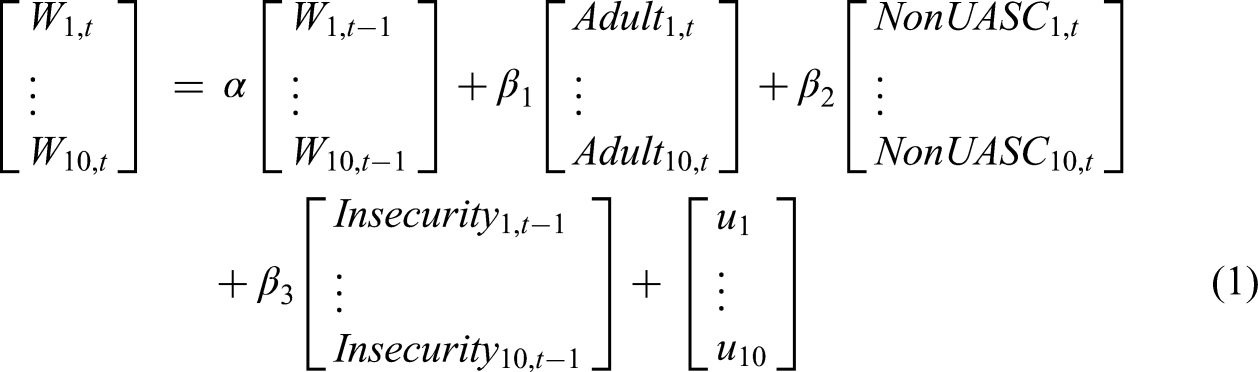
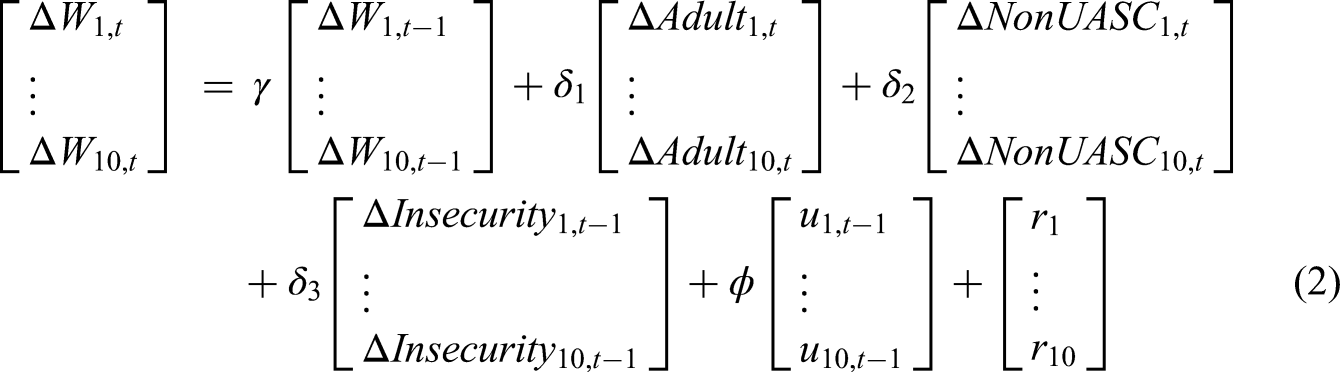
We followed the same steps when estimating the benchmark model using country data.
16
The static (long-run) model is as shown below:

Findings
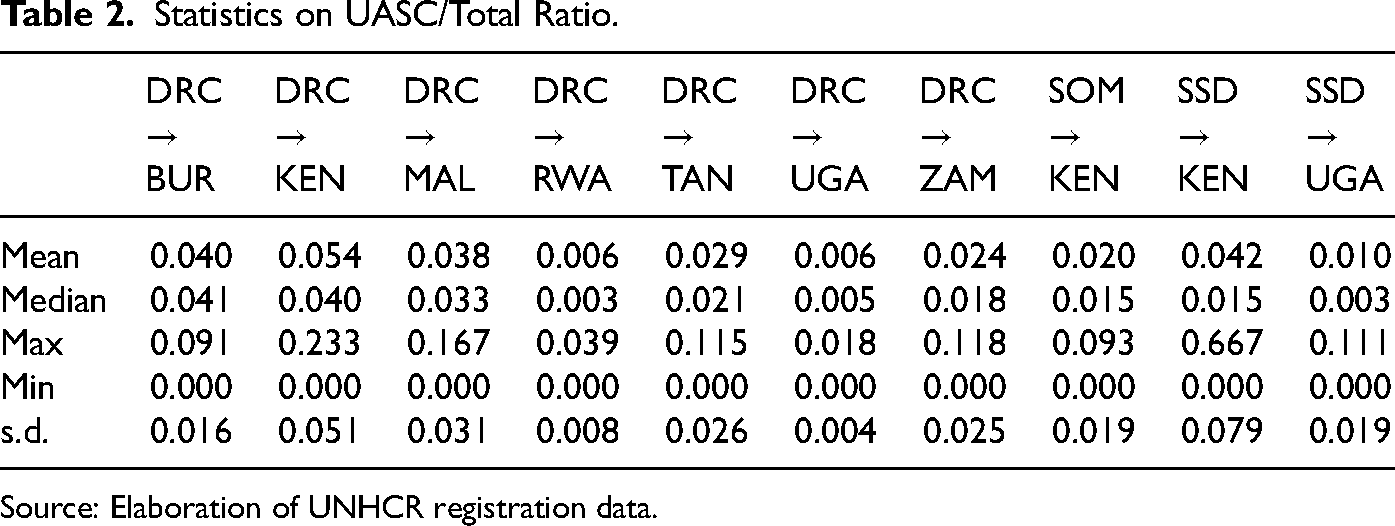
Earlier we remarked that the proportion of UASC in a fleeing population is expected to fall within a certain range, which can be larger or smaller depending on the specificities of the context. Table 2 provides a summary view of the data used in this study, covering the large majority of refugee flows in Africa over the past decade.
Statistics on UASC/Total Ratio.
Source: Elaboration of UNHCR registration data.
At first sight the data in Table 2 reveals remarkable variability, with estimates of the mean and median of the ratio UASC/Total ranging from 0.003 to 0.05. For instance, there does not seem to be much in common between the large mean and variation that signs the ratio among the Congolese refugee population in Kenya and the low mean and variation of the ratio among the Congolese refugee population in Rwanda or Uganda. Indeed, this variability reflects the presence of a few outliers, as highlighted in Figure 1. However, even ignoring the outliers, Figure 1 gives the impression that the distribution of the ratio UASC/Total is markedly different across cases.
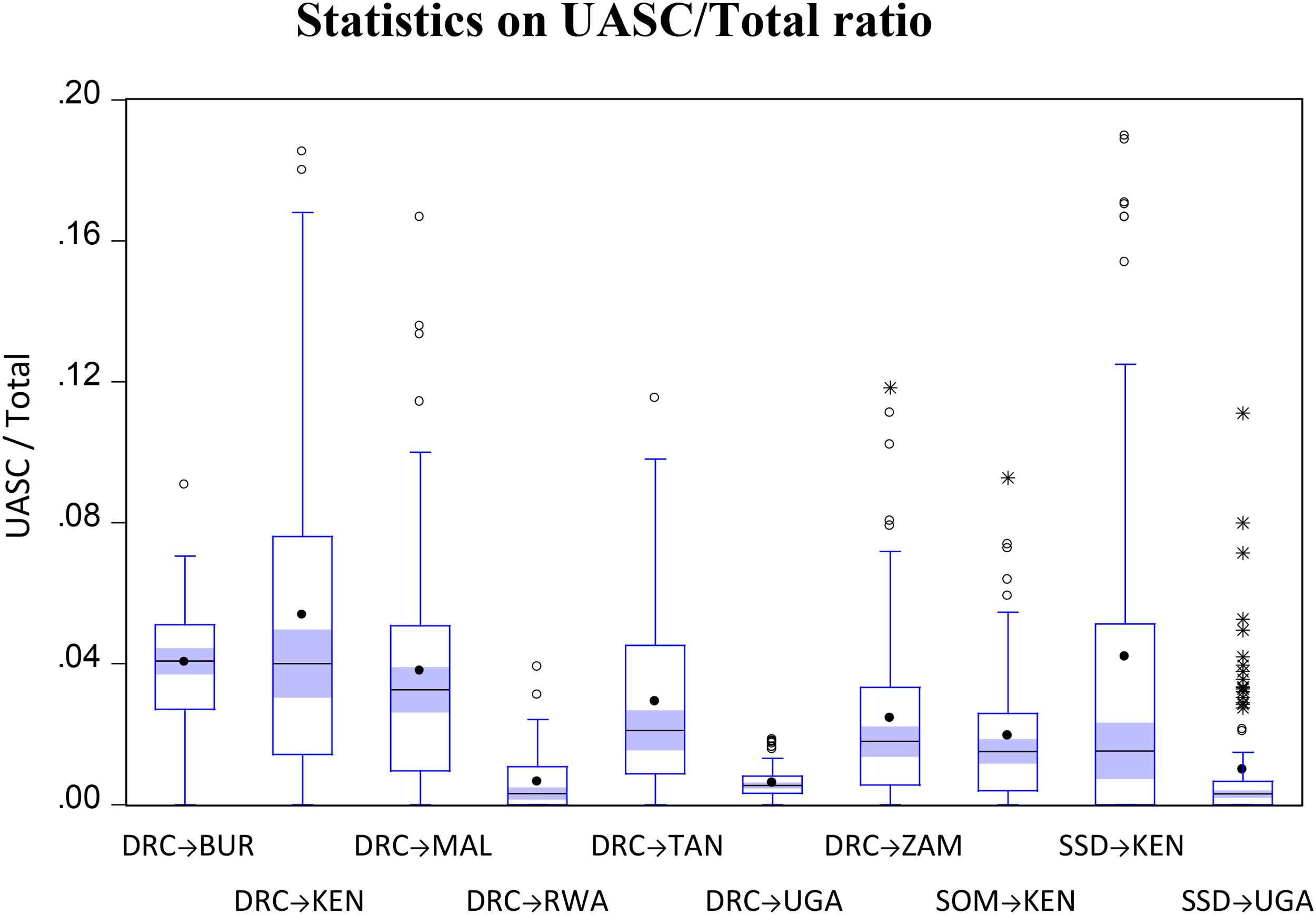
Statistics on UASC/Total ratio. Source: Elaboration of UNHCR registration data.
At this stage, it is interesting to consider that in most of the cases considered there is only some small discrepancy gender-wise. The major exceptions to such gender balance are the superiority of the female UASC component among the South Sudanese population fleeing into Uganda and Kenya and the male UASC component among the Congolese population fleeing into Malawi and Zambia. In this regard, it is necessary to consider that the UASC share of the fleeing population is in all cases small; therefore, relatively small changes in the ratio UASC/Total may not be appropriately captured when the independent variables vary in a disproportionately broader range. Therefore, to overcome this constraint we have limited this exercise to the estimation of gender-aggregated models.
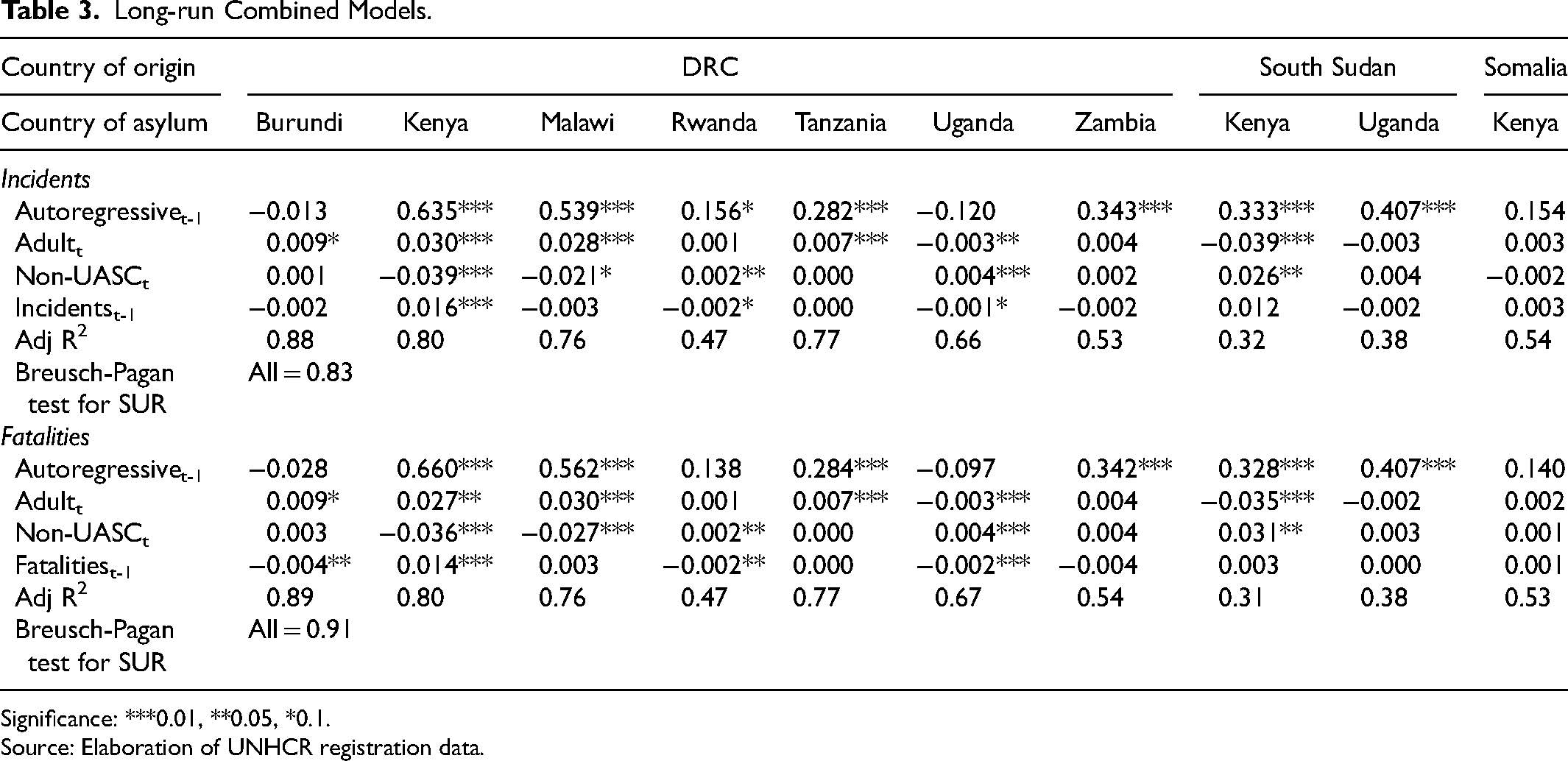
Following the preliminary steps described above, we consider the model results. Table 3 presents the results obtained using the long-term models. Each model includes either Incidents or Fatalities as a security variable. The different natures of these two security-related variables do not significantly affect the results of the analysis.
Long-run Combined Models.
Significance: ***0.01, **0.05, *0.1.
Source: Elaboration of UNHCR registration data.
A common finding among most of the equations, with a few notable exceptions, is the significance and relevance of the autoregressive parameter: the autoregressive component is generally significant and plays the major role in determining the future value of the ratio. On the other hand, it is not possible to identify a consistent prevalence between adults and nonUASC as determinants of the ratio. Coefficients of each variable are found to be significant in approximately half of the equations, with their value far below that of the coefficient of the autoregressive component. Lastly, the security-related variable is found to be significant in fewer than half of the cases, i.e., only in three equations where security is proxied by the number of incidents, and in four equations where security is proxied by the number of fatalities.
The explanatory power of the models is relatively good, with the R2 ranging between 0.31 and 0.81. 17 Interestingly, most of the highest R2 values are found with DRC-related equations, and the lowest are found with SSD-related equations. The lower explicative power of the models for the South Sudan-related situation signals that some important situation-specific variables have not been taken into account. However, with this acknowledgement it is necessary to remind the reader that the present analysis is aimed at a multi-situation analysis and not at defining best-fit models for individual situations.
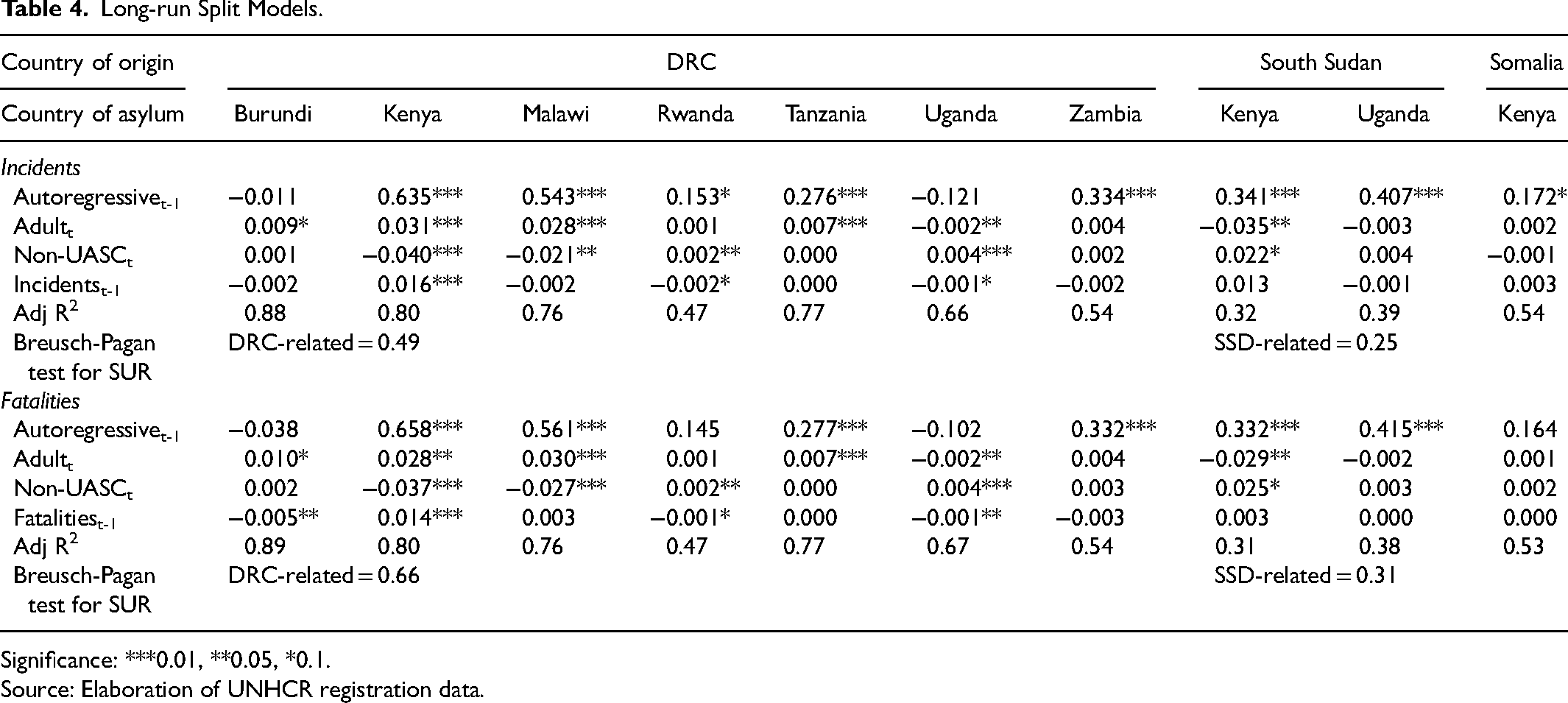
The Breusch-Pagan statistics reported in Table 3 are found to be significant in supporting the argument raised in the methodology section about the presence of regionally-unobserved common factors across the equations, where a SUR estimation provides more efficient parameter estimates than single-equation OLS estimates. To test the validity of this argument the SUR estimation has been replicated by aggregating only equations related to the same country of origin. The long-term results from the new split models are presented in Table 4. As we have only one equation related to the Somalia situation, the single-equation OLS estimation has been applied. The comparison of results reported in Tables 3 and 4 remarks the similarity of their coefficients as well as of the explanatory power of the models. However, the Breusch-Pagan statistics estimated in Table 4 are considerably lower than the values reported in Table 3, highlighting a limited heterogeneity captured by the models. This finding is not surprising: the smaller number of cases is reflected in a lower degree of heterogeneity. At this stage comparison of the results of the Breusch-Pagan test reported in Tables 3 and 4 reveals that while the hypothesis of independence of errors in the estimated models is rejected in all cases, suggesting that the various cases examined share common factors, the rejection is stronger when the various situations are considered via a combined approach than when each is considered alone. The points we want to make here are that: (a) the long-term models developed using a combined approach (Table 3) closely resemble the long-term models developed using a situation-specific approach (Table 4), and additionally that (b) the combined approach is able to capture some contextual factors shared by all of the situations under consideration that are not explicitly included as explicative variables in the models. As such, the combined models are preferable to the situation-specific models.
Long-run Split Models.
Significance: ***0.01, **0.05, *0.1.
Source: Elaboration of UNHCR registration data.
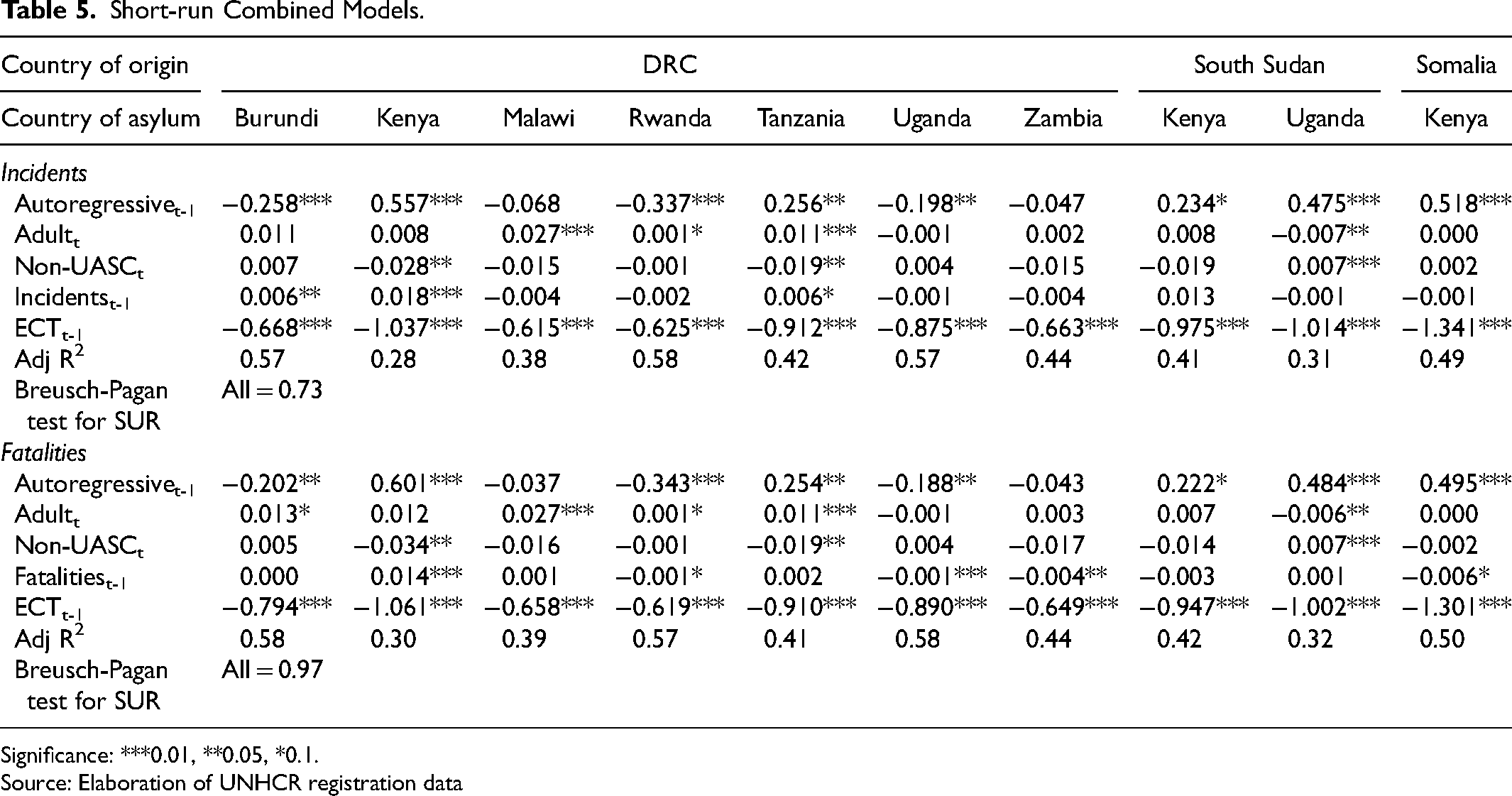
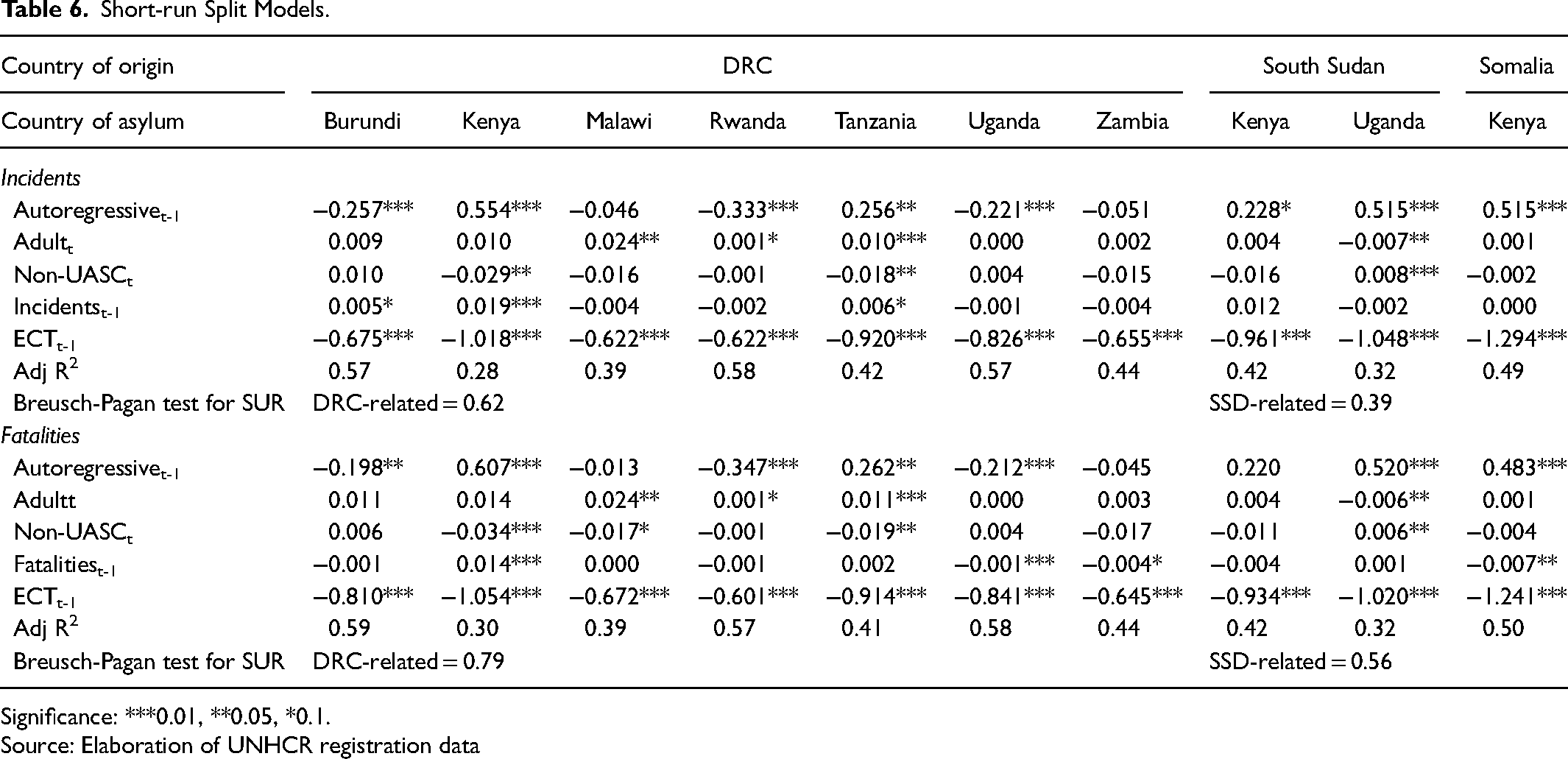
All of the points considered above about the long-term analysis – the prevalent relevance and significance of the autoregressive component compared to the other population-related variables; the sporadic significance of the security variables; the explanatory power of the equations; and the results of the Breusch-Pagan tests – are valid as well about the results of the short-term analysis reported in Table 5 (combined models) and Table 6 (split models).
Short-run Combined Models.
Significance: ***0.01, **0.05, *0.1.
Source: Elaboration of UNHCR registration data
Short-run Split Models.
Significance: ***0.01, **0.05, *0.1.
Source: Elaboration of UNHCR registration data
Table 4 provides an additional contribution that is extremely important for our analysis from a dynamic perspective. The coefficient of the ECT provides a measure of the speed of adjustment; in other words the expression 1/|ECT| measures the time required by the UASC/Total ratio to return to a condition of equilibrium after a shock. This information can be extremely useful for the analysis of the evolution of the ratio following a sudden increase or decrease in the flow of fleeing people. In fact such information can make a critical contribution that strengthens the capacity to model the movements of a fleeing population both during a shock and in its immediate aftermath. Table 7 reports estimates of the time units – in this case, months – required for the number of UASC in respect of all refugee arrivals to get back to its long-term values following a shock. Interestingly, all of the estimates reflect a fast reaction to shocks and return towards the long-term balance: the time required for adjustment of the UASC/Total ratio towards its long-term equilibrium is 0.75 to 1.66 months, or approximately 3 to 7 weeks.
Months Required for the UASC/Total Ratio to Return to its Long-Term Equilibrium.
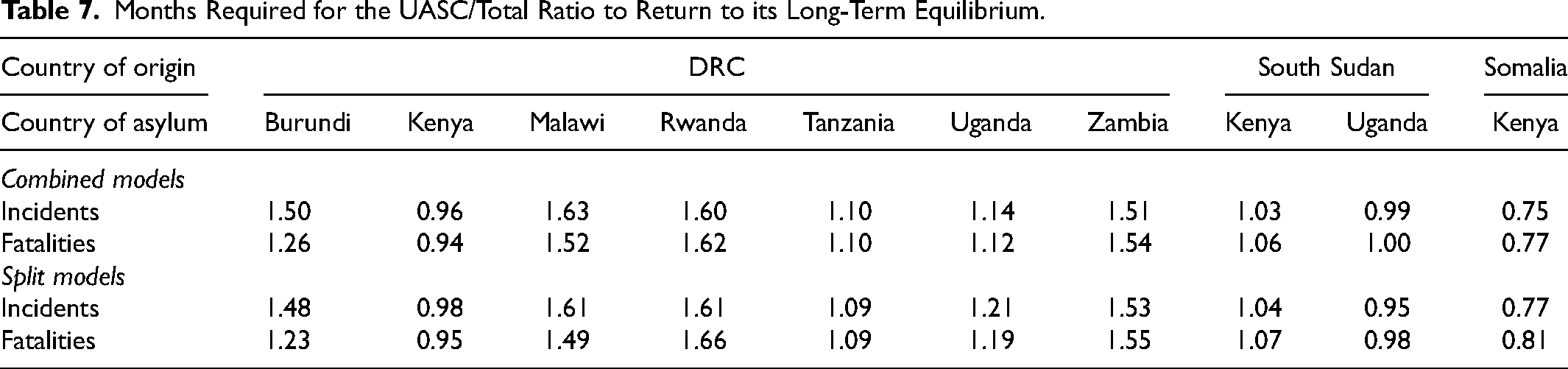
In general, little variation is detected when comparing the estimates based on the two security-related variables. Likewise, the estimates based on the combined models closely resemble those based on the split models. Overall, the estimates of the time required for this process of adjustment provide a consistent image of a fast and dynamic adjustments to the long-term values of the UASC/Total ratio, the data in Table 7 identifying the countries in which this adjustment process is faster than that of others. It appears to be particularly rapid in the case of Somali refugees moving into Kenya, while the case of Congolese refugees moving into Burundi, Rwanda, Malawi and Zambia seems to be the least dynamic of the situations considered in this study.
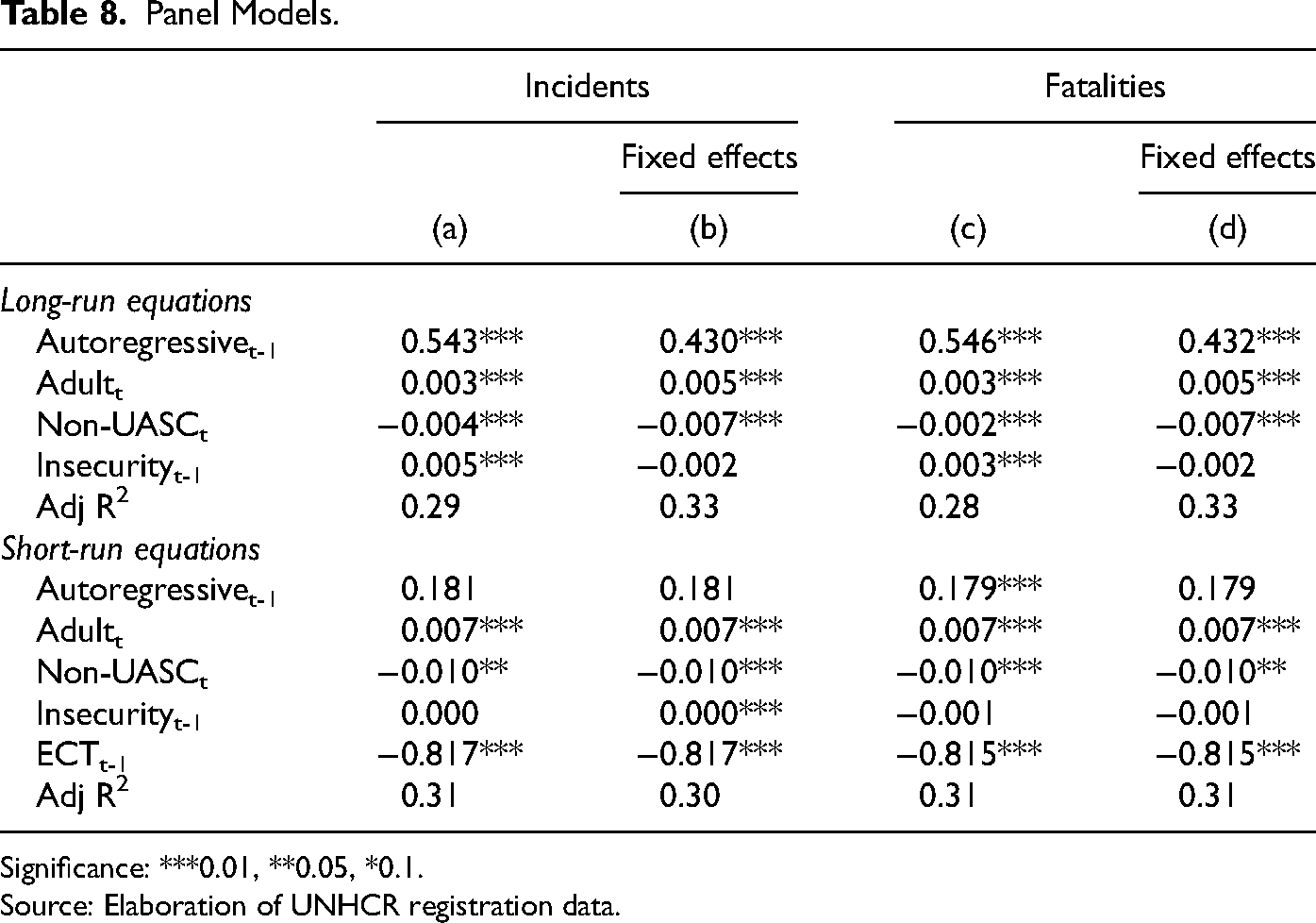
At this point, the consistency of the estimates of speed of adjustment presented in Table 7 – and consequently of the number of time units required to complete the adjustment process – in the various situations considered, and the results of the Breusch-Pagan tests reported in Tables 3–6 led us to consider running some panel models with the inclusion of some autoregressive component. The results presented in Table 8 can be interpreted with reference to a combined or regional approach. As mentioned in the methodology section, events occurring separately in the various case studies considered here share common natural, cultural, historical, etc. settings that contribute to making them part of a common context. Of course the Congolese, South Sudanese and Somali situations considered in this study cannot be generalised to all emergency-induced movements of people – and hence separation – in Africa. However, as they cover a very large share of such movement on the continent it can be argued that the similarities in the patterns of separation identified above help to define what can be referred to as the African model of separation in emergencies. The specifications of the panel models presented in Table 8 vary according to both the security variable and the inclusion of fixed effects. Overall, the models do not present significant differences and largely reflect the models presented in Tables 3–6. Of particular relevance for this study are the values of the ECT coefficient included in the short-run equations. The strong similarity of the estimates is encouraging. Since the coefficient of the ECT is interpreted here as the speed of adjustment, we can proceed, as above with the SUR models, to estimate the time units required to complete adjustment to the long-term equilibrium. In this case, the number of time units (months) required is estimated at 1.23. This value can be considered the regional estimate and fits quite well within the range of case-specific estimates presented in Table 7.
Panel Models.
Significance: ***0.01, **0.05, *0.1.
Source: Elaboration of UNHCR registration data.
Conclusions
This study is inspired by the consideration that those separated from their parents and families because of conflict, population displacement or natural disasters are among the most vulnerable. Hence, it has made a case by contributing to improve current knowledge on this issue.
This study has assessed the stability of the separation of children during emergencies in the African context. A few cases characterised by major flows of fleeing population have been considered, providing a large dataset which has allowed to analyse of the evolution of the proportion of children separation among those fleeing their countries.
The analysis highlights the differences among patterns of separation. Our estimates of the proportion of UASC in total fleeing populations in the cases analysed range widely, from 0.3% to 5%. Besides this, a certain variability within each case has been detected, and it has been remarked how the evolution of separations related to populations fleeing from one country of origin into nearby countries may have quite different patterns of separation. In this regard, it may suffice to compare the high mean and variation in the proportion of UASC among the Congolese refugee population in Kenya with the low mean and variation among the Congolese refugee population in Rwanda or Uganda.
This study's major contribution is the analysis of the speed of the adjustment of the UASC share of the fleeing population after a shock. The analysis has found that despite the wide range of estimates of that share, in all of the cases considered their return to the long-term mean values is rapid, taking between 3 and 7 weeks after the initial shock. Similar estimates of 5.2 weeks were obtained through a combined regional approach. These estimates can usefully support the monitoring of refugee population movements, and particularly the prediction of the UASC caseload, especially during periods when there is high variability in the number of new refugee arrivals. This knowledge is expected to strongly support related humanitarian assistance programming.
As a final consideration, this study can provide the basis for further research to produce similar analysis about other parts of the world. In fact, it remains to be tested whether the findings of this study could extend beyond the situations considered here. Although the regional dynamics behind the UASC flows can remarkably differ in general terms, this study proposes a simple but robust way to test whether such regional flows show some common patterns. This is recommended for further research.
Footnotes
Acknowledgements
Funding from the United States Bureau of Population, Refugees and Migration is gratefully acknowledged. Essential data for this study was received from various UNHCR field officers and from the UNHCR's Global Data Service. Useful comments on a preliminary study were received from staff of the UNHCR Innovation Service, Division of International Protection and the Global Data Service and from the UNHCR staff from regional offices. Finally, particular appreciation is given to the comments received from the participants to the thematic roundtable on the use of data to promote age, gender and diversity mainstreaming organised by the Global Protection Cluster in March 2019. All remaining errors are the responsibility of the authors.
Declaration of Conflicting Interests
The author(s) declared no potential conflicts of interest with respect to the research, authorship, and/or publication of this article.
Funding
The research received a grant from the United States Bureau of Population, Refugees and Migration.
