




Abstract
This paper explores the rarely examined experiences of unaccompanied refugee minors in Nairobi, Kenya. Children are thought to comprise up to a third of Nairobi's refugee population, however, there is virtually no data on them. The paper provides a first analysis of a unique dataset to ascertain unaccompanied minor refugees’ experiences of physical, emotional, resource related, and sexual violence. Our research findings indicate widespread violence among refugee children living in Nairobi, and denote the prevalence of several kinds of violence in particular. Our results also reveal which children are most at risk and the type of abuse they are most likely to experience.
Introduction
Children are thought to comprise up to a third of Nairobi's refugee population, however, there is virtually no data on them. Of an already vulnerable group, refugee children without the protection of a parent or adult family member are particularly defenseless, their experiences unknown.
Our unique dataset indicates widespread violence among refugee children living in Nairobi, and denotes the prevalence of several kinds of violence in particular. This paper provides a first exploration of this dataset to ascertain unaccompanied minor refugees’ experiences of resource-related abuse, physical violence, emotional violence, and sexual violence. We employ a logistic regression to estimate the likelihood that an unaccompanied refugee child will experience different types of violence conditional on their biographical features.
By doing so not only do we shed light on a hard to reach, overlooked, yet sizable minority within the refugee community, we also highlight the opportunities and hazards of collecting data on unaccompanied refugee children that can be considered in future research. Methodologically, we take the novel step of employing a pair-wise competition instrument to acquire greater leverage on the inferences drawn from the responses provided by the children with respect to their experiences. These results are fully replicable, and the technique is easily exported to other and future cases. However, we also note the ethical and methodological challenges of conducting survey research on children, particularly those who have been victims of shock and trauma, and provide recommendations for future research on this subject.
Refugee Experiences in Kenya
East Africa is the third largest refugee hosting region in the world after Europe and Central and South America in 2022 (UNHCR 2023). Refugees come to Kenya, the region's economic hub and a place of relative stability, in search of safe haven and economic opportunity. At last count, in February 2022, Kenya was host to over half a million refugees (UNHCR 2022). Kenya has long favored a policy of keeping refugees in camps, often for extended periods (Lambo 2012; O’Callaghan and Sturge 2018). Even so, many refugees successfully find their way to Nairobi in search of livelihood opportunities.
The size of Nairobi's refugee population is not known. According to UNHCR, in 2017, 61,819 registered refugees lived in the capital city, but the true number is thought to be nearly triple that. The countries of origin from which Kenya's refugees hail fluctuates according to the political, economic, and environmental turmoil in neighboring countries. At present, 55 percent of refugees are from Somalia, while 24 percent are South Sudanese. Nine percent come from DRC, with another 6 percent from Ethiopia. Refugees fleeing Rwanda, Eritrea, Burundi, and Uganda make up the balance (UNHCR 2019).
For the high number of refugees known to be in Nairobi, there is little data available on this population. Urban refugees seek anonymity by staying mobile, almost all work in the informal economy, and most eschew modest UN support for fear of being sent to one of the camps or forcibly deported. Consequently, urban refugees are a largely hidden population. Indeed, “invisible” is a frequently used adjective when describing refugees (Campbell, Kakusu and Musyemi 2006). So too are “marginalized” (Jaji 2009) and “hidden” (Pavanello, Elhawary and Pantuliano 2010).
If refugees are marginalized, hidden and invisible, unaccompanied children are especially so. Child refugees without the protection of a parent or adult family member endure frequent harassment and exploitation in the country in which they claim asylum. With limited coping mechanisms and lack of family support, such children are especially vulnerable to violence.
Hypotheses
Urban refugees are already a little studied group, but there is virtually no empirical data on unaccompanied minor refugees living in Kenya's urban centers. Recognizing that adult refugees living in Nairobi experience high levels of violence (Crisp 2000), we hypothesize that refugee children have a significant likelihood of encountering violence as well. In this paper, we test the following five hypotheses:
Data
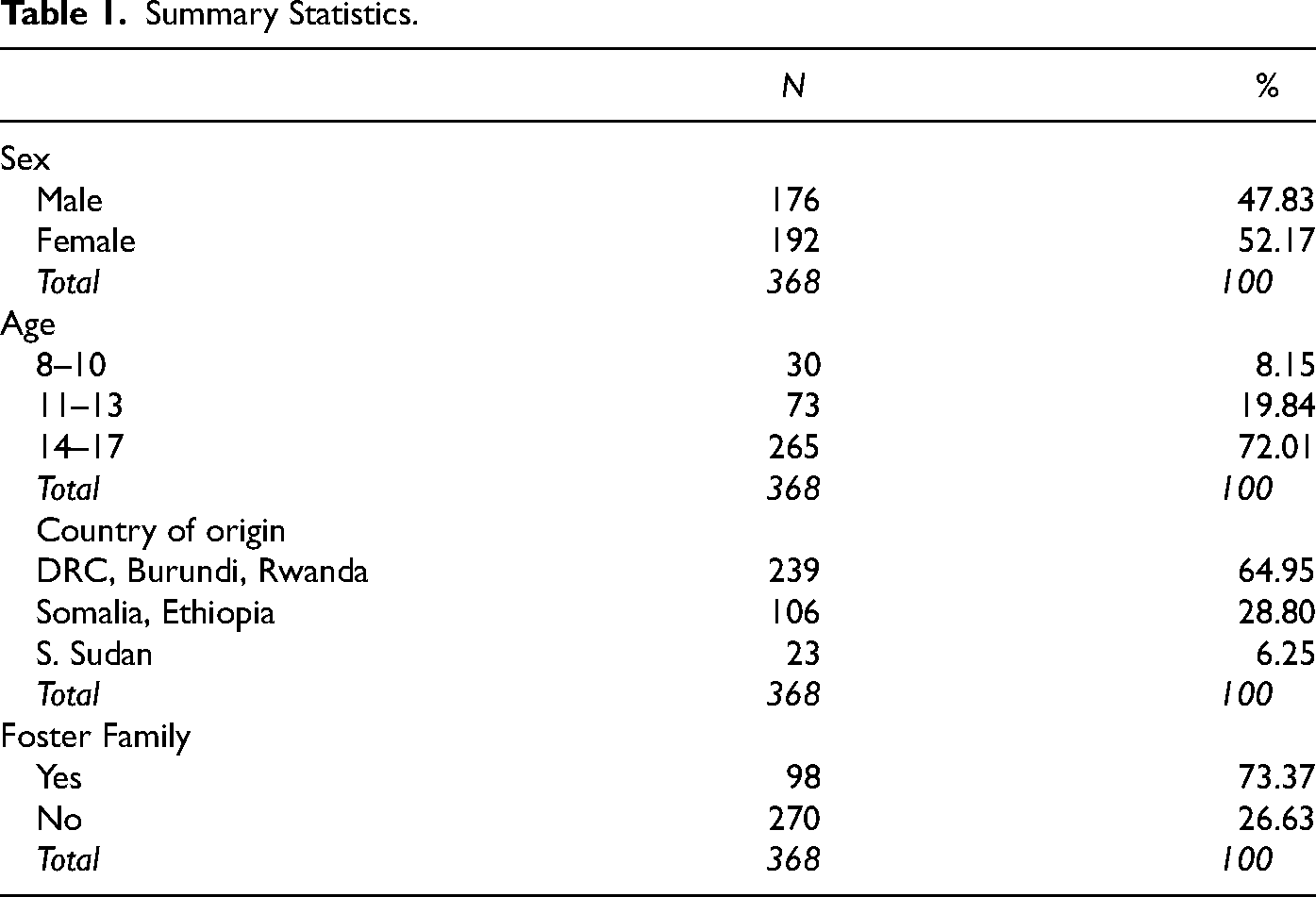
Among non-governmental organizations and social service providing agencies in Kenya, it is common knowledge that refugee children regularly experience violence of varying degrees of intensity once they arrive in their host country. In order to conduct our analysis, we employ a dataset compiled from a survey conducted in collaboration with RefuSHE, a Nairobi-based, NGO that provides sanctuary, educational support, and vocational training to refugee girls fleeing conflict and persecution from neighboring East African countries. The survey data contains individual, biographical-level data (age, home country, etc.) for 368 respondents, as well as detailed information on the different kinds of violence/abuse experienced in Kenya, where they have sought asylum. Table 1 presents summary statistics on the biographical characteristics of the survey respondents.
Summary Statistics.
The survey is unique both with respect to the respondents (unaccompanied refugee minors) and the range of questions that were asked. Questions pertain to 18 different kinds of violence that may be experienced by refugees, as well as the context in which violence and abuse takes place. Respondents were given the option to answer yes or no to a total of 18 different kinds of violence. Figure 1 presents the frequencies of the different kinds of abused experienced by the respondents in the survey. Each unique form of violence is matched to a more general typology that corresponds to one of the UNICEF violence against children definitions reported in Hidden in Plain Sight (2014): Physical, Sexual, Mental, Neglect. Drawing on the violence/abuse types recorded in the RefuSHE survey, we added an additional category to the UNICEF definitions: Resource-based abuse/violence. This category includes the following forms of violence/abuse: Begging, child labor, extortion, and slavery. We refer to this typology in the remainder of the text as UNICEF+. Emotional abuse is the modal category in the RefuSHE survey, followed by physical assault and harassment by state officials.
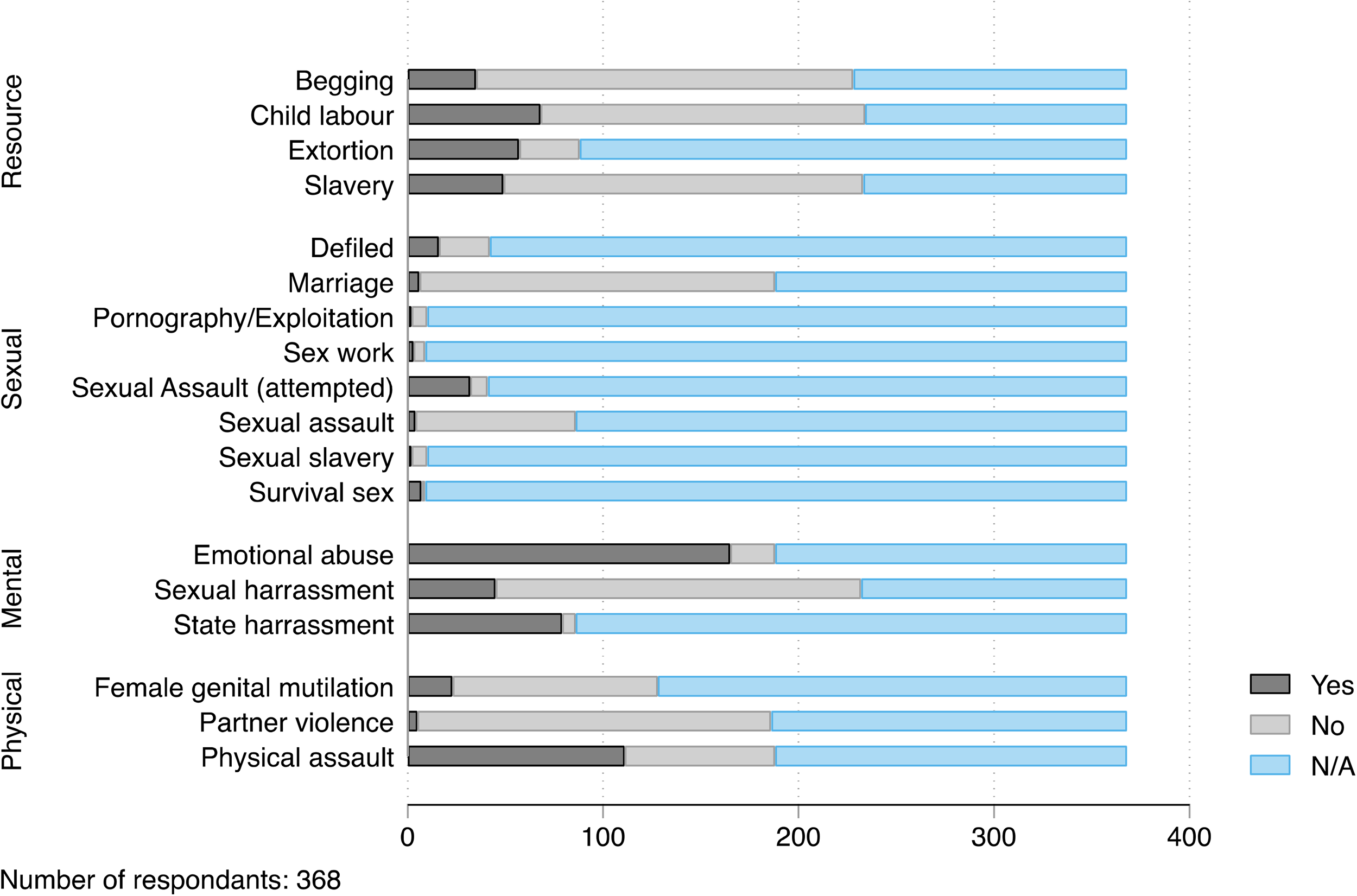
Categories of Violence Experienced by Refugee Children (Narrow).
Two considerations are immediately striking: First, the high frequency of “N/A” responses that were recorded in each category; second, the very low levels of reported sexual violence. In fact, it is known that sexual violence against unaccompanied minor refugee children is endemic. This discrepancy is particular evident when the individual violence types are pooled into the UNICEF + typology (Figure 2).
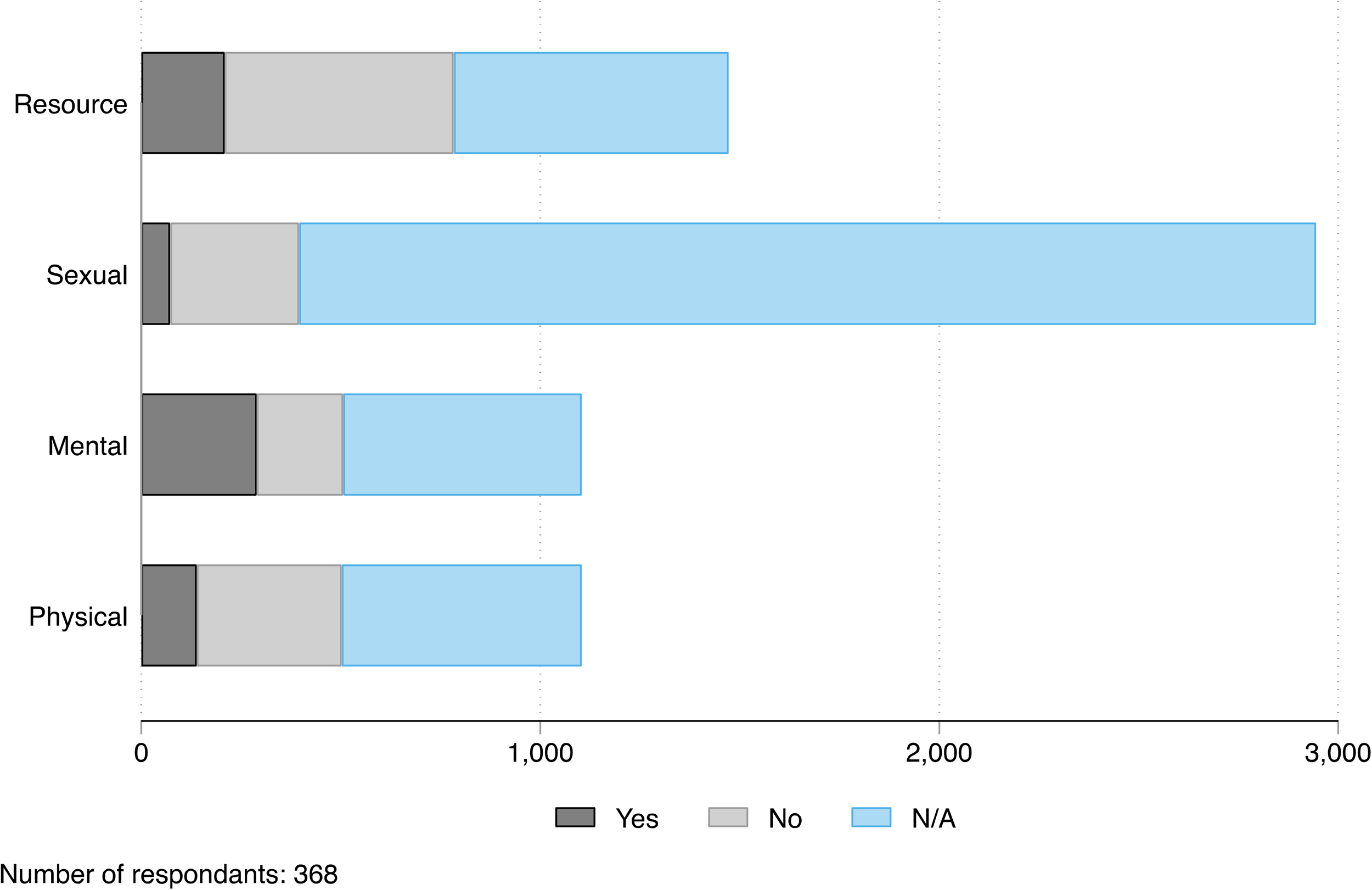
Categories of Violence Experienced by Refugee Children (Broad).
The Dependent Variable
We sought to determine the likelihood of an unaccompanied refugee child experiencing different kinds of violence/abuse. Consequently, our dependent variable is dichotomous and records whether or not the respondent has experienced one of four “types” of violence/abuse: Resource-related abuse; sexual abuse; mental abuse, and/or physical abuse. The dependent variable was constructed by pooling the specific violence/abuse types listed in the survey and assigning each a code that matches the violence categories used by UNICEF (2014), in addition to the resource-based violence/abuse category. Given that respondents can experience any combination of the types of violence/abuse, we construct binary dependent variables for each of the violence/abuse types which are then employed in four separate logistic regression models.
In addition to the logistic regression, we developed a model to better understand the degree or intensity of violence experienced by our population. To this end, we ran an ordinary least squares linear regression model where the continuous dependent variable is recorded as the level of violence experienced by each respondent. The scores for each individual type of violence/abuse were estimated using a Bradley-Terry model (see Zucco, Batista and Power 2019; Loewen, Rubenson and Spirling 2012) and recorded on a 0–100 scale (Figure 3). 2 According to our results, sexual slavery scored the highest at 97/100, followed by sexual assault by state officials at 78/100, whereas street begging featured at the bottom, scored at 14/100, with harassment at 15/100. Given that respondents can experience multiple types of violence/abuse, we recorded the sum of the violence scores for each respondent (Figure 3) and used that as the dependent variable. 3
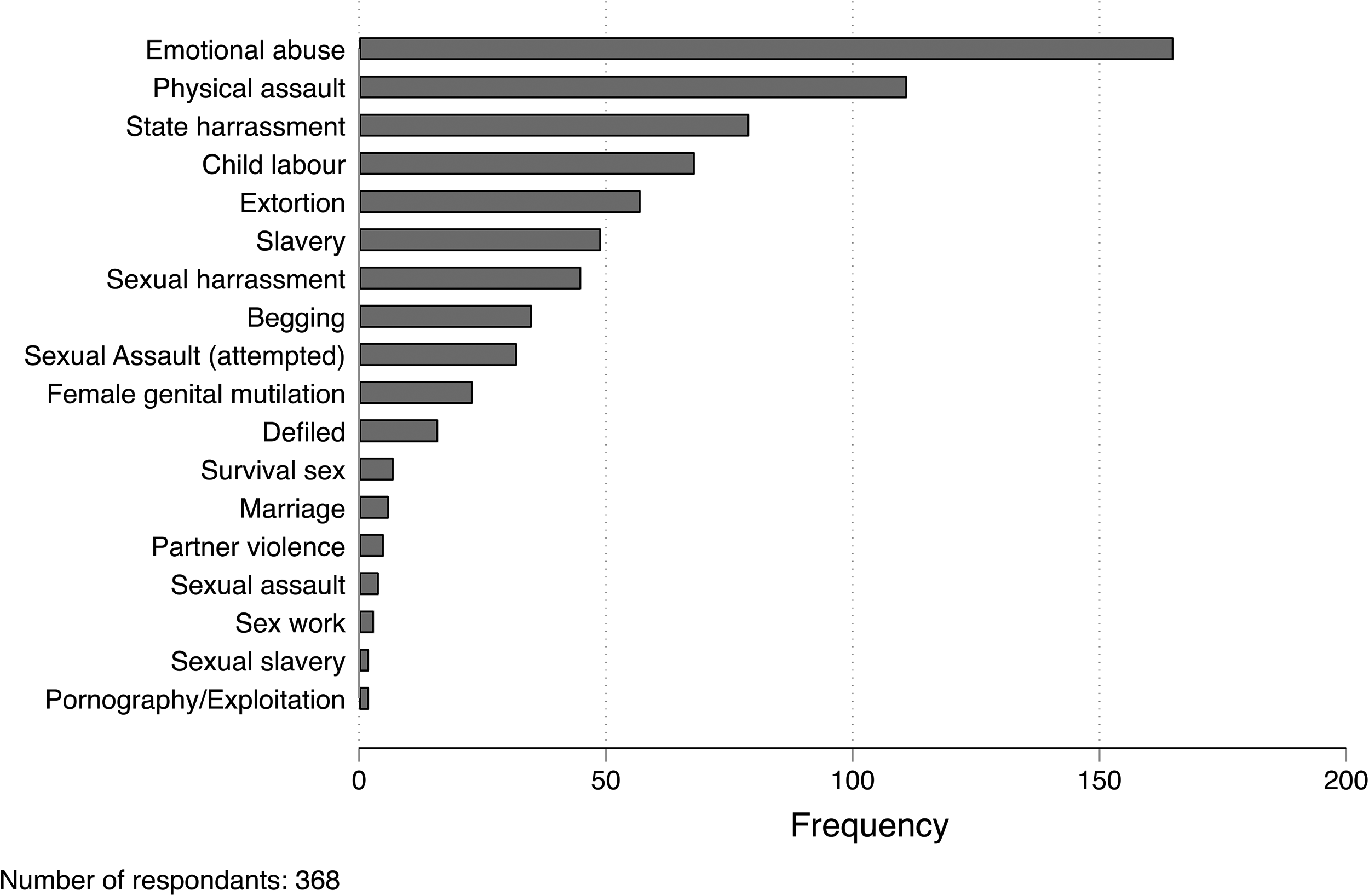
Frequency of Violence Experienced.
The Independent Variables
We regress the dependent variable on three independent variables that pertain to the biographical characteristics of the respondents. The first is the
Results
Before exploring any particular hypotheses, we sought to establish how widespread experiences of violence are among unaccompanied refugee children and what kind of abuse(s) are most common. We also wished to ascertain the effects of sex, age, and country of origin on the types of violence child refugees experience.
Examining whether or not our respondents answered “yes” to any of the individual violence/abuse questions in the survey, we find that 64 percent of unaccompanied refugee children report having experienced at least one type of violence/abuse (Figure 4).
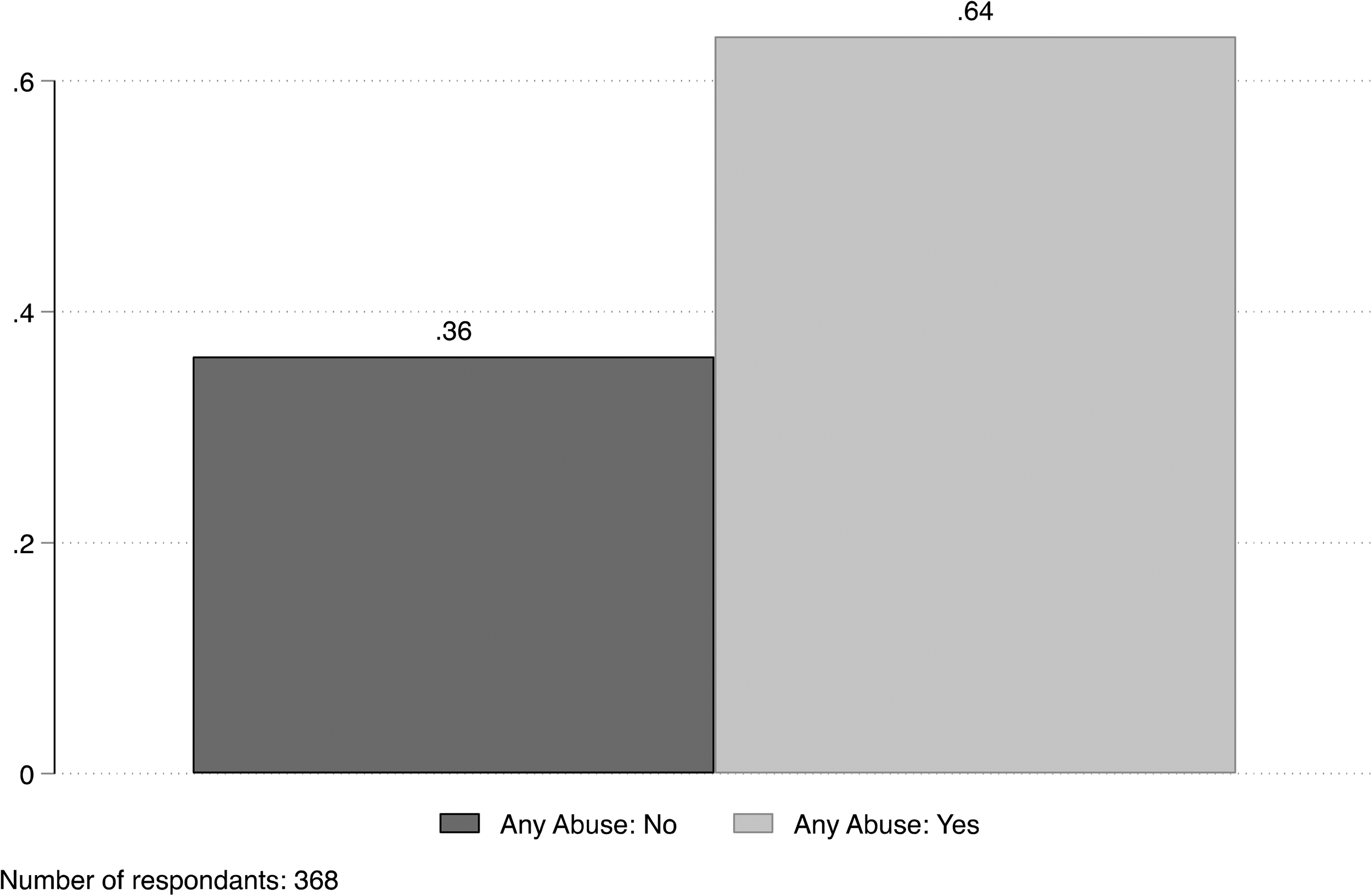
Experienced Any Abuse.
When the violence/abuse variable is broken up into its constituent units, we find considerable variation among the categories (Figure 3). Specifically, we find that emotional abuse, physical assault, and harassment by state officials comprise the three most common forms of violence/abuse experienced by refugee minors. This is followed by child labor, extortion, slavery, sexual harassment, begging, attempted sexual assault, female genital mutilation, rape, survival sex, forced marriage, partner violence, sexual assault, sex work, sex slavery, and pornography.
The categories are not mutually exclusive and individual refugees reported having experienced multiple forms of violence on multiple occasions. Consequently, there are more responses than there are respondents; this is a feature of the data that impacted the choice of our methods.
To determine the effects of our independent variables on the likelihood of experiencing specific kinds of violence/abuse, we ran four separate logistic regressions — one for each of our UNICEF + categories of violence: Resource; sexual; mental and physical. Separate models are necessary given that respondents can experience one, several, or all of the different kinds of violence/abuse. Likewise, a multinominal logistic regression is not appropriate. 4 Our model results are found in Table 2.
Logistic and OLS Regressions of UNICEF + Categories.
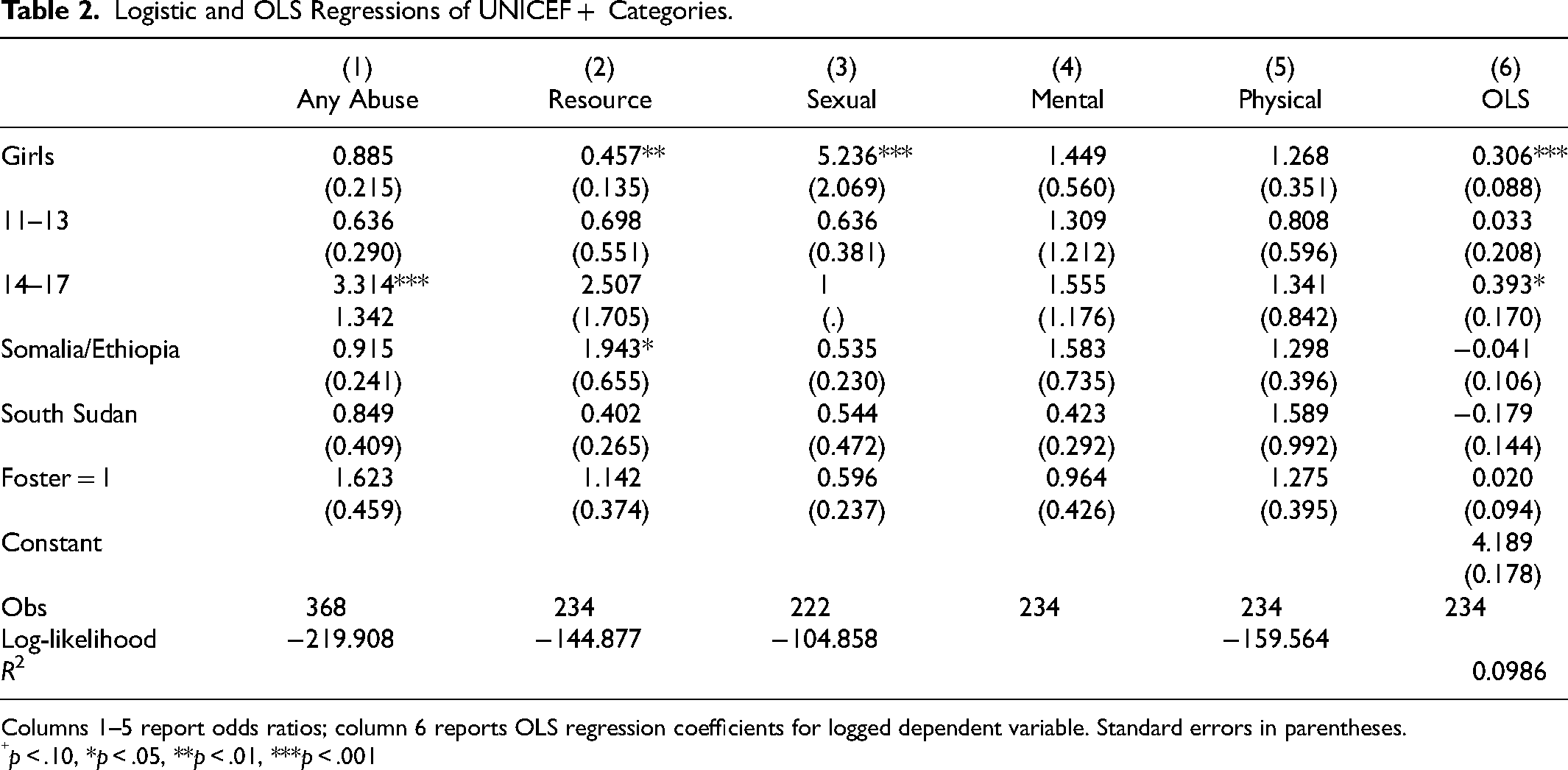
Columns 1–5 report odds ratios; column 6 reports OLS regression coefficients for logged dependent variable. Standard errors in parentheses.
p < .10, *p < .05, **p < .01, ***p < .001
Turning first to resource-related violence, we note that girls have a lower odds-ratio of experiencing resource-related violence/abuse than boys. We also find that children from Somalia and Ethiopia have an odds-ratio of experiencing resource violence/abuse that are twice as large as respondents in the reference category (DRC-RWA-BUR).
Notably, the sexual violence/abuse model reports that girls have a much higher odds-ratio (three times higher) of experiencing sexual violence/abuse than boys.
The remaining two variables are not statistically significant at the .05 level. We see no effect of sex, age, or country of origin on the physical and emotional violence models.
The empirical evidence indicates that violence is widespread among unaccompanied refugee children in the host country. Of the 18 kinds of violence children say they have experienced, emotional violence is reported most. Boys experience resource-related violence more often than girls. However, girls have an odds-ratio that is three times higher when it comes to experiencing sexual violence. With these general facts in mind, we now explore our hypotheses.
Unaccompanied refugee girls are more likely to experience violence/abuse than boys in the host country.
We hypothesized that girls are more likely to experience violence/abuse than boys in the host country, but our data disputes this. Within our same group of respondents, Figure 5 shows that the proportion of boys and girls who report having experienced violence/abuse is nearly the same: 48 percent of boys; 52 percent of girls (Pearson chi2(1) = 0.0175, Pr = .895).
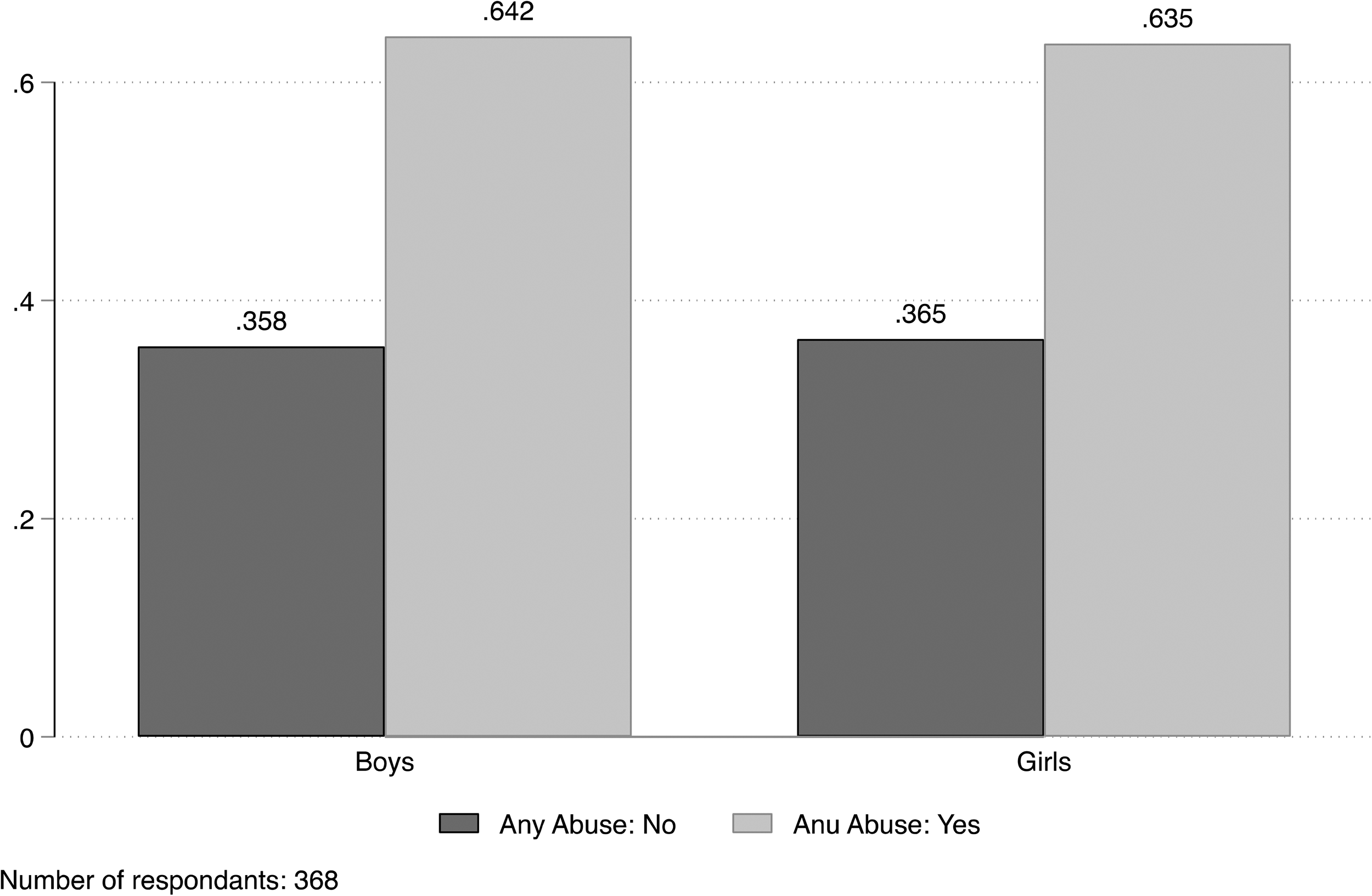
Experienced Any Abuse, by Sex.
Ultimately, we find no statistical difference between the numbers of boys and girls reporting violence. Rounded out, 64 percent of girls and boys alike report having experienced violence. Unaccompanied refugee girls and boys experience violence in equal numbers.
A logistic regression that controls for age, country of origin, and foster care status also reports that there is no statistically significant difference in the likelihood of experiencing violence/abuse for those boys and girls who responded yes or no in the survey (Table 1: column 1).
That said, while the majority of girls and boys are equally likely to experience violence, we see in Figure 6 that the type of violence they experience varies according to sex. A higher percentage of boys report having been harassed by state officials, having been victims of extortion, and having to resort to begging than girls. In the remaining 15 categories, a higher percentage of girls reported that they experienced violence/abuse than boys.
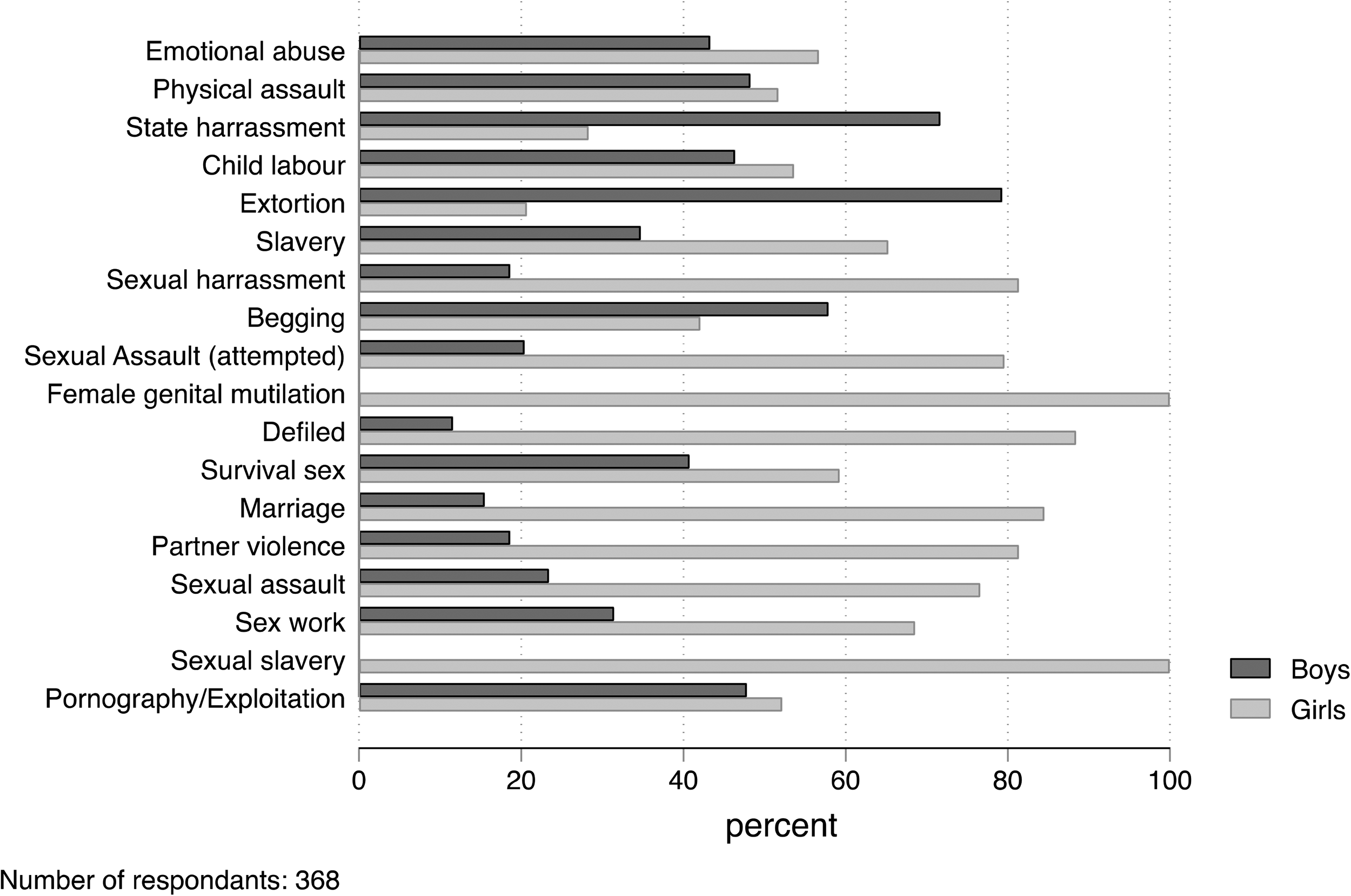
Violence Experienced, by Sex.
When we factor in the degree of violence experienced by children using the violence/abuse score variable, we also see variation according to sex. First, a two sample t-test (means comparison test) reports that there is a statistically significant difference in the mean violence/abuse scores for girls (M = 47.6, SD = 18.39) and boys (M = 38.08, SD 19.85); t = 6.63, p = .000. Girls, on average, experience nine percent more severe violence than boys. 5
While controlling for other factors, an OLS regression of accumulated violence scores demonstrates that girls have scores that are 31 percent higher than boys (Table 1: column 6). The finding is statistically significant at the .001 level. In sum, while girls and boys experience violence at the same rate, our analysis shows that girls experience a degree of violence that is nearly one-third greater than what boys report.
Age: Unaccompanied refugee children are more likely to experience violence as they age.
Regardless of age group, the majority of our respondents report having experienced violence. For instance, 57 percent of children between 8 and 10 report having experienced at least one type of violence. Among 11- to 13-year-olds, that number climbs to 64 percent. By the time they reach the age of 14 through 17, fully 74 percent of our respondents in this range claim that they have experienced abuse.
Our data indicates that there is a statistical relationship between age and violence and that relationship becomes more relevant with age. Indeed, bivariate hypothesis testing demonstrates that children's age and the reporting of abuse are independent (Pearson chi2(2) = 42.4263, Pr < .001). We regress abuse on age while controlling for sex, country of origin and foster care status using logistic regression (Table 2: specification 1) and find that only the “14–17 years old” category is statistically significant at the .05 level. Children in this age range have an odds ratio of reporting having been abused that are 3.31 times higher than children in the 7–10-year-old range.
The results are more nuanced when we consider the relationship between age and the accumulated violence scores. We see that 11–13-year olds have accumulated violence scores that are 39 percent greater than the scores of 8–10-year-old children; these results are statistically significant at the .05 level.
Country of origin: Somali child refugees experience a greater likelihood of violence.
Together, Somalis and Ethiopians are Kenya's most numerous refugees. Somalis are religious and visible minorities, mostly living in a single, concentrated neighborhood of Nairobi (Eastleigh), which makes them more visible still. Refugees from Somalia, in particular, experience discrimination and have been particularly targeted for violence by state officials (Kumssa et al. 2014). As a result, we expected to find that Somali refugee children would also experience increased incidences of violence.
Instead, our data finds no evidence that country of origin is related to experiencing abuse writ-large (Figure 7). Approximately 62 percent of all refugee children from the country groups we study (DRC-Burundi-Rwanda 65%; Somalia-Ethiopia 62%; South Sudan 57%) experience a similar likelihood of violence. A chi-square test of the independence was not statistically significant at the .05 level, nor were any of the levels of the country of origin variable in either the logistic or linear regressions. Contrary to our expectation, we find no evidence that Somali child refugees experience a greater likelihood of violence than do children from other countries of origin.
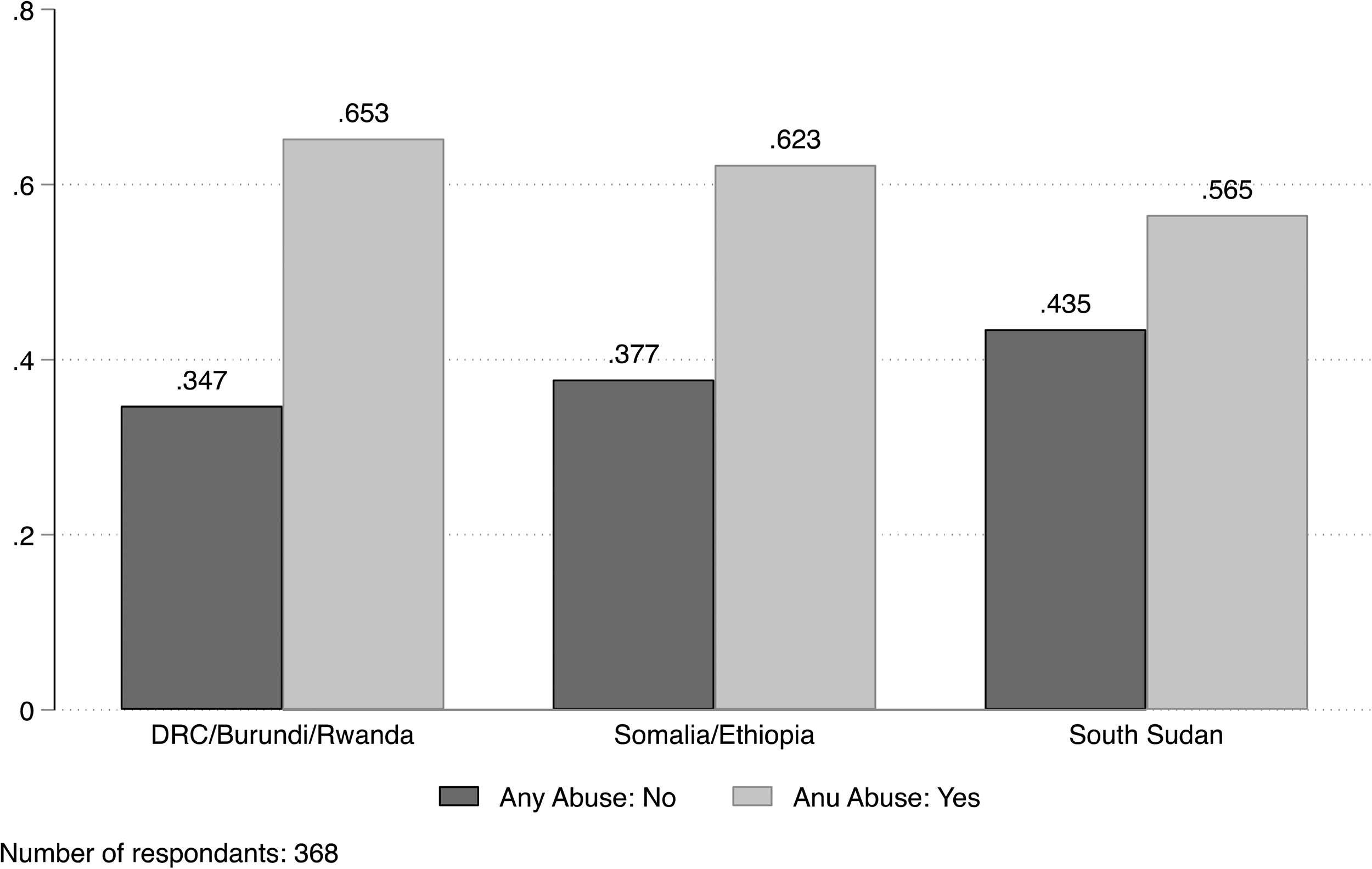
Any Abuse Experienced, by Country of Origin.
Foster housing: Child refugees living with foster families experience less violence.
Agencies working with refugee children favor placing unaccompanied minors in foster families from the same country of origin (Olusese, Petros and Abuya 2018). There is widespread belief that children living under the care of at least one adult are safer and less vulnerable to abuse. Nearly a third (29%) of our respondents noted that they lived with foster families. However, according to our data, children who live in foster care do not experience statistically significant different levels of abuse from those children who have other housing arrangements (Figure 8).
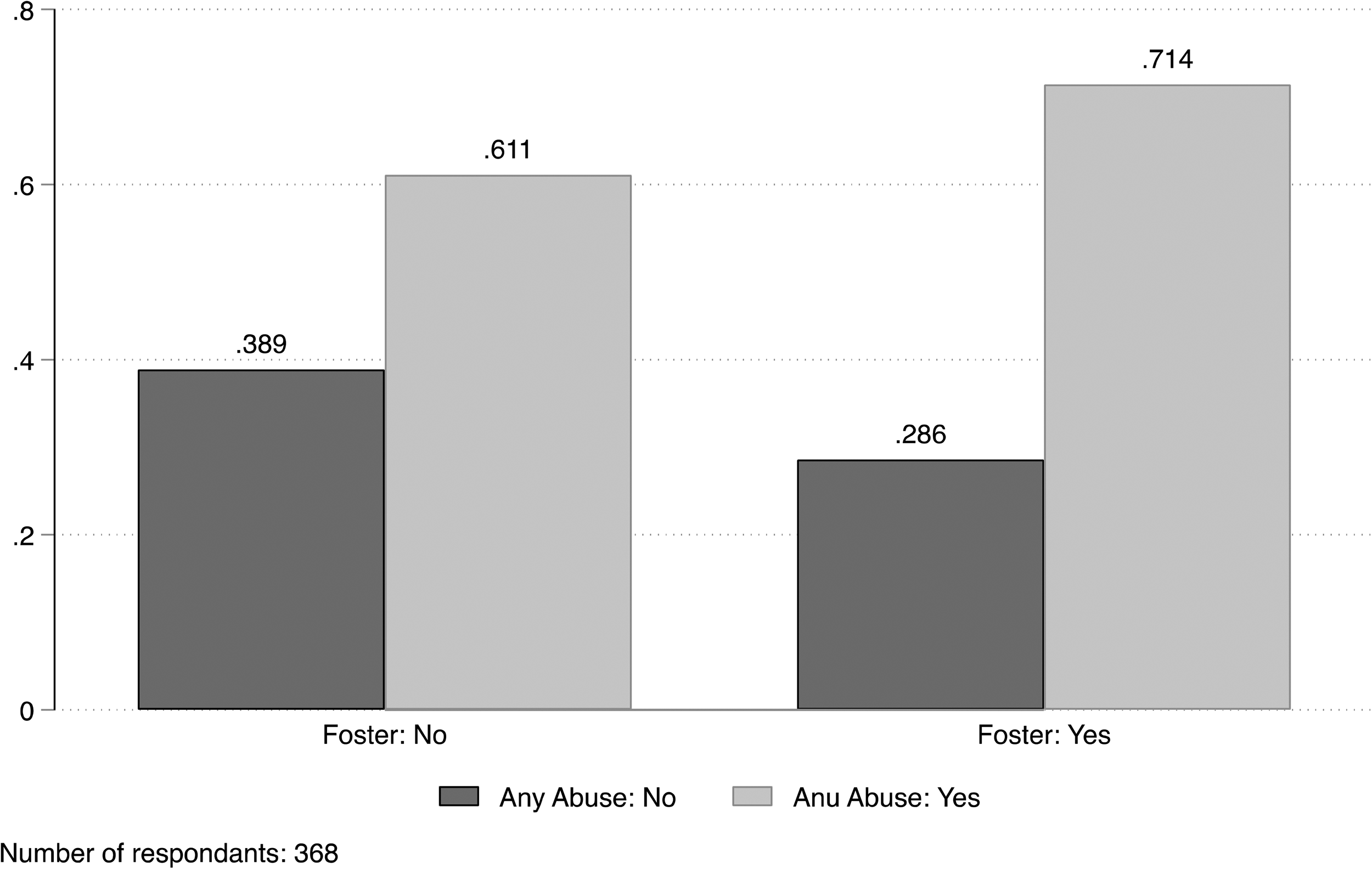
Any Abuse Experienced, by Foster Care Status.
Additionally, foster care status does not significantly change (substantively or statistically) the likelihood of a child experiencing abuse or their accumulated violence scores (Table 2: column 6).
Sexual violence: Unaccompanied refugee girls experience a higher likelihood of sexual violence than boys.
Although men and boys experience sexual violence, female refugees, in particular, are targeted for sexual violence. However, the stigma, shame, and fear that male and female refugees alike experience as a result of being victimized mean that this kind of violence is greatly underreported. The literature indicates that female refugees are particularly vulnerable to sexual violence (Vu et al. 2014) and that refugee girls most commonly reported reason for claiming asylum was “paternalistic and sexual violence” (Hedlund, Salmonsson and Sohlberg 2021). We hypothesized that refugee girls would experience a higher likelihood of this kind of violence as well. As noted in table, our sexual violence/abuse model shows that girls have an odds ratio of experiencing sexual violence/abuse that is 5.2 times higher than boys, thus confirming our hypothesis.
Limitations of the Research
Underreporting on Sexual Violence
In our survey, reports of sexual violence are so low as to be nearly statistically insignificant.
However, according to qualitative evidence gathered from more than 40 semi-structured interviews, we know that the vast majority of refugee children (up to 90%), particularly girls, experience sexual violence, both in their countries of origin, as well as in the host country. 6 In our field work, we also learned that among the countries of the Horn and East Africa, there are deep cultural taboos around discussing sexual activity in general. Moreover, individuals who admit to having experienced sexual violence are often blamed, shunned and further victimized. Trauma counsellors note that it takes many hours of one-on-one sessions before a child will reveal sexual abuse. This is an area that reveals considerable limitations in quantitative research gathering and analysis.
N/As
The data from our survey is constrained by the large numbers of “non-answers” given by our respondents. For example, when assessing unaccompanied refugee children who experienced state violence, the n is reduced from caption (“Number of respondents: 368”, size(small) span) to 234 due to children who answered “N/A” to the “have you experienced State violence” question. For questions relating to sexual violence, the number of non-answers we received to yes or no questions was so great as to render our inferences biased (Figure 9). On average, 90 percent of respondents reported “N/A” to questions on having experienced sexual violence.
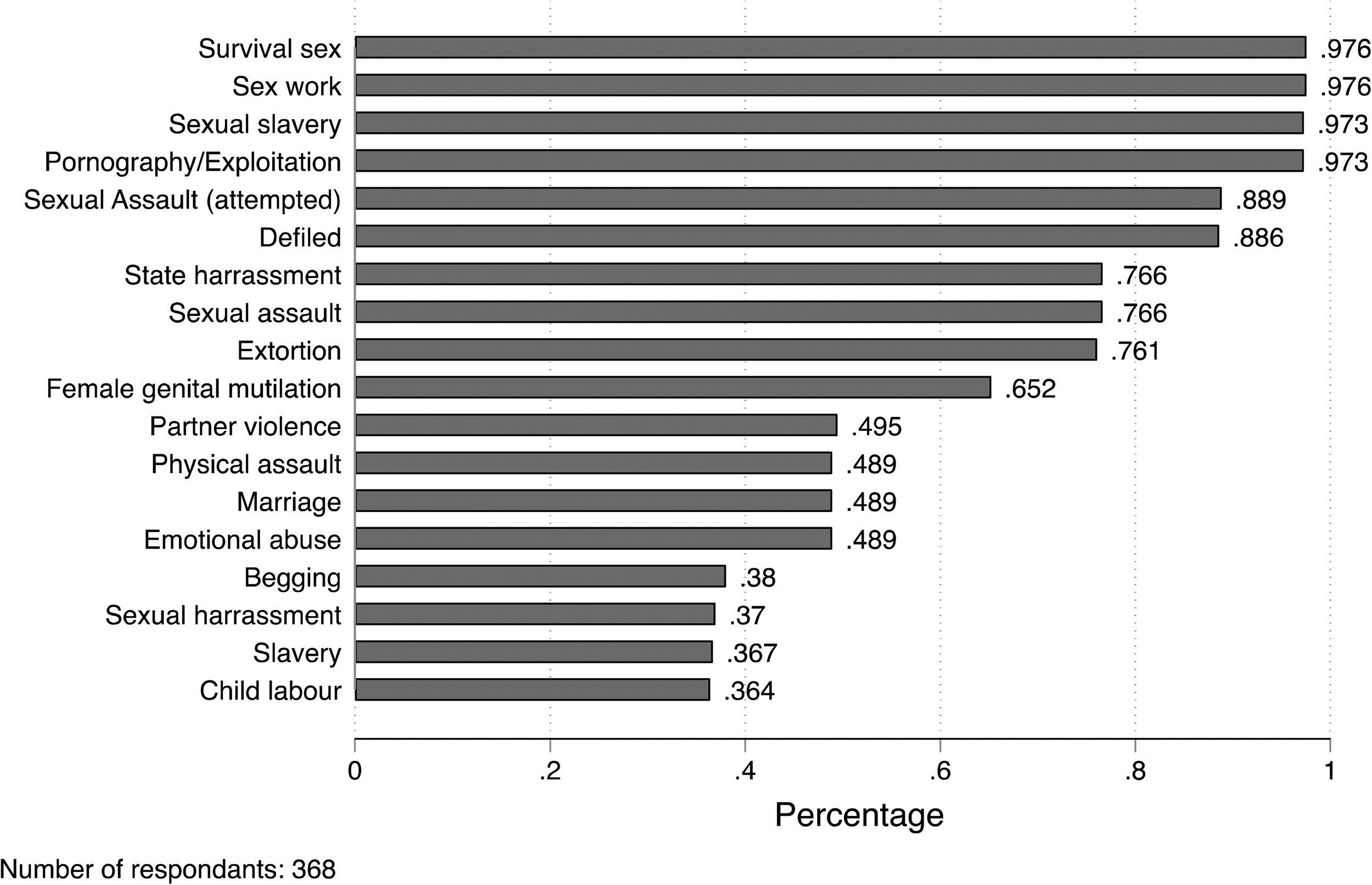
Violence/Abuse Types: Responded N/A (Percent).
There are numerous reasons why a child may choose to avoid answering a question, while others may even choose to lie. We interviewed an experienced trauma counsellor to ascertain some of these considerations. Some refugee children may know their abusers and may seek to protect them for fear of retribution, so they will refrain from answering questions they believe may incriminate them. Many refugees are preoccupied by resettlement. Knowing they are being questioned by a representative of an agency which may work on matters of resettlement, a child may seek to give answers they believe the interviewer wants to hear. If they cannot ascertain the “correct” answer, they will choose to say nothing. For surveys administered by interpreters, it is possible that a child may not understand the question. Additionally, questions about sexual behavior, in particular, cause great discomfort among children from East Africa and the Horn; discussing sexuality and sexual behavior openly is a taboo. Moreover, unaccompanied refugee children are vulnerable and depending on where they are in stages of development, they are highly aware of their vulnerability. A child will wonder whether answering questions truthfully will benefit them, and if not, they will often choose to say nothing. Similarly, a child will also consider the risks of sharing personal information with a relative stranger; if they cannot predict what may happen if they answer a question truthfully, often they will choose to stay silent.
Finally, the binary choice of a yes/no answer may lock a child into a narrative about themselves that they may not wish to embrace. For example, respondents believed if they answered yes to the question as to whether they had engaged in survival sex, this would label them a prostitute. Giving a child a scale of options (i.e., always, rarely, sometimes, often, always) might grant them some autonomy over their own perception of self, while giving researchers a broader view of an issue. Ultimately, the counsellors and child development psychologists we spoke to note that ensuring reliable data collection from a survey instrument when working with a vulnerable population would require that a child have multiple meetings with the same experienced counsellor who would administer a survey with non-binary answer options.
Future Research/Next Steps
The initial results presented in this paper provide the foundation for additional investigation that will shed light on a subset of the refugee community that is overlooked, not for lack of will, but for lack of visibility. The results are sobering in so far as they confirm statistically what is already known in the NGO and social service providing communities: Unaccompanied refugee children frequently experience violence and girls are primary victims of sexual violence. The limits of our survey instrument, the non-response rates, especially for questions pertaining to sexual violence, along with the challenges of collecting valid and reliable data from children who have experienced trauma, hinder how much we are able to leverage from the data in order to make inferences. Nevertheless, we still made statistically significant findings pertaining to the levels and types of violence experienced by unaccompanied refugee children.
The next step in this research entails validating the findings of our statistical analysis. In addition to the survey, we also conducted numerous in-depth interviews with a subset of the survey respondents. These interviews were supplemented by a series of focus groups with a cross-section of refugees residing in Nairobi. Transcripts/minutes of the interviews and the focus groups will be analyzed by human coders as well as quantitative text analysis software to validate, expand on, and enhance the initial results found in the survey. Indeed, we expect that a detailed and systematic examination of the qualitative data will assist us in overcoming the response bias issues that we know to be present with the sexual violence/abuse questions. Further, we expect that these additional data will add substance and nuance to the nature of the violence experienced by refugee children and will provide insight into the manner that they can be best supported.
Conclusions
Most refugee children have both witnessed and experienced high levels of violence in their country of origin. Indeed, violence is the single-most cited precursor to becoming a refugee. However, a minor refugee's likelihood of experiencing violence does not dissipate once she arrives in a host country such as Kenya.
Violence among unaccompanied refugee children is widespread and commonplace. Our data reveals that a significant majority (64%) of unaccompanied refugee children have experienced violence upon their arrival in Nairobi.
Boys and girls experience violence with the same frequency. However, the severity of violence girls experience is significantly greater. The three most common reported forms of violence are emotional abuse, physical assault, and harassment by state officials. Our data shows that many refugee children have experienced more than one kind of violence on more than once occasion.
Unaccompanied refugee girls and boys are equally likely to experience violence. However, the kind of violence a child experiences differs according to sex. For instance, boys are more likely to experience violence at the hands of a state official. Our research also indicates that girls report levels of violence that are more severe than boys.
The likelihood that an unaccompanied refugee child will experience violence is significant at all ages. However, the older the child, the greater the chances that they will experience violence. Adolescents aged 14 through 17 are 3.3 times more likely to experience violence than children under the age of 10.
A refugee child's country of origin does not factor into their likelihood of experiencing violence. Unaccompanied minors from DRC are just as likely to experience violence as children from Somalia or South Sudan.
Many unaccompanied refugee children are placed in foster families, ostensibly for their own protection. Our research finds that being housed with a foster family does not significantly impact a child's likelihood of experiencing violence, nor does it limit the severity of violence they experience.
Our research indicates that girls are five times more likely to experience sexual violence than boys. However, the inferences we can make on sexual violence are otherwise limited, namely due to high incidences of underreporting.
Indeed, quantitative research instruments like surveys present significant limitations with vulnerable populations such as unaccompanied minor refugees. We acknowledge a need for strong qualitative evidence to further bolster our findings.
Footnotes
Acknowledgements
We would like to thank the editors and anonymous reviewers for their helpful comments. An earlier version of this paper was presented to the UNHCR Child Protection Working Group in Nairobi, Kenya in July 2022. We are thankful for their comments and suggestions.
Declaration of Conflicting Interests
The author(s) declared no potential conflicts of interest with respect to the research, authorship, and/or publication of this article.
Funding
The author(s) received no financial support for the research, authorship, and/or publication of this article.
