




Abstract
This interdisciplinary study investigates representations of cannabis in 386 Australian newspaper reports from the latter-part of the nineteenth century. During this time, periodicals were the primary means of information circulation, and the Australian press shared much of its reporting with other jurisdictions. Using a reflexive thematic analysis, this research reveals that in this period, in which cannabis was being introduced into colonial pharmacopeias but had not yet been regulated in Australia, periodicals were at the heart of communicating cannabis to Australian audiences. These newspapers represented cannabis as both a dangerous recreational drug and a legitimate medicine, with these very distinct representations largely siloed from one another. These discourses, facilitated and perpetuated by mass media, were representative of a patchwork of influences, including international anxieties of drug use. Therefore, such reporting both legitimized and de-legitimized cannabis, influencing popular understandings of cannabis in nineteenth-century Australia at a pivotal time in the drug's history.
Introduction
In recent decades, scholars have mapped the multiple, complex, and often contradictory meaning afforded to cannabis in news media (Adler & Lewis, 2023; Kępski, 2021; Kim & Kim 2018; Lewis et al., 2015; Lynch, 2021; Mortensen et al., 2018; Sznitman & Lewis, 2015). In this paper, we contribute to this literature but take an interdisciplinary approach, exploring how Australian periodicals represented cannabis between 1840 and 1901. By turning our attention to how news media represented cannabis two centuries ago, we investigate the historic role of mass media in legitimizing, de-legitimizing, and mainstreaming the plant (Lewis, 2020), at what was a key time in its history. Many considerations of cannabis prior to this study have considered its usage and de-legitimization in the twentieth century, as though it only became relevant or prevalent during that period. This study shows that this was not the case, and that understandings of cannabis were being built throughout the nineteenth century. During this period newspapers played an important role in shaping public attitudes toward science and related areas of cultural debate (Henson et al., 2004). In fact, newspapers were perhaps even more important to the historic conceptualization of drugs like cannabis in the nineteenth century than they are today due to their relative monopoly on the information diets and cultural lives of Australians.
Despite the lack of a historical focus, modern communication studies on cannabis are useful in highlighting the complexity of cannabis news representations. For instance, studies have found that mediatized representations of the drug cover themes of law enforcement, criminality, politics, and the medicinal validity of cannabis (Adler & Lewis, 2023; Kępski, 2021; Kim & Kim 2018; Lewis et al., 2015; Lynch, 2021; Mortensen et al., 2018). It has been said that news media often has “difficulties retaining a conceptual boundary between medical and recreational cannabis” (Abalo, 2021, p. 345). Cannabis as an “object” is attached to both recreational and medicinal discourses (Lancaster et al., 2017), existing as a “polysemic character” in modern society (Duff, 2016). These studies provide a springboard for our paper which combines historical data with media analysis to investigate 386 newspaper articles about cannabis from nineteenth-century Australian periodicals. Furthermore, they provide the opportunity to compare nineteenth-century media reporting of cannabis with current reporting to highlight similarities and difference in how news media has represented cannabis. This period was chosen as it marks the introduction of medicinal cannabis into the western world, and due to the authority of mass media in the nineteenth century.
The History of Cannabis in Australia and Abroad
The public perception of drugs, such as cannabis, has never been monolithic. Cannabis has existed as a polysemic object for centuries (Duff, 2016), and was not regulated as a drug at an international level until 1925 (Collins, 2020). Australia was not considered a single legal entity until Federation in 1901, with each colony prior to this determining its own legislation. As a result, Australia's legal landscape has been considered “a patchwork of provisions copied from England with some colonial innovations designed to adapt English law to colonial conditions” (Finn, 2000, p.113); this extended to drug policies. Prior to the twentieth century, drugtaking of any kind was largely seen as a personal choice and “outside of the purview of government intervention” (Malleck, 2020, p.1). As a result, many governments tended to see drugs as taxable income rather than a substance which required regulation in either its medicinal or recreational form.
This approach shifted toward the end of the nineteenth century following a wave of temperance movements in Australia, and abroad. Australian organizations, often related to religious institutions or women's rights movements, “lobbied effectively for increased controls but more importantly helped to popularize a new understanding of drugs as fundamentally problematic and requiring regulation” (Allen & Thomas, 2021, p. 4). They leveraged the growing concern with orthodoxy and the professionalization of the medical profession—then still in its infancy (White, 1999)—and the nascent concept of addiction to push temperance agendas. These agendas initially focused on alcohol, but by the turn of the century were extended to include other drugs including opioids and cannabis.
Yet, cannabis had been used as a medicine and for non-medicinal purposes such as a fiber for ropemaking, clothing and sails for several thousand years (Pisanti & Bifulco, 2019). In the nineteenth century, cannabis was introduced to Western medicine through the efforts of Dr William Brooke O'Shaughnessy in the 1830s and 1840s. Dr O'Shaughnessy observed the use of cannabis in Indian medicine for the treatment of a variety of conditions such as convulsive disorders (Kalant, 2001). Upon returning to England, he brought the seeds of Cannabis Indica with him for investigation by the Pharmaceutical Society. By the late nineteenth century cannabis was adopted into colonial pharmacopoeias and was identified in the Lancet medical journal as a useful analgesic (Pisanti & Bifulco, 2019). Cannabis in the form of hashish—a resin from the upper leaves and flower buds of cannabis—was also studied in France by psychiatrist Jacques-Joseph Moreau and others, however, the term “hashish” was embedded in racialized ideologies (Kalant, 2001, p. 81). In 1809, Baron Antoine de Sacy presented his research to the Institute of France which linked hashish and “hashish eaters” to the fanatical followers of Persian warlords. This originated from the story of Hasan-I-Saban, an Ismaili fanatic leader who, in Persia in 1090, founded “the order of the Hashishiyans.” Hashishiyans were referred to in the West by Sacy and others as “assassins,” thought to be “hashish eaters”—lower class people led by their habit to beggary (Nahas, 1982). This reinforced the convoluted link of cannabis with the racial “Other” in European and English-speaking cultures and was subsequently used to vilify the drug itself.
The racialization of cannabis use continued in the twentieth century as the plant was “rebranded” as a drug for abuse in the “Reefer Madness” campaign (Mathre & Byrne, 2002). Cannabis was also increasingly replaced by standardized drugs such as opioids and aspirin in medical fields. This era of prohibition led to the United States Marijuana Tax Act of 1937, and by 1942, cannabis had been removed from both American and British, and subsequently Australian, pharmacopoeias (Pisanti & Bifulco, 2019). Cannabis was later rescheduled to reflect a full narcotic status. Despite the history of vilification and de-legitimization in the nineteenth and twentieth centuries, cannabis has in recent years been reconsidered as a medicine in Australia and abroad. In Australia, some medicinal cannabis products have been available since 2016 (Adler & Lewis, 2023).
Nineteenth-Century Periodicals
Prior to the advent of modern technologies such as radio, television, and the internet, newspapers acted as the “primary vector of information globally connecting colonies such as those of Australia with a unifying imperial culture” (Chattopadhyaya, 2022, p. 101). Newspapers were common throughout the colonies during this period and included both the emerging mass press and local papers (Potter, 2007). According to Benedict Anderson, they were essential in the construction of the “imagined communities” (2016, p. 2) of empire, linking global imperial cultures and spreading commonalities in values and understandings. In this sense, there was also a hugely influential international dimension to Australian newspaper reporting and publishing in the nineteenth century. The progress of technologies such as the steamboat and telegraph made international content more accessible than ever to Australian newspaper editors (Potter, 2007). As a result, Australian readers were acutely aware of international reporting and opinions on drugs, and this informed their own understandings. Periodical discussions of drug-related issues such as experimentation and temperance movements have been described as “transformational” in shifting public opinion on drugs (Allen & Thomas, 2021, p. 4). Newspapers were “some of the most significant material and cultural forms through which the sciences were communicated and debated in the Victorian period” (Dawson & Topham, 2004, p. 8). Therefore, how Australian newspapers reported on cannabis in this period is salient, as periodicals were the “primary means of cultural circulation in the nineteenth century” (Dawson & Topham, 2004, p. 1), lying at the heart of social and cultural life (Henson et al., 2004). To investigate how Australian nineteenth-century periodicals represented, characterized, and positioned cannabis, 386 newspaper reports were analyzed using a reflexive thematic analysis approach.
Methodology
A content analysis utilizing reflexive thematic analysis was chosen as the method for this study, as mixed-method approaches are becoming increasingly common in media research. This approach allowed for both a latent qualitative thematic coding of the newspapers, and quantitative descriptive statistics of the themes and other manifest units of data (Neuendorf, 2018). Taking a latent approach to the data allowed for a deeper, qualitative analysis of the themes and their meanings, whereas a manifest approach allowed for a more literal analysis of the data, such as frequency counts of the themes (Neuendorf, 2018).
Sample and Data Gathering
Newspaper articles about cannabis from the National Library of Australia's Trove collection of digitized newspaper were harvested as the sample for this study. While working with digitized archival material can be challenging due to incomplete collections, the Trove collection is still the largest of its kind in the world (Bode, 2017), offering opportunities to examine a wide range of content from newspapers across the country. The timeframe of 1840–1901 was established to capture the introduction of medicinal cannabis to Australia, before Australia was federated from Britain in 1901.
The keywords of “cannabis,” “hashish,” and “hasheesh” were chosen as search terms due to their relevancy to the period. The scientific term “cannabis” was used by Dr O'Shaughnessy when introducing the plant to the European medical community in the nineteenth century (Pisanti & Bifulco, 2019). The term “hashish” was chosen as the aforementioned psychiatrist Moreau documented the use of “hashish” in his medical work in France (Pisanti & Bifulco, 2019). The alternative spelling “hasheesh” was also commonly used, such as in Ludlow's 1857 “Hasheesh Eater,” and “An Essay on Hasheesh” (Robinson, 1912). The word “hemp” was not included, as while certain genera such as “Indian Hemp” were associated with narcotic and medicinal forms of hemp, the term had strong agricultural roots as hemp was the leading cordage fiber until the beginning of the nineteenth century (Small & Marcus, 2002). The term “marijuana” did not enter popular usage until the twentieth century, and therefore was also not appropriate for this analysis.
The chosen terms were then entered into the Trove database, and 1216 articles were harvested into spreadsheets via digital humanities scholar Tim Sherratt's Trove Harvester tool. Each article was then read by both researchers to ensure it met the inclusion and exclusion criteria. Duplicates were excluded from the dataset with only the first chronological instance of an article included. Duplication was a feature of nineteenth century global media due to the prolific nature of pirated copy and “scissors and paste” journalism (Pigeon, 2017). Also excluded were articles where cannabis appeared as a singular passing reference with no further discussion, or those in which the keywords were mistakenly recorded as a result of inaccuracy issues with the Optical Character Recognition processes employed on the historic digitized materials. Once this process was complete, 386 articles met the inclusion criteria, and were isolated for analysis.
Data Analysis
As this study is an interdisciplinary project that methodologically and epistemologically sits within communication research, reflexive thematic analysis was chosen as the method of data analysis, with the coding procedure modeled on the writings by Braun and Clarke (2019). To become familiar with the data and generate initial inductive codes, that being themes that were generated from the data, 70 articles were read by the two researchers during Pilot coding meetings. A priori codes, that being themes from existing research, were influenced by Kim and Kim (2018) and Lynch (2021), who have investigated the representations of cannabis in newspapers. However, multiple inductive themes were developed during the Pilot analysis, and multiple articles included more than one theme. A code was also allocated to the article's tone toward cannabis using the descriptors positive, negative or neutral as adopted by Lewis and Flood (2021). For instance, an article constructing cannabis as a legitimate therapeutic option was coded as positive, whereas an article conflating cannabis with the “evils” of tobacco was coded as negative. To more fully understand the results on tone, they were cross-tabulated with themes, meaning each theme was investigated to see how many articles were positive, negative, or neutral within that particular theme.
Upon completing the Pilot study, the codebook of themes was reviewed and refined. The remaining articles were then read and coded by both researchers simultaneously to ensure consistency across the findings. Following the guide of an interpretivist epistemology, which encourages reflexivity and authenticity in coding rather than quantification, the strength of analysis was ensured through team discussions, sticking close to the data, and joint coding (Cofie et al., 2022).
Results
Newspapers
The harvested Trove dataset gave insight into the mastheads which were regularly publishing content about cannabis. Melbourne's Leader was the most prolific publisher of cannabis-related content in the dataset, publishing 24 individual articles on the topic in the period. It is perhaps unsurprising, as the Leader, based in one of the country's most populous cities, was a weekly journal of news, politics, agriculture, literature, science, and sport. It was closely followed by other major metropolitan newspapers including The Sydney Morning Herald (n = 21), The Argus (n = 12), The Herald (n = 11), The Age (n = 10), and The Queenslander (n = 10). In addition, 140 individual newspapers across the country published at least one article on the topic, indicating a widespread understanding of cannabis in the period.
Themes and Tones
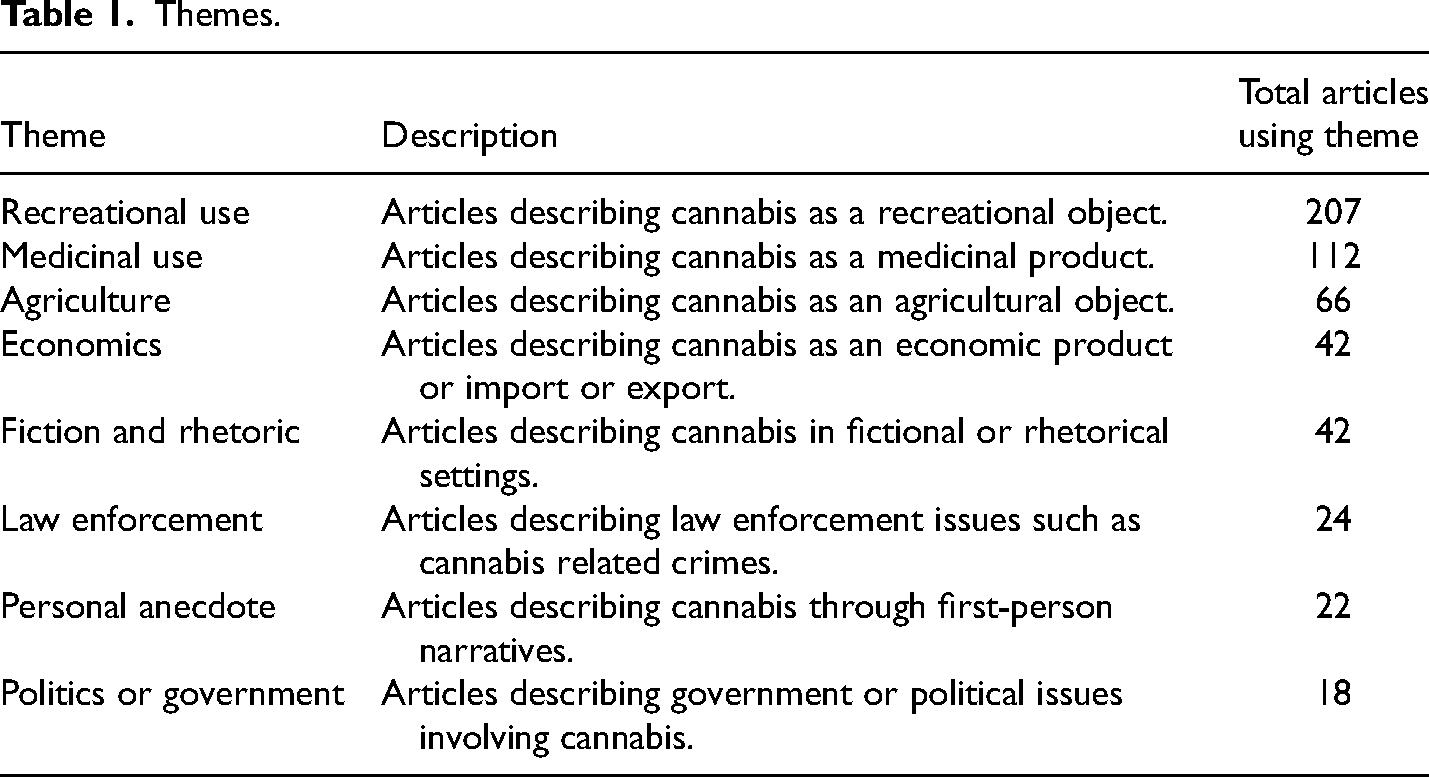
Across the dataset, eight themes were identified (Table 1). Most commonly, cannabis was discussed through the theme of recreational use (n = 207), followed by medicinal (n = 112), and agricultural (n = 66) themes. The remaining themes appeared comparatively infrequently. There was also not a clear intonation dominating the discourse (Figure 1) across all of the themes.
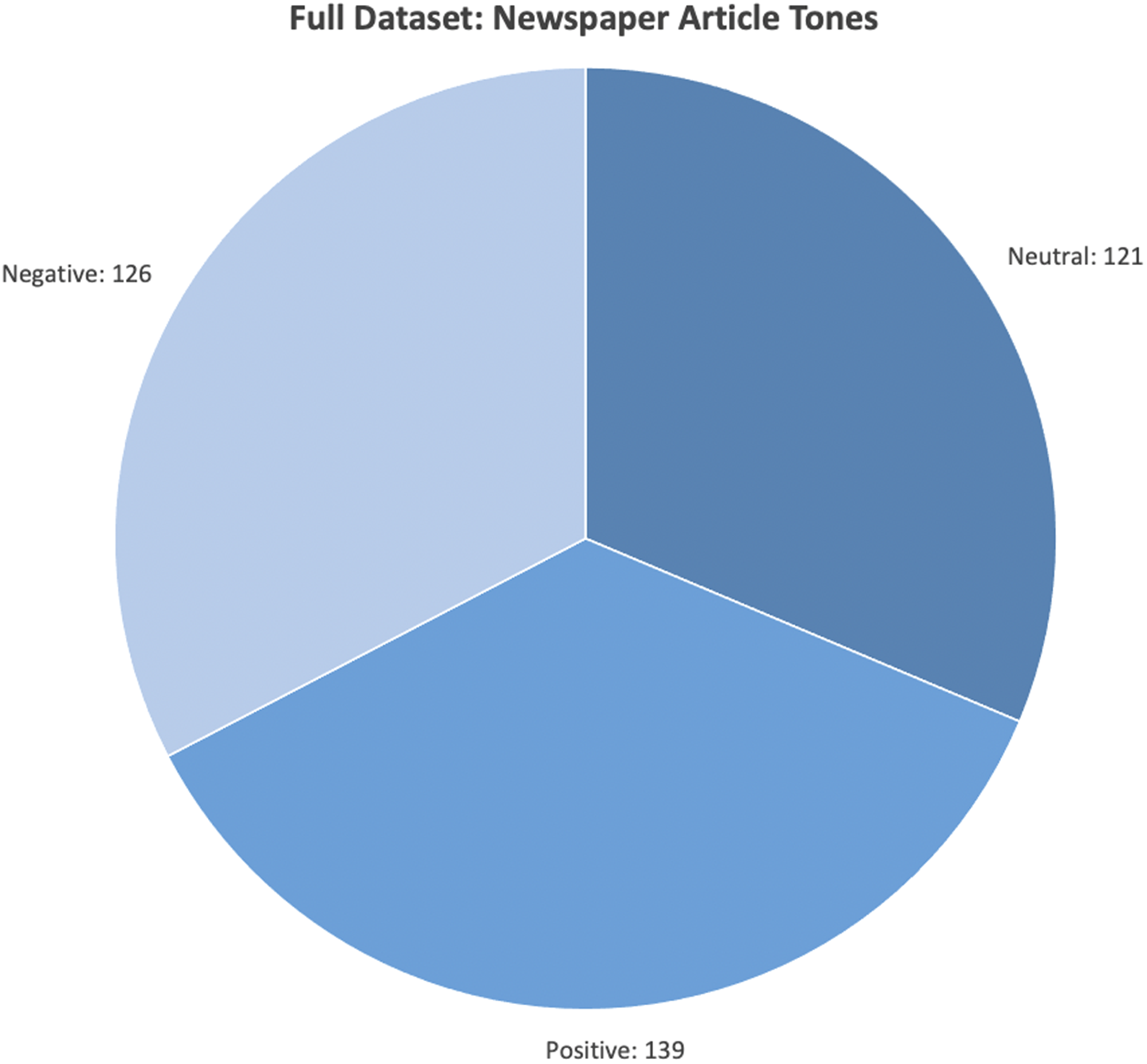
Full dataset tones.
Themes.
Time Period
This study covers a longitudinal period to better understand the development and breadth of cannabis discourses in Australian periodicals more generally, rather than focusing on a specific event which would concentrate the representation of cannabis into a particular theme. During the period under analysis, there was a clear upward trajectory in mentions of cannabis in nineteenth century Australian newspapers (Figure 2).
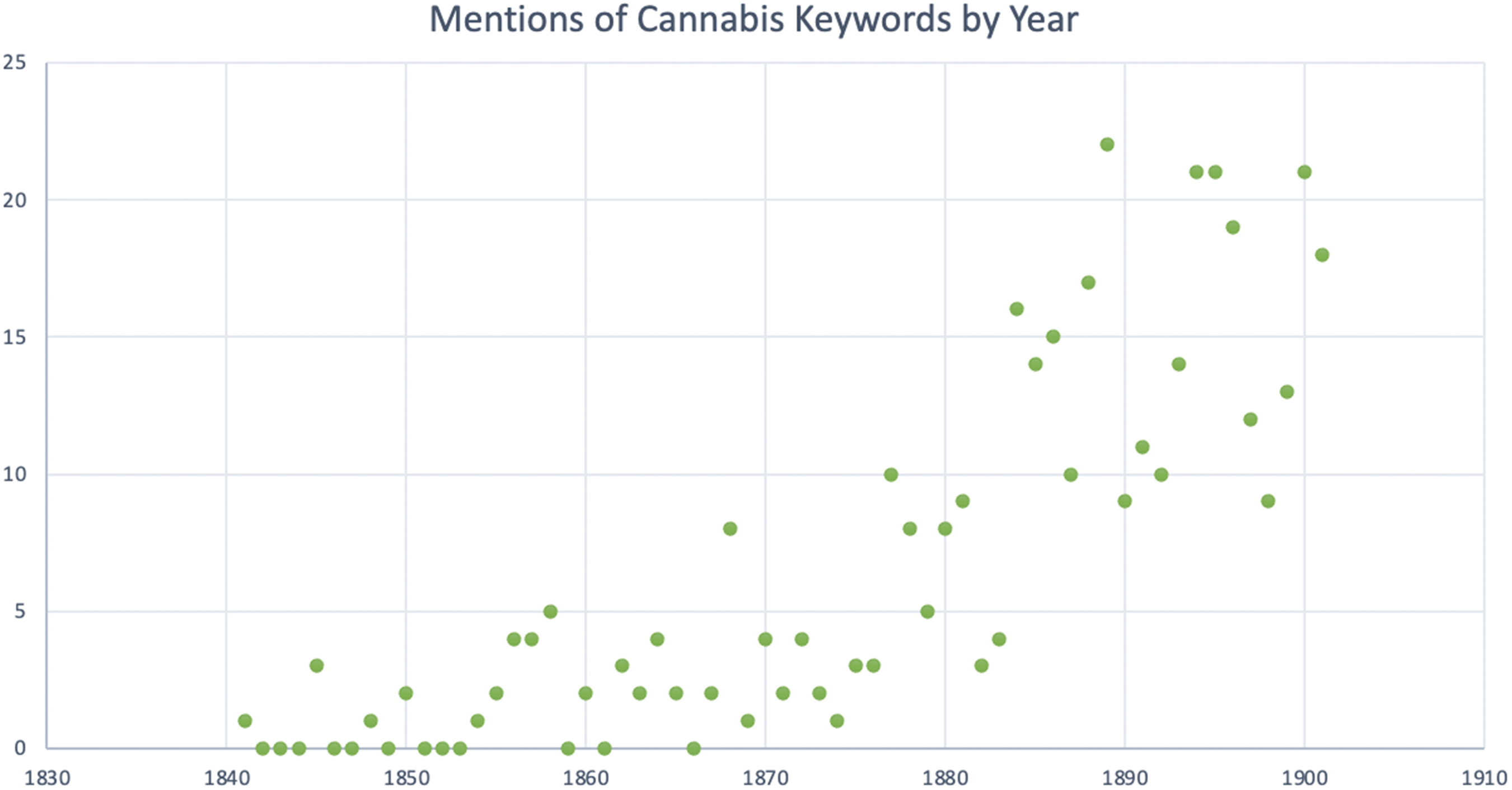
Mentions of cannabis keywords by year.
Aforementioned technological advancements increased the speed of exchange between Australian and international print cultures, whilst cannabis use continued to increase internationally. There were also noticeable upticks in mentions surrounding certain cultural and regulatory events, for instance, the publication of Marcus Clarke's short story “Cannabis Indica” in 1868 and the introduction of rebates to encourage the growing of hemp for fiber in the 1880s. Although a complete analysis of reportage trends is peripheral to the focus of this study, reporting increased throughout the period as cannabis gained more traction as a medicine, while other cultural events such as temperance movements also took hold.
Discussion
Recreational use
The most common theme found across the dataset was recreational use, occurring in just over half of all newspaper articles (n = 207). Of these reports, a slight majority (52.65%) carried negative intonation (n = 109), 66 carried neutral intonation (31.88%), and only 32 articles were positive (15.45%). Recreational cannabis articles spanned a variety of topics, positioning cannabis as a drug used by wealthy Europeans, an experiential substance, a narrative device, and a dangerous drug tied to both a racialized past, and later in the dataset, temperance movements.
Newspaper reports which were positive or neutral toward recreational cannabis were focused on drug experimentation, indicative of the fact that drug use was considered a personal choice in the nineteenth century. One newspaper report titled “Effects of Hasheesh – Novel Experiments,” was re-printed various times throughout the period. It told the story of a man who used hasheesh and then under its effects, felt he became two people. This story illustrated “the close relationship between states of real insanity and transitory affections induced by psychic poison” (Newcastle Morning Herald and Miners’ Advocate, 1889). Self-experimentation also offers a discourse of entwined medicinal and recreational experiences, which is the focus of a further section. Rather than outrightly describing recreational cannabis use as a negative act, such reports foregrounded a curiosity toward the use of cannabis, largely by reporting on American or European experiments.
A key finding of this study is that almost all articles about recreational cannabis did not depict or discuss the use of cannabis in Australia. Rather, Australian newspapers drew on reports that originated abroad, and in doing so, exposed their audiences to discourses about recreational cannabis that were grounded in historical ideologies of the drug, or international experiences. These reports often reflected international anxieties about recreational drug use that were grafted onto Australian society through the medium of the newspaper.
This was evident in reports that tied cannabis with racialized “Others,” or those who constituted a group referred to as “Orientals.” Consequently, this negatively characterized cannabis use. For example, reporting on narcotics in India, the Warwick Examiner and Times (1885) linked cannabis with “assassins” by reprinting the story of the old man on the mountains, writing that “cannabis makes a mad, wild beast of frenzy of malignant purpose.” Similarly, a report from 1877 which referred to a “Turk” as “an animal… Incapable of adapting to Western civilizations,” and in describing Turkish use of cannabis, stated “war and the harem have equally divided all the time he has spared from sensual sloth, and the fumes of tobacco and hasheesh” (Cornwall Advertiser, 1877). Here, Australian newspapers placed cannabis in racialized discourses of addiction and insurgency. As Chattopadhyaya (2022) reports, nineteenth-century British periodicals framed cannabis addiction as rebellion in the colony through depictions of “Indian Rebels.” This storyline about racialized “Others” and cannabis was taken up in Australian periodicals, negatively characterizing the drug in the process. Such reporting placed cannabis outside of medicine and exploration, and perpetuated recreational cannabis use in racial discourses (Chattopadhyaya, 2022).
These racialized discourses were also evidence in articles about fiction and rhetoric, although a much smaller theme in the dataset (n = 42). Mentions of cannabis in fiction, rhetoric, travel, and historical accounts often reiterated the racial differences discussed or vilified the drug as a poison in crime thrillers and detective stories. Such stories also characterized cannabis as a marker of “Oriental” difference in romance narratives, and a medicine handed out by fictitious doctors to hysterical heiresses. Consequently, recreational discourses were embedded throughout multiple different types of newspaper reports, and often negatively characterized both recreational cannabis use, and cannabis itself.
Given the salience of this style of recreational reporting, it is therefore unsurprising that jumping forward in the dataset, themes of cannabis prohibition were evident. This was largely seen in the Christian Colonist, where articles linked the plant with alcohol, tobacco, and opium prohibition and lobbying. One opinion piece conflated opium and cannabis with the evils of tobacco, and despite stating cannabis was placed by the “Creator” for medicinal purposes, it was a “secret but powerful poison” (Christian Colonist, 1880). Similarly, another article stated: The religious teacher and the temperance health reformer has a new foe to fight in America… American ladies, not satisfied with the pleasures of alcohol, have taken to the equally dangerous and possibly more seductive habit of using hashish. (Christian Colonist, 1884)
Here, newspapers negatively framed recreational cannabis use not through the “Other,” but by conflating cannabis with the dangers of alcohol. It can also be seen how temperance movements in Australia were heavily informed by those happening in Britain and the United States (Allen & Thomas, 2021). In this respect, cannabis appeared a victim of association with the substances of alcohol, tobacco, or opium and their respective temperance movements, and in doing so, such reports furthered the framing of cannabis as a dangerous recreational drug.
Nahas (1982) suggests that arguments for and against cannabis in the modern day are similar throughout history, but these discourses are now amplified by the media. However, we argue that our analysis demonstrates that cannabis discourses in the nineteenth century were also amplified by the media, as periodicals were instrumental in framing cannabis as a dangerous narcotic. In doing so, mediated representations of cannabis demonized users and de-legitimized the cannabis plant, with this representation transmitted to Australian society. Given that periodicals informed a wide readership in the nineteenth century (Dawson & Topham, 2004) and were at the center of cultural life, such discourses may have had direct impact on how Australian society viewed cannabis during this period. This highlights the importance of newspapers in mainstreaming ideologies of cannabis as a recreational drug in Australia. The nature of “scissors and paste” journalism, which facilitated a culture of reprinting, had a greater effect than was potentially intended by editors (Pigeon, 2017), imbuing discourses of recreational cannabis use with meaning from international cultures who had very different experiences with the drug.
Medicinal use
Medicinal usage was a major theme occurring in just under 30% of articles (n = 112). In stark comparison to the reporting of recreational use, the majority of medicinal articles included positive (n = 67) or neutral (n = 32) intonation, compared to negative (n = 13). These articles positioned cannabis as an emerging medicine, and as part of the evolving pharmacopeia of Australia and the wider British Empire. As has been observed, in nineteenth-century Australia, “a number of conflicting – and to the modern mind, very strange – ideas were accepted as orthodoxy” (Martyr, 2002, p. 13) and this extended to the public discourses about cannabis and its medicinal potential. Cannabis was suggested to be “employed in medicine for its anodyne, hypnotic, and anti-spasmodic qualities” (Sydney Morning Herald, 1892), and was commonly referred to as a treatment for corns, or for use as an anesthetic. Less commonly, drawing on information reproduced from medical journals such as the Medical Times and Gazette, newspaper articles linked the plant medicine was with the treatment of serious conditions such as meningitis and tetanus (The Maitland Mercury and Hunter River General Advertiser, 1880). Cannabis was also reported as a medicine for livestock, including for horses and cows. With no regulations regarding publishing medical or pharmaceutical advice in mass media at the time, cannabis was also represented as a component within home remedies. This home usage was often without professional endorsement or oversight, prescribed for a variety of conditions and illnesses.
Home remedies published in newspapers were a result of the “lay tradition based on self-care” (Raftery, 1999, p. 285). As newspapers acted as important vectors of medical knowledge in this period (Dawson & Topham, 2004), reporting worked to mainstream medicinal cannabis in nineteenth century Australia. Home remedies were most commonly prescribed for corns, with the same few remedies reprinted consistently across the time period, largely in an “answers to the correspondents” section of the paper. Australian readers were told to “apply a little of the following:— Salicylic acid, 30 grains: tincture of cannabis indica, 5 drops; flexible collodion, 1 drachm” to “cure” their corns (Weekly Times, 1898). Modern Australian news media frames cannabis as a legitimate therapeutic option largely through anecdotal evidence that draws on human interest news values (Adler & Lewis, 2023). We can see that nineteenth century news media also positioned cannabis as a legitimate option. However, this reflected the medical landscape at the time, where direct-to-consumer medicinal recommendations were common practice. In other newspaper reports, it was assumed that such information was coming from a “biomedical figure” or was reproduced from medical journals, due to the writer referring to “patients” or recounting conversations with doctors. This was demonstrated in an 1876 newspaper report from the
Australian Town and Country Journal
(1876) which suggested cannabis be used—among other medicines—for pain and sleep: Three grains of the extract of hyoscyamus (henbane) or three grains of extract of conium (hemlock), or one grain of the extract of cannabis Indica (Indian hemp), should be given at night to alleviate pain and induce sleep. These doses after some time require to be increased gradually up to eight or ten grains of the henbane or hemlock, and to five grains of the Indian hemp. If these fail we must give opium, beginning with one grain of the extract of opium, or one-fourth grain of muriate of morphia in solution.
The above quotation further cements the role newspapers played in framing cannabis as a genuine and effective medicine, while providing insight into how cannabis was positioned against other, more orthodox treatments. In this example, cannabis extract was positioned as a first-line treatment over opium; a contrast to the modern use of medicinal cannabis in Australia, where it is not considered a first-line therapy (Lewis & Flood, 2021). As indicated in the extract below, at times, newspaper reports also framed cannabis as an “Eastern” medicine when discussing the relative merits of opioid derivatives: All who have tried the effects of this remedy in the British Isles have come to the conclusion that the Indian hemp must be given in much larger doses in this country than in the East, and since his return home this has been acknowledged by Doctor O'Shaughnessy himself. The trials made with it in the diseases above enumerated, would seem to show that the cannabis Indica may be used with benefit as a substitute for opium. (The Perth Gazette and Western Australian Journal, 1845)
In this early account of cannabis, the plant is referred to as Indian hemp and ascribed a narcotic effect. Despite “limited” medical observations, the report continues that cannabis “is very beneficial” in the treatment of conditions such as “tetanus, hydrophobia, infantile convulsions, sciatica, chorea, neuralgic pains, and chronic rheumatism.” Entwining cannabis with “Eastern” medicine also rendered cannabis lesser, as by the end of the nineteenth century, Eastern medicine was considered inferior to Western biomedicine (Baer, 2016). However, such reports which rendered opium as less effective, or as effective as cannabis, indicate the legitimate position of cannabis as a medicine during this period, and the role of newspapers in spreading such information through the colonies.
Chattopadhyaya (2022, p. 103) writes that by the late nineteenth century, “the dominant framing of cannabis in the imperial archive was a homogeneous substance” that catalyzed madness amongst users, placing cannabis outside of British medicine. However, while we did find discourses of violence and recreational cannabis use common in the newspapers, we also found articles which separated cannabis from racialized narratives. These reports framed the plant as a genuine medicine, even in the later years of the dataset.
Personal Anecdotes and the Intersection of Medicinal and Recreational Use
The theme of personal anecdotes occurred far less frequently in the newspaper articles (n = 22), although notably, 50% were neutral in tone, followed by positive stories (n = 8), and then negative (n = 3). In reflecting the industry standard of “scissors and paste” journalism (Pigeon, 2017), articles drawing on personal anecdotes often republished the material from other journals. This was evident in articles republished from the United States periodical Science and from the Medical Times which reported respectively on a “gentlemen scientist” (Queensland Times, 1888), and a physician (South Australian Register, 1850) experimenting with cannabis. While these sensationalized anecdotes of medicinal experimentation were popular in global nineteenth century mass media (Sachsman & Bulla, 2017), personal anecdotes about cannabis were not as prolific in nineteenth century media as they are today (Adler & Lewis, 2023). Similar anecdotes were also published years or decades apart, suggesting that medical understanding of cannabis as a pharmaceutical or experimental drug had not advanced far; neither had public discourses about cannabis.
Anecdotes in newspapers also reflected the lack of methodological orthodoxy for medical and drug experimentation during this time, when many practitioners in the medical fields would engage in self-experimentation (Martyr, 2002). This was seen in an article titled “A Patient who Imagined her Body Divided in Half after Taking a Dose of Indian Hemp” (Maffra Spectator, 1890) which told the story of a medical “well known” doctor experimenting with cannabis at a dinner party. The doctor is cited stating: “I had been troubled with persistent headache, and hearing cannabis might be of service, I took some, accidentally an overdose [sic].” The doctor described his experience of hallucinations with clinical neutrality, before noting that he “awoke refreshed.” Such clinical neutrality may be a testament to scientific impartiality, by which those engaged in the Western medical profession were attempting to legitimize their own position. However, what is unique about this article is that it included themes of both medicinal and recreational usage, as these two usages were blurred and entwined.
Through crosstabulation, we found that of the articles drawing on medicinal or recreational themes, only 32 stories overlapped both themes (8.2% of the total dataset)—demonstrating noticeable separation between these spheres of discourse. Of those 32 articles, the majority carried a neutral tone (n = 17), compared to positive (n = 6) or negative (n = 9) articles. Given that fewer than 10% of the dataset included both themes, we surmise that these discourses existed largely in silos, and when they did intersect, the intonation was tempered. In the modern landscape, cannabis as medicinal and recreational “objects” necessitates the existence of both terms, where medicinal cannabis relies on the “absent presence” of recreational cannabis “to define and shape what it is” (Lancaster et al., 2017, p. 117). While modern media struggles to retain a conceptual boundary between medicinal and recreational discourses (Abalo, 2021), these news reports often siloed the objects of medicinal cannabis and recreational cannabis from one another, with few articles overlapping. More commonly, medicinal articles worked to legitimize cannabis, while recreational articles worked to de-legitimize cannabis, with both these representations transmitted onto nineteenth-century Australian society.
Agricultural and Economic Uses
The themes of agriculture (n = 66) and economics (n = 42) were discussed across the dataset with considerable overlap, as 64% of the articles which drew on agricultural discourses also discussed economics. As part of the growing colonies’ focus on agricultural outputs, pastoralists were constantly looking at avenues to diversify and expand agricultural imports. Thus, it follows that the majority of articles (75%) written about cannabis as an agricultural object were positive, compared to neutral (n = 13), or negative (n = 3). In contrast with themes of recreational and medicinal use, agricultural and economic themes were largely focused on the Australian context, giving insight into how colonial society viewed the potential of cannabis as an agricultural product. As early as 1848, the relative merits of cannabis (or in modern time, its hemp cultivate), in comparison to flax were being discussed (The Sydney Morning Herald, 1848). While this research is concerned with cannabis, rather than hemp, newspapers published a remarkable amount of misinformation about cannabis, hemp, and the botanical relationship between the two, even among scientific and agricultural communities. Furthermore, it was rare for agricultural stories to also consider cannabis a medicinal or recreational substance. For instance, in the 1890s, the government introduced a bonus for farmers trialing alternative crops. Hemp fell under the class of fiber plants which was in demand as a result of this decree: A sum not exceeding £25,000 shall be available for payment as bonuses to persons who, at any time after the 20th day of May 1890 and before the 30th day of June 1895, sow or plant and cultivate vegetables to be used for the manufactured of fibre, paper, oil, syrup, sugar, tannin, drags, dies, scents, insecticides, and such other things as may at any time hereafter be approved by the Governor in Council. (Yea Chronicle, 1893)
The article from which the above quotation is taken also demonstrates the entanglement of agricultural and economic discourses. In purely economic terms, themes around cannabis as a product were overwhelmingly positive (n = 27) compared to neutral (n = 14) or negative (n = 1), although a much smaller theme within the wider dataset (n = 42). In the dataset, we found that many botanists and agriculturalists experimented with the fiber of cannabis “as an article of commerce” (The Argus, 1878) as part of an ongoing effort to adapt global crops to Australian climates and stimulate colonial economies. Accounts of cannabis as a product for import or export showed its value to the wider empire, with one article suggesting that “over a million and a half of pounds sterling are paid by England to foreign countries for hemp and seed” (Adelaide Observer, 1881). As with discussions of recreational and medicinal uses, cannabis was also considered in comparison to opium. A report reprinted in the Petersburg Times from the New Zealand Mirror suggested that: “like opium, the sale of hashish is taxed by the Indian Government, the revenue, however, derived from it being considerably less than that derived from opium” (Petersburg Times, 1894). Reports such as this legitimized cannabis as a product, rather than locating it in social or medicinal contexts.
In report published in the late 1870s, new Victorian tariffs were introduced which taxed Cannabis Indica at 1d. per 1 lb (The Sydney Morning Herald, 1878). This indicates that in nineteenth-century Australia, cannabis, in small amounts, was perceived as a product worthy of the attention of state government taxation offices. While discussions continued about the viability of growing cannabis as hemp for fiber, there was also recognition of the economic potential value of the constituent parts of the plant, including oil from its seeds which was considered “of commercial value” (The Sydney Morning Herald, 1887). The economic opportunity of cannabis is still a common framing in online news media today (Adler & Lewis, 2023). This study adds to the literature by finding that this framing, which somewhat uncritically embraces the potential of cannabis as a product to generate income for the state, has been apparent in Australian news media since the introduction of medicinal cannabis to the colonies.
Politics and Law Enforcement
The themes of politics and law enforcement were largely absent in the newspapers, indicating that cannabis was not yet a political issue within the public sphere, possibly reflecting the lack of drug regulation during this period (Martyr, 2002). This is a stark contrast to modern mediated representations of cannabis in Australia and abroad, where cannabis is framed as an issue of politics, and voices of political elites are common in news media (Adler & Lewis, 2023; Kim & Kim, 2018; Lynch, 2021).
Of the 18 newspaper reports that did include themes of politics, few carried positive intonation (n = 4). Rather, political discourses towards cannabis were neutral (n = 8) or negative (n = 6). The focus was also largely global rather than national. For instance, a political article that carried a negative tone reported that in Madagascar, “a native” was seen consuming cannabis and that although the Government did not look upon such drug use favorably, “considerable quantities are to be seen at the capital” (Adelaide Observer, 1862). In another article which reported on Persian politics, it was said that the Shah of Persia “consumes hashish and opium freely” (Cobram Courier, 1891). These articles further perpetuated cannabis as a narcotic, as did articles of law enforcement (n = 24), none of which had positive tones, with the majority negative (n = 15), and some neutral (n = 9). These articles of law enforcement strongly related to recreational cannabis discourses, where periodicals associated cannabis with “Others” in their reporting and entwined the plant with violence, and in this case, crime.
This style of crime reporting was seen in an article titled “Insanity in India: Drugs.” This article reported that a Permissive Bill was enacted in India to “deprive the native of his drugs,” as “cannabis indica is a seductive plant,” that “serves the more humble purpose of giving courage to Burglars and river banditti in civil life” (Sydney Morning Herald, 1873). The same article stated that in Indian “lunatic asylums,” a large proportion of inmates had “lost their reason from the immoderate use of ganja, or some other preparations of hemp.” In these examples, we can see what Chattopadhyaya (2022, p. 116) explains as framings of “cannabis as a drug of rife prevalence, perennially at hand to furnish wildness and irrational violence.”
Only one law enforcement article focused on the Australian context, reporting on an alleged murder in Coolgardie by a “murderous Afghan” at a campsite (The Sun, 1899). This article, which included themes of both recreational use and law enforcement, suggested the “Afghan” was either a “cold-blooded murderer,” suffering from “homicidal mania,” or a hasheesh user: “The third theory is that he is a victim to the ‘haschish’ habit, and that this habit causes its victims to become distraught” (The Sun, 1899). The report continued that hashish causes “paroxysms of frenzy in which its victim is peculiarly prone to run amuck and to kill without rhyme or reason.” With no definitive proof that the “murderous Afghan” used cannabis, newspaper commentary drew on wider mediated perceptions of cannabis as a violent drug used by “Others” and applied this directly to the Australian context. Thus, the narrative of cannabis as a “dangerous narcotic” in this case originated in Australia, but was most likely fueled by “scissors and paste” journalism which had been promulgating this discourse to Australian audiences. It can then be argued that mass media influenced popular understandings of cannabis in Australia, demonstrating the central role of newspapers in shaping cultural understandings of the drug.
Conclusion
While this study takes an important first step in unraveling the representation of cannabis in Australian nineteenth-century periodicals, it is not without its limitations. The scope of analysis did not allow for investigation into the word “hemp,” nor an analysis of the specific frames within the different themes. A deeper analysis into the framing of cannabis as distinct medicinal and recreational objects, as well as analysis of “hemp” in nineteenth-century Australian newspapers, are important places for future inquiry.
Overall, this study found that while modern media struggles to retain a conceptual boundary between medicinal and recreational cannabis (Abalo, 2021), nineteenth-century Australian media represented these objects as distinct, but in doing so, presented conflicting discourses to Australian society. The two most prominent discourses were discussions of recreational and medicinal use. While less salient, newspapers also spoke of cannabis as a potentially lucrative agricultural product. Themes of cannabis within politics or law enforcement, however, were near absent. This provides insight into nineteenth-century understandings of drugs, and what sections of society were concerned with their use. In this sense, newspapers were seen to be legitimizing not only agricultural, but largely medicinal cannabis in Australia; an important finding, as newspapers were the primary source of medical knowledge outside rare visits to physicians (Raftery, 1999). Almost no reports depicted recreational cannabis use in Australia, yet nineteenth century periodicals painted cannabis as a dangerous narcotic. This reporting was fueled by international anxieties and scissors and paste journalism, but presented to Australian audiences.
Therefore, newspapers during this period mainstreamed an understanding about cannabis to Australian society that often did not reflect actual usage, highlighting the importance of mass media as a driving force of cultural understandings of drugs. It was found that the construction of cannabis in mass media resulted from a patchwork of influences which made cannabis a drug of the imagination, rather than one that impacted the lives of Australians. Despite this lack of evidence of recreational use or abuse within the colonies, Australians understood cannabis as part of the lineup of drugs including opium and alcohol, two substances which were causes of concern in Australian society. Cannabis was vilified, and later criminalized as a result. Therefore, we argue that discourses facilitated and perpetuated by mass media influenced popular understandings of cannabis in Australia, at a pivotal moment in the drug's history.
Whether it be the “Reefer Madness” era, or modern efforts to mainstream medicinal cannabis in Australia (Adler & Lewis, 2023), mass media has been salient in the positioning of cannabis in society. This study finds that the role of newspapers in constructing cannabis is not a modern phenomenon. Nineteenth century periodicals were at the heart of constructing cannabis as both an emerging medicine to Australian society and a dangerous narcotic, the latter of which sowed the seeds for emerging temperance movements. Importantly, such mediated representations foregrounded the vilification of cannabis and its users, which we are only in the twenty-first century, renegotiating.
Footnotes
Acknowledgement
The authors would like to acknowledge the help and guidance given to them by Professor Barbara Pini, Dr. Yorick Smaal, Dr. Monique Lewis, and Indyana Horobin.
Declaration of Conflicting Interests
The authors declared no potential conflicts of interest with respect to the research, authorship, and/or publication of this article.
Funding
The authors disclosed receipt of the following financial support for the research, authorship, and/or publication of this article: This work was supported by the Griffith Centre for Social and Cultural Research Special Publishing Grant.
