




Abstract
This critical ethnography builds on the body of research at the intersection of communication studies, branding, and gentrification. The researcher examined a local restaurant's community and social justice-oriented branding in gentrified neighborhoods. Observation logs, newspaper coverage, and Google reviews were analyzed to understand the communication strategies used to create a distinct brand that centers the public sphere and community building at its core. The researcher conceptualizes the commercialized public sphere model as a conscious branding communication strategy that can be replicated in other restaurants or new forms of establishments. By intentionally creating a sense of community focused on fostering diversity and preserving the culture of the gentrified neighborhoods, the restaurant becomes a space where the old meets the new and they both belong. The findings reveal that conscious branding in gentrified neighborhoods is perceived positively by the media and the costumers and may have the potential to forge a space for marginalized communities to thrive.
Introduction
The cultural landscape we live within is populated by people, events, products, and places, all vying our attention. In a consumer-driven environment, any and all of these can be commodified as products and branded for greater attention (Peñaloza, 2000). Branding is the process of giving meaning to specific companies, organizations, services, or items for better identity and to make them more appealing to a particular market (Sammut-bonnici, 2015). When Busboys and Poets opened its doors in 2005 in a gentrifying U Street neighborhood of Washington D.C., the social justice- branded café, restaurant, and bookstore attracted significant media attention (Ault, 2006; Kliman, 2005, Wiltz, 2006). Through branding communication strategies, the restaurant has seemed to create a distinct identity for itself over the years by focusing on preserving the culture of D.C.'s diverse community and providing meeting spaces for community groups to discuss and debate current issues (Kliman, 2005, Our Story, n.d.). Nonetheless, the restaurant has been criticized by some as a symbol of gentrification in what was a predominantly Black D.C. neighborhood (Anguelovski et al., 2021; Anguelovski et al., 2022; Dommu, 2020; Gonclaves, 2019; Kliman, 2005; Klienman, 2018; Rahman, 2008).
Gentrification in Washington, D.C. [DC], is widely believed to have pushed the city's predominantly Black, low-income residents out of the city limits. For decades DC was known as the “Chocolate City” for its predominantly African American population (Overly et al., 2022). However, the demographics shifted beginning in 2000 when the nation's capital underwent redevelopment in many of its predominantly Black neighborhoods (Schnake-mahl et al., 2020). Hopkinson (2012), who chronicled the demise of cultural forms like DC's distinctive “Go-Go” music in the gentrifying years, referred to “the mass of young, increasingly White professionals” who came to live in the newly remodeled, expensive apartments and rowhouses of the U-Street neighborhood (p. 11). She noted that these pricey newly refurbished dwellings existed alongside small businesses that Black owners had worked years to build up after the city's race riots of 1968. Busboys and Poets’ branding presents a case in which a restaurant creates a space for the community within the gentrified neighborhood to cultivate connections between the old and the new and to preserve the culture.
There has been increased attention in academia to the emergence of food establishments in gentrified or gentrifying neighborhoods (Alkon, 2020; Joassart-Marcelli, 2021). Trendy coffee shops and upscale restaurants contribute to gentrification by enhancing the status of the neighborhood, increasing property taxes, and attracting middle-class residents, elements that too often lead to the displacement of long-time residents (Alkon, 2020; Avalle, 2023; Misleh, 2022).
Andy Shallal, the owner of Busboys and Poets, had a different agenda for his restaurant. He envisioned his business to be a positive addition to the gentrifying neighborhood. He wanted his restaurant to be more than just a dining place but rather a space where people from all walks of life could gather and engage in discussions and debates as a community (Kliman, 2005; Our story, n.d.). Shallal's model reflects the notion of the restaurant as a public sphere, a concept developed by German philosopher Jurgen Habermas (1991). In the case of Busboys and Poets, the notion of the public sphere is intentionally used in branding that emphasizes the value the business brings to the community, especially to one that is gentrifying (Kliman, 2005). Shallal envisioned his establishment as a progressive commercial deliberative space, which, in academic terms, might be considered a commercial public sphere. He intentionally connected it to “Blackness” through the restaurant's name, which refers to one of African American poet Langston Hughes's poems (Kliman, 2005). The restaurant's website emphasizes that “Busboys and Poets is a community where racial and cultural connections are consciously uplifted. . . a place to take a deliberate pause and feed your mind, body and soul. . . and begin to transform our community and the world” (“Our Story”, n.d., para. 3).
Little is known about the alternative role of restaurants in gentrified neighborhoods as community hubs promoting social and political values, supporting locals, and combating the negative effects of gentrification (O’Brien, 2017; Alkon, 2020). By examining the branding communication strategies employed by Busboys and Poets, this study explores the paradox in which a private business promotes the concept of the public sphere in a gentrifying context, perhaps paradoxically serving as both agent and critic of gentrification. This study provides a novel theoretical insight into the branding of a commercialized public sphere as applied in the context of gentrified neighborhoods. This research builds on current scholarship in two ways: 1) It addresses a scarcity of literature on the restaurant as a commercialized public sphere within gentrified neighborhoods; 2) It expands the research on social justice branding communication strategies. Using critical ethnography, observation, newspaper coverage, along with Google reviews of Busboys and Poets locations in the District of Columbia, this study answers the following questions:
RQ1: How do the language and visuals used in Busboys and Poets’ branding communication strategies promote the creation of a public sphere in gentrified neighborhoods? RQ2: How does newspaper coverage of Busboys and Poets present the restaurant's branding in relation to gentrification? RQ3: How do online reviewers perceive Busboys and Poets’ branding efforts in promoting community building in gentrified neighborhoods?
Busboys and Poets: The Paradox of Privilege in Gentrification
Busboys and Poets is a restaurant that combines a bookstore, a café, and a space for social and political community gatherings. The flagship restaurant opened its doors in 2005 in gentrifying 14 Street NW, Washington, D.C. two blocks from one of the most livable DC strips, U Street, in the historically Black Shaw neighborhood (Kliman, 2005; “Our Story”, n.d.). The restaurant is named after Langston Hughes, An African American poet who lived in Shaw neighborhood and worked as a busboy at the Wardman Park hotel in the 1920, prior to being recognized as a poet (Kliman, 2005; “Our Story”, n.d.). The owner, Andy Shallal would expand his Busboys and Poets brand with nine additional facilities in different parts of the city and the suburbs in the ensuing years. With “Inspiring Social Change” as its slogan, the restaurant chain claims to be a corporation with a specific focus on social activism (Kliman, 2005; Rahman, 2008).
The owner, Andy Shallal, an Iraqi American businessman, artist, and political activist, was born in Iraq in 1955 and immigrated to the United States with his family at the age of 10 (Young, 2010). He had an early experience in the restaurant industry, first with his father in the family's pizza business as a teen, working as a waiter while in undergraduate school, and later opening his own restaurants. Shallal has been politically active, engaging his restaurants in community building activities (Young, 2010). He saw his restaurants as an outlet to express his Left-of-center political interests, activism, arts, and poetry (Young, 2010). In an interview with Global Citizen, Shallal describes his restaurant Busboys and Poets: It has food .. at the center of it, but it's a gathering space. … it's got places to meet people, places to meet together in a communal setting. They have a bookstore, of course. There's a stage in the back where we do great events and performances. … There's something for everyone there. That's the intent of it: it's to bring the entire spectrum of the community in a place where they can intersect and interact with each other. (Rueckert, 2017).
Restaurants and the Commercialized Public Sphere
The bourgeois public sphere, as conceptualized by Jurgen Habermas (1991), refers to the deliberative space in which individuals come together to engage in open and rational discussions and debates about social and political issues (Habermas, 1991). In the 17th and 18th centuries in Europe, the invention of the printing press and the resulting rise in literacy enabled people to form an opinion about various topics including news, politics, literature, and art. Individuals – at that time, mostly men – gathered in coffeehouses and salons to discuss those issues away from the surveillance of the government (Habermas, 1991). These early forms of public gatherings served as the foundation for what Habermas believed led to democratic action (Devery, 2017).
Restaurants and cafés eventually shifted towards commercialization and catering to consumers and dining experiences (Devery, 2017). However, the modern food scene also shows a comeback of different forms of food establishments as community hubs and socialization (Ferreira et al., 2021). Busboys and Poets presents an example of a restaurant that commercializes the concept of the public sphere by using it as a method of branding. The commercialized public sphere is a concept developed in this paper to recontextualize the public sphere as a for profit-oriented space that serves the public interest. While scholars exploring restaurants in relation to the public sphere have examined the ways in which the space contributes to community building and deliberate discussions, little is known about the commercialized use of this concept for branding. This study attempts to address this gap in research by answering the question:
RQ1: How do the language and visuals used in Busboys and Poets’ branding promote the creation of a public sphere in gentrified neighborhoods?
Restaurants as Anchors for Gentrification
Scholars have long debated the value that a café or a restaurant brings to a community (Ferreira et al., 2021). Habermas (1991), Oldenburg (1999, 2013), Cowan (2008), and O’Brien (2017) have explored the potential for these places to bring people together who would not otherwise meet or interact. By creating the space and facilitating connections, cafés and restaurants create a sense of community in modern societies (Jeffrey et al., 2018). However, in the context of gentrification, longtime residents have always feared the arrival of new, upscale, and trendy cafés and restaurants. New food establishments in old neighborhoods have been associated with increased taxes, changes in demographics, and displacement of longtime residents (Alkon et al., 2020; Misleh, 2022; Avalle, 2023). These new restaurants signal new development and rapid gentrification (Alkon et al., 2020). In an investigative report by Eater, data from restaurant health inspections from several U.S. cities were analyzed against census data, economic status, and demographics along with home and rental prices. The results show patterns of intersections between restaurants and phases of gentrification. The report argues that restaurants appear to display the first signs of gentrification (Dixon, 2020).
Researchers have raised concerns regarding the impact of gentrifying restaurant on the preservation of the local culture (Johnston & Chrobok, 2022). Despite the potential for restaurants and cafés to cultivate a sense of community, gentrification can be perpetuated by the commodification of the culture of the space. Restaurants in gentrifying areas frequently capitalize on local culture to draw in customers (Alkon et al., 2020; Johnston & Chrobok, 2022). Research on the cultural commodification of restaurants in gentrified neighborhoods is limited. The case of Busboys and Poets presents an example of such a restaurant capitalizing on the culture of the longtime residents to create a distinct brand. This branding strategy can be problematic, especially when the community's culture has already been historically marginalized and commercialized by mainstream culture. This branding strategy, scholars argue, can contribute to the colonization and commodification of the culture condensing it into images and signs (Hull, 2015). When elements of a given culture are reduced to mere marketing tools, these cultures’ nuances, complexities, and authentic experiences are often lost or obscured. Additionally, this commodification may result in cultural uniformity and the theft of distinct cultural values, ultimately undermining the same identities and traditions it aims to uphold. Therefore, using cultural symbols for branding purposes runs the risk of perpetuating oppressive power structures, reinforcing negative stereotypes, and undermining the genuine value of many cultural heritages (Jian et al., 2019).
In order to understand how restaurants in gentrified areas contribute to the preservation or the commodification of the local culture, it is crucial to critically interrogate their branding and marketing strategies. It is also equally important to examine the media and consumers’ perspective on such practices. This study aims to fill this gap by answering the following questions:
RQ2: How does newspaper coverage of Busboys and Poets present the restaurant's branding in relation to gentrification? RQ3: How do online reviewers perceive Busboys and Poets’ branding in promoting community building in gentrified neighborhoods?
The answer to these questions will offer insights into the perspectives of the media and the customers regarding the branding communication strategies of Busboys and Poets.
Method
To explore Busboys and poets’ use of the commercialized public sphere branding in gentrified context, this study employs qualitative methods and critical ethnography approach. The study uses observation, analysis of newspaper coverage, and computational analysis of Google reviews of the restaurant's locations in Washington, D.C. Critical ethnography is well-suited for this study as it attempts to provide a detailed analysis of the problem while examining issues of privilege, and disadvantage within the context of the social and political structures in which it exists (Madison, 2011; May & Fitzpatrick, 2019). Critical ethnography has been used in research concerned with restaurants and gentrification, branding and ethnic cuisines, and food activism (Cook & Crang, 1996; Counihan, 2018; Fonseca, 2005). These studies highlight the benefits of using critical ethnography to explore the intersections of food activism, branding, and gentrification within the context of place, race, and economic status. Critical ethnography complements the theoretical framework of this study, the public sphere. In using this method, the study seeks to provide a nuanced and complex understanding of the intersections of the public sphere, branding communication strategies, and gentrification.
Data Collection Methods
The researcher used three methods of data collection to examine the research problem by triangulating the data, 1) observation of the field, 2) newspaper coverage of the restaurant, 3) Google reviews of Washington, D.C. locations.
Observation
The researcher conducted a total of 11 visits for a total of 33 h (11*3 = 33 h.) to Busboys and Poets’ locations in Washington, D.C. to achieve immersion in the field. The researcher took extensive field notes during observation visits noting demographics of customers and staff in each location, types of events, artwork, signs and murals, and other unique characteristics of each location.
Newspapers Coverage
To examine another perspective on the restaurant, the researcher collected newspaper articles about it. To ensure relevancy to the problem of this study, the researcher developed inclusion criteria. The selected news articles must mention Busboys and Poets or its owner in the headline or the subheadings, and the coverage of the restaurant must be at least 60% of the news article. The researcher used the restaurant's online archive and conducted an online search using NEXUS Uni and ProQuest to collect the news articles.
Google Reviews
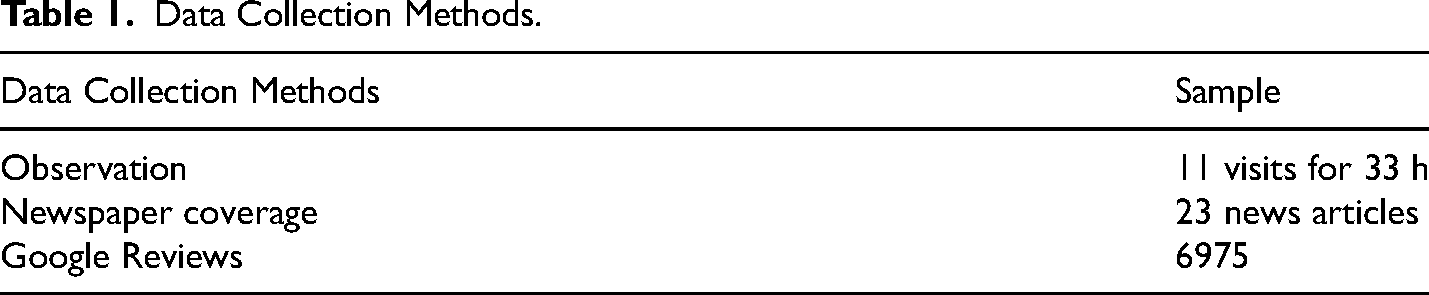
To add another layer of perspective to understand the problem, the researcher collected Google reviews of the five restaurant's locations in Washington D.C. Google reviews provide a highly objective customer perspective of businesses which makes them valuable data sets to include in this study (Li et al., 2013; Li et al., 2021). The researcher used outscraper.com, a user-friendly online tool, and collected Google reviews from 2005 to April 2023. The researcher scraped a total of 8,106 reviews. After removing the blank reviews, 6975 reviews were included in the sample (n = 6975) (Table 1).
Data Collection Methods.
Data Analysis Procedures
Qualitative Content Analysis
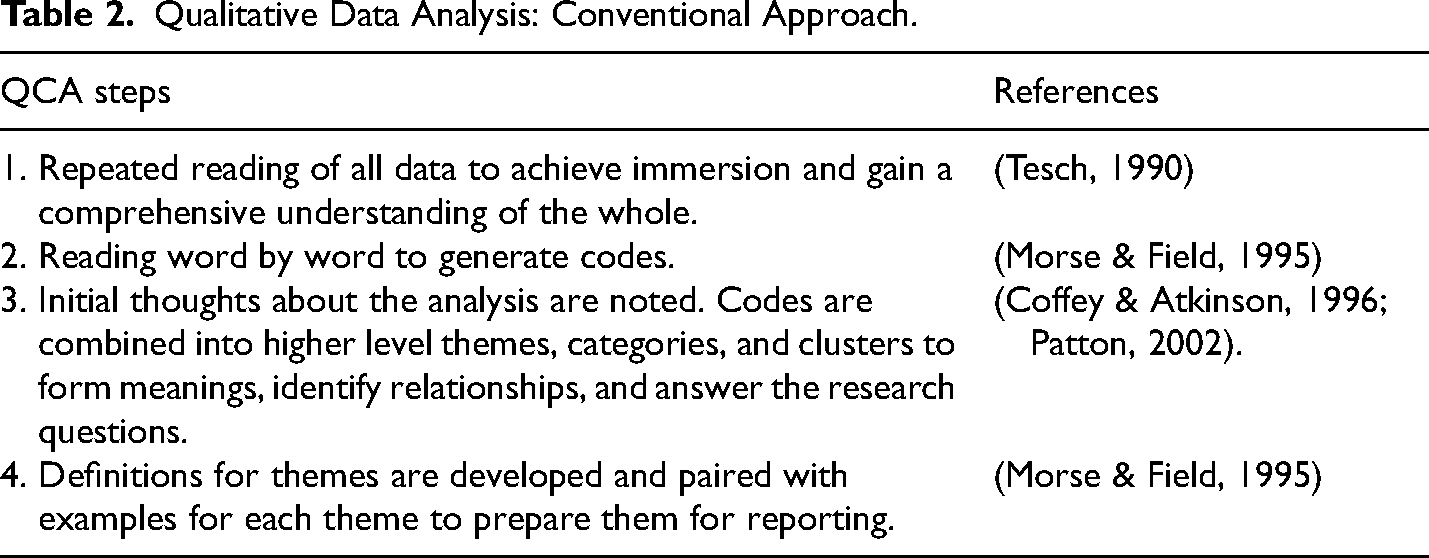
Qualitative content analysis [QCA] was used to analyze field notes, newspapers coverage, and a selected sample of Google reviews (n = 700). QCA is defined as “a research method for the subjective interpretation of the content of text data through the systematic classification process of coding and identifying themes or patterns” (Hsieh & Shannon, 2005, p.1278). QCA is well-suited for this study as it allows for analyzing a variety of data including pictures, field notes, artwork, murals, and textual data (Elo et al., 2014; Hsieh & Shannon, 2005). The unit of analysis is a visit observation log, a news article, and a Google review. The researcher employed conventional approach to content analysis (Hsieh & Shannon, 2005) and used MAXQDA, a qualitative analysis software, to conduct the analysis. Conventional approach to QCA allows for inductive coding of the data to discover initial themes when the research on the topic is limited (Hsieh & Shannon, 2005). The researcher followed a step-by-step process to analyze the data (See Table 2).
Qualitative Data Analysis: Conventional Approach.
Computational Analysis
To process and analyze the Google reviews, the researcher employed computational analysis to get insights into consumer's reviews of Busboys and Poets. Wolfram programming language was used to clean and prepare the data by removing stop words, special characters, and punctuation. The researcher then used Latent Dirichlet Allocation [LDA], a natural language processing technique [NLP], to automatically categorize the data into topics. After that, using a large language model [LLM], the researcher determined the topics most relevant to the research questions number three, how online reviewers perceive Busboys and Poets’ branding in promoting community building communication strategies in gentrified neighborhoods. Composition and frequency analyses were then applied to the selected sample to examine customers’ reviews over time.
Results
The findings provide a holistic view of how Busboys and Poets use the commercialized public sphere concept as a branding communication strategy to engage the community in the gentrified neighborhoods. The analysis was guided by the research questions. The first of these asked how the language and visuals using in Busboys and Poets’ branding communication strategies promote the creation of a public sphere in gentrified neighborhoods. This question was answered using field notes logs from the observation visits. The second question asked how newspaper coverage of Busboys and Poets present the restaurant's branding in relation to gentrification. This question was addressed through the analysis of the newspaper's coverage of the restaurant. The third question asked how online reviewers perceive Busboys and Poets’ branding communication strategies in promoting community building in gentrified neighborhoods. This question was answered using computational methods to reveal the main topics that the customers talked about. A random sample of the reviews (n = 700) was also analyzed qualitatively to acquire deeper insight into how customers perceive the restaurant's effort to promote a commercialized public sphere. The restaurant as the public sphere emerged as a central theme that emphasizes the branding communication strategies used by the restaurant to create a sense of community by communicating diversity and culture. The themes for RQ2 are 1) Busboys and Poets as a community hub and 2) the paradox of privilege in gentrification. The theme that emerged for the third questions is the restaurant as anchor for the community.
RQ1: How Do the Language and Visuals Used in Busboys and Poets’ Branding Communication Strategies Promote the Creation of a Public Sphere in Gentrified Neighborhoods?
The findings indicate that Busboys and Poets intentionally use the notion of the public sphere to communicate the restaurant branding. The findings in this section are based on the researcher's observation visits to the restaurant's D.C. locations and the field notes taken during those visits.
The Restaurant as the Public Sphere
With a focus on promoting diversity and celebrating culture, the restaurant creates a sense of community and belonging that foster open discussions among various groups. In one of my observational visits to the flagship restaurant at 14th & V, I noticed the branding focus on creating a diverse atmosphere using language and visual elements throughout the restaurant. A big sign behind the bar shows the restaurant's vision, mission, and values in what is called, “the tribal statement” (see Figure 1). The statement reads, Busboys and poets is a community where racial and cultural connections are consciously uplifted… a place to take a deliberate pause and feed your mind, body, and soul… a space for art, culture and politics to intentionally collide… we believe that by creating such a space we can inspire social change and begin to transform our community and the world.
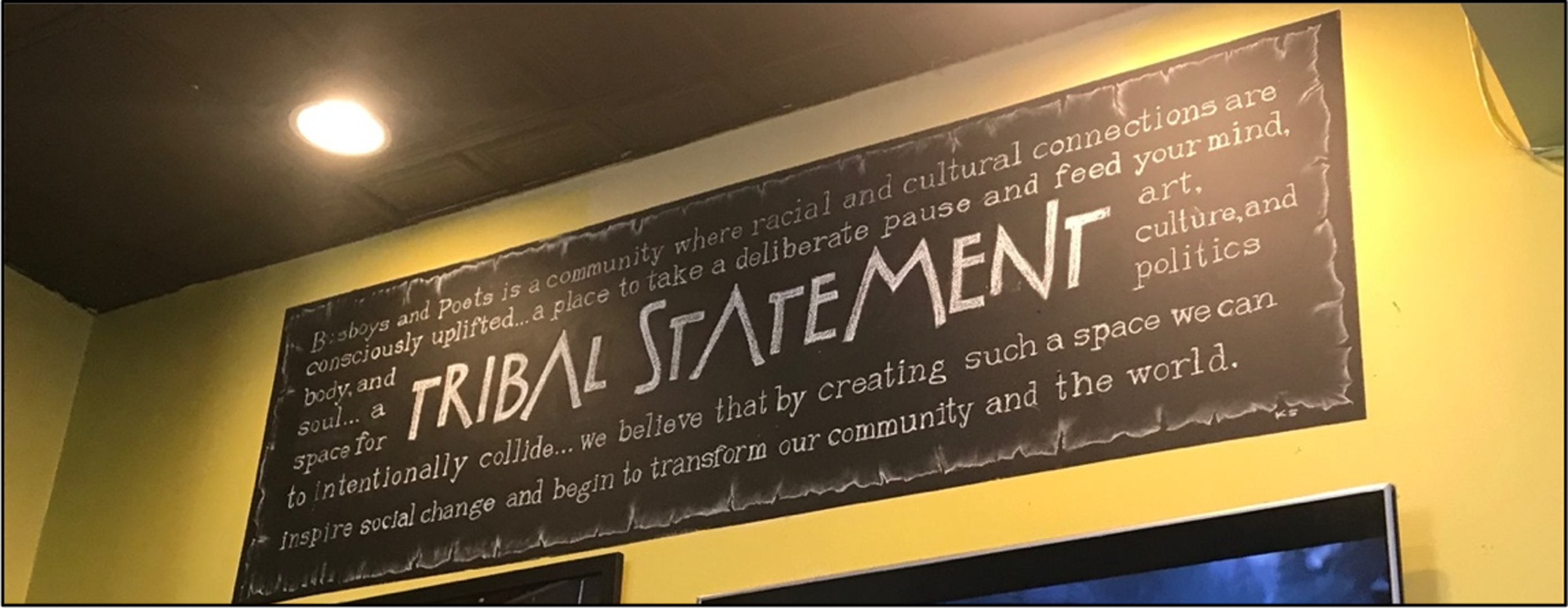
The tribal statement at the flagship restaurant.
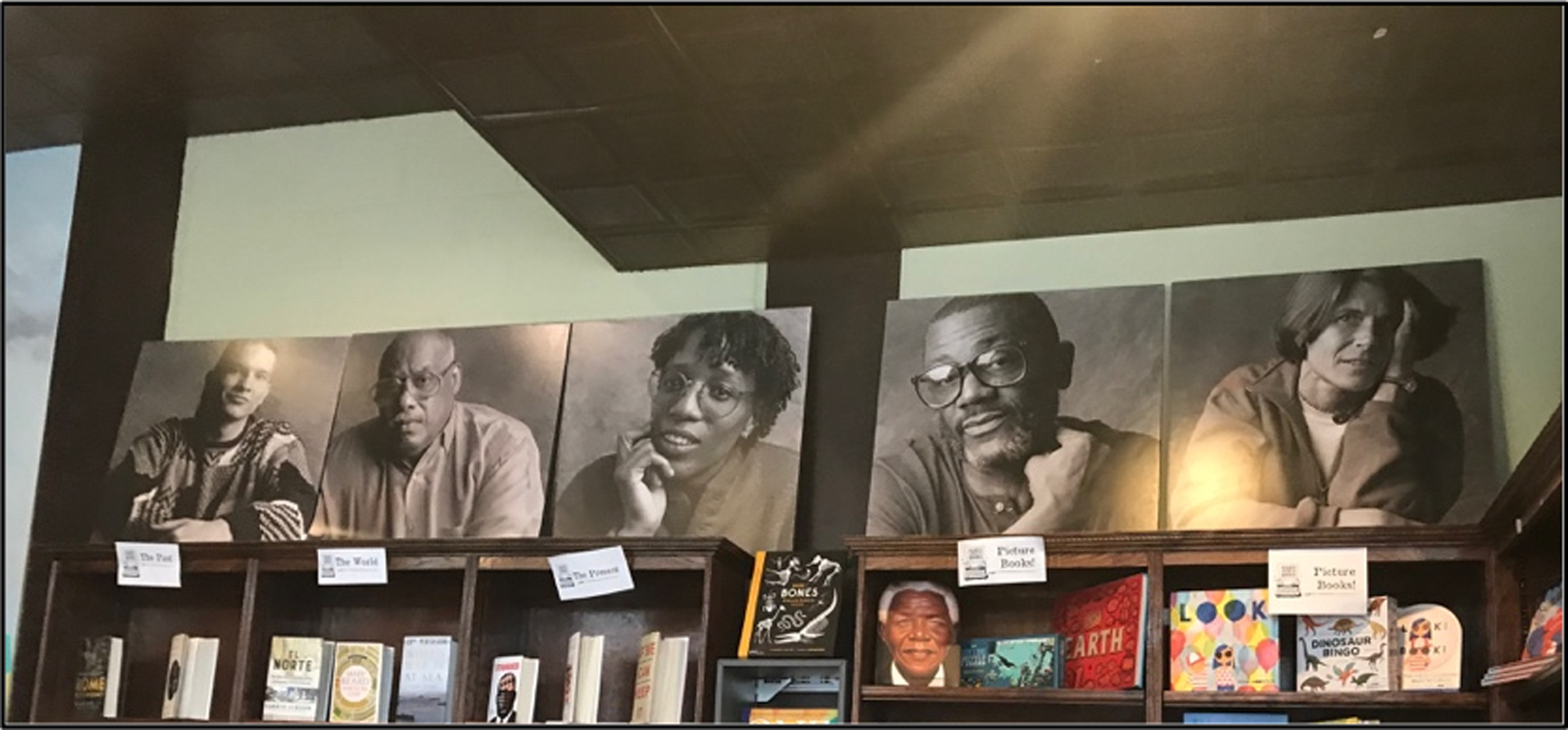
Photos of random people in 14th and V.
The restaurant makes a small gesture to signal that it welcomes everyone regardless of their political and ideological affiliations or identity markers using a sign at the entrance of each location that says, “we serve everyone only”. The marketing language and visual elements, however, suggest a liberal orientation, an impression that may be contradictory to the restaurant's claim of diversity and inclusion (Figure 3).
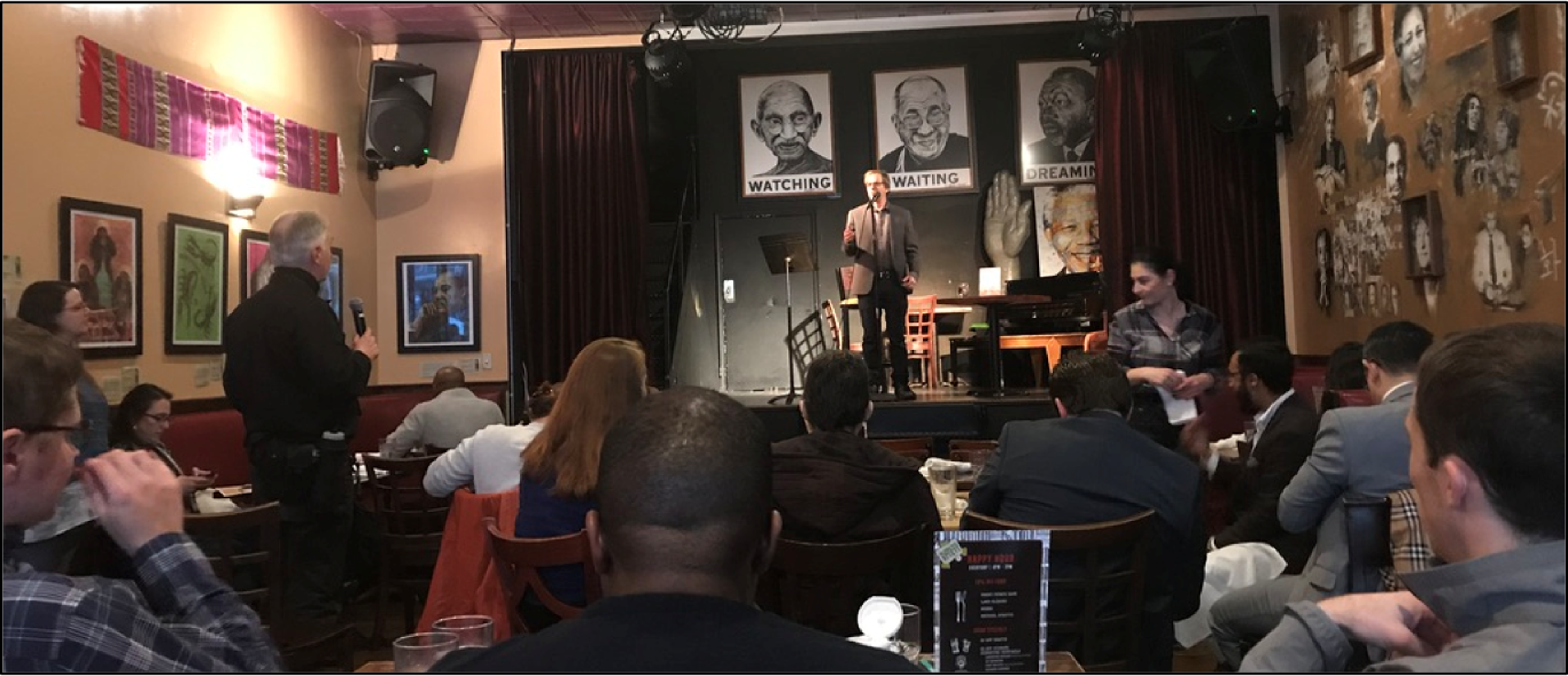
A book signing event at the flagship store.
Cultural elements from the gentrified neighborhoods are weaved into the language and visual aspects of the restaurants from the décor to the events they host and the ideals and values they support. The restaurant pays homage to Black and historical figures such as Fredrick Douglas, former D.C. mayor Marion Barry, MLK and others reflecting its pledge to preserving the culture of the neighborhood. With artwork on the walls featuring Black artists local to the neighborhood, the restaurant creates a space where culture and diversity are celebrated, and a community is thoughtfully built to foster connections between longtime residents and newcomers.
RQ2: How Does Newspaper Coverage of Busboys and Poets Present the Restaurant's Branding in Relation to Gentrification?
Two themes identified from newspaper coverage of Busboys and Poets are 1) Busboys and Poets as a community hub and 2) The paradox of privilege in gentrification.
Busboys and Poets as a Community Hub
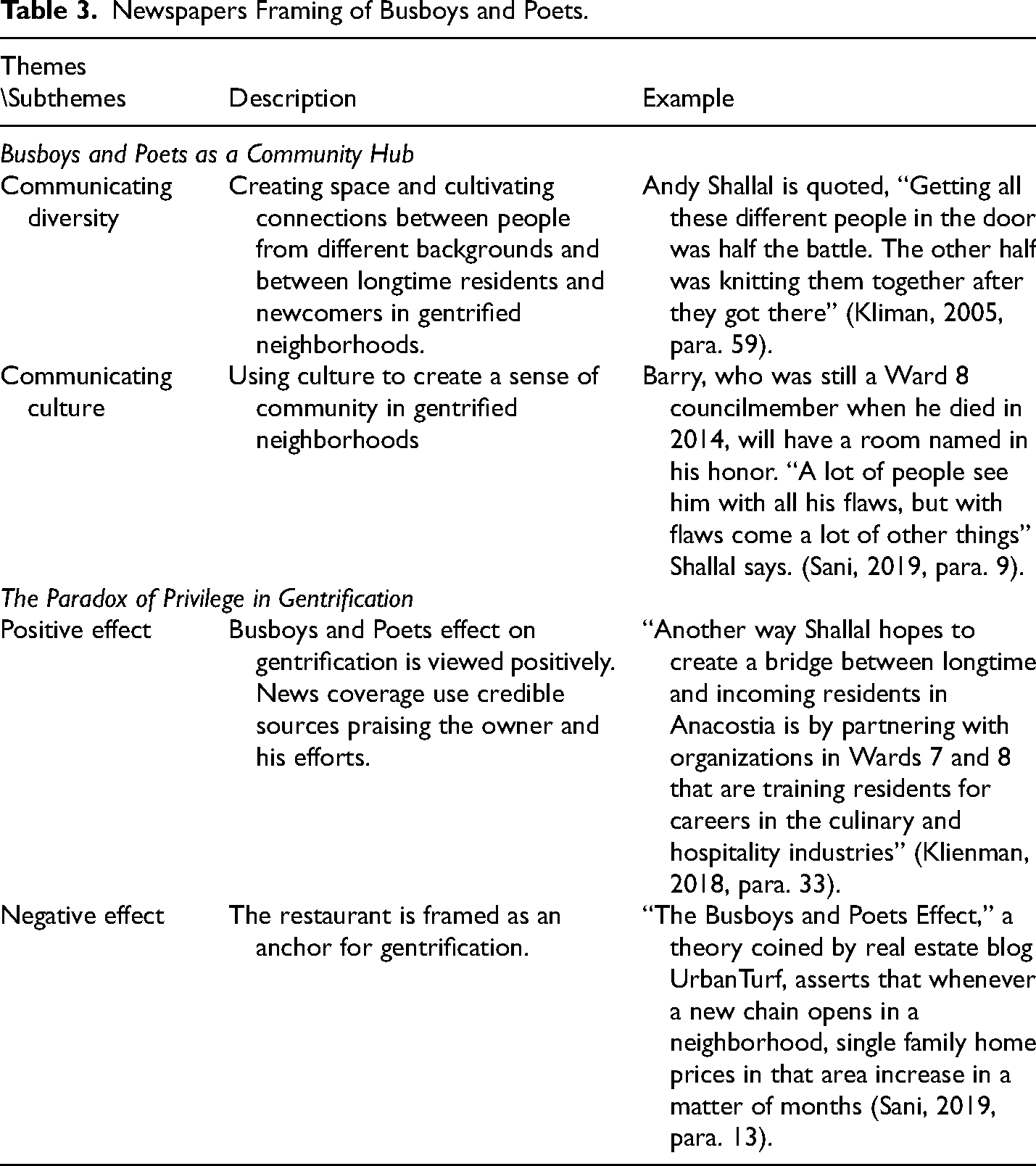
This theme emphasizes the framing of branding communication strategies employed by Busboys and Poets’. The restaurant is portrayed as an activist and social justice-oriented business that is intentional about creating a community and celebrating the culture of the gentrified neighborhoods in D.C. Additionally, two subthemes emerged from the data that represent common branding strategies that Busboys and Poets uses to cultivate a sense of a community and a public sphere: 1) communicating diversity and 2) communicating culture.
Newspapers Framing of Busboys and Poets.
If he could not revive the past–a past much romanticized by many older blacks eager to preserve a beloved patch of black history–he did not have to contribute to the sort of ‘crass cooptation’ that had resulted in such ironically named edifices as the Ellington Apartments or Langston Lofts: a summoning of the heroes of the black past to give gentrification a shot of authenticity. The spirit of the old neighborhood did not have to vanish simply because there was unprecedented affluence and a new mix of people. (Kliman, 2005, para. 18)
This subtheme illustrates how communicating culture creates a sense of community in gentrified neighborhoods. Knowing that, Shallal incorporates the culture of every neighborhood in the language and visual elements to engage local individuals and families by assuming the role of public sphere within the community.
The Paradox of Privilege in Gentrification
The newspapers coverage of Busboys and Poets highlights the paradox of privilege in gentrification and the inherent tension between providing high quality amenities like restaurants and trendy coffee shops in a neighborhood that desperately needs affordable housing, childcare, and other essential services. Questions are raised about whether what the restaurant has to offer, including high-priced menu items and cultural events, is something to celebrate in a neighborhood that lacks basic necessities. The news coverage generally describes the positive or negative aspects of gentrification.
The primary drivers of gentrification are local government policy and development subsidies in the form of tax breaks, tax increment finance districts, and land—all of which help lure developers. But, she says, established, large restaurants like Busboys can also act as a draw. ‘They’re perceived as an anchor tenant that helps them sell the development project as a whole, so whether it's a restaurant or some other entity that's a lucrative anchor tenant, that helps them sell the rest of the project,’ Norouzi says. (Adkins, 2019, para. 12).
‘Are they going to be able to come back to enjoy a Busboys and Poets?’ asks Daniel del Pielago, the organizing director of community advocacy group Empower DC. ‘When we speak to residents who live in neighborhoods in Anacostia, that's not what they want or need. The services that have lacked historically —we’d like to see those, instead of priority being given to the developer class…what we’re seeing is the next frontier in development sprawl, the preparation of an area as prime real estate for redevelopment. … It's the same model that Busboys and Poets followed on 14th [Street].” (Klienman, 2018, para. 13 & 14).
The median price of single-family homes within a 0.7-mile radius of the Brookland location in the six months prior to the restaurant's opening date was $575,000. In the six months after, it jumped to $700,000. In Takoma, sales prices jumped $45,000 in the same time span surrounding its opening. (Klienman, 2018, para. 18)
Responding to the negative attention received for being associated with gentrification, Shallal argued, “The displacement doesn’t happen because of a restaurant, it happens because government policies don’t take into account the impact of the market,” (Adkins, 2019, para. 5). Despite the negative coverage, Busboys and Poets is generally framed as a socially responsible business that endeavors to give back to the neighborhood, create a community, and support the local residents (Table 3).
RQ3: How Do Online Reviewers Perceive Busboys and Poets’ Branding Communication Strategies in Promoting Community Building in Gentrified Neighborhoods?
The computational analysis paints a picture consistent with the branding efforts of Busboys and Poets, which focus on creating a sense of community by communicating diversity and culture. More reviews mentioned the community-oriented branding categories, sense of community, culture, diversity, and inclusion than those written about food, service, or other aspects (see Figure 4).
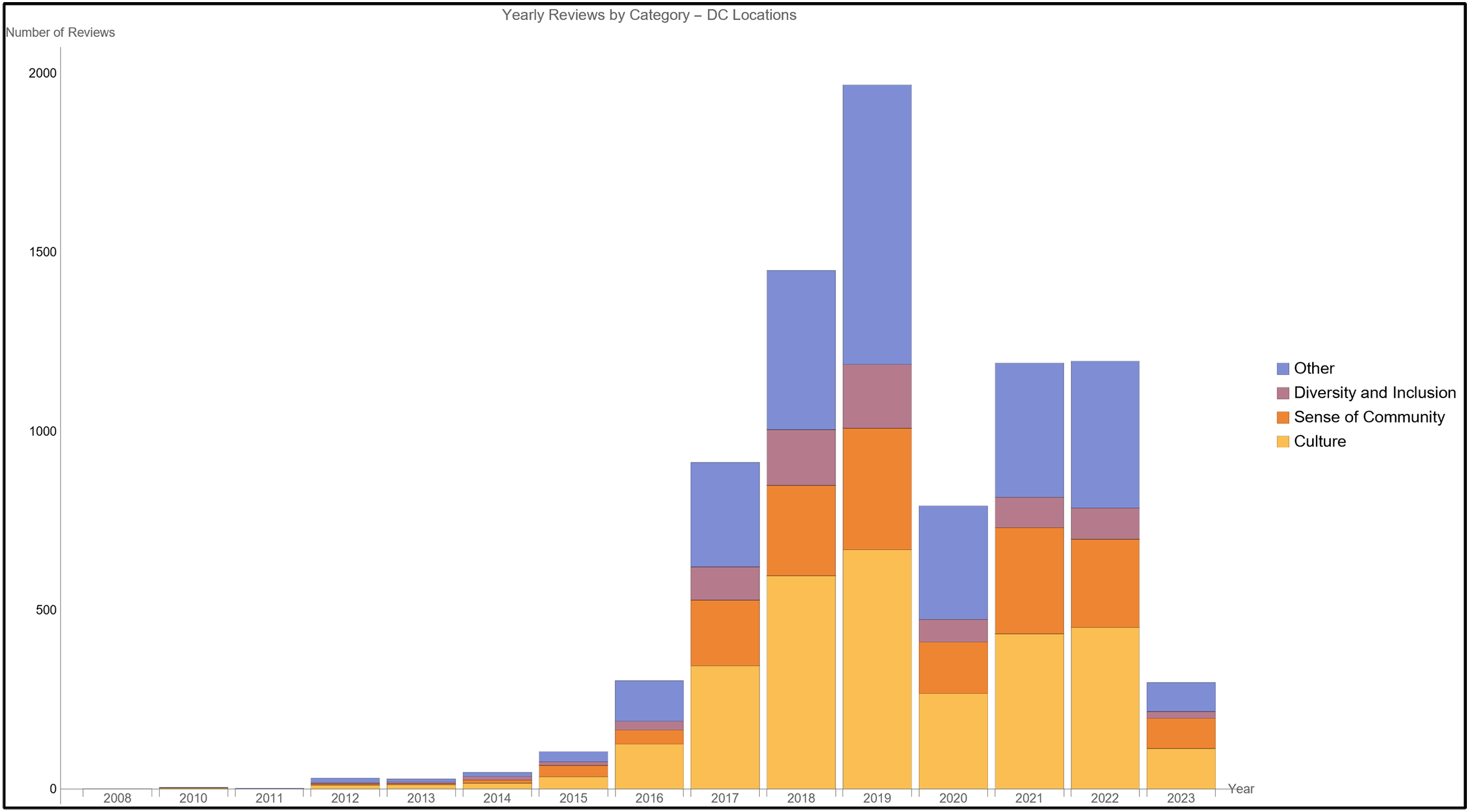
Yearly reviews by category – D.C. Locations.
By looking at the bar chart, the number of reviews written about the restaurant as an anchor for the community shows a stark increase in 2017, the year Donald Trump became president, which may indicate the restaurant's role as a public sphere for the communities to discuss social and political issues related to the new presidency. News covered social and political events in various Busboys and Poets locations in D.C. (Carswell, 2017; Dukuly, 2017; O’Neil, 2017). The reviews went down in 2020, which can be explained by the COVID-19 lockdown. The chart also shows the reviews climbing up, with most of the reviews mentioning the restaurant's role as a community anchor overall. It is important to note that the change in the number of reviews per year may also reflect the opening of new restaurants in Mount Vernon in 2008, Brookland in 2014, Takoma in 2015, and Anacostia in 2019 (Klienman, 2018).
The reviewers viewed the branding communication strategies positively praising the restaurant for creating an atmosphere where everyone feels welcomed. The combined analysis revealed a central theme, the restaurant as anchor for the community. Three subthemes appeared to be directly relevant to this theme which are, 1) Sense of community, 2) Culture, and 3) Diversity and inclusion.
The Restaurant as an Anchor for the Community
Sense of community and the restaurant's efforts in preserving the culture and promoting diversity and inclusion were three prominent subthemes in the data. LLM analysis determined the reviews relevant to each topic as follows: 1) Sense of community was determined by reviewers’ descriptions of the atmosphere and the restaurant's amenities like the bookstore and the events. 2) Culture was determined by reviewers’ mention of art, events, poetry, Black historical figures. 3) The diversity and inclusion topic was determined by reviews that mentioned diversity in food, customers, staff, bookstore offerings, and artwork.
A cultural and community experience. From friendly wait staff to great food, busboys and poets is a great place for a bite that surrounds you in DC culture with amazing local art and photos and food that is locally and responsibly sourced.” (McCraw, 2019).
Busboys is always the first restaurant I recommend to DC visitors and anyone who hasn't been. Aside from the delicious (well-priced) food and bookstore, the culture and themes pay homage to important events and people in DC's history. Busboys also hosts events throughout the week - talks, open mic, panels - showcasing DC's talent, community and ideas. Plus, diners can feel good about eating there - all the food is sustainably sourced, the staff are paid living wages (super rare for restaurants), and the owners recently closed the restaurant to participate in #ADayWithoutImmigrants protest - forgoing significant revenue (the place is always packed). It is truly a district gem (Oleksiw, 2017).
Many of the reviews seem to articulate the restaurant's branding communication messages discussed earlier, “Food is excellent! Service was great. The vibe is amazing and it's a wonderful place where food, art, culture, and politics collide into a truly enjoyable experience. Be sure to go through the bookstore area to grab a book to learn something new.” (Casey, 2020). Overall, Busboys and Poets’ branding communication strategies emphasize culture as an important aspect of building a community in the gentrified neighborhoods.
Discussion and Conclusion
Busboys and Poets provides a case study for conscious branding in gentrified neighborhoods. While restaurants can do little when it comes to solving the problem of displacement of longtime residents, they can participate in creating a space for inclusion and preserving the culture of the neighborhood. The intentional use of the public sphere as a branding strategy is a concept that has yet to be researched in the literature of branding. Albeit commercialized and replicated in a chain of restaurants, this approach seems to be perceived positively by both media coverage and consumers.
To recap, the findings of this study demonstrate the potential for conscious branding as a strategy for promoting diversity and inclusion and preserving the cultural history in gentrified neighborhoods. Busboys and Poets success in creating a culture that values diversity and community engagement exemplifies the power of a business that places social responsibility alongside its commercial goals. By deliberately using the public sphere as a branding strategy, the business has been able to forge a distinctive character that appeals to a wide spectrum of customers and supports the cultural heritage of the area. Such a strategy may not eliminate the displacement of longtime residents and other effects of gentrification, but it can, at a minimum, create a space in which marginalized communities still belong.
The Commercialized Public Sphere: A Branding Communication Strategy Model
Building on the results of this study and informed by the theoretical foundation of the public sphere by Habermas (1991), the researcher conceptualizes the model of the commercialized public sphere as a branding strategy that restaurants may use to engage the communities in gentrified neighborhoods (see Figure 5). The commercialized public sphere differs from the original concept in that it does not necessarily happen organically, instead it is intentionally created to promote the space for profit. However, that does not mean the establishment should not have any authentic or social responsibility interests in investing in the community, but rather, it can achieve both, making profit while giving back to the community. The model starts by creating the space, in this case, the restaurant, and then by intentionally creating branding communication strategies focused on cultivating a sense of community through diversity and inclusion where longtime residents and new covers can feel welcome. This communication strategy can be realized using language and visual elements along with events and active participation in the community in which the establishment operates. Another equally important communication strategy is preserving the culture of the gentrified neighborhood. That can only be realized by developing authentic interest in understanding the history of the neighborhood to engage the culture properly and respectfully.
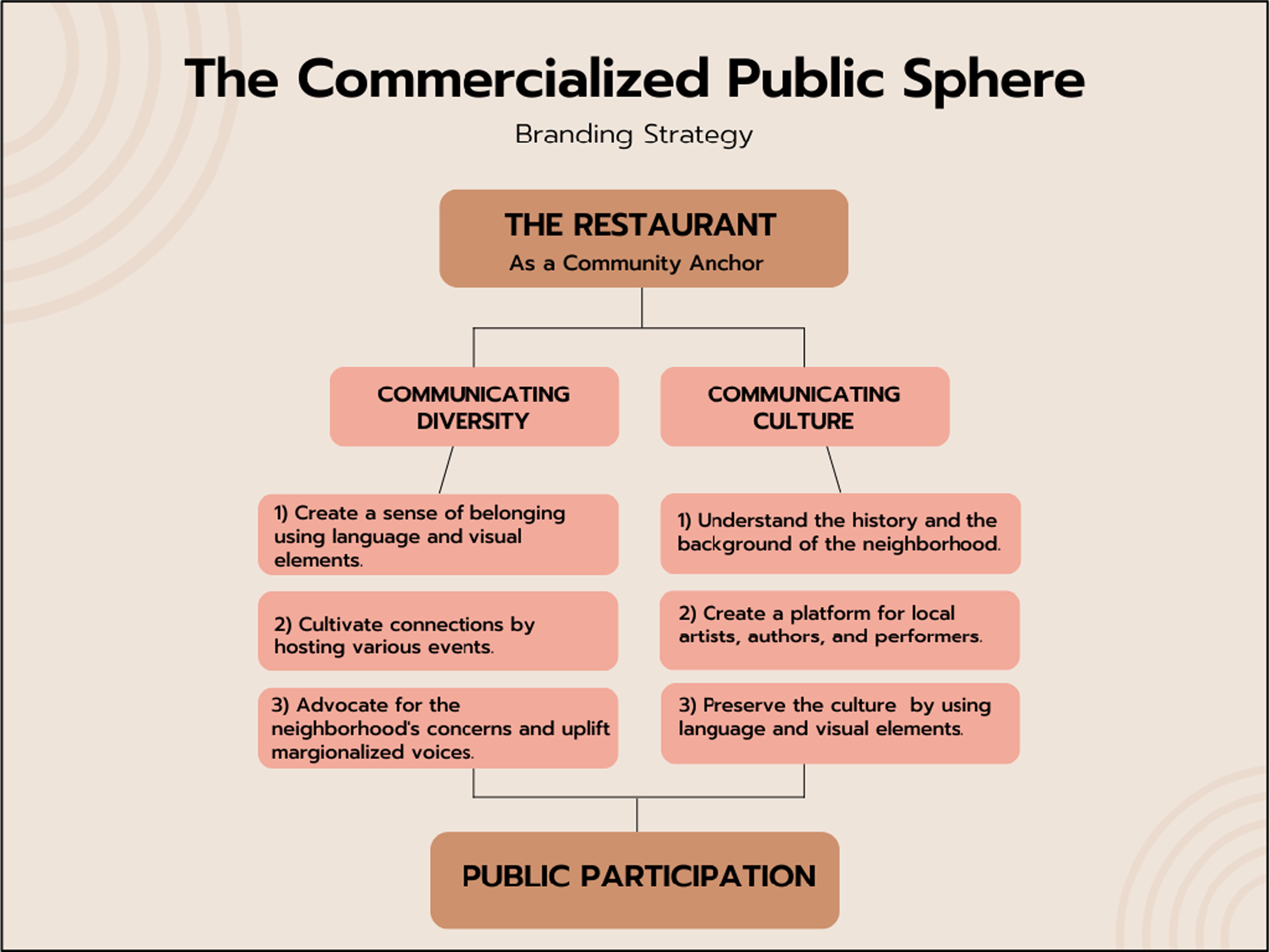
The commercialized public sphere – branding communication strategy model.
The commercialized public sphere may encourage the local residents to participate by giving them a platform to showcase their talents. The commercialized public sphere just like the traditional one cannot exist without public participation. Therefore, the restaurant as a community anchor needs to focus on continually engaging the community they serve. In the case of gentrification, the question that might be raised is for further investigation is, what happens when longtime residents who, due to rising property values, leave the neighborhood?
Future Research and Limitations
More questions remain to be asked regarding the effectiveness of this approach when applied on a larger scale, as in the current case of the expansion of this chain outside of the District of Columbia. Is the intentional use of the commercialized public sphere as a branding strategy only effective in the gentrified neighborhoods? Could it be applied in non-gentrified neighborhoods? Will it have the same impact? These questions merit further investigation in order to develop a nuanced understanding of the commercialized public sphere as a branding communication strategy. This study focused mainly on three sets of data, future studies may consider covering variety of data sets like the company's website, social media accounts, and interviews or focus groups with longtime residents in the gentrified neighborhoods.
Footnotes
Acknowledgment
I am deeply grateful to Dr. Carolyn Byerly and Dr. Sean Upshaw for their guidance and Mario Ruiz for his key role in the computational analysis - their help and support significantly enhanced this paper.
Declaration of Conflicting Interests
The author(s) declared no potential conflicts of interest with respect to the research, authorship, and/or publication of this article.
Funding
The author(s) received no financial support for the research, authorship, and/or publication of this article.
