




Abstract
Political cartoons play an important role in society as an alternative media. This study aimed to explore the democracy in, and politics of, Syria drawing upon political cartoons as a reference The objective of this study was to examine the relationship between media and power in Syria, analyze political cartoons as an alternative voice of the society, and observe their impact on society and politics. We used a qualitative methodology, as well as a visual ethnographic method, for analysis and synthesis. The findings of this study provide insights into the monopolization of media in Syria, where political cartoons portray an alternative reality.
Introduction
Political cartoons have played a fundamental role in the Arab world, particularly in Syria. They serve as alternative media and represent a different form of freedom of expression. Cartoons offer an alternative voice to democracy and politics against the authoritarian regime. Political cartoons in Syria have been significant as they have been used as an important tool to avoid censorship. Additionally, Syrian media have been controlled and monopolized by the government, where each publication is supervised by the Minister of Information. However, political cartoons have become a fundamental element of the Syrian society as they reflect censored issues using symbols.
As a consequence, different hypotheses have been considered, which will be developed and studied in this research. The first hypothesis that will be tested is that Syrian political cartoons have been a source of relief in the country. However, several of these cartoons were censored in the regime of the Baath party. Nevertheless, few cartoonists determined to use different symbols to generate visual metaphors and publish their cartoons. The second hypothesis that will be analyzed is that political issues are explicitly expressed through Syrian cartoons. In general, Arab political cartoons are a reflection of the society as they can elicit reactions from the society. Finally, the third hypothesis that will be studied is that political cartoons have become in a form of activism as they are an alternative to the official narrative. This can be attributed to the fact that the Syrian government is authoritarian.
In this context, the objectives of this study were: (1) to evaluate the relationship between the media and the authority in Syria, (2) to analyze the role of political cartoons as an alternative voice to encourage people to participate in the political process, and (3) to determine their social and political impact on the society.
In general, cartoons have been considered a source of entertainment, because of which they are sometimes disregarded. However, they indicate the perspectives of the people on politics and society. Therefore, this study aimed to elucidate how cartoons have served as an important tool of communication, as well as an element to thwart the authoritarian regimes in Syria.
Material and Methods
To verify the hypothesis and address the objectives, which has been established in the introduction, qualitative methodology—a commonly applied theoretical approach—was used in this study. The primary sources used in this study were the cartoons of Ali Ferzat, who has drawn more than 15,000 cartoons and has received multiple awards for the same. In addition, this study used different documents as secondary sources, which provided information about the interpretation of these cartoons. Thus, political cartoons can be used to understand the working of the society and the problems associated with it, in addition to cultural and political aspects of the society. Consequently, this study aimed to improve the understanding of the world through cartoons (Taylor & Bogdan, 1984).
In this study, a grounded theory of political cartoons in Syria was developed using a collection of references, interviews, articles, and books by Ali Ferzat. Thereafter, data have been classified to identify the most relevant sources and categorized into patterns to report the findings of this study. The first category included all information on governmental communications in Syria, the second category included information on Syrian cartoons, and the third category included data on the social impact of political cartoons in Syria.
As coding represents a mode of interpretation, we used coding to classify data and elaborate on new themes. Then, the prevalence of codes was summarized to compare different sources, followed by determining the relationship between all the data. As a result, several paradigms were established to include a distinct perspective on highly interpretative practices and critical theories and constructivism (Glaser & Strauss, 1967).
In addition, we used the visual ethnographic method to examine cartoons through direct observations and interpret the Syrian culture (Vasilachis de Gialdino, 2009). This method involves a negotiation of the perspectives of the participants on reality and constant cross-examination by the researcher (Barrantes-Elizondo, 2019). According to Pink (2020), not only does this method integrate the theory and practice of visual approaches, but it also allows to learn and know about the world and how to communicate these to others. Thus, the use of symbols in different cartoons was meticulously analyzed in this study, thereby providing different paradigms to distinguish the meanings of the symbols in Syrian political cartoons from a rethinking of the form to a way of generating social awareness. This implied considering humans as part of the social world, where they interact, observe, and participate with others depending on the context and in a space-time-specific manner.
Media and the Government of Syria
The press in the Arab world evolved in the nineteenth century in Egypt, after which it expanded to the rest of the Arab world (Müge Göçek, 1998). In Syria, the press emerged during the French mandate (1930–1943), but it did not exhibit freedom of publication (López-García, 1997). The French government only granted relevant licenses if the press accepted and supported its colonial policies. Therefore, there were no news articles on Arabs as they were disregarded. Consequently, it was not until the end of the French mandate that Arab media outlets came into existence in Syria (William, 1979).
After the French mandate (1943), the media was subjected to licensing to derive advantage of the political instability of the country. Different governments imposed restrictions to publish and maintain a single perspective. The media moved from the authority of the private sector to the State, which controlled their actions through a specific information ministry that supervised all publications within the country (Rugh, 1987). This issue was ratified with the ascension of the Baath party to the Syrian government in 1963. The media focused on the President as they were considered a necessary element of the society that motivated the masses and emphasized the adequacy of the government policies. Hafez al-Asad transferred control to Ahmed Iskandar Ahmed, who formulated a team of seven men to control the role of mainstream media in educating the masses (Kedar, 2005).
During this period, the tone of the editorials and headlines was aggressive, combative, hyperbolic, provocative, and explicit. The themes were primarily of national importance, although the foreign policy received criticism as it supported the movements of the President (Rugh, 1987). The Syrian media adhered to the following guidelines and exhibited a specific function, to appreciate the President and his government: (1) Exhibit the image of a socialist media, (2) energize the masses to come together for a purpose, (3) explain domestic and foreign policies, and (4) use criticism as a complement to its purpose of mobilizing the masses. Mass media were obligated to show the unity and strength of the regime. Their publications aimed to disseminate the fundamental role of media in building a new society, exhibit the positive side of the society, and serve as a weapon for the government in its efforts to minimize or eliminate the existing negative phenomena in the society.
The function of the media was to praise and legitimize the President, to suffice the desire for obedience that transformed the use of political force into rational governmental policies. In other words, legitimacy reflected the agreement of the society to the leadership and the rule of law to govern. Moreover, this legitimacy granted honor and approval to both leaders and individuals considering the institutions of the State and the standards of behavior. Without this legitimacy, the leaders exhibited only one choice—to develop oppressive measures to preserve their power without ensuring the stability of the government (Kedar, 2005).
However, the ascension of Bashar al-Asad as the president in 2000 provided hope for change. This was marked by the significant changes in the media throughout the Arab world because of satellite channels. Although this change created a dilemma for different regimes, in Syria, it affected all media platforms except publications, which remained practically unchanged (Saqr, 1998). The media continued promoting the legitimacy of the regime as they provided an impression that “someone is in charge.” However, this was a complicated task as maintaining legitimacy was increasingly difficult with the development of new communication channels that disseminated all kinds of information without censorship. Consequently, these new channels opposed the policies of the regime. The themes these channels propagated, such as the legitimacy of the Arab regimes, corruption within governments, freedom of speech, development of civil and economic status, attitudes towards ethnic and religious minorities, the status of women, and the role of Islam in the life of individuals, the community, and the State (Kedar, 2005), were controversial for the government because they constrained the idyllic government. Consequently, the government used extralegal practices to intimidate and repress all those who advocated the right to freedom of expression; several of them were tortured, beaten, or killed for expressing opinions different from those of the country (Saqr, 1998)
Ali Ferzat and his Cartoons
Ali Ferzat, who was born on June 22, 1951, in Hama, Syria, started drawing at the age of five years. His father was the director of the Department of Housing and Registration. However, the rear side of his documents featured something special—the doodles of his son— indicating his dream of becoming a cartoonist. He never received punishment from his father for drawing as his father was aware of his talent and believed that his drawings would be important in the future. Additionally, his father was summoned to school on several occasions because Ali Ferzat was in difficult situations due to his cartoons. In primary school, Ali Ferzat created cartoons of his teachers and thus was expelled from school.
His first cartoon was published on the cover of a newspaper, under an article about the Algerian war of independence, when he was 12-year-old, in the sixth grade in al-Ayyam (The Days). Later, the owner of the newspaper wrote him a letter asking him to move to Damascus and work as a cartoonist. Ali Ferzat was amazed as, according to him, he did not know how to draw being a sixth-year student. Paradoxically, this newspaper was censored and shut down with the ascension of the Baath party (Anderson, 2005).
In 1969, Ali Ferzat began drawing for al-Thawra (The Revolution) and education at the Faculty of Fine Arts at Damascus University in 1970. Nevertheless, he had to leave Damascus in his third year for military service, where he continued to draw tirelessly, but secretly (Taleb, 2005).
These early cartoons of Ali Ferzat portrayed general themes such as hunger and poverty. Eventually, they became popular, and people began to buy relatively more newspapers to visually discern his art, but censorship arrived soon after. Sometimes, when the Editor-in-Chief of the al-Thawra would publish a few of his cartoons without completely understanding the symbolism, he would receive calls from the Syrian government. As a result, the Editor-in-Chief was forced to follow a new procedure while publishing political cartoons. The Editor-in-Chief observed and approved the cartoon, after which the cartoon was sent to the Director General of Press for further approval. When few of these cartoons were controversial or incomprehensible, the Director General of Press would send them to the Minister of Information, who was the in-charge of the media. Sometimes, these cartoons were published because the Minister of Information did not completely understand the meaning and symbolism of the cartoon. However, people could understand the simple symbolism in the cartoons. This displeased the government, and the Director General of Press worked with Ferzat to censor a few of his cartoons (Halasa, 2012a).
However, this was not the only time when the cartoons of Ali Ferzat faced censorship. In his comic strips for juveniles, Ferzat challenged traditional sensibilities in Syria, a country renowned for channeling propaganda through state-sponsored publications for children. An incident occurred in 1977 when Ferzat drew a comic strip for the Usama journal entitled The Travels of Ibn Batuta. In this work, Ibn Batuta was depicted with a beard and mustache, wearing a globe-shaped turban on his head, along with a few characters from the Arab world such as Mohammad Ali, Omar Sharif, and the singer Abd al-Halim al-Hafez. Furthermore, these characters wore a balloon-shaped turban over their heads and were singer and dancer epitomes of Ibn Batuta. Within the same comic strip, the historical traveler was shown to push his donkey to the Present, where his size was reduced probably because of modern times. As a consequence, the editor of the Osama journal wrote him a letter complaining about the representation of Ibn Batuta. Instead of using traditional figures of ridicule employed by the poet Abu Nuwas or Yuha as his fumbling protagonist, Ferzat used a notable historical personage, which the editor considered highly insulting. This could be attributed to the fact that during that time, the ideology of this journal was beginning to change and its material was becoming increasingly less controversial. Thus, the satire did not receive much acceptance (Halasa, 2012b).
Ali Ferzat became a well-known cartoonist both domestically and internationally as he became the director of The Society of Cartoonists Arabs in 1980 (Editors Appendix in Ali Farzat, 2005). He received the first prize in the International Intergraphic Festival in Berlin, Germany, in 1980. Ali Ferzat interacted with the international press to ensure that his cartoons could be published in European newspapers such as Le Monde (The World). He won the first prize at both the First and Second Damascus Cartoon Festival (1980 and 1982, respectively). In 1984, he collaborated on the production of an animated advertisement on the contamination in Qatari televisions. In 1985, he exhibited his cartoons in an exhibition conducted by the Syrian Cultural Center in Moscow and won the third prize at the International Festival of Capravo, Bulgaria.
In contrast, he also aroused hostility while participating in an exhibition at the Arab World Institute in Paris, France. Not only were his cartoons censored and banned in Iraq, Jordan, and Libya (Cune, 2006), but he was also accused of parodying Saddam Hussein, for which he was threatened and banished. However, Ali Ferzat advocated the demolition of Saddam Hussein peacefully and comically while representing him and his government in cartoons highlighting the atrocities of the Iraqi regime (Editors On Titles and Notes in Ali Farzat, 2005).
In 1990, Ferzat started working for the state newspaper Tishreen (October) where he indirectly published his criticisms of the Syrian regime. Additionally, the Middle East Press Center presented him with the gold medal for the best Arab cartoonist, an award that he obtained again the following year. In 1994, he was selected as one of the top five cartoonists in the world in Germany (Cune, 2006). In an exhibition in 1996, Ali Ferzat met Bashar al-Asad, who was amused by a few of his cartoons and later became his friend. Bashar Al-Asad was amazed by his thought process and wanted to know about unpopular opinions (BBC, 2012).
The ascension of Bashar al-Asad as the president of Syria in 2000 heralded freedom of expression in the country after the outbreak of the “Damascus Spring.” Everything appeared to be changing, resulting in a free and increasingly modern Syria, wherein everyone exhibited the freedom of expression. Thereafter, Ali Ferzat founded al-Domari (The Lamplighter), the first independent satirical newspaper in Syria since 1963, which was a political satire and featured a style similar to the weekly newspaper Le Canard Enchâiné (The Chained Duck). The first issue was published in February 2001, selling a total of 50,000 copies in less than four hours. As a consequence, in 2002, Ferzat obtained the Prince Claus Award in Holland for his outstanding achievement in the field of culture and development. However, he was repressed by the government owing to a series of cartoons that criticized president Bashar al-Asad and his government. The newspaper was forced to shut down in 2003 (Moubayed, 2006), after which Ali Ferzat began to publish his cartoons in the Kuwaiti newspaper al-Watan (The Nation) (El Mundo, 2011).
In 2005, Ferzat published A Pen of Damascus Steel. Political Cartoons of an Arab Master, which included a bilingual Arabic-English introduction to ensure that the objectives and purpose of the book were comprehensible. These cartoons reflected, between laughter and tears, the lack of freedom, democracy, love, and peace, which plagued these countries being the common contemporary evils. Ali Ferzat aimed to embody a simple yet complex ambiguity that directly illustrated his creation (Ferzat, 2005).
In October 2010, he returned to al-Domari, transformed it into a satirical art gallery, and continued on the path of the newspaper, after realizing its popularity. Several people attended its inauguration and were amazed at his cartoons, which exhibited an amalgamation of new shapes of colors on large pieces of fabric, T-shirts, and key chains. The public appreciated the new form that their art had taken (Ferzat, 2013).
Ali Ferzat was not frightened by censorship as he was aware that his art would be present in the Syrian society. In this regard, the Arab Spring was crucial for the evolution of political cartoons in the Arab world, particularly in Syria. He directly criticized the government of Bashar al-Asad despite friendly relations. The Arab Spring was an explosion of free artistic expression that spanned diverse visual and multimedia art genres, including photography, painting, videography, sculpturing, installation, mixed media, illustration, and graffiti, in highly nuanced ways (Shilton, 2013).
However, these art forms endured negative consequences. Ali Ferzat almost lost his life for a cartoon that represented Bashar al-Asad and Qaddafi leaving their countries (Figure 8). He was first threatened on call, email, and his Facebook profile and later kidnapped from his car by several hitmen of the government of Bashar al-Asad on August 26, 2011. He was forced into a car squatting down with his head between his legs and his hands above his head. With his head wrapped in a bag and hands tied, he was thrashed relentlessly for ten minutes until unconscious. Later, he was thrown on the sidewalk where he was found. Fortunately, he was taken to the hospital and moved to Kuwait for recovery. All media platforms covered the news of the attack on the Syrian cartoonist, making him feel the effects of his art on society. In this way, his cartoons grew highly strong (Khalili, 2012).
The cartoons published by Ali Ferzat can be classified into two periods. The first period represented the passive phase, wherein his cartoons were recognized globally. These cartoons offered a source of relief to the society as the criticisms were unassertive and represented a negotiation between the cartoonist and the readers because people exhibited other ways of expression, in addition to reading cartoons (Maundu, 2015). These cartoons portrayed contemporary assumptions such as freedom, democracy, love, and peace and served as an extremely important tool to criticize and analyze injustice, repression, dictatorship, terrorism, environmental degradation, and corruption, including policies that degraded humanitarian practices (Ferzat, 2005). They were considered a daily ritual in the cultural life of Syrian people as they expressed the frustrations and disappointments of the society (Anderson, 2005). Nonetheless, these cartoons were altered after the “Damascus Spring”. Both society and the government assumed cartoons as a new form of freedom of expression. Hence, Bashar al-Asad aimed to legitimize his power using these political cartoons and allowed Ali Ferzat to reopen al-Domari. However, soon after Ali Ferzat began elaborating the truth about the situation of the country, Bashar al-Asad again shut down al-Domari. This suggested that Bashar al-Asad was aware of the changes that these cartoons entailed as they were actively encouraging people to a revolution (Moubayed, 2006).
In contrast, the second period included the Arab Spring, wherein these cartoons became increasingly active. This altered meaning changed the concept of political cartoons in Syria as they now represented an art of resistance. They generated creative activism that encouraged people to participate in creative politics and were used as a weapon to defeat the regime. They developed a joyful resistance that was both disconcerting and dangerous for the Syrian leadership, presented a holistic narrative of the conflict, and reminded the readers of the non-violent roots of the revolution as these cartoons contributed to undermining all authority that was not based on democracy. Cyberspace and social media also contributed to the fast transmission of these cartoons because Ali Ferzat could rapidly publish his cartoons (Gilbert, 2013). Not only did his cartoons evolve, but the changing situation also resulted in an important alteration in the meaning of his cartoons. These cartoons became a new form of revolution and were transmitted in cyberspace by breaking the frontiers of languages. They were comprehensible to global readers despite being in Arabic. In addition, these cartoons served as a reflection of the changing Syrian society and thus became a dynamic source of information. Furthermore, they liberated the Syrian masses from their dependence on a single authority or ideology. They indicated a non-violent movement wherein the freedom of expression and assembly were claimed by revoking the State of Emergency of the regime (Halasa et al., 2014).
The use of Political Cartoons in Syria: An Alternative Form of Communication
An alternative form of communication developed with political humor, which allowed people to express ideas different from those of the regime that had consolidated with the globalization of the media (Camps-Febrer, 2013). They became a perfect critical system that ridiculed characters and events. Furthermore, political cartoons were considered a trigger for the society because they were one of the favorite weapons of the artists of the movement (Lavado Paradinas, 1984).
The birth of political cartoons in Syria dates back to the beginning of the twentieth century. These cartoons aimed to criticize social customs without directly targeting politics. Nonetheless, the course of this artform changed with time and it became a highly precise form of political criticism, especially during colonial times. As depriving the Syrian public of all political manifestations was an ultimate motive, this art did not finish curdling during colonial times. Thus, cartoons exhibited maximum expression only after the end of the colonial period. This phase resulted in the development of several comic books and magazines highlighting titles, such as al-Mudhik al-Mubki (Irony) by Habib Kahhaleh, a renowned innovator who criticized the Syrian society ironically and in a burlesque style, using a donkey as the protagonist to represent social evils. This magazine was interesting because it lasted for 37 years starting from 1929. Additionally, with every attempt to censor the magazine, the publisher would unveil another magazine titled Mashi al-Hal (Nothing Happens) to replace the previous one. Nevertheless, these magazines were ultimately censored to control media publications when the Baath party formed the government in the 1960s. Thereafter, cartoonists were forced to secretly practice this artform or use symbols that expressed their opinion without being censored. Cartoons gained intense momentum as they represented the perspectives of the people through specific symbols (Salti, 2012).
In Syria, political cartoons became a tool to conquer the public and focused on identifying a series of perspectives shared by the society to change the political and democratic system of the country. This issue resulted from the oral tradition deeply rooted in the Syrian society. Consequently, political cartoons mixed orality with the penmanship of the artist and generated an ideal symbiosis to reveal the needs of the people (Camps-Febrer, 2013). According to Qassim (2007), the artistic aspect suggested that the cartoonist was free to express his viewpoints, that is, in an authoritarian state, and the satirist might instead be regarded as a hero, who would tell the truth when nobody else dared to. Additionally, according to Müge Göçek (1998), political cartoons were an important social force that exhibited the potential to generate change “by freeing the imagination, challenging the intellect, and resisting state control.”
Political cartoons acquired global recognition as they criticized global issues such as politics and society. These cartoons focused on the lack of liberties, corruption, and poverty. Cartoonists also used their art to discuss and analyze North American imperialism, Jewish Zionism, and collaborationism (Lavado Paradinas, 1984), in addition to developing specific themes. The themes developed by Ali Ferzat are:
The villains: The oppression of the society was personified in the leader whose regime required worshiping him. The leader was associated with a cult, which served as the source of his power and legitimacy. Cartoonists ridiculed this paradigm wherein the leader aimed to maintain his powers and privileges, and villains were members of the military and the political elite and represented a social figure. These cartoons revealed the influence of the political context, the atmosphere of liberties or oppressions, and the resistance of the society. Therefore, these cartoons attempted to hijack the narrative of the regime and exposed the absurd and unconscious discourse by showing the reality of political events (Camps-Febrer, 2013). According to Qassim (2007), villains were considered evil monsters or weaklings in the cartoons, depending upon the state of momentum or adversity. Ridiculing the villain and glorifying oneself in the cartoons was a standard measure in the propaganda war that was a part of modern warfare. For instance, Figure 1 illustrates a choleric officer ridiculing the war as he hit himself instead of hitting a bee. As a matter of fact, this cartoon was published on Ali Ferzat’s website in a section related to political parties. Nevertheless, Ali Ferzat decided to publish it again on his Facebook profile in 2017 to emphazised the resistance. International community: Political cartoons reflected the ridicule and satire of foreign powers and international organizations. This satire directly affected the consciousness of the international audience as cartoonists reshaped the discourse that these powers represented. Therefore, political cartoons also represented a form of a complaint (Camps-Febrer, 2013). Furthermore, Qassim (2007) suggested the existence of a constant international blame game in the cartoons representing the Arab world. Moreover, several people were frustrated at the inability of the UN to reach an agreement on the course of action to end hostilities. In figure 2, a plane is showering hearts as a symbol of love, but these hearts are transformed into bombs that destroy everything. Therefore, this cartoon aimed to highlight the hypocrisy of the UN. Additionally, this cartoon has been published as a result of the civil war in Syria in 2014 in order to highlight the hostilities of the war. Revolutionaries and their missions: The cartoons also represented the opposition through an ideal image of the population and using the activists who supported and lead the uprisings. The importance of representing the opposition is essential to portray the ideal revolution and the legitimacy of its missions. This was a counterattack on the accusations of the regime against activists, which referred to them as infiltrators, armed gangs, and terrorists. However, self-criticism was also associated with the opposition, especially towards those who were exiled as an internal division prevented them from performing an authentic revolution that exterminated the regime (Camps-Febrer, 2013). According to Qassim (n. d.), there were indirect ways of satirizing one’s side, without targeting individual politicians. The inexistence of Arab unity was also criticized in political cartoons because revolutionaries were not heroes. This fact is represented in figure 3, where several men are eating in the name of the revolution. As matter of fact, this cartoon was published on his Facebook profile in 2017.
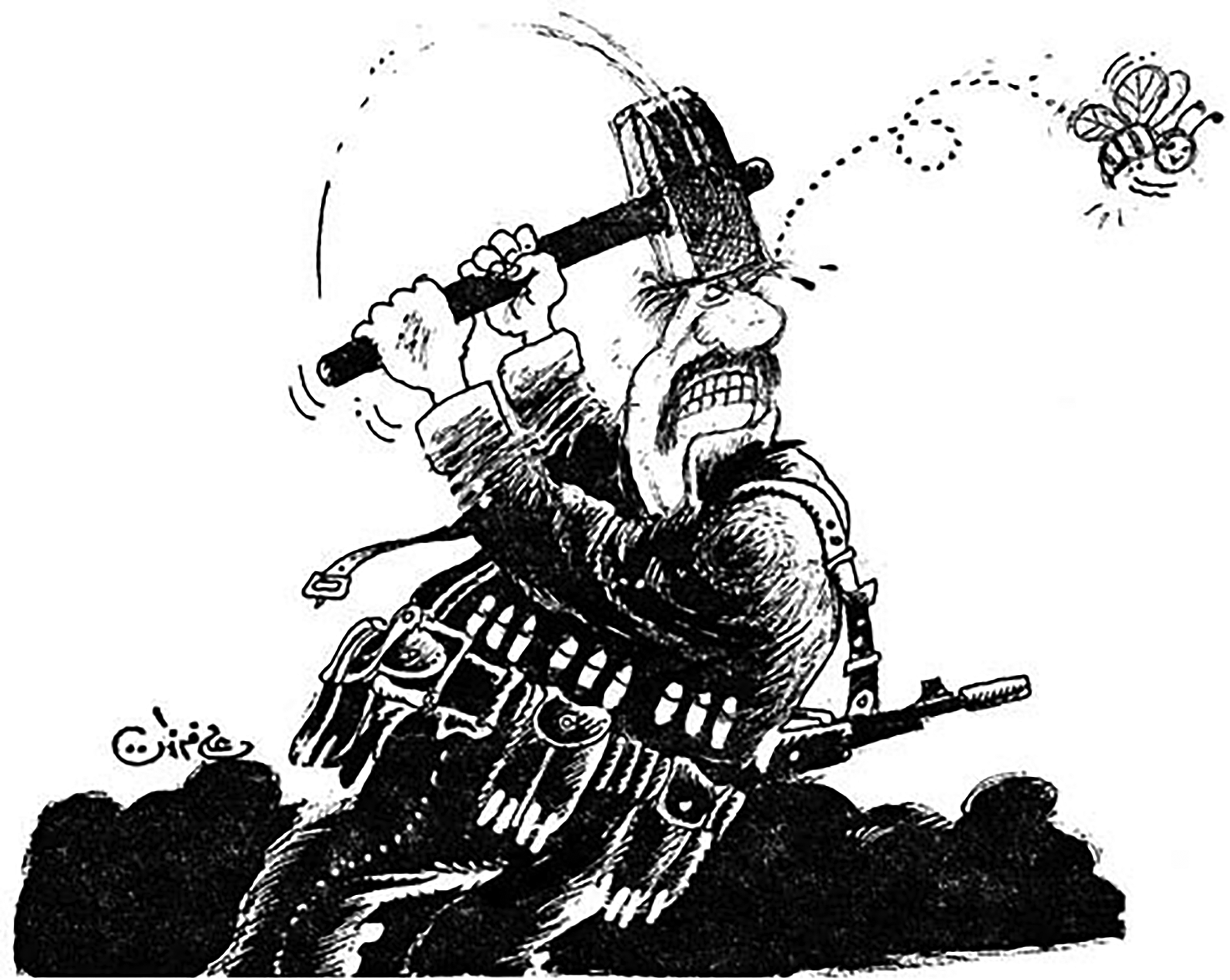
Ridiculing the villain (Ferzat, 2012a).
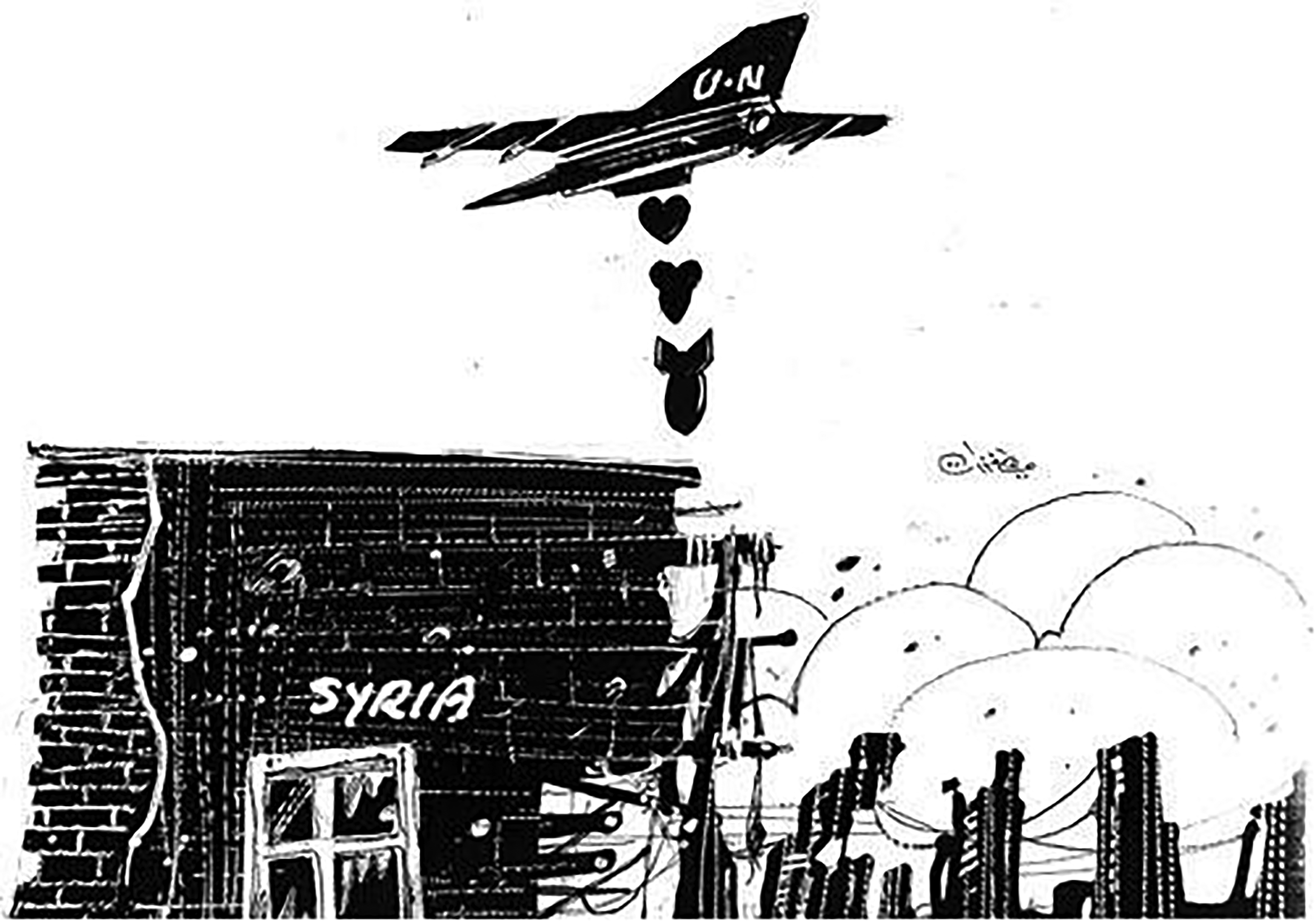
International community (Ferzat, 2014).
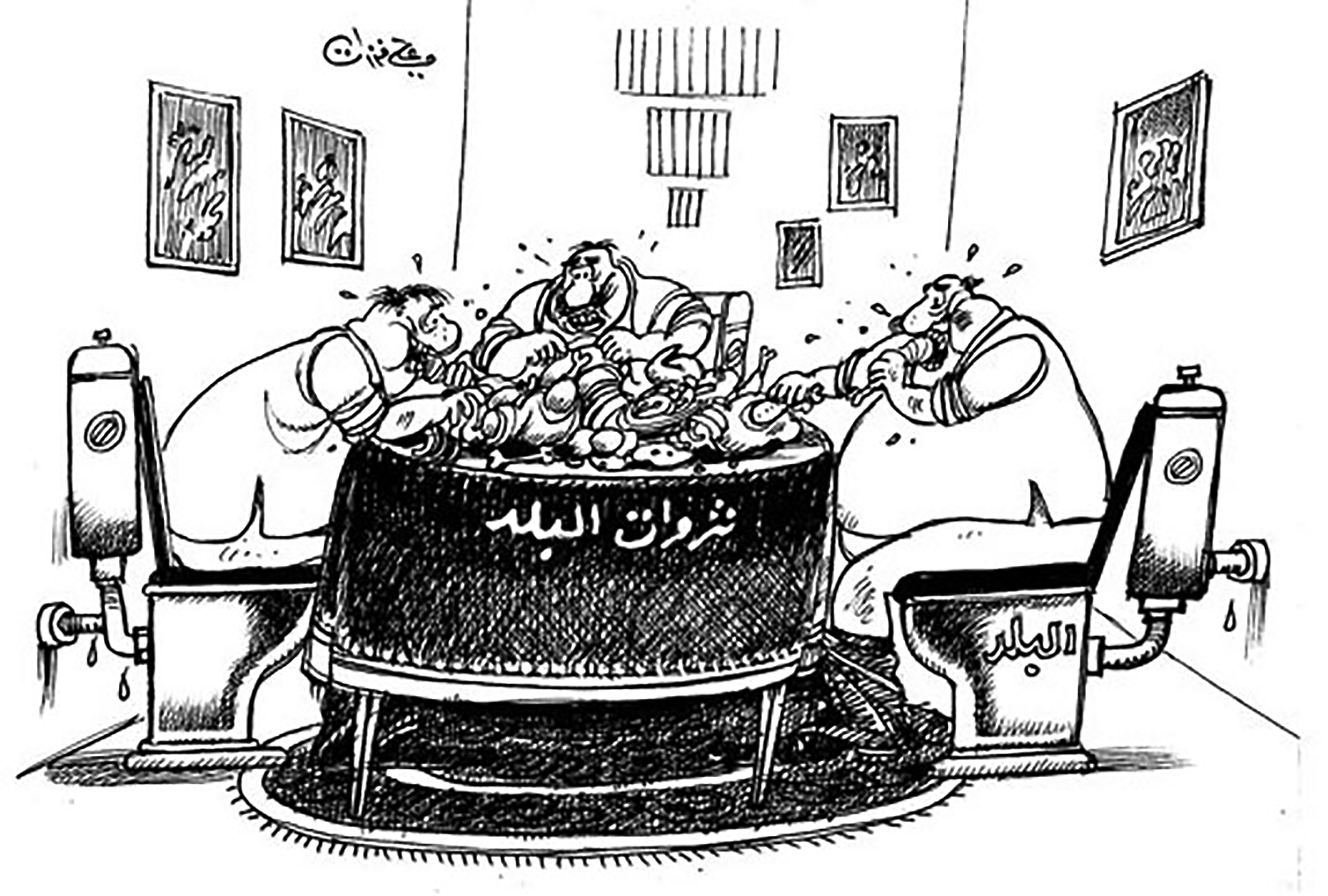
Revolts in the country (Ferzat, 2017).
Political cartoons developed various versions of acting to establish order and generate political receptivity different from that observed in the traditional media whose mission was to legitimize the president. It was a way to escape the dark and open alternative visions as the power in Syria was associated with a complicated ideological process (Wedeen, 2013). However, political cartoons became a symbol of identity and informed people about different issues. Hence, political cartoons were considered a threat to authoritarian regimes because they promoted ideas that threatened the social conventions.
Social and Political Impact of Syrian Political Cartoons
In general, political cartoons exhibit both political and social impacts. They reveal an alternative form of information while inciting the society to perform political reforms. In this regard, cartoonists play a crucial role as they suggest specific themes using symbols, which were shared by all Arab cartoonists.
Few cartoonists have contributed to the evolution of symbols and themes. Political cartoons serve as a dynamic source of information as they adapt to the changing society. The analysis of Syrian cartoons and their comparison with those of Ali Ferzat suggested that symbols are adapted to the circumstances. According to Halasa (2002), cartoons rely on visual puns. However, Ali Ferzat ridiculed everyone but reserved his sharpest barbs for generals and men in suits. Additionally, ladders or tall plants symbolized hierarchy, whereas crowds were metaphors for the Arab masses and switches. The symbols used in Ali Ferzat’s cartoons are:
Men in suits and sharp barbs for generals: This symbol represented the affluent and the government and criticized the lack of democracy and corruption in the country, both of which impeded the development of civil liberties. These cartoons were always impersonal as the cartoonists feared censorship. Figure 4 represents the roots of the throne as a symbol of eternal power. Additionally, the main character is wearing a suit to symbolize power. Not only does the cartoon ridicule him but it also appeals to the intellect of the viewer because it is a reflection of the lack of rights. However, figure 5 ridicules the governor, who has been indicated as being extremely short. The throne has only one ramification, that is, to highlight the change in the regime as the governor is fearful of the situation. Thus, this cartoon is a symbol of revolution, representing a step in the development of the government and the political situation. Both figure 4 and figure 5 have been published on Ali Ferzat’s website in a section related to the presidents in order to criticized their continuation in the throne. Ladders: Ladders were used to criticize social differences and the rise to power. This symbol represented how the ruling class ascended to power and the difficulties that existed in the society due to social differences. They aimed to represent the inbred system within the country. Figure 6 represents the same situation where a young boy is carrying a flag and a man in a suit is trying to progress. This man symbolizes the ruling class, which promises freedom but breaks them ultimately. Moreover, this cartoon has been published on the website of the cartoonist in the section of power and citizens in order to emphazised the relationship between them. Masses: This symbol was used as a direct criticism of the society while emphasizing its behavior. Cartoonists criticized that the society was inactive and needed to take charge. This symbol represented a wake-up call to start fighting for change in the regime and develop absolute democracy. This is represented in figure 7, where a flock is demonstrating freedom. However, they follow a terrorist as he exhibits a long beard and a hand grenade. As a matter of fact, this cartoon was published on this man is used as a sharp critique of the rise of Islamist and the sheep are the representation of the people who follow these movements.
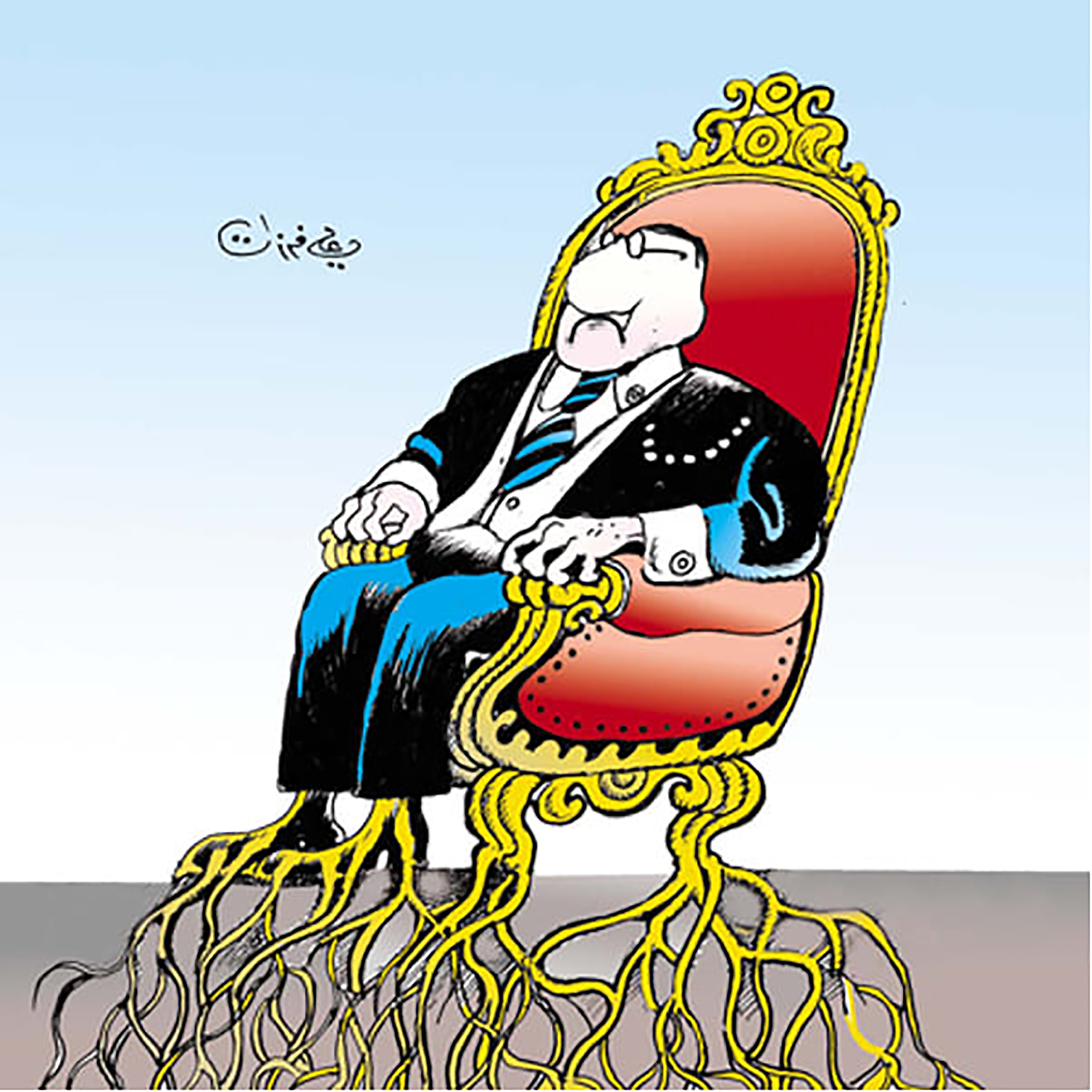
The President in his throne (Ferzat, 2011a).
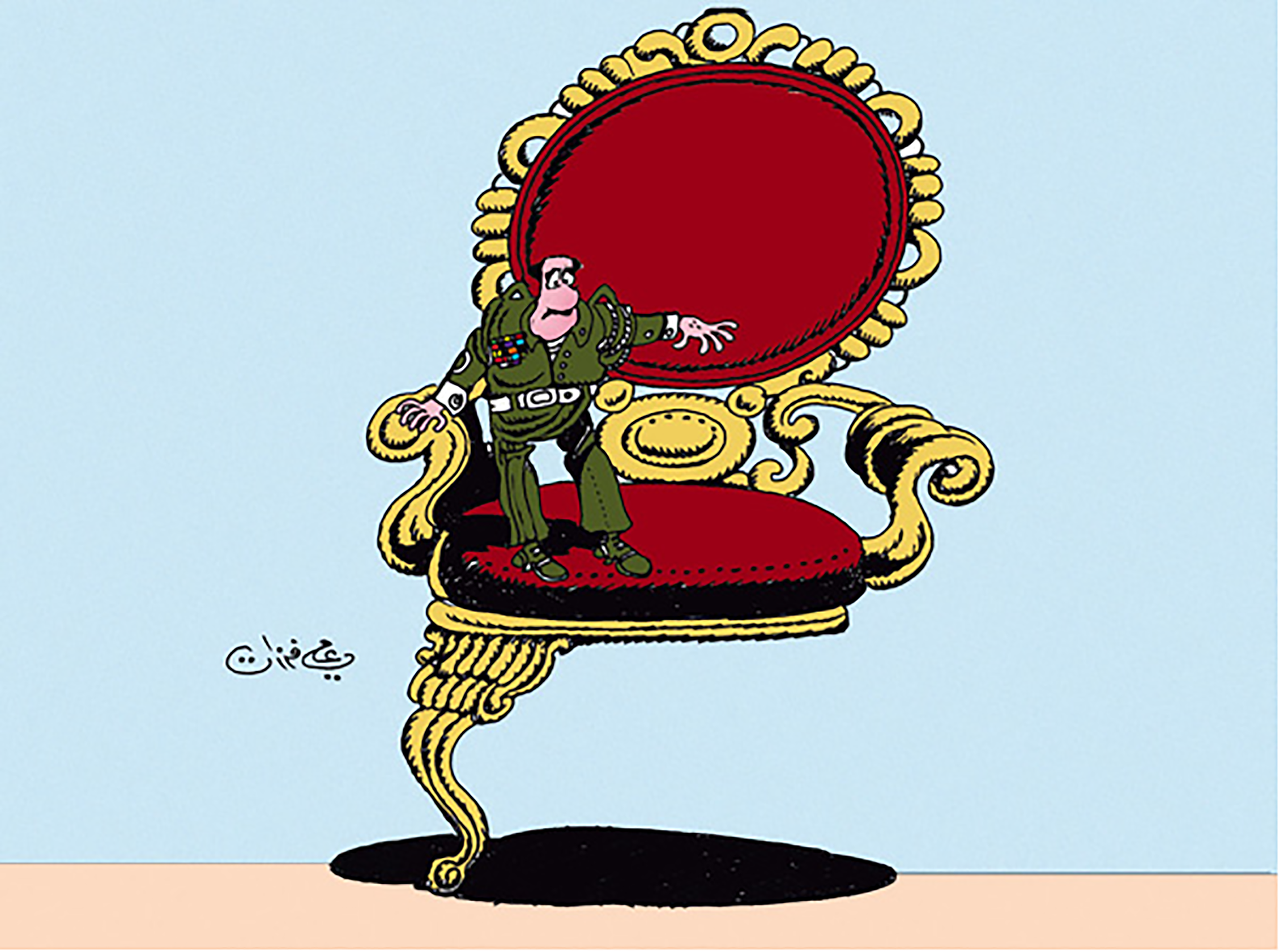
A general in the power (Ferzat, 2022a).
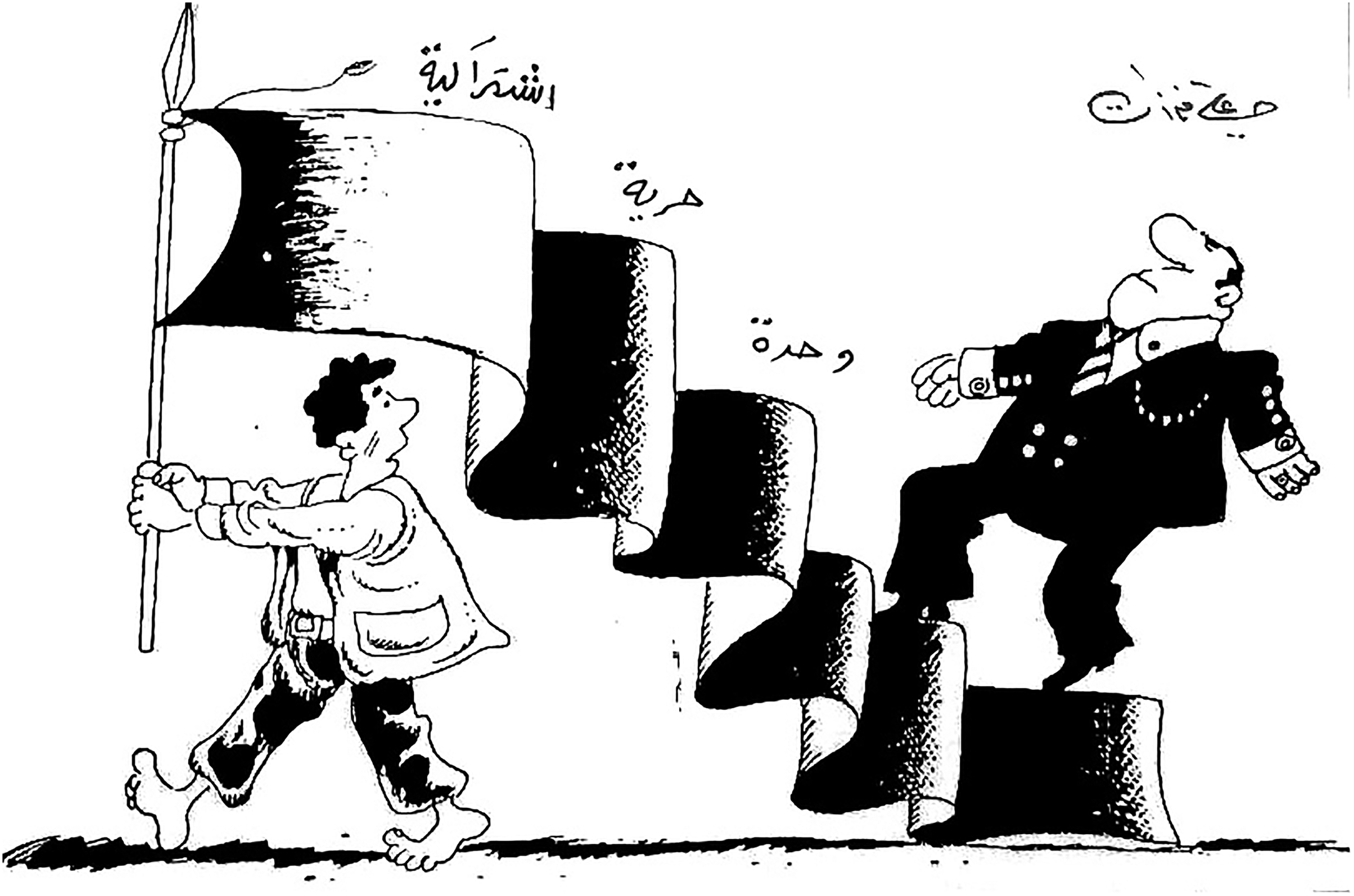
Rising of the Power (Ferzat, 2011b).
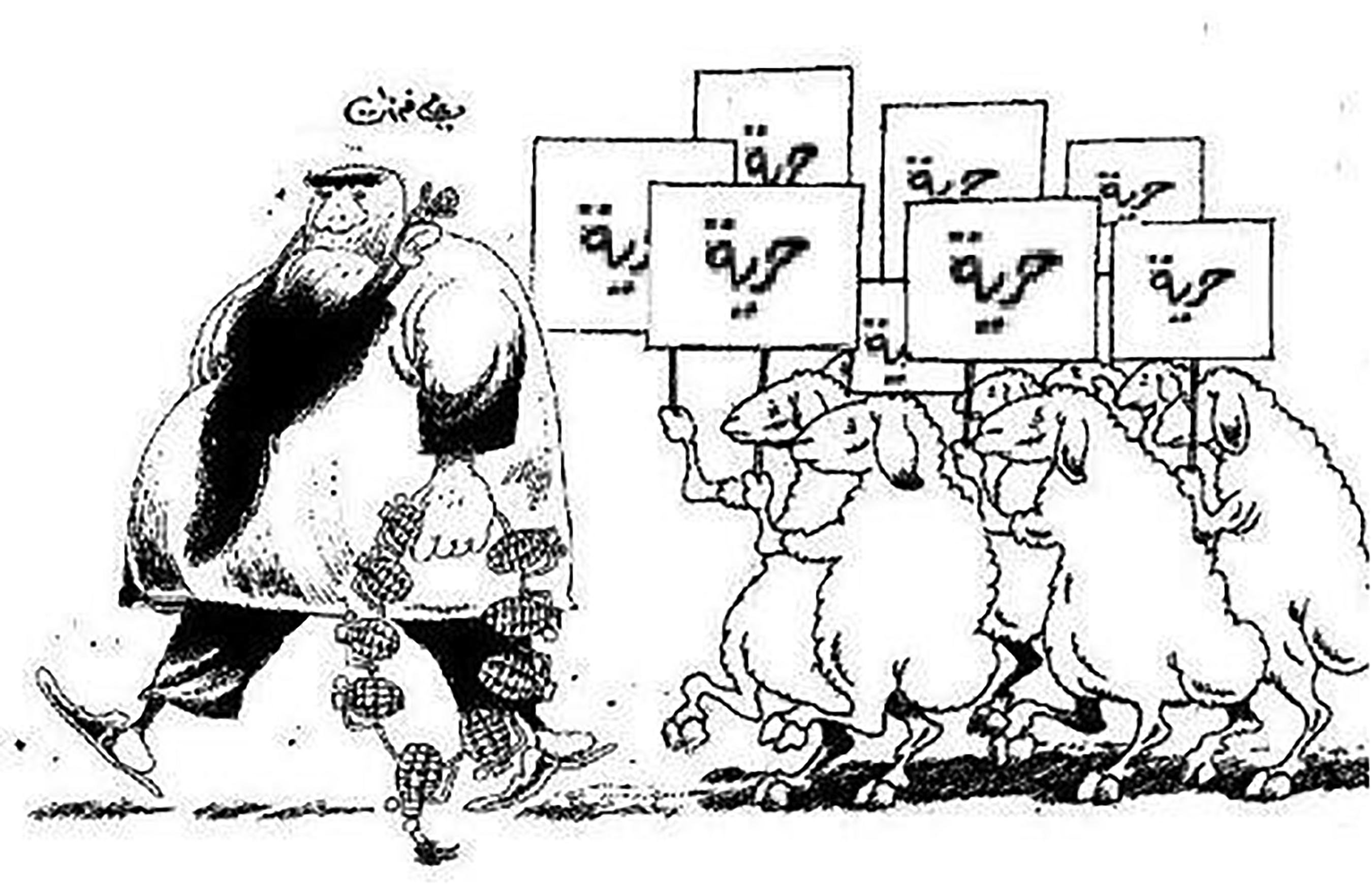
Freedom of Flocks (Ferzat, 2022b).
These three symbols have been used to narrate the social problems in the society. Moreover, they portrayed the development of power in Syria and represented a lack of democracy and social cohesion, as well as a series of fairly extended inequalities. The objective of the government was to prohibit the publication containing these symbols, subjecting these publications to prior review by the Minister of Information.
However, in 2000, the media expanded when Bashar al-Asad ascended to power. Ali Ferzat started the first independent satirical newspaper al-Domari in Syria in 1963. This newspaper was intended to generate awareness in Syria and the Arab world and was widely distributed to an extent where, in 2003, the government began to observe themes that were against its policies. Therefore, the Minister of Information demanded to review the content of each topic before its publication. Ali Ferzat refused and “temporarily” suspended the publication of al-Domari, but the newspaper was never revived. When Ferzat aimed to publish on a different theme without his approval, the authorities prohibited its distribution (Whitaker, 2011).
These three symbols were verified and evolved during the development of the Arab Spring in 2011, which began a revolution for freedom as people overcame their fears. With the Arab Spring, cartoonists began to directly represent the president and his government in their cartoons (Figure 8). Furthermore, the satirical representation of the Arab Spring primarily focused on the image of the president, thereby affirming the symbolism of power. Moreover, this action encouraged people to participate in the political process in the country.
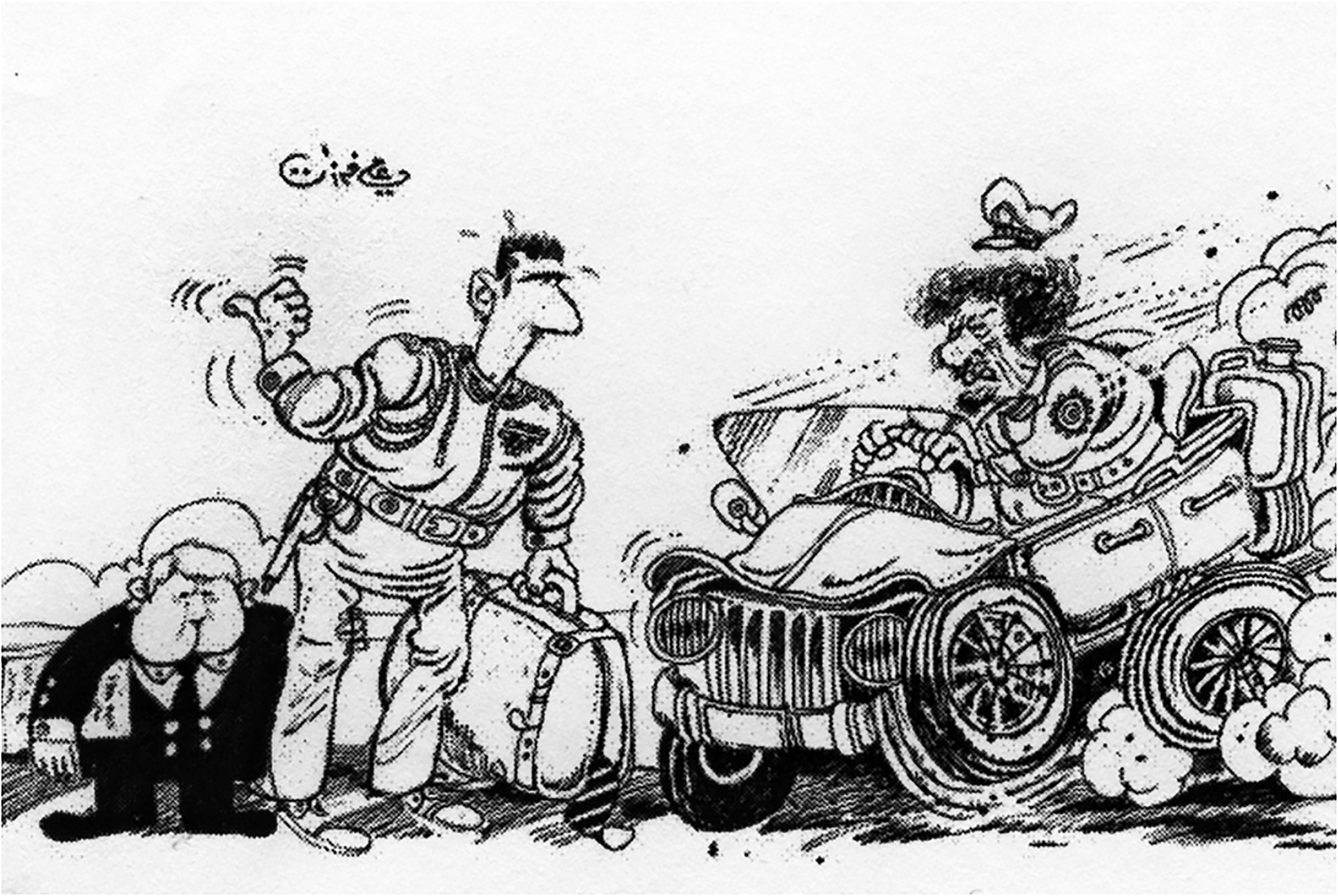
Bashar al-Asad and Ghaddafi Leaving Their Countries Together (Stelfox, 2013).
People also used political cartoons of the president to demand liberties and change in the political scenario. In addition, the Internet and social networks allowed this art to be transmitted more rapidly, and cyberspace became an ideal place to generate a cultural identity within the Syrian and Arab societies. This new social impact crystalized as an art of resistance capable of fighting the regime without the use of weapons.
In contrast, the government and the president realized the strength of the cartoons. During the Arab Spring, the Internet and social networks available through smartphones rendered censorship practically impossible. The attitude of the government was to repress cartoonists, and the most significant case was that of the cartoonist Ali Ferzat who began to illustrate the president directly and recognizably, turning his drawings into a (Figure 8) (Ferzat, 2012b).
However, the government could not manage to suppress him as his cartoons were recognized globally, more than the recognition of the Syrian government. Therefore, Ferzat obtained the Sakharov Prize for Freedom of Thought in 2011 (Europarliament, 2011) and several cartoonists exhibited solidarity with him, publishing cartoons and conducting exhibitions in his honor (Taher, 2011).
Thus, Ali Ferzat is an example of how fear can be overcome through art forms suggesting that it is impossible to curtail the freedom of cartoonists who had developed the art of resistance and were capable of communicating much more strongly than the traditional media. Ferzat was also able to influence public opinion with his cartoons that appeared in several demonstrations for freedom and peace.
Hence, political cartoons constituted a form of communication that served as an art of resistance. In Syria, cartoons exhibited an impact that formed a genre capable of overthrowing a government. Thus, political cartoons became an alternative non-verbal language that was simple to understand regardless of cultural background. They allowed cartoonists to narrate a political situation used to legitimate the president that remained unaddressed by the conventional media.
Conclusions
Syrian political cartoons serve as a reflection of the society and the needs of the people. Cartoons have been a way of reinvention and illustrate a series of political events artistically. They have also become a weapon of protest for peace, freedom, and democracy. Nonetheless, the Syrian media is controlled by the government and has become a propaganda tool for power. As few cartoons exhibit an extensive influence on the society, the government decided to control them. Consequently, an alternative language was developed using specific symbols to circumvent the control of the Minister of Information. These symbols were simple to comprehend, with multiple interpretations, making the dissemination of information highly convenient.
Political cartoons became important for the Syrian society because they offered a sense of relief since their introduction and were capable of circumventing censorship using symbols. Additionally, their use as a form of satire helped cartoonists rapidly develop individual models. They were capable of influencing public opinion while being entertaining.
Political cartoons have been an alternative form of communication capable of narrating a real-life political situation. They serve as a cultural block that covertly reflects the needs of society through symbols.
Considering the second reason for the importance of political cartoons, the cartoons published by Ali Ferzat have become influential in social reactions. Ferzat has dexterously used symbols and their wit to criticize political and social problems while avoiding censorship and possible punishment. Cartoons not only provide an opinion but also encourage people to fight for their rights. Consequently, these cartoons represent the experiences of the common citizen as an imagination of the Syrian identity. Ali Ferzat used simple visual metaphors that became popular in the Syrian society because they were comprehensible and sharable. He created a landscape where people could use laughter as a coping mechanism during political upheaval.
Syrian political cartoons narrated the true aspirations of the government, as well as the true intention of perpetuating the power of the president. They were considered an escape to discuss these issues, making them develop an image-based language capable of reaching all sectors of the society regardless of cultural background. Cartoons were strong enough to inform and incite action in, people from all educational backgrounds.
The government and its organizations considered Ferzat a threat. This could be attributed to the fact that cartoons could be interpreted in multiple ways and helped people reflect on issues such as the lack of liberties and democracy. Therefore, one of the first actions of governments was to censor cartoons that they considered a threat to the perpetuation of their power. They assumed that censoring cartoons contributed to continued legitimizing as it ensured dormancy in the people, indicating that the scenario was normal in the presence of an authority in Syria.
Considering the third hypothesis addressed in this study, cartoons exhibited different consequences for cartoonists owing to the authoritarian regime. In this study, cartoons posited an alternative to the official narrative because of the use of symbolism. However, cartoons also negatively affected cartoonists; Ali Ferzat was kidnapped and beaten by the agents of the Syrian government in response to few of his cartoons that became famous during the Arab Spring and appeared during demonstrations. Ferzat criticized the government of Bashar al-Asad, which was characterized by different historical situations such as dictatorship and repression. Ali Ferzat used political cartoons to express his ideas, opinions, and emotions. Moreover, cartoons generated creative activism that encouraged people to participate in creative politics while helping them uphold a peaceful resistance that was both disconcerting and dangerous to the Syrian leadership.
According to this study, the Arab Spring reflected a period of change that escaped the frontiers of fear as cartoonists began to represent the president and the organizations of the government directly. For this reason, the government aimed to censor them, which was impossible because the transmission of information changed drastically.
Now, cartoons are transmitted using the Internet and social networks available over smartphones. The actions of the government to perpetuate itself aimed to suppress cartoonists, to ensure that they remained in power regardless of the lives claimed in the process.
However, the Syrian government was unable to silence cartoonists, and several cartoonists published from exile through social networks. These cartoonists became activists who continued the demand for a complete democracy without corruption or oppression in the society. In this regard, cartoonists generated a different political situation wherein people could participate in the political process while appreciating liberties and freedom.
Footnotes
Declaration of Conflicting Interests
The author(s) declared no potential conflicts of interest with respect to the research, authorship, and/or publication of this article.
Funding
The author(s) received no financial support for the research, authorship, and/or publication of this article
