




Abstract
This study explores the political branding of a powerless small state, the state of Kuwait during the reign of Sheikh Abdullah Al-Salem, from 1950 to 1965. The study uses models developed by Anholt for a strategic perspective on nation branding and by Bolin and Miazhevich for tactical communication in nation branding. This study explores the use of strategic communication in an Islamic-Arabic culture to brand Kuwait as a sovereign nation. At the strategic level, it employs the components of strategy, substance, and symbolic action, and at the tactical level, it uses the components of agents, audience analysis, temporal orientation and media to examine symbolic action. Using those models and following a qualitative historical analysis, the study identifies and analyzes the efforts of Sheikh Al-Salem to transform Kuwait from a Sheikhdom to Statehood in the 1950s. Those efforts helped to deter Iraq's threat to the Kuwaiti sovereignty as well as establish a self-governing, constitutional monarchy in the 1960s. The study concludes by evaluating the effectiveness of Sheikh Al-Salem's efforts as measured by tangible outcomes.
Keywords
Introduction
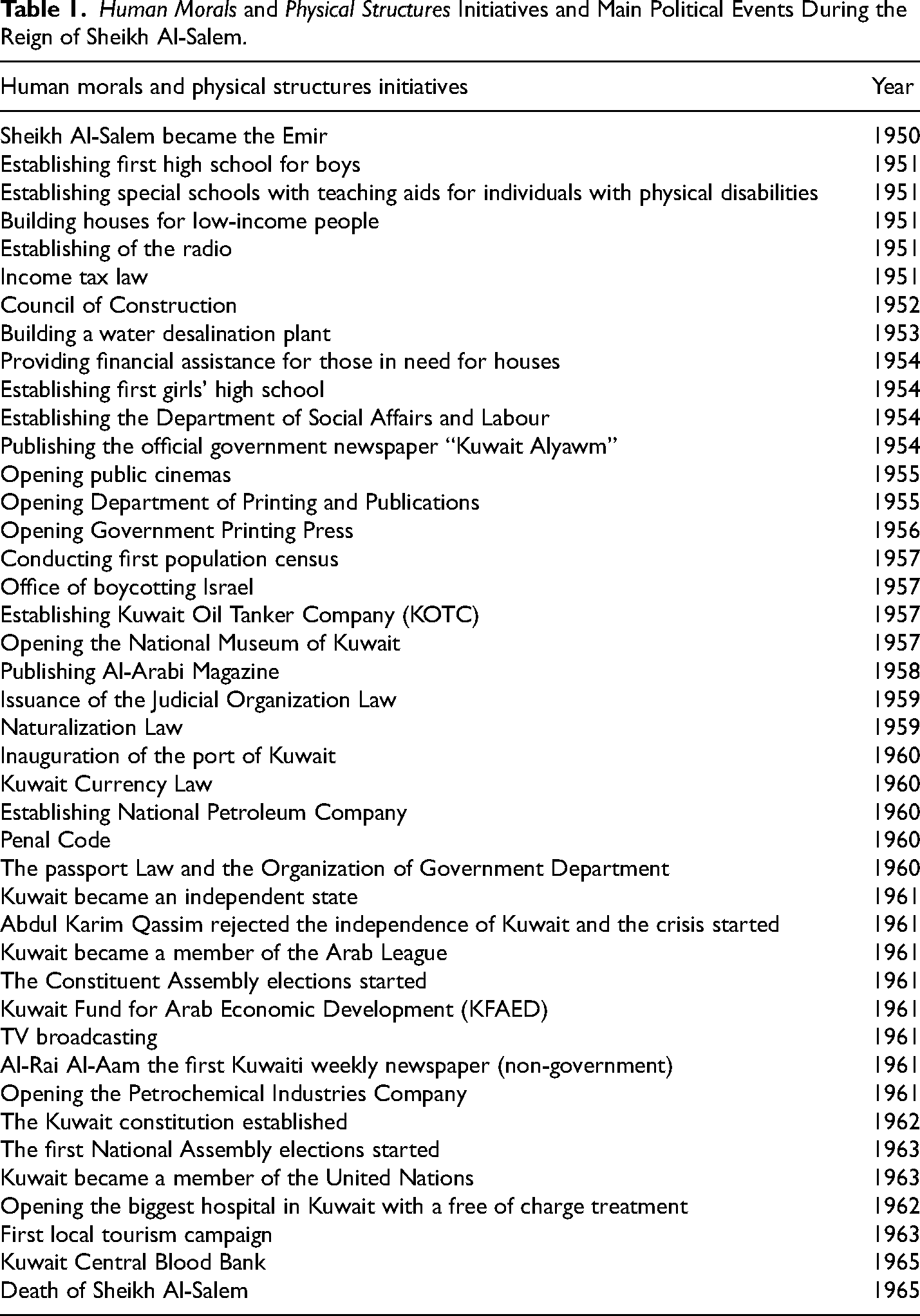
Iraq, which invaded Kuwait in August 1990 and occupied it for seven months, has always posed a threat to its tiny neighbor, Kuwait. Being a small nation, in size and population, Iraq has always seen Kuwait as a defenseless country in comparison to Iraq's other neighboring countries, Iran, Saudi Arabia, Turkey, and Syria (Abidi, 1991). In July 1961, right after gaining independence from Great Britain, Kuwait faced a threat from Iraq, which claimed that the newly independent state was an “integral part” of its land (Winger, 2012, p. 664). Those threats date back to the 1930s and 1940s (Winger, 2012). The level of threat and tension reached a peak in 1961, and Great Britain sent troops to protect Kuwait for a period of two years, according to the treaty of January 1961. In addition to the help of the British, the Emir of Kuwait at the time, Sheikh Abdullah Al-Salem Al-Sabah (1895–1965), wanted to present Kuwait to the world as a state deserving existence and recognition. Ruling Kuwait from 1950 to 1965, the Emir ended the British protection in January 1961 by mutual consent and introduced a constitutional democratic monarchy and constitutional rights for Kuwaitis. Locally, he aimed to unify Kuwaitis against the threat from Iraq, and internationally he wanted to brand the newly independent nation as a modern constitutional monarchy where ordinary citizens engaged in politics and had a say in the political process along with the ruler, in a region that was dominated by authoritarian regimes (Alnajdi, 2014; Smith, 1999). Table 1 shows the main political events and social reform initiatives during the reign of Sheikh Al-Salem.
Human Morals and Physical Structures Initiatives and Main Political Events During the Reign of Sheikh Al-Salem.
Unlike than many small nations that were poor and in a desperate economic situation when they gained their independence after the Second World War, the influx of oil money helped the Sheikh (Al-Nakib, 2020). However, this money had to be astutely utilized and wisely directed to implement a vision. Consequently, the Sheikh needed a strategy and communication methods to prime and encourage citizens to accept the initiatives of his vision and present Kuwait in a new light internationally. The present study describes the strategy and methods of communication deployed in a unique historical case of political nation branding by a powerless state.
In studying small powerless states, Szalai (2019) categorized the power and size of a country in normative, perceptual and relative terms. Normative size is an indicator of the perceptions of major international political players of the political role that another country plays. The perceptual size reflects the effect that local customs and social norms can play in a country's image worldwide. While both of these size indicators are valuable, they are hard to quantify, measure and compare. Accordingly, to define a small powerless state, this study uses relative size or the size of a country in terms of its population, size of territory, size of military, and economic production, as a way to position the nation branding of Kuwait.
In 1961, when Iraq wanted to join Kuwait to its territory, the two countries were very different in size. Iraq's territory was 169,285 square miles, its population was about 7,400,000, its military was 60,000, its oil production was 134,000 million metric tons, and its Gross Domestic Product was $1,832 million. On the other hand, Kuwait's territory was 17,820 square miles, its population was 321,621, its military was 2,000–3,000, its oil production was 87,000 million metric tons, and its Gross Domestic Product was $1,057 million (International Bank for Reconstruction and Development, 1965). Those comparative indicators of relative size form the backdrop to a story of effective nation branding by a country that once faced extinction, but emerged, by using its resources and communications, as a state other nations deemed important to protect and recognize.
The case of Kuwait illustrates the potential of a well-planned strategy and communications to secure the existence of a powerless state and deter the threats of powerful countries. According to Kaneva (2011), political nation branding is related to approaches “interested in the impact of national images on nation-states’ participation in a global system of international relations” (p. 120). This study sheds light on the possibility of small countries using strategic communication to garner the recognition and support of the international community, as when Iraq threatened to occupy Kuwait in 1961.
Literature Review: A Theoretical Background of Nation Branding
A relatively new concept that emerged by the mid-1990s (Marat, 2009), nation branding has been historically employed for political reasons by many nations (Soar & McCullough, 2011), especially small states (Hoefte & Veenendaal, 2019). Although it has been used in recent years for commercial purposes such as tourism and attracting foreign investment, Hoefte and Veenendaal (2019) state that, “for countries with colonial legacies, profoundly heterogeneous societies, and weak economic foundations, nation branding can be promising—and perhaps even necessary—to promote not only the country but also political emancipation and the formation of national identities” (p. 174).
Anholt (2003) is one of the leading scholars who formulates nation branding theoretically as a process containing three major components: strategy, substance and symbolic actions. Strategy addresses who the country is and where it stands globally using both local and international perceptions in order to define where it wants to be and establish the tools that will help it to reach its goals. A strategy has to take into account strengths and weaknesses, to exploit the available resources to attain objectives. Substance is the effective execution of the country's strategy in the form of new tangible activities such as new legislation, economic development and other reforms. Symbolic action is the successful use of communicative power to strengthen the overall branding process (Anholt, 2003).
Different governments have applied the principles of nation branding to present their nations in new ways. Kaneva and Popescu (2011) identified 66 publications that focused attention on an application of nation branding in the field of economics. Others focused on technical-economic approaches to nation branding, mainly on marketing objectives aimed at serving the economic interests of nations. Yet others focused on political approaches to nation branding, considering public diplomacy as part of nation branding. Those political nation branding efforts were also aimed at managing the country's image for tourism and investment purposes. In a few cases cultural approaches to nation branding presented nations as potential hubs of worldwide cultural exchange.
Developing nations have applied nation branding more than Western European nations, in response to political changes, the emergence of newly independent states, and of nations becoming economically and politically more powerful. For example, the Turkish government, to improve its relations with Arab countries, employed commercial branding strategies and techniques to brand itself as a neo-Ottoman state (Al-Ghazzi & Kraidy, 2013). Romania and Bulgaria witnessed many political, economic and cultural changes, and wanted to change their image and downplay political, cultural, and religiously conflict (Kaneva & Popescu, 2011).
However, many researchers have emphasized that the first steps of any nation branding exercise should be directed inward. This relates to changing the behaviors of citizens, so that they accept external nation branding as a means to achieve external objectives, such as attracting tourists and international companies. External nation branding must correspond with internal political conditions. Many nations start by employing political resources internally to stabilize the locality and reflect a peaceful country (Fan, 2010). Barr (2012) argued that the Chinese government's nation branding effort confronted worldwide anti-China messages that underscored how the Chinese government deprived its citizens of many rights and freedoms.
Even though recent nation branding has focused on economic means, especially in the era of open global markets, historically, political nation branding was more important after World War Two when many countries sought independence and during the Cold War and after the Cold War era when countries sided with one block or tried to move from one block to the other. For example, many countries of the Eastern Bloc started to seek geo-political identities and assess their alliances and positions in the world (Jansen, 2008). Estonia is one of the nations that emerged in Eastern Europe after the fall of the Soviet Union and faced many political and identity challenges. Two of the challenges Estonia had to deal with as part of its nation branding were reaffirming its national identity and positioning itself within the global community away from Russia, while seeking political and military support from Western Europe, as well as joining the European Union and North Atlantic Treaty Organization (NATO) (Jansen, 2008).
Bolin and Miazhevich (2018, pp. 532–533) introduced a model of four components indicating how communication tactics can be implemented in nation branding. The components are: agents, audience, temporal orientation and media. Agents refers to people and establishments involved in communication efforts; audience includes the people that the messages are aimed to reach and affect; temporal orientation refers to using resources to construct thematic messages; and media are the means of communication.
There are two types of media that can be used to connect with and persuade audiences: those that involve one-way communication and those that involve two-way communication. The Asymmetrical Two-Way Model represents the type of communication that is meant to influence and manipulate the behavior of audiences using persuasion, propaganda and manipulation. The Symmetrical Two-Way Model creates a dialogue and rapport with audiences and takes into account audience feedback in order to better design and tailor influential messages (Grunig, 2013; Grunig et al., 1995; Grunig & Hunt, 1984). The Personal Influence Model is a cultural-specific model, infrequently connected to institutional or systematic conduct (Sriramesh, 2000). This model, which is frequently found in collectivist countries, refers to individuals having societal power and influential roles who use their personal relationships and connections with other prominent individuals in the society to attain objectives (Sriramesh, 2000; Valentini, 2009).
In tactical communication, countries that utilize nation branding have placed advertisements in internationally well-known media, including the BBC, CNN and National Geographic Channel, because of their wide international reach (Bolin & Ståhlberg, 2015). After the collapse of communism, Uzbekistan branded its nation in media messages as a culturally rich country and Kazakhstan as a country with economic potential, a new burgeoning market having a strategic geographic location and ethnic diversity. Uzbekistan used symbolic resources of culture including famous historical cities and cultural artifacts to refer to its rich heritage, hoping to change its previous negative image as an autocratic and internationally isolated state with poor human rights practices. Kazakhstan on the other hand used coherent messages reflecting its open political and business resources and institutions. The country branded itself as the ‘Heart of Eurasia’ (Marat, 2009).
As a powerful state, the United States used public diplomacy as a tool of nation branding after the terrorist attacks of September 11, 2001. In addition to waging military war against terrorism, the United States wanted to alter its negative image among Arabs and Muslims (Van Ham, 2003, 2008). The American administration wanted to communicate its respect for human rights and belief in democratic rule. Through the use of extensive information campaigns and information advocacy, the United States wanted to position its war on terrorism using metaphors of democracy versus tyranny and freedom versus oppression (Zhang, 2007).
However, critics of the United States’ media efforts argue that those efforts are mainly propagandistic. They employ asymmetrical manipulative persuasive message strategies that do not involve a dialogue or mutual understanding (Dutta-Bergman, 2006). The United States has financed Alhurra TV and Radio Sawa channels to reach Arab audiences in programs meant to persuade them of the American point of view, instead of introducing interaction and cultural exchange with Arab audiences (Dutta-Bergman, 2006). Zahrana (1995) contends that the United States needs public diplomacy that emphasizes the dialogue with Arab and Muslim audiences. Arab culture is a high context culture that emphasizes implicit communication rather than explicit communication (Zahrana, 1995). Al-Kandari and Gaither (2011) also argued that there are cultural orientations that American and Western communicators need to adopt in communicating with Arabs. Those orientations consist of commitment to religion, devotion to the group, resistance to change / attachment to history and recognition of hierarchical order.
Objectives of the Study
The previous literature reflects various problems in nation branding, which has been mainly directed to economic purposes. Even political nation branding has been used for predominantly economic ends. In addition, the literature reflects the political branding of large nations such as the United States in its war against terrorism. In fact, the literature on political nation branding mainly focuses on the US in relation to Western European advanced countries, which is related to furthering economic and military power and status around the world in the international community (Gilboa, 2001). Small nations have their own limited concerns and objectives rather than international economic and military and domination. Many want to live in peace, have a better life, gain independence, especially after World War Two, and pacify local divisions and civil wars. For example, Suriname (formerly a Dutch colony) is a small country located in South America with several ethnic and cultural groups, and it used nation branding to sell itself as ethnically and culturally diverse to an outside audience (Hoefte & Veenendaal, 2019). In 2009, Kosovo started a nation branding campaign to correct the negative perception of the country as a troubled nation and project the image of a nation of future opportunities (Zhou, 2011). One can see in those examples how small nations tailor their nation branding to appeal to the audiences of large democratic nations about heritage and ethnic diversity. In this respect, small nations are still dependent on colonial economic and political powers. As a result, the first objective of the present study is to describe a case of pure political nation branding in a small nation, emphasizing the role of political communication in nation branding at the level of strategy and tactical communication.
The literature also reflects the use of nation branding by powerful or moderately sized nations. The objectives of those countries in nation branding can be totally different from those of small, powerless and newly independent nations. Although many countries achieved political independence in the last century, they may still be culturally dependent on powerful and culturally dominant nations. Those small nations fail to present their cultural uniqueness and diversity. The description of nation branding by a powerless state can shed light on how tiny nations can manoeuvre around strong nations wanting different things from those small nations. Indeed, small nations have always used specific foreign relations and policy stances that can be distinctly classified and recognized as neutral in the global political system (Tökölyová, 2016).
Finally, the literature highlights the different communication patterns that countries employ in order to reach specific target audiences. Nation branding communication may fail if it does not consider the cultural communication practices of the target audience. Recent literature shows that specific communication tactics might be conducive to achieving the nation branding perceptions a country seeks. For example, New Zealand, as a mid-size nation, branded itself as a Pacific nation, emphasizing its culture, heritage, living standards, and freedom of expression. Overall it achieved the third strongest and best brand in 2010 (Tökölyová, 2016). Accordingly, the last objective of this study is to shed light on how specific cultural communications of nation branding might be more useful with specific audiences, using the case of Kuwait's communication with Arab and Muslim audiences.
To achieve the previous three objectives, the present study mainly adopts nation branding models developed by Anholt (2013) and Bolin and Miazhevich (2018) for strategic and tactical levels of communication. It first employs Anholt's perspective on nation branding from a macro strategic perspective to identify the resources available to Kuwait and the weaknesses and strengths that can initially determine a strategy and facilitate successful implementation. The model is used to examine strategy, substance, and symbolic actions. Second, the study adopts the model of Bolin and Miazhevich (2018) that allows for a micro investigation of communication efforts focusing on agents handling those efforts, target audience, temporal orientation of message themes, and message dissemination by the media. This comprehensive approach is suitable for understanding the details of, and complexity of, nation branding, involving natural and human resources. From macro and micro perspectives, this study examines the strategy and communication efforts of branding Kuwait during the reign of Sheikh Abdullah Al-Salem.
Methodology
Historical research is useful for studying discursive patterns of values, narratives and social theory in order to explain historical cultural change and creative practices to fill the fragmentation of past human activities (L’Etang, 2014). These historical accounts assess past activities and achievements of individuals, agencies and institutions in order to compare and contrast past events with present ones, to improve the understanding of the evolution of human culture (Berg, 2001; Lune & Berg, 2016). Historical research is a process of gathering and describing past events to interpret personalities and ideas that influenced those events (Rowlinson, 2005). It uncovers what was not recorded, answers unanswered questions, identifies past relationships to have a perspective about present occurrences and evaluates accomplishments of individuals and social entities to understand the patterns of a culture (Johnson & Christensen, 2014; Rowlinson, 2005).
As a qualitative method of data collection, historical research is a suitable method that provides insights into the events that took place during the reign of Sheikh Al-Salem of Kuwait in order to have a better understanding of the evolution of strategic nation branding by a small powerless nation. Since the materials for historical studies are mostly written (Daymon & Holloway, 2011), this study relies on a collection of academic papers (15), books (33), dissertations (3), public records from the British Archives of historical documents (60), legal documents (5), letters (9) and newspaper and magazine articles (50). Other non-print texts such as songs (7) and TV interviews (6) were also included. Those resources were collected from the Center of Research and Studies on Kuwait, the British Newspaper Archive, and Qatar Digital Library. Statements made by Sheikh Al-Salem and his cabinet members were also examined for this study, along with his activities. This method made it possible to analyze information related to human interactions found in texts, and the manner according to which the analyzed subjects define the meaning of the world and the actions that took place within it (Kuckartz, 2013). It will allow a deeper exploration into the meaning of various actions taken by Sheikh Al-Salem, including how they were intended to be perceived.
Results
A Macro Strategic Perspective on Political Nation Branding
Anholt's (2013) model is employed for evaluating the macro level strategy of Sheikh Al-Salem's nation branding efforts. The model includes the components of strategy, substance, and symbolic actions. The following sections are divided into those components (See Figure 1).
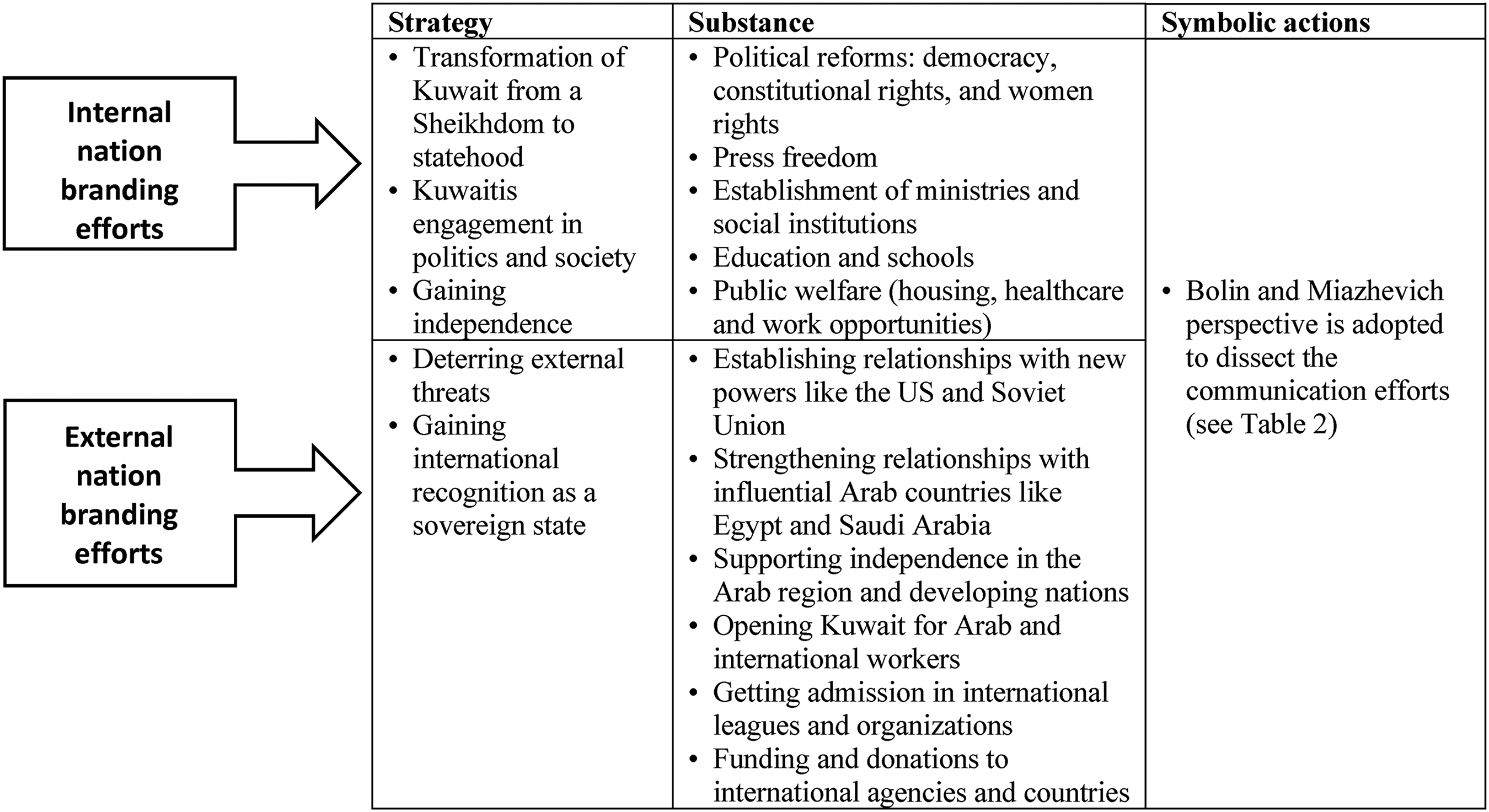
Anholt's micro strategic perspective on Sheikh Al-Salem's nation branding efforts.
Strategy: The main reason and concern that motivated Sheikh Al-Salem's strategy was the external threat of Iraq to Kuwait on July 19, 1961 (Al-Ghunaim, 2020; Herb, 2016). On June 25, 1961, six days after Kuwait's independence, Abdul Kareem Qassem, the Iraqi President, in a television press conference rejected the independence of Kuwait and claimed that Kuwait is an integral part of Iraq: “Kuwait is an inseparable part of Iraq… the people of Kuwait and the people of Iraq are one… but (Great Britain) colonialism is the one that wants to divide them and control the people of Kuwait” (Iraq TV, 2016). The protection of Kuwait defined Al-Salem's nation branding strategy internally and externally (Al-Ghunaim, 2020).
According to Anholt (2013), strategy addresses who the country is and where it stands globally. By considering its strengths and weaknesses, a country tries to define where it wants to be and exploit the tools that will help achieve objectives (Anholt, 2013). In relation to Kuwait, Sheikh Al-Salem understood the weakness that Kuwait is a small powerless nation bordered by stronger and more powerful nations, Saudi Arabia and Iraq. Described and belittled as a British protectorate Sheikhdom, Al-Salem understood that Iraq, rich with its historical heritage and old civilizations, could tarnish the political image of Kuwait worldwide by stigmatizing it as a tribal and culturally traditional nation that is not worthy of statehood due to its old-fashioned, informal, conventional and folksy-like institutions (Alhabshi, 2018).
The Cambridge Dictionary (2022) defines a Sheikhdom as a geographical location consisting of tribal groups that a sheikh rules. This rule stems from an ancestral and familial legacy. The sheikh's role in a tribal setting is basic and limited to insuring justice and safety for the tribe's members from external threats (Khondker, 2011). In old Arabia, with the support of the tribe's members who show ultimate loyalty and obedience (Biygautane et al., 2017), the sheikh rules in a consideration for local traditions and in consultation with wise tribal men in an informal meeting council called “Majlis”. They mainly agree to solve herding problems and settle tribal disputes (Biygautane et al., 2017; Herb, 2016).
If perceived as a land of tribal territory, or Sheikhdom, countries would probably ignore the annexation of Kuwait by Iraq, which was a fully-fledged country in 1961. Before, during and after the rule of Sheikh Al-Salem, Iraq often targeted Kuwait and threatened its existence. Iraq saw the lack of foundations of statehood as an opportunity for territorial expansion and access to the water of the Arabian Gulf through Kuwait. The discovery of oil and geographical commercial location of Kuwait were other motivating factors for Iraq (Salih, 1992; Winger, 2012). Al-Istiqlal, an Iraqi newspaper, explicitly voiced out this intention: It pains Iraq to behold on her borders an Arab territory with an excellent geographical position and yet in a backward state, lacking modern systems of education, health and economic organization. Iraq, unable to conceal her strong feelings, is anxious that the sister people of Kuwait should join in the general awakening movement which has taken place in the majority of Arab countries, in order that they, through their national gifts and the favorable position of their country, participate in the wider field of Arab national endeavor. Any existing obstructions and obstacles can be overcome by persistent endeavor (Salih, 1992, pp. 71–72).
As a result, the strategy of Sheikh Al-Salem was split internally and externally. A report that highlighted the vision of Al-Salem of Kuwait and approved by Sheikh Al-Salem himself emphasized that outside image of Kuwait need to reflect “A model state in the Middle East” (A report by Alqabas newspaper, 2017). Internally, Al-Salem wanted to transform Kuwait from a Sheikhdom to full statehood by implementing various social and political reforms. Those reforms could unite Kuwaiti citizens against external threats by strengthening their sense of belonging, patriotism and loyalty to the country. They could feel the value of defending Kuwait against external threats because they shared political power and oil wealth with the monarch. This intention of sharing oil wealth with the people was expressed by Sheikh Al-Salem himself in one of his speeches, “The wealth of the country that God has bestowed upon our people must always and forever be harnessed for the sake of the people's welfare, stability and achieving their glorious goals in life” (Al-Rayis, 2017, p. 55).
Externally and internationally, social reforms were important to show the world that Kuwait can be recognized globally as a state that functions through institutions of modern education, health, housing and economics, like other sovereign and independent states. Political reforms could demonstrate that the country had vivid and living institutions, where people contributed to politics, as in other modern states. By understanding the weaknesses and Anholt's who Kuwait was and where it stood regionally and globally, Al-Salem moved on to reformulate those 2 W elements. He was aware of the political changes taking place around Kuwait, in the Arab region, and around the world. During the eras of Al-Salem reign, starting from early 1950s, many countries around the world gained independence and Al-Salem knew that Kuwait would be one of those independent countries one day. In the Arab world, new Arab regimes, based on Arabism, came to power, with the support of Egypt's charismatic leader Gamal Abdel Nasser. Also, new international powers, the US and the Soviet Union, replaced the old European powers (Alhajeri, 2017). Those new political realities were important when devising the strategy of the Sheikh.
Considering those new regional and international realities and the historical Iraqi threat that date back to the 1930s (Winger, 2012), Sheikh Al-Salem implemented his strategic vision before and after the independence of Kuwait. He predicted that the ending of the British protectorate and gaining independence would be a turning point triggering regional threats against Kuwait (Al-Khatib & Alnajjar, 2007; Alhajeri, 2017). His prediction was correct when Iraq decided to claim Kuwait in 1961 six days after Kuwait's independence. Having this proactive vision, Sheikh Al-Salem adopted a policy of internal intensive social reform even before the independence of Kuwait (Alhabshi, 2020). His vision of reforms preceded the nation branding of Kuwait that started in response to the Iraqi threat in 1961. Indeed, many of his reform projects started as soon as he became the Emir in 1950 (Abu-Hakima, 1983). Al-Nakib (2013) noted: Upon his accession to power in 1950 Abdullah al-Salem launched a state-led development project that hinged on the twin pillars of urban development and social reform and was driven by a new state ideology of modern planning. The ruler's alleged goal was to use the country's increasing wealth to make Kuwait “the best planned and most socially progressive city in the Middle East” (p. 9).
The second stage, nation branding, started right after gaining independence and when Iraq threatened Kuwait. It was at this time when Sheikh Al-Salem intensively showcased Kuwait as a nationalistic Arab country that philanthropically helped other nations by establishing the Kuwait's Fund for Arab Economic Development (KFAED) in 31–12, 1961. It was in this year when the media intensively showed Kuwait reformed institutions. Also, it was in this same year when the election of the Constituent Assembly was held on 30 December1961. Table 1 shows the social reform initiatives of Sheikh Al-Salem that started before the threat of Iraq in 1961. Those initiatives confirm that social reforms preceded nation branding.
Substance: When it was a Sheikhdom, before the discovery and commercial export of oil, the economy of Kuwait depended on trade, pearl diving, and fishing (Al-Nakib, 2020). Education was not formal in the Sheikhdom in the early 1900s. Some Quranic schools taught elementary writing, reading and arithmetic. In 1911, Al-Mubarakiya School was established to teach the clerks working for merchants some basic arithmetic and writing.
Anholt's Substance indicates the tangible execution of a country's strategy in the form of activities and programs. Accordingly and in order to transform Kuwait from a Sheikdom to statehood, Sheikh Al-Salem worked on two fronts: human morals and physical structures. In terms of human morality, he wanted to involve Kuwaiti citizens in local politics. Sheikh Al-Salem introduced a constitutional monarchy involving civil organizations such as working unions and press freedom. He instituted many constitutional equal rights for men and women, where citizens contributed to politics and civil organizations and where education was a fundamental constitutional right (Al-Nakib, 2020).
Politically, Sheikh Al-Salem, issued a decree in 1961 establishing the Constituent Assembly of 31 members (20 elected members, 11 cabinet ministers as de-facto members) to adopt a constitution setting the stage for an elected National Assembly (Al-Sewaji, 1999; Alhabshi, 2020). Herb (2016) considered the threat from Iraq to be “a key causal factor leading to the writing of the constitution, and to its liberal nature” (p. 20). After one year, in 1962, the Kuwaiti constitution was established and announced Kuwait as a constitutional monarchy (Huwaidi, 2021) and in 1963, the first free parliamentary elections were held in Kuwait. Consisting of 65 members, 50 freely elected members and 15 de-facto cabinet members (Das, 2017), the Assembly had three levels of influence or power: attracting attention (exposing critical public issues), issuing warnings (investigating and questioning cabinet members), and issuing sanctions (an announcement of no-cooperation and vote of no-confidence in the cabinet) (Alhajeri, 2004).
In terms of human morality too, notably, the number of female students enrolled in public schools in the small state rose from 1,334 to 10,761 in 1958 and continued to grow to 38,238 female students in 1965 (Baghdadi, 1994). Reforms to women's rights encountered public resistance from conservatives in the society, which led the Joint Supreme Council to issue a ban restricting women from working anywhere in public sectors other than health and social affairs (Al-Rayis, 2014). Sheikh Al-Salem demanded a reconsideration of this ban and his demand was granted (Al-Rayis, 2014). Table 1 shows all the human morality initiatives during the reign of Shaikh Al-Salem.
In terms of physical structures, Sheikh Al-Salem used oil revenues to introduce many welfare projects and instituted ministries and organizations (Kuwait TV, 2015). As Kuwait had limited expertise in education and professional project management, he opened the doors to people from the world to come to Kuwait, to build and run those projects. The projects included establishing a state-sponsored education with schools and a public university (Al-Abdulghafoor, 2002). The public welfare projects included housing, healthcare, and social institutions that provided many modern work opportunities to Kuwaitis to share oil wealth. Also, he gradually inaugurated important governmental entities such as the Construction Council, the Public Works Council, the Health Council and the Education Council, that laid the foundations for establishing ministries and other important governmental bodies (Al-Tuwaijri, 1996). In addition to the public sector, Sheikh Al-Salem encouraged the private sector to be involved in the development of Kuwait through the establishment of banks, shareholding companies, and basic industries (Kuwait TV, 2015). These projects were important to demonstrate to the world that Kuwait is a modern sovereign state that can function in a way that is similar to other modern states. Instead of being a British protectorate Sheikhdom depending on Great Britain for its management, the newly independent state could run and conduct itself through its people and institutions in regional and international arenas (Al-Turki, 1985; Al-Tuwaijri, 1996). Table 1 shows all the physical structures initiatives during the reign of Shaikh Al-Salem.
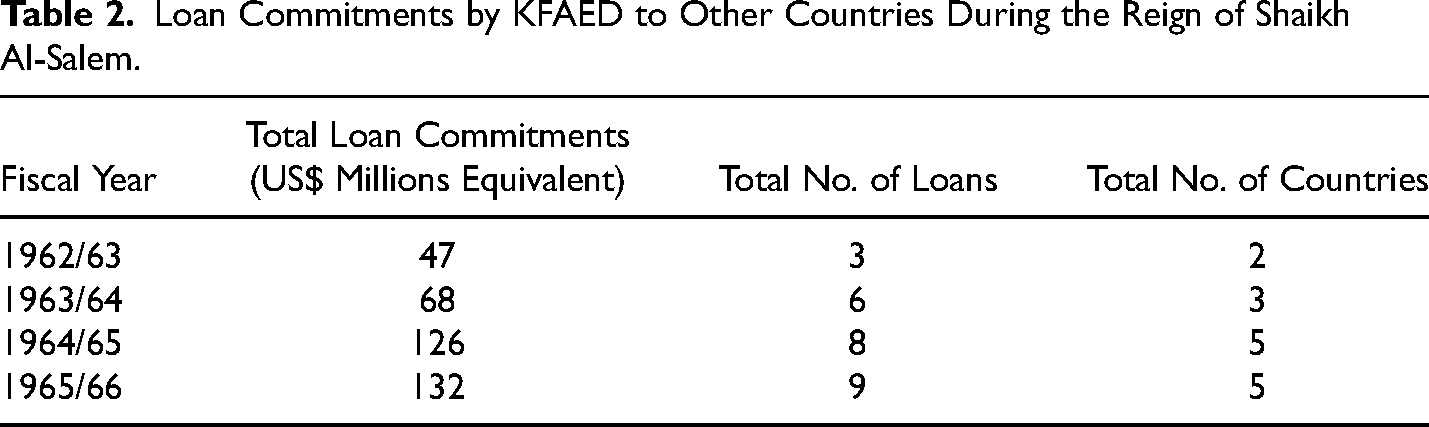
Externally, the Sheikh communicated the sovereignty of the State of Kuwait to the rest of the world. He did so by fostering Kuwait's relations with Arab countries and international communities (Alhabshi, 2020). He endeavored to strengthen relationships with influential Arab countries like Egypt and Saudi Arabia to support the independence of Kuwait in the Arab region. Internationally, he seized opportunities by establishing relationships with new powers like the US and Soviet Union that gained Kuwait its membership in the United Nations in May 1963. Al-Salem also sought memberships in many international leagues and organizations. He used oil wealth to start many initiatives, including the Kuwait Fund for Arab Economic Development (KFAED), which was established in 1961 soon after Kuwait's independence, and is still active today (KFAED, 2019; Turki, 2014). It sought to strengthen the relations with other Arab and non-Arab nations and create a positive image of Kuwait internationally by providing financial aid (Alnajdi, 2014). KFAED offered loans with low long-term interest to finance projects in many countries. KFAED was used as soft power to implement political means by helping nations that “supported Kuwaiti national security, internal stability, and independence” (Turki, 2014, p. 425). Table 2 shows the loan commitments made by Kuwait's KFAED to other countries during the reign of Shaikh Al-Salem.
Loan Commitments by KFAED to Other Countries During the Reign of Shaikh Al-Salem.
Symbolic action: Locally, Sheikh Al-Salem used many means of communication to unify his people, and to integrate them in politics and society. Those symbolic actions were meant to communicate that Kuwaitis were unified against external threats and that they share wealth and political power. This was unlike before the reign of Al-Salem when a limited segment of the society, namely members of the royal family and merchants, enjoyed the majority of the wealth and political power (Ulrichsen, 2014). Externally, Sheikh Al-Salem's clear political goals, and the significant level of freedom that he granted to the press, helped internationally in showcasing Kuwait's regional distinction where Arab authoritarian regimes controlled the political process and wealth without the involvement of citizens in politics.
Since symbolic actions employ tangible communication tactics to implement the strategy and substance of nation branding (Anholt, 2013), we employ the model of Bolin and Miazhevich (2018) to study the tactical communication of nation branding. This model details the tangible and tactical elements of nation branding in terms of agents involved in implementation, target audience, temporal orientation of themes involved in message design, and media channels used. See Figure 2 of Bolin and Miazhevich's perspective regarding Sheikh Al-Salem's tactical communication of nation branding efforts.
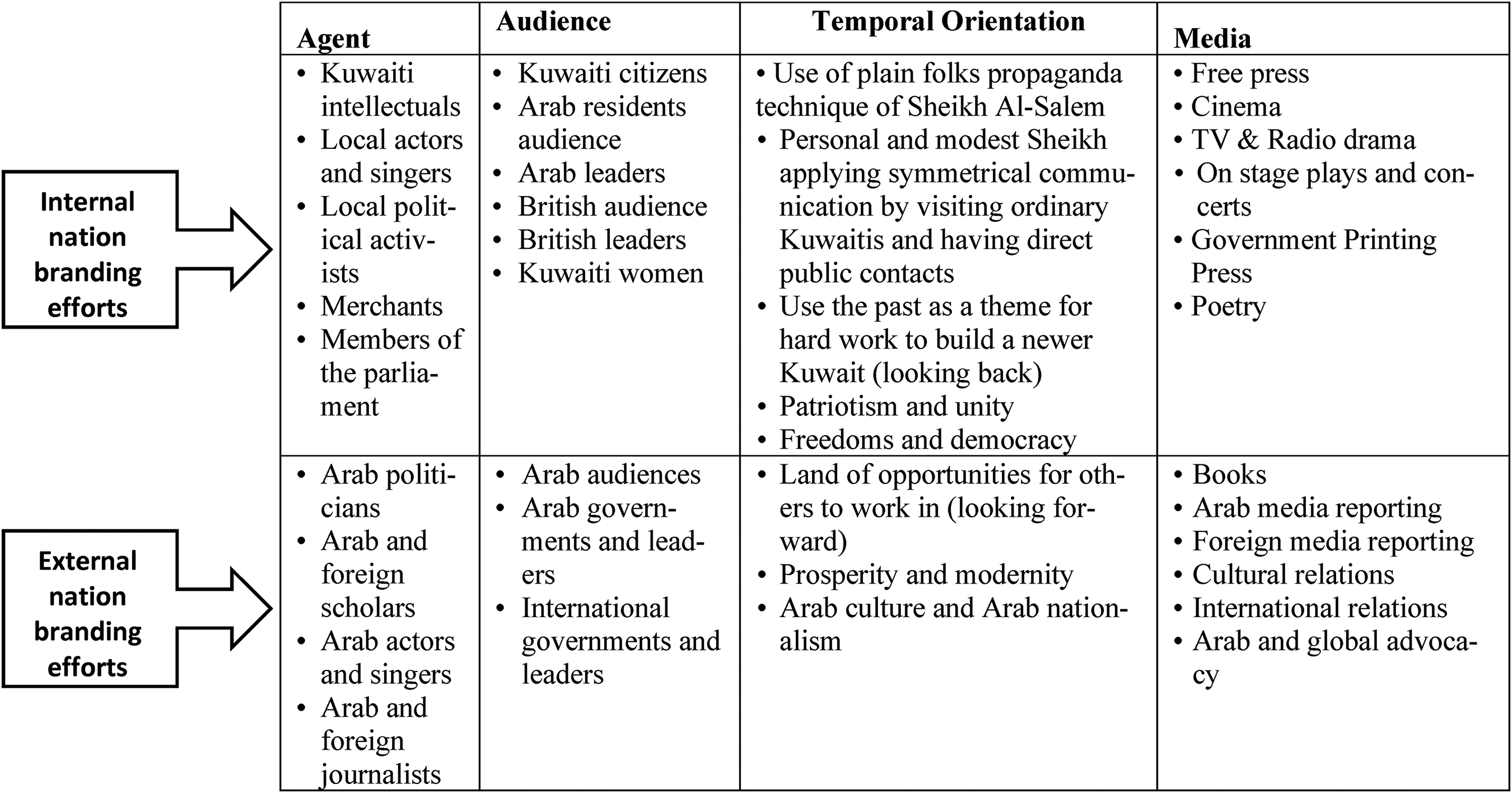
Bolin and Miazhevich perspective in Sheikh Al-Salem's nation branding efforts.
A Micro Level Analysis of Tactical Communication in Political Nation Branding
Agents: Bolin and Miazhevich's (2018) first element, Agents, refers to people and establishments involved in communication efforts. In the Kuwaiti case, the Sheikh himself was an agent in the transformation and implementation of his strategy. Sheikh Al-Salem used a symmetrical two-way communication model to communicate with various audiences to garner support and appease worries. The personable and modest Sheikh frequently visited ordinary Kuwaitis in their homes and diwaniyas (a gathering room in private houses open to public for the purpose of discussion and socialization) to listen to them and learn about their lives (Al-Rayis, 2014; Alhabshi, 2020). This open two-way communication technique was evident in one of his famous speeches when he said that his door was open for those who have real proposals or complaints and that his governance and communication modes represent the “true cooperation between the ruler and the governed showing honest patriotism” (Al-Khatib & Alnajjar, 2007, p. 204).
Al-Salem's decentralized governance and communication method allowed for the emergence of young leaders and newly hired officials to implement Al-Salem's strategy. Al-Salem delegated many of his responsibilities to cabinet members to carry on with nation branding efforts. In a speech at the opening ceremony of the Constituent Assembly in January 20, 1962 he emphasized the role of the cabinet by saying: The interest of the people of Kuwait has always been the goal of the government which it seeks through various means of reform in all urban, cultural, social, economic and other affairs (Kuwait TV, 1962).
When the National Assembly started in 1963, the members had to deal with the Iraqi external threat and local reforms (Al-Sewaji, 1999). Internally, it approved many socially reforming bills. It approved the bills of the compulsory education law, oil nationalization, free health care, and electricity, water and gas services at reduced prices to help Kuwaitis with low incomes (Alhabshi, 2020; Alhajeri, 2004). Externally, the Assembly's members helped the Emir in the external efforts of nation branding. It approved the government's treaties with the British, opening embassies around the world, and approved foreign aid. The agenda of Sheikh Al-Salem indirectly influenced the parliament members to act as agents and delegates of nation branding. Al-Salem's temporal orientation in message themes primed the attention of those members to issues of nation branding (Alhabshi, 2020; Alhajeri, 2004).
Externally, Sheikh Al-Salem regularly invited foreign journalists to observe Kuwaiti citizens’ devotion and dedication towards the emirate (Joyce, 1995). Kuwaiti news and events would appear in prominent Arab newspapers in Egypt and Lebanon the next day (Al-Rayis, 2014). This was important against the Iraqi threat to show that Kuwaitis were holding on to their independence and were united against any external threat. For example, the delegation that visited Egypt to meet with President Jamal Abdul Nasser included Kuwaiti figures to “convince Nasser that the ruling family had wide support among Kuwaitis” (Herb, 2016, p. 15). This was meant to bring Egypt to the side of Kuwait in the crisis (Herb, 2016, p. 15). Cabinet ministers as agents of nation branding made clear that Kuwait supported oppressed people around the world who sought independence from colonial powers. Leading artists from different countries in the region such as Egypt and Lebanon sang about Kuwait and its leading role in supporting oppressed Arab voices seeking independence at the time (Al-Nammahi, 2016).
Audience: The Bolin and Miazhevich (2018) element of audience includes the people that the messages are aimed to reach and affect. For Kuwaitis as a target audience, Sheikh Al-Salem wanted to inform Kuwaitis about the importance of their contribution to various sectors in the country, especially politics. In one of his speeches, he said “Democratic life is the path of the people who respect their will in free life. No dignity without freedom, no freedom without dignity” (Al-Rayis, 2014, p. 53). As for other audiences in the society, Sheikh Al-Salem's diplomacy, effective communication, and personality allowed him to moderate the clash between members of the royal family who opposed the newly emerged National Assembly and political activists who supported it (Salameh & al-Sharah, 2011).
Externally, Sheikh Al-Salem implemented further actions to strengthen good relations with Arab states, especially Egypt, by establishing the “Bait Al-Kuwait” (House of Kuwait) in Egypt in 1958, inaugurated by the Egyptian President Jamal Abdul Nasser and Kuwait's Minister of Guidance and Information (Bin Shammoh Documentary Channel, 2018). Arab and non-Arab journalists were invited to witness Kuwait's transformation. In 1951, a delegation of Lebanese and Syrian journalists visited Kuwait to create a set of reports and articles for the book titled Six in a Plane (Aljarida, 2020). Al-Arabi magazine is another medium of communication in Arab nations presenting Kuwait as a center for Islamic-Arab culture. The financial aid to Arab countries, inaugurated by the inception of KFAED, showed international audiences the care that Kuwait had for them.
Temporal orientation: Bolin and Miazhevich's (2018) temporal orientation element indicates the construction of thematic branding messages. To reach local Kuwaiti audiences, Al-Salem clearly employed plain folks’ techniques of propaganda when he showed himself as the man of the people who had an open-door policy and visited those ordinary citizens in their homes. The Kuwaiti media emphasized themes of patriotism, national unity, freedoms, and democracy (Al-Enezi, 2015). During the Iraqi threat crisis, a national popular song called “The Protectors of the Homeland”, written and composed by three Kuwaitis, was aired repeatedly on the radio as a patriotic song. It inspired Kuwaitis to protect their homeland from the Iraqi threat by arousing their feelings of patriotism (Alothman, 2019). The song's words said: It's time to defend our homeland and nation
It's time that we push back the enemy
It's time that we sow our ranks as one
It's time to cut down the reckless enemy
Oh, protectors of the homeland
Teach the aggressors a lesson
Show them the might you possess on your right
A fist that will never relent in the fight!
For Arab audiences, he used Arabism, Arab unity and Arab ancestral history as important themes in his diplomatic and communication efforts. Those themes were important to deter Iraqi threats. He wanted to communicate that a threat from powerful Arab nations against powerless Arabs nations, like the Iraqi threat posed to Kuwait, divided Arabs, and harmed Arab brotherhood and Arab unity (Al-Ghunaim, 2020). To explain the Kuwaiti position and to gain Arab and international support, he sent letters and delegates to Egypt, Tunisia, Morocco, Saudi Arabia, the Arab League, the United Nations and other countries, condemning Iraq's undiplomatic statements (Alhabshi, 2020).
For international audiences, the establishment of the Press Law of 1961 allowed for a press that expressed opinions to operate and flourish (Al-Khatib & Alnajjar, 2007). The press criticized the government without censorship, subsequently causing an uproar from some royal family members who accused Sheikh Al-Salem of being too soft with the public (Al-Khatib & Alnajjar, 2007). It was important for Sheikh Al-Salem to communicate to the world that Kuwaitis practised democracy in the same way as other citizens in the modern world. He wanted to emphasize communicating the themes of freedoms, democracy, and modernity to international audiences.
Media: Bolin and Miazhevich's (2018) Media element refers to the communication channels used in spreading the message. Sheikh Al-Salem recognized the power of the media and Kuwait's need for positive publicity for society's unity and integration against the Iraqi threat internally and state recognition externally (Abdullah, 1986). To reach local audiences, Sheikh Al-Salem ordered the printing of many historical books and historical manuscripts related to Arab culture. This was clearly reflected in the government's media agenda, as television shows and radio programs illustrated the difficult old times in Kuwaiti history. He wanted to show how Kuwaitis in previous times stood against external threats and also wanted to show how the state was providing wealth to the people and a better life, in order to convince them that the government was serving their interests.
At the time, radio was an influential medium to educate listeners and propagate a sense of nationalism and loyalty (Ministry of Information, 1975). It became an important medium that Kuwaitis listened to daily either at home or in Kuwaiti traditional coffee shops (maqahi shaebiya). Later, patriotic programs moved to television. Many Kuwaiti television programs presented the image of the country as a secure welfare state. Opening the Government Printing Press in 1956 also helped the government's efforts to spread the sense of patriotism. The Press published many publications in Arabic and English about Kuwait for both local and international readers. It also laid the foundation for the introduction and implementation of new press laws in Kuwait. In 1961, the first Kuwaiti weekly newspaper, Al-Rai Al-Aam, was established and printed in Beirut. One year later, the first opposition weekly magazine, Al-Taleea, was established.
For external audiences, many foreign and Arabic scholars wrote books about Kuwait, discussing the circumstances that led to independence as well as the period afterwards. For example, Dickson (1956), a British author, published a book titled “Kuwait and Her Neighbours”, Karabuda (1958), a Swedish author, published a book titled “Kuwait—konfidentiellt”, German Hobby magazine (1958) printed an article about Kuwait called “Kampf um da Olfass Kuweit”, the U.S. Department of Commerce (1963) issued a report titled “Kuwait: a market for U.S. products”, and Hewins (1963), an English author, published a book titled “A Golden Dream”. Al-Salem's efforts were concentrated on establishing long-lasting impact in positively asserting Kuwait's identity as an Arab country (Eqab, 2009). Moreover, Kuwaiti news was widely reported internationally in prominent print media outlets such as American Life magazine (1951; 1959; 1965) titled “Oil from a Sandy Sheikdom”, “Kuwait: The Fabulous Sheikdom”, and “Everything's up to date in Kuwait”, Pravda in the Soviet Union (1963) wrote a news story in Russian about the diplomatic relations between the Soviet Union and Kuwait, The Listener in Britain published an article by Kinross (1952) titled “The Richest State in the World, and The Birmingham Post (1953) in England published a news story titled “Dispute in Kuwait: Position of Ruler Obscure”. Those international media publicized Kuwait's new image as a self-governing state with many of its welfare projects, ministries, entities and organizations. Those efforts also advertised that average Kuwaiti citizens contributed to the newly established democracy as people in the modern world (Al-Turki, 1985; Taher & Saudi, 2011).
Discussion
This section relates the previously identified results to the three objectives this study presented in the literature review. First, it asserts that political nation branding is different from other types of nation branding. Second, it explores the political nation branding of a powerless state. Lastly, it sheds light on culturally specific communications in political nation branding.
Political Nation Branding
Kaneva (2011) argues that an important theme in the political nation branding literature is that the communication efforts and narratives are formed to benefit external (Western) audiences. The literature also positions large nations and powers as superior to others. Examining the branding efforts of the former Yugoslav nations, Volcic (2008) discovered a tendency for the reproduction of stereotypical representations matching the perceptions of Western audiences. Also, the nation branding study of Romania and Bulgaria by Kaneva and Popescu (2011) showed a similar tendency of appealing to Western audiences for tourism purposes. The authors argued that those countries tried to commodify their old communist images to gratify the desires of external audiences or the “tourist gaze.” Baker (2008) also found similar results in the stereotypical nation branding narratives of many countries of the former Soviet Bloc.
Unlike nation branding for economic reasons or for tourism that target external audiences mainly, political nation branding deals with the political process locally and externally. While economic nation branding may employ the nature of local political institutions in communicating messages, political nation branding needs to reconstruct the political system. Locally, Sheikh Al-Salem introduced a totally new political system that integrated citizens in the political process. To gain people's loyalty, he shared power with his people through the National Assembly, established many councils and government agencies to serve the people, and provided free education and health care for citizens and non-citizens. He also gave free space for his people to express their opinions openly in the print media.
Regarding the effects of the Emir's nation branding on Kuwaiti audiences, there were no audience poll data in Kuwait in 1961, but some major events involving Kuwaitis demonstrated that the audience supported Al-Salem's policies. A report by Alanba Kuwaiti newspaper (2011) indicated to the high percentage of voter participation in the Constituent Assembly election in 1961 that reached 90% out of the 11,288 eligible voters in the tiny state and the National Assembly election in 1963 that reached 85% out of 16,899 eligible voters. Those numbers demonstrated the citizens’ satisfaction with the new political system of power sharing. In another major event, a sense of citizens’ unity, patriotism and loyalty to Al-Salem was present when Kuwait was threatened by Iraq's leader Abdul Kareem Qassem in 1961. Kuwaitis in large numbers gathered in front of Sheikh Al-Salem's palace during the crisis, demanding weapons to go and fight and protect the country (Alhabshi, 2020). In this same crisis and for the first time in the history of the country, Kuwaiti women demonstrated in the streets and protested against Iraq's allegations showing their loyalty and support to Kuwait and its ruler (Al-Rayis, 2017).
Regarding the effectiveness of Kuwait's nation branding on Arab governments and audiences regarding the allegations of Iraq toward Kuwait in the 1961 crisis, Egypt, Saudi Arabia, Jordan, Sudan, and the Gulf emirates, which were not independent at the time, all rejected the allegations and recognized Kuwait as an independent state (Hasan & Saedoon, 2018). In addition, many Arab countries sent troops to protect Kuwait from any possible Iraqi invasion. Saudi Arabia sent 2,000 infantry with their military equipment, Jordan 785, Sudan 112 and the United Arab Republic (Egypt and Syria) 159.
Internationally, Sheikh Al-Salem presented Kuwait as a politically modern nation that is democratic (Kemming & Humborg, 2010). Through power sharing, he was able to distinguish Kuwait from other authoritarian Arab countries. He started many reforms and initiatives like the creation of a constitutional monarchy as a political system, and this was to transform Kuwait from a Sheikhdom to a modern state (Alnajdi, 2014). Regarding the effectiveness of Kuwait's nation branding efforts on international governments, the United States supported Kuwait and the sending of troops by Great Britain to Kuwait (Hasan & Saedoon, 2018). In this regard, the American government informed its embassy in Kuwait of its supportive stand in a telegram saying that the United States is “fully sympathetic to the [British] desire [to] fulfill its responsibilities to the Ruler of Kuwait” (Winger, 2012, p. 667).
Nation Branding of a Powerless Country
Kaneva (2011) argues that problems exist in the nation branding literature because it ignores historic inequalities among nations. It usually concentrates on powerful nations and ignores powerless and small nations’ efforts in nation branding. While powerful nations have the capacity to exploit various resources to nation brand, powerless and small nations have limited resources. Powerless and small nations need to adopt their own less costly and less extravagant strategy and tactics of nation branding. The literature, by focusing on powerful Western nations, provides an overview of nation branding in nations that are historically well established economically, politically, and institutionally. Other small, recently independent nations lack this historic basis. Therefore, a case of nation branding of a weak state can reflect other purposes and efforts of nation branding. Kaneva (2011) suggested that nation branding needs to “document and theorize the ways in which nation branding discourses and practices enter and alter the construction of nationhood and governance” (p. 132).
A main theme of nation branding in the strategy of a powerless state is the mutual support among other powerless nations and people internationally. This was useful in making the case worldwide that powerless nations deserve autonomy and that powerless people worldwide need to stand together against powerful and ruthless states. This was also useful for getting benevolent powerful nations to stand with powerless nations. In this regard, Sheikh Al-Salam gained Arab recognition through his support of Arab patriotism and independence and Palestinian rights (Al-Khatib & Alnajjar, 2007; Al-Turki, 1985; Alhabshi, 2020; Alhajeri, 2017). Sheikh Al-Salem was well known as an eager sympathizer of the Arab patriotism movement that swept the Arab World during the 1950s. He used the economic revenues of the Kuwait Fund to develop Arab and non-Arab countries. He joined many international organizations and supported peace in the world by joining the Non-Aligned Movement. Consequently, Arabs, such as Palestinians, Egyptians and Syrians, stood against Iraq's threats to Kuwait's sovereignty (Joyce, 1995). This support shows the effectiveness of the nation branding of Sheikh Al-Salem. As for the effectiveness in using the media element of Bolin and Miazhevich's (2018), Al-Arabi magazine, which Kuwait established in 1958 to reach out to Arab audiences, became the “Arab cultural magazine for all Arabs” that covered Arabic culture, literature, art, politics and society (Al-Turki, 1985). The magazine was important for Arabs, as explained by Bakri (2010): Al-Arabi Magazine was and still is one of the most important Arab dreams for communication among people of the same language. It carries the vocabulary of their language, the seeds of their ideas and the landmarks of their culture… it has contributed to advancing the national dream, which was its truest representation. In the late 1950's, Arab liberation movements were at their height, Egyptian-Syrian unity in its early days, the Algerian people are fighting their struggle against the occupier, and Kuwait is looking for her identity and affiliation. It appeared that the issuance of a comprehensive Arab magazine published in Kuwait that transcends all Arab borders and transcends itself from narrow political and intellectual differences represents a qualitative shift in the Arab cultural concept.
Another important theme in the branding efforts of a powerless nation is to try to form alliances with powerful nations. Those powerful nations can stand with powerless nations against aggressive powerful nations. Kuwait used its diplomacy in the international arena to achieve membership in the Arab League and the United Nations. Also, Kuwait became a member in the International Union of Post, the International Telecommunication Union, the Civil Aviation Organization, Food and Agriculture Organization, the International Monetary Fund, the International Labor Organization and Organization of the Petroleum Exporting Countries (OPEC) (Alhajeri, 2017). Those efforts also yielded international support for Kuwait against major external threats, notably the Iraqi threat (Turki, 2014).
Cultural Specific Nation Branding of Communications
Kaneva (2011) discussed the idea that a major criticism of nation branding is its focus on propaganda as techniques for communication. While large nations such as the United States and European nations have the capacity to employ those asymmetrical techniques of influencing people, other symmetrical techniques are more viable and suitable for other nations. Sheikh Al-Salem employed culturally specific communications in nation branding with Kuwaiti and Arab citizens. Sheikh Al-Salem tried to be a role model for Kuwaitis internally. He tried to communicate his values to his people and influential audiences (Al Sabah, 2001). He applied symmetrical communication approaches where “individuals, organizations, and publics should use communication to adjust their ideas and behavior to those of others rather than try to control how others think and behave” (Grunig, 2013, p. 156). The Sheikh visited Kuwaitis’ diwaniyas to share the concerns of his people (Al-Rayis, 2014) and was actually employing collectivism and commitment to the group as a cultural dimension, distinguishing the Arabs in general, for better rapport and communication with his people (Al-Kandari & Gaither, 2011).
With reference to sharing oil wealth, in one of his speeches Sheikh Al-Salem said “Kuwait's wealth belongs to the people and I am the guardian” (A report by KUNA, 2015). In addition, more than other rulers in Kuwait, Sheikh Al-Salem was called the “Father of the Constitution”, “Father of Democracy”, “Father of Independence”, and “Father of Kuwait” when he passed away (Al-Rayis, 2014, p. 47). These examples demonstrate the patriarchal nature of Arab cultural communication patterns (Al-Kandari & Gaither, 2011). Attachment to the past was another Arab cultural orientation (Al-Kandari & Gaither, 2011) that Sheikh Al-Salem's media efforts effectively employed. In various Arab national songs and his various speeches to Arab audiences, he reminded the Arabs of their Arab and Muslim ancestral heritage and history as important values. Regarding the commitment to religion as an Arab cultural communication orientation (Al-Kandari & Gaither, 2011), the sheikh visited Diwaniyas are part of the Islamic heritage of Al-shura practice. This embodies the tradition of mutual consultation. In the Quran, Allah intructs the Prophet Mohammad to approach people to “seek their council in all affairs” (Shavit, 2010, p. 349). Allah also referred to the faithful as those “whose affairs are settled by mutual consultation” (Shavit, 2010, p. 349).
Footnotes
Declaration of Conflicting Interests
The author(s) declared no potential conflicts of interest with respect to the research, authorship, and/or publication of this article.
Funding
The author(s) disclosed receipt of the following financial support for the research, authorship, and/or publication of this article: This work was supported by the Kuwait Foundation for the Advancement of Sciences, (grant number PR19-11AH-01)
