




Abstract
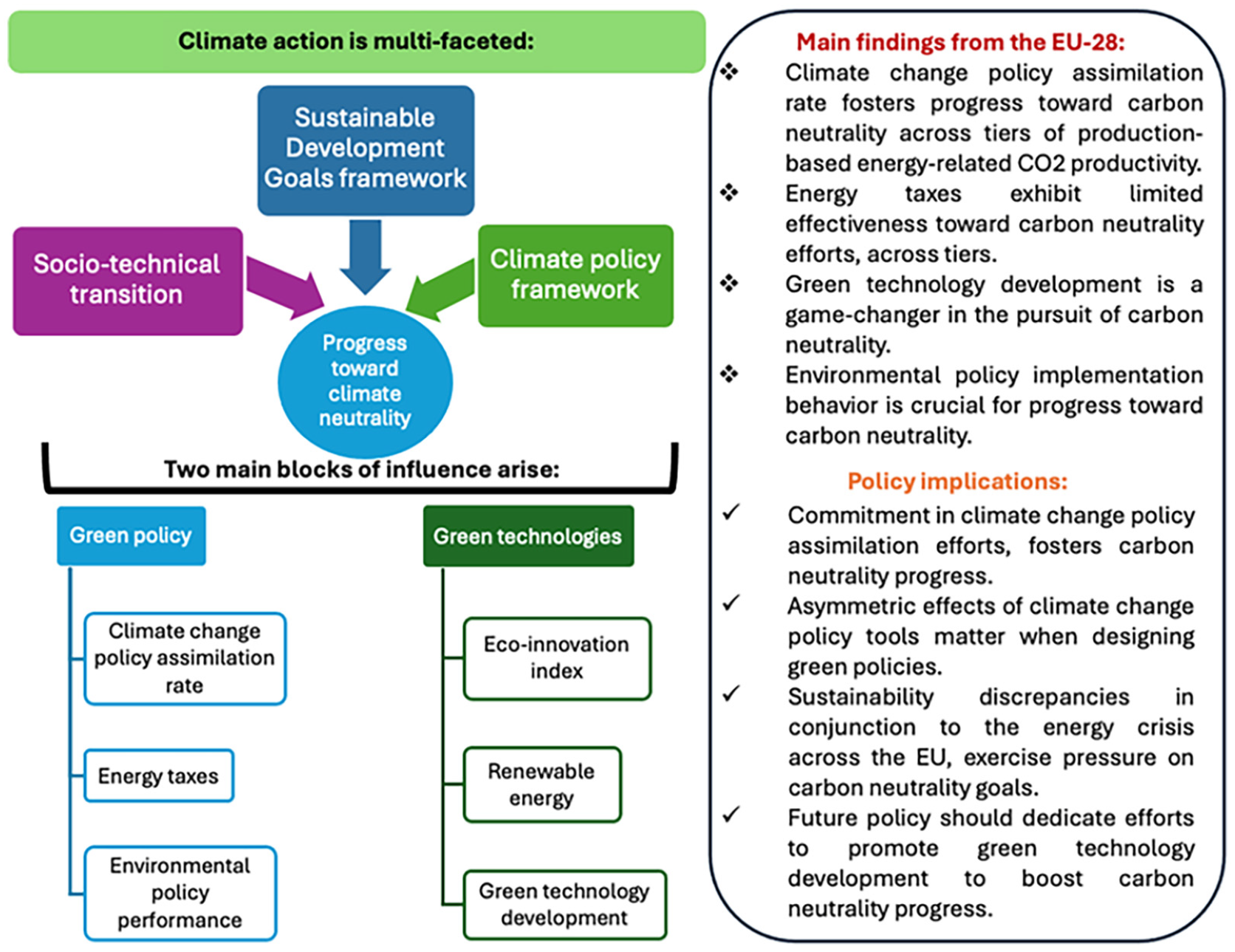
The diverse performance asymmetries and policy efforts toward climate neutrality among EU member states remain underexplored. Addressing this gap, we develop a conceptual framework to analyze the influence of green policy effectiveness and green technologies across tiers of emissions’ productivity in the EU-28 during 2010 to 2019, a pivotal period for climate neutrality efforts. Results from an instrumental panel quantile estimator reveal that national climate policies have an asymmetric impact toward climate neutrality progress, particularly benefiting low-performing countries. Green fiscal policy, such as energy taxes, is not a precondition for climate neutrality. We highlight the unexplored role of environmental policy performance, finding that effective policy auditing fostering progress. Eco-innovation and clean energy influence progress across tiers, underscoring the need for targeted incentives. Green technology development proves to be a key contributor toward climate neutrality progress, across tiers. This study advances understanding of the SDGs 7, 8, 9, 12, 13, and 16.
Keywords
Get full access to this article
View all access options for this article.