




Abstract
This study utilizes novel data to investigate the impact of cooking energy sources and indoor air pollution on the happiness, life satisfaction, physical, and mental health of women in Nigeria. The existing body of literature relies on ambient air pollution data, which can be limiting in resource-constrained settings. To address this gap, we employ a direct approach, measuring Carbon Monoxide (CO) levels in participants’ blood using the Rad-57 CO-oximeter. Our analysis reveals strong positive correlations between the utilization of clean cooking energy and women’s reported happiness and life satisfaction. Additionally, the study finds that clean cooking energy usage is associated with a significant reduction in mental health problems among women. These findings highlight a substantial disparity in well-being based on access to clean cooking energy sources. Furthermore, exposure to carbon monoxide, as measured in this study, demonstrates a detrimental effect on women’s health and overall well-being. Consequently, policymakers and stakeholders should prioritize initiatives that promote household energy access and facilitate the transition to clean cooking practices, especially in rural areas where the use of polluting fuels and exposure to indoor air pollution remain prevalent concerns.
Keywords
1. Introduction
Energy access and utilization are paramount requisites for preserving and enhancing human health and well-being. The indispensable role of energy extends to diverse spheres of life, encompassing lighting, food preparation, temperature regulation, mobility, healthcare, education, and economic pursuits. Regrettably, a significant proportion of the global population, predominantly in developing nations, continues to grapple with the challenge of attaining dependable and affordable energy services (IEA 2023; WHO 2023). A notable manifestation of this issue is the deficiency in access to clean cooking energy and technologies, a problem affecting one in every three individuals worldwide, with a staggering 2.4 billion people confronting this adversity, particularly in sub-Saharan Africa (UNDP 2023; WHO 2022).
Unclean cooking energy, typified by the utilization of traditional fuels like charcoal, wood, or animal dung, remains a salient practice in many developing regions, especially in rural areas characterized by limited access to modern cooking fuels. The repercussions of energy access, or lack thereof, are manifold and potentiate substantial health implications. Deprivation of electricity or access to clean energy sources translates into heightened vulnerability to noxious gases and indoor air pollution stemming from the combustion of smoky fuels, a phenomenon documented by several studies (Jetter et al. 2012; Mutlu et al. 2016; Xie et al. 2020).
According to the World Health Organization WHO (2022), the adverse consequences of indoor air pollution stemming from the use of air-polluting cookstoves and related equipment are starkly evident. This pernicious phenomenon exacted a grievous toll in 2020, with an estimated 3.2 million fatalities attributed to its deleterious effects. This grim tally included over 237,000 tragic deaths of children under five. The broader ambit of household air pollution, which encapsulates these perils, is even more ominous, incontrovertibly associated with a staggering annual toll of 6.7 million premature deaths.
Immediate indoor air pollution health manifestations encompass eye irritation, respiratory symptoms, and headaches. Furthermore, studies have documented significant associations between the use of air-polluting cookstoves and ailments such as colds, coughs, catarrh, fever, and bodily discomforts. Prolonged exposure to indoor air pollution, a byproduct of traditional cooking practices, escalates the risk of respiratory infections, chronic obstructive pulmonary diseases, cardiovascular maladies, and lung malignancies, attributed to sustained exposure to high concentrations of particulate matter (PM) (Barnett et al. 2005; Ezzati 2005; Fisher et al. 2021; Neidell 2004). Moreover, adverse maternal and neonatal outcomes, including low birth weight, preterm births, and impaired child growth, stand as salient consequences of this environmental problems (Currie and Neidell 2005; Imelda 2018; WHO 2022).
Energy poverty and the use of unclean cooking energy are not only harbingers of deleterious health consequences but also exert a tangible negative influence on the overall sense of contentment mental well-being (Churchill, Smyth and Farrell 2020; Davillas, Burlinson and Liu 2022; Kumari, Kumar and Sahu 2021; Nie, Li and Sousa-Poza 2021; Zhang et al. 2021), and health outcomes (Banerjee, Mishra and Maruta 2021; Churchill and Smyth 2021; Llorca, Rodriguez-Alvarez and Jamasb 2020; Phoumin and Kimura 2019; Smith and Pillarisetti 2017). This phenomenon is especially pronounced in women subjected to prolonged cooking hours (Shupler et al. 2022).
The exigencies of domestic and communal duties, predominantly incumbent upon women, such as cooking, laundering, and food processing, necessitate energy consumption through heat and electricity. Regrettably, in resource-constrained settings, women, in particular, are often compelled to rely on unclean energy sources to meet these exigencies. This dependence, however, exacts a grievous toll, exposing women to elevated risks of smoke inhalation and fire hazards (Zhang et al. 2021, 2022).
Furthermore, ancillary concerns, such as firewood collection and extended journeys occasioned by deforestation, inhibit girls’ educational attainment and expose women to gender-based violence. In certain regions, women and children expend up to ten hours weekly in firewood procurement (Clean Cooking Alliance 2023). The time these women devote to procuring firewood represents an opportunity cost that could otherwise be channeled toward economically productive endeavors.
Clean cooking energy, however, heralds broader positive implications for women’s well-being (Malakar and Day 2020; Wang, Bian and Zhang 2023). It alleviates the temporal and labor-intensive burdens associated with conventional cooking practices. It enables women to divert their energies toward more productive endeavors or devote additional time to their families and communities. Moreover, clean cooking energy engenders enhanced safety for women, mitigating the risks of burns and inadvertent conflagrations caused by traditional cooking methods. These ancillary health benefits inexorably contribute to the overall well-being of women, facilitating healthier lifestyles.
Furthermore, adopting clean cooking energy is critical to environmental protection, curbing reliance on traditional biomass fuels and attenuating deforestation and greenhouse gas emissions (Dimitrova et al. 2022; Hanna, Duflo and Greenstone 2016; Mortimer et al. 2017; Rosenthal et al. 2018). Clean cooking access offers the prospect of mitigating indoor air pollution. For instance, the International Energy Agency IEA (2021) attests to a 40 percent reduction in indoor air pollution levels upon introducing clean cooking in India. Empirical investigations illuminate the transformative potential of clean cooking energy for women and mothers, with attendant improvements in their health trajectories (Alexander et al. 2018; Burwen and Levine 2012; Díaz et al. 2008; Olopade et al. 2017; Thakur et al. 2018).
Against this background, this study aims to analyze the relationships between energy access and facets of maternal happiness, life satisfaction, and physical and mental well-being, as well as the association between air pollution and well-being, culminating in identifying policy implications and recommendations for augmenting maternal health and well-being through judicious energy interventions.
While prior studies have touched upon the nexus between energy poverty and mental well-being (Churchill, Smyth and Farrell 2020; Davillas, Burlinson and Liu 2022; Nie, Li and Sousa-Poza 2021; Welsch and Biermann 2017), these investigations have typically employed a limited array of one scale. In contrast, our study pioneers a comprehensive analysis, incorporating various measurement scales encompassing dimensions such as happiness, life satisfaction, psychological distress, and perceived stress. This multifaceted approach bolsters the reliability and validity of our research findings.
Furthermore, unlike previous investigations (Ferreira et al. 2013; Levinson 2012; Luechinger 2009; MacKerron and Mourato 2009; Rehdanz and Maddison 2008; Smyth, Mishra and Qian 2008; Welsch 2006) that relied on ambient air pollution data, which failed to provide insights into the specific pollutants inhaled by subjects and the level of individual exposure, we conducted a direct assessment to gauge the actual extent of exposure using the Rad-57 CO-oximeter. Thus, underscoring our methodology’s novelty and rigor.
Moreover, existing studies have predominantly focused on developed nations, which contend with a comparatively lesser prevalence of energy poverty when juxtaposed with the challenges confronted by developing countries, particularly within the context of sub-Saharan Africa. Hence, this study addresses the existing void within the scholarly literature.
The subsequent sections of this paper are organized as follows: Section 2 provides a comprehensive exposition of the survey design, data collection methodology, model specifications, and delineates the variables under scrutiny. Following that, Section 3 is dedicated to presenting our research outcomes, which encompasses an examination of the intersections between cooking energy usage and subjective well-being, and the effects of indoor air pollution on health and happiness. Section 4 gives an in-depth discussion of the key findings, elucidating their resonance with the existing body of literature.
2. Data
2.1. Design and Participants
This study was conducted within the Federal Republic of Nigeria, chosen as the research context due to its distinctive energy poverty challenges, setting it apart from other nations. Nigeria grapples with formidable impediments despite the ambitious target of the United Nations Sustainable Development Goal 7 (SDG 7). From the most recent data made available by the World Health Organization in 2023, an estimated 83.2 percent of the population still relies on air-polluting fuels and technologies for cooking, including charcoal, wood, palm kernel shells, sawdust, and crop residue (WHO 2023).
Figures 1 to 3 depict the proportion of households relying on kerosene, firewood, and charcoal as primary cooking fuels across the thirty-six states of the Federal Republic of Nigeria, inclusive of the Federal Capital Territory, Abuja. The data is sourced from the National Bureau of Statistics (NBS 2023).
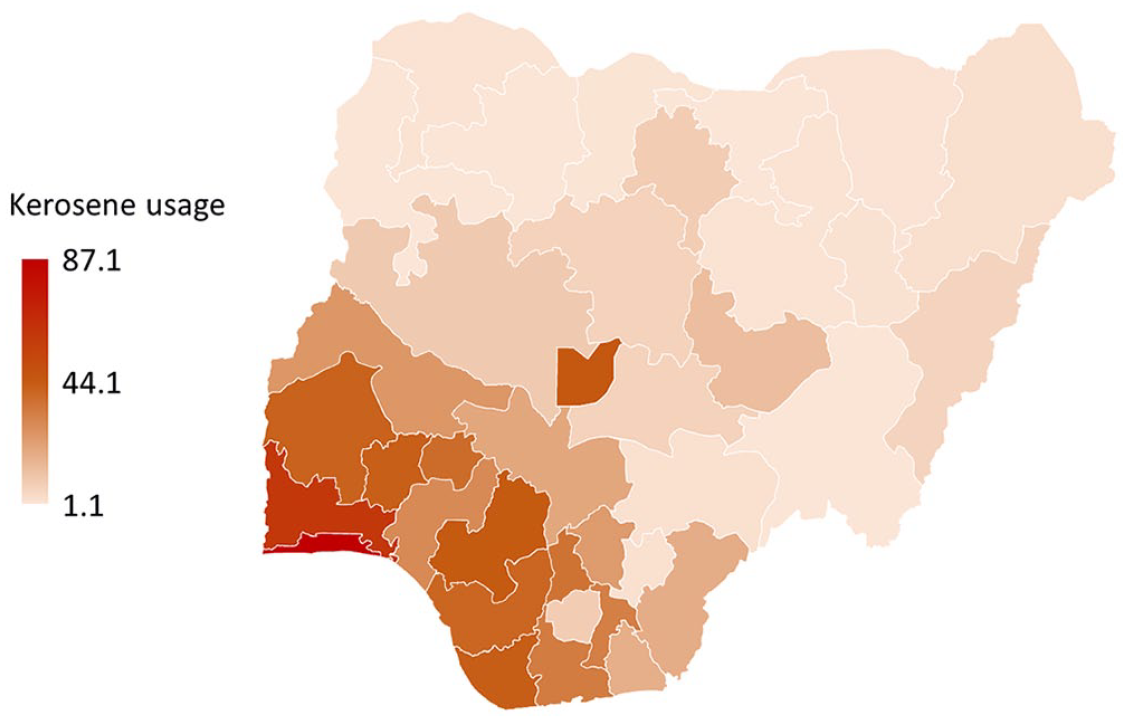
Kerosene usage.
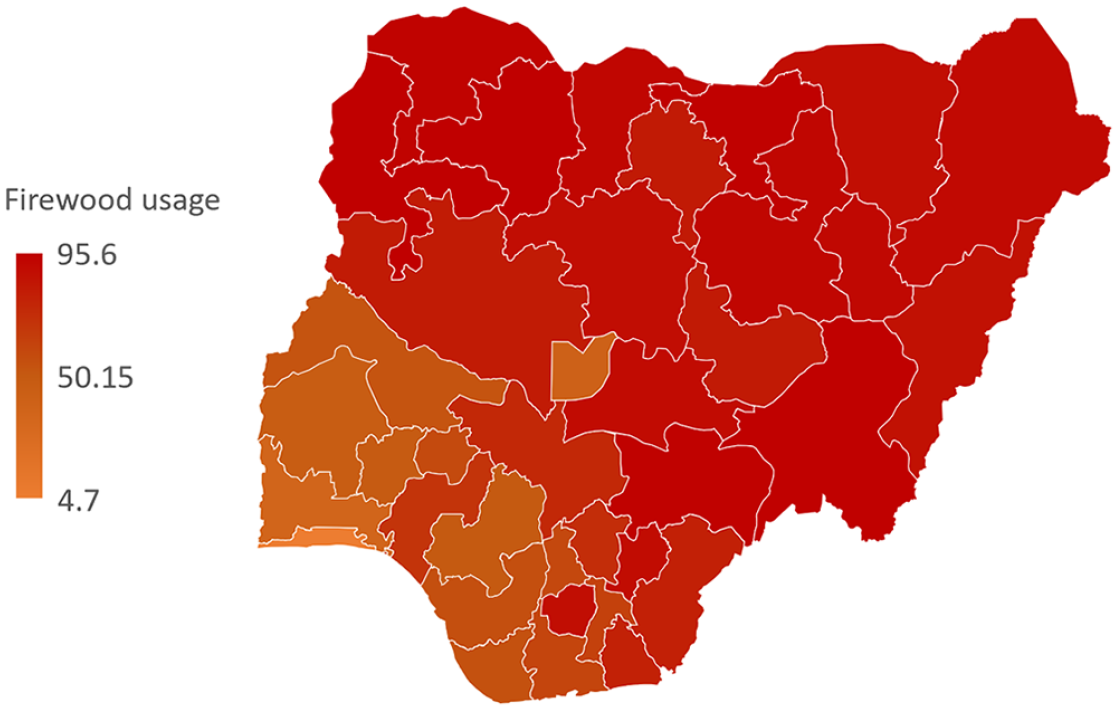
Firewood usage.
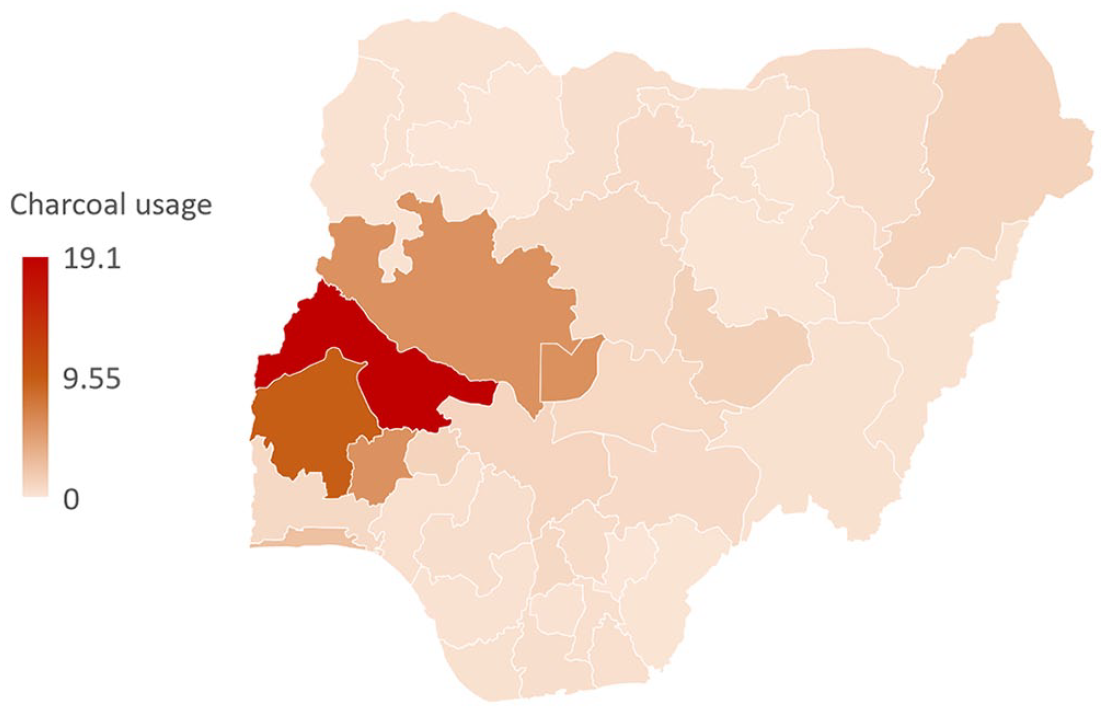
Charcoal usage.
Our data collection efforts were concentrated within two states in the southeastern region of Nigeria, specifically Ebonyi and Enugu. Many households in these states employ air-polluting cookstoves, a practice known to have adverse health effects, particularly on women and children.
To facilitate our study, we designed a structured questionnaire and an information leaflet to solicit informed consent from participants (mothers with at least one child between one and four years old). Ethical approval from the University of Warwick was obtained before commencing the survey. The survey was conducted through face-to-face interviews employing a computer-assisted personal interview (CAPI) methodology from May to August 2023. The initial data collection phase encompassed information regarding households’ primary and secondary sources of lighting and cooking, associated expenditures, average meal cooking durations using their cookstoves, and the physical locations of their kitchens. Additionally, we collected responses on physical and mental health matters, including satisfaction levels with lighting and cooking equipment, overall happiness, and quality of life.
Subsequent inquiries delved into lifestyle factors, including dietary habits, alcohol consumption, smoking status, exercise routines, and religious affiliations. We also gathered household demographic data, including marital status, educational attainment, employment status, age, and monthly household income. Leveraging the template provided by Innovations for Poverty Action (IPA) tailored for Nigeria, we incorporated a ten-item poverty probability index to assess household asset ownership, composition, consumption patterns, and living standards. Furthermore, we employed the Rad-57 CO-oximeter to measure carbon monoxide levels in the respondents’ bloodstream, providing an additional data layer. Information about electricity access and the prevailing power situation in the communities under study was meticulously documented. 1
2.2. Model Variables
2.2.1. Outcome Variables
We used a handful of subjective well-being scales to ensure the robustness and reliability of the results.
2.2.1.1. Happiness
Happiness is a person’s overall assessment of their life as a whole, encompassing both cognitive and emotional dimensions. Researchers often conceptualize it as a combination of life satisfaction (cognitive component) and the experience of positive emotions (affective component) (Bayer and Juessen 2015; Benjamin et al. 2012; Cattaneo et al. 2009; Devoto et al. 2012; Frey and Stutzer 2002; Heffetz and Rabin 2013). Researchers employ various scales and questionnaires to measure happiness. These scales often include a series of statements or questions that participants choose from, typically ranging from “very unhappy” to “very happy” (Bond and Lang 2019; Deaton and Stone 2013; Dynan and Ravina 2007; Stevenson and Wolfers 2009; Tella and MacCulloch 2006). For our analysis, and following Blanchflower, Oswald and Stewart-Brown (2013), we used responses to the question: “How much of the time during the past four weeks have you been happy—none of the time; a little of the time; some of the time; most of the time; all of the time?” Values of 1, 2, 3, 4, and 5 were assigned to the respective responses, wherein higher values were indicative of greater levels of happiness.
2.2.1.2. Life Satisfaction
We also employed Life Satisfaction, which is a comprehensive and holistic concept that assesses an individual’s overall contentment with various aspects of their life (Clark et al. 2018). This instrument provides valuable insights into a person’s perception of their own quality of life. We used responses to the question: “All things considered, how satisfied are you with your current quality of life as a whole—unsatisfied; fair; satisfied; very satisfied” We assigned a value of 1 to the last two responses to denote satisfaction and a value of 0 to indicate dissatisfaction for the first two responses.
2.2.1.3. Self-Reported Health
Self-reported Health is a self-assessment tool that individuals use to describe and evaluate their own physical health status. It serves as a valuable indicator of an individual’s perception of their overall well-being. We asked the respondents: “How is your health in general? Would you say it is—very bad; bad; fair; good; very good?” We assigned 1, 2, 3, 4, and 5 values to the respective responses, wherein higher values indicate greater health outcomes.
2.2.1.4. General Health Questionnaire (GHQ)
The GHQ-12, a 12-item version of the General Health Questionnaire, commonly called GHQ-12, stands as a widely recognized and extensively utilized psychometric instrument. Its primary purpose is to quantitatively assess mental health and identify potential manifestations of psychological distress within individuals (Goldberg et al. 1997; WHO 1993). This meticulously constructed instrument comprehensively delves into various dimensions of emotional health, social functioning, and vitality. Each of its twelve questions is designed to elicit responses that give valuable insights into the respondent’s mental state. These responses are captured using a Likert scale, with values ranging from 0 to 3. In pursuit of result robustness and sensitivity, we also applied an alternative scoring system (0-0-1-1). However, it is noteworthy that this alternative scoring method did not yield statistically significant deviations in the obtained results.
2.2.1.5. Perceived Stress Scale (PSS)
The Perceived Stress Scale (PSS), initially developed by Cohen, Kamarck and Mermelstein (1983), represents a fundamental instrument for evaluating individuals’ subjective perceptions of stress across various life circumstances. Anchored in a comprehensive inventory comprising fourteen items, this scale is designed to elicit responses that gauge the extent to which individuals perceive situations as stress-inducing, encompassing a broad spectrum of psychological tension dimensions. Respondents’ answers were recorded on a scale spanning from 0 to 4. The scoring methodology entailed reversing scores for the seven positively framed items and summing all fourteen items. Consequently, an elevated score on this composite scale signifies an intensified perception of stress, graded on a scale ranging from 0 to 56.
2.2.1.6. Warwick-Edinburgh Mental Well-Being Scale (WEMWBS)
The WEMWBS is a robust metric for comprehensively evaluating an individual’s mental well-being. Comprising a set of fourteen positively framed statements, this scale meticulously probes various dimensions of emotional and psychological wellness, encapsulating domains such as positive affect, interpersonal relationships, and personal competence (Stewart-Brown and Janmohamed 2008). Respondents are tasked with rating their level of agreement with these statements on a Likert-type scale ranging from 1 to 5, facilitating the quantitative assessment of mental well-being across a diverse spectrum of facets. The potential scoring range spans from a minimum of 14 to a maximum of 70. Notably, a score within the range of 41 to 44 suggests the possible presence of mild depression, while a score below 41 may indicate a potential clinical depression (De Kock et al. 2021). Consequently, a higher score on this scale signifies an elevated level of mental well-being.
2.2.2. Predictor Variables
The primary predictor variables under consideration in this study encompass cooking energy sources and indoor air pollution. In our analysis, we constructed a binary dummy variable. This variable takes the value of 1 when a household predominantly relies on clean cooking energy sources, encompassing electricity, liquefied petroleum gas (LPG), and solar energy. Conversely, it takes the value of 0 if the household predominantly employs dirty cooking energy sources, including but not limited to wood, charcoal, briquette, sawdust, grass, and kerosene.
Concerning indoor air pollution, we employed the Rad-57 CO-oximeter, equipped with adult sensors, to ascertain the percentage of carbon monoxide (CO) present in the bloodstream of respondents. The Rad-57 CO-oximeter represents a pivotal technological advancement in the realm of noninvasive blood analysis, particularly in the realm of CO detection, as substantiated by previous studies (Feiner et al. 2013; Kot, Sićko and Góralczyk 2008; Mottram, Hanson and Scanlon 2005; O’Reilly 2010; Sinan et al. 2018; Zaouter and Zavorsky 2012). This device has consistently demonstrated commendable levels of reliability and accuracy when juxtaposed with conventional invasive techniques for CO measurement, including arterial blood gas analysis (Feiner et al. 2013; Kot, Sićko and Góralczyk 2008; Mottram, Hanson and Scanlon 2005; O’Reilly 2010; Sinan et al. 2018; Zaouter and Zavorsky 2012). Importantly, the noninvasive attributes of the Rad-57 CO-oximeter contribute to enhanced patient comfort and a reduced risk of complications, such as infections, commonly associated with blood drawing. Its compact and user-friendly design lends itself well to both in-hospital and field applications, accommodating a diverse array of research settings and study designs (Sinan et al. 2018).
While the Rad-57 CO-oximeter has numerous advantages, it is incumbent upon us to acknowledge potential limitations, such as susceptibility to interference from external factors like painted fingernails or exposure to excessive ambient light (O’Reilly 2010). To circumvent these limitations, our research team implemented meticulous precautions, ensuring that participants’ fingers were free of contaminants before obtaining readings. Additionally, we employed a three-fold towel wrapped around the sensor to minimize the influence of extraneous light sources, thus safeguarding the integrity of our measurements. 2
2.2.3. Confounders
We addressed potential confounding variables to augment the methodological rigor of our findings. Within this analytical framework, we considered relevant covariates, among which the Poverty Probability Index (PPI), established by Innovations for Poverty Action (IPA) (IPA 2022), occupies a prominent position. The PPI stands as a widely recognized metric devised to assess the likelihood of an individual or household residing in conditions of poverty. This index measures the incidence of poverty by drawing from a comprehensive array of ten indicators that encompass various facets of household characteristics, asset ownership, consumption patterns, and living standards. 3 Importantly, its applicability extends to providing an assessment of nationally-adjusted poverty probabilities. We used the index to capture variations in socioeconomic status, thereby bolstering the robustness of our analytical approach.
Moreover, our analytical approach encompasses integrating a comprehensive array of well-established socioeconomic indicators into the models. These encompass household income, age, educational attainment, employment status, and marital status. Additionally, our modeling framework incorporates an array of lifestyle and dietary behaviors. Specifically, variables about fruit and vegetable consumption, alcohol consumption, physical exercise, and smoking habits are systematically integrated. Furthermore, we have included attributes related to cooking equipment, such as the average meal cooking duration utilizing respondents’ cookstove, to capture additional nuances in our analysis.
2.3. Baseline Model
We employ a range of self-reported well-being scales and health outcomes as dependent variables. To establish a baseline model, we specify the following models:


where yi represents the outcome variable for respondent i in the context of their reported happiness, life satisfaction, health status, psychological distress, perceived stress, or mental well-being. Separate models were estimated for each well-being and health outcome to assess their associations with clean cooking (Cleancooking i ) and indoor air pollution (Airpollution i ). The vector Φ i encompasses covariates employed in our models, while α and β denote the regression coefficients to be estimated. The term ε i denotes the error term. Our modeling approach ensures that the estimated coefficients are less susceptible to the multicollinearity phenomenon, which can distort parameter estimates and undermine the reliability of regression analyses.
2.4. Summary Statistics
Table 1 provides a comprehensive overview of the key variables under examination. These statistics are derived from three distinct panels: Panel A, representing individuals reliant on air-polluting cooking fuels and methods; Panel B, consisting of clean cooking energy; and Panel C, reflecting the aggregate sample encompassing both categories. The variables contained within the analysis shed light on the stark disparities between the two energy usage categories.
Descriptive Statistics.

Note. GHQ = General Health Questionnaire used in measuring mental ill-health; PSS = Perceived Stress Scale; WEMWBS = Warwick-Edinburgh Mental Well-being Scale.
p < .1, **p < .05, ***p < .01.
Panels A and B offer a juxtaposition of the prevalent energy sources employed by the sampled population. Notably, 57 percent of respondents in the overall sample use clean cooking alternatives, such as electricity, liquefied petroleum gas (LPG), and solar energy, while the remaining 43 percent persist with air-polluting cooking fuels and equipment. The salient observation in Panel A pertains to the heightened carbon monoxide (CO) saturation levels in the blood hemoglobin of dirty cooking energy users, registering at 5.62 percent, a substantial discrepancy compared to the 3.30 percent recorded among clean cooking energy users in Panel B. To contextualize these findings, it is imperative to note that the CO levels in nonsmokers typically range between 1 and 2 percent. In contrast, heavy smokers, consuming two packs of cigarettes daily, exhibit levels between 4 and 8 percent, as substantiated by previous studies (Gov.UK 2022; URMC 2023).
The temporal aspect of cooking experiences reveals that, on average, it takes the sampled population 1.84 hours to prepare a standard meal. However, Panel A shows that users of dirty cooking methods spend significantly more time, approximately two hours, on meal cooking, while it takes clean cooking energy users only 1.66 hours. Consequently, it is no surprise that Panel B, comprising clean energy users, shows higher satisfaction levels (2.47) with cooking equipment compared to the notably lower satisfaction levels (1.55) shown in Panel A by dirty cooking energy users. This discrepancy is underscored by statistical significance, on a four-point scale.
Furthermore, approximately 48 percent, have their kitchens outside the main house, while approximately 52 percent, have their kitchens inside the main house in Panel C. It is noteworthy that, while a substantial proportion of dirty cooking energy users, 90 percent, have their kitchens outside the main house in Panel A, only 16 percent of clean cooking users do.
When considering health outcomes, clean energy users in Panel B exhibit significantly higher scores (3.91) than their counterparts in Panel A (3.61), measured on a five-point scale. Subjective happiness, also assessed on a five-point scale, reveals that clean cooking users (Panel B) reported higher levels (3.58) than their counterparts in Panel A (3.19). Notably, a mere 17 percent of dirty cooking energy users reported increased life satisfaction compared to 29 percent among clean cooking energy users.
Furthermore, on the same scale, dirty cooking energy users reported a mean value of 2.48 for feelings of despondency, significantly exceeding the 1.98 reported by clean cooking energy users.
Turning attention to mental health, the general health questionnaire results, ranging from 0 to 36 and measuring psychological distress, exhibit an average score of 12.40 for the overall sample. However, Panel A, comprised of dirty cooking energy users, reports significantly higher mental distress levels (14.86) compared to the lower scores (10.55) reported in Panel B, consisting of clean cooking energy users. The perceived stress levels, measured on a 54-point scale, average at 26.46 for the entire sample. Panel A, once again, reports statistically significant higher stress levels (28.66) among dirty cooking energy users, in contrast to the lower stress levels (24.81) reported in Panel B by clean cooking energy users. Concerning the positively worded WEMWB scale, with a possible score range of 0 to 70, the sample average is 51.39. Clean cooking users (Panel B) exhibit significantly higher mental well-being (52.98) compared to their counterparts in Panel A (49.29).
Exploring socio-demographic factors, poverty incidence emerges as a significant facet. The sample, on average, exhibits a 50 percent likelihood of poverty. Nevertheless, dirty cooking energy users experience a significantly higher incidence of poverty (64%) than their clean energy-using counterparts (39%). Similarly, among households engaged in air-polluting cooking practices, only 18 percent reported monthly incomes exceeding NGN50,000 ($65), while this figure rises to 57 percent among clean cooking households. These findings reflect broader national trends, illustrating that poverty is more pervasive among households reliant on wood, grass, charcoal, sawdust, and similar fuels, predominantly concentrated in rural areas (NBS 2022).
Regarding marital status, Panel A reveals that 84 percent of respondents are married. In comparison, this figure increases to 93 percent in Panel B, surpassing the overall average of 89 percent in Panel C. Educational attainment primarily centers around secondary school education, with limited representation in college/polytechnic and university education across all panels. Regarding the age of mothers, 62 percent of the overall sample are aged twenty-nine years or older, with slight variations observed in Panels A and B at 67 and 59 percent, respectively. As depicted in Panel C, employment spans various sectors, encompassing both agriculture and non-agriculture domains. Interestingly, 87 percent of dirty cooking energy users are employed compared to 90 percent of clean cooking energy users.
Exploring lifestyle and dietary behaviors, a mere 4 percent of respondents in Panel C identified as current smokers. Furthermore, the sample reported consuming fruits and vegetables approximately 1.47 and 2.28 times per week, respectively. Alcohol consumption is notably low, with respondents reporting drinking less than one day a week. In terms of physical activity, 45 percent of the sample engage in some form of exercise every week, indicating a concerted effort towards maintaining an active lifestyle.
3. Results
3.1. Cooking Energy Usage and Women’s Happiness
Table 2 presents the findings of OLS and fixed-effects (FE) investigating the association between clean cooking energy utilization and happiness. The regression analysis yields notable findings: the coefficient on clean cooking energy is consistently positive and statistically significant across all specifications. The OLS and county FE regression results exhibit similar patterns. The coefficient of 0.235 on clean cooking energy usage indicates that, holding all else constant, individuals who use clean cooking energy are predicted to have happiness levels that are 0.24 points higher, on average, than those who do not use clean cooking energy.
Cooking Energy Sources and Happiness.

Note. Standard errors are robust.
p < .1. **p < .05. ***p < .01. Full results are presented in Appendix Table A3.
Dirty cooking fuels, such as firewood and charcoal, require much time and effort to collect, prepare, and use. Women who use these fuels often spend hours each day cooking, leaving them with little time for other activities, such as rest, leisure, and childcare. On the other hand, clean cooking fuels are much easier to use and require less time and effort, allowing women more time for other activities and relaxation.
Among the control variables, the results show that respondents who experience a higher incidence of poverty reported lower happiness levels. 4 The estimated coefficient pertaining to this variable emerges as statistically significant, underscoring its substantive relevance within the empirical model. Furthermore, the analysis reveals that income levels and fruit consumption exert a statisticall
Table 3 presents the results of the models examining the association between clean cooking energy utilization and life satisfaction, conducted as part of our robustness checks. Columns (1) and (2) omit control variables, while columns (3) and (4) incorporate household, lifestyle, and dietary control variables. Concomitantly, clean cooking energy consistently manifests a positive impact on life satisfaction across all models. The coefficient of 0.198 on clean cooking energy usage in column (4) indicates that, holding all other variables constant, individuals who use clean cooking energy are predicted to have life satisfaction scores that are 0.20 points higher, on average, than those who do not use clean cooking energy.
Cooking Energy and Life Satisfaction.

Note. Standard errors are robust.
p < .1. **p < .05. ***p < .01. Full results are presented in Appendix Table A4.
In Figures 4 and 5, we present predictive models illustrating the intricate relationship between poverty incidence and cooking energy usage with the respective outcomes of happiness and life satisfaction. Figure 4 demonstrates that as the incidence of poverty increases, a noticeable divergence emerges in self-reported happiness levels between clean and dirty cooking energy users. Conversely, as shown in Figure 5, in the context of life satisfaction, the gap between these two groups of users converges as poverty incidence rises. 5
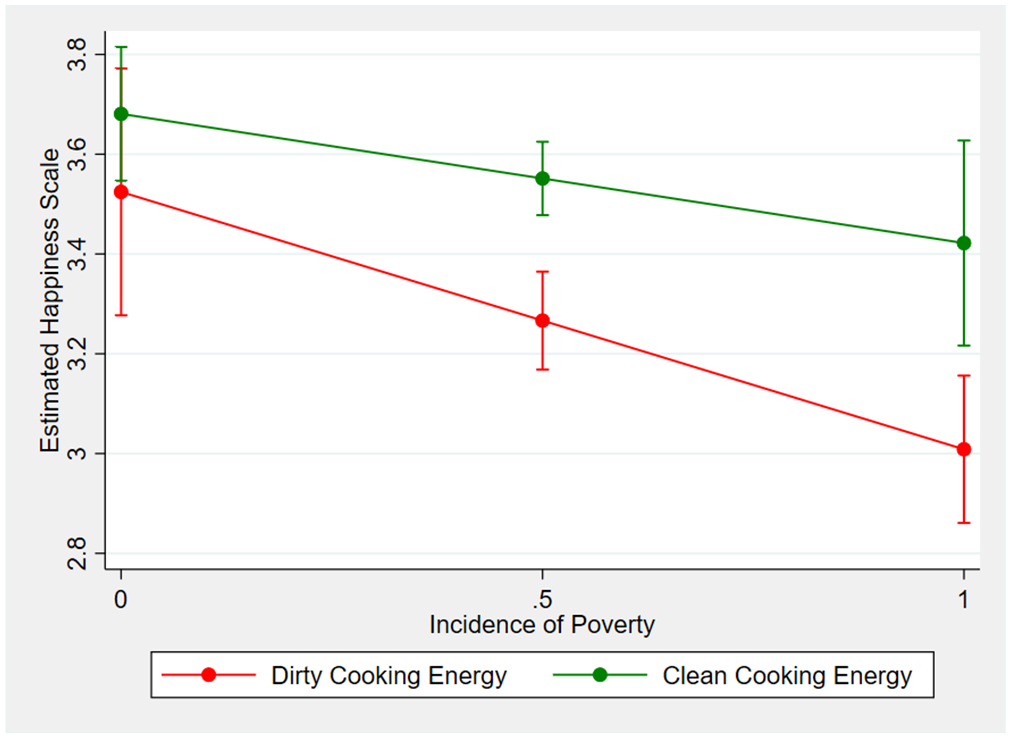
Incidence of poverty and cooking energy predicting happiness, with interaction term.
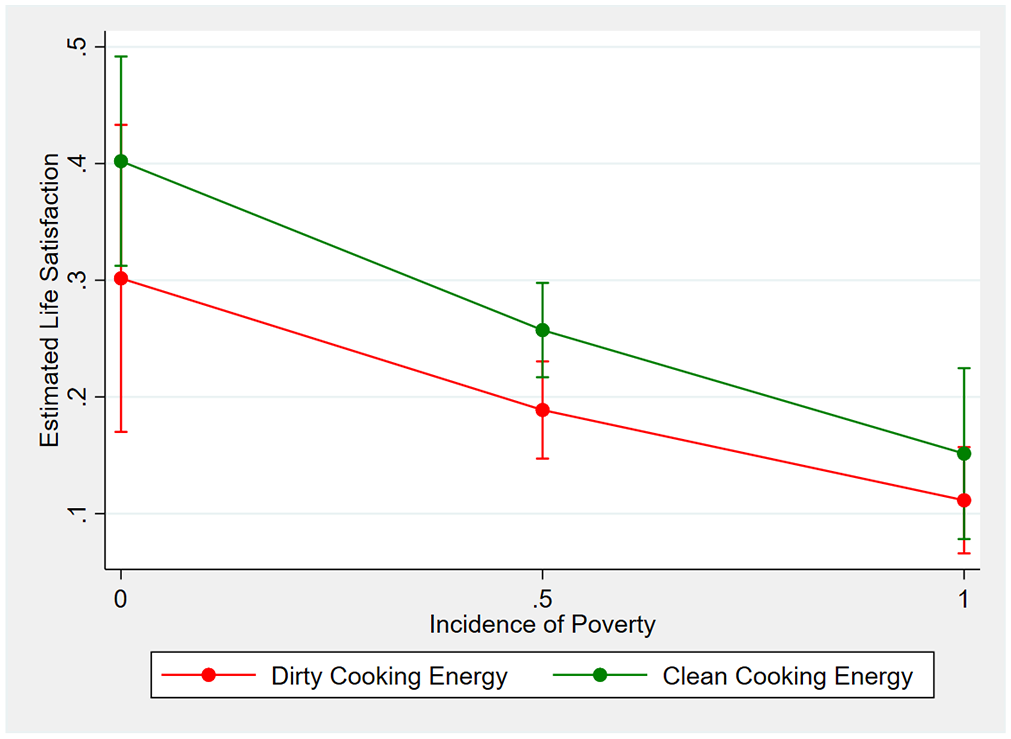
Incidence of poverty and cooking energy predicting life satisfaction, with interaction term.
3.2. Clean Cooking Energy and Women’s Health
Table 4 shows the results of OLS and county-level FE of the relationship between clean cooking energy and women’s health outcomes. The results in columns (1) to (4) show a positive and statistically significant relationship between the two variables. The coefficient on clean cooking energy in column (2) indicates that individuals who use clean cooking energy are predicted to have health outcomes that are 0.21 points higher on a five-point scale, on average, compared to those who do not use clean cooking energy, holding all else constant. This suggests that, on average, women who use clean cooking energy sources experience better health outcomes compared to those who rely on traditional and more air-polluting cooking methods. It also underscores the potential health benefits of promoting household clean energy adoption. Overall, this finding contributes valuable insights to the ongoing discourse on the intersection of energy practices and health outcomes, highlighting the potential for targeted interventions to improve women’s health through sustainable energy transitions.
Clean Cooking Energy and Health.

Note. Robust standard errors are in parentheses.
Per the control variables (shown in the Appendix A), a notable inverse correlation emerges between health outcomes and the prevalence of poverty among women. The condition of poverty commonly constrains access to essential healthcare services, encompassing routine medical examinations, preventive healthcare measures, and timely medical interventions. Women confronted with the burdens of impoverished circumstances frequently encounter formidable obstacles, ranging from a lack of health insurance, inadequate transportation facilities, to limited resources, hindering their capacity to promptly secure necessary medical attention. This observation aligns congruently with the findings of Llorca, Rodriguez-Alvarez and Jamasb (2020).
Conversely, our analysis demonstrates a positive correlation between elevated health outcomes and specific sociodemographic attributes, including higher levels of education, marital status, and employment. These observations echo the conclusions of Churchill and Smyth (2021), validating the consistency of our results within the broader literature.
We introduced behavioral and dietary variables in columns (3) and (4), revealing compelling associations with health outcomes. Notably, heightened health outcomes are positively linked to increased fruit consumption and regular physical exercise, while conversely, a negative association exists with smoking behavior. The estimated coefficients on these variables generally attain statistical significance, underscoring the substantive relevance of the sociodemographic and lifestyle factors in shaping health outcomes. These findings shed valuable light on the intricate nexus between individual behaviors, dietary choices, and health status, further enriching our understanding of the multifaceted determinants influencing health outcomes among women.
Figure 6 shows that at lower levels of poverty incidence, dirty cooking energy users are estimated to report higher health outcomes compared to their counterparts using clean cooking energy sources. However, as poverty incidence escalates, the advantage shifts significantly, with clean cooking energy users exhibiting notably higher health outcomes.
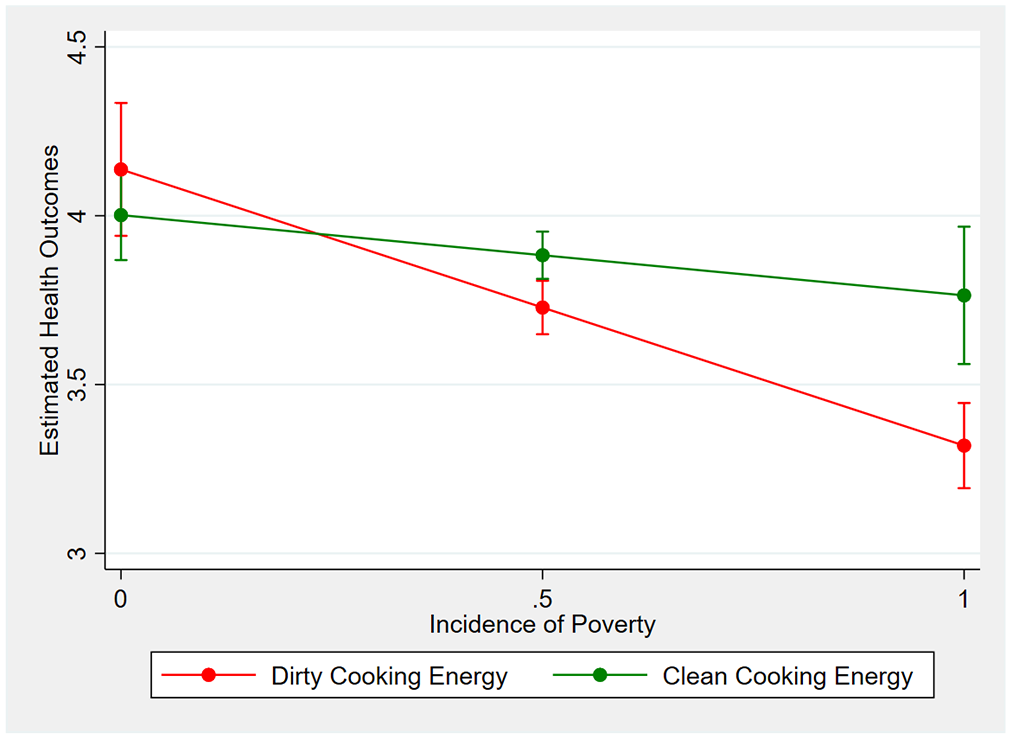
Incidence of poverty and cooking energy predicting health, with interaction term.
While Figure 6 offers valuable insights for exploratory purposes, the lack of other control variables necessitates cautious interpretation. A potential explanation lies in selection bias. At lower poverty levels, individuals choosing dirty cooking energy might possess better baseline health. However, as poverty escalates, the limitations of dirty cooking energy become more pronounced. Increased exposure to pollutants, particularly in poorly ventilated spaces, likely contributes to a significant decline in health outcomes. Future research delving into specific health outcomes associated with dirty cooking energy use (e.g., respiratory issues) could illuminate the poverty level at which the health risks outweigh any initial advantage.
3.3. Cooking Energy Usage and Women’s Mental Health
Table 5 shows a noteworthy and statistically significant negative association between the utilization of clean cooking energy and women’s mental distress in columns (1) to (3) and perceived stress in columns (4) to (6). This finding implies that women who employ clean cooking energy sources tend to experience lower levels of mental distress and perceived stress compared to their counterparts using dirty cooking fuels.
Clean Cooking Energy and Women’s Mental Health.

Note. Robust standard errors are in parentheses.
The results in column (2) suggest that, holding all else constant, women who use clean cooking energy are predicted to experience a reduction in mental distress by approximately 1.99 points, on average, compared to women who do not use clean cooking energy. This result holds substantive importance in understanding the potential impact of energy choices on mental well-being. This finding underscores the broader implications of energy transitions not only for environmental and physical health but also for mental health outcomes.
Likewise, the results in column (5) indicate that, holding all else constant, women who use clean cooking energy are predicted to experience a reduction in perceived stress by approximately 2.04 points, on average, compared to women who do not use clean cooking energy. This finding is plausible as clean cooking eliminates the stress of firewood collection from the bush and the stress of cooking a meal with inefficient fuels.
Additional results utilizing the Warwick-Edinburgh Mental Well-being Scale are presented in Appendix Tables A1 and A2, as well as Figure A1.
Figure 7 shows that at both lower and higher levels of poverty incidence, dirty cooking energy users are estimated to exhibit elevated levels of mental distress when compared to their counterparts using clean cooking energy sources. This observation is marked by a consistent and considerable gap in the estimated levels of mental distress between the two groups, a phenomenon that persists across varying degrees of poverty.
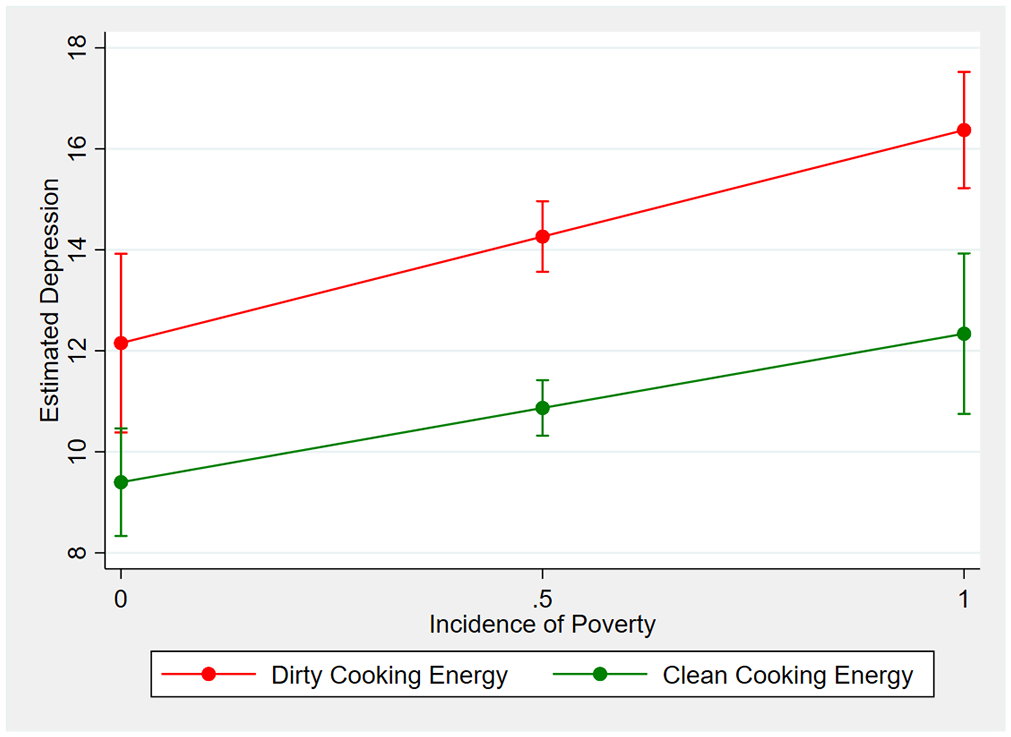
Incidence of poverty and cooking energy predicting depression, with interaction term.
Figure 8 illustrates that at lower levels of poverty incidence, the disparity in perceived stress is observed to be marginal. However, as poverty incidence increases, a notable divergence becomes apparent, with dirty cooking energy users experiencing significantly higher levels of perceived stress than their counterparts using clean cooking energy sources. This further underscores the observation that, in response to rising poverty incidence, the rate of perceived stress escalation is markedly steeper for users of dirty cooking energy sources in comparison to those utilizing clean cooking energy sources.
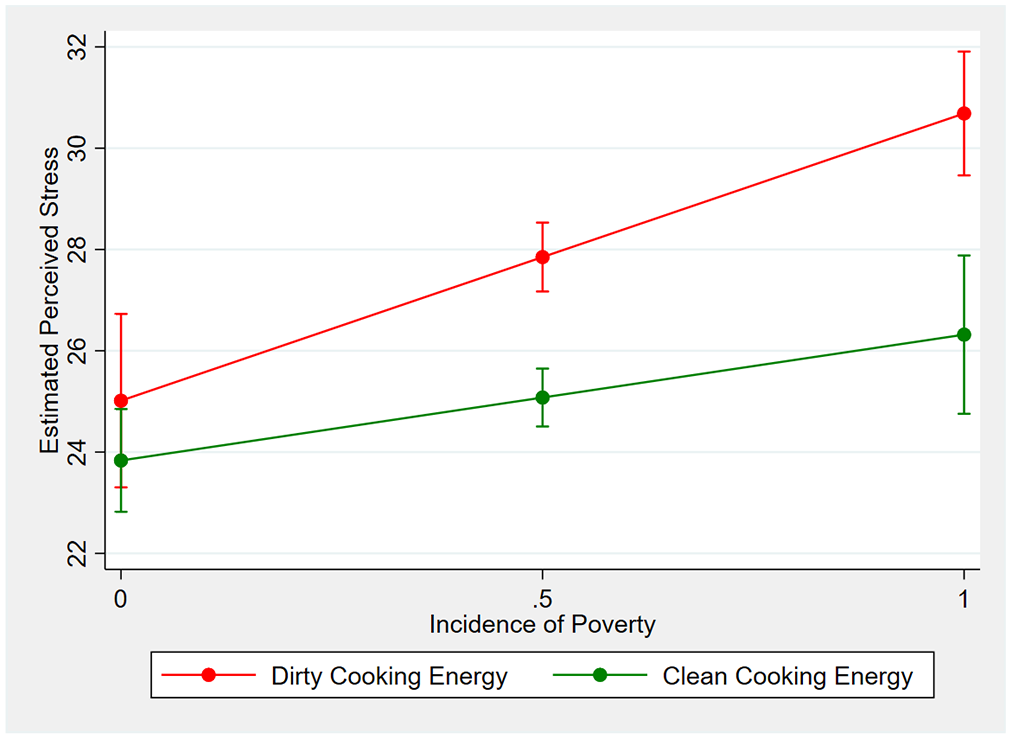
Incidence of poverty and cooking energy predicting perceived stress, with interaction term.
3.4. Effects of Indoor Air Pollution on Women’s Health and Happiness
Table 6 presents the results elucidating the intricate effects of carbon monoxide level in the bloodstream on health and happiness. Notably, the coefficients reveal a compelling negative effect of carbon monoxide on health and happiness. A one percent increase in carbon monoxide levels in the blood is associated with a reduction of approximately 0.02 points in women’s self-reported health outcomes on a five-point health status scale. This observation resonates with the prevailing body of epidemiological literature, which consistently underscores the adverse impact of air pollution on health (Brunekreef and Holgate 2002; Ezzati 2005; Katsouyanni 2003; Landrigan 2017). Similarly, a one percent increase in carbon monoxide levels in the blood is associated with a decline of approximately 0.03 points in women’s happiness on a five-point scale.
Carbon Monoxide, Health and Happiness.

Note. Robust standard errors are in parentheses.
Carbon monoxide is a toxic gas that poses significant health risks due to its ability to reduce the oxygen-carrying capacity of the blood. Consequently, exposure to CO can precipitate a range of adverse physiological and psychological consequences. These include symptoms such as dizziness, severe headaches, nausea, and vomiting, which can be profoundly discomforting. Moreover, CO has been shown to impair cognitive functions and mood regulation, potentially giving rise to feelings of sadness, depression, and anxiety. Women who already contend with pre-existing health conditions, such as COPD or asthma, find themselves especially vulnerable to the deleterious effects of carbon monoxide exposure. CO can exacerbate these underlying health conditions, rendering their management more arduous. Consequently, this increased stress and anxiety compound the challenge of experiencing happiness and fulfillment. This finding deepens our comprehension of the multifaceted dynamics connecting environmental factors to individual happiness levels.
4. Discussion and Conclusion
This study leverages a novel data collection method specifically designed for application in developing countries with limited pre-existing data. We employ this approach to investigate the empirical relationship between cooking energy usage and the health and well-being of women in Nigeria. Notably, the study incorporates a novel technological aspect by directly measuring carbon monoxide levels in the bloodstream of participants. This represents a significant departure from existing literature in this field which typically relies on ambient air quality data.
We provide a comprehensive discussion of the main findings, juxtaposing them with existing literature. First, we identify a robust and positive association between using clean cooking energy and elevated happiness, life satisfaction, and health outcomes. The results are similar to the findings of other studies in this area. For instance, Churchill, Smyth and Farrell (2020), in their investigation of the relationship between fuel poverty and subjective well-being (SWB) in Australia, identified a significant adverse impact of fuel poverty on SWB. Similarly, Nie, Li and Sousa-Poza (2021) found that energy poverty (EP) correlates with diminished levels of life satisfaction and an increased prevalence of depression within Chinese households. Employing data from the UK Understanding Society survey and encompassing the heating component of EP, Davillas, Burlinson and Liu (2022) reported a notable association between EP and reduced levels of SWB.
These congruent findings substantiate the notion that the choice of energy source for cooking can profoundly impact individuals’ well-being and quality of life, emphasizing the importance of addressing clean energy adoption as a means to enhance overall societal well-being. This body of research underscores the need for holistic policy interventions aimed at mitigating energy-related disparities and improving the living standards and happiness of vulnerable populations.
Second, women who employ clean cooking energy experience lower levels of mental distress and perceived stress, as indicated by their GHQ and PSS scores, compared to their counterparts who use air-polluting cooking fuels. These results are in line with the findings of (Llorca, Rodriguez-Alvarez and Jamasb 2020; Malakar and Day 2020; Nie, Li and Sousa-Poza 2021; Wang, Bian and Zhang 2023).
Given the mental health benefits of clean cooking energy, policymakers should consider integrating mental health support services into healthcare systems. This can include providing mental health education, counseling, and resources to women using air-polluting cooking fuels. Public awareness campaigns can be launched to inform women and communities about the mental health benefits of clean cooking energy. Stress management and mental well-being education can also be integrated into these campaigns, especially in developing countries.
Additionally, policies should prioritize initiatives to promote the widespread adoption of clean cooking energy practices, especially in regions where reliance on traditional, air-polluting fuels is prevalent. This can include subsidies, incentives, and awareness campaigns to encourage households to transition to cleaner and more efficient energy sources.
Policymakers should adopt gender-sensitive approaches that consider the specific needs and challenges women face in relation to clean cooking energy. This may involve targeted programs and interventions that empower women to make informed choices about energy sources. For example, Nduka (2023) proposed a policy recommendation for a subsidy, a monthly installment payment model by households for clean energy services, and creating community-based energy organizations. Also, given the global nature of environmental issues, international collaboration and partnerships can facilitate sharing of best practices, technologies, and resources to address clean cooking energy challenges on a larger scale.
Finally, concerning the effects of indoor air pollution on health and happiness, our results show that respondents with higher levels of carbon monoxide in their blood are more likely to experience lower health outcomes and happiness levels. The results remain consistent and robust across different specifications. These results align with extant studies that have leveraged ambient air pollution data. For instance, Levinson (2012) showed that respondents interviewed on days characterized by heightened local air pollution consistently reported lower happiness levels in the United States. Ferreira et al. (2013) reported a robust and negative association between air pollution and self-reported life satisfaction in a European context. These parallels in research outcomes bolster our findings’ empirical robustness.
Hence, public health campaigns should be promoted to raise awareness about the dangers of CO exposure and the importance of cleaner energy sources and carbon monoxide detectors in homes. Education can empower women and communities to take preventive measures. Policies should be designed to support low-income and vulnerable populations who may be disproportionately affected by CO exposure. Addressing climate change through policies aimed at reducing greenhouse gas emissions can also have the co-benefit of reducing CO emissions. Transitioning to cleaner energy sources and sustainable practices can improve air quality and public health.
Footnotes
Appendix A
In addition to the many robustness estimations presented above, we offer other analyses in this section. Initially, we utilized the positively-worded Warwick-Edinburgh Mental Well-being Scale and conducted a regression analysis, incorporating clean cooking energy and other relevant covariates.
Appendix Table A1 shows that clean cooking energy is significantly associated with heightened levels of mental well-being. The results indicate that a unit increase in clean cooking energy usage would increase women’s mental well-being by 1.49 points.
Appendix Figure A1 depicts a convergence of mental well-being among clean and dirty cooking energy users at lower levels of poverty incidence. Nevertheless, as poverty incidence escalates, a significant divergence emerges, with clean cooking energy users estimated to exhibit considerably higher levels of mental well-being compared to their counterparts utilizing dirty cooking energy sources.
Declaration of Conflicting Interests
The author(s) declared no potential conflicts of interest with respect to the research, authorship, and/or publication of this article.
Funding
The author(s) disclosed receipt of the following financial support for the research, authorship, and/or publication of this article: This research was undertaken as part of the UK Energy Research Centre research programme. Funded by the UK Research and Innovation Energy Programme under grant number EP/S029575/1.