



Abstract
Successfully designing and implementing a program is complex; it requires a reflexive balance between the available resources and the priorities of various stakeholders, both of which change over time. Logic models are theory-based evaluation approaches used to identify and address key challenges of a program. This article describes the process of building a logic model on advanced theories in complexity studies. The models aim to support a province-wide multispecies monitoring system of antimicrobial use (AMU), designed in collaboration with the animal health sector in Quebec (Canada). Based on a rigorous theoretical foundation, the logic model is built in three steps: (1) mapping, a narrative review of literature on similar programs in other jurisdictions; (2) framing, iterative consultations with project members to elaborate the logic model; (3) shaping, hypotheses based on the logic model. The model emerges from the reflexive balancing of current scientific knowledge and empirical insights to gather relevant information about stakeholders from interdisciplinary experts that led a 3-year consensus-building process within the community. Recognizing the challenge of unpacking theories for practical use, we illustrate how the process of an “open” logic model building could enable governance coordination in complex processes. Logic models are useful for evaluating public, private, and academic partnerships in One Health programs that characterize an adaptive governance process.
Keywords
Introduction
One Health interventions benefit from large-scale programs that reconcile human and animal health interests and organizations (Grenni et al., 2018; Olivier & Williams-Jones, 2014; Zinsstag et al., 2020). To become sustainable, the development of these programs faces many organizational obstacles, including its adaptiveness and diversity (actors, discourses, and motives Broom et al., 2020; Wernli et al., 2017). In response to The Medical Research Council guidelines for evaluating complex interventions, Moore et al. (2019) emphasized the imperative shift from describing complex systems to enacting within them: systemic interventions require—technologically, academically, and socially—empowered actors in action within social systems, which most scholars refer as the challenge of transdisciplinarity. Accordingly, Skivington et al. (2021) highlight the value of knowing how systems work: having in hand the set of theories bridging the intervention with its dynamic context. Complex systems are adaptive and characterized by properties such as emergence, feedback, and self-organization (Darnhofer et al., 2012a). Stame (2022) argues for adding complexity early in the program conception phase, especially for interventions that fall under the One Health umbrella. Additionally, complexity is accentuated in governance activities aiming “to achieve voluntary data sharing in cross-sector partnerships for public good” (Susha et al., 2019). Program quality further benefits from the diversification of expertise (interdisciplinarity), as knowledge gaps change over time and perspectives vary across disciplines (Darnhofer et al., 2012b). Pharmaceutical product management is characterized by such complex feedback loops: physician and veterinarian practices have a long-term impact on the environment; affecting bacterial, plant and animal communities, and consequently human collectives, contributing to the emergence of antimicrobial resistance genes (AMR) (Singer et al., 2016; World Health Organization, 2017). However, the current approaches so far are lacking in terms of unpacking theoretical component that could enable governance coordination in a complex process; thus, there is a need for revisiting the construction of a logic model based on advanced theories in complexity.
The economic sector of animal health is largely divided between public and private interests (Majowicz et al., 2018). While studies in animal health have sought to overcome this organizational complexity (Darnhofer et al., 2012b), more bridges between human and animal health based upon cross-sector partnerships are still needed (Majowicz et al., 2018; Susha et al., 2019). This paper is using the case of the province-wide multispecies AMU monitoring system to illustrate this innovative process of logic model building (Boudreau LeBlanc et al., 2022; Ngueng Feze et al., 2022) and it is no exception to this phenomenon. The major actors in the context of food-production animal sector (swine, poultry, dairy, etc.) includes animal owners, veterinarians, feed millers, and associations (of animal owners and veterinarians), who work in close collaboration with other economic sectors, notably services, experts, and researchers from technology suppliers, public agencies, and academia (schools and universities). Beyond this, veterinary medicine also includes the companion animal sector (dogs, cats, birds, horses, etc.), thus diversifying perspectives and motives. Moreover, in the long term, data on AMU in the human and animal sectors are required to gain surveillance precision and must be integrated for greater One Health outcomes (Ferreira, 2017), which introduces the main issue under study here. One Health programs benefit from innovative methods democratizing evaluation through the use of communication and education theories to increase trust and acceptability (Bordier et al., 2019, 2021), thus leading to engagement and learning. Hence, One Health issues are complicated to solve, manage, and valuated (Antoine-Moussiaux et al., 2019; Mitchell et al., 2020), because they mobilize interdisciplinary knowledge.
This article describes the process of building a logic model on advanced theories in complexity studies. The model and its related philosophical analysis aim to support the development of a province-wide multispecies AMU monitoring system, designed in collaboration with the animal health sector (see the section below). First, some theoretical foundations are highlighted to ground the thinking in complexity studies and system thinking. Second, we explain the methodology to building a logic model and highlight the methodological innovation added here to be coherent with these theories. Third, the logic hypothesis shows a path to hybridize the perspective of behavioral and social sciences into one for action that increases stakeholder engagement for an effective voluntary data-sharing system. Fourth, we argue that programs require valuable frameworks and transparency of their inner logic (methodology and epistemology) to enable the frame to progress as the program runs. We conclude with the urgency for deepening the thought on interdisciplinarity, even transdisciplinarity, not only thematic, aiming at hybridizing the spheres of cognitive (psycho-behaviors) and collective (socio-political) sciences, but also rational, connecting the empirical postulates to their philosophy.
The Case
The Gouvernement du Québec is committed to addressing the antimicrobial use and resistance (AMU-R) issue. The Politique gouvernementale de prevention en santé (PGPS) includes an interdepartmental action plan (2017–2021), focusing on public health to address international priorities (Ebrahim et al., 2016; Laxminarayan et al., 2013). This plan is based on partnerships, involving various societal sectors and jurisdictions. The ministère de la Santé et des Services sociaux (MSSS – Health ministry) and the ministère de l’Agriculture, des Pêcheries et de l’Alimentation (MAPAQ – Agriculture ministry) are responsible for the “integrated management of antibiotics to ensure their judicious use in the human and animal health sectors,” to “reduce and control the risks associated with AMR, and to prevent infections more effectively.”
The Faculté de médecine vétérinaire (FMV) at the Université de Montréal was mandated to conduct a feasibility study (2018–2021) in the animal health sector on AMU monitoring system. As program strategies must innovate and complexify (Stame, 2022), the feasibility study aimed to foster a sustainable AMU monitoring system in Quebec. The goal was to find activities that favor positive feedback loops and elicit stakeholder engagement. A logic model was performed early in the preimplementation stage to test the program theory with stakeholders (Boudreau LeBlanc et al., 2022) and thus improve the evaluation of the intervention with collaboration and criticism (Rey et al., 2016). Instead of covering the entire program (as common), the model focuses on one of its parts: initial incentives for voluntary participation to launch the program and increase the chances of success.
The FMV team aims for sustainability (Boudreau LeBlanc et al., 2022), which means a broadening vision and adaptive agility (Milestad et al., 2012). Sustainability requires innovative evaluation methods to integrate: (1) the social, economic, and environmental dimensions, and (2) the rationale of experts and stakeholders (Boudreau LeBlanc et al., 2022). Logic models are useful to support knowledge translation, facilitate strategic planning, and encourage consensus-building. To increase performance from the start (planned implementation: 2023–2024), the model was used to test the co-constructed vision of change (2019–2020) to strengthen engagement, accelerate standardization, and improve data quality. The logic model was built early in the conception phase (2020–2021), following three key steps (see below) for future application (the fourth step), giving adaptive agility to the logic model construction.
The Theoretical Foundations
Setting the theoretical premises and postulates of this paper, the following model roots its logic in the foundation of system thinking and the complexity paradigm (Darnhofer et al., 2012b; Meadows, 2009b; Morin, 1992), whose references are growing in the literature on sustainability, management, and evaluation (Darnhofer et al., 2012b; Loorbach et al., 2016; Mitchell et al., 2020). Figure 1 shows the ontological perspective known as the ecological model (Boudreau LeBlanc, 2021a; 2021b), rooted in the academic dialogue between technology, economy, and ecology (Gil-Garcia & Sayogo, 2016). The properties of both (program/context) change over time, according to internal and external factors (Latour, 2007). Concentricity refers to the “black box” concept used to “package” complexity units in system theory and facilitates organizational analysis. As applied by Milestad et al. (2012) in agriculture, the organizational resilience of social systems emerges from the empowerment of individuals in/on their surroundings (peers, technologies, and other resources). Empowerment is a program-related response (internal) to organizational factors (external). Factors are contextual (Boudreau LeBlanc et al., 2021a); some are political (laws, codes, agreements, etc.), other are ecosocial (market, discourses, values, nature, etc.). A comprehensive literature review (2020–2021) and philosophical study of the scientific and political postulates was conducted throughout the writing process (2018–2022) by recruiting a multidisciplinary team trained in bioethics (Boudreau LeBlanc et al., 2021a) and by coupling the FMV team with the work of a PhD project in bioethics (the corresponding author). The theoretical framework known as the ecological model, rooted in advanced theories in complexity studies, organizes (internal and external) factors that influence the program success, including data, information, and knowledge dissemination. This ontology poses the premises of the following logic model and of the One Health program perspective discussed here. Under the resilience framework, factors dynamics lead to self-governance: a (natural) normative knowledge. Resilience is a phenomenon that transcends individual will, although its driving force comes from their empowerment.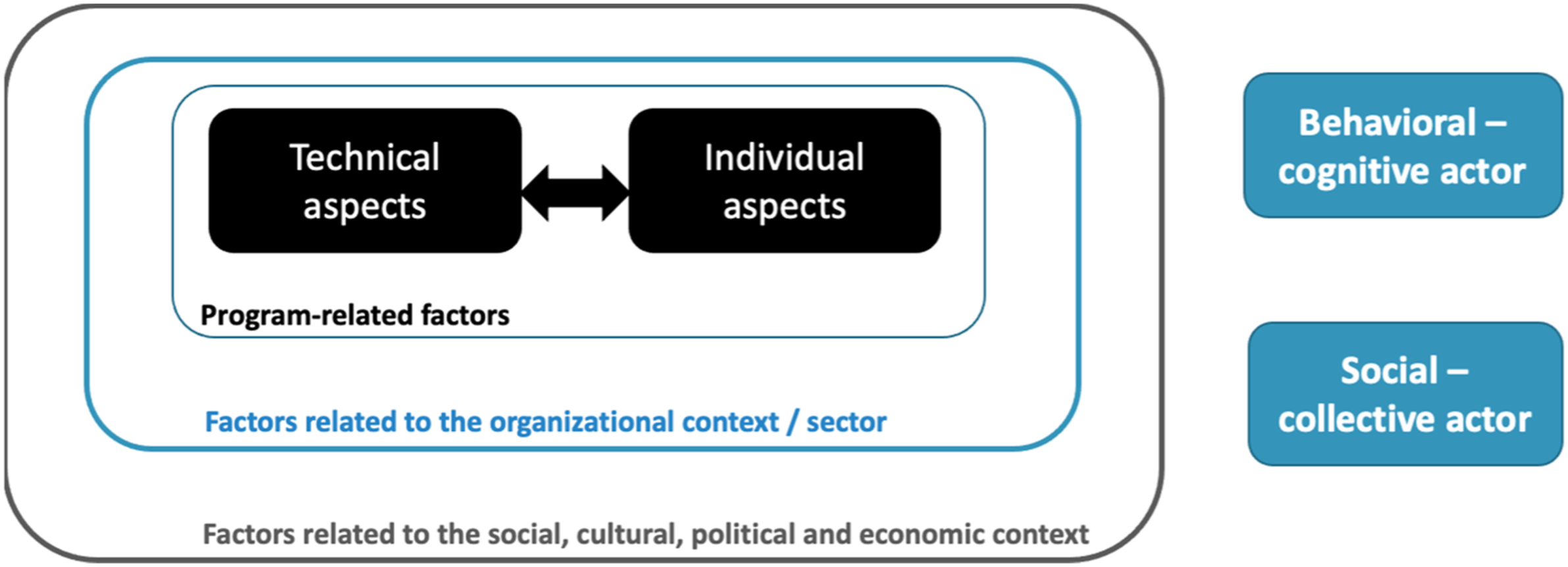
The following process of logic model building is rooted in two distinct logics: behavioral and social (Figure 1). Thus, the model faces the challenge of hybridizing two scientific cultures with distinct premises and conceptual frameworks. The cognitive and collective spheres provide two analytical entry-points for understanding the empirical world: human reasoning and assemblages. Both perspectives are relevant to initiating change. However, this hybridization must be done with caution, by acknowledging their distinct (epistemological) basis (Boudreau LeBlanc et al., 2022), thus requiring us to share here the premises and postulates of the following reasoning. Both logics fall under the umbrella of the complexity paradigm.
Psycho-Behavioral Sciences: The Cognitive-Individual Actor
Behavioral theories focus on the individual’s will and actions to learn, engage, and empower. This perspective links justification, planning, and education, as depicted in the Theory of Reasoned Action and Theory of Planned Behavior (Glanz et al., 2008). However, scaling up behavioral changes to social ones is challenging. Plural behaviors lead to complexity. Together (literally, the social), people form complex and adaptive organizations, diversified in interactions, patterns, and scales (called a collective). Everett Roger (1931–2004)’s Theory of the Diffusion of Innovation (2003) claims that collective changes emerge from the cognitive of one first leader. Leaders cause a chain of effects driving the group to assemble as a collective with the power to/for change. This iterative “enrollment” of leaders—here, for instance, farmer, miller, and veterinarian association, Order, committees, and large-business representatives—appears in Sociology of Translation (Akrich et al., 2006). Leaders are more than “agents” of change: they are “actors” willing to change. If properly acknowledged at the beginning, cutting-edge actors lead to incentive tipping points (attributes): the “obligatory points of passage” (Star, 2010). Knowing these cognitive attributes empowers people to act on the cascading effects, providing strategic governance insights and precise leverages for action (Durand et al., 2018). System Justification Theory (Blasi & Jost, 2006) provides some insights to manage such “initial conditions” upstream.
Socio-Political Sciences: The Collective-Institutional Actor
Social theories, such as Shannon-Weaver’s Theory on Communication and Information (1948), are useful to broadly assess the quality of information systems (Al-Fedaghi, 2012). Shannon-Weaver assessed attributes are based on technics, semantics, and effectiveness, and provide a social perspective of associations, groups, and culture. Smithson and Hirschheim (1998) define effectiveness as comprehensive efficiency. DeLone & McLean’s Theory of Information Systems Success (DeLone & McLean, 2003) moves the focus from the cognitive (psycho-behavioral attributes) to the collective (the socio-political ones): the “Quest for the dependent variable.” This “Quest” is in line with the “Global” ontology (Figure 1) and required mixing quantitative and qualitative premises, which echoes Dewey’s pragmatism in education and sciences (Boudreau LeBlanc et al., 2022). The quest is the bulk of the work. The search for the best indicator changes according to the meaning of the desired outcomes. To archive “program success” is a wicked problem (Darnhofer et al., 2012a), because the very formulation of the issue is confusing, without clear delimitations, with no linear outcome to predict, nor simple activities to implement. Susha et al. (2019) highlight three motives for collaboration, thus giving meaning to “success” and creating “public good”: - Resource-dependence based on system and information quality, - Social issues concerning the use and user satisfaction, - Societal sectors about individual and organizational impacts.
However, scaling down social changes—here, for instance, policies, economies, cultures, paradigms, etc—to the individual is challenging: How to materialize the abstraction of the “social,” the “collective action,” or the “common good”? Latour (2007) explains this gap as an iterative process of (Re)assembling the social. Institutions do not have “free will,” but the people who make them do. Hence, collective governance and participative research become key to evaluation (Bordier et al., 2019) and engagement (Bordier et al., 2021).
Complexity Sciences: Bridging the Cognitive-Collective
This philosophical review is grounded on the understanding of Edgar Morin (1994, 2015), one of the philosophers involved in the theorization of complexity, and several authors invested in its translation into practice to bridge cognitive and collective logics, see: “Thinking in systems” (Meadows, 2009b), “Science in action” (Latour, 2005), “Collaborative governance” (Emerson et al., 2012), “Reflexive governance” or “Transition management” (Loorbach et al., 2016), and “Critical Research Farming Systems” (Bawden, 2012) 1 .
Morin defines “Complexity” as complexus (literally, “what is woven together” Morin, 1992), acknowledging organizations as open systems in which the observer is nested (Figure 1). Stakeholders materialize this woven system; the systems exist (strictly) “in action” of (re)assembling stakeholders in networks (Latour, 2007), thus forming an organized system (collective), taking shape through plural rights, duties, and beliefs (society). Societies are complex organizations linking the technical and individual in networks, referring to Latour’s Actor-Network Theory (ANT, Bilodeau & Potvin, 2018), thus bridging being (psycho-cognitive) and things in a broader collective, where the individual will is empowered by technology or under its power. Bilodeau and Potvin (2018) highlight ANT as a key framework for bridging the gap between people, managers, and sectors of public health. Complex organizations are characterized by networks, feedback loops, and emerging properties such as self-governance from (em/under) power dynamics.
Morin explains “Global” as globus, which means the whole “sphere” with its parts, bound to/by a system, thus considering its organizational dynamics and emerging properties (Morin, 2015). Global refers to all facet of an organization in a specific time and space, but it is located. Global, here, does not mean “Worldwide,” as in “Globalization.” Global is about the organizational globus. Empirically, the global physical systems is, for instance, the organization into which people, buildings, living organisms, and matter of various forms interact with each other, modifying the context that transcends them. Ecology and ecological models (Figure 1) are part of complexity studies and contribute to the philosophical understanding of globality and its application to social-ecological system challenges such as AMU-R governance (Helbing, 2013; McGinnis & Ostrom, 2014; Olsson et al., 2004). Feedback loops may become organizational incentives (or globally disruptive) for stakeholder engagement, depending on how the loop is managed and the community valued (Bawden, 2012).
In summary, “political will” and “social engagement” are metaphors, referring to political orientations, institutional mission, and positions of power. Groups are plural in will, beliefs, strategy, and ideology (Jost, 2006), leading to an organizational diversity of (individual, institutional, and cultural) interests, missions, values, and rationale (Daniels, 2001). Several frameworks emerge in the literature on strategic planning and ethical analysis, depicting the process of “social negotiation” (Mermet, 2019) and “critical thinking” (Daniels, 2001). Although organizational, negotiating social positions need to be tangible; scaled-down to the individual sphere (Latour, 2018; Loorbach, 2010). Tangibility is a key to translating social theories into practice, and is a requirement for transparency, leadership, democracy, and prospective thinking.
Methodology—The Adaptive Construction of Logic Model for the Case Study
Logic models are theory-based or theory-driven evaluation approaches (Bickman, 1987), promising knowledge translation from theory to practice settings. Rooted in pragmatism, the translations aim to democratize reasoning about actions, patterns, and scales: where do we want to go, collectively, for the desired change (Reinholz & Andrews, 2020)? Logic analyses assess the consistency of intervention processes with the desired outcomes. Based on theories (sciences and expertises), the model maps the causal mechanisms that justify program strategic decisions (Weiss, 1997). In sophisticated decision processes, logic models reduce cognitive biases of the manager (beliefs, perspectives, cultures, etc.) and collective ones related to the position of stakeholders (roles, interests, missions, etc.). This facilitates multidisciplinary and cross-sector knowledge translation and the assessment of the program intervention theory: its usability, validity, credibility, integrity, etc. Logic models are characterized by two research questions (Rey et al., 2011): a. What attributes to systematize for an intervention to have the desired effects? b. What initial conditions are likely to constrain the achievement of the desired effects?
Models are robust tools for solving strategic problems and improving planning (Tremblay et al., 2013). Theory-based programs lead to better allocation and strategic planning, saving human and financial resources (Brousselle & Champagne, 2011). Logic models aimed to bridge the understandings of managers in charge and collaborators from the field. Collaborative approaches are suited to building logic models (Tremblay et al., 2013).
Yet, the current approaches so far are lacking in terms of unpacking the theoretical components at the basis of a high-quality reflexivity and thus required for a respectful and comprehensive negotiation of the positions emerging from the multi-actor systems. 2 There is a need for revisiting the construction of logic models based on advanced theories in complexity that could allow for partial models, iterative processes of study, and comprehensive works in order to assembling knowledge (models) and actors in a socially set organization prior to the intervention. Accordingly, the (partial) logic model should emerge from an iterative four-step process in dialogue with experts and collaborators (Huxtable & Ives, 2019; Rey et al., 2011).
Step 1: Mapping—Building Logic Models
The model is built on current scientific knowledge; mapping the “intellectual landscape” from research evidence and expert advice (Huxtable & Ives, 2019). Based on the premise of voluntary engagement, the narrative review of the academic and grey literature on similar programs in other jurisdictions uncovers the context, mechanisms, and outcomes foreseen for the success of the AMU monitoring system. Obstacles and drivers were mapped per domain (behavioral and social sciences) into conceptual frameworks (Boudreau LeBlanc, 2023; Boudreau LeBlanc & Williams-Jones, 2023). Ultimately, logic analysis tests program theory to improve the intervention through better evaluation. Thus, models improve the understanding of key structural components and objectives (Rey et al., 2016). The purpose of such mapping is to build a common language between experts, managers, and stakeholders and progress their collective understanding of the system interconnecting them. Progress leads to success and efficiency while responding to stakeholder concerns, common good, and influencing factors. “Mapping” the language helps to deepen perspectives and increase the analytical evaluative power (Huxtable & Ives, 2019).
Step 2: Framing—Developing the Conceptual Framework
A conceptual framework was derived from the logic model to frame the program’s key components and objectives (see the Results section). Independent and external interdisciplinary experts (professor-researcher, nurse-epidemiologist, and public health paraprofessional) carried out iterative interviews and focus groups with the FMV multidisciplinary team (professor-researcher, veterinarians, bioethicist-practitioner, and lawyer-researcher) to gather relevant information about stakeholders. The FMV team valued participatory sciences involving large-scale deliberation processes, seeking consensus among stakeholders, and a co-constructed vision of change (Boudreau LeBlanc et al., 2022). This echoes the triangulation of sources and interjudge analysis in qualitative research, and deliberative methodologies falling under the conceptual umbrella of co-construction. Co-construction eases the clarification of the experts, managers, and stakeholders’ positioning using rigorous methods in order to design steps towards negotiation and consensus-building process (Rey et al., 2011).
Step 3: Shaping—Elaborating the hypotheses
These first three steps precede the program implementation. Hypotheses are about (re)shaping a known phenomenon (in theory) based on new insights from the field and advanced theories in the literature. Hypothesis allows evaluators to develop theories of/for change and to build their communication and operation strategies about the upcoming intervention (Reinholz & Andrews, 2020). Programs, experts, and collaborators are often parts of open adaptive systems (Figure 1): referred to as complex intervention. “Open’” refers to an organization whose boundaries are constantly changing (Meadows, 2009b). Therefore, hypotheses become useful management tools; complex systems are like a puzzle that always misses pieces and fails to be “totally” solved (a “wicked problem” Churchman, 1967; Darnhofer et al., 2012b).
The innovation here is to allow for hypothesis testing and progression early, before program evaluation as applied by Rey et al. (2016) on complex interventions. This early hypothesis-driven process is essential because the model cannot cover the entire (global) program at once. Moreover, hypotheses are useful tools to open an early dialogue between experts, managers, and stakeholders on the specificities of the strategy, even to allow for value-sensitive design approaches, collective sense-building visions, or any other technics favoring the inclusion of ethics (as values theories and critical thinking) by design of the program and intervention governance. Thus, the logic model can (and must) progress based on stakeholder and expert criticisms of the model with regard to the operations envisioned and with knowledge of the values justifying these operations.
Step 4: Applying and Learning—Evaluating the Program Theory
While the model is applied (which is not the focus of this paper), logic analyses focus on comparing the most advance model with the intervention theoretical premises, hypotheses, and plan to gain insights into the expected success of the program. This early testing allows critical evaluation by judging the adequacy of strategies and resources given their objectives (relevance, performance, finance, etc.) thus advising managers and revising the initial model (step 1). However, to unfold this last (iterative) step, reflexivity is needed and an awareness of the theoretical foundations at stake. 3
Yet typical in qualitative research, the theoretical foundation and reflexivity are commonly lacking in current intervention plans nested in empirical settings (Faber & Scheper, 1997; Loorbach et al., 2016). Thus, before its application, a philosophical study of the theoretical foundations of the different scientific and political postulates (concepts, models, and assumptions) mobilized to build the logic model has been realized.
Results
Recognizing the challenge of unpacking theories for practical use (Bilodeau & Potvin, 2018), we use the case of the province-wide multispecies AMU monitoring system to illustrate how the process of an “open” logic model building—thus rooted in advanced theories in complexity, adaptive management cycle, and “opened” iterative processes—could enable governance coordination in complex processes.
4
Accordingly, phases (below) are iterative (not linear, as the conception-to-implementation leads to a “close” process). Consequently, the framework (Figure 2) provides a prospective logic for the program (outputs and outcomes in three forward-looking terms) and we recommend that the frame evolves following these very same steps that led to its creation: 1. Mapping the knowledge for activities in an early stage 2. Framing the mechanisms to activate the process 3. Shaping the hypothesis towards a hybrid strategy 4. Applying and learning for ongoing evaluation The logic model for a multispecies AMU monitoring system design in collaboration with the animal health sector of Québec (Canada) focused on activities to increase engagement of data holders and antibiotic users.
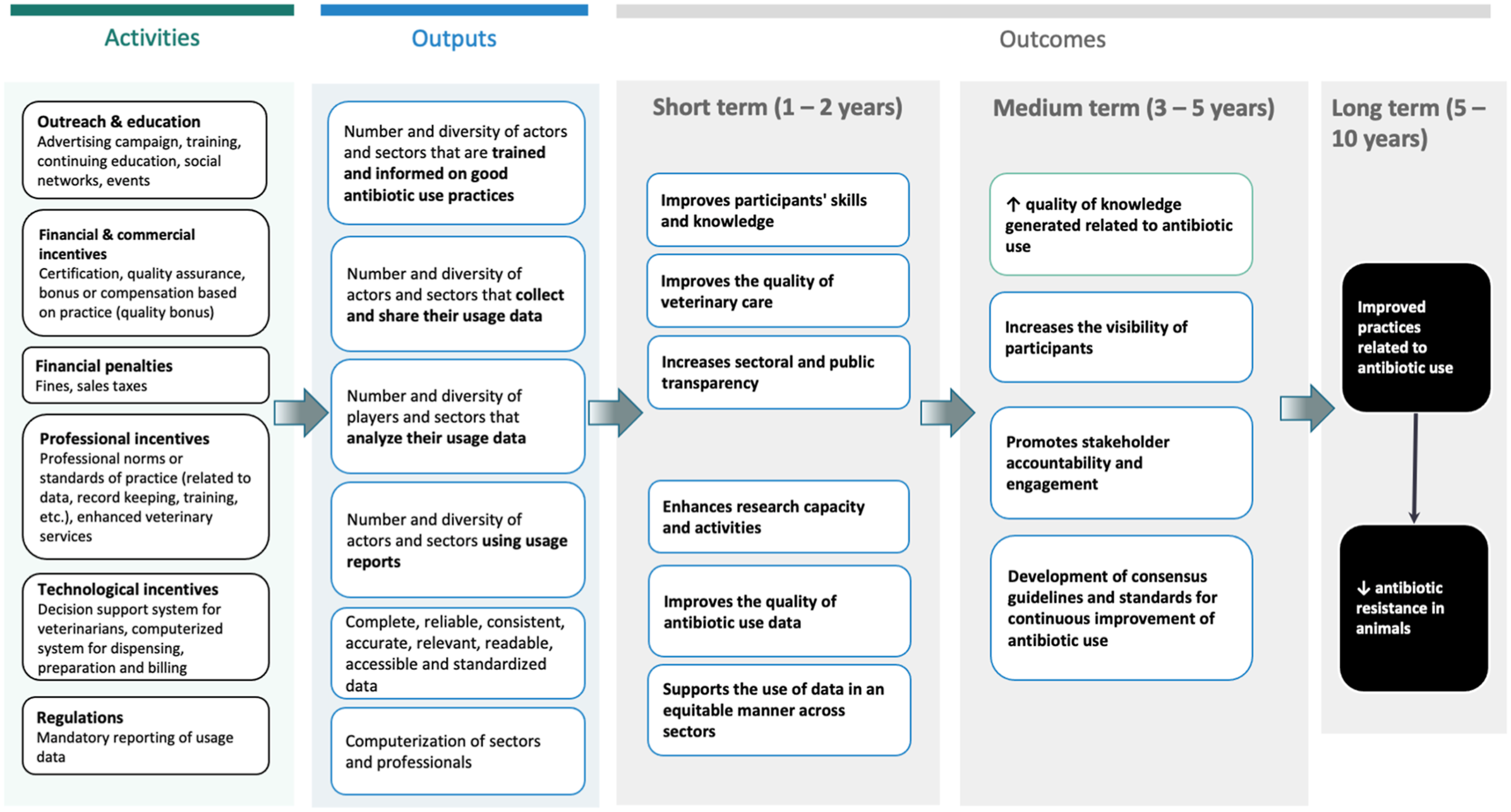
This cyclical mindset—the adaptive management cycle (AMC)—in sequential logic connects the desired outcomes and the activities for stakeholder engagement at the source. Hybridizing behavioral and social dimensions in one framework helps to apply those AMC expressing the (eco)systems thinking (Figure 1) and to segregating outcomes by unit of analysis (the individual-groups, institutional-system, and the organizational-level). However, the goal is to go beyond the system thinking theory, because we also need mechanisms to Thinking in systems—a nod to Donella Meadows (2009b)—and engage leaders for collective change. Under complexity, mechanisms must also change, evolving with the system.
Mapping
For efficiency and trust, programs benefit (ontologically) from building on mixed models to set optimal incentives and feedback mechanisms early in program development (Figure 1).
Behavioral sciences study the meaning, patterns, and processes of action and engagement. Put into practice, knowledge helps to foster collaborations and increase the adoption rate of leaders. In Roger’s theory (2003), leaders’ satisfaction (here mostly farmer, miller, and veterinarian association and large-business representatives) is the starting point of successful programs, while Glanz et al. (2008) emphasize the influence of justification, planning, and education upstream (here involving centers of expertise, technical and professional schools, and universities). Both theories converge in the search for activities at the local (cognitive) scale to increase and maintain satisfaction. Early users (leaders) and their justification (satisfaction) quickly impulse immeasurable effects, as their experience is shared with peers (people, associations, groups, or networks) and translated in policies and procedures (e.g., large business, industrial co-operative, or consortium). Figure 2 adds “activities” early in program development to mobilize leaders through “outreach and education” and “technological incentives,” involving veterinarians, animal owners, and feed mill associations. A single change in the behavior of a key individual has immeasurable effects on culture. For instance, veterinarians play key roles in sectors (animal health, agriculture producers, software providers, etc.), while scaled-up, satisfaction (or not) becomes a cultural attribute (e.g., norms, techniques, and beliefs) that motivates the systematic “enrollment” of new stakeholders (e.g., “professional incentives,” Figure 2). However, “Recruitment” influences how actors perceive incentives and if they maintain their engagement: each new actor (de)stabilizes the future of the whole program (as if the program shift from a full free-participative to a regulated mode by involving more strongly the government and legal sectors). The perceived sense of the outcome depends on those new actors’ power and motive; whether it accentuates or delays operations and how it alters the satisfaction of others (for instance, competitors or conflicts of interests). 5 Integrated behavioral activities in planning help manage expectations and satisfaction (Callon et al., 2001).
Social sciences study the cultural, political, and economic context. Put into practice, their models help to assess the trend and level of engagement and set dependent variables to evaluate the short-term success and the long-term sustainability of a program. Some social theories explain how to integrate technical and individual, and how they are assembled within the collective (cybernetics) based on “Regulation,” “Financial penalties,” and “Financial & commercial incentives” (Figure 2), such as market and marketing (Callon, 2015; Latour, 2018), which are part of both vast geopolitical phenomena and specific ones (e.g., familial, sectorial and societal put forward at the level of farms and clinics, by professional association or Order, and by the parliament and consumer). Cybernetics refers to an intertwined system (complex) where technology (the machine) and human (the living being) complement each other to support the functioning of an efficient (and especially adaptive) system. Organizational success depends on the learnings and tools available to individuals and behaviors. This broader (macrosocial) perspective allows us to scale-up the individual thinking in systems (Meadows, 2009b), namely, by acknowledging the DeLone & McLean’s Theory of Information Systems Success three classes of technosocial attributes: the system, information, and support (DeLone & McLean, 2003). However, success depends on broader organizational qualities related to external operations and the overall direction of the program. New factors will emerge as the program develops and society changes, which means an ongoing process of evaluating the success and impacts.
Framing
Complex organizations are stabilized by feedback mechanisms, especially through positive incentive loops (the multiscale organizational structure, Figure 1).
At the farm level, the precision of metrics assessing AMU depends on the measure of its “denominator,” that is, the size of the herd and its different types of animal subgroups. Obtaining these denominators is often difficult due to the lack of adequate digital infrastructure (technical aspects) and the time needed to keep the information up-to-date (individual aspects). Both considerations are rooted in social processes and phenomena that are hard to assess and to act on. When negative (punitive), incentives risk generating a reverse hype capable of eroding trust between stakeholders. This could jeopardize the success of the program and even lead to its “collapse.” Collapse is a technical term in complexity sciences denoting the shift of the system to another alternative state of organization. Establishing a user-friendly system requires adaptive agility to evolve in accordance with the context, thus enacting constant positive (reinforcement) incentives. In the long run, to enable and expend data extraction, both user experience and expert knowledge play key roles in increasing adaptability.
Psycho-behavioral models foster stakeholder engagement by deepening open discussions about perceived risks and proactive listening early in the conception phase. Programs face the challenge of measuring, managing, and apprehending risks. Large-scale programs deal with perceived risks due to the diversity of motives (interests and beliefs), changing the positioning of actors. Program authorities must mitigate concerns among individuals (for instance, “trained and informed on good AMU practices”) while working towards a common goal (“Improved AMU practices” and “Decreased in AMR,” Figure 2). Governance implies the negotiation of these positions: superficially and radically. At the root, the desired outcomes of a program could conflict with individual and social interests. For instance, stakeholders in animal health had concerns about the political objective of the PGPS, which focuses on human health prevention. The meaning of the output changes according to a (strictly) human or animal focus; human health can conflict to improve animal health and welfare. The outcomes focus on resources for stakeholder engagement (short term, Figure 2): “Skill & Knowledge,” “Veterinary care quality,” “Sectorial & Public transparency,” “Research capacity & activities,” “AMU data quality,” and “Data use across sectors.” Studies (2020–2021) on the technological dispositions of stakeholders and the capacity to record, process, analyze, and share data show the added values of co-planning in/for animal owners, veterinarians, and sector, about mandatory and incentives, especially financial penalties and regulation (Figure 2).
Socio-political models help to anticipate and mitigate risks with in-depth change theory (Reinholz & Andrews, 2020). Risk mitigation strategies highlight relevant paths for prioritizing development efforts around high-quality data. The value of data quality is recognized through common standards that are regularly reviewed and updated as needs evolve. “Visibility,” “accountability,” and “standards” (mid-term outcomes, Figure 2) foster trust with stakeholders, such as the adoption of ISO standards that facilitate interoperability. Standardization increases transparency and is enforced by traceability and procedural accountability. Transparency means a quest for fair procedures (short-term outcomes, Figure 2), notably based on records and billing about data management (Daniels & Sabin, 2003). Besides informatics, data quality assessments are part of broader testing on digital interfaces, cybersecurity, and validation processes. Assessment attributes defined with stakeholders set what is “acceptable” (for instance, the type and format of data to be collected and the informative indicators to be disseminated for antimicrobial governance purposes). Adaptability and adequacy between needs and data collection platforms, and the coherency between data capture and local realities, remain key incentives to foster adaptability, capacity building, and resilience toward the context.
Hybrid mechanisms track change and enact prevention measures on known and perceived risks: factors related to the program up to the social, cultural, political, and economic context (Figure 1). Perceived risks include data representativeness, the usability of information, credibility of the program, and quality of its system, while known ones refer to data, information, and knowledge accessibility, as well as the security of digital infrastructures. To achieve long-term outcomes (Figure 2), changes must be monitored and addressed (if needed, for instance, a decrease in satisfaction and negative perceptions). If trust is not met as an initial condition, the overall program is likely to fail (Driessen, 2012), starting with a decrease in data holder engagement, causing less stringent assessments of data validity, leading to the collapse; because cascading effects are a scaling-up process that bridges the individual to the social and, inseparatly, scales-down the social in individuals.
Shaping
Mechanisms at the individual and organizational scales could hybridize in one framework, coined as a participative governance and a co-operative economy. The will and motives of decision-makers influence the attractiveness and benefit of stakeholders (short-term) and systematize the engagement from the power of institutions (mid-term outcomes, Figure 2). Glanz et al. (2008) link the rationale of people with collective strategies, such as the process of association, planning, formation, and even shared responsibilities. The rationale leads to motives and justifications (Jost, 2006, 2017). To scale-up from the individual to organizational scales, the system justification and actor-networks (30) must converge towards a common goal and view of the problematization or, at least, on a way to negotiate them as the program runs. Farms and sectors perceive policies on AMU reduction differently depending on the initial conditions of its engagement in the surveillance process and on specific constraints related to that industry. The will to engage and change practices relies on ideologies and influences (peers, politics, and experts) that also evolve. Therefore, sector engagement accelerates individual changes.
DeLone & McLean’s Theory of Information Systems Success explains how the perception of the added value and peer influences motivation affects the willingness of actors to engage (recruitment) before their official commitment (enrollment): the “experienced added value” shared with peers. Experiences, either positive (reinforcement) or negative (punitive) feedback loops, accentuate preliminary perceptions. This emphasizes the link unifying stakeholders in systems, acknowledging two key actor-networks: A. Data originators—animal owners, veterinarians, and feed millers B. Data users—the Government, universities, expertise centers, associations, etc.
Both actor-networks perceived the benefit of the system differently. Data originators are the source of the information system; data are the “raw” material (the resource). Their interest in data-sharing lies in informative feedback. Benchmarking reports allow them to anticipate legislation, invest in strategic research and development activities, and advance practices before the regulation sets the terms. Therefore, data users maximize the value because raw data means nothing. They gain meaning when translated into information. However, users operate (strictly) if data is available. This cycle echoes the logic of system thinking and the perspective of adaptive management (Gunderson & Holling, 2002). The adaptive cycle adds value: the learning faculty. Connecting the source and outcomes stabilizes the program and leads towards a progression of data quality (automatization, standardization, validation, expansion, etc.). “Connecting” means returning useful information to data originators.
Applying and Learning
The ongoing evaluation of the program and its impacts throughout its lifetime requires a shift in governance from rigidity toward adaptation and collaboration (Emerson & Gerlak, 2014; Loorbach et al., 2016). Framed under the linear mindset, the current approaches so far are lacking ways to enable governance coordination in a complex process, which requires integrating learning cycles at multiple levels of the decision-making process (at least: operational, strategical, and ethical). Thus, there is a need for innovating new ways to build logic models of program and intervention evaluation as explained here using the Mapping, Framing, Shaping methodology and in Boudreau LeBlanc et al. (2022). Such innovations should recognize the need for constant iteration and adaptation, and the challenge of the wicked problem of management (i.e., of building on an always partial vision of the program and intervention about to be adopted). To apply the logic analysis based on previously shaped hypothesis, we must prepare upstream to actually “Apply and Learn.” As used in qualitative research in the social sciences and humanities, it is important to lay the theoretical foundations (ontological, epistemological, axiological, etc., sketches at the beginning of the article) from which the logic model will be drawn on (the result section draught a partial model of the AMU intervention focusing on engagement). The goal is to reconcile the most advanced theories on a useful set of (actual, apparent, or potential) competing logics and test this hybridization from the start of the work of modeling the logic of a program or intervention.
To foster learnings, a governance body and regime is required and must be set before program implementation (Davet et al., 2020; Paquet et al., 2021), notably for setting the scene for an evaluation and a learning cycle involved by design. Beyond policies making, governance becomes a (micro) theory generator and a sense-building vision on how to coordinate “program-related factors” (Figure 1), and roots in rigorous methodologies, integrating evaluation, deliberation, and reflection to co-construct theories (vision, policies, criteria, and justifications for change) and progress. Theories must seek to bridge expert and stakeholder concerns acknowledging their respective logic on several topics (for instance, response time, information display speed, system reliability, data availability, management of computer problems, etc. Boudreau LeBlanc et al., 2022). The speed and quality of data, information, and knowledge communication are crucial, but there is still a need for valid methods to integrate plural sources and perspectives; this is the challenge of interoperation, as a translocation process, and mutualization, as a set of win-win relationships between various local systems.
Based on governance, managers can build robust “theories of change” to guide program development and allow it to evolve (designing, planning, coordinating, surveying, etc., 16). The above hypothesis (Figure 2) emphasizes the quality of the digital environment and the process of data-sharing (originators-users), highlighting the technical aspects characterizing infrastructure and its usability, and the theoretical foundation (Figure 1) gives some insights in order to make those hypothesis progress with the feedback of the intervention evaluation. In synthesis, five attributes for evaluation emerge from the literature review: functionality, operating systems (platform), performance, integration (interoperability or mutualization), and security (a summation of the revised technical aspects). Although technical, the quality of a monitoring system relies on individual and social aspects such as organizational adaptability and critical reflectivity, which include standards, procedures, policies, and norms to address configuration and specificities. Furthermore, quality refers to behavioral and contextual aspects such as training, expertise, and founding.
Formal and empirical scientists must continue their teamwork to advance the hypotheses, thus working towards the convergence (conceptual) of hybrid models unifying in a framework (meso theory) the behavioral and the social. However, frameworks should not aim to explain everything (macro theory) nor to directly guide practices (micro), thus becoming protocols. Hypotheses and frameworks serve as roadmaps to the future, mapping social, cultural, political, and economic factors, systems, and organization (Figure 1). Based on logic models, roadmaps could highlight regulatory mechanisms to improve the engagement of stakeholders and the dynamics of system functioning. The hypothesis emphasizes three-dimensional theories of changes: 1. Assess the quality of the infrastructure 2. Assess the quality of the in-process system 3. Assess the quality of the product insights
In sum, evaluation is often perceived as a reactive exercise. It gives the ability to manage problems based on feedback from stakeholders. However, the evaluation paradigm must shift towards a proactive process. Hypotheses, models, and visions of changes must progress and become tools for co-governance and co-management to increase engagement of both data originators/users and AMU producers/users. Those tools are mechanisms to identify problems (with logic) and investigate their causes (with analyses) before crises to promote trust, accountability, and transparency. Feedback from evaluations must be simple and intelligible insight for data originators and users, and also integrate into more complex social loops. Sustainability depends on engagement and learning tools to advance each position and the value of relationships as the program unfolds (Schneider & Ingram, 1990).
Discussion
The logic model sheds light on the complexity of AMU multispecies monitoring systems in animal health, notably by underlining that its design and management are wicked (“unstable”) problems (Milestad et al., 2012). The findings decentralize the logic of the program development into a transition system of actor-networks and justifications, each responsible for one of the program’s parts (in line with Stame, 2022). Decentralization requires ongoing negotiation of conditions, interests, and values established by stakeholders, funders, and experts that are often contradictory and in constant evolution (Wernli et al., 2017). 6 This unstable situation is imposed by the “dualistic” reality (techno/psycho, individual/organizational, and behavioral/social): some pieces of the puzzle are always missing. Global and complex interventions, such as those framed by antimicrobial governance and digitalization programs, take place in an ever-changing context and must continue to improve well beyond the implementation phase (Mitchell et al., 2020). Global thinking is about multiscale analyses that acknowledge local techno/psycho-behaviors (Figure 1) and the contextual layers of organizational scales. To connect the multiple scales, we need to sophisticate activities both in practice and in theory (Darnhofer et al., 2012b; Loorbach et al., 2016). Morin (1992) and Latour (2005) proposed methodological and epistemological insights to improve deliberation in science and democratize the decision-making process in society. Both acknowledge a kind of organizational structure without a clear border that works as an open system between the physical, social, and intellectual. Logic models are useful tools to guide theories translation into practices and for assembling methods following the philosophy of complexity.
The context of the case study, while a digital transition had begun, with veterinarians using digital data, many other stakeholders (animal owners, feed millers) still used paper as a mean to collect and share information essential to the monitoring system. Thus, this article supports the conception of a digital intervention and information system in Québec. Although technical and communicational at first glance, the literature review showed that engagement is socially anchored (Boudreau LeBlanc et al., 2022; Meadows, 2009a; Milestad et al., 2012). Thus, program’s logic model on AMU monitoring needs both data originators and users’ proactive participation, and also several societal facilitators. To scale the individual will up to a social engagement process as depicted in Figure 1, One Health programs benefit from integrating theoretical frameworks in practices (the translation meso-to-micro), notably rooted in both psycho-behavioral and socio-political sciences, such as the Theory of the Diffusion of Innovation (Roger, 2003), Information Systems Success (DeLone and McLean, 2003), Theory of Reasoned Action and Theory of Planned Behavior (Glanz et al., 2008), or even the Sociology of Translation (Akrich et al., 2006). Once we consider the social in behavioral analysis, it becomes complex and too broad to cover the entire program with a single (macro) logic model as argued in the methodology section; social boundaries are not fixed and their definitions change over time (Stame, 2022). Thus, a learning phase is needed in order to hybridize plural system thinking and logic early in the program development for allowing subsequent constructive critics, testing, and improvement (Milestad et al., 2012; Rey et al., 2016); programs require valuable frameworks and transparency of their inner logic to enable the frame to progress according to the work (Mitchell et al., 2020).
The functionalities of a province-wide One Health AMU monitoring system should be aligned with the needs of the stakeholders; otherwise, the trust that holds them in a system will tend to weaken (Driessen, 2012). In particular, AMU monitoring leads to the shaping of health, veterinarian, and agricultural practices (regulation, norms, and technics). Consequently, these functionalities diversify over time, thus responding to the heterogeneity of ideologies and contexts, for instance, companion animals’ care, food-production, and public health. More importantly, the rationale for these functionalities must be intelligible, calling for the use of in-depth quantitative macro-scale ways for empirical examination, such as big data, artificial intelligence and robotic approaches (Gil-Garcia & Sayogo, 2016), and thus sophisticated communication and education tools. However, these lead to several other challenges; security is digitalized and is becoming cybernetic (cybersecurity), thus shaping a significant part of the collective. Beyond informatics, security is about protocols, standards, human behaviors, and social apprehensions that influence the meaning of “protection” of data, information, people, and institutions. Therefore, the challenge faced by the Quebec AMU monitoring system also becomes a data governance challenge. Rationales should emerge early in the One Health program development, in the best-case scenario by sketching logic models and theories of change on both AMU and data governance (Weiss, 1997). Upstream theoretical hybridization allows the integration of key attributes, the testing with experts and stakeholders, and the governance to learn and the system to progress (Mitchell et al., 2020); which is calling for the inclusion of in-depth qualitative and reflexive ways that advance the evaluation and deliberation practice (Boudreau LeBlanc et al., 2022). Pairing the local to broadscale digital initiatives (Paquet et al., 2021) provides opportunities to support the gradual expansion of the program (for instance, integration of mobiles, tablets, desktops, or any other tools that accelerate data collection, quality, and use). Evaluation of system performance is crucial but must be rooted in both techno/individual facets and behaviors/social scales, acknowledging the power of psychology and politics for collective changes.
Practices, methods, and science quality are assessed with different types of (empirical/theoretical) criteria; some are technical (for instance, security, protection, and trust), others are more fundamental, notably to assess the value of methodologies and epistemologies. As emphasized by Latour, One Health evaluations must include both kinds of criteria to enact transdisciplinary programs, as they deal with both health interventions and communication-up-to-knowledge building tools. Transdisciplinary programs are understood here as initiatives that enact at the interface (trans) between the technical, political, social, and psychological sectors and sciences, but transcend the boundaries of university as well to become in-action within the society. As a concluding note, key qualities of the literature review open to the discussion to the usefulness of adding in the logic model a learning component on the program itself in order to make it evolve—even progress—though iteration of management cycle. Data quality relies on its completeness: its accuracy to represent the phenomenon at work. However, accuracy itself relies on the sampling design and the competency of the “designer” and “collector”: individual and institutional reliability, credibility, and uniqueness. Definition consistency (terminology and ontology) increases the value of data because it eases sharing, comparison, and grouping among similar entities. Documentation favors the recoverability and transparency of data and systems; metadata benefits from standards to facilitate their interpretability and understanding by multiple users. Beyond documenting, theories themselves have value to make sense of and give purpose to the system. Frameworks, as applied theory into technical practice, help to avoid systematic bias and reduce errors; they also serve a practical purpose by ordering, thus avoiding information chaos and data system overload (relevancy and integrity). Beyond availability and accessibility, data access is linked to its usability, although the use depends on discoverability, trust, and several qualities of both data originators and users, as well as translating methodologies that transform raw material (data) into information and systematized decision (policies and norms) and action (techniques and procedures). Availability remains one of the main barriers to data-sharing; we are only at the tip of the iceberg. Therefore, cybernetics scaled up from the individual to organizational layers (Figure 1), requires theorization upstream to sophisticated logic models, empowering managers and allowing activities to engage for sustainable outcomes (Figure 2).
Conclusion
The article proposes premises and a partial model for an AMU monitoring system, focusing on key operating aspects of data-sharing and information system dynamics: the voluntary engagement of stakeholders. Identified activities, outputs, and short-, medium-, and long-term outcomes isolate key attributes and incentives to favor the engagement of leaders. The main finding underlines the need to go beyond cross-sector partnerships (Susha et al., 2019); we must cross the theoretical boundary of programs and shift toward a justification system premise (Stame, 2022). This claim is an argument for deepening the thought on interdisciplinarity (from methodology to epistemology), and it emphasizes the need for integrating behavioral and social in one hybridized model to bridge theory and practice in a translational manner as well as knowledge and actions according to the transdisciplinary perspective (Max-Neef, 2005, Darnhofer et al., 2012a; Driessen, 2012; Loorbach et al., 2016).
We highlight some methodological insights about logic models, applicable in analogous situations. These findings might become useful to deal with One Health’s complexity. Operational procedures, protocols, and technologies must be based on a theoretical framework that are rooted in a deeper foundation to coordinate large-scale public, private, and academic initiatives. Several modus operandi can work in “parallel” (to co-operate), even carried out the work jointly (to co-labor) as interdependent processes, creating synergistic relationships, and prospective thinking, planning the design upstream. This perspective shifts the linear logic of program development to a system perspective rooted in the complexity paradigm, decentralizing interventions, and sharing responsibilities. However, shifting from individual to cultural change implies risk; culture means plural discourses, ideas, training, technics, education, topics, etc. A multispecies AMU monitoring system in animal health based on voluntary engagement refers to such complexity. System perspective embeds the program in its core social process, which requires a collaborative governance dynamic enabling deliberation on vision, incentives, and engagement. As the Québec monitoring system continues to develop, there will be opportunities to further deploy this systemic perspective of intervention, monitoring, evaluation, and governance. The subsequent question is: will we be able (politically) to undertake this path of complexity? Then, will we be able to document the process and assess the benefit of system thinking on the program’s chances of success?
Footnotes
Acknowledgments
We thank Dr. Cécile Ferrouillet for helpful comments on an earlier version of this manuscript and Dr. Jasmin Laroche for his contribution to the FMV feasibility study. We also acknowledge the contributions of LABTNS, BioethX, and One Health Research Laboratories as well as the Centre d’expertise et de recherche clinique en santé et bien être animal (CERCL).
Author Contributions
All authors contribute to the writing, editing, and critically reviewing of the manuscript and agree to the publication. AM, MPM, and MQL build the logic model in collaboration with INF, LD, and ABL, from the FMV team leading the feasibility study on the upcoming AMU monitoring system. ABL first draft the manuscript and rooted the methodology and interpretation of the model in the complexity paradigm.
Declaration of Conflicting Interests
The author(s) declared no potential conflicts of interest concerning the research, authorship, and/or publication of this article.
Funding
The author(s) disclosed receipt of the following financial support for the research, authorship, and/or publication of this article: This work was supported by the Ministère de l’Agriculture, des Pêcheries et de l’Alimentation du Québec in the context of the Politique gouvernementale de prévention en santé.
