




Abstract
With various strains of the novel coronavirus emerging during the last few years, there is a need to reinvent and manage the tourism industry by engaging various stakeholders. Industry and policymakers need to observe the shift and curate tourism-related products and offerings accordingly. In light of the increasing demand for innovations and future directions in the post-COVID-19 period, this article conducts a bibliometric analysis for sustainable tourism studies spanning the years 1990–2021. This paper presents an integrative review of tourism, environment and sustainable tourism to reveal geographical, contextual, and methodological directions for future research. The comprehensive analysis includes contributions on topics and methods, country collaborations, and thematic analysis. The findings are consistent with the Sustainable Development Goals of sustainable production and consumption (SDG-12), with a particular emphasis on sustainable tourism to promote local culture and create jobs (SDG-12.b) and on sustainable growth (SDG-13). The study’s findings can be used to inform future policies and directions; for example, the findings indicate that the hospitality industry is facing challenges that necessitate new regulations to address its socioeconomic and environmental impacts.
Keywords
Research Highlights
1. Review research for sustainable tourism covering the studies from 1990 to 2021. 2. The comprehensive analysis reports the topical and methodological contributions, country collaborations and thematic analysis. 3. Role of COVID-19 has been reported from over-tourism to under-tourism. 4. Sustainable development goals are discussed in context of sustainable tourism planning. 5. Novel implications are discussed for socioeconomic and environmental impacts.
Introduction
Over the last fifty years, the global tourism industry has expanded dramatically. The number of international travelers and tourists increased from 165 million in 1970 to 1.4 billion in 2018 (Richard Denman, 2004), significantly contributing to global revenue generation. Given the travel and tourism industry’s extreme intensity in terms of energy consumption, water consumption, nondurable product consumption, and toxic emissions into the air, soil, and water, anti-tourism sentiments are also growing. The high environmental footprint of the industry has led to the opinion that the exponential growth of tourism contributes to the degradation of the environment, triggering efforts toward sustainable tourism and SDG goals (Font et al., 2021; Moreno-Luna et al., 2021). It has also triggered government-led planning in some regions to regulate tourism development for mitigating its negative socioeconomic and environmental impacts (Inskeep, 1988), while some governments have continued their thrust on increasing the volume of tourists and on boosting the travel industry (Goffi et al., 2019; Higgins-Desbiolles, 2018b).
The adoption of Sustainable Development Goals (SDGs) by the United Nations in 2015 spelt a paradigm shift in how development is viewed (Sharma et al., 2021d). Post-2015, sustainability claims that concurrently tackle the environmental, economic, and socio-cultural “triple-bottom line” (TBL) by incorporating imperatives to empower individuals and promote their cultures have grown in prominence (Weaver et al., 2020). Richard Denman (2004) recognizes economic, social, and environmental issues as the three critical components of economic value, environmental sustainability, and community preservation. Academic literature also underlines the volume of travel/tourists, environmental quality, and contribution to locals’ lives as the three vital parameters to evaluate the success of the tourism industry (Font et al., 2021; Ko, 2001; Pan and Dossou, 2020; Sharpley, 2020). Educating the stakeholders about environmental problems can facilitate the ownership of responsibility, leading to advancement in attaining sustainability through tourism (Erick T Byrd, 2007). In this connection, the Davos Declaration of 2007 has already emphasized the need to encourage tourists to make conscious choices that reduce their carbon impact and improve key sustainability aspects (Passafaro, 2020).
Despite their negative social and environmental consequences, tourism operations have not been vigorously regulated worldwide, owing to the sector’s enormous employment potential (World Travel and Tourism Council estimates the tourism sector will create 421 million jobs by 2029). The travel and tourism sector’s strong potential to contribute to economic development by attracting foreign currency and creating jobs has resulted in over-tourism, which is considered detrimental for the local community, natural environment (De Haas, 2002; Diamantis, 1999; Hall and Lew, 2009), and traditional cultures (Bramwell and Lane, 1993) due to its irresponsible utilization of natural resources.
Tourismification negatively impacts sustainable development (Hunter, 1995) by giving rise to unsustainable tourism and adversely affecting local communities and citizens (UNWTO, 2020b) and traditional values (Cole, 2007b; Yang and Wall, 2009b). While the debate on over-tourism and its ill-effects was at its peak (Bertocchi et al., 2020; Cheung and Li, 2019; Jørgensen and McKercher, 2019; Pearce, 2018; Zmyślony et al., 2020), the world hit a roadblock in the form of the COVID-19 pandemic. The disease’s high infection rate forced governments to impose containment measures such as lockdowns and foreign travel bans (Sharma et al., 2021b). Thus, it took just a few months for the world to transit from over-tourism to under-tourism, a state that is likely to persist for quite a while given the new waves of the disease sweeping the globe (the ongoing COVID-waves in different regions such as India, Europe, and North America), and the risks associated with tourism during such times.
While under-tourism jeopardizes the sector’s revenue generation, over-tourism creates serious social and environmental problems, calling for the need to understand the optimum level of tourism that can contribute to environmental protection without compromising financial growth. This calls for exploring newer ways and means to generate revenue from the industry without compromising sustainability. Some recent research has pondered upon alternative forms of destination tourism such as coastal/island tourism (Grilli et al., 2021; J. Liu et al., 2020a), edu-tourism (Alipour et al., 2020), community-based tourism (Lapeyre, 2010; Okazaki, 2008; Olya et al., 2018; Rasoolimanesh et al., 2017; Shunnaq et al., 2008), spiritual tourism (Cortese et al., 2019; Kato and Progano, 2017; Long and Nguyen, 2018; Saxena et al., 2020), and heritage tourism (Joun and Kim, 2020; Koren-Lawrence et al., 2020; Lai, 2020). Given that tourism was largely blamed for facilitating the spread of the novel coronavirus (Sharma et al., 2021c), the tourism scholarship has started focusing on the sustainability aspect of tourism activities since the advent of the COVID-19 pandemic. For example, some studies (Moreno-Luna et al., 2021; Zenker and Kock, 2020) estimate that the pandemic resulted in the loss of more than 100 million jobs globally, with more than half of those jobs being held by women. This setback might reverse some of the progress made toward the SDGs, while also resulting in billions of dollars in export losses from tourism.
The world is still in a state of dilemma as to whether the COVID-19 pandemic is a disaster (if so, is it natural, human-made, or socio-political) or a crisis (with a focus on organizational (business or political) acts). Zenker and Kock (2020) emphasize the need for such classification in order to effectively draw from and contribute to disaster- or crisis-related literature. There is no denying that COVID-19 has disrupted the entire scenario of sustainable tourism, but the findings of sustainable tourism research in the wake of COVID-19 are highly fragmented. For instance, some studies undertake a spatial or temporal analysis (García-Gallo et al., 2021; Y. Liu et al., 2020b; Moreno-Luna et al., 2021; Van et al., 2020), some other studies focus on a scale-specific idea (Fermani et al., 2020; García-Gallo et al., 2021; Higgins-Desbiolles, 2020; Ko, 2005), while still other studies explore conceptual and theoretical linkages (Sharma et al., 2021c; Zenker and Kock, 2020).
The emerging literature on studying the impact of COVID-19 on sustainable tourism is giving a new turn to sustainable tourism scholarship by posing new challenges and revealing new opportunities. The primary challenge of reviving the sector’s volumes persists, even as the push for sustainable tourism and SDGs gets louder, highlighting the importance of swiftly synthesizing critical research findings. Several studies have attempted to review the literature on sustainable tourism in the past (Streimikiene et al., 2021; Zolfani et al., 2015), but few have viewed the literature on sustainable tourism through the lens of the COVID-19 pandemic or devoted special attention to synthesizing the literature on sustainable tourism in the aftermath of the COVID-19 pandemic.
The Sustainable Development Goals Report 2022 predicts that through 2050, between $1.6 trillion and $3.8 trillion will be required annually to make the switch to a low-carbon future and prevent global warming of more than 1.5 degrees Celsius. By 2100, at least a moderate drought will affect about one-third of the world’s land regions. Approximately 700 million people would be at risk of being displaced by drought by 2030. Taking into consideration the SDG-13 goal of urgent climate action, research pursues two distinct but related goals. Firstly, the authors inform policymakers about the emerging problems for sustainable tourism in the contemporary context. Creative/alternative tourism or destination tourism is suggested as the future of tourism (Higgins-Desbiolles, 2020; Hoxie et al., 2012). This would enable small-scale tourism with local stakeholders with a focus on cultural values. Secondly, we propose a research framework to enable the tourism sector’s alignment with the SDG agenda. We have organized the remainder of the paper as follows: the second section discusses the data methodology; the third section presents the findings of our study (classified as a general description, social structure, intellectual structure, and conceptual structure); and the fourth section synthesizes the COVID-19-related research while laying down the agenda for research and policy.
Data and Brief Methodology
The authors retrieved the data for this study from the Web of Science (WoS) core collection, one of the widely used scientific citation index databases globally (Jain et al., 2019). With Emerging Sources Citation Index (ESCI) included in the WoS core collection now, it emerges as the widest and the most diverse database for the research fraternity in literature reviewing (Sharma et al., 2021a, 2021b, 2021c; Srivastava et al., 2019, 2020). We look for publications published between 1990 and 2021 with keywords comprising “sustainable tourism,” “sustainability,” “tourism,” and “tourist.” The Boolean search led us to 1423 documents. The screening based on titles, keywords, and abstracts led us to 1160 documents, out of which 98% (1134) were research articles, and the remaining 2% (26) were reviews and conference proceedings papers. The average number of citations per document is 20.63, and the average citations per year per document are 2.384.
The authors used two software for bibliometric analysis—Visualization of similarities (VOS) viewer and bibliometrix R-tool software. The VOS viewer is a freeware that analyzes and visualizes the inter-relationships of authors, journals, countries, keywords, and co-citations and presents them in a two-dimensional map. The distance between any two items depicts the relatedness or similarity among them. All of the items presented in the visualization map are grouped into different clusters, where each cluster is signified in a different color (van Eck and Waltman, 2010). Bibliometrix R-tool is a flexible and newly developed R-environment-based software package that integrates multiple bibliometric tools’ visualization functions. It contains an exhaustive set of literature information analysis and science mapping functions (Rodríguez-Soler et al., 2020).
Bibliometric Results
This section presents the results and findings of the bibliometric analysis of the selected 1160 articles. According to the findings, more cross-disciplinary studies in the field of sustainable tourism are needed. The maximum number of links were found for the term “sustainable tourism,” with “sustainability” coming in second. A number of authors have looked at sustainable tourism and argued that more attention should be paid to making destinations, especially in vulnerable regions, more resilient (Bramwell, 2015; Butler, 2018). Sustainability practices, including growth caps and responsibility allocation, have been the focus of many studies (Liu et al., 2018; Saarinen, 2014). The degradation of natural resources is a direct result of exponential growth in tourism. One way to ensure the long-term health of biodiversity is through the efficient management of protected areas. Educating tourism stakeholders on environmental issues can inspire them to take better care of the environment (Erick T. Byrd, 2007; Higgins-Desbiolles, 2018a). This will help reduce the carbon footprint of the tourism industry and improve sustainability fundamentals.
General Descriptions of Publications
Figure 1 presents the number of publications and citations per year, exhibiting an increasing trend in the volume of publications per year from 2001 to 2018. A number of studies exploring different aspects of sustainable tourism are slowly shifting to the growth stage, with studies exploring the concerned field in new contexts and with respect to specific SDGs in new directions. Annual citations and publications.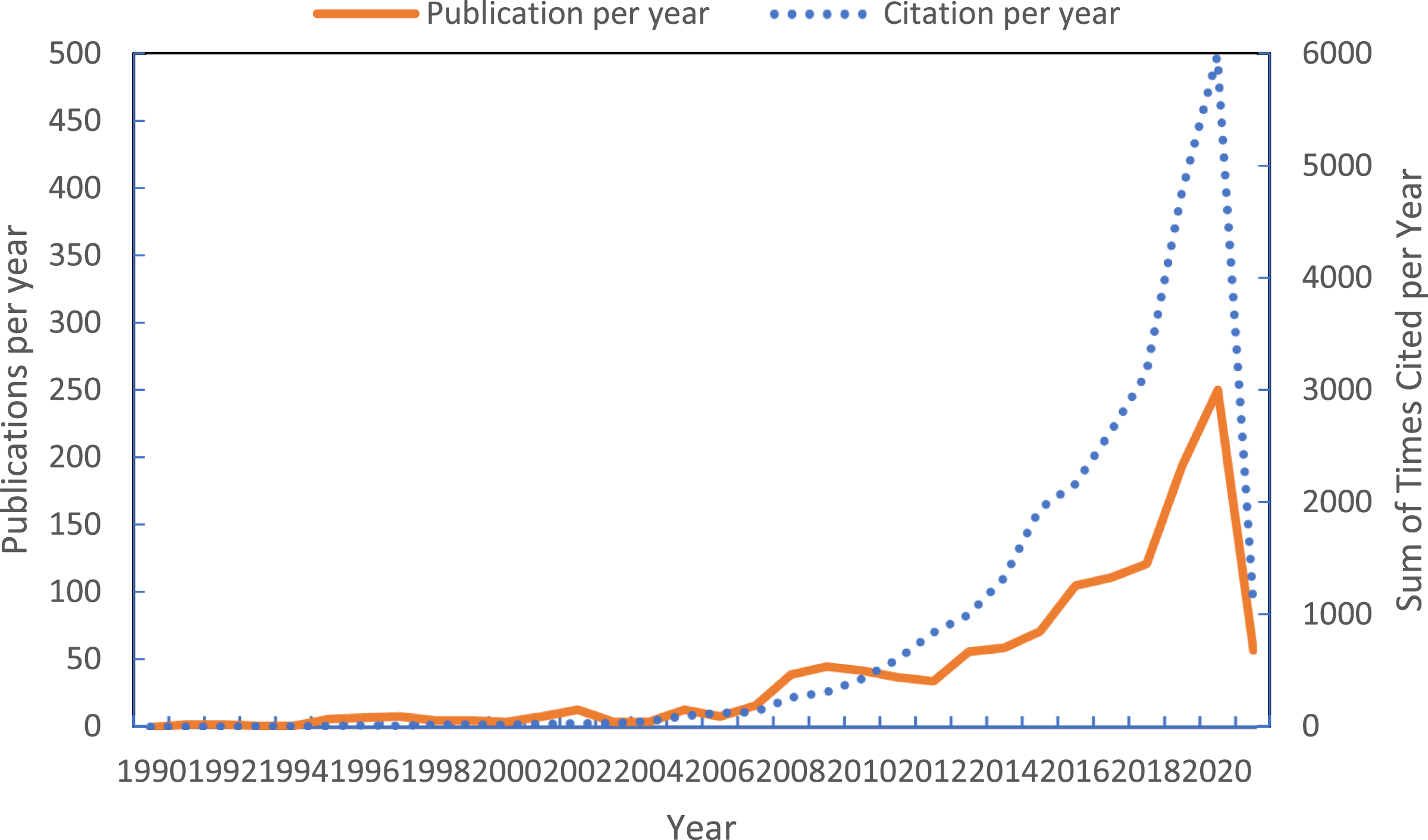
Figure 2 depicts the co-occurrence network analysis of 50 keywords, occurring a minimum of two times in the 1160 articles. The bigger nodes represent higher frequency, while the lines between these nodes exhibit the co-occurrence of keywords. The most commonly included keywords “management,” “perceptions,” “corporate social responsibility,” and “conservation” have the highest link strength, indicating future research must study the different dimensions of this inter-disciplinary research. Keyword co-occurrence.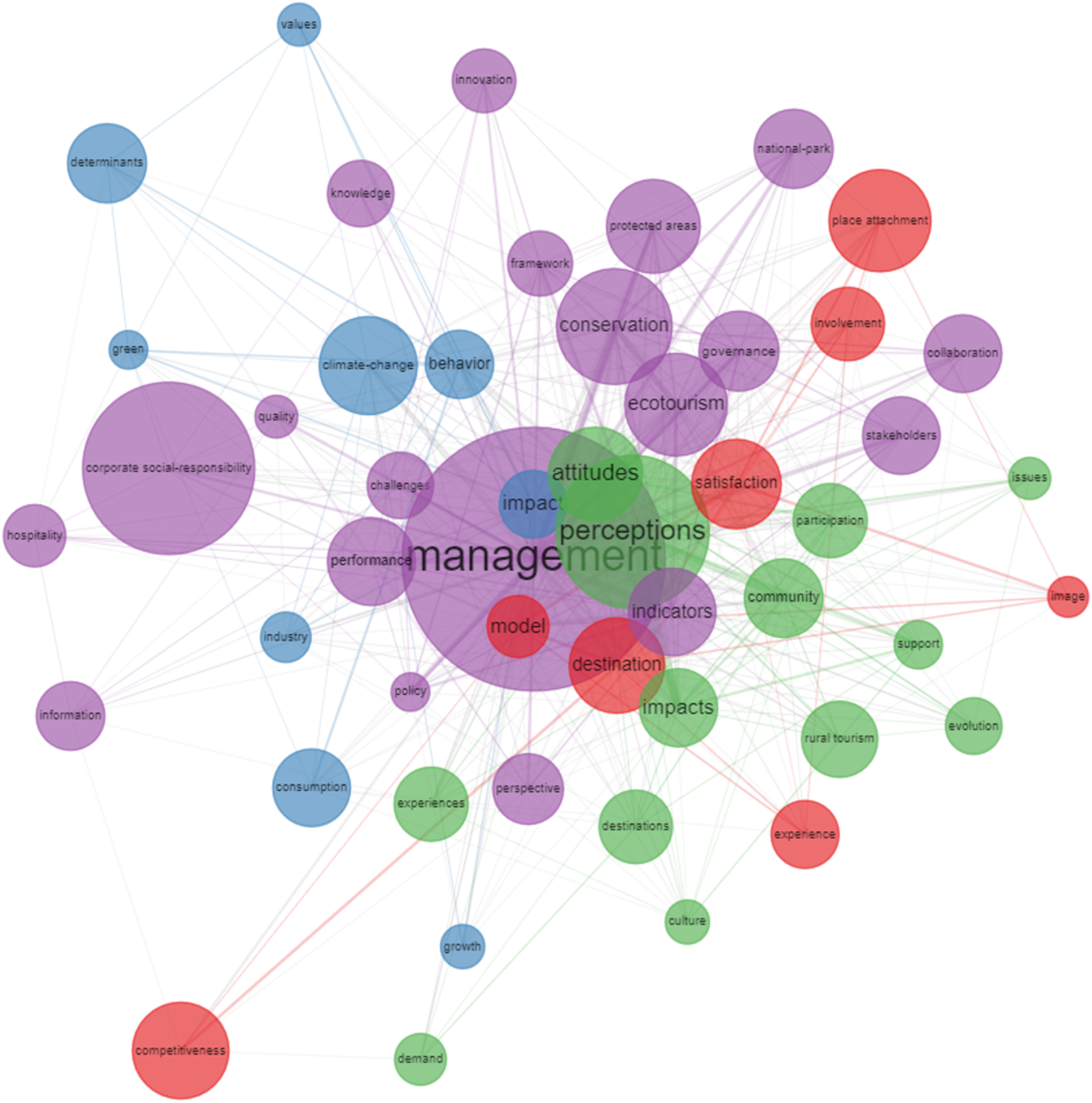
For instance, publications in the purple cluster study the role of tourism from the perspective of managing and achieving sustainable development by including different contexts and sub-themes (Bagur-Femenías et al., 2015; Dimmock and Musa, 2015; Dvarskas, 2017), while the publications in the green cluster relate to studies on stakeholders and sustainable tourism (Arambiza and Painter, 2006; Gadgil et al., 1993; Segger and Phillips, 2015). Similarly, the least studied keywords that require immediate attention are “values,” “green,” “determinants,” “competitive,” and “perceptions.”
Social Structure of Publication Corpus
The map of co-authors (Figure 3) illustrates the scholars with the highest academic output who often control the development of trends in sustainable tourism research. According to the analysis, 2783 authors have contributed to 1160 publications. Figure 3 presents the visualization map of 39 linked authors after fixing the threshold of minimum number of publications per author to one. The greater the node size, the higher the publication count of that author (Pattnaik et al., 2020). Co-author visualization map.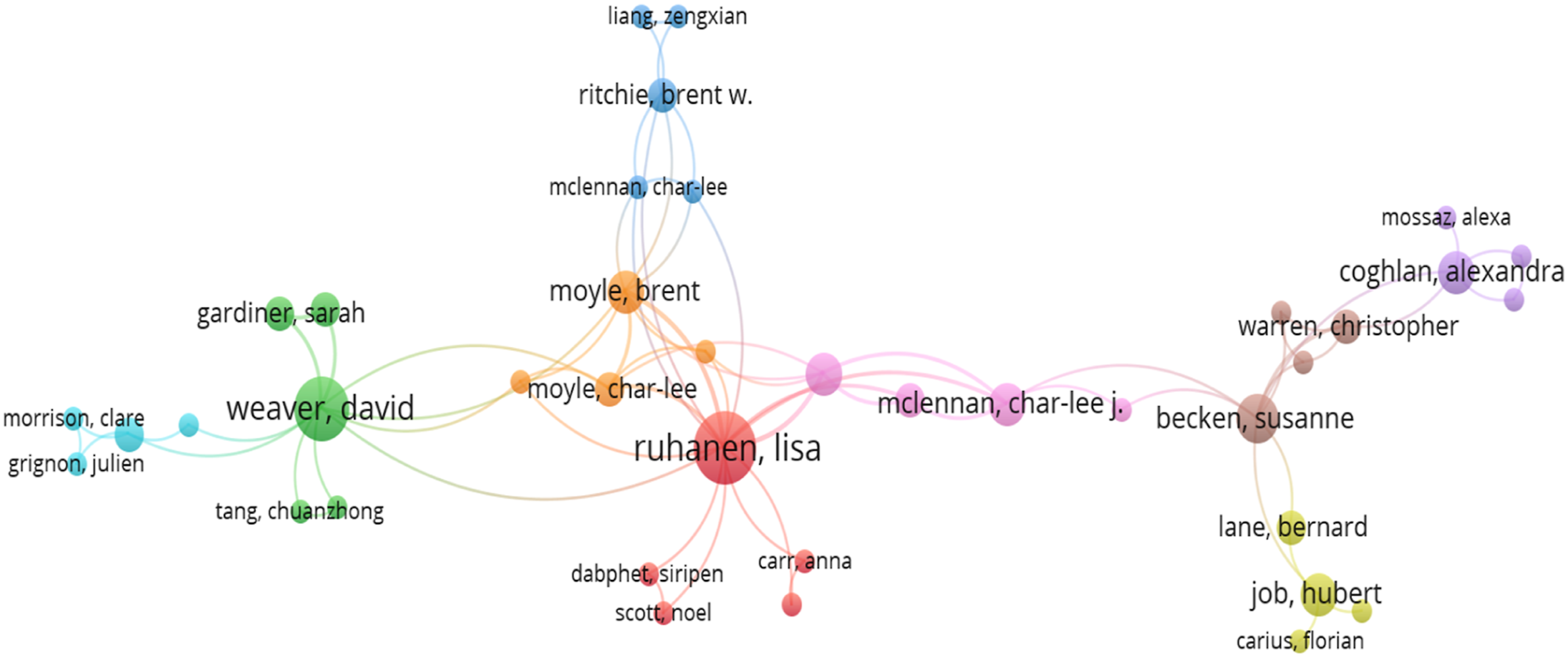
Further, 11.13 percent of the authors (n = 310/2,783, 11.13%) have contributed to at least two publications, and 3 percent (n = 85/2,783, 3%) have contributed to three or more publications. There are only 2.8 authors per document, and the collaboration index is only 2.71. This indicates the dire need for more collaborative research in the sustainable tourism domain. A higher volume of co-authored publications signals a close-knit relationship among authors within the research domain and a higher possibility of future collaborative work and the sharing of ideas (Wang et al., 2014).
The collaboration pattern (Figure 4) indicates the collaborations between various countries that have contributed to sustainable tourism research. Publications based on “sustainable tourism” between 1990 and 2021 are affiliated to 97 countries; the most productive country from this point of view is China (number of published articles = 317, 27%). The color spectrum denotes the number of articles published in the “sustainable tourism” area, with light blue indicating low productivity and dark blue indicating high productivity (Nita, 2019). Australia (total citations = 4581) is also a significant contributor to sustainable tourism literature, coming in at the third position in terms of productivity (number of published articles = 221, 19.05%). The highest number of citations (Sims, 2009) comes from the United Kingdom (in fifth position by volume) with 206 (17.75%) scientific publications. The most frequent research collaborator pairs, in that order, are Australia and the United States (18), China and the United States (13), Australia and the United Kingdom (12), Australia and New Zealand (9), and Spain and Italy (8). Country collaboration map.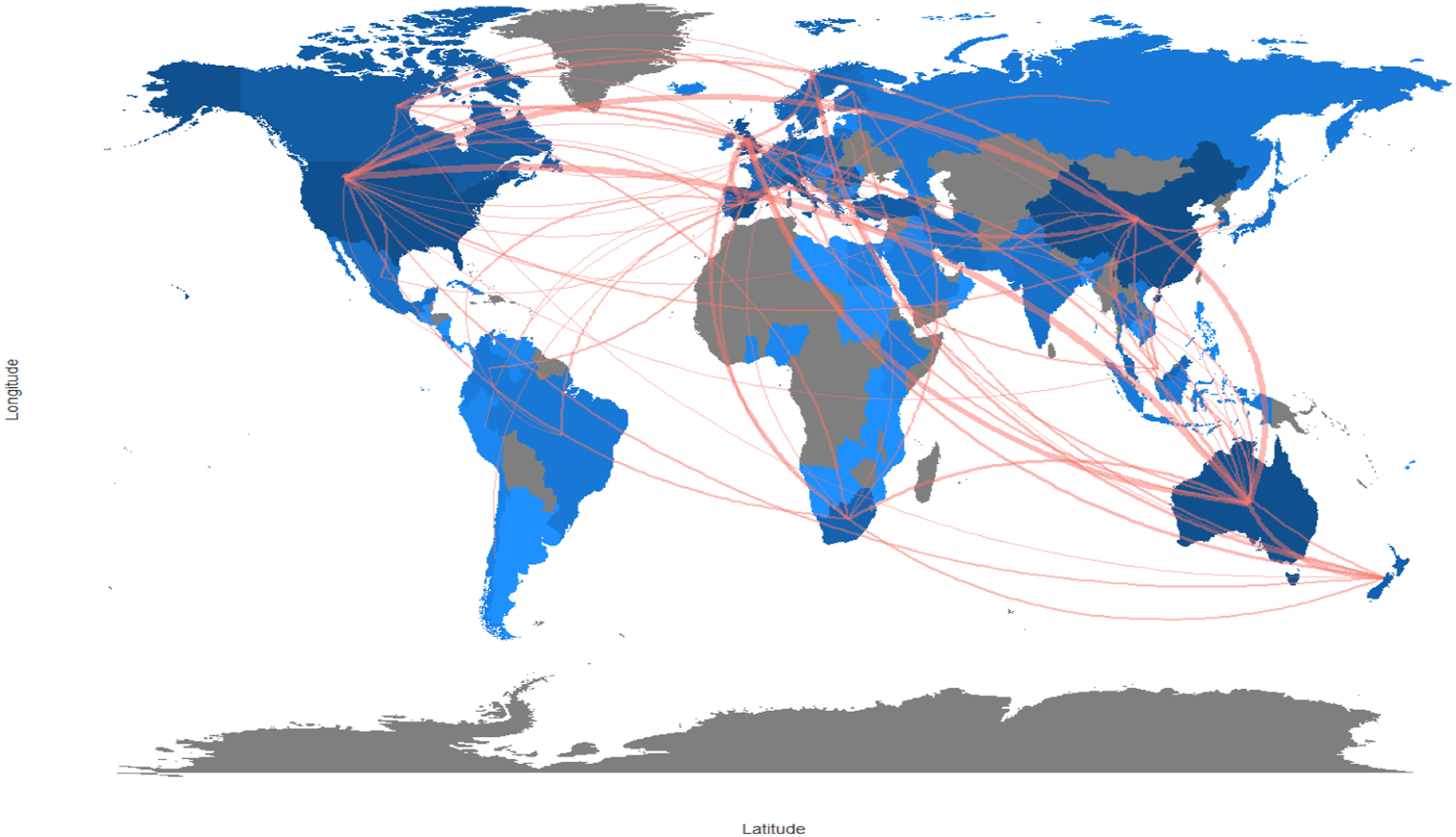
The interlinkage among publications, authors, and keywords can provide useful insights. The innovative three-field plot in Figure 5 presents the interactions among the most relevant publications (on the left), authors (in the middle), and keywords (on the right) within sustainable tourism research. The area of the rectangles is proportional to the number of interconnections with the other fields. Among publications, Choi and Sirakaya (2006) lead in the number of links (27) with a focus on measuring community tourism development within a sustainable framework; followed by Hardy et al. (2002) and Miller et al. (2005) that focus on the conceptualization and monitoring of sustainable tourism. In terms of authors with the highest number of linkages, Ruhanen, Lisa leads (133) with a research focus on indigenous tourism; followed by Javier Blancas and Lozano-Oyola, whose research interest is mainly sustainable tourism. Among keywords, “sustainable tourism” has the highest number of linkages (133), followed by “sustainability” (26). This may be attributed to an increased focus on sustainable tourism after the United Nations 2030 Agenda for Sustainable Development Goals (Hall, 2019). Three-fields plot.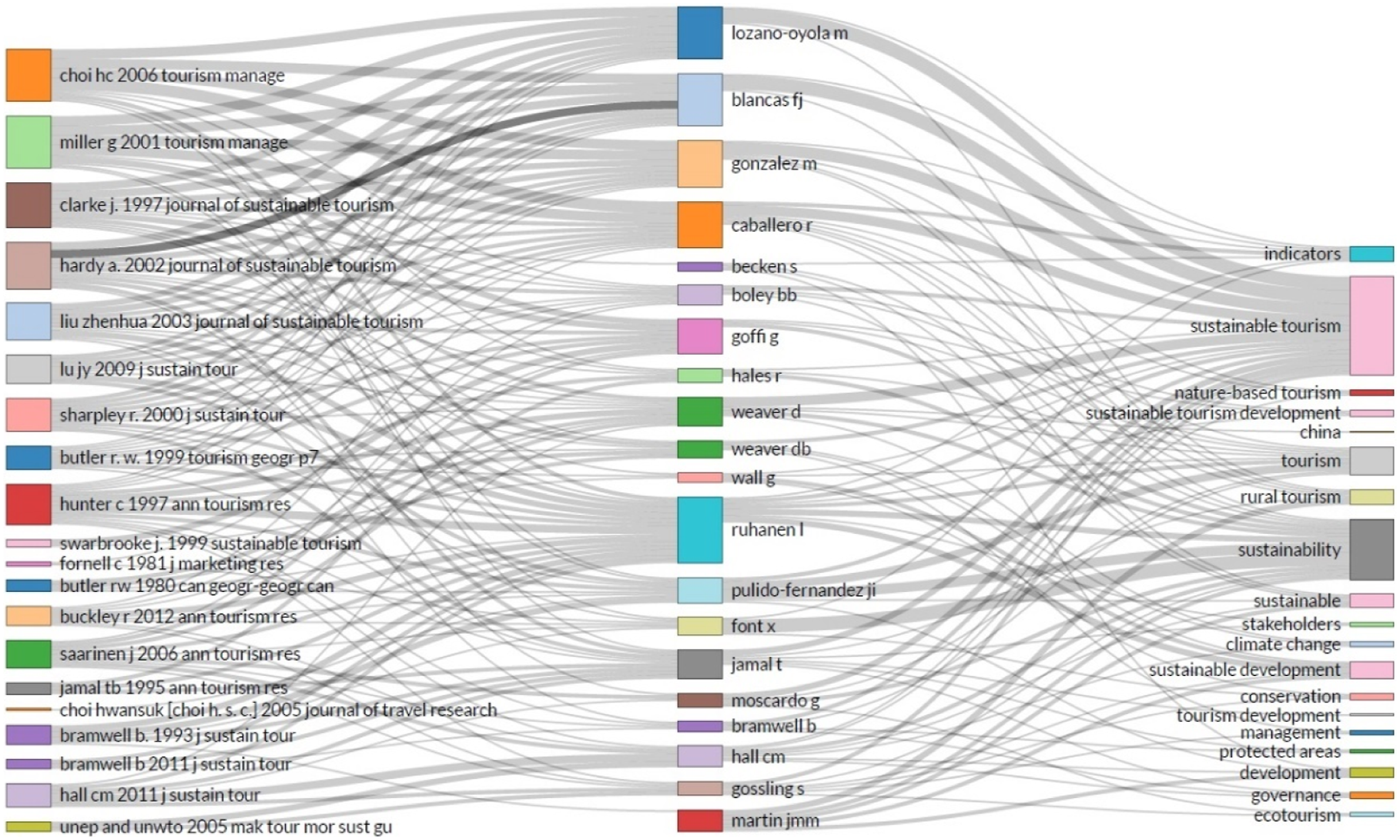
Intellectual Structure of the Publications
Figure 6 depicts the most important publications in the field, underlining how ideas evolve and how publications build on each other (Bamel et al., 2020). Each node represents a publication, and its location on the x-axis shows how it is connected to other publications. The themes that these clusters represent are all closely linked to a specific domain. For example, the red cluster represents the research domain that deals with “sustainable tourism” (Hunter, 1997; Ruhanen et al., 2015; Weaver, 2012), while the blue cluster deals with “indicators” introduced for the assessment of tourism sustainability (Boley et al., 2017; Ko, 2005). The green cluster presents the “stakeholders” and highlights the key actions, such as managing stakeholder adaptability, that can enhance stakeholder involvement in sustainable tourism (Waligo et al., 2013). The purple cluster identifies emerging themes; that is, “sustainable development” with very few authors studying the inter-disciplinary research (Choi and Murray, 2010; Lee, 2013). Historical direct citation network.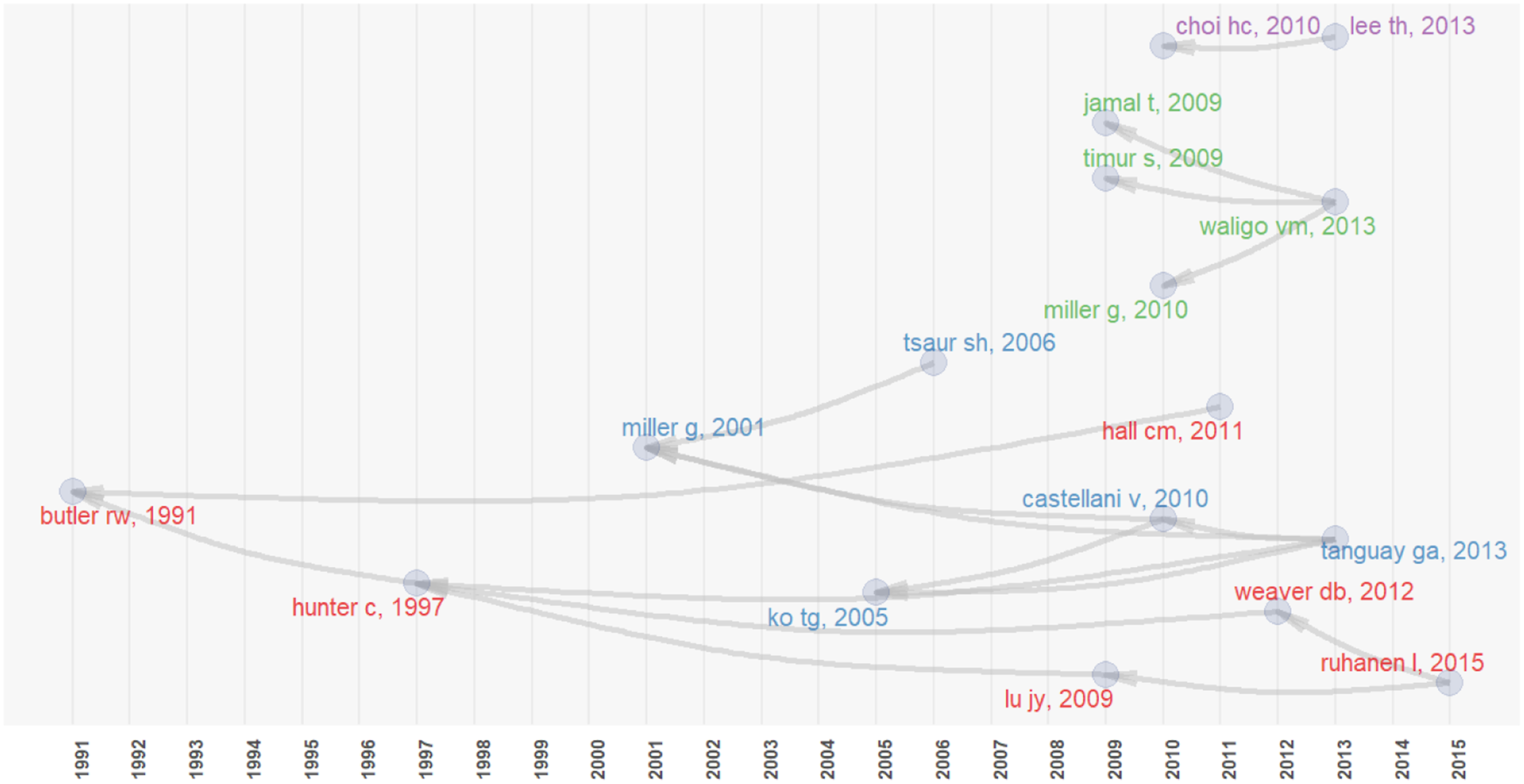
Co-citation occurs when two documents are cited together, indicating that their content is related (Bamel et al., 2020). Figure 7 presents a network of highly cited authors’ co-citations. The co-citation analysis yielded 50 nodes, which are grouped over a network of four clusters depicted with different colors, namely, red, blue, green, and purple, as shown in Figure 7. The size of each node represents the number of citations. The strongly connected nodes are brought closer together (Zupic and Čater, 2015). As evident from the size of the nodes, the red cluster indicates the most prominent authors, including Bramwell (2011) and Butler (1991), where the authors examine sustainable forms of tourism and argue for a shift toward increasing the resilience of destinations, particularly those in ecologically sensitive areas (Bramwell, 2015; Butler, 2018). Alternatively, Liu et al. (2018) propose an effective method to study sustainable tourism and establish specific scientific countermeasures for improvement. On similar lines, Saarinen (2014) emphasizes the need to re-scale and decentralize tourism in policy frameworks. Hence, a segment of studies concentrates on the practices aimed toward sustainability, defining the limits to growth, and responsibilities in tourism. Co-citation analysis of highly cited authors.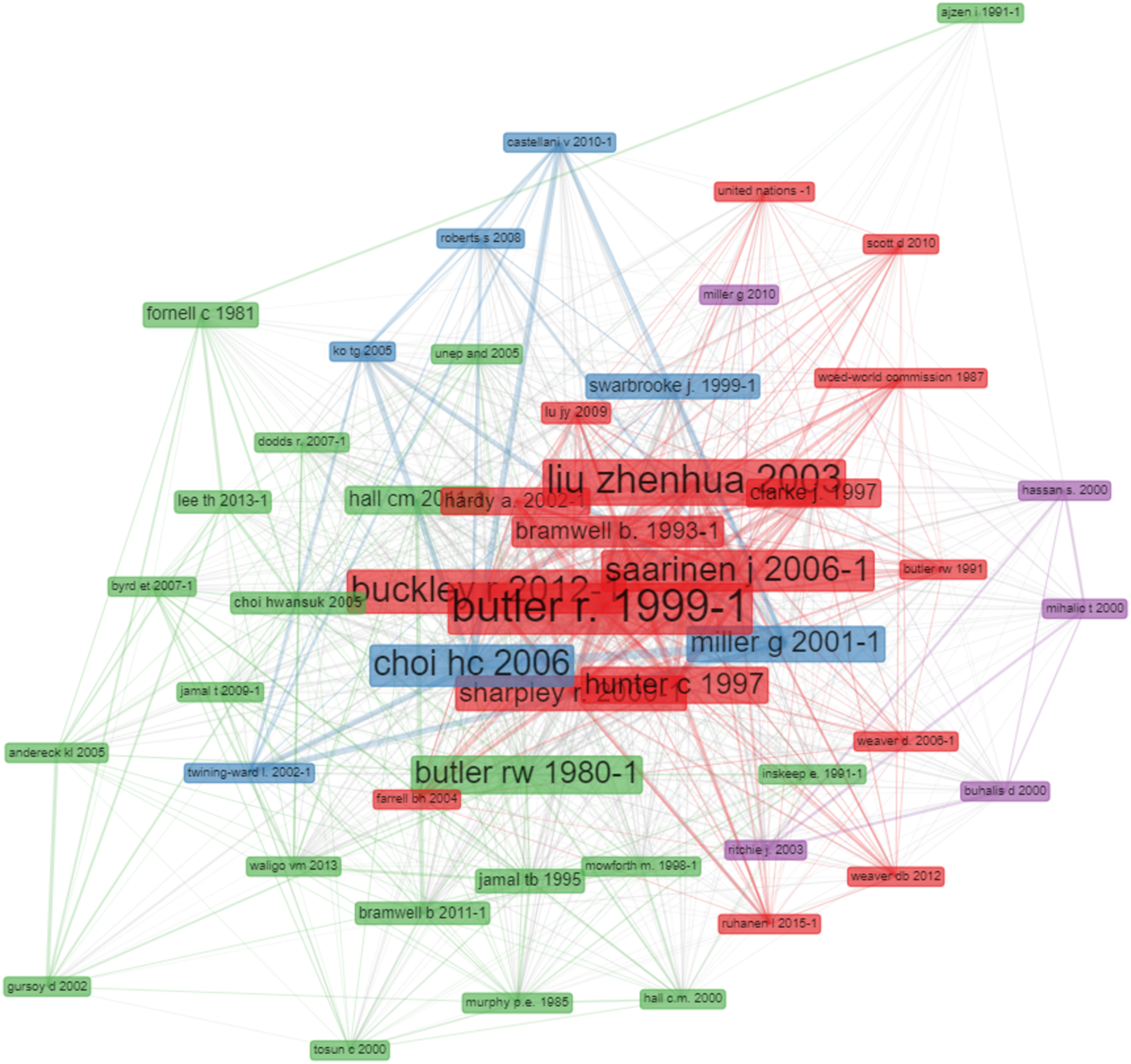
The Conceptual Structure of the Publication Corpus
The thematic map (Figure 8) presents the visualization of four different typologies of themes that can be created using the keywords, titles, and abstracts in the bibliographic collection. Figure 8 presents a total of ten themes in four quadrants. Each theme is placed based on Callon’s centrality and density, where Callon’s centrality depicts the degree of interaction among networks and Callon’s density measures the internal strength of the network (Chen et al., 2019). The upper-right quadrant contains two themes, namely, “sustainable tourism development” and “sustainability,” which are called motor themes. They are well developed and highly relevant to the research field structuring. “Environmental impact,” “innovation,” and “environmental sustainability” placed in the upper-left quadrant are called niche themes, as they are not so relevant for the field with well-developed internal links but not so necessary external links. “Stakeholders” and “satisfaction” are part of the lower-left quadrant and are called emerging or declining themes as they are marginal and weakly developed. Lastly, “indicators,” “sustainable development,” and “sustainable tourism” lying in the lower-right quadrant are called transversal or basic themes, which are highly important to sustainable tourism research but underdeveloped (Chen et al., 2019). “Sustainable tourism” also leads in the number of occurrences (305), followed by “sustainability” (182), “sustainable development” (161), “tourism” (123), and “rural tourism” (42). Thematic map.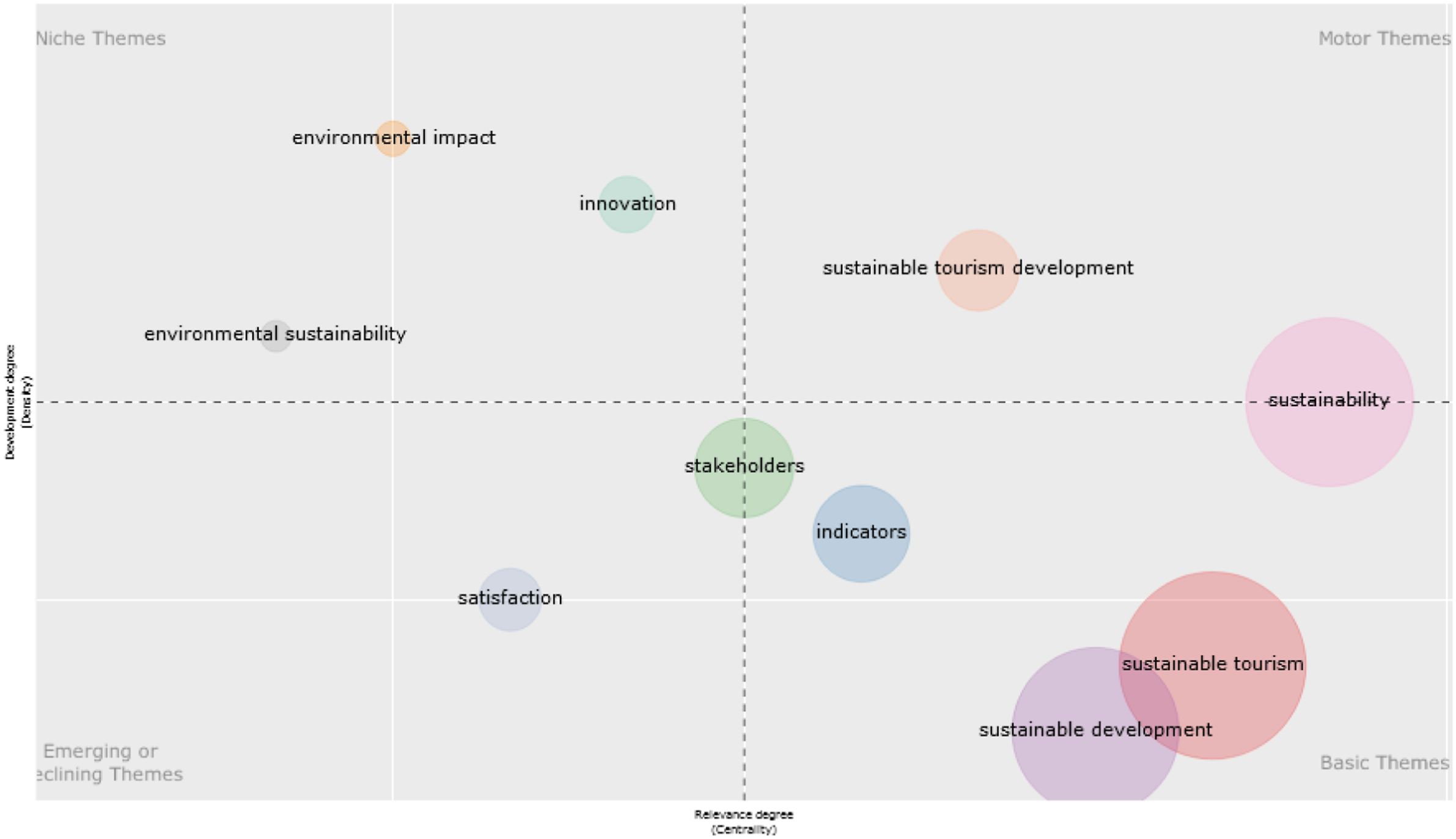
The authors further apply co-word analysis to create a conceptual structure by using co-occurrence of network, to cluster terms extracted from the keywords, titles, and abstracts in the bibliographic collection. The results have been interpreted based on the relative positions of the points and their distribution along the dimensions. The closer the words are represented in the map, the higher the similarity in distribution. Using the sustainability literature, multidimensional scaling (MDS) and co-word analysis was performed. MDS is a way of mapping the different objects in a dataset in a more comprehensible form (Cox and Cox, 2008; Hout et al., 2013). This helps distil out the data and uncover hidden structures (Tzeng et al., 2008). Co-word analysis helps in analyzing the nearness among most frequently cited words. High co-word association implies apparent closeness and shared knowledge, while low co-word association shows that the articles have less in common (He, 1999). Using the highest standardized distance, the results in Figure 9 show the characterized research groups in sustainability. Co-word visualization map using factorial analysis.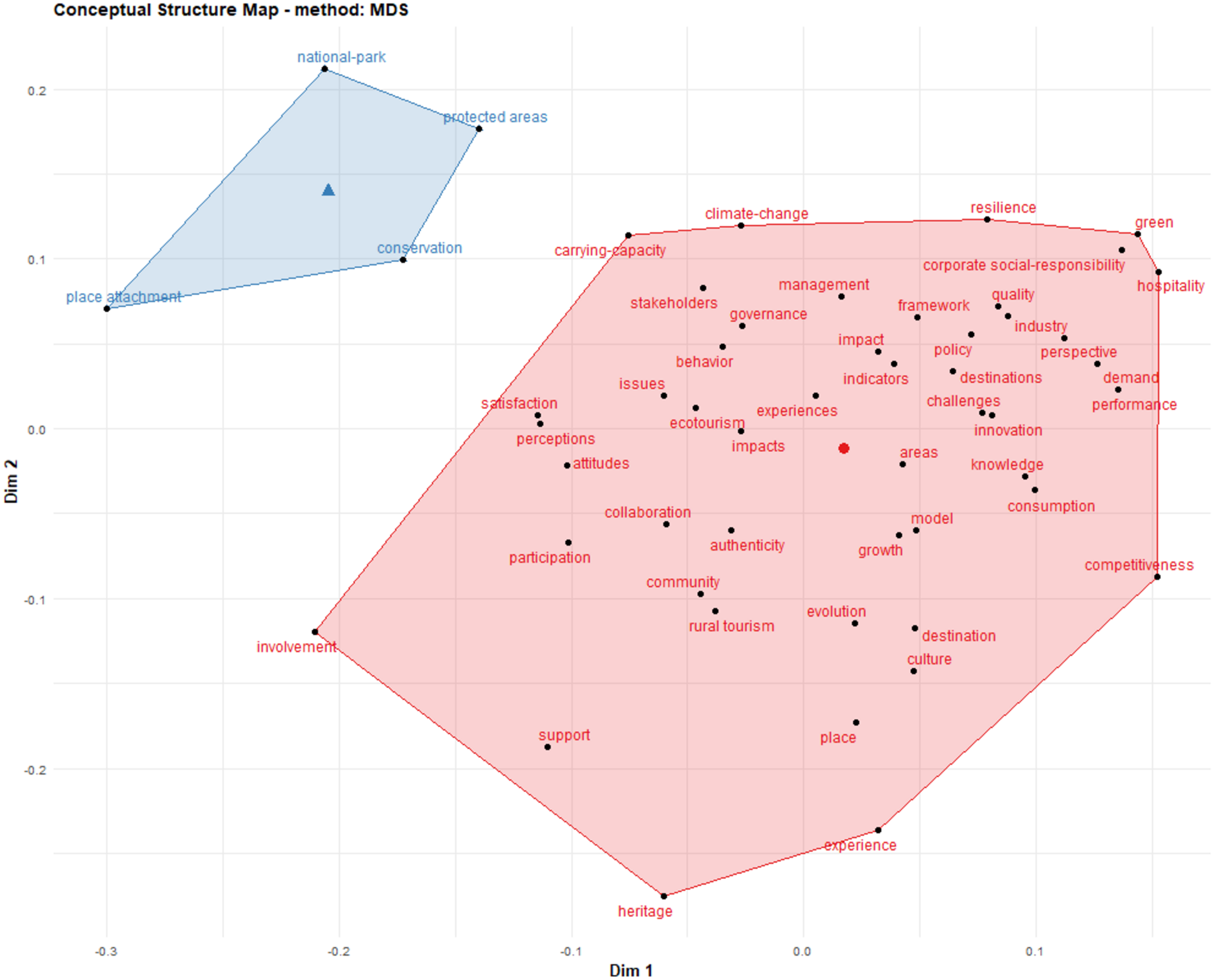
The findings of MDS group 1 represent four dimensions: place attachment, conservation, protected area, and national park. It can be noted that research into dimensions of this group demonstrates the significance of conservation of travel destinations such as national parks and protected areas in achieving sustainability. The tourism industry has seen exponential growth (almost 56 times) over the last 70 years. It has resulted in an increased volume of international tourists from 165 million in 1970 to 1.4 billion in 2018 (UNWTO, 2020a). This exponential rise in tourism has led to the degradation of the environment, triggering efforts to conserve national parks and protected areas to achieve sustainable tourism and meet SDGs. As per the International Union for Conservation of Nature (IUCN), effective management of protected areas by addressing the efficient use of human and material resources can help achieve sustainable biodiversity. It can also help in conserving rare species, as well as protecting water supply and other resources necessary to support tourism (Nelson, J.G. & Serafin, 2013).
The smaller group in Figure 9 represents nine dimensions: heritage, experience, competitiveness, hospitality, green, resilience, climate change, carrying capacity, and involvement. The analysis reveals that climate change is one of the biggest indicators of the detrimental impact on nature (Living Planet Report, 2020). Even the focus points of the sustainable development goals (SDGs) include controlling climate change and saving the planet (UNWTO, 2015). Since the hospitality industry is one of the biggest contributors in destabilizing nature, green initiatives within this sector are critical from a sustainability and SDGs perspective (Ibnou-Laaroussi, Rjoub and Wong, 2020). As per the UN World Tourism Organization (UNWTO, 2020b), the aim of SDGs is to promote natural heritage and reduce migration to urban areas. Heritage and travel destinations get destroyed through over-tourism, and hence, it is critical to stipulate the carrying capacity of a particular destination (UNWTO, 2020a). Ecotourism also plays an important role in sustainable tourism. It refers to “tourism that takes full account of its current and future economic, social and environmental impacts, addressing the needs of visitors, the industry, the environment and host communities” (UNWTO, 2015).
The analysis’s outcome demonstrates the close relationship between travel/tourist management, stakeholder participation, and tourism governance. Governance must pivot away from the destination and toward the value chain, where stakeholder engagement is critical. The COVID-19 pandemic ushered in an era of under-tourism (Ioannides and Gyimóthy, 2020), resulting in an adverse influence on destination development. Over-tourism has a similar detrimental effect on destination development. Community leadership and capacity management have a critical role in stakeholder management when it comes to sustainable tourism (Roxas et al., 2020). As a result, the concept of increasing stakeholder awareness of environmental issues in order to accomplish sustainability goals (SDGs) is a hot topic of discussion on many worldwide forums (ETC and UNWTO, 2007). Sustainability goals (SDGs) may be more effectively accomplished if stakeholders are informed about environmental issues, therefore increasing their sense of responsibility toward nature (Erick T. Byrd, 2007; Higgins-Desbiolles, 2018a).
The multidimensional result depicts an increase in demand for corporate social responsibility by the industry. The way businesses operate influences not just their products and services, but also the lives of their employees and the environment (European Commision, 2019). Rural tourism, community engagement, and cooperation have also been identified as critical components of attaining sustainability (Artal-Tur et al., 2019). Numerous psychological variables such as satisfaction, perception, and attitude have been studied in environmentally sustainable behaviors in the past. Satisfaction shapes perception, which affects an individual’s attitude toward sustainability (Ertz and Sarigöllü, 2019). Tourists need to be encouraged to make conscious decisions to bring down their carbon footprint and support the core aspects of sustainability. Sustainable tourism involves different actors in society, including policymakers, government, and industry. Initiatives to simplify policies to promote sustainable tourism among these players can result in the success of these efforts. Tourism-related policies implemented over the years have been plagued by several flaws, including a failure to strike a balance between economic growth and ecological sustainability (Hall, 2011, 2019).
Another aspect that has long fascinated scholars is the connection between tourism, environmental impact, and energy consumption (An et al., 2020; Khan, Rehman, et al., 2021; Razzaq et al., 2021; 2021a; Rehman and Sohag, 2021). The spread of COVID-19 severely slowed economic and social activity. Since fewer people were traveling and doing business, there was less demand for energy. This suggests that COVID-19, despite its negative effects on society and the economy, may have had some beneficial effects on the natural world. Recent empirical research lends credence to the theory that COVID-19’s contribution to environmental quality may be the only positive outcome (Mahato et al., 2020; Mandal and Pal, 2020; Razzaq et al., 2020). Greenhouse gas emission reductions are attributed to social distancing measures, according to Zambrano-Monserrate et al. (2020).
Discussion and Concluding Remarks
The tourism industry, one of the five main industries in achieving sustainable development (UNCED, 1992), holds immense significance in today’s uncertain times. To understand the literature’s progress and suggest an agenda for future research, we focus on four sub-periods: pre-2008, 2008–2015, 2016–2019, and 2020–2021.
The break of 2008 pertains to the advent of the global financial crisis, which played a key role in changing the shape of tourists’ income and government spending. The break of 2015 signifies the adoption of the SDG agenda, which worked as a pathbreaker in the journey of sustainable tourism. Similarly, 2020–2021 are the COVID-19 pandemic years that threatened to change the entire tourism discourse, therefore needing to be studied separately. More specifically, we argue for the period segregation as outlined below:
2008–2015
In the aftermath of the global financial crisis of 2008, the need for infrastructure development and sustainability were the keywords to attract investments. This period also reported a fall in disposable income and tourism. The conventional framework for the travel and tourism (T&T) sector changed significantly. Other worldwide issues, such as geopolitical tensions from growing terrorism threats, also affected the T&T industry’s precondition for growth and safe travel. After the financial crisis, new tourism patterns emerged. The Global Future Council on the Future of Sustainable Tourism published a paper on smart travel driven by technology in 2014 focusing on developing and emerging markets. The council anticipated that by 2017, 31 percent increase in aviation travel would cause environmental and community difficulties. Despite global climate agreements and tourism industry efforts to reduce environmental consequences and unsustainable practices, considerable work remained. Hence, the period needs to be studied in detail.
2016–2019
In this period, the industry remained a significant driver of economic growth. Period between 2016 and 2019 had a remarkable impact on the tourism sector. It highlighted the industry’s reliance on sustaining expansion in an uncertain environment while safeguarding the ecosystem. The industry aspired to lead in inclusiveness and sustainability in responsiveness and responsibility. The solutions had to be both global and local with comprehensive social involvement; the kind of tourism that had never been seen before. This era marked the beginning of recovery in travel and tourism. The industry 4.0 developed next generation flexi work occupations; digital natives, notably online travel aggregators, disrupted the value chains; and a sharing economy arose. Customization and employment movements owing to economic structural changes affected the industry.
2020–2021
The World Tourism Organization (2020a) reports that some nations have opened for tourism and others aim to, demonstrating the consequences of the pandemic’s zero tolerance policy. Demand has been severely impacted by industry shutdowns, travel restrictions, and a decline in discretionary spending, resulting in a drastically altered outlook for the business. The industry and its clients have evolved considerably throughout this time. They are more worried about health and hygiene and wary of genomic mutations and government laws. The brief break may have given travelers and the industry time to contemplate climatic and environmental impacts. This time span helps us understand how consumers and the industry have begun to rethink their decisions and tactics.
The thematic map analysis representing the time period before 2008 (Figure 10) depicts a strong presence of management as a basic theme. This reflects upon the great amount of research undertaken in order to manage and achieve sustainable tourism since the Brundtland report of 1987. Further, during this time, the motor themes highlight the role of a firm, as well as its impact on the environment, society, and economy. This points to the need to create models for managing the tourism industry by engaging various stakeholders. Sustainability could be achieved by creating awareness and educating stakeholders about the environmental problems and encouraging them to share the responsibility (Erick T. Byrd, 2007). Tourists would need to make conscious decisions to reduce their carbon footprint and improve sustainability while traveling to various destinations. Thematic map for time period before 2008.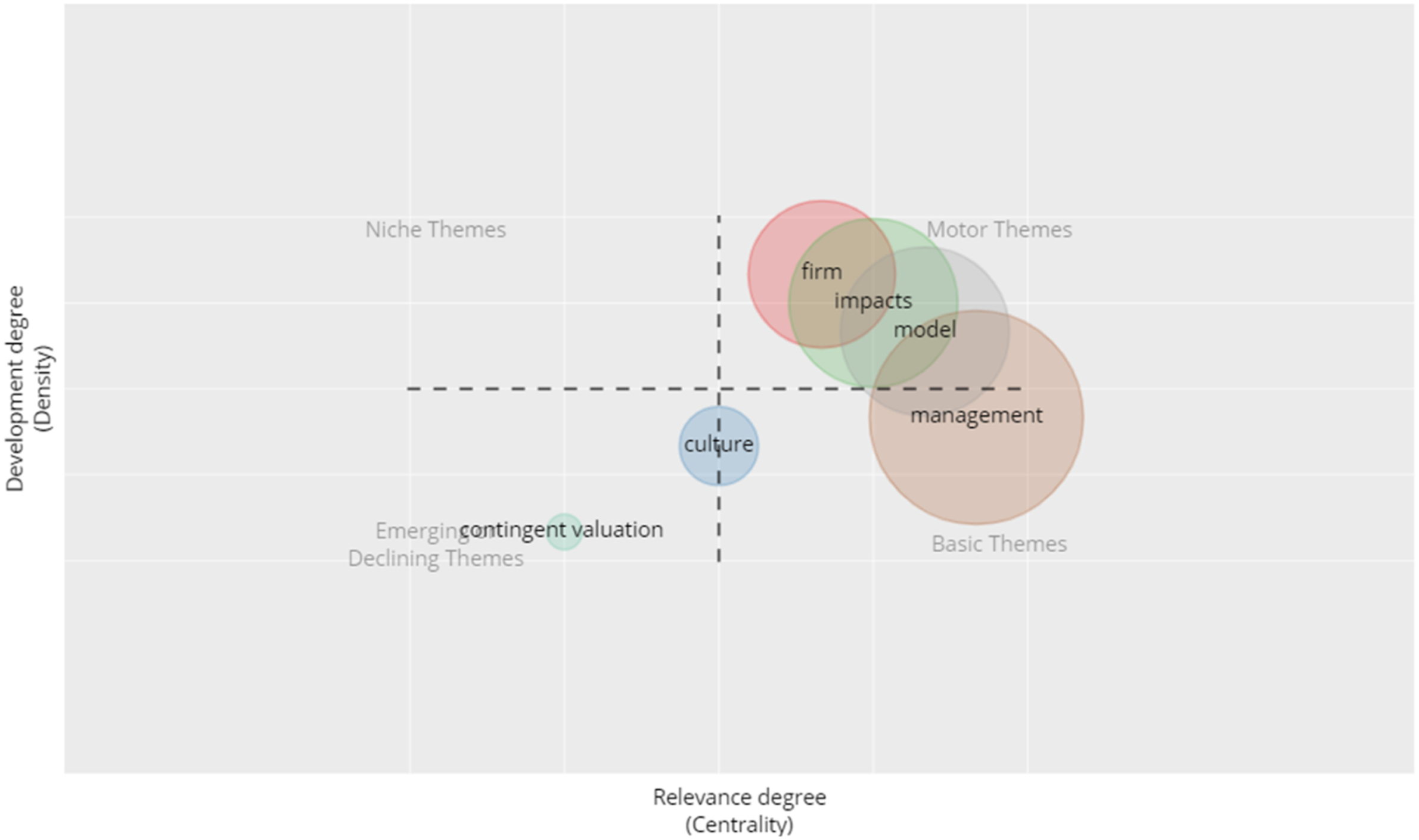
In 2008, due to the financial crisis, there was a decline in economic activities, which negatively impacted the environmental policies. The economic recession of 2008 led to a decline in the use of natural resources, and at the same time, the process of implementing environmental policy also slowed down (Putkuri, Lindholm and Peltonen, 2014). The recession of 2008 impacted the environmental and climate policies negatively, which led to the dormancy of climate policies, including the UN climate agreement conferences in the time period of 2009-2013. This brought a shift in theme for the next phase of analysis from 2008 to 2015 (Figure 11). Thematic map for time period between 2008 and 2015.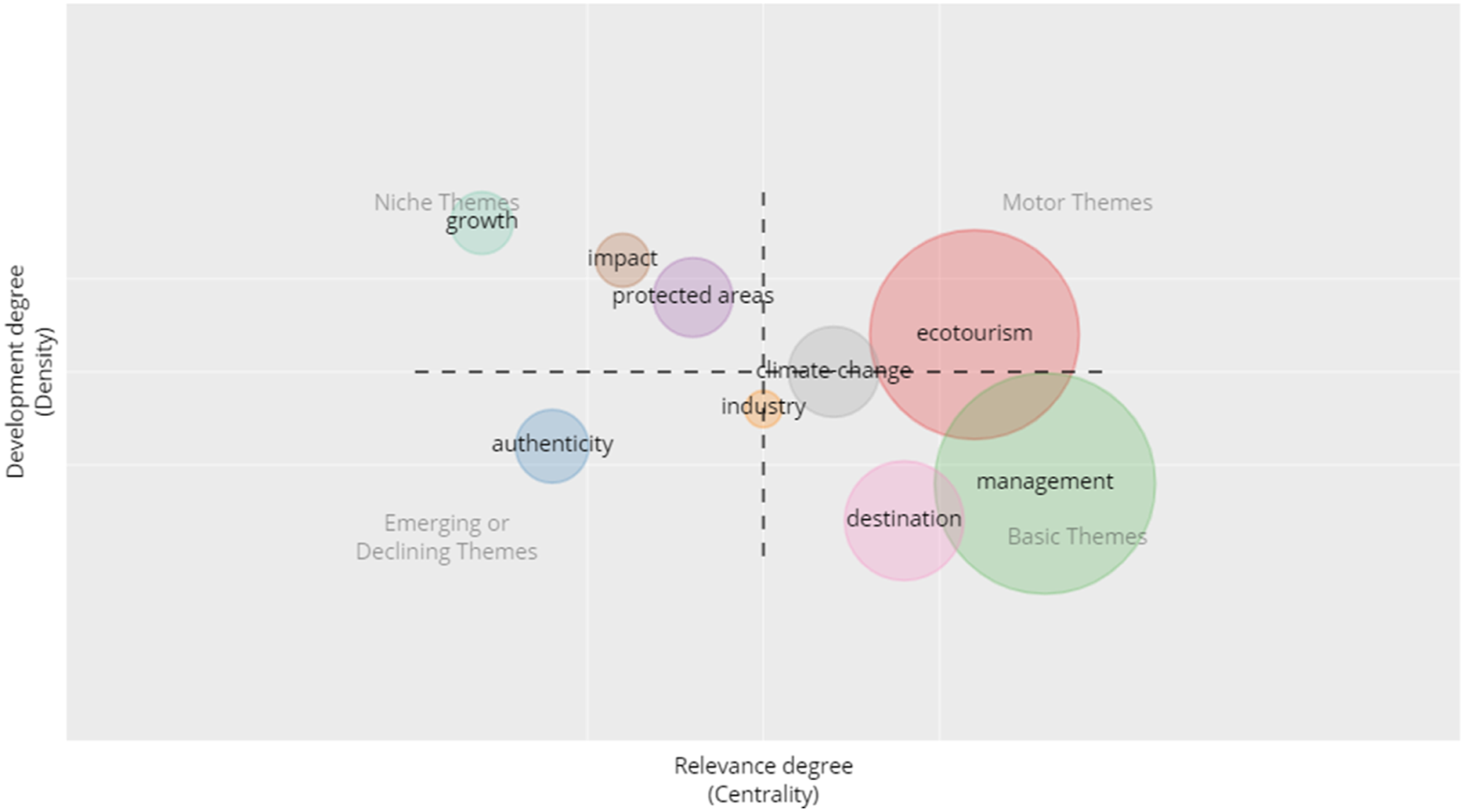
During this time period, along with the basic theme of management, a new peripheral theme of uncontrolled tourism growth due to lack of environmental policies emerged. This irrational use of natural resources was heavily criticized by environmentalists and academicians (de Haas, 2002; Diamantis, 1999; Hall and Lew, 2009; Orams, 1995), emphasizing the exploitation of natural resources and causing permanent damage to the environment (Chan and Bhatta, 2013; Nelson, 1994; Parks et al., 2009; Zapata et al., 2011). It is well understood that tourismification adversely affects the economic (Gössling, 2002; Nepal et al., 2019), environmental, and socio-cultural environment. This led to an increase in price, triggered environmental degradation, worsened climate change, and resulted in the loss of traditional values (Cole, 2007a; Yang and Wall, 2009a). The climate crisis led to migration and impacted the social and economic environment. For example, extreme drought and heat conditions in central and northern Africa and the Middle East resulted in new waves of migration. The level of migration increased by ten percent due to climate crisis. Future research could be taken up on controlling climate and conserving and promoting natural heritage, resulting in job creation and reduced migration to urban areas (UNWTO, 2020b). Taking into consideration the SDG-13 goal of taking urgent action to combat climate change, future research could be undertaken in the area of green employment and green economy to have inclusive, sustainable growth. Due to the impact of climate change, the employment structure will change. New jobs and job families will form, while other traditional ones will vanish or become unsustainable. As a result, businesses will need to discover new ways to arrange labor and production. Future researchers could explore some of these areas and additionally study the impact of individual accountability and ownership on environment and climate change. Another potential research area could be cross-nation research and cooperation to control climate change, as no nation can succeed alone.
To control global warming and achieve sustainability, the United Nations introduced sustainable development goals (SDGs) in 2015. The focus points of the SDGs were fostering economic growth, controlling climate change, eliminating poverty, and saving the planet (UNWTO, 2015). Building sustainable goals has emerged as the solution to bringing down the detrimental effects of tourism. Since the introduction of SDGs in 2015, lots of research has been undertaken on measuring firm performance of sustainable goals with the help of sustainable indicators. This is reflected by “model” and “management” emerging as the motor themes for the time period of 2016–2020. “Indicators” help in measuring and comparing performance between different geographies and time periods in a bid to mitigate unsustainable tourism growth (Holden and Linnerud, 2007). Hence, indicators as a cluster have appeared as an emerging theme for research Figure 12 Thematic map for time period between 2016 and 2019.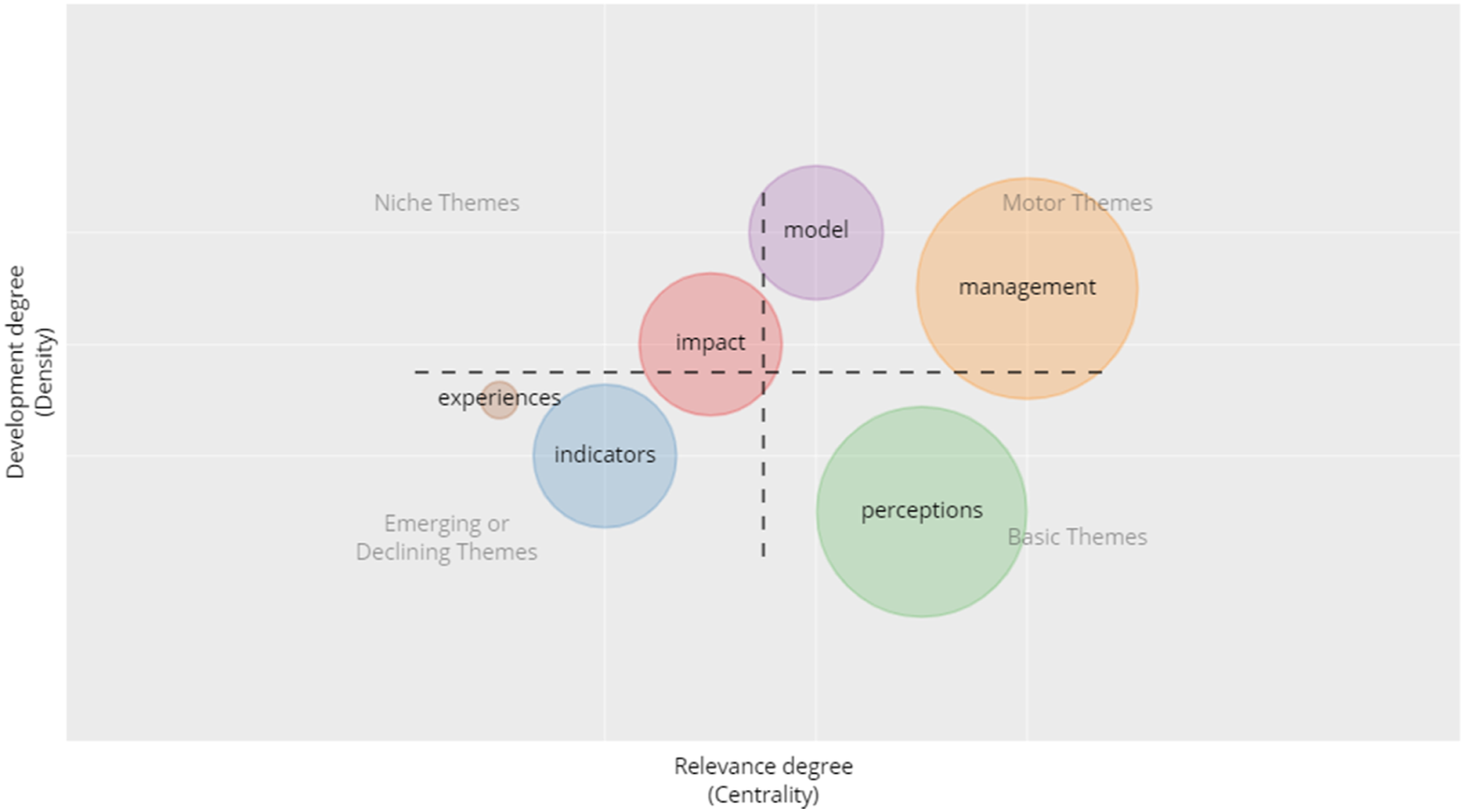
During the period of 2020–2021, the clusters that emerged in the motor themes are “governance,” “consequences,” “impact,” “hospitality,” and “challenges” (Figure 13). These attest to the fundamental changes brought about by the COVID-19 pandemic. Thematic map for time period between 2020 and 2021.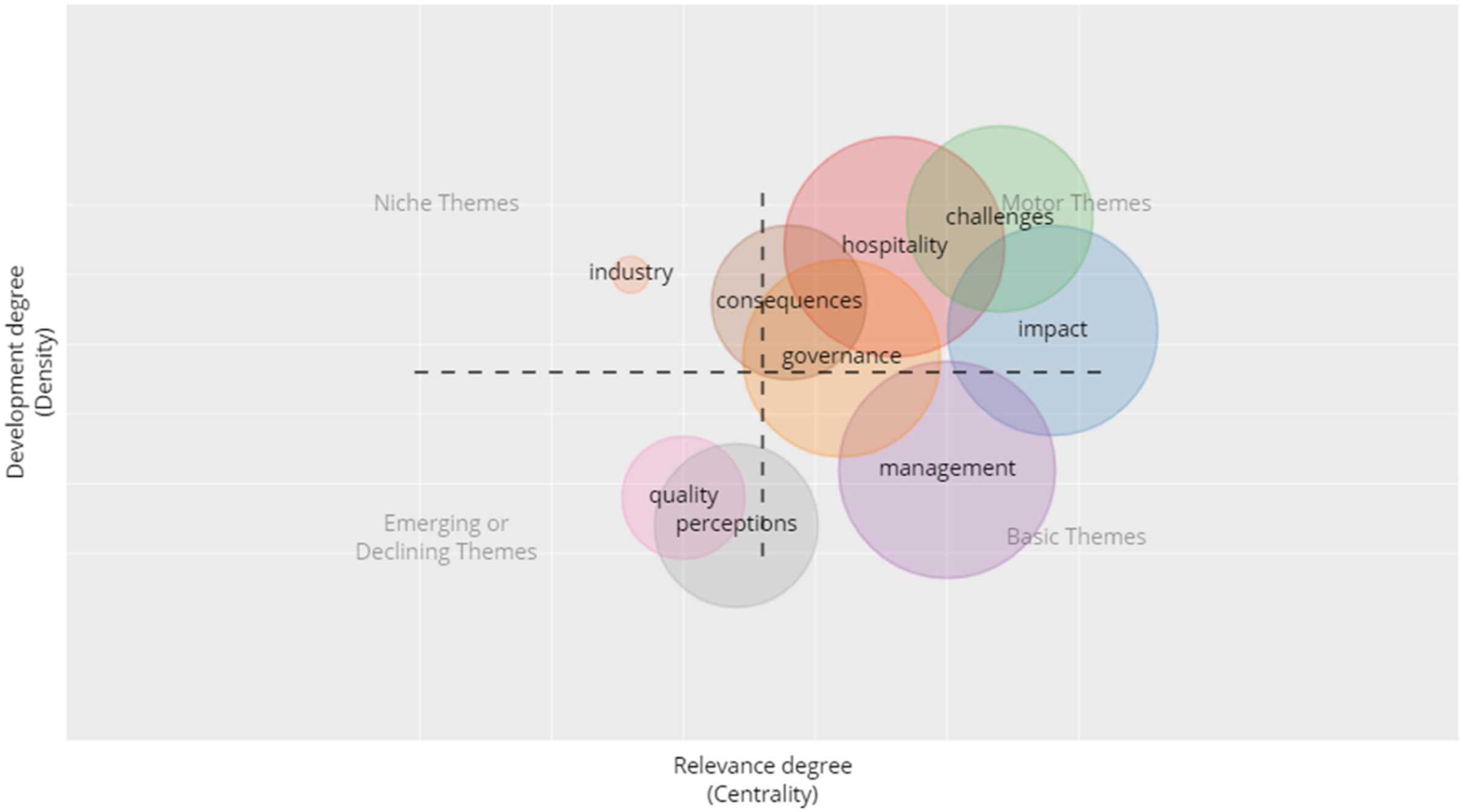
The various emerging and constantly mutating strains of the virus impacted all countries and economies, calling for the need to reinvent the tourism industry. In the field of epidemiology and disease surveillance, “travel” has been identified as the core cause of the spread of new viral strains (Hon, 2013). The pandemic threat expanded exponentially due to the global transportation network that propelled the spread of pathogens (Labonté et al., 2011; Nicolaides et al., 2019; Pongsiri et al., 2009). Future research could be undertaken on the role of tourism in epidemiology and reducing its impact in worsening epidemics. It has implications for practitioners in terms of reshaping and transforming the tourism industry, giving way to nature tourism or health tourism as future avenues to be tapped.
The human action of cutting down trees to make facilities to support tourism and the interference with wildlife during the process have also been identified as some of the reasons that exacerbated the pandemic (Barlow et al., 2016; Lade et al., 2020). Industrialized food, which is also supported by tourism, is another reason for this spread (Hall and Gössling, 2013). Destination development has been hampered due to under-tourism and the pandemic (Ioannides and Gyimóthy, 2020). Research could be suggested to identify various causes of pandemics and their impact on human life and the environment in totality. Regarding statistics, a decline of 93 percent was observed in tourist arrivals in June 2020 compared to previous years. There was a plunge of 65 percent in international travel arrivals in the first half of 2020, and the economic cost of this plunge is estimated to be $440 million for international travel arrivals and $460 billion in export revenues (UNWTO, 2020a). Based on the radical shift the tourism sector has experienced, future research can focus on the various changes required in Human Resources processes and practices and their possible impacts.
It is well understood that touristification adversely affects the economic (Gössling, 2002; Nepal et al., 2019), environmental, and socio-cultural environment. Due to this irresponsible utilization of natural resources, over-tourism is detrimental to the local community, natural environment (De Haas, 2002; Diamantis, 1999; Hall and Lew, 2009), and traditional cultures (Bramwell and Lane, 1993). This leads to an increase in price, environmental degradation, climate change, and loss of traditional values (Cole, 2007a; Yang and Wall, 2009a). The onslaught of the COVID-19 pandemic has highlighted this in an unprecedented way. This brings us to a stage where there is an immediate need to rebuild and restrengthen tourism (United Nations, 2019). This urgently calls for industry stakeholders and policymakers to come together to put the economy and tourism sector back on a growth trajectory. Focusing on meeting sustainable development goals (SDGs) while simultaneously implementing policies that support sustainable and economically rewarding tourism is the need of the hour.
The tourism industry has been designing innovative products like creative tourism or alternate tourism, which could determine future directions to save the environment and encourage tourists to participate in sustainability. This will not only revitalize tourism but also enhance local travel destination well-being and sustainability by generating employment and income for locals who call the destination home (Higgins-Desbiolles, 2020; Hoxie et al., 2012). Creative tourism may provide the opportunity for small-scale tourism with a focus on cultural values, inclusion of local stakeholders, and society.
Creative tourism may be beneficial in achieving sustainable development goals (SDGs) and result in sustainable cities and communities (SDG-11) as well as sustainable production and consumption (SDG-12) with a focus on sustainable tourism to promote local culture and create jobs (SDG-12.b). This can be done through spiritual tourism, nature tourism, rural tourism, adventure tourism, etc., as these activities focus on minimizing damage to the place and provide positive outcomes for the locals. The government could take certain initiatives to promote rural tourism (given the benefit of promoting local stakeholder engagement, thereby contributing to the goal of equality) in order to mitigate the adverse impact of over-tourism. Rural tourism could provide locals with a source of income, and also boost infrastructure development, community development, and women empowerment. Workshops and hobby classes like storytelling and painting for employees are also newly curated by organizations (Yan et al., 2021; Xia et al., 2021). This provides an opportunity to travelers to participate actively and pursue learning experiences through courses at tourist destinations (Richards & Raymond, 2000). In this, the tourists own the responsibility of leaving the destination better than before.
Industry and policymakers need to observe the new shift and curate tourism products and offerings in accordance with it. The focus now will be on how the carbon footprint of tourism can be reduced and how tourists can be compelled to contribute to improving sustainability (ETC and UNWTO, 2007). Success is only possible if industry stakeholders and policymakers come together, as the industry has to make it sellable and policymakers must make it accessible by incorporating the changes at the ground level. The key change in travel behavior would incorporate shifting people from busy cities to remote areas to continue working from home with support from their corporate employers. This has implications for holidaymakers and policymakers. Working holidays could be a new market opportunity for the industry that would include the small remote working segment (Gregor, 2021). Remote working will require a new kind of accommodation instead of traditional hotels and resorts. New products like camping could be designed, taking into consideration the challenges posed by the pandemic. This will provide a safe tourism mode to the industry as camping activities offer the flexibility to maintain social distancing and isolation. The government could facilitate the process by providing camping grounds to create the necessary infrastructure and save the environment.
Future research could be taken up on controlling climate, conserving and promoting natural heritage, creating new tourism jobs and opportunities, and reducing migration to urban areas (UNWTO, 2020b).
The continuous waves and mutations of the coronavirus dampened the prospects of conventional travel. Travel during the pandemic and post-pandemic are bound to be different, and the tourism industry will have to look for alternative mechanisms to understand consumer behavior and revive the industry. With remote work booming, working holidays in unsaturated rural or remote areas could be a new potential niche for the tourism industry. Policymakers and industry will have to join hands together to unleash the opportunity and create the innovative infrastructure needed to revive the industry to target new niches. By presenting the state of the current literature in the field and collating the learnings from it, our study paves the way for the advancement of the scholarship and policy initiatives to further the cause of sustainable tourism.
Footnotes
Acknowledgments
We would like to extend our gratitude toward our employers for providing us the infrastructure and resources to work in this research. The authors declare no conflict of interest. No funding was received for this work.
Declaration of Conflicting Interests
The author(s) declared no potential conflicts of interest with respect to the research, authorship, and/or publication of this article.
Funding
The author(s) received no financial support for the research, authorship, and/or publication of this article.
