




Abstract
Technology innovation is the key driving force in achieving economic transformation and development. Financial development and the expansion of higher education can promote technological progress primarily by easing financing constraints and improving the level of human capital. This study examines the impact of financial development and higher education expansion on green technology innovation. It conducts an empirical analysis by constructing a linear panel model and a nonlinear threshold model. The present study sample is based on the urban panel data of China from 2003–2019. (1) Financial development can significantly promote the expansion of higher education. (2) The expansion of higher education can improve energy and environment-based technological progress. (3) Financial development can both directly and indirectly promote green technology evolution by expanding higher education. The joint financial development and higher education expansion can significantly empower green technology innovation. (4) In the process of promoting green technology innovation, financial development has a non-linear influence on it, with higher education as the threshold. The effect of financial development on green technology innovation varies according to the degree of higher education. Based on these findings, we put forward policy proposals for green technology innovation to promote economic transformation and development in China.
Introduction
Over the past 40 years of reform and opening up, China has achieved rapid industrialization and economic growth, but also caused large amounts carbon emissions and other problems that seriously affect the quality of economic development. In the new era, China is striving for high-quality development and emphasizing green economic transformation. Innovation is the first driving force for the development of the new era and the key to solving development imbalances, promoting economic transition, and promoting the overall sustainable development of the country (Lorente et al., 2023; Galindo and Méndez-Picazo, 2013; Jian et al., 2021; Xu et al., 2022). With the construction and improvement of China’s green economic system with low-carbon circular development, green technology innovation has increasingly become a driving force for green economic development (Zhao et al., 2022a, 2022b). The research on the methods and ways to promote green technological innovation is closely related to the realization of economic transformation; so, it is particularly important to identify the source of the power of green technology innovation.
Finance is the heart of the modern economy and the lifeblood of the substantial economy. Green development cannot be separated from the support of green finance (Wang and Wang, 2021; Balsalobre-Lorente et al., 2018). The financing difficulties of green technology can be alleviated by financial development, which can effectively improve the level of green technology evolution. The most important element of technological innovation is people, and the quality of talents affects the depth and level of innovation (Mattalia, 2012). The level of human capital brings new economic value by changing the traditional knowledge base in the region and providing main support and stimulation for green technological innovation. As the training base of technological innovation talents, higher education also plays a crucial role in the progress of green technology. It can be concluded that there may be a chain relationship between financial development, higher education expansion, and green technology innovation. Financial development reduces the funding constraints of higher education expansion and green technology innovation. Subsequently, the expansion of higher education provides quality human capital for the process of technological innovation. Finally, green technology continues to develop under the dual role of financial development and higher education expansion. Therefore, this study focuses on the complex relationships between financial development, higher education, and green innovation. First, the theoretical relationship between the issues is clarified and relevant research assumptions are established. Then, based on panel data from 285 cities in China from 2003−2019, a linear model and a nonlinear threshold model are constructed to empirically investigate the effects of financial development, higher education expansion and green technology development in China.
The remainder of this paper is organized as follows. Section 2 provides an overview of the literature and the development of the present hypotheses. Section 3 describes the construction of the theoretical model and the selection of variables and data. Section 4 presents the regression results and the discussion. Section 5 provides a final conclusion and further recommendations.
Literature Review and Research Hypotheses
Literature Review
Evolution of green technology
As green technology is vital to economic transition, scholars have approached the driving factors of green technology innovation from several different perspectives. From the perspective of policy bias and human capital distribution, Malin et al. (2019) found that the distorted allocation of human resources caused by policy distribution will reduce the level of innovation in green technology, whereas the optimal allocation of human resources caused by market competition will further green technology innovation. From the perspective of a country’s openness to the outside world and international trade, Cao and Wang (2017) pointed out that international trade will affect labor capital ratio and research and development (R&D) costs and increasing import trade with developed countries will improve talent innovation ability and promote green technology progress. From the perspective of the spillover effect of foreign direct investment, Zhu and Ye’s (2018) empirical study, utilizing a global Malmquist–Luenberger index, found that foreign direct investment in developed countries will significantly advance green technology innovation, although they observed regional heterogeneity in the impact of foreign direct investment. It can be concluded that the driving forces behind green technology progress are diverse. As capital/investment is vital to innovation, finance must be important to green innovation.
Influence of financial development on technological progress
Scholars have generally posited that financial development can positively promote technological evolution. Brown et al.’s (2017) empirical study demonstrated that the degree of development of a country’s financial institutions, instruments, and markets has a great impact on the technological progress of the country’s high-tech industry and, specifically, a developed stock market contributes to technological progress. Similarly, Hsu et al. (2014) constructed a panel data model of developed countries and found that their financial markets significantly advanced levels of technology innovation and technology patenting. With the increasing attention to green economy and high-quality development, scholars have recently focused on finance and green innovation. Li et al. (2020) observed that financial development will significantly further the evolution of green technology, but the promotion effect will have regional heterogeneity with the strengthening of environmental regulations. Based on a panel data model of Chinese cities, Zhou and Du (2021) found that financial development significantly promotes energy and environment-biased green technology changes, although this effect was more obvious for cities in eastern China, and they noted that the recent financial crisis has inhibited the innovation and development of green technology. Lin and Ma (2022) pointed out that digital finance can alleviate the financing constraints of technological innovation and improve the quantity and quality of green technological innovation in terms of coverage, depth of use, and degree of digitalization. Research by Razzaq and Yang (2023) shows that digital finance uses digital technology to promote the digital transformation of enterprises, solve the problem of energy poverty, and promote green growth. Wang et al. (2022) pointed out that the issuance of green bonds would help enterprises ease financing constraints and invest more funds in green technology R&D to improve green innovation. Huang et al. (2022) believed that the formulation of the green finance pilot zones policy could guide enterprises to engage in high-quality green innovation for a long time, improve green productivity and improve the efficiency of green innovation with the help of green finance. The research of Liu and Wang (2022) shows that the establishment of China’s green finance pilot zone can tap the vitality of green innovation and promote green transformation. Although most research supports the positive link between financial development and green innovation, there are few works stand for the negative or nonlinear effect. Thus, it is necessary to reveal the theoretical and empirical effect of financial development on green innovation.
Influence of higher education on technological evolution
Higher education is an important channel for improving a country’s human capital, and numerous studies have demonstrated a close relationship between a country’s higher education expansion, human capital, and technological progress. Benhabib and Spiegel (1994) demonstrated that human capital will improve the growth rate of total factor productivity through the application of technological innovation. This view that the accumulation of human capital will advance technological innovation and change, and thus will advance socioeconomic growth, has been recognized by numerous scholars (Dowrick and Rogers 2002; Hershbein and Kahn 2018). Schultz’s (1961) theory of human capital proposed that education will improve the quality of labor force and labor productivity, thus improving the level of human capital and realizing technological progress. Denison (1962) utilized factor analysis to calculate the contribution of education to economic growth and attributed 60% of the effect of technological progress to education. Romer (1990) studied the relationship between human capital and technological change and found that human capital determines the production of knowledge and technology, and the stock of human capital determines the growth of knowledge and technology. Wu and Liu (2021) established a spatial Dubin model based on the data of various regions in China and found that higher education and technological innovation have a positive spatial spillover effect on the upgrading of the industrial structure, and the technological innovation brought by higher education will affect the upgrading of industrial structure and economic transformation. Timothy (2022) pointed out that enterprise managers with higher education will improve productivity through innovation, thus realizing the transformation of human capital into enterprise productivity. Yang et al. (2022) found that the inflow or outflow of human capital would have a great impact on the innovation cost of enterprises by establishing a theoretical model of heterogeneous enterprises, thus affecting the number of patents and the quality of innovation. Kong et al. (2022) pointed out that the accumulation of innovative human capital of enterprises will increase with the expansion of higher education and stimulate productivity growth through the manifestation of technological innovation, thus promoting economic growth. Therefore, education will promote the continuous development of social human capital, and thus promote innovation. It is of practical significance to study the relationship between higher education and green technology evolution. However, rarely have scholars directly studied the driving effect of higher education on green technology.
In general, many scholars have studied the influencing factors of green technological evolution from various perspectives, including foreign direct investment, human resources allocation, financial development and so on. Higher education is crucial to the improvement of the knowledge level and innovation ability of a society’s human capital, but few scholars have conducted in-depth discussions on whether higher education can promote green progress. Finance is the core of the modern economy, and it affects firms’ green innovation strategy, activity, and efficiency through alleviating financing constraints and optimizing allocation of resources (including human capital). However, few studies focus on the relationship of financial development, higher education, and green innovation directly. Thus, this study combines financial development, higher education, and the innovation of green technology evolution and discusses their synergetic mechanism and characteristics, to provide new ideas for green economic transformation.
Research Hypotheses
Financial development and green technology innovation
The evolution of green technology is widely adopted as the channel to realize the transformation from traditional economy to high-quality development. As green technology has the characteristics of high risk and high investment, traditional investment, and government development efforts do not provide sufficient financing support. The financial sector must meet the capital needs of green innovation, provide financing channel for R&D activities and the marketization of green technology innovation, and ensure the sustainability of green technology innovation (Liu et al., 2022; Zhao et al., 2023). For example, in the pursuit of high returns in the early stages of green technology innovation, venture capitalists will invest in high-risk scientific and technological innovation projects with positive market development potential but may lack the start-up funds required to further the rapid development of these activities. With the development of the financial sector—including new approaches to financing, new business models, and new policies—the evolution of green technology innovation will bring high returns, and the risk will be greatly reduced. Investors will invest in scientific and technological innovation projects by means of direct investment such as stocks and bonds in the capital market and, as green technology initiatives mature, financial institutions will use idle social financing funds to provide credit support for these projects and advance green technology initiatives. In this way, financial development plays an important role in alleviating the financing constraints of green technology evolution and provides a financial guarantee for green innovation initiatives through the allocation of funds to disperse risks. Greater financing capacity can promote the formation of large-scale capital and then promote regional green innovation efficiency. As most investors in the financial market are “chasing” profits and rationality, their investment decisions will lead funds to green technology opportunities with high resource allocation efficiency, which forces the rapid evolution of green technology. Thus, this study sets forth the following hypothesis:
Financial sector development can play a significant direct role in furthering the evolution of green technology.
Higher education expansion and green technology evolution
The proportion of high-end manufacturing, consulting, information technology, and other industry-related services is increasing, and the demand for senior human capital will inevitably also increase. Higher education is a critical channel for the improvement of human capital. Workers who have received higher education often have a solid cognitive foundation and have demonstrated learning ability and increased competitiveness in the market; thus, human capital represents the driving force of technological innovation in the process of social production (Ang et al., 2011; He et al., 2022). The new economic growth theory posits that, against the background of scientific and technological innovation, knowledge is a key element in the promotion of economic development. To improve the knowledge literacy of human capital, higher education allows individuals to master professional knowledge and develop high-tech concepts, which can drive the evolution of green technology. With the expansion of higher education, human capital will continuously accumulate, and the investment in human capital can promote technological progress. Individuals trained in science and technology in higher education will further the evolution of green technology and will transform scientific research achievements into economic benefits for a country to further advance the evolution of green technology innovation. This study sets forth the following hypothesis:
Higher education expansion can positively force green technology evolution by increasing the level of human capital.
Coupling mechanism of financial development and higher education expansion on green technology evolution
The important role of finance has penetrated all areas of society, including the field of higher education. On the one hand, financial development provides financial support for the expansion of higher education, expands operating scales, improves conditions, and increases investments in R&D activities of academic institutions to cultivate and improve the quality of talent and scientific research ability of those pursuing higher education. On the other hand, by alleviating individual credit constraints, a developed financial sector enables individuals to increase their investment in their higher education, thus increasing the quantity and equalized distribution of education opportunities, the number of college students, and the future supply of high-quality talent. Increasing public and private investment in higher education expansion and improving the coverage and teaching quality of higher education will improve the level of human capital in terms of both quantity and quality, transform financial support into technical support, and further the evolution of green technology innovation. After attracting capital inflows from various financial institutions and foreign investors, more developed regions can attract many high-quality talents to the region, while the region’s high-level human capital advantage will attract more external capital inflows—eventually forming a virtuous circle of capital and talents flowing in and gathering together, thus giving play to the positive role of finance in promoting regional green innovation efficiency. Therefore, this study sets forth the following hypothesis:
Financial sector development will improve the expansion of higher education and indirectly improve green technology innovation through the accumulation of human capital. The combined effect of financial development and higher education expansion will significantly drive the evolution of green technology.
Materials and Methods
Model, Variables, and Data
Considering the availability and comparability of data, our study sample included 285 cities in China utilizing a 2003–2019 Chinese urban panel data model. All monetary unit-based indicators were treated at constant prices based on the year 2000. The data were obtained from the China City Statistical Yearbook, China Statistical Yearbook for Regional Economy, China Financial Yearbook, and China Statistical Yearbook. The selection and description of specific variables are described in the following subsections.
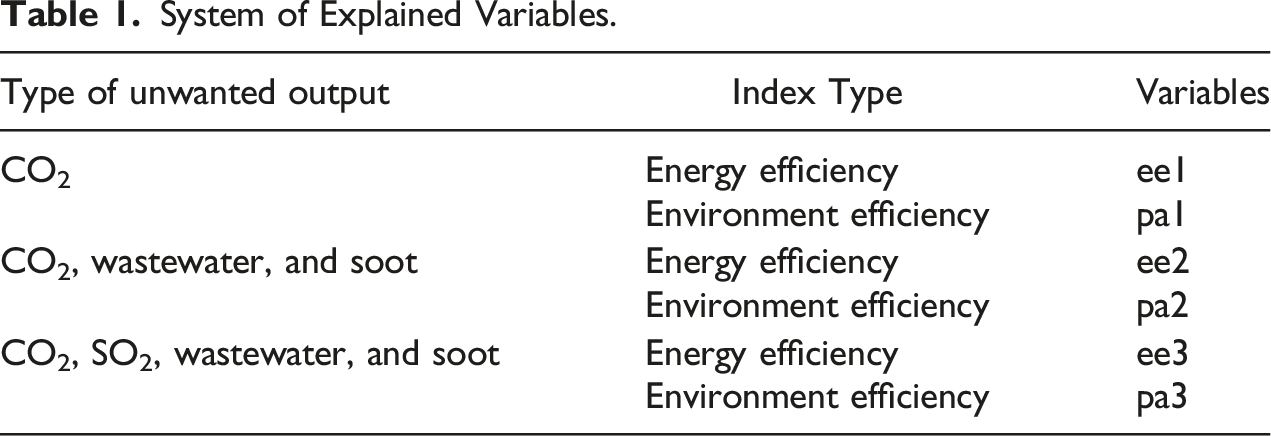
Explained variable
System of Explained Variables.
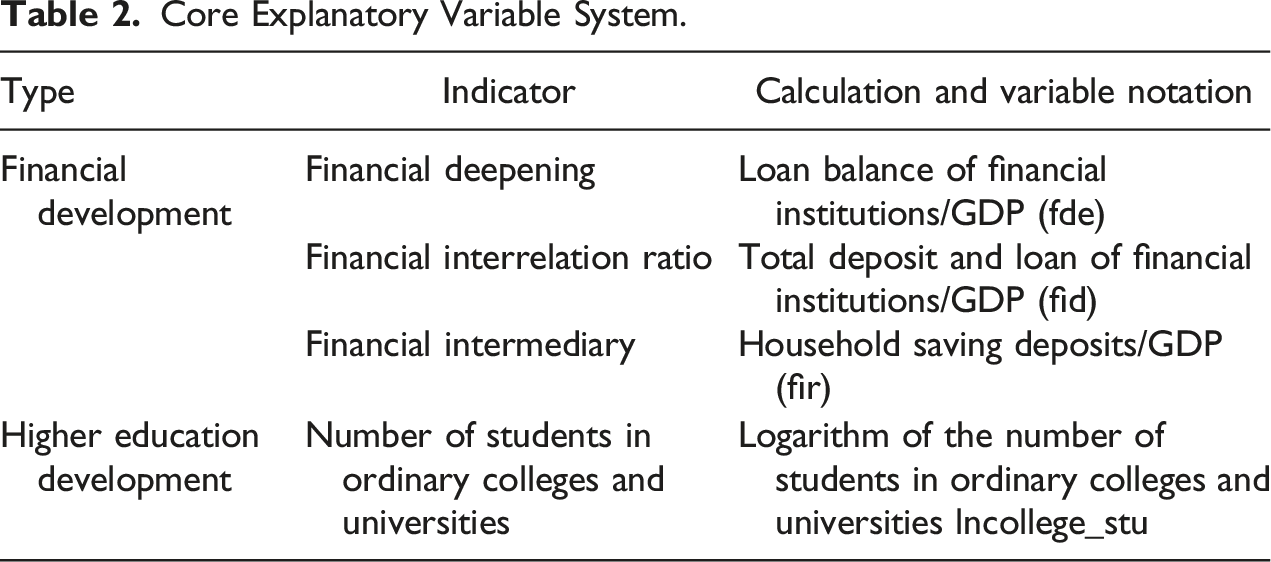
Main explanatory variables
Core Explanatory Variable System.
Control variables
Environmental regulation, industrial structure, degree of economic openness, total number of books in public libraries, and GDP after price adjustment in 2000 were selected as control variables (Li et al., 2020; Wu and Liu, 2021; Cao and Wang, 2017; Zhu and Ye, 2018). Environmental regulation (ER) has a significant impact on the evolution of green technology in developing countries, and thus it was included as one of the control variables. The data were calculated according to Chen and Chen (2018). The matching of industrial structure with factor structure, especially human capital structure, was the guaranteed condition for promoting sustainable and high-quality economic growth. Therefore, the proportion of tertiary industry in GDP (third_ratio) was used to measure industrial structure. The degree of economic openness (lnfdi) will affect the flow of production factors and returns to scale, as well as the technology spread and imitation speed in different fields. Therefore, the logarithm of the actual amount of foreign capital used in that year was introduced to measure the degree of economic openness. The total number of books in public libraries (lnbooks) reflects the investment in public education of a country, which promotes the expansion of higher education in a country. The promotion effect of financial development on higher education expansion and green technology innovation will be restricted by the level of economic development of a country. Therefore, the logarithm of GDP after price adjustment in 2000 (lngdp) was adopted to measure regional economic development.
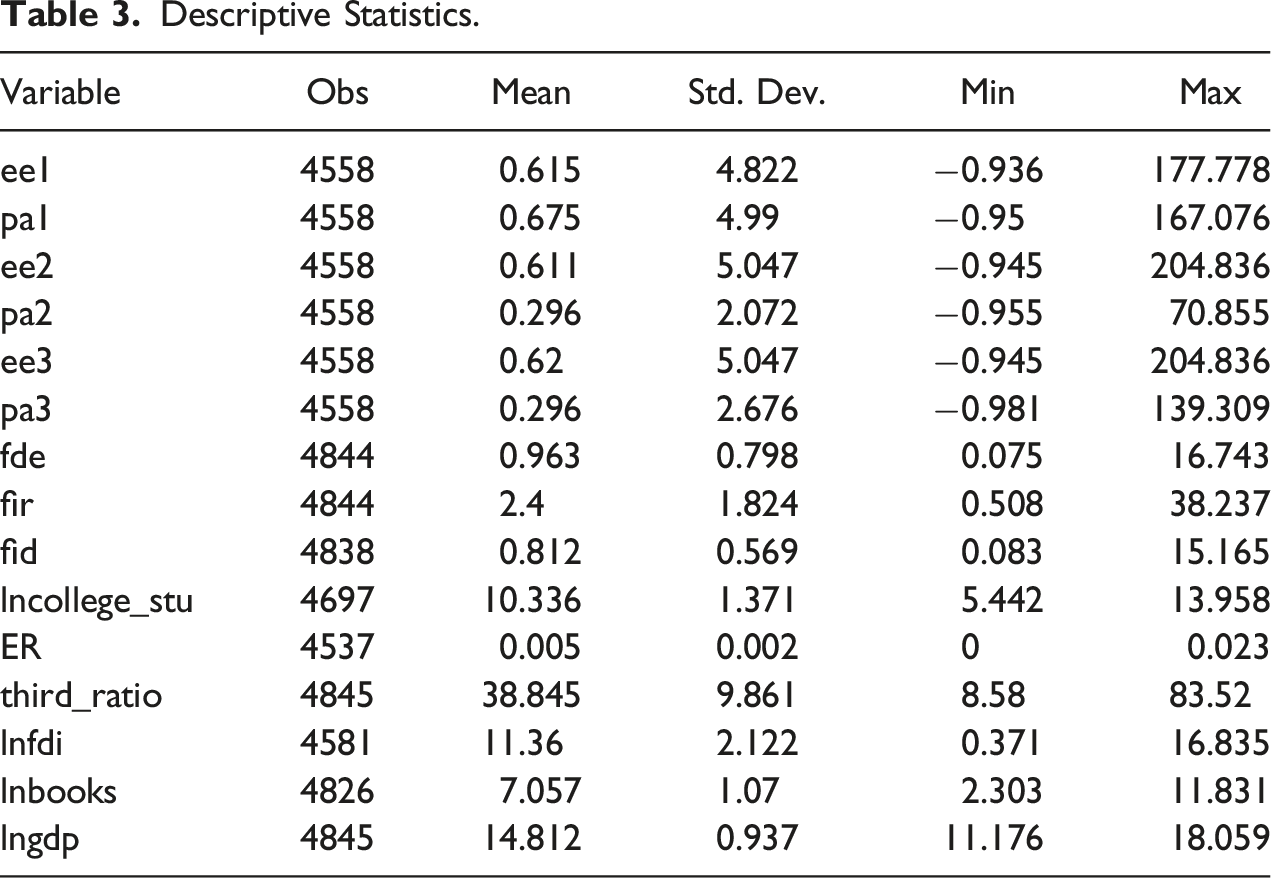
Descriptive statistics
Descriptive Statistics.
Empirical Model
Influence mechanism of financial development on higher education expansion
To evaluate the influence mechanism of financial development on higher education expansion, financial development was decomposed into three indicators—financial deepening, financial correlation ratio, and financial intermediation development—and the measurement model was constructed as follows


Influence mechanism of higher education expansion on green technology evolution
To test whether the expansion of higher education can advance the evolution of green technology, the econometric model was constructed as follows





Direct and indirect effects of financial development on green technology evolution
The direct effect model of financial development advancing green technology evolution through capital agglomeration was as follows





α is the constant term, δ is the coefficient of the explanatory and control variables, and 





Threshold effect model
When the financial sector advances technological progress, there is a nonlinear relationship with the threshold of economic development level (Hu et al., 2019), financial ecological environment, and ownership nature of enterprises (Zhang and Feng, 2019). We considered the existence of a nonlinear relationship between financial development and green technology, with higher education expansion as the threshold. Based on the research principle and method of Wang (2015), the nonlinear panel threshold model was established for empirical study. The specific panel threshold model was as follows





Results and Discussion
Financial Development and Higher Education
Impact of financial development on higher education
The Influence Mechanism of Financial Development on Higher Education.
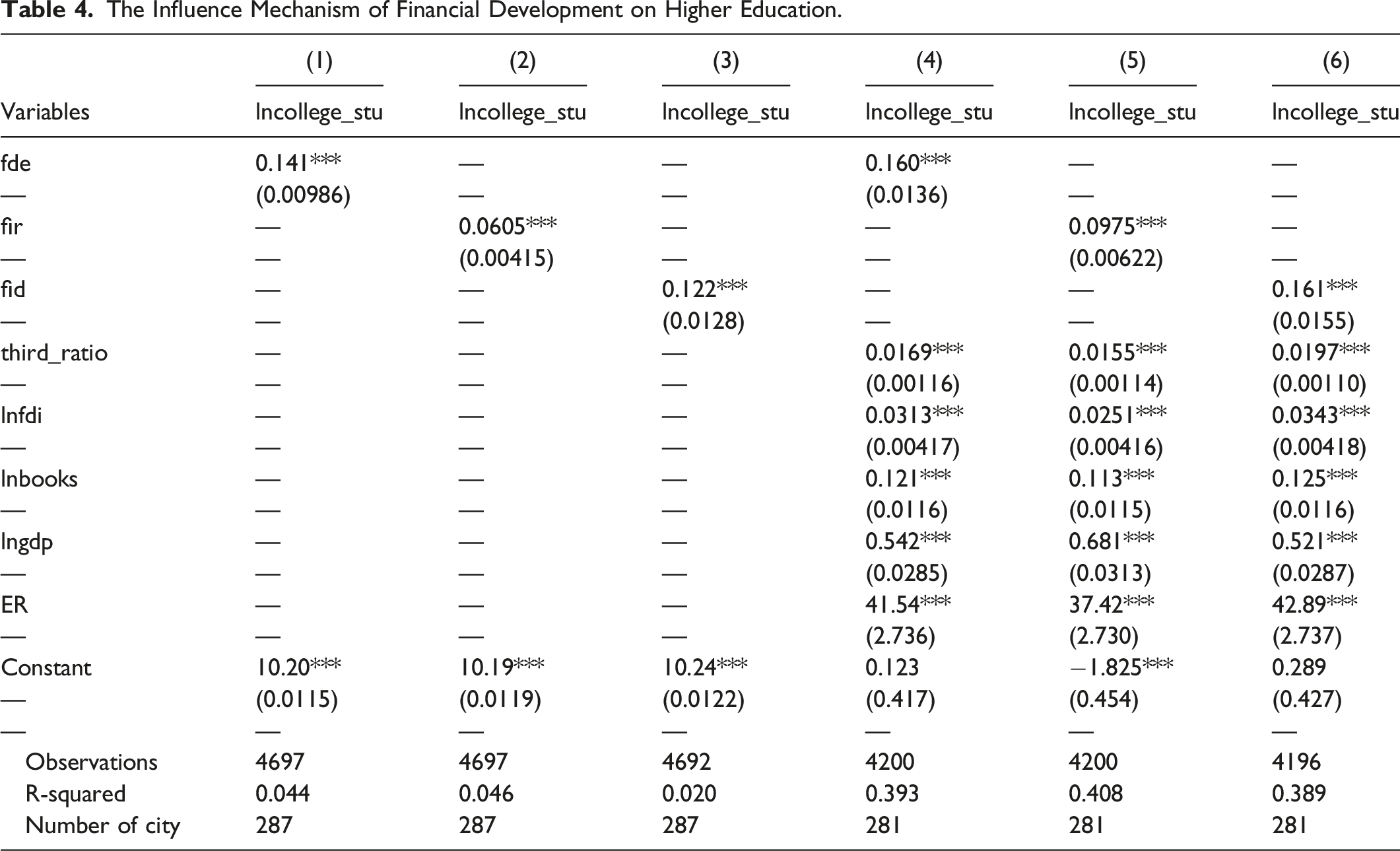
From the perspective of the depth, efficiency, and access of the financial system, financial deepening, financial correlation ratio, and financial intermediation development are all important indicators to measure the progress of the financial development of a country and its impact on higher education expansion. Financial deepening means that the financing asset scale and the number of financial institutions will expand, financial instruments will be more complex and innovative, the more developed financial market accelerates the financing, but also brings more convenient financing methods and wider financing channels to the expansion of higher education, so that higher education can obtain more financial support and further develop. The increase of financial-related ratio means that the value of financial assets accounts for a larger and larger proportion in the total economic activity of a country. The application and development of various financial services can effectively stimulate economic growth, thus further promoting the development of higher education nationwide. Financial intermediaries provide the key functions of the financial sector in the financial system, including facilitating indirect financing and mobilizing deposit and lending services for individuals. The positive effect of financial intermediation means that academic institutions can more efficiently access financing support, and government and individuals can increase investment in higher education, thus increasing the number of people receiving higher education in a country and furthering the expansion of higher education. Our study’s empirical results show that the financial development in different fields and at different levels can significantly advance the expansion of higher education in China.
Robustness test of the influence of financial development on higher education
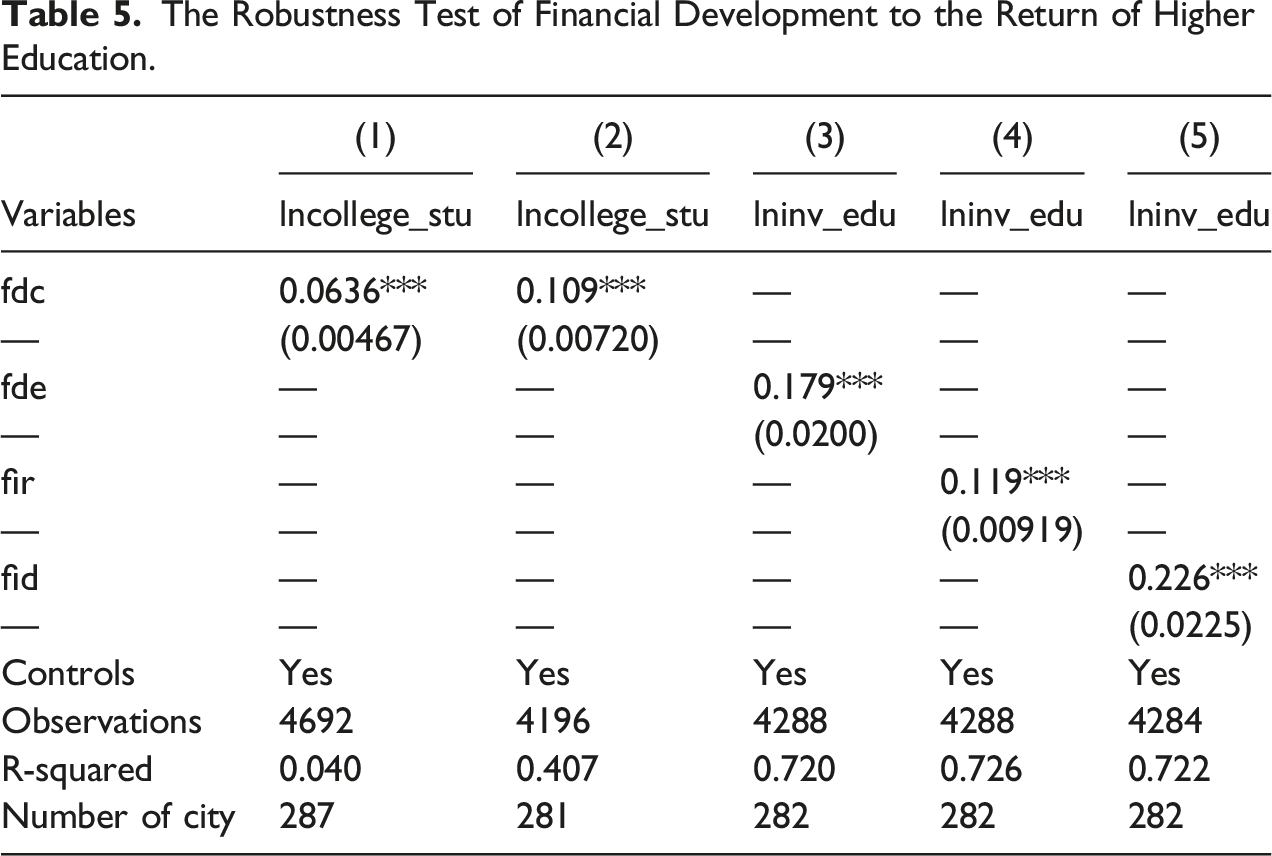
The Robustness Test of Financial Development to the Return of Higher Education.
Higher Education and Green Technology Evolution
Impact of higher education on green technology evolution
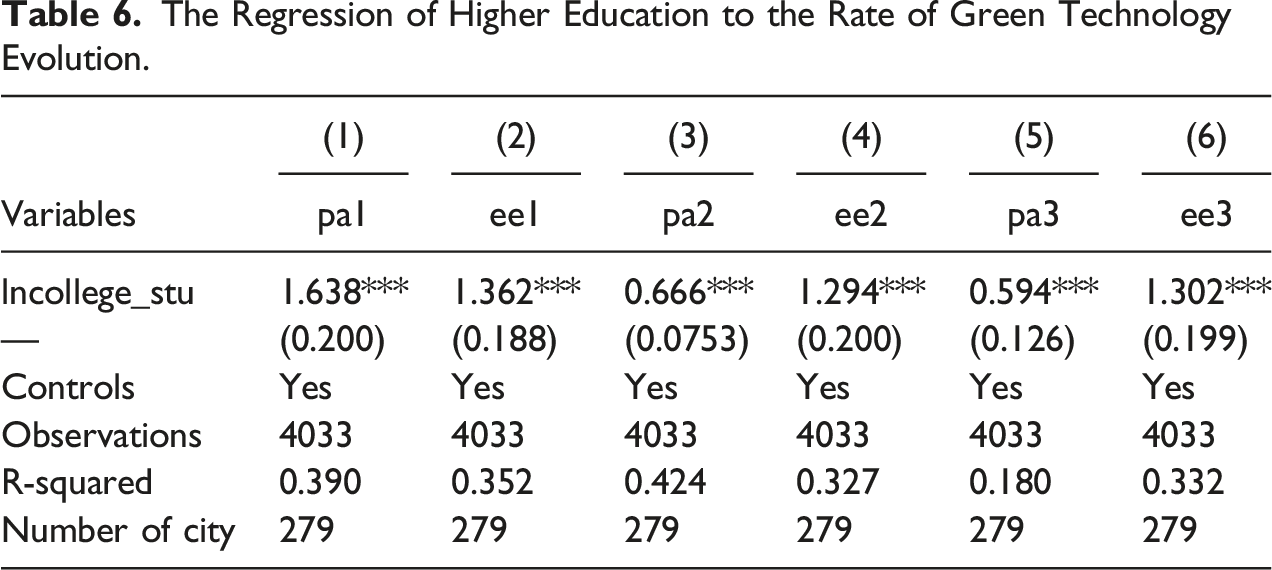
The Regression of Higher Education to the Rate of Green Technology Evolution.
Robustness test of the impact of higher education on green technology
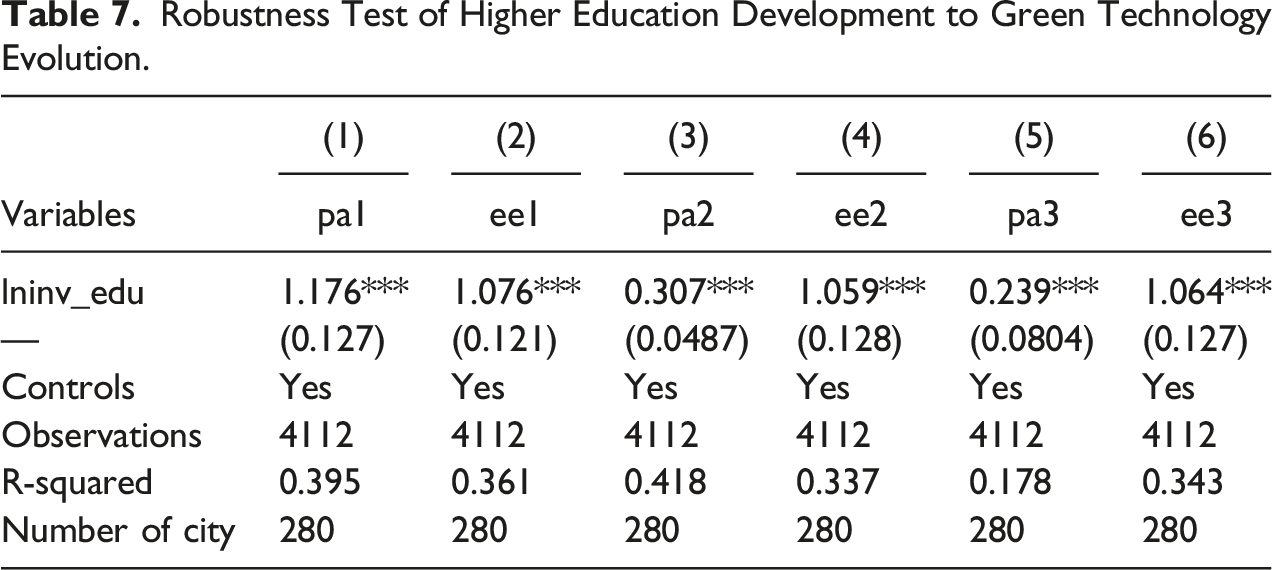
Robustness Test of Higher Education Development to Green Technology Evolution.
Financial Development and Green Technology
Baseline regression
The Influence Mechanism of Financial Development on Green Technology Evolution.
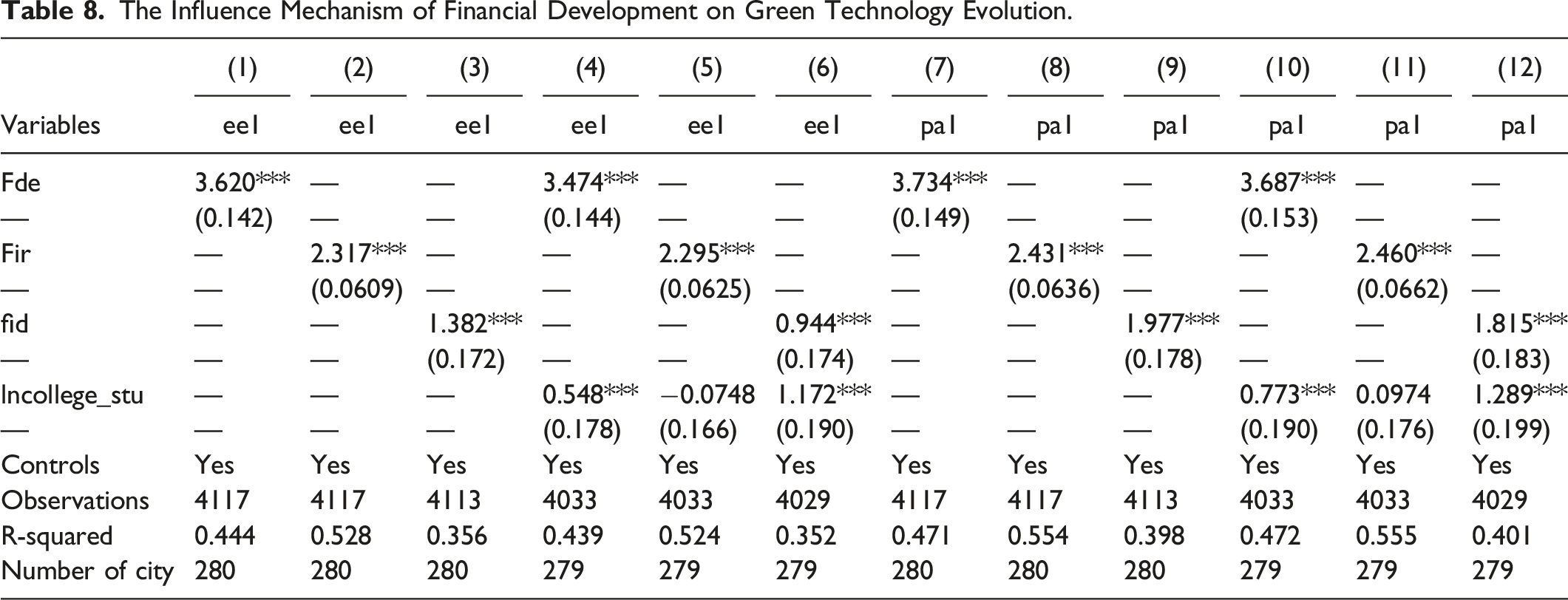
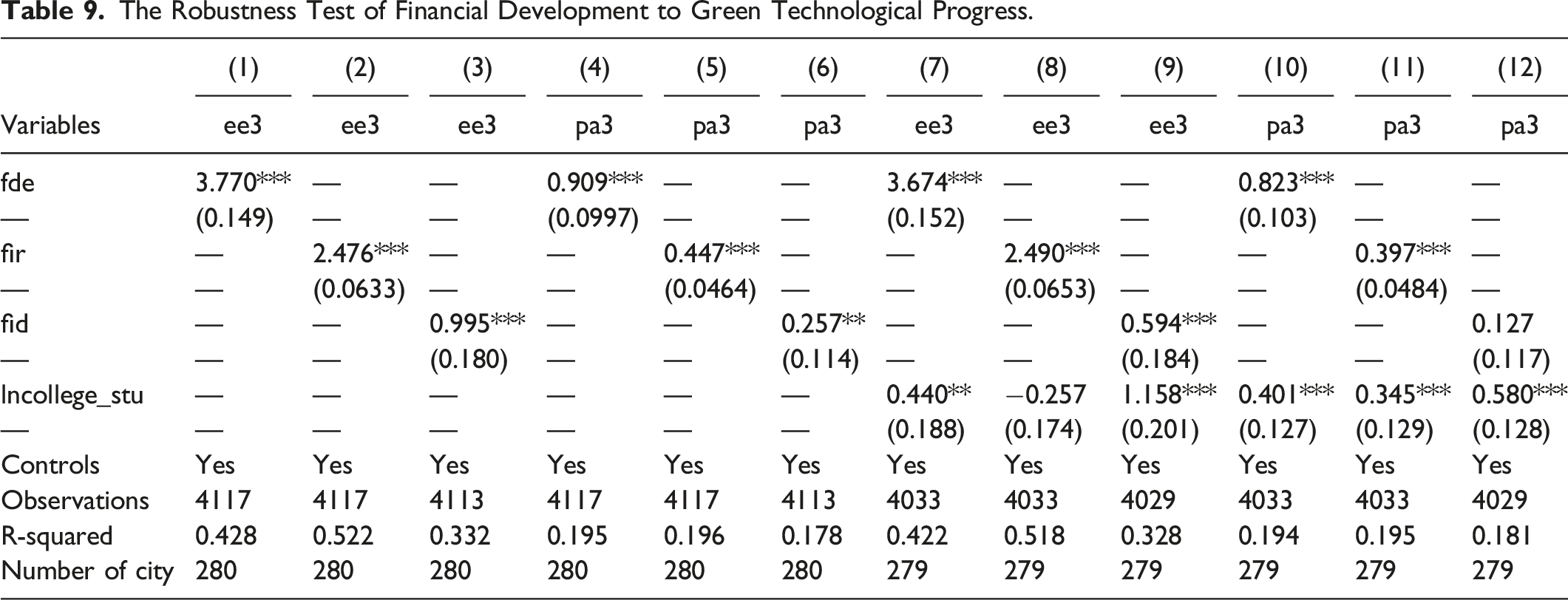
Columns (7) to (9) and (10) to (12) represent the direct and indirect effects, respectively, of financial development on environment efficiency, with CO2 as the unintended output. The results showed that the regression results of environment efficiency are basically consistent with the results of energy efficiency. The direct effects of financial deepening, financial correlation ratio, and financial intermediation on the environment efficiency all passed the significance test of 1%, and had a positive impact on it. When the level of higher education was included as the explanatory variable, the direct effect of financial deepening and financial intermediation was significant with the expansion of higher education indirectly, while the financial correlation ratio only had a significant direct effect on environment efficiency, and the indirect effect was not significant. Whether or not included higher education, this explanation is valuable. The three major indices of financial development to further green technology evolution had a very significant direct effect, at the same time, with the advancement of financial deepening and financial intermediation development furthering the expansion of higher education, and thus, indirectly promoting the evolution of green technology.
Robustness test of the impact of financial development on green technology
The Robustness Test of Financial Development to Green Technological Progress.
Threshold Regression
According to our analysis, financial development has both a direct effect of furthering the evolution of green technology and an indirect effect of furthering the evolution of green technology through the expansion of higher education. To further explore whether they share a nonlinear relationship with higher education expansion as the threshold variable, the threshold effect was evaluated. As the threshold effect regression using balanced panel data would make the result more reliable, interpolation and extrapolation were performed to fill the data, and energy efficiency and environment efficiency calculated with CO2 were taken to represent green technology.
Threshold Effect Test Results.
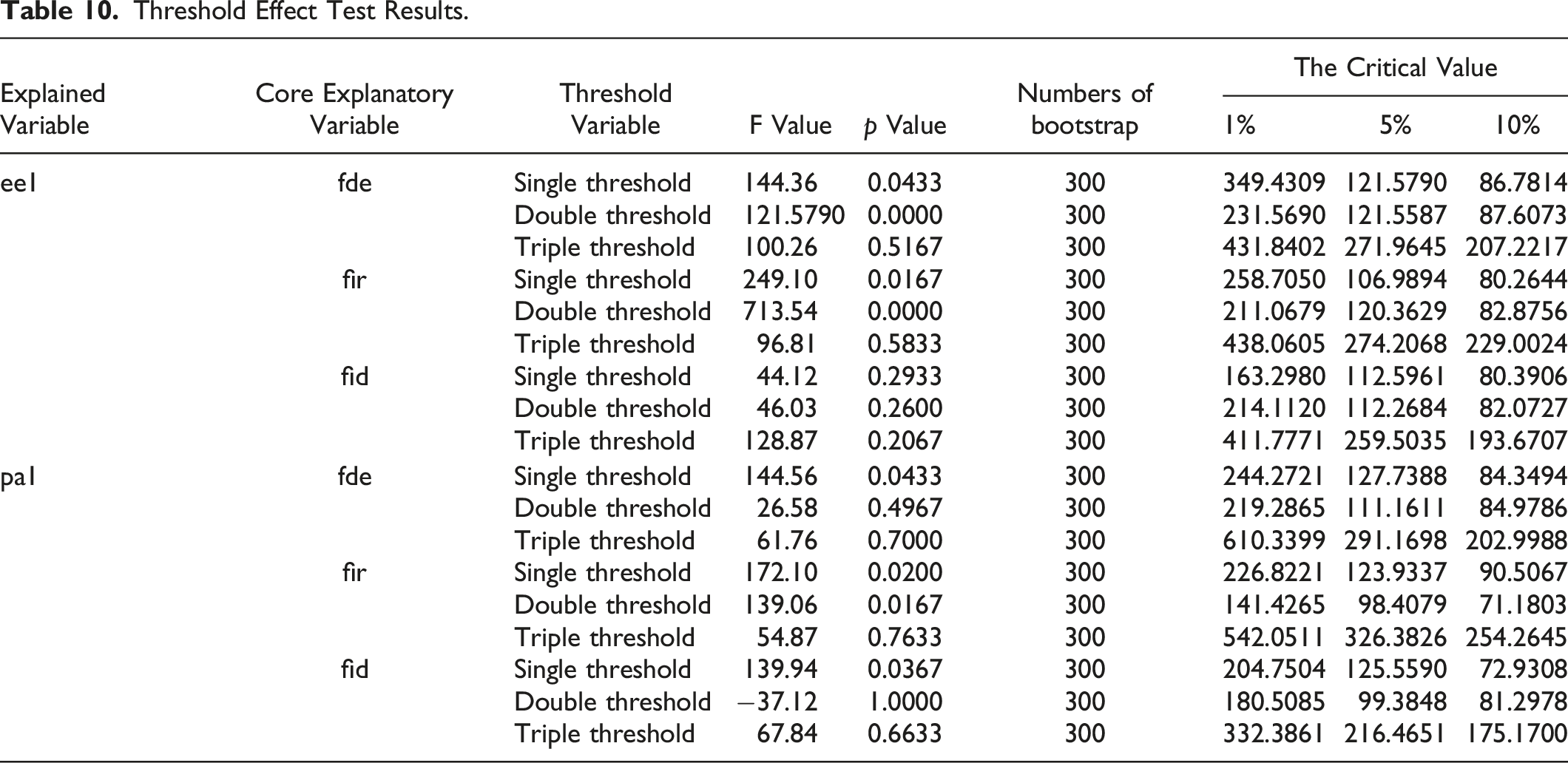
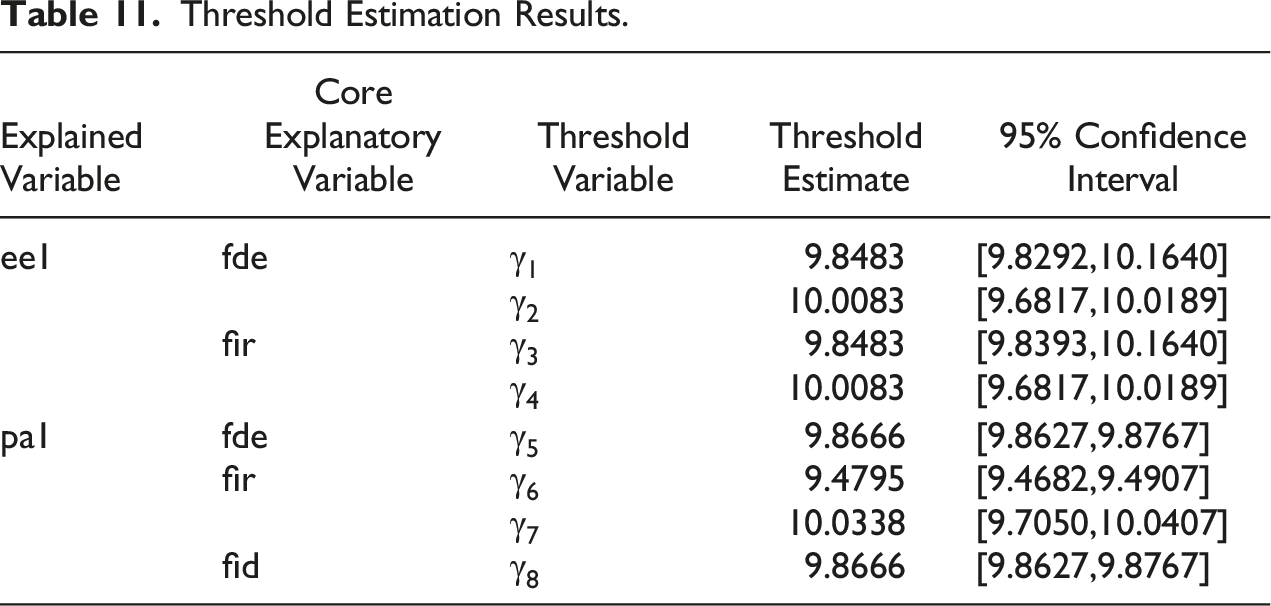
Both financial deepening and the financial correlation ratio had a single threshold effect at the 5% significance level. At the 1% significance level, there was a double threshold effect, while the triple threshold effect was not significant, with p-values of 0.5167 and 0.5833, respectively. When financial intermediation improved energy efficiency, there was no threshold effect, and single, double, and triple thresholds were not significant. Therefore, there is an obvious nonlinear relationship between financial deepening and the financial correlation ratio when promoting energy efficiency, and the expansion of higher education will affect the change of energy efficiency.
When the explained variable was transformed into environment efficiency progress, the p-values of the single threshold test for financial deepening and financial intermediary development were 0.0433 and 0.0367, respectively, indicating a single threshold effect at the 5% significance level. However, the p-values of the double threshold test were 0.4967 and 1.0000, respectively, indicating that the double threshold effect was not significant. When the financial correlation ratio improved environment efficiency, the p-values of single and double thresholds were 0.0200 and 0.0167, respectively, indicating a significant double threshold feature, whereas the results of the triple threshold test were not significant. Therefore, financial deepening and financial intermediation had a single threshold feature when promoting environment efficiency, whereas the financial correlation ratio had a double threshold effect when promoting environment efficiency. The expansion of higher education helps improve environment efficiency.
Threshold Estimation Results.
Threshold Panel Regression Model Estimation Results.
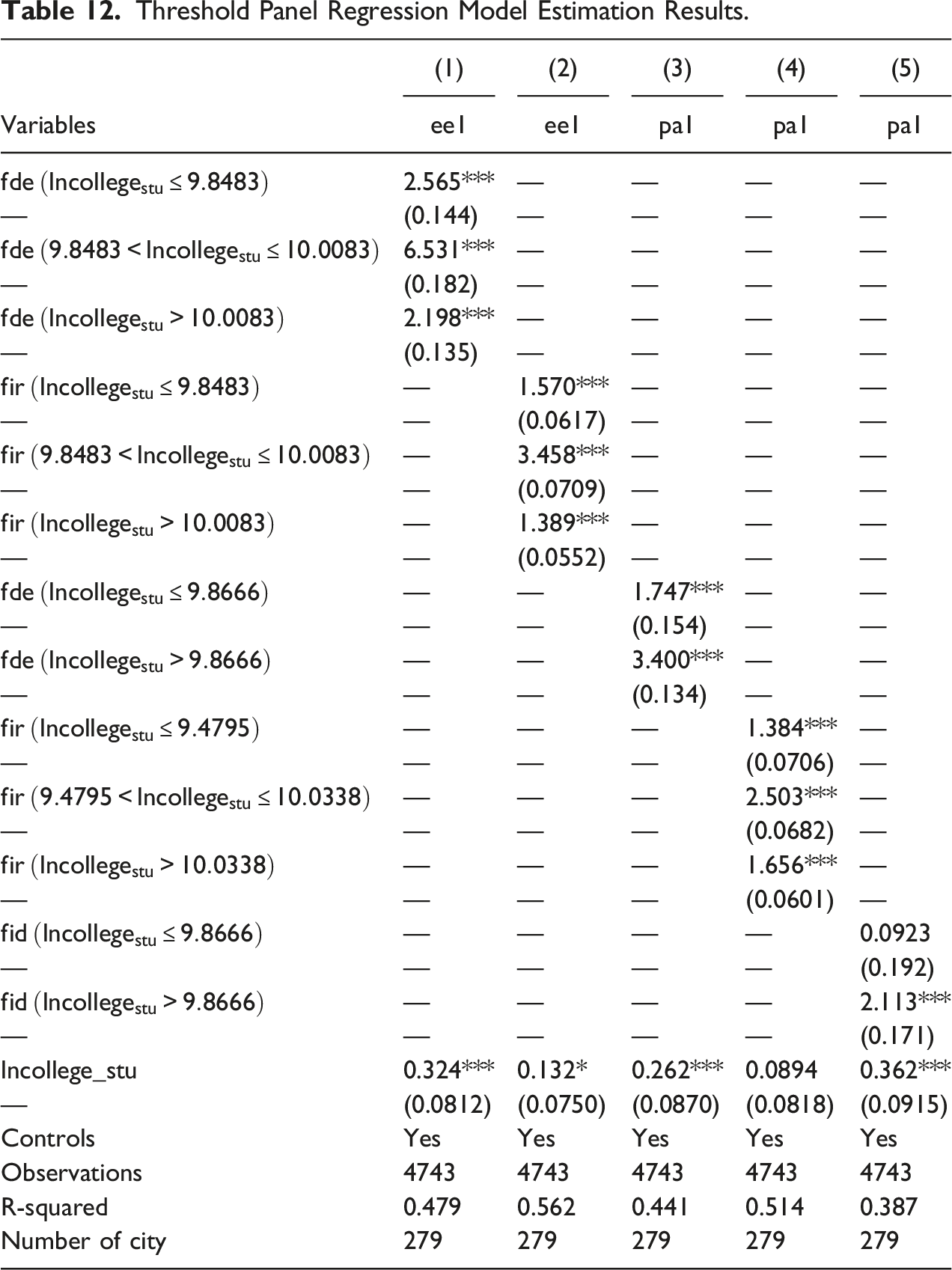
In general, there is a nonlinear effect of financial development on green technology. When the expansion of higher education is at different stages, the effect of financial development on the evolution of green technology will also change. In general, the more expansive the higher education, the more obvious the promotion effect of financial development on green technology progress. However, when the expansion of higher education reaches a certain level and the accumulation of human capital and improvement of comprehensive human literacy reach a certain degree, technological progress will experience a bottleneck. Then, the development of the high-tech technology may be the key to facilitate enterprises to further improve technological innovation.
Conclusion and Policy Recommendations
This study detected the influence of multidimensional financial development of biased technological progress when considering higher education. Using fixed effect model and threshold methods and drawing on the prefecture-level city panel data of China from 2003–2019, we found that (1) financial development can significantly foster higher education expansion; (2) higher education expansion can improve energy-biased and environment-biased technological progress; (3) financial development can both directly and indirectly promote green technology evolution by expanding higher education; the joint financial development and higher education expansion can significantly empower green technology innovation; (4) in the process of promoting green technology innovation, financial development has a nonlinear influence on it with higher education as the threshold; the effect of financial development on green technology innovation is different in different degree of higher education.
Based on the above empirical research results, we propose the following policy recommendations: (1) Continuously promote financial deepening, financial correlation, and financial intermediation development to accelerate green innovation. The empirical results show that the development of finance in different structures and perspectives can effectively promote the progress of green technology. For most regions, the perfection of financial markets and the innovation of financial products should be further strengthened to promote the development of direct investment markets. Regions should fully examine the resource allocation function of finance and increase financial support for green technology. It should not only pay attention to the positive impact of direct financing in the stock market on technological innovation but also actively promote the development of financial intermediaries, so that indirect financing in the credit market can play a role in enabling green technological progress. (2) Increase investment in higher education, improve the quality of human capital to ensure a constant driver of green innovation. Increasing scientific research funding in the fields related to green technologies and improving R&D personnel support can prevent brain drain—the departure of educated or professional people from one country, economic sector, or field for another, usually for better pay or living conditions—and further the evolution of green technologies. Governments should elevate the efficiency of higher education and expand opportunities for individuals to pursue higher education to improve the quality of the population, enhance the level of human capital, and raise the productivity of green technology. (3) Expand collaboration between the financial sector and higher education to foster innovation in green technologies. Regions should broaden the diversity of sources of scientific research funds for colleges and universities. Local governments should give full play to the advantages of policy orientation. While speeding up regional economic development, they should make full use of existing resources to strengthen strategic cooperation among financial institutions, colleges, and universities. For example, by setting up a joint investment fund, stakeholders can increase investment in higher education and train more R&D personnel on relevant technologies. Public and private initiatives facilitate the construction of high-tech industrial parks, with the financing support of financial institutions and the R&D support of academic institutions to realize the coordinated efforts of the development of the financial sector, the expansion of higher education, and the evolution of green technology innovation. Besides, due to the threshold effect of higher education between financial development and green innovation, regional economic development relying on green technology innovation should pay attention to local conditions while making full use of financial development and higher education.
Footnotes
Declaration of Conflicting Interests
The author(s) declared the following potential conflicts of interest with respect to the research, authorship, and/or publication of this article: The authors declare that they have no known competing financial interests or personal relationships that could have appeared to influence the work reported in this paper.
Funding
This work was supported by the Quality Engineering Project of Higher Education in Anhui Province (Grant No. acjyzd2022020), and the Teaching Research Project of Anhui University of Finance and Economics (Grant No. acszjyyb2021111).
