




Abstract
A multitude of interventions have been designed to tackle doping in sport. Despite significant advances in understanding the role of motivation, the environment, policies and education in addressing doping, there is a lack of nuanced knowledge concerning the design and implementation of these interventions. The present study adopted an intervention mapping evaluation perspective, critically evaluating a selection of 12 antidoping programs across three sports in Austria, Russia, South Africa, and the United Kingdom, using a mixed-methods, sequential, explanatory design. Findings confirm that the antidoping intervention landscape is diverse and complicated, incorporating multiple strands, sites, ambitions and stakeholders. It also suggests that the drive for policy compliance led by WADA has promoted considerable isomorphism across diverse cultural and economic communities and sports. Antidoping educational interventions appear to have been informed more by the moral imperatives for clean and fair sport rather than sound theoretical bases. While the theoretical basis on which most interventions were based can operate across culturally and economically divergent contexts, this is undermined by differences in their interpretation and the context of their implementation. Several lacunae in the design and implementation of antidoping interventions are also identified and discussed.
Introduction
Doping has long been recognized as a challenge to the integrity of sport. A multitude of antidoping interventions have been designed to tackle this phenomenon at local, national and international levels (Petroczi, 2021). Notwithstanding this, little critical research exists concerning the design and implementation of these interventions. Two major limitations of most evaluation studies have been (1) their explicit focus on effectiveness at an individual or cohort level from a psychological or social psychological perspective as opposed to their being grounded in evaluation science; and (2) the mismatch between the target (that which education seeks to change) and the outcome(s) by which “effectiveness” is to be assessed. Hitherto, interventions have been largely examined as a cause-and-effect relationship beyond the specific context in which they were implemented (Blank & Petróczi, 2023
Evaluation is critical to the effectiveness of antidoping educational interventions (ADI), but most interventions are not adequately evaluated due to a lack of expertise and/or resources and tend to be outcome-based (Backhouse et al., 2015; Filleul et al., 2025; Woolf, 2020). Thus, the longstanding policy drive to design and deliver educational interventions has not been matched by adequate efforts to evaluate them. This, in turn, limits understanding of interventions’ efficacy or evidence-based reform.
Educational interventions form the core of ADI, and the importance of evaluation has recently been reinforced by WADA's (2021a) revised World Anti-Doping Code (WADC) and the new International Standard for Education (ISE). The ISE makes it compulsory for the providers of antidoping education to evaluate all interventions annually, and to use this information to inform their plans. Historically, antidoping authorities have been committed to an uncritical belief in the power of education to arrest doping in sport (Cléret, 2011; Houlihan, 2008; WADA, 2018). A skeptical approach is therefore merited. As Rossi (1987, p. 7) puts it, “evaluation research is the legitimate child of skepticism, and where there is faith, research is not called upon to make a judgment.”
The present study employed an intervention mapping evaluation perspective to explore how antidoping interventions were designed, implemented and evaluated in a selected set of interventions before the introduction of the new ISE. The main research question addressed was “do antidoping interventions work?” Intervention mapping is an established approach for the design of health interventions (Bartholomew et al., 2011), but it was applied backwards to allow evaluation at different stages of the interventions. Four diverse socio-cultural contexts, including Austria, Russia, South Africa, and the United Kingdom, were utilized. Thus far, no study has evaluated an entire antidoping intervention from this perspective.
Literature Review
WADA was the institutional response of the IOC's war against doping following a series of high-profile doping scandals and institutional failures (Wagner & Pedersen, 2014). WADA's (2021b) ISE educational aim of fostering and protecting the spirit of sport is deeply contested by some scholars as culturally and legally meaningless (Andreasson & Henning, 2021; Kornbeck, 2013). By contrast, Loland and McNamee (2016) have argued that it is an ideal that has to be operationalized according to specific purposes. Further, Petróczi and Boardley (2022) described doping as a wicked problem and, thus, opened the possibility for questioning the premises on which most antidoping interventions are based, namely that the doping problem should be solved as opposed to being continuously managed. This suggests that antidoping educational interventions are born of complex and contested assumptions and processes, in which evaluation should play a critical role.
Evaluation science offers an array of approaches for understanding the workings of different programs (Demarteau, 2002; Pawson, 2013). What unites various evaluation models, though, is an explicit theory of change (or program theory) based on an “if-then” proposition. That is, if certain resources (i.e., lectures, activities, incentives) are made available, then they could initiate some changes in subjects’ attitudes and behavior. Nonetheless, articulating the basic assumptions of interventions based on the “if-then” proposition has always been problematic, which has contributed to increased evaluation complexity (Weiss, 1998). Recent work on antidoping educational initiatives has shed light on the advances and challenges faced by various interventions (see Appendix A for the summaries of the main findings).
Variably, these outputs present a wide variety of research foci and methods. For example, several types of reviews (Backhouse & McKenna, 2011;
Furthermore, it must be noted that antidoping education interventions typically build on the proposition that there is a need for intervention to prevent doping; otherwise, all athletes would dope if not deterred by a combination of education, and/or persuasion, and/or threats. Despite important challenges to these bases (e.g., Petróczi et al., 2017; Petróczi & Boardley, 2022), acknowledged by the WADA, the central thrust of antidoping education remains on preventing the occurrence of intentional and unintentional Antidoping Rule Violations (ADRVs). To date, empirical studies evaluating antidoping education have focused on knowledge (Deng et al., 2022; García-Martí et al., 2022; Murofushi et al., 2018), moral concerns (García-Martí et al., 2022) and moral values (Hurst et al., 2023), doping attitudes (Barkoukis et al., 2016
Although research has acknowledged the importance of cultural context, the specificity of the sport concerned, and the role of external environment (e.g., Barkoukis et al., 2016; Deng et al., 2022; Hauw & McNamee, 2015
Theoretical Framework: A Backward Intervention Mapping Approach to Evaluating Antidoping Interventions
The concept of intervention mapping (IM) is not new. It arose from the planning failures of existing intervention models that attempted to change behavior that was unrelated to the problem or that confuses the individual with environmental factors (Kok & Mesters, 2011). IM has been used extensively in the field of health (Garba & Gadanya, 2017) and to a lesser extent in physical activity and sport domains (Direito et al., 2018; McEachan et al., 2008; Santina et al., 2019; van Schijndel-Speet et al., 2013). Lloyd et al.'s (2011) study specifically demonstrates that the systematic approach provided by IM ensures that the behavior change and delivery methods link directly to the programs performance objectives and their associated determinants.
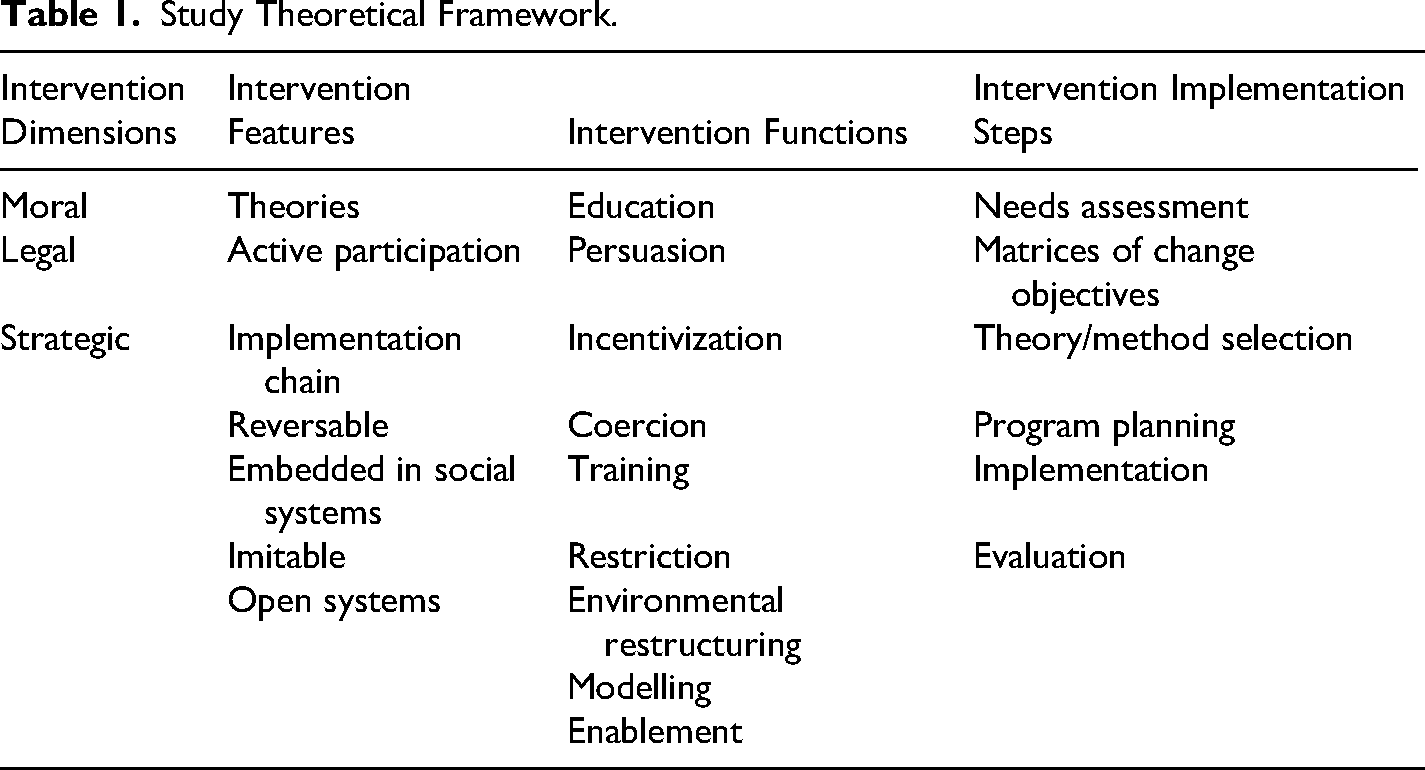
The term “intervention” is a convenient short-hand expression for what is a rather complex and methodologically diverse concept. The present study refers to ADI as a concrete statement of athletes’ and officials’ behavior that creates the occasion for a policy intervention and describes a set of organizational operations that can be expected to affect that behavior and the expected effect of those operations. Thus, interventions have three key dimensions, including legal, moral, and strategic (Elmore, 1980), distinguishing features and functions. The moral dimension of doping is expressed in its widespread condemnation as undermining the integrity of sport; the legal dimension is provided by the regulatory tools of the WADA (principally the World Anti Doping Code of 2021
ADI's features have been variously defined, but we followed Pawson et al. (2005)’s seven features of interventions. First, interventions are theories in the sense that they are based on the if-then proposition. Second, they are active in that their effect is contingent on the active participation of individuals concerned. Third, they have an extended implementation chain from inception to delivery and evaluation, being influenced by various actors at each stage. Fourthly, intervention implementation is not one-directional and can be reversed. Fifth, they are embedded in multiple social systems and are usually introduced on top of existing policies and interventions. Sixth, they are imitable as a whole or in part. Finally, they are open systems in the sense that once implemented, they tend to alter the conditions that made them work in the first place.
Interventions perform several functions. The Behavior Change Wheel tool (Michie et al., 2011) includes nine distinct functions that interventions can perform to change behavior, including education, persuasion, incentivization, coercion, training, restriction, environmental restructuring, modelling and enablement. Thus, it would be expected that antidoping interventions will exhibit some or all of the seven features as well as perform the key functions.
As articulated by Bartholomew and colleagues (2011; Kok et al., 2016), IM displays an iterative path from problem identification to problem solving or mitigation. It operates reflexively such that individuals are situated in various local, social, and (supra) national networks and systems, and both affect and are affected by them. (Kok et al., 2016) The mapping of these factors through IM consists of six successive steps where each step comprises several tasks (Bartholomew et al., 2011): (i) a needs assessment is conducted alongside a problem analysis; (ii) matrices of change objectives are created based on the determinants of behavior and environmental conditions, providing the foundations of the intervention by specifying who and what will change because of the intervention at selected ecological levels (i.e., individual, club/federation); (iii) theory-based intervention methods and practical strategies are adopted; (iv) methods and strategies are developed to form an organized program; (v) an adoption, implementation, and sustainability plan is developed; and (vi) an evaluation plan is generated to examine the effects and processes of the decisions taken in said implementation.
The present study adopted these steps and related tasks to guide the investigation of the design and implementation of antidoping interventions. All examined interventions had already been implemented. Therefore, a backward intervention mapping (Elmore, 1980) was applied, identifying three key elements: (i) the nature of the problem; (ii) those who had been affected; and (iii) those responsible for the design and implementation of antidoping interventions. These three elements complement the logic of IM by offering a bottom-up approach to intervention design and implementation. A key feature of this approach is that “the analytic solution offered by backward mapping stresses the dispersal of control and concentrates on factors that can only be indirectly influenced by policymakers: knowledge and problem-solving ability of lower-level administrators…” (Elmore, 1980, p. 605).
This approach contrasts with analytic solutions offered by forward mapping driven by centralized control and factors that are easily manipulated by policymakers, such as funding formulae, authority relationships among administrative units, regulations, and administrative controls (budget, planning, and evaluation requirements). This observation is pertinent to the present study, given the power dependency relationship between WADA and NADO as demonstrated by Zubizarreta and Demeslay (2021)
Study Theoretical Framework.
Method
Study Design
The study followed a mixed-method sequential explanatory design, which allows for interpretation and explaining relationships such as those between antidoping education program participants and designers/implementers. The sequential explanatory design (i.e., collection and analysis of quantitative data followed by the collection and analysis of qualitative data and then by their integration, Creswell et al., 2003) may or may not be guided by a theoretical perspective and is suitable for a research program such as the present one. The IM framework was used to inform data collection.
An important aspect of the study was to establish the equivalence, understood as the sameness between different phenomena in terms of value, importance, use, functions or results. The equivalence of the present study rests in the universally recognized importance of preserving clean sport, the use of educational interventions to achieve this goal, and their functional utility in delivering desirable results by changing participants’ attitudes, beliefs and behaviors. There are three forms of equivalence in comparative research: conceptual, sampling, and functional (van Deth, 1998). The conceptual equivalence of the study was predicated on a universally established foundation (i.e., WADC, IES). The sampling equivalence was achieved by choosing National Sport Federations (NF) of Olympic sports for which antidoping education is mandatory. Functional equivalence refers to the requirement that the phenomena “should be related to other concepts in other settings more or less in the same way”… and that “the similarity of relevant properties in different phenomena that lies at the centre of the idea of equivalence in comparative research…. comparability cannot be conceived as an attribute of elements but as attribute of elements’ relationship to a more general point of reference” (van Deth, 1998, p. 6). Thus, the fact that the NFs studied differed in their size, budgets, and success was not deemed to be of concern when comparing the antidoping implementation strategies. The meaningfulness of the comparison was ensured by examining only relevant properties of the phenomenon, which in our case was the relationship between antidoping educational interventions and their implementation in different cultural contexts.
Data Collection
Data were collected from three NF in four countries, including Austria (athletics, climbing and ski), Russia (athletics, cycling, and ski), South Africa (athletics, cycling and rugby) and the United Kingdom (cycling, rowing and rugby), or 12 antidoping programs in total. Their composition was as follows: all programs were knowledge-based; two were both knowledge and value-based; and none was exclusively value-based. Every effort was made to secure the same sport NF, but ultimately, issues of sensitivity and feasibility dictated the study sample. Four main methods for data collection were employed: (i) an online survey with athletes and officials, (ii) obtaining documents (i.e., NF, National Antidoping Organizations (NADO), and WADA reports), followed by (iii) interviews with key stakeholders. Table 2 shows the study sample.
Study Sample and Data Characteristics.
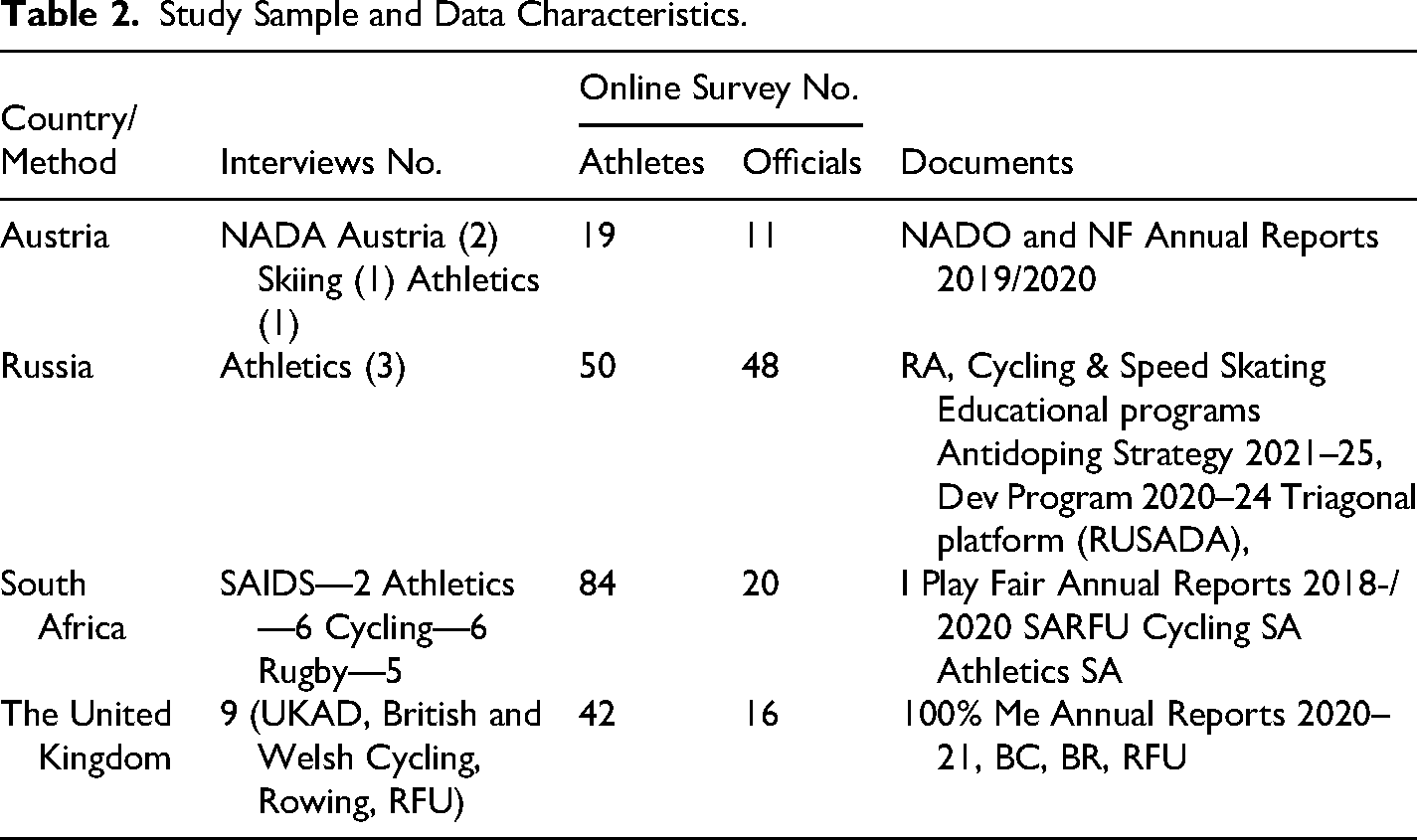
The online survey captured athletes’ and officials’ perceptions and experiences of antidoping interventions they had participated in. It was constructed around four key themes: (i) demographic information; (ii) educational antidoping experiences; (iii) specific antidoping education sessions attended; and (iv) recommendations. The survey was back translated into German and Russian to facilitate participation and was completed by 195 athletes and 95 officials. NF invited athletes and officials to participate in the survey, which was hosted on an independent platform. The main aim of the interviews was to explore how the existing antidoping interventions have been designed and implemented by NF. The antidoping officers and other officials responsible for ADI from each NF and NADO were interviewed. An interview guide was developed around six key IM stages described above (Bartholomew et al., 2011) and data from the survey. In total, 32 interviews were conducted both virtually and in-person, lasting between 45 and 90 minutes each. Three factors hampered data collection, including (i) sensitivity of the topic; (ii) Covid 19; and (iii) diverse competition schedules.
Antidoping policy and intervention description and evaluation documents were collected in each country and sport to examine the underlying assumptions behind different interventions, the theory of change, the suggested course of action and resource allocation. The integration of quantitative and qualitative data was undertaken to ensure triangulation, complementarity and initiation (Greene et al., 1989). Triangulation resulted in convergence between survey and interview findings by corroborating athletes’ experiences of educational programs with the designers’ intentions. Complementarity served to elaborate the intentions behind interventions and their purported results, while initiation produced new interpretations of the key features of IM.
Data Analysis
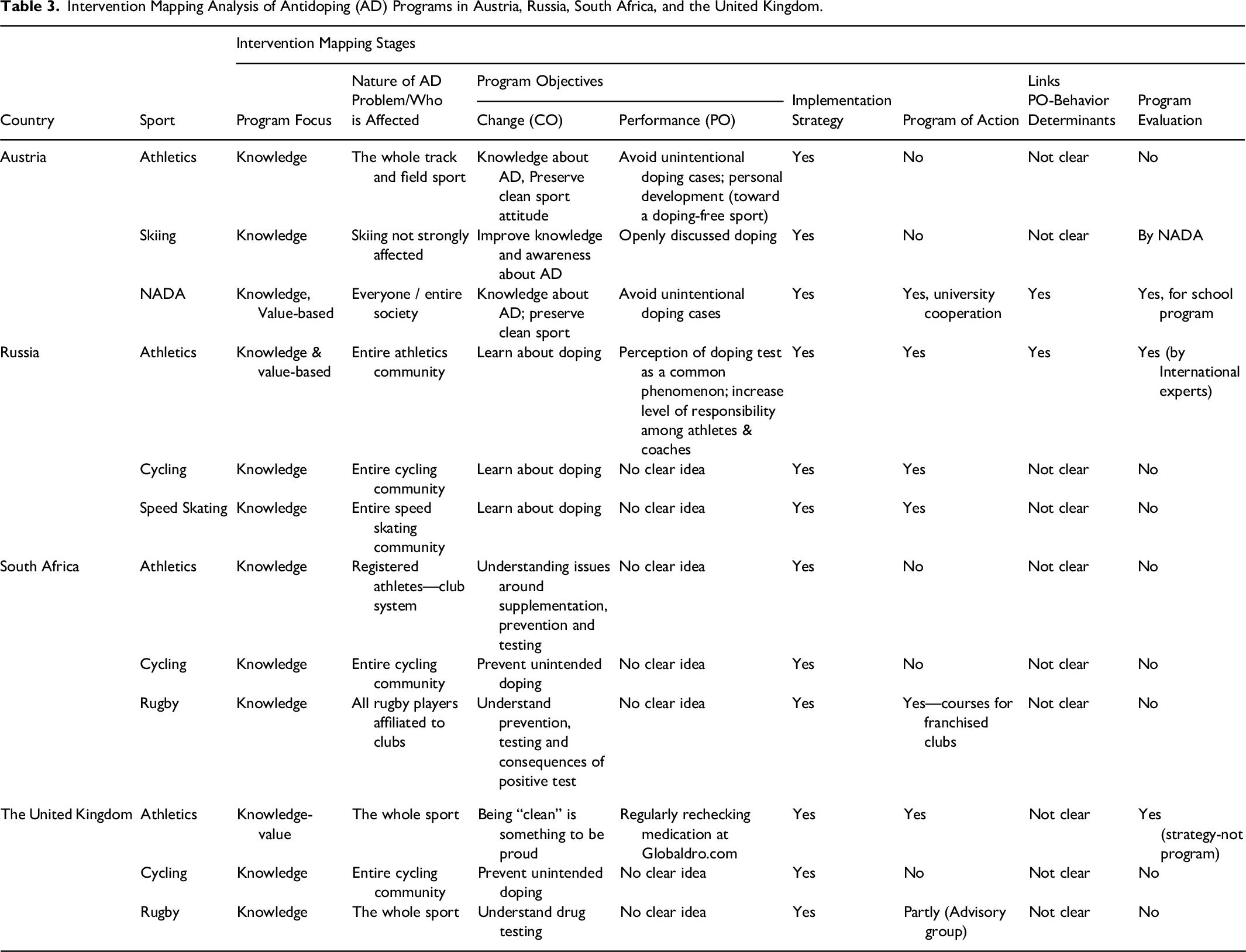
Descriptive statistics were used to analyze the results from the online survey. Interviews were conducted in the participants’ native language and were transcribed verbatim. Interview data were analyzed using template analysis, a form of thematic analysis that can be applied both deductively and inductively (King & Brooks, 2017). The template was developed by three of the authors and validated by the whole research team. It comprised eight themes (i.e., who and in what way was affected by doping; program performance and objectives; factors contributing to doping; type of intervention; level of intervention; intervention implementation; scope and sequence of segments; and effects of intervention), 27 subthemes and 47 sub-subthemes. For example, the theme “performance and change objectives” was further broken down to sub-theme “what must be learned” and sub-sub-themes “cognitive/knowledge,” “attitudes/values” and “skills.” Disagreements were resolved through discussions within the research team. Documents were analyzed using Prior's (2008) two-pronged approach to the study of documents, including (i) those focusing on the content, and (ii) on their use and function by asking what documents do and what they say. The objects of the analysis were (i) how antidoping interventions were conceptualized concerning the nature of the doping problem and the target group affected; (ii) how the theory of change was formulated; and (iii) what implementation actions were planned. For example, the focus of analysis becomes how implementation plans were conceived and impacted the interactions within the NF. Intervention mapping was conducted for each country and sport, and the results were then summarized and shown in Table 3.
Intervention Mapping Analysis of Antidoping (AD) Programs in Austria, Russia, South Africa, and the United Kingdom.
Results and Discussion
Out of the 12 sports across the four countries analyzed, only two have educational interventions (RFU in the United Kingdom, and Russian Athletics) independent of NADO or WADA resources. For the majority of NF, use of these materials acts as an “insurance policy” since it avoids their responsibility for content and foci by adopting authoritative pre-existing material. Although cost-effective, this choice entails the risk of overlooking the specificities in their respective sports. Further, the cascading of one antidoping program through several levels undermines consistency of delivery and impact. The challenges of “policy translation” are well established in the implementation of antidoping policies and sport in general (Hanstad et al., 2010; Skille & Stenling, 2017). The ensuing discussion uses mainly interviews and documents data since intervention implementation is the responsibility of NFs and NADOs officials. Where relevant, survey group data are also analyzed to capture participants’ perceptions of the effects of the interventions.
Articulating the Nature of the Antidoping Problem and who and how is Affected
The first step in IM is to understand who is affected by the doping problem and in what way. This is a precondition for determining the focus and level of program intervention, also known as the program theory. There was general agreement that doping affects the whole sport community and is not confined to a particular target group or stakeholder. This finding is echoed by other scholars (Backhouse et al., 2015; Petróczi et al., 2017). Yet, sports have multiple stakeholders who are affected in heterogeneous ways. The media play a critical role in shaping public perceptions of doping, and a common concern was expressed that doping cases are covered disproportionally, with a heavy focus on athletics and cycling, while doping violations in other sports often get only a passing mention. For example, the media coverage of doping in South Africa has been particularly stringent, focusing on the shaming of individual athletes.
Views of “who” was affected diverged both between and within sports and were classified into three clusters: (i) all stakeholders (expressed by athletics Russia and SA, rugby, the United Kingdom, SA, cycling and speed skating Russia and all NADO); (ii) young and upcoming athletes (rugby SA, cycling and athletics, Russia); (iii) top athletes (athletics and skiing Austria and rowing UK). Reynoso-Sánchez et al. (2025) also identified young athletes as the main target of interventions.
Informants found it challenging to establish precisely how those at risk were affected by doping. Such understanding requires more than anecdotal evidence and an in-depth knowledge about the dispositions, attitudes and behaviors of various stakeholders (Barnes et al., 2020; Blank et al., 2016). As an RFU official elaborated, “I believe there is a lot of illicit drug use in our community clubs. So, this has nothing to do with necessarily sport but particularly young men, they’ll go and play the sport, and then they will go out on a Saturday night, and they will use illicit drugs.” With very few exceptions (mainly by NADOs), the antidoping interventions reviewed were not based on an explicit theory, nor were they evidence-based. A general view emerged that the two main determinants of doping behavior across all sports were athletes’ desire to enhance their performance and advance their careers, and the lack of knowledge about the negative effects of doping. This view is corroborated by several studies (Mazanov & Huybers, 2010; Waddington & Smith, 2013).
Nevertheless, perceptions of doping problems are complex, as indicated by Austrian informants and include the wider influences of achievement-focused societies and environmental factors such as problematic values, pressure from coaches, teams, media and peers to perform optimally at all times in a short competitive career. Thus, it is equally important to understand both why athletes engage or do not engage in doping-related behavior.
Establishing Program Performance and Change Objectives
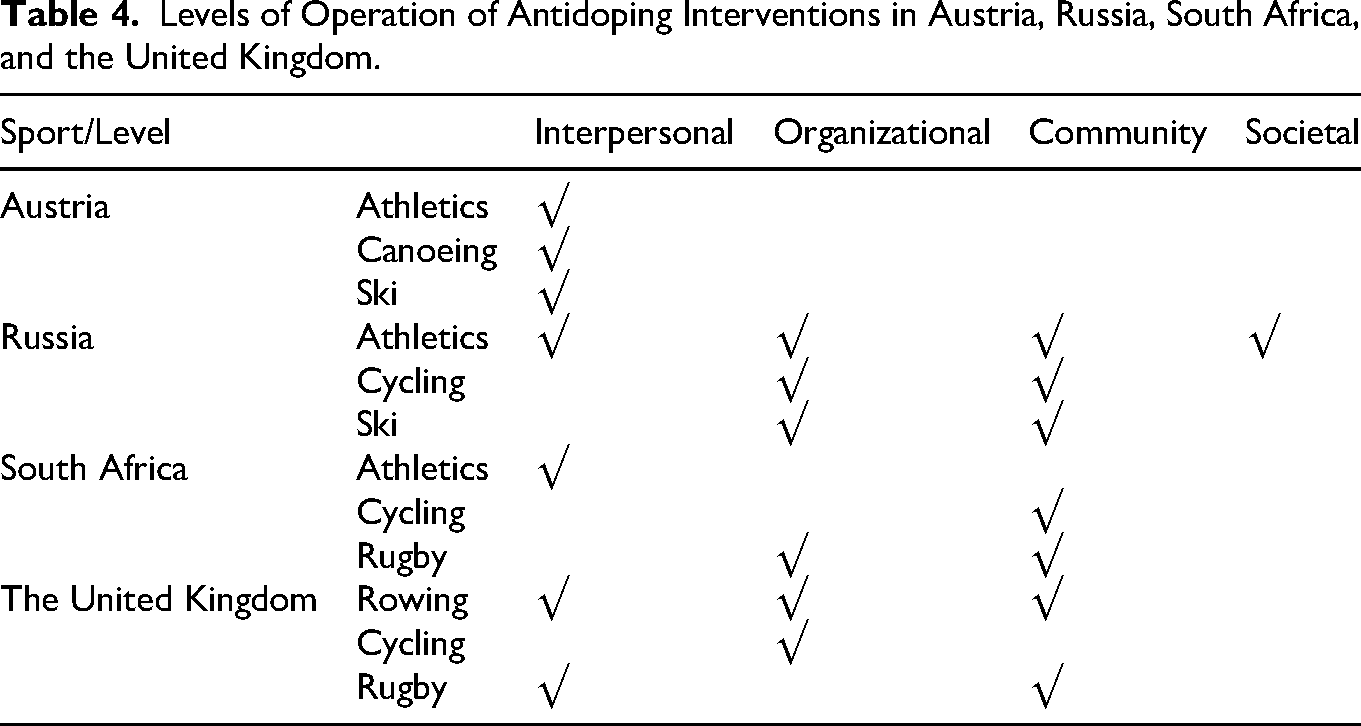
Antidoping interventions can operate at the interpersonal, organizational, community or societal level as well as on more than one level. Nevertheless, antidoping managers conceptualize performance objectives as an observable subset of behaviors and a change objective insofar as the program participants must learn or change to meet or maintain the performance objective.
Three clusters of interventions across all sports pertinent to interpersonal, organizational and community levels were identified (Table 4). The wider point emerging from the analysis concerns the institutional organization of sport, where the greater the integration of different levels of athletes’ development, that is, coach, family, club, NF, the higher the involvement of different community members in antidoping efforts. The country-specific policy context also plays an important role. For example, the UKAD's new Assurance Framework applies to antidoping education at all levels, including more responsibilities for NF to ensure that antidoping filters down to clubs, members and coaches at organizational and community levels. The level of operation of an intervention is closely related to its objectives. So, unless its design and delivery explicitly incorporate some or all four levels, it would be unrealistic to assume that any educational program can be effective across the board.
Levels of Operation of Antidoping Interventions in Austria, Russia, South Africa, and the United Kingdom.
A great deal of uncertainty exists among informants as to what constituted the performance and change objectives of the interventions. This can be explained partly by the fact that several NFs did not run their own programs and were not familiar with their conceptual premise. Promoting knowledge-based interventions comes with its own challenges as different forms of knowledge, including factual, procedural, conceptual and metacognitive, require different delivery approaches and carry different impacts for athletes (Petróczi & Boardley, 2022; Woolf, 2020).
The general view of change objectives across all sports was that interventions were designed to equip athletes and coaches with awareness and knowledge about doping as well as to instil the basic values of clean and fair sport. Regarding performance objectives, there was a distinct lack of understanding about what exactly interventions aimed to achieve. Different views were expressed including to: (i) increase participants’ trust in the NF as well as to encourage whistle-blower's behavior; (ii) promote more open discussions about doping in specific sports (athletics, skiing Austria, rowing UK); (iii) discourage athletes from intentional and inadvertent doping (cycling UK; rowing, cycling and rugby SA; athletics and skiing Austria); (iv) enhance personal responsibility (athletics Russia; athletics and cycling SA); (v) ensure greater engagement from clubs (rugby UK; student athletics SA); and (vi) transform the environment with zero tolerance for doping, i.e., “formation of an active position of rejection towards persons violating antidoping rules in Russian Athletics community” (athletics Russia).
A sound understanding of change and performance objectives is critical for the success of educational interventions in antidoping. Yet very little evidence was found for the presence of a clear understanding on the part of antidoping officials of change and performance objectives and their relationship with the nature of the doping problem and how it affects different stakeholders. This likely arises because behavioral determinants are defined generically and thus, they cannot be targeted directly. As Kok et al. (2016) explicate, “behavioural determinants are generic aggregates of beliefs, which instead are specific to behaviour, population, and context” (p. 299).
Recognition of the national context seems to be critical for more effective antidoping education. For example, in South Africa, socialization into the rugby system assumes that values of fair play and clean sport will become part of a player's trajectory in competitive rugby, which has a highly controlled environment. The emphasis on the player as the locus of responsibility poses challenges for the controlled ecosystem. Conversely, the UKAD has been promoting the idea of practice communities, where all those involved in sport share the same values and responsibilities for preserving its integrity.
The South African and Russian informants explicitly noted problematic Western assumptions behind those interventions, some of which were felt to be incompatible with local values and meanings. This was particularly the case with non-English speaking younger South African rugby players and athletes. The values of “achievement” and “pressure to become a professional player” and the possibility of “lifting impoverished households out of poverty”, were prioritized over antidoping norms. In this sense, class (socio-economic dimension) intersects with culture (formed around ethnicity and race as a sense of identity) that directs behavior in the aftermath of apartheid. A sense of entitlement and social transformation to have racial and “ethnic black” representation at all competitive levels overrides what can be perceived as “outsider” values such as “fair play.”
Another example of values-incompatibility concerns the cultural perception of whistleblowing, evidenced in the Russian sample. The broader national context is grounded in collectivism and influenced by the supra-individual spirit, with an established system of relations implying a certain cohesion and the rejection of whistleblowing practices. Having an educational intervention that is alien to the culture of those being educated is problematic. Practice like whistleblowing encounters significant difficulties in the face of established traditions and national mentality and forces the search for other specific tools for revealing wrongdoings. It is reasonable to infer that the universal instruments promoted by WADA cannot be equally meaningful or effective in Russia and South Africa due to differences in cultural values and norms, their interpretation and prioritization.
These findings reveal an interesting and well-established paradox. Although all NF have been participating in interventions designed by the country's NADO, they must be interpreted into programs locally. Lessons from program evaluation suggest that programs do not work, but rather that it is their interpretation by the subjects that produces results (Pawson, 2013). This brings to the fore the importance of context as well as the need to define who the subjects of the intervention are.
Practical Strategy Employed for Program Implementation
To achieve their stated objectives, interventions need a clear and robust implementation strategy detailing delivery roles and responsibilities, management process, resources required and timelines. The results across different sports showed a polarized picture between those who have an implementation strategy (all sports in Austria, Russia and the United Kingdom), and those without one (SA). South African NADO has an implementation strategy and clear targets, as well as the rugby NF. The cycling and athletics NF have restructured, and the first step was to develop a policy aligned with that of their international federation and with the WADA antidoping educational code. Thus, for them, the priority has been to ensure vertical alignment with WADA rather than horizontal synergies in developing a protective sport ecosystem. Nonetheless, a similar vertical alignment was observed with BC, where the original implementation plan was reviewed. “… in anticipation that the UKAD assurance framework would be introduced. And we would need to comply with that by the end of April next year. And so, we know, and that has been updated” (BC antidoping official). The lack of an implementation strategy creates significant management problems because it blurs organizational responsibilities and commitment and hinders effective delivery and evaluation. Given the high turnover of antidoping officers in NF it also opens to misinterpreting the aims and delivery of the intervention.
Translating Methods and Strategies into an Organized Program of Action
While an intervention's implementation strategy determines the direction of travel and resources needed, the program of action translates the strategy into practical steps on the ground. The main function of a program of action is to ensure the integrity and effectiveness of antidoping interventions; thus, it requires systematic management. Limited evidence was found concerning the scope and sequences of different components of program implementation (i.e., online course, event workshops, talks, quizzes) or their integration into a coherent program of delivery and communication to the target group. All NADOs had programs of action, but these were lacking at the level of NF. One reason may well be an effect of the lack of commitment to, and ownership of, the educational material in the first place. For example, the RFU set up an advisory group, which would meet once every quarter to discuss doping-related issues, including the program of action. A similar approach was reported by RA, which combined voluntary bi-annual reports from the medical committee with compulsory bi-annual reports from regional athletics federations “From the RA point of view, these reports about the work done are submitted every six months, in line with the early agreed programme of action and schedule” (RA official).
Establishing Links Between Performance Objectives and Behavior Determinants
This step of IM juxtaposes the adoption and implementation of performance objectives with personal and external determinants, as perceived by NF and NADO officials. It enables analysis of the alignment between what program implementers believe to be the determinants of doping behavior and the specific aims of the program. The alignment between behavioral determinants and performance objectives provides grounds for determining causality.
There was virtually no evidence from NFs of a clear alignment between personal and environmental determinants and performance objectives. NADOs’ programs were better designed in this regard, possibly because antidoping is for them a core business activity. Furthermore, most interventions were not underpinned by research that aimed to establish the role of different determinants.
A mixed picture exists regarding the status of antidoping interventions. These were compulsory for athletics, skiing and all young athletes in Austria, cycling, rowing and rugby (the United Kingdom) and all sports in Russia, but the rest of the antidoping interventions operated as a voluntary code of conduct. Yet, the same athletes may still be mandated by their international federation (IF) to undergo antidoping education, as is the case with World Athletics. It is problematic for a noncompulsory program to be used as a tool for regulating non-doped participation in major competitions.
Athletes’ perception of antidoping rules and regulations plays an important role (Woolway et al., 2020). A positive perception of existing rules and their acceptance correlates with greater engagement in antidoping interventions and vice versa (Barkoukis et al., 2022). As a Russian Athletics official elaborated: The support of the national running community, which is not affiliated with Russian Athletics, is extremely important. Recently, there have been more and more requests from the running community about how we conduct doping control, how it all happens… So, the non-professional community of runners has matured and is ready to include anti-doping policy in their activities.
Several NFs (e.g., UK Rowing, Russian Athletics) have considered changing the organizational environment to facilitate the implementation of their antidoping programs. This is indicative of their environmental restructuring function (Michie et al., 2011). Various options were expressed, including further regulation, enforcement, and resource allocation. This might be necessary because, when asked whether athletes will receive fair treatment in doping matters, over a third of all athletes’ participants agreed or strongly agreed that they might not receive fair treatment. This datum is indicative of the lack of trust in the system and the institutions representing it, including NFs and NADOs. The lack of trust in the enforcing doping rules has been highlighted by other studies as well (Barkoukis et al., 2022; Martinelli et al., 2023; Shelley et al., 2021) and reinforces the active and open system's features of interventions noted above, where the intervention changes the conditions contributing to its creation by engaging athletes and altering the knowledge of the subjects (Pawson et al., 2005). It was also noted that doping matters should be on the agenda of all NFs departments and not only a responsibility of a single individual or department (Bezuglov et al., 2021).
Program Effects and Evaluation
The results of surveyed athletes’ perceptions of the antidoping interventions provide evidence for their overall positive effects (% agreement) across all sports and forms of delivery (i.e., online sessions, workshops, informal discussions and informal events) on athletes’ attitudes/beliefs toward doping (56%); awareness of doping and its impacts (55%); confidence about AD rules (53%); way of thinking about doping (48%); likelihood to make a mistake leading to ADRV (58%) and confidence in discussing antidoping matters (51%). These findings echo the short-term positive effects of ADI on doping intentions and behaviors found by Reynoso-Sánchez et al. (2025) and Filleul et al. (2025). Nevertheless, except for one school-based Austrian, UKAD and Russian athletics educational intervention, no programs examined had been formally evaluated. As a BC official expressed: “No, I don’t think we have a system for monitoring and evaluating changes.” Soliciting feedback from educational sessions on participants’ experiences and satisfaction seems to be a common practice across the board, but it cannot replace a systematic evaluation of the long-term impact of these interventions. The lack of formal program evaluation hinders organizational learning and closing the program loop by systematically improving on the design, diversity and delivery of interventions.
Key Features of Antidoping Interventions
The application of backward IM in our doping-focused study largely confirmed Pawson et al.'s (2005) seven features, and particularly that interventions are theories based on certain assumptions and expected outcomes. Most interventions were also interactive, according to 59% of surveyed athletes. The interventions were presented in three or four chains or stages, starting with WADA (4) or NADO (3) and cascading down to NADO, NF and clubs. No evidence was found for the nonlinearity of interventions’ implementation nor instances of their reversal. Without exception, all interventions were embedded in multiple social systems, as confirmed also by Backhouse et al.'s (2015) review.
Antidoping interventions are highly imitable, demonstrating strong equivalence in aims, approach and content. They also represent open systems as they seemed to have affected positively athletes’ reported motivation to engage in antidoping education (87%) as well as their perceived ability to better handle doping-related matters (73%). Equally, evidence from interviews suggests that there has been “antidoping fatigue,” a finding echoed by others (Martinelli et al., 2023; Petróczi et al., 2021). A U.K. rugby player expressed that although they were forced to attend antidoping education, they did not actively engage because for them taking drugs was out of the question to begin with. A Russian athlete echoed this sentiment by expressing that both the instructors and athletes attend those sessions as a necessary ritual. These were not isolated comments but indicative of a wider problem concerning the content and the mode of delivery of antidoping education, which failed to engage participants.
General Discussion
The study displayed all nine distinct functions that interventions can perform to change behavior (Michie et al., 2011). The most prevalent functions across all countries and sports, both as policy and practice, were those of education, persuasion and coercion, while the rest of the functions were performed more selectively.
Although the data reflect the status quo at the time when WADA's ISE came into effect in 2021, these functions map partially on the now mandatory components of antidoping education. Under the ISE, organizations responsible for antidoping must include awareness-raising activities, enhancing antidoping knowledge, providing information and offering antidoping education, and incorporating values-based education. The interventions evaluated in this study address some of these requirements, whereas they lack considerably or entirely in others. Organizations in this study were aware of the latter and highlighted the hindering factors they face in their daily antidoping activities, namely lack of resources, limited expertise and time. These findings cohere with Gatterer et al. (2020), who found that only a limited number of the 53 NADOs they investigated provided education beyond information delivery. Nonetheless, their subjective perception was different, which resulted in a rather dissatisfying rating of the external raters.
The analysis of IM across 12 sports in the four countries reinforced widely held views of the antidoping education research community, but also delivered several original findings. Conceptualizing interventions as a complex system comprising key dimensions, features, functions and implementation steps allowed for their novel comprehensive examination. Existing interventions operate at four levels, including global (i.e., WADA), international (i.e., IF), national (i.e., NADO) and sport-specific (i.e., NF), which means that an athlete can be subjected to multiple educational interventions. Yet, some athletes have not received any.
Furthermore, interventions are complex and include multiple strands such as multiple sites, ambitions and stakeholders. These interventions have different statuses and thus powers to regulate athletes’ participation in national and international competitions. They also seem insufficiently varied and led to “antidoping fatigue” in the field, where elite athletes are required to attend the same sessions. Reynoso-Sánchez et al.'s (2025) systematic review supports this finding that longer programs of six or more sessions harmed doping intentions both immediately after the program and at follow-ups. This is especially true among the “clean” athletes who stay away from prohibited substances for personal reasons, shaped by personal values, upbringing and early (sport)life experiences, independent of any subsequent antidoping education.
The policy implications of the study can be summarized in four points. First, the drive for compliance led by WADA has promoted a great deal of isomorphism across vastly culturally and economically diverse communities and sports. Mimetic isomorphism (i.e., mimicking what others are doing) has been noted where NF and IF would imitate a similar intervention delivered by other organizations. Moreover, what may be called normative and coercive isomorphism has also been evidenced. The former promotes certain norms about clean and fair sport to be adopted by sport organizations (i.e., EU, WADA, IOC), while the latter mandates what NFs should do in this regard (i.e., national governments/legislation) (Wagner & Hanstad, 2011).
Second, the study confirmed—at least in part—that antidoping interventions seem to have been informed by the moral imperative for clean and fair sport rather than developed based on a sound theoretical approach. The evidence gathered suggests that virtually no intervention had an evidence-based or an explicit theoretical foundation. What is more, there was no sense of relationship between the current antidoping programs and their predecessors. Since all interventions make claims for changing their subjects’ attitudes, knowledge, behaviors or organizational practices, they explicitly or implicitly make assumptions about a presumed relationship between the intervention and what it purports to change. Thus, these assumptions are necessarily embedded in theory, which is what imbues them with meaning. The absence of explicitly formulated assumptions inevitably reduces interventions largely to empiricism or, worse still, to guesswork or caprice.
Third, intervention mapping revealed several gaps in the design and implementation of antidoping interventions across all sports. There is a lack of:
clarity about the focus of antidoping interventions—value-based, awareness raising, information provision or antidoping education. Unless explicitly designed as one or the other (or explicitly as a combination), implementation and outcome challenges will arise; strong rationale for the focus of antidoping interventions in terms of the closest contact between the problem and its solution (i.e., home, club); clarity about the antidoping interventions’ performance and change objectives. This is a critical distinction which concerns the very essence of any program and its effectiveness; consistency between interventions stated outcomes as operating more on a personal level (i.e., raising self-confidence, sense of responsibility) and the ambition of antidoping interventions to operate at all levels, including interpersonal, organizational and community; clearly designed implementation strategies for optimal impact, which represents a political and resource issue for NF. Political, because it concerns organizational commitment to the problem, and it involves the allocation of resources; and intervention evaluation—and in nearly all cases its absence– alongside a lack of focus on outcomes beyond “content delivery” and the resulting lack of organizational learning which goes beyond the subjective experience of antidoping officers.
Fourth, while a program theory can be portable, the interventions themselves are bound to varying degrees by differences in their interpretation and the contexts into which they are to be implemented. As a result, passing an educational program through many hands does not lend itself to uniformity or standardization. This has been the case in all four countries where WADA-designed resources have been cascaded down to NADO and then to NF for implementation.
Conclusion
The present study critically evaluated selected antidoping interventions in terms of design, implementation, and evaluation. Driven by WADA's intent for global harmonization of processes which involve athletes, and the need to demonstrate code compliance, organizations with responsibility for antidoping designed and delivered similar interventions across diverse cultural and economic communities and sports. Antidoping educational interventions were driven by the desire for clean and fair sport and to prevent unintentional antidoping rule violations due to a poor level of antidoping knowledge. The interventions in this study were primarily based on beliefs shared in the antidoping community about doping and dopers, and not on theories or research evidence, which hinders any meaningful effort for impact evaluation. Although the study was conducted before or at the time WADA ISE was first implemented, findings of this study characterize the antidoping education landscape in the foreseeable future, with evaluation being one of the major challenges to address at both the grassroots and global governance levels. Limitations of the study concern the selection of a limited number of antidoping interventions, data collection hampered by Covid-19 restrictions, and furloughing antidoping officers during Covid-19 in 2020–21. Future research should consider using the current findings for engaging with NF and antidoping officials in applying intervention mapping for the design and implementation of antidoping interventions to capture their effectiveness in real time.
Supplemental Material
sj-docx-1-jss-10.1177_01937235251415161 - Supplemental material for Do Antidoping Interventions Work?
Supplemental material, sj-docx-1-jss-10.1177_01937235251415161 for Do Antidoping Interventions Work? by Vassil Girginov, Cora Burnett, Cornelia Blank, Tamara Dolmatova, Eduard Bezuglov, Andrea Petróczi, Mike McNamee, Andrew Bloodworth, Tarryn Godfrey and Carmen Horvat in Journal of Sport and Social Issues
Footnotes

Funding
The authors disclosed receipt of the following financial support for the research, authorship, and/or publication of this article: This work was supported by the World Anti-Doping Agency under Grant number 19/0005972.
Declaration of Conflicting Interests
The authors declared the following potential conflicts of interest with respect to the research, authorship, and/or publication of this article: A. Petroczi is the Chair of WADA Doping Prevalence Working Group, and M McNamee is the Chair of WADA's Ethics Expert Advisory Group.
Supplemental Material
Supplemental material for this article is available online.
Author Biographies
References
Supplementary Material
Please find the following supplemental material available below.
For Open Access articles published under a Creative Commons License, all supplemental material carries the same license as the article it is associated with.
For non-Open Access articles published, all supplemental material carries a non-exclusive license, and permission requests for re-use of supplemental material or any part of supplemental material shall be sent directly to the copyright owner as specified in the copyright notice associated with the article.
