




Abstract
This confirmatory study aims to empirically validate the mechanisms by which fans form positive attitudes toward athlete activism for Black Lives Matter (BLM). Based on previous findings grounded in race theories and the meaning transfer model, the authors postulate that two factors explain positive attitudes toward athlete activism for BLM: fans’ support for the cause and athlete fandom. Four studies involving Black and White fans from the U.S., totaling 419 Black fans and 416 White fans, along with a single paper meta-analysis, were conducted. The results show that support for BLM is a strong predictor of attitude toward the athlete's activism (specifically: Serena Williams in Study 1a; LeBron James in Study 1b; and Jrue Holiday in Studies 2 and 3). Athlete fandom is another predictor, with both support for the cause and athlete fandom serving as relevant mediators in the relationship between fans’ race and attitudes toward activism of Serena Williams and LeBron James for BLM. In the context of Jrue Holiday's activism, only support for the cause is a significant mediator. The results confirm previously isolated findings and provide a better understanding of fan attitudes toward athlete activism for BLM.
The Black Lives Matter (BLM) movement has received increased attention since the killing of George Floyd, an African American, by a White police officer in Minneapolis on May 25, 2020. The incident led athletes, sport teams, sport-governing bodies, and sponsors to raise their voices against racial discrimination, inequality, and violence (Evans et al., 2020; Maqbool, 2020). The present study examines athlete activism for BLM. Numerous examples exist, such as activism within the National Football League (NFL), which has a high number of Black players (Smith & Tryce, 2019). On social media, many Black athletes have expressed their support for BLM to inform the public and influence fans’ attitudes (Mushayamunda & Perreault, 2022).
A study by Nielsen Sports (2020) indicates that about 69% of sports fans—“individuals that are interested in and follow a sport, team, and/or athlete” (Wann & James, 2019, p. 2)—are supportive of BLM, of which 72% believe athletes to have an important influence and 59% expect athletes to stand up for BLM. The present study examines fans’ attitude toward an athlete's activism for BLM and proposes that two factors explain positive attitudes: (1) fans’ support for the cause and (2) athlete fandom. Support for the cause (here: BLM) can be described as an interest in societal development for the better (Holt & Sweitzer, 2018), specifically equity between races. Athlete fandom is characterized by an interest in sports and following the athlete (Wann & James, 2019). The present study is confirmatory in nature, aiming to empirically validate relationships that have been studied in isolation previously, to explain fans’ attitudes toward athlete activism for BLM. The study informs sports managers about how to promote the BLM movement in alignment with fan characteristics. In what follows, we review the literature and develop the Black Athlete Support for Black Lives Matter (BAS-BLM) Model. Next, we present four studies that test the model and discuss the findings. We conclude by examining the limitations of our work and giving an outlook on future research.
Literature Review
Racial Discrimination and the BLM Movement in Sport
Historically, various forms of athlete activism have been directed at the reduction of racial discrimination. In 1968, the U.S. sprinters Tommie Smith and John Carlos used the medal-winning award ceremony at the Olympic Games held in Mexico to publicly protest against discrimination, inequality, and poverty by only wearing socks on the medal stand and raising one fist while bowing their head in the Black salute during the national anthem. This gesture led to their expulsion from the Olympic Games (Boykoff, 2017). The goals of protesting against racial discrimination can be multifaceted: gaining legitimacy; acquiring political access and positional diversity; demanding dignity and respect; and securing and transferring power via economic and technological capital (Edwards, 2016). Athletes such as Muhammad Ali, LeBron James, Ariyana Smith, and Serena Williams have supported these goals, not only via activities during the participation in sport events but also in their daily lives. They might hence influence the beliefs and attitudes of people who follow them or their sport (Coombs & Cassilo, 2017; Melnick & Jackson, 2002).
The BLM movement was founded in 2013 as a reaction to the acquittal of the White neighborhood watch officer, who shot Trayvon Martin (Black) on February 26, 2012 (Black Lives Matter Global Network Foundation, n.d.). The BLM movement “has sparked a revival of the athlete activist role” (Coombs & Cassilo, 2017, p. 438) and is supported by athletes all over the world (TePoel & Nauright, 2021). Early faces standing up in support of BLM were Ariyana Smith and Women's NBA (National Basketball Association) players. Ariyana Smith made the ‘hands up, don’t shoot’ gesture during the national anthem in 2014. She lay on the ground for 4.5 min, whereby each minute symbolized one hour of Michael Brown's body being left on the ground after being killed (Zirin, 2014). Also, NBA athletes LeBron James, Dwayne Wade, and their team (the Miami Heat) demanded justice after the killing of Trayvon Martin (ESPN, 2012). Another athlete supporting BLM is Colin Kaepernick, who knelt during the national anthem at a National Football League (NFL) match in 2016 (Jennings, 2017). Kneeling has become a symbol of the support of BLM and is sometimes used in pre-game practices by athletes and teams (Evans et al., 2020).
In 2020, BLM gained awareness when it was used as the flagship of the protests and demonstrations against police brutality, racial discrimination, and injustice after George Floyd's killing (Evans et al., 2020; Maqbool, 2020). Protesters were not only individuals but also for-profit and not-for-profit organizations, including many sport stakeholders (Coombs & Cassilo, 2017; Evans et al., 2020; Hartmann, 2019). These activists are an important part of BLM because they can use their wide, media-supported reach and their fans’ sympathy to promote social change (Kaufman, 2008; Kaufman & Wolff, 2010; Sanderson et al., 2016; Smith & Tryce, 2019). Athlete activism for BLM has also helped to contextualize police violence, anti-Blackness, and racism within the broader framework of racial justice (Hartmann, 2024; Hartmann et al., 2022).
Fan Attitude Toward Athlete Activism for BLM
Previous studies assessed potential determinants of attitude toward athlete activism. Smith and Tryce (2019) considered U.S. fans’ attitude toward athletes kneeling during the national anthem and found that national attachment is of relevance. The higher the national attachment, the lower the attitude. This is because the action is considered disrespectful to the nation. Click et al. (2022) explored the beliefs of fans from the U.S. who either supported or did not support NFL players’ activism. They found that individual rights and role-model obligations of players were arguments put forward by supporters, whereas ownership of the players by the franchise/team was an argument brought forward by non-supporters. Yet, the authors considered predominantly White samples (87% White, 5% Black, and 12% other than Black or White for Smith & Tryce, 2019; 73% White and 27% Black for Click et al., 2022) and did not explore differences in the perception between Black and White fans. Osborne and Coombs (2022), however, stated that “research should consider the strong possibility that there are racial and ethnic differences in how fans respond to activism, particularly when it relates to racial justice” (p. 128). We aim to partly fill this gap in research and consider race differences (Black vs. White fans) in attitude formation toward Black athletes’ activism. Next, we describe the theoretical background of our work and develop our hypotheses.
How Critical Race Theory and Theories of Modern Racism Inform Black versus White Fans’ Reactions to Athlete Activism
Race describes “subjective and constructed physiological and physiognomical differences between people” (Evans et al., 2020, p. 292). Racism is “a system of advantage based on race that is created and maintained by an interplay between psychological factors (i.e., biased thoughts, feelings, and actions) and sociopolitical factors (i.e., biased laws, policies, and institutions)” (Roberts & Rizzo, 2021, p. 476). Racial stereotyping and prejudice form the basis of racism (Evans et al., 2020; Murji, 2007). Race and racism are central to Critical Race Theory (Delgado & Stefancic, 2023) and are highly relevant in the context of athlete activism, as revealed in interviews with Black college student-athletes (Agyemang et al., 2010; Adeyemo, 2023) and as argued by Williams (2022), who studied Women's NBA players’ behavior. To extend the concept of racism beyond critical race and symbolism, new theoretical approaches consider the ideas that people have about appropriate status relations between people of different races—ideas that are “subjective, interactively and socially created, and historically emergent” (Bobo et al., 1997, p. 22). Status relations are central to BLM, for example, regarding Black (vs. White) people's standing toward the police (Drakulich et al., 2021). This is why the present study can be situated in Critical Race Theory and Theories of Modern Racism, such as Laissez-faire (Bobo et al., 1997) and Color-blind Racism (Bonilla-Silva, 2017). The latter theories assume that there is willful ignorance of inequalities among White people. In an ideal world, fighting for equal rights between races is a matter that should be supported by all people, no matter what their race is. Yet, this is not always the case. Indeed, empirical findings from the fields of sociology and criminology show that Black (vs. White) people are more supportive of the BLM movement, due to various factors, such as racial animus toward Black people and previous experiences with the police or in court (Drakulich et al., 2021).
When we consider the field of sport and athlete activism for BLM, not only is the support for the movement relevant, but Black athletes and their relations with fans also come into play. Individuals can have different levels of fandom (Wann & James, 2019), a potential predictor of fan attitude toward a Black athlete's activism for BLM. Due to homophily (Lawrence & Shah, 2020; see Watanabe and Cunningham's [2020] findings on racial animus in sports), White (vs. Black) fans should score higher on fandom for White (vs. Black) athletes, and vice versa. The question that drives the present research is whether such a fandom pathway explains attitude toward a Black athlete's activism for BLM over and above the stated support for the movement. In what follows, we describe the two pathways in more detail.
Hypotheses Development
Figure 1 provides an overview of the confirmatory model, which we call the BAS-BLM Model. Next, we provide theoretical arguments for the paths described above.
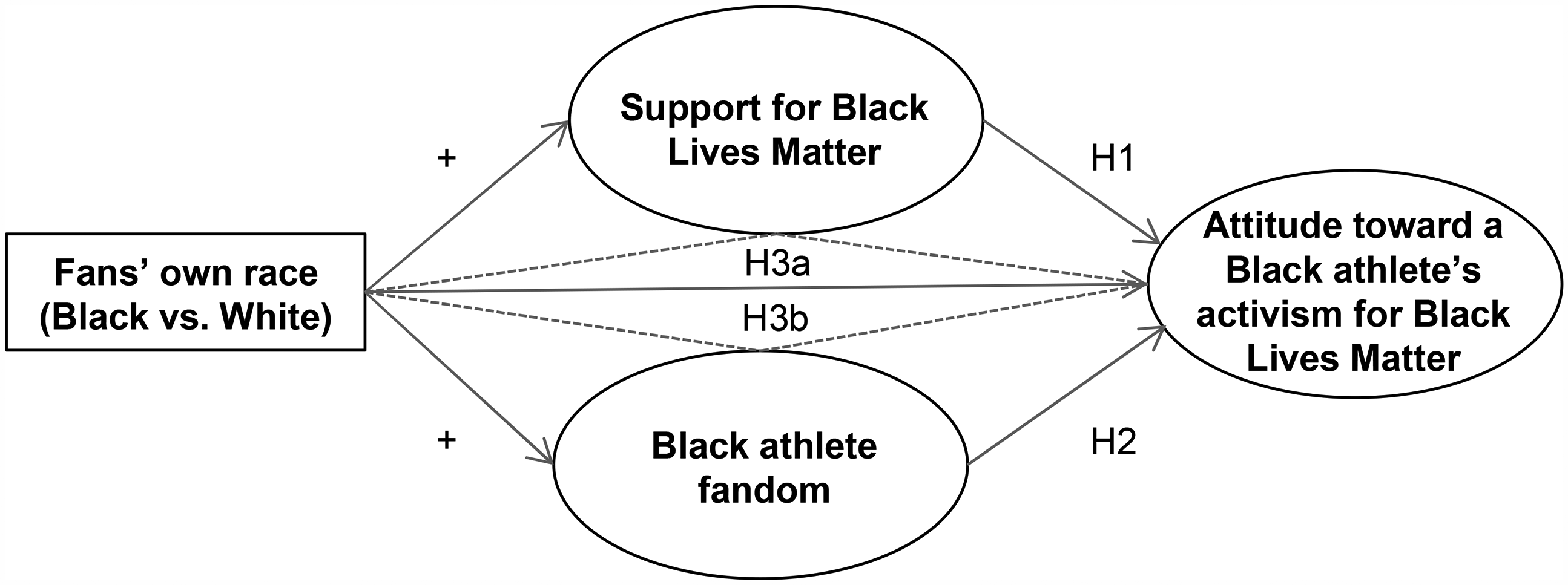
Confirmatory model on the determinants of fans’ attitude toward a Black athlete's activism for Black Lives Matter.
Sawyer and Gampa (2018) showed that BLM influences racial attitudes toward an egalitarian, no-preference position—unless that was already the starting point. Dunivin et al.'s (2022) study provides reasons for why this might be the case. They showed that BLM was successful in shifting public discourse in social media and news reports, hence leveraging protest events to stimulate change in the discussion about racial inequality among U.S. residents. Considering the movement's lasting effects, Critical Race Theory and Theories of Modern Racism (Bobo et al., 1997; Bonilla-Silva, 2017; Delgado & Stefancic, 2023) also acknowledge that racial attitudes change over time. Thus, a person's general level of support for BLM—which can be defined as the stated care for the movement, as indicated by a person's motivation and effort to help the movement grow (e.g., via sacrificing time and energy when posting online or attending events; Feinberg et al., 2020)—may positively relate to attitude toward a Black athlete's activism, fighting for equal rights for Black people. This leads us to H1:
Furthermore, athlete fandom may relate positively to attitude toward the athlete's activism for BLM because fans do not only value the sporting performance of players but also their social engagement. Theoretically, high fandom levels should make fans more supportive of the athlete's off-pitch activities, given that they are societally desirable. Assumptions can be grounded in the Meaning Transfer Model, as used for athlete endorsement practices (Shin & Lee, 2021; see also Erdogan, 1999). Thus, we propose H2:
Lastly, we assume that there is a parallel mediation from fans’ own race (identifying as Black vs. White) to attitude toward an athlete's activism for BLM via the support for BLM and fandom of a Black athlete. This confirmatory hypothesis is introduced because it is well-known that Black and White people tend to have different views about matters of race, with Black people being more supportive of social movements intended to address racism and Black fans being more supportive of Black athletes. In reference to the Theory of Color-blind Racism, Bonilla-Silva (2017) identified four frames that White people use: minimization, cultural racism, naturalization, and abstract liberalism. All frames provide arguments for why White people might have fewer reasons to support the BLM movement than Black people. Drakulich et al. (2021) relied on Theories of Modern Racism to study the determinants of the support for BLM. They found that animus toward Black people and commitment to the racial logic that justifies the White privilege was more important than interactions with, and opinions about, the police in the U.S. In their study, White people felt rather cold toward BLM (i.e., they rated the movement 43 out of 100, with scores below 50 indicating rather cold feelings and above 50 rather warm feelings). Black people, however, rated BLM 83 out of 100 (see also Baskin-Sommers et al., 2021). Building upon Homophily Theory (Lawrence & Shah, 2020), one can also assume that Black (vs. White) people are more likely to become fans of a Black athlete, because they may perceive that they are more alike. Indeed, research into sport fandom reveals that fans have more intense parasocial interactions when following athletes who belong to the same racial group, compared to following athletes from another racial group, meaning that interest in the athlete as well as energy and time to engage with the athlete are higher (Pan & Zeng, 2018). H3 is formulated as follows:
Overview of Empirical Studies
We report four studies designed to test our hypotheses. In Study 1a, we show that tennis fans’ attitude toward Serena Williams’ activism for BLM depends on fans’ own race, mediated by both the stated support for BLM and the stated levels of fandom for Serena Williams. Note that tennis is a sport that has had relatively few highly successful Black players. In Study 1b, we replicate the results for LeBron James and basketball—a sport that has had relatively many highly successful Black players. We show that the mechanisms for basketball fans’ attitude toward LeBron James’ activism for BLM are similar compared to Study 1a. In Study 2, Jrue Holiday presents the athlete activist, and the model is tested with more rigorous scales and a sample of Milwaukee Bucks fans. In Study 3, an experimental design is applied to assess the parallel mediation, again using Jrue Holiday as athlete activist and Milwaukee Bucks fans as participants.
Study 1a
Participants, Design, and Procedure
In total, 100 Black and 97 White individuals participated in Study 1a. Table 1 provides an overview of the sample characteristics. Data were collected using the Amazon crowdsourcing website Mechanical Turk (MTurk). Participants had to identify as either Black or White, be 18 years or older, and must have received a 98% approval rate and a completion rate of at least 10,000 hits. Also, participants were only allowed to participate in the study if they claimed an interest in tennis. Serena Williams served as the case for Study 1a. Eligible individuals were directed to a survey link. With full completion of the survey, they received a remuneration of US-$2.00.
Sample Characteristics Across all Studies.
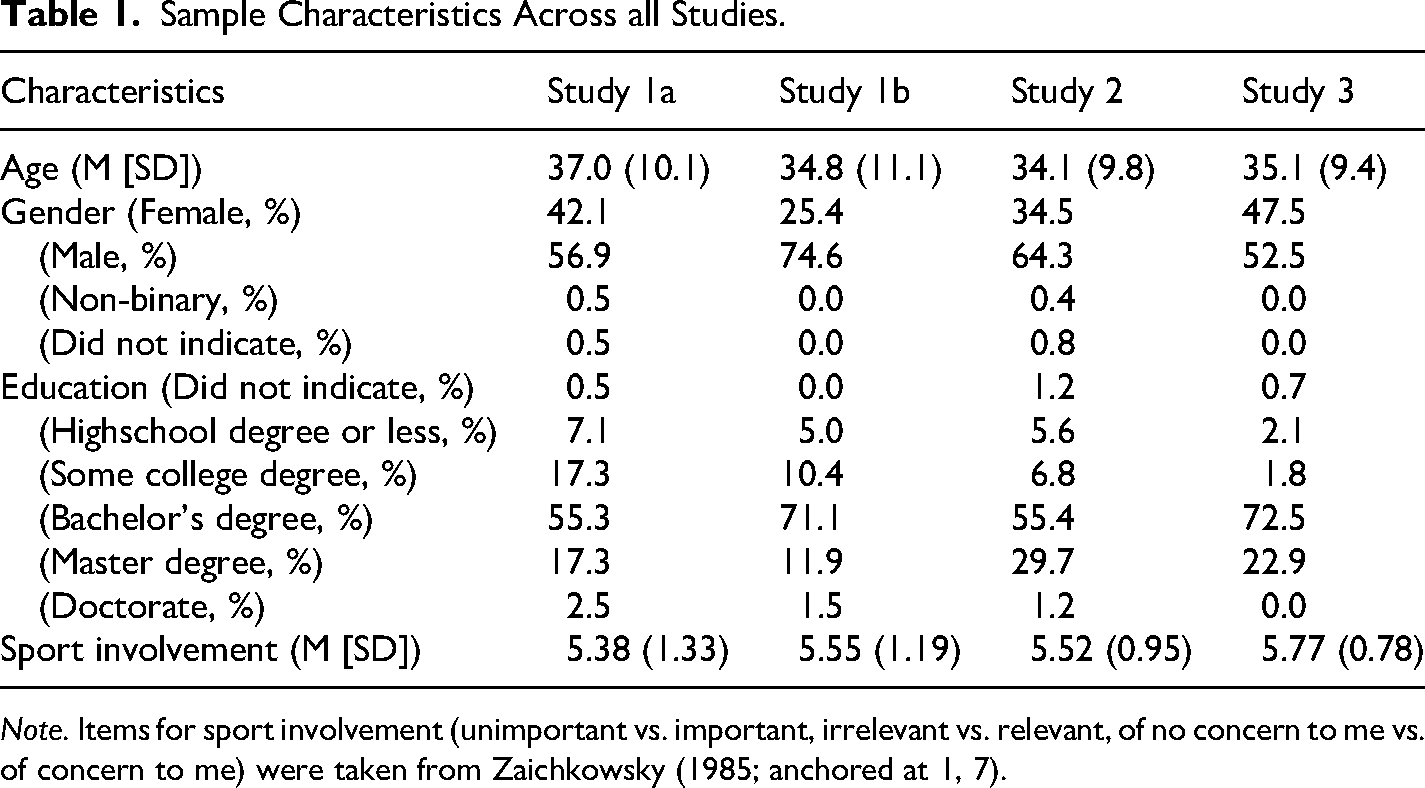
Note. Items for sport involvement (unimportant vs. important, irrelevant vs. relevant, of no concern to me vs. of concern to me) were taken from Zaichkowsky (1985; anchored at 1, 7).
After participants gave their informed consent, they filled in the first part of the questionnaire. Participants were then instructed to read the following text (and participants were informed to proceed after a 20-s reading time; within this time window, the survey could not be continued). Above the text, a photo of the athlete activist was shown (with her fist raised; Figure 2). The tennis superstar Serena Williams publicly supports the Black Lives Matter movement. She is one of the most vocal players in the sports world and calls for action to follow words of support in the movement. Williams encourages Americans to view Black Lives Matter as a reflection of the permanent challenges facing the black community rather than as a temporary movement. She voiced her support for Black Lives Matter protesters via Twitter, among other channels.
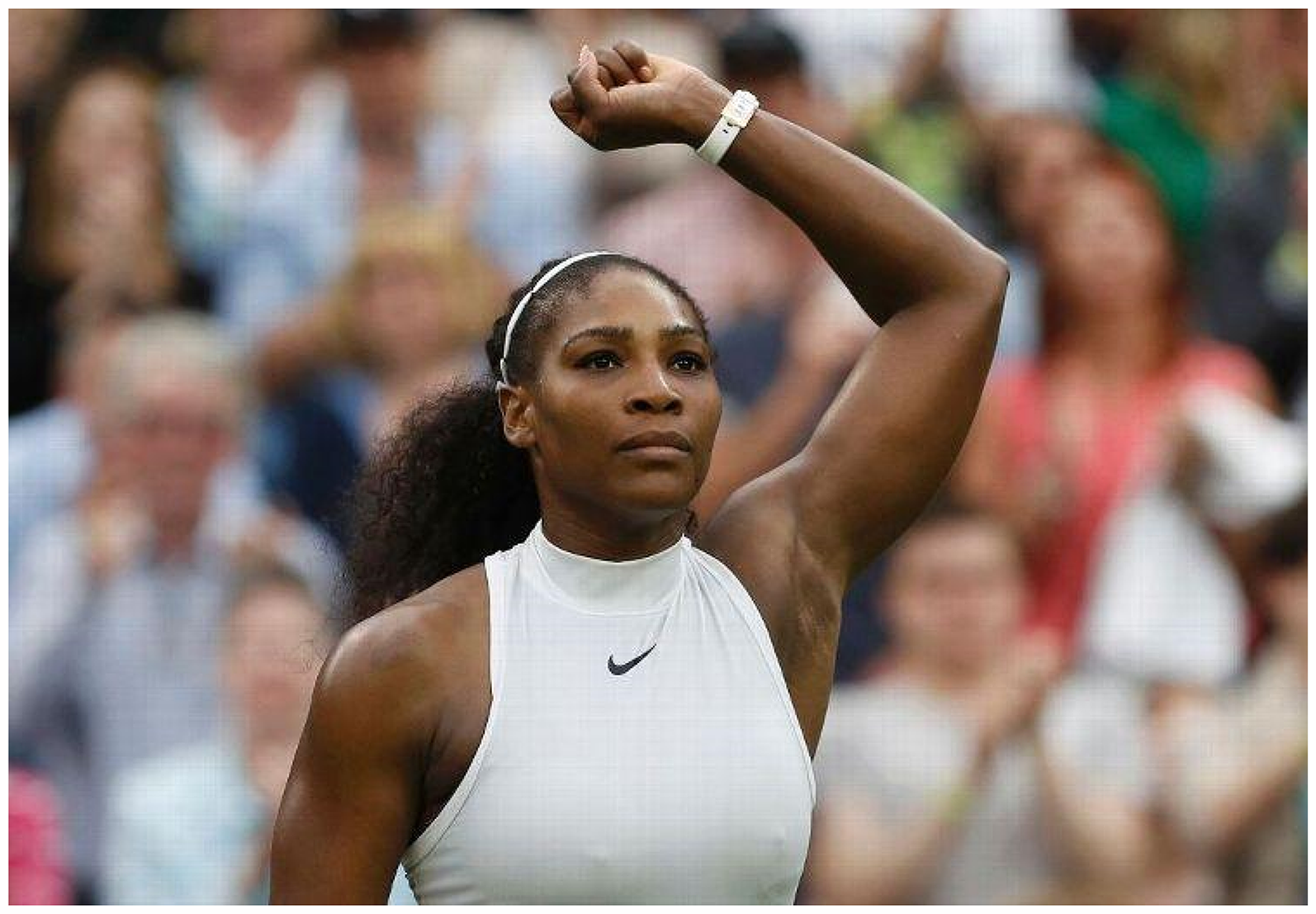
Picture shown to study 1a's participants (ESPN, 2016).
Next, participants responded to the second part of the questionnaire, which reflected latent variables displayed in Figure 1. They were fully debriefed at the end of the study.
Measures
Support for BLM was assessed using a single-item measure: “How strongly do you see yourself as a supporter of the Black Lives Matter movement?,” anchored at 1 = Not at all a supporter and 7 = Very much a supporter. Fandom was assessed by a single item: “How strongly do you see yourself as a fan of Serena Williams?,” anchored at 1 = Not at all a fan and 7 = Very much a fan. The item was taken from the Team Identification Scale (Wann & Branscombe, 1993; item 1). The outcome variable, attitude toward Williams’ activism for BLM, was measured via six items (Table 2), taken from Holt and Sweitzer (2018), anchored at 1 = Lowest level of agreement and 7 = Highest level of agreement (α = .96). The correlation matrix for all variables is shown in Table 3 and descriptive statistics across studies are shown in Table 4. Involvement in tennis was assessed to describe the sample's sport interest. It was measured via a semantic differential: Tennis is … (unimportant, irrelevant, of no concern to me) = 1, (important, relevant, of concern to me) = 7; α = .93 (Zaichkowsky, 1985). Sociodemographics and descriptive variables were assessed at the end of the questionnaire.
Attitude Toward Black Athlete's Activism for Black Lives Matter Items.
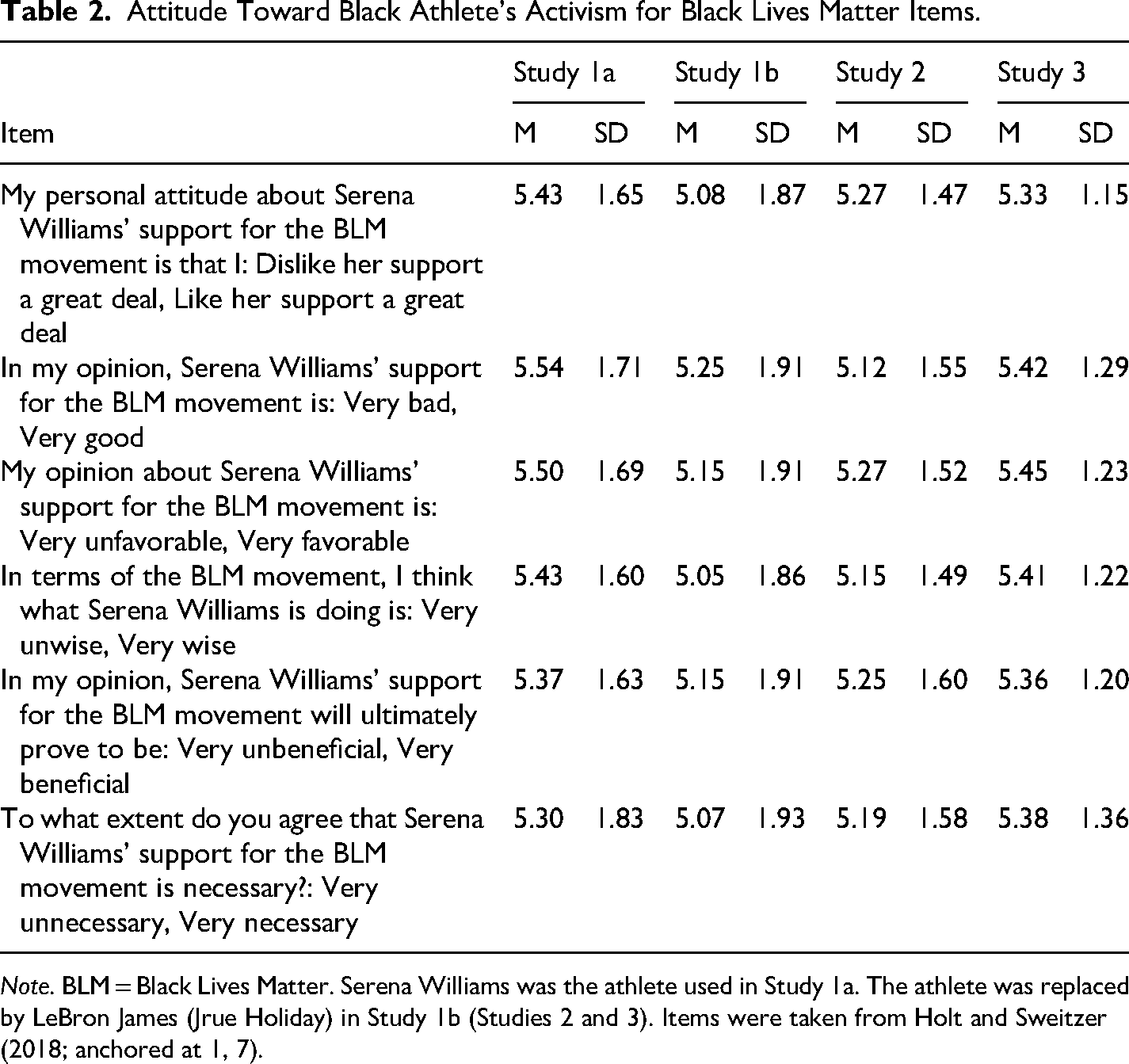
Note. BLM = Black Lives Matter. Serena Williams was the athlete used in Study 1a. The athlete was replaced by LeBron James (Jrue Holiday) in Study 1b (Studies 2 and 3). Items were taken from Holt and Sweitzer (2018; anchored at 1, 7).
Correlations Between Variables for Studies 1a and 1b.
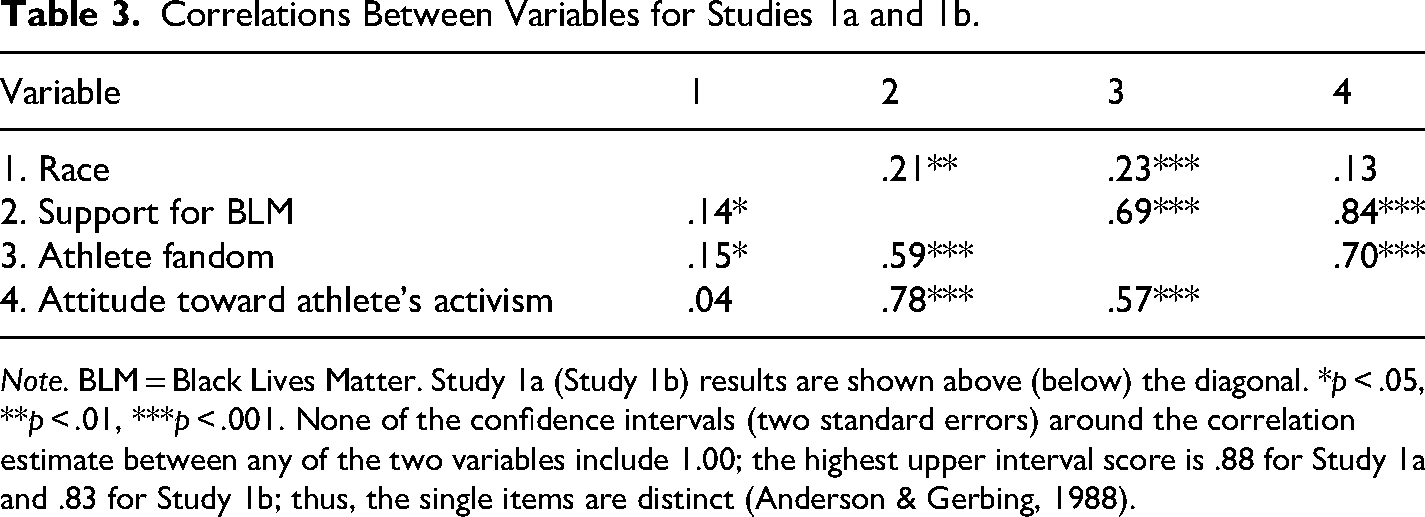
Note. BLM = Black Lives Matter. Study 1a (Study 1b) results are shown above (below) the diagonal. *p < .05, **p < .01, ***p < .001. None of the confidence intervals (two standard errors) around the correlation estimate between any of the two variables include 1.00; the highest upper interval score is .88 for Study 1a and .83 for Study 1b; thus, the single items are distinct (Anderson & Gerbing, 1988).
Descriptive Statistics for the Mediators and Outcome Variable Across Studies.
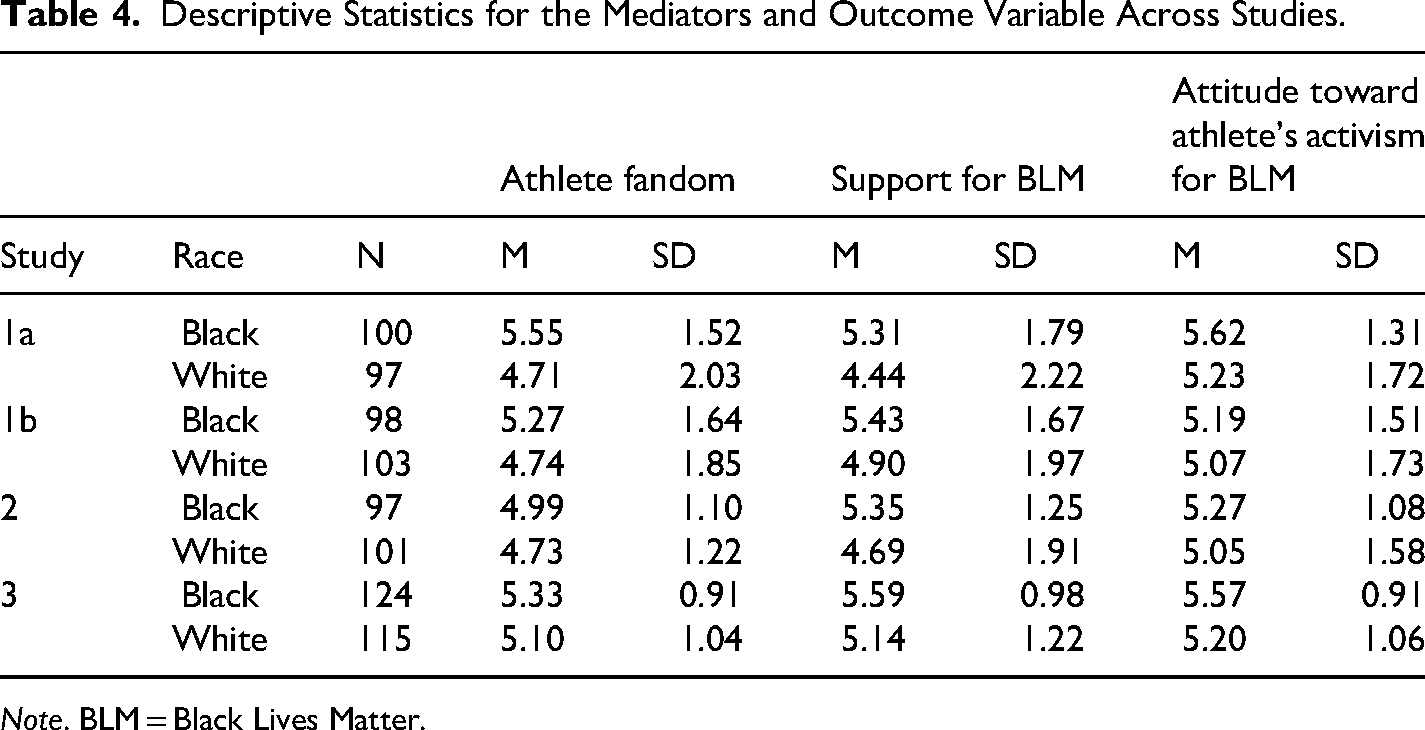
Note. BLM = Black Lives Matter.
Analysis
To test the hypotheses, we ran a linear regression-based mediation model (bootstrapping with 5,000 samples) in SPSS, as described by Hayes (2009).
Results and Discussion
The model explains 74% of the variance in attitude toward Williams’ activism. As expected in H1, the path from support for BLM to attitude toward Williams’ activism, β = .51, SE = .04, p < .001, is positive. Athlete fandom relates positively with attitude toward Williams’ activism, β = .20, SE = .04, p < .001, supporting H2. The tests of the indirect effects reveal that identifying as Black (vs. White) is positively associated with attitude toward Williams’ activism via support for BLM, β = .45, SE = .16, 95% CI [.1423; .7698], supporting H3a, and via athlete fandom, β = .17, SE = .07, 95% CI [.0518; .3218], supporting H3b. The difference in the indirect effect is significant, with higher effects via support for BLM, β = .28, SE = .15, 95% CI [.0084; .5877]. The direct path from being Black (vs. White) to attitude toward Williams’ activism is non-significant, β = -.23, SE = .12, p = .06.
To conclude, we can state that both proposed pathways are at play. Study 1b was conducted to replicate the results for a male athlete who practices a different sport: LeBron James, a U.S. Black basketball player and activist for BLM (Coombs and Cassilo 2017).
Study 1b
Participants, Design, Procedure, Measures, and Analysis
Individuals from MTurk (Black: n = 98; White: n = 103) participated in Study 1b (Table 1). They were only eligible for participation if they had not participated in Study 1a. The design and procedure were identical to Study 1a except for the activist and the sport (LeBron James, basketball; Figure 3). The description was as follows: The NBA superstar LeBron James publicly supports the Black Lives Matter movement. He is one of the most vocal players in the sports world and calls for action to follow words of support in the Black Lives Matter movement. He encourages Americans to view Black Lives Matter as a reflection of the permanent challenges facing the black community rather than as a temporary movement. James voiced his support for Black Lives Matter protesters via Twitter: “If you still haven’t figured out why the protesting is going on. Why we’re acting as we are is because we are simply F-N tired of this treatment right here.” He further formed the voting rights group, called More Than a Vote, which encourages African-Americans to register to vote and cast a ballot, while also fighting against voter suppression.
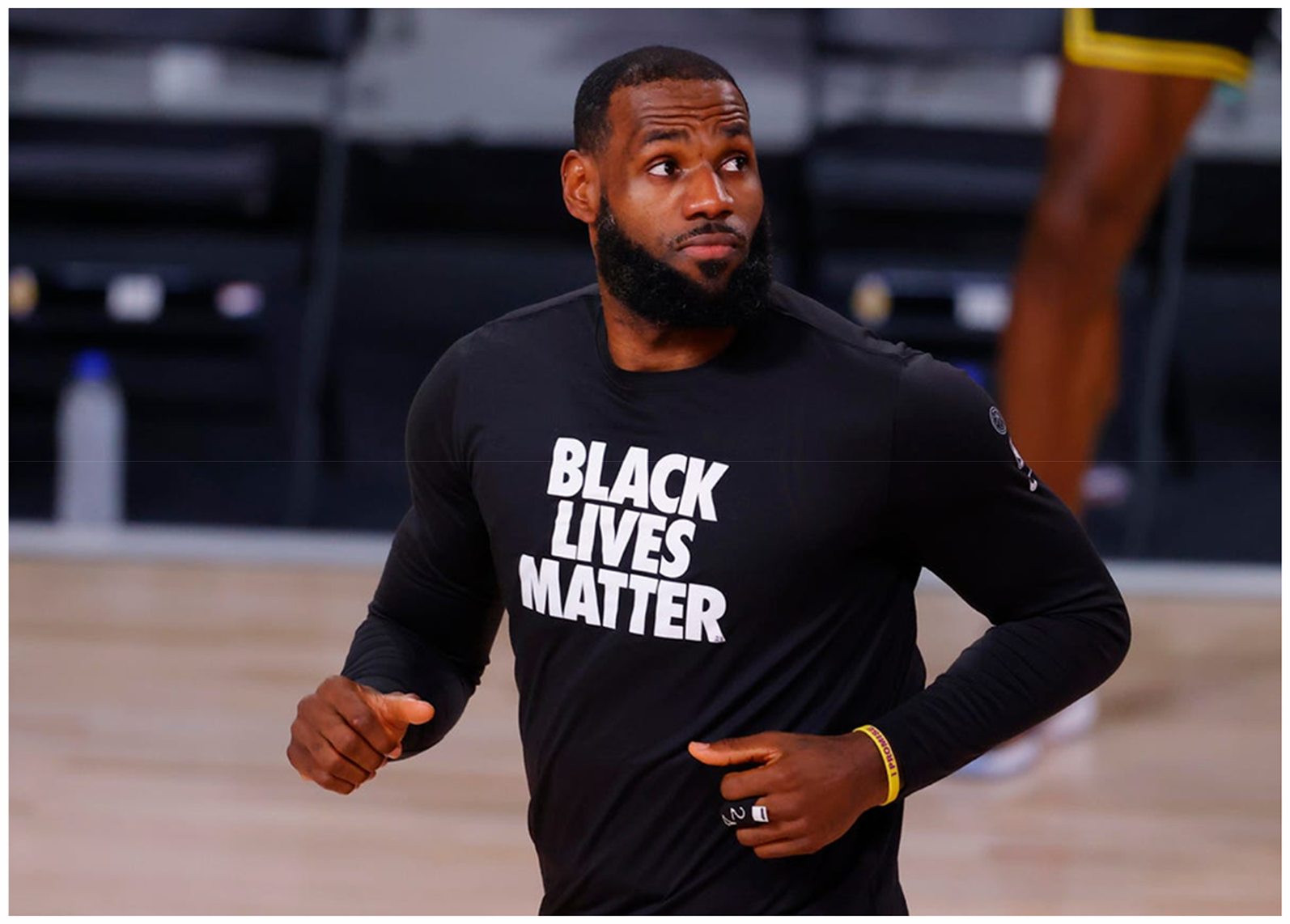
Picture shown to study 1b's participants (CNN, 2020).
The same measures, coding, and data analysis as in Study 1a were used (Tables 2–4) and involvement in basketball was assessed (α = .77).
Results and Discussion
The model explains 63% of the variance in attitude toward James’ activism. As expected in H1, the path from support for BLM to attitude toward James’ activism, β = .60, SE = .05, p < .001, is positive. Athlete fandom relates positively with attitude, β = .17, SE = .05, p = .001, supporting H2. The tests of the indirect effects reveal that being Black is positively associated with attitude toward James’ activism via support for BLM, β = .32, SE = .16, 95% CI [.0112; .6319], supporting H3a, and via athlete fandom, β = .09, SE = .05, 95% CI [.0040; .1692], supporting H3b. The difference in the indirect effect is non-significant, β = .23, SE = .15, 95% CI [-.0428; .5306]. The direct path from being Black to attitude toward James’ activism is non-significant, β = -.28, SE = .14, p = .051.
Study 1b replicates the results found in Study 1a, except for differences between the two indirect mediation paths. One limitation of the studies, however, is that single-item measures were used for the mediators and that the analysis is purely correlational. Another limitation is that participants were informed about the Black athlete's activism at the beginning of the study. This prime might have affected both athlete fandom and support for BLM ratings. To address these limitations, Studies 2 and 3 were conducted with the goal of using multi-item scales for the mediators and providing evidence regarding cause-and-effect relationships (Study 3 only). To avoid conflated ratings for the mediators, participants were asked to first answer questions about athlete fandom and support for BLM before they were informed about the athlete's activism for the movement (Studies 2 and 3).
Study 2
Participants, Design, and Procedure
Individuals from MTurk (Black: n = 97; White: n = 101) participated in Study 3 (Table 1) after having excluded non-attentive participants (see below). They were only eligible for participation if they had not participated in Studies 1a or 1b. Also, they had to fulfill the same requirements as in Study 1b and had to identify as a fan of the Milwaukee Bucks (because one player from the Milwaukee Bucks served as the case). After participants gave their informed consent, they were told that they would be asked to evaluate one player of the Milwaukee Bucks, with random assignments of players (to avoid hypotheses guessing; in fact, Jrue Holiday was the player that was always assigned to the participants). Next, participants responded to the survey. Most importantly, participants were not explicitly primed with Jrue Holiday's activism for BLM before they filled in items regarding athlete fandom and support for BLM. At the end of the study, participants were fully debriefed.
Attention Check
Two attention checks were included in the study. For the first attention check, we used an instructional manipulation check directly at the beginning of the study (Kung et al., 2018). Participants were instructed to “Please enter ‘ok’ into the field shown below and press ‘>>’ to move to the next page.” The field and the >> button were shown at the bottom of the first page (introduction to the study). The second attention check was an instructed-response item embedded in a scale in the second half of the study: “For this question, please select number six to demonstrate your attention” (Gummer et al., 2021). Fifty-one participants (20%) of the total sample (n = 249) failed either of the two attention checks and were excluded from the analyses.
Measures
Support for BLM was assessed via three items (e.g., “How much do you support the Black Lives Matter Movement?”). It was assessed on a scale from 1 = Not at all to 7 = Very much (α = .96; Feinberg et al., 2020). Athlete fandom was assessed by adapting the seven-item team identification scale from Wann and Branscombe (1993) (e.g., “How strongly do you see yourself as a fan of Jrue Holiday?,” α = .89). It was assessed on a seven-point rating scale (1 = Not at all / Never, 7 = Very much / Always). Attitude toward Holiday's activism for BLM was measured similarly to Studies 1a and 1b (Table 2; α = .96). Before this variable was assessed, participants were informed that “Jrue Holiday and his wife Lauren are running a Social Impact Fund in the support of Black Lives Matter.” The correlations between the variables are shown in Table 5, which also provides evidence for discriminant validity. We note that the square root of the average variance extracted for attitude toward the athlete's activism is just slightly (.001) higher than the correlation between support for BLM and attitude toward the athlete's activism and at high absolute levels (Table 5). The finding led us to conduct Study 3, in which we manipulated the mediators. Involvement in basketball was measured as before (α = .80).
Correlations Between Variables for Studies 2 and 3.
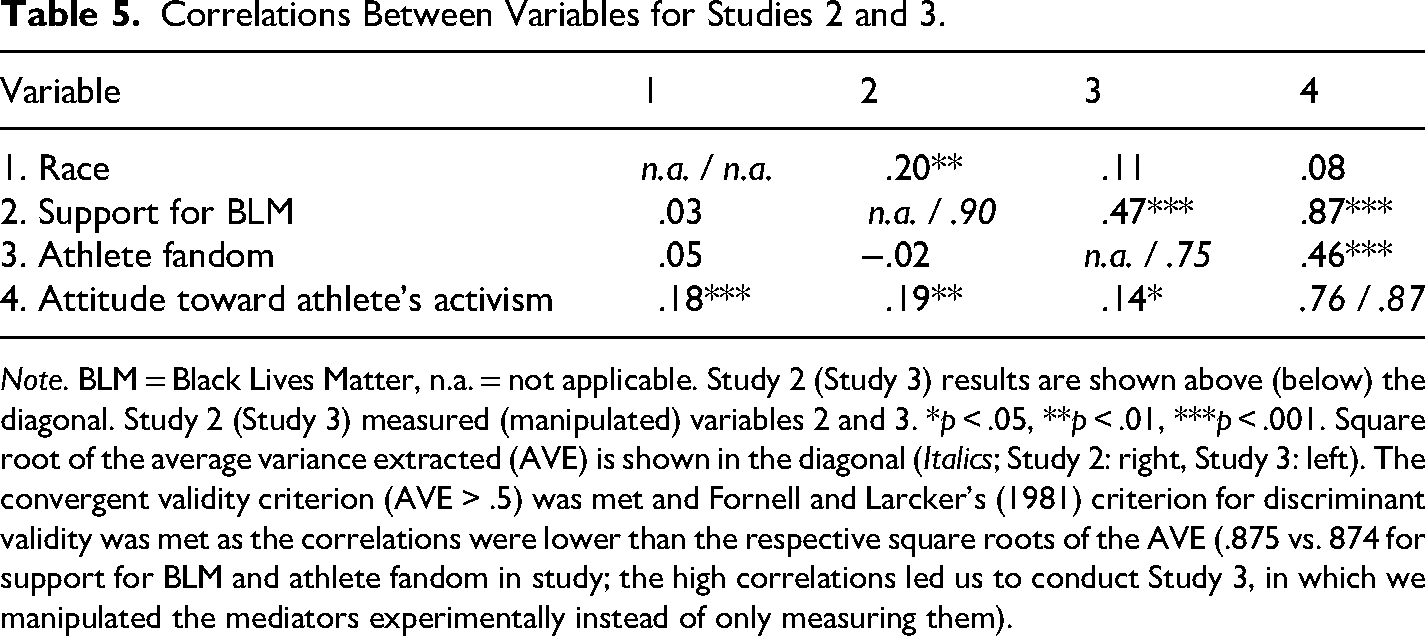
Note. BLM = Black Lives Matter, n.a. = not applicable. Study 2 (Study 3) results are shown above (below) the diagonal. Study 2 (Study 3) measured (manipulated) variables 2 and 3. *p < .05, **p < .01, ***p < .001. Square root of the average variance extracted (AVE) is shown in the diagonal (Italics; Study 2: right, Study 3: left). The convergent validity criterion (AVE > .5) was met and Fornell and Larcker's (1981) criterion for discriminant validity was met as the correlations were lower than the respective square roots of the AVE (.875 vs. 874 for support for BLM and athlete fandom in study; the high correlations led us to conduct Study 3, in which we manipulated the mediators experimentally instead of only measuring them).
Analysis
A confirmatory factor analysis was performed using IBM SPSS Amos (Analysis of Moment Structures), a software used for structural equation modeling. To test the hypotheses, we ran a linear regression-based mediation model (bootstrapping with 5,000 samples) in SPSS (Hayes, 2009).
Results and Discussion
The model explains 77% of the variance in attitude toward Holiday's activism. As expected in H1, the path from support for BLM to attitude toward Holiday's activism, β = .71, SE = .03, p < .001, is positive. Athlete fandom does not relate significantly with attitude toward Holiday's activism, β = .08, SE = .05, p = .08; H2 is not supported. The tests of the indirect effects reveal that being Black is positively associated with attitude toward Holiday's activism via support for BLM, β = .47, SE = .16, 95% CI [.1570; .8003], supporting H3a, but not via athlete fandom, β = .02, SE = .02, 95% CI [−.0139; .0809], not supporting H3b. The difference in the indirect effect is significant, β = .45, SE = .16, 95% CI [.1498; .7693]. The direct path from being Black to attitude toward Holiday's activism is significant, β = −.27, SE = .10, p = .005.
We conducted Study 3 to assess cause-and-effect relationships between the mediators and the outcome variable. It aims to investigate whether momentary states of high (vs. low) support for BLM and high (vs. low) athlete fandom, respectively, influence attitude toward the athlete's activism for BLM.
Study 3
Participants, Design, Procedure, Measures, Attention Check, and Analysis
Individuals from MTurk (Black: n = 124; White: n = 115) participated in Study 3 (Table 1) after having excluded non-attentive participants (see below). They fulfilled the same requirements as in Study 2 and the design and procedure were identical to Study 2 except that athlete fandom and support for BLM were manipulated instead of measured. A 2 × 2 experimental design was applied, with random assignments to four conditions: high fandom and high support for BLM, low fandom and high support, high fandom and low support, and low fandom and low support.
To manipulate athlete fandom, participants were asked to write a brief essay (Li et al., 2012). The instructions were as follows, intending to manipulate the momentary level of fandom: Some people feel rather positively, while some people feel rather negatively, towards Jrue Holiday for several reasons. Please think about Jrue Holiday and how you feel about him. [Page break]. In what follows, we want you to focus on the [positive associations, negative associations] you may have with Jrue Holiday. In particular, we want you to answer the following question: Why would you want to [be a fan, avoid/stop fandom] of Jrue Holiday? Please write a short essay, with at least 30 characters, in which you list at least three convincing arguments, for why you might [cheer for, not cheer for] the player.
After the essay, participants filled in the fandom items. Next, participants were instructed as follows, to manipulate the momentary level of support for BLM (Li et al., 2012): Some people feel rather positively, while some people feel rather negatively, towards the Black Lives Matter movement for several reasons. Please think about the movement and what it means to you. [Page break]. In what follows, we want you to focus on the [positive associations, negative associations] you may have with Black Lives Matter. Please write a short essay, with at least 30 characters, in which you list at least three arguments, for why you [should, should not] support the Black Lives Matter movement.
Participants then answered questions about their support for BLM. After some filler items, they indicated their attitude toward Holiday's activism for BLM. The same attention checks were used as in Study 2. The analysis reveals that 41 participants (15%) out of the total of 280 participants failed to fill in correct answers to either of the two attention checks. They were excluded from the analyses.
Support for BLM (α = .81), athlete fandom (α = .87), attitude toward Holiday's activism for BLM (α = .90), and involvement in basketball (α = .80) were measured as in Study 2. The correlations matrix is shown in Table 5, and Table 6 shows the means and standard deviations for each of the four experimental groups. Before attitude toward Holiday's activism for BLM was assessed, they were informed that “Jrue Holiday and his wife Lauren are running a Social Impact Fund in support of Black Lives Matter.” To analyze the data, ANOVAs and regression analyses were run in SPSS.
Descriptive Statistics for Study 3's Variables.
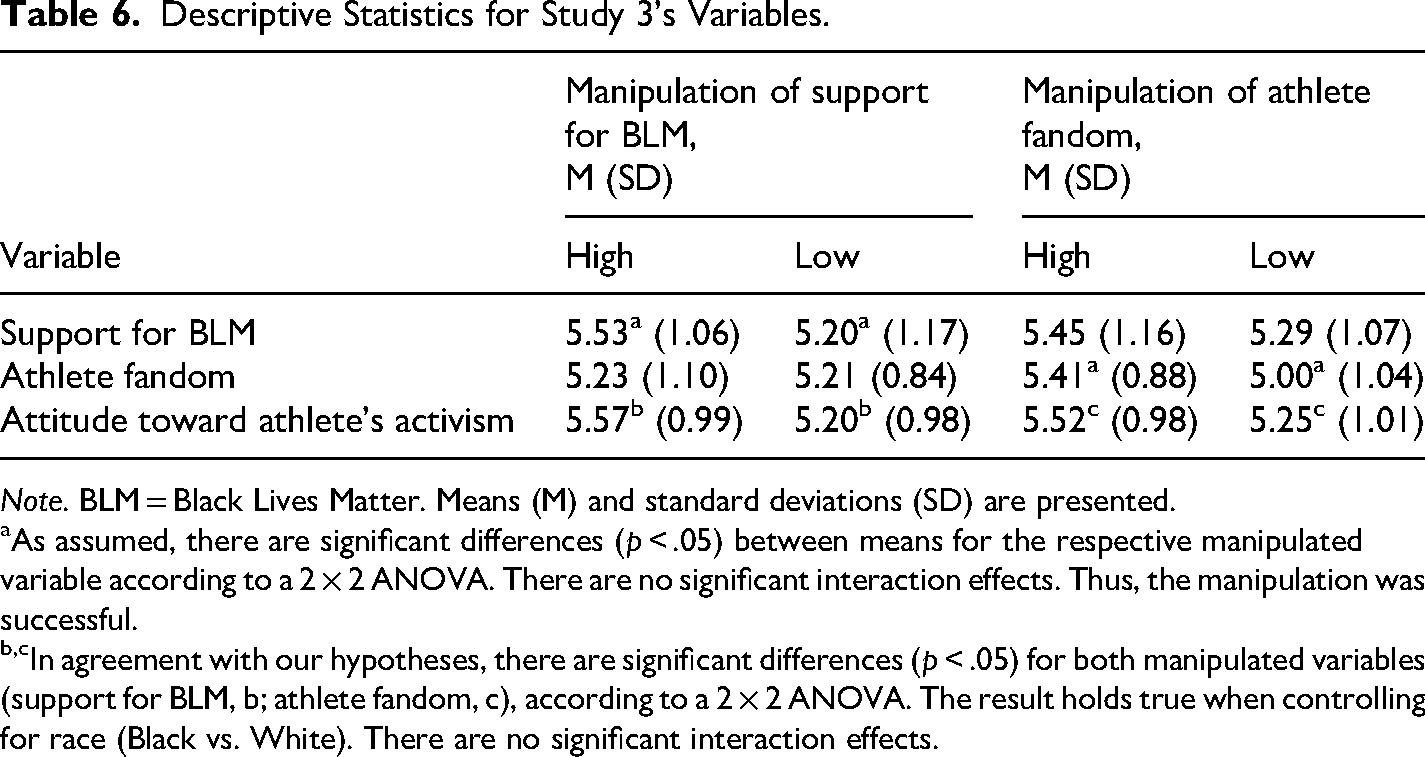
Note. BLM = Black Lives Matter. Means (M) and standard deviations (SD) are presented.
As assumed, there are significant differences (p < .05) between means for the respective manipulated variable according to a 2 × 2 ANOVA. There are no significant interaction effects. Thus, the manipulation was successful.
In agreement with our hypotheses, there are significant differences (p < .05) for both manipulated variables (support for BLM, b; athlete fandom, c), according to a 2 × 2 ANOVA. The result holds true when controlling for race (Black vs. White). There are no significant interaction effects.
Results and Discussion
To check whether the manipulation worked as intended, 2 × 2 ANOVAs were conducted with both support for BLM and athlete fandom as dependent variables. The results reveal that the manipulation was successful: Participants scored higher for support (M = 5.53, SD = 1.06) when they were asked to write an essay on positive associations, compared to negative associations with BLM (M = 5.20, SD = 1.17; F(1, 235) = 5.05, p = .03). The manipulation of fandom and the interaction with fandom have no effect (p's > .25).
Participants scored higher for athlete fandom (M = 5.41, SD = 0.88) when they were asked to write an essay on positive associations, compared to negative associations with the athlete (M = 5.00, SD = 1.04; F(1, 276) = 9.67, p < .001). The manipulation of support for BLM and the interaction with support have no effect (p's > .13).
A regression analysis was run to test whether support for BLM and athlete fandom influence attitude toward the athlete's activism, controlling for race (Black vs. White). The results can be seen in Table 7. As anticipated, both support for BLM (β = .37, SE = .13, p = .004) and athlete fandom (β = .27, SE = .13, p = .03) influence attitude toward Holiday's activism positively. Being Black is also a significant predictor (β = .34, SE = .13, p = .007). The variables explain 8% of the variance in attitude toward Holiday's activism.
Predicting Attitude Toward Athlete Activism by Support for Black Lives Matter and Athlete Fandom, Controlling for Race (Study 3).
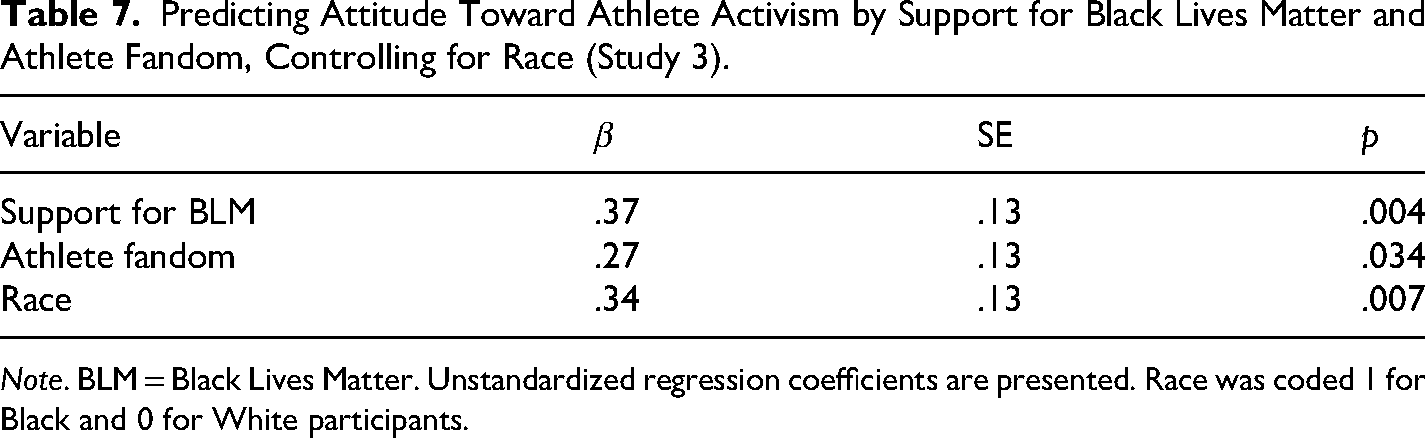
Note. BLM = Black Lives Matter. Unstandardized regression coefficients are presented. Race was coded 1 for Black and 0 for White participants.
Single Paper Meta-Analyses
We ran a series of single paper meta-analyses (McShane & Böckenholt 2017) to quantify the overall associations between support for BLM and attitude toward athlete activism for BLM, between athlete fandom and attitude toward athlete activism for BLM, as well as between race and attitude toward athlete activism for BLM. For the analysis, we used SPMeta (2023), followed Goh et al.'s (2016) instructions, and considered Pearson's correlations. We used fixed effects, in which the mean effect size was weighted by sample size.
We first conducted a meta-analysis of the association between support for BLM and attitude toward athlete activism for BLM across all studies. We find significant and positive associations (g = .71, SE = .03, Z = 25.19, p < .001, 95% CI [.67, .74]; Figure 4, top). Next, we conducted a meta-analysis of the association between athlete fandom and attitude toward athlete activism for BLM across all studies. Again, we find significant and positive associations (g = .47, SE = .03, Z = 14.71, p < .001, 95% CI [.42, .52]; Figure 4, middle). Lastly, we conducted a meta-analysis of the association between race and attitude toward athlete activism for BLM across all studies. We find significant and positive associations (g = .12, SE = .03, Z = 3.46, p < .001, 95% CI [.05, .19], Figure 4, bottom).
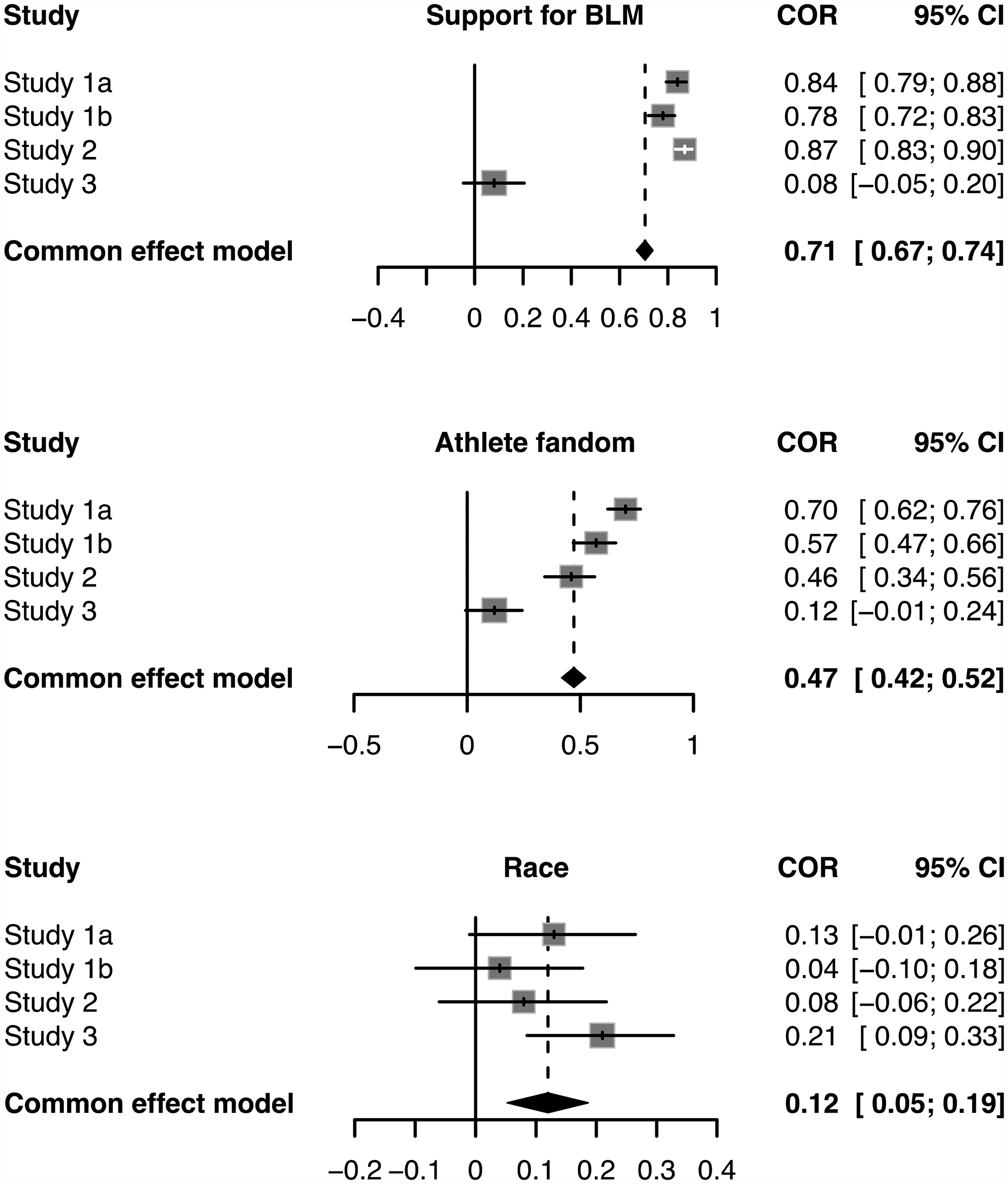
Forest plot of the effect sizes (r) of the studies subject to the single paper meta-analysis.
General Discussion
The purpose of the study was to assess whether fans’ levels of stated support for BLM and fandom of a Black athlete explain their attitudes toward the athlete's activism, controlling for the fans’ own race. The single paper meta-analysis testing of the BAS-BLM Model reveals that support for BLM, athlete fandom, and being Black are positively associated with attitude toward the activism of Black athletes, specifically Serena Williams, LeBron James, as well as Jrue Holiday.
The present study provides confirmatory insights into the mechanisms by which fans form positive attitudes toward a Black athlete's activism for BLM. First, we find that both support for the movement and athlete fandom are important, with support for the movement having a stronger effect. This study therefore adds to Pan and Zeng's (2018) findings by demonstrating that two pathways—not only sympathy for the endorser (here: athlete fandom; Pan & Zeng, 2018, refer to bonding), but also perception of the social cause (here: the BLM movement)—influence fan attitudes toward Black athletes’ activism. The stated support for the movement emerges as a crucial antecedent in how fans evaluate an athlete's activism for the cause. Interestingly, the hypothesized mediation effect of athlete fandom disappears in Study 2, where Jrue Holiday was depicted not primarily as an athlete but in the context of his family, particularly highlighting his wife Lauren's involvement in BLM activism. This contrasts with the depictions of Serena Williams and LeBron James in Studies 1a and 1b. Despite the lack of a significant athlete fandom pathway in Study 2, the single paper meta-analysis reveals a positive association between athlete fandom and attitude toward athlete activism for BLM across all four studies.
Second, we find that Black fans rated both support for BLM and athlete fandom more positively than White fans, supporting arguments related to Homophily as well as Critical Race Theory (Delgado & Stefancic, 2023) and Theories of Modern Racism (Bobo et al., 1997). This difference may arise because Black fans perceive more similarities and therefore feel more sympathy with the movement and athletes of similar racial backgrounds. Additionally, White but not Black fans may perceive BLM as a challenge to their position of power (Holt & Sweitzer, 2018). The study thus corroborates previous findings on the differing perspective of Black and White individuals, with Black individuals generally showing more support for social movements aimed at addressing racism and Black fans being more supportive of Black athletes (Baskin-Sommers et al., 2021; Bonilla-Silva, 2017; Drakulich et al., 2021; Lawrence & Shah, 2020).
Managerial and Public Policy Implications
To create a more equitable environment regarding racial differences, stakeholders in sports should reduce the dominance of White standards and amplify the voices of athlete activists. Referring to the subject's intersectionality across macro, meso, and micro levels (Adair et al., 2010; Cunningham, 2010), athletes act as micro-level influencers who may wish to promote inclusive, discrimination-free spaces, potentially shaping fans’ attitudes. Then, fans may form positive (or negative) attitudes toward a Black athlete's activism for BLM. Managers can positively influence these attitudes by supporting the movement, empowering athletes, and inspiring fandom. This can occur when athletes demonstrate mastery on the field and serve as role models on and off the field. In this context, a systemic approach can be adopted, incorporating education and information dissemination, athlete storytelling, community engagement, media representation, and policy advocacy, to name just a few examples.
Limitations and Outlook
The study is not free of limitations. First, the study samples are not representative of the U.S. sport fan population. Second, the study did not look at individuals who identify as neither Black/African American nor White/Caucasian. Since Whiteness is considered a standard in the U.S. and BLM deals with the interest of Black people, the selection serves the purpose of the study. However, research must not neglect other races and factors that are known to be subject to, or foster, inequality (Thomas & Dyall, 1999). Third, the study did not apply a longitudinal design. To test causality more rigorously, a multi-wave study might capture changes in both support for BLM and athlete fandom and relate these changes to changes in attitude toward athlete activism. Furthermore, the fan (micro-level) perspective may be combined with the organizational (meso-level) perspective (Cunningham, 2010; Howe et al., 2024) to reveal important up- and downstream influences of racial diversity in general and support for BLM in particular. Lastly, athlete activism has certain features, such as being more or less safe or risky and low- or high-effort (Brown et al., 2022; Schmidt et al., 2018). The BAS-BLM Model can serve as a basis for the inclusion of these activism characteristics. For example, high-effort activism should strengthen the paths from both support for BLM and athlete fandom to attitude toward athlete activism, because fans, particularly Black fans, might perceive higher effectiveness.
Footnotes
Data Availability
The data are available from the authors upon request.
Declaration of Conflicting Interests
The authors declared no potential conflicts of interest with respect to the research, authorship, and/or publication of this article.
Ethical Approval and Informed Consent
This study was conducted in accordance with the ethical standards of the university faculty board, which acts as the local ethics committee for studies outside the Faculty of Medicine, and with the 1964 Helsinki declaration and its later amendments or comparable ethical standards. All participants provided their written informed consent for participation in the study.
Funding
The authors disclosed receipt of the following financial support for the research, authorship, and/or publication of this article: This work was supported by the European Union’s Horizon 2020 research and innovation programme under the Marie Skłodowska-Curie grant agreement no. 823815.
