




Abstract
Availability of alcohol at football matches in the UK is much debated and subject to multiple restrictions, yet there is little understanding of supporters’ attitudes. A cross-sectional survey of football supporters in Scotland and England (n = 1750) was conducted April–June 2019. Most supporters viewed drinking at matches as acceptable (74.4%) and thought alcohol should be available at grounds (76.0%); around two-fifths thought most supporters consumed alcohol before matches (44.1%); but only a quarter (26.6%) thought disorder at matches was due to alcohol. Attitudes varied by supporter characteristics: supporters who were younger, in England, or more regular match-goers were more favourable towards alcohol consumption and availability at matches. We conclude that alcohol regulations in some nations and sports – where restrictions are based on historical disorder – may no longer be appropriate.
Introduction
In the United Kingdom (UK), football and alcohol have been described as “inextricably linked” (Gornall, 2014) and the public house (pub) has been a central part of the football experience for over 100 years (Mason, 1980). The cultural acceptance and normalisation of alcohol use in the UK, coupled with regular exposure to alcohol marketing through sponsorship and advertising, means that football offers a particularly illuminating context for understanding both how sports spectators engage with and understand alcohol consumption, and wider issues relating to contemporary consumption of alcohol. From a supporter's perspective, alcohol consumption can form an integral part of social interactions, both when attending matches and in pubs before and after the game (Crawford, 2004). From a commercial perspective, football has also undergone a rapid process of ‘hypercommodification’ which has resulted in increased presence and importance of sponsorship deals with alcohol producers (Giulianotti, 2002; Sports Business Group, 2016) and other industries, such as gambling (Purves et al., 2020). Football is particularly attractive for commercial sponsors, as it provides positive brand associations and a gateway to global audiences (Rehm & Kanteres, 2008; Collins & Vamplew, 2002). Accordingly, these longstanding ties between alcohol companies and football have intensified in recent decades (Purves et al., 2017).
The Policy Debates
The close relationship between alcohol and football has generated important public and policy debate (Chambers & Sassi, 2019). For example, in the UK, public health officials have called for an end to sponsorship of high-profile football teams by alcohol companies (Alcohol Health Alliance, 2015), and there is recognition of the need to address concomitant harms caused by alcohol within football which have implications for various stakeholders, including the police, health services, and other supporters and their families (Brooks, 2015). Research has shown that sport sponsorship by alcohol companies has an effect on alcohol consumption, and on social attitudes and expectancies, including in school-aged children (Babor et al., 2010; Brown, 2016). Internationally, there have also been calls for alcohol sponsorship to be banned in certain sports due to the link between exposure to alcohol marketing and consumption (Jones, 2010; Association Addictions France, 2021). Research from Australia and New Zealand found positive associations between exposure to alcohol sports sponsorship and self-reported alcohol consumption among sportspeople (Jones, 2010; O’Brien et al., 2011). Across Europe, exposure to alcohol branded sports sponsorship has been found to increase the odds of young people drinking in the last 30 days (De Bruijn et al., 2012).
Despite the links between alcohol sponsorship and consumption, it is still argued that alcohol can play a positive role in sport, both by enhancing social cohesion and group bonding among spectators, and by providing significant investment and support to sports clubs and local economies (Palmer, 2011). Research has found that alcohol consumption can play a positive role in social bonding and can contribute to the experience of watching various sporting events by enhancing confidence and rowdiness (Armstrong & Hognestad, 2006; Glassman et al., 2012). Research from North America has found that collegiate sports spectators reported significantly higher levels of alcohol consumption whilst watching college teams compared to attending parties and general socialising and that this consumption was based on entrenched alcohol expectancies regarding their ability to support their team (Glassman et al., 2010; Glassman et al., 2007).
Politicians in Scotland and England have called for an end to restrictions on alcohol availability at football matches, arguing that football supporters should be treated in a similar way to supporters of other sports (Roden, 2015; Jacks, 2016). It has also been argued that alcohol sales may help bring a well-needed source of revenue to smaller football clubs who depend more on match-day revenue than on television coverage or sponsorship deals (Archibald, 2013; Furnival-Adams, 2014). Indeed, there is evidence to suggest that the current alcohol restrictions in the UK are ineffective at reducing the level of drunkenness amongst football supporters, suggesting that existing alcohol controls and approaches to supporter engagement should be revisited (Pearson & Sale, 2011; Atkinson, 2021).
Alcohol as a Contributory Factor in Football-Related Violence
Much of the existing literature concerning alcohol and football has focused on its role as a contributory factor in violent and disorderly behaviour in and around football grounds (Cleland & Cashmore, 2016; Case & Boucher, 1981). The link between alcohol and violent behaviour would appear to be a straightforward one for many casual observers. However, most drinking among sports spectators does not result in violence and research has found this relationship to be more complex, taking in a variety of social psychological factors (Ostrowsky, 2014). Indeed, the relatively limited research which does exist has highlighted that the link between alcohol consumption and violence at sporting events is understudied (Ostrowsky, 2018). Despite the lack of evidence regarding the relationship between alcohol and football-related violence, current regulations concerning the availability of alcohol at football grounds in Scotland and England can be traced back to specific, high-profile incidents 1 . Following the events of the 1980 Scottish Cup final (Robertson, Frank & Jepson, 2013), the Criminal Justice (Scotland) Act 1980 was passed making it an offence to: enter a football ground whilst drunk; take alcohol into a stadium; consume alcohol on official transport to matches; and consume alcohol within sight of a football pitch. Alcohol is currently only permitted to be consumed at Scottish football matches for those in hospitality areas which do not have direct sight of the pitch. In England, the Sporting Events (Control of Alcohol) Act 1985, introduced following the Heysel stadium disaster (Gould & Williams, 2011), contained similar restrictions to Scotland with one important distinction: that alcohol was still permitted to be on general sale at football grounds up to 15 min prior to kick-off and at half-time.
Changes in the Nature of Football Spectatorship
Although these regulations remain unaltered since the 1980s, the nature of attending a football match in the UK has changed drastically. As with the Heysel Disaster four years before, the events of the Hillsborough Disaster in 1989, where 97 people died and 766 were injured, acted as a watershed moment in UK sport. Lord Justice Taylor was appointed to investigate the events of that day and his final report, which included criticism of the stadium design, had a deep and lasting effect on safety standards for stadia in the UK. The Football Spectators Act (1989) included a requirement for all stadia in England to be all-seated (Duke, 1991). Although stadia in Scotland were not required to follow suit, the top league in Scotland (now the Scottish Professional Football League (SPFL) Premiership) also chose to make all-seater stadia a necessity.
For many, the experience of attending a football match in the modern day bears little resemblance to that of 40 years ago. The evolution of the ‘match-day experience’, and an increase in ‘football tourism’ alongside higher ticket prices, have brought increased revenue to many top-flight clubs in the UK (de Oliveira et al., 2021). Some argue that these transformations have been at the expense of these clubs’ traditional working-class roots, and that these changes have impacted negatively on the crowd atmosphere inside stadia (Edensor, 2015; Numerato, 2019). At the same time, increased use of CCTV and developments in intelligence-led policing have contributed substantially to the very sharp decline in violent incidents at UK football stadia compared to the 1980s (Home Office, 2020). Although it is difficult to define what constitutes ‘a fan’, the demographics of football crowds have changed in recent decades in terms of gender, age, and social composition with increasing numbers of females and families attending matches (Malcolm, Jones & Waddington, 2000; BBC, 2012; Pope, 2019).
Non-Violent Forms of Support
As stated above, most research has focused on violent fan groups and little on non-violent forms of spectatorship. Since the early 1990s there has been greater media and public recognition that patterns of substantial alcohol consumption can be associated with gregarious, boisterous, yet non-violent (and even avowedly anti-violent) fan behaviours and cultures, as evidenced by the ‘Tartan Army’ which follows Scotland's national team (Giulianotti, 1991) and the ‘Roligans’ (a pun on ‘hooligans’, from ‘rolig’ meaning ‘peaceful’) who follow the Danish national team (Peitersen, 2009). This new style of non-violent, carnivalesque fan-culture has gained popularity in several countries across Europe including supporters who follow the national teams of Northern Ireland and the Republic of Ireland (BBC, 2016). These groups of supporters have developed a culture where high levels of alcohol consumption are normalised, yet public expressions of violence are deemed socially unacceptable, an approach like that of many sports supporters in North America (Roberts & Benjamin, 2000).
Clearly, football has undergone social and economic transformation since the 1980s, when major restrictions on alcohol consumption were put in place, primarily in response to supporter disorder. Accordingly, the role of alcohol at football matches is the subject of much debate. However, these debates have often failed to take account of the views of the football supporters themselves. Prior research has tended to have been largely focused on single nations or national football systems and - particularly in relation to sport/alcohol studies – where international studies are present, these tend not to have been undertaken within a systematic research project. This study advances understanding of the football-fan-alcohol nexus through a unique cross-national study, centred on two separate footballing and legal systems that have different regulations regarding football and alcohol. No such quantitative study has been undertaken with football supporters on this issue. This study seeks to contribute towards filling those gaps in research and public debate by investigating football supporters’ perspectives towards the availability, accessibility, and consumption of alcohol at football grounds in Scotland and England.
Methods
Design and Recruitment
An online cross-sectional survey was conducted with football supporters in Scotland and England (n = 1,750). Survey responses were collected using Online Surveys (formerly Bristol Online Surveys; www.onlinesurveys.ac.uk) in April–June 2019, with data collection aimed to fit within the UK's 2018/2019 football season. A convenience sample of football supporters was recruited through online adverts. First, adverts were shared on Twitter using a project account established by the research team (@Alcohol_FC); this resulted in additional snowball sampling when the advert was shared by other accounts, including those representing national organisations and football supporters (e.g., Supporters Direct Scotland, European Healthy Stadia Network, fan groups from individual clubs). Second, representative bodies for football supporters in England and Scotland (Football Supporters Association, Supporters Direct Scotland) also shared the survey with supporters’ organisations from individual football clubs via targeted emails and through their websites. All participants were offered the opportunity to enter a ballot to win £50 worth of high-street shopping vouchers in return for completing the survey.
Measures
Demographics
Survey questions collected data on age in years (coded: 18–24, 25–34, 35–44, 45–54, 55–64, and 65 + ), gender, and country of residence (coded: England, Scotland, Wales, Northern Ireland, Outside UK, not reported).
Football Team Supported
Participants were asked ‘What is the main football team you support’. Free-text answers were coded based on which league the team participated in during the 2018/2019 UK football season. For example, ‘Celtic’ was coded as ‘SPFL Premiership’ while ‘Crewe Alexandra’ was coded as ‘English Football League Two’. 2 To ensure meaningful interpretation across the sample, and sufficient sample sizes for analysis, these leagues were recoded into teams in the ‘Top flights’ of football (e.g., English Premier League or SPFL Premiership), teams in the ‘Football leagues’ (e.g., SPFL Championship or English Football League Two), and ‘Non-league’ football teams (e.g., English Conference League or Scottish Highland League). Due to low numbers, participants who reported supporting non-UK clubs (e.g., ‘Inter Milan’, who participate in Italy's Serie A), women's teams (e.g., ‘Arsenal WFC’), or only a national team (e.g., ‘Scotland’) were marked as ‘not reported’, as were cases in which participants provided no answer or reported supporting multiple club teams (e.g., one in Scotland and one in England). If a participant reported supporting both a club and national team (e.g., ‘Stirling Albion and Scotland’), then the club response was considered valid.
Frequency of Watching Football at a Stadium
Participants were asked ‘How often do you usually watch football matches in attendance at a stadium or ground?’. Answers were provided on a six-point scale (1 = Never to 6 = More than once a week). To ensure meaningful sample size in each group for analysis, response categories were collapsed into those reporting ‘Never’, Less than Monthly’, ‘At least monthly’ or ‘At least weekly’.
Attitudes Towards Alcohol at Football
Participants were presented with five statements about alcohol at football: (1) ‘Drinking alcohol at football grounds or stadiums is acceptable’; (2) ‘Alcohol should be available at football grounds or stadiums’; (3) ‘Alcohol is easily accessible at football grounds or stadiums’; (4) ‘Most people attending football matches have consumed alcohol beforehand’; and (5) ‘When there is trouble in, or around, football grounds, it is almost always the result of alcohol consumption’. These statements were developed from extant literature and consultation with the project research liaison group (which included representatives from football supporters’ organisations, Supporter Liaison Officers (SLOs) and academics). Participants responded on a five-point Likert scale (1 = Strongly agree, 3 = Neither agree nor disagree; 5 = Strongly disagree). For the purposes of the main analysis, the responses were recoded as some level of agreement (codes: 1–2) and neutral or disagreement (codes 3–5).
Ethics
The study materials and procedure were approved by the University of Stirling's General University Ethics Panel (reference: GUEP607). All participants provided online consent to participate before they completed the survey.
Analysis
We received 1,827 responses to the online survey. We excluded those who reported living outside of the UK (n = 42) or reported no country of residence (n = 1), as their attitudes may have been influenced by different rules and regulations governing the consumption of alcohol at football matches (e.g., in Germany alcohol can be consumed in view of the pitch). We also excluded supporters from Wales (n = 20) and Northern Ireland (n = 14) as there were insufficient numbers to include in the analysis or to consider representative of supporters from these two UK countries. These exclusions resulted in a valid sample of 1,750.
Data were analysed using SPSS version 27 (Chicago, IL). Frequencies examined supporter demography, level of football supported (based on league played in for the 2018/2019 season), how often they watched football at a stadium, and agreement on the five attitudinal statements (i.e., Agree/Neutral/Disagree). Binary logistic regression models examined the association between demography, supporter characteristics, and agreement across the attitudinal statements. Five models were computed, with each of the five attitudinal statements the respective dependent variables (each: agree [comparator] versus neutral/disagree [reference]). The covariates were age, gender, country, level of football supported, and frequency of watching football at stadiums. These covariates were based on previous literature which describes the changing demographics of football supporters and the impact this has had on the modern experience of attending a football match (Malcolm, Jones & Waddington, 2000). Female was the reference category for gender, and England was the reference category for country. For age and frequency of watching football at a ground, the contrast = difference function enabled comparison of each increased category against the combined average of previous categories. For example, the first comparison in age was 25–34 years olds versus 18–24-year-olds and the second comparison was 35–44-year-olds versus younger (i.e., the 25–34- and 18–24-year-old categories combined). For level of football supported, those supporting non-league or league football teams were compared to those who supported top-flight football. Data are unweighted.
Results
Demographics and Supporter Characteristics
After accounting for missing data, most supporters were men (89.8%), with ages ranging from 18–24 years old (10.6%) to 65 + years old (13.1%) (Table 1). Similar numbers of supporters reported living in England (48.3%) and Scotland (51.7%). Approximately half of participants (55.9%) reported supporting a team in the top flight of English (EPL) or Scottish (SPFL) football, approximately two-fifths (39.7%) a club in the lower tier professional football leagues in England (EFL) or Scotland, and a small proportion (4.4%) teams in non-league football. Around half the sample (53.4%) reported attending a football match in person (i.e., at the stadium or ground) at least monthly, 31.6% at least weekly, 13.4% less than monthly, and 1.5% never. Below we discuss level of agreement with each attitudinal statement and associations of agreement versus not for each statement in turn.
Sample and supporter characteristics.
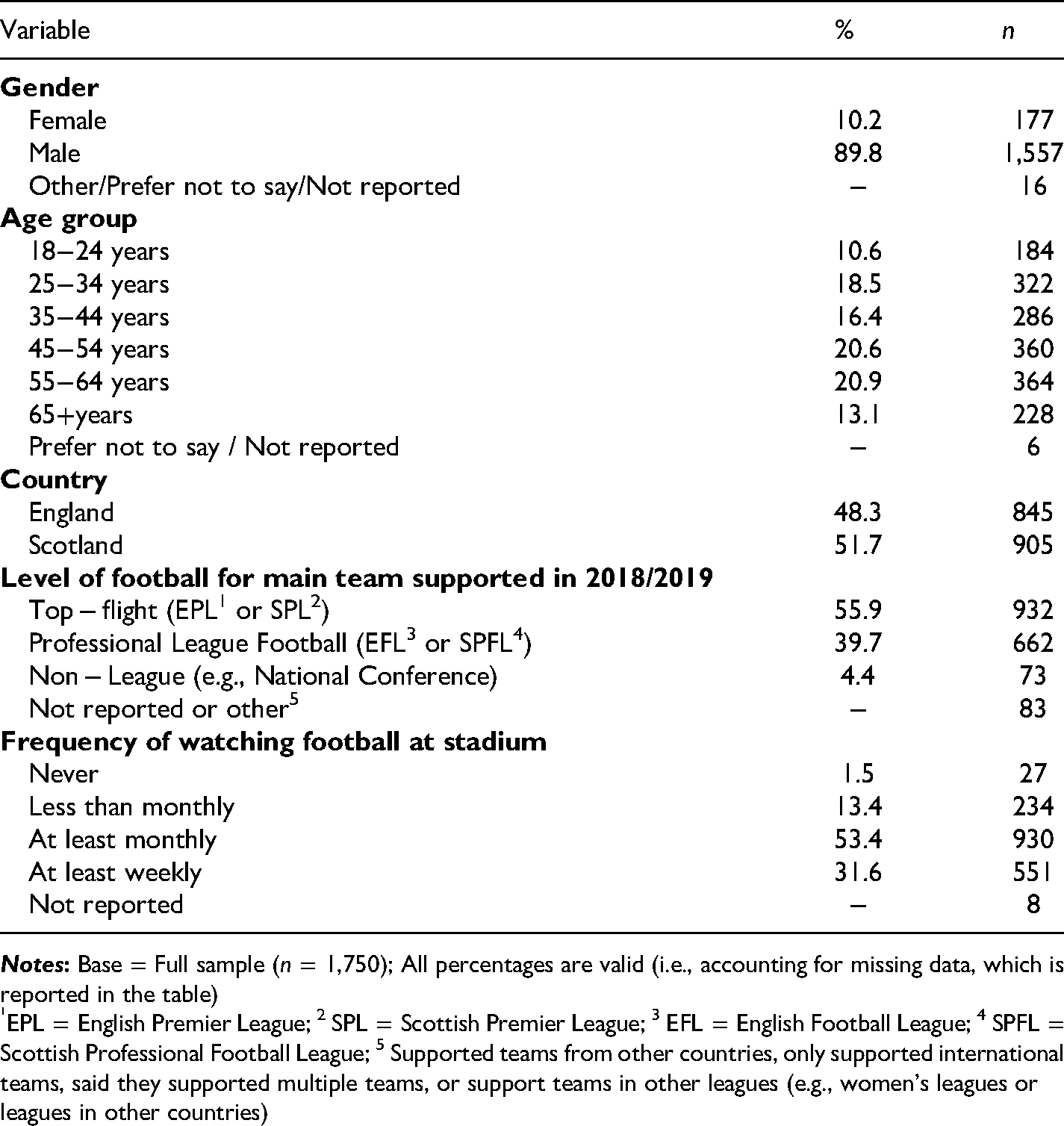
EPL = English Premier League; 2 SPL = Scottish Premier League; 3 EFL = English Football League; 4 SPFL = Scottish Professional Football League; 5 Supported teams from other countries, only supported international teams, said they supported multiple teams, or support teams in other leagues (e.g., women's leagues or leagues in other countries)
Acceptability of Drinking Alcohol at Football Grounds
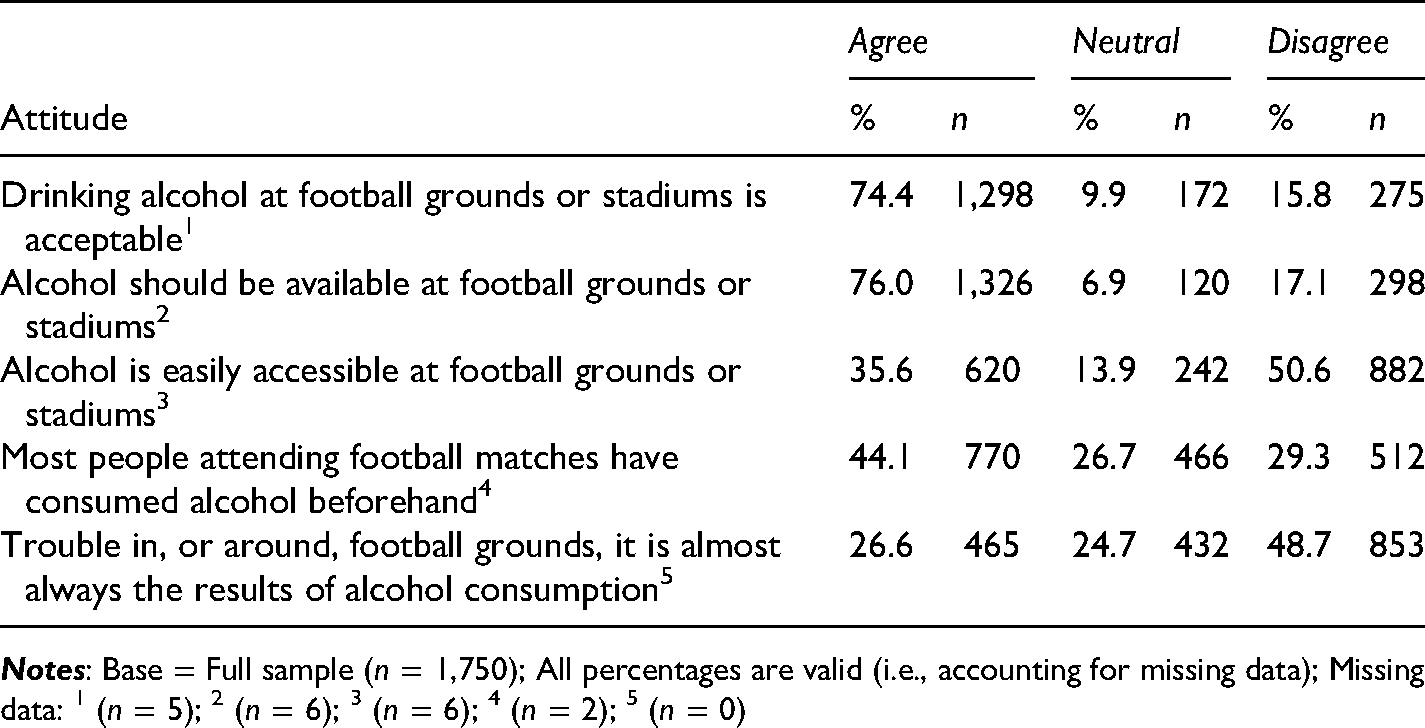
Three quarters of supporters (74.4%) agreed it was acceptable to consume alcohol at football grounds or stadia (Table 2). In the binary logistic regression, perceived acceptability was negatively associated with age (p < 0.001) (Table 3). Specifically, those aged 45–54 years (Adjusted Odds Ratio [AOR] = 0.28, p < 0.001), 55–64 years (AOR = 0.25, p < 0.001), and 65 + years (AOR = 0.24, p < 0.001) were less likely to say it was acceptable versus those from younger age groups. Perceived acceptability was also associated with country of residence, with those from Scotland less likely to report acceptability than those from England (AOR = 0.17, p < 0.001). There was a positive association with match-attendance (p = 0.001), with those attending in-person at least monthly (AOR = 1.90, p = 0.001) or at least weekly (AOR = 1.39, p = 0.030) more likely to agree than those attending match in-person less often or never. There was no association of the perceived acceptability of drinking alcohol at football stadiums with gender or level of football their supported team played in.
Level of agreement with the attitudes towards alcohol at football.
Exploring the association between attitudes towards alcohol at football and demographic and supporter characteristics.
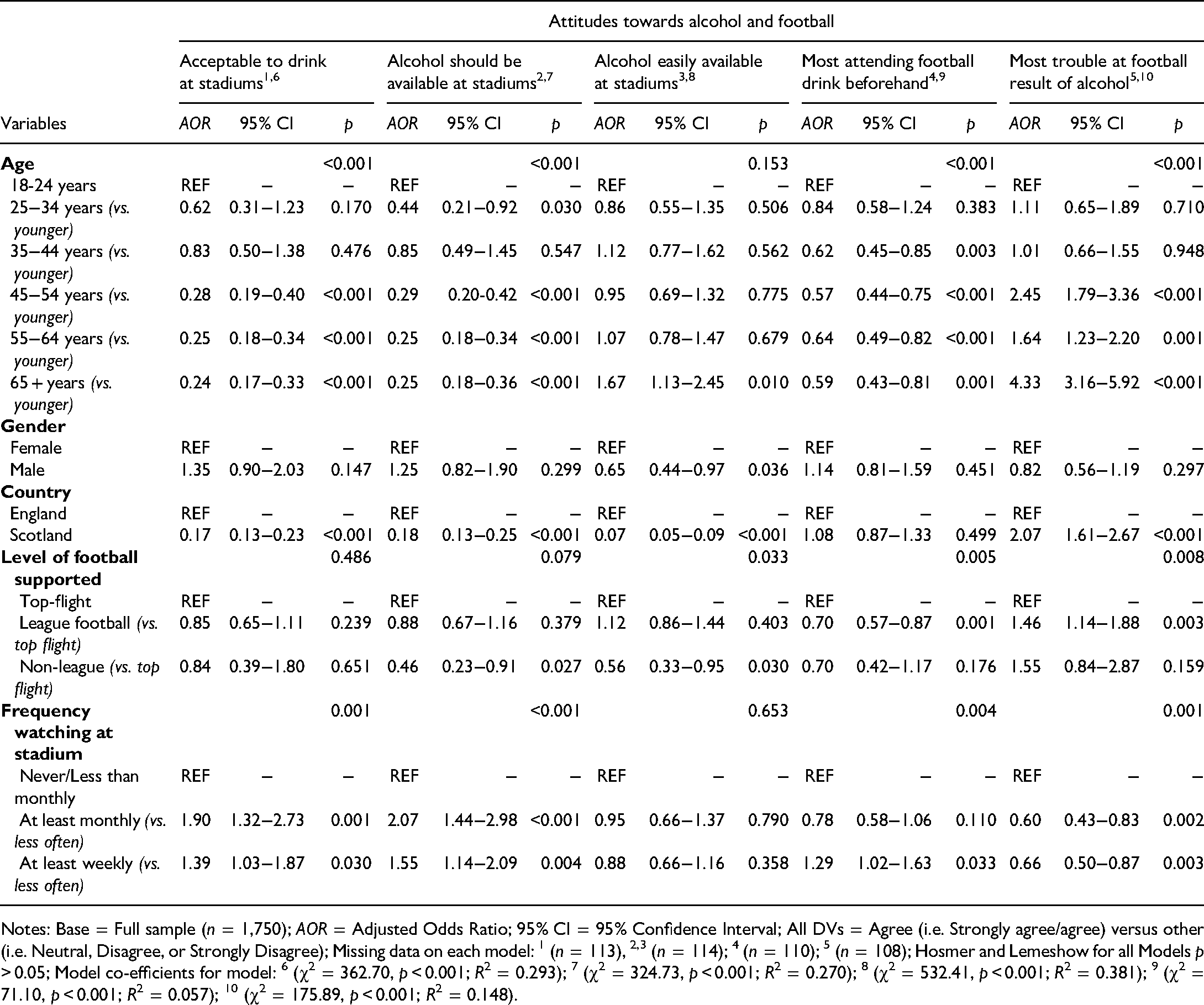
Notes: Base = Full sample (n = 1,750); AOR = Adjusted Odds Ratio; 95% CI = 95% Confidence Interval; All DVs = Agree (i.e. Strongly agree/agree) versus other (i.e. Neutral, Disagree, or Strongly Disagree); Missing data on each model: 1 (n = 113), 2,3 (n = 114); 4 (n = 110); 5 (n = 108); Hosmer and Lemeshow for all Models p > 0.05; Model co-efficients for model: 6 (χ2 = 362.70, p < 0.001; R2 = 0.293); 7 (χ2 = 324.73, p < 0.001; R2 = 0.270); 8 (χ2 = 532.41, p < 0.001; R2 = 0.381); 9 (χ2 = 71.10, p < 0.001; R2 = 0.057); 10 (χ2 = 175.89, p < 0.001; R2 = 0.148).
Perceptions Regarding the Availability of Alcohol at Football Grounds
Three quarters of participants (76.0%) agreed that alcohol should be available at football grounds (Table 2). In the binary logistic regression, agreement was negatively associated with age (p < 0.001) (Table 3). Specifically, those aged 45–54 years (Adjusted Odds Ratio [AOR] = 0.29, p < 0.001), 55–64 years (AOR = 0.25, p < 0.001), and 65 + years (AOR = 0.25, p < 0.001) were less likely to agree versus those from younger age groups. Perceived acceptability of alcohol being available was also associated with country of residence, with those from Scotland less likely to report acceptability than those from England (AOR = 0.18, p < 0.001). There was also a positive association with match-attendance (p < 0.001), with those attending in-person at least monthly (AOR = 2.07, p < 0.001) or at least weekly (AOR = 1.55, p = 0.004) more likely to agree than those attending in-person less often or never. There was no association with gender or overall association for level of football their supported team played in.
Perceived Accessibility of Alcohol at Football Grounds
Approximately one third of participants (35.6%) agreed that alcohol is easily accessible at football grounds (Table 2). In the binary logistic regression, men were less likely to agree alcohol was easily accessible than women (AOR = 0.65, p = 0.036), as were supporters from Scotland compared to supporters from England (AOR = 0.07, p < 0.001) (Table 3). There was also an association with level of football supported (p = 0.033), with those supporting non-league teams less likely to agree that alcohol was easily accessible compared to those supporting top-flight football (AOR = 0.56, p = 0.030). There was no overall association with age or frequency of attending matches at football grounds.
Perceived Consumption of Alcohol by Spectators Prior to Match Attendance
Over two-fifths of participants (44.1%) agreed most people attending football had consumed alcohol beforehand (Table 2). In the binary logistic regression model, agreement was negatively associated with age (p < 0.001) (Table 3). Specifically, those aged 45–54 years (AOR = 0.57, p < 0.001), 55–64 years (AOR = 0.64, p < 0.001), and 65 + years (AOR = 0.59, p < 0.001) were less likely to agree versus those from younger age groups. There were also associations with level of football supported (p = 0.005), with those supporting teams in the football leagues less likely to agree than those supporting top-flight teams (AOR = 0.70, p = 0.001), and with frequency of watching football in person at grounds (p = 0.004), with those attending at least weekly more likely to agree than those going less often or never (AOR = 1.29, p = 0.033). There were no associations for gender or whether the supporter was from England or Scotland.
Perceptions That Trouble at Football is the Result of Alcohol Consumption
Only a quarter of participants (26.6%) agreed that when there is trouble in or around football grounds it is almost always the result of alcohol consumption (Table 2). In the binary logistic regression, agreement was positively associated with age (p < 0.001) (Table 3). Specifically, those aged 45–54 years (AOR = 2.45, p < 0.001), 55–64 years (AOR = 1.64, p = 0.001), and 65 + years (AOR = 4.33, p < 0.001) were more likely to agree versus those from younger age groups. There were also associations with country, with supporters from Scotland more likely to agree than supporters from England (AOR = 2.07, p < 0.001); level of team supported, with those whose team was in the football leagues more likely to agree than those who supported teams in the top flight (AOR = 1.46, p = 0.003); and watching football in person at grounds, with those going at least monthly (AOR = 0.60, p = 0.002) or at least weekly (AOR = 0.66, p = 0.066) less likely to agree than those attending less often. There was no association with gender.
Discussion
The data show that, overall, most supporters considered consuming alcohol at football grounds to be acceptable, whereas only a minority agreed that most trouble at football was the result of alcohol consumption. Attitudes did, however, vary by supporter characteristics. For example, older supporters were less likely than younger adult age groups to be supportive of consuming alcohol at football, while supporters in Scotland were less supportive of alcohol at football than those from England. These survey results generate some new and important observations regarding football supporters’ perceptions of alcohol consumption at football matches, particularly as the UK and Scottish Governments consider how to reopen sports stadia, including the role of alcohol, in the wake of COVID-19.
The view that drinking alcohol at football grounds is acceptable is consistent with existing opinion that alcohol and football are inextricably linked (Gornall, 2014; Dixon, 2014; Armstrong & Hognestad, 2006). In addition, there was widespread agreement that alcohol should be available at football grounds. The different levels of agreement between older and younger supporters reflect the many changes which have taken place in the decades since regulations were first brought in. Firstly, older supporters are more likely to have been present when alcohol was widely consumed at football matches. They may also have been present at football matches during the time when football hooliganism was at its peak and violent incidents were more frequent (Robertson, Frank & Jepson, 2013; Gould & Williams, 2011). As a result of these experiences, they may be more likely to oppose the presence of alcohol and hold the view that alcohol is a likely cause of trouble at football matches since this view was embedded in much of the legal, policy and public discourse throughout the 1970s and 1980s (Palmer, 2011). Younger supporters will not have as much direct experience of or exposure to actual alcohol-related violence and public discourse on this, leading to a more favourable view of alcohol. Secondly, it is clear younger supporters have grown up in an entirely different era of football than older supporters. Modern all-seater stadia, the ‘match-day experience’, enhanced security and wall-to-wall TV coverage means that they hold fundamentally different views of the football environments due to their experiences (Edensor, 2015). This finding would appear to support previous research which has found that younger sports spectators are more likely to be heavier drinkers and less likely to support restrictions on the availability of alcohol at sporting events (Glassman et al., 2007).
We found that where alcohol was less restricted, it was believed to be more acceptable. Restrictions on alcohol availability differ between Scotland and England. In England it is permitted to consume alcohol in designated areas within the stadium up to 15 min before kick-off and at half-time, whereas in Scotland alcohol can only be consumed in hospitality areas. Those who supported English clubs showed a high level of agreement that alcohol should be available and unsurprisingly reported greater accessibility of alcohol at football stadia than those who supported teams from Scotland. Regular attendance at football matches was also found to be a likely factor in influencing supporters’ attitudes and beliefs towards alcohol at football matches. Previous research has argued that normalisation and routine play a large part in alcohol consumption whilst attending football matches (Dixon, 2014) and routinized alcohol consumption has long been associated with instilling a sense of place and belonging and with establishing shared group values (Clarke, 1978; Armstrong & Hognestad, 2006). These close ties between football, social relations, identity-making and collective alcohol consumption may be particularly important for football supporters who only interact with each other on match-days. Those who reported attending matches regularly were more likely to believe that drinking alcohol at football grounds was acceptable and were less likely to believe trouble at football is linked to alcohol. The normalisation of alcohol consumption around attending football matches may have influenced their perceptions of whether others were drinking alcohol, with much alcohol consumption around football matches routinized and binge based. Those regularly attending football matches are also more likely to have experience of attending matches on a regular basis where there has been no trouble or violent incidents. Regular attendance at matches may also influence the entrenched expectancies regarding alcohol and its importance to enhancing confidence and rowdiness (Glassman et al., 2012) with those who attend matches more regularly more supportive of alcohol being available.
Media coverage of violent incidents at football matches is often sensationalised and not representative of the football-watching experience in general in the UK (Cleland & Cashmore, 2016). Those who attend football matches less frequently may be more inclined to believe violent incidents to be a regular occurrence and refer to media reports which mention alcohol, resulting in a more cynical position on the role that alcohol plays.
Strengths and Limitations
This study provides quantitative data on football supporters attitudes towards alcohol and football. The inclusion of football supporters from both Scotland and England also allows us to compare the opinions and views of supporters from different cultural and regulatory contexts.
This survey was conducted with football supporters and thus, the recruitment methods used meant that the sample was limited to those who were highly engaged with football supporters’ groups or the clubs themselves. Snowball sampling was used, utilising the interpersonal relations and connections between football supporters. Limitations of this method include the exclusion of those individuals who are not actively involved with the various supporters’ organisations and/or football governing bodies who helped with the dissemination of the survey (Browne, 2005). The sample included a relatively low number of female supporters in comparison with the reported percentage of female supporters for leagues in England and Scotland. The recruitment methods may also have had a bearing on the level of the club participants stated they supported, with supporters of smaller clubs more difficult to reach. This research is based on the results of an online survey. Such surveys commonly suffer from two methodological limitations: the population to which they are distributed cannot be described, and participants with biases may select themselves into the sample (Andrade, 2020). Although this survey was limited to football supporters and the recruitment methods used meant that we had good knowledge of the population to which it was distributed, it is fair to assume that there is no way of identifying, understanding, and describing the population that could have accessed and responded to the survey which has implications for its generalisability. Also, the survey was completed only by people who were literate and had access to the internet, and by those who were sufficiently interested in the subject of football and alcohol to take the time to respond.
As the study is based on a cross-sectional sample, we are unable to draw causal inferences or to analyse behaviour over time. However, the method does allow us to learn from participants’ views on alcohol and football and how they perceive the relationship between the two (Woodside, 2011).
Conclusion
Attitudes towards the consumption of alcohol at UK football matches varied by supporter characteristics such as age, frequency of attending matches and the difference in existing alcohol control policies between England and Scotland. These findings are indicative of the substantial changes which have altered the experience of attending a sporting event in the UK, and in many other countries, over the last 40 years. This has implications for existing regulations which were put in place when the experience of attending a sporting event was very different. Any future discussion regarding the regulation of alcohol at sporting grounds needs to consider the developments which have occurred in stadia and with supporters if these measures are to remain appropriate. It should also explore alternative approaches to police engagement, health communication and media literacy campaigns which may help remedy entrenched alcohol expectancies (Glassman et al., 2012).
Our findings also demonstrate how differences in existing regulations influence supporters’ attitudes towards alcohol, i.e., the greater support for alcohol in England, where alcohol is permitted to be sold at football matches, compared to Scotland, where availability at matches is more restricted. Systematic, cross-national comparative studies such as this provide deeper, more nuanced understanding of the fan-alcohol nexus, and both the commonalities and the particularities across different cultural contexts. Our findings highlight the importance of differences in fan views on regulations in different national/sporting contexts, even in locations (such as England and Scotland) that have strong geographical, political, and cultural similarities.
To inform debates more fully regarding existing regulations, future research should explore supporters’ attitudes towards current regulations and the extent to which they feel these regulations are effective or in need of change. Research could also look at attitudes of those who attend other sporting events such as rugby and cricket, to determine whether football acts as a ‘special space’ for binge drinking compared to other sports or leisure activities. This research could encourage other scholars to examine alcohol regulations in other international contexts, to determine if relevant social changes within and beyond these sports may lead to measures needing updated.
Footnotes
Declaration of Conflicting Interests
The author(s) declared no potential conflicts of interest with respect to the research, authorship, and/or publication of this article.
Funding
The author(s) disclosed receipt of the following financial support for the research, authorship, and/or publication of this article: This work was supported by the Economic and Social Research Council (grant number ES/R008485/1).
