




Abstract
Unprecedented numbers of refugees have affected European society at large, and the organized sports system, in particular. Combining the concepts of organizational capacity and institutional logics, this article examines the engagement of voluntary sports clubs (VSCs) in the process of refugee integration. Drawing on data from a representative sample of n = 5,170 German VSCs through an online survey, the results indicate that 28% of the VSCs reported engagement in the process of integrating refugees by the end of 2015; however, only 14% initiated concrete measures. The statistical analysis highlights the relevance of institutional logics. VSCs are encouraged to carefully handle the tension between business-like management and intensive voluntary work during the integrative process. Financial capacity appears less relevant; the presence of migrant club members and a more professional organizational design, however, appear beneficial. The results imply that involved stakeholders should intensify capacity building programs in the structural dimension of organizational capacity.
Introduction
An unprecedented 22.5 million refugees 1 around the world were forced from their homes in 2016 (UNHRC—The UN Refugee Agency, 2017). In 2015, 1.3 million refugees applied for asylum in the European Union; in Germany alone, almost 1.1 million asylum seekers were registered, and 467,649 application processes were initiated (Federal Office of Migration and Refugees, 2016). With an asylum recognition of 50% in Germany, governmental structures, local authorities and, civil society at large are facing significant challenges in facilitating the transition period for refugees as they adjust to life in Germany (Federal Government of Germany, 2016). Consequently, the organized sports system was—and still is—affected as well. For example, the facilities of 3,400 German voluntary sports clubs (VSCs) had been used for the accommodation of refugees between 2014 and 2015 (Breuer, Feiler, & Nowy, 2017). Policy makers at the local, national, and supranational level invest in VSCs to stimulate their assumed function as motors for integration of specific target groups (European Commission, 2018; Federal Government of Germany, 2016; McDonald, Spaaij, & Dukic, 2019; Michelini, Burrmann, Nobis, Tuchel, & Schlesinger, 2018; Waardenburg, 2016). VSCs are characteristically nonprofit and member-based organizations that traditionally form the “grassroots” of mass sport participation in many European and overseas countries, such as Canada and Australia (Feiler, Wicker, & Breuer, 2018; Misener & Misener, 2017; Skille & Stenling, 2018). Even though the willingness and capacity of VSCs to act as policy implementers is critically discussed in the academic literature (e.g., Garrett, 2004; Skille, 2008), governments continue to attempt to compel VSCs to provide social goods—including inclusionary efforts toward refugees (Coalter, 2007; Stenling & Fahlén, 2016; Vos et al., 2011; Waardenburg, Visschers, Deelen, & van Liempt, 2018).
Evidence suggests that participation in sports clubs may lead to a reduction in antisocial behavior (Pizzolati & Sterchele, 2016). This participation is a supposedly open social activity where people can develop networks in an environment characterized by equal opportunities and racial equality (Hatzigeorgiadis, Morela, Elbe, Kouli, & Sanchez, 2013). Refugees, in particular, were reported to profit from a range of physical and social-psychological benefits that are likely to foster health and well-being by satisfying essential emotional needs through gaining confidence and resilience skills (Anderson et al., 2019; Pizzolati & Sterchele, 2016; Spaaij, 2015; Waardenburg et al., 2018). Participation in organized sports may help refugees forget about daily struggles as this activity enables an easy opportunity to meet others (Waardenburg et al., 2018) and serves as “a distraction, a way of avoiding the endless tedium of empty days with little to do as asylum seekers are prevented from (legally) taking an integral role in the local and national economy” (Stone, 2018, p. 179).
In the European sports context, subsidized programs for refugees—such as Welcoming through sports (DOSB, 2017)—primarily aim to introduce refugees to sporting and leisure activities (Federal Ministry of the Interior, 2016) and are mostly implemented by VSCs (Waardenburg et al., 2018). According to public policy rhetoric, such activities lead to social contacts that are favorable for more connectivity with the host country (Waardenburg et al., 2018). The evidence on the inclusionary power of sports, however, remains mostly anecdotal and the conflict between policy and practice is evident (Dukic, McDonald, & Spaaij, 2017; Hatzigeorgiadis et al., 2013; Jeanes, O’Connor, & Alfrey, 2015). Moreover, there is ample scientific literature suggesting that sports clubs are not havens of racial equality (e.g., Bradbury, 2011, 2013; Hylton, 2005, 2008, 2010). Negative social encounters in grassroots sports clubs such as discrimination or racism (see Kilvington & Price, 2013; Nowy & Breuer, 2019) can affect the experiences of refugees and may reinforce group boundaries that hinder successful integration (Spaaij, 2012). Sports’ capacity to promote the social inclusion of refugees is, therefore, not straightforward and instead conditional and context-dependent (McDonald et al., 2019; Michelini et al., 2018). A simplistic claim that refugees only need to participate in an organized sport to become fully integrated cannot be upheld (Spracklen, Long, & Hylton, 2015).
Against this background, Stone (2018) proposed that the value of sports should be seen in providing hope and a sense of belonging for refugees during a period of dramatic personal change. Accordingly, participation in VSCs may provide hope for refugees to be involved in other key domains of social integration such as education and employment through potential bonding and linking connections (Block & Gibbs, 2017; Spaaij, 2012). Rather than empowering refugees financially or legally, such hope empowers refugees culturally, socially, and mentally (Stone, 2018); this hope should not be underestimated and is more realistic than the rather mythopoeic aims proclaimed by “sports evangelists” (cf. Coalter, 2007).
When sports are not considered as causes of socialization and integration but rather as sites for such (Coakley, 1998), the appropriate environment for (successful) integrative efforts toward refugees should be particularly analyzed at the meso-level, that is, the organizational level (Suzuki, 2017). In the Australian context, Block and Gibbs (2017) were able to demonstrate that while short-term and ongoing programs designed explicitly for refugees were perceived as having significant benefits, “it was reported by many of the participants that facilitating integration into clubs remained the ideal” (p. 98). Similar findings were obtained by Waardenburg et al. (2018) in the Netherlands where refugees preferred to “make an early start on the long process of integration into Dutch society by joining sport clubs” (p. 15). Recent studies in this context highlight the urgent need for more empirical research that is based on appropriate theoretical foundations, with a focus set on the level where (social) policy implementation intersects with the local community, that is, at sport’s grassroots (Michelini et al., 2018; Skille & Stenling, 2018; Suzuki, 2017; Waardenburg et al., 2018). Thus, the purpose of this article is to investigate VSCs’ engagement in the area of integrating refugees and centers around the main research question (RQ):
Two central components are considered: VSCs’ (a) institutional logics and (b) organizational capacity. The following conceptual framework provides an understanding of the process of integrating refugees into VSCs. Then, the concepts of institutional logics and organizational capacity are introduced, followed by a discussion on a potential integration of the two concepts. Information on the sample, the research instrument, and the operationalization of variables are included in the subsequent methodology section. The empirical evaluation is based on a representative sample of the German VSC population and includes four multivariate logistic regression models.
Conceptual Framework
Integration of Refugees into VSCs
Integration is understood as a process of the continuous effort relating to and including additional elements (such as recently arrived refugees) in a social system and its core institutions (Heckmann, 2005; Heckmann & Schnapper, 2016). Based on research in the United Kingdom with refugee background settlers, Ager and Strang (2008) provided a conceptual framework for understanding core domains of integration. In their model, successful local integration encapsulates access and achievement across four sectors of employment, housing, education, and health as markers and means. Sports were found to assist refugees in improving language skills, respecting local customs, and improving interactions with members of the dominant culture (Elbe et al., 2018). Those interactions are often described as entry points to broader participation in other integrational domains, such as employment and education, as these domains are interdependent (Ager & Strang, 2008; Block & Gibbs, 2017). Previous research has thus considered (recreational) sport as a fifth marker and means of integration that is interdependent with the original four markers and means (e.g., Spaaij, 2012).
The pilot study of Seiberth, Thiel, and Hanke (2018) demonstrated that the integration of refugees into the social system of voluntary sports clubs in Germany is a three-step process. First, the topic “integration of refugees” is introduced on the club’s agenda by internal and external impetus (initial phase). For example, facilities are used for the accommodation of refugees, individual refugees ask to join training sessions, or members personally initiate (sporting) activities for refugees. The VSC’s efforts, however, remain comparatively random and unspecific. Second, the idea of integrating refugees is concretized through developing, organizing, and implementing specific measures (implementation phase). Those measures are primarily aimed to ensure access for the refugees to the club’s (sporting) activities. Furthermore, the conditions and requirements for refugees to participate in the club are set. This addresses explicitly questions regarding insurance, finances, and type/form of implemented sporting activities designed for refugees. Thereby, integrative efforts become more intentional and target-oriented. The first two phases can be considered as the inclusionary stages of refugee integration because they are the precondition for the successful integration of refugees during the final phase. At this final stage (consolidation phase), integrational efforts are focused on improving the quality of inclusion within the club’s social networks.
Institutional Logics of Voluntary Sports Clubs
It should be kept in mind that VSCs are founded initially to serve as the organizational unit oriented toward the interests of its members—and not as agents for governmental policies (Fahlén & Karp, 2010). The role of VSCs as social policy implementers is often analyzed from an institutional logic perspective (e.g., Skille, 2011; Skirstad & Chelladurai, 2011; Stenling & Fahlén, 2016). Institutional logics can be understood as the formal and informal rules of behavior and interaction which guide and limit decision-makers in achieving the tasks of the organization to acquire social status (Skirstad & Chelladurai, 2011). Such rules comprise a set of values and assumptions about an organization’s reality, appropriate behavior, and success (March & Olsen, 1989). An institutional logic is influenced by institutional pressures stemming from any actor that has the potential to sanction an organization for not complying with wishes or demands (Fahlén & Karp, 2010; Vos et al., 2011). In this study’s context, VSCs are likely to be influenced by governmental expectations in terms of the social inclusion of refugees through regulations and conditioned subsidies (Vandermeerschen, Meganck, Seghers, Vos, & Scheerder, 2017).
Within the Scandinavian VSC context, Stenling and Fahlén (2009) identified three distinctive dominant logics in Swedish sports clubs: amateur, professional, and commercial. The authors observed an order of logics with the sport-for-all logic being overshadowed by the commercialization/professionalization logic and result-oriented logic. Skirstad and Chelladurai (2011) concluded that such logics could coexist in the Norwegian football club context. Skille (2011), however, argues that it seems impossible for Norwegian sports clubs to combine diverse logics. In a more recent study among Swedish sports clubs, Stenling and Fahlén (2016) determined 10 organizational identity categories for Swedish sports clubs with inherent logics of action, remarking that new club types might arise over time. Based on a set of statements regarding VSCs’ general philosophy, values, rules, and appropriate behavior, Breuer and Wicker (2011) identified five distinctive club types (integrative, youth, conviviality, service, and performance) that can be considered as institutional logics in the German VSC context. Furthermore, they propose that a club can combine several logics.
The current body of literature implies that VSCs are not only heterogeneous but that there is a particular need for further research on how institutional logics affect VSCs’ willingness to comply with, resist, and act upon governmental policies, programs, and expectations (Stenling & Fahlén, 2016; Waardenburg, 2016). When VSCs are expected to successfully embark on the policy goal “social inclusion of refugees,” their institutional logic needs to normatively align with the values promulgated in the policy. Accordingly, it is hypothesized as follows:
It remains to be investigated which institutional logic is the most favorable in this context. An already integration or youth-oriented VSC may demonstrate higher engagement levels concerning integrating refugees because it might have experience with inclusionary efforts toward other marginalized groups of society (Michelini et al., 2018; Vandermeerschen et al., 2017). Rulofs, Feiler, Rossi, Hartmann-Tews, and Breuer (2019) argue that a VSC’s degree of professionalization—represented by a service-oriented logic—might generally contribute to a higher awareness of societal issues. The studies of Michelini et al. (2018) and Seiberth et al. (2018) suggest that the institutional logic traditional/conviviality is in contrast to pursuing the goal of integrating refugees due to a low ambition to change well-established patterns of the organizational activities and/or the membership structures. The relationship between a competitive/performance-oriented institutional logic and the likelihood of successful integration of refugees remains unclear. While Skille (2009) believes that implementing social policy and the logic of competition seem challenging to combine, McDonald et al. (2019) and Spaaij et al. (2014) argue that an (elite) sports club might deliberately offer sports for refugees to identify talent.
Organizational Capacity
Because a VSC’s institutional logic defines what is considered appropriate action, it consequently influences resource deployment and allocation. The ability to draw on or deploy various assets and resources to achieve policy goals is also known as the concept of organizational capacity. A well-established model of organizational capacity in the VSC context (e.g., Doherty, Misener, & Cuskelly, 2014; Swierzy, Wicker, & Breuer, 2018) was developed by Hall et al. (2003) and includes three main dimensions: human resources (HR), financial, and structural capacity. HR capacity is “the ability to deploy human capital (i.e., paid staff and volunteers) within the organization” (Hall et al., 2003, p. 5) and is often considered to be the key element in the model (Kitchin & Crossin, 2018). Within the grassroots sports context, VSCs are increasingly expected to operate with a more professional and bureaucratic organizational design (Misener & Misener, 2017). Moreover, the HR capacity dimension includes a common focus and the presence of potentially marginalized members (e.g., Doherty et al., 2014; Vandermeerschen et al., 2017). Michelini et al. (2018) demonstrated that HR capacity is critical regarding the implementation of sports offers for refugees. However, their study did not consider a VSC’s financial and structural capacities, and it is highlighted in the literature that the concept of organizational capacity should be applied cohesively (Doherty et al., 2014; Nowy & Breuer, 2017). Financial capacity does not just refer to more money, but also to better money, that is, access to revenues that provide VSCs with enough autonomy to decide what to do with it (Hall et al., 2003). Structural capacity is “the ability to deploy the non-financial capital that remains when the people from the organization have gone home” (Hall et al., 2003, p. 5). It includes three types: planning and development, relationship and network, and infrastructure and process. Systematic planning has continuously been acknowledged as critical to a club’s goal achievement (e.g., Vandermeerschen et al., 2017; Wicker & Breuer, 2014). Interorganizational partnerships that provide VSCs with valuable links to resources and competencies are integral factors in the relationship and network dimension (Kitchin & Crossin, 2018). Infrastructure and process capacity results from the effective use of infrastructure, processes, and organizational culture (Hall et al., 2003). This dimension might particularly be subject to a VSC’s organization as a single- or multisport club (Swierzy et al., 2018). Communication channels with low veto-potential were found favorable toward a VSC’s decision to be engaged in the area of refugee integration (Michelini et al., 2018). Organizational culture consists of ideologies that legitimize existing social order and impel collective action and values that provide meaning and standards for social behavior (Allaire & Firsirotu, 1984).
Hinings (2012) explored potential connections between institutional logics and organizational culture. Based on findings in the respective literature, the author suggests that a potential connection can be seen in the actualization of field-level institutional logics at the organizational level, that is, within an organization’s culture. When a field is understood as a set of structured relationships between organizational actors, bound together by common meaning systems (i.e., institutional logics; cf. Scott, 1991), institutional logics provide guidelines on how to interpret and function in social situations (Greenwood, Raynard, Kodeih, Micelotta, & Lounsbury, 2011). As such, logics prescribe the raw cultural material (Jones & Livne-Tarandach, 2008) comprising values and beliefs shared by organizational members and identity that consists of central, distinctive, and enduring features of the organization that are manifested as key values, labels, and practices (Gioia, Patvardhan, Hamilton, & Corley, 2013; Hladchenko, 2018). Hinings (2012) followed that (multiple) institutional logics consequently might operate as (sub-)cultures at the organizational level.
Overall, higher capacity levels in each dimension of organizational capacity are assumed to be beneficial concerning a VSC’s engagement in the integration of refugees. Accordingly, the second hypothesis reads as follows:
The concept of organizational capacity highlights the relevance of external constraints and facilitators such as, for example, competition, the demographic composition of the population, characteristics of the community the club is based in, and the legal and regulatory framework (Hall et al., 2003). Integrative efforts toward refugees were found to function as a powerful tool for a club’s public reputation and standing in the community (Seiberth et al., 2018). Consequently, integrative efforts may serve as a competitive advantage in the battle for public (financial) support, and—in areas with a problematic demographic development in their community—for a new target group (Seiberth et al., 2018). Other relevant community characteristics in the context of refugee integration might include community size and location. Clubs in bigger communities are more likely to have higher shares of migrants among members (Breuer & Feiler, 2017) and thus might build on experience with previous integrative efforts. The so-called Königstein Key determines what share of asylum seekers is received by each of Germany’s 16 federal states (Federal Office of Migration and Refugees, 2018). Accordingly, there are fewer refugees in the Eastern area states of Germany. Seiberth et al. (2018) report that football is of particular interest for men with a migration background. Consequently, football might function as a pull factor for engagement in the area of refugee integration. This effect is infused by Germany’s federal government’s particular commitment to subsidize integrative projects of football clubs (Federal Ministry of Labour and Social Affairs, 2016). Voluntary engagement of VSCs in the integration of refugees might further be negatively hindered by bureaucratic burdens through complex laws and regulations (Breuer & Feiler, 2015).
Data and Method
Sample and Instrument
Data from an online survey of sports clubs in Germany were used for the empirical investigation. Out of the population of 90,240 sports clubs in Germany, 78,794 clubs were invited to take part in the online survey that was accessible from September to December 2015. The final sample was reduced by approximately 3,000 clubs that could not be reached via email and amounts to 75,845 clubs. With n = 20,546 participants, the response rate equals 27.1%. Almost 94% of the respondents were members of the club’s board. For 20% of the VSCs, the questionnaire was filled in by more than one board member. Throughout the survey, pop-up information boxes provided additional information and definitions for potentially debatable terms, for example, a definition delineating “people with a migration background.” The voluntary nature of the survey allowed clubs to refrain from providing sensitive data. For comparative reasons, only complete cases were considered for the underlying study (n = 5,170).
The data analysis was conducted with weighted values to represent the German sports club population representatively. Therefore, the population data and the club data samples were segmented into groups by club size. The distribution of clubs’ size groups was identified in both data sets and for all 16 federal sports confederations. Next, a weighting factor for all cases, based on the distribution by size classes in the population and the sample, was determined. Finally, the sample was weighted by this factor for the final analyses.
Operationalization of Variables
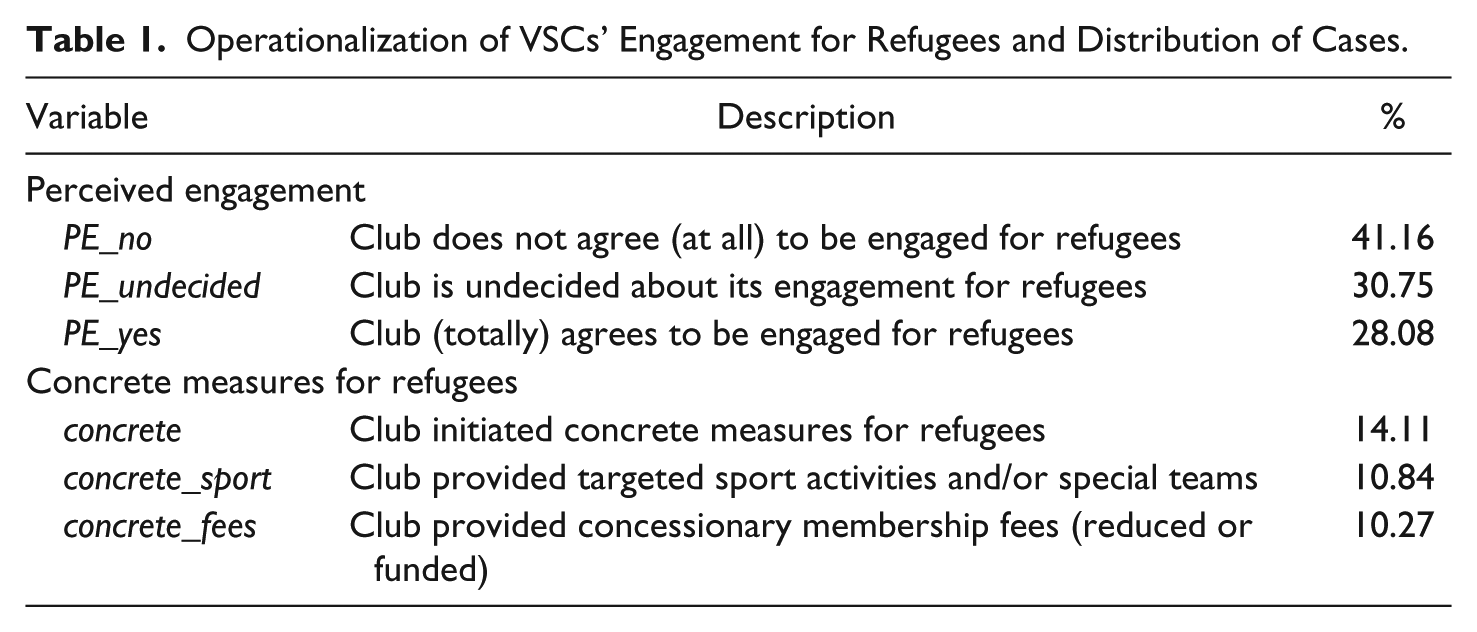
A VSC’s engagement in the process of integrating refugees was operationalized twofold. First, club managers reported their level of agreement on the statement “Our club engages for refugees” (5-point Likert-type scale). This rather vague statement allowed for a broad interpretation of the topic “integration of refugees” and primarily refers to the initial phase in which integration projects are relatively unspecific. To assess a club’s general tendency, and in an attempt to reduce the complexity of interpreting the results, a new variable (PE_3) was constructed which takes on the value of 1 when the respondent did not agree or did not agree at all (respective dummy variable: PE_no), 2 when the respondent was undecided (PE_undecided), and 3 when the respondent (totally) agreed (PE_yes). For the second phase of the integration process, responding managers indicated whether their club had realized (any) concrete measures for refugees (concrete). On the next page of the online survey, it was possible to check respective boxes when the VSC offered sporting offers and special teams for refugees, interorganizational cooperation with other sporting organizations and/or the local community/municipality, and concessionary membership fees. This allowed the construction of the dummy variables concrete_sport (sporting activities and/or special teams for refugees) and concrete_ fees (concessionary membership fees; Table 1).
Operationalization of VSCs’ Engagement for Refugees and Distribution of Cases.
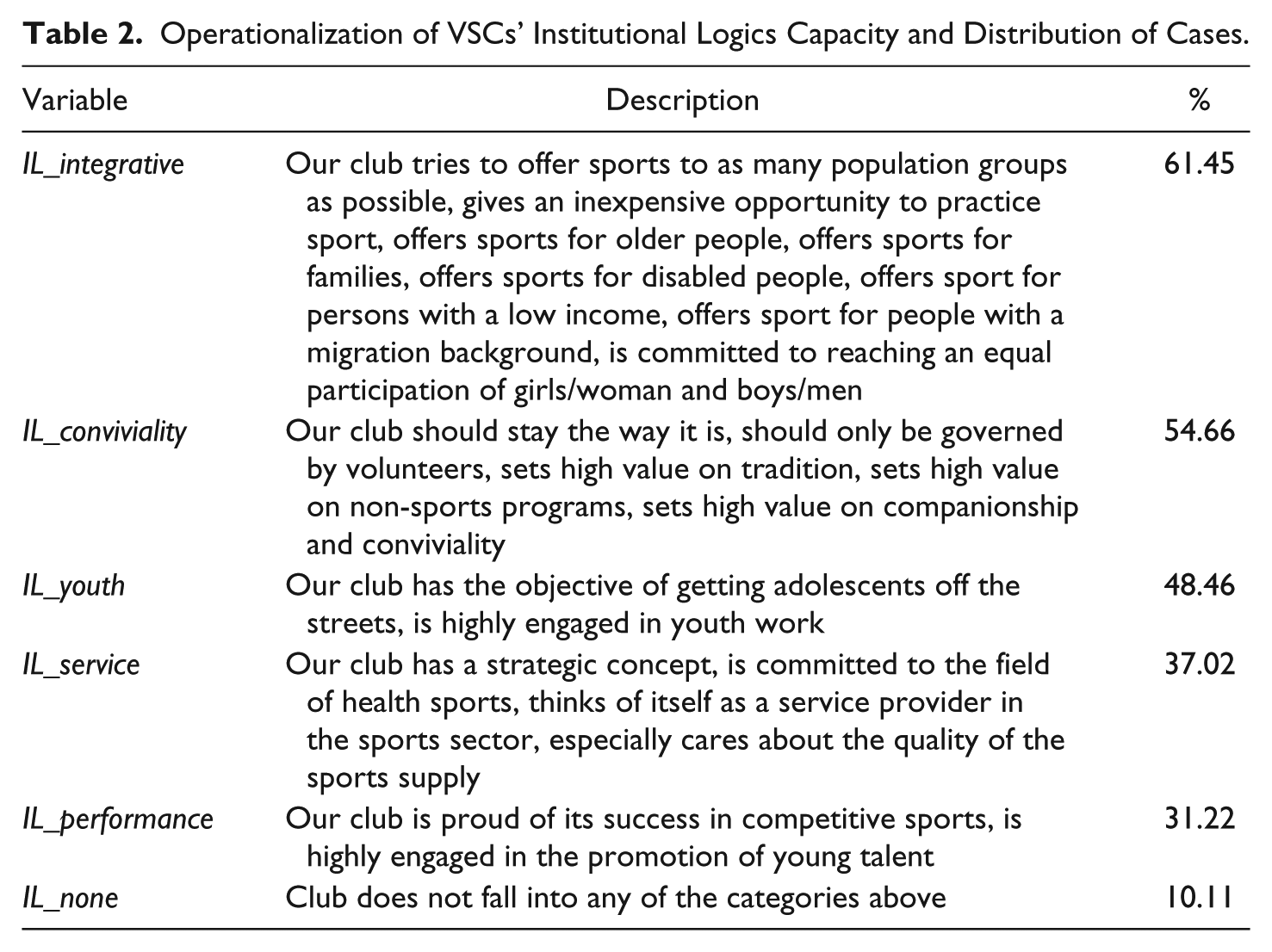
The operationalization of VSCs’ institutional logics follows Breuer and Wicker (2011). All respective items determining a specific logic were available in this data set. The five identified logics showed satisfying internal consistency with Cronbach’s alpha levels, on average, higher than .7. Dummy variables (IL_integrative, IL_youth, IL_performance, IL_conviviality, and IL_service) that took on the value of 1 when the mean value of the underlying items was greater than 3.5 were formed (Table 2). Respective dummies have been used in previous studies in the same or similar way (Rulofs et al., 2019). This operationalization allowed VSCs to follow none, one, or multiple institutional logic(s).
Operationalization of VSCs’ Institutional Logics Capacity and Distribution of Cases.
HR capacity is measured by the number of members (categorized in three groups; clubsize_small, clubsize_medium, and clubsize_large), the share of migrants among club members (categorized in tertials: migrants_none, migrants_low, and migrants_high), the employment (or not) of at least one paid board member (paid board), the voluntary engagement of core volunteers at the board and executive level (categorized in tertials: voluntary_low, voluntary_medium, and voluntary_high), and the share of members participating in the club’s social convivial gatherings (categorized in tertials: innercohesion_low, innercohesion_medium, and innercohesion_high; Table 3).
Operationalization of Organizational Capacity and Distribution of Cases.
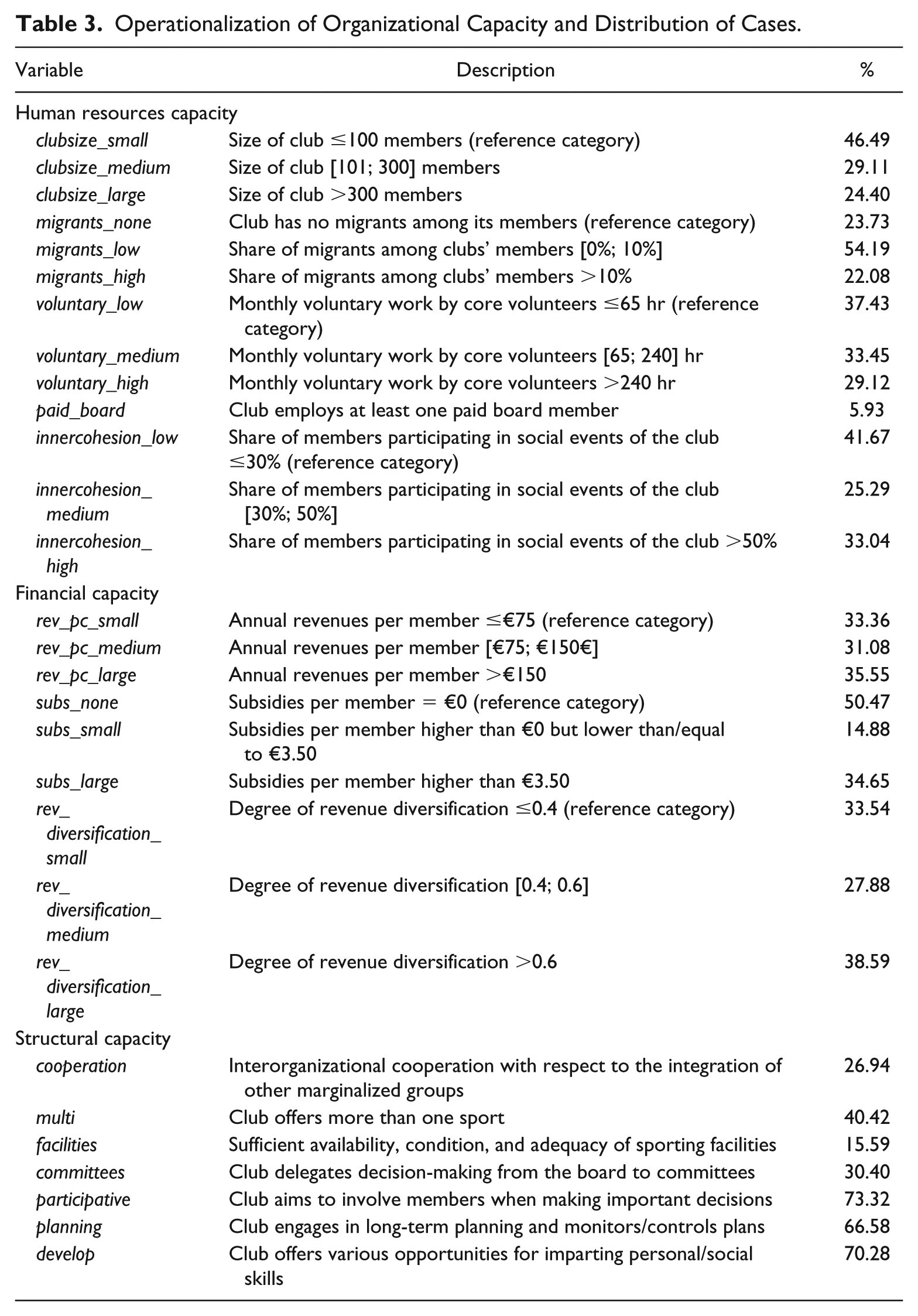
Financial capacity is reflected by a clubs’ annual revenues per member (categorized in tertials: rev_pc_small, rev_pc_medium, and rev_pc_large) and received public subsidies (categorized in tertials: subs_none, subs_small, and subs_large). The degree of revenue diversification is approximated with the Herfindahl Index for revenue concentration (Carroll & Stater, 2009) subtracted from 1. It ranges from 0 (perfect concentration of revenue sources) to 1 (perfect diversification) and was categorized in tertials (rev_diversification_small, rev_diversification_medium, and rev_diversification_large).
Planning and development capacity is approximated by a club’s involvement in long-term planning and monitoring/controlling plans (planning) and offering opportunities for imparting personal and social skills (development). Interorganizational cooperation concerning the integration of other potentially marginalized groups other than refugees constitutes a club’s relationship and network capacity (cooperation). Infrastructure and process capacity comprise availability, condition, and adequacy of sporting facilities (facilities); the delegation of decision-making from the board to committees (committees); involving all club members when making important decisions (participative); and a dummy variable for single- versus multisport club (multi).
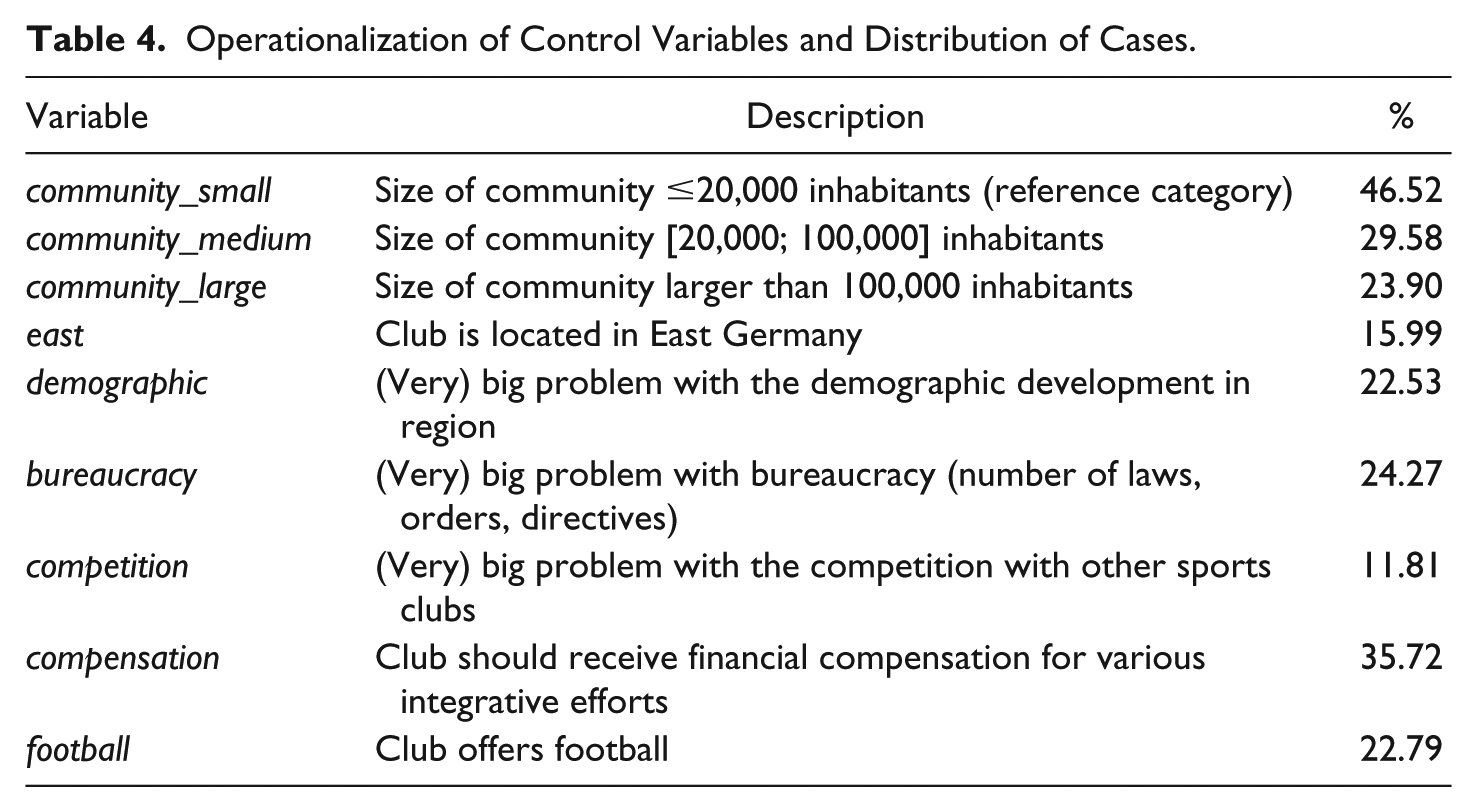
The set of control variables (Table 4) included two characteristics of the community that a VSC is based on: size (community_small, community_medium, community_large) and location within Germany, that is, whether the club is situated in the former eastern part (east). Further external facilitators and constraints captured perceived problem levels with the competition with other sports clubs (competition); the demographic development in the region (demographic); the number of laws, orders, and directives (bureaucracy); and whether the club offers Germany’s most prominent sport, that is, football. The reason behind the inclusion of the latter variable (football) is the observation that Germany’s federal government is particularly subsidizing particular projects of football clubs (Federal Ministry of Labour and Social Affairs, 2016).
Operationalization of Control Variables and Distribution of Cases.
Statistical Modeling
Descriptive statistics are used to portray the extent to which different types of clubs are engaged for refugees. To isolate the effects of institutional logics and organizational capacities, four logit models were constructed. A generalized ordered logit (GOLogit) model to analyze a club’s perceived engagement for refugees (PE_3) was preferred over a proportional odds model (i.e., ordered logistic model) because the logistic regression chi-square test of parallel regression assumption showed that it had been violated (Williams, 2018). GOLogit models not only account for the ordinal nature of a dependent variable, but coefficients of independent variables can vary across different cut points (Liu & Koirala, 2012). With the help of STATA’s autofit option of the GOLOGIT2 command, Model 1 relaxes the parallel lines assumption for some explanatory variables but constrains all other remaining variables to meet it (Liu & Koirala, 2012; Williams, 2016).
The statistical evaluation concerning concrete measures (second stage) was conducted with the help of logistic regression models (Models 2-4). Concrete served as the dependent variable in Model 2, concrete_sport and concrete_ fees in Models 3 and 4, respectively. Based on the mean variance inflation factor (VIF) for the independent variables (VIF = 1.45), multicollinearity was not an issue (Belsley, Kuh, & Welsch, 1980).
Results
Engagement of VSCs in the Process of Refugee Integration Across Institutional Logics
More than 61.4% of all clubs associated themselves with the institutional logic integrative; followed by the conviviality (54.7%), youth (48.5%), service (37.0%), and performance-oriented logic (31.2%; Table 1). The majority of Germany’s VSCs (68.4%) combine multiple institutional logics; a tenth do not follow any particular logic.
The share of clubs reporting (high) agreement on being engaged in the first stage of refugee integration is highest in the VSCs that identify with the service-oriented institutional logic (41.7%), followed by clubs that identify with the youth, (41.6%), performance (36.5%), integrative (36.4%), and conviviality logic (28.5%). A total of 70.7% of the VSCs that do not follow a specific institutional logic do not agree (at all) to be engaged for refugees (Table 5).
VSCs’ Engagement for Refugees By Institutional Logics and Distribution of Cases (Share of VSCs in %).
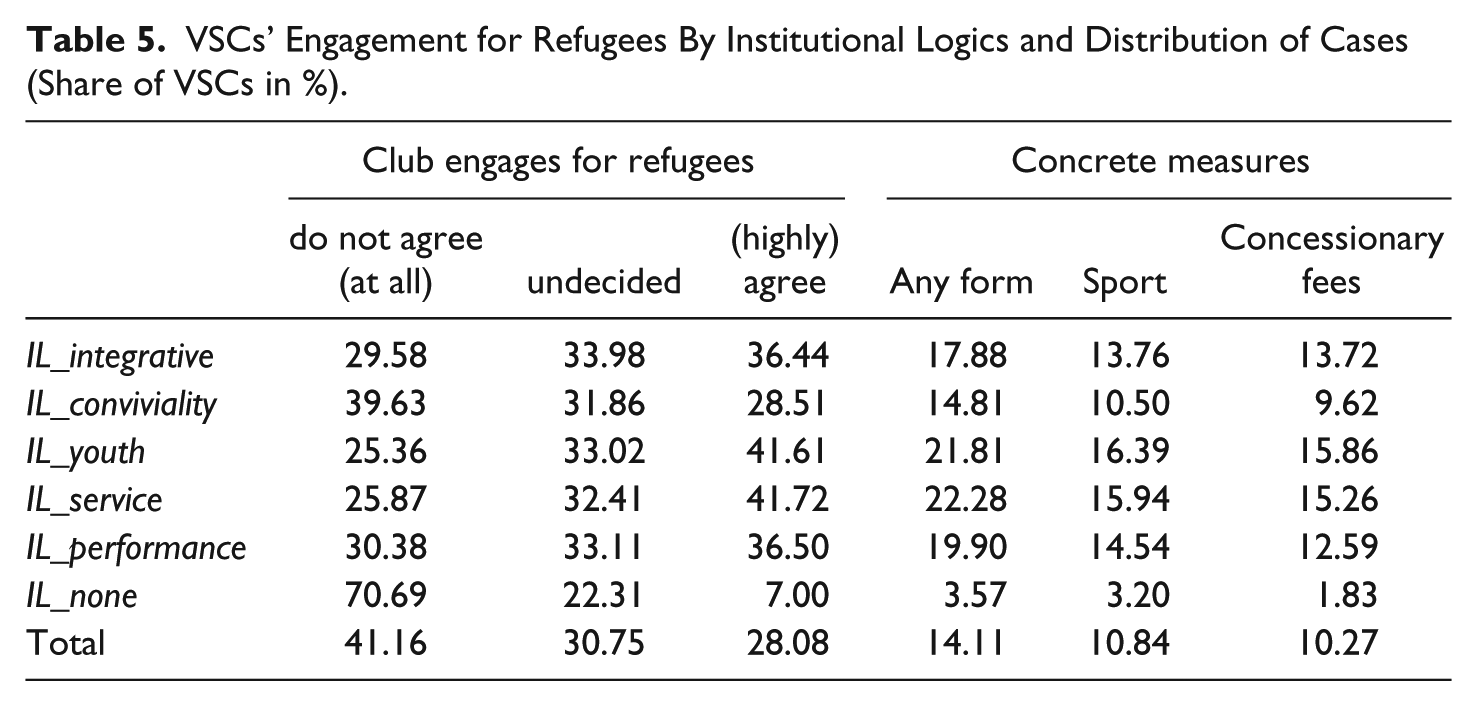
While 28.1% of the VSCs (highly) agree to be engaged for refugees, only 14.1% had initiated concrete measures by the end of 2015. In all, 22.3% of the service-oriented clubs had undertaken specific inclusionary measures for refugees—a substantially higher share compared with clubs that do not follow a specific institutional logic (3.6%). The share of VSCs providing sport for refugees (10.8%) is only marginally higher than the share of clubs lowering financial barriers by offering concessionary membership fees (10.3%). The highest share of clubs offering targeted sporting activities and concessionary fees can be found in clubs identifying with the youth logic and clubs associating with the conviviality logic or no logic at all demonstrate values below the average.
Analytical Results
Perceived engagement (initial phase)
The results of the GOLogit model indicate that following the integrative, youth, and/or service-oriented institutional logic can be associated with significantly higher agreement levels of VSCs to be engaged for refugees (Table 6). Compared with clubs with 100 or fewer members, bigger clubs are less likely to demonstrate inclusionary efforts. Among the HR capacity variables that are increasing the likelihood of a club to report (high) agreement levels are higher shares of migrant members, higher voluntary engagement, and at least one paid board member. For example, VSCs that drew on more than 240 monthly hours of voluntary work by core volunteers are 5.6% more likely to report (high) agreement on being engaged with refugees compared with clubs where the respective voluntary work amounted to 65 hr or less. Interorganizational cooperations, the presence of committees, and sufficient planning and development capacity demonstrate a positive and significant association with high agreement levels. In contrast, clubs with per member revenues above €150 and clubs that experience higher problem levels with bureaucratic burdens are more likely to report low perceived engagement. While VSCs in an area state of East Germany are significantly more likely to be undecided with respect to their engagement, football clubs, per se, are 14.5% more likely to report inclusionary engagement.
Results of the GOLogit Model (Model 1): Marginal Probability Effects for Independent Variables (First Column); Dependent Variable: PE_3.
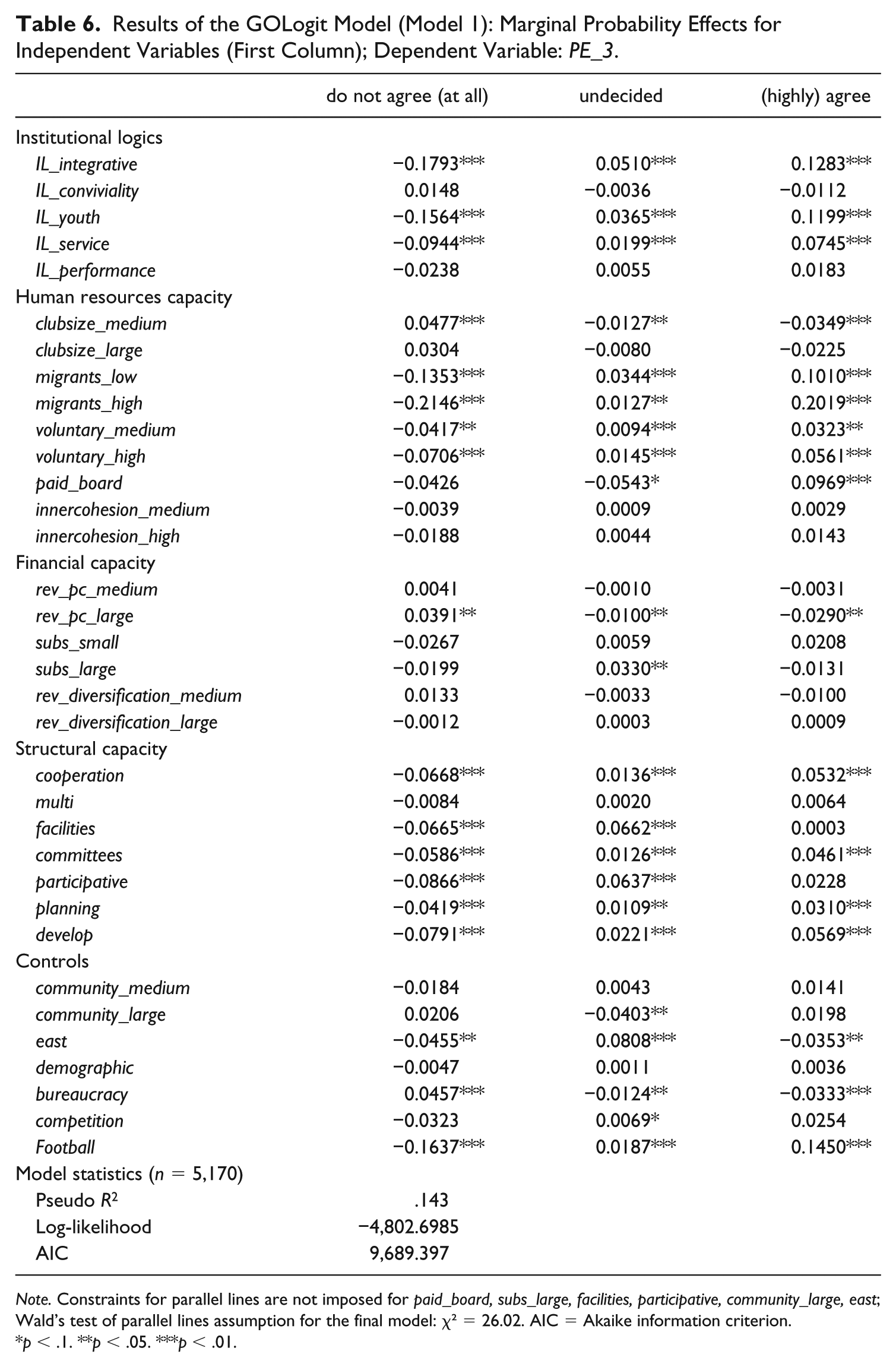
Note. Constraints for parallel lines are not imposed for paid_board, subs_large, facilities, participative, community_large, east; Wald’s test of parallel lines assumption for the final model: χ² = 26.02. AIC = Akaike information criterion.
p < .1. **p < .05. ***p < .01.
Concrete measures (implementation phase)
Clubs that follow the integrative, youth, and/or service institutional logic can be associated with a high likelihood of having realized concrete measures for refugees. The results of Model 2 indicate that a substantial organizational size effect as the likelihood to report concrete action decreases significantly with club size. Based on respective positive and significant coefficients, the capacity variables higher shares of migrants, higher levels of voluntary engagement, and inner cohesion can be considered beneficial. Employing at least one paid board member, interorganizational cooperations, delegating decisions to committees and sufficient planning and development capacity also significantly increases the likelihood of having undertaken concrete measures. For example, a VSC with more than 10% migrant members is 26% more likely to have realized concrete measures compared with a club without migrant members. No financial capacity variable was found to have a statistically significant association with the dependent variable in Model 2. Concrete engagement for refugees is more likely to be found in football clubs and in clubs that experience a problematic level of competition with other sports clubs. Being situated in East Germany and suffering from bureaucratic burdens decreases respective likelihoods.
Taking a closer look at specific measures, Table 7 also reports the results of the logistic regression analyses for concrete_sport (Model 3) and concrete_fees (Model 4). While the significant effects of the variables integrative and youth logic, higher shares of migrants among members, higher voluntary engagement, interorganizational cooperation, offering opportunities to develop personal/social skills in Model 2 are consistent in Model 3 and Model 4, the significant coefficients for IL_service, voluntary_medium, committees, and planning could not be confirmed. However, the role of financial capacity turned out to be statistically relevant. While more money (in terms of revenues per member between €75 and €150 compared with €75 or less) decreases the likelihood of having provided sports and concessionary membership fees for refugees, better money (in terms of higher degrees of revenue diversification) increases respective likelihoods. A negative size effect is only significant for clubsize_medium in Model 3. Per member subsidies of €3.50 or more correlate with a higher likelihood of a VSC to have lowered financial barriers for club membership.
Results of Logit Regression Models: Marginal Probability Effects for Independent Variables (First Column); Dependent Variable: Any Type of Initiative for Refugees (Model 2), Sport for Refugees (Model 3), Concessionary Membership Fees (Model 4).
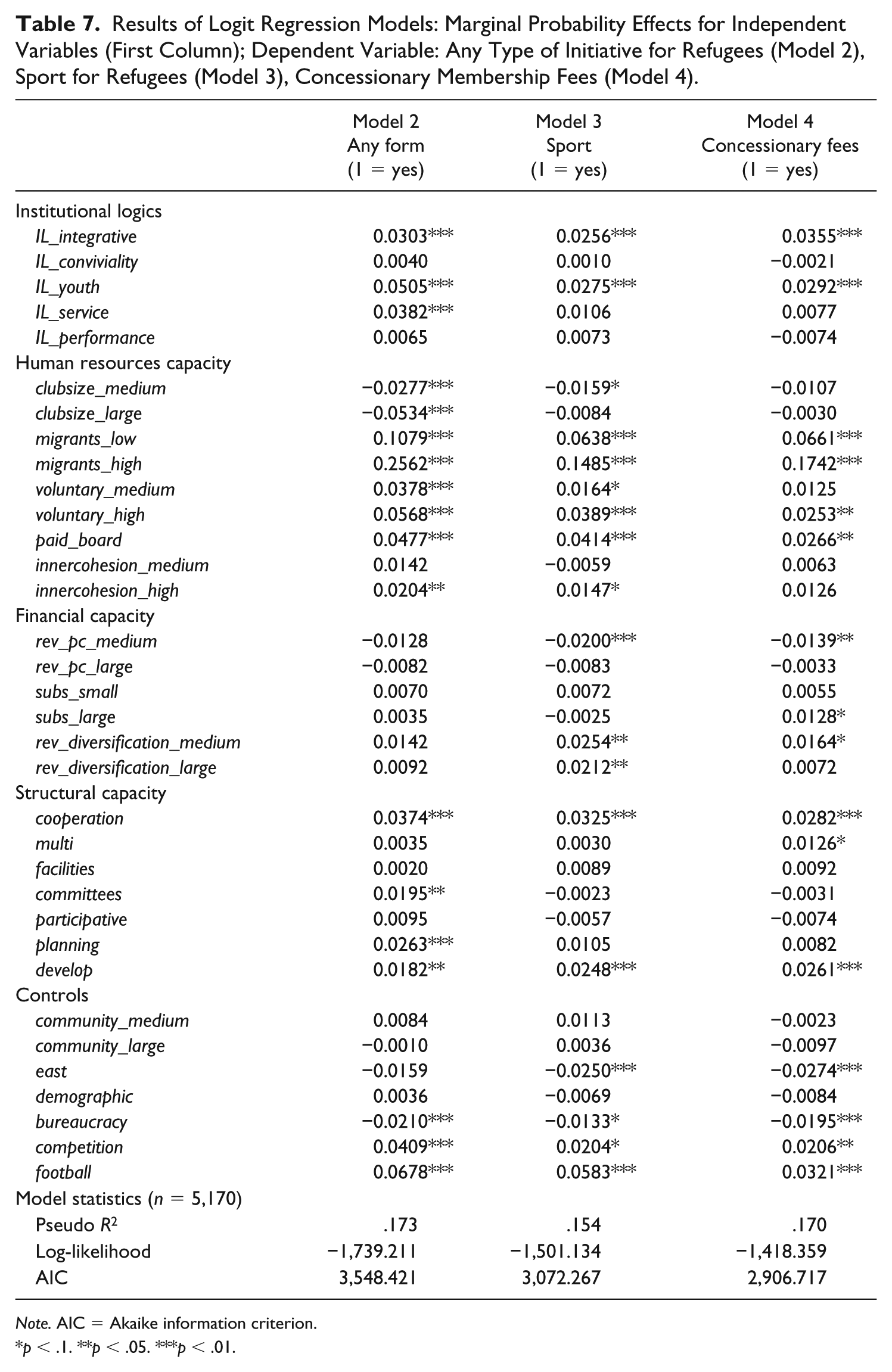
Note. AIC = Akaike information criterion.
p < .1. **p < .05. ***p < .01.
To evaluate the predictive power of institutional logics and capacity variables, Table 8 presents the changes in the explanatory power (pseudo R2) of the respective logistic regression models. In 14 of 15 cases, the contribution of the five entered blocks (institutional logics, three organizational capacity dimensions, and control variables) to the explanatory power is statistically significant. It is indicated that the explanatory power of the three logistic regression models is mainly determined by the included institutional logics and HR capacity. For example, the inclusion of institutional logics accounts for more than 48% of the explanatory power in Model 2, and the contribution of HR capacity to the explanatory power of Model 3 amounts to 40%. The financial capacity dimension, on the other side, is less relevant in this context.
Changes in the Explanatory Power (Pseudo R2) By Each Block Entered into the Logistic Regression Models (in %).
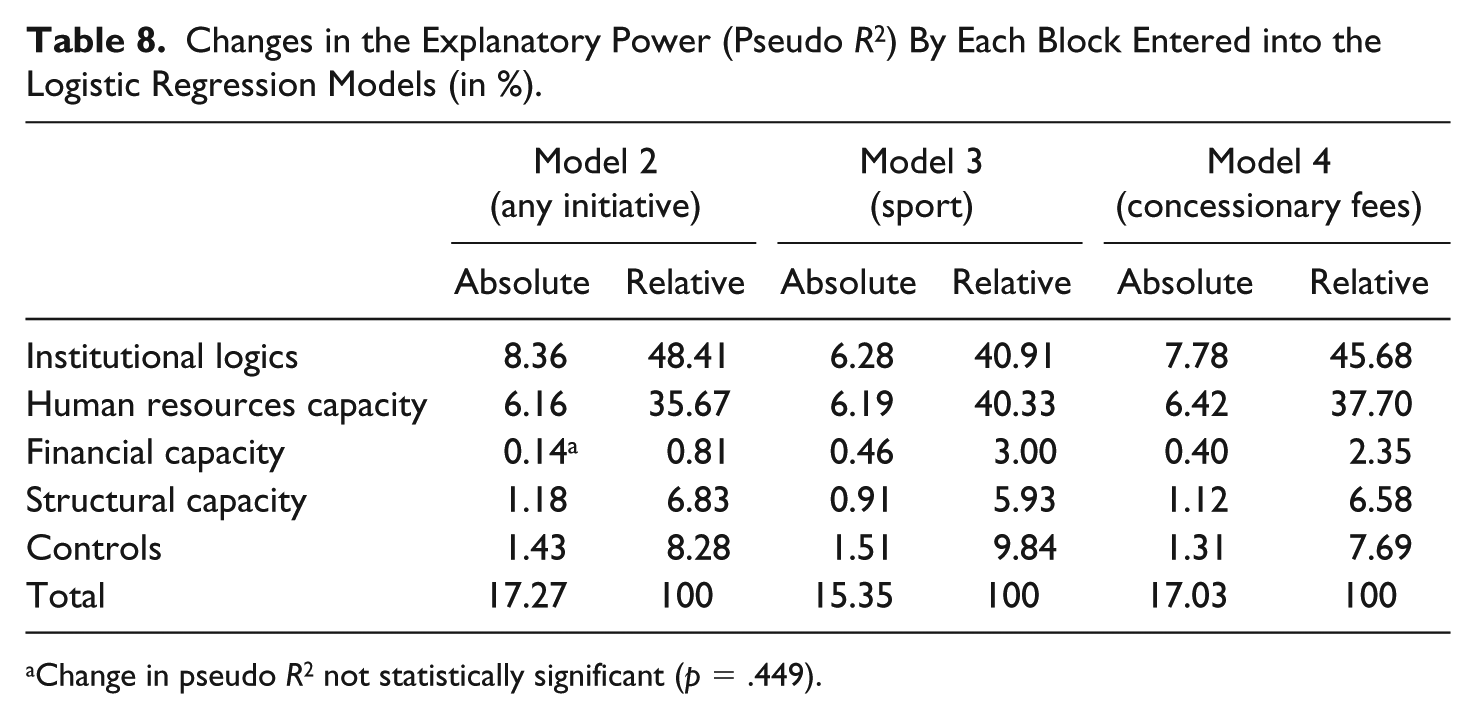
Change in pseudo R2 not statistically significant (p = .449).
Discussion
This study investigated potential drivers of VSCs’ engagement in the process of integrating refugees. Based on the results, it can be concluded that 28% of Germany’s VSCs consider themselves to be involved in the process of integrating refugees. The fact that only 14% have undertaken concrete measure aligns with the multiphase integration model of Seiberth et al. (2018). It appears that—at the end of 2015—integrational efforts of VSCs in Germany were comparatively unspecific and mainly existent within the first (initial) phase. The transition into the second (implementing) phase through concrete measures was yet to be accomplished. This is understandable because the large wave of refugees coming to Germany only started in 2015, and organizations needed some time to adjust to this new situation.
The Role of Institutional Logics
The order of institutional logics observed by Stenling and Fahlén (2009) seems to be inversed in the German sports club context—the service and performance logic are less prominent than the integrative logic. As expected, different institutional logics affect the considered phases of refugee integration into VSCs. The comparison of engagement levels of clubs that follow an institutional logic with those that do not revealed that following any logic is favorable. The finding that clubs that follow a performance logic demonstrate relatively high engagement levels for refugees allows the suggestion that they might do so in an attempt to identify potentially talented athletes (McDonald et al., 2019; Spaaij et al., 2014). As assumed by Michelini et al. (2018), integrative clubs show higher and conviviality clubs lower engagement levels.
The statistical models generally provide support for this study’s first hypothesis, which stated that VSCs’ engagement in the area of refugee integration is subject to its institutional logic(s). Institutional logics demonstrate the most considerable contribution to the explanatory power in the respective logistic regression models, which highlights the importance of accounting for them in the context of a wider societal role for VSCs (cf. Coalter, 2007). The assumptions made concerning the beneficial effect of the integrative, youth, and service-oriented institutional logic can be confirmed. However, no statistically significant support was found for the assumed negative relationship between associating with the conviviality logic and engagement in the area of refugee integration.
The Role of Organizational Capacity and External Factors
The findings of this study suggest that HR capacity is more relevant for a VSC’s engagement in the integration process of refugees than financial capacity. Thus, engagement in the integration process of refugees is realized rather through more time dedicated by core volunteers than through more money. The presence of migrants among club members significantly predicts high engagement levels, which supports comparative findings of Vandermeerschen et al. (2017). Better (not more) money and a more professional organizational design (i.e., employing at least one paid board member) were found to be critical. Furthermore, clubs that are strong in terms of their planning and development capacity and interorganizational cooperation appear to be better prepared for deliberate inclusionary efforts. In this study’s context, it seems particularly necessary that VSCs carefully handle the balancing act between business-like management and intensive voluntary work (Dowling, Edwards, & Washington, 2014; Misener & Misener, 2017). The second hypothesis suggested that higher levels of organizational capacity in all three dimensions can be associated with higher likelihoods of VSCs engagement in the process of integrating refugees. The results indicate that this hypothesis can only be partially confirmed.
The statistical analysis underlines the importance of including broader political and economic factors. The engagement in the process of integrating refugees is significantly higher in the Western federal states, which would allow the conclusion that engagement in the process of integrating refugees might be a geographical phenomenon. However, historical factors must also be considered. The share of foreigners among the population in the Eastern states (formerly belonging to the German Democratic Republic) has been significantly lower than in the Western states (formerly belonging to the Federal Republic of Germany) ever since the reunification in 1990 (Federal Agency for Civic Education, 2015). The described distribution key of refugees furthermore contributes to the fact that there are fewer refugees in Eastern Germany, and, eventually, fewer refugees to be integrated.
Strong engagement for refugees declines with (perceived) bureaucratic burdens. Support for the prominent role football clubs take in the federal government’s assistance for integrative projects (Federal Ministry of Labour and Social Affairs, 2016) is found; football clubs are generally more likely to show engagement in both evaluated phases of integration. This finding might be explained by a higher presence of migrants in football clubs (Breuer & Feiler, 2017) and the great appeal of football as a sporting activity for (male) migrants (Seiberth et al., 2018).
Concluding Remarks
Based on the statistical evaluation, implications for the involved stakeholders of social inclusion for refugees can be derived. For example, governing federations (and clubs themselves) may use the results to intensify capacity building programs with respect to planning and development capacity and better money. Governmental structures need to recognize the necessary fit of policy goals and diverse institutional logics of VSCs and should modify their support. Besides providing sufficient financial assistance, public institutions could support VSCs structurally, for example, through the help of professionals (e.g., social workers), providing platforms where best practice examples are shared, lowering bureaucratic burdens (see also Michelini et al., 2018). Moreover, it seems justified that particularly medium and large VSCs and VSCs in Eastern Germany should be targeted and motivated to act as policy implementers because those clubs demonstrate engagement levels below average.
Research in several countries demonstrated a policy move away from funding “migrant sports clubs” as they are sometimes framed as working against integration and promoting segregation (Krouwel, Boonstra, Duyvendak, & Veldboer, 2016; Müller, van Zoonen, & de Roode, 2008; Spaaij, 2012). Against this background—and given the results of this study where the presence of migrants in the club can be associated with substantially higher engagement levels—public actors should reconsider (intensified) cooperation with such sports clubs. According to Breuer and Feiler (2017), almost 6,000 clubs with more than 25% of migrant members exist in Germany. Those clubs seem to constitute a considerable potential for successful implementation of the policy goal “social inclusion of refugees.”
As the study is rather explorative in nature, it is possible that further, potentially important, predictors for a VSC’s engagement for refugees were not included. This would also explain the relatively low (absolute) R2 scores. It also has to be acknowledged that surveys were mainly completed by one board member, and his or her assessment might not reflect the general club’s opinion. The perspective of one respondent, moreover, carries the risk of (social) desirability to present the respective club in a (too) positive way. Future studies should control for such social desirability by employing instruments such as the Marlowe–Crowne Social Desirability Scale (Crowne & Marlowe, 1960). Moreover, this study is based on cross-sectional data. Therefore, no information about whether engagement levels for refugees have changed over time can be provided so far. Next, to addressing the described shortcomings, potential topics for future research include the comparison of refugee engagement across different countries, and how engagement levels change over time. Also, the third phase in the integration of refugees by VSCs, which concerns the quality and sustainability of integration, remains to be empirically evaluated with larger samples.
Footnotes
Acknowledgements
The authors would like to thank the Federal Institute for Sports Sciences (BISp), the German Olympic Sports Confederation (DOSB), and the 16 federal state sports confederations (LSBs) for supporting the research into sport clubs in Germany (Sport Development Report). Sincere thanks also to the anonymous reviewers for their valuable comments and suggestions in the review process.
Declaration of Conflicting Interests
The author(s) declared no potential conflicts of interest with respect to the research, authorship, and/or publication of this article.
Funding
The author(s) received no financial support for the research, authorship, and/or publication of this article.
