




Abstract
Short-term alternatives to traditional 2-year carcinogenic studies in rodents are being actively pursued. Recently, a 26-week short-term carcinogenicity study using CB6F1-Tg rasH2@Jcl (rasH2) mice has become a worldwide standard for the evaluation of chemical carcinogenesis. However, an acceptable short-term carcinogenic study model for dermally applied products is still lacking. To investigate the suitability of using the rasH2 mouse to test carcinogenic potential, 1,2-dichloroethane (1,2-DCE) was dermally applied to rasH2 mice: 1,2-DCE is a known carcinogen that causes lung bronchiolo-alveolar adenomas and adenocarcinomas when administered topically, orally, or by inhalation exposure; 1,2-DCE at a dose level of 126 mg/mouse in 200 μl acetone or acetone alone (vehicle control) was applied to the dorsal skin of 10 mice of each sex 3 times a week for 26 weeks. As a positive control, 10 mice of each sex received a single intraperitoneal injection of 75 mg/kg of N-methyl-N-nitrosourea. Bronchiolo-alveolar adenomas and adenocarcinomas were significantly increased in 1,2-DCE-treated rasH2 mice of both sexes, and bronchiolo-alveolar hyperplasias were significantly increased in female mice. Overall, almost all mice of each sex developed adenomas and/or adenocarcinomas with 100% of female rasH2 mice developing bronchiolo-alveolar adenocarcinomas.
Keywords
In an aging society, there is increased need for dermally applied medications due to the increase in maladies such as skin disorders and muscle and joint pain and also due the difficulty that older patients can have orally ingesting medications. Evaluation of carcinogenicity is indispensable for dermal medications that are used for prolonged periods of time. Therefore, it is increasingly important for regulatory science to establish short-term carcinogenicity evaluation systems that can be applied to the testing of dermal medications, enabling a shorter developmental period for these medications and allowing them to be brought to the patient sooner.
The Tg rasH2 transgenic mouse, designated the CB6F1-Tg (rasH2) mouse, contains approximately three copies of the human c-Ha-ras proto-oncogene expressed in all tissues (Tamaoki 2001). This mouse develops spontaneously and chemically induced neoplasms earlier in life and in greater numbers than wild-type mice, reflecting their enhanced sensitivity to neoplasia (Morton et al. 2002). The International Conference on Harmonization (ICH; 1998) guidelines officially state that the 26-week carcinogenicity study using this mouse is an acceptable alternative model for carcinogenicity assessment of new pharmaceutical candidates. Currently, in the United States, more than 75% of mouse carcinogenicity studies are conducted in rasH2 mice (Jacobs and Brown 2015). However, an acceptable short-term alternative carcinogenicity study for dermal products is lacking (Jacobs and Brown 2015).
In the present study, we employed 1,2-dichloroethane (1,2-DCE) to investigate the suitability of using the transgenic rasH2 mouse model to assess the carcinogenic potential of dermally applied compounds. 1,2-DCE is classified as possibly carcinogenic to humans (group 2B), because there is sufficient evidence of carcinogenicity in experimental animals but inadequate evidence in humans (IARC 1999). 1,2-DCE is mutagenic in vitro and in vivo (Barber, Donish, and Mueller 1981; Milman et al. 1988; Storer, Jackson, and Conolly 1984; Kitchin and Brown 1994). In long-term 78-week carcinogenicity tests, oral administration caused bronchiolo-alveolar adenomas and lung tumors in mice of both sexes and caused endometrial tumors and mammary adenocarcinomas in female mice (Weisburger 1977; National Toxicology Program [NTP] 1978). Exposure by inhalation for 2 years resulted in the development of bronchiolo-alveolar adenomas and adenocarcinomas in female BDF1 mice (Nagano et al. 2006). Finally, repeated application of 1,2-DCE to the skin of female Ha: ICR Swiss mice also induced lung tumors (Van Duuren et al. 1979).
The purpose of this study was to test the suitability of employing a short-term 26-week assay using the rasH2 mouse as an alternative for standard long-term carcinogenicity studies to assess systemic carcinogenicity of dermally applied products. To test the rasH2 mouse model, we applied the known carcinogen 1,2-DCE to the dorsal skin of male and female rasH2 mice 3 times per week for 26 weeks.
Materials and Methods
The current experiment was approved by the ethics committee of the DIMS Institute of Medical Science, Inc. The animals were maintained in accordance with “Standards Relating to the Care and Management of Experimental Animals” (Notification No. 6, March 27, 1980 of the Prime Minister’s Office, Japan), Guidelines for Proper Conduct of Animal Experiments (June 1, 2006, Science Council of Japan), and the in-house guidelines for the Care and Use of Laboratory Animals in our institute.
Chemicals
1,2-DCE (CAS No. 107-06-2; lot No. PDJ0022) was purchased from Wako Pure Chemical Industries, Ltd. (Osaka, Japan). The purity of the 1,2-DCE was 99.7% or more, and it was stored at room temperature (13° to 25°C) and protected from light, high temperature, and humidity. N-methyl-N-nitrosourea (MNU) lot No. SLBC9358V was purchased from Sigma-Aldrich Japan Ltd. (Tokyo, Japan). MNU was received as a powder containing 53% water and was refrigerated at 4° to 8°C. The MNU solution was prepared at 7.5 mg/ml in citrate buffer adjusted to pH 4.5 with 1 N HCl. The concentration of MNU in the preparation was measured by the high performance liquid chromatography (LC-VP series, Shimadzu Co., Kyoto, Japan) before administration and had a relative error value of 4.0%.
Animals and Husbandry
Both sexes of 6-week-old Jic: CB6F1-Tg rasH2 @Jcl (rasH2) mice were obtained from CLEA Japan Inc. (Fuji, Japan). The mice were individually housed in transparent plastic cages (W143 × D293 × H148 mm) on soft chip bedding in an animal room maintained under standard conditions (room temperature, 19.7 to 22.4°C; relative humidity, 41% to 73%; ventilation, 10 or more air changes/hr, and a 12-hr light/dark cycle). Basal diet and Ichinomiya city tap water were available ad libitum throughout the experimental period. The animals were allowed a 9-day quarantine and acclimation period, during which body weights and health conditions were monitored. After confirmation of normal health status, they were entered into the experiment at the age of 7 weeks.
Experimental Design
rasH2 mice were divided by stratified randomization into 4 body weight–matched groups with 10 mice of each sex and treated with acetone (vehicle control), 80% ethanol (reference control), 1,2-DCE, or MNU (positive control). For the acetone and ethanol groups, 100 μl of acetone or 100 μl 80% ethanol was applied dermally to the shaved dorsal skin daily for 26 weeks. For the 1,2-DCE group, 126 mg of 1,2-DCE dissolved in 200 μl acetone was applied dermally to the shaved dorsal skin 3 times per week for 26 weeks. The dorsal skin of the mice in the acetone, ethanol, and 1,2-DCE groups was shaved once a week or more often if necessary. The mice in the MNU group were injected once intraperitoneally with 75 mg/kg of MNU on day 1 of the experiment. A Microman M-250 (GILSON Inc.) was used for dermal applications of acetone, ethanol, and 1,2-DCE. The dose of 1,2-DCE used was the same as in a previous long-term study (Van Duuren et al. 1979). The animals were observed daily for abnormalities. Individual body weights were recorded weekly for the first 14 weeks and every other week thereafter. Food consumption and water intake were measured over a 2-day period before each weighing. At the end of the experiment, all surviving mice were placed in deep isoflurane anesthesia and euthanized by exsanguination from the abdominal aorta.
Gross pathological examination was made at autopsy, and the findings were recorded. Brain, heart, lung, thymus, spleen, kidney, liver, testis, and ovary from each mouse were weighed, and organ-to-body weight ratios were determined. Samples of these organs and of the aorta, lymph nodes (mandibular, mesenteric), thymus, pituitary, thyroid, parathyroid, adrenal, nasal cavity, trachea, lung, tongue, salivary gland, esophagus, stomach, small intestine, large intestine, gallbladder, pancreas, urinary bladder, prostate, seminal vesicle, epididymis, uterus, mammary gland, vagina, spinal cord, sciatic nerve, eye, Harderian gland, skin, skeletal muscle, bone and bone marrow, and all tissues of abnormal appearance were fixed in 10% buffered formalin solution and processed for light microscopic observation. A full histopathological examination was performed on hematoxylin and eosin–stained tissue sections of organs from all animals surviving to the end of experiment as well as animals with unscheduled deaths and animals euthanized in a moribund condition during the cause of the study. All of the discolored areas and nodules that were macroscopically visible were longitudinally trimmed. Macroscopically normal lungs were trimmed along the bronchus of the left lobe. Microscopic photographs were taken by a digital microscope (VHX-5000, Keyence Co., Osaka, Japan).
Statistical Analysis
Statistical comparisons of body weight, food consumption, water intake, and organ weight were assessed using the F test. If homogeneous, the data were analyzed with Student’s t test; if heterogeneous, the data were analyzed with Aspin–Welch’s test. The significance of differences in gross pathology and histopathology of both neoplastic and nonneoplastic changes was evaluated with the Fisher’s exact probability test. The Wilcoxon test was employed for comparison of nonneoplastic lesions with degrees of severity. The p values less than 0.05 were considered to be statistically significant.
Results
Survival curves and body weight changes are shown in Figures 1 and 2, respectively. Five female rasH2 mice applied 1,2-DCE were euthanized in a moribund condition showing irregular respiration and/or an emaciation during weeks 17 to 25; these mice had bronchiolo-alveolar adenocarcinomas. Significantly decreased body weight changes were found in females treated with 1,2-DCE from week 18 to the end of the experiment but not in males. In 1,2-DCE-treated males, neither death, moribund condition, nor symptoms of bronchiolo-alveolar adenocarcinoma were found during the administration period. The majority of male and female mice intraperitoneally injected with MNU died or became moribund and were necropsied beginning on week 11 (males) and week 13 (females). Only 2 mice of each sex administered MNU survived until the end of the experiment. Clinical signs of MNU treatment-related panting were observed mainly in mice with advanced neoplasia near the time of death. A tendency for lower body weights was observed in males treated with MNU from week 16 to the end of the experiment. One control female (acetone group) was autopsied in a moribund condition showing vaginal hemorrhage at week 26 of the experiment; this mouse had hemangiosarcoma of the uterus.
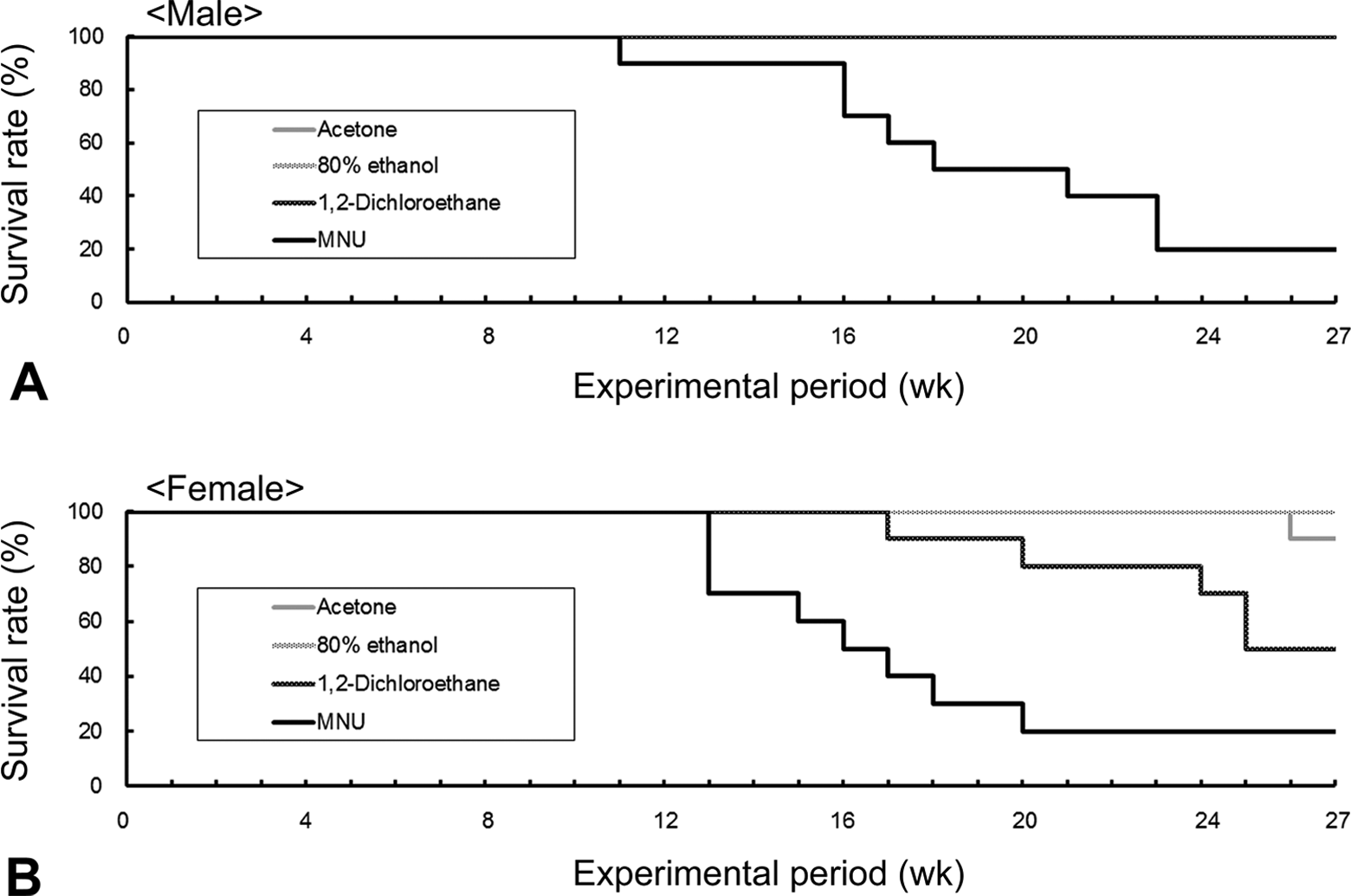
Survival curve for rasH2 mice. Five female mice applied 1,2-DCE were euthanized in a moribund condition during weeks 17 to 25; these mice had bronchiolo-alveolar adenocarcinomas. One control female (acetone group) was autopsied in week 26. This mouse had hemangiosarcoma of the uterus. The majority of male and female mice intraperitoneally injected with MNU died or became moribund and were necropsied beginning on week 11 (males) and week 13 (females). Only 2 mice of each sex administered MNU survived until the end of the experiment.
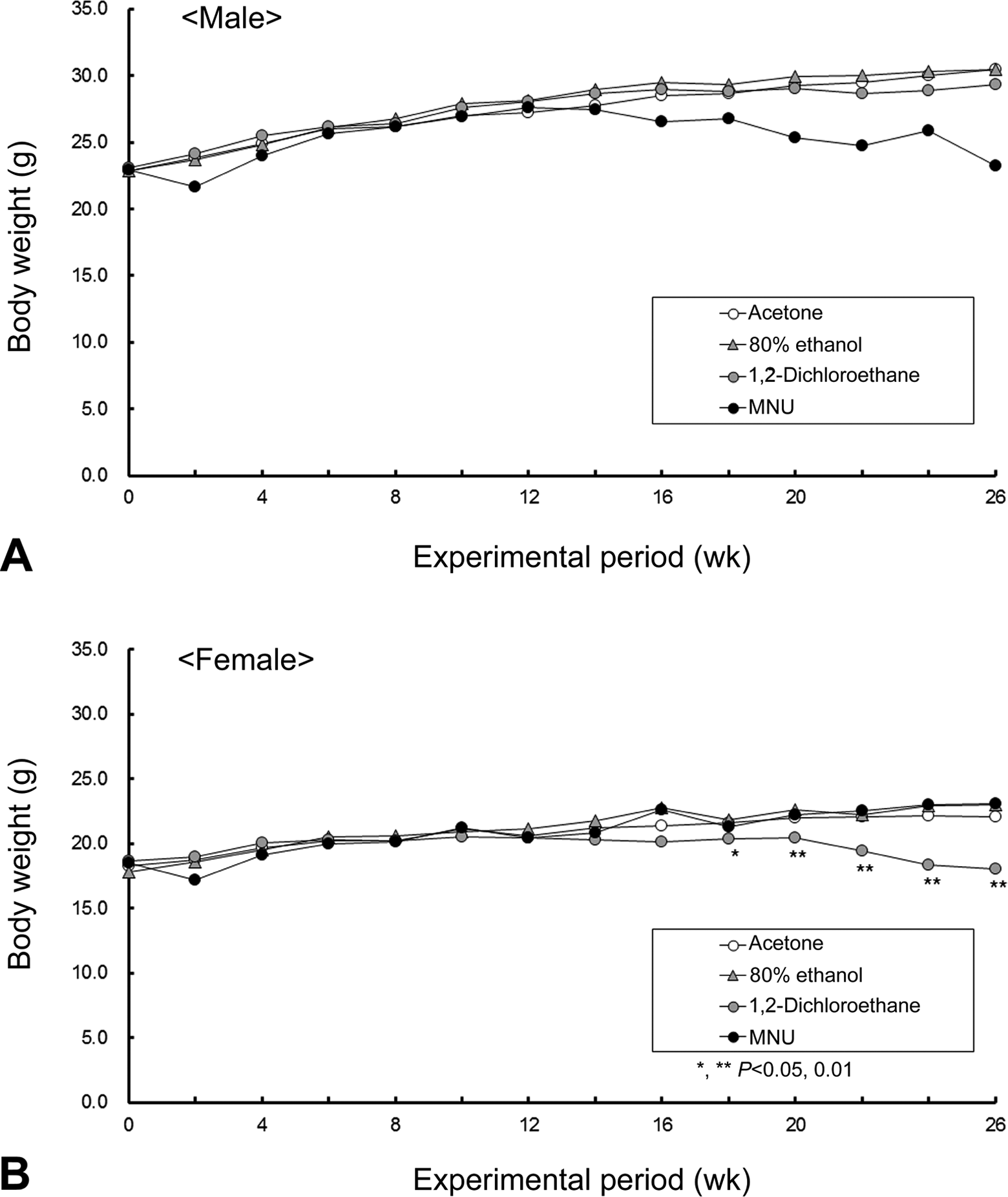
Body weight changes for rasH2 mice. Significantly decreased body weight changes were found in females treated with 1,2-DCE from week 18 to the end of the experiment, but not in males. A tendency for lower body weights was observed in males treated with MNU from week 16 to the end of the experiment. *Significantly different from acetone group at p < 0.05 by the Student’s t test. **Significantly different from acetone group at p < 0.01 by the Student’s t test.
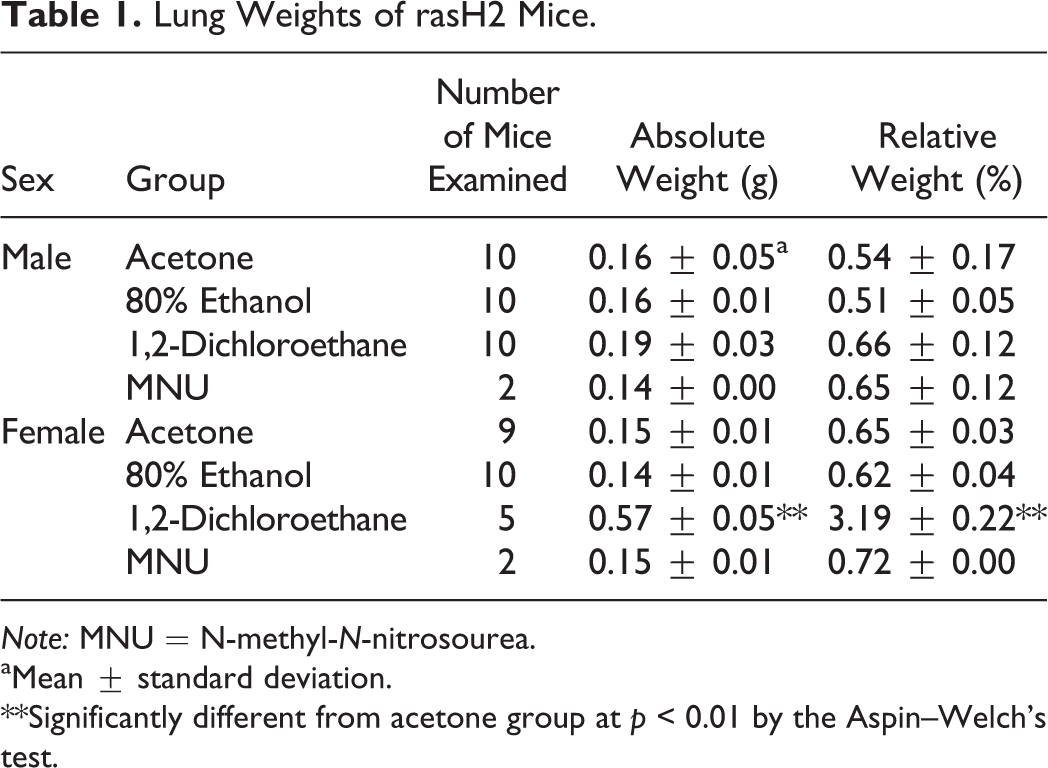
Discolored spots/areas or nodules were found in the lungs of mice treated with 1,2-DCE; large sized discolored nodules were more prominent in females than males (data not shown). The absolute and relative lung weights in females treated with 1,2-DCE were significantly increased compared to those of vehicle controls (Table 1), reflecting the macroscopic findings.
Lung Weights of rasH2 Mice.
Note: MNU = N-methyl-N-nitrosourea.
aMean ± standard deviation.
**Significantly different from acetone group at p < 0.01 by the Aspin–Welch’s test.
Histopathological changes for the lung are shown in Table 2. We referred to the International Harmonization of Nomenclature and Diagnostic Criteria (INHAND) document for the histopathological criteria of the lung (Renne et al. 2009) as follows: hyperplasia, bronchiolo-alveolar (1) increased number of round to oval or cuboidal hypertrophic alveolar Type II cells with abundant eosinophilic cytoplasm prominently outlining alveolar walls. Increased basophilia may be associated with cuboidal cell shape; (2) cytoplasm may be vacuolated; (3) alveolar architecture was maintained; (4) no cellular atypia; and (5) no or limited disruption of adjacent tissues. Adenoma, bronchiolo-alveolar (1) alveolar spaces obliterated by proliferating round to oval cells. Frequently, these solid areas were surrounded by alveoli lined by hyperplastic alveolar Type II cells, namely, there might be no sharp demarcation between the tumor and normal parenchyma; (2) cells usually had abundant eosinophilic cytoplasm that may appear granular or vacuolated. Cell nuclei were usually round to oval; (3) mitotic figures were rare or absent; and (4) compression was frequently observed. Adenocarcinoma, bronchiolo-alveolar (1) tumors may exhibit areas of increased cytoplasmic basophilia and atypia indicating local expansion of less differentiated tumor cells; and (2) advanced stages of malignancy and invasion to pleura frequently associated with marked cellular pleomorphism (spindle-shaped to round atypical cells), desmoplasia, increased mitotic rate. Incidence and multiplicity of both bronchiolo-alveolar adenomas and adenocarcinomas were significantly increased in 1,2-DCE-treated rasH2 mice of both sexes, and bronchiolo-alveolar hyperplasias were significantly increased in female mice. In 1,2-DCE-treated male rasH2 mice, the lung tumors were mainly solid adenomas (Figure 3A and B); in contrast, large bronchiolo-alveolar adenocarcinomas were predominant in 1,2-DCE-treated female rasH2 mice (Figure 3C and D). There were no metastases in any organs and tissues. Histopathological changes for the organs other than the lung are shown in Table 3. In the kidney, distal tubular mild karyomegaly was increased in 1,2-DCE-treated rasH2 mice of both sexes. In females, the karyomegaly was accompanied by tubular degeneration. These findings might be associated with the slight increase of relative kidney weights in the female group (data not shown).
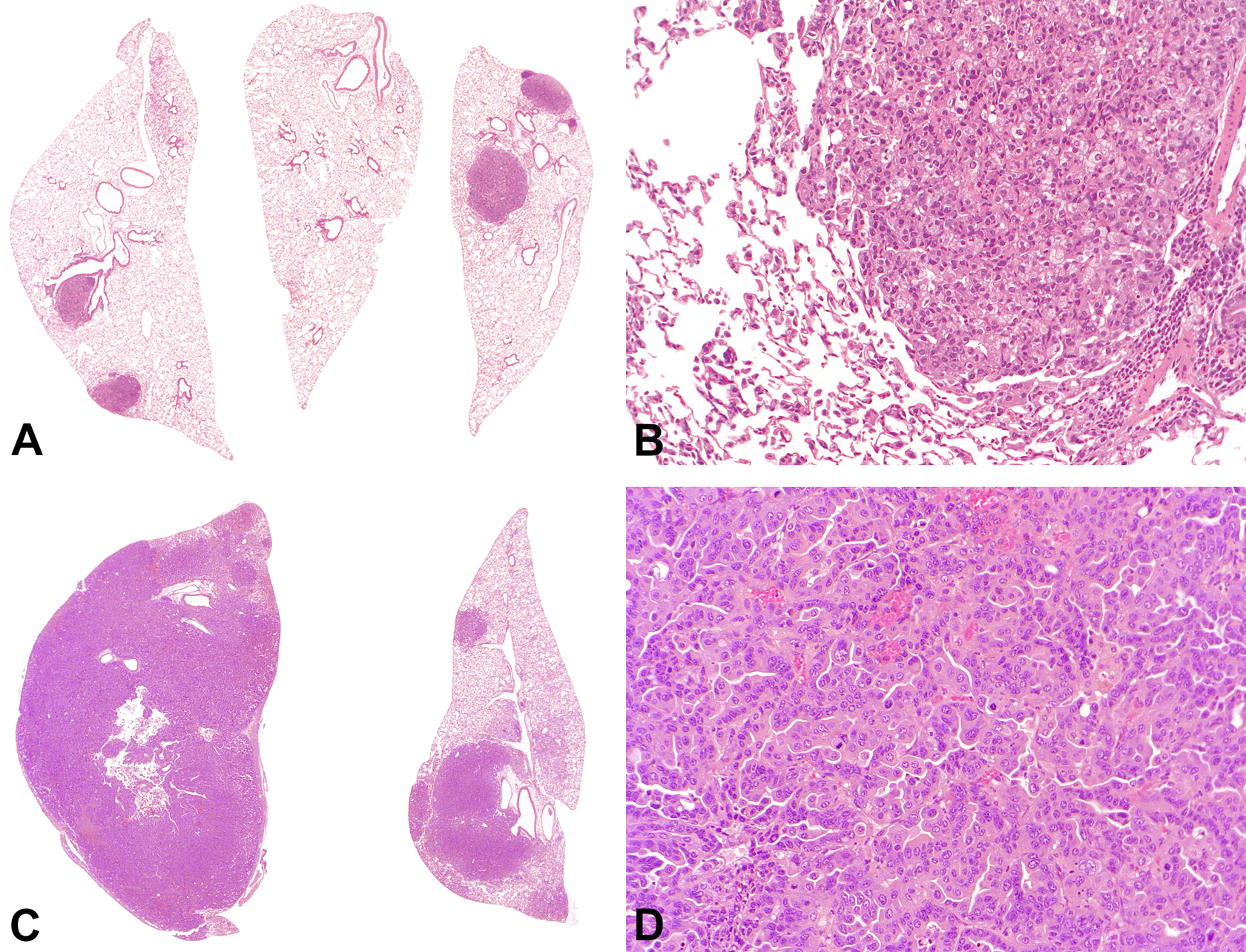
Lung tumors in rasH2 mice dermally applied 1,2-DCE on the back skin for 26 weeks; solid type of adenoma induced in a male compressed the surrounding normal parenchyma (A) (×30) and alveolar spaces invaded by proliferating round to oval cells (B) (×500). Large bronchiolo-alveolar adenocarcinoma (left lobe and lower portion of right lobe in Figure 3C) induced in a female invaded into the surrounding normal parenchyma and had areas of necrosis (C) (×30) and showed marked cellular pleomorphism and destruction of parenchyma with frequent mitoses (D) (×500).
Bronchiolo-alveolar Hyperplastic and Neoplastic Lesions in the Lung of rasH2 Mice.
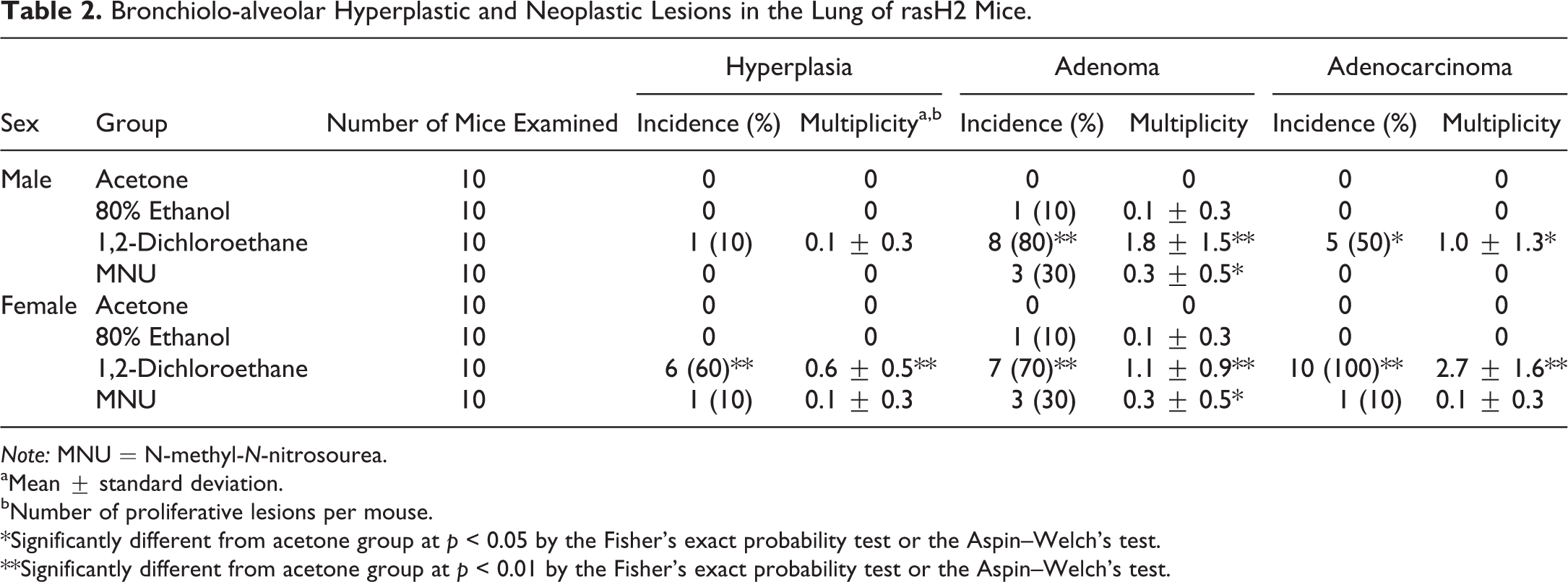
Note: MNU = N-methyl-N-nitrosourea.
aMean ± standard deviation.
bNumber of proliferative lesions per mouse.
*Significantly different from acetone group at p < 0.05 by the Fisher’s exact probability test or the Aspin–Welch’s test.
**Significantly different from acetone group at p < 0.01 by the Fisher’s exact probability test or the Aspin–Welch’s test.
Number of Mice Found With Histopathological Changes Other Than the Lung in rasH2 Mice.
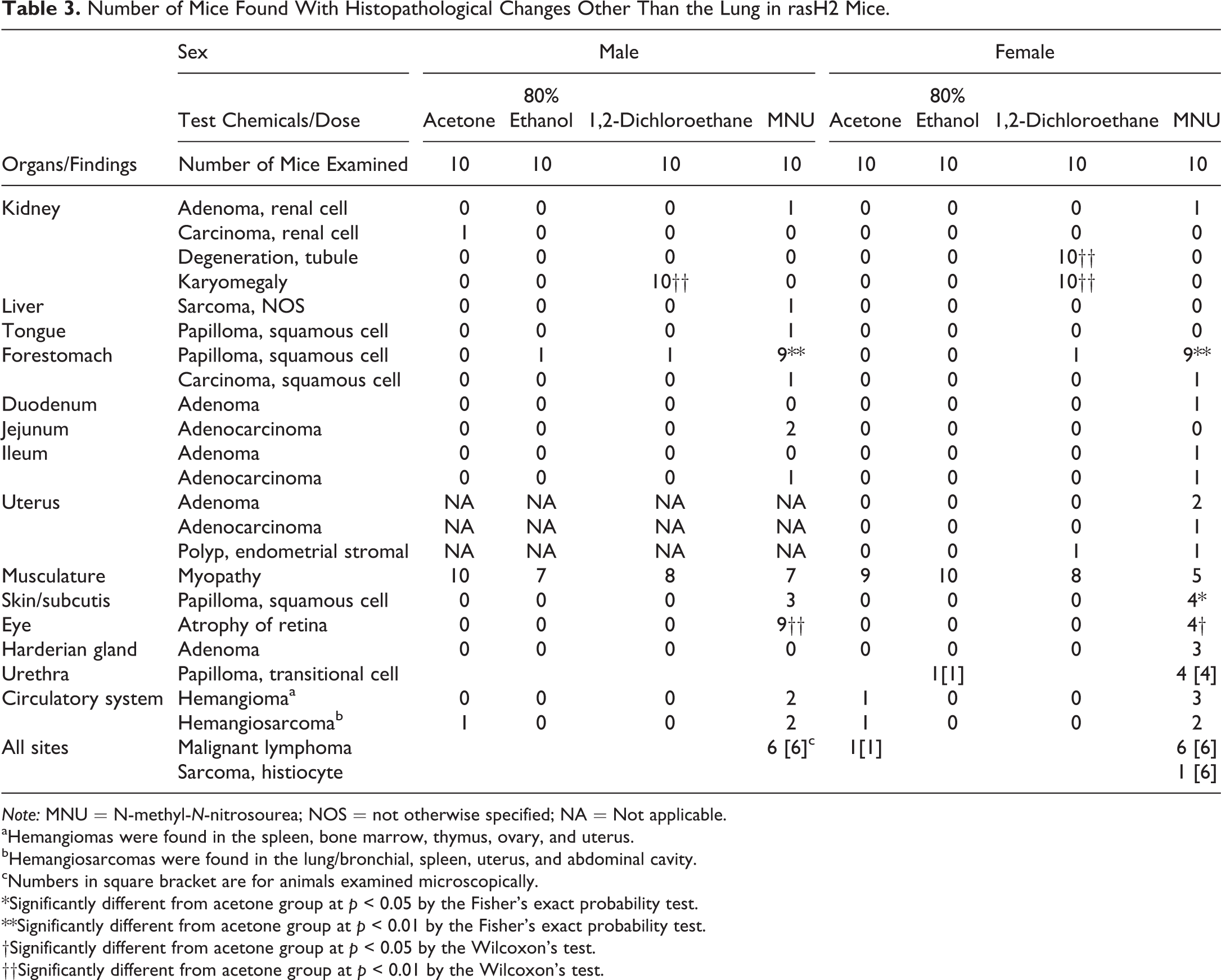
Note: MNU = N-methyl-N-nitrosourea; NOS = not otherwise specified; NA = Not applicable.
aHemangiomas were found in the spleen, bone marrow, thymus, ovary, and uterus.
bHemangiosarcomas were found in the lung/bronchial, spleen, uterus, and abdominal cavity.
cNumbers in square bracket are for animals examined microscopically.
*Significantly different from acetone group at p < 0.05 by the Fisher’s exact probability test.
**Significantly different from acetone group at p < 0.01 by the Fisher’s exact probability test.
†Significantly different from acetone group at p < 0.05 by the Wilcoxon’s test.
††Significantly different from acetone group at p < 0.01 by the Wilcoxon’s test.
In rasH2 mice treated with MNU as the positive control, numerous MNU treatment-related neoplastic lesions were found; 3 mice of each sex developed bronchiolo-alveolar adenomas in the lung; 9 mice of each sex developed squamous cell papillomas in the forestomach; 3 mice of each sex developed adenomas/adenocarcinomas in the small intestine; 3 males and 4 females developed squamous cell papillomas in the skin/subcutis; 4 females developed transitional cell papillomas in the urethra; 4 males and 5 females developed hemangiomas/hemangiosarcomas in the circulatory system; and 6 mice of each sex developed malignant lymphomas. These neoplasms are the most common MNU treatment-related tumors (Usui et al. 2001; Mitsumori 2003; Urano et al. 2006; Machida et al. 2008). Therefore, the sensitivity of the animal model used in the present study for the carcinogenic potential of 1,2-DCE is acceptable. Other types of neoplasms and nonneoplastic lesions were also found in various sites of the MNU-treated rasH2 mice.
In the 80% ethanol group, the survival rate, body weight, and lung weight data were similar to those of the acetone group. Bronchiolo-alveolar adenoma was histopathologically observed in 1 mouse of each sex. This incidence was within the range of spontaneous occurrence in rasH2 mice.
Discussion
In the present 26-week carcinogenicity study using rasH2 transgenic mice, 1,2-DCE was demonstrated to be a lung carcinogen after dermal application to the dorsal skin. 1,2-DCE has previously been demonstrated to be carcinogenic in mice in long-term carcinogenicity studies (Weisburger 1977; NTP 1978; Van Duuren et al. 1979; Nagano et al. 2006). The present investigation is the first evidence that the carcinogenic potential of 1,2-DCE after dermal application could be detected in a short-term, 26-week assay using rasH2 mice.
In the present investigation, 100% of female rasH2 mice developed bronchiolo-alveolar adenomas and/or adenocarcinomas, indicating that 1,2-DCE is a potent lung carcinogen in the rasH2 mouse model. Previous long-term studies observed that only 22% to 33% of female mice treated with 1,2-DCE developed bronchiolo-alveolar adenomas and/or adenocarcinomas (Weisburger 1977; Nagano et al. 2006) and the carcinogenic susceptibility of the rasH2 mouse is high.
Lung adenocarcinoma development by 1,2-DCE appeared earlier in females than in males, as 5 females died from bronchiolo-alveolar adenocarcinoma during experimental weeks 17 to 25, while no males died during the course of the experiment. This sex difference in susceptibility to 1,2-DCE-induced lung tumor development remains to be resolved.
The present study detected the lung carcinogenicity of dermally applied 1,2-DCE in rasH2 mice. However, when administered orally, 1,2-DCE is also carcinogenic to the uterus and the mammary gland in female B6C3F1 mice (NTP 1978) and the liver in male B6C3F1 mice (Weisburger 1977). These targeted differences may provide clues to elucidating causes of induction of bronchiolo-alveolar tumors by 1,2-DCE. Interestingly, while dermal application of 1,2-DCE resulted in 100% incidence of lung tumors in rasH2 mice, administration if 1,2-DCE by inhalation to BDF1 mice for 2 years did not result in the development of lung tumors in males and only 22% of the females developed bronchiolo-alveolar adenomas or adenocarcinomas. These results suggested that the full carcinogenic potential of 1,2-DCE may require metabolic activation. Importantly, this highlights the necessity of establishing models of dermal carcinogenicity.
Tg.AC transgenic mice, which have a v-Ha-ras transgene, had been approved by the U.S. Food and Drug Administration (FDA) and Committee for Proprietary Medicinal Products for use in short-term carcinogenicity studies with dermally applied drug products (MacDonald et al. 2004). However, skin nodules developed with control, acetone, or ethanol vehicles, which were possibly the consequence of skin shaving, fighting, or abrasion (Leder et al. 1990; Blanchard et al. 1998; Spalding et al. 1999; Lynch et al. 2007). Consequently, the U.S. FDA no longer recommends the Tg.AC model for testing of dermal carcinogenicity (Boverhof et al. 2011). The present study showed more appropriate results for dermal carcinogenicity than the Tg.AC mouse model.
The most common spontaneous tumors in rasH2 mice are pulmonary adenomas, papillomas of the skin and forestomach, malignant lymphomas, and hemangiosarcomas. Our histopathology data in control groups were comparable to the published historical control data, excluding the single incidence of renal cell carcinoma that developed in the male acetone group (Mitsumori et al. 1998; Takaoka et al. 2003; Nambiar, Turnquist, and Morton 2012; Paranjpe et al. 2013). Renal cell carcinoma is not recognized as a spontaneous tumor in rasH2 mice. Moreover, another study using acetone as one of the controls did not observe renal cell carcinoma in the acetone group after dermal application of acetone to rasH2 mice for 26 weeks (Urano et al. 2007). Recently, Paranjpe et al. (2016) reported that the development of renal cell tumors in rasH2 mice is random and spontaneous. Therefore, all neoplastic lesions observed in the male acetone group were considered spontaneous, and dermal applications of acetone in our 26-week carcinogenicity study using rasH2 mice did not exhibit carcinogenic potential.
Mild karyomegaly of renal tubular epithelial cells at the corticomedullary junction with degenerative alteration of the tubular epithelium was noted in rasH2 mice treated with 1,2-DCE. This finding has been suggested to be caused by the toxicological property of 1,2-DCE (Morgan 1991); however, karyomegaly with degenerative alteration of the tubular epithelium is a nonneoplastic lesion (Boorman et al. 1992). Tubular lesions considered to be preneoplastic (Tsuda et al. 1986) were not observed in this study. These data suggest that 1,2-DCE administered dermally does not induce renal tumors in rasH2 mice.
The present investigation is the first to suggest that 1,2-DCE induction of bronchiolo-alveolar proliferative lesions is more prominent in female versus male rasH2 mice treated topically for 26 weeks. In conclusion, our data suggest rasH2 mice could be suitable for short-term dermal carcinogenicity testing. Additional investigations using known chemicals to further establish this model are warranted.
Footnotes
Acknowledgments
The authors are grateful to Dr. David B. Alexander from Nagoya City University Graduate School of Medical Sciences and Dr. Koji Urano D.V.M. from Central Institute for Experimental Animals for critical reading of this manuscript.
Author Contribution
Authors contributed to conception or design (MS, TN, MK, YD, NI, YM, ST); data acquisition, analysis, or interpretation; drafting the manuscript; and critically revising the manuscript. All authors gave final approval and agreed to be accountable for all aspects of work in ensuring that questions relating to the accuracy or integrity of any part of the work are appropriately investigated and resolved.
Declaration of Conflicting Interests
The author(s) declared no potential conflicts of interest with respect to the research, authorship, and/or publication of this article.
Funding
The author(s) received no financial support for the research, authorship, and/or publication of this article.