




Abstract
The Deepwater Horizon (DWH) oil spill was the largest environmental disaster and response effort in U.S. history, with nearly 800 million liters of crude oil spilled. Vast areas of the Gulf of Mexico were contaminated with oil, including deep-ocean communities and over 1,600 kilometers of shoreline. Multiple species of pelagic, tidal, and estuarine organisms; sea turtles; marine mammals; and birds were affected, and over 20 million hectares of the Gulf of Mexico were closed to fishing. Several large-scale field efforts were performed, including assessments of shoreline and wildlife oiling and of coastal waters and sediments. The assessment of injuries, damages, and restoration options for the DWH spill is ongoing. Although petroleum and the polycyclic aromatic hydrocarbon component of oils are known to affect the immune systems of aquatic organisms and wildlife, immunotoxicity is not typically assessed during oil spills and has not been a focus of the DHW assessment. The effects of oil spill contaminants on immune responses are variable and often exposure dependent, but immunotoxic effects seem likely from the DHW spill based on the reported effects of a variety of oils on both aquatic and wildlife species.
Introduction
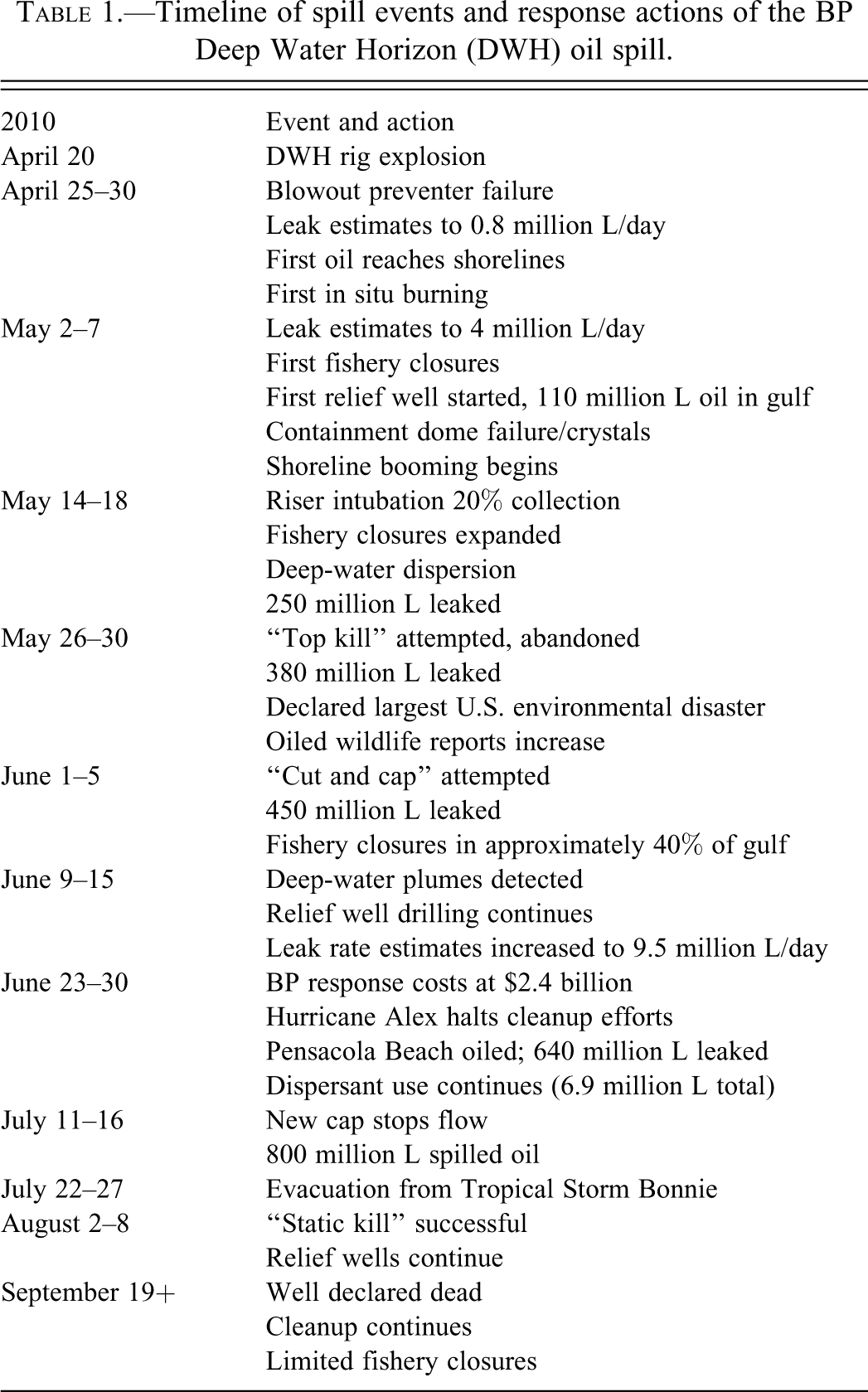
The Deepwater Horizon (DWH) oil rig exploded on April 20, 2010, initiating the discharge of over 800 million liters of oil into the Gulf of Mexico over approximately three months (Table 1 and Figure 1). The DWH spill was the largest environmental disaster and response effort in U.S. history and the second largest oil spill in human history (Levy and Gopalakrishnan 2010; National Commission 2011; Carriger and Barron 2011). Nearly 7 million liters of chemical dispersants were used, and for the first time oil dispersants were used in deep-sea environments (Table 1). This article summarizes major federal and multistakeholder research efforts in response to the DWH spill, including laboratory oil dispersant testing, estimation of oil release rates and oil fate calculations, subsea monitoring, and postspill assessments. Impacts from shoreline oiling and wildlife exposures and the results of coastal condition assessments are summarized. Finally, implications of the Gulf oil spill for immunotoxicity to aquatic invertebrates, fish, birds, and mammals are discussed.
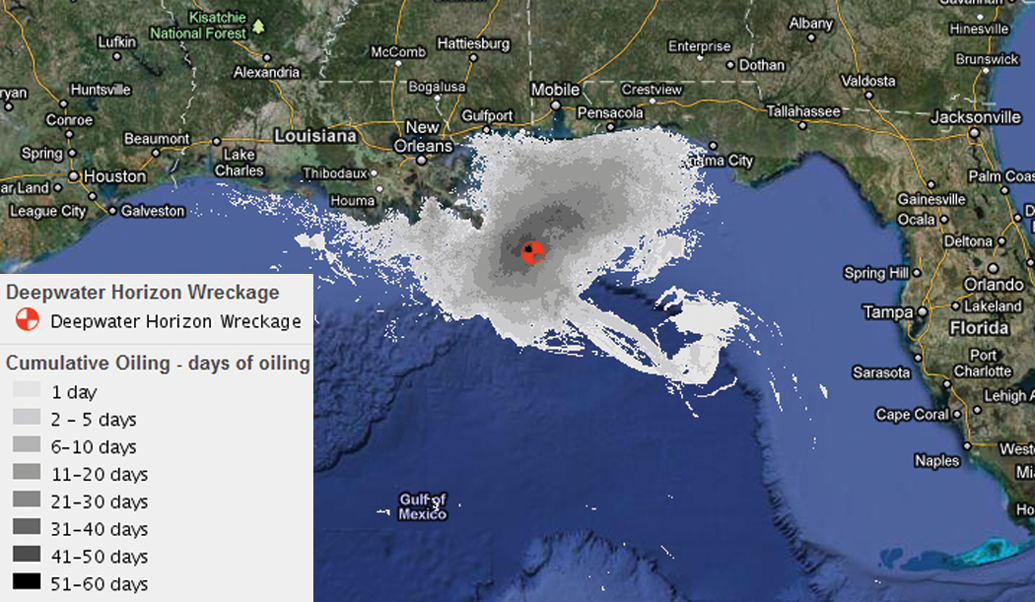
Cumulative Deepwater Horizon oil distribution in the Gulf of Mexico (days oil present). Image downloaded August 2011from www.GeoPlatform.gov/gulfresponse.
Timeline of spill events and response actions of the BP Deep Water Horizon (DWH) oil spill.
EPA Dispersant Testing
One of the major areas of concern during the DWH spill was the continuing application of large volumes of dispersant, both in the deep ocean and in offshore surface areas of the Gulf of Mexico. A total of 4 million liters of chemical dispersant was used on the surface in over 400 air sorties, while 2.9 million liters were applied at the well head. There were also concerns that some dispersants on the National Contingency Plan Product Schedule (U.S. Environmental Protection Agency [EPA] 2011) contained constituents such as nonylphenol ethoxylates that could degrade to endocrine-disrupting compounds.
The EPA (2011) performed two phases of laboratory dispersant toxicity testing during the DWH spill to supplement existing data available on the product schedule. Phase 1 involved testing eight dispersants using standard toxicity bioassays with a fish and aquatic invertebrate species, as well as in vitro mammalian cell line assays (Hemmer, Barron, and Greene 2011; Judson et al. 2010). Phase 2 of the EPA’s spill response testing determined the acute toxicity to two Gulf of Mexico estuarine species of the eight dispersants mixed with South Louisiana crude oil. In vitro testing was focused on determining if any of the eight commercial dispersants had estrogenic or androgenic activity, as well as any activity in other biological pathways, using a large battery of cell line assays. Overall, no activity was observed in any androgen assay, two dispersants showed a weak estrogenic signal in one assay, and all dispersants showed minimal cytotoxicity (Judson et al. 2010).
Consistent test methodologies within a single laboratory were used to assess the relative acute toxicity of the eight dispersants, including Corexit 9500A, the predominant dispersant applied during the DWH spill. Static acute toxicity tests were performed using mysid shrimp (Americamysis bahia) and ray-finned fish, inland silverside (Menidia beryllina). For all eight dispersants in both test species, the dispersants alone had less acute toxicity (3 to >5,600 ppm) than the mixtures of dispersant with South Louisiana crude oil (0.4–13 mg total petroleum hydrocarbons/L). The acute toxicity to mysids (2.7 mg/L) and Menidia (3.5 mg/L) of South Louisiana crude oil was similar to acute toxicity of the dispersant–oil mixtures. The results were consistent with data available on the product schedule and indicated that the toxicity of Corexit 9500A was generally similar to other available dispersants when tested alone and as a mixture with oil (Hemmer, Barron, and Greene 2011).
A laboratory efficacy study also was undertaken to determine the effectiveness of the eight selected dispersants currently available on the product schedule (EPA, 2011). Tests were performed on South Louisiana crude oil at 5°C to represent temperature conditions for the deep-sea dispersant injection and 25°C to represent surface application conditions. The results showed that only three of the eight dispersants, including Corexit 9500A, were more than 70% effective under optimal laboratory test conditions.
Flow Rate Estimates and oil budget calculations
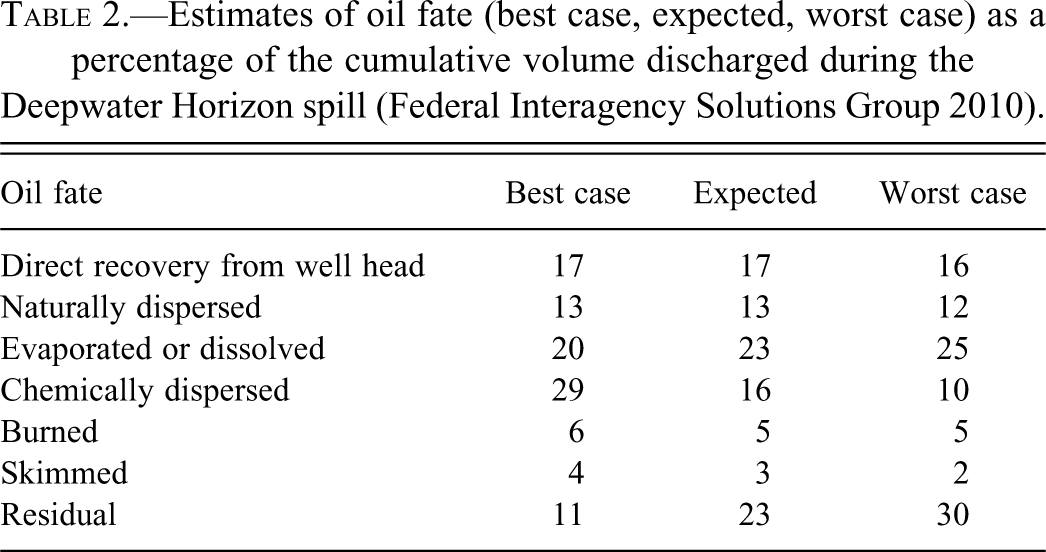
The spill rates of the oil were highly uncertain during the first eight weeks of the spill, with government and independent scientist estimates generally increasing their estimates from 0.8 to 9.5 million liters per day . A consensus estimate of the Flow Rate Technical Group based on high-resolution videography, 9.8 million liters per day, was used in the calculation of the oil budget (Federal Interagency Solutions Group, 2010). The fate of the released oil was calculated by the team of scientists and engineers in the Federal Interagency Solutions Group (2010), based on estimates of leak rate and surface behavior, dissolution, evaporation, weathering by emulsification, natural and chemical dispersion, in situ burning, and mechanical recovery. Table 2 shows best-case, expected, and worst-case estimates of oil fate from response efforts (i.e., mechanical recovery, chemical dispersion, burning), natural processes (i.e., physical dispersion, evaporation, dissolution), and the amount of residual oil. These calculations show that about 20% of the oil was recovered at the well head or through skimming and about 35% dissipated through natural processes (Table 2). There was high uncertainty in the amount of oil chemically dispersed (10–29%) and remaining as residual oil (11–30%) (Table 2).
Estimates of oil fate (best case, expected, worst case) as a percentage of the cumulative volume discharged during the Deepwater Horizon spill (Federal Interagency Solutions Group 2010).
Subsea Plume Assessment
An extensive assessment of deep-water plume size and trajectory, and potential dissolved oxygen depressions due to oil degradation and dispersion, was conducted during the DWH spill. These subsea oceanographic assessments were performed by the Joint Analysis Group (JAG 2011), consisting of a working group of multiple government agencies, the private sector, and acadamia. JAG (2011) concluded that fluorescence spectroscopy, dissolved oxygen, petroleum chemistry, and particle size vertical profiles were indicative of a deep-water plume at 1,100 to 1,400 meters that was consistent with water movement patterns near the well head. JAG (2011) also concluded that subsea dissolved oxygen depressions did not approach hypoxic levels and were stable after July 28, 2010.
Postspill Assessment
Large-scale sampling, monitoring, and assessment of subsea, onshore, and offshore water and sediment data were directed by the Operational Science Advisory Team (OSAT 2010) to guide postspill oil removal. OSAT included representatives from BP and several federal agencies who compiled, analyzed, and interpreted data (available as of October 23, 2010) from thousands of samples, research cruises, and field efforts. The findings of OSAT (2010) included no deposits of liquid-phase DWH oil beyond the shoreline, no exceedences of human health or dispersant toxicity benchmarks, and less than 1% incidence of water and sediment samples exceeding aquatic toxicity benchmarks. OSAT (2010) concluded that the DWH oil was weathering, but oil degradation rates were variable. Of the over 20 million hectares (approximately 40%) of closed fisheries in the Gulf of Mexico, the majority of state and federal waters had been reopened. Deposits of oil entrained in drilling mud and polycyclic aromatic hydrocarbon (PAH) concentrations exceeding aquatic toxicity benchmarks remained within 3 kilometers of the well head. Tar mats in shallow nearshore waters were identified as a sampling gap needing further investigation (OSAT 2010).
A second OSAT (2011) assessment was conducted specifically to determine if beach cleanup should continue. OSAT (2011) reported that 80% of PAHs in the residual oil present in the beach environment had been depleted, and there were minimal risks of leaching of buried oil. The report concluded that there would be greater impacts to wildlife from continuing beach cleanup compared with leaving the residual oil in place. There were continuing risks to shore birds from ingestion of residual oil (e.g., tar balls) and to the eggs and hatchlings of sea turtles from buried oil (OSAT 2011).
Impact Assessment
Shoreline Oiling
More than 1,600 kilometers of Gulf of Mexico shoreline was visibly oiled during the DWH spill (Figure 2). Maximum oiling occurred along the shorelines and barrier islands of Louisiana, Mississippi, Alabama, and western Florida, as well as in the wetland areas of Louisiana (e.g., Barataria Bay). Shoreline cleaning and natural processes have removed a substantial amount of the oil from these areas, leaving a limited number of areas with cleanup still in progress (Figure 2).
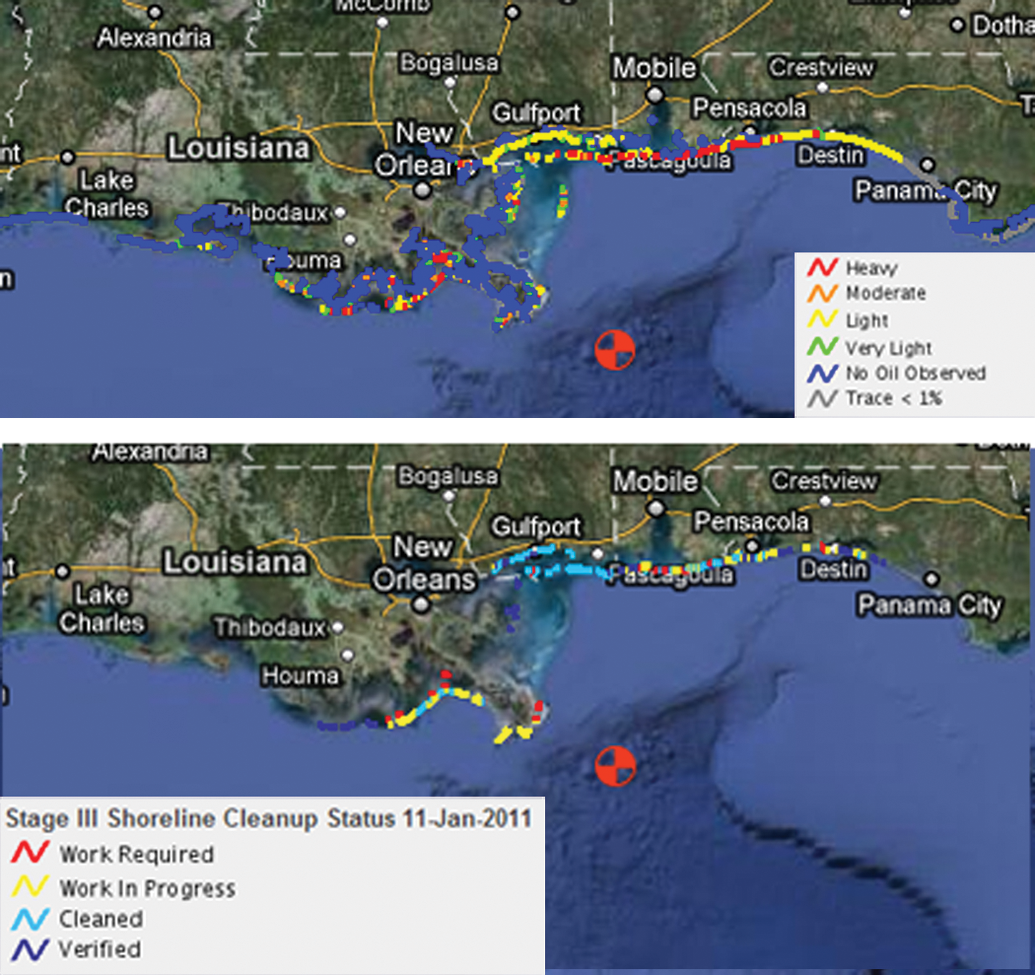
Maximum shoreline oiling observed during the Deepwater Horizon spill (top panel) and shoreline cleanup progress as of January 2011 (lower panel). Image downloaded August 2011 from www.GeoPlatform.gov/gulfresponse.
Wildlife Oiling
Reported wildlife oiling during the DWH spill included observations of oiled birds, sea turtles, and dolphins (Figure 3). There were nearly 10,000 bird observations, including 2,085 categorized as visibly oiled alive and 2,303 visibly oiled dead (U.S. Fish and Wildlife Service 2011). Figure 4 shows the spatial distribution of sea turtle observations, with most dead turtles observed near shore and live turtles observed off shore. Oil impacts on marine mammals included 140 dead animals and numerous dolphin strandings (Figure 3 and Figure 5).
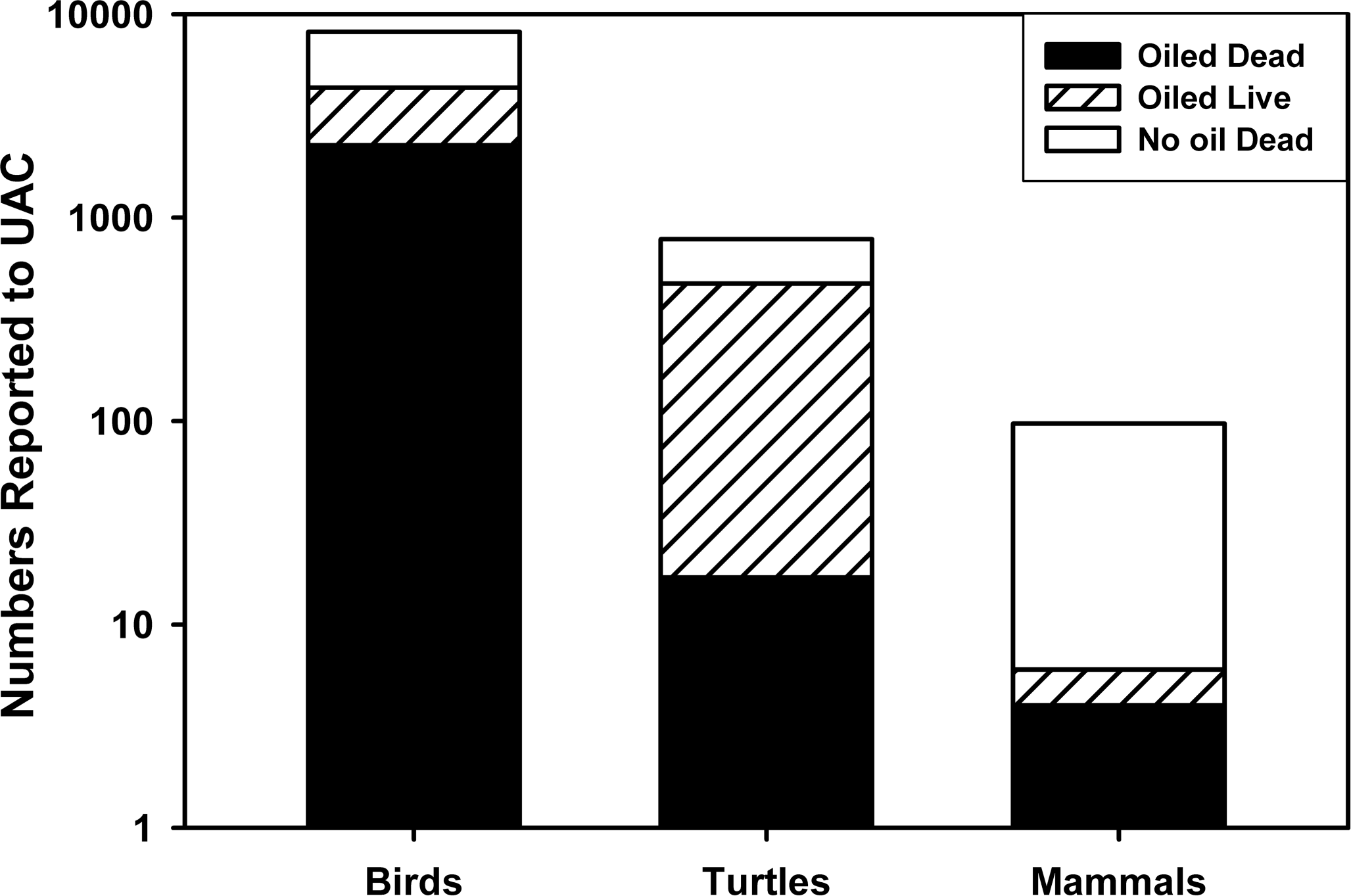
Cumulative wildlife oiling observations reported to the Unified Area Command (UAC) during the Deepwater Horizon spill. Summarized from U.S. Fish and Wildlife Service (2011).
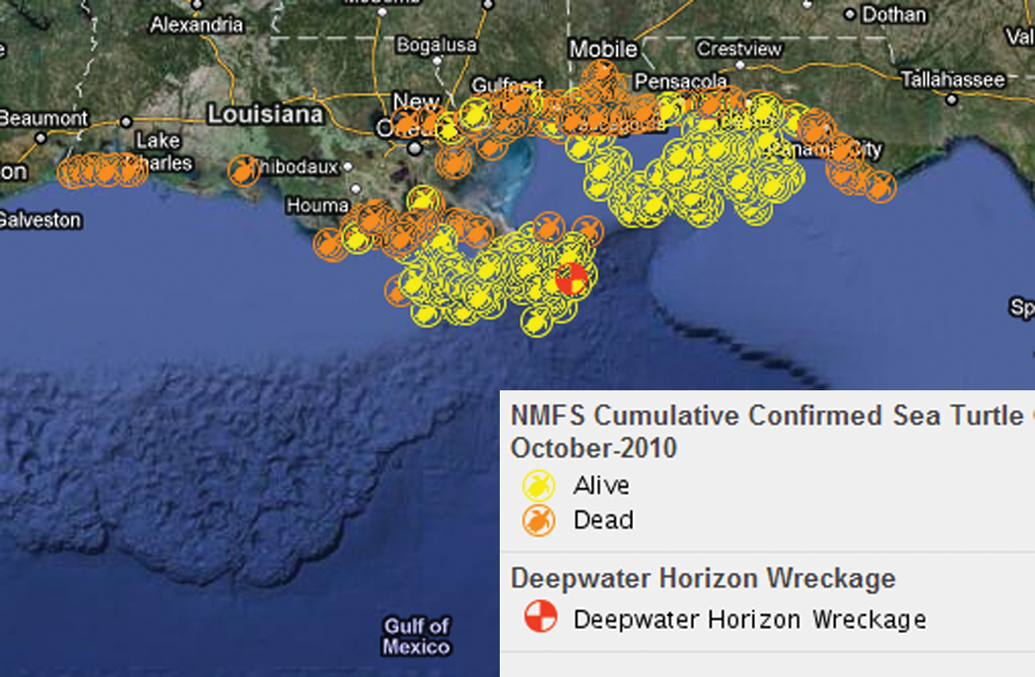
Spatial distribution of live and dead sea turtles observed during the Deepwater Horizon spill. Image downloaded August 2011 from www.GeoPlatform.gov/gulfresponse. NMFS = National Marine Fisheries Service.
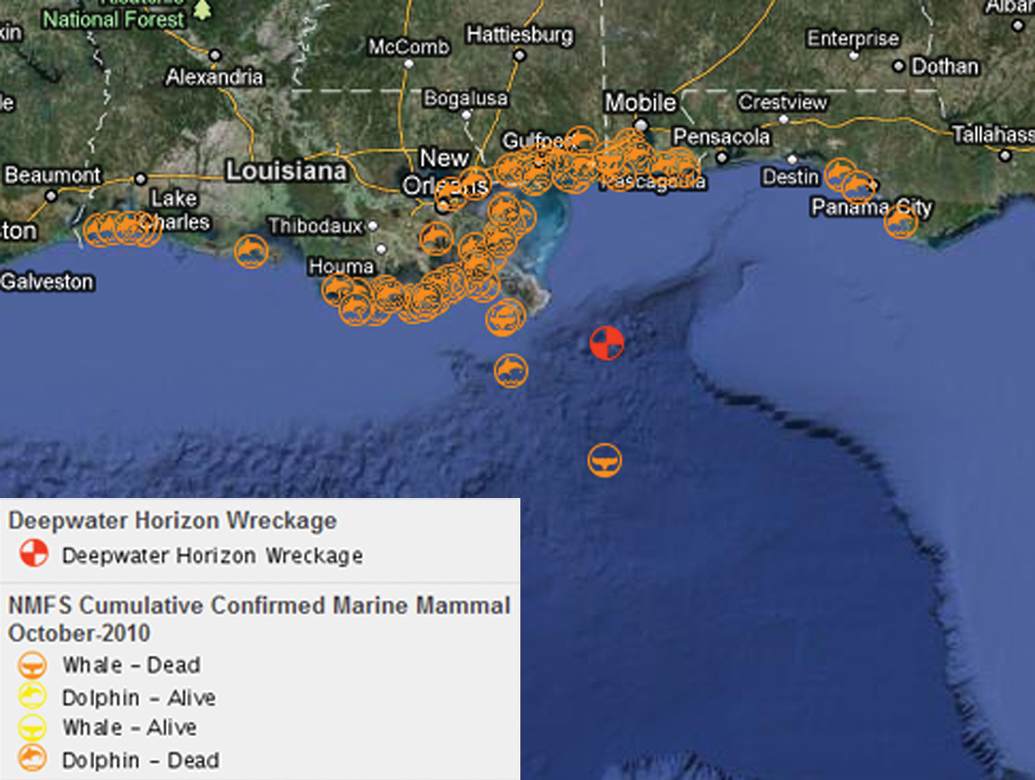
Spatial distribution of marine mammal strandings observed during the Deepwater Horizon spill. Image downloaded from August 2011 www.GeoPlatform.gov/gulfresponse. NMFS = National Marine Fisheries Service.
Coastal Condition
The impacts of the DWH spill on the condition of near coastal areas and estuaries were assessed using a variety of sediment and water quality indicators, including analytical chemistry measurements in water, sediment, and tissues, and benthic organism surveys and toxicity testing. Sampling was performed between April and September, with the indicators (including specific chemical analytes) and sample locations varying across the surveys. Baseline information was available from previous regional surveys (e.g., EPA 2008). Comparison of the condition information across surveys indicated some impacts during the spill but minimal impacts after the well was capped (OSAT 2010).
Natural Resource Damage Assessment
The Oil Pollution Act of 1990 (OPA) establishes liability for the discharge and substantial threat of a discharge of oil to navigable waters and shorelines. A major goal of OPA is to restore the natural resources and services that are lost as a result of oil spills. The responsibility for acting on behalf of the public lies with designated federal, state, tribal, and natural resource trustees. OPA directs trustees to return injured natural resources and services to the condition they would have been in if the incident had not occurred and to recover compensation for interim losses of such natural resources and services through the restoration, rehabilitation, replacement, or acquisition of equivalent natural resources or services.
The trustees for the DWH spill include the U.S. Departments of Commerce, Interior and Defense and the five affected states (Texas, Louisiana, Mississippi, Alabama, and Florida). The Natural Resource Damage Asssessment is ongoing and has included over 90 offshore cruises and 30,000 samples of water, sediment, tissues, and oil from the deep-ocean, offshore, and coastal areas (National Oceanic and Atmospheric Association and U.S. Department of the Interior 2011). Transmitters have been placed in whale sharks, bluefin tuna, and sperm whales to assess exposures to pelagic species. Other activities included complex modeling of oil distribution, fate, and effects and toxicity testing of multiple species. Over 7,000 kilometers of shoreline have been surveyed for oil impacts. The conclusions of the Natural Resource Damage Assessment are not expected for several years (Carriger and Barron 2011).
Implications for Immunotoxicity
Oil and the PAHs present in oil are known to be immunotoxic in a diversity of aquatic and wildlife species (Briggs, Gershwin, and Anderson 1997; Galloway and Depledge 2001; Jenssen 1996; Reynaud and Deschaux 2006). However, there is generally limited information on immune responses relative to other endpoints monitored in oil spills. The immune systems of vertebrates, including fish, appear to be conserved across species, whereas invertebrate immune systems appear more primitive (Galloway and Depledge 2001; Reynaud and Deschaux 2006). Studies have shown that both the adaptive and innate immune systems of vertebrates respond to oil exposure, with apparent mechanisms of action that include P450-mediated biotransformation, aryl hydrocarbon receptor binding, and calcium mobilizaton (Reynaud and Deschaux 2006). The adaptive, specific immunity and lymphoid pathways appear to be absent in invertebrates (Galloway and Depledge 2001). Phagocytosis appears to be important in invertebrate immune responses, as are circulating hemocytes. Invertebrates also appear to have cytotoxic reactions similar to the natural killer cells of vertebrates and have proteins similar to cytokines (Galloway and Depledge 2001).
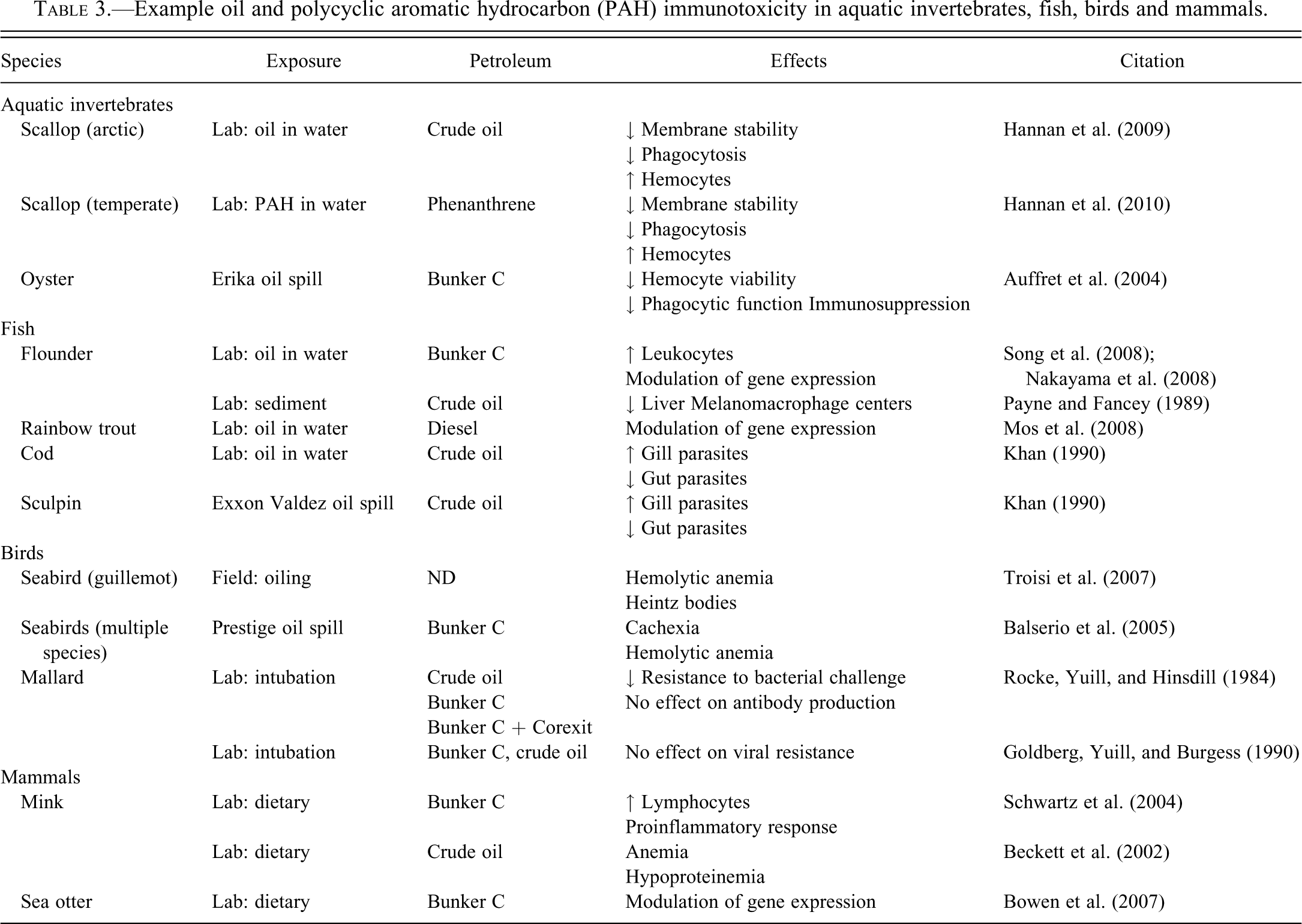
A diversity of immunotoxic responses has been assessed in oil and PAH exposures, with selected examples shown in Table 3. The results are often contraditory, with immunosuppression, inflammation, hemolytic anemia, decreased leukocytes and phagocytes, and impaired phagocytosis appearing to be common responses across species (Table 3). The immunotoxic effects of petroleum are correlated with the PAH component of oil and are exposure and species dependent (Payne and Fancey 1989; Reynaud and Deschaux 2006). Studies with aquatic invertebrates have shown impaired cellular immunity. Sensitive immunotoxic responses in fish exposed to petroleum products and PAH include macrophage respiratory burst and lymphocyte proliferation (Reynaud and Deschaux 2006). Cell-mediated immunity seems to be a sensitive endpoint in oiled birds, whereas antibody production appears less sensitive to oil exposure. Recent studies in both fish and mammals exposed to heavy petroleum show modulation of expression of immune system–related genes (Bowen et al. 2007; Mos et al. 2008; Nakayama et al. 2008).
Example oil and polycyclic aromatic hydrocarbon (PAH) immunotoxicity in aquatic invertebrates, fish, birds and mammals.
Although petroleum and the PAH component of oils are known to affect the immune systems of aquatic organisms and wildlife, immunotoxicity is not typically assessed during oil spills. Immunotoxic effects do not appear to have been assessed or reported during the DHW spill, and it is unclear if they are being assessed in the Natural Resource Damage Assessment. Immunotoxic effects seem likely based on the reported effects of a variety of oils on both aquatic and wildlife species. Possible ecological impacts from the DWH resulting from immunotoxicity may include impaired disease resistance and increased parasitism that could lead to slower population recoveries.
Footnotes
Abbreviations
Acknowledgments
I thank my many EPA colleagues who worked on the DWH spill, with special thanks to Michael Hemmer, Virginia Engle, Jan Kurtz, Robyn Conmy, Albert Venosa, John Carriger, Gregory Wilson, and Marc Greenberg for discussions and information included in this article. I thank the Society for Toxicologic Pathology for the invitation to present this work, and my EPA colleagues Deborah Vivian for graphical support, Steve Jordan for editing, and Douglas Wolf for review. This is GED contribution 1433. The opinions expressed in this work are those of the author and do not represent the policies or opinions of the U.S. EPA.
The author(s) declared no potential conflicts of interests with respect to the authorship and/or publication of this article. The author(s) received no financial support for the research and/or authorship of this article.