




Abstract
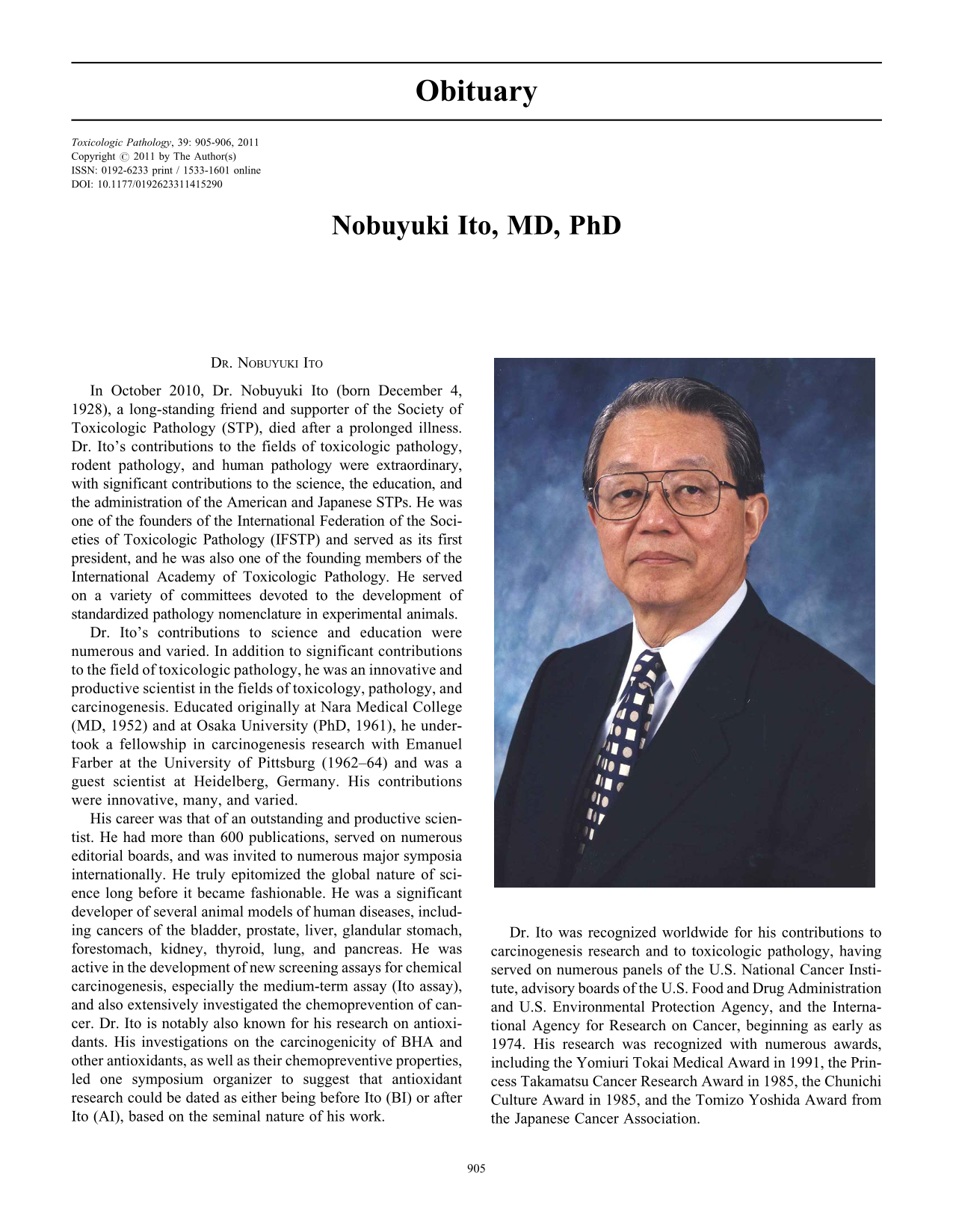
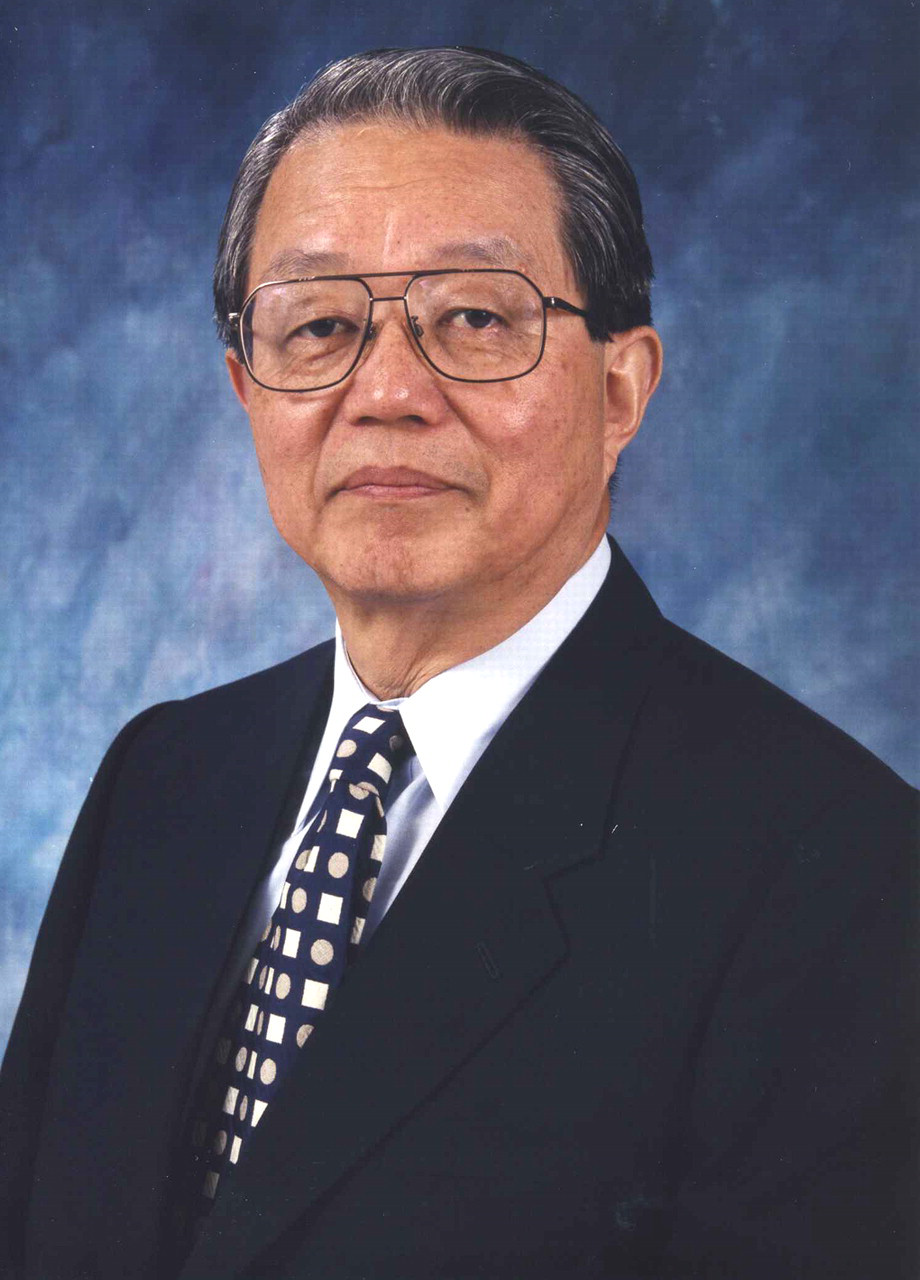
Dr. Nobuyuki Ito
In October 2010, Dr. Nobuyuki Ito (born December 4, 1928), a long-standing friend and supporter of the Society of Toxicologic Pathology (STP), died after a prolonged illness. Dr. Ito’s contributions to the fields of toxicologic pathology, rodent pathology, and human pathology were extraordinary, with significant contributions to the science, the education, and the administration of the American and Japanese STPs. He was one of the founders of the International Federation of the Societies of Toxicologic Pathology (IFSTP) and served as its first president, and he was also one of the founding members of the International Academy of Toxicologic Pathology. He served on a variety of committees devoted to the development of standardized pathology nomenclature in experimental animals.
Dr. Ito’s contributions to science and education were numerous and varied. In addition to significant contributions to the field of toxicologic pathology, he was an innovative and productive scientist in the fields of toxicology, pathology, and carcinogenesis. Educated originally at Nara Medical College (MD, 1952) and at Osaka University (PhD, 1961), he undertook a fellowship in carcinogenesis research with Emanuel Farber at the University of Pittsburg (1962–64) and was a guest scientist at Heidelberg, Germany. His contributions were innovative, many, and varied.
His career was that of an outstanding and productive scientist. He had more than 600 publications, served on numerous editorial boards, and was invited to numerous major symposia internationally. He truly epitomized the global nature of science long before it became fashionable. He was a significant developer of several animal models of human diseases, including cancers of the bladder, prostate, liver, glandular stomach, forestomach, kidney, thyroid, lung, and pancreas. He was active in the development of new screening assays for chemical carcinogenesis, especially the medium-term assay (Ito assay), and also extensively investigated the chemoprevention of cancer. Dr. Ito is notably also known for his research on antioxidants. His investigations on the carcinogenicity of BHA and other antioxidants, as well as their chemopreventive properties, led one symposium organizer to suggest that antioxidant research could be dated as either being before Ito (BI) or after Ito (AI), based on the seminal nature of his work.
Dr. Ito was recognized worldwide for his contributions to carcinogenesis research and to toxicologic pathology, having served on numerous panels of the U.S. National Cancer Institute, advisory boards of the U.S. Food and Drug Administration and U.S. Environmental Protection Agency, and the International Agency for Research on Cancer, beginning as early as 1974. His research was recognized with numerous awards, including the Yomiuri Tokai Medical Award in 1991, the Princess Takamatsu Cancer Research Award in 1985, the Chunichi Culture Award in 1985, and the Tomizo Yoshida Award from the Japanese Cancer Association.
As excellent as his science was, his even greater contributions were to education, mentoring, and administration. Administratively, he was extensively involved in any organization in which he participated, including serving as professor and chair at Nara Medical College and then at Nagoya City University from 1974 to 1994. He served as dean of the medical school and ultimately became president of Nagoya City University. He served as an organizer and president of numerous scientific organizations, including the Japanese Cancer Association, and for us, most notably, as the founding president of the IFSTP. His organizational skills were legendary, as were his parties at any meeting or event.
In education, his contributions were extraordinary. He had more than 200 students and fellows train in his laboratory, more than 30 of whom eventually became chairs of academic departments or directors of government or private industry sections and divisions. Included in this list of fellows were significant numbers of scientists from countries outside of Japan, including the United States, Brazil, Portugal, Thailand, and Korea, among others. Scientific “offspring” became leaders in their respective fields in several countries around the world. His contributions as a scientist, mentor, and teacher were recognized by the Society of Toxicology with their Education Award in 2005, the first major award from this society to be given to a scientist outside of North America.
Those of us who have had the pleasure of training as fellows in his laboratory have many fond memories of the experience and will treasure the lifelong interactions that ensued. Dr. Ito was extraordinarily supportive of his fellows and his graduates, but his greatest devotion was to his family, his wife Yukiko, his sons Kazihiro and Masahiro, and their families.
Dr. Ito cultivated a wide range of interests, including expertise on culinary matters. He served as the restaurant reviewer for the Yomiuri Shimbun newspaper in Nagoya for 18 months, and he greatly enjoyed treating foreigners to unusual and exotic foods. With his wonderful and wry sense of humor, he would tell you to “eat first, ask later.”
Dr. Ito was an individual of the highest integrity, both personally and scientifically. His integrity, leadership, and prodigious productivity resulted in numerous individuals seeking his advice, whether serving on committees or leadership groups for scientific organizations, government agencies, or private industry. Many sought his advice knowing that it would be well considered and based on sound science. The range of his influence in Japan and internationally was extensive.
Dr. Nobuyuki Ito was a remarkable individual with whom we had the pleasure of having as a mentor and friend. He will be sorely missed by us, his friends and colleagues, and by the entire community of toxicologic pathology.