




Abstract
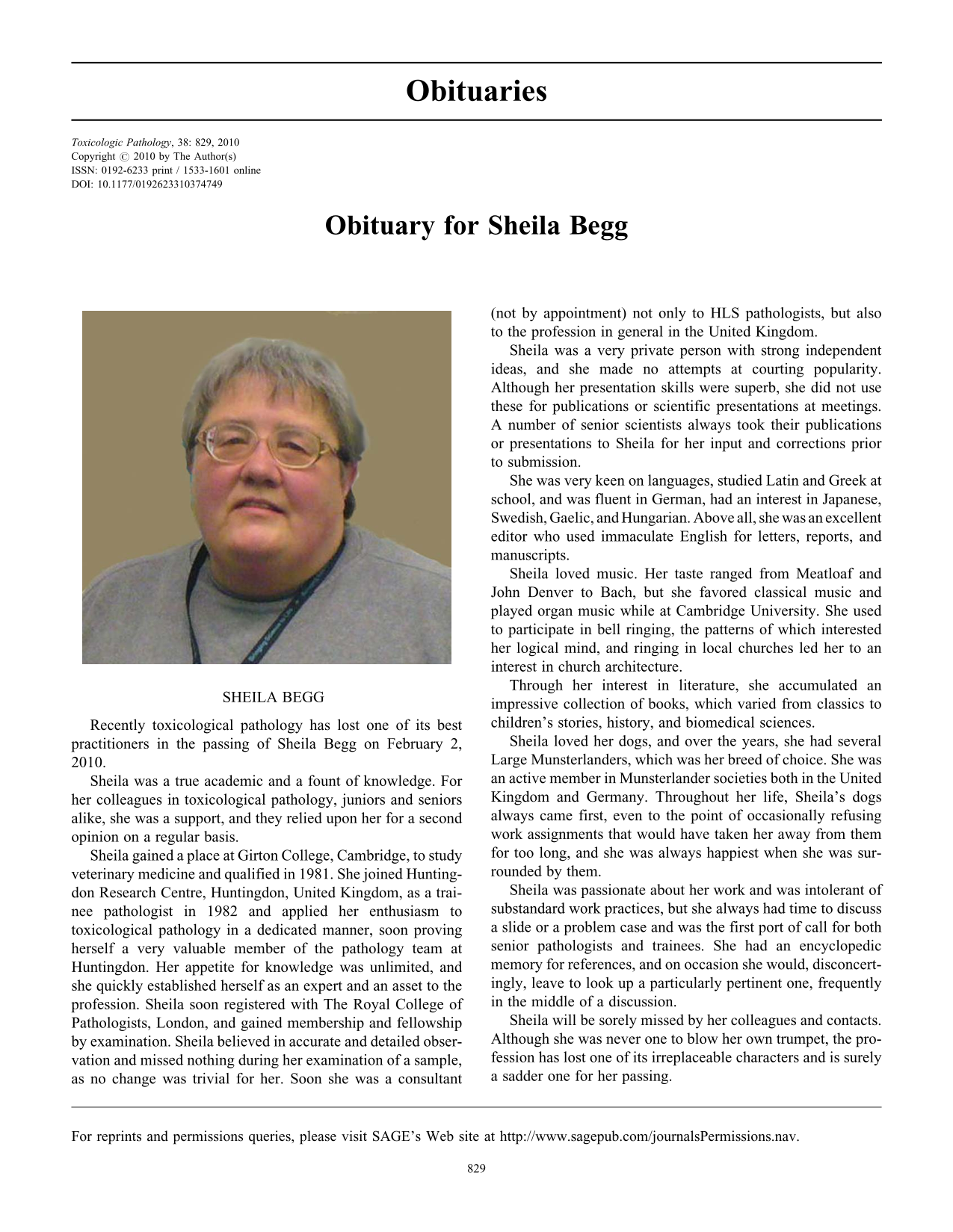
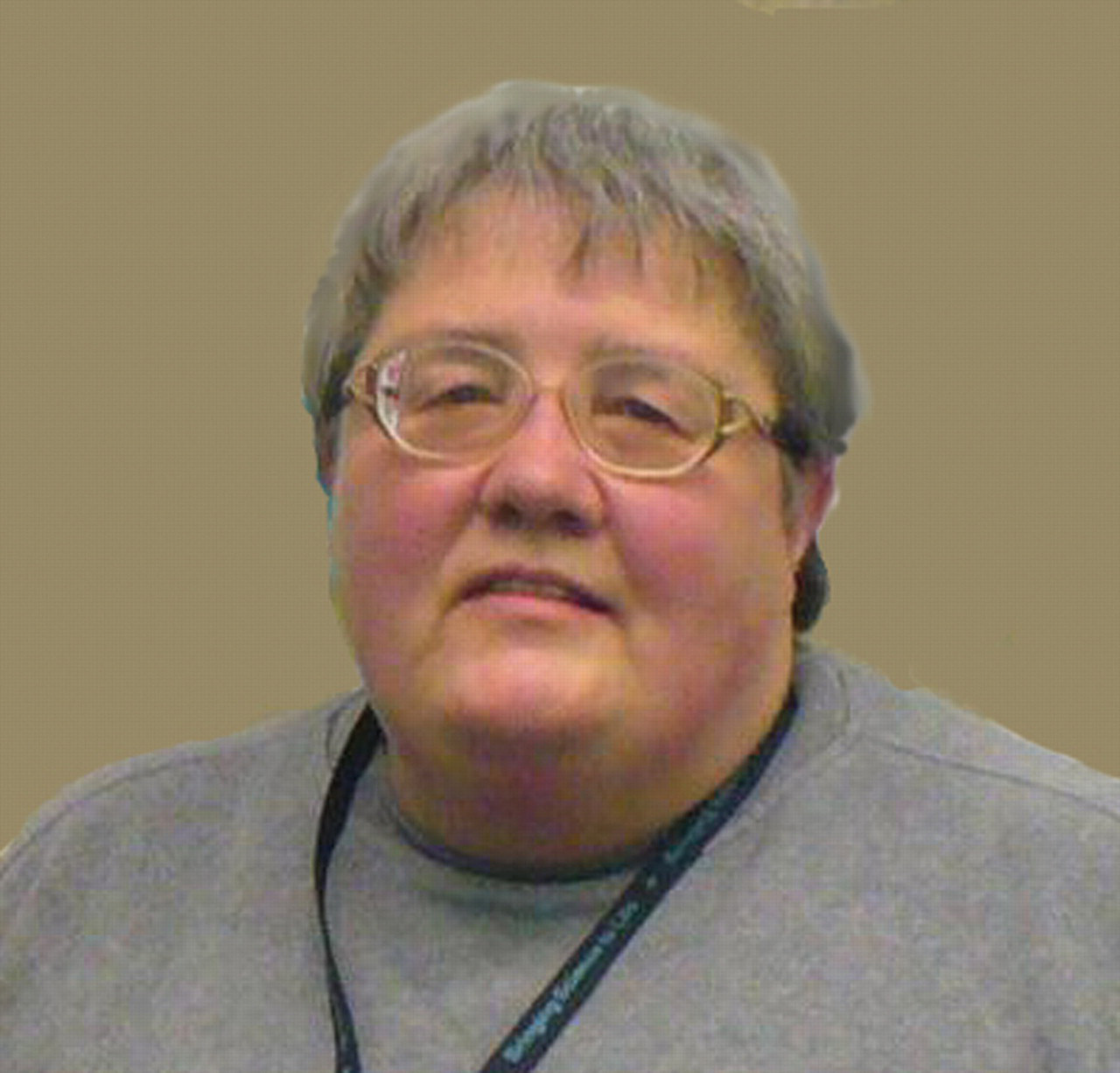 SHEILA BEGG
Recently toxicological pathology has lost one of its best practitioners in the passing of Sheila Begg on February 2, 2010.
Sheila was a true academic and a fount of knowledge. For her colleagues in toxicological pathology, juniors and seniors alike, she was a support, and they relied upon her for a second opinion on a regular basis.
Sheila gained a place at Girton College, Cambridge, to study veterinary medicine and qualified in 1981. She joined Huntingdon Research Centre, Huntingdon, United Kingdom, as a trainee pathologist in 1982 and applied her enthusiasm to toxicological pathology in a dedicated manner, soon proving herself a very valuable member of the pathology team at Huntingdon. Her appetite for knowledge was unlimited, and she quickly established herself as an expert and an asset to the profession. Sheila soon registered with The Royal College of Pathologists, London, and gained membership and fellowship by examination. Sheila believed in accurate and detailed observation and missed nothing during her examination of a sample, as no change was trivial for her. Soon she was a consultant (not by appointment) not only to HLS pathologists, but also to the profession in general in the United Kingdom.
Sheila was a very private person with strong independent ideas, and she made no attempts at courting popularity. Although her presentation skills were superb, she did not use these for publications or scientific presentations at meetings. A number of senior scientists always took their publications or presentations to Sheila for her input and corrections prior to submission.
She was very keen on languages, studied Latin and Greek at school, and was fluent in German, had an interest in Japanese, Swedish, Gaelic, and Hungarian. Above all, she was an excellent editor who used immaculate English for letters, reports, and manuscripts.
Sheila loved music. Her taste ranged from Meatloaf and John Denver to Bach, but she favored classical music and played organ music while at Cambridge University. She used to participate in bell ringing, the patterns of which interested her logical mind, and ringing in local churches led her to an interest in church architecture.
Through her interest in literature, she accumulated an impressive collection of books, which varied from classics to children’s stories, history, and biomedical sciences.
Sheila loved her dogs, and over the years, she had several Large Munsterlanders, which was her breed of choice. She was an active member in Munsterlander societies both in the United Kingdom and Germany. Throughout her life, Sheila’s dogs always came first, even to the point of occasionally refusing work assignments that would have taken her away from them for too long, and she was always happiest when she was surrounded by them.
Sheila was passionate about her work and was intolerant of substandard work practices, but she always had time to discuss a slide or a problem case and was the first port of call for both senior pathologists and trainees. She had an encyclopedic memory for references, and on occasion she would, disconcertingly, leave to look up a particularly pertinent one, frequently in the middle of a discussion.
Sheila will be sorely missed by her colleagues and contacts. Although she was never one to blow her own trumpet, the profession has lost one of its irreplaceable characters and is surely a sadder one for her passing.