



Abstract
Research on the relation between childlessness and loneliness is limited and inconclusive. While some studies link childlessness to higher loneliness, others find no association. Few studies distinguish between distinct loneliness types (social, emotional, and existential) or life stages. This article explores how childlessness relates to various loneliness types across adult life stages, using cross-sectional data from the 2024 “A Lonely Planet” survey (N = 3,756) in Flanders, Belgium. Results show that childless adults are lonelier (for all loneliness types) than parents, also when controlling for socio-demographic variables. However, this relationship depends on age and loneliness type: younger childless adults (18–34) face more social and existential loneliness than parents; middle-aged (35–64) childless adults experience all types more; older adults (65–74) experience more emotional and overall loneliness; no loneliness differences were found between childless adults and parents (75+). These findings underscore the need for a nuanced understanding of childlessness and loneliness.
Introduction
Since the second half of the 20th century, an increasing part of the population in Europe and worldwide remains childless (Albertini & Kohli, 2009; Antczak et al., 2023; Křenková, 2018), whether voluntary (due to increased education of women, and contraceptive methods which allow women to develop their careers) or involuntary (due to infertility, divorce of delayed partnership) (Leocádio, 2022; Penning et al., 2024). The number of childless women of the cohort born around 1965 already forms 10% to 20% of the population in Europe (Tanturri et al., 2015). This evolution whereby an increasing part of the population is childless gave rise to a new area of research that investigates the impact of childlessness on psychological well-being (Křenková, 2018), including feelings of loneliness (Penning et al., 2024).
Loneliness can be defined as “the unpleasant experience that occurs when a person’s network of social relations is deficient in some important way, either quantitatively or qualitatively” (Perlman & Peplau, 1981, p. 31). Research shows that about 36% of adults in Europe feel lonely at least some of the time, and about 13% feel lonely most or all of the time (Schnepf et al., 2024). In this regard, loneliness is increasingly considered a public health problem (Cacioppo & Cacioppo, 2018; Marquez et al., 2023; Victor & Pikhartova, 2020). Indeed, loneliness is not only associated with a 26% increase in the risk of premature mortality (Cacioppo & Cacioppo, 2018), but severe feelings of loneliness are also related to various physical and mental health problems (e.g., depression and anxiety) (Holt-Lunstad et al., 2015), unhealthy behaviors (Kobayashi & Steptoe, 2018), lower quality of life (Bruggencate et al., 2018), increased health and social care utilization (Gerst-Emerson & Jayawardhana, 2015), and expenditures (Meisters et al., 2021). Further, the societal impact of loneliness can hardly be overestimated since loneliness is associated with unemployment (Morrish & Medina-Lara, 2021) and lower voting turnout, political engagement (Langenkamp, 2021a; 2021b), and social trust (European Commission. Joint Research Centre., 2021). And contrary to the widespread misconception that loneliness is mostly related to old age, research consistently shows that loneliness is of all ages (Luhmann & Hawkley, 2016; Marquez et al., 2022) and often follows a U-shaped pattern whereby young and older adults are more confronted with loneliness than middle-aged adults (Lasgaard et al., 2016; Luhmann & Hawkley, 2016; Mund et al., 2020; Victor & Yang, 2012). The causes of loneliness can be found in the intra-individual domain (e.g., social capacities and migration background), the inter-individual domain (e.g., social network and partner status), and the societal domain (e.g., intergenerational solidarity and demographic evolutions) (De Witte & Van Regenmortel, 2022, 2023; Fokkema & van Tilburg, 2007). With regard to the inter-individual domain, research indicates that loneliness is related to being childless, and this for both younger and older adults (Kent-Marvick et al., 2022; Vozikaki et al., 2018).
With regard to younger adults, relatively little research exists about the relationship between loneliness and childlessness or early parenthood, despite young adults having a considerable risk for loneliness (Nowland et al., 2021). Some research indicates that early parenthood is associated with higher loneliness, due to its impact on daily activities, the social network (Kent-Marvick et al., 2022), and identity (Nowland et al., 2024). Young mothers in the UK are, for example, found to be significantly lonelier than a representative sample of the population (Kantar Public, 2016). Other research also finds that young parents are lonelier than young adults without children, apart from the first year of parenthood where parents are found to be less lonely (Buecker et al., 2021). Further, parenting difficulties and having a child with mental or physical health risks significantly relate to higher loneliness levels. Despite these ascertainments, a recent literature review states that current research about this topic is scarce, since it often concentrates on specific sub-groups of parents, the results are often inconsistent, and research rarely considers the different types of loneliness (Kent-Marvick et al., 2022).
With respect to older adults, some research finds that being childless is related to an increased risk of social isolation and loneliness (Heylen, 2010; Penning et al., 2024; Vozikaki et al., 2018; Wu & Penning, 2019; Zhang & Liu, 2007; Zoutewelle-Terovan & Liefbroer, 2018). Indeed, children, and also grandchildren later on, are an important part of the social network of older parents (Deindl & Brandt, 2017) and are often assumed to enhance a sense of fulfillment (Mansson, 2016). According to the social support theory, children provide important intergenerational support to their old-aged parents, which reduces the negative impact of various life events and reinforces self-confidence, a sense of control (Huang et al., 2024), and quality of life (Deindl & Brandt, 2017). In this respect, children not only offer social, emotional (Deindl & Brandt, 2017), instrumental, financial, and informational support, but they also provide care, social interactions, and companionship to their aging parents, which all relate to lower loneliness levels (Huang et al., 2024). This support allows older parents to live longer independently and enhances their emotional well-being (Mansson, 2016). The importance of children for older adults is further accentuated because parents tend to prioritize interactions with their children and other close ties (Huxhold & Fiori, 2024), due to changes in capacities, motivations, and skills (van Tilburg, 2021), and because of a declining broader social network with peers (Antonucci et al., 2011). Following this, older adults without children may have less supportive social networks (Heylen, 2010; Zoutewelle-Terovan & Liefbroer, 2018), which could increase feelings of loneliness (Křenková, 2018). Hence, the ascertainment that an increasing amount of adults remain childless (Albertini & Kohli, 2009) may pose a public health challenge since they may need to rely more on alternative forms of care and support (outside of the nuclear family), based on community resources and public services (Kendig et al., 2007). However, although a considerable amount of research indicates that older people without children are more prone to loneliness (Heylen, 2010; Penning et al., 2024; Vozikaki et al., 2018; Zhang & Liu, 2007; Zoutewelle-Terovan & Liefbroer, 2018), other research finds no differences in loneliness between middle-aged or older adults with or without children (Gibney et al., 2017; Hansen et al., 2009; Stegen, 2024). In this regard, the so-called “empty nest period”—the period in which parents no longer have dependent children in their residence—may result in decreased interactions between parents and children, and in that way induce feelings of loneliness among older parents (Hartanto et al., 2024). Furthermore, some research shows that older childless adults have learned to accept their situation, invest more in other types of relationships (Hadley, 2021), and have more friends and extended kin (Schnettler & Wöhler, 2016), which may relate to lower loneliness levels. In sum, the data about loneliness and childlessness in middle and old age is inconclusive.
In this article, we investigate the relationship between childlessness and loneliness among adults of all ages in Flanders, Belgium. For this, we do not only take into account different age groups since the relationship between loneliness and childlessness presumably depends on the specific life stage people are in, but we also include different loneliness types (social, emotional, and existential loneliness). Whereas social loneliness refers to the lack of an adequate, broad social network of friends and acquaintances, emotional loneliness refers to the absence of a meaningful, intimate, and exclusive relationship (e.g., with a partner) (Weiss, 1975). Bolmsjö et al. (2019, p. 5) define existential loneliness as “the immediate awareness of being fundamentally separated from other people and from the universe, and typically, because of this awareness, experiencing negative feelings, that is, moods and emotions.” The distinction between these three types of loneliness is important to determine which interventions are most effective for a distinct loneliness type (De Witte & Van Regenmortel, 2023), and also because the relation between childlessness and loneliness presumably depends on the specific type of loneliness (Stegen, 2024). Indeed, childlessness could be more related to social loneliness since children form a crucial part of the social network of parents and may enhance their social engagement and participation. Nevertheless, only few studies included different loneliness types when studying the relation between childlessness and loneliness (Heylen, 2010; Penning et al., 2024; Stegen, 2024). In this respect, Stegen (2024) finds no significant relationship between childlessness and any of the loneliness types among older adults, and both Heylen (2010) and Penning et al. (2024) conclude that having children relates to lower social loneliness among older adults, but not to emotional loneliness. In terms of existential loneliness, even less research has been conducted.
In this article, we answer the following research questions: Is there a relationship between childlessness and the different types of loneliness among adults of all ages in Flanders, Belgium? Does the relationship between childlessness and the different types of loneliness among adults of all ages in Flanders, Belgium, differ according to age?
Methodology
Data
This article is based on data from the representative “A Lonely Planet” survey, conducted in 2024 among 3,756 adults of all ages in Flanders, Belgium. This survey is part of a large research project about the impact of the neighborhood where people live on feelings of loneliness, funded by the Research Foundation Flanders. The survey contains individual-level data about loneliness and various possible determinants of loneliness such as the characteristics of the living environment, mobility, housing, education, work, health, family situation, social network, social participation, and social exclusion. This cross-sectional survey was conducted in the period May–July 2024 among a representative sample of adults (18+) residing in Flanders, Belgium. Respondents were able to fill out the survey either online (through a QR-code or website link) or on paper, and in Dutch (Flanders’ official language), English, or French. We added the survey questionnaire in attachment.
A survey company organized the field work, whereby it contacted 15,000 adults residing in Flanders. The Belgian Statistical Office randomly selected the gross sample from the National Register, after having obtained necessary approvals (which we add in attachment). In this respect, the Belgian Statistical Office applied a disproportionate sample by overrepresenting older adults of 80 years and older, given their small proportion in the total population and their presumed lower response rate. After a first invitation (through a letter) to participate to the survey online, two follow-up letters were sent to all persons of the gross sample who at that time did not yet fill out the survey. The paper questionnaire was added to the second follow-up letter, together with a stamped envelope which allowed respondents to send it back to the survey company free of charge. After the data collection period, the survey company provided the researchers with the anonymized individual-level data.
After data cleaning, we withhold 3,756 questionnaires who were filled out for at least 90%, which implies a response rate of 25.1%. In total, 2700 questionnaires were filled out online (71.9%) and 1056 on paper (28.1%).
Measures
Dependent Variables
Overall loneliness was measured by the validated 11-item de Jong Gierveld loneliness scale, which can be used as an overall loneliness measure, but also consists of two separate loneliness measures, namely, social and emotional loneliness (de Jong-Gierveld & van Tilburg, 1999). Whereas social loneliness refers to the lack of an adequate, broad social network of friends and acquaintances, emotional loneliness refers to the absence of a meaningful, intimate, and exclusive relationship (e.g., with a partner) (Weiss, 1975). For all items, respondents could answer one out of five categories: no!, no, more or less, yes, or yes!. In this respect, we gave the category “more or less” two different scores based on the positive or negative formulation of the question, in order to add nuance to the scale. This leads to an additive overall loneliness scale between 11 (not lonely) and 66 (very lonely). Based on a factor analysis, we find a satisfying Cronbach’s alpha of 0.92 as indicator of the internal consistency. We also calculated the additive social loneliness scale (based on 6 of the 11 items), which ranges between 6 (not socially lonely) and 36 (very socially lonely) with a Cronbach’s alpha of 0.87, and the additive emotional loneliness scale (based on 5 of the 11 items) which ranges between 6 (not emotionally lonely) and 30 (very emotionally lonely) with a Cronbach’s alpha of 0.91. The two sub-scales also correlate with each other, with r = 0.67; p < 0.05.
Existential loneliness refers to the awareness of being fundamentally separated of others (van Tilburg, 2021) and is accompanied by negative feelings, moods, emotions, and the lack of purpose or meaning in life (Bolmsjö et al., 2019). Existential loneliness is distinct from social and emotional loneliness because it is less related to (meaningful) social relationships (van Tilburg, 2021). Based on van Tilburgs’ interpretation (van Tilburg, 2021) of “existential loneliness: meaninglessness in life,” we measured existential loneliness through seven items from the Existential Loneliness Questionnaire (Mayers et al., 2002), on which respondents were able to answer one out of five categories: no!, no, more or less, yes, or yes!. In this respect, we gave the category “more or less” two different scores, based on the positive or negative formulation of the question, again, to add nuance to the scale. This leads to an additive existential loneliness scale between 7 (not existentially lonely) and 42 (very existentially lonely), with a satisfying Cronbach’s alpha of 0.83.
In our analysis, we make use of the overall, social, emotional, and existential loneliness measure, by using their distinct mean scores (higher scores refer to higher loneliness levels).
Independent Variables
Childlessness was defined as not having biological, step-, or adopted children at the time of data collection and contrasted with adults who had at least one biological, step-, or adopted child.
Age refers to a categorical variable with four categories: 18–34; 35–65; 65–74; 75+.
Control Variables
Gender is a dummy variable referring to women (1) or men (0).
Educational level is a categorical variable distinguishing between no education; elementary education; secondary education; higher not-university education; higher university education.
Employment status is a categorical variable distinguishing between fulltime employed; part-time employed; independent; job seeker; pensioned; houseman or woman; student; unfit for work.
Subjective household income is a categorical variable distinguishing between difficult; not difficult, not easy; easy.
Self-rated health is a categorical variable distinguishing between bad, reasonable; good; very good, excellent.
Partner status is a categorical variable distinguishing between de facto cohabitation; married; divorced; not married/single; widowed.
Analyses
We present descriptive characteristics of both adults with and without children. Subsequently, we conduct multivariate regression analyses (ordinary least squares), whereby we study the relationship between childlessness and the different loneliness outcomes while controlling for age, gender, education level, employment status, subjective household income, self-rated health, and partner status.
After excluding all cases with one or more missing values on the dependent, independent, or control variables used in our analyses, we retain 3,407 respondents. For our analyses, we make use of a weight factor, which was calculated to remedy over- and underrepresentation of certain groups in our sample with regard to both age and gender.
Ethics Statement
Ethical approval for this study was obtained on 25 March 2024 from the Social and Societal Ethics Committee of KU Leuven, Belgium (G-2023-6404-R4-AMD). In this approved application, we described in detail how the study was conducted: the study objectives, funding instances, ethical justification, used techniques, instruments and methodology, the respondents, informed consent, collection, and sharing of data.
Results
Descriptive Statistics of Study Sample (N = 3,407)
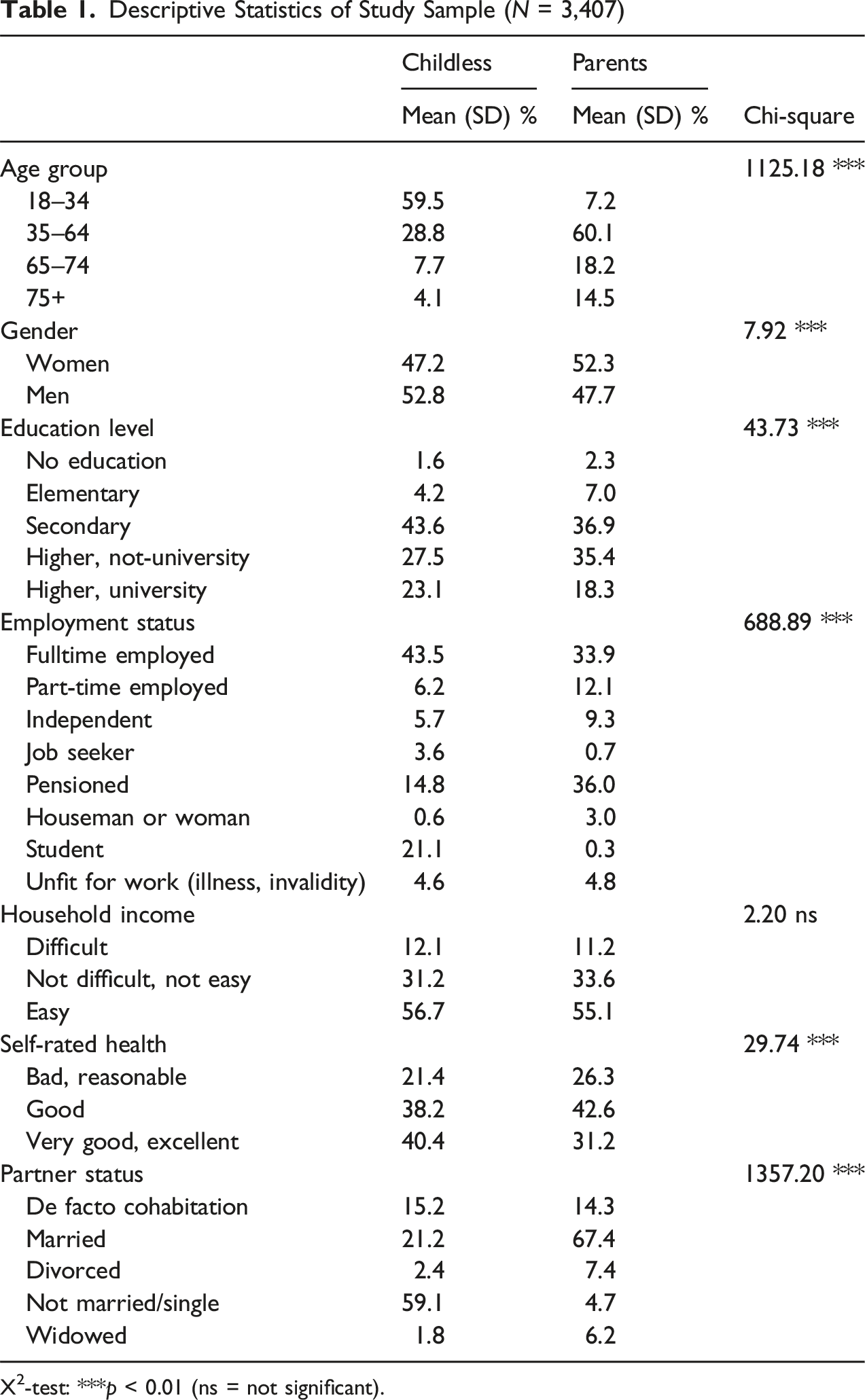
X2-test: ***p < 0.01 (ns = not significant).
Comparisons of Loneliness Scores Between Childless Adults and Parents (18+) (N = 3,407)
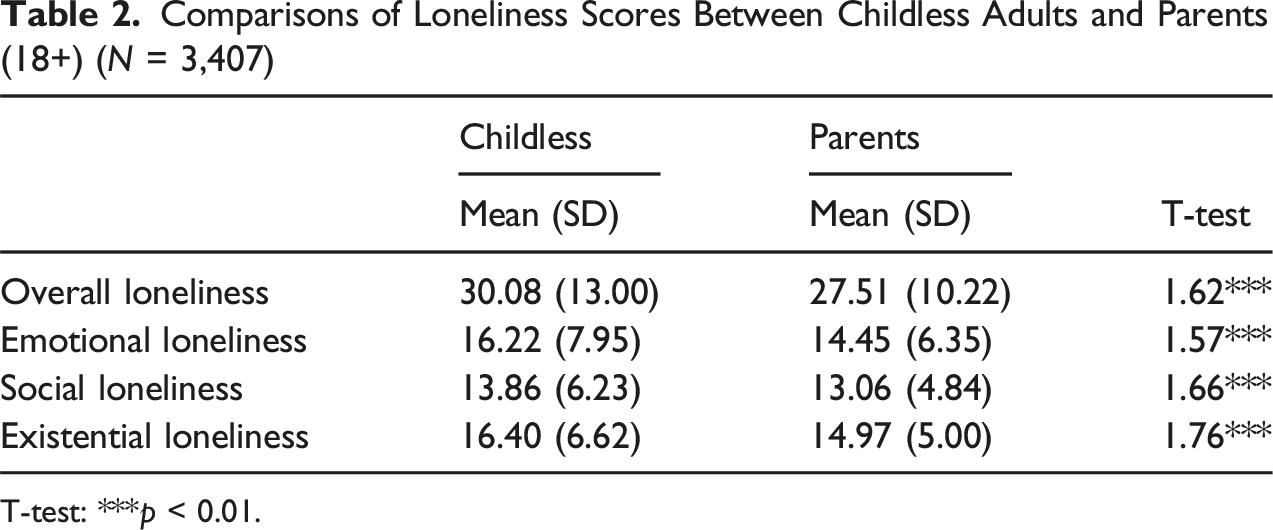
T-test: ***p < 0.01.
Comparisons of Loneliness Scores Between Childless Adults and Parents (18+), Divided by Age Groups (N = 3,407)
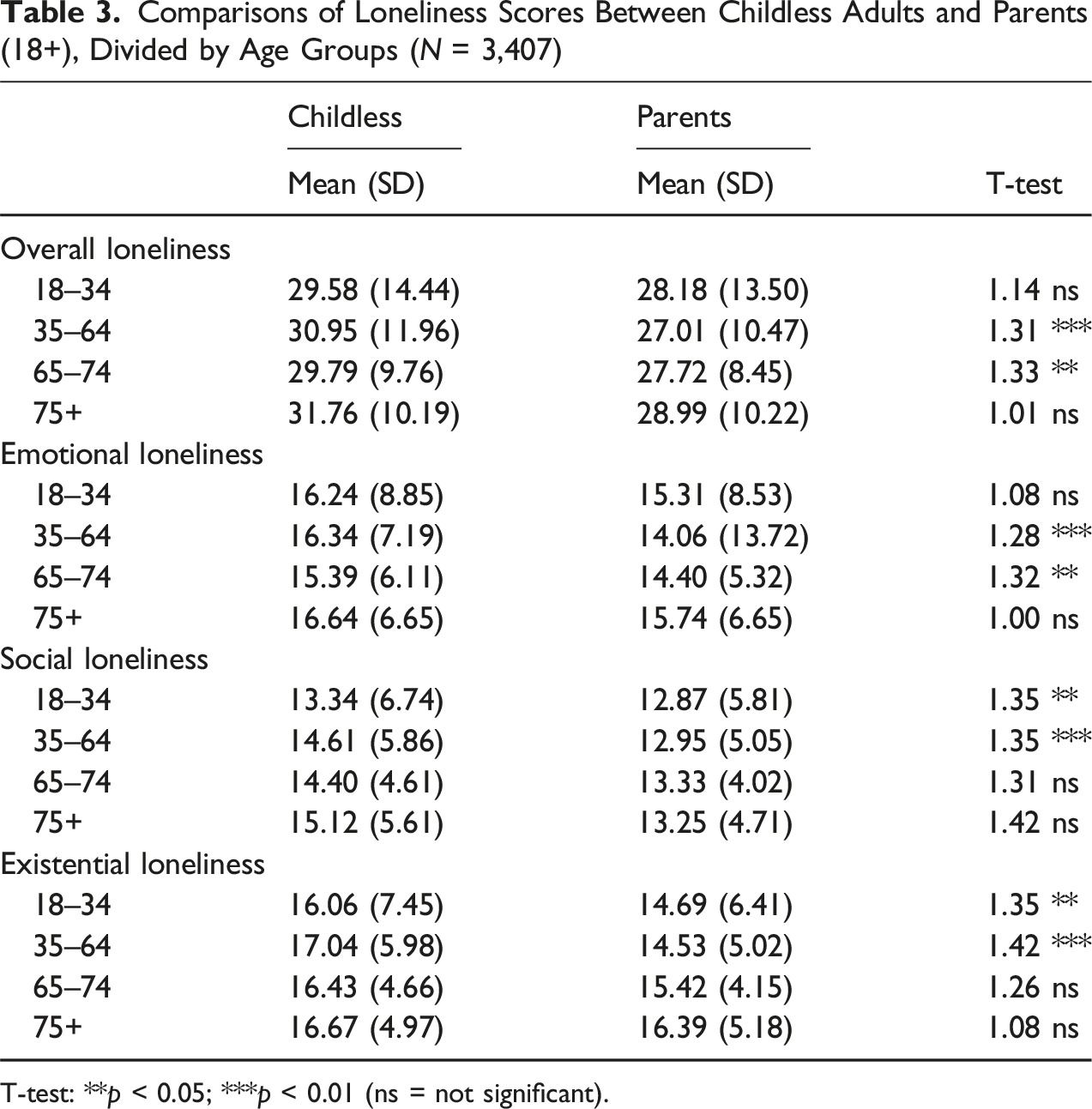
T-test: **p < 0.05; ***p < 0.01 (ns = not significant).
In sum, being childless is significantly related to higher loneliness levels, and this for all loneliness types. However, childlessness does not seem to be more related to social loneliness than other types of loneliness: instead it is related to social, emotional, and existential loneliness, with a difference between the different age groups. Further, young parents are not lonelier than young childless adults. On the contrary, young parents are socially and existentially less lonely than young childless adults. Last, although we find that older parents (65–74 years) are less confronted with overall and emotional loneliness than their childless counterparts, we find no significant loneliness difference between older adults of 75+ with or without children.
In what follows, we conduct multiple linear regression analyses to examine the association between childlessness and loneliness, after controlling for age, gender, education level, employment status, subjective household income, self-rated health, and partner status. Subsequently, we also study how childlessness and age interact to explain the variation in loneliness.
In this respect, the assumptions of linear regression were met for all four loneliness outcomes. First, based on a scatterplot of the residual and predicted values, our analysis shows that the assumption of linearity is met, which means that the relationship between the independent variables (predictors) and the dependent variables is linear. Second, the data comply with the assumption of independence of the residuals of each other, with a Durbin Watson score between 1,972 and 2,052. Third, the variance of the residuals is constant across all levels of the independent variables, since the plot of predicted and residual values shows no clear pattern, and the variance of the residuals is constant around zero. Four, the residuals follow a normal distribution, as displayed by their straight line in Q-Q plots. Five, we verified the multicollinearity of the independent variables by calculating the Variance Inflation Factor for each distinct variable, which is for all variables well below 10, except for two response categories of the variable education level (which are at 11), but still within acceptable limits. Finally, we ensured that the data do not contain outliers or highly influential points, by calculating and presenting the cook’s Distance for each value, which are all lower than 1.
Multiple Linear Regression of Childlessness on Loneliness (N = 3,407)
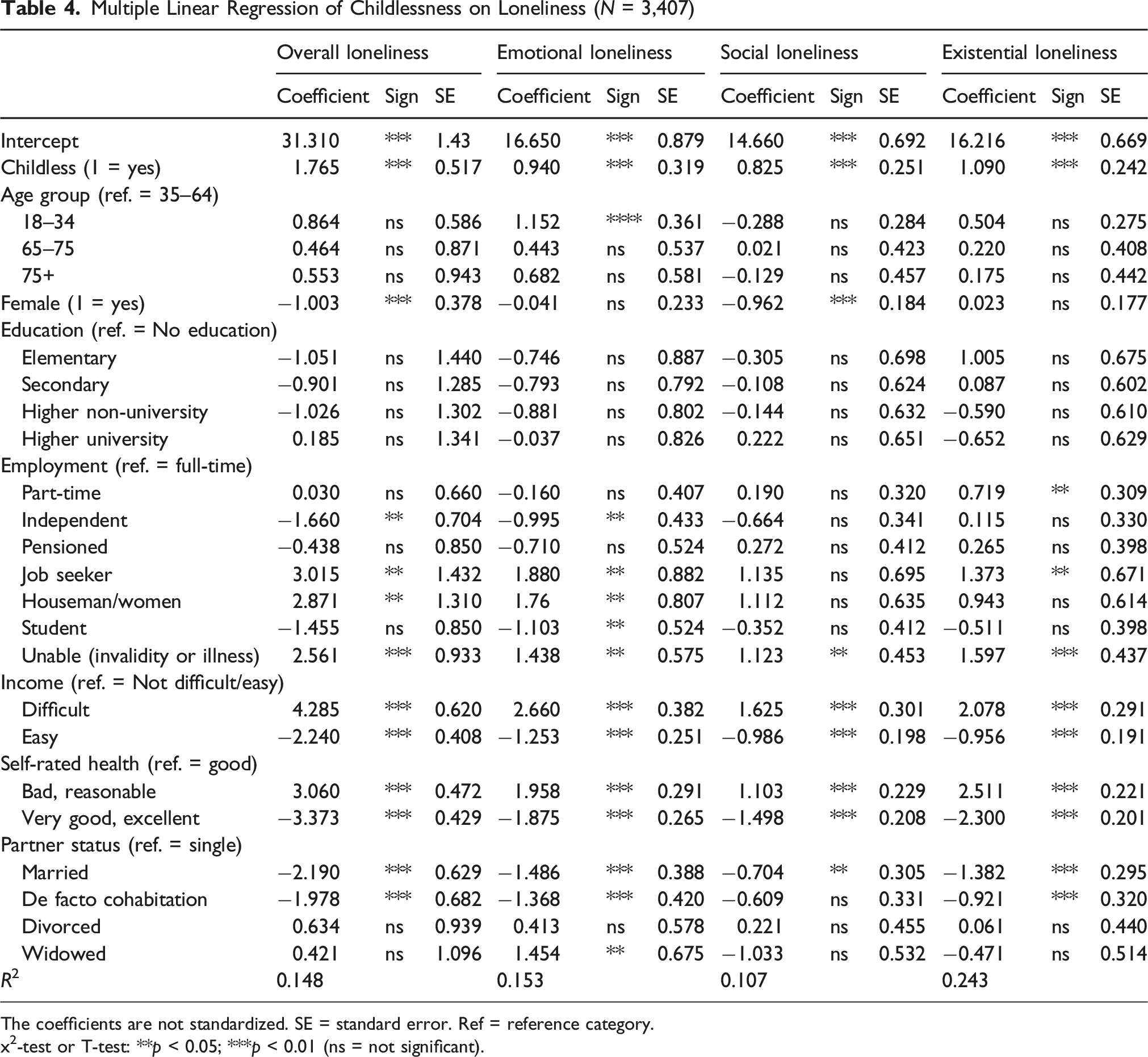
The coefficients are not standardized. SE = standard error. Ref = reference category.
x2-test or T-test: **p < 0.05; ***p < 0.01 (ns = not significant).
Multiple linear regression of childlessness on loneliness, with interaction terms (N = 3,407)
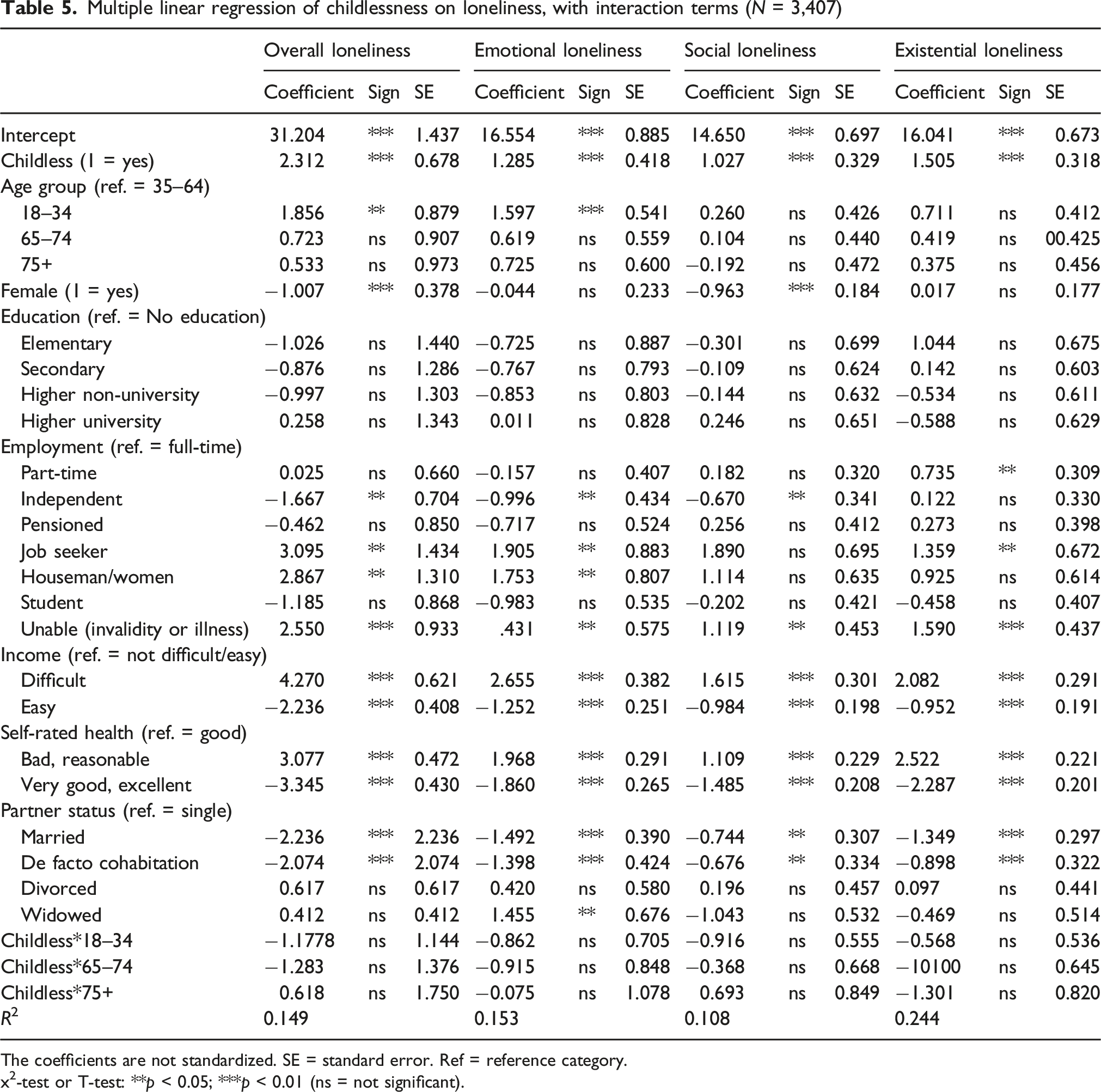
The coefficients are not standardized. SE = standard error. Ref = reference category.
x2-test or T-test: **p < 0.05; ***p < 0.01 (ns = not significant).
Discussion
It is a widely held belief that having children forms some kind of insurance for (old age) well-being and could help to avoid feelings of loneliness. In this respect, the social support theory not only states that children give informational, emotional, social, and financial support for their aging parents but also provide them with social interactions (Huang et al., 2024). Further, older persons prioritize interactions with close ties, often vertical ties, which accentuates the importance of children (and grandchildren) in old age (Deindl & Brandt, 2017; Huang et al., 2024). However, other mechanisms are simultaneously at play, such as the empty nest period—the period in which parents no longer have dependent children in their residence—which may result in a decrease of social interactions between children and their aging parents, and in increased loneliness among the latter (Hartanto et al., 2024). Also, childless older adults presumably learn to accept their situation and invest more in other relationships, which may result in a broader social network with more friends and extended kin, and in less loneliness (Hadley, 2021). Further, the relationship between childlessness and loneliness among young adults is equally inconclusive. While some research finds that early parenthood is related to more loneliness (due to changes in daily activities, the social network, and identity) (Kent-Marvick et al., 2022), other research finds that parents are less lonely during the first year of parenthood than their childless counterparts (Buecker et al., 2021). However, it has been established that parents with children with a mental or physical health risk are more likely to experience feelings of loneliness (Kent-Marvick et al., 2022). Nevertheless, with respect to the relationship between childlessness and loneliness among young adults, and loneliness, research appears to be scarce, results are inconsistent, and they seldomly include different loneliness types (Kent-Marvick et al., 2022). Therefore, we draw on data from the representative “A Lonely Planet” survey of 2024, to empirically investigate the relationship between childlessness and the different loneliness types among adults of all ages in Flanders, Belgium.
Our analyses allow us to positively answer our first research question, since we established a clear positive relationship between childlessness among adults of all ages in Flanders and all loneliness types, also after controlling for gender, education level, employment status, subjective household income, self-rated health, and partner status. Hence, in line with other research (Vozikaki et al., 2018), we find that children may help to prevent loneliness among adults of all ages. Further, the results also allow us to answer our second research question, by showing that this relationship depends on age and the specific type of loneliness (Figure 1). While childless younger adults (18–34) are more socially and existentially lonely than younger parents, middle-aged childless adults (35–64) are more confronted with all loneliness types than their counterparts with children. Older childless adults of 65–74 years are more affected by overall and emotional loneliness than their counterparts with children, but not by social or existential loneliness. Last, in line with some other research (Stegen, 2024), we find no difference in loneliness levels between older adults (75+) with or without children. Loneliness according to parental status and age group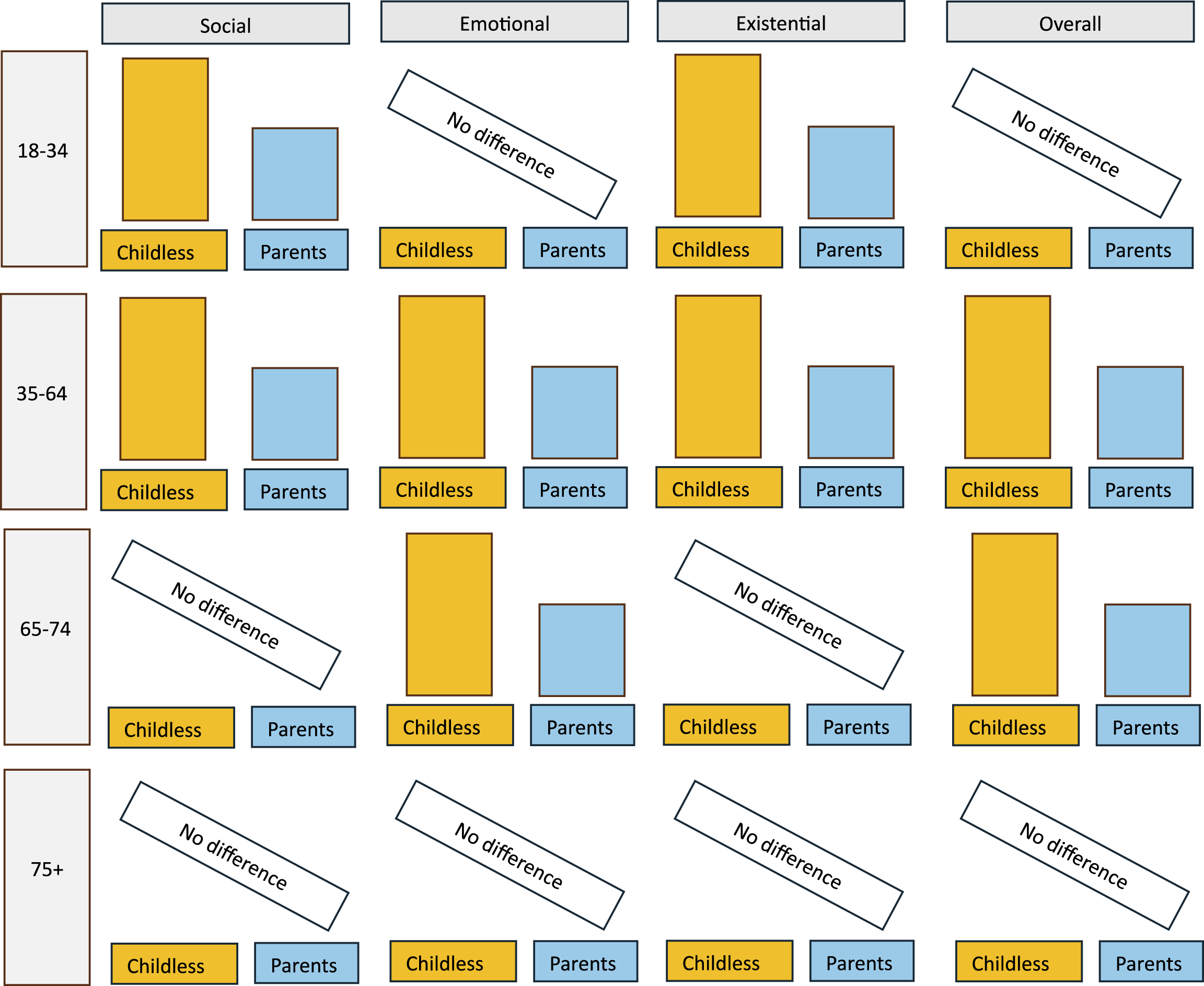
In sum, these results suggest that children play an important role in providing certain needs for social interaction and help counteracting feelings of social and existential loneliness among their parents (18–64 years), and also stimulate emotional connectedness among their parents (35–74 years). Last, children appear to mitigate overall feelings of loneliness among parents aged 35 to 74, but not among younger (18–34) or older (75+) parents.
The ascertainment that young parents (18–34 years) are less confronted with social loneliness than their childless counterparts suggests a profound impact of children on the lives of younger parents. Indeed, children could help to meet the social needs of younger parents and may also have an indirect impact on the social network of their parents. Indeed, some research finds that the composition of a parent’s social network changes towards a more diverse social network because they have children (Gemar, 2024). Further, young parents (18–34 years) are also found to be less confronted with existential loneliness than their childless counterparts, which could imply that the presence of young children may provide an important sense of connection and meaning, and counteract feelings of existential loneliness.
With respect to middle-aged parents (35–64 years), their lower social and existential loneliness levels may be explained by the same reasons as for younger parents, namely, that they have many social interactions in various life domains (personal, childcare, professional) since parenting results in more involvement in specific stable and recurring social networks (e.g., school and extra-curricular), and because children give a sense of meaning and purpose. With respect to their lower emotional loneliness levels, it could be hypothesized that their children may be old enough to fulfill the role of a meaningful, intimate, and reciprocal relationship, which leads to the development of a strong and close emotional bond and provides each other with emotional support.
With regard to old age, we find that older parents (65–74 years) are less overall and emotionally lonely than older childless adults, but we find no difference with regard to social and existential loneliness. This is contrary to some other research (Heylen, 2010; Penning et al., 2024), which found that childlessness is most strongly related to social loneliness (and not to emotional loneliness). Our results support the idea that adult children can play an important role in providing older parents with a meaningful, intimate relationship which offers them emotional connectedness. Indeed, the contact, support, and care from adult children may fulfill the need for meaningful, deep connectedness. With regard to social loneliness, the presence of children does not automatically ensure social closeness or interactions for aging parents, since children may live far away or might be occupied with their own personal life or career. Indeed, the empty nest period whereby adult children leave the nest may decrease social interactions between children and parents. Also, older parents may not always be fulfilled by the relationship they have with their children, and childless older adults may have invested more in alternative social ties (e.g., with siblings, neighbors, and friends). Lastly, old age may make adults more aware of and concerned about the finality of life, which could result in existential loneliness, regardless of the presence of children. Indeed, the importance of having children for a feeling of connection with others and the universe may decrease and fade away, to make place for more profound life questions. In this respect, older adults may try to find meaning and purpose through other sources such as spirituality, strong friendships, or involvement in the community, and less through their children. Further, they may also have already accepted their life paths and have found a sense of peace, regardless of their parental status.
Last, the fact that we find no loneliness differences between older parents (75+) and their counterparts without children may be explained by the increased importance of other age-related factors such as health, mobility, and psychological processes regarding the acceptance of life circumstances and purpose and meaning in life.
In sum, our findings establish a positive relationship between childlessness among adults of all ages in Flanders and all distinct loneliness types, and show that this relationship depends on age and the specific loneliness type. This highlights the importance of adopting a more nuanced perspective on the relationship between childlessness and loneliness—one that considers not only specific life stages but also different types of loneliness.
With respect to methodological issues, we consider several aspects which could affect the interpretation of our research results. First, our data is cross-sectional, making causal inferences from childlessness to loneliness impossible. Hence, we can only speak of associations since it is possible that specific individual traits that relate to higher loneliness levels may directly or indirectly result in being childless. So, whereas childlessness may result in loneliness, loneliness may also result in childlessness. Second, our data stems from the Flemish context, through which cautiousness with its transferability to other cultural and geographical contexts is needed. Third, although we distinguish between adults with and without children, research (Stegen, 2024) has shown that the specific reasons for childlessness are important to assess its impact on loneliness: preferring a career to family life, having a partner who does not want to or is not able to have a child, life circumstances, and medical issues (Stegen et al., 2021) may result in a different relation with different types of loneliness. Whereas a common definition of childlessness refers to “those who have no living biological or adoptive children” (Dykstra & Hagestad, 2007), a more refined distinction is possible between, for example, parents with biological, adoptive. and stepchildren, parents with offspring that predeceased them, and adults who remain voluntary childless and adults who are involuntary childless (Antczak et al., 2023). Indeed, since childless older adults form a heterogeneous group (Penning et al., 2024), it is important to investigate more into detail the reasons and types of childlessness when studying its impact on feelings of loneliness (Stegen, 2024).
More research is needed that takes into account these limitations, in order to provide more in-depth knowledge about the possible implications of childlessness on different loneliness types, while taking into account the distinct life stages. In this respect, our research suggests that having children is never associated with higher loneliness levels, and—depending on specific contextual factors—may be related to lower loneliness levels. And although childlessness does not per se relate to higher loneliness levels, it is never related to lower feelings of loneliness. Therefore, sufficient attention should be given to feelings of loneliness of the increasing group of childless adults. This not only becomes ever more important due to increased childlessness but also due to the aging of the population and changing family structures, which will require other types of care and support, for example, based on public services and community programs. Indeed, it is crucial to broaden our view of the traditional family model when studying well-being, the need for care and support, and loneliness, by also including the increasing amount of older childless adults in Europe and worldwide.
Footnotes

Ethical Considerations
Ethical approval for this study was obtained on 25 March 2024 from the Social and Societal Ethics Committee of KU Leuven, Belgium (G-2023-6404-R4-AMD). In this approved application, we described in detail how the study was conducted: the study objectives, funding instances, ethical justification, used techniques, instruments and methodology, the respondents, informed consent, collection, and sharing of data.
Consent to Participate
Respondents gave their consent for participation to the “A Lonely Planet” survey.
Author Contributions
Jasper De Witte is responsible for the conceptualization and design of the manuscript, the collection, analysis and interpretation of the data, and for drafting, writing, and reviewing the manuscript. Hannelore Stegen critically reviewed the work.
Funding
The authors disclosed receipt of the following financial support for the research, authorship, and/or publication of this article: This research project took place within the KU Leuven research project “A Lonely Planet,” which was funded by the Research Foundation Flanders (S006223N).
Declaration of Conflicting Interests
The authors declared no potential conflicts of interest with respect to the research, authorship, and/or publication of this article.
Data Availability Statement
Data and codes are available on request after termination of the KU Leuven research project “A Lonely Planet.”