




Abstract
Studies show that child-to-parent violence (CPV) occurs in many families, but the impact of ethnicity on CPV is largely unknown. This cross-sectional study examines whether there are differences in CPV between ethnic Swedish adolescents and adolescents with a background in Muslim countries, both first and second generation. The study is based on a stratified sample of 4222 adolescents and young adults aged 13–20 years. Self-report data were collected in schools across 12 municipalities in southern Sweden. Results indicate that verbal aggression is less frequent among both first- and second-generation immigrants than among ethnic Swedish adolescents. Girls reported more verbal aggression than boys, particularly in the Swedish group. Ethnic differences are smaller and more difficult to interpret for coercive behavior and physical aggression. Ethnic differences in norms around parent–child relationships may influence less severe behaviors to a greater extent, whereas maladaptive behaviors involving more substantial norm violations may be more affected by individual and family-level risk factors.
Introduction
Aggressive or abusive behaviors by children and adolescents toward their parents are often referred to as child-to-parent violence (CPV). Studies from different countries suggest that CPV is present in many families (Arias-Rivera & Hidalgo García, 2020; Junco-Guerrero et al., 2023; Simmons et al., 2018). CPV consists of a “variety of physical and psychological behaviors designed to control, coerce and dominate the parent” (Selwyn & Meakings, 2016, p. 1225). There is no widely accepted definition of CPV, but in 2017, leading Spanish scholars suggested that CPV should be defined as “repeated acts of physical, psychological (verbal or non-verbal) or economic violence perpetrated by children against their parents or parental figures” (Pereira et al., 2017). However, some scholars have argued that repetition should not be a prerequisite, and that a single abusive act can constitute CPV (Cottrell & Monk, 2004; see Ibabe, 2020 for a discussion). While CPV is the most commonly used term, youth-to-parent aggression has been proposed as a more accurate label for studies involving adolescents (Ibabe, 2020). In this article, we retain CPV for consistency with common usage in the field and with previous publications from this project.
CPV can have serious consequences for the physical and mental health of victimized parents. Stress, shame and emotional distancing from children are common (Arias-Rivera & Hidalgo García, 2020; Holt, 2013; Simmons et al., 2018; Toole-Anstey et al., 2023). Children and adolescents who perpetrate such violence may also experience negative effects, including feelings of shame and guilt and a deteriorating relationship with their parents (Jiménez-Granado, 2023). Siblings and other relatives may also be affected—CPV can have a detrimental impact on the whole family (Arias-Rivera & Hidalgo García, 2020; Miles & Condry, 2015).
Individual and Family-Level Risk Factors Associated with CPV
There has been a rapid expansion in the research on CPV in recent years, but this research is still concentrated to a relatively small number of countries, primarily in the Western world (Arias-Rivera & Hidalgo García, 2020; Simmons et al., 2018). About half of the research has originated in Spain, where several leading CPV research groups are based (Rogers & Ashworth, 2024).
The importance of demographic factors such as gender and age have been relatively well explored. In studies of justice system and clinical populations, sons have usually comprised a clear majority of the perpetrators of physical violence (Condry & Miles, 2014; Ibabe et al., 2014), while mothers, often single, have dominated among the victimized parents (Contreras & Cano, 2014; Cottrell & Monk, 2004). In studies of general population samples, however, gender differences between sons and daughters have rarely been identified (Agnew & Huguley, 1989; Calvete et al., 2015; Ibabe & Bentler, 2016), but these studies also show that physical violence more often affects mothers than fathers (Agnew & Huguley, 1989; Gámez Guadix & Calvete, 2012; Pagani et al., 2004, 2009). Verbal and other psychological violence seems to be more common among daughters than sons and is directed at both parents (Andersson et al., 2025; Beckmann et al., 2021; Calvete et al., 2015; Ibabe & Bentler, 2016; Margolin & Baucom, 2014). Some recent studies also suggest that gendered patterns of CPV may partly reflect the gender of the targeted parent. Girls tend to direct more psychological aggression toward mothers, while boys may be more physically aggressive toward fathers, particularly in cases involving prior exposure to parental violence (Cano-Lozano et al., 2024). Girls are also more likely to report reactive motives, such as responding to verbal or emotional aggression, whereas boys more often cite instrumental reasons (Contreras et al., 2020). In terms of age, CPV is most common in mid-adolescence, and then declines (without completely ceasing) among older adolescents and young adults (Calvete et al., 2020; Condry & Miles, 2014; Ibabe, 2014; Ibabe & Bentler, 2016). Some researchers suggest that this decline reflects developmental gains in emotional regulation and autonomy, while others point to shifting family dynamics and a reduction in parental control as adolescents transition into adulthood (Arias-Rivera & Hidalgo García, 2020; Ibabe & Bentler, 2016; Simmons et al., 2018).
At the individual level, CPV has been associated with cognitive and emotional risk factors such as low impulse control, emotional dysregulation, and low self-esteem (Contreras & Cano, 2016; Cottrell & Monk, 2004; Del Hoyo-Bilbao et al., 2020; Nock & Kazdin, 2002; Winstok, 2015). Clinical and justice system studies suggest that more severe forms of CPV are often part of a pattern of antisocial or aggressive behaviors, with children who display aggression at a young age continuing to do so into adolescence and early adulthood (Ibabe et al., 2014; Pagani et al., 2004, 2009).
Various types of mental health problems are overrepresented among adolescents who are violent toward their parents. These include internalizing problems such as depressive symptoms and other mood disorders (Contreras & Cano, 2015; Ibabe et al., 2014), and externalizing problems such as ADHD and personality-related factors (Contreras & Cano, 2015; Ibabe et al., 2014). The latter category includes low empathy, callous and unemotional traits, and grandiosity (Del Hoyo-Bilbao et al., 2022).
The use of alcohol and other substances has consistently been linked to CPV (Calvete et al., 2015; Del Hoyo-Bilbao et al., 2020; Ibabe et al., 2014), but it is not clear whether substance use is an independent risk factor or whether the association is mediated by other risk factors (Contreras & Cano, 2015; Johnson et al., 2022; Simmons et al., 2018).
Extensive research has shown that family-level factors are central to CPV (Calvete et al., 2013). The importance of family structure and differing parenting practices has been examined, as well as the importance of social bonds within the family (Simmons et al., 2018). One commonly identified association is that an authoritarian parenting style, involving verbal or physical punishment, increases the risk of CPV (Cano-Lozano et al., 2021; Gámez Guadix & Calvete, 2012; Ibabe, 2019; Margolin & Baucom, 2014). Exposure to other types of family violence is a key risk factor for CPV (Calvete et al., 2020; Gallego et al., 2019; Ibabe et al., 2013) and has most often been explained with reference to social learning effects (Arias-Rivera & Hidalgo García, 2020; Simmons et al., 2018). Parenting styles that are permissive, inconsistent, or affectionless have also been associated with an increased risk of CPV (Contreras & Cano, 2014; Maranon & Ibabe, 2024). Negative parenting practices can contribute to children developing early maladaptive schemas, which may increase the risk of CPV and other aggressive behaviors (Calvete et al., 2015; Fernández-Gonzáles et al., 2022; Orue et al., 2021). Conversely, strong family cohesion and communication, and a positive, warm, and supportive parenting style are protective factors associated with a reduced risk of CPV (Cano-Lozano et al., 2020; Ibabe & Bentler, 2016).
While there is now a great deal of knowledge about risk factors at the individual and family levels, recent reviews note that factors that operate at a more aggregated group or sociocultural level have not been studied as thoroughly (Arias-Rivera & Hidalgo García, 2020; Simmons et al., 2018). Group-level factors include peer relationships (e.g., López-Martínez et al., 2021), the school environment (e.g., Beckmann, 2020a), and the local community or neighborhood (e.g., Margolin et al., 2010). Sociocultural factors include structural inequalities (e.g., Agnew & Huguley, 1989), socioeconomic status or class (e.g., Paulson et al., 1990), and ethnicity/race. In this paper, we will focus on ethnicity and its potential impact on CPV.
Ethnic Background and CPV
There is little existing research on the significance of ethnicity for CPV, particularly outside the USA (Beckmann et al., 2021; Simmons et al., 2018). This is problematic, as studies in other areas of violence research have shown that there may be significant differences between different ethnic/racial groups. There is evidence of this in both adolescent violence research and family violence research more generally, as well as in intersectional violence research (Beckmann, 2020b; Lloyd, 2013; Malley-Morrison & Hines, 2007; Rojas-Gaona et al., 2016; Steele et al., 2020). A review of ethnic differences in these areas is beyond the scope of this paper, but it is worth noting that race/ethnicity may impact different types of violence in terms of both perpetration and victimization, and at different levels (macro/societal, community, school, and family/interpersonal) (Lloyd, 2013; Malley-Morrison & Hines, 2007; Rojas-Gaona et al., 2016). Intersections between race/ethnicity and categories such as gender, sexuality, and social status/class can also be important, as can factors such as immigration, honor norms, and racism (Rojas-Gaona et al., 2016; Soriano et al., 1994; Steele et al., 2020; Strid et al., 2021; West, 2012).
As indicated above, research on the ethnic/racial aspects of CPV has primarily been conducted in the USA. This research has focused on similarities and differences between White (Caucasian), African American, and Hispanic families. Community studies, that is, studies using representative or stratified samples from the general population, have shown that White adolescents are more likely to use physical violence against their parents than African American or Hispanic adolescents (Agnew & Huguley, 1989; Cazenave & Straus, 1979; Elliot et al., 2011; Paulson et al., 1990). Studies conducted in clinical (Bartle-Haring et al., 2015; Nock & Kazdin, 2002) or justice system settings (Cicale, 2018; Condry & Miles, 2014; Kennedy et al., 2010; Walsh & Krienert, 2007) have shown more mixed results, but since such studies are based on non-randomized samples, their findings should be interpreted with caution.
Whether there are differences in CPV between ethnic groups in other parts of the world is unclear. Community studies from Canada (Lyons et al., 2015), the United Kingdom (McCloud, 2017), and Germany (Beckmann et al., 2021) have found no differences in physical violence toward parents between young people of different ethnic origins. In contrast, both the Canadian and German studies found that verbal violence against parents was less common among ethnic minority groups than among the ethnic majority population. Similar findings were also reported in a US clinical study (Bartle-Haring et al., 2015).
Research has not yet been able to provide empirically tested explanations for the ethnic differences identified. Hypotheses include that they may reflect differences in values or parenting norms and practices (Beckmann, 2020b; Cazenave & Straus, 1979), for example, that African American parents may give clearer and more immediate signals that aggressive and violent behavior by children is not acceptable than White parents (Charles, 1986; Paulson et al., 1990). Another hypothesis is that respect for parents and other elders is more important in African American and Hispanic families than it is in White families (Cicale, 2018; Dixon et al., 2008). Such differences in norms may impact on parent-child dynamics, explaining the relatively lower prevalence of CPV among minority compared to White families. It has also been suggested that family structure may differ between different ethnic groups. For example, ethnic minority households may more often include extended family members, such as grandparents, which may affect access to help and support in parenting (Lyons et al., 2015).
The extent to which these hypotheses are correct has rarely been investigated. In the few studies that have controlled for differences in parenting practices and other possible confounders, these have failed to explain the ethnic differences measured (Agnew & Huguley, 1989; Beckmann et al., 2021; Elliot et al., 2011; Lyons et al., 2015). Some researchers have therefore suggested that the differences may reflect differences between ethnic groups in what is considered violence and abuse, or that there may be ethnic differences in the propensity to report CPV in surveys (Beckmann, 2020b; McCloud, 2017).
Although gender differences in CPV have been the subject of considerable research, there is a lack of studies examining how such patterns may vary across ethnic groups. Most existing studies report gender and ethnic differences separately and do not test for interaction effects (Agnew & Huguley, 1989; Bartle-Haring et al., 2015; Lyons et al., 2015). An exception is a clinical study by Kennedy et al. (2010), which found that white girls were significantly more likely than black girls to report violence toward parents, but such findings are rare and based on limited samples. In addition, little is known about whether the gender of the parent targeted in CPV varies across ethnic groups, despite indications that mothers are generally more frequently victimized. This lack of interactional analysis means that it remains unclear whether gender differences in CPV are consistent across ethnic groups, or whether they may be influenced by group-specific norms and values.
As this brief review shows, studies of ethnic and cultural differences in CPV remain limited. In particular, there is a need for studies from countries other than the United States, where most existing research has been conducted, and for studies that include ethnic groups other than those examined so far; notably, there is a lack of studies from non-Western countries and from countries with large groups of non-Western immigrants. Further research is also needed to examine whether differences in CPV between ethnic groups can be explained by family-level factors, and to explore ethnic variations across different forms of CPV. Finally, there is a need for studies that examine how patterns of CPV may differ not only between ethnic groups but also within them—particularly in relation to gender.
This Study
The aim of this cross-sectional community study is to examine whether there are differences in self-reported child-to-parent violence between ethnic Swedish adolescents and adolescents with a background in Muslim countries, both first and second generation.
In the study, child-to-parent violence is conceptualized as three different types of behavior: verbal aggression, coercive behavior, and physical aggression. This conceptualization is based on the self-report instrument we have used, the Abusive Behavior by Children-Indices (Simmons et al., 2019). For the purposes of this paper, a single act of any of these three types of behavior in the past 12 months is considered CPV.
Examining ethnic differences in three types of behavior allows us to extend previous research on ethnic differences in CPV beyond the usual focus on physical violence. In particular, the inclusion of coercive behavior (which includes emotional extortion, intimidation, property damage, and theft) is new to this particular strand of research. Based on the fact that ethnic differences appear to be more prevalent in verbal aggression than in physical violence (Beckmann et al., 2021; Lyons et al., 2015), it is reasonable to assume that ethnicity may play a greater role in less severe types of CPV than in more severe and less prevalent types.
The comparison between ethnic Swedish adolescents and adolescents with backgrounds in Muslim countries is based on an understanding that ethnic and cultural factors may interact with the family-level, which may in turn influence the prevalence of CPV. According to the World Values Survey, Sweden is characterized by secular-rational values, reflected in high levels of individualism, secularism, and gender equality norms (Inglehart & Welzel, 2005). However, much of the immigration to Sweden in the 2000s has come from Muslim countries characterized by traditional values and high levels of collectivism, where the family is seen as the core of society and where respect for parents and other authorities is emphasized, religion is important, and gender roles are traditional. Even if many immigrants adapt to the norms of the majority society (Puranen, 2019), it is likely that there are still differences in values that may affect the functioning of families and the development of parent–child relationships. Such differences are likely to be more pronounced in families where both children and parents are first-generation immigrants than in families where the parents are immigrants while the children were born in Sweden.
Since ethnicity may have a different impact depending on the gender of the adolescent or parent, the analyses will be differentiated by gender. However, as the existing literature offers almost no evidence on how gendered patterns of CPV may vary across ethnic groups, no specific hypotheses concerning gender are formulated. Instead, gender is included as an exploratory factor in the analysis, in order to examine whether interaction effects between gender and ethnicity can be observed.
In the multivariate analyses, we will also control for a number of individual- and family-level risk factors that have been shown to be significantly associated with CPV (see the review of risk factors above). At the individual level, we control for age (grade in school), externalizing problems, and internalizing problems. At the family level, we control for positive and negative parenting styles and exposure to other types of violence or conflict in the family. The inclusion of family-level factors allows us to examine whether potential ethnic differences in CPV are mediated by differences in parenting practices between parents of different ethnic origins.
Based on this reasoning and on previous research on ethnic differences in CPV, the following hypotheses will be tested: (1) CPV will be less common among adolescents with a Muslim background than among Swedish adolescents. (2) Ethnic differences will be greater for verbal aggression than for coercive behavior and physical aggression. (3) Ethnic differences will be greater for adolescents who are first-generation immigrants from a Muslim country than for adolescents with a second-generation background in a Muslim country. (4) Ethnic differences will remain when controlling for individual-level factors but will decrease when controlling for family-level factors.
Methods
Setting
The study was conducted in 12 municipalities in Scania (Skåne) county in southern Sweden. Sweden is one of the European countries that has received the largest number of immigrants from Muslim countries in relation to its population (Eurostat, 2023). According to Statistics Sweden, the proportion of foreign-born people in the population increased from 9% in 1990 to over 20% in 2022. In 2022, the total share of people with a foreign background—defined as people born in another country or in Sweden with two foreign-born parents—was just under 27% (Statistics Sweden, 2023). Many immigrant families have come as refugees from countries such as Syria, Iraq, Iran, Somalia, and Afghanistan.
Study Design
The study has a cross-sectional design and is based on data from adolescents and young adults aged 13–20 (years 8 to 9 in compulsory school and years 1 to 3 in upper secondary school), collected via a self-report survey. Although some participants are legally considered adults, this age group is often included in studies of CPV, given that many still live with and rely on their parents.
Sample and Data Collection
The sample consists of students in 35 compulsory and upper secondary schools. We drew a stratified sample to ensure a broad representation of participants with different social and ethnic backgrounds. Schools were selected based on the size of the municipality (large city, medium-sized city, smaller city, or rural area), type of school (public or private), and type of upper secondary school program (college preparatory or vocational). In municipalities with many schools, we also stratified according to ethnic background and the proportion of parents with academic education. In general, the sample shows a high degree of demographic similarity to the Scanian population in the age group being surveyed (Andersson et al., 2025).
Data collection was conducted in a classroom setting by the authors and specially trained assistants during the periods March to June and August to October 2022. An anonymous, online self-report survey was employed. Sufficient knowledge of Swedish was a prerequisite for participation. The survey took an average of 35 minutes to complete. Before starting the survey, participants were informed about the aims of the study and that their participation was voluntary and confidential.
In accordance with Swedish research practice and the Swedish Ethical Review Act (SFS 2003:460), parents of students under the age of 15 were informed one week before the data collection and given the opportunity to refuse participation on behalf of their children. Only a handful of parents used this opportunity.
The number of students in the classes visited was 6,965, of which 5780 were present on the day of the survey. The relatively high non-attendance rate was due to COVID pandemic guidelines, which required students to stay at home if they had symptoms of respiratory infection. The number of participants who completed the questionnaire was 5,310, resulting in a total response rate of 76.2%. In this paper, we only use data from participants with either a Swedish background or a background in a Muslim country (see below), a total of 4222 participants.
Outcome Measures
Child-to-parent violence was assessed using the Swedish version of the Abusive Behavior by Children-Indices (ABC-I), a self-report instrument developed and validated in Australia (Simmons et al., 2019). The ABC-I contains nine items divided into three subscales measuring verbal aggression, coercive behavior, and physical aggression. A validation of the Swedish version confirmed the three-component structure of the ABC-I. The instrument exhibited sound psychometric properties, including acceptable levels of measurement variance across age and gender (Andersson et al., 2025).
Participants were asked to indicate whether they had behaved in a particular way toward a parent during the past 12 months. The same set of items was answered separately for each parent, allowing for comparisons of child-reported aggression toward mothers and fathers. Verbal aggression comprises two behaviors: (1) “shouted or swore at” and (2) “insulted or humiliated.” Coercive behavior comprises four behaviors: (3) “attempted to intimidate,” (4) “stole money or possessions from,” (5) “threatened to hurt self or others if [a parent] did not do what the child wanted,” and (6) “broke, smashed objects in the house, or threatened to do so.” Physical aggression comprises three behaviors: (7) “kept [a parent] from seeking help or medical care,” (8) “threatened [a parent] with an object,” and (9) “acted physically aggressively toward [a parent]” (pushed, grabbed, punched, kicked, burned, strangled, used weapon against, etc.). The response options for all items were: 0=never, 1=once, 2=a few times, 4=monthly, 5=weekly, and 6=daily.
The ABC-I can be used with a scoring procedure that allows differentiation between abusive behaviors and behaviors that are merely difficult or disrespectful, based on the reported frequency of the behaviors within each subscale. For this paper, however, we have not used this procedure since the number of children who have behaved in an abusive way is too small to be sub-divided into ethnic categories. For our multivariate analysis, we instead use three additive indices for violence against mothers and fathers, respectively. The correlations between the two items in the verbal aggression subscale are .46 (mothers) and 0.43 (fathers). Cronbach’s alphas for the four items in the coercive behavior subscale are 0.74 (mothers) and 0.76 (fathers). Cronbach’s alphas for the three items in the physical aggression subscale are 0.84 (mothers) and 0.85 (fathers). For bivariate analyses, we use dichotomized versions of the subscales, 0=never on all items, 1=once or more on at least one of the items.
Independent Variables
Ethnic background was assessed with the question “In which country were you born?” with the response options 1=Sweden, 2=Denmark, Finland, Iceland, or Norway, 3=another country in Europe and 4=a country outside Europe. Response options 3 and 4 led to a follow-up question asking the respondent to choose a country from a list. Similar questions were asked about where the respondent’s father and mother were born. In this paper we compare participants with a Swedish background (born in Sweden with both parents born in Sweden, n=3207) with participants with a background in Muslim countries (defined as countries with a Muslim population of over 50%). Participants who were themselves born in such countries are counted as having a first-generation Muslim country background (n=583). Participants born in Sweden with both parents born in Muslim countries are counted as having a second-generation Muslim country background, n=434; individuals with only one parent from a Muslim country were excluded. The most common countries of origin were Syria, Iraq, Afghanistan, Somalia, and Palestine, in descending order.
Ethnicity is a multidimensional phenomenon involving more factors than merely national background, such as ancestry, religion, and language. In the Appendix, we report differences between the three ethnic categories in terms of the language spoken at home and religious identification in order to show that the categorization is empirically meaningful.
Gender was coded as 0 for girls and 1 for boys.
School grade was assessed with the question “What grade are you in at school?” The response options were 0=“compulsory grade 8” (normal age 14–15 years), 1=“compulsory grade 9” (15–16 years), 2=“upper secondary grade 1” (16–17 years), 3=“upper secondary grade 2” (17–18 years), and 4=“upper secondary grade 3” (18–19 years). Dummy variables were created for each grade, with compulsory grade 8 as the reference category.
Externalizing problems and internalizing problems were assessed using the Swedish version of the Strengths and Difficulties Questionnaire (SDQ) (Goodman, 2001; Smedje et al., 1999). The SDQ is a widely used self-report questionnaire for assessing mental health problems in children and consists of five subscales: conduct problems, emotional symptoms, hyperactivity, peer problems, and prosocial behavior. The original subscales consist of five items, but for reasons of space we reduced each subscale to four items. Responses were given on a 3-point scale, 0=not true, 1=somewhat true, and 2=definitely true. Hyperactivity and conduct problems were combined into a broader, summative externalizing problems index (Cronbach’s α = .78). Peer problems and emotional symptoms were combined into a broader, summative internalizing problems index (Cronbach’s α = .68). These summative indices were calculated using mean index versions of the subscales, allowing for one missing value on each subscale.
Positive and negative parenting styles were assessed using the Swedish version of the Parents as Social Context Questionnaire (PASCQ) (Keijser et al., 2020). The PASCQ was developed to measure six parenting dimensions: warmth, rejection, structure, chaos, autonomy support, and coercion (Skinner et al., 2005). Each dimension is measured using four items with 4-point response scales ranging from 0=strongly disagree to 3=strongly agree. The three dimensions of warmth, structure, and autonomy support were combined into a broader, summative positive parenting style index, PASCQ positive (Cronbach’s α = .91). The three dimensions of rejection, chaos, and coercion were combined into a broader, summative negative parenting style index, PASCQ negative (Cronbach’s α = .91). The positive and negative dimensions involved in these indices are dynamic, meaning that high scores on one dimension do not automatically imply low scores on the opposite dimension (Keijser et al., 2020; Skinner et al., 2005). The correlation between the two indices is −0.50. These summative indices were calculated using mean index versions of the parenting dimensions, allowing for one missing value on each dimension.
Verbal conflicts between parents was assessed with the question “Have there been difficult and exhausting arguments between your parents?” The response options were 0=no, 1=yes, less often than once a year, 2=yes, once a year, 3=yes, once a month, 4=yes, once a week, 5=yes, every day or almost every day. The answers were dichotomized 0=no or yes, once a year or less often, and 1=yes, every month or more often.
Parent-to-child psychological violence was assessed with the question “Have you been psychologically abused (e.g., mocked, insulted) by one of your parents?” The response options were the same as above and responses were dichotomized 0 = no and 1 = yes.
Parent-to-child physical violence was assessed with the question “Has it happened that one of your parents pushed, hit, or used other violence against you or a sibling?” The response options were 0=no, 1=yes, against me, 2=yes, against a sibling, and 3=yes, both against me and against a sibling. The answers were dichotomized 0=no and 1=yes.
Descriptive Statistics for Study Variables.
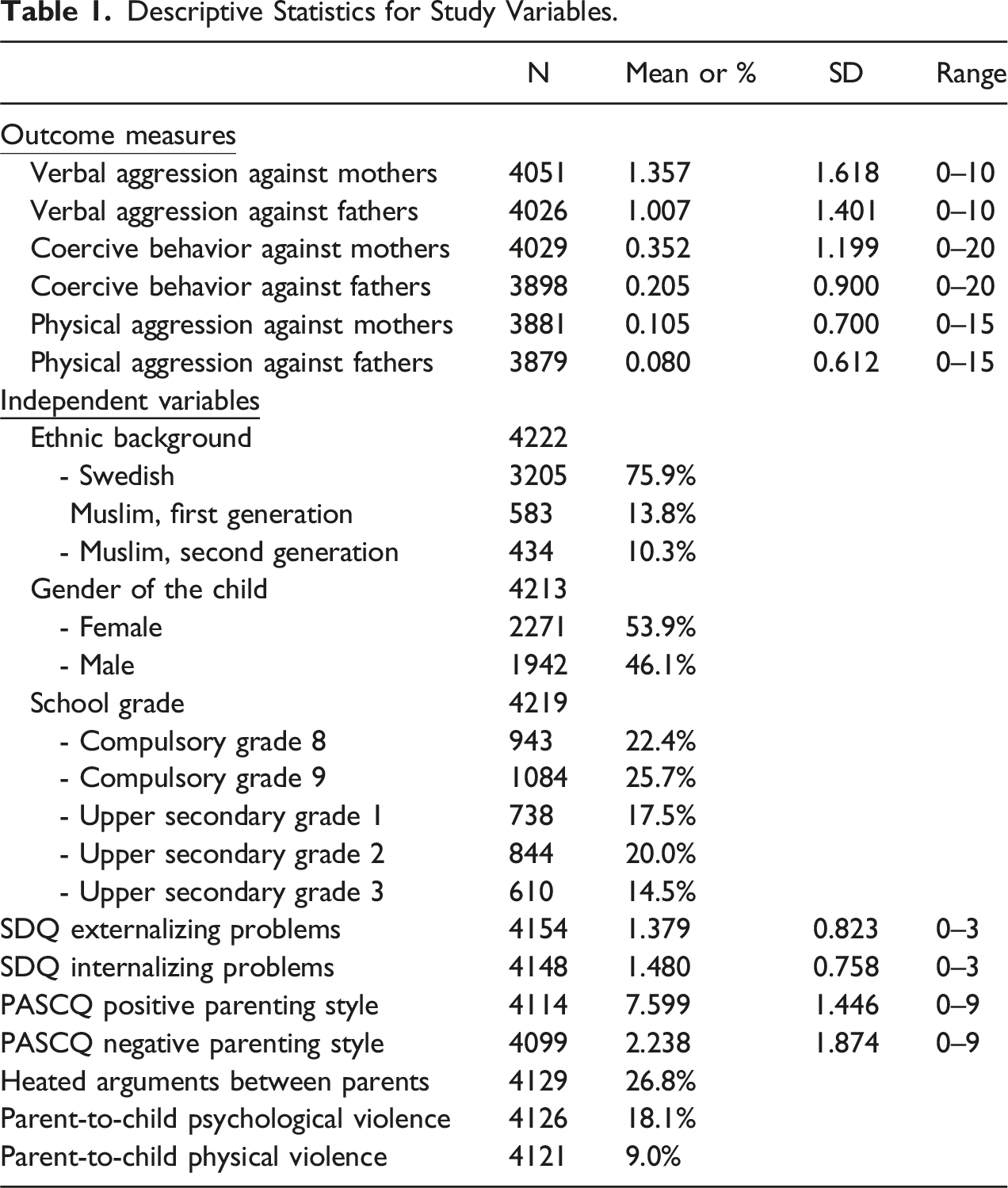
Statistical Analyses
We began by conducting bivariate analyses of differences in verbal aggression, coercive behavior, and physical aggression toward parents among adolescents from different ethnic backgrounds. Analyses were performed separately for daughters and sons, and for mothers and fathers. This analytic strategy was chosen in light of previous research suggesting that both the gender of the child and the targeted parent may influence patterns of CPV. Significance tests were conducted using Chi-square tests, with adolescents of Swedish background used as the reference group.
We also conducted bivariate analyses of differences in family-level variables between adolescents from different ethnic backgrounds. Significance was assessed using ANOVA (with Scheffe post-hoc test for group comparisons) and Chi-square tests, again using adolescents of Swedish background as the reference group.
Next, we conducted multivariate analyses. First, variance inflation factors (VIFs) were calculated for all independent variables. All VIFs ranged between 1 and 2, well below the threshold for multicollinearity. We then estimated differences in verbal aggression, coercive behavior, and physical aggression by ethnic background, using ordinal logistic regression. Since the ABC-I subscales do not measure the number of actions but rely on items with ordinal response options, this method is appropriate to estimate β coefficients, odds ratios, and p values (Harrell, 2015). Separate models were estimated for aggression toward mothers and toward fathers.
For each outcome variable, multivariate analyses were conducted in three steps. In the first model, we included dummy variables for first- and second-generation Muslim country background and child gender. To examine whether ethnic background and gender may interact in predicting CPV, interaction terms between the two variables were included in the model. In the second model, we added individual variables: indices measuring externalizing and internalizing problems. In the third model, individual-level variables were replaced with family-level variables: indices measuring positive and negative parenting styles and dummy variables capturing heated arguments between parents, parent-to-child psychological violence, and parent-to-child physical violence. School grade was included as a control variable in all models.
Finally, to assess the robustness of the findings, we repeated the multivariate analyses using generalized linear models (GLMs). The results from the GLMs were very similar to those of the ordinal logistic regression models. The GLM results are not presented in the paper but are available from the first author upon request.
All analyses were conducted using SPSS, version 28.
Results
Child-To-Parent Violence by Ethnic Background
Bivariate Analyses of Child-To-Parent Violence by Ethnic Background.
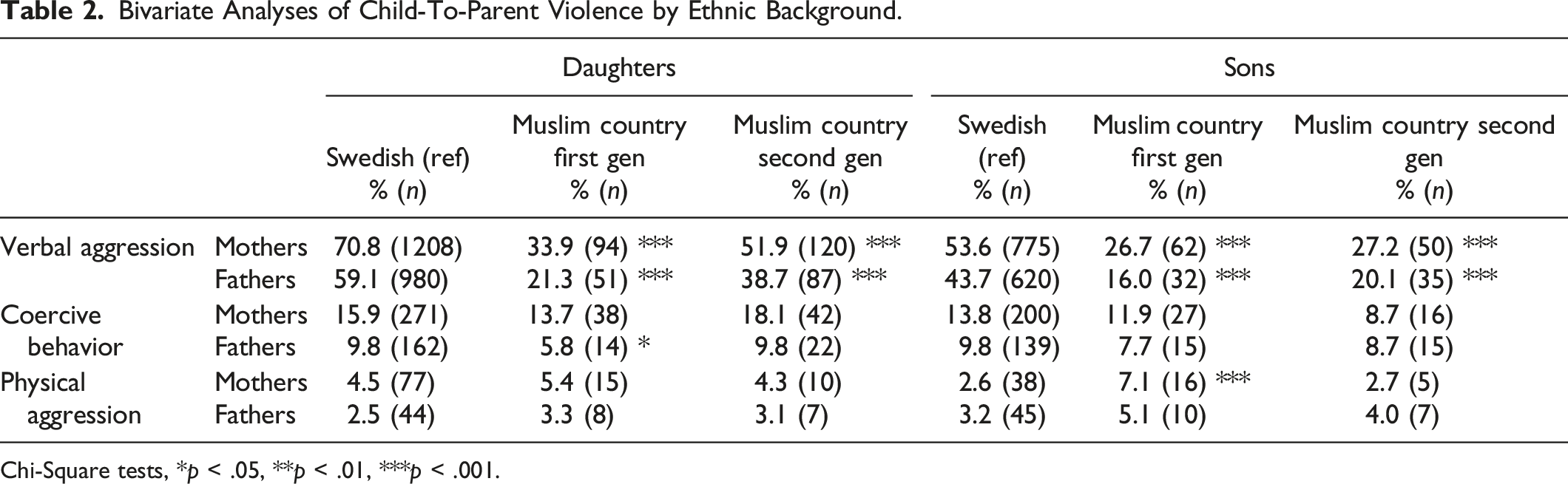
Chi-Square tests, *p < .05, **p < .01, ***p < .001.
Verbal aggression is significantly less prevalent among adolescents with a background in Muslim countries than among adolescents with an ethnic Swedish background (the reference category). This pattern is consistent across both daughters and sons, and applies to both mothers and fathers (p < .001 in all comparisons). For coercive behavior, there is only one significant difference: this type of violence against fathers is less frequent among daughters with a first-generation Muslim country background than among daughters with a Swedish background (p=.048). For physical aggression, there is also only one significant difference: this type of violence against mothers is more frequent among sons with a first-generation Muslim country background than among sons with a Swedish background (p < .001).
We also investigated gender differences between daughters and sons within the ethnic categories. Among adolescents with a Swedish background, verbal aggression (against both mothers and fathers) is significantly more frequent among daughters than among sons (p < .001). Physical aggression against mothers is also more frequent among daughters than among sons (p=.005). Among adolescents with a second-generation Muslim country background, verbal aggression (against both mothers and fathers) is more frequent among daughters than among sons (p < .001), as is coercive behavior towards mothers (p=.006). Among adolescents with a first-generation Muslim country background, however, there are no gender differences in any of the outcome variables. This suggests that there may be an interaction effect between gender and ethnic background, that is, that the impact of ethnic background on CPV may be different for daughters and sons.
Table 2 also indicates that mothers are more exposed to child-to-parent violence than fathers, irrespective of ethnic background; it is not possible to test the statistical significance of these differences as they involve separate outcome variables, but the pattern that emerges from the table is similar across almost all categories of violence.
Individual and Family-Level Variables by Ethnic Background
Bivariate Analyses of Individual and Family-Level Variables by Ethnic Background.
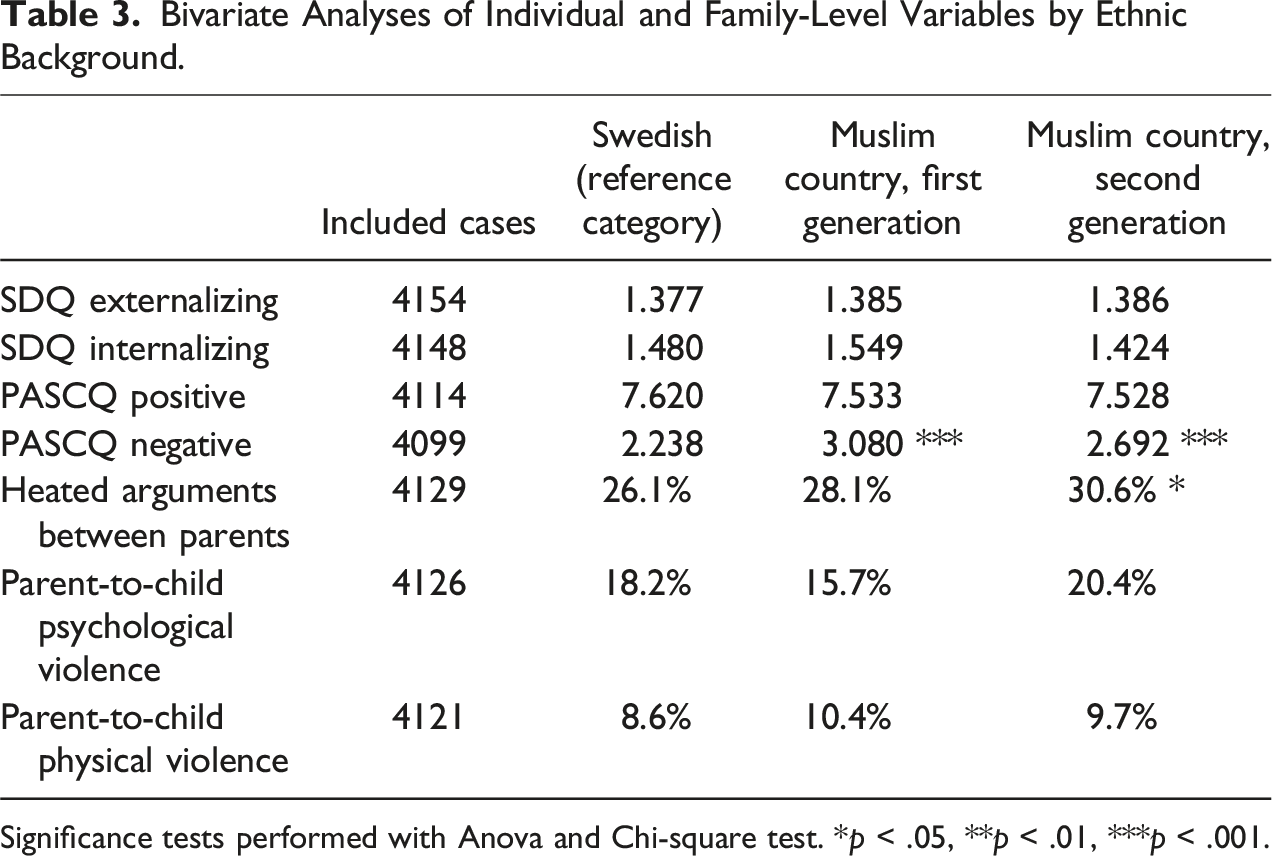
Significance tests performed with Anova and Chi-square test. *p < .05, **p < .01, ***p < .001.
Externalizing and internalizing problems do not differ between adolescents of different ethnic backgrounds. Participants reported high levels of the positive parenting style, with no differences based on ethnic background. However, adolescents with a first- and second-generation Muslim country background reported significantly higher levels of the negative parenting style compared to adolescents with a Swedish background. In terms of exposure to other types of family violence, there is only one significant difference: heated arguments between parents seem to be more frequent among adolescents with a second-generation Muslim country background than among ethnic Swedish adolescents.
Multivariate Analyses of Child-To-Parent Verbal aggression Among adolescents of Different Ethnic Background
Ordinal Logistic Regression Predicting Child-To-Mother and Child-To-Father Verbal Aggression.
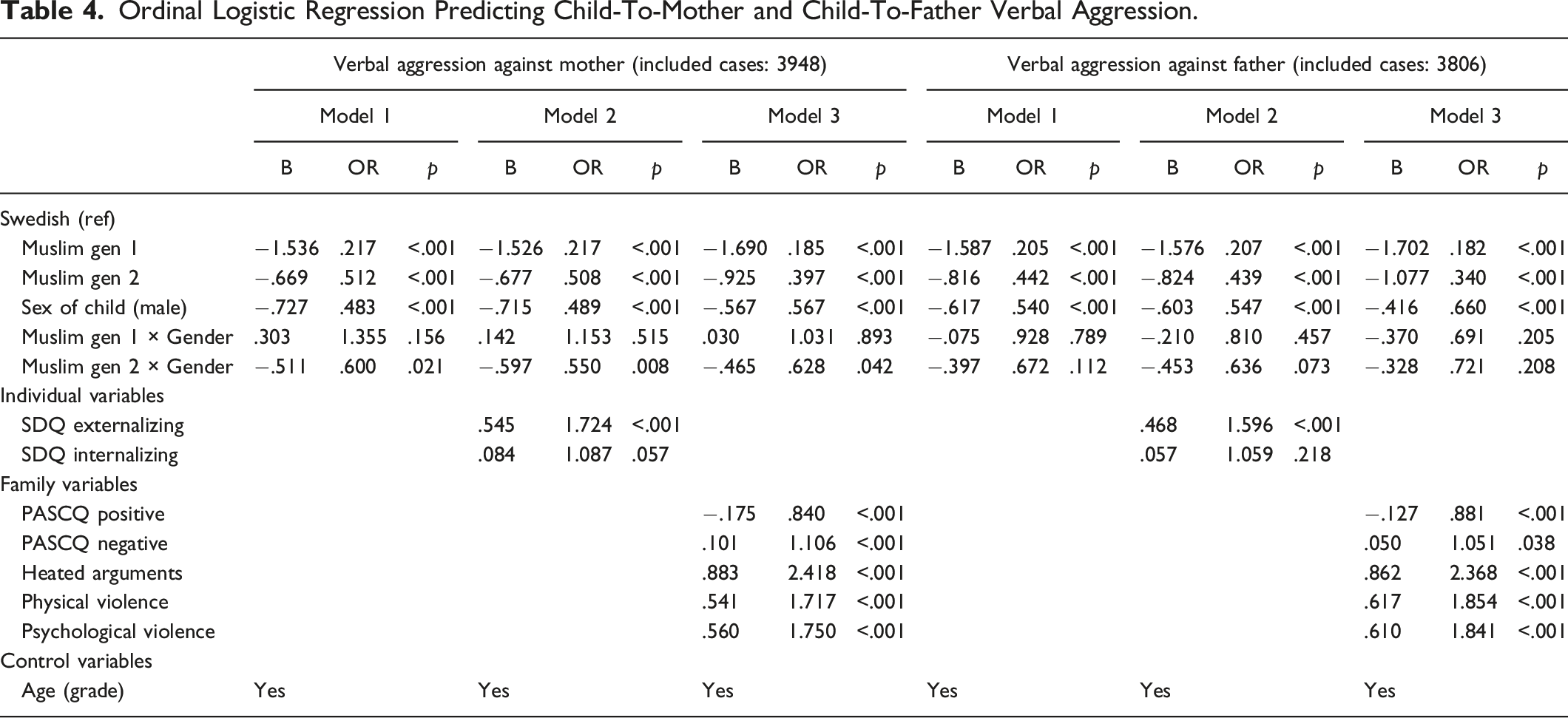
The interaction term between second-generation Muslim country background and gender is significant in the mother model. This means that a Muslim country background is more strongly associated with verbal aggression for daughters than for sons. There is a similar tendency in the father model, although not statistically significant. No such gender differences were found among adolescents with a first-generation Muslim country background, however.
Significant ethnic differences remain in the second model, when individual variables in the form of externalizing problems and internalizing problems were included: verbal aggression is still significantly less common among adolescents with a Muslim country background. The model also shows significant associations between gender and externalizing problems and the outcome variable: verbal aggression is less common among sons and is positively related to externalizing problems. The interaction term between a second-generation Muslim country background and gender also remains significant in the mother model.
The third model includes family-level variables that could potentially influence the relationship between ethnic background and verbal aggression. Ethnic differences remain significant, however, with verbal aggression being less common among adolescents with a Muslim country background. Gender and all family-level variables are also significantly associated with the outcome variable: verbal aggression against both mothers and fathers is less common among sons, less common among adolescents who report high levels of the positive parenting style, and more common among adolescents who report high levels of the negative parenting style, as well as among adolescents who report having been exposed to other types of violence or conflict in their families. In the mother model, the interaction term between second-generation Muslim country background and gender remains significant.
Multivariate Analyses of Child-To-Parent Coercive Behavior Among Adolescents of Different Ethnic Background
Ordinal Logistic Regression Predicting Child-To-Mother and Child-To-Father Coercive Behavior.
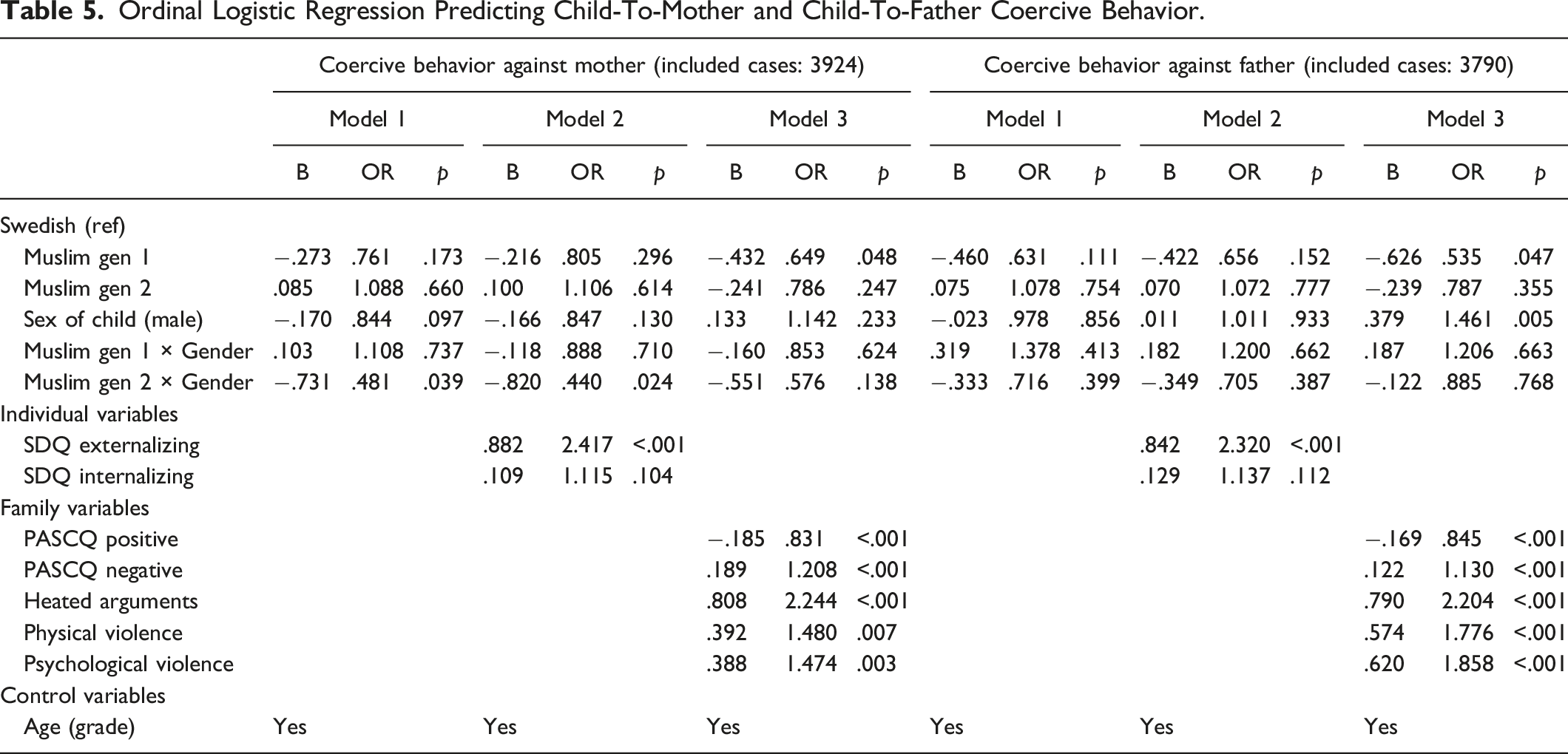
The inclusion of externalizing problems and internalizing problems in the second model has no impact on the relationships between coercive behavior, ethnicity, and gender. In line with the analyses of verbal aggression, externalizing problems are positively associated with coercive behavior against both mothers and fathers, and the interaction term between second-generation Muslim country background and gender remains significant in the mother model.
In the third model, which controls for family-level variables, coercive behavior against both mothers and fathers is significantly less common among adolescents with a first-generation Muslim country background than among ethnic Swedish adolescents. Coercive behavior against fathers is more common among sons than among daughters. The interaction term between second-generation Muslim country background and gender is no longer significant in the mother model. All family-level variables are significantly associated with the outcome variable: coercive behavior against both mothers and fathers is less common among adolescents who report high levels of the positive parenting style, more common among adolescents who report high levels of the negative parenting style, and more common among adolescents who report exposure to other types of family violence.
Multivariate Analyses of Child-To-Parent Physical aggression Among adolescents of Different Ethnic Background
Ordinal Logistic Regression Predicting Child-To-Mother and Child-To-Father Physical Aggression.
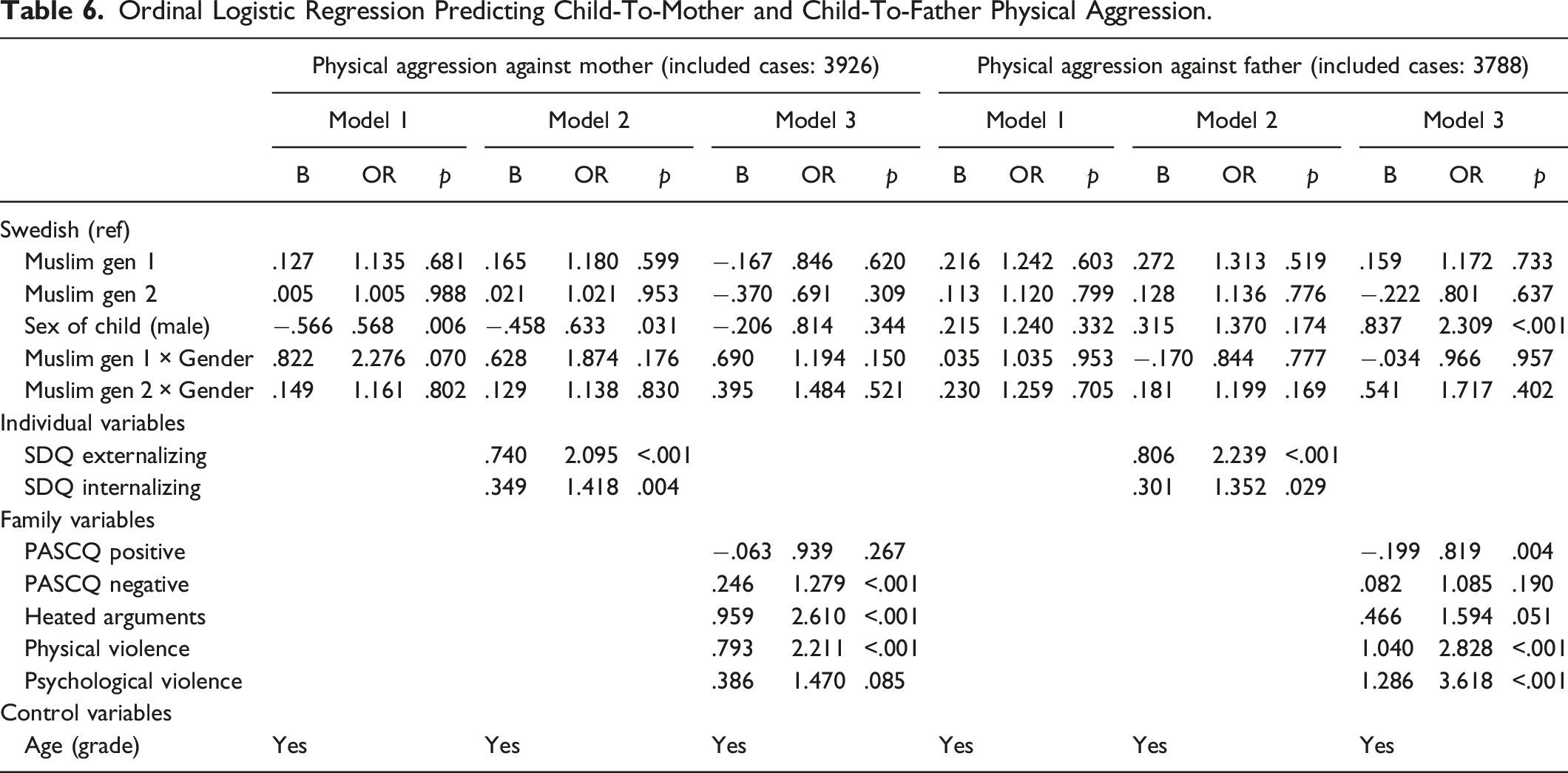
When controlling for individual variables in the second model, there are still no ethnic differences in either the mother or father model. Again, physical aggression against mothers is less common among sons than daughters, while externalizing problems and internalizing problems are both positively associated with physical aggression against both mothers and fathers.
Nor are there any significant ethnic differences when controls are introduced for family-level variables in the third model, and the lower level of physical violence found among sons in the mother model is no longer significant. However, physical aggression against fathers is significantly more common among sons than among daughters. As regards the family-level variables, the associations are similar to those found for verbal aggression and coercive behavior, although not all are significant: the positive parenting style is negatively associated with physical aggression against fathers, while the negative parenting style is positively associated with physical aggression against mothers. Physical aggression is more common among adolescents who report exposure to other types of violence or conflict in their families, but exposure to parent-to-child psychological violence is not significant in the mother model, while exposure to heated arguments between parents is only approaching significance in the father model.
Discussion
In this study, we have investigated whether there are differences in different types of child-to-parent violence between adolescents from different ethnic backgrounds. We compared adolescents with an ethnic Swedish background to adolescents with a background in Muslim countries, both first and second generation. These are ethnic groups that have not previously been studied in the context of CPV research. We have also examined gender differences and how the associations between the different types of CPV and ethnic background are affected when individual and family-level variables are included in multivariate statistical analyses.
Based on previous research on ethnic differences in CPV and on theoretical arguments, we hypothesized (1) that CPV would be less common among adolescents with a background in Muslim countries than among Swedish adolescents. More specifically, we hypothesized (2) that ethnic differences would be greater for less severe types of CPV, such as verbal aggression, than for more severe and less prevalent types such as coercive behavior and physical aggression, and (3) that ethnic differences would be greater for adolescents who were themselves born in Muslim countries than for adolescents born in Sweden to parents born in Muslim countries.
These hypotheses were partly confirmed in the study. Consistent with Hypothesis 1, we found that verbal aggression toward both mothers and fathers was significantly less common among adolescents with a background in Muslim countries than among ethnic Swedish adolescents. This is evident in both the bivariate and multivariate analyses. Consistent with Hypothesis 3, the findings also suggest that the differences in verbal aggression are greater among first-generation than among second-generation adolescents with a background in Muslim countries. That verbal aggression toward parents is less common among ethnic minority adolescents is also in line with previous research from Canada and Germany (Beckmann et al., 2021; Lyons et al., 2015), although this research did not distinguish between immigrant generations.
Coercive behavior includes behaviors such as emotional extortion, intimidation, property damage, and theft, which are behaviors that are less common and arguably more severe than verbal aggression. The role of ethnicity in this type of CPV has not previously been investigated. The bivariate analyses suggest no statistically significant ethnic differences in coercive behavior, but when controlling for family-level variables, this type of CPV also appears to be less common among adolescents with a first-generation Muslim country background. The differences are much smaller than for verbal aggression, however, and we found no significant differences for adolescents with a second-generation Muslim country background. These findings are consistent with Hypothesis 2, that ethnic differences would be greater for less severe behaviors, and Hypothesis 3, that ethnic differences would be greater for adolescents with a first-generation Muslim country background than for adolescents with a second-generation background.
Physical violence is the behavior that has been the focus of most previous research on the role of ethnicity and race in CPV. Community studies from the USA have suggested that physical violence against parents is more common in White families than in African American or Hispanic families (Agnew & Huguley, 1989; Cazenave & Straus, 1979; Elliot et al., 2011; Paulson et al., 1990), while studies from Canada, Germany, and the UK have found no differences between the ethnic majority and various ethnic minority groups (Beckmann et al., 2021; Lyons et al., 2015; McCloud, 2017). Our bivariate analyses also suggest no ethnic differences, with the exception that physical violence against mothers is more common among adolescents with a first-generation Muslim country background. However, this difference is not significant in any of the multivariate analyses.
Interestingly, our findings suggest that the relationship between gender and CPV may differ by ethnic background, indicating a potential interaction effect. While verbal aggression was more prevalent among girls than boys in both the Swedish group and among second-generation adolescents with a Muslim country background, no such gender difference was found among first-generation adolescents. This pattern suggests that the protective effect of a first-generation Muslim background applies more uniformly across genders, whereas in the second generation, it appears to be more pronounced among boys than among girls. For coercive behavior toward mothers, girls with a second-generation Muslim background also reported significantly higher levels than boys in the same group. This form of aggression—including behaviors such as intimidation, emotional manipulation, and property damage—may reflect gendered ways of expressing control or responding to conflict within the family context. These results underscore the importance of considering both the child’s and the parent’s gender in analyses of CPV and suggest that gender differences may be influenced by broader cultural norms around gender, communication, and authority.
As mentioned in the introduction, there has been a large amount of research on gender differences in CPV. While clinical and justice system studies have often found that sons are overrepresented among the perpetrators of physical violence (Condry & Miles, 2014; Ibabe et al., 2014), studies of the general population have rarely found significant gender differences in this form of CPV (Agnew & Huguley, 1989; Calvete et al., 2015; Ibabe & Bentler, 2016). However, general population studies also indicate that verbal aggression and other forms of psychological violence tend to be more common among daughters than sons (Beckmann et al., 2021; Calvete et al., 2015; Ibabe & Bentler, 2016; Margolin & Baucom, 2014). Our findings support these findings but also suggest that such gender differences may be partly influenced by differences in values and norms across different ethnic groups. Although our study did not assess adolescents’ motives or distinguish between mothers’ and fathers’ use of violence, the observed gender differences are in line with theoretical perspectives that emphasize the role of gendered expectations and family dynamics (Contreras et al., 2020).
Notably, the findings also indicate that mothers are more exposed to CPV than fathers, regardless of ethnic background. This is in accordance with the vast majority of previous studies that have found higher levels of victimization among mothers, particularly for less severe forms of CPV (Agnew & Huguley, 1989; Gámez Guadix & Calvete, 2012; Pagani et al., 2004, 2009; Simmons et al., 2018). Mothers often assume greater responsibility for children and family life and often have closer relationships with their children than fathers. However, this also means that they are often more demanding and assert greater behavioral control over their children (Richert et al., 2018; Yaffe, 2023). This may be a partial explanation for the greater CPV victimization of mothers. Some studies also indicate that gendered patterns of victimization may reflect reciprocal dynamics, where daughters primarily target mothers and sons primarily target fathers (Cano-Lozano et al., 2024). Such patterns merit further investigation in future research.
Previous research has argued that ethnic differences in CPV may be due to differences in values, parenting norms, and practices (Beckmann, 2020b; Cazenave & Straus, 1979; Charles, 1986; Paulson et al., 1990). In this study, we therefore hypothesized (4) that ethnic differences would remain when controlling for individual factors but would decrease when controlling for family-related factors. To test this hypothesis, we controlled for several individual and family-level variables known to be associated with CPV.
Regarding the individual-level variables, externalizing and internalizing problems, we found no differences between adolescents of different ethnic backgrounds. When we included these variables in multivariate analyses of CPV, they also had no impact on the relationship between ethnic background and CPV. This was expected—to our knowledge, there is no previous research suggesting that ethnic differences in CPV might be explained by differences in individual characteristics between ethnic groups.
With regard to family-level variables, statistically significant ethnic differences were found for some of the variables—in particular, adolescents with a Muslim country background reported significantly higher levels of the negative parenting style. However, when the family-level variables were included in multivariate analyses of CPV, no clear pattern emerged. For verbal aggression, ethnic differences remained unchanged. For physical aggression, there were no ethnic differences in any of the models. However, in the case of coercive behavior, controlling for family-level variables led to the emergence of ethnic differences that had not previously been visible—coercive behavior was less common among adolescents with a first-generation Muslim background than among ethnic Swedish adolescents. Thus, Hypothesis 4, on the importance of family-level variables, was not supported. It is possible that family-level indicators such as parenting style and family conflict only partially capture the broader normative environment that influences CPV. Sociocultural norms about intergenerational respect and family obligation—often more strongly emphasized in collectivistic cultures—may play a mediating role but were not measured in this study.
In this study, we controlled for a number of family-level variables that focus on differences in parenting practices, but we were not able to control for factors at a more sociocultural level, for example, cultural norms about the importance of respect for parents and other older family members. This constitutes a limitation of the study. It is possible that the family-level indicators used here—such as parenting style and exposure to family conflict—only partially capture the broader normative environment that may influence CPV. Such sociocultural norms, often more strongly emphasized in collectivistic cultures, may act as protective factors against certain forms of child-to-parent aggression. It is conceivable that these norms are stronger in families with an ethnic minority background than in the ethnic majority population (Cicale, 2018; Dixon et al., 2008).
Another limitation is that the ethnic groups included vary considerably in size. Although the number of adolescents involved is large, 4,222, the number of adolescents with a Muslim country background is relatively small. This means that some sub-analyses may be underpowered.
In conclusion, there are ethnic differences in child-to-parent violence between adolescents of ethnic Swedish background and adolescents with a background in Muslim countries. The differences are most evident for verbal aggression, which is less common among adolescents with both a first- and second-generation Muslim country background than among ethnic Swedish adolescents. Differences are smaller and more difficult to interpret for coercive behavior and we found no ethnic differences in physical aggression. As conceptualized in this study, verbal aggression is a much more prevalent and less severe type of behavior than both coercive behavior and physical aggression. It is conceivable that ethnic differences in norms and values about parent–child relationships may have a greater impact on less severe behaviors, while individual risk factors and deficiencies in family cohesion and parenting practices may have a greater impact on behaviors that are more maladaptive and represent a greater norm violation. The findings also illustrate the importance of analyzing CPV through an intersectional lens, taking into account how gender and ethnicity may interact to shape adolescents’ behavior toward their parents. More research is needed to better understand the impact of ethnicity on child–parent violence and what implications, if any, this may have for preventive interventions and practices.
Footnotes
Author Contributions
Conceptualization: Björn Johnson, Lisa Andersson, Robert Svensson. Data curation: Lisa Andersson, Björn Johnson, Robert Svensson. Formal analysis: Björn Johnson. Funding acquisition: Björn Johnson, Lisa Andersson, Robert Svensson. Methodology: Björn Johnson, Robert Svensson. Project administration: Lisa Andersson, Björn Johnson. Writing—original draft: Björn Johnson. Writing—review & editing: Björn Johnson, Lisa Andersson, Robert Svensson
Declaration of Conflicting Interests
The authors have no competing interests to declare that are relevant to the content of this paper.
Funding
The author(s) disclosed receipt of the following financial support for the research, authorship, and/or publication of this article: This research was supported by the Swedish Research Council for Health, Working Life and Welfare (Forte), grant no. 2020:213.
Ethical Statement
Consent to Participate
Consent was obtained through a question when the participants started the online survey. In accordance with Swedish research practice and the Swedish Ethical Review Act (SFS 2003:460), parents of students under the age of 15 were informed one week before the data collection and given the opportunity to refuse participation on behalf of their children.

Data Availability Statement
The data that support the findings of this study are available from the corresponding author upon reasonable request.
Appendix
Comparison between ethnic background categories. Significance tests performed with Anova and Chi-square test. *p < .05, **p < .01, ***p < .001.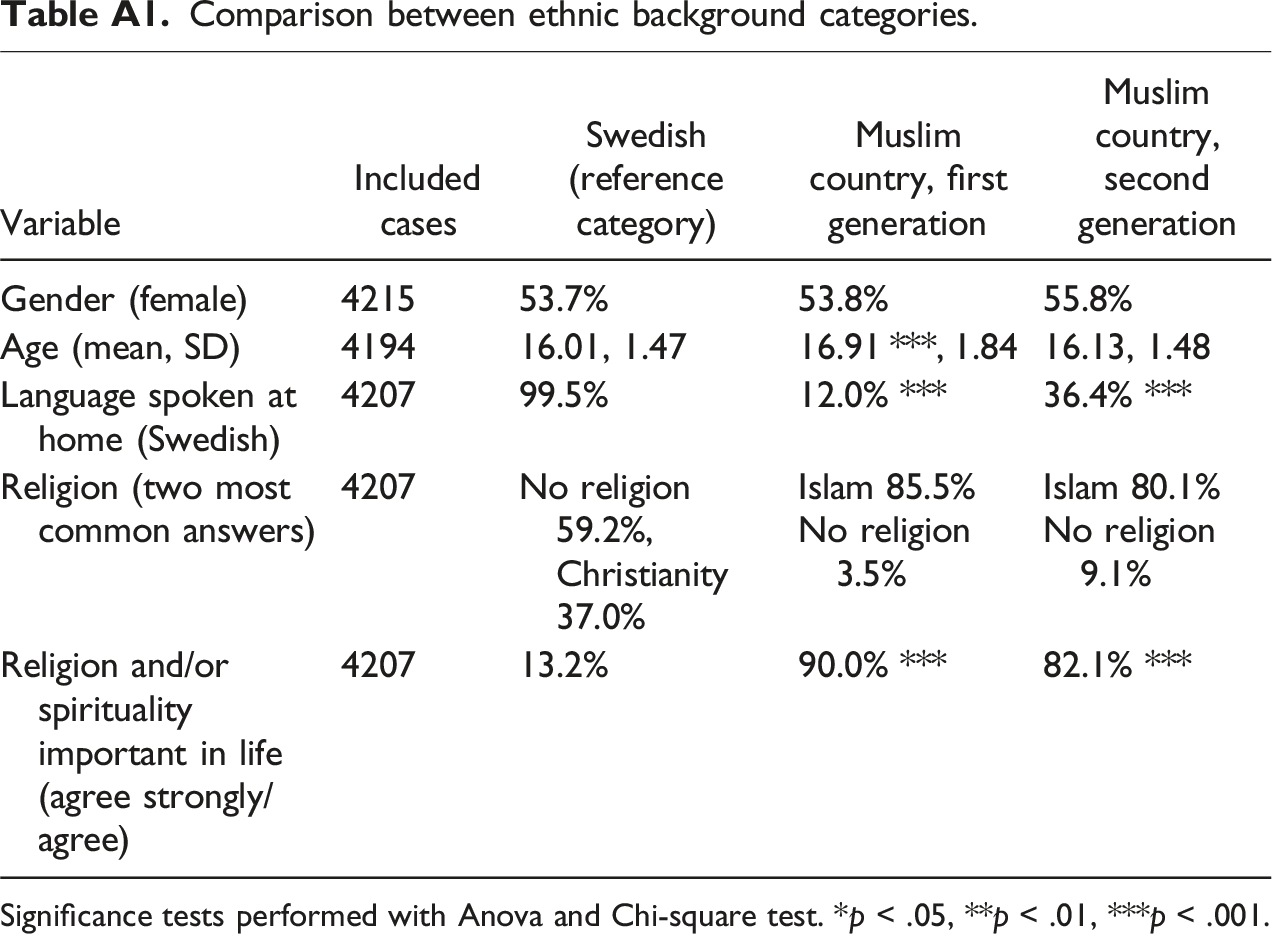
Variable
Included cases
Swedish (reference category)
Muslim country, first generation
Muslim country, second generation
Gender (female)
4215
53.7%
53.8%
55.8%
Age (mean, SD)
4194
16.01, 1.47
16.91 ***, 1.84
16.13, 1.48
Language spoken at home (Swedish)
4207
99.5%
12.0% ***
36.4% ***
Religion (two most common answers)
4207
No religion 59.2%, Christianity 37.0%
Islam 85.5%
No religion 3.5%Islam 80.1%
No religion 9.1%
Religion and/or spirituality important in life (agree strongly/agree)
4207
13.2%
90.0% ***
82.1% ***