



Abstract
The new normal of working from home (WFH) brought by the COVID-19 pandemic enabled parents to manage increased childcare demands while working remotely. Using multi-country data from the Familydemic Harmonized Dataset (n = 9364), this study examines how WFH was related to perceived changes in work–life balance (WLB) among mothers and fathers, considering the moderating role of childcare- and work-related demands. Overall, WFH was positively associated with improved WLB, regardless of partnership status. However, this relationship weakened for mothers whose children were out of formal childcare for over a month and when they increased their working hours. Furthermore, we found that fathers who extended their working hours while WFH were more likely to report worsened WLB than those working in the office. These findings, though based on mid-2021 data, remain relevant post-pandemic as parents continue to navigate the challenges of WFH, childcare, and demanding work schedules.
Introduction
During the COVID-19 pandemic, there was a rapid increase in the prevalence of working from home (OECD, 2021). The number of those who worked from home at least occasionally in Europe increased from 15% before the outbreak of the pandemic to 25% in 2021, and in many EU Member States, the incidence of working from home reached 40% of the entire workforce (Eurostat, 2023). Although fewer people are working from home nowadays than during the peak of the pandemic, this mode of work is still favored by many employees and is forecasted to become an integral part of the work world (Parker et al., 2022; Saad & Wigert, 2021). The pandemic has also transformed the domestic division of labor and other family-related spheres of life. One of the triggers of these shifts was the school and childcare closures followed by widespread moves toward remote learning, even for the youngest children (e.g., Adisa et al., 2022).
Better access to work from home (hereafter WFH) offered parents the possibility to accommodate increasing childcare needs, but at the same time, it led to an unprecedented scale of workers performing paid and care work, including homeschooling, simultaneously. This resulted in an immense increase in work fragmentation, multitasking, and mental load (e.g., Hjalmsdottir & Bjarnadottir, 2021; Raile et al., 2021). Limited possibilities of outsourcing not only childcare but also housework (due to confinement measures) created an additional burden on families. Both mothers and fathers increased their time with children during the pandemic (Augustine & Prickett, 2022; Carlson & Petts, 2022; Derndorfer et al., 2021; Edwards et al., 2024; Farre et al., 2021). However, mothers were the ones to bear most of the increased childcare burden (see e.g., Meraviglia & Dudka, 2021; Manzo & Minello, 2020; Fodor et al., 2021; Zoch et al., 2021).
The overall effects of WFH on work–life balance during the pandemic are, however, not clear as the circumstances of performing WFH across families and countries differ substantially. Earlier evidence suggests that parents who worked from home during the pandemic experienced higher satisfaction with work–life balance than those working in the office (Kurowska et al., 2025). Furthermore, some studies report a decrease in work–life conflict over the first few months of the pandemic, though this pattern was not evident for those with children under age 13 (Schieman et al., 2021). Yet other studies suggest that the pandemic circumstances, which required working from home without the possibility of childcare and social connection, made it more difficult to balance work and family (Adisa et al., 2022; Martucci, 2021). In particular, mothers faced greater stress in achieving work–life balance when they were the ones who took on more of the work at home and had less time for their paid jobs (Hjalmsdottir & Bjarnadottir, 2021; Kuhn et al., 2021; Petts et al., 2021). It may also be that the pluses and minuses canceled out to leave no overall effect of working from home on work–life balance (Mathieu et al., 2023).
In this study, using unique survey data from the Familydemic Harmonized Database conducted in six countries from across the Atlantic (US, Canada, Sweden, Germany, Italy, and Poland), we explore the role of working from home for the perception of change in work–life balance among 9,364 working parents of children under age 12. We focus on the moderating role of the presence of children at home due to COVID-19-related confinement policies, change in the number of parents’ working hours and partner presence in the household, with particular attention to gender.
This study contributes to research on work–life balance during the pandemic in several ways. First, we consider changes in perceptions of work–life balance. This is important because work–life balance has been linked to increased job satisfaction, family satisfaction, and life satisfaction while reducing turnover intentions, family conflicts, and emotional exhaustion (Haar & Brougham, 2022; Sirgy & Lee, 2018). Second, this study examines how changes in the use of WFH are associated with perceived improved or worsened work–life balance. We focus not only on those who began working from home during the pandemic but also differentiate between individuals who consistently worked from home and those who never did, providing a broader perspective on different WFH categories. Third, this study considers how the changing context in which individuals performed WFH, might shape the relationship between WFH and perceived changes to work–life balance. Due to pandemic circumstances, children were at home for varying amounts of time, and parents also experienced increases and decreases in their work hours - conditions that could make WFH more or less suited to achieving work–life balance. In our study, for the first time, we directly measure the role of children’s time spent at home due to childcare and school closures during the pandemic, as well as changes in the number of parents’ working hours. Furthermore, the current study uses data from parents in six countries from Europe and North America, and so allows for greater variation in experiences such as work from home and children at home that were shaped by pandemic policies. Finally, our study contributes to a better understanding of factors that limit the positive effect of working from home on work–life balance, which corresponds with recent findings on boundary management and work–life balance while working from home.
The Work–Life Balance Concept
In this study, we refer to the “work–life balance” concept. It is important to first distinguish the concept of “work–life balance” from the concepts of “work–family balance” and “work–family conflict.” Work–family conflict is usually defined as “a form of interrole conflict in which the role pressures from the work and family domains are mutually incompatible in some respect” (Greenhaus & Beutell, 1985, p. 77). Here pressures from work spill over into family life and create conflict, and/or pressures from family spill over into work life and create conflict. While pressures can come from either domain, it is more common for individuals to report negative impacts of work on family than vice versa (Hoser, 2012).
In contrast, work–family balance is a broader concept and has two components: the lack of work–family conflict and the presence of work–family facilitation, that is “the extent to which participation at work (or home) is made easier by virtue of the experiences, skills, and opportunities gained or developed at home (or work)” (Frone, 2003, p. 145). Therefore, work–family balance incorporates the idea that each domain has the potential to improve the other and therefore enable a greater sense of harmony (McMillan et al., 2011). Work–family balance has already been studied qualitatively in the context of working from home by parents with childcare responsibilities during the initial COVID-19 lockdown (see e.g., Martucci, 2021).
However, the term “work–family balance” narrows down the realm of one’s life to paid work and family, ignoring one’s engagement in non-work and non-family spheres, such as individual hobbies or leisure activities, which are paramount for fostering individual well-being (Kekalainenm et al., 2020; Mansfield et al., 2020). This term is also explicitly gendered as the family domain is associated with wives and mothers (Pocock, 2005). In contrast, the work–life balance concept allows for the inclusion of multiple spheres of one’s life. While “life” is broader than “family” it still encompasses dimensions of childcare and housework that take up a considerable part of this equation, especially for women (Pocock, 2005; Toffoletti & Starr, 2016). Finally, work–life balance measures show greater validity than work–family balance measures (Keeney et al., 2013) and are more commonly used in quantitative studies.
Yet, the emphasized distinction between “work” and “life” in the work–life balance concept has been subject to criticism (Kurowska, 2020; Pettinger et al., 2005; Pichler, 2009). First, “work” may be considered an integral part of one’s life. Second, “work” is often equated solely with paid employment, while “life” encompasses all tasks and activities beyond paid work, that is, also unpaid - but nevertheless - work activities. To respond to both criticisms, some researchers have attempted to conceptualize and measure work in a manner that includes not only paid work but also unpaid work while identifying non-work as a distinct sphere (Kurowska, 2020; Ransome, 2007). However, such an approach risks contradicting the common understanding of what “work” signifies for individuals. This may be crucial if one aims to rely on individual assessments of change in work–life balance among the studied population(s).
Taking all these considerations into account, in our study, we have chosen to utilize the work–life balance concept, despite the acknowledged criticism, as it encompasses a broader scope of one’s life, rather than solely focusing on the work–family nexus. Given the academic ambiguity in conceptualizations and measurement of work–life balance (Kurowska, 2020; Pettinger et al., 2005), we decided to rely on respondents’ own understanding of what work–life balance means in their lives. The term “work–life balance” is the most commonly used expression referring to the organization of paid work and other aspects of one’s life (Gregory & Milner, 2009). In this study, our particular focus lies in examining perceived changes to work–life balance among parents during the COVID-19 pandemic. The specific details of the applied measurement approach are described in the data and methods section.
Theoretical Framework
Since paid work and family/private domains have generally been seen as separate spheres in modern times, we consider the relevance of boundary management in distinguishing between (paid) work and family/other roles. Ashforth et al. (2000) refer to work and home as “bounded in both space and time” since they are generally confined to specific physical locations (e.g., workplace versus household) and specific days and times (e.g., Monday to Friday from 9 am to 5 pm). Yet, the role boundaries between paid work and family/private life may experience different levels of flexibility and permeability. Flexible boundaries allow individuals to engage in roles in various times and spaces. Permeable boundaries suggest that individuals can be in the time and place for one role but engage in another role. Working from home challenges the strict boundaries between work and family, and it certainly allows for flexibility and permeability of work and family/other roles. Individuals who work from home are able to transition between roles more quickly (Ashforth et al., 2000).
It is also important to note that work–life balance is not a static concept. In particular, parents may transition in and out of work–family conflict or across different levels of work–family conflict (Cooklin et al., 2016). For example, parents’ work–life balance tends to be higher when their children are older (Craig & Sawrikar, 2009). In the context of the COVID-19 pandemic, there is potential for both increases and decreases in work–life balance. Vaziri et al. (2020) focus on changes in the work–family interface and find that those who had a beneficial profile (low work–family conflict and high work–family enrichment) before the pandemic were relatively stable in their experience of a high work–family balance while those who had passive profiles (low work–family conflict and low work–family enrichment) before the pandemic often experienced increases in both work–family conflict and balance. In addition, while many people without children were able to experience a better work–family balance over time through the pandemic, those with preteen children were less likely to experience improvements (Schieman et al., 2021). Mencarini et al. (2023) provide some evidence that the presence of young children was the cause of mothers’ difficulty in maintaining work–family balance during the pandemic.
The Impact of Work from Home on Work–Life Balance
Numerous previous studies have shown that WFH may lead to higher work–life balance, particularly among parents (Crosbie & Moore, 2004; Felstead et al., 2002; Laß & Wooden, 2022). The mechanism behind this relationship is straightforward - WFH creates opportunities for combining paid work and family, as it helps to relax time constraints and reduce commuting times and allows more time to be devoted to family life (Chung & Van der Lippe, 2020) and to be more present in children’s lives (Callister & Singley, 2004). WFH may also allow working parents to better organize paid work around childcare and housework which would not be possible when working from the office. That is to say, WFH allows parents to perform paid work in parallel to some household tasks (e.g., laundry or cooking) after initiating them (Bailey & Kurland, 2002; Hill et al., 2003), when children are asleep (Chung & Van der Lippe, 2020; Powell & Craig, 2015) or are old enough to manage on their own without supervision (Callister & Singley, 2004). Qualitative studies suggest that women who WFH purposely choose this work arrangement to accommodate paid work and family demands (Hilbrecht et al., 2008; Sullivan & Lewis, 2001). For example, Laß and Wooden (2022) show that mothers benefit more from home working than fathers. WFH is also considered to be one of the most preferred flexible working arrangements, especially for women (Mas & Pallais, 2017).
The question still remains whether WFH has improved work–life balance during the COVID-19 pandemic. As before, there were potential advantages and disadvantages to working from home during the pandemic. To improve work–life balance, workers engaged in several physical, cognitive, and relational strategies, such as making their workspace more comfortable or taking coffee and lunch breaks with their families, to make the most of working from home (Caringal-Go et al., 2022). In particular, working from home provided great flexibility for managing both work and home (Uddin, 2021). For parents, lockdown often encouraged more time with family and thus a feeling of greater closeness (Adisa et al., 2022) as family became seen as a place of shelter (Kushtanina & Vinel, 2021). While parenting during pandemic times was stressful, WFH provided some relief for mothers in reducing the impact of work–family conflict on their parenting style (Bernhardt et al., 2022). All these considerations lead us to the formulation of our first overall hypothesis:
Working from home was positively related to a perceived change in work–life balance among parents during the pandemic
However, challenging the strict boundaries between work and family, working from home may also come with some costs and lead to negative effects on WLB (Felstead & Henseke, 2017; Kurowska, 2020). Studies have shown that WFH may exacerbate work–family conflict by blurring boundaries between paid work and family life, interrupting roles, creating scarcities of space, and experiencing higher levels of stress (Glavin & Schieman, 2012; Risi et al., 2021). When there is no clear setting of the beginning and the end of the working day and no physical boundaries between the workplace and the home this may result in a negative spillover from one sphere to the other (Glavin & Schieman, 2012; Lott, 2020). Furthermore, studies show that WFH can lead to more multitasking and time fragmentation, particularly among women (Hill et al., 2003; Powell & Craig, 2015), and (as a result) higher mental load (Gadeyne et al., 2018). In our study, we explore particular circumstances in which the negative effects of WFH on WLB are likely to appear, and the overall positive relation between WFH and WLB is likely to be weakened or even reversed.
Moderators of the Impact of Working from Home on Work–Life Balance
We consider three moderators of the positive impact of WFH on WLB, namely, the amount of time that dependent children were at home, changes in work hours, and partner status.
WFH often limits mothers’ ability to focus on paid work while reinforcing their domestic roles (Çoban, 2022). Even in gender egalitarian societies, mothers during the COVID-19 pandemic faced high levels of stress as they juggled work with childcare and home-schooling (Hjalmsdottir & Bjarnadottir, 2021). In some instances, working from home contributed to role congestion (Adisa et al., 2022). For example, mothers in academia noticed higher work expectations after transitioning to remote work, making it more difficult to achieve harmony in work–life balance (Burk et al., 2021).
Working from home while dependent children are continuously present on a daily basis is likely to temper any positive effects of working from home. This may lead to permanent blurring of boundaries, multitasking and negative spillovers from family-to-work and vice-versa as one has to simultaneously combine paid work with parental involvement in children’s education and basic supervision. During the COVID-19 pandemic, in most of the study countries, many children stayed at home due to childcare closures, school classes being moved online, and frequent quarantines (Kurowska, 2023). This created increased demands on parents (Qian & Fuller, 2020), particularly working ones (Petts et al., 2021). As noted above, both mothers and fathers substantially increased their time with children during the pandemic (Augustine & Prickett, 2022). While several studies show a slightly more equal gendered division of labor during the pandemic (Carlson & Petts, 2022; Chung et al., 2021; Craig & Churchill, 2021), other studies find no change or an increasing gap between men and women. For example, Adisa et al. (2022) find that British women’s domestic load increased during the pandemic and working from home often shifted even more responsibility onto them relative to their husbands. All these considerations lead us to the formulation of our second hypothesis:
Having a child at home for a long time due to the COVID-19 pandemic weakened the positive relationship between working from home and perceived change in work–life balance, particularly among mothers
Nevertheless, not only the time spent by children at home during the pandemic but also time spent by parents on work could significantly limit the positive effects of WFH on WLB. Felstead and Henseke (2017) show that those who WFH work longer hours and have a higher work-to-family spillover than those who work from the office. Furthermore, others have shown that while working from home, longer working hours negatively affect parents’ capabilities to balance work with non-work (Kurowska, 2020).
Initially, there was great concern over the decline in mothers’ work hours at the start of the pandemic (Carlson et al., 2021; Collins et al., 2021). However, those who worked from home during the pandemic were actually more likely to report an increase in work hours (Kaufman & Taniguchi, 2021). These findings were consistent with pre-pandemic results, which showed that indeed WFH can lead to longer working hours (Chung & Van der Lippe, 2020; Glavin & Schieman, 2012). For example, teachers often found they needed to work more in order to adjust to working from home, and this combination was particularly detrimental to work–family balance and quality of life (Lizana & Vega-Fernadez, 2021).
Regardless of whether the increase in working hours is an effect of working from home in some situations or just coincides with working from home, it is reasonable to expect that an increase in working hours while working from home diminishes the positive relation between WFH and WLB. Therefore, we formulate our third hypothesis as follows:
An increase in working hours while working from home weakened the positive relationship between working from home and perceived change in work–life balance
Finally, working from home may have a very different effect on WLB depending on the partnership and cohabitation status of the parent. Single parents often struggle to balance work and family as they deal with additional financial and role strains (Reimann et al., 2019; Van Gasse & Mortelmans, 2020). For example, single mothers often increase their time in paid work while maintaining high involvement with their children. They also find it difficult to manage boundaries between work and family, which leaves them with a “feeling of always being ‘on call’” (Bakker & Karsten, 2013, p. 181). Nevertheless, some single parents purposely adjust their work lives to better fit the needs of their parental responsibilities (Kaufman, 2013). In addition, single parents need to organize their separate households and manage child-related responsibilities with previous partners, which can lead to additional role strains (Emery, 2011). In contrast to parents living with a partner, parents living alone with their kids have fewer opportunities to separate paid work from family life, as there is no other parent to take care of the kids while they are working. The added stresses of the pandemic made it particularly difficult for single mothers to balance their work and family, and this was exacerbated for single mothers who lived without any other adults (Hertz et al., 2021). Based on this, we formulate our final hypothesis:
The positive relationship between WFH and perceived change in WLB was weaker among parents living alone with kids compared to parents living with a partner
Importantly, the experience of change to WLB for those who WFH can be different for single mothers and fathers due to different expectations regarding their social roles, with higher expectations for family-related responsibilities for mothers and work-related responsibilities for fathers (Bakker & Karsten, 2013; van der Heijden et al., 2016). Indeed, previous research indicates that single mothers experience more work-to-family conflict than partnered mothers, whereas single fathers experience more family-to-work conflict than partnered fathers (van den Eynde et al., 2019). Therefore, in our study, we also explore the gender differences in the relationship between WFH and perceived change in WLB among parents living alone with their children.
Data and Methods
We use data from a unique, cross-country comparative dataset, the Familydemic Harmonized Dataset (hereafter FHD). This was an online survey conducted between June and September 2021, on representative samples of mothers and fathers living with at least one child aged less than 12 in six countries: Canada, Italy, Germany, Poland, Sweden, and the US (Kurowska, 2023). The Familydemic Survey collected comprehensive—current as well as retrospective—information on the lives of respondents and their families over the time period starting just before the outbreak of COVID-19 (February 2020) until the time of the interview (June–September 2021).
Full Sample Basic Characteristics by Country (Unweighted Data From the Familydemic Harmonized Dataset).
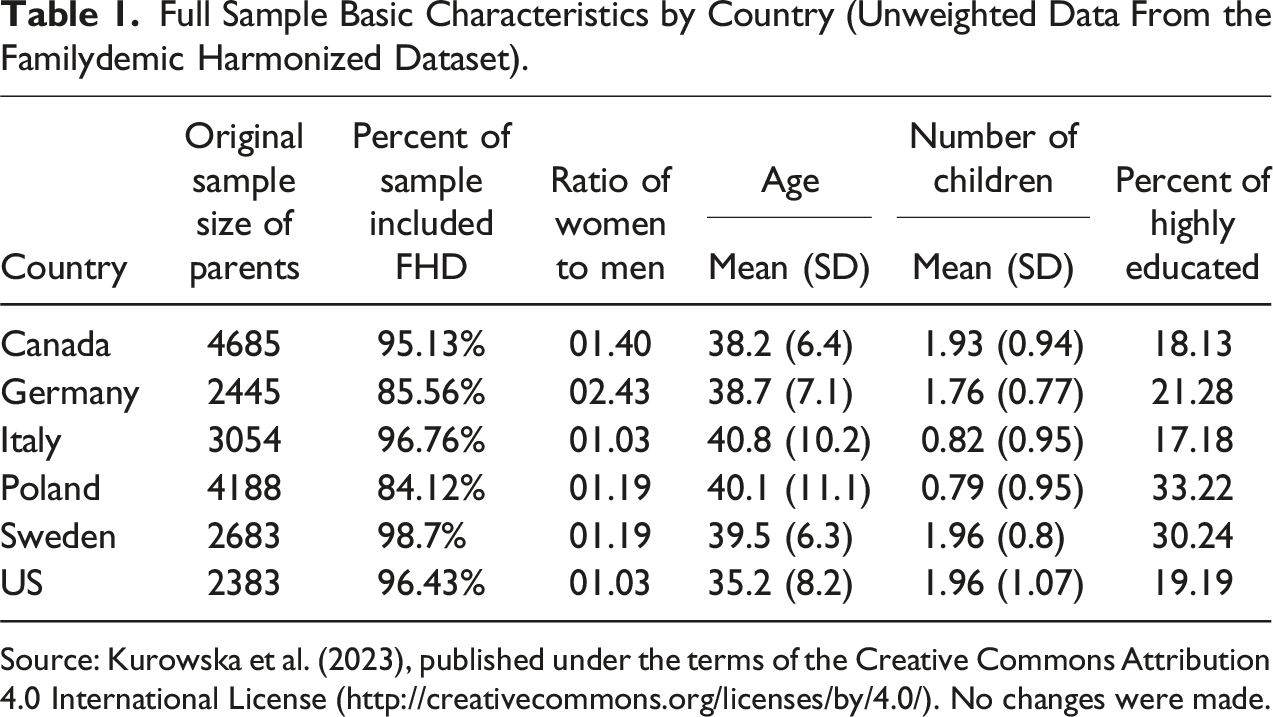
Source: Kurowska et al. (2023), published under the terms of the Creative Commons Attribution 4.0 International License (http://creativecommons.org/licenses/by/4.0/). No changes were made.
Among others, FHD provides detailed information on the socio–economic characteristics of respondents and their partners, respondents’ and their partners’ performance in the labor market before and during the pandemic with detailed information on whether the person had the possibility to work from home and the frequency of working from home before the pandemic (February 2020) and in the moment of the survey (June–September 2021), time spent by children out of school / in remote schooling due to COVID-19 related confinement policies and respondents’ subjective perceptions of changes to their work–life balance since the beginning of the pandemic. Having this rich information, we were able to investigate the links between WFH and perceived change in WLB (hereafter pWLB), accounting for the circumstances in which parents had to combine paid work and care. The total sample consists of 9,364 parents who had been working before the pandemic (February 2020) as well as at the moment of the survey (June/September 2021).
The dependent variable has been built based on respondents choosing the most relevant ending to the following statement: “Comparing the current situation with the month before COVID-19, my work–life balance…”. The possible answers included: “1. Improved a lot, 2. Somewhat improved, 3. Did not change, 4. Somewhat deteriorated, 5. Deteriorated a lot.” We have created a variable with three values: no change in pWLB (corresponding to answer 3), improvement/increase in pWLB (corresponding to answers 1 and 2) and worsening/decrease in pWLB (corresponding to answers 4 and 5). The question used here differs from questions used in other studies to measure work–life balance (see e.g., Carlson et al., 2009; Kalliath & Brough, 2008; Hill et al., 2003). We have chosen a different measure for two major reasons. First, there is no single and widely used approach, because diverse existing tools have divergent underpinning theoretical frameworks (Alameddine et al., 2023). Second, we aimed to explore perceived change in WLB during the pandemic and to the best of our knowledge, no such measure has been used so far.
Our main explanatory variable related to the use of WFH has three values:
No use–No use, denoting parents who neither worked from home before the pandemic (February 2020) nor at the moment of the survey (June/September 2021); No use–Use, denoting parents who did not work from home before the pandemic (February 2020) but did it at the moment of the survey (June/September 2021) and Use–Use, denoting parents who did work from home before the pandemic (February 2020) as well as the moment of the survey (June/September 2021).
Our moderating variables include the length of time children were at home, changes in working hours and cohabiting partner status. The length of time a child/children were at home due to childcare/school closures during the pandemic is measured with three values: (i) 0–1 month; (ii) 2–5 months; (iii) 6 months or more. The change in number of working hours that occurred during the pandemic (between February 2020 and at the moment of the survey) is measured with three categories: (i) no change; (ii) an increase in working hours; (iii) a decrease in working hours. Cohabiting partner status is measured as a dummy variable with those who are living with a partner and those who are living alone with children.
The Structure of Respondents (%): Full Sample Used in the Analysis, by Gender and Country.
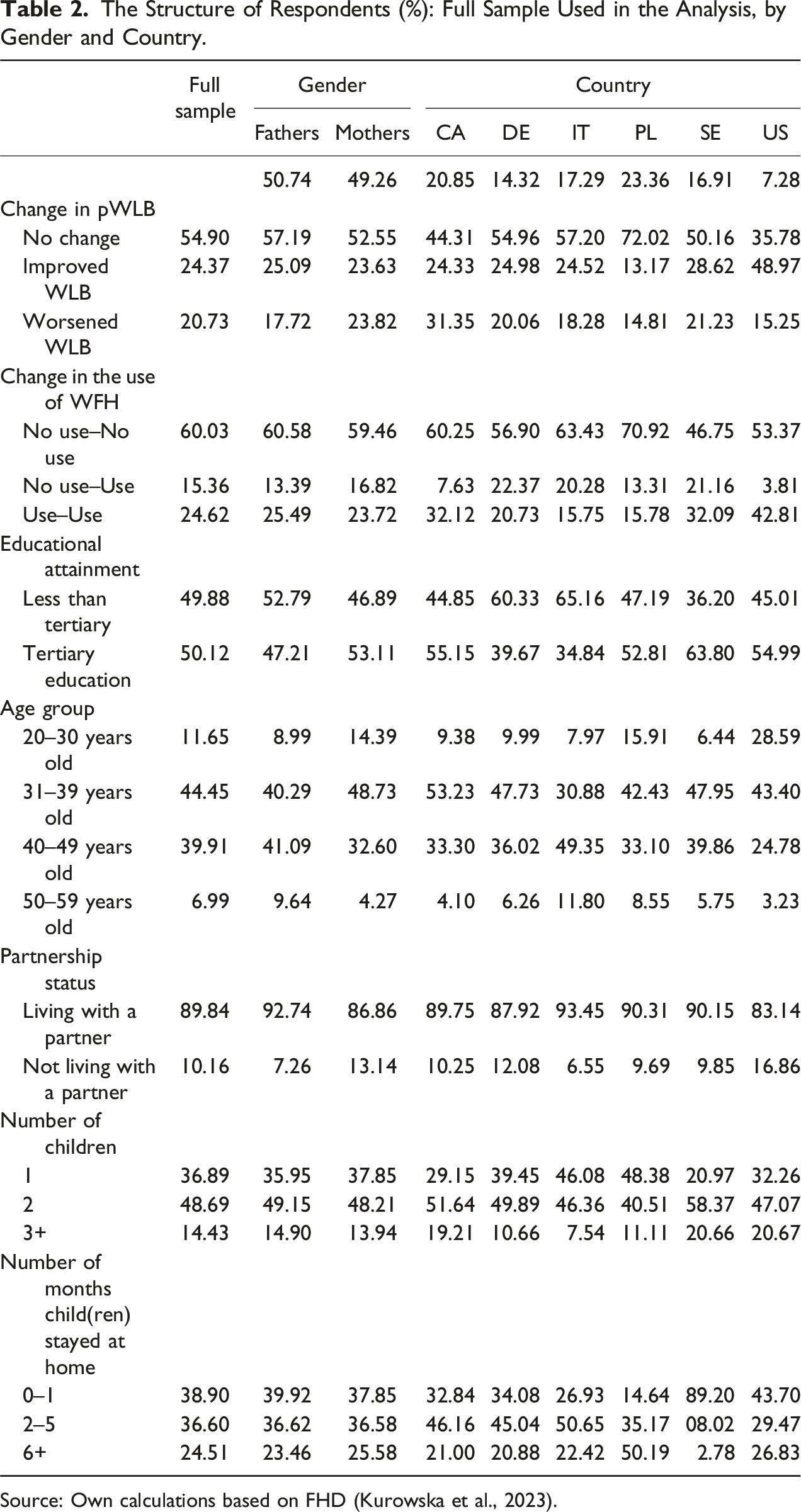
Source: Own calculations based on FHD (Kurowska et al., 2023).
To compare the moderation effects of the length of time children stayed at home due to childcare/school closures and changes in working hours on WFH-pWLB relationship by gender and by cohabitation status, we run the models on subsamples of parents living with a partner and those who live alone with children. This is due to the fact that the change in pWLB of parents living with partners and those living with children alone can be affected differently by the same covariates.
While interpreting our findings, we refer to predicted probabilities (estimated marginal means) rather than to odds ratios, as they are recommended as the most accurate and straightforward inference in multinomial regressions (Paolino, 2021; Wulff, 2015). Estimated marginal means are interpreted as the predicted probability that the response (change in pWLB) takes a certain value (improving, worsening, and holding the same) depending on the value of the selected explanatory covariate and averaged over all the remaining covariates. We evaluate whether the difference between two predicted probabilities is significant by comparing 83% confidence intervals. We do it following Austin and Hux (2002) who showed that two means differ from each other with the p-value at around 0.05 if 83% CI do not overlap. The regression tables with results for all models can be found in an online Appendix A (Tables 1–5).
Results
Sample Characteristics
The characteristics of respondents are presented in Table 2. A slight majority of the sample used for analysis consists of fathers (51%) and individuals with a university degree (53%). A majority are under age 40 (56%) and have at least two children (63%).
Among the selected respondents, approximately 21% indicated worsened pWLB and 24% indicated improved pWLB when comparing their situation from before the COVID-19 pandemic to their situation in September 2021. In our sample, there is a higher proportion of mothers than fathers indicating worsened pWLB (24% vs. 18%) and a slightly lower proportion of mothers than fathers indicating improved pWLB (24% vs. 25%). When considering the cross-country variation, we observe that Poland stands out as a country where the highest proportion of respondents indicated that their pWLB did not change (72%), and only 13% indicated improved pWLB and 15% indicated worsened pWLB. Among all countries, Canada holds the highest share of respondents who indicated worsened pWLB (31%), whereas the USA has the highest proportion of workers who indicated improved pWLB (49%). In Germany, Italy, Sweden, and the USA, the proportion of respondents indicating improved pWLB was higher than those who reported worsened pWLB, whereas in Canada and Poland, it was the opposite.
In terms of the use of WFH, 15% of respondents in our sample started working from home during the pandemic, and 29% of them continued working from home. A higher proportion of mothers than fathers started working from home (17% vs. 13%), but the proportion of respondents who continued working from home during the pandemic was slightly lower for mothers than fathers (24% vs. 25%). We observe large differences between countries, with the highest proportions of those who started working from home during the pandemic in Germany (22%), Italy (20%), and Sweden (21%). The highest proportions of those who continued working from home were observed in Canada (32%), Sweden (32%), and the USA (43%). In our sample, Poland is the country with the highest proportion of those who did not work from home before the pandemic and did not engage in it during the pandemic (71%).
Regression Results
Fathers who continued working from the office during the pandemic (No use–No use group) had a similar predicted probability of reporting worsened and improved WLB (Figure 1(a)). Mothers who continued working from the office had a higher predicted probability of reporting worsened than improved WLB (Figure 1(a)). On the contrary, parents who either continued working from home during the pandemic (Use–Use group) or started to work from home during the pandemic (No use–Use group) had nearly two times higher predicted probabilities of reporting improved WLB than worsened WLB (Figure 1(a)). This is true for both mothers and fathers, but rather driven by those mothers and fathers who lived with a partner (upper part of Figure 1(c)). For parents living alone with kids, we found no differences in likelihood of reporting worsened and improved change in WLB (bottom part of Figure 1(c)). However, as the subsample of parents living alone with children is small (about 10% of the total sample), this finding must be interpreted with caution. (a) Predicted probabilities of reporting improved and worsened WLB among mothers and fathers during the COVID-19 pandemic, according to (change in) working arrangements. Notes: Predicted probabilities are derived based on the estimation results presented in Appendix (Table 1). Confidence intervals represent 83%. (b) Predicted probabilities of reporting improved and worsened WLB by partnership status during the COVID-19 pandemic, according to (change in) working arrangements, among parents living alone with their child(ren). Notes: Predicted probabilities are derived based on the estimation results presented in Appendix (Table 2). Confidence intervals represent 83%. (c) Predicted probabilities of reporting improved and worsened WLB among mothers and fathers living with and without a partner, during the COVID-19 pandemic, according to (change in) working arrangements. Source: Familydemic Harmonized Dataset (mid 2021). Notes: The findings for the group of parents living alone are based on a small sample and thus have to be interpreted with caution. Predicted probabilities are derived based on the estimation results presented in Appendix (Table 3). Confidence intervals represent 83%.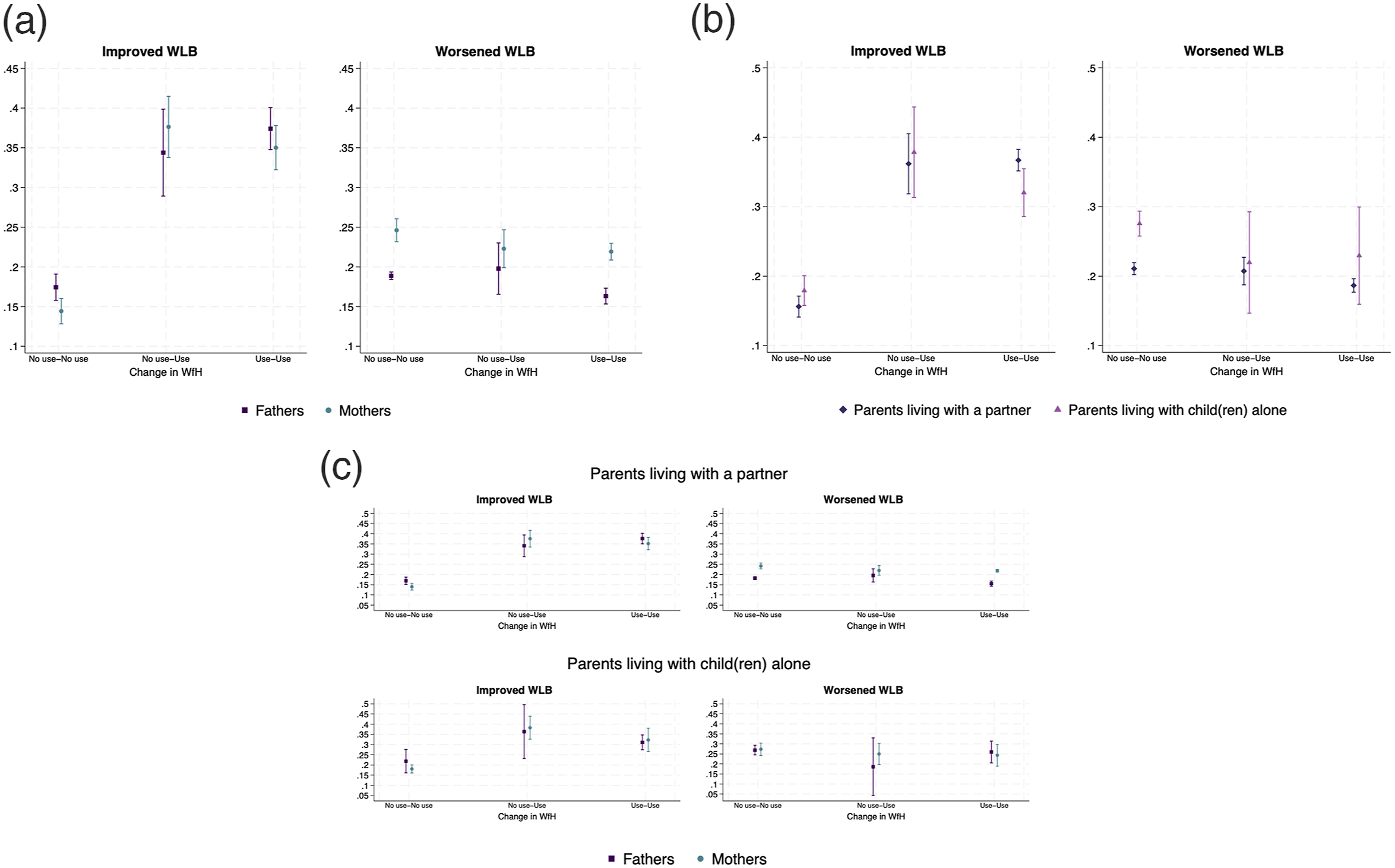
As expected (H1), compared to parents who continued working in the office, those who started to WFH or continued working from home during the pandemic had higher predicted probabilities of reporting increased WLB (left-hand side of Figure 1(a)). This relationship was consistent across genders. It was found among parents living with a partner as well as among parents living alone with their children (Figure 1(b)). However, these differences seem to be smaller in the group of parents living alone with their kids (Figure 1(b)). In particular, the difference is not statistically significant for fathers living alone with their children (left-hand side of Figure 1(c)). This may, on one hand, partially support hypothesis 4, but on the other hand, it may also result from the small sample size of this group of fathers in our study.
Mothers who did not change their working arrangement during the pandemic, regardless of whether they worked from the office (No use–No use) or from home (Use–Use), had higher predicted probabilities of experiencing worsened WLB during the pandemic than fathers (right-hand side of Figure 1(a)). This relationship was rather driven by mothers living with partners (right-hand side of Figure 1(c)). We have not found differences in the probabilities of reporting worsened WLB among any group of parents (men, women, single, and partnered) if they started to work from home during the pandemic (No use–Use group; right-hand side of Figures 1(a)–(c)). However, as mentioned earlier, findings for the group of parents living alone with their children must be treated with caution.
As expected (H2), we found a negative moderation effect of the length of time children spent at home due to childcare and school closures related to the COVID-19 pandemic on pWLB of mothers. First, only among mothers whose child(ren) were at home for the shortest period of time (up to one month only), starting to work from home during the pandemic (No use–Use) was related to a lower probability of worsened pWLB e (upper right-hand side of Figure 2). Secondly, for mothers who WFH (both: No use–Use and Use–Use groups), the longer the child was at home, the lower the predicted probability of reporting improved WLB. However, the differences between the groups, based on the length of time a child was at home, are not statistically significant (upper left-hand side of Figure 2). Additionally, it is worth stressing that among mothers who started to WFH or continued to do so during the pandemic, those whose child(ren) were at home for 6 months or longer were more likely to report worsened WLB than those mothers whose children were only occasionally or for a very short time at home (upper right-hand side of Figure 2). For mothers who worked from the office (No use–No use groups), the time spent by a child/children at home did not seem to have any effect on their pWLB (Figure 2). Predicted probabilities of reporting improved and worsened WLB among mothers and among fathers during the COVID-19 pandemic, according to (change in) working arrangements and the time at least one child was at home due to childcare closures resulting from confinement policies. Notes: Predicted probabilities are derived based on the estimation results presented in Appendix (Table 4). Confidence intervals represent 83%.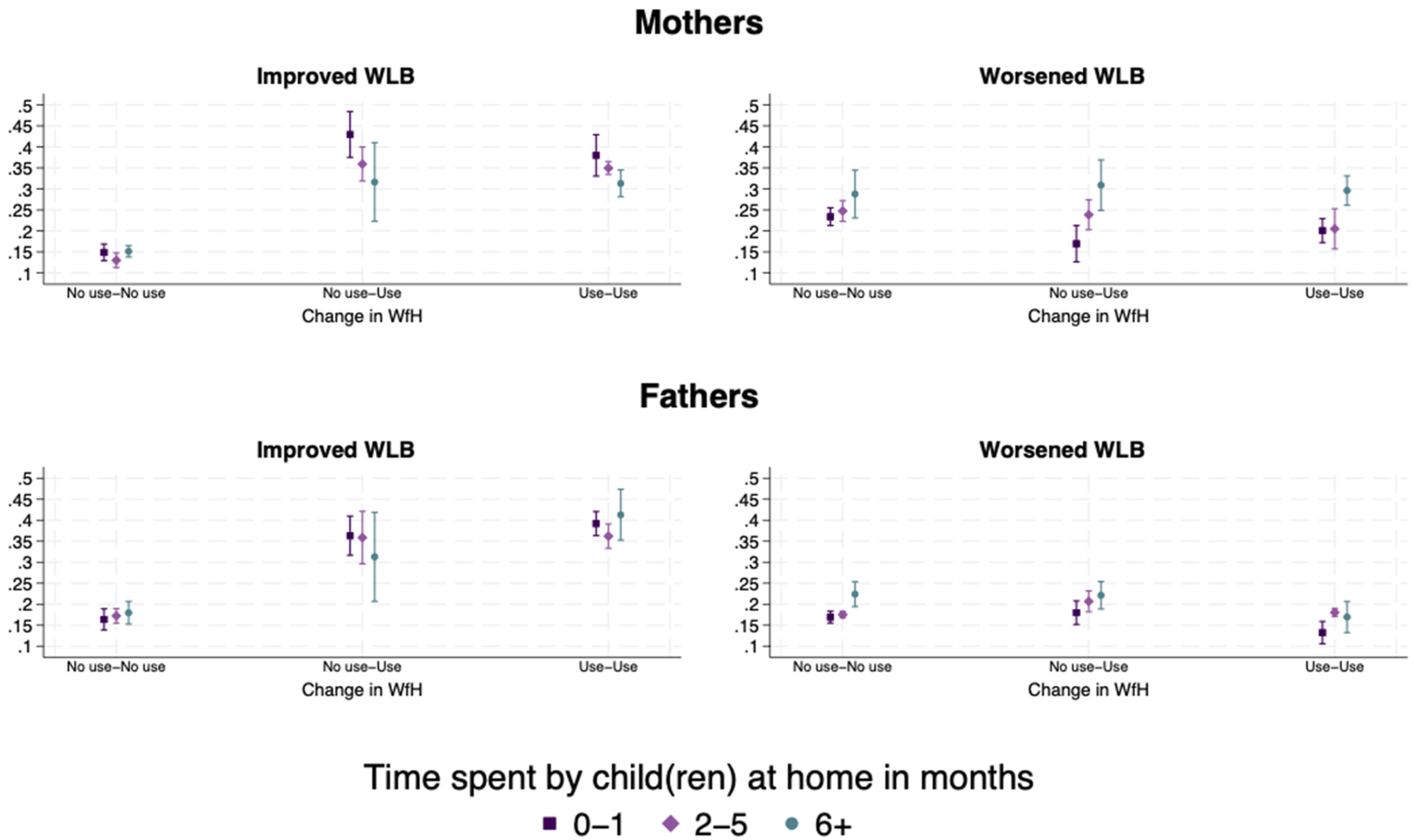
Finally, as expected (H3), the change in parents’ working hours negatively moderated the role of WFH for pWLB (Figure 3). Among mothers who decreased or did not change their working hours, starting or continuing to WFH during the pandemic was related to a higher likelihood of experiencing improvement in WLB (compared to those mothers who continued working in the office). For those who increased working hours during the pandemic, we do not find statistically significant differences in predicted probabilities of improvement in WLB between those working in the office and those working at home. Among fathers, we found that those who increased working hours during the pandemic were significantly more likely to experience worsened WLB if they started to WFH during the pandemic compared to those who worked from the office. Furthermore, among fathers who decreased the number of working hours during the pandemic, moving to the WFH arrangement, as well as continuing to WFH, was related to a lower predicted probability of reporting worsened WLB. Predicted probabilities of reporting improved and worsened WLB among mothers and among fathers during the COVID-19 pandemic, according to (change in) working hours during the pandemic. Notes: Predicted probabilities are derived based on the estimation results presented in Appendix (Table 5). Confidence intervals represent 83%.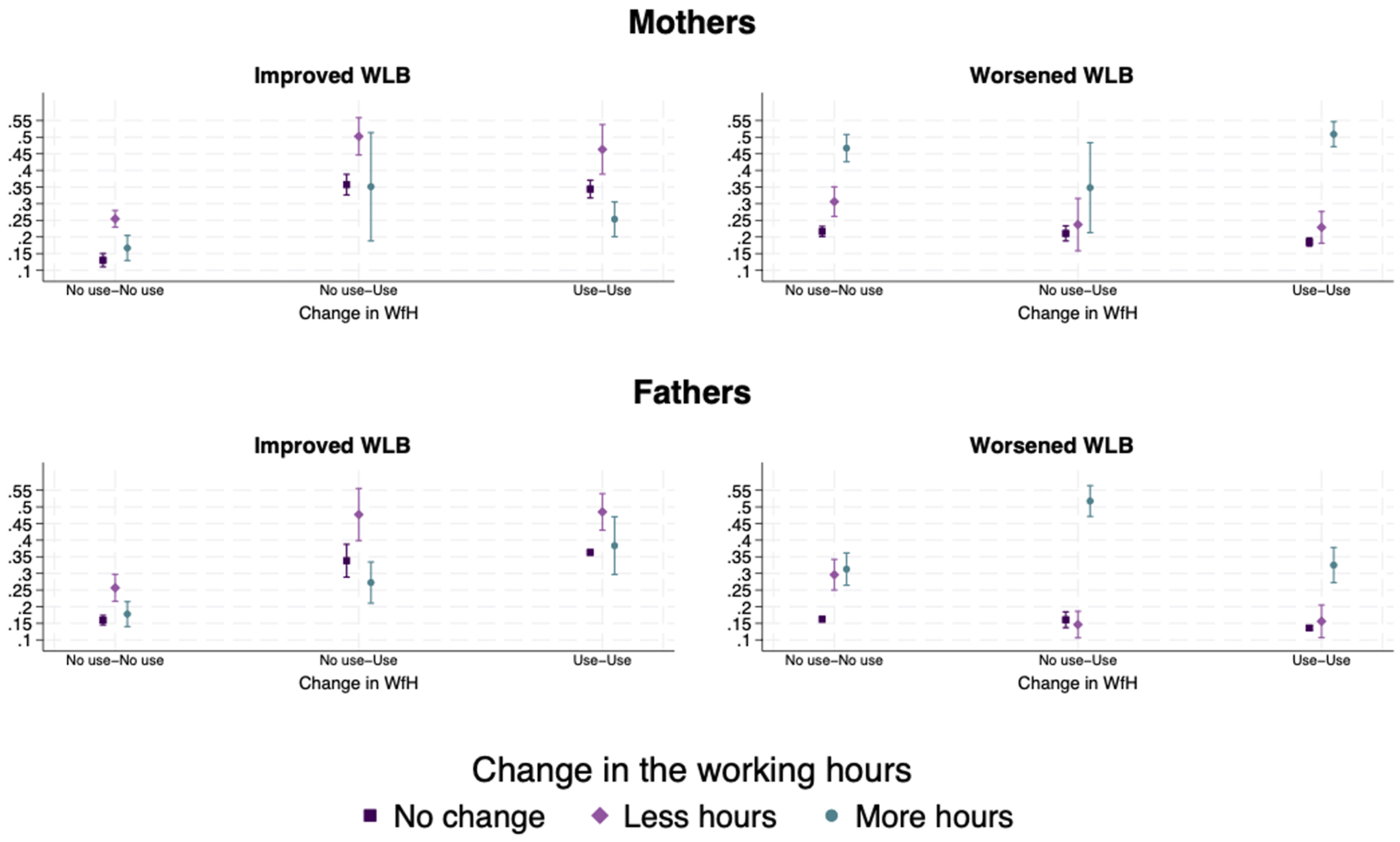
Robustness Checks
We ran the models with different specifications of the main explanatory variable (a categorical variable representing the frequency of working from home before the pandemic and at the moment of the survey) to check if the results differ in any way. The results were very consistent across all the models with different explanatory variables (Tables 6–10 in an online Appendix). We also checked whether the division of childcare in the family changed in our sample of parents during the pandemic (based on descriptive information), and we did not find substantial changes. This means that we were able to reject the idea that the obtained results were largely due to the changes in the type of division of care work (traditional, equal, and unconventional) that mothers and fathers were providing. Finally, the models were run solely on the sub-sample of individuals whose occupational grade corresponds to 1–5 codes (managers, professionals, associated professionals, technicians and associate professionals, clerical and sales workers) of the ISCO (1 digit) classification. We have done it because evidence suggests that in such occupations, performing WFH is considered to be more possible than in other occupational categories (Dingel & Neiman, 2020). By doing this, our sample was reduced by 25%, which means that 75% of individuals in our sample were able to work from home. Running models only on the sub-sample of individuals who can work from home allowed us to explore whether the gender differences in the association between work from home and pWLB are due to the fact that women may be overrepresented in jobs where this mode of work is less possible. We find no substantial differences between the results obtained on the general sample and the sub-sample of occupations with the codes 1–5 of the 1-digit ISCO classification. All results of the robustness checks are presented in an online Appendix (Tables 11–15).
Discussion and Conclusion
COVID-19 has had a large impact on work conditions and life experiences. Given the expansion of home-based work (OECD, 2021) and the large-scale school and childcare closures (Adisa et al., 2022), the current study sought to examine the association between work-from-home and perceived changes in parents’ work–life balance during the pandemic. We used unique survey data from six countries (US, Canada, Sweden, Germany, Italy, and Poland) to explore gender differences in this relationship as well as the moderating role of the presence of children at home due to COVID-19-related confinement policies, change in parents’ working hours, and partner presence in the household. Our findings demonstrate the positive association between WFH and improved work–life balance for parents, irrespective of gender and partner status. This is consistent with previous research showing that WFH is particularly helpful in achieving greater work–life balance among parents (Crosbie & Moore, 2004; Felstead et al., 2002; Laß & Wooden, 2022). WFH allows for greater flexibility in managing both work and household tasks (Uddin, 2021). For example, those who WFH enjoy being able to make their workspace more comfortable (Caringal-Go et al., 2022) and spending more time with their families (Augustine & Prickett, 2022), resulting in a greater sense of closeness (Adisa et al., 2022).
Nevertheless, we find that the relationship between WFH and WLB was moderated by having children at home longer, working longer hours, and living without a partner. First, the positive impact of WFH on WLB was weakened for mothers whose children remained at home for extended periods due to childcare and school closures during the pandemic. Working from home during the pandemic was decidedly different and potentially more difficult for mothers with children at home (Couch et al., 2021). These results align with findings from a qualitative study by Martucci (2021) on work–family balance among working mothers in academic and professional jobs during lockdowns and research by Allen et al. (2021), indicating that having more individuals at home while working remotely during the pandemic led to lower work–nonwork balance. Some of this may be due to decreases in work satisfaction among mothers (Mohring et al., 2021). Other research shows that it was difficult to ensure a child-free workspace at home (Couch et al., 2021).
Our findings, however, stress that the negative moderating effect of children being at home was gendered. In this respect, our findings are in line with the study of Graham et al. (2021) on adults living in the US, who found that women working from home with children during the pandemic experienced greater work–family conflicts. Particularly for mothers, attempting to work from home during lockdown often fed into feelings of guilt as mothers often felt that they should be more available for their children when at home (Rodriguez Castro et al., 2020).
Second, the positive impact of working from home was less clear for mothers who experienced an increase in working hours during this period. The emphasis on being a good mother is still strong and tends to edge out the emphasis on being a career woman. Sorensen (2017) suggests that, given the stronger norms surrounding being a good mother than being a career woman, part-time work is the least controversial path for working mothers in achieving work–life balance. Extending this logic, mothers who increase work hours would not live up to expectations for being a good mother and thus may feel that their WLB is disrupted, and indeed, mothers were more likely than fathers to work less during the pandemic (Hipp & Bünning, 2021).
Furthermore, only fathers who began working from home while simultaneously extending their working hours were more likely to report decreased work–life balance compared to fathers who worked in the office. Since working from home increases fathers’ time in routine childcare (Carlson et al., 2021), it is likely that those fathers who also increase their paid work hours would find themselves in a difficult situation and thus experience a loss of balance in their lives. Our findings are consistent with previous research showing that longer working hours while working from home reduce WLB (Felstead & Henseke, 2017) and satisfaction with WLB, especially among men (Kurowska et al., 2025). This is particularly concerning given that those who worked from home during the pandemic were more likely to increase their work hours (Kaufman & Taniguchi, 2021), often due to the need to adjust their work roles (Lizana & Vega-Fernadez, 2021).
Third, the positive relationship between WFH and WLB was found to be smaller among parents, particularly fathers, who live alone with their children. Single parents often struggle with financial and role strains, which make it more difficult to balance work and family (Reimann et al., 2019; Van Gasse & Mortelmans, 2020). Single parents may also face role strains in their negotiation of child-related responsibilities with previous partners (Emery, 2011). Those who live without any other adults may face additional stressors (Hertz et al., 2021), and attempts to keep high levels of involvement with their children may leave single parents feeling like they are always “on call” with a lack of boundaries between work and family (Bakker & Karsten, 2013).
As with any research, our study is not without limitations. Being cross-sectional in design, we were unable to fully eliminate potential selection effects. It is possible that parents who chose to work from home differed from those who continued working from the office in ways that we were unable to adequately control. Additionally, there may have been self-sorting biases, as parents who opted for remote work may have prioritized a higher work–life balance than others. However, we partly addressed this concern by distinguishing between parents who had already been working from home before the pandemic and those who transitioned to remote work during the pandemic. Considering that remote work was largely exogenously imposed due to COVID-19 confinement measures, we believe the selection effects were minimized for the latter group. Our study reveals that the positive relationship between working from home and perceived changes in work–life balance extended not only to parents who maintained remote work throughout the pandemic but also to parents who newly adopted remote work during the pandemic. Nevertheless, additional research and (quasi) experimental designs are necessary to establish robust causal relationships between working from home and work–life balance. Further research is also required to explore the role of segmentation and integration strategies of boundary management by gender for changes in work–life balance while working from home during and after the COVID-19 pandemic.
In conclusion, our research offers significant insights into the conditionality of the positive effects of working from home on work–life balance among parents during the COVID-19 pandemic. It highlights the critical role of factors such as increased childcare responsibilities and working hours for the capabilities of parents to balance paid work with private and family life. Our study emphasizes the importance of conditions for parents’, but particularly mothers’, ability to effectively manage boundaries between work and non-work activities for positive work–life balance outcomes. The presence of children at home throughout the day and increased working hours hindered such capabilities. This reinforces the discussions put forth by Allen and colleagues (2021) about the association between not only a preference for segmentation but also the ability to separate paid work from other activities, such as having a dedicated home-based office, and greater work–nonwork balance. There is a need for better policies that address work–life balance. Work–life balance is often framed as an individual choice in which women, and sometimes men, must make personal arrangements in order to achieve the right balance for themselves. Particularly for women, failures in achieving work–life balance are seen as personal failures rather than policy or organizational failures (Toffoletti & Starr, 2016). This allows employers to leave it to their employees to figure things out, often expecting women to do so but not men (Hari, 2017). State and employer policies that offer WFH should consider issues of childcare and work hours, putting into place other supports that ameliorate these issues. These findings contribute to the ongoing discussions on remote work and work–life balance and call for further investigation to enhance our understanding of this relationship in the post-pandemic era.
Supplemental Material
Supplemental Material - When Working From Home Fails to Support Work–Life Balance: The Role of Childcare- and Work-Related Demands
Supplemental Material for When Working From Home Fails to Support Work–Life Balance: The Role of Childcare- and Work-Related Demands by Anna Kurowska, Agnieszka Kasperska, and Gayle Kaufman in Journal of Family Issues
Footnotes
Acknowledgments
We would like to express our gratitude to our colleagues from LabFam for their valuable feedback on the results of this study. We also extend our thanks to the researchers and scholars from various international conferences and seminars where these findings were presented.
Declaration of Conflicting Interests
The author(s) declared no potential conflicts of interest with respect to the research, authorship, and/or publication of this article.
Funding
The author(s) disclosed receipt of the following financial support for the research, authorship, and/or publication of this article: The work of Anna Kurowska on this study was financed by the National Science Center in Poland under the project: “Short- and long-term effects of the COVID-19 outbreak policy responses on partners’ division of paid and unpaid work and their labour market outcomes” (grant no. 2020/37/B/HS5/02703). The work of Agnieszka Kasperska was financed by the Polish National Agency for Academic Exchange under the NAWA Polish Returns Programme 2019 granted to prof. Anna Matysiak. The work of Gayle Kaufman was funded by the Nancy and Erwin Maddrey Professorship.

Supplemental Material
Supplemental material for this article is available online.
References
Supplementary Material
Please find the following supplemental material available below.
For Open Access articles published under a Creative Commons License, all supplemental material carries the same license as the article it is associated with.
For non-Open Access articles published, all supplemental material carries a non-exclusive license, and permission requests for re-use of supplemental material or any part of supplemental material shall be sent directly to the copyright owner as specified in the copyright notice associated with the article.
