




Abstract
This study uses the multidimensional gender ideologies framework to explore the relationships between intensive parenting norms and different aspects of gender beliefs, drawing on data from the International Social Survey Programme 2022 in the Czech Republic. Using latent class analysis and multinomial logistic regression, it identifies four distinct attitudinal classes, varying by gender, education, and age. The findings indicate that intensive parenting norms are predominantly associated with the high involvement of both partners, whereas intensive mothering emphasizing the primary role of mothers is less prevalent. Furthermore, it identifies familialist and egalitarian relaxed parenting classes with lower support for intensive parenting norms. The study contributes to the literature by offering a nuanced understanding of how intensive parenting norms relate to mothers and fathers. The implications of these findings are discussed, along with suggestions for potential future research.
Over the last few decades, normative expectations concerning parenting and childcare have shifted dramatically. Research shows that intensive parenting norms that require parents to devote substantial time, energy, and financial resources to promote their children’s social and cognitive development and social and psychological well-being, have spread across economically developed countries and different socioeconomic backgrounds (Ennis, 2014; Faircloth et al., 2013; Gauthier et al., 2021; Gauthier & de Jong, 2021; Hays, 1996; Ishizuka, 2019; Lee et al., 2014; Schmidt et al., 2023). This shift is associated with a pronounced increase in the time devoted to childcare by both mothers and fathers (Craig et al., 2014; Dotti Sani & Treas, 2016).
These normative changes occur within the context of changing gender relationships in public and private spheres (Esping-Andersen & Billari, 2015; Goldscheider et al., 2015). Following the dramatic rise in labor force participation among women, there have been growing expectations from men to become more involved in everyday childcare activities (Goldscheider et al., 2015; McGill, 2014; Townsend, 2010). However, the progress toward gender equality in domestic roles has been uneven, constituting a “stalled gender revolution” (England, 2010). This stalled progress is reflected in a shift away from a unidimensional versus traditional versus egalitarian ideology space towards an ambivalent, multidimensional gender beliefs combining egalitarian and gender essentialist views, that is, beliefs, that men and women possess fundamentally different traits (Begall et al., 2023; Grunow et al., 2018; van Damme & Pavlopoulos, 2022).
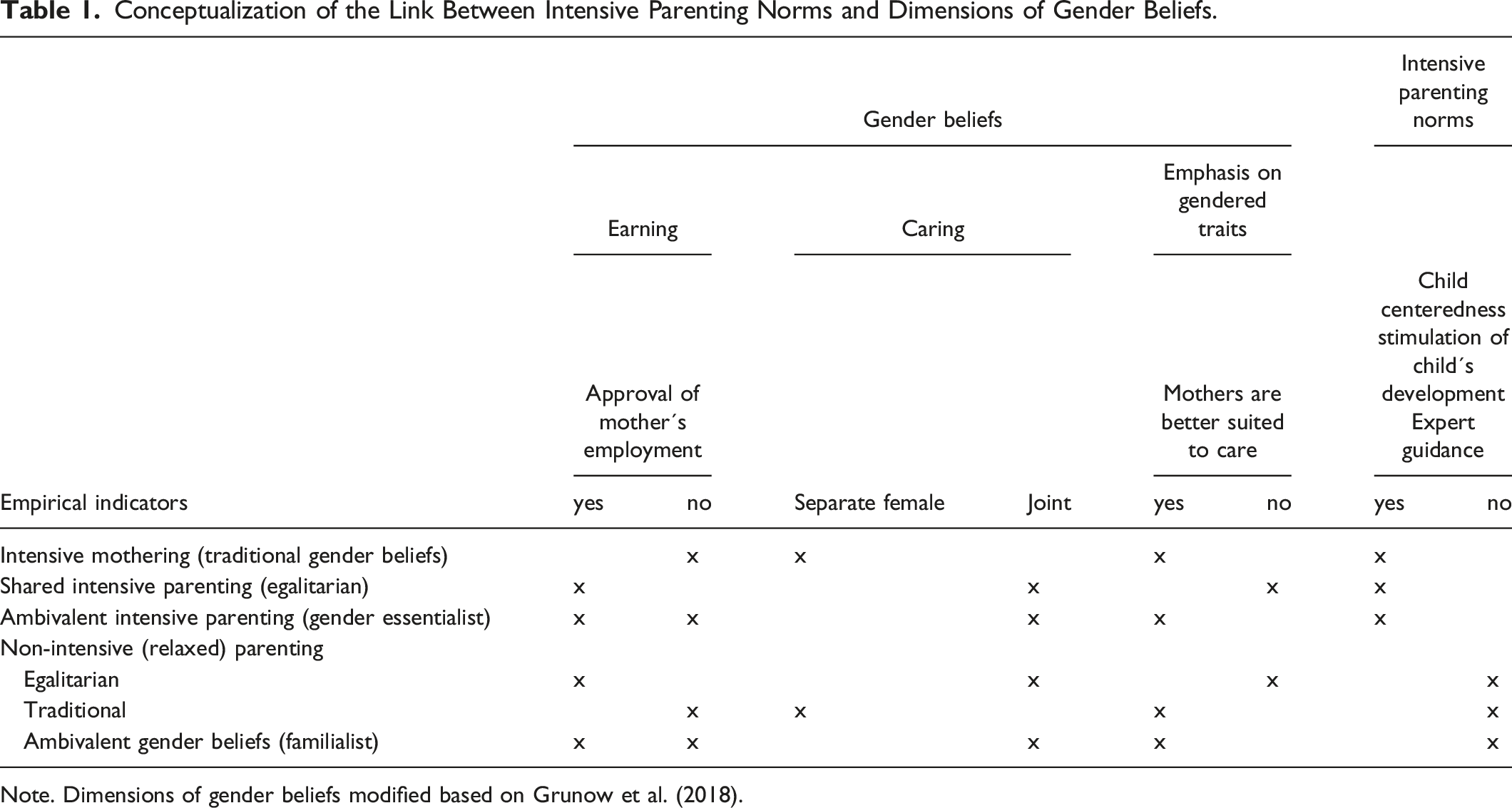
In particular, Grunow et al. (2018) argued that intensive parenting norms are linked with these multidimensional gender beliefs because they contest egalitarian ideals of maternal employment, emphasize caring as a natural female trait (gender essentialism), and demand a certain degree of shared caring between mothers and fathers. However, despite substantial research on intensive parenting norms, prior research does not directly measure both attitudes toward the specific elements of intensive parenting norms, such as child-centeredness and the need for parents to provide stimulation of the child’s development and different aspects of gender beliefs. Therefore, it remains unclear to what extent the normative demands of intensity relate primarily to mothers or both parents (Shirani et al., 2012). In the literature, the terms intensive mothering and intensive parenting are often used interchangeably. The existing conceptualizations differ in the extent they emphasize the link between intensive parenting norms and gender essentialist beliefs, following the original concept of intensive mothering (Hays, 1996) or assume that these norms apply to both parents (Gauthier et al., 2021). The question of how gendered these norms are is further highlighted by the spread of intensive parenting across diverse social contexts, including countries like Sweden, where childcare responsibilities are more equally shared and gender egalitarianism is widely embraced (Mollborn & Billingsley, 2024). This suggests that these norms might also align with gender egalitarian beliefs and a rejection of gender essentialism. Also, a study from the USA indicates that intensive parenting behavior is often associated with egalitarian gender beliefs and with disapproval of gender essentialism (Lankes, 2022).
To fill this gap this study aims to address how intensive parenting norms are related to mothers and fathers. Using a multidimensional gender beliefs theoretical framework, this study aims to bridge these different conceptualizations of intensive parenting and mothering norms to provide a more comprehensive understanding of how these norms relate to different dimensions of gender beliefs. In this study, the term “intensive parenting” in a general sense refers to a style of parenting that is highly child-centered and labor-intensive, emphasizing the stimulation of child development and reliance on expert guidance. Concerning gendered expectations, this study conceptually distinguishes between shared intensive parenting norms emphasizing shared responsibilities of both parents, intensive mothering norms, which emphasize the primary role of mothers and inherent mother’s skills, and gender essentialist intensive parenting norms that include the mix of egalitarian and gender essentialist beliefs.
The study draws from data from the International Social Survey Programme Family and Changing Gender Roles V (2022) from the Czech Republic. The Czech ISSP (2022) data provide a unique opportunity to explore the link between intensive parenting norms and gender beliefs because the Czech questionnaire included three additional questions about intensive parenting norms unavailable in internationally comparative questionnaire.
In particular, this study examines (a) to what extent intensive parenting norms intersect with views on whether caring and earning are gender-separated or joint spheres, as well as with gender essentialist views on the mother’s role and (b) whether the prevalence of different intensive parenting (mothering) normative profiles varies between men and women and by selected socio-demographic characteristics. For this purpose, this study applies latent class analysis (LCA), which allows for the exploration of how these attitudes cluster into coherent attitudinal profiles representing different configurations of endorsement (or rejection) of intensive parenting (mothering) norms (or rejections) with distinct gender beliefs (Hagenaars & McCutcheon, 2002). This approach acknowledges that variation exists in the endorsement of intensive parenting norms (Christopher, 2012; Dow, 2016; Minnotte, 2023; Randles, 2021). Additionally, individuals may hold internally discordant attitudes, supporting some aspects of intensive parenting while not others (Gauthier et al., 2021; Lankes, 2022; Mollborn & Billingsley, 2024). Subsequently, multinomial logistic regression is used to examine predictors of these attitudinal profiles.
The contributions of this study are threefold. First, this study contributes to a better understanding of the link between intensive parenting (mothering) norms and gender beliefs. It provides a conceptual extension of previous operationalization of intensive parenting norms by analyzing them alongside different dimensions of gender norms. The examination of associations between intensive parenting (mothering) norms and different dimensions of gender beliefs is important because different normative profiles relating to parental investment and gender beliefs might have diverging implications for family dynamics, work–life balance, and gender and social inequalities. The spread of norms of intensive parenting (mothering) might either encourage or hinder gender-egalitarian behavior change–depending on whether they disproportionally perpetuate the expectations that mothers should prioritize child-rearing, or emphasize shared parental responsibilities.
Second, as prior research has predominantly focused on North American and Western European contexts (Forbes et al., 2020; Gauthier et al., 2021; Mollborn & Billingsley, 2024; Ruckdeschel, 2024), the study adds to the knowledge on the prevalence of different intensive parenting (mothering) profiles in Central European using nationally representative data from the Czech Republic. The Czech Republic provides an interesting context for studying intensive parenting norms. In this context, ambivalent multidimensional gender beliefs, that combine approval for the joint sphere for paid work with belief in gendered traits when it comes to caring for children and housework (Begall et al., 2023; Grunow et al., 2018; van Damme & Pavlopoulos, 2022).
The Czech institutional and cultural context favors full-time maternal care until three years of age (Hašková & Dudová, 2017; Nešporová, 2019). The Czech family policy provides extended periods of childcare parental leave (up to the age of three), limited access to public childcare for children under the age of three, and low support for sharing the responsibility of childcare between parents (Hašková & Dudová, 2017). As a result, the labor force participation rate among mothers with children under three is very low, while it is high for mothers with older children (Hašková & Dudová, 2017). Though the norm of full-time motherhood and breadwinner fatherhood during early years remains predominant, expectations for higher father involvement in childcare have increased in the Czech Republic in recent decades (Kuchařová et al., 2020).
These macro-level characteristics form favorable conditions for the spread of intensive parenting (mothering) norms (Marková Volejníčková, 2018). Post-1989, significant economic, social, and political transformations, increased the labor market and educational opportunities, but also contributed to increased economic uncertainties, potentially motivating parents to prioritize their children’s human capital development. However, due to a lack of available large-scale survey data, the prevalence of support for intensive parenting norms remains unknown.
Third, this study provides empirical evidence on the variation of endorsement of different intensive parenting (mothering) normative profiles between men and women and across different socio-demographic groups. These findings contribute to a better understanding of the individual characteristics associated with different intensive parenting normative profiles.
This paper is organized as follows. First, I provide a comprehensive overview of the existing conceptualizations of intensive parenting norms in quantitative studies and prior research highlighting the multidimensionality of gender beliefs. This is followed by outlining a new integrating conceptualization of the association of intensive parenting norms with gender beliefs. I then describe our analytical strategy and the data and indicators used. I close by summarizing the findings and discussing their implications.
Theoretical Background
The Conceptualizations of Intensive Parenting Norms
Originally, Sharon Hays (1996) related the norms of child-centered, emotionally absorbing, labor and financially intensive, expert-guided parenting primarily to mothers (Hays, 1996). According to Hays, mothers see themselves as primary caregivers responsible for the development and well-being of the child and are expected to organize their lives around the perceived needs of their children (Hays, 1996). Although quantitative conceptualizations of intensive parenting are derived from Hays’ concept of intensive mothering, they differ in the dimensions they highlight, with the exception of the consistent focus on child-centeredness and the stimulation of child development (Gauthier et al., 2021; Klímová Chaloupková & Pospíšilová, 2023; Liss et al., 2013; Loyal et al., 2017). Notably, they differ on the extent to which the dimension of gender essentialism, that is, ideas that mothers are primary caregivers with inherent childcare skills, or (gender neutral) parental responsibility is emphasized.
First, the Intensive parenting attitudes questionnaire (IPAQ) based on a convenience sample of mothers from the United States (Liss et al., 2013), in line with Hay´s concept of intensive mothering encompasses the dimension of gender essentialism (Ennis, 2014; Hays, 1996; Liss et al., 2013). The IPAQ was later adapted by Loyal et al. (2017) in the French context. In addition to gender essentialism, IPAQ identifies four other dimensions of intensive parenting norms: parenting should be fulfilling, challenging, children should be cognitively stimulated by parents to help them reach their optimal potential, and parenting prioritizes the needs of the child over those of the parent (Liss et al., 2013).
Second, by contrast, Gauthier et al. (2021) refer to parents in general, not distinguishing between specific roles of mothers and fathers. They distinguished four dimensions of intensive parenting norms: (1) child-centeredness, (2) focus on stimulating children’s development, (3) personal responsibility to do one’s best for one’s children, and (4) pressure to follow expert advice. The dimensions of parental responsibility for their children’s well-being and social and cognitive development, and expectations to follow expert guidance from various disciplines are in line with Hays’ concept. These dimensions reflect an expansion of parenting advice derived from developmental psychology, which emphasizes that early childhood experiences have lifelong implications (Lee et al., 2014). According to Gauthier et al. (2021), items referring to resource intensity and emotional demands associated with parenting correlate with child-centered and stimulation dimensions. Similarly, a recent study using Generation and Gender Survey data (2021) from Sweden defined intensive parenting as demanding, child-centered, and emphasizing the need to stimulate a child´s development, while not distinguishing between the roles of mothers and fathers (Mollborn & Billingsley, 2024).
Also, the norms of child-centered parenting and emphasis on the stimulation of a child’s development have been associated with the concept of concerted cultivation, whereby parents deliberately facilitate children's cognitive and social development through organized leisure activities and extensive reasoning and negotiation to encourage children to express their individual needs, contrasting with “the accomplishment of natural growth” (Ishizuka, 2019; Lareau, 2011). However, this concept does not directly address gender aspects.
To integrate previous conceptualizations of intensive parenting norms, this study examines three core dimensions of intensive parenting norms—child-centeredness, stimulation of child´s development, and expert guidance—directly with different dimensions of gender beliefs. Drawing from the multidimensionality of gender beliefs theoretical framework, the next section establishes expectations regarding the link between intensive parenting norms and distinct dimensions of gender norms.
Multidimensionality of Gender Beliefs and Their Link with Intensive Parenting Norms
Recent studies highlight that uneven transformations of gender relations within the domains of paid and unpaid work have led to the rise of ambivalent multidimensional gender beliefs, that mix traditional and egalitarian gender beliefs, particularly in Southern, Central, and Eastern European countries (Begall et al., 2023; Grunow et al., 2018; Knight & Brinton, 2017; van Damme & Pavlopoulos, 2022). The gender beliefs profiles vary across three dimensions: (1) emphasis on earning as gender-separate/joint spheres; (2) emphasis on caring as separate/joint spheres; and (3) gender essentialism, that is, the extent to which gender roles are perceived as inherent (“natural trait”) or subject to choice (Begall et al., 2023; Grunow et al., 2018; Knight & Brinton, 2017; van Damme & Pavlopoulos, 2022).
Overall, two types of ambivalent multidimensional profiles might be distinguished. The first, “egalitarian essentialist” (Grunow et al., 2018) or “flexible egalitarian” (Knight & Brinton, 2017) beliefs combine egalitarian views with support for women’s right to choose between being a housewife or working for pay. Second, “egalitarian familialism” (Knight & Brinton, 2017) or “intensive parenting” (Grunow et al., 2018) holds egalitarian views on men’s involvement in childcare but supports women’s “essential” nature as mothers. Note that the intensive parenting profile identified by Grunow et al. (2018) encompasses only gender beliefs and does not directly capture the dimensions of intensive parenting norms such as child-centeredness or effort to stimulate a child’s optimal development. Consequently, it is not known to what extent the acceptance of standards of high parental investment is linked to these ambivalent gender beliefs.
Conceptualization of the Link Between Intensive Parenting Norms and Dimensions of Gender Beliefs.
Note. Dimensions of gender beliefs modified based on Grunow et al. (2018).
First, based on previous research accounting for the multidimensionality of gender beliefs, I expect to find that support for intensive parenting norms is associated with ambivalent multidimensional gender beliefs, that is, with a combination of essentialist attitudes and support shared responsibility of parents in childcare (Begall et al., 2023; Grunow et al., 2018). Intensive parenting with ambivalent gender beliefs (gender essentialist) profile might encompass mixed views of mothers working outside the home when children are small.
Second, by emphasizing the primary responsibility of mothers alongside high levels of parental involvement, intensive parenting norms might reinforce traditional divisions of gender roles, that is separate spheres of care and earning (Ennis, 2014; Forbes et al., 2020; Hays, 1996). The demands of high involvement and constant availability to meet children’s needs could be viewed as incompatible with mothers’ employment (Damaske, 2013; Hays, 1996). Notably, some studies have associated intensive parenting, especially its variants, such as attachment or contact parenting, with full-time maternal care, at least when the child is small (Ennis, 2014). Therefore, the endorsement of norms of intensive parenting, while disapproving of the mother´s employment, emphasizing the primary role of the mother, and gender essentialist beliefs that mothers are better suited for childcare, is labeled as intensive mothering.
Third, nevertheless, the endorsement norms of child-centered intensive parenting might be consistent with egalitarian views, promoting shared (egalitarian) intensive parenting. These attitudes include expectations that both mothers and fathers should be intensively involved in parenting and that both parents are equally suited for childcare. Furthermore, they might be consistent with support for the mother’s employment, emphasizing other dimensions of intensive parental participation beyond time availability. Also, previous findings suggest that endorsement of intensive parenting norms may not necessarily be linked with gender essentialism beliefs. This aligns with findings from the USA, that indicate that highly involved mothers were more likely to support high fathers’ involvement in childcare. In contrast, mothers who endorsed gendered essentialism showed mixed behavioral evidence (Lankes, 2022). Furthermore, I expect to find attitudinal profiles with indifferent views toward intensive parenting norms. These attitudinal profiles might be linked with both ambivalent multidimensional or unidimensional (traditional or egalitarian) gender beliefs (see Table 1).
Variation in Intensive Norms and Gender Beliefs
Previous studies indicate that gender beliefs vary according to various individual characteristics, such as gender, age, education, and religiosity (Begall et al., 2023; Knight & Brinton, 2017; Scarborough et al., 2019). Women tend to hold more egalitarian attitudes than men do. Higher-educated individuals are more likely to adopt egalitarian views, whereas lower-educated and older persons individuals are more likely to have traditional and ambivalent gender beliefs (Begall et al., 2023; Knight & Brinton, 2017; Scarborough et al., 2019). Ambivalent gender ideologies are endorsed more likely by men. Religious individuals are more likely to endorse traditional gender beliefs (Begall et al., 2023).
Prior research shows mixed evidence concerning variations in intensive parenting norms across gender and other socio-demographic characteristics, indicating that different dimensions of these norms might be endorsed in varying ways across different social groups (Gauthier et al., 2021; Mollborn & Billingsley, 2024). First, concerning norms of child-centered, time-intensive parenting related to concerted cultivation, Ishizuka (2019), using data from the USA, found no gender and educational differences. Although the concerted cultivation was described as a parenting practice typical for families with higher socioeconomic status (England & Srivastava, 2013), this finding suggests that these norms might have become widespread across various socioeconomic backgrounds, even if the ability to realize these norms may still vary based on available resources. Also, Gauthier et al. (2021) found that men and women did not differ in endorsement of most of the dimensions of intensive norms, except parental responsibility, where women scored higher than men (Gauthier et al., 2021). By contrast, findings from Sweden suggest that intensive parenting attitudes were more prevalent among women compared to men (Mollborn & Billingsley, 2024).
Regarding education, Gauthier et al. (2021) found that individuals with higher education hold less support for the child-centered and stimulation subscales but more support for parental responsibility and expert-guided subscales than those with less education. Also, using a convenience sample of mothers from the USA, Forbes et al. (2020) showed that mothers with higher education tend to be less child-centered. These findings suggest that highly educated women may endorse more egalitarian gender beliefs and might stress other dimensions of intensive parenting norms than child-centeredness. Moreover, data from Sweden indicated that higher educational attainment was associated rather with discordant views of intensive parenting, emphasizing the need for stimulation of a child´s development, but having neutral views on child-centeredness (Mollborn & Billingsley, 2024). Importantly, examining the link between intensive parenting behavior and attitudes, Lankes (2022) showed that mothers with highly intensive involvement with children tended to have egalitarian gender beliefs and were more likely to have higher education. In contrast, both low-intensive mothers with egalitarian beliefs (relaxed mothers), and mothers with mixed behavior supporting gender essentialism were more likely to have lower education.
Prior research also found differences by age, parental status, child´s age, and partnership status in endorsement of intensive parenting norms (Forbes et al., 2020; Gauthier et al., 2021; Mollborn & Billingsley, 2024). According to Gauthier et al. (2021), younger individuals emphasized child-centeredness and parental responsibility, whereas older individuals scored higher on the expert-guided subscale. Also findings from Sweden show that intensive parenting attitudes were more likely to be adopted by younger people and parents of young children, while older individuals and those with older children were more likely to reject or have neutral views on intensive parenting norms (Mollborn & Billingsley, 2024). Parents were more likely to support child-centeredness, but those without children were more likely to adhere to expert guidance (Gauthier et al., 2021). Using IPAQ, studies have documented that mothers, particularly those with small children, endorse intensive parenting norms more than childless women (Forbes et al., 2020; Liss et al., 2013). Single mothers scored higher in essentialism and child-centeredness compared to partnered mothers (Forbes et al., 2020).
To summarize, I expect that shared (egalitarian) intensive parenting norms will be more commonly endorsed by highly educated individuals, particularly women and younger people. However, previous studies do not provide clear insights into the socio-demographic correlates of attitudinal profiles that combine support for or rejection of intensive parenting norms with traditional or multidimensional gender beliefs. Overall, I expect that ambivalent multidimensional and traditional gender beliefs will be more prevalent among men, as well as lower-educated and older individuals.
DATA
This study uses data from a nationally representative sample from the Czech Republic collected under the framework of the ISSP Family and Changing Gender Role V. ISSP is a cross-sectional collaborative program that conducts surveys in various countries worldwide through thematic modules repeated over time. Czech ISSP 2022 data include information for 1262 respondents aged 18 years and older selected by stratified probability sampling. In a subsequent analysis of predictors of attitudinal profiles, the number of respondents was reduced to 1238 due to nonresponse in some of the explanatory variables.
To measure the link with gender beliefs, the Czech ISSP 2022 data included three additional questions on intensive parenting norms beyond the international questionnaire. These questions covered the main dimensions of intensive parenting norms: emphasis on child-centeredness, stimulation of a child’s development, and expert guidance. Using a scale of 1 = strongly agree to disagree 5 = strongly, respondents were asked on the following three statements: (1) Children’s needs should come before those of their parents (child-centeredness). (2) Good parents should be aware of what experts say and write about the development of children (expert guidance). (3) To reach their full potential, it is important that children take part in a wide range of organized activities outside of their home (stimulation of the child’s development).
In line with prior research, I opted for dichotomized indicators over ordered categories – distinguishing between those who strongly agreed or agreed and those who responded otherwise – to achieve latent classes that are more clearly and distinctly differentiated (Grunow et al., 2018; Knight & Brinton, 2017).
Three items were used to measure gender beliefs. First, an attitude toward maternal employment was measured by disagreement with the statement, ‘A preschool child is likely to suffer if his or her mother works.’ The original 5-point response scale was dichotomized: 1 reflected approval of the mother’s employment, and 0 reflected disapproval of the mother’s employment when having a preschool child or indifferent attitudes. Second, gender essentialist views on child care were measured by approval with the statement that mothers are better suited to look after children than fathers (better or somewhat better = 1, other = 0). Lastly, a binary indicator denoted approval with the statement that women and men should take equal responsibilities for the home and family (approve = 1, other = 0).
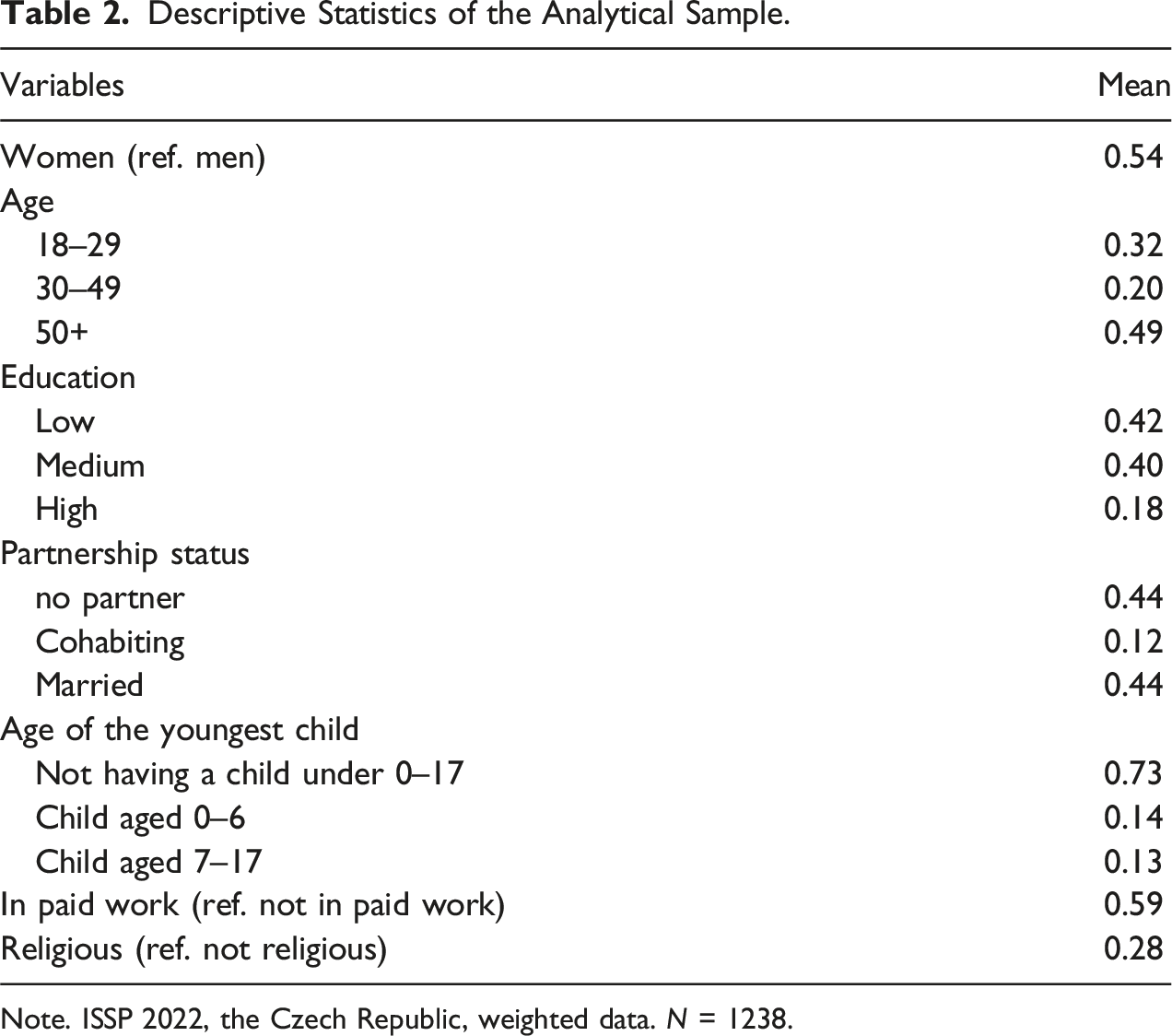
Descriptive Statistics of the Analytical Sample.
Note. ISSP 2022, the Czech Republic, weighted data. N = 1238.
Analytical Strategy
The analyses proceeded in several steps. In the first step, LCA was applied to identify response patterns concerning intensive parenting and gender norms. LCA is the dominant methodological approach for studying attitudinal profiles and ambivalence in attitudes because it allows for combinations of various attitudinal dimensions (Begall et al., 2023; Lankes, 2022; van Damme & Pavlopoulos, 2022). As a person-centered approach, LCA helps to qualitatively distinguish between different subgroups within populations based on individual response patterns (Hagenaars & McCutcheon, 2002). To identify the optimal number of latent classes, multiple fit statistics of latent class models ranging from two-class to six-class solutions, including the Bayesian information criterion (BIC) and the Akaike information criterion (AIC), were compared, with lower values indicating better model fit. In addition to a good model fit, the theoretical considerations, relevance, and interpretability of the class solution guided the choice of the number of classes in the LCA (Weller et al., 2020).
Subsequently, to explore the individual predictors of class membership, I applied the posterior probabilities of class membership for each individual to estimate the likelihood of their belonging to a specific class using multinomial logistic regression. The model included all the individual covariates mentioned above and interactions between gender and education to assess whether their effect varied across genders. All analyses were estimated using STATA 18.
Results
Identification of Attitudinal Profiles
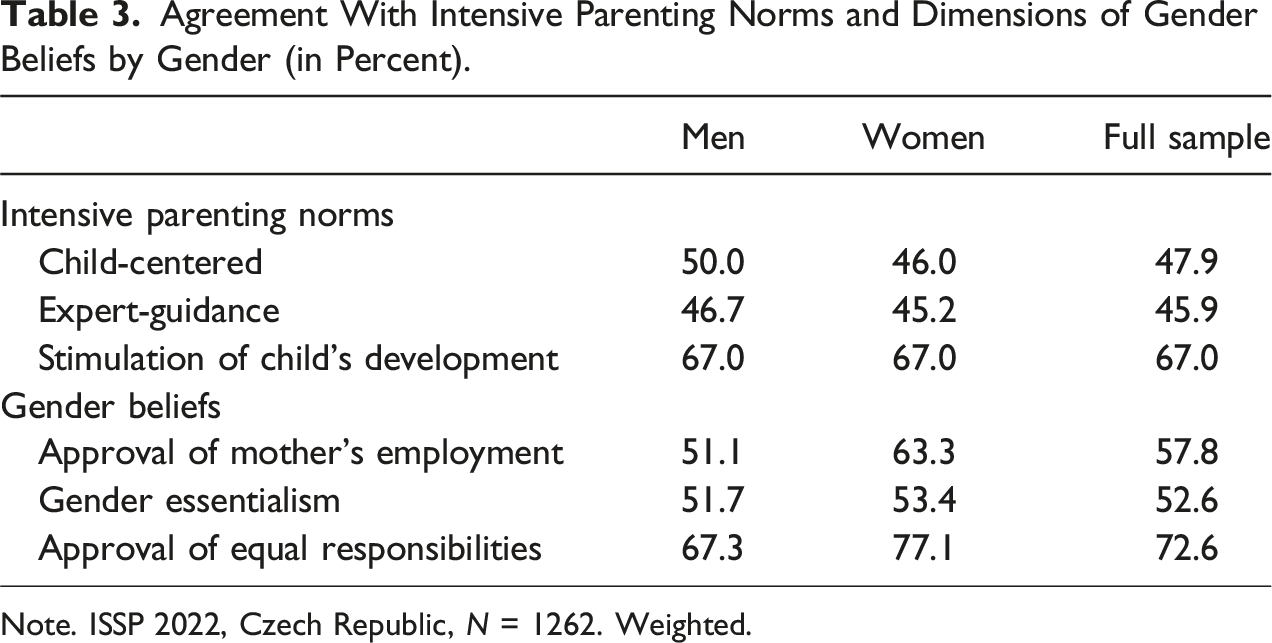
Agreement With Intensive Parenting Norms and Dimensions of Gender Beliefs by Gender (in Percent).
Note. ISSP 2022, Czech Republic, N = 1262. Weighted.
Comparing these results with data from ESS Cronos (2017) for Estonia, Great Britain, and Slovenia (own calculations) suggests that the support for prioritizing children’s needs over development in Czechia is lower than that in Great Britain but similar to Slovenia and Estonia. Support for child development stimulation and expert guidance in Czechia aligns with these countries. In contrast, data from Sweden shows near-universal agreement on the importance of activities that engage and stimulate children and almost 60% support for child-centered parenting (Mollborn & Billingsley, 2024).
In contrast to intensive parenting norms, attitudes toward gender beliefs differ more between Czech men and women. While there is broad support for sharing family responsibilities among parents (72.6%) and toward mothers being employed (57.8%), women tend to approve of these norms more than men. Nonetheless, a substantial proportion of both men and women (52.6%) hold gender essentialist views, reflecting the prevalence of multidimensional ambivalent gender beliefs in the Czech context.
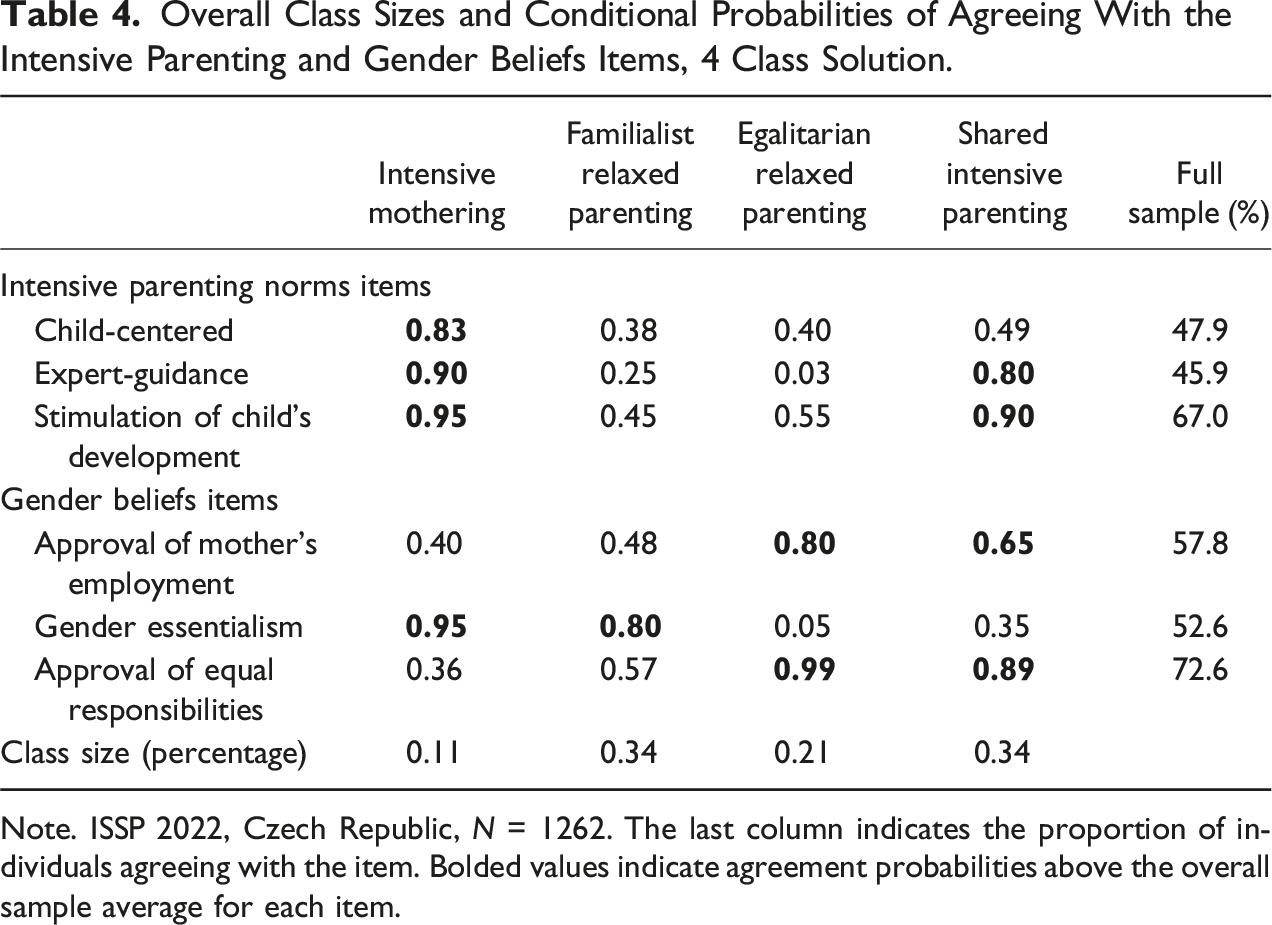
Overall Class Sizes and Conditional Probabilities of Agreeing With the Intensive Parenting and Gender Beliefs Items, 4 Class Solution.
Note. ISSP 2022, Czech Republic, N = 1262. The last column indicates the proportion of individuals agreeing with the item. Bolded values indicate agreement probabilities above the overall sample average for each item.
The LCA distinguished four attitudinal profiles, labeled based on the key features of the respondents’ conditional response probabilities for attitudinal items. These profiles, ordered by size, are as follows: shared intensive parenting, familialist relaxed parenting with ambivalent gender beliefs (bot 34%), egalitarian relaxed parenting (21%), and intensive mothering (11%).
The shared intensive parenting class included individuals who endorsed intensive parenting norms while emphasizing equal childcare responsibilities between mothers and fathers, supported maternal employment when having preschool children, and disapproved that mothers are better suited to childcare. Yet, the respondents belonging to this profile prioritized lower child-centeredness compared to the intensive mothering class.
By contrast, in the intensive mothering class, high support of intensive parenting norms was coupled with the belief that mothers are better suited to care for children than fathers and have primary childcare responsibilities, and with the disapproval of maternal employment. This group was less prevalent compared to the intensive parenting group.
The familialist relaxed parenting class involves low support for intensive parenting norms, while holding ambivalent gender beliefs, mixing high endorsement of gender essentialism in childcare with the belief that men and women should have equal responsibility for childcare and housework. Also, members of this group had a higher probability of believing that a preschool child suffered when the mother was employed.
Finally, the egalitarian relaxed parenting attitudinal profile includes the attitude that both parents should have equal responsibilities in childcare, approval of the mother’s employment, and disagreement with the notion that mothers are better suited to care for children compared to fathers. However, the members of these classes only moderately supported the norms of child-centered parenting and child development stimulation and exhibited low agreement with the need for expert guidance in parenting.
Surprisingly, in contrast to expectations from prior literature (Begall et al., 2023; Grunow et al., 2018), this familialist class with ambivalent gender beliefs was not linked with the endorsement of intensive parenting norms. Furthermore, they did not reveal a separate attitudinal profile combining traditional gender beliefs and low support of intensive parenting norms. This is, though, consistent with findings that unidimensional traditional gender beliefs have been increasingly replaced by multidimensional gender beliefs (Begall et al., 2023; Grunow et al., 2018).
Sociodemographic Characteristics of Attitudinal Profiles
Average Marginal Effects (AME) and Standard Errors (SE) From Multinomial Logistic Regressions Predicting Attitudinal Profiles by Sociodemographic Characteristics.
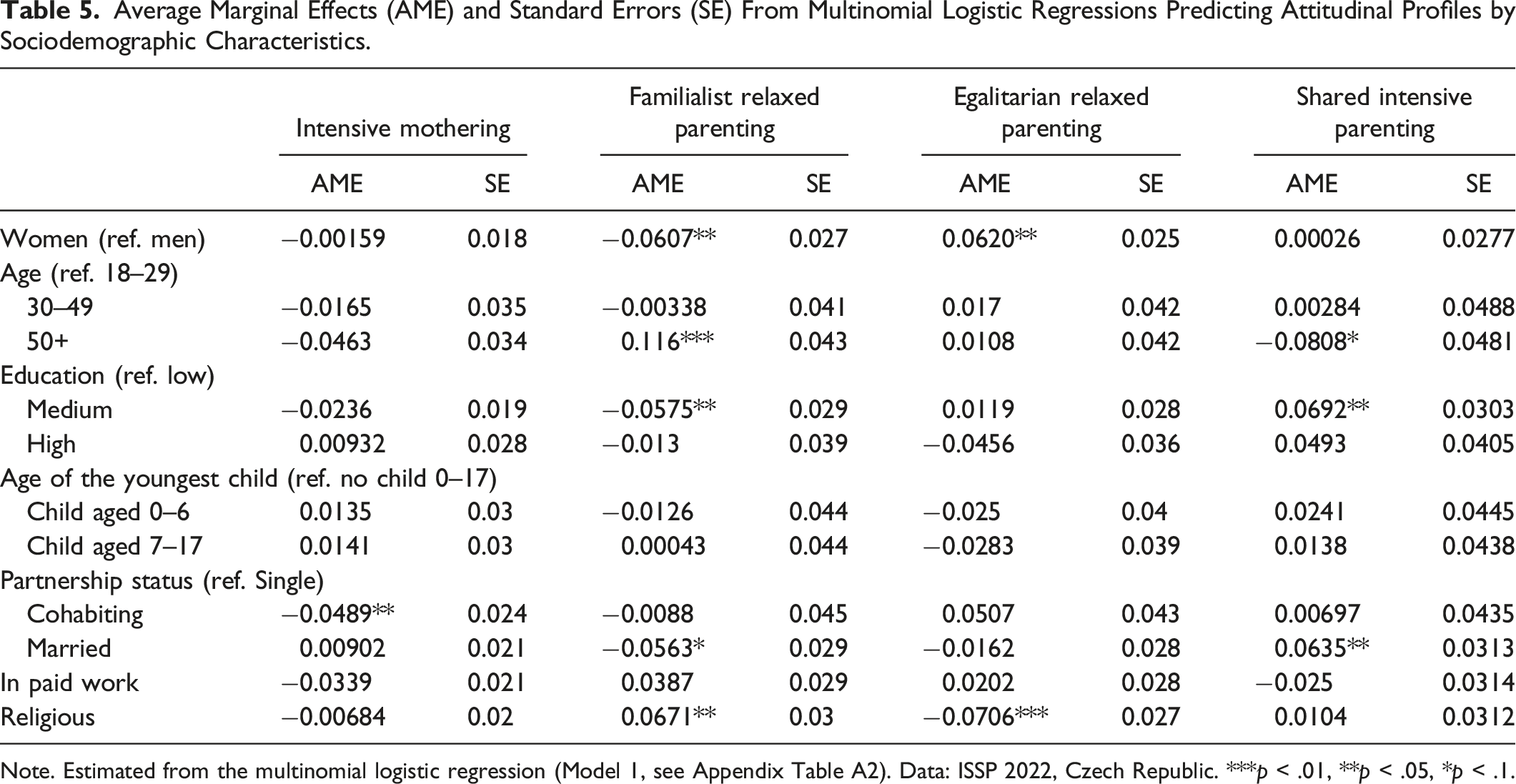
Note. Estimated from the multinomial logistic regression (Model 1, see Appendix Table A2). Data: ISSP 2022, Czech Republic. ***p < .01, **p < .05, *p < .1.
First, attitudinal profiles differed by gender, particularly concerning those profiles with lower support for intensive parenting norms. The findings indicated that women were significantly more likely than men to endorse egalitarian relaxed parenting attitudes (AME = 0.062, p = .013) and less likely to hold ambivalent familialist relaxed parenting attitudes (AME = −0.061, p = .022) (Table 5). To visualize these differences, Figure 1 presents the predicted probabilities of belonging to each attitudinal profile by gender. The proportion of men endorsing familialist relaxed parenting attitudes is 33% (CI 29–37) compared to 27% (CI 24–30) among women. Egalitarian relaxed parenting attitudes are held by 28% (CI 25–31) of women and 22% (CI 18–25) of men. In contrast, support for both attitudinal profiles endorsing intensive parenting norms shows no variation between men and women. Predicted distribution of attitudinal profiles by gender. Note: Estimated from the multinomial logistic regression (Model 1, see Appendix Table A2). Controlled for age, partnership status, employment status, age of child under 18 in the household, and religiosity. Data: ISSP 2022, Czech Republic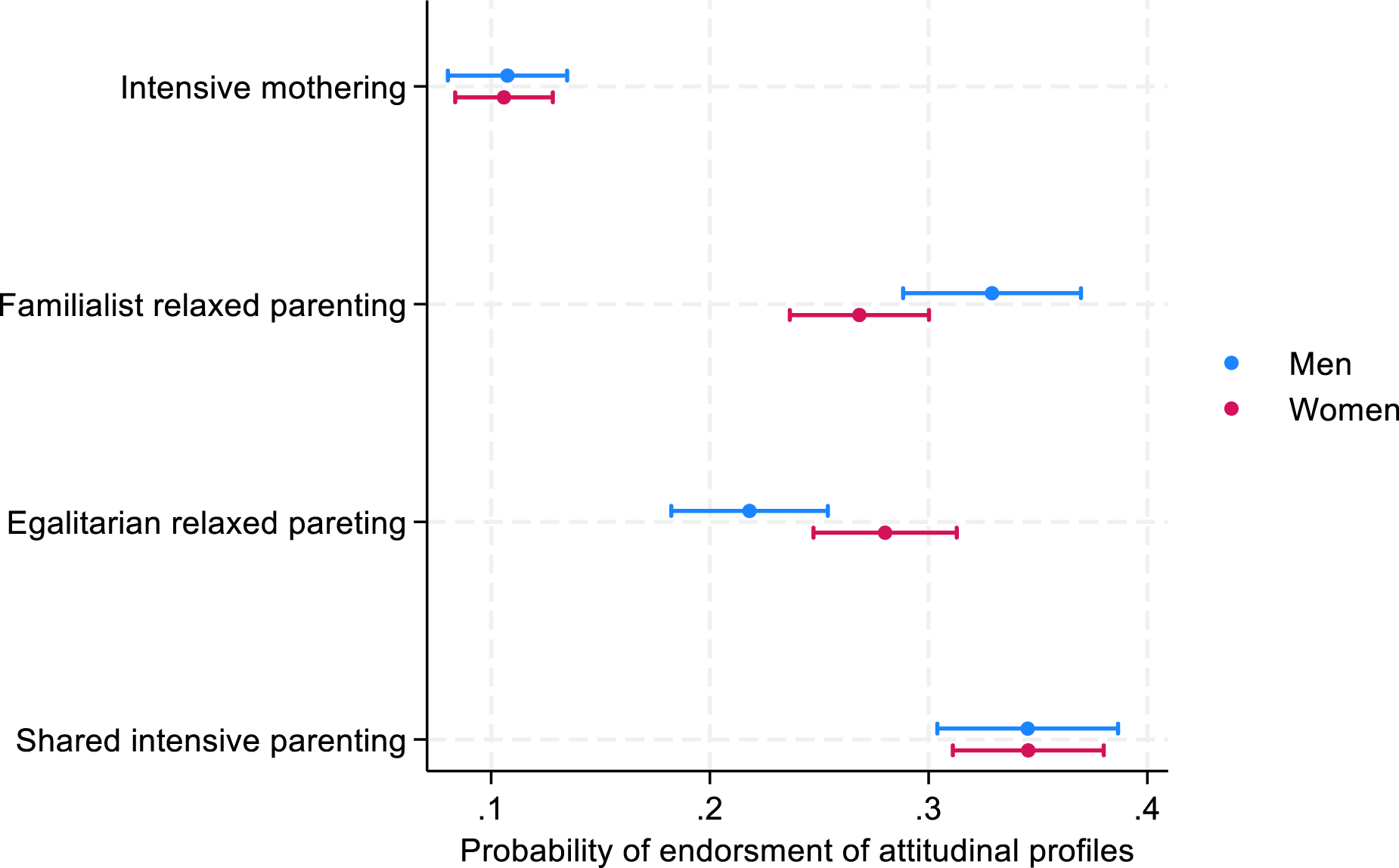
The most pronounced variations were observed across different age groups. Individuals aged 50 years and older were more inclined toward familialist relaxed parenting class (AME = 0.116, p = .007) compared to those from the youngest aged group and 8% less likely to adopt the shared intensive parenting attitudinal profile (AME = −0.081, p = 0.93). There were no significant differences in the distribution of attitudinal profiles between the youngest group and those aged 30–49.
Model 1 did not find differences between the attitudes of parents of young children and those without young children when the age of respondents was controlled for. However, some variation was observed based on partnership status. Cohabiting individuals were less likely to adhere to intensive mothering profiles compared to single individuals (AME = −0.048, p = .040). Married individuals were more likely to endorse shared intensive parenting attitudes compared to single individuals (AME = 0.063, p = .043). The findings also confirmed that religious beliefs are associated with a higher likelihood of holding familialist attitudes (AME = 0.067, p = .025) and a lower probability of adopting egalitarian relaxed parenting attitudes (AME = −0.075, p = .009).
Finally, the findings suggested that endorsement of attitudinal profiles varies by educational level. Contrary to expectations, Model 1 shows that endorsement of a shared intensive parenting profile is not associated with higher education. However, individuals with a medium level of education are more likely to adhere to shared intensive parenting norms (AME = 0.069, p = .022) and less likely to belong to the familialist relaxed parenting profile (AME = −0.057, p = .045) compared to those with lower level of education. Additionally, Model 1 found no educational differences in the likelihood of endorsing egalitarian relaxed parenting attitudes or the intensive mothering profile compared to the familialist profile.
Average Marginal Effects (AME) and Standard Errors (SE) From Multinomial Logistic Regressions Predicting Attitudinal Profiles by Education and Gender.
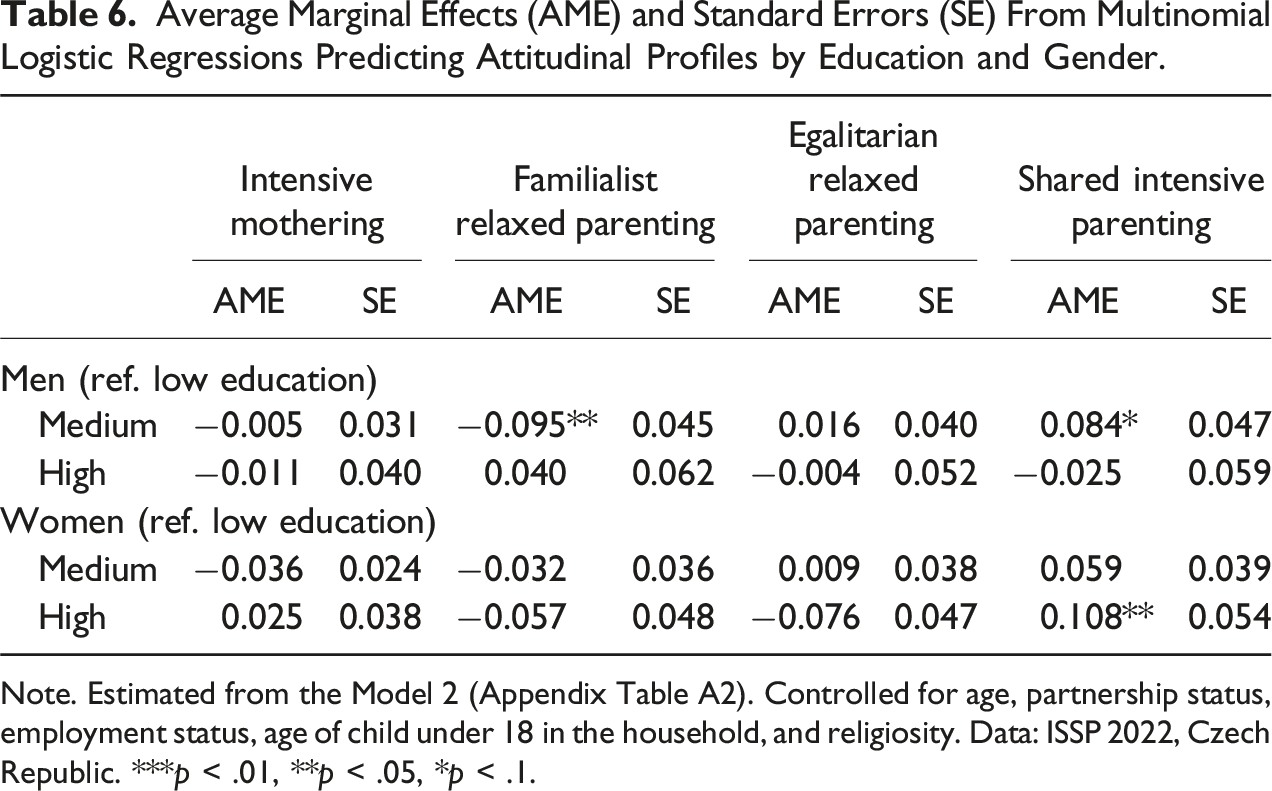
Note. Estimated from the Model 2 (Appendix Table A2). Controlled for age, partnership status, employment status, age of child under 18 in the household, and religiosity. Data: ISSP 2022, Czech Republic. ***p < .01, **p < .05, *p < .1.
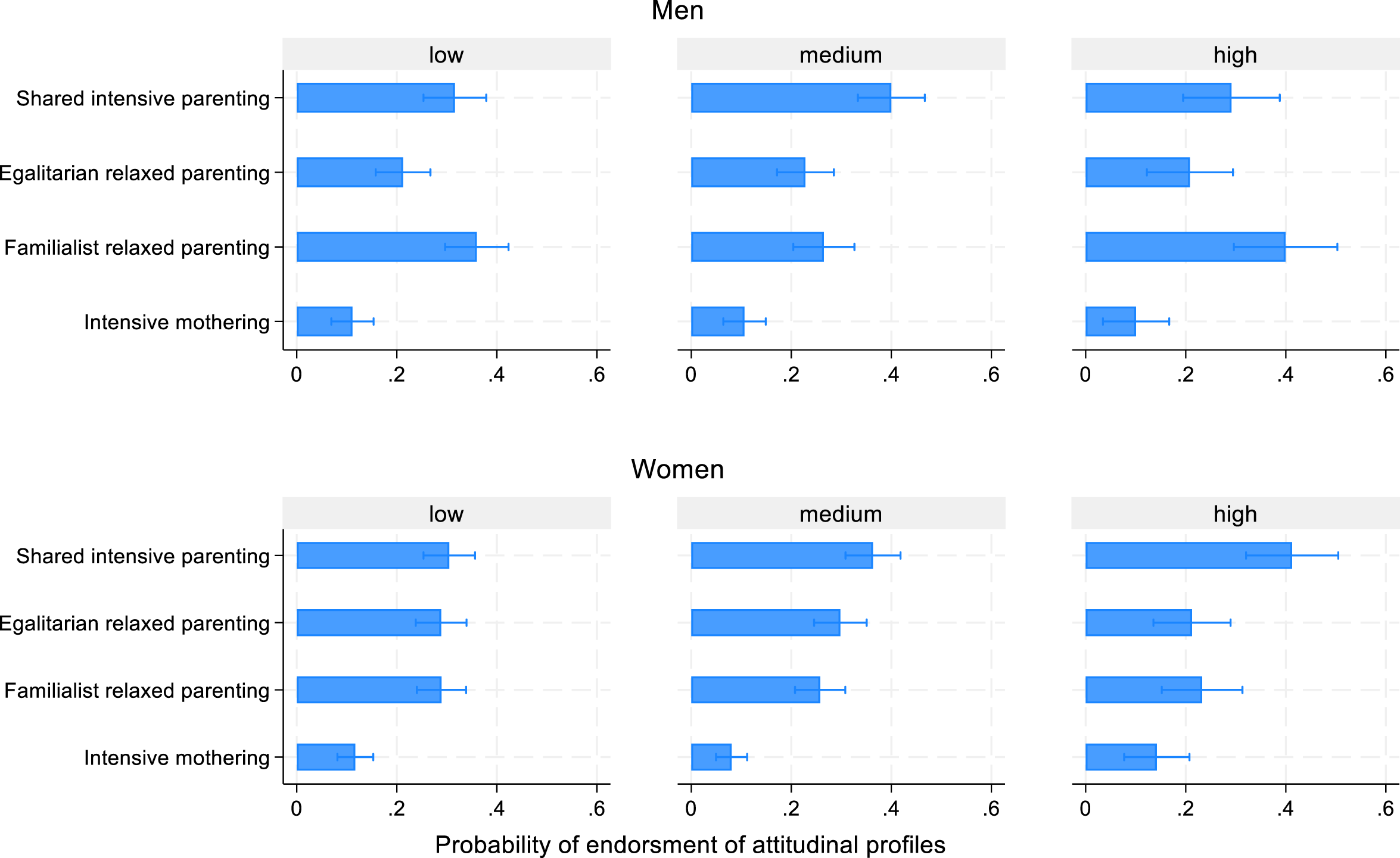
Predicted distribution of attitudinal profiles by educational level and gender. Note: Estimated from the Model 2 (Appendix Table A2). Controlled for age, partnership status, employment status, age of child under 18 in the household, and religiosity. Data: ISSP 2022, Czech Republic
In contrast, higher-educated men do not differ significantly from lower-educated men in their attitudes concerning shared intensive parenting. Both highly educated men (40%) and those with low education (36%) are more likely to support familialist relaxed parenting, whereas only about one-third endorse shared intensive parenting (Figure 2). However, men with medium education are more likely to endorse shared intensive parenting (AME = 0.084, p = .074) and less likely to support familialist relaxed parenting (AME = −0.0945, p = .035) compared to men with lower education. Specifically, about 40% of men with medium education support shared intensive parenting, while only 27% adopted familiastic relaxed parenting attitudes. The proportion of men adopting egalitarian relaxed parenting and those supporting intensive mothering does not vary by educational attainment.
Conclusions and Discussion
This study aimed to develop a comprehensive understanding of the intersection between intensive parenting (mothering) norms and gender beliefs. By drawing on the multidimensionality of the gender beliefs theoretical framework, this study extended previous conceptualizations of intensive parenting (mothering) norms to include both views on sharing parental responsibility and on the primary role of mothers.
Using latent class analysis, this study identified four attitudinal profiles related to intensive parenting norms in the Czech Republic. The findings confirm that multiple gender beliefs co-occur with support for child-centered parenting, effort to stimulate child development, and adherence to expert guidance in parenting. While shared intensive parenting is associated with egalitarian and non-gender essentialist beliefs, intensive mothering attitudes support traditional role of mothers and gender essentialist beliefs. Additionally, low support for intensive parenting norms was associated with competing gender beliefs, that is, with rejection of gender essentialism (egalitarian relaxed parenting), but also with support for gender essentialism and ambivalent gender beliefs (familialist relaxed parenting).
Data from the Czech Republic revealed that intensive parenting norms are predominantly associated with support for shared parental responsibility, support for maternal employment when having a preschool child, and disapproval of gender essentialist beliefs. These findings can be interpreted in line with the trend toward increasing fathers’ participation in childcare. These results are consistent with findings from the USA, which indicated that highly intensive mothers in terms of behavior tend to support low essentialism (Lankes, 2022). In contrast, attitudes favoring intensive mothering that emphasize the mother's primary responsibility for childcare and gendered traits in childcare and disproval of the mother´s employment were less prevalent. This finding corroborates previous studies showing that unidimensional traditional beliefs have declined, giving way to egalitarian or multidimensional ambivalent gender beliefs (Begall et al., 2023; Grunow et al., 2018).
Although no overall differences were found between men and women in their endorsement of intensive parenting norms, there was a divergence in attitudes between higher-educated men and women. Younger respondents and highly educated women were more likely to endorse a shared intensive parenting attitudinal profile. Among men, those with medium education were most likely to adopt shared intensive parenting. Highly educated women may feel greater pressure to conform to intensive parenting norms compared to their less educated counterparts, driven by their higher educational aspirations for their children, and might be part of social networks where intensive parenting is the norm. Although the Czech data shows that higher-educated men are more involved in childcare compared to low-educated fathers, mothers still do a larger share of childcare (Klímová Chaloupková & Pospíšilová, 2024). In contrast, highly educated men, who often see themselves as primary breadwinners, may view the opportunity cost of intensive parenting as higher and are more likely to prioritize their work commitment over adopting intensive parenting norms.
Importantly, present findings point to internal diversity in the support for different dimensions of intensive parenting norms (Lankes, 2022; Loyal, Sutter, & Rascle, 2017; Mollborn & Billingsley, 2024). Individuals belonging to the shared intensive parenting profile placed less emphasis on the child-centered dimension compared to those aligned with the intensive mothering profile. Compared to egalitarian relaxed parenting, individuals associated with this profile expressed lower support for maternal employment but higher support for gender essentialism, although still significantly lower than those belonging to the familialist attitudinal profile. Therefore, the shared intensive parenting attitudinal profile may be interpreted as containing multidimensional gender beliefs, even though egalitarian views tend to prevail.
Contrary to expectations, the present analyses did not identify an intensive parenting class that combines strong gender essentialism with the endorsement of shared caregiving responsibilities. Instead, the findings suggest that ambivalent, multidimensional gender beliefs were associated with lower support for intensive parenting items, thereby forming the familialist relaxed parenting profile. Consistent with prior findings (Begall et al., 2023; Grunow et al., 2018), the familialist relaxed class emerged as one of the most prevalent attitudinal profiles, alongside shared intensive parenting, in the Czech Republic. The familialist relaxed parenting attitudinal profile was most likely adopted by men with higher education, individuals aged 50 and above, and those with religious beliefs.
In contrast, the egalitarian views (support for joint spheres of care and earning, disapproval of gender essentialist views) and low support for intensive parenting norms were more likely adopted by women with lower and medium education. These findings are consistent with those showing low essentialism among relaxed mothers (i.e., those with less intensive time investment) and mixed parenting intensity among essentialist mothers (Lankes, 2022). If both parents are working or lack flexible working conditions, they may find it challenging to accommodate a schedule to numerous organized child activities designed to foster the child's talents. Egalitarian parents may also place a higher value on autonomy and might prefer a more relaxed approach that allows children to explore their interests freely rather than attending a wide range of organized activities.
These results have several implications for research on contemporary parenting norms. First, present findings suggest that support for (or rejection of) intensive parenting norms is associated with competing gender beliefs. By demonstrating that multiple gender beliefs co-occur with intensive parenting norms, the research extends prior approaches that related norms of intensity mainly with mothers. Therefore, the conceptualization of intensive parenting norms should consider both attitudes to shared parental responsibilities and emphasis on the primary role of the mother in childcare. Additionally, the findings underscore the existence of internal variation in the endorsement of different dimensions of intensive parenting norms. From a methodological perspective, these findings highlight the importance of investigating individual attitudinal profiles of intensive parenting holistically, using a person-centered approach.
Although present findings show that normative expectations of intensity relate predominantly to both parents, these norms might be differently experienced by mothers and fathers. Therefore, studying the link between attitudes, actual behavior, and parental experiences is essential. Future research should assess how adherence to certain intensive parenting profiles translates into parenting behavior and divisions of childcare responsibilities between mothers and fathers and how the actual behavior is perceived. Nevertheless, insights from research on time spent on childcare suggest that despite an increase in father’s childcare engagement, mothers might have experienced an even more substantial increase in time devoted to childcare (Negraia et al., 2018).
Furthermore, the present findings open the question of how the structural and cultural factors shape the spread of intensive parenting norms and their interplay with gender beliefs. Although we theorized that the Czech institutional and cultural context might offer favorable conditions for the spread of intensive parenting (mothering) norms, results indicate rather moderate support for intensive parenting norms (Gauthier et al., 2021; Mollborn & Billingsley, 2024). For instance, in Sweden, around half of the responders endorsed intensive parenting norms, about one-third only some aspects, and only about 11% of respondents either rejected or remained neutral towards intensive parenting attitudes (Mollborn & Billingsley, 2024). In this context, where gender egalitarian norms prevail, the burden of intensive parenting might be mitigated by a more equitable distribution of childcare responsibilities between both parents. Conversely, in societies where mothers remain the primary caregivers, pressure to conform to intensive parenting practices might impose an unsustainable load on mothers, which might prevent the further spread of these norms. Therefore, future research using cross-country comparative data should explore the impact of macro-contextual factors on the prevalence of different attitudinal profiles related to contemporary parenting.
This study has several limitations. First, as the items related to intensive parenting norms were not included in the main international ISPP 2022 questionnaire, our analyses lack a cross-country comparative perspective. Moreover, the data used contain only a limited number of indicators for measuring intensive parenting norms, which do not allow us to assess their comparability across groups. This is a limitation, because different dimensions and items may have varying meanings for different subpopulations (Gauthier et al., 2021; Klímová Chaloupková & Pospíšilová, 2023). Additionally, we lack detailed information on the ages of children, aside from distinguishing between preschool age (0–6) and school age and older (7–17). This prevents us from comparing the attitudes of parents with minor children, who require the more time-intensive care. Despite these limitations, this study reveals the complex relationship between intensive parenting norms and various dimensions of attitudes to gender norms, as well as their interplay with individual socio-demographic characteristics. While it provides new evidence on the distribution of intensive parenting norms in the specific context of the Czech Republic, it also adds to the existing literature by proposing a framework applicable across diverse cultural settings. Therefore, this study contributes to the field of studying multidimensional gender ideologies by integrating varying dimensions of gender beliefs with contemporary parenting norms. Additionally, these findings might contribute to a better understanding of the spread of intensive parenting norms across different institutional and cultural contexts.
Supplemental Material
Supplemental Material - Shared Intensive Parenting or Intensive Mothering? The Link between Gender beliefs and Parenting Attitudes in the Czech Republic
Supplemental Material for Shared Intensive Parenting or Intensive Mothering? The Link between Gender beliefs and Parenting Attitudes in the Czech Republic by Jana Klímová Chaloupková in Journal of Family Issues
Footnotes
Declaration of Conflicting Interests
The author declared no potential conflicts of interest with respect to the research, authorship, and/or publication of this article.
Funding
The author disclosed receipt of the following financial support for the research, authorship, and/or publication of this article: This work was supported by the Czech Science Foundation under Grant 21-18014S, which funded all research, analysis, and writing activities. This study uses data collected with the support of the Czech Science Foundation (project no. 22-09220S).
Ethical Statement

Data Availability Statement
This study uses data from the Czech Republic collected under the framework of the International Social Survey Programme Family and gender role 2022, publicly available for research purposes (see https://issp.org/). To access for data, contact Czech Social Science Data Archive (CSDA). The dataset is cited as (Hmplová & Klusáček, 2025).
Supplemental Material
Supplemental material for this article is available online.
References
Supplementary Material
Please find the following supplemental material available below.
For Open Access articles published under a Creative Commons License, all supplemental material carries the same license as the article it is associated with.
For non-Open Access articles published, all supplemental material carries a non-exclusive license, and permission requests for re-use of supplemental material or any part of supplemental material shall be sent directly to the copyright owner as specified in the copyright notice associated with the article.
