



Abstract
Drawing on the Gender Revolution Framework, this research uses data from Canada General Social Survey and binary logistic regression to examine how the gender division of housework influences fertility intentions among partnered women aged 18–39 (N = 1589), across various employment and education levels. Unadjusted results showed that women who shared household routine tasks (cooking, cleaning, dishes, and laundry) and intermittent tasks (grocery shopping, organizing social life, finance, and bill paying) with their partner had higher intentions to have children. The adjusted findings revealed that women’s employment status moderated the relationship between gender division of household routine tasks and fertility intentions, while education had no significant moderating effect. Employed women who did not share equally household routine tasks with their spouse had a lower probability of intention to have children (0.22), compared to their unemployed counterparts (0.48). The findings have significant implications for social and family policies that are discussed in detail.
Introduction
Several global regions are experiencing below-replacement fertility levels, with rates in Europe, Northern America, Eastern and South-Eastern Asia, Australia, New Zealand, Latin America, and Caribbean that are well below the population replacement level of 2.1 children per woman (UN, 2021). Two-thirds of the world population resides in countries with sub-replacement fertility rates (Kaneda et al., 2023). In Canada, the Total Fertility Rate has remained below the replacement level for over five decades, reaching a record low of 1.33 births per woman in 2022 (Provencher & Galbraith, 2024).
Sustained sub-replacement fertility rates typically lead to rapid population aging, shortage in the labor force and declining economic productivity, constrains on health care systems, and challenges related to adopting immigrants as a solution to low fertility. The success of any policy attempts to raise fertility levels relies on improving the understanding of determinants and mechanism shaping individuals’ fertility intention, which is viewed as a key predictor of fertility behavior (Hagewen & Morgan, 2005; Quesnel-Vallée & Morgan, 2003; Schoen et al., 1999).
Demographers and social scholars have increasingly related low fertility to cross-country variations in gender inequality at the macro level (Arpino et al., 2015; Esping-Andersen and Billari 2015; Goldscheider et al., 2015; Kohler et al., 2002; McDonald, 2000; Mills, 2010; Mills et al., 2005). Recently, macro-level explanations of low fertility have gained attention among demographers, largely inspired by McDonald’s gender equity theory (2000, 2006) and the Gender Revolution Framework (Goldscheider et al., 2015). A growing body of research has examined the hypothesis that the equal sharing of household work and childcare between men and women (particularly working women) is associated with a higher likelihood of intending to have more children (Raybould & Sear, 2021). However, the results of these micro-level studies are mixed and highly context-dependent, with most research conducted in Western European (especially in Nordic societies) and some Asian countries. Notably, similar studies are scarce in North America, particularly in Canada. Moreover, there is a lack of research examining the moderating effects of women’s employment and education on the relationship between the gender division of labor at home and fertility intentions. Addressing these knowledge gaps is essential for a deeper understanding of the complex relationships between gender equality, employment, education, and fertility.
This research seeks to fill the existing gaps in the literature by investigating the relationship between the gender division of housework and women’s fertility intentions, as well as the moderating effects of women’s education and employment. Utilizing recent survey data from Canada, we investigate whether the distribution of routine (cooking, cleaning, dishes, and laundry) and intermittent (grocery shopping, social organization, finance, and bill paying) household tasks influence women’s fertility intentions. The findings of this study are anticipated to provide insights into the determinants of low fertility, particularly in the Canadian context and contribute to the ongoing discussion on the complex interplay between gender equality, employment, education, and fertility.
Conceptual Framework & Hypotheses
This study is based on theories of gender equality in fertility (Goldscheider et al., 2015; McDonald, 2000, 2013). These theories propose that as women enter the labor force and assume paid employment, they experience a “second shift” of unpaid household and childcare responsibilities, leading to a decrease in family size (Becker, 1985; Goldscheider et al., 2015; Hochschild & Machung, 2012). This is attributed to persistent gender inequality within the family, despite relative equality between men and women in public spheres like education and employment (McDonald, 2000). However, when men equally share in household and childcare responsibilities, fertility begins to increase (Anderson & Kohler, 2015; McDonald, 2000). Building on observations from Nordic countries, the Gender Revolution Framework (Goldscheider et al., 2015) posits a two-stage process of fertility changes. In the first stage, women, like men, enter the workforce and pursue higher education in large numbers, while still shouldering the bulk of housework and childcare responsibilities. As Becker (1991: S34) argued, the growth in women’s earning power “raised the forgone value of their time spent at child care and other household activities, which reduced the demand for children and encouraged a substitution away from parental, especially mothers', time.” This “double shift” of working outside and inside the home hampers women’s fertility intentions. However, when men begin contributing to housework and childcare responsibilities within the private sphere, families enter a second phase of Gender Revolution. In this phase, women’s work–life conflict and pressure decrease, making them more likely to desire having children. Figure 1 illustrates the phase of the Gender Revolution Framework and its relationship with fertility. An illustration of gender revolution framework of fertility.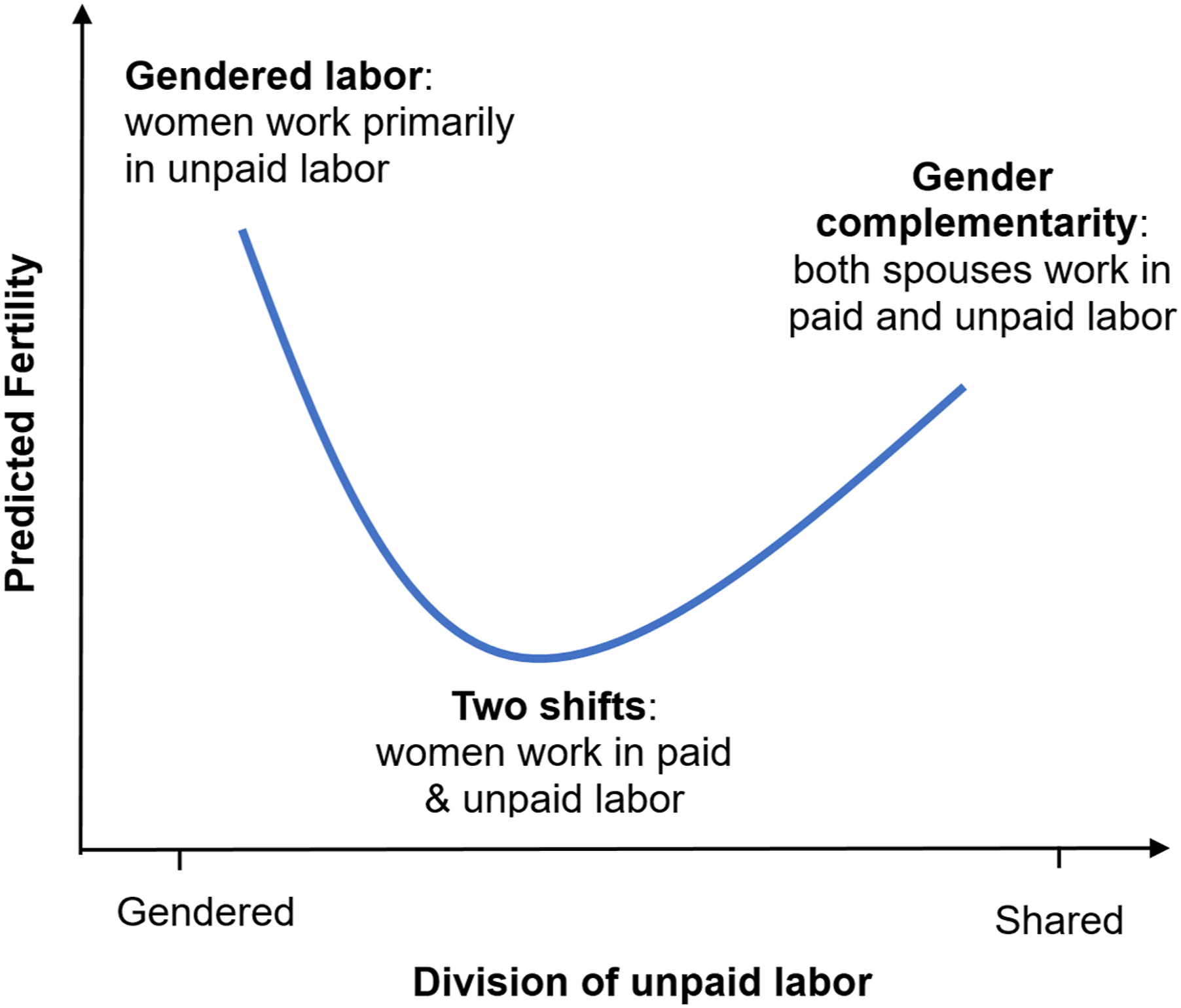
Inspired by the Gender Revolution Framework, a growing body of micro-level research has investigated the relationship between gender equality at home and fertility intentions or outcomes, yielding mixed results (for a recent review, see Raybould & Sear, 2021). These studies have primarily been conducted in Europe (notably Nordic countries), East Asia and Australia. In Nordic countries (specifically Finland, Sweden and Norway), research has shown that the probability of having a child increases when women’s time spent on housework decreases, men actively share childcare responsibilities, and housework tasks are divided more equally (Dommermuth et al., 2017; Duvander & Andersson, 2006; Miettenen et al., 2015).
Outside Nordic countries, research in Spain and Italy found that an equal division of housework and increased paternal involvement in household tasks were positively associated with the intention to have a second child (Fiori, 2009; Mills et al., 2008; Suero, 2023). In Great Britain, a study found that when one partner shouldered more than half of the housework, the likelihood of a first birth decreased, whereas equally shared domestic work among working women increased the likelihood of a second birth (Schober, 2013). Similarly, in South Korea, Japan, Taiwan, and China, research has indicated that while women bear the bulk of housework, spousal support is positively associated with intended births (Kan & Hertog, 2017; Kim, 2017; Moore, 1998). However, a Taiwanese study revealed a nuance: while increased childcare support from husbands enhanced women’s fertility intentions, shared housework did not have a significant impact (Cheng & Hsu, 2020).
In Canada, to our knowledge, there are only two outdated studies that have investigated the link between gender equality and fertility indirectly. A study conducted in Southern Ontario found that women and couples who failed to establish a satisfactory gender division of labor had fewer children than intended (Matthews, 1999). Moreover, Wu and Baer (1996) found that support for gender equality and the importance of having children are somewhat inversely related, particularly among English-speaking Canadians (as opposed to French-speaking Canadians). Beyond these two studies, there is a notable lack of research on the relationship between gender equality in the division of household labor and fertility intentions and outcomes in Canada.
Hypotheses
Based on the literature and the theoretical perspectives reviewed above, this research proposes the following three hypotheses.
Women who share household tasks equally with their spouses are more likely to intend to have children.
The effect of gender division of domestic work on fertility is expected to vary depending on couples’ characteristics. Recent evidence from Australia (Snopkowski, 2023), for example, indicated that household inequality and intention to have a third birth was mediated by relationship satisfaction among dual-earner couples. Specifically, men’s increased contribution to household labor leads to higher relationship satisfaction, which is associated with increased fertility. As Lappegård (2020) notes, the future of fertility levels “are shaped at the intersection of gender and social stratification.” The implications of having a child differ for women with varying levels of education and employment status (Jalovaara et al., 2019). Highly educated women and those in paid employment tend to choose partners with more gender-egalitarian orientations (van Bavel, 2012), possess greater bargaining power (Brodmann et al., 2007), and may struggle to balance work and family life (Jalovaara et al., 2019), as argued by Suero (2023).
Despite the scarcity of studies investigating the moderating effect of education and employment on fertility, some findings are noteworthy. A recent Spanish study found that women’s educational attainment moderates the effect of task distribution on the intention to have a second child (Suero, 2023, p. 14). In Taiwan, husbands with post-secondary educated wives shared more household and childcare tasks, although increased help with household tasks did not enhance women’s fertility intentions (Cheng & Hsu, 2020). Regarding employment, evidence shows that fertility intentions are negatively associated with job uncertainty (Kuhnt, Minkus, & Buhr, 2021; Vignoli et al., 2020) and adverse economic conditions (Lappegård et al., 2022; Vignoli et al., 2022). Given the limited research on the moderating effect of education and employment on the relationship between gender equality and fertility intentions, this study proposes the following two hypotheses.
Employed women who share household tasks equally with their partners are more likely to intend to have children.
University-educated women who share household tasks equally with their partners are more likely to intend to have children.
This study will examine these three hypotheses using the most relevant and recent Canadian survey data.
Methodology
Data
This study uses data from the 2017 Canada’s General Social Survey (GSS), a nationally representative survey conducted by Statistics Canada since 1985. The GSS employs telephone surveys to collect data from a sample of Canadians aged 15 years and older on various topics. Each GSS cycle selects one family member randomly from each household to participate in the survey, which covers core demographic questions such as age, sex, marital status, education, and employment, as well as a cycle-specific module (Statistics Canada, 2021).
This research utilized microdata from the 2017 GSS, Cycle 31 Family, which was conducted among a representative sample of 20,602 Canadians aged 15 and older from February 1st 2017 to November 30th 2017 (Statistics Canada, 2021). The microdata file was accessed through the Statistics Canada Research Data Center at Nipissing University. The survey contains appropriate measures for the two main concepts investigated in this research: gender division of housework and fertility intentions.
The study sample was limited to women under the age of 40 who were living with a male partner in common-law or marital relationships at the time of the interview, providing a relevant context for partnered fertility decision-making. The resulting study sample consisted of 1589 eligible women, who may already be mothers but still desire to have additional children in the future.
Measures
The dependent variable, fertility intention, was measured using a survey question: “Do you intend to have a/another child in the next 3 years?” Respondents could answer “Definitely Yes,” “Probably Yes,” “Probably Not,” “Definitely Not,” or “Unsure.” Due to insufficient valid cases in each category for multinomial or ordinal logistic regression analyses, we merged “Definitely Yes” with “Probably Yes,” and “Probably Not” with “Definitely Not,” and created a binary dependent variable with response categories “No” (combining “Probably Not” and “Definitely Not”) and “Yes” (combining “Definitely Yes” and “Probably Yes”).
The key independent variable, Gender Equality in the Division of Housework, was measured using items related to household tasks. Specifically, the survey asked respondents to identify who in their couple mainly takes care of the following tasks: preparing daily meals, cleaning, dishes, laundry, grocery shopping, gardening, outdoor work/repairs, organizing social life, and finance and bill paying. The items of “outdoor work/repairs” and “gardening” were excluded from the analysis due to their inapplicability to many respondents living in condominiums, apartments, or rentals. For the remaining seven items, respondents could choose from the following answers: “Mostly you,” “Mostly your” [spouse] or “Shared equally” or “Neither.” Cases where “neither” was selected for any of the seven items were excluded from the analysis due to their limited number. The percent distribution of responses for these seven items is presented in Figure 2. Who does the household task mostly? (%) (reported by partnered women aged under 40, Canada, 2017).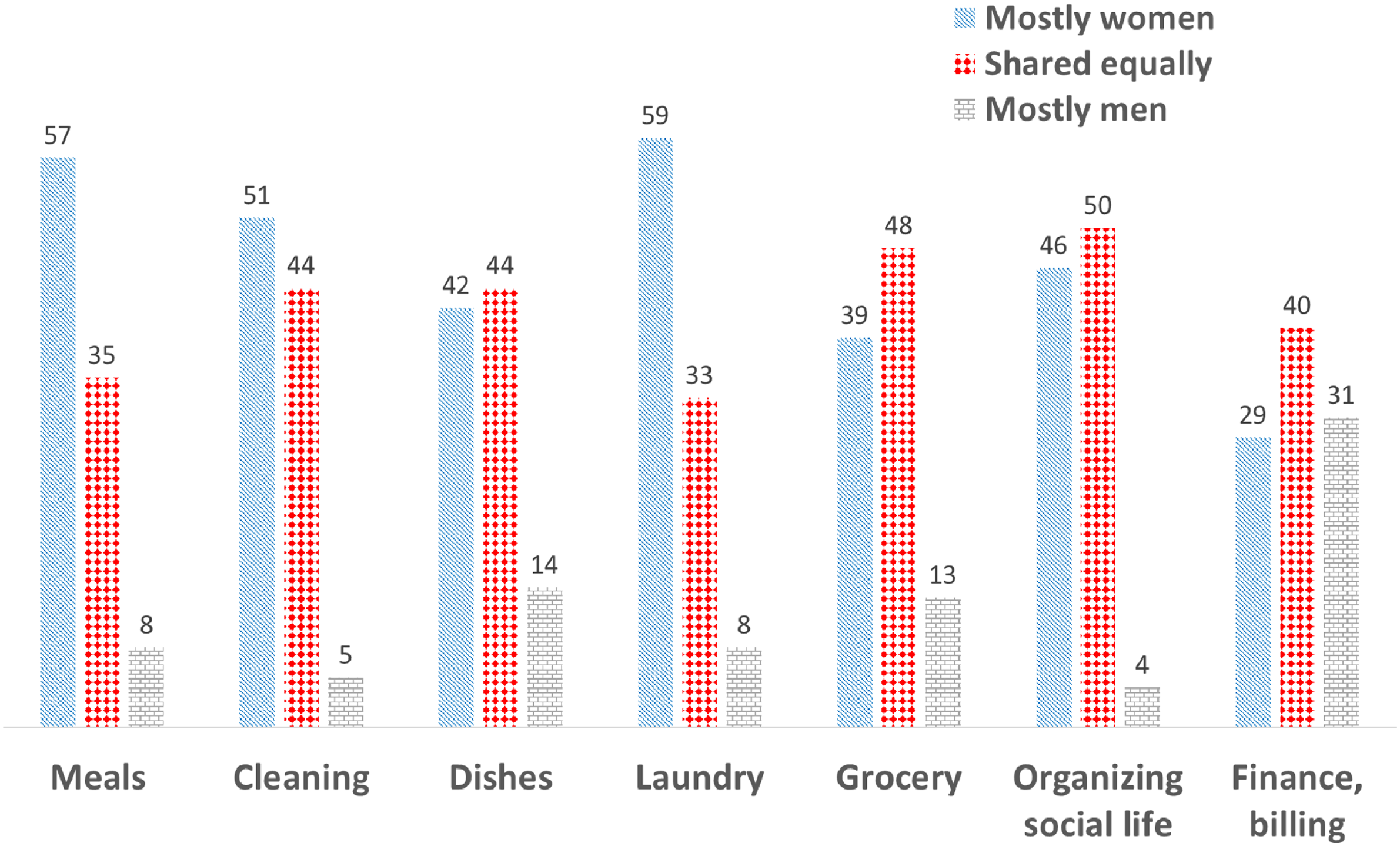
An Explanatory Factor Analysis of the seven items revealed two underlying factors (KMO = 0.72, p-value <.001). The analysis showed that four household routine tasks (i.e., preparing daily meals, cleaning, the dishes and doing the laundry) loaded on one factor (eigenvalue = 2.1, accounting for 27% of the variance). In contrast, three household intermittent tasks (i.e., grocery shopping, organizing social life and finance and bill paying) loaded on a second factor (eigenvalue = 1.1, accounting for 18.7% of the variance). Notably, the tasks loaded under the index of intermittent tasks share certain characteristics: they are more intermittent, require relatively less time compared to routine tasks, and offer more flexibility, allowing individuals to schedule them at their convenience. Consequently, gender equality in the division of housework was measured using two indexes: (1) gender equality in the division of household routine tasks and (2) gender equality in the division of household intermittent tasks.
To construct the two indexes, focusing on equal division of housework as per the three hypotheses, all the seven items were recoded into seven dummy variables, where “shared equally” was coded 1 and other two categories (i.e., “mostly women” or “mostly partner”) were coded 0. The routine tasks index was then constructed by summing the four relevant dummies, resulting in scores ranging from 0 (indicating “mostly women” or “mostly spouse”) to 4 (indicating all four tasks shared equally). Due to the small number of cases for some scores, the index scores were recoded into three categories: 0 (“Not shared”), 1 (“1–2 routine-tasks shared equally”), and 2 (“3–4 routine-tasks shared equally”). Similarly, the intermittent tasks index was constructed by summing the three relevant dummies, with scores ranging from 0 (indicating “mostly women” or “mostly spouse” for all the three tasks) to 3 (indicating all three tasks were shared equally). The index scores also were recoded into three categories: 0 (“Not shared”), 1 (“1 intermittent-task shared equally”), and 2 (“2–3 intermittent-tasks shared equally”).
To test Hypotheses 2 and 3, four interaction variables were constructed. As discussed in the literature review, women with university education or employment are more likely to intend to have children if their spouses equally contribute to the household tasks. Therefore, a dummy education variable was constructed, coding women with university education as 1 and others as 0. Four interaction terms were then generated by multiplying the two indexes of gender equality in the division of household routine and intermittent tasks with women’s employment status (0 = unemployed, 1 = employed) and education (0 = non-university education, 1 = university education).
The relationship between gender division of household tasks (routine and intermittent) and fertility intention was examined while controlling for theoretically and empirically relevant variables, including age, education, employment status in the past week, total number of living children (with current pregnancy included as a child), family income before tax, place of birth, and region. Moreover, four interaction variables were generated to measure the moderating effects of employment and education on the relationships hypothesized in Hypotheses 2 and 3. These interaction variables represent the interactions between gender equality in the division of routine and intermittent tasks and women’s employment status and education.
As noted above, the study employed dichotomization of explanatory, moderating, and outcome variables, driven by methodological and theoretical considerations. Specifically, this approach addressed the limited number of cases in certain categories and facilitated comparisons between distinct groups of women, as hypothesized, allowing for a clearer examination of relationships and moderating effects.
Statistical Analyses
First, univariate analysis was used to describe the characteristics of the study sample. Then, bivariate analyses were employed to describe women’s fertility intentions by their characteristics and test Hypothesis 1 using Chi-square tests with a significant level of p ≤ .05. Next, multivariate binary logistic regression was utilized to examine the net effect of independent variables (gender division of household routine and intermittent tasks) and interaction variables on fertility intentions. Three logistic models were developed to assess changes in the magnitude and direction of covariates’ effect. Model 1 includes only the two indexes of gender equality in the division of housework. Model 2 adjusts the effects of these indexes by control variables. Model 3 added interaction terms to examine Hypotheses 2 and 3, in addition to independent and control variables. Finally, post-estimation methods in Stata 18.0 were used to generate predicted probabilities of intention to have children over the next three years, based on gender equality in division of household tasks, for different levels of employment and education.
Results
Background Characteristics
Percentage Distribution of Partnered Women Aged 15–39, by Variables Used in the Study, Canada 2017 (N = 1589).
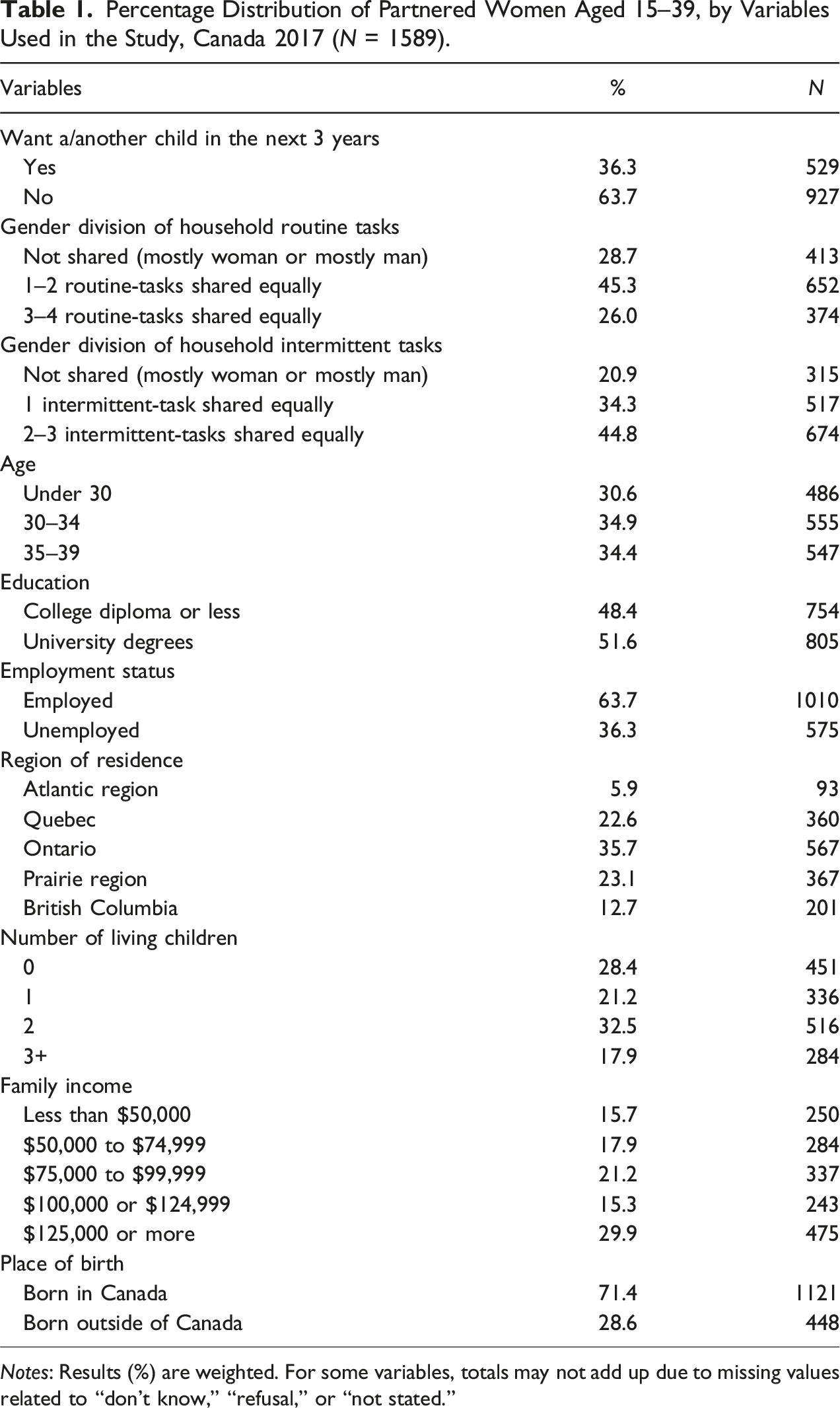
Notes: Results (%) are weighted. For some variables, totals may not add up due to missing values related to “don’t know,” “refusal,” or “not stated.”
Bivariate Analysis
Percentage Distribution of Partnered Women Aged 15–39 by Intention to Have a Child in the Next Three Years, and According to Selected Characteristics, Canada, 2017 (N = 1589).
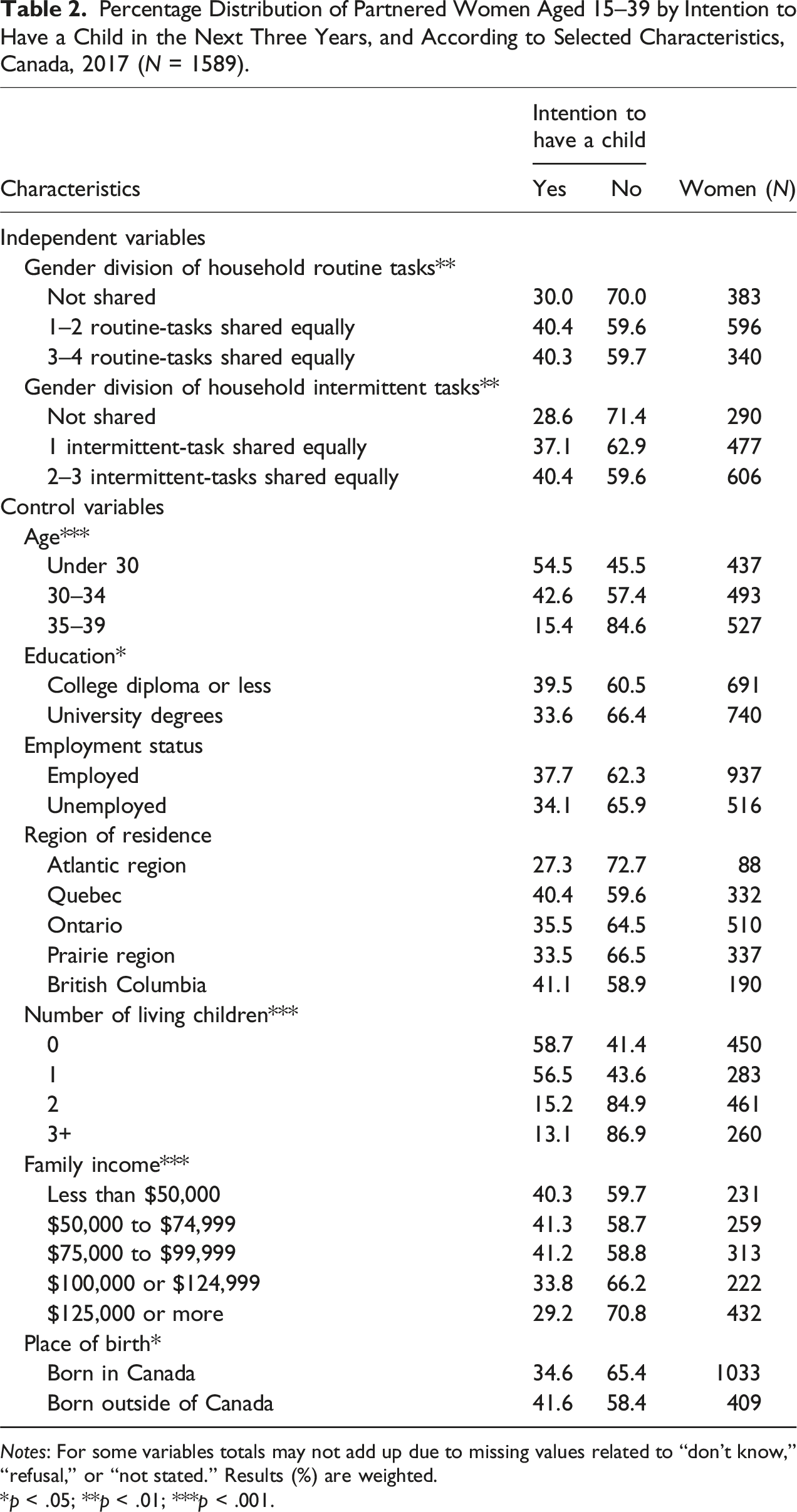
Notes: For some variables totals may not add up due to missing values related to “don’t know,” “refusal,” or “not stated.” Results (%) are weighted.
*p < .05; **p < .01; ***p < .001.
Multivariate Analysis
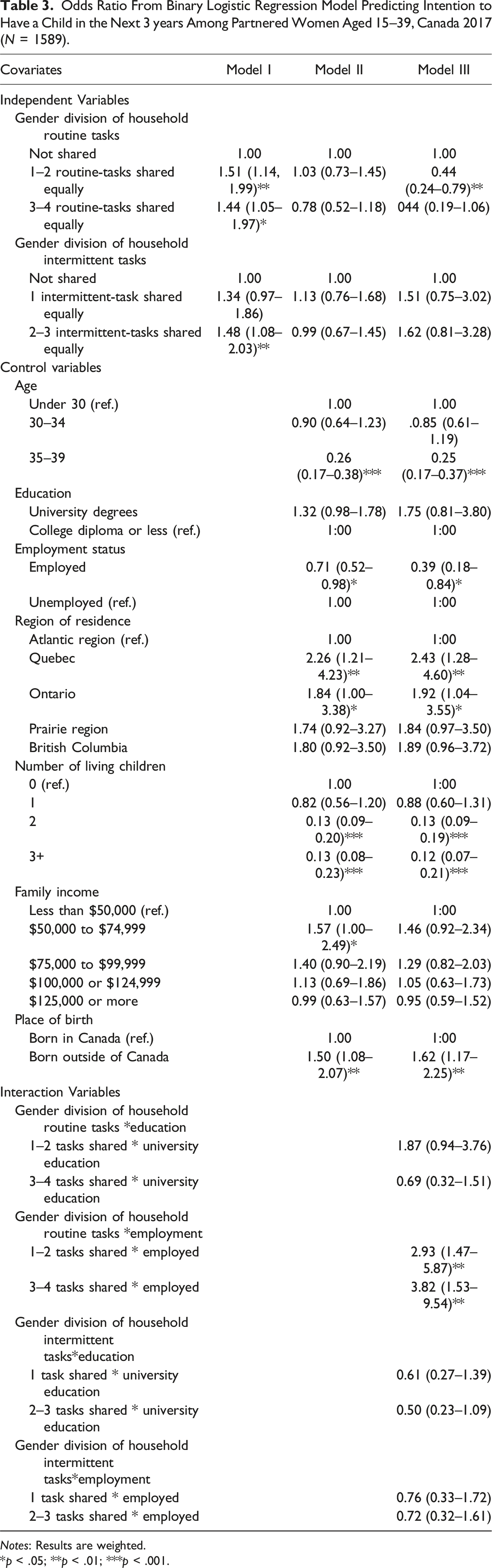
Odds Ratio From Binary Logistic Regression Model Predicting Intention to Have a Child in the Next 3 years Among Partnered Women Aged 15–39, Canada 2017 (N = 1589).
Notes: Results are weighted.
*p < .05; **p < .01; ***p < .001.
In Model 3, only the main effect of gender equality in the division of household routine tasks remained negatively significant. Notably, the interaction term related to household routine tasks and employment was significantly and positively related to fertility intention. Consistent with Hypothesis 2, employed women who shared equally 1–2 or 3–4 household routine tasks with their spouse were 2.9 and 3.8 times more likely to intend to have children, respectively, compared to those who did not share the household routine tasks or were unemployed. Additionally, the predicted probabilities in Figure 3 revealed that the relationships between gender division of household routine tasks and fertility intention were moderated by women’s employment status, but not education. Specially, employed women who did not share routine tasks with their spouse had a significantly lower probability of intention to have children in the next three years (0.22) compared to unemployed women (0.48). Moreover, women who shared 1–2 or 3–4 household routine tasks with their partner had higher probabilities of intention to have children (0.33 and 0.29, respectively) than those who did not share the routine cores (0.22). Women’s employment status and education had no significant moderating effect on the relationships between gender division of household intermittent tasks and fertility intention. Adjusted predicted probability of intention to have children (CI 95%) by gender division of household routine tasks.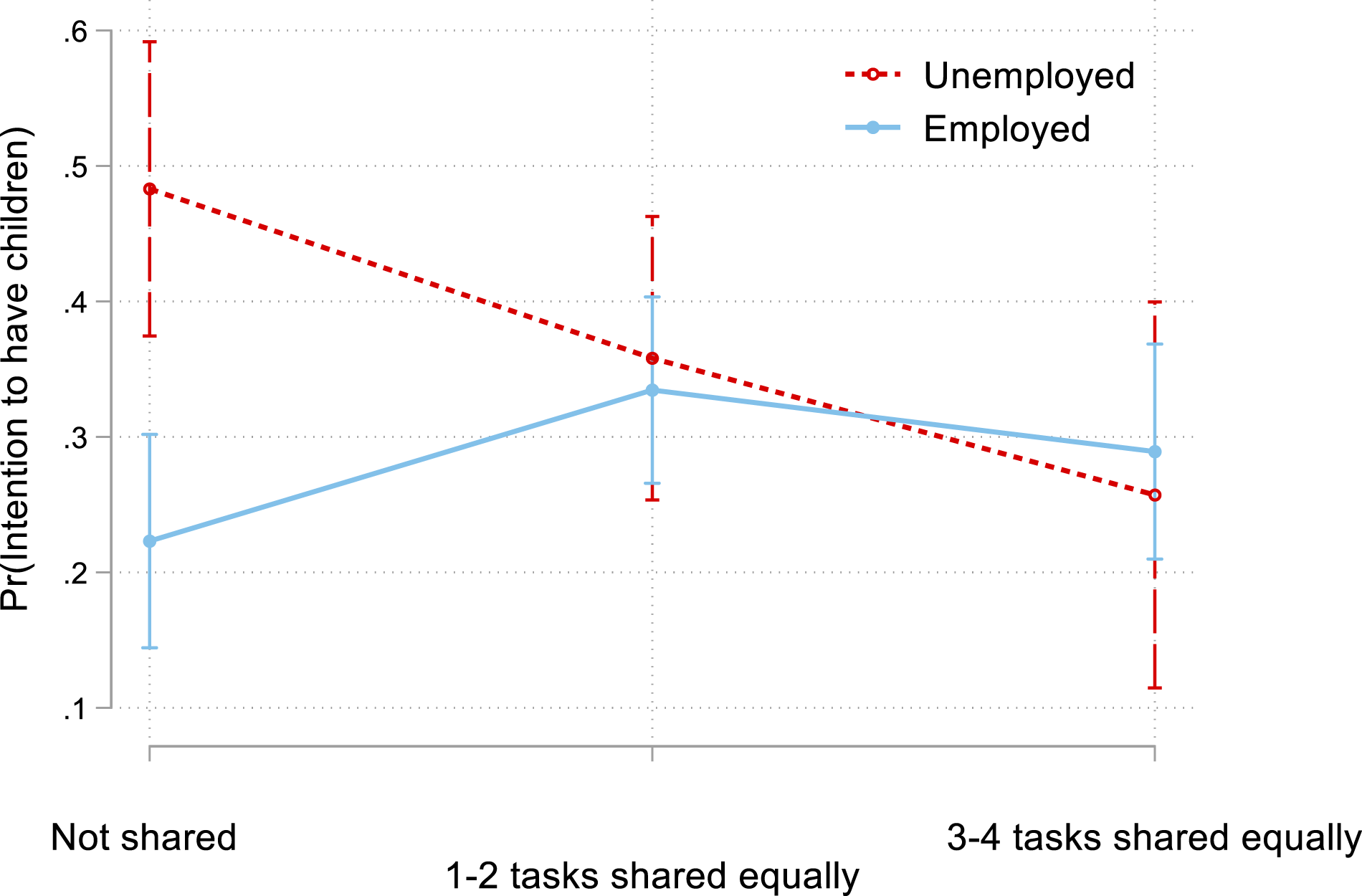
Discussion
Drawing on the fertility theories discussed earlier, particularly the Gender Revolution Framework, this study investigated the hypothesis that women who equally share the household tasks with their spouses are more likely to intend to have children. We also examined the moderating effect of women’s employment and education, hypothesizing that employed women (compared to unemployed women) and those with a university education (compared to non-university education) who share household tasks equally with their partners, are more likely to intend to have children.
In line with the first hypothesis, the unadjusted results showed that women who shared household routine or intermittent tasks equally with their partners were more likely to intend to have another child in the next 3 years. However, after adjusting for women’s characteristics, only the relationship between gender equality in the division of routine tasks and fertility intentions remained negatively significant. The unadjusted results are consistent with the findings of other studies documenting a positive relationship between gender division of housework and fertility intentions (e.g., Dommermuth et al., 2017; Miettinen et al., 2011; Miettinen et al., 2015; Mills et al., 2008; Oláh, 2003). In contrast, the adjusted results are mixed, indicating a negative or no significant relationship between gender equality and fertility intention, similar to findings by other studies (e.g., Cheng & Hsu, 2020; Raybould & Sear, 2021; Cheng & Hsu, 2020; Miettenen et al., 2015).
Supporting the second hypothesis, the significant moderating effect of employment on the relationship between gender division of household routine tasks and fertility intention indicated that employed women who did not share household routine tasks equally with their partner were significantly less likely to intend to have children, compared to unemployed women. This finding is consistent with a study across 25 European countries, which showed that a gender-role ideology prioritizing women’s caregiving roles over their employment was negatively associated with the second-child fertility intentions among working mothers (Han et al., 2023). This can be attributed to the double burden faced by employed women who bear the majority of household tasks. These findings also align with research in Norway and Spain, where women were less likely to have children when they experienced an unequal division of housework (Dommermuth et al., 2017; Suero, 2023).
This study provides evidence that employed women who bear the majority of the household tasks are less likely to intend to have a/another child. To address this burden, policies and programs promoting men’s involvement in domestic tasks, including childcare, are essential. Canada’s maternity leave benefit program is notably generous, allowing male partners to take parental leave simultaneously with their female partner (Government of Canada, 2023). Moreover, access to universal affordable childcare options can positively influence fertility intentions, as seen in Germany (Bauernschuster et al., 2014). The province of Quebec serves as a promising example, with a total fertility rate of 1.49 children per woman in 2022, higher than the national average of 1.33 children. This may be attributed to the implementation of “Scandinavian-inspired family policies” in the late 1990s, (Beaujot & Wang, 2010), which include tax incentives, allowances, low-cost childcare, and expansive parental leave (Brauner-Otto, 2016). The Quebec Parental Insurance Plan (QPIP) implemented in 2006, aiming to maintain the personal disposable income after a birth, was also associated with increased fertility in Quebec (Laplante, 2024). These policies have enabled young working mothers with children under the age of 12 to benefit from affordable childcare, maternal, and paternal leaves, allowing men to contribute to family work and childcare. Consequently, both fertility rates and women’s labor force participation rates increased in Quebec after the policy initiation (Moyser & Milan, 2018; Statistics Canada, 2021). The Quebec family program model can serve as a national social policy blueprint, encouraging childbearing by increasing men’s involvement in household tasks and providing affordable childcare.
Limitations
This study had four data limitations. First, due to small sample sizes in certain survey question categories, we recoded some continuous and categorical variables into dummy variables to facilitate statistical analysis. Second, a more precise measure of the gender division of household tasks would be to ask Canadians about the number of hours spent on unpaid routine and intermittent housework, as routine tasks dominated the time allocation. Third, we could not assess gender equity in the division of housework (perceived fairness of domestic labor distribution) due to lacking survey data. Understanding women’s perceptions of housework division in their relationships would provide valuable insights into their fertility intentions. Fourth, the analysis only included female participants. Incorporating male partners’ fertility intentions would have added depth to the results. Unfortunately, the survey lacked relevant data on these aspects.
Footnotes
Declaration of Conflicting Interests
The author(s) declared no potential conflicts of interest with respect to the research, authorship, and/or publication of this article.
Funding
The author(s) disclosed receipt of the following financial support for the research, authorship, and/or publication of this article: This work was supported by the Insight Grant from Social Sciences and Humanities Research Council of Canada (File No. 435-2019-1265).
