




Abstract
Inequalities that emerged during COVID-19 pandemic highlight the need to examine parent constraints in their decision-making around work and early childhood education and care (ECEC). This paper draws on conjoint survey data from a representative sample of 976 parents from the four largest Canadian provinces to examine the trade-offs parents made regarding their child’s care during the pandemic. Demographic differences in parental income, employment status, and having a child with special needs shaped childcare preferences in different ways. Our analysis finds that the most important factor in parent decision-making was type of ECEC (with a strong preference for licensed arrangements), followed by choices related to health and safety during the pandemic. The conclusion considers policy implications, including the need for more targeted and inclusive approaches that address the varying needs and circumstances of parents to enhance the overall quality and accessibility of care services post-pandemic and beyond.
Introduction
The onset of the COVID-19 pandemic dramatically disrupted the lives of parents and children around the world. As with other services, many early childhood education and care (ECEC) facilities—including both home- and center-based care—were forced to close their doors as governments urged people to stay home and instituted widescale shut-downs. With closures to ECEC facilities, parents faced having to juggle working from home while also caring for young children or quitting their jobs and losing their income (Calarco et al., 2020; Ruppanner et al., 2021). Others—particularly those in essential jobs—had to figure out temporary care arrangements while they continued to work in person.
As economies first began to reopen in the summer of 2020, parents had new concerns as they considered sending their children back into care environments deemed potentially unsafe only months earlier. In largely privately delivered ECEC systems such as the United States (US) and Canada, however, even in the best of times parents face constrained ECEC decisions (Davidson et al., 2022). Care tends to be expensive, with limited access to government subsidies for low-income parents. As well, it varies in quality (Bassok et al., 2016), and availability can be scarce, particularly in lower-income neighborhoods (Macdonald, 2018; Malik & Hamm, 2017).
In the context of the COVID-19 pandemic, parents’ decisions regarding ECEC environments became more complex as these sites became both sites of care and sites of public health, as they attempted to mitigate the spread of the COVID-19 virus (Calarco & Anderson, 2021). Some interventions were government-led (e.g., requiring ECEC centers to reduce capacity in the early phases of the pandemic, or requiring staff to mask indoors). Others were privately organized, with providers messaging new protocols to parents to keep staff and children safe. These measures included actions such as enhanced cleaning schedules, strict protocols around allowing sick children to return to care, and masking for staff (Friendly et al., 2020).
How parents reacted to and integrated these new public health measures into their ECEC preferences and decisions is unclear. While anecdotal reports suggest some parents tried to “make do” with children at home (Edwards & Snyder, 2020; Gillis, 2020), other parents did not have such options available. In the context of schools, recent research has found that parents held highly heterogenous views as to school-based public health initiatives to mitigate COVID-19 (Calarco & Anderson, 2021), with differences driven by sociodemographic characteristics such as gender, level of education, and political affiliation.
In this study, we rely on the case of Canada to probe parent preferences for ECEC care during the pandemic, including public health measures designed to mitigate the spread of COVID-19. Surveying parents from four Canadian provinces—British Columbia, Alberta, Ontario, and Quebec—we use a choice-based conjoint design to understand parental decision-making and care preferences in the wake of the COVID-19 pandemic. The findings of our study reveal that, on aggregate, even amidst public health crises, licensing remains the primary preference among most parents, reinforcing past research including Davidson et al. (2022). However, in the context of the pandemic, our findings also suggest that parents exhibited a stronger inclination towards assessing childcare options based on health and safety policies over and above the quality of interactions provided to their children.
However, we also know from extant research that parents were disproportionately impacted by the COVID-19 pandemic, resulting in increased levels of stress among other concerns (Brown et al., 2020; Gassman-Pines et al., 2020; Prime et al., 2020; Schmeer et al., 2023). While government policies such as the Canada Emergency Response Benefit (an income-replacement for parents whose employment was affected during the pandemic) helped to smooth some of the short-run economic impacts of the pandemic, the experiences of job loss, disease burden, and childcare burdens were felt unequally in the population (Gromada et al., 2020; Kalil et al., 2020). This study aims to investigate the embedded heterogeneity of parent preferences for care using a latent profile analysis (LPA) to construct profiles of parent choice, based on the individual utility models generated by parent decisions in the conjoint survey design. We identify eight profiles of parent choice and explore demographic factors that correlate with those preferences.
Our study contributes to a growing body of literature that explores the heterogeneity of parent preferences, and how these preferences are shaped by sociodemographic backgrounds and experiences. Beyond this, our results highlight what parent preferences for care are in the midst a public health crisis, and how public health measures are weighed in relation to personal preferences and logistical constraints.
Background—Parental Decision Making Around ECEC
Parents face complex decisions regarding the type of care they select for their young children. This is particularly true in market-based ECEC systems, such as the US and Canada, where care quality can vary significantly (Bigras et al., 2010), and where supply is often constrained such that parents must make trade-offs between cost, quality, availability, type of care, and a host of other factors (Cryer & Burchinal, 1997; Huff & Cotte, 2013). Parents are often expected to act as the arbiters of quality in the selection of a care environment, despite the fact that research has found that parents have difficulty discerning what a high-quality ECEC setting looks like (Bassok et al., 2018; Zellman & Perlman, 2006). While increasing information availability to parents—such as publishing information about dangerous incidents in ECEC settings, providing parents with plain-language overviews of licensing requirements, or through the availability of quality review systems such as the Quality Rating and Improvement System (QRIS) or Step Up to Quality (SUTQ)—can assist parents in making ECEC decisions, important gaps remain, and many parents end up placing their children in low quality care environments (Burns et al., 2022).
True parental preferences for ECEC, and then ability of those preferences to be enacted, are themselves shaped by a host of structural and ideational factors. Parent decisions for ECEC are often heavily mediated by economic considerations including the cost of care, as well as access to government subsidies for lower-income families (Davidson et al., 2020, 2022; Lowe & Weisner, 2004; Rose & Elicker, 2010; Sandstrom & Chaudry, 2012). Preferences can be shaped by social dynamics such as the nature and range of parental networks, which can influence the information a parent has about what constitutes “quality” care (Burns et al., 2022; Torquati et al., 2011). Logistical constraints also undermine what ECEC options are available to parents. Many parents are limited to care environments located within walking distance or accessible by public transportation (Huff & Cotte, 2013). Meanwhile, chronic shortages of spaces in licensed care mean that parents and children living in licensed ECEC “deserts may have limited choice beyond unlicensed and lower quality options” (Hertzman, 2004; Malik & Hamm, 2017; Prentice, 2007).
At the best of times (e.g., not during a global pandemic), these factors—logistical constraints, informational constraints, and economic constraints—act together to affect the distribution of quality childcare such that children in lower socioeconomic backgrounds are much more likely to end up on lower quality care (Cloney et al., 2016). Childcare “deserts” are much more likely to be found in lower-income and racialized neighborhoods (Malik & Hamm, 2017; Prentice, 2007). Long waitlists for public subsidies for lower-income families present a barrier to accessing good quality center-based ECEC or regulated home-care spots. Furthermore, the complexity of regulatory oversight makes it hard for parents to understand the difference between a space that offers early years education as opposed to child minding. Past research has shown that parents may not know whether their child care provider is licensed or takes part in quality assessments (Mitchell, 2015). These distributional effects remain in place even in the universally subsidized systems (such as the province of Quebec), where research has shown that children from lower-income families and/or racial minorities more likely to end up in poorer quality care environments (Jenson, 2009). Given the known challenges regarding equitable access to good quality care, we are interested in understanding parent preferences for care during a crisis event, as well as the role that public health measures play in shaping parental preferences for care during the pandemic.
Parental Decision-Making in the Face of a Pandemic of Inequality
With the onset of the COVID-19 pandemic, parental decisions around their child’s ECEC became more fraught. Government rules around shut-downs and re-openings sent mixed messages about what was safe for children. For example, the Government of Ontario, Canada, shut down outdoor recreation facilities including children’s playgrounds in the first wave of the pandemic (DeClerq, 2020) and then again in April 2021 (although the subsequent parent backlash to the latter closure led to a quick reversal by politicians; Wilson, 2021). Research in the US and elsewhere that tracked the effects of school and ECEC closures on parents’ and particularly mothers’ mental health in the wake of ECEC and school disruptions found increased stress, anxiety, and frustrations with their children (Calarco et al., 2020; Johnston et al., 2020; Ruppanner et al., 2021). In the context of COVID-19, sending one’s child(ren) back into a care environment meant opening bubbles and exposing children (and therefore families) to the potential transmission of the COVID-19 virus.
These potential risks were not experienced equally, however. The disease burden of COVID was disproportionately experienced in lower income and racialized neighborhoods, varying the relative risks of transmission by neighborhood. Parents who worked front-line jobs in healthcare and elder care, food service preparation and delivery, warehousing and supply-chain management, and other similar jobs also faced risks outside the home, as congregate work environments were frequently sites of outbreak (Do & Frank, 2021; Nguyen et al., 2020). Meanwhile, families living in multi-generational households may have felt more risk-averse, as it became increasingly clear that morbidity and mortality associated with COVID was particularly acute among older generations or those with pre-existing health conditions (Lithander et al., 2020; Treskova-Schwarzbach et al., 2021). As such, these loci of inequality potentially shaped which features of ECEC mattered to parents during the pandemic, and bear considering in the study of childcare preferences.
Case Selection and Methods
ECEC Policy Environment by Province. a
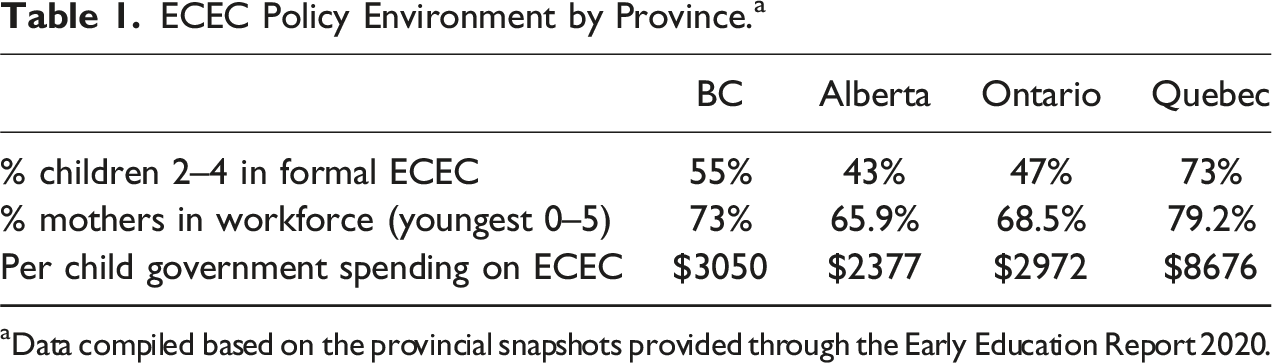
aData compiled based on the provincial snapshots provided through the Early Education Report 2020.
Among the four provinces, a demographically representative panel of 1124 parents was collected by Maru/Blue, a survey firm based in Toronto. The survey sample was reasonably representative of the parent population in each province, based on income, education, ethnic/racial background, urban/rural residency, and other sociodemographic characteristics. The participants completed the survey online using the Qualtrics platform. A total of 148 participants did not complete the conjoint survey, resulting in a final sample size of 976.
Respondent Demographics (N = 976).
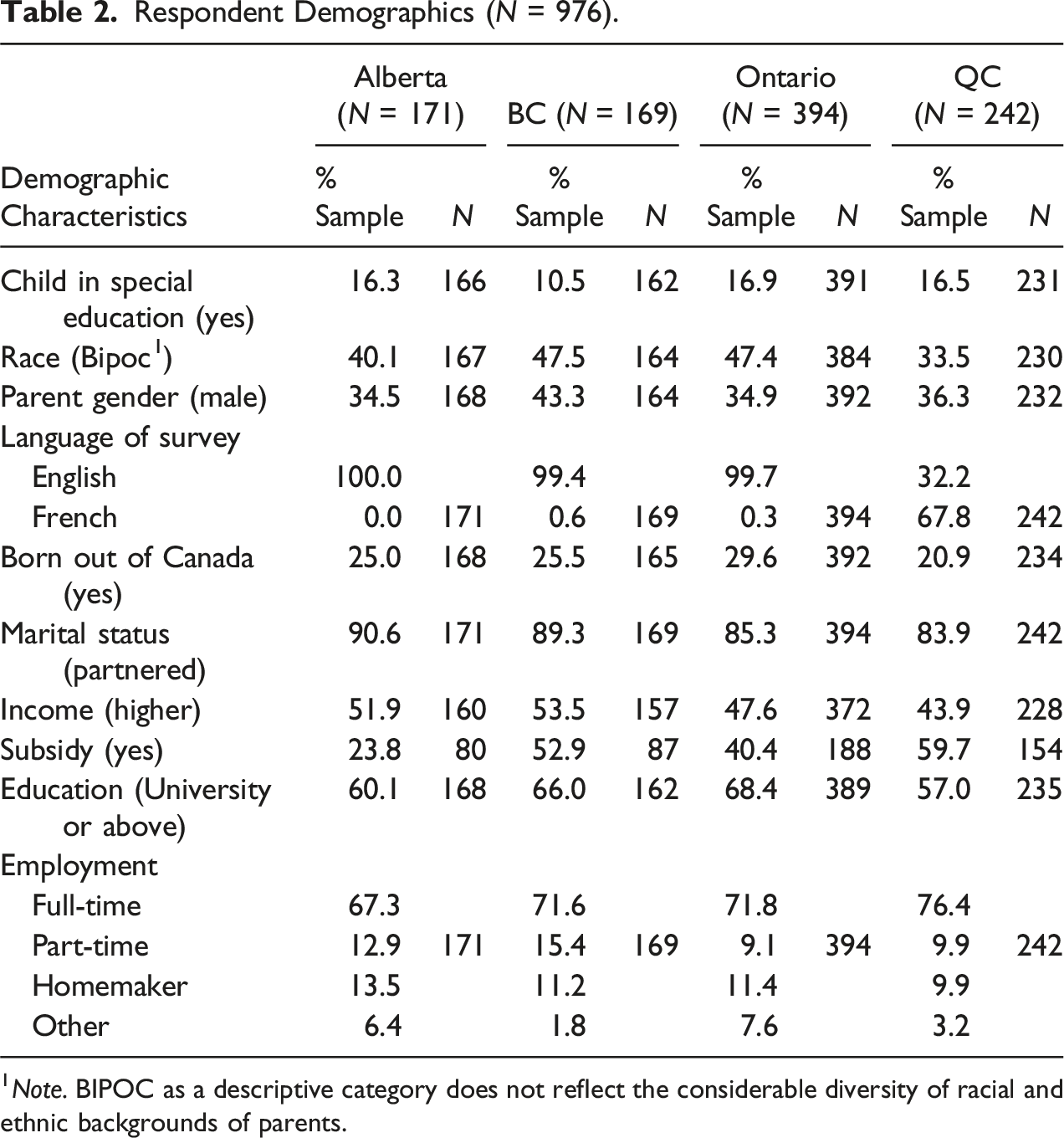
1Note. BIPOC as a descriptive category does not reflect the considerable diversity of racial and ethnic backgrounds of parents.
Measures
Conjoint Design
To assess parental preferences regarding new public health and regulatory measures in child care arrangements in response to the COVID-19 pandemic we developed a conjoint survey. The conjoint attributes selected to reflect the real considerations parents faced when choosing an ECEC setting during the COVID-19 pandemic. Safety and health factors were frequently discussed in the media, endorsed by political leaders, and incorporated into care providers’ reopening plans. They included policies on sick children attending care, social distancing, use of masks, and cleaning procedures. For the non-COVID-related attributes, factors were selected based on prior research (Davidson et al., 2022).
Conjoint design is a choice-based method where survey participants are asked to make decisions between discrete options that vary randomly on key attributes. In each decision scenario, the conjoint design requires participants to make trade-offs between the different options in front of them. These decisions reflect internalized but often competing preferences that individuals hold; for instance, a parent may prefer that providers are highly educated, and that care be close to home. However, they also may be willing to trade-off highly educated providers in favor of care that is close to home (making the latter preference stronger than the former). The discrete choice model pushes survey participants to engage in trade-off behaviors between even the attributes they care the most about, allowing researchers to estimate the relative impact of each attribute on final decisions and preferences (known as part-worth utilities) for each individual participant. Unlike other models which assume preferences are the same across all respondents, the Hierarchical Bayesian (HB) estimator used to estimate part-worth utilities allows for the estimation of individual-level preferences (coefficients), which in turn enable us to group or analyze respondents based on their preferences.
Conjoint Attributes and Levels.
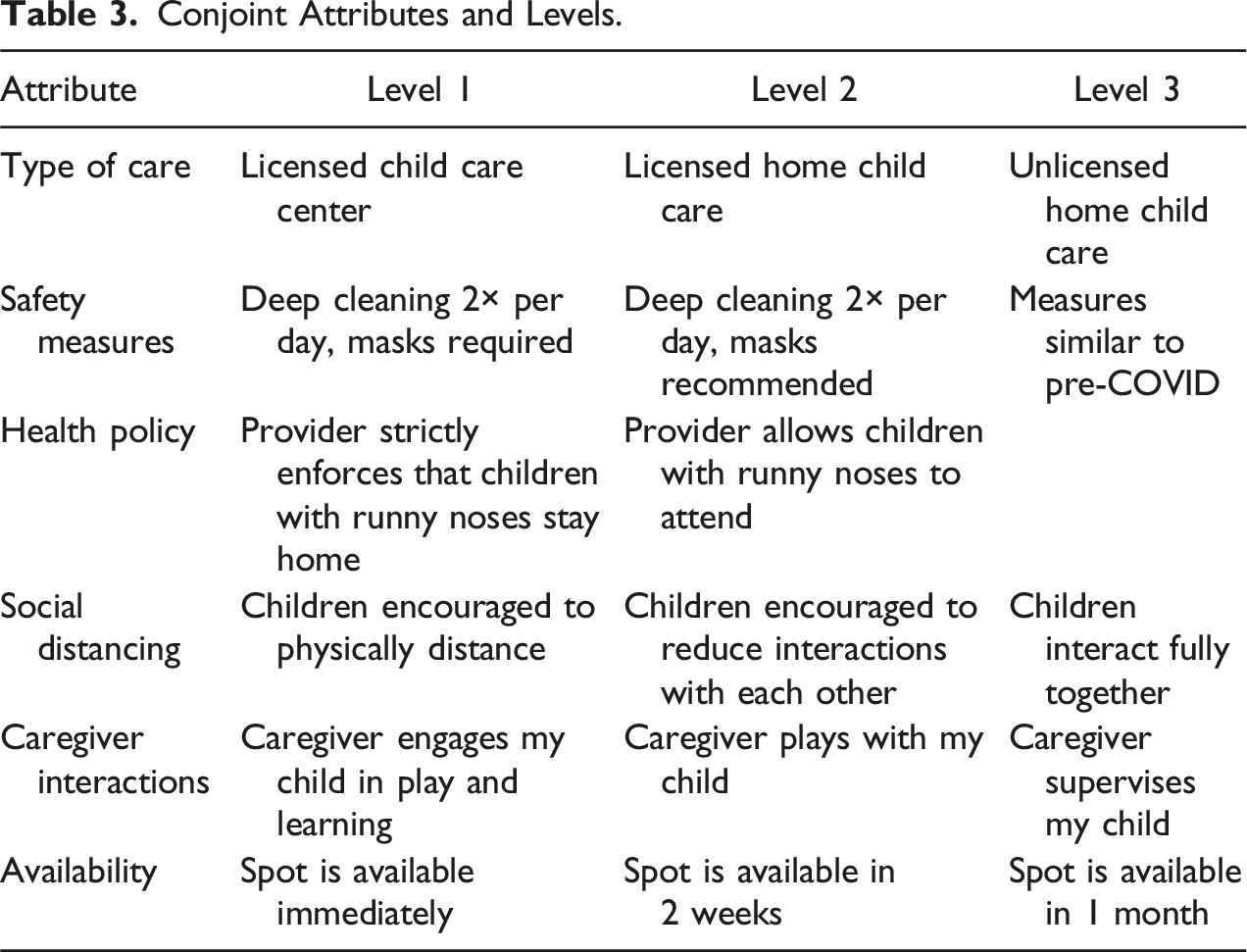
Building on existing research to understand conjoint preferences for care in general (Davidson et al., 2022; Leslie et al., 2000; Rose & Elicker, 2010), this study examines the trade-offs parents make, when prompted, when making decisions about their children’s ECEC settings, during the pandemic (e.g., the quality of ECEC, availability and health policies).
The conjoint design is useful to replicate the constraints that parents faced in deciding whether to utilize ECEC during COVID-19. Survey participants are placed in a simulated ECEC marketplace enabling us to then examine the choices and trade-offs that parents indicated they would make. We asked parents to imagine that widespread vaccination was still 9–12 months away, and that they were on a waitlist for an ECEC placement for their child and had been contacted by three different providers from which they could choose, with the additional option of selecting “none” of the choices for ECEC. Conjoint analyses were conducted in Sawtooth software. For more information about the description of the conjoint survey see Supplementary Appendix A.
Participant Characteristics
We collected the following child and family characteristics: province (British Columbia, Alberta, Ontario, and Quebec); marital status; parent gender (male or female); race (BIPOC or White); born outside of Canada; income (lower than the provincial average income); receiving subsidy (yes or no); education (university or above); employment (full-time, part-time, homemaker, other); employment location (not working, in person, from home); survey completion language (French or English); and having a child needing special education.
Data Analysis
Conjoint Utilities
A conjoint analysis encourages participants to weigh their preferences on some attributes against other attributes and to make trade-offs based on the discrete options available to them. Calculating individual preferences is based on the choices individuals make (or utilities). A model is constructed for each respondent based on these choices. Each level of an attribute is assigned a score (relative preference), called part-worth utilities. These utilities are estimated using a Hierarchical Bayesian process for each level of each attribute. Hierarchical Bayesian techniques use the choice patterns found in the whole sample and in individual participants to find the set of utilities that are most closely aligned with the choices made by both the individuals and the whole sample. This process requires many iterations of estimation that involves updating the whole sample estimates as the individual respondent estimates are updated.
Latent Profile Analysis and Associations with Parental Characteristics
Model Fit Indices.†
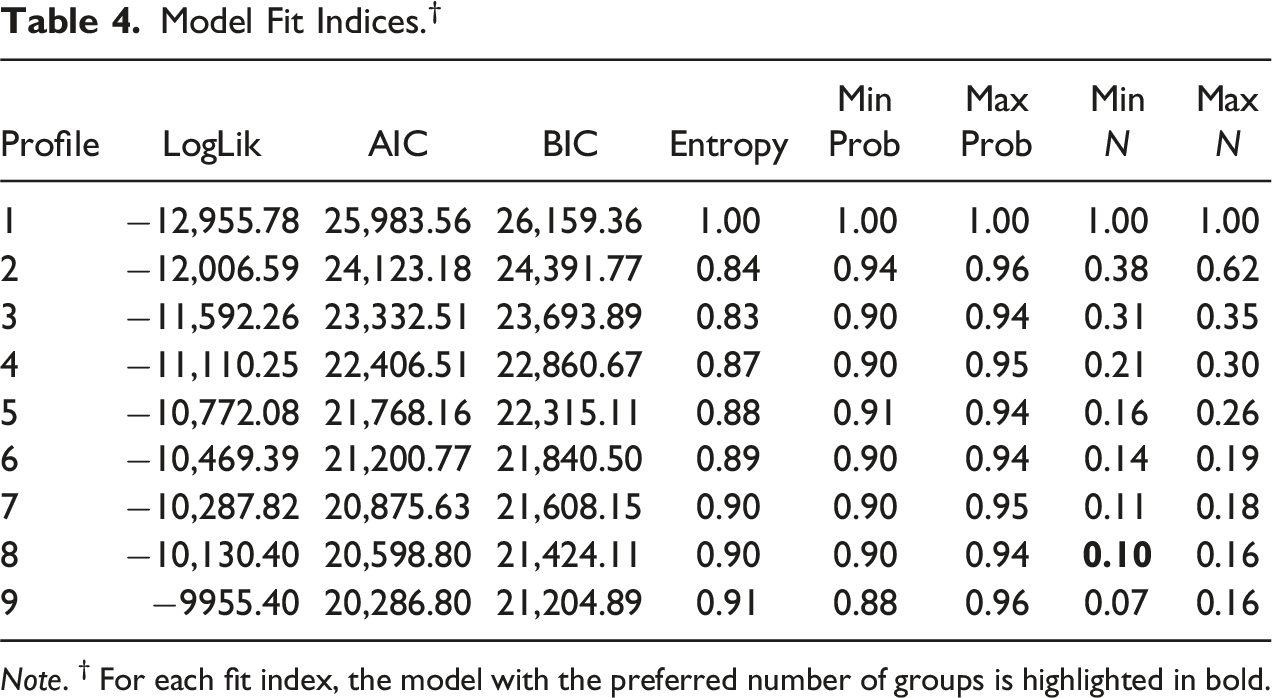
Note. † For each fit index, the model with the preferred number of groups is highlighted in bold.
We analyze each of the eight profiles identified in the LPA to assess the differences quantitatively and qualitatively in their revealed preferences, as indicated by the average part-worth utility scores for each profile group. To investigate differences in the demographic characteristics and ECEC experiences across the latent profile groups, we subsequently conducted a series of chi-squared tests. Statistically significant results were reported as a function of differences between groups.
Results
We present the results in two sections. First, we present the findings from the conjoint analysis. Specifically, we report the average utility scores for each attribute and within each attribute on parents’ ECEC preferences. Second, we present findings from the LPA. We document the different ECEC preferences of parents and then present findings on how the profiles are different across demographic characteristics and ECEC experiences.
Attribute Importance and Average Utility Scores of ECEC Preferences During COVID-19
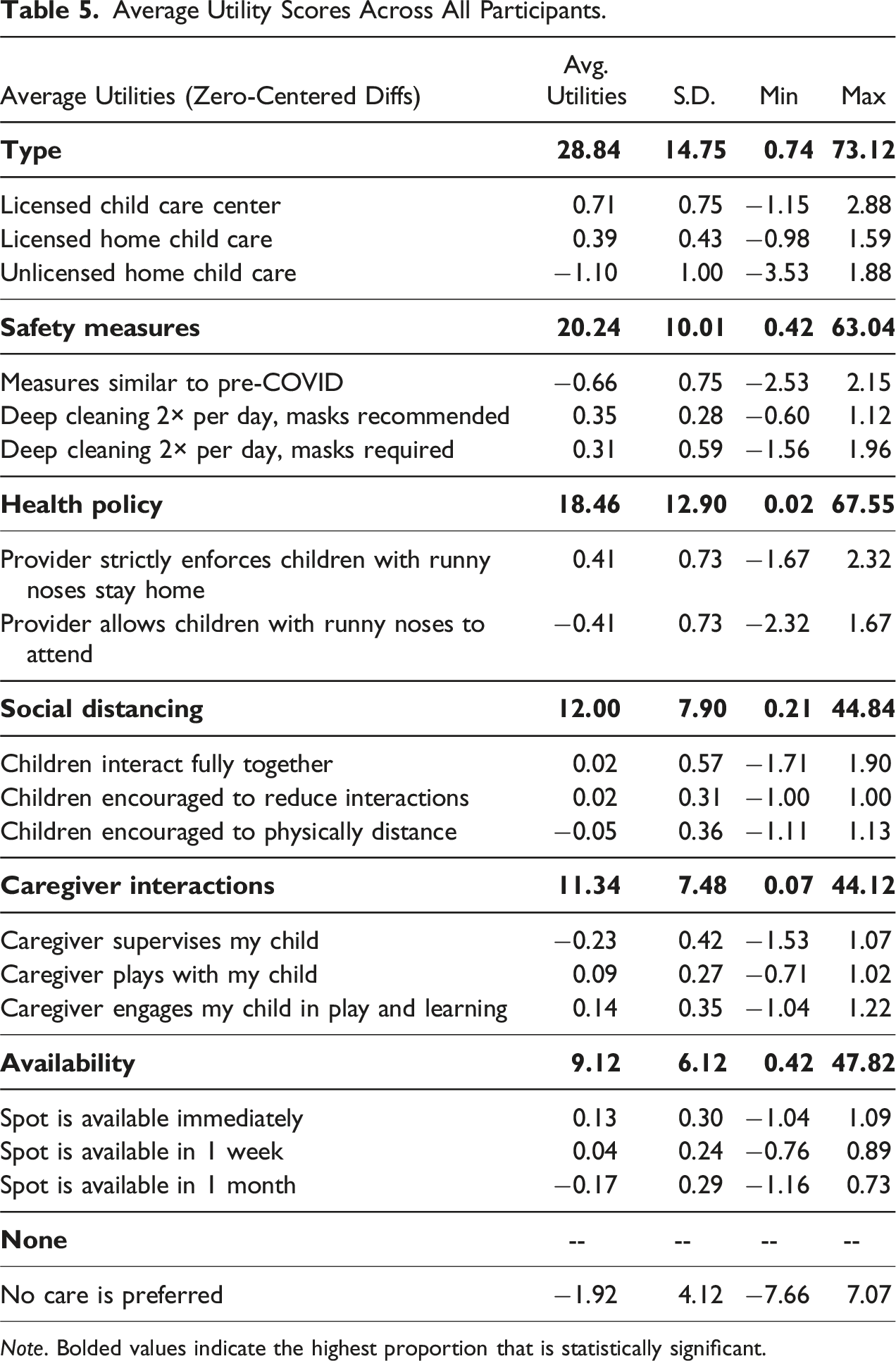
The conjoint analysis generates both attribute and utility scores. Attribute scores (also called Attribute Importance scores) indicate the relative importance of each attribute as a measure of their weight on final decisions. These scores add up to 100 (but do not include the “None” option in their calculation), and thus represent the overall proportion by which different attributes or factors influence decision outcomes. Utility scores, by comparison, are generated for each level of an attribute; and are zero-centered and averaged across the sample (as such, the largest negative scores are associated with the least preferred option while the largest positive score is associated with the most preferred option).
Average Utility Scores Across All Participants.
Note. Bolded values indicate the highest proportion that is statistically significant.
On average, parents expressed a strong preference for licensed center-based care, while unlicensed home child care was generally not preferred. In terms of mask measures and cleaning protocols, parents, on average, indicated equal preference for masks being recommended or required (with a slight preference for the former over the latter). Similarly, parents, on average, preferred children with cold symptoms (e.g., a runny nose) to stay home during the pandemic. Regarding interactions during COVID-19, parents, on average, did not show a clear preference for whether their children should practice safe social distancing. Meanwhile, when considering non-COVID-19 specific attributes, parents exhibited clear preferences for ECEC settings where caregivers engaged their child in play and learning, rather than providing supervision only. In terms of availability of care, when parents expressed a preference, they tended to favor immediate availability rather than care that would be available within one month’s time.
Latent Profile Analysis
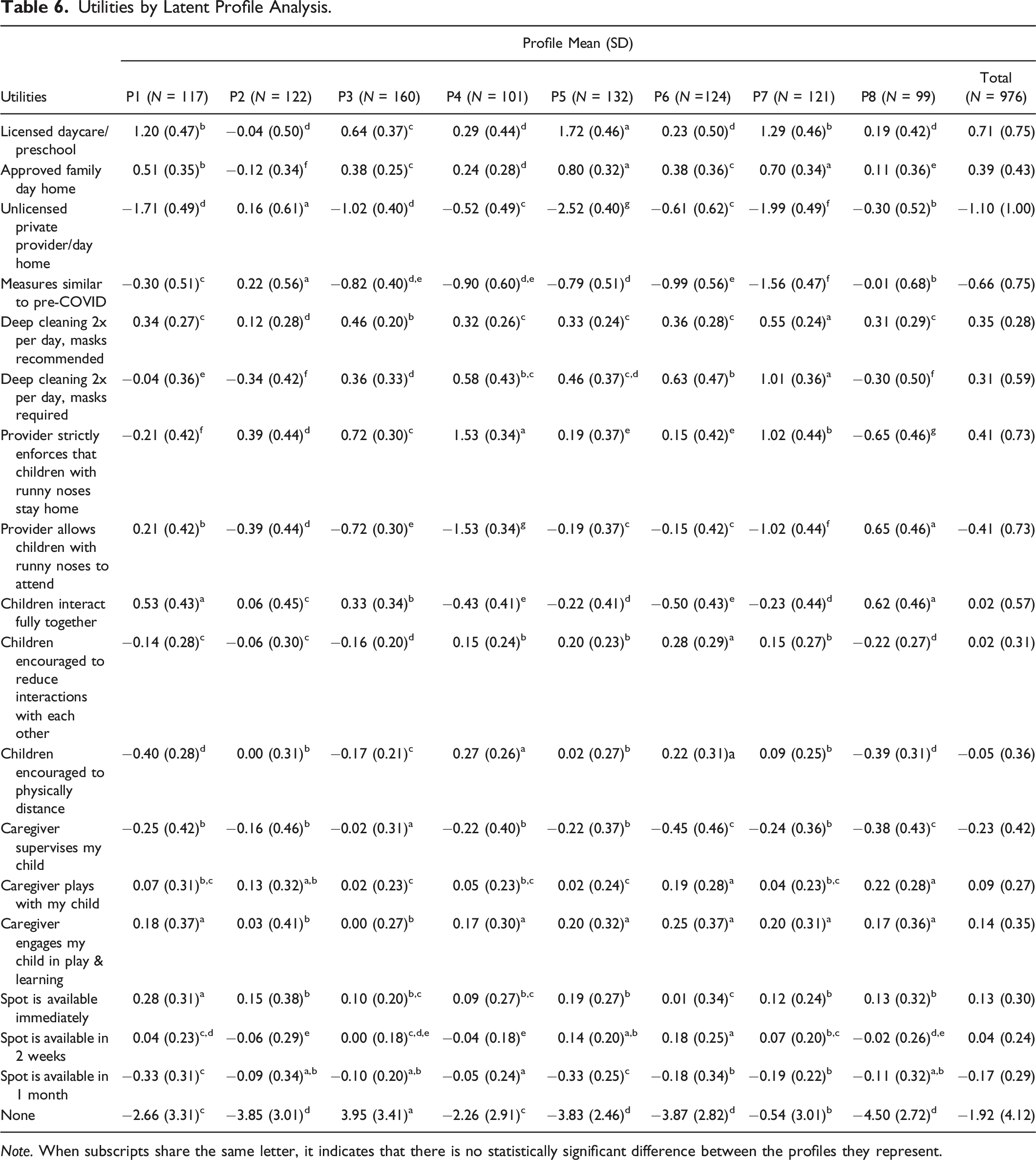
Utilities by Latent Profile Analysis.
Note. When subscripts share the same letter, it indicates that there is no statistically significant difference between the profiles they represent.
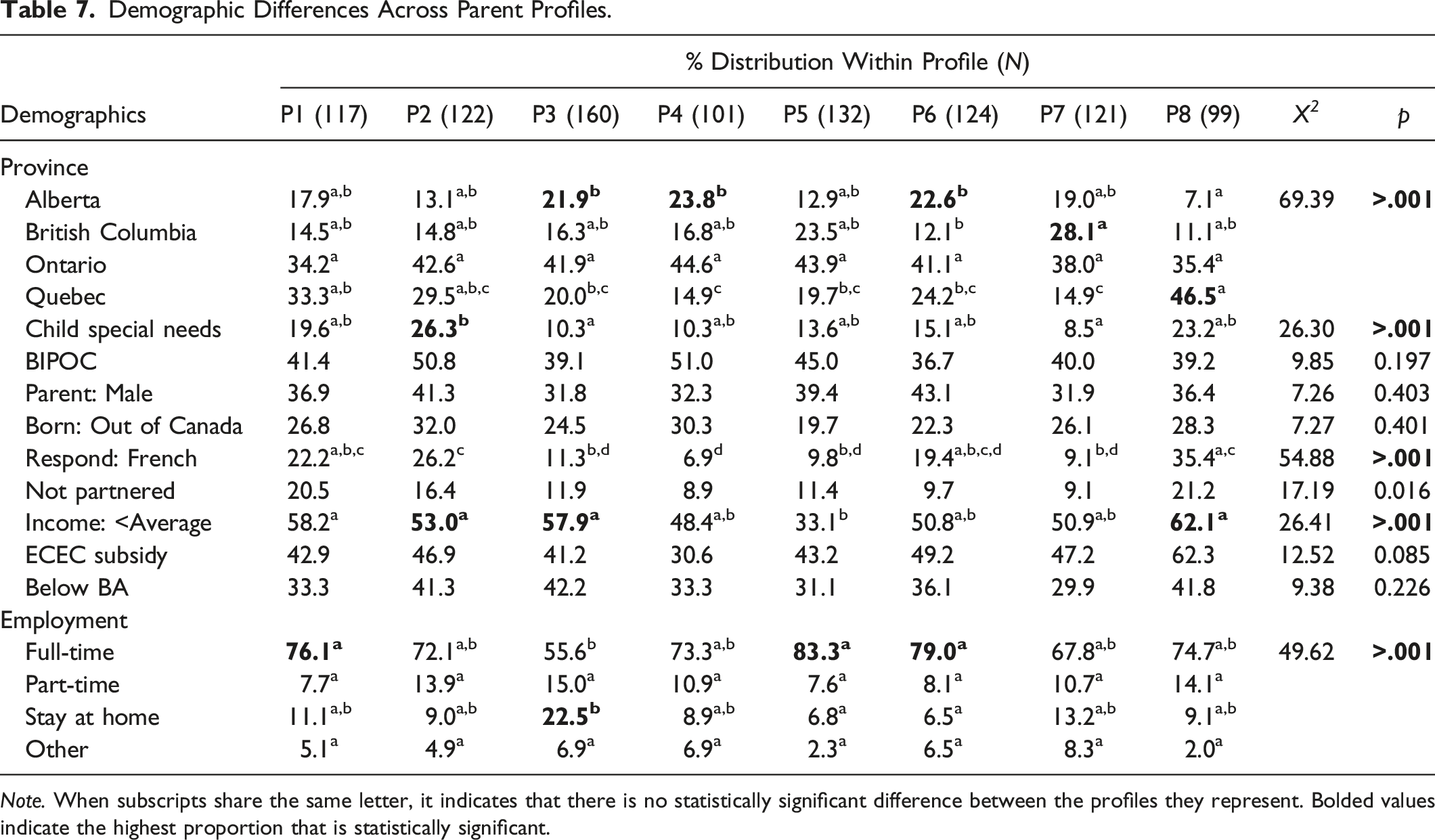
Demographic Differences Across Parent Profiles.
Note. When subscripts share the same letter, it indicates that there is no statistically significant difference between the profiles they represent. Bolded values indicate the highest proportion that is statistically significant.
Decision Typologies of Parents in Market-Based Models of ECEC
Discussion and Conclusion
Prior to the COVID-19 pandemic, existing literature demonstrated that parents overwhelmingly prioritized licensing when selecting childcare services (Davidson et al., 2022). Results from this study reveal that this preference has persisted despite the many challenges and additional considerations brought about by the pandemic. The unwavering emphasis parents place on licensing underscores its fundamental importance in parental decision-making, regardless of context. This finding holds significant implications, particularly in light of the current shortage of high-quality child care spaces across Canada (Dhuey, 2024) and many other countries. As shortages persist, understanding and addressing parents’ preferences for licensed care becomes essential for informing the development of a responsive and effective child care system.
This study also found that the demographic profile of parents who did not express a preference for licensed care tended to include families with lower incomes and those with children who have special needs. This finding reveals a potential vulnerability within these families, as they may be more likely to opt for unlicensed home-based care, which has traditionally been more affordable than licensed options. The preference for unlicensed care among families with children with special education needs may reflect the perceived flexibility or accessibility that home-based care offers compared to center-based care. However, this trend also raises concerns about the accessibility of high-quality, licensed care for these families. The intersection of having a child with special education needs and a lower income suggests that financial constraints may limit these families’ access to licensed, quality services.
Another interesting finding was the significant variation in parental preferences for and aversions to pandemic policies. This variation is important to understand because while some parents strongly prefer policies that prevent sick children from attending, others may be more lenient. This variation has important implications for the implementation of early childhood education, as it highlights the challenge of meeting the diverse needs and desires of families. Additionally, ECEC services have the potential to serve as sources of information, educating parents on the benefits of these policies to promote more informed decision-making.
All parents care about keeping their children safe and well-cared for, whether in the context of a pandemic or not. Yet, what parents perceive as safe, what they consider to be attributes of quality, and what they value in the care provided is not universal and it is inherently constrained by the options available to them. During the COVID-19 pandemic, the options available to parents became much more limited (and in many cases disappeared entirely for at least a portion of time), and as care options reopened, parents faced much more complex decisions about what they considered to be safe, what they considered to be reasonable, and what they considered to be necessary.
We observe these considerations in the aggregate preferences of parents revealed in the conjoint survey, where we note the particular importance of health and safety measures (cleaning and masking, and stringent sickness policies for children) in parent preferences. On aggregate, these attributes of care are more influential for parent decision-making above care quality attributes and availability attributes. However, even in aggregate, there are indications of heterogeneity in preferences, as the relative strength of the aggregate preferences are relatively weak (insofar as the distance between most preferred and least preferred attribute level is reasonably small; see Table 2). As such, the results of the LPA present a much better look at discrete profiles of parent preference.
As we can observe in the profiles present in the LPA, parents differ across groups most dramatically on preferences regarding the health and safety metrics, and to a more moderate degree on licensing. Across all profile groups, parents prefer play or play/learning models of care (choosing away from supervision alone) and prefer care immediately. However, we know from the aggregate results that these are not the preferences driving parent choice (in terms of relative importance). Instead, parents are choosing based on the metrics of health and safety, making decisions about the relative importance of social distancing (more contentious), sick policies, and the mandatory masking of care providers.
Based on the demographic profiles, we note that parents across British Columbia, Alberta and Ontario had strong preferences for ECEC centers with COVID-19 safe health policies (in that they were most likely to appear in Profiles 1–4). In contrast, Quebec parents were much more likely to appear in Profile 5—the “Get Kids Back to ‘Normal’ (Not COVID Cautious)” profile. This desire for normalcy may be linked to external factors; compared to other provinces in December 2020, the Quebec government had much more stringent public health measures in place to mitigate the spread of COVID-19 (Breton et al., 2021). As well there was a much earlier dialogue about the importance of a return to normalcy for children, and Quebec was the only province in Canada that opened schools (on a voluntary basis) in the spring of 2020.
We see also observe the importance of family characteristics and demographics in shaping how parents respond to the various trade-offs present in the conjoint design. Participants who reported having children with special educational or developmental needs, for instance, appear to have a different set of preferences and needs that are more acute (see Profile 1 in particular). These parents likely faced greater pressures, in attempting to manage work and child care, and in the context of the survey—feel they need care immediately. These participants also appear more mindful of quality indicators and may be better versed in care quality considerations by virtue of the needs of their child(ren).
Meanwhile, the implications for licensed ECEC providers are that in the face of a public health crisis such as the COVID-19 pandemic, there is not necessarily an easy way forward in attempting to satisfy the highly divergent preferences of parents. While there is a need for these settings to address the duality of the safety-focused considerations (in an effort to keep both children and providers well and healthy), these goals may run up against parents’ principled beliefs about the importance of factors such as face-to-face interaction between caregivers and children, the importance of play-based learning based on children interacting together, or parents needs for stable and consistent care (e.g., not needing to keep their child home at every sniffle).
Beyond the immediate concerns raised by the pandemic, these findings suggest that ECEC providers may need to adopt flexible or tiered policy approaches to accommodate different family preferences while maintaining health and safety standards. Moreover, the variation in parental preferences underscores the importance of ongoing communication between parents and providers to ensure that policies are responsive to changing parental concerns and public health guidelines. Future research could also explore how these varying preferences influence overall satisfaction with and trust in ECEC services, as well as the long-term impacts on child health and development.
ECEC services offer a unique opportunity as early intervention points—not only for supporting children’s development but also for providing parents with valuable information about public health guidelines. These settings are a critical access point for families, making them an ideal platform for increasing public awareness and understanding of the importance of pandemic policies. By leveraging the trusted relationships that often exist between families and ECEC providers, these services can play a pivotal role in shaping informed attitudes and behaviors around health and safety measures. It is essential, therefore, that ECEC settings be actively considered in efforts to enhance public awareness and compliance with health and safety policies.
Limitations and Future Directions
This study has noteworthy limitations. First, while we identified associations between parents’ demographic characteristics and their ECEC preferences, this research did not collect qualitative data to explore how these demographic characteristics shaped their experiences. Future research should consider conducting mixed-methods studies to address this gap. Additionally, the cross-sectional nature of this study limits our understanding of how preferences change over time and what factors shape preferences and cause parents to make these decisions. This is particularly relevant as Canada has implemented a new child care policy that reduces parental costs and increases demand. Therefore, future research should investigate the effects of such policy implementations on parental preferences. Finally, although the conjoint method is designed to approximate parents’ real-world decision-making, it relies on self-reported data. Future research should include studies that track the actual trade-offs parents make when making ECEC decisions.
Conclusion
When navigating the complex landscape of childcare choices in a post-COVID world, our analysis underscores the critical importance of addressing the diverse needs and preferences of parents. In line with pre-COVID research, licensing remained the primary driver of parent decision-making. However, considerations related to health and safety during the pandemic significantly influence choices, for some parents. Recognizing this, actionable items for policymakers involve implementing more targeted and inclusive approaches that accommodate the varying needs and circumstances of parents, thereby enhancing the overall quality and accessibility of care services beyond the pandemic. This may involve the development of flexible models that balance safety measures, acknowledging regional variations and demographic nuances, while fostering a supportive environment for licensed ECEC providers to navigate the complexities posed by divergent parental preferences. Furthermore, findings from this study highlight the need for policies to foster a collaborative dialogue between providers, parents, and policymakers to create a resilient and adaptable childcare system post-pandemic.
Footnotes
Declaration of Conflicting Interests
The author(s) declared no potential conflicts of interest with respect to the research, authorship, and/or publication of this article.
Funding
The author(s) received no financial support for the research, authorship, and/or publication of this article.
