



Abstract
Modern parenting is both emotionally costly and rewarding. It is also more intensive than before and requires significant time and effort, particularly from mothers. Emotional costs and benefits of children are important to fertility decisions, and they may be linked with a mother’s parenting behaviours. Using a sample of 4402 partnered first-time mothers from the UK Household Longitudinal Study waves 1 to 9 (2009–2018), this study investigated the association between mothers’ parenting behaviours, changes in the levels of reported strain or enjoyment of everyday activities and second-birth transition. A decline in enjoyment formed a negative association with second-birth risk. The frequency of participation in dinner with the child and in leisure activities with the child formed significant associations with second-birth risk but only for selected segments of the population. We discuss the possible underlying mechanisms of these associations and the socioeconomic differences within them.
Introduction
Parenting behaviours have changed substantially over the past decades and the ideology of intensive parenting has made parenting more demanding and costly for individuals (Faircloth et al., 2013; Newman & Henderson, 2014; Rizzo et al., 2013). Both parents have increased the time spent with children (Gauthier et al., 2004; Steinbach & Schulz, 2022), but most childcare and domestic work is still done by mothers (McMunn et al., 2020). Mothers are typically also pictured as the principal caregiver (Faircloth, 2014; Hays, 1996) and face high social expectations regarding what it means to be a good mother (Henderson et al., 2016). This results in feelings of strain and exhaustion (Rizzo et al., 2013; Wall, 2010; Warner, 2005).
Despite the challenges, parenting is also rewarding. Parents typically enjoy time spent with their children, particularly that dedicated to leisure activities (Musick et al., 2016) and report on average more positive emotions than non-parents (Nelson et al., 2013). Many mothers declare that having children adds joy and meaning to their lives (Morgan & King, 2001). The contradictory nature of parenting experiences is well described in the time use literature, reflecting the fact that parenting involves both rewarding and burdensome activities and that it brings both costs and rewards to parents (Nomaguchi & Milkie, 2003).
The costs and benefits of children have been theorized to affect fertility decisions; yet, to date, the focus has been on the economic costs of childbearing. The New Home Economics (NHE) emphasizes the role of opportunity costs of children, such as the income foregone by women and the deteriorating career prospects that may discourage women from having children (Becker, 1960, 1992). More recent approaches pay attention also to the non-monetary costs, including increased stress and worry over children or the limited time that parents have for their leisure and rest (Jarosz et al., 2023). In contrast to these approaches, the Value of Children (VOC) theory acknowledges both, the negative and the positive aspects of having children, with the latter including instrumental as well as psychosocial benefits of children. It accentuates the importance of the parent–child interaction and the stimulation, love, and company that children offer (Hoffman & Hoffman, 1973). The emotional costs and benefits of children may be more difficult to capture than the economic ones because they are more volatile and change depending on the family situation, for example, as the child grows older and demands on the parents change (Meier et al., 2018; Simon & Caputo, 2019).
This article builds on the costs-rewards framework, developed in time use literature, and the value of children (VOC) theory, developed in fertility research. Time use literature shows that different activities involving the child have different effects on parental wellbeing, with some of the activities being more burdensome and others being more emotionally rewarding (Nomaguchi & Milkie, 2020). In terms of VOC, the frequency of parental involvement in particular activities may be linked with the perceived costs and benefits of children. As multiple factors may influence these costs and benefits and the costs and benefits may change over time, it would be most informative to look at whether a change in one way or another could make a mother more or less likely to consider subsequent childbearing. This study looks at how first-time mothers’ parenting practices and a change in their levels of reported strain and enjoyment of everyday activities are related to the risk of transition to a second birth.
We use longitudinal data from first-time mothers living in the UK. The UK provides a good context for our study. Though the country is characterized by persisting class differences, the norm of intensive parenting has diffused across the population, including among working-class mothers (Vincent et al., 2010). British society remains fairly unequal with regard to the gender division in unpaid work and gender norms (McMunn et al., 2020), which means that most mothers still do the lion’s share of unpaid labour. Despite that, total fertility rates in Britain remain relatively high in the European context (Boca et al., 2005; Schmitt, 2012), although they have shown a downward trend over the last decade.
Our study makes an important contribution to the literature by integrating the demands-rewards framework into fertility theories, the VOC in particular, in the context of the growing expectations of what it means to be a good mother. Although intensive parenting has been recognized as one of the possible reasons why couples form smaller families than in the past (Anderson & Kohler, 2013; Gauthier & de Jong, 2021), studies did not examine particular parenting behaviours in the context of fertility. To date, relatively little attention has also been paid to the emotional costs and gains from parenthood and their influence on childbearing decisions (with notable exceptions, for example, Mynarska & Rytel, 2020). Our paper addresses these overlooked issues and by doing so it aims to stimulate future research, data collection and scientific debate on the topic.
Costs and Rewards of Children
Parents’ evaluation of the perceived costs and benefits of having children is fundamental for their decision to have another child (Miller, 2011; Mynarska & Rytel, 2020). The evaluation is made in a particular socioeconomic context in which certain aspects of childrearing may be more valued than others (Bernhard Nauck, 2014). In the past, when high fertility was accompanied by high infant mortality, the instrumental value of children was given priority. In modern society, the emotional and psychological benefits of children have become central (Nauck, 2007; Bernhard; Nauck, 2014) with the emotional value of children being particularly important for women (Kim et al., 2005; Mynarska & Rytel, 2020). Children provide emotional closeness and psychological stimulation and becoming a parent creates a strong life-long bond (Nauck, 2007). The lay belief that children make people happier is pervasive across the world (Hansen, 2012). In the UK, 66% of mothers declare that watching their children grow brings them joy (Stanley et al., 2003).
Notwithstanding the psychological rewards, having children also generates significant demands on parental resources, including time and energy. Modern parenting is about doing parenting, not just being a parent (Smyth & Craig, 2017). Parents read at bedtime, provide food, monitor children’s education and engage in all sorts of ‘concerted cultivation’ (Lareau, 2002). Parenting thus entails significant time commitment and emotional labour (Smyth & Craig, 2017). Having a child increases women’s time pressure and fatigue (Meier et al., 2018) and, in many cases, lowers their wellbeing (Pollmann-Schult, 2014).
Joys and Burdens of Parenthood and Heterogeneity Within Them
Parenting is both rewarding and exhausting (Senior, 2014). Parents’ overall happiness is reliant on their emotional states and sensitive to positive or negative emotions they experience. These emotions fluctuate throughout the day, depending on contextual and individual factors. Direct interaction with the child is usually associated with more positive emotions than other activities (Nelson et al., 2013). However, there is also evidence of the opposite (Kahneman et al., 2004). The discordance may stem, among others, from the fact that, first of all, there is much heterogeneity among parents in the extent to which parenting is seen as burdensome or rewarding (Evenson & Simon, 2005) and, second, direct contact with the child may occur in very diverse circumstances. Some child-centred activities may simply bring more joy than others. For example, physical childcare (dressing, washing and feeding) is usually seen as mundane (Musick et al., 2016), whereas playing with a child and other leisure activities are viewed as the family ‘quality time’ and bring substantial emotional benefits from the parent–child interaction (Snyder, 2007). A higher frequency of ‘fun’ activities is associated with lower parenting strain (Nomaguchi & Johnson, 2016), and a better sense of work–family balance and wellbeing (Nomaguchi & Milkie, 2020), though it is not clear whether these activities reduce the strain or rather, the less-strained parents are more capable of pursuing them. In the context of the present study, it is also worth noting that playing with own child is used as one of the items in the scales measuring positive childbearing motives in the VOC framework (Miller, 1995). The possible selection into certain activities is important and it might extend to emotions with which these activities are associated.
Overall, emotions, dispositions and daily experiences are intricately intertwined. Mothers who enjoy motherhood may spend more time with their children and may derive more pleasure from that time, regardless of what they do. Conversely, mothers who are under greater strain or time pressure may skip optional behaviours (such as playing or other entertainment) but likely still have to engage in the necessary childcare such as preparing meals or feeding. They may therefore experience more negative emotions during these activities not because of the nature of the activities but because of their high levels of overall strain. It is worth noting that these necessary activities usually also entail a substantial amount of unpaid work, such as preparing the food and cleaning up which are typically done by women (Sayer, 2005; Taillie, 2018).
Mothers’ socioeconomic situation may also affect the costs and rewards associated with a given parental activity. For example, shared family meals are a common practice in many families, but in households of lower socioeconomic positions, they may be associated with a more ‘hands-off’ approach; sometimes meals may be brushed off as little important in the context of other worries (Harden & Dickson, 2015). Conversely, in families in higher social positions, eating together is seen as an important aspect of proper socialization and meal time is more intensive, involving more negotiations at the table and requiring more effort in the menu preparation (Le Moal et al., 2024). Emotions surrounding family meals are also dependent on parents’ time constraints. Meals may be a significant burden for working mothers who report high time pressure around mealtime and usually try to prepare them fast and move on to another task (Jabs et al., 2007).
Finally, the frequency of some parental activities with a child may be a function of external norms such as class norms which may guide parental behaviours regardless of their emotional costs or benefits for an individual. In the British context, both workers’ occupation (Chatzitheochari & Arber, 2012) and education are important factors structuring their time use patterns, with tertiary-educated mothers in the UK devoting particularly much time to child-centred time-intensive activities (Altintas, 2016).
Joy, Strain and Fertility
First-time mothers evaluate the potential costs and benefits of another child based on their parenting experiences (Olah, 2003), but those experiences are very diverse. Psychological benefits of children were shown to be a major factor influencing women’s fertility decisions in low-fertility countries (Kim et al., 2005; Mynarska & Rytel, 2020), yet those benefits (and costs) not fixed but change over time (Meier et al., 2018; Simon & Caputo, 2019).
High personal costs and low rewards of children have been shown to lead individuals to postpone the subsequent childbirth or refrain from having more children (Presser, 2001). As the costs and rewards are not constant over time, the timing of progression to the next birth could depend on a shift in the perceived costs or benefits of children – whether due to behavioural changes or other causes. An increase in rewards may encourage a mother to consider subsequent childbearing. Conversely, an increase in costs is when she may decide to forego or delay it.
In the present study, a change in the subjective costs and rewards of having children is proxied by a change in the level of experienced strain and the level of enjoyment of everyday activities, respectively. We expect that an increase in a mother’s enjoyment would form a positive association with the risk of a second birth. Conversely, a decline in enjoyment would form a negative association with subsequent fertility (H1). Similarly, a mother will be less likely to progress to a second birth if her strain increases, and more likely to do so if it decreases (H2). Differentiating between enjoyment and strain is important because it relates to the burdens and joys of parenting and allows examining what matters more for fertility decisions: more of the good things or less of the bad ones.
As parental behaviours, in particular in the context of intensive parenting, are closely intertwined with the emotional costs and rewards of children, we also include them in the analyses. The frequency of involvement in various activities and, possibly, the positive or negative nature of the parents’ daily experiences generated through these activities may influence the perceived emotional gains or costs of children. We look at two activities that represent the opposite ends of the continuum between the more rewarding and more mundane parenting activities (Musick et al., 2016): out-of-home leisure with the child, and having dinners with the child. Leisure and having meals with the child, unlike dressing or other physical care, extends through many years for most parents. Yet the content of these activities changes, and it is likely much influenced by parental socioeconomic characteristics. Furthermore, leisure is optional and may reflect parental activity preferences, whereas meals are more of a necessity. The inclusion of these two activities permits looking into whether there is an association between potentially rewarding and mundane parenting practices and fertility.
We investigate the frequency of a mother’s participation in these two activities as predictors of the risk of a second birth. We expect that frequent leisure with the child, which is typically a rewarding and optional activity, will form a positive association with birth risk (H3) and that will hold across different social categories (H3a) indicating that a preference for this type of activity is generally linked with a higher risk of childbearing. Having regular dinners with the child is expected to be associated with fertility (H4) but this association will differ significantly depending on the mother’s socioeconomic characteristics (H4a). Specifically, we expect that this association will be non-significant for mothers in lower social positions for whom family dinners may be of secondary importance in their lives. Dining with the child may be negatively associated with fertility for working mothers, in particular those working long hours, because they are under greater time pressure, and for women in higher social positions because they tend to pay much attention to their children’s dietary habits. Dinners may thus entail a higher mental load and more stress for them and, as a result, be negatively related to their subsequent childbearing decisions.
Method
Data and Sample
We use the data from the UK Household Longitudinal Study (Understanding Society; University of Essex, ISER 2023) waves 1 to 9 (2009–2018) and select partnered women who had their first child before or during the panel and were aged between 18 and 44 at their first birth (4402 women). We then create a woman-year file and calculate the duration between giving birth to the first child and the second birth. For women who entered the survey after the first childbirth but before the second, we calculate the time since the first birth including years before the first panel observation.
Variables
Our response variable is the occurrence of a second birth. We use a recent change in the subjective strain as a proxy for an increase in a mother’s emotional costs. Higher strain suggests her life is more burdensome or stressful than it used to be. We use the original item worded as follows: ‘Have you recently felt constantly under strain’? with the following response categories: ‘not at all’, ‘not more than usual’, ‘more than usual’ with the last category collapsing the original codes for ‘rather more’ and ‘much more than usual’. Because this item does not specify whether strain pertains to family or professional life, we include job-related anxiety in the models to account for any possible increase in strain due to paid work. This item uses 3 categories corresponding to high, moderate and low levels of anxiety. Next, to examine the effect of a change in the rewarding aspects of life, we use the original variable worded as follows: ‘Have you recently been able to enjoy your normal day-to-day activities’? and collapse the original four categories of answers into the following: ‘more than usual’, ‘same as usual’ and ‘less than usual’ with the last one including both ‘rather less’ and ‘much less than usual’.
As regards behaviours, we include the frequency of a mother’s out-of-home leisure with the child, and the frequency of her having dinner with the child. Out-of-home leisure activities included activities such as going to the park, cinema, having a picnic, etc. This variable uses three categories: ‘less often than once per week’, ‘about once per week’ and ‘more than once per week’. Frequency of dinners uses three categories: ‘0-2 times per week’, ‘3-5 times per week’ and ‘6-7 times per week’. Jointly with the behavioural variables we control for the use of childcare (whether paid or unpaid) since outsourcing childcare reduces the overall time spent in childcare by the parent and might affect the frequency of certain parenting behaviours.
We use a set of control variables. The age of the first child is recoded into the following intervals: 0–1 year old, 2–3 years old, 4–5 years old and 6 or more years old, which correspond to different levels of risk of second birth. Maternal age at first birth uses the following categories: 18–24, 25–32, 33–39 and 40–44. All models control for a mother’s educational attainment (tertiary or below), her ethnicity, her working hours, her partner’s employment status and her socioeconomic position (in the current or last job if she is not working). This variable uses the National Statistics Socio-Economic Classification (NSSEC) and differentiates between three occupational classes: managerial and professional; intermediary; and routine and manual. Fertility is associated with macro-level conditions such as political stability, economic trends and labour market situation. The economic crisis of 2008 had a negative effect on total fertility rates (Sobotka et al., 2011; Testa & Basten, 2014) and the Brexit referendum was a major political event in the following decade with vast social and economic implications. We therefore account for the period effects differentiating between the following: 2009–2012 (economic recession), 2013–2016 (recovery period after the recession) and 2017 (after the Brexit referendum).
Some variables (dinner, leisure with the child and job anxiety) were collected in every second wave. In this case, we impute the value from the previous wave. In the case of job anxiety, we impute missing values only when the respondent’s job and supervisor did not change between waves. Values are not imputed when the respondent did not participate in the given wave (missing wave in the panel). Missing values constitute between 4% and 6% of observations in our main variables except job anxiety for which the missing category captured also the records for women who did not work (and were not asked the question) – in which case, expectedly, there were more missing values (27%). In order not to lose observations, missing values are retained in the models as a separate category but the coefficients for this category are not reported.
Analytical Strategy
We start with descriptive analyses and explore heterogeneity in our variables of interest to get a better understanding of the structural covariates of maternal behaviours and emotional states. We are interested in which (if any) of a mother’s socioeconomic characteristics are associated with her parenting behaviours or a change in her enjoyment and strain. We also look at the association between a mother’s behaviours and a change in her levels of enjoyment or strain to probe for whether these are related. Next, in the main part of the analyses, we use the panel structure of the data and estimate a set of discrete-time complementary log-log (cloglog) regression models with piecewise constant baseline hazard (age of the first child) to predict the risk of second birth. The cloglog specification for binary outcomes is recommended over the logit or probit specification if the event of interest is rare (Long & Freese, 2006; Mills, 2010). It is often used in demography to model birth risks (Allison, 1982; Balbo & Barban, 2014; Gerster, Keiding, & Knudsen, Lisbeth B. Strandberg-Larsen, 2007) and its estimates can be directly interpreted in terms of hazard ratios. We first run the baseline model with socioeconomic variables and period effects. Next, we run a full model including information on a mother’s parenting practices, strain and enjoyment (and controls: using childcare and job anxiety). Finally, to analyse whether the associations between the main variable of interests and fertility are moderated by a mother’s socioeconomic characteristics (job hours, education and NSSEC), we run the full model again with interactions between her behaviours and socioeconomic characteristics with each interaction being examined in a separate model due to the sample size. In reporting of the predictive margins from interaction effects, we use the CI of 83% as it has been demonstrated that 83% confidence intervals can effectively identify significant differences between two means with a p-value of 0.05 (Austin & Hux, 2002; MacGregor-Fors & Payton, 2013).
Following the example of earlier studies investigating the link between wellbeing and fertility (Parr, 2010), we lagged the time-varying independent variables 1 by 2 periods in the models looking at a second-birth risk. Because we model births, not conceptions, a 2-wave lag is used to capture the situation before conceiving the child and minimizes the risk of reverse causality. Women may start modifying their behaviours or feel an increased strain (or joy) when planning for the second child and lagging the observations by 2 periods helps to exclude such situations. Due to this analytical approach births occurring within the first period following the first birth that is when the first child is aged 0–1 are not included in the models because for the children aged 0–1 the period lagged by 2 years falls before their birth so there are no parenting behaviours reported. In either case, our behavioural measures are likely not relevant for children aged under 1. For example, assessing the regularity of shared dinners is problematic when children are so small as they are still breast or bottle-fed. Furthermore, second-birth risk for mothers of children aged 0–1 is very low (Figure 1(S), Supplement), and there is likely a strong self-selection among mothers who conceive their second child when their first one is less than 12 months old, and parenting experiences are unlikely to be the underlying mechanism. We therefore relate our measure to mothers of children in their second year of life (labelled as 2) or older. The final models include 5816 woman-years and 899 births.
Results
Descriptive Analyses of Mothers’ Parenting Behaviours
Slightly over half of all mothers had dinner with their child every day or nearly every day, and a bit less than half participated in out-of-home leisure with the child several times per week, which suggests relatively high levels of maternal involvement. Maternal strain and, even more so, enjoyment seemed to be fairly stable over time as 43% and 69% of mothers, respectively, said their levels of strain and enjoyment were the same as usual (Supplemental Materials, Table 1S).
More detailed analyses revealed substantial heterogeneities in the above measures (Supplemental Materials; Figure 2(S), Figure 3(S), Figure 4(S)). Mothers who worked for pay were tertiary-educated or occupied higher occupational positions were overall less likely to participate in dinner with the child daily. However, they were more likely to participate in out-of-home leisure activities at least once a week. They were also more likely to feel an increased strain. We found no significant association between mothers’ socioeconomic characteristics and their enjoyment of everyday activities except for stay-at-home mothers who were more likely to enjoy their everyday activities less than usual.
As regards the association between a mother’s behaviours and a change in her levels of strain or enjoyment, we found that a higher frequency of any type of activity with the child (dinner or leisure) was associated with a lower risk of being under an increased strain and a lower risk of a having experienced a drop in enjoyment (Figure 1). In particular, having dinners with the child on a daily basis was associated with a significantly lower risk of experiencing reduced enjoyment or increased strain compared to having dinners 0–2 days per week. Predictive margins for an increase in maternal strain or decrease in her enjoyment by a mother’s behaviours (frequency of dinner and leisure time with the child), CI 83%.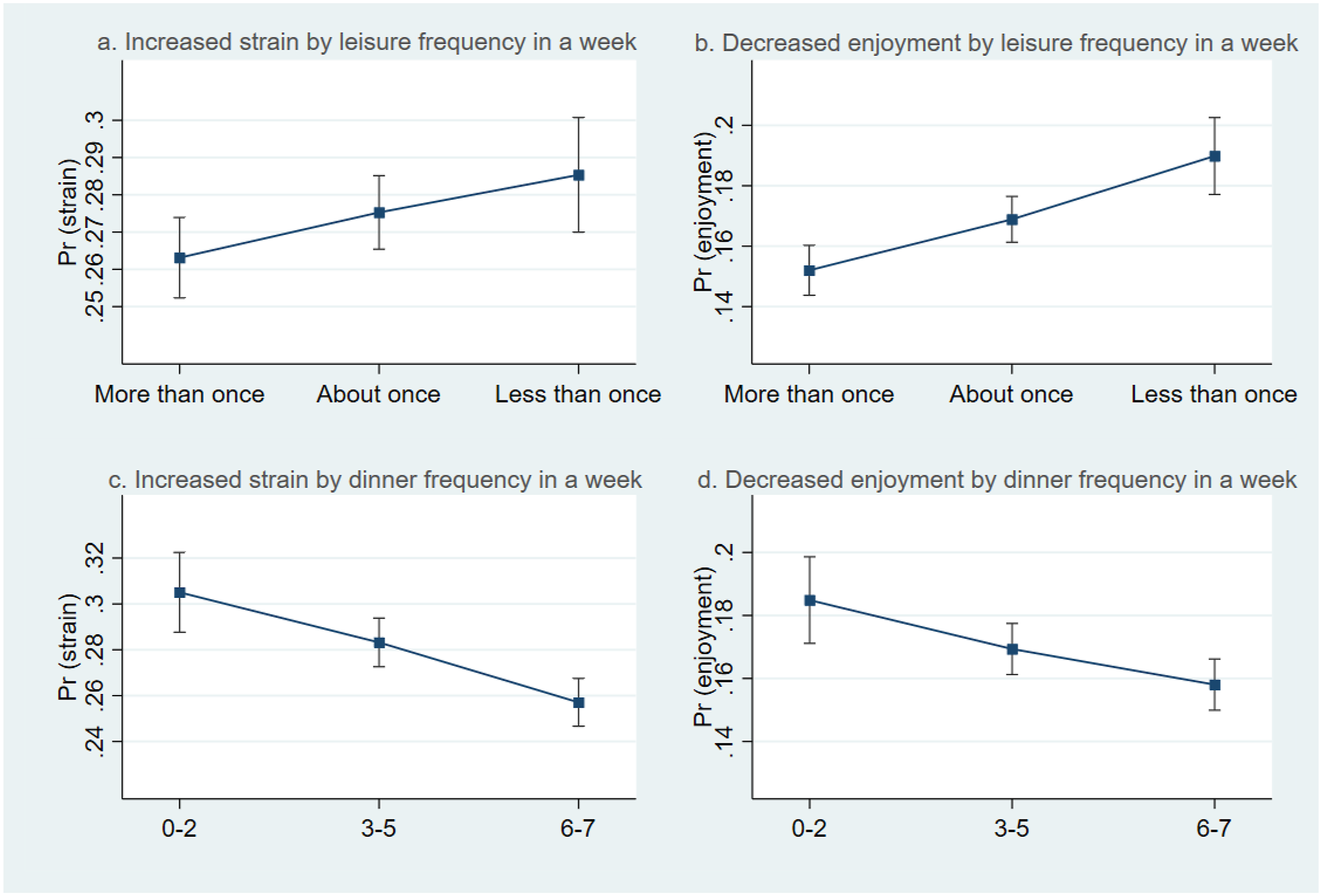
Event-History Analysis
The baseline model (Model 1) includes the main socio-demographic characteristics and period effects. Model 2 adds parenting practices (controlling for the use of childcare), a change in self-reported strain (controlling for job anxiety) and a change in self-reported enjoyment of daily activities. The results of Model 2 suggest that frequent (more than once per week) participation in leisure with the child was related to a higher risk of second birth (Model 2). Conversely, having dinner with the child less often (0–2 days per week) was associated with an increased risk of second birth compared to dining with the child on most days of the week.
Risk of Second Birth: Discrete-Time EHA using Complementary Log-log (Cloglog) With Clustered Standard Errors.
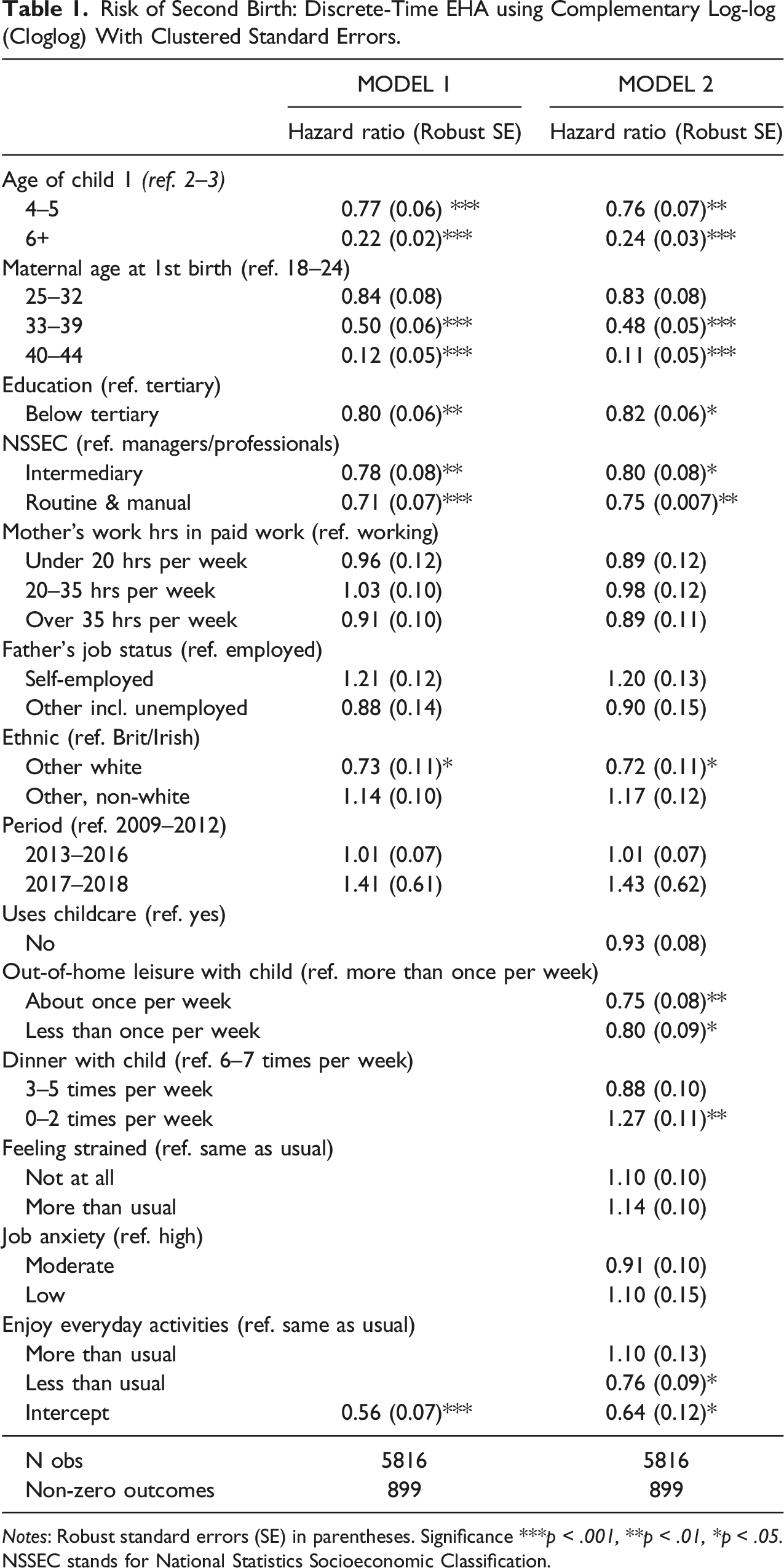
Notes: Robust standard errors (SE) in parentheses. Significance ***p < .001, **p < .01, *p < .05. NSSEC stands for National Statistics Socioeconomic Classification.
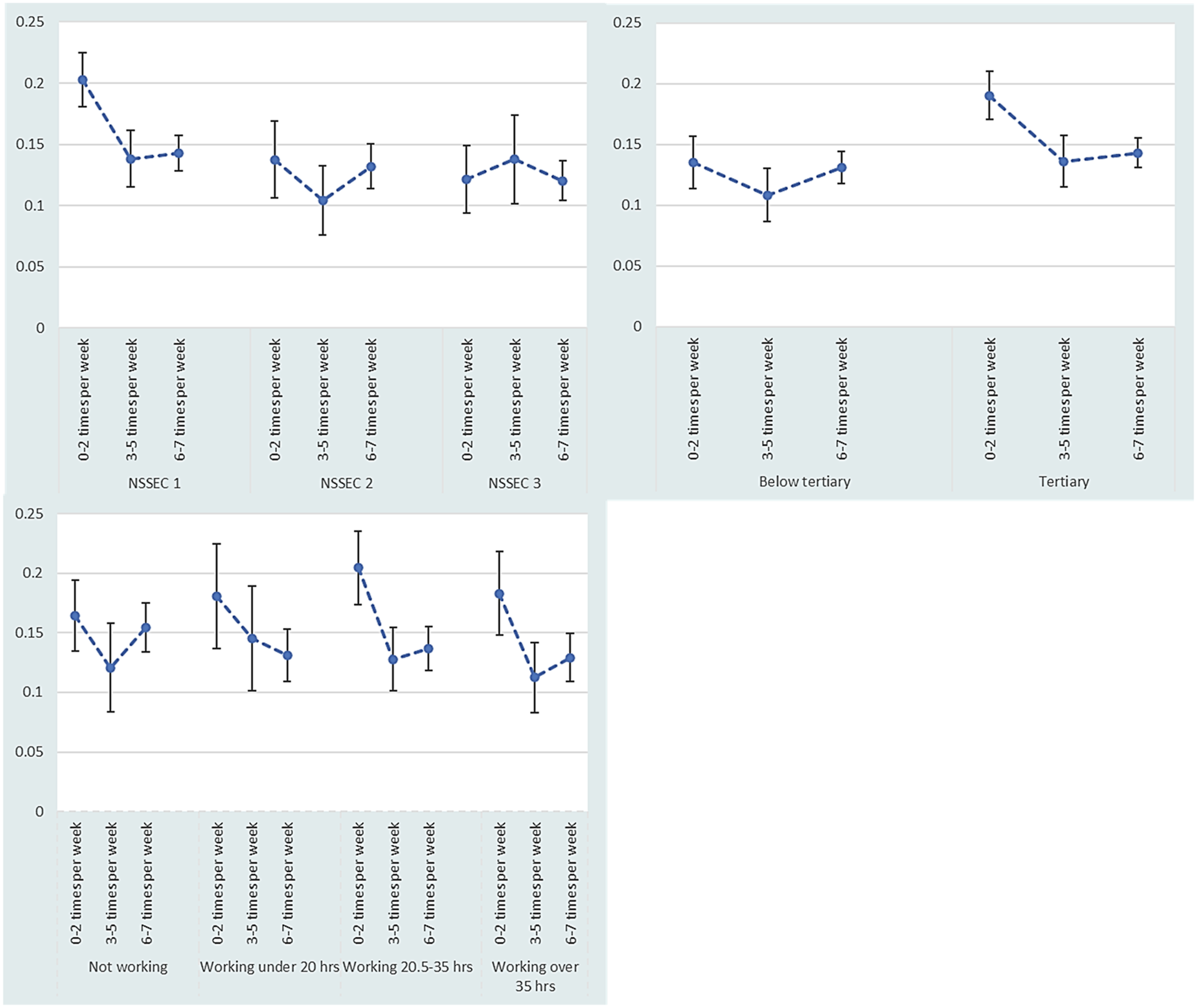
To test H3a and H4a, we re-run Model 2 each time adding an interaction between different socioeconomic characteristics and a mother’s parental behaviours. Each association was tested separately due to the sample size. The results showed that the association between maternal leisure time with the child and second-birth risk was significant only among mothers not working for pay and those with education below tertiary (Figure 2), although these two categories overlap because lower-educated mothers were also significantly more likely to be stay-at-home mothers. Conversely, the association between the frequency of a mother having dinner with the child and second birth was significant only for tertiary-educated mothers, mothers who worked full time or those in higher occupational positions, managerial and professional (Figure 3). Again, these categories overlap. Overall, the results show much consistency and additional tests using AIC also showed that the models’ fit to the data substantially improved in the interaction models compared to the full model without interactions. Predictive margins for second-birth risk: Models with interaction between the frequency of out-of-home leisure with the child and (i) maternal NSSEC, (ii) the frequency of dinners with the child and maternal education and (iii) the frequency of dinners with the child and mother’s working hours, CI 83%. Note: NSSEC 1 are managerial and professional occupations; NSSEC 2 are intermediary occupations; NSSEC 3 are routine and manual occupations. Predictive margins for second-birth risk: Models with interaction between the frequency of dinners with the child and (i) maternal NSSEC, (ii) the frequency of dinners with the child and maternal education and (iii) the frequency of dinners with the child and mother’s working hours, CI 83%. Note: NSSEC 1 are managerial and professional occupations; NSSEC 2 are intermediary occupations; NSSEC 3 are routine and manual occupations.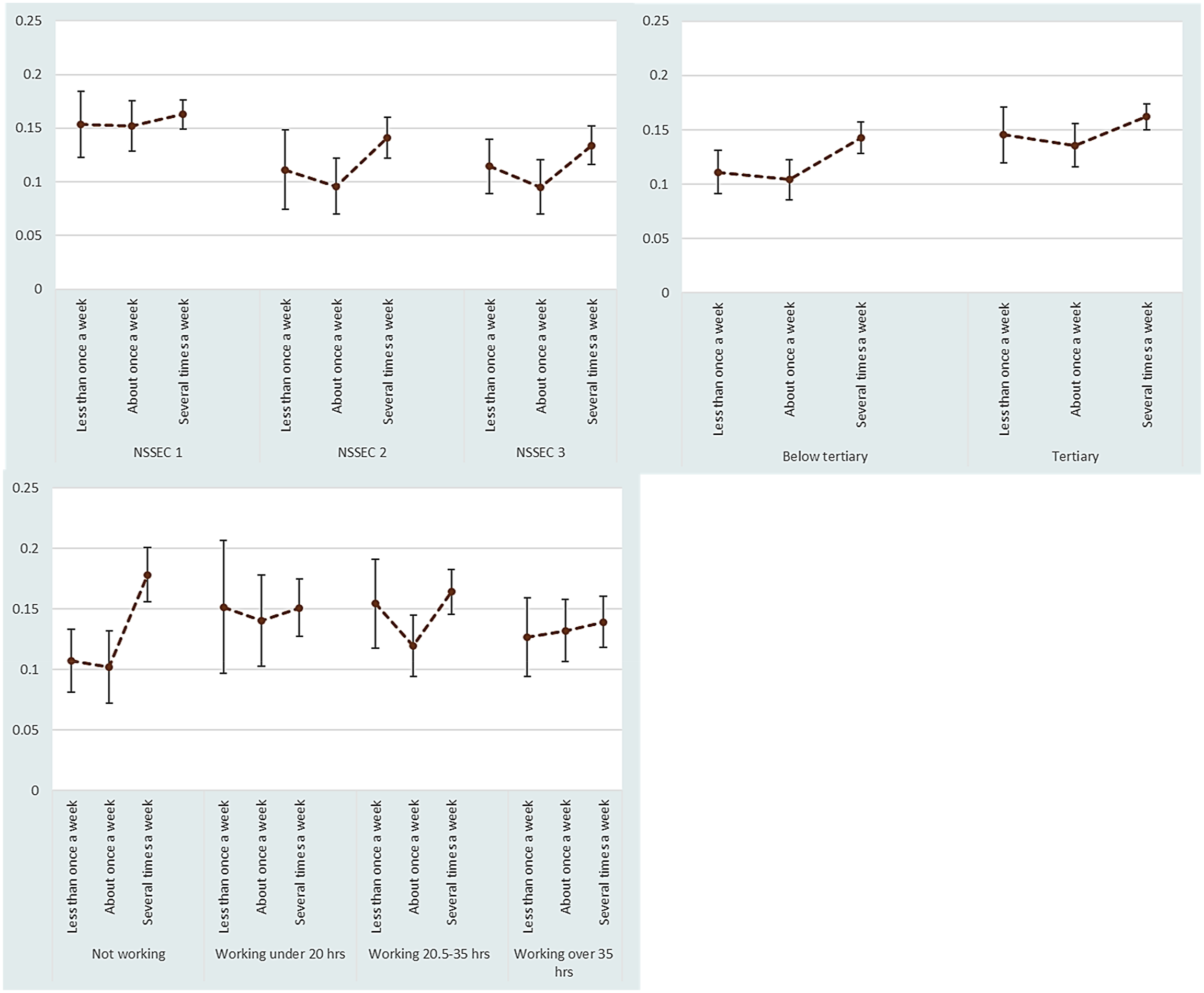
Robustness Checks
We re-ran the models with a different sample and a different model specification to check if they would change our results. First of all, we have added information on the partner’s parenting behaviours. Partner records had many missing values because they were less likely to respond to this section of the questionnaire (missing values stood at 39% for both dinner and leisure with a child). We nonetheless decided to run the analyses because of the importance of the father’s contribution to both, maternal wellbeing and fertility decisions. Our results did not change (the coefficient for the mother’s leisure with the child once per week was non-significant), and the coefficients for parents’ behaviours were not significant.
Next, models 1 and 2 were re-run on the sample of all women (so both, partnered and non-partnered), controlling for whether they had a partner. We obtained the same negative and statistically significant relationships between a second-birth risk and both low enjoyment and frequent dinner with the child. The effects of leisure with the child were not significant.
Discussion
This study built on the value of children (VOC) theory of fertility and the demands-rewards framework for analysing parental wellbeing developed in time use studies. It looked at the association between mothers’ parenting behaviours and changes in their level of strain or enjoyment and a second-birth risk. We formulated and tested four hypotheses.
Our findings provided some evidence supporting H1 and showing that a decline in enjoyment of everyday activities was associated with a lower second-birth risk. Conversely, contrary to our expectations, an increase or a decrease in strain was not significantly associated with a second-birth risk, which led us to reject H2. These findings suggest that it is not necessarily increasing strain or burden that discourages mothers from having more children, but rather being in a situation when they enjoy their daily lives less than they used to. Earlier studies have demonstrated that a decline in subjective wellbeing of first-time mothers lowers the odds of a second birth (Margolis & Myrskylä, 2015; Mencarini et al., 2018). However, a decline in wellbeing may be triggered by various factors. Our study suggests that a decline in enjoyment of everyday activities might, potentially, be one of them. The future research question could be about what increases mothers’ joy and what reduces it.
The frequency of out-of-home leisure with the child was associated with second-birth risk (confirming H3) but it was significant only for stay-at-home and lower-educated mothers (contrary to the expected universal association which we proposed in H3a). In particular, women who did not work for pay and frequently engaged in out-of-home leisure with the child had a substantially higher risk of second birth. This points to self-selection: women who want more children may decide to stay at home and mother differently, including engaging in more leisure with the child. In this case, a mother’s behaviours seem to be an indicator of her overall dedication to motherhood (and intention to have more children), not a factor that might push a hesitant woman towards childbearing.
We also proposed that having regular dinners with the child would be associated with fertility (H4), with this association differing depending on the mother’s socioeconomic characteristics (H4a). The results showed that the frequency of participation in dinner with the child was indeed associated with fertility. Mothers who had dinner with their child on 0–2 days per week were more likely to progress to the second birth than mothers who did it on a more regular basis. In line with H4a, that association held only for tertiary-educated mothers, those working full time and those in higher occupational positions. We initially hypothesized that having frequent family dinners may pose a burden to mothers in higher social positions or those who work long hours. Those are the mothers for whom we recorded a significant association between the frequency of dinner and second-birth risk. However, rather than dinner being a burden, our findings suggest a different explanation. Mothers who have dinners on 0–2 days per week tend to feel more strained and experience a decrease in enjoyment (Figure 1). Recent studies have pointed to the reversal of the negative educational gradient in fertility (Ermisch, 2021; Jalovaara et al., 2019), but combining parenting and career remains a major source of strain for working mothers as professional and domestic spheres compete for their time and energy (Schieman et al., 2009). It might be that infrequent dinners are caused by some external, possibly work-related constraints which we did not account for. Mothers who do not share meals with their families may experience a major work–family conflict. As a result, they may decide to (temporarily) exit the labour market and have another child. This decision would likely reflect their earlier fertility intentions, not just the willingness to ease the work–family conflict, though the latter may affect the timing of the subsequent childbearing. This ‘exit’ option is available only to mothers who have sufficient social or economic resources, which would explain the social differences we see in the results. An alternative explanation is that working mothers in higher occupational positions may mother ‘extensively’ that is delegate certain tasks (such as food preparation and dinners) to others (Christopher, 2012). Extensive mothering might lower the costs of childbearing for them. Overall, having dinner with the child is certainly not a causal factor in our analyses, it rather points to some life strategies that correlate with a higher risk of subsequent childbearing for a distinctive group of mothers.
This study has important limitations. Our empirical investigations included only two types of parenting behaviours as only those were available in the longitudinal data. Perhaps the inclusion of a wider selection of various daily behaviours (and not only those involving the child) could cast more light on the association between what mothers do and how likely they are to have another child. We also use self-reported measures of a change in the levels of strain instead of using a battery of questions such as the parenting stress index (Abidin et al., 2006). Enjoyment should ideally be measured at an activity level and both for the activities related and not related to parenting. A change in a mother’s subjective strain or enjoyment may be caused by other factors such as the child’s health, emotional or other problems (Vaughan et al., 2013). Despite the two years’ lag we have adopted in the models, we cannot exclude endogeneity in parenting behaviours so this study has a limited scope to point to a causal association and that was not our ambition. Nonetheless, the findings are novel and point to major disparities in how different activities are associated with second-birth transition across socioeconomic categories.
Conclusions
This study brought together the value of children theory and the costs-rewards framework used in time use studies of parental behaviours. It provided evidence of an association between mothers’ parenting behaviours and higher-order births and it showed that this association depended on a mother’s socioeconomic characteristics. Independently of the behaviours, mothers who did not enjoy their daily activities as much as they had used to were less likely to have another child, which suggests that mothers may decide not to have more children following a decline in the positive emotions they derive from their daily lives.
Supplemental Material
Supplemental Material - Mothers’ Parenting Behaviours, Strain, Enjoyment and Subsequent Childbearing
Supplemental Material for Mothers’ Parenting Behaviours, Strain, Enjoyment and Subsequent Childbearing by Ewa Jarosz, Anna Matysiak and Beata Osiewalska in Journal of Family Issues
Footnotes
Declaration of Conflicting Interests
The author(s) declared no potential conflicts of interest with respect to the research, authorship, and/or publication of this article.
Funding
The author(s) disclosed receipt of the following financial support for the research, authorship, and/or publication of this article: This paper is a part of a project that has received funding from the European Research Council (ERC) under the European Union’s Horizon 2020 research and innovation programme (grant agreement No 866207).

Supplemental Material
Supplemental material for this article is available online.
Note
References
Supplementary Material
Please find the following supplemental material available below.
For Open Access articles published under a Creative Commons License, all supplemental material carries the same license as the article it is associated with.
For non-Open Access articles published, all supplemental material carries a non-exclusive license, and permission requests for re-use of supplemental material or any part of supplemental material shall be sent directly to the copyright owner as specified in the copyright notice associated with the article.
