




Abstract
The present study investigated the degree to which the quality of sibling relationships interacted with the quality of mother–child relationships to concurrently predict prosocial behavior between school-aged siblings while taking age spacing into account. Forty-five families with two school-aged siblings were recruited from the community. Prosocial behavior was coded from unstructured laboratory observation of sibling interaction. Both children reported on the quality of their sibling relationships; the quality of mother–child relationships was assessed by coding laboratory observation of mother–child interaction, conducted separately with each sibling. A compensatory pattern was found; higher warmth between widely spaced siblings was associated with greater sibling prosocial behavior when maternal positivity was low, and also when maternal negativity was high. These compensatory patterns did not occur for siblings closer in age. Findings suggested that sibling dynamics and relational roles play an important function in children’s prosocial development. Results were discussed within family systems frameworks.
Keywords
Introduction
Siblings play an important role in children’s social, emotional, moral, and cognitive development (Kramer, Conger, Rogers, & Ravindran, 2019). They may offer companionship, entertainment, and comfort during their intimate daily contact with each other during childhood and adolescence (Tucker, McHale, & Crouter, 2008), but they may also be hostile and even harmful to each other (Kramer et al., 2019). This ambivalent combination of warmth and hostility is a hallmark of sibling relationships (Campione-Barr & Killoren, 2019) that fosters the development of prosocial behavior in ways uniquely different from parent and peer relationships (Harper, Padilla-Walker, & Jensen, 2014).
Although investigations of prosocial behavior between siblings can be traced back over four decades (Bryant & Crockenberg, 1980), researchers have typically focused on prosocial behavior in the early years rather than in middle childhood and beyond (Eisenberg, Spinrad, & Knafo, 2015). School-aged children have recently received more attention due to mounting evidence that prosocial behavior changes with age and differs significantly across family relationships (Padilla-Walker & Memmott-Elison, 2020). The present investigation focused on prosocial behavior between school-aged and adolescent siblings, drawing upon family systems (Cox & Paley, 2003) and bi-directional relational-developmental frameworks (Overton, 2013) for two main reasons. First, the distinct nature of sibling relationships is recognized within these frameworks (Cox & Paley, 2003); the combination of horizontal (egalitarian) and vertical (complementary) elements inherent in the age differences typical for most siblings impacts their dynamics and patterns of interaction in a manner that is unique from other family subsystems. Second, the developmental significance of the sibling subsystem apart from the influence of parental socialization, including the agency of siblings and their mutual bi-directional influence on developmental processes and psychosocial adjustment is fully acknowledged within these perspectives, as are the bi-directional influences between siblings and other family subsystems (Cox & Paley, 2003). Given the importance and uniqueness of sibling relationships, the first goal of the present study was to describe observed prosocial behavior between school-aged and adolescent siblings, including how characteristics such as age spacing may be related to their prosocial behavior.
Prosocial behavior has been defined as voluntary behavior intended to benefit another (Eisenberg et al., 2015). It is widely acknowledged as a complex and a multi-faceted construct that includes moral reasoning and values (Padilla-Walker & Memmott-Elison, 2020), as well as a broad range of emotional and behavioral elements (Eisenberg et al., 2015). To date, research on sibling prosocial behavior in the early years has examined a variety of distinct characteristics and behaviors, such as helping, sharing, comforting, and cooperating (Hughes, McHarg, & White, 2018). While some studies of school-aged and adolescent siblings have also examined specific prosocial characteristics, such as teaching, most studies of this age group have assessed general prosocial behavior, typically provided by parent report (Pike & Oliver, 2017). Very few have focused specifically on observed prosocial behavior between siblings, leaving an unfortunate gap in our understanding of the nature of these interactions.
Overall, findings to date have suggested prosocial behavior appears to be more prevalent when age spacing is larger between siblings (Hughes et al., 2018). This may reflect greater competitiveness between siblings closer in age, or the greater developmental sophistication of older siblings in terms of their socio-cognitive and emotional abilities, including perspective-taking and emotional regulation skills, relative to their younger counterparts (Kramer et al., 2019). It is known that larger age spacing increases the likelihood that older siblings adopt leadership roles during sibling interactions and that younger siblings perceive them as role models (Kramer et al., 2019). Given that these vertical characteristics are associated with wider spacing, it makes sense that prosocial interaction would occur more frequently between siblings spaced further apart.
The quality of sibling relationships has also been linked to prosocial characteristics and behavior in school-aged children and adolescents (Hughes et al., 2018). For example, in longitudinal work, sibling affection was positively associated with adolescents’ general prosocial behavior (Harper et al., 2014). Using a relationship typology approach, children’s self-reports of social competence were higher in harmonious and affect-intense sibling relationships than in conflictual relationships (Buist & Vermande, 2014). More recent work that included a sample of Chinese families (Yin, Li, Li, & Liu, 2019) and a population-based sample of families in the UK (Pike & Oliver, 2017) examined associations between maternal reports of the quality of sibling relationships and children’s general prosocial behavior; both studies found moderate positive associations. This body of work demonstrates consistent linkages between sibling warmth and children’s prosocial behavior; however, there are several important limitations that need to be addressed.
First and foremost, most studies assessed general rather than sibling-directed prosocial behavior. One notable exception was a study by Howe and colleagues (2011), who examined self-reported assistance to a sibling by school-aged children over a two-week period. They found that focal child reports of sibling warmth were significantly and positively associated with their reports of helping a sibling. Studying sibling-directed prosocial behavior as distinct from prosocial behavior in general is important, as recent work has not only suggested that prosocial behavior not only differs significantly across family relationships (Padilla-Walker & Memmott-Elison, 2020) but that it has differing potential impacts across relationships (Padilla-Walker, Nielson, & Day, 2016). Next, the majority of studies have relied exclusively upon maternal or child report of school-aged children’s prosocial behavior, in sharp contrast to studies of younger children that use direct observation (Tavassoli, Recchia, & Ross, 2019). There are some exceptions that used observation of prosocial behavior with school-aged children, but unfortunately siblings were not included (Padilla-Walker et al., 2016). Thus, the consistency noted in the linkages between sibling warmth and prosocial behavior may, in part, reflect reporter bias.
Finally, very little work has addressed the linkage between sibling warmth and sibling prosocial behavior while taking parent–child relationships into account. This is surprising, given that the quality of parent–child relationships, particularly maternal warmth, has also been consistently associated with prosocial behavior for school-aged children and adolescents (Wong, Konishi, & Kong, 2021). In one notable exception, Harper and colleagues (2014) took a longitudinal approach to determine if sibling relationship quality contributed independently to adolescent prosocial behavior while taking parent–child and friend relationship quality into account. Focal adolescents reported on the quality of their relationships with their sibling, mothers, and fathers and as well as on their general prosocial behavior. Sibling affection was significantly and independently associated with adolescents’ prosocial behavior over time (Harper et al., 2014). While this study highlighted sibling warmth as a unique influence on prosocial behavior, unfortunately the focus was not on sibling-directed prosocial behavior. Perhaps more importantly, potential interactions between the quality of sibling and parent–child relationships were not investigated in relation to their mutual influence on prosocial behavior. It is currently unknown if there is a conditional effect of mother–child relationships on prosocial behavior between siblings as a function of warmth (or hostility) between siblings.
Sibling relationship quality may moderate the influence of mother–child relationship quality on sibling prosocial behavior for several reasons. When considering sibling relationships within the context of parent–child relationships, both congruous and complementary interactions are possible (Kramer et al., 2019). While it is known that more positive parent–child relationships are generally associated with more positive sibling relationships overall (Kramer et al., 2019), it is also the case that sibling relationships can compensate for negative or absent aspects of parent–child relationships (Davies, Parry, Bascoe, Martin, & Cummings, 2019). Sibling warmth can counterbalance higher maternal negativity and/or lower maternal positivity, thereby moderating the association between the mother–child relationship and sibling prosocial behavior. Furthermore, it is likely that this compensatory pattern would be influenced by age spacing, which is associated with greater prosocial behavior between siblings (Hughes et al., 2018). However, it must be remembered that ambivalence is a hallmark characteristic of sibling relationships, and that warmth and hostility commonly co-exist. While it makes sense to expect that sibling warmth would significantly moderate the influence of mother–child positivity or negativity on sibling prosocial behavior, sibling hostility may also play a moderating role, given that intense sibling relationships high in both warmth and hostility have also been associated with prosocial behavior (Buist & Vermande, 2014).
Therefore, building on previous work (Bryant & Crockenberg, 1980; Howe, Karos, & Aquan-Assee, 2011), the present study investigated if an interaction between sibling relationship quality and age spacing moderated the association between mother–child relationship quality and observed sibling prosocial behavior. Compensatory patterns were explored; namely, we investigated if warmer sibling relationships and wider age spacing would interact and moderate the association between mother–child negativity and sibling prosocial behavior. A similar compensatory pattern for mother–child positivity was also investigated. Sibling hostility was also explored in the present study; given the mixed findings of past research no specific hypotheses were made. In order to minimize the potential of single reporter bias, observed prosocial behavior was assessed during unstructured sibling interaction. Furthermore, we used a comprehensive definition that included a broad array of behaviors (Eisenberg et al., 2015).
Methods
Participants
Following University Research Ethics Board approval, a non-random community-based sample of 45 Canadian families was recruited through newspaper ads, mail flyers, and posters placed in public venues such as libraries, sports arenas, and supermarkets. Families were screened on the following criteria: 1) at least two school-aged siblings were willing to participate; and 2) all family members spoke English fluently.
Family Demographic Characteristics.
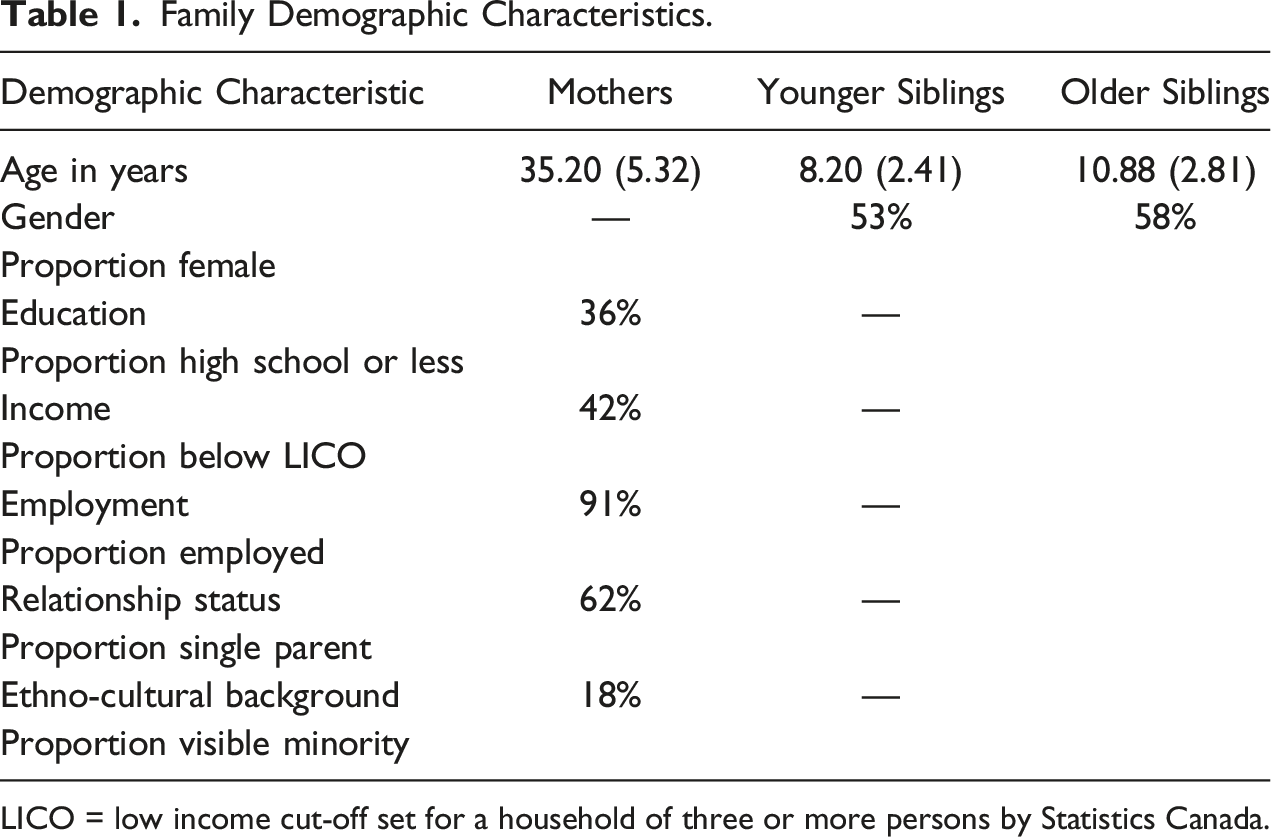
LICO = low income cut-off set for a household of three or more persons by Statistics Canada.
Procedure
Mothers were screened over the phone to ensure eligibility. When criteria were met, mothers chose one of four locations for data collection for their convenience (university campus and located throughout the city). Mothers provided written informed consent and each child provided oral assent. Family members were interviewed separately and privately by a female interviewer. Families were given $75 remuneration for their participation.
Measures
Quality of the Sibling Relationship
Both siblings completed the warmth and hostility subscales of the Sibling Relationship Inventory (SRI) (Stocker & McHale, 1992; Stormshak, Bellanti, & Bierman, 1996). Children answered items presented as a 4-point Likert scale, ranging from 1 (not ever) to 4 (a lot). The warmth subscale consisted of mutual play/activity, sharing, affection, sharing secrets, and comforting the sibling and the hostility subscale consisted of anger, starting fights, doing mean things, stealing, and physical aggression (hit/punch). Two items were added to the hostility subscale (competitiveness and fear of sibling) for purposes of the present study. A principal components analysis with varimax rotation was conducted and a two factor solution (warmth versus hostility) replicated previous findings (Stormshak et al., 1996). Some individual item responses were missing at random (none for younger siblings and two items for older siblings); each missing item was replaced with a subscale specific mean score. Younger and older sibling reports of warmth were significantly related (r(45) = .42, p = .004), as were their reports of hostility (r(45) = .28, p = .05). Therefore, these were summed to create a single summary variable for all further analyses. Coefficient alphas were .85 for younger sibling warmth and .86 for hostility subscales; coefficient alphas were .80 for both older sibling warmth and hostility subscales.
Quality of the Mother–child Relationship
The observation of mother–child interaction took place in a laboratory setting. The observation room was furnished with couches and chairs, and a snack was provided. Mother–child dyads were provided with an Issues Checklist (Robin & Foster, 1988) consisting of a list of potential topics and were asked to choose any topic they most wanted to discuss; conversations were video-recorded. Mothers were observed in this context for two 10-minute intervals, once with each sibling in counter-balanced order, for a total of 20 minutes. Mother and child behaviors were coded into six different categories (Verbal Content, Nonverbal Content, Physical Content, Compliance, and Attention) during each 15-second interval. Each of these was subcategorized into positive, neutral, or negative categories. The total number of positive categories across all six codes, along with positive emotional tone ratings, was summed for each family member to create a positive summary variable. A negative summary variable was created in a similar fashion. Examples of positive, neutral, and negative subcategories for each code included: Verbal Content (e.g., praise; factual statement; disapproval); Nonverbal Content (e.g., smiling; nodding; crying); Physical Content (e.g., hug; no physical contact; hitting); Compliance (e.g., request fulfilled, request partially fulfilled, lack of compliance); Attention (e.g., mutual attention; somewhat attentive; unilateral or low attention). Disengagement was defined as an absence of interaction by either party.
Due to various interruptions (e.g., leaving for a bathroom break), not all mother–child dyads were observed for the full 10-minute observation period; hence, proportional frequencies of positive, negative, and neutral categories for each of the six codes were calculated based on the total number of observation intervals for each family member. Families that participated for 3 minutes or less were not included in analyses (N = 8 families for both siblings and N = 3 families for one sibling). Proportional frequencies were summed separately across family members. Although observations were conducted separately, maternal positivity to younger and older siblings was significantly related r(34) = .59, p = .0002. Therefore, summary variables were created for mother–child positivity and negativity across siblings. Inter-rater reliability was assessed across three independent observers coding 25% of the sample of videotapes; kappa coefficients ranging from .87–.99 across content codes and emotional tone ratings.
Sibling Prosocial Behavior
The observation of sibling prosocial behavior took place in a laboratory setting. While their mothers were interviewed nearby, children were asked to “wait” in a room furnished with couches, chairs, and with a variety of materials, including a Trouble Game©, Lego©, Barbie doll©, drawing materials, and hand-held videogame. Their unstructured interaction was video and audiotaped for 30 minutes; all sibling dyads completed the observation (n = 45). Prosocial behaviors were coded at the dyadic level, and were broadly defined; they included a wide variety of positive behaviors. Some of these behaviors reflect previous work conceptualizing prosocial behavior by very young children in response to others’ implicit or explicit needs (e.g., instrumental, material, and emotional needs) including helping, sharing, and comforting (Dunfield, Kuhlmeier, O’Connell, & Kelley, 2011). Given the greater developmental sophistication of school-aged children, our definition of prosocial behavior was broadened to include more complex sibling interaction, such as expressing concern or sympathy, invitations to play, complying with requests, cooperating, giving apologies (Schleien, Ross, & Ross, 2010), approval, or complements, engaging in humorous or affectionate teasing (Paine, Karajian, Hashmi, Persram, & Howe, 2020), as well as siding with the sibling and against others (Piotrowski, 1995). Event coding that indicated the presence of any of the above listed behaviors by either sibling was coded during each 30 second interval, for a total of 60 intervals. Proportional frequencies of prosocial behavior were calculated based on the total number of observation intervals for each sibling dyad (e.g., a score of 25 indicated that a behavior event occurred during 15/60 observation intervals). Inter-rater reliability was assessed by two independent observers coding 25% of the sample of videotapes with kappa = .80.
Data Analytic Plan
Correlations were conducted between observed sibling prosocial behavior, age spacing and all relationship quality variables. Conditional process analyses were conducted using a PROCESS© macro (Hayes, 2020) to explore if sibling relationship quality moderated the association between the quality of mother–child relationships and observed sibling prosocial behavior, and if this moderation effect was further moderated by age spacing (Hayes & Rockwood, 2020). Analyses were conducted separately for each moderator (sibling warmth and sibling hostility) and minimal sample size criterion for regression analyses as were followed (Hair, Black, Babin, Anderson, & Tatham, 2005). Alpha levels for significance were set at p < .05.
Results
All siblings displayed some prosocial behavior during the 30 minute observation period. There was a wide range of individual differences across dyads; the frequency of prosocial behavior ranged from less than 1%–27% of the observation period (M = 8.09 SD = 6.11). Both sibling warmth and hostility were significantly associated with observed sibling prosocial behavior, while mother–child positivity and negativity were not (see Table 2). Age spacing was significantly and positively associated with prosocial behavior. When included as a moderator, age spacing was categorized into three groups based on average age spacing in the present sample: (a) widely spaced or more than 2 years (M = 4.3 years SD = 1.5 n = 12), (b) average spacing (M = 2.0 years SD = .01 n = 14) and (c) closely spaced or less than 2 years (M = 0.92 years SD = .29 n = 19).
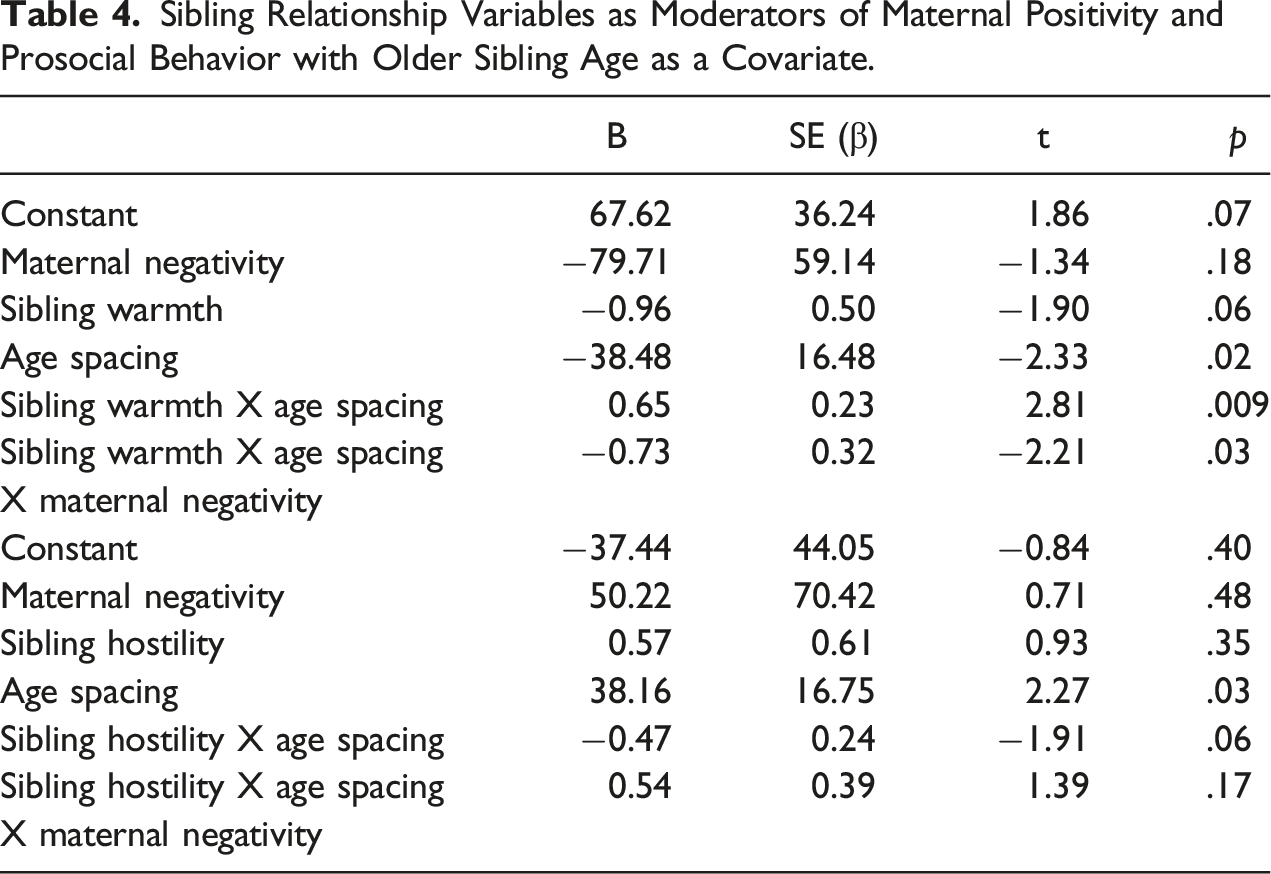
Conditional process analyses were conducted to determine if the quality of sibling relationships (warmth and hostility) moderated the association between the quality of mother–child relationships (positivity and negativity) and observed sibling prosocial behavior, and if this moderation was further moderated by age spacing. Given that maternal positivity and negativity were significantly correlated, and that sibling warmth and hostility were significantly related (see Table 2), combinations of these variables were analyzed separately in order to minimize multicollinearity issues. Given our expectation that older siblings are more likely to initiate prosocial behavior, older sibling age was included as a covariate in all analyses.
Moderation of Mother–child Negativity and Sibling Prosocial Behavior
Correlations Between Relationship Quality Variables, Observed Sibling Behaviors and Age Spacing.
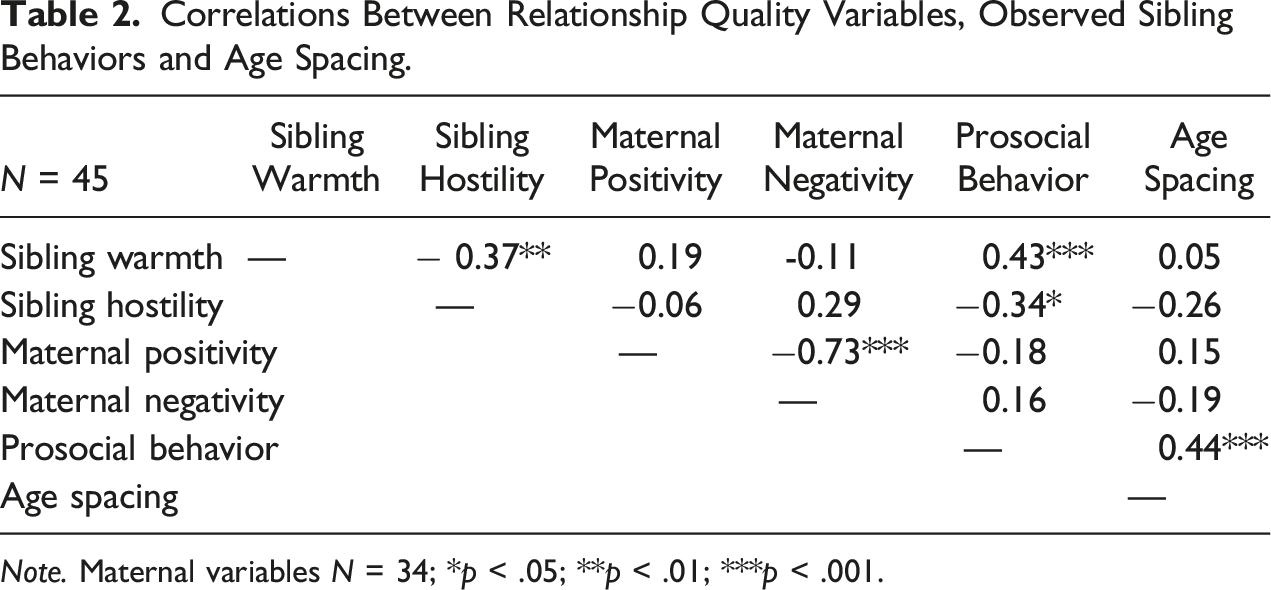
Note. Maternal variables N = 34; *p < .05; **p < .01; ***p < .001.
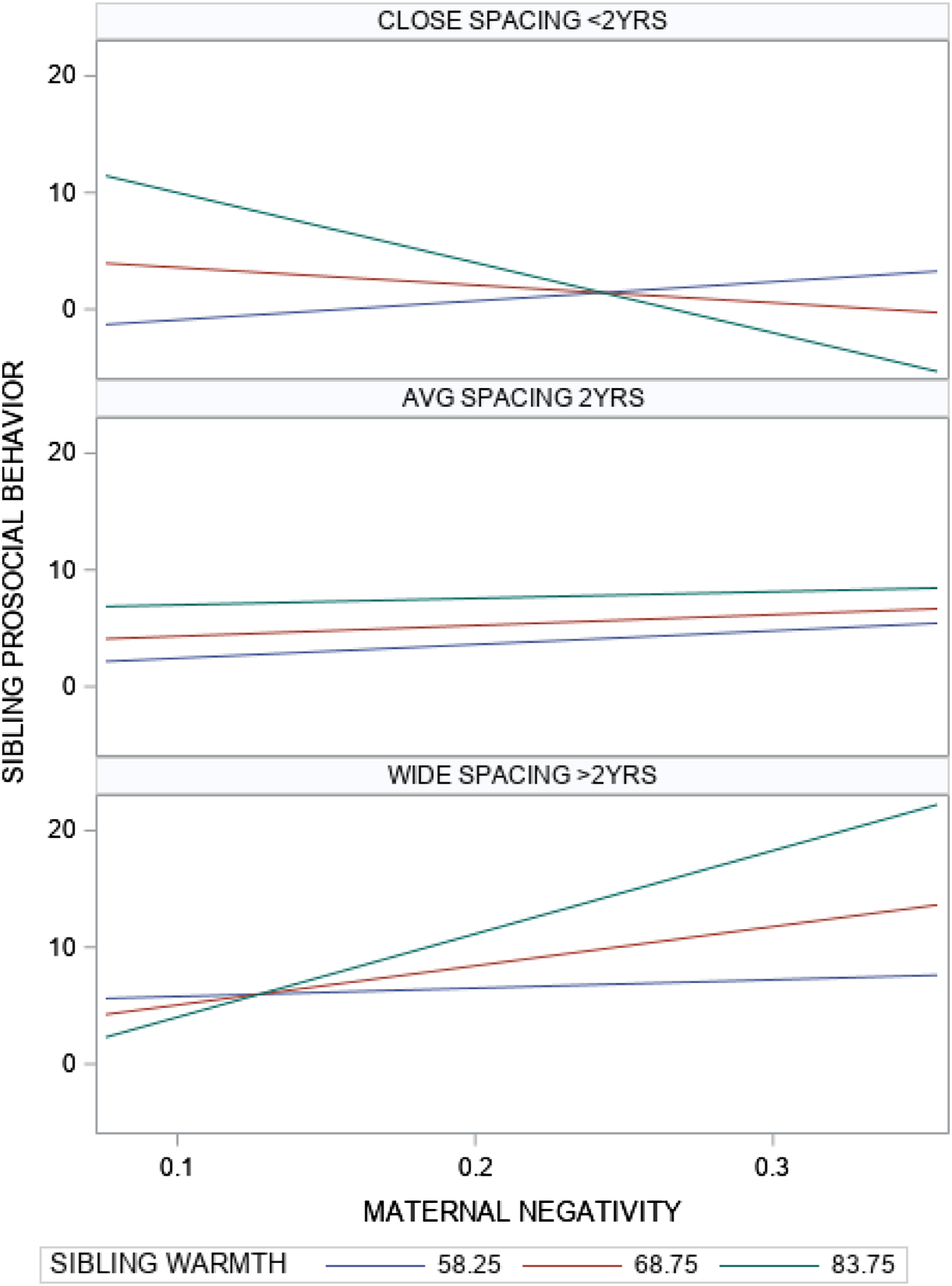
Association between maternal negativity and sibling prosocial behavior moderated by sibling warmth and age spacing interaction.
Moderation of Mother–child Positivity and Sibling Prosocial Behavior
Sibling Relationship Variables as Moderators of Maternal Negativity and Prosocial Behavior with Older Sibling Age as a Covariate.
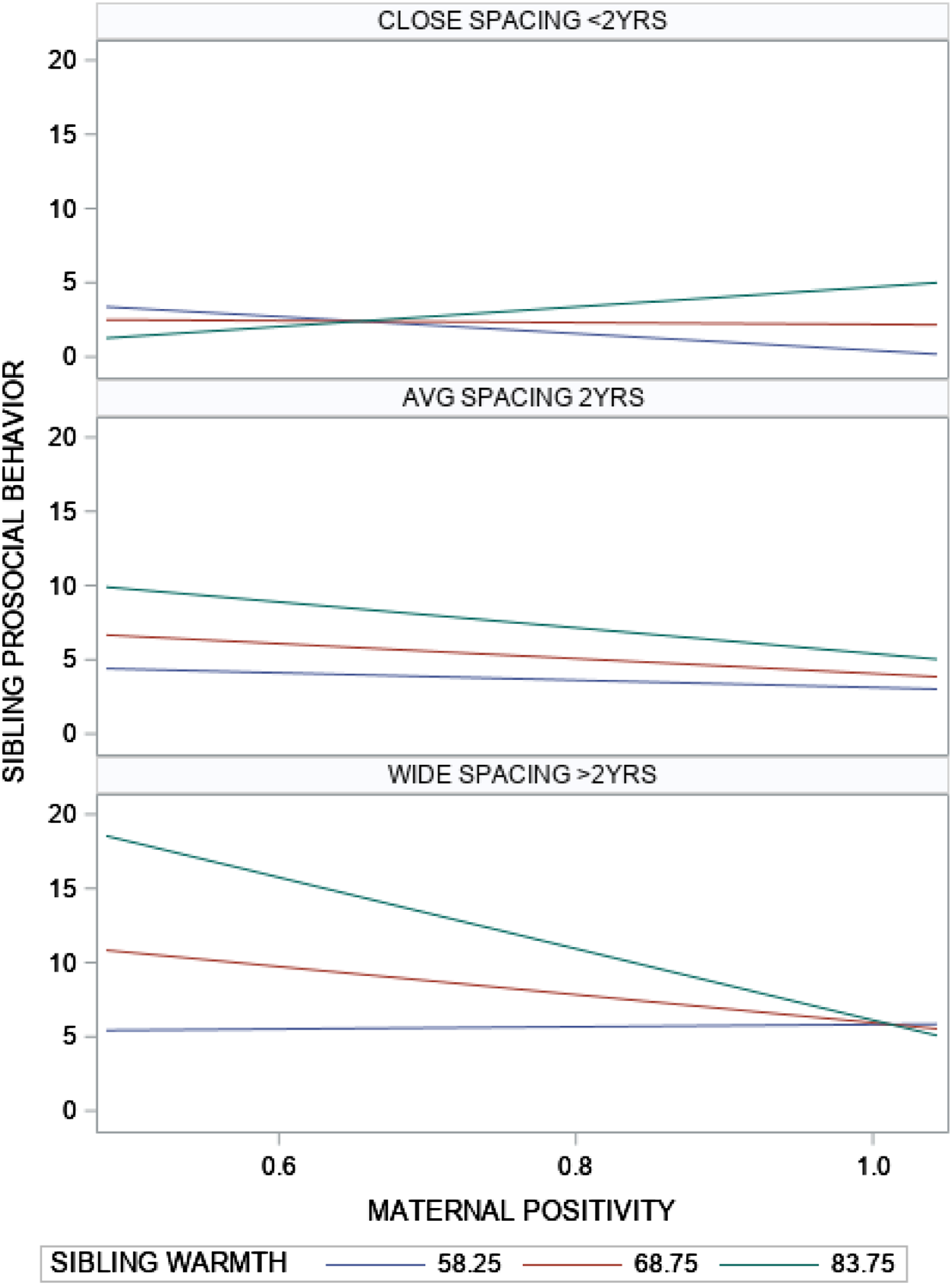
Association between maternal positivity and sibling prosocial behavior moderated by sibling warmth and age spacing interaction.
Sibling Relationship Variables as Moderators of Maternal Positivity and Prosocial Behavior with Older Sibling Age as a Covariate.
Discussion
The present study investigated the interaction between sibling and parent influences on the prosocial behavior of school-aged and adolescent siblings, and made an innovative contribution to a body of work that has typically focused on the separate or independent contributions of these relationships (Hughes et al., 2018; Wong et al., 2021). As expected, sibling warmth significantly moderated the association between the quality of mother–child relationships and sibling prosocial behavior, which was in turn moderated by age spacing. A compensatory pattern was evident for siblings but only for those furthest apart in age; siblings with relationships higher in warmth engaged in more prosocial behavior when the quality of mother–child relationships was less favorable. These results not only reflect the complexity of sibling dynamics, but also highlight the importance of a family systems perspective that takes interactions between relationships into account in the study of prosociality in the family (Padilla-Walker & Memmott-Elison, 2020).
Building upon two lines of past research work that investigated direct linkages between parental warmth and children’s general prosocial behavior (Wong et al., 2021) and the independent contributions of sibling warmth on prosocial behavior over and above parental influence (Harper et al., 2014), the present study took the next step of examining the sibling relationship as a moderator of parent–child relations to observed prosocial behavior between siblings. A complementary pattern was identified; when maternal positivity was low, observed prosocial behavior was more frequent between widely spaced siblings with warmer relationships. This pattern clearly demonstrated how children’s prosocial behavior was linked to warmer relationships—but in this case, greater sibling warmth compensated for lower maternal warmth. A parallel pattern was found for maternal negativity; widely spaced siblings with warmer relationships engaged in more frequent prosocial behavior when maternal negativity was high.
These findings contribute to our understanding of prosocial development in the family in several ways. First, they are in line with past studies that highlight the importance of sibling warmth for children’s prosocial development (Harper et al., 2014). In the present study warmer sibling relationships provided a positive counterbalance to lower maternal positivity and higher maternal negativity. This compensatory pattern was evident only for widely spaced siblings, underscoring the significance of relational roles that were amplified by age spacing (Hughes et al., 2018). Older siblings in widely spaced sibling relationships are posited to act as leaders, initiating and modeling prosocial behaviors for their younger counterparts (Kramer et al., 2019). For widely spaced siblings with warmer relationships, the vertical dynamics based on the greater developmental sophistication of older siblings which may include a more pronounced power differential appear to facilitate prosocial interactions in the face of absent or low parental positivity. The importance of developmental differences with regard to age spacing should be acknowledged. A 3 year age gap between siblings in middle childhood may differ from the same gap between adolescent siblings as differences in developmental sophistication may be more pronounced at younger ages. Younger children may be more likely to need or request assistance from older siblings. These differences may also influence the likelihood of some sibling prosocial behaviors at younger ages (e.g., helping) and others at older ages (e.g., advice). Developmental changes or trajectories in sibling prosocial interaction are an important avenue for future research (Shi, Ettekal, Liew, & Woltering, 2021).
Past work on compensatory patterns in the family has focused on how the positive qualities of sibling relationships can assist with managing adverse or challenging circumstances (Davies et al., 2019). While compensatory patterns with regard to prosocial behavior have not recently been investigated, early work did identify this pattern (Bryant & Crockenberg, 1980). Specifically, a study of school-aged sisters using structured lab-based observations found siblings were more likely to ask each other for help when mothers ignored them more frequently (Bryant & Crockenberg, 1980). This pattern may have been influenced, in part, by the game tasks the children were asked to play.
A compensatory pattern may have emerged in the present study for two reasons. First, the focus of the present study was exclusively on sibling-directed prosocial behavior, rather than on parent or child reports of general prosocial behavior. Observation allows for a richer, more comprehensive assessment of prosocial behavior than parent or child report (Goodman, 1997) and minimizes single reporter bias. While observations of unstructured interaction in laboratory context may differ from naturalistic observations conducted in homes (Tavassoli et al., 2019), they provide an important perspective that complements previous work relying solely on parent or child report (Howe et al., 2011). Next, it must also be noted that the majority of parents in the present sample consisted of single mothers. The absence of a second parent in a household may have amplified the importance of sibling warmth as a counterbalance to low parental warmth, and enhanced compensatory prosocial behaviors by older siblings. Although some work has found that adolescents from single parent households self-reported lower levels of kindness and generosity toward strangers, but not friends or family (Padilla-Walker, Carlo, & Nielson, 2015), this study did not address the potential influence of siblings. Future research needs to address if and how the nature of parental and sibling influences on children’s prosocial behavior may differ in single parent households.
Compensatory patterns were noted in the present study only for widely spaced siblings, and only when mother–child relationships were less favorable. When maternal positivity was high, compensatory patterns disappeared. In fact, all siblings—regardless of age spacing or warmth—engaged in similar levels of prosocial behavior when maternal positivity was high, supporting a vast body of work linking parental warmth to children’s prosocial interactions (Wong et al., 2021). Interestingly, when maternal negativity was low, sibling warmth was related to more prosocial behavior between siblings close in age. Taken together, these findings lend support to congruous patterns of influence between positive mother–child and sibling relationships on sibling prosocial behavior (Overton, 2013). In contrast to the vertical aspects of sibling relationships evidenced by compensatory patterns between widely spaced siblings, prosocial behavior between siblings close in age has been linked to horizontal aspects of the sibling relationship, including joint co-construction of each other’s needs (Dahl, 2018), which has the potential to contribute to the development of later social and emotional understanding (Hughes et al., 2018).
While the presence of sibling warmth clearly played an important role in prosocial behavior in the present study, sibling hostility was less influential. While it may seem intuitively obvious that prosocial behavior would be associated with less hostility, it must be recognized that not all prosocial behavior is positively received, particularly between siblings. Clearly siblings do refuse to help and share with one another, and unwelcomed offers or acts of “help” may sometimes reflect controlling or interfering behavior. For example, Bryant and Crockenberg (1980) found that help given by older sisters was positively related to their disparaging remarks or criticism of younger sisters. They concluded that “helping” sometimes involved more control than generosity. These findings were not replicated in the present study. This may be the case because sibling dyads varied in sex composition, or it may reflect differences between structured and unstructured interaction. Sex differences were not addressed in the present study given the constraints of the sample size; however, future work should incorporate the potential influence of gender in sibling prosocial interactions more closely, particularly when age spacing is larger.
The present study had several strengths and limitations. The observation of unstructured sibling interaction provided a rare and valuable opportunity to capture a rich array of prosocial behaviors not typically assessed by maternal or child reports. However, the laboratory setting limited the generalizability of the findings to other settings. Findings were also limited by a single timepoint of measure which did not allow for the assessment of developmental changes or longitudinal trajectories of prosocial behavior over time (Shi et al., 2021). Future research should undertake a more fine grain developmental analysis by comparing sibling prosocial behavior across age, gender, and age spacing at differing points in childhood and adolescence. Holistic observations of dyadic prosocial behavior allowed for a wide array of prosocial behaviors to be captured; however, future work should address the frequency or rate of specific prosocial behaviors by each individual sibling, which would offer important insights into developmental differences, as well as sequences or patterns of prosocial interaction. Similarly, future research should take into account how differences in individual sibling perspectives on the quality of the sibling relationship are linked to prosocial behavior.
Despite the fact the sample size of the present study was comparable to past work using observational methodology with siblings (Tavassoli et al., 2019), the present findings should be interpreted with caution as the present community-based sample was non-random and therefore may not have fully represented the broader population. It should be noted that 18% of mothers in the present sample identified as a visible minority, which is similar to 22% of the provincial population who identify as a visible minority (Statistics Canada, 2022). Future research replicating our results should include a larger, more diverse and representative sample of families, including multi-generational households. In addition, prosocial interaction between multiple siblings in the same family, as well as in differing types of sibling relationships, including foster and step-siblings should also be addressed, as some have suggested that these relationships can be qualitatively different and may involve more distance or avoidance (Ganong, Sanner, Landon, & Coleman, 2022). Lastly, recent work has suggested that parental differential treatment of siblings may play a role in children’s prosocial behavior (Oliver & Pike, 2018). Future work needs to examine how differential parental positivity and negativity towards siblings may impact their prosocial interaction.
In summary, findings of the present study contributed to a growing literature recognizing that sibling relationships have a marked influence on children’s prosocial development in the family. They also highlighted the value of investigating interactions between the quality of parent–child and sibling relationships rather than examining each in isolation (Overton, 2013). Sibling warmth played an important compensatory role when mother–child positivity was lacking; however, congruous influences of both maternal positivity and sibling warmth were also found. Given these results, the complexity of sibling dynamics, their interplay with other family relationships, and their nuanced influence on children’s prosocial behavior should be taken into account in future research.
Footnotes
Acknowledgments
The families who participated are gratefully acknowledged.
Declaration of Conflicting Interests
The author(s) declared no potential conflicts of interest with respect to the research, authorship, and/or publication of this article.
Funding
The author(s) disclosed receipt of the following financial support for the research, authorship, and/or publication of this article: This study was funded by a Social Sciences and Humanities Research Council of Canada grant (410-96–0311) awarded to C. Piotrowski, Principal Investigator.
