




Abstract
Focusing on men’s negotiation of traditional norms and new gender dynamics amidst rapid social changes, the current study reveals nuanced trends and inter-regional heterogeneity in marriage behavior of men during the past decades in Asian societies. Since the 1970s, marriage age for men across Asia has risen and the slope of change is especially sharp in East Asia; while men in East and Southeast Asia increasingly remain single in their 30s and early 40s, earlier and almost universal marriage continues to dominate men’s nuptiality in South Asian societies. We contextualize these empirical patterns in the complex interplay of aggregate-level socioeconomic development, the changing labor market conditions (as reflected in a high level of job insecurity and informalization), shifting gender dynamics in educational attainment and labor market participation, and remaining legacies of traditional gender role expectations. This study offers compelling empirical evidence for further theorizing marriage and gender in Asia.
Introduction
Recent years have seen an expanding literature on women’s delay in and “flight from” marriage in many Asian societies, particularly in East and Southeast Asia. These trends, which reflect a divergence from traditional norms and cultural ideals, have extremely important implications for family and social structures, for labor markets and economic development, and, indeed, due to their impact on fertility, for the ability of populations to replace themselves. In a number of East Asian countries, fertility has fallen to the lowest levels in the world, causing population contraction, which has already begun in Japan and is about to begin in the Republic of Korea and Taiwan.
It is hardly surprising that these rather revolutionary trends in marriage patterns have led to a growing literature on the factors driving women’s marriage options and decisions in the region. Marriage is the gatekeeper to childbearing in Asian countries in a way that is totally different from its more limited role in determining childbearing patterns in the West. But if women in Asian countries are delaying marriage or avoiding it altogether, how does this relate to men’s marriage patterns and decision-making? In what ways are men actively engaged in the change in motivations for marriage and resistance to it? Is there a symbiotic relationship between men’s and women’s motivations and the obstacles they face in contracting marriage?
Trends in marriage for men and the factors influencing them have received relatively less attention than those for women in studies of Asian marriage, although this neglect has been redressed in a number of more recent studies. 1
One reason for greater attention to women is that trends in delayed and non-marriage for women are clearly a very important element in the collapse of fertility levels in much of East Asia and parts of Southeast Asia, which has governments quite worried and is a major focus of academic and policy-oriented research. Yet even if the emphasis is on the effect of marriage trends on fertility, it is somewhat myopic to ignore factors driving men’s ability and motivation to marry since the availability of suitable potential spouses will clearly influence women’s marriage patterns.
There are two sets of questions that need to be answered in relation to men’s marriage patterns in Asia. The first relates to broad economic and societal determinants, and changes that might have influenced marriage patterns. For example, how does rapid socioeconomic development in Asian societies in the past decades, albeit at different paces in different parts of Asia, affect young men’s trajectory and tempo in transitioning to adulthood roles, in particular, their entrance into love relationships and marriage? Has the shift toward a very flexible labor market (meaning that job security is not assured) had important effects on men’s willingness and ability to take on the responsibilities of marriage? Has the demise of arranged marriage systems in some countries (and their retention in others) had any effect on men’s entry into marriage? Shifting gender dynamics (as reflected in women’s higher educational attainment and better earnings prospects) has been much analyzed in relation to nuptiality patterns in Western countries. To what extent are similar forces at play in Asia, and what is their effect on men’s marriage patterns?
These broad societal level changes affect individuals differently, depending on their own circumstances. For example, how does the tension between entrenched patriarchal family values and arrangements across the region which valorize men’s role as the provider and shifting gender dynamics brought about by women’s strident progress in educational attainment and labor market participation play out in individuals’ marriage prospects and decision-making? For individual men, we would like to know the extent to which their socioeconomic positions (reflected in their educational attainment and employment conditions) influence their marriage patterns given the general improvement of the economic power of women who may simultaneously be their competitors in the labor market and possible marriage partners. Will class disparities in men’s perceived marriageability be exacerbated as a result?
Earlier Studies of Men’s Marriage in the Region
Probably the most comprehensive study of male marriage trends in East and Southeast Asia is Jones and Gubhaju (2009), though it does not deal at all with South Asian countries, or with the higher-fertility countries of Southeast Asia. The study found a sharp rise in the proportion of males remaining single in all age groups in Japan, South Korea, Taiwan, and Hong Kong, although the earlier rise in Singapore had slackened off. In all of these countries, the proportion of single remained higher for men than for women; in some cases, much higher in every age group. As for patterns of singlehood according to educational attainment, Jones and Gubhaju found that these were not as clear-cut for men as they were for women, and the relationship differed by country.
In many countries, there is a sharply inverse pattern of singlehood between men and women. For women, the proportion remaining single is far higher for those with secondary education and, in particular, higher education than it is for those with lower levels of education. However, the highest levels of singlehood for men, especially those in their late 30s and 40s, are found among those with the lowest level of education. This pattern is found, for example, in Japan, China, and Singapore, and among Chinese Malaysians. There is not as much of a differential by education for men in their 20s and early 30s, probably because men pursuing higher education need time to complete their education and establish their careers before contemplating marriage and the poorer income prospects of lower-educated men put them at a considerable disadvantage in the marriage market. Not only are they less desired as potential partners, they themselves may doubt their capacity to provide for a family. Thus, in their mid-30s and mid-40s, the higher-educated men who are still single tend to marry, whereas this is less the case for the lower-educated men. (p. 257)
The different patterns of entry into marriage for men with relatively lower and higher education are indeed one of the most pervasive findings about male marriage in East and Southeast Asia. Males with relatively low education are more likely than better educated males to marry while still in their 20s, but by the early 30s, university-educated males have caught up and surpassed them in terms of proportions married. This has been found to be the case in South Korea, China, and Singapore (Jones, 2018; Ji & Yeung, 2014, p. 1673), in Malaysia (Tey, 2011), and probably in Thailand (Williams & Guest, 2006). In Taiwan and Japan, university-educated males are slower to catch up with their lower-educated peers in marriage than in these countries, but they eventually do (Chen & Chen, 2014, pp. 1594–1595; Retherford, Ogawa, & Matsukura, 2001).
Many researchers have argued that females have been subject to the sharpest change in motivation to delay or avoid marriage. However, other factors strongly influencing both women’s and men’s marriage decisions are increasingly recognized these days, two of which should be noted here: first, the increasing uncertainty in the job market, fostering delays in marriage for both males and females, and adversely affecting the marriage chances of less educated males in particular; and second, the extreme pressure on parents to raise “successful” children (see Anderson & Kohler, 2013; Jones & Gubhaju, pp. 258–259; Gu, 2021) which acts as a disincentive to both men and women to have children or to marry as a necessary prelude to having children.
The marriage problems facing men in China have received more attention than those faced by men in other countries, largely because the marked sex imbalance resulting largely from the One-Child policy interacting with son preference has led to particular problems for rural and lower-educated men who are not favored as husbands by the increasingly urbanized and educated Chinese women (Hudson & den Boer, 2004; Huang, 2014; Attané et al., 2019). As Ji and Yeung (2014) put it, “It is likely that less educated and uneducated men will be most disadvantaged due to both the heavily skewed sex ratio in the marriage market and the cultural norm of status hypergamy.” More broadly on East Asia, Raymo et al. (2015, p. 483) state, “… owing to economic pressure, combined with maintaining norms of homogamy and female hypergamy, marriage prospects are poor for two groups: men with little education and women with a lot.”
While men’s marriage patterns have received increasing attention in studies of individual countries of East and Southeast Asia, there is a dearth of studies on men’s marriage patterns in South Asia. There is clearly a need for a more systematic examination of trends in men’s marriage patterns in Asian countries as a whole, and factors influencing these trends, than has hitherto been conducted. That is the first purpose of the present study. The second purpose is to examine the changing context of male marriage—the dramatic social changes and labor market conditions in the context of demographic transition and the clash of traditional norms with emerging ideas, not only among males but among the women about whether they will, or will not, marry. Key questions to be considered are whether women are the key actors in the flight from and delay of marriage. Is women’s motivation dominant? In what ways are men actively engaged in the change in motivations for, and resistance to, marriage? To what extent is there a symbiotic relationship between men’s and women’s motivations and the obstacles they face? In other words, the study seeks to unravel complex trends and inter-regional heterogeneity in marriage behaviors of men in their negotiation of traditional norms and new gender dynamics amidst rapid social change in Asia.
Data and Findings
The current study explores census and survey data from several Asian contexts. The findings will be explored in detail below, but four introductory points can be emphasized: (1) between the 1970s and 2010s, there was an overall rise in marriage age for men across Asia and the slope of change was especially sharp in East Asia; (2) men in East and Southeast Asia increasingly remain single in their early 30s and into their 40s (with the exceptions of China and Indonesia), while earlier and almost universal marriage continues to dominate men’s nuptiality in South Asian societies (although Sri Lanka is an outlier); (3) at the aggregate level, economic growth, urbanization, the expansion of tertiary education as well as the level of gender egalitarianism have a bearing on men’s marriage patterns; 4) at the individual level, growing educational disparities and changing labor markets, including less certainty of permanent employment, affect both males and females.
Men’s Marriage Trends
Singulate Mean Age at Marriage (SMAM)
Figure 1 displays the trends of men’s SMAM in Asian societies over the four decades between 1970 and 2010. We observe an overall rise of men’s age at first marriage across Asia, particularly in East Asia. Despite an uptick towards later marriage ages since the 1990s, South Asian men on average marry at a relatively younger age than their counterparts in other parts of Asia. Mean age at first marriage for men by region.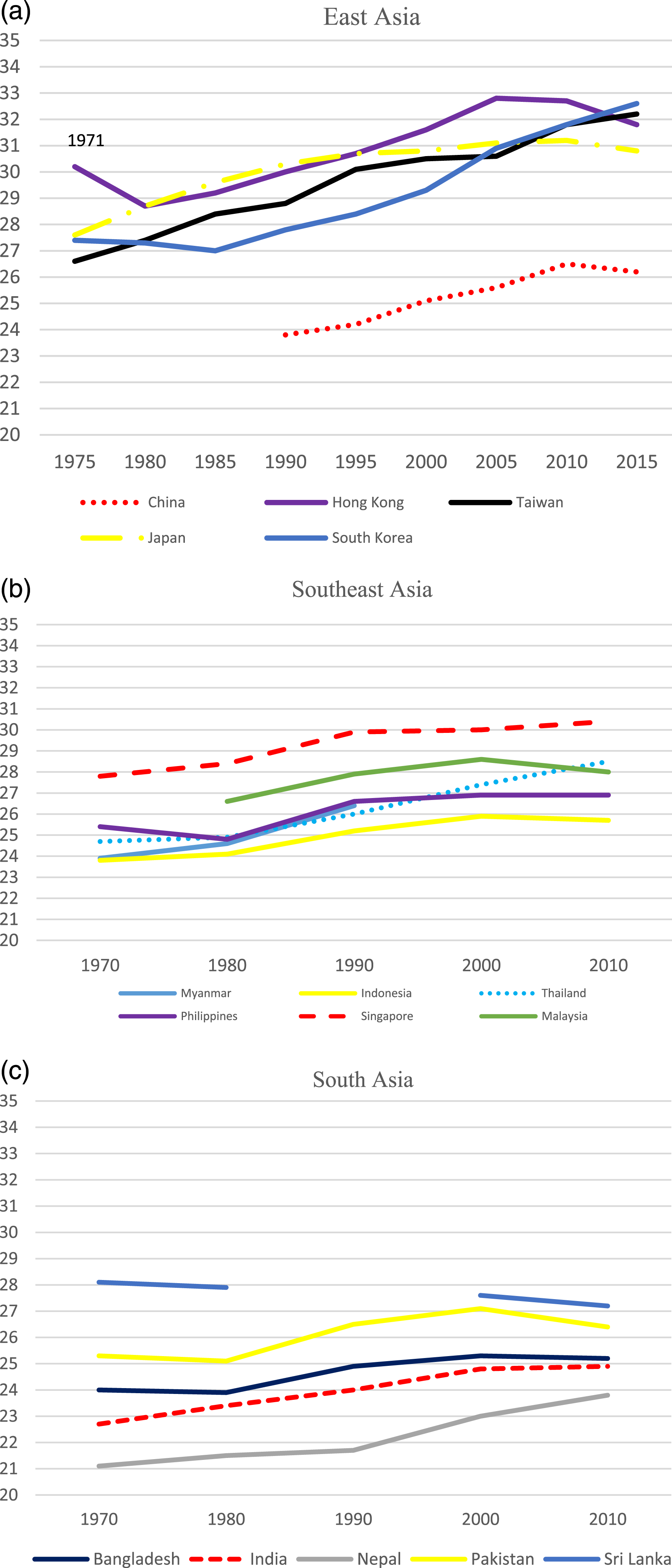
As Panel A shows, four East Asian societies witnessed the emergence of a late marriage regime among men, with the male SMAM approaching 27 and above in the 1970s and rising to well above 30 in the 2010s. China is very much an outlier; despite a trend toward later ages at marriage in a rapidly changing society, it started from a much lower age-at-marriage base and saw less dramatic changes in men’s SMAM over time, which rose from 24.2 years in 1990 to 26.2 in 2015.
Panel B illustrates the pattern of men’s mean age at first marriage in Southeast Asia, which saw a gradual increase over the four decades. In the 1970s, men on average entered into marriage in their mid-20s (around 24 and 25) in Myanmar, Indonesia, Thailand, and the Philippines; in the 2010s, their average age at first marriage rose to between 26 and 28.5. In this region, Singapore stands out by its consistent pattern of men’s older SMAM, from 28.4 in 1970 to 30.4 in 2010, which aligns with the four East Asian early developed societies.
As already mentioned, South Asia is characterized by an early marriage regime for men. As seen in Panel C, men in South Asia have delayed entering into marriage from their early- and mid-20s to their mid-20s. In the 2010s, men’s average marriage age in the five South Asian countries (Bangladesh, India, Nepal, Pakistan, and Sri Lanka) ranged between 23.8 and 27.2. Among them, Sri Lanka, “the Ireland of Asia” (Kirk, 1969), could be identified as an outlier, due to its consistently older average marriage age among men than its neighbors in the region and its gradual decline in men’s age at first marriage. In 1970, men on average married at 28.1 years old; by 2010, this had dropped to 27.2. Possible reasons will be discussed later in the paper. According to Dommaraju (in this issue), spousal age differences in South Asia and Southeast Asia range from 8.5 years in Bangladesh to 2.7 years in Myanmar, with all other countries in a narrow range of three to 5 years and with greater gaps in South Asian countries. Moreover, regression analysis indicates that men’s age at marriage is a significant predictor of spousal age gaps, with a 1-year increase leading to an increase in age difference between 5 and 8 months. These results show remarkably similar patterns with what Casterline and colleagues (1986) reported, suggesting a level of continuity in men’s marriage trends in these Asian regions.
Non-marriage
Figure 2 shows the proportion of never-married men in their early 20s (Panel A), early 30s (Panel B), and 40s (Panel C), with blue (left) bars representing the statistics reported in 1970 and red (right) bars in 2010. Although the trends and levels vary greatly, the general pattern is one of rising non-marriage rates among men across the three age groups in recent decades. Male singlehood rate by age group, 1970 and 2010. Source: UNPD data; World Bank data (*: 1982 and 2010 data; #:1980 and 2010 data; **: 1973 and 2014 data; ^: 1991 and 2010 data; ▶: 1974 and 2011 data; ##: 1975 and 2007 data; ^^: 1971 and 2012 data).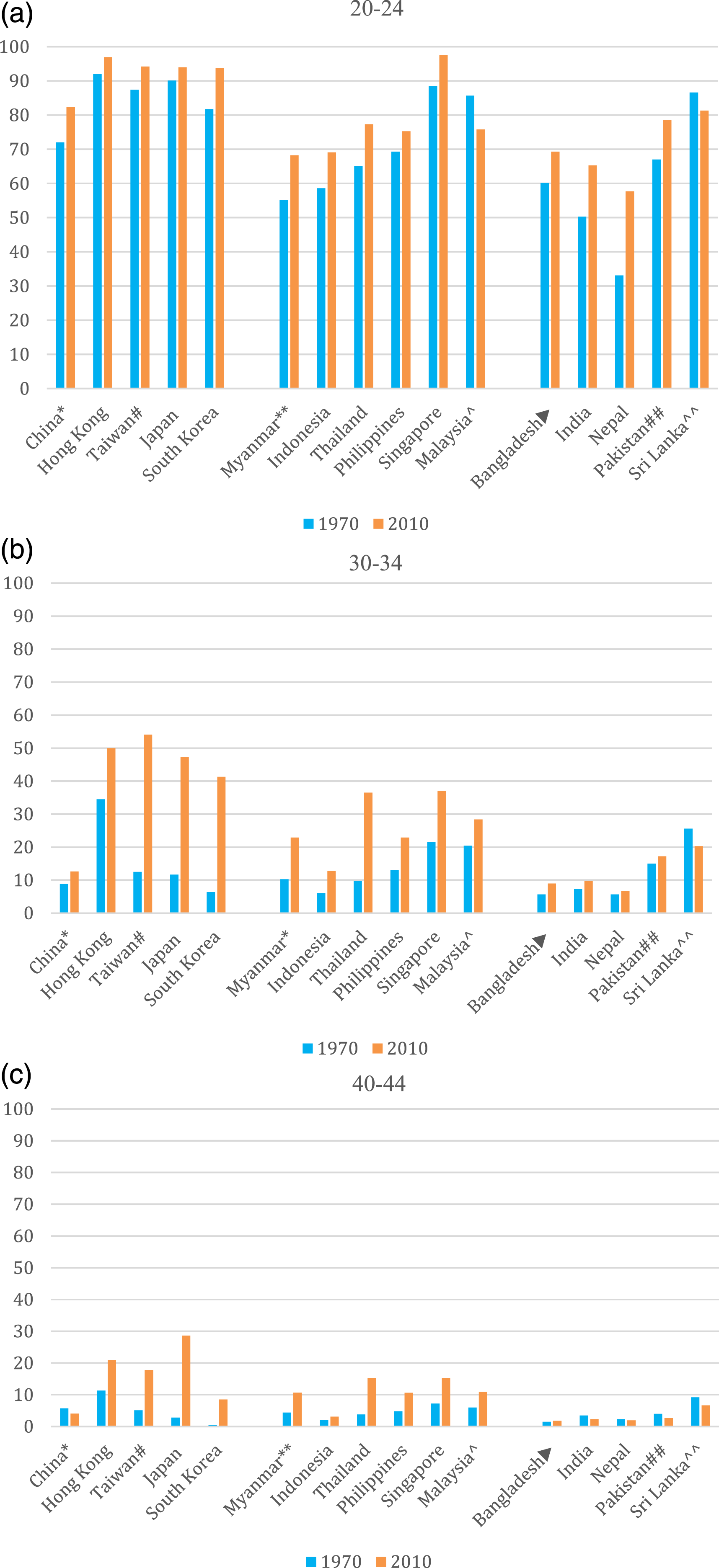
First, we observe an emerging majority of men remaining single in their early 20s across Asia in 2010 (Panel A). This may reflect a protracted pattern of transitioning to adulthood roles among young adults in new cohorts who spend longer time completing their education or skills training and establishing their careers (Yeung & Alipio, 2013). In more developed societies such as Hong Kong, Taiwan, Japan, South Korea, and Singapore, an overwhelming 90% of men aged 20–24 were yet to be married in 2010. Not coincidentally, these societies also saw rapid education expansion and economic development over the decades, hence longer durations for young adults to achieve economic and social autonomy.
Second, tremendous heterogeneity in men’s nuptiality exists between different regions in Asia, reflected in their varying distances from the universal and early marriage regime in the past (see also Supplementary Material in Appendix A). Specifically, men in East and Southeast Asia increasingly remain unmarried in their early 30s and into their 40s (with the exceptions of China and Indonesia), while earlier and almost universal marriage continues to dominate men’s nuptiality in South Asian societies. As shown in Panel B and Panel C, except in China, East Asian societies have witnessed a substantial rise of non-marriage among men at mature ages. In the case of Japan, 12% of men aged 30–34 were unmarried in 1970 and this figure rose to about 50% in 2010; less than 3% of men aged 40–44 were never-married in 1970 and this multiplied almost ten-fold to 29% in 2010. South Korea is predicted to follow this trend: in 2015, 34% of men aged 35–39 were single. It is likely that a large segment of older bachelors in these societies will remain single for the rest of their lives, voluntarily or otherwise.
Men’s marriage patterns in Southeast Asian countries show more diversity. In Malaysia, Indonesia, and the Philippines, men’s non-marriage rates till their 40s increased moderately in the four decades of observation, though there was variation in the pace of change, at least in some cases, according to factors such as ethnicity and rural/urban residence (Jones, 2005; Tey, 2011; Williams, Guest, & Varangrat, 2006; Jones & Gubhaju, 2012, p. 75–76). Thailand and Singapore have seen a dramatic surge in the proportion of never-married men in their early 30s and early 40s, which differed significantly from the pattern in 1970. In both countries, more than one-third of men aged 30–34 were never-married and about 15% remained so when they reached 40–44 in 2010. A difference between these two countries is that men in Thailand showed a more protracted pattern of marriage transition: a quarter of them married by the age of 24, about 40% married between ages 25–34, and about 20% entered into marriage between 35 and 44. Singaporean men’s trajectory of transitioning to marriage was more condensed: fewer than 3% of them were married when they were 24 years old; more than 60% married in the ensuing 10 years and another 20% eventually became married by the age of 44.
As Figure 2 illustrates, the norm of earlier and universal marriage continues to dominate South Asian men’s pathway to marriage. Despite an initial delay in their early 20s (Panel A), South Asian men “rush” into marriage in the decade afterward: an overwhelming majority of them had been married by the time they reached 30–34 in 2010 (Panel B); those remaining single in their early 40s were a negligible proportion in the total population (Panel C). To put it in a comparative perspective, unlike their counterparts in other parts of Asia (East Asia, in particular) who significantly delay marriage or retreat from it altogether, men in South Asia seem to embrace marriage more universally and faster. Moreover, in South Asia, there is no sign of a tendency for singlehood at older ages to increase; in fact, lower proportions of men in their early 40s remained never-married in 2010 than in 1970 among all the five countries in our data.
While child marriage (below age 18) remains prevalent among females in parts of South Asia, it is also not unknown among males. Data from the 2016 Demographic and Health Survey show that in Nepal, 10% of men aged 20–24 had married before age 18, and this figure stood at 5% in Pakistan. This percentage did not change much over time in Pakistan, but in Nepal it had been much higher in earlier years: over 20% of men aged 30–44 had married before age 18. Data for Bangladesh in 2011 show that 4.4% of men aged 20–24 had married before age 18, and, at 6.3%, a higher percentage of men aged 25–49 had done so (Bangladesh Bureau of Statistics, 2015). By contrast, it is almost unheard of for men in East Asia to marry below age 18.
In many respects, Buddhist-majority Sri Lanka could count as an outlier in South Asia. It has been known as an exception in the region due to the prevalence of late marriage and non-marriage, contrary to the prevailing universal and early marriage norm (Caldwell et al., 1989; Caldwell, 1999; De Silva, 2014). As Figure 2 shows, non-marriage rates of Sri Lankan men in different age categories were the highest among all the five South Asian countries. However, if compared with the 1970 figures, in 2010, Sri Lankan men in different age groups tended to have lower proportions remaining single. This perhaps unexpected finding has been explained by De Silva (2014) as resulting from several factors: ending of an earlier marriage squeeze; a crackdown on abortion, pushing some of those becoming pregnant outside marriage to marry; a trend toward earlier completion of university studies; and (probably most important), an improved economic situation, with steadily declining unemployment rates and more remittances from abroad, which enabled young men to contemplate marriage at an earlier age than before.
Exploring Social Mechanisms
Macro-level Factors
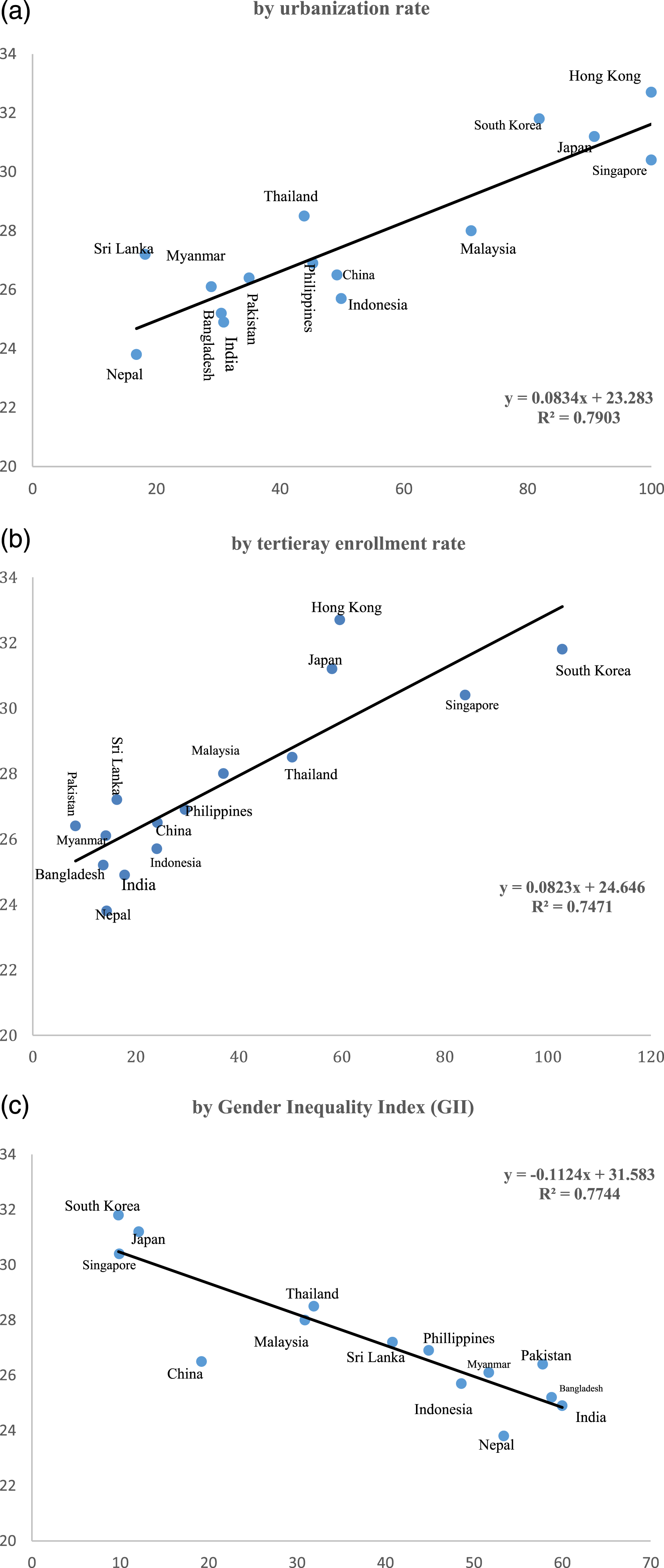
As described earlier, men across a range of Asian societies are notably delaying their transition to marriage and/or increasingly remaining single at very late ages, albeit with substantial heterogeneity within the region. Such trends and patterns are achieved in tandem with dramatic social and economic transformations. How do social and economic changes impact men’s marriage trends across Asia? To answer this question, we present two sets of scatter grams (Figures 3 and 4) based on aggregate-level data to show the broad patterns between men’s marriage patterns and societal level indicators, including GDP per capita, Gender Inequality Index (GII), tertiary enrollment rate, and urbanization rate. These four indicators are expected to capture multiple dimensions of structural changes in Asia—economic, social, and cultural. Male singlehood rates at ages 30–34 by macro-level socioeconomic indicators. Source: UNPD marriage data (2010); World Bank data (2010). SMAM for men by macro-level socioeconomic indicators. Source: UNPD marriage data (2010); World Bank data (2010).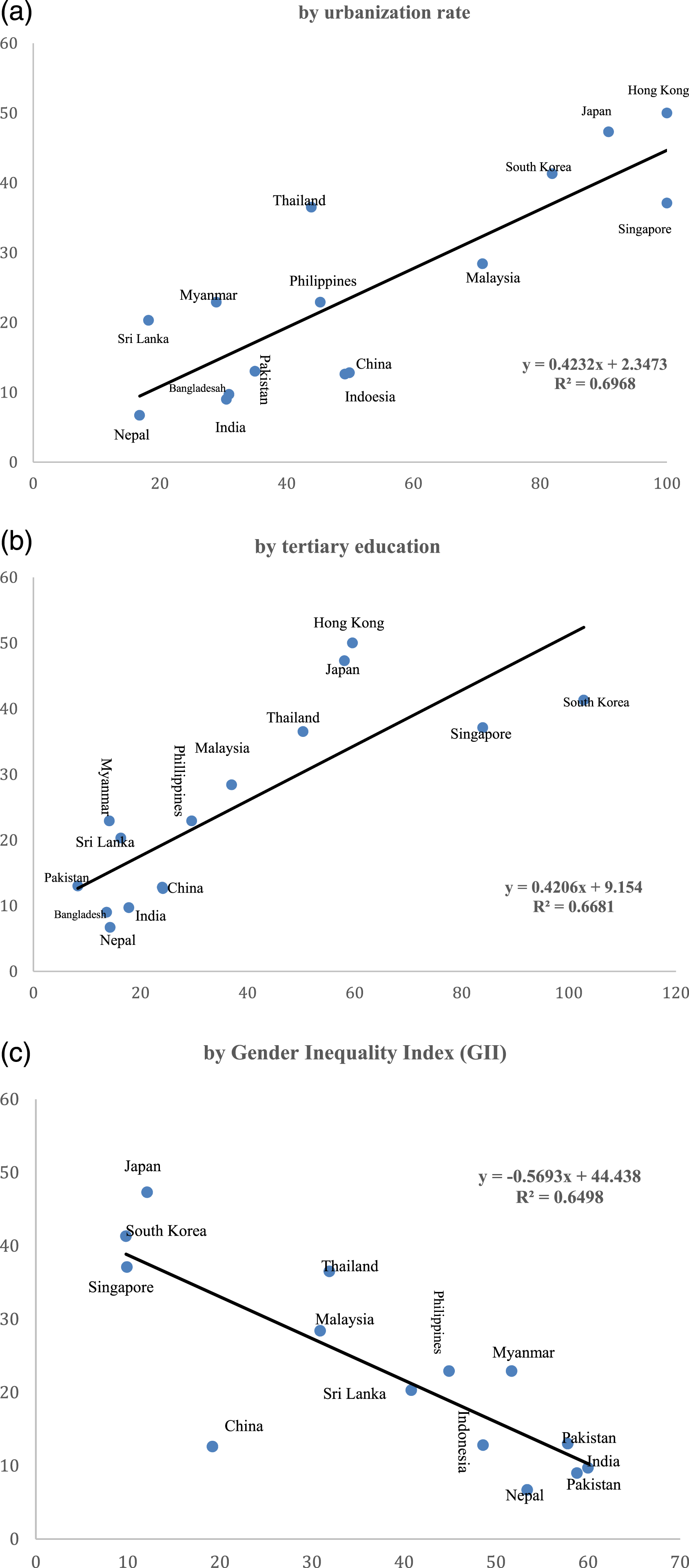
Socioeconomic Development and Male Singlehood
Figure 3 shows the relationship between the proportion of singlehood among men aged 30–34 years and the three socioeconomic indicators in 2010. Across the three panels, tertiary enrollment rate and urbanization rate for individual nations or regions were both positively correlated with men’s propensity to stay unmarried in their early 30s, with the urbanization rate having the higher explanatory power (R2 = 0.70). This suggests that social and economic modernization makes for later marriage among men, likely due to the complexity and pressure that young men encounter in securing their positions in volatile labor market conditions and in establishing their adult status. In general, we also observe two broad clusters among these societies. Among a cluster of societies that developed earlier (Japan, Hong Kong, Singapore and South Korea), characterized by higher GDP per capita levels (over $30,000), higher tertiary enrollment rate (approximately 60% or higher), and higher levels of urbanization (with more than 80% of their populations living in cities), substantial proportions of men remained single at age 30–34—about half of Hong Kong and Japanese men, and more than one-third of Singaporean and South Korean men in this age category. Most countries in Southeast and South Asia, together with China, belonged to the second group of countries with lower socioeconomic development and lower singlehood rates for men in their early 30s, relative to the first group. South Asian countries in particular, including India, Nepal, Bangladesh and Pakistan, were almost the mirror image of earlier developed societies, with a combination of lowest proportions of male singlehood at 30–34 and poor socioeconomic indicators (with less than 20% tertiary enrollment and lower than 30% of the population residing in urban areas).
It is widely held that marriage in many Asian societies today grapples simultaneously with economic transformation and enduring patriarchal legacies in various cultural and religious systems (Raymo et al., 2015; Yeung, Desai, & Jones, 2018). Earlier research on the growing trend of women’s “flight from marriage” in East and Southeast Asia concluded that this is a result of the clash between women’s expanded role in education and labor force participation and the continuing gender asymmetry in the family arena where women are still regarded as the primary caregivers and home managers (Jones, 2005; McDonald, 2000; 2009). To push our analysis further, we explore the relationship between gender disparity (measured by the Gender Inequality Index provided by the UNDP) and men’s singlehood, as shown in Panel C. We observe that the trend line captures well a negative bivariate relationship between GII and male singlehood at 30–34, with most societies clustering around this trend line, except for China which has a singlehood rate as low as that of Pakistan while also ranking relatively low in the gender inequality index. In general, every unit increase in the Gender Inequality Index is associated with 0.56 unit of decrease in men’s singlehood rate. This factor alone explains about 65% of the variation in percentage unmarried in these Asian contexts.
Socioeconomic Development and Male SMAM
Figure 4 displays the data on the relationship between socioeconomic indicators and male SMAM. The panels reveal a similar picture to that of the rate of male singlehood as described before. The group of early developed societies in East and Southeast Asia (i.e., Hong Kong, Singapore, Japan, and South Korea) with strong performance in urbanization rate and tertiary enrollment distinguish themselves from the rest of Southeast and South Asia by men’s later average age at first marriage. The increase of one percent in tertiary enrollment and one percent urbanization rate delays men’s average marriage age by 0.08 years, respectively. The gender inequality index of a society is negatively correlated with men’s mean age at first marriage: every unit increase of the GII brings a 0.11 year decrease in men’s marriage age across all societies. The R2 statistics for all these bivariate relationships remain quite high, ranging from .66 to .79, indicating strong explanatory power of societal level indicators for general trends of men’s marriage age.
Micro-level Factors
The institution of arranged marriage, that is, the practice of parents and other kin members choosing a bride or groom, which used to dominate in many parts of Asia, retains its importance in South Asia. Evidence from societies in this region suggests at best modest change in the institution, where parental involvement in arranging children’s marriage remains prevalent, albeit with children’s increasing participation in the process (Caldwell, Reddy, & Caldwell, 1983; Ghimire et al., 2006; Allendorf & Pandian, 2016). For example, in a rural community in Nepal in 1996, 65% of ever-married respondents reported that their first marriage was solely arranged by parents or relatives (Ghimire et al., 2006). A study based on a national representative dataset in India shows that across four marriage cohorts (1970s; 1980s; 1990s; 2000s), the proportion of women who reported selecting their own spouse was consistently below 10%, and a notable tradeoff between arranged marriage by parents alone and jointly arranged marriage by parents and the women themselves was seen in the decade between the 1990s and 2000s (Allendorf & Pandian, 2016). Data from the 2016 Nepal Demographic and Health Survey reveal that substantial proportions of young men still married at ages below 18, ranging between 10% and 23% by different age groups. It seems that the persistence of arranged marriage, where the family as a collective, rather than individuals, acts as the agent of marriage negotiations, may contribute to the earlier and almost universal marriage patterns in South Asia, as observed in previous sections. In East and Southeast Asia, however, arranged marriage seems to be in steady decline, including in Japan (Retherford & Ogawa, 2006), China (Xu & Whyte, 1990), Indonesia (Malhotra, 1997), Malaysia (Jones, 1994), and Taiwan (Thornton, Chang, & Lin, 1994). In Japan, for example, 60% of married women were in an arranged marriage in the 1950s, but this proportion had dropped to nearly zero in the early 2000s (Retherford & Ogawa, 2006, p. 17). In such contexts where spouse selection largely dwells on “forces of attraction” (Qian & Preston, 1993) between potential partners, it is likely that individual-level characteristics of marriage-seekers will play a greater role in shaping their marriage patterns, although individual-level characteristics will also be weighed, albeit with different emphases, by decision-makers in arranged marriages.
Given the strong normative expectation of men to fulfill the breadwinner role in most parts of Asia, it is plausible that their economic prospects will greatly influence their family formation patterns, especially in contexts where sustained economic and social development have buoyed up the material criteria in family formation. Oppenheimer (1988) and Oppenheimer and colleagues (1997) have proposed a career-entry theory to understand the relationship between one’s labor market position and marriage behaviors. According to this theory, as long as the paramount importance of men’s economic role in the family remains, their career trajectory, positioning, and status shall affect their ability and willingness to engage in courtship and love relationships that may lead to marriage. From a life-course perspective, men’s level of ease in transitioning from education/skills training to work life is construed as an important marker of their assumption of adulthood roles, which implicates their self-perceived or socially constructed positions in the marriage market, hence their marriageability and the pace of transition to marriage.
As a robust indicator of individuals’ socioeconomic status in modern societies, educational attainment is found to be significant for family formation and a wider range of transition to adulthood behaviors. While previous scholarship has documented a consistent impeding effect of higher education on women’s likelihood to get married in various Asian societies (Retherford, Ogawa, & Matsukura, 2001; Raymo & Iwasawa, 2005; Jones, 2005, 2007; Williams, Guest, & Varangrat, 2006; Zhou, Wu, & He, 2017), the relationship between men’s education and marriage trends seems to be less straightforward. On the one hand, the substantial delays of marriage among men, shown in the previous section, are largely the result of the longer years young adults spend on education and skills training, as scholars of youths’ life-course transition have noted (Yeung & Alipio, 2013). However, evidence suggests that this delay effect is temporary. And that men of higher education eventually are able to transition to marriage, or “rush into marriage” (Jones, 2005, p. 102) at later ages. On the other hand, men of low education in Asia (East and Southeast Asia in particular) face grave challenges in getting married, due to their long-term socioeconomic disadvantages which make the culturally sanctioned provider role a less attainable goal and dampen the prospects of upward social mobility that a potential wife would gain through hypergamy (Raymo & Iwasawa, 2005; Jones & Gubhaju, 2009; Ji & Yeung, 2014; Chen & Chen, 2014; Yu & Xie, 2015; Attané et al., 2019).
Proportion of Singles among the Resident Population in Singapore by Selected Age Group, Sex, and Highest Qualification Attained.
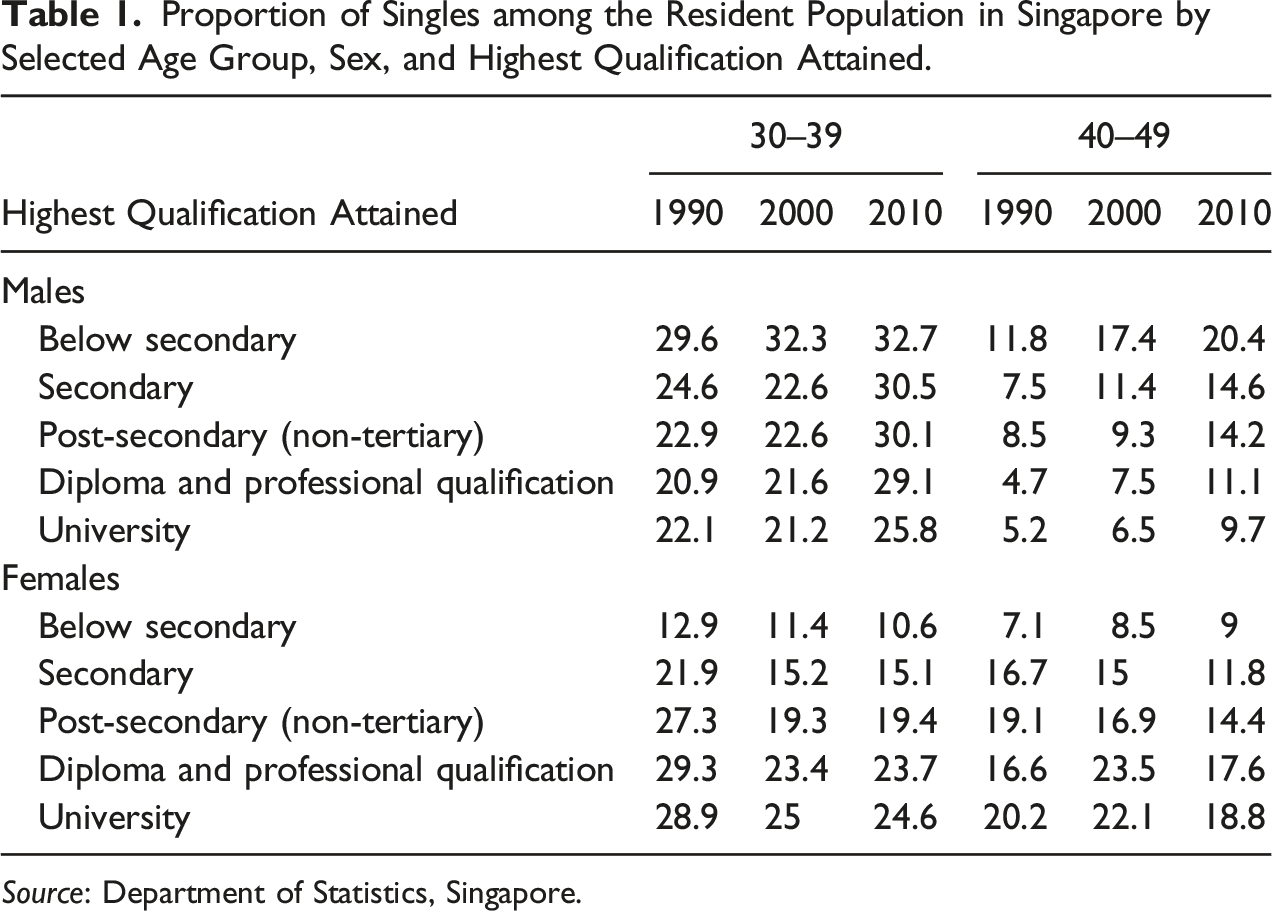
Source: Department of Statistics, Singapore.
Another important socioeconomic indicator pertains to one’s employment conditions, which deserve more scholarly attention in an era characterized by neoliberal economic policies. China, for example, in its shake-up of the state sector in the late 1990s, pushed tens of millions of workers from state-owned enterprises to the private market, causing a surge of unemployment in industrial towns (Cai, 2002). Under such circumstances, firm-level strategies of job instability and informalization to pursue cost-effect balance make work life more vulnerable for individuals. Such labor market changes are likely to impose institutional constraints on men’s marriage patterns, given the centrality of work in defining men’s social status and identity, hence marriageability (Oppenheimer, Kalmijn, & Lim, 1997) and also real concerns about their ability to provide for a family amidst uncertainties of employment and income.
The Japanese Case
In what follows, we capitalize on rich first-hand and second-hand materials for Japan to illustrate how men’s substantial delay in and retreat from marriage in recent decades, captured by our data earlier, could be explained by their precarious employment.
Sociologist Mary Brinton (2011) describes Japanese youths entering adulthood in the 1990s as “the lost generation,” who came of age when Japan stepped into economic stagnation following the collapse of the asset price bubble. Young men of this generation, especially those not among the educated elites, found themselves particularly vulnerable in an uncertain era, in which traditionally life-long secure employment was replaced by non-regular employment-work arrangements such as temporary, contract, and part-time work. This disruption of continuous employment, which used to anchor men’s identity and successful transition to marriage and parenthood, has broad ramifications for their family formation.
Figure 5 displays the percentages of male graduates of different education levels entering regular employment, which is defined as full-time employment with job security and fringe benefits, within 1 year after graduation. Except for master’s degree holders who have witnessed growing opportunities over the decades, we observe a consistent picture of men’s increasingly precarious employment since the early 1990s, albeit with fluctuations since the 2000s, which mirrors broad institutional restructuring towards cost-reduction policies by companies (Keizer, 2009). First, starting off from relatively high regular employment for all education groups (almost 97% for technology college graduates and around 80% for university and junior college graduates) in 1970, proportions of male graduates entering regular employment saw a precipitous decline for all groups in the decade between 1990 and 2000 as a result of the economic downturn. In particular, those with technology, junior college and university degrees witnessed the disappearance of regular employment by more or less 30% each, reflecting the mounting economic pressure facing these graduate cohorts who were at their prime time for family formation. According to Brinton (2011), young men in early adulthood also experienced rising unemployment issues, which surged to an unheard-of peak of nearly 12% by 2003. Second, the labor market condition has seen gradual improvement since the early 2000s for different education tracks, albeit at different rates. Nonetheless, most are unable to return to the levels of regular employment of 1970. In 2018, for example, over one out of four university graduates, one out of three junior college graduates and four out of 10 technology college graduates could not find regular employment within a year after graduation. Further, those with upper secondary school education (the lowest educational level reached by almost all Japanese males) have experienced dwindling opportunities of regular employment, stagnating at around 20% since 2000. Like their counterparts in other Asian societies such as Singapore and China (Attané et al., 2019; Jones & Gubhaju, 2009), this group of socioeconomically disadvantaged men are likely the key victims of the marriage squeeze in Japan. Percentages of male graduates entering regular employment in Japan. Source: Ministry of education, culture, sports, science and technology, Japan.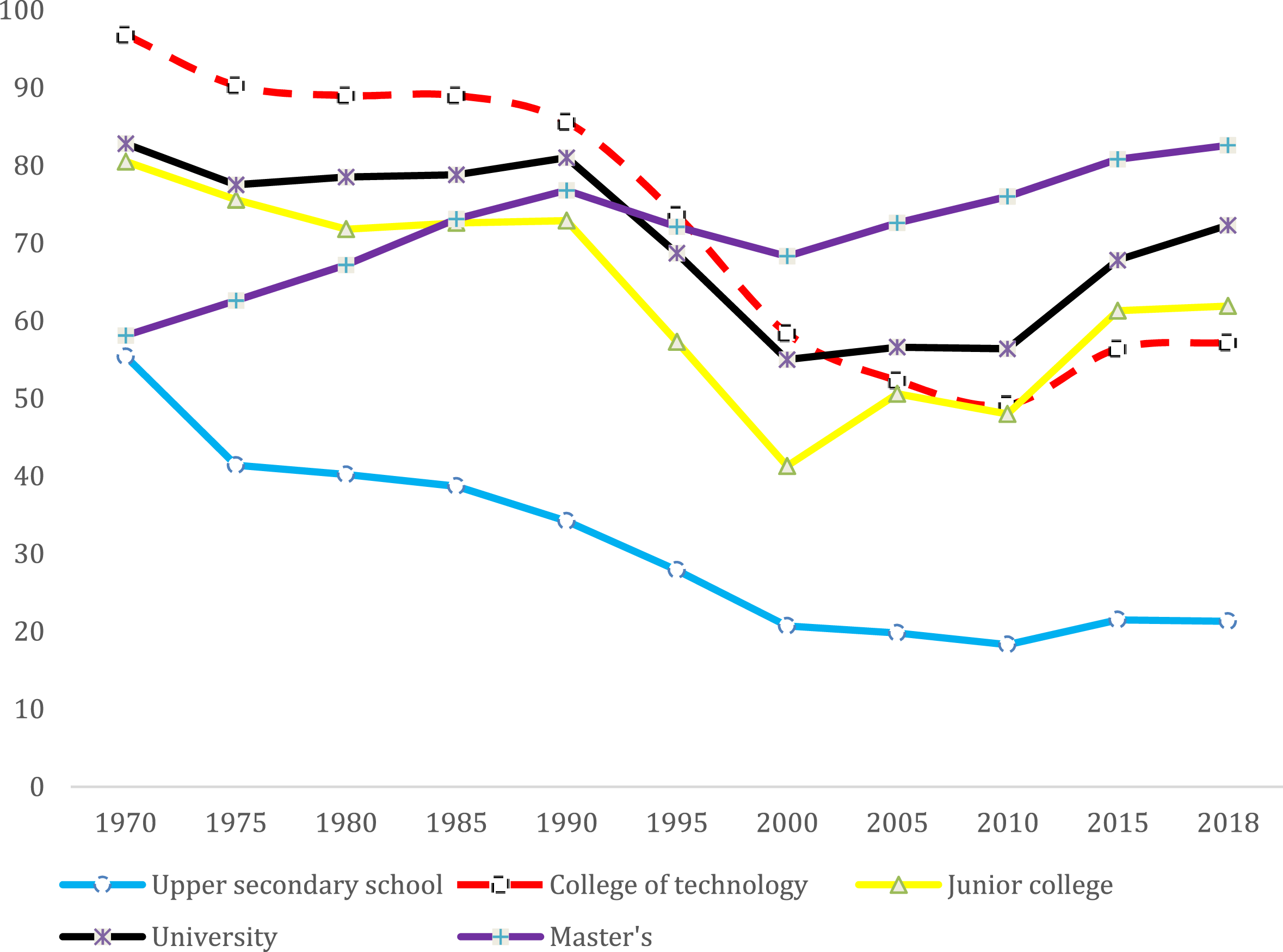
Non-regular employment, worse still unemployment, may dim the prospect of men’s marriage as these situations entail multiple disadvantages (including low and unstable income, lack of protection and attached stigma) relative to regular employment (Asao, 2011). According to Piotrowski and colleagues (2015), having a non-regular job significantly lowered the likelihood of marriage for both men and women in Japan and more so for men. A man with a regular job has an 8% chance of marrying in any given year. If a man has a non-regular job, this probability is reduced to 3%; if he is not working or in school this is reduced to 2%.
The Thai Case
Thailand provides another interesting case study of male marriage trends over time, although unfortunately, the available studies are somewhat dated. Thailand occupies an intermediate place in economic development between most of Southeast Asia, which is poor or lower middle income, and the wealthy East Asian countries. Its dominant city, Bangkok, is by far the wealthiest region in Thailand. Earlier studies have shown far higher levels of singlehood for both men and women at different ages in Bangkok than in the rest of Thailand (Jones, 1997), and this remains the case more recently. A study based on detailed analysis of census data up to 2000 (Williams, Guest, & Varangrat, 2006) showed that in Thailand as a whole, there were relatively small differences in the proportions of males and females remaining single at ages 35–39 and 40–44. This mirrored the situation observed in 1970, but levels never-married had risen sharply and approximately doubled by 2000. In both rural and urban areas, men with no education and those outside the labor force were less likely to be married than those who reported at least some form of employment. For men, having a professional or administrative position was associated with an increased chance of being married by the time they were in their early 40s. Focus group analysis from the same study reinforced the point that men need to be financially stable before marrying, that those at the highest end of the socioeconomic scale are likely to have the greatest chances of finding a suitable spouse, and that both middle-class urban men and women are hesitant about entering marriage for fear that the marriage might fail.
Discussion
In the introduction to this paper, we laid out two sets of questions that need to be answered in understanding trends in men’s marriage patterns in Asian countries. The first relate to the broader socioeconomic context, changes in which might have affected whether, when and whom men marry. The second relate to individual circumstances that will determine how the constraints and incentives for marriage work out for particular individuals. What have we found?
The tendency for age at marriage to rise for men throughout the region is one of the most striking findings of this study. But another is the persistence of marked regional differentials. While marriage in their early 20s has become more infrequent for men throughout Asia, the marriage situation of those in their 30s and 40s differs sharply across the region. In East Asia, the percentage of men remaining single in their 30s and 40s has increased dramatically, and it has also risen sharply in Southeast Asia, but this has not happened in South Asia—indeed, in some cases, singlehood at these ages was lower than it was in 1970. While earlier marriage in South Asia is broadly consistent with its lower levels of economic development, a more predominantly agrarian society, lower levels of education, more marked gender inegalitarianism and a strong tradition of parent-arranged marriage, it is also the case that South Asia has shown reasonably high levels of economic growth, albeit from a low base, which might be expected to make for greater changes in marriage patterns than have been observed. It appears that strong and arguably inflexible cultural norms have made it more difficult to change long-standing traditions influencing male marriage patterns in South Asia.
In explaining the trend toward less and later marriage for males in East Asia and increasingly in Southeast Asia, the factors in play have been discussed in detail earlier in the paper. Many of them bear a close resemblance to the factors usually cited to explain trends in male marriage in Western countries, though there are clearly some specific aspects of the East Asian situation that differ greatly from the Western model. It is important to unpack the complex relationship between social strata and men’s nuptiality in the cultural context of male status hypogamy (the other side of the coin being female hypergamy). For highly educated professional urbanite men, singlehood status at later ages does not necessarily predict systematic retreat from marriage, but a protracted transition towards marriage after establishing themselves in career development and accumulating sufficient socioeconomic resources. It is also likely that a single lifestyle does not necessarily pose the problems it once did. For one thing, its increasing prevalence has already removed its aberrant image, which was anyway never as great a problem for males as for females. For another, the practicalities of living can be met by continuing to live with family or, if not, by utilizing market vendors or fast foods. Intimate relationships not legitimized by marriage are increasingly tolerated, contraception is readily available and commercial sex services abound. Given the continuing influence of male hypogamy, this group of highly educated professional men at mature ages are likely to find themselves well positioned in the marriage market with sufficient resources and a large pool of potential marriage partners in a flexible age range.
At the other extreme, in all likelihood, the precariously employed men are also the less educated non-elites (probably rural residents as well) who experience hardship in the marriage market in an era of economic neoliberalization, placing them in a “marriage squeeze” situation. In recent years, popular Japanese cultural tropes such as “herbivore-type man” that derogatively stigmatize this group have disseminated in many parts of Asia (Endo, 2019). The “herbivore-type man,” in contrast to aggressive “masculine” men valorized in popular culture, is a man often described as socially awkward and submissive, especially in front of the opposite sex. Such stereotypical images of herbivore-type men are far from appreciated societies holding to traditional ideals of masculinity based on aggressiveness, dominance and economic power. As such, the connivance of cultural stigmatization and structural disadvantage shapes the un-marriageability or low marriageability of men at the bottom of society.
If the phenomenon of women’s delay in and “flight from”marriage in many Asian societies could be understood as a protest from educated and economically independent women against dual pressure in performing public and familial roles, evidence in this study suggests that the growing prevalence of men’s later marriage or non-marriage in parts of Asia should primarily be understood in terms of the more “expensive” marriage package prevalent in modern Asian societies, which is increasingly unattainable for the socioeconomically disadvantaged. Thus, the transition to adulthood/manhood trajectory has become more protracted and skill-intensive, and macro-level economic neoliberalization has encroached on employment security and stability—a central anchor of the male identity. In the aftermath of social and economic pains inflicted by the global COVID-19 pandemic, it is likely that this trend will intensify, which could be deciphered by future research with more recent empirical evidence.
Finally, we venture a proposition about the institutional environment underpinning the diverse marriage patterns of men in Asia at large, which disputes the applicability of the Second Demographic Transition thesis (Lesthaeghe, 2010). We argue that, despite dramatic changes in Asian men’s marriage patterns over time and considerable inter-region heterogeneity, there is insufficient evidence to suggest that marriage as an institution has been seriously undermined or de-coupled from other family behaviors such as childbirth. The case of China, a rather extreme one, may help illuminate our claim. After four decades of breakneck economic development which might be expected to result in sharp declines in nuptiality and more flexible ways of performing family, the country still sees near-universal, albeit later, male marriage. In 2005, only 10% of males were still single at age 30–34, and 5% at age 35–39. In 2015, 14% of males were still single at age 30–34, and 6.4% at age 35–39. The temporary delay in first marriage age due to higher education for respondents born after reform is compensated by their expedited transition to marriage within a very short window: 34% of youths get married 3 years after college and another 28% in 5 years (Gu, 2018). This, Gu (2018) maintains, should be understood in relation to the country’s institutional context: the hukou (or residence registration) system, as a fundamental institution regulating the legality of marriage unions and childbirth and choreographing individuals’ life course transition, is the only legal route to childbirth and childrearing. Marriage registration, preferably with a separate hukou booklet for the new family unit, is functionally and symbolically consequential in marking individuals’ adulthood transition: Children’s hukou registration, tied to parents’ legal marital status and hukou status, to a large extent determines their life chances, such as their access to school and other public services. In other words, rather than shifting toward “deinstitutionalization of marriage” in America (Cherlin, 2004), China’s institutional arrangement based on the hukou system makes marriage even more entrenched not only as an adulthood marker but also a socially and legally sanctioned status.” (p. 35.)
Although less stringent, governments in other Asian societies echo a similar stance towards keeping childbirth within (heterosexual) marriage, disincentivizing cohabitation as a viable alternative to marriage and binding the symbolic meaning of marriage to individuals’ adulthood/social status, that is, steering Asia away from the conditions facilitating patterns of the Second Demographic Transition observed in developed western societies. It is therefore important to consider what this means for marriage and family changes in Asia in future. Scholars in relevant fields and policy makers may therefore need to answer a challenging question: how to make marriage attainable, workable, and even conformable for individual men and women experiencing rapidly changing socioeconomic realities, while negotiating with “non-progressive” cultural traditions such as asymmetrical gender progress in the private and the public spheres, and norms of gendered hyper/hypo-gamy?
Supplemental Material
Supplemental Material - Men’s Marriage Trends in Asia: Changes and Continuities
Supplemental Material for Men’s Marriage Trends in Asia: Changes and Continuities by Gavin Jones, and Xiaorong Gu in Journal of Family Issues
Footnotes
Declaration of Conflicting Interests
The author(s) declared no potential conflicts of interest with respect to the research, authorship, and/or publication of this article.
Funding
The author(s) received no financial support for the research, authorship, and/or publication of this article.
Author Note
Gavin Jones, School of Demography, Australian National University, Xiaorong Gu, School of Social Sciences and Humanities, University of Suffolk.

Supplemental Material
Supplemental material for this article is available online.
Notes
References
Supplementary Material
Please find the following supplemental material available below.
For Open Access articles published under a Creative Commons License, all supplemental material carries the same license as the article it is associated with.
For non-Open Access articles published, all supplemental material carries a non-exclusive license, and permission requests for re-use of supplemental material or any part of supplemental material shall be sent directly to the copyright owner as specified in the copyright notice associated with the article.
