




Abstract
Low-income Black fathers have been portrayed in the media and in research as uninvolved and disengaged from their children. The current study uses data from the Fragile Families and Child Wellbeing study (N = 2578) to examine adolescents’ reports of relationships and interaction with their biological fathers. The results showed there were no significant differences among Black, Hispanic, non-Hispanic White, and Other fathers for adolescents’ perceptions of closeness or interaction with fathers. After accounting for statistical controls, the association between race/ethnicity and father involvement was not significantly moderated by mother-father residential status. The results substantiate what other researchers have concluded: low-income, nonresident, and coresident Black fathers are no less involved with their children than fathers in other racial/ethnic groups.
Keywords
Black fathers have been portrayed in the media and in research as uninvolved and disengaged from their children (Goodwill et al., 2019; Hamer & Marchioro, 2002). This portrayal is particularly true of low-income Black fathers who are frequently described as “absent” from their children’s lives (Coles & Green, 2009). The term absence is oftentimes used interchangeably to describe fathers who do not reside with their children (Dubowitz et al., 2006). While some low-income nonresident Black fathers have little to no involvement with their children, and as such are absent from their children’s lives, most are engaged despite not living together.
Although researchers have demonstrated that Black fathers are as involved and sometimes more involved with children than fathers in other ethnic groups (e.g., Roopnarine et al., 2005), most research to date has focused on low-income Black fathers’ involvement with young children (e.g., Cabrera et al., 2008; Leavell et al., 2012; Tach et al., 2010). Low-income Black fathers’ relationships with adolescents have been understudied. Moreover, few studies have examined adolescents’ perceptions of their relationships with fathers. In addition, there is a need to better deconstruct the overlap between race/ethnicity and coresidence with adolescent children because of the high percentage of low-income Black fathers who live apart from their offspring (Livingston & Parker, 2011)
Background
Studies of children across all age groups and all socioeconomic groups have shown that nonresident Black fathers are more involved with children than fathers in other racial/ethnic groups. For example, nationally representative data showed that nonresident Black fathers were far more likely to talk with their children several times per week than their White or Hispanic counterparts (Livingston & Parker, 2011). Studies of young children (i.e., early childhood) have shown that Black fathers in all socioeconomic groups are no less involved with children than fathers in other racial/ethnic groups (Roopnarine et al., 2005). Roopnarine et al. (2005) found that, across socioeconomic, coresident, and nonresident groups, African American fathers were as involved and sometimes more involved in caregiving and playing with infants than fathers in other ethnic groups. African American fathers were significantly more involved in visiting activities, that is, having relatives visit, visiting relatives, visiting friends, and taking one’s child to play with other children (Roopnarine et al., 2005). Father involvement after a nonmarital birth decreased significantly for all racial/ethnic groups, yet Black fathers experienced the least drastic decline as compared to White and Hispanic fathers (Tach et al., 2010).
Studies conducted specifically with low-income fathers with young children also show few differences in levels of paternal involvement compared with fathers in other race/ethnicity groups. Data from the Early Head Start study found that Black (specifically, African American) and Latino nonresident fathers were more involved with their young children than were White fathers (Cabrera et al., 2008). Leavell et al. (2012) found few differences between African American and Latino or non-Latino White fathers with children in Early Head Start. In a small-scale study of prekindergarten Head Start children in mother-headed households, African American and Latino fathers were equally accessible to and responsible for children, and they engaged in similar levels of play, reading, and outings (Fagan, 2000). Smith et al. (2005) found in their study of 281 African American nonresident fathers that almost two-thirds of men reported having at least weekly physical contact with their newborn child. This percentage was similar to that of Hispanic and White nonresident fathers. Research that included children from early to middle childhood (children ages 1 through 9) found that Black, low-income, nonresident fathers saw their children more days per month, spent one or more hours with the child more frequently, engaged more frequently in father–child activities, and showed higher shared responsibility than their White and Hispanic counterparts (Ellerbe et al., 2018).
Only a few studies have examined Black fathers’ involvement with children who are in middle childhood or adolescence, and these studies are now very dated. Moreover, these studies focus on fathers across socioeconomic groups. In their study of 5377 Black, White, and Hispanic adolescents with nonresident fathers in the National Longitudinal Study of Adolescent Health, King et al. (2004) found that White adolescents with less educated fathers experienced the greatest loss of involvement with fathers compared to fathers in other racial/ethnic groups. Using nationally representative data, Toth and Xu (1999) found that African American fathers of children from ages 5 to 19 were similar to Latino and White fathers in the extent of their interactions and expressions of affection with children. African American fathers were also more likely to monitor and supervise their children’s activities than White or Latino fathers (Toth & Xu, 1999; see also Hofferth, 2003). These authors suggested that African American fathers’ experiences with racism account for their strict and cautionary approach to parenting. These findings support Ogbu’s (1981) cultural ecological theory defined as “the study of institutionalized patterns of behavior interdependent with features of the environment” (Ogbu, 1990, p. 122). When applied to parenting, this theory indicates that parenting is oriented toward the development of competencies that are adaptive for the settings in which children develop and participate, specifically teaching skills to navigate ethnic and racial barriers.
Conceptualizing Black fathers as a homogeneous group highlights the centrality of race but ignores the diversity that is present among them (Reynolds, 2009). The cultural ecological theory suggests that attitudes, values, and beliefs about parenting and coparenting and family context are important considerations when examining differences in paternal involvement with children among racial/ethnic groups (Ogbu, 1981). Ellerbe et al. (2018) have suggested that while Blacks and Whites tend to share similar views of marriage, Blacks are more accepting of nonmarital childbearing than Whites (see also Cherlin et al., 2008). Although cohabitation is common among couples that have children outside of marriage among all racial/ethnic groups (Parker et al., 2015), Black couples are less likely to stay in cohabiting relationships over time than White or Hispanic couples (Cooper et al., 2015). These cultural differences are reflected in data on fathers’ nonresidence. While 21% of White fathers lived apart from at least one of their children in 2011, this number rose to 44% among African American fathers (Livingston & Parker, 2011).
In light of these significant differences in coresidence among parents across racial/ethnic groups, it is important to examine the associations between race/ethnicity and fathers’ involvement with adolescents among fathers who coreside with their children and men who do not. If it is the case that nonresidence is more acceptable, and therefore more normative, among low-income Black fathers, then one might expect nonresident Black fathers who do not reside with their children to be more involved with children than other nonresident fathers. Several factors support this hypothesis. Despite high levels of nonresidence, Black fathers endorse the role of fatherhood and are committed to being actively involved in their children’s lives (Gadsden et al., 2015). Moreover, qualitative research has shown that although there are negative elements to the coparenting relationships among low-income unmarried, nonresidential Black fathers and mothers (e.g., high levels of undermining and gatekeeping), there are also indicators of positive elements of the coparenting relationships among these parents (Fagan & Kaufman, 2015). Specifically, mothers frequently make efforts to facilitate the involvement of these fathers. For example, an observational study of 20 low-income nonresident African American fathers and mothers found that mothers supported, rather than interfered with, baby–father exchanges (Coates & McHale, 2018).
Current Study
The literature available to date is consistent in suggesting that low-income Black fathers are no less involved with young children than fathers in other racial/ethnic groups (Cabrera et al., 2008; King et al., 2004; Leavell et al.; 2012; Roopnarine et al., 2005). Consistent with the few available studies with adolescents showing that Black fathers are no less involved with offspring than fathers in other racial/ethnic groups (King et al., 2004), I hypothesized that adolescents’ reports of involvement with fathers at age 15 would not vary by race/ethnicity (Hypothesis 1, H1).
I am unaware of research that has examined whether the association between adolescents’ perceptions of father involvement and race/ethnicity is influenced by fathers’ nonresidence with offspring. It is well established that nonresidence is associated with lower levels of father involvement with children (Tach et al., 2010), but it is not known if nonresidence has a greater negative effect on Black adolescents’ perceptions of father involvement than on Latino, White, or Other adolescents’ perceptions of father involvement. In light of research indicating that Blacks are more accepting of nonmarital childbearing than Whites (Ellerbe et al., 2018), it seems likely that nonresident Black fathers would be more involved with children than fathers in other racial/ethnic groups. Thus, I hypothesized that Black adolescents who do not reside with their biological fathers at age 9 would perceive higher levels of father involvement than Latino, White, or Other adolescents who do not reside with their fathers (Hypothesis 2, H2).
The current study included statistical controls for fathers’ education, hours working in the labor force, father’s immigration status, and child gender. Low levels of fathers’ education have been shown to be negatively associated with father engagement with children (Nelson, 2004). Studies indicate that fathers invest more in sons than daughters because of greater internal rewards and higher external expectations for socializing same-sex children (Carlson & Magnuson, 2011). Long work hours are negatively associated with lower levels of father involvement (Ko & Hwang, 2021). On the basis of studies showing that immigrant parents tend to be more traditional in their views about family and parenting (e.g., Cabrera et al., 2019; Onyeze-Joe & Godin, 2020; Roopnarine, 2004), the current study controlled for fathers’ immigrant status. For example, Cabrera et al. (2019) found that foreign-born Latino parents have stronger cultural beliefs about the centrality of the family in their lives than U.S.-born Latino parents, and these values are reflected in higher levels of family stability among foreign-born couples versus native-born couples. Qualitative research has found that although nonresident fathering is a well-established cultural tradition among Black Caribbean fathers, most of these fathers are still involved in child care (Reynolds, 2009).
Method
This study used the Fragile Families and Child Wellbeing (FFCW) dataset which followed a cohort of nearly 5000 children born in the United States between 1998 and 2000. When weighted, the data are representative of nonmarital births in large U.S. cities at the turn of the century (About the Fragile Families and Child Wellbeing Study, nd). The sampling approach resulted in a large number of Black, Hispanic, and low-income families and oversampled births to unmarried couples (McLanahan & Garfinkel, 2000). Fathers and mothers were interviewed shortly after the birth of their focal child (baseline) and again when children were ages 1 (Year 1), 3 (Year 3), 5 (Year 5), 9 (Year 9), and 15 (Year 15). I refer to these waves of data as Y1, Y3, Y5, Y9, and Y15. Children were interviewed at Y9 and Y15. The FFCW study included 3712 unwed couples and 1186 married couples at baseline. The analytic sample in the present study was limited to cases in which the focal child completed an interview and answered items about their biological father at Y15, for a total sample of 2586 cases.
The FFCW data collection procedures were overseen by the Institutional Review Board of Princeton University (Protocol 8061, Lundberg et al., 2018). Parents provided informed consent to join the study and made this agreement on behalf of their children. The children provided their assent to participate once they were old enough. The author of this paper has complied with APA ethical standards in the treatment (i.e., secondary data analysis) of the FFCW sample.
Participants
Participant Characteristics.
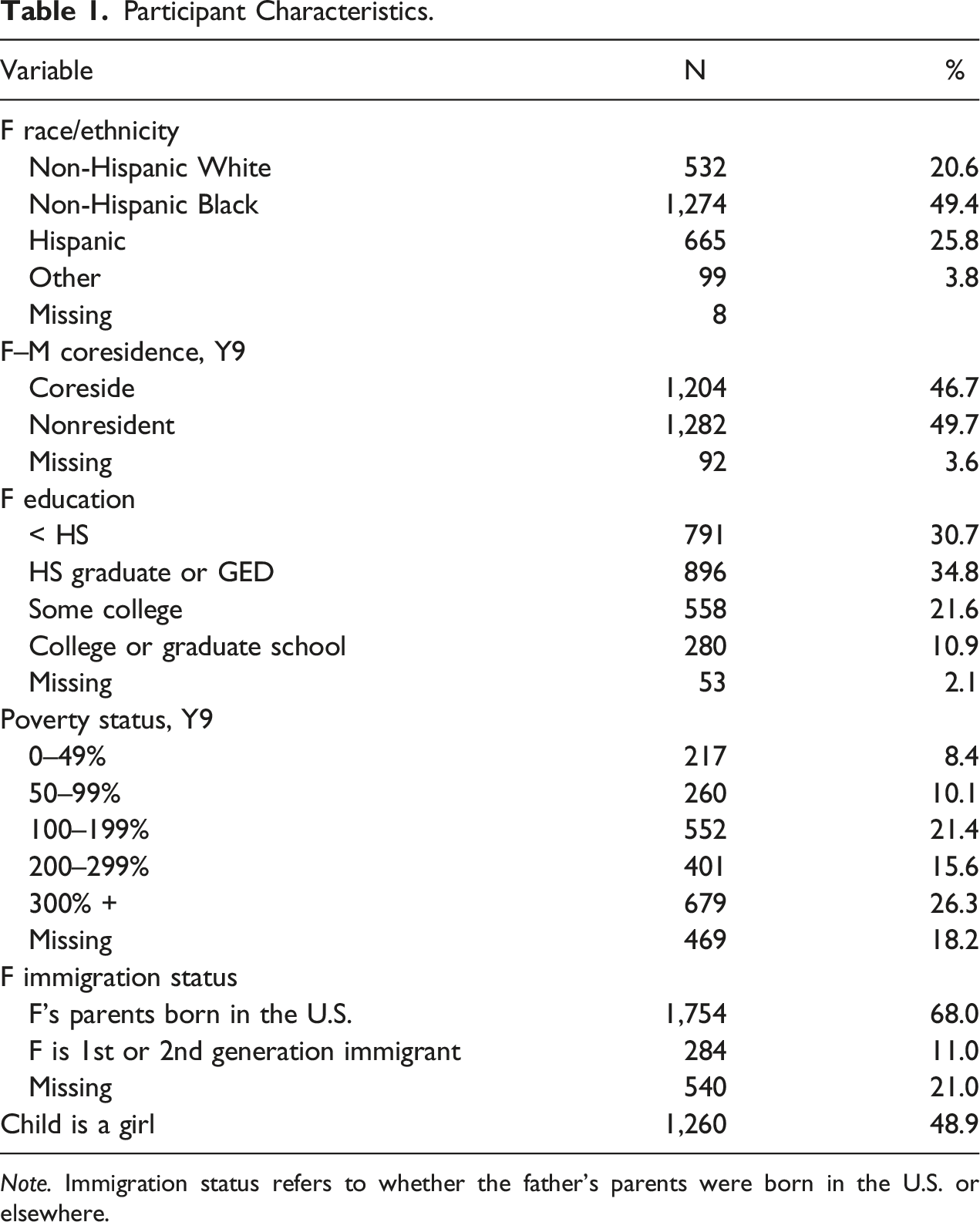
Note. Immigration status refers to whether the father’s parents were born in the U.S. or elsewhere.
Measures
Father Involvement with Adolescents
Father involvement at Y15 was measured with the focal child’s response to six questions about their relationship with their biological father. Adolescents answered these questions only if they had seen the biological father in the past year. Four items addressed the adolescent’s perception of the amount of fathers’ interaction and involvement with them: how often in the past month (1 = never to 3 = often) they talked about current events, they talked about the child’s day, the father helped with school assignments, and the father engaged in activities with the child. Two items addressed the youth’s perception of father–child relationship closeness: how close they feel with their father (1 = not very close to 4 = extremely close) and how well they share ideas and talk (1 = not very well to 4 = extremely well). The two closeness questions were obtained from the National Survey of Children’s Health and have been shown to be strong markers of the quality of parent–child relationships (Bandy & Moore, 2008). Researchers have conducted confirmatory factor analysis of the six father involvement variables using FFCW data (Fagan et al., 2023). The confirmatory factor analysis produced a two-factor solution with a good fit to the data. We refer to these as father–child closeness, an indicator of the quality of the relationship, and fathers’ interaction with child, an indicator of quantity. The two items for father–child closeness variable were added together (α = .82, range = 2–8), and the four items for the father–child interaction variable were added together (α = .86, range = 4–12).
Father race/ethnicity was measured at baseline with a constructed measure based on the combined father and mother report indicating whether the father was non-Hispanic White, non-Hispanic Black, Hispanic, or Other. The Other race/ethnicity category includes Asian American and American Indian fathers. These data were recoded to four dummy variables: non-Hispanic Black (reference group), non-Hispanic White, Hispanic, and Other.
We used data from the Y9 survey to construct a measure of fathers’ coresidence with the biological mother and focal child. Mothers were asked about their current relationship with the father at Y9. Responses included married, cohabiting, separated, divorced, romantically involved but living apart, just friends, and not in any type of relationship. Fathers’ were asked how much of the time the child lives with him. Responses included all or most of the time, about half the time, some of the time, and none of the time. These data were combined to construct a variable indicating that the father was married or cohabiting and living with the child all or most of the time (1 = coresident) or not married or cohabiting and not living with the child (0 = nonresident). Eight fathers indicated they were married or cohabiting but living with the child less than all or most of the time. These fathers were omitted from the analytic sample.
Controls
Father’s education at Y9 was based on their own report (1 = less than high school diploma, 2 = high school diploma or equivalent, 3 = some college or technical training, and 4 = college graduate or graduate school). Data about child gender was obtained from the baseline FFCW dataset and coded so that 0 = boy and 1 = girl. Fathers were asked to indicate how many hours per week they usually work at Y9. Fathers’ responses ranged from 1 to 126 hours.
Immigrant status was assessed with two items asked at Y1. Fathers were asked to indicate in what country/territory your father was born and in what country your mother was born? Respondents who indicated that their fathers and/or mothers were not U.S. born were coded as immigrant fathers (the FFCW data did not distinguish between first or second generation immigration status). A small number of respondents (n = 52) indicated that only one of their parents was foreign born. Sensitivity analyses were conducted to determine if fathers’ interaction and fathers’ closeness differed based on having one foreign-born parent versus two. There was no significant difference for father–child interaction or father–child closeness depending on whether or not one had one or two foreign-born parents. Thus, the immigrant status variable includes fathers who had either one or two foreign-born parents.
Data analysis
Descriptive statistics were first calculated for all study variables. Next, missing data analyses were conducted to determine if FFCW cases in which adolescents completed surveys at Y15 differed from cases in which youth did not participate. Bivariate analyses among study variables were then conducted using Pearson correlation coefficients, t-tests, and χ2 tests. The initial plan was to conduct one-way ANOVA to examine associations between two fixed factors (racial/ethnic group and coresidence) and control variables predicting fathers’ involvement with adolescent. Homogeneity of variances was tested due to unequal sample sizes for the predictor variables. Levene’s test showed that the null hypothesis of equal variances was rejected (Levene’s statistic = 9.20, p < .001).
Instead, AMOS software was used to conduct a path analysis of the associations between racial/ethnic group, coresidence, controls, and two dependent variables (father–adolescent closeness and interaction). AMOS uses full information maximum likelihood (FIML) estimation to handle missing data. Four fit statistics were used in the path analysis: chi-square, comparative fit index (CFI), Tucker–Lewis index (TLI), and the root mean square error of approximation (RMSEA). Little (2013) provides the following guidelines for the CFI and RMSEA (CFI: < .85 is poor a fit, .85–.90 is mediocre, and >.90 is acceptable; RMSEA: >.10 is poor, .10–.08 is mediocre, and < .08 is acceptable). Researchers have also indicated that negative model chi-square results can be discounted when other model fit measures such as CFI and RMSEA support the model and when the sample size is reasonable (Little, 2013). I used Betas to indicate effect sizes in the path analysis. Acock (2014) suggests that β < 0.2 is considered weak, 0.2 < β < 0.5 is moderate, and β > 0.5 is strong.
Multigroup analysis was then conducted to compare the associations between racial/ethnic group and father involvement with adolescents across two groups: coresiding fathers and nonresident fathers. Multigroup analysis entails the testing of separate structural models in two or more groups (Jöreskog, 1971) to determine if there are equivalent measurement properties across those groups, also referred to as invariance testing. The structural weights model in AMOS was used to test the constrained and unconstrained models.
Missing Data Analyses
Chi-square analysis was conducted to examine differences between FFCW cases in which adolescents participated at Y15 and completed questions addressing perceptions of father involvement (n = 2578) and cases in which adolescents’ data were missing due to nonparticipation (n = 2312). There was a significant association between missing closeness data and race/ethnicity (χ2[df = 3] = 28.31, p < .001); race/ethnicity was the only demographic variable with minimal missing data (8 cases were missing). Missing closeness data were significantly more likely to occur among adolescents with Hispanic or Other fathers than with youth with Black or non-Hispanic White fathers. There was a significant association between missing interaction data and race/ethnicity (χ2[df = 3] = 76.04, p < .001), with missing data more likely to occur among adolescents with Hispanic or Other fathers.
Results
Descriptive Analyses
Descriptive Statistics for Adolescent Perceptions of Father-child Relationship Closeness and Interaction at Y15 by Race/Ethnicity and Coresidence at Y9.
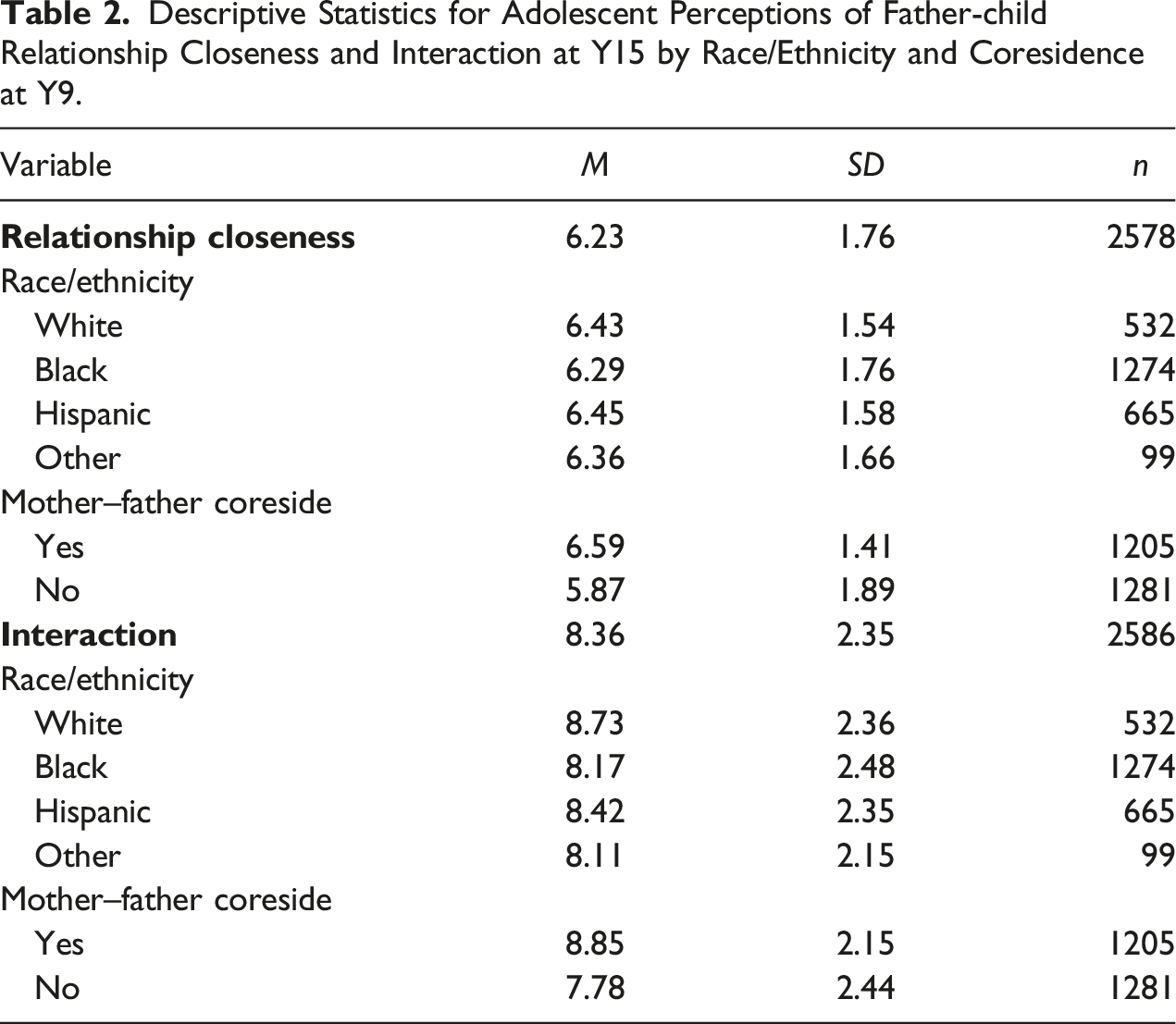
The average score for adolescent perceptions of interaction was 8.36 (SD = 2.36), which when divided by four items (e.g., attend child’s activities and help with homework) produces a mean item score of
Bivariate Analyses
Correlation Matrix.
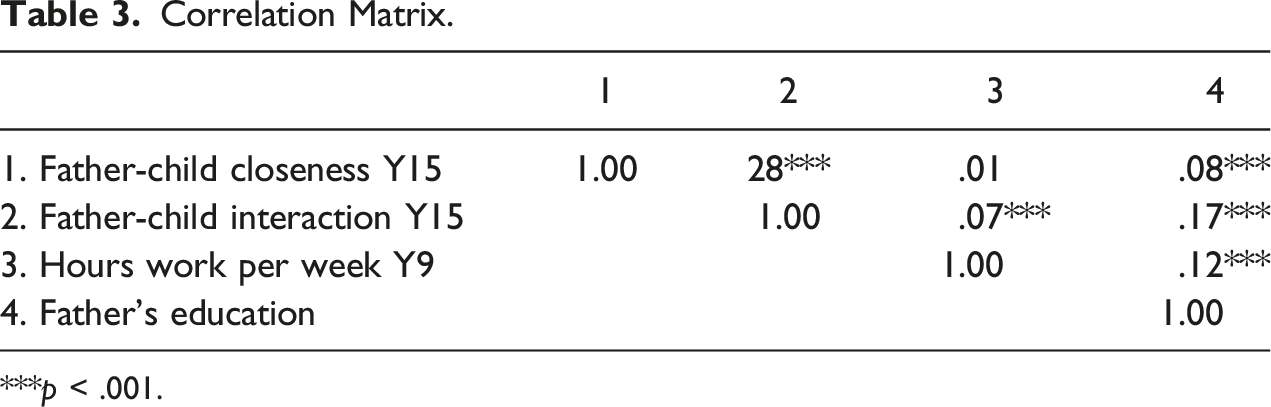
***p < .001.
Path Analysis
Parameter Estimates in Path Analysis.
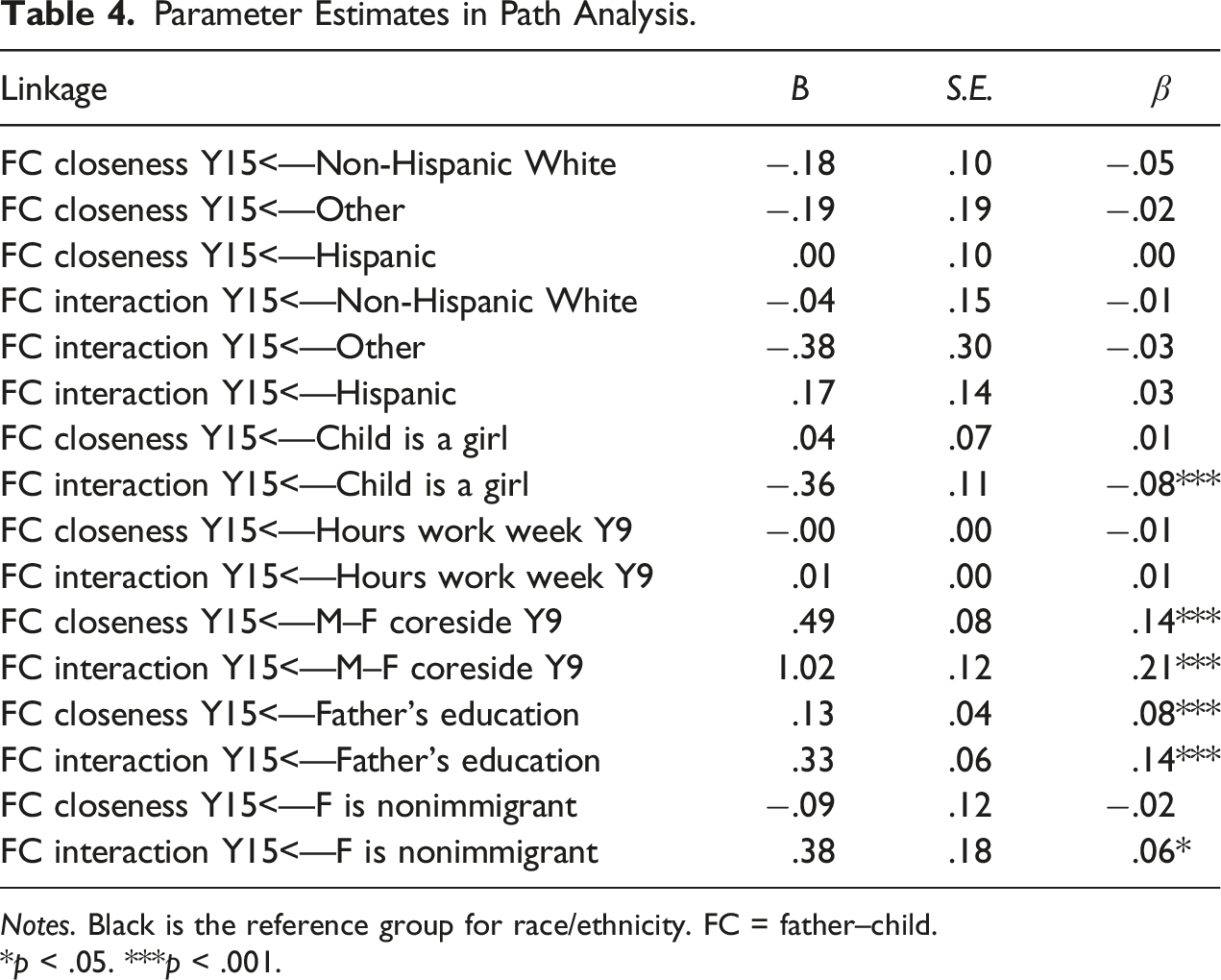
Notes. Black is the reference group for race/ethnicity. FC = father–child.
*p < .05. ***p < .001.
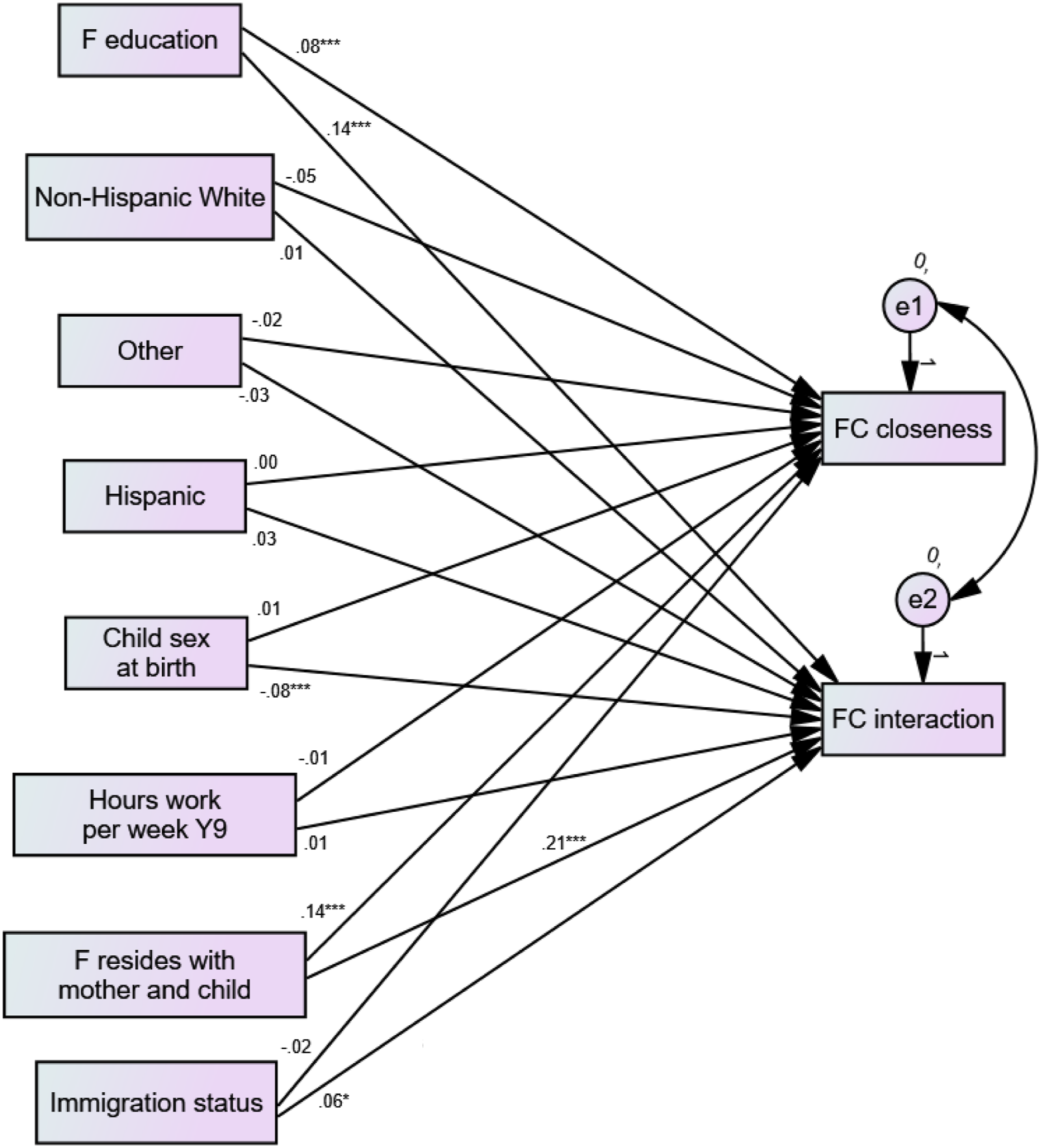
Path analysis predicting father-child closeness and interaction; most exogenous variables are inter-correlated.
In support of this study’s first hypothesis (H1), Table 4 shows no significant associations among non-Hispanic White, Hispanic, and Other fathers (Black was the reference group) and adolescents’ perceptions of closeness or interaction. Adolescents with coresiding fathers reported significantly higher levels of closeness and interaction than adolescents with nonresident fathers. There were a number of significant control predictors. Daughters indicated significantly less interaction with their fathers than sons, and fathers with higher levels of education engaged in significantly more interaction and had closer relationships with children. Adolescents interacted more with nonimmigrant fathers than immigrant fathers.
Multiple group analysis was conducted next to examine if the associations between racial/ethnic groups and father involvement differed across the coresiding and nonresident fathers. I compared two nested models with two groups: coresident and nonresident fathers. Based on a structural weights model, when constraints were placed on all path coefficients to equality, there was no significant decrease in fit when the structural model was compared to the unconstrained model, χ2(df = 10) = 7.25, ns. These results did not support the second hypothesis (H2) of this study: the association between race/ethnicity and father involvement did not differ across residence groups.
Discussion
The current study was undertaken to address a gap in research concerning low-income Black fathers’ involvement with their children. Specifically, few studies have addressed Black fathers’ involvement with adolescent offspring. The findings supported the first hypothesis: the path analysis showed no significant differences in adolescents’ perceptions of closeness and interaction with fathers when non-Hispanic White, Hispanic, and Other fathers were compared to Black fathers. Adolescents in all ethnic/racial groups reported being “quite” close to fathers on average. Similarly, adolescents in all ethnic/racial groups reported interacting “sometimes” with fathers on average. These findings substantiate what other researchers have concluded, and that is, low-income Black fathers are no less involved with their children than fathers in other racial/ethnic groups (Leavell et al., 2012; Smith et al. 2005). The current study results are important because they are based on youth perceptions of their biological fathers rather than parents’ perceptions of father involvement.
I hypothesized that Black adolescents who do not reside with their biological fathers at age 9 would perceive higher levels of father involvement than Latino, White, or Other adolescents who do not reside with fathers (H2). This hypothesis was not supported in the current study. After accounting for statistical controls such as father’s education, work hours, child sex at birth, and father’s immigration status, the association between race/ethnicity and father involvement (in the multigroup analysis) was not significantly different among coresident versus nonresident fathers. This finding suggests that race/ethnicity has similar effects on father involvement within coresidence groups. These results are not consistent with studies conducted with young children which have found that low-income nonresident Black fathers are involved at higher rates than fathers in other/racial groups (e.g., Ellerbe et al., 2018). One possible explanation is that adolescents in all racial/ethnic groups are more independent than younger children and may seek out relationships with nonresident fathers, whereas younger children are more dependent on their mothers’ support of those relationships.
Coresidence was a robust predictor of adolescents’ reports of both father–child closeness and father–child interaction in the current study. Moreover, coresidence significantly predicted father involvement after controlling for race/ethnicity, child gender, education, work hours, and immigration status. These results are noteworthy in light of media portrayals of Black fathers as being uninvolved with their children (Goodwill et al., 2019). The tendency to associate race/ethnicity with fathers’ noninvolvement with children obscures the real contributor to noninvolvement, and that is the residential status of fathers with their children. Even though Black fathers were more likely to be nonresident, as a group, Black fathers were perceived by their children to be no less involved than fathers in other racial/ethnic groups.
Several control variables were significantly associated with father involvement in the path analysis. Nonimmigrant fathers interacted significantly more often with children than immigrant fathers, but there was no difference in adolescents’ perceptions of closeness with fathers among these groups. The findings of the current study do not explain the reason for the different interaction levels. As suggested by other researchers, immigrant fathers may have more traditional attitudes about the fatherhood role and place greater emphasis on their provider role than their caregiving role (e.g., see Onyeze-Joe & Godin, 2020; Roopnarine, 2004). Caution should be exercised in interpreting these results, however, due to limitations with the measure of immigration status. Although fathers were asked about the birthplace of both of their parents, data were not available indicating how many years fathers resided in the U.S. Fathers with foreign-born parents may have been born in the U.S. Parents who resided many years in the U.S. may have adopted less traditional attitudes about child rearing.
Fathers interacted significantly less frequently with daughters than with sons. These findings are consistent with studies that show fathers invest more in sons than daughters (Carlson & Magnuson, 2011). Findings such as these are concerning because researchers have found that daughters are no less in need of fathers’ attention and support than sons (Allgood et al., 2012). Programs and policy makers would be well advised to educate low-income fathers about the benefits of father involvement with daughters as well as sons.
Limitations
The measure of adolescent perceptions of father–child closeness has been widely used in research (Bandy & Moore, 2008), but it has not been validated with low-income youth. Bias analyses showed that father involvement data were more likely to be missing among Hispanic and other fathers. The findings of the current study may therefore be more applicable to Black and non-Hispanic White fathers. Despite this limitation, the current study included a larger sample of adolescents and fathers than is the case in many other studies. In addition, our use of FIML as a strategy to handle missing data helps to correct for some potential biases. In addition, the dataset only provides snapshots of fathers and children at the time of measurement, thus limiting the researcher’s capacity to capture dynamic relationships and situational changes. For example, coresidence when children were 9-year-olds does not necessarily imply that fathers lived with the child between ages 9 and 15.
Conclusions
The results of the current study substantiate what other researchers have concluded (Leavell et al., 2012; Smith et al. 2005), and that is, as a group, low-income, Black fathers are no less involved with their children than fathers in other racial/ethnic groups. The results of the current study are significant because they are based on youth perceptions of their biological fathers rather than parents’ perceptions of father involvement. The present study adds to our knowledge of race/ethnicity and fathering by showing that the association between race/ethnicity and father involvement is not significantly different among coresident versus nonresident fathers. That is, biological Black fathers who reside with their child are on average no more or less involved with adolescents than coresiding fathers in other racial/ethnic groups. Similarly, biological Black fathers who do not reside with their child are on average no more or less involved with adolescents than nonresident fathers in other racial/ethnic groups. These findings should prove helpful in efforts to challenge the myth that Black fathers are absent or uninvolved in the lives of their children. The results of this study are consistent with research showing that nonresidence is an important predictor of father involvement with adolescents, regardless of race/ethnicity. Across all racial/ethnic groups, nonresidence is negatively associated with adolescents’ perceptions of closeness and interactions with fathers. Policy makers and programs that serve fathers and families should concentrate resources on prevention services with a specific emphasis on fathers’ and mothers’ stable and coresiding relationships.
Footnotes
Declaration of Conflicting Interests
The author(s) declared no potential conflicts of interest with respect to the research, authorship, and/or publication of this article.
Funding
The author(s) received no financial support for the research, authorship, and/or publication of this article.
Ethical Approval
The IRB review board at Temple University approved this research.
