




Abstract
This cross-sectional survey evaluated well-being and family dynamics before and during the COVID-19 pandemic in 1287 (16 + years of age, 68.3% female) Chinese participants. Structural equation modeling was used to test the association of well-being and systemic family dynamics, and related moderating factors. Results indicated some subscales of well-being and systemic family dynamics significantly worsened during the pandemic. A modified model fits well for both data before and during the pandemic in which well-being was significantly associated with systemic family dynamic and by family income. Age also positively related systemic family dynamics. The relationship between family income and well-being and the relationship between systemic family dynamics and well-being were moderated by the pandemic. The results suggest that well-being and systemic family dynamics and their associations are impacted by the COVID-19 pandemic. Systemic family dynamics could be a potential resource for enhancing well-being during the COVID-19 pandemic by some interventions.
Keywords
Introduction
Different countries implemented various lockdown rules according to the varying rates of infection during the COVID-19 pandemic. During February and March 2020, strict preventive measures and movement restrictions including Wuhan lockdown were implemented, critically impacting the routine life of the general population in China. To date, there is no further research about the impact of the COVID-19 pandemic with subsequent implementation of such drastic measures on well-being and systemic family dynamics for the general population. While well-being was associated with systemic family dynamics in non-crisis conditions in several studies, whether these drastic preventive measures moderate the associations between well-being and systemic family dynamics/demographics during the COVID-19 pandemic remains unclear (Chen et al., 2020; Xu & Zhao, 2018).
Well-being, in the current literature is defined as, not only the absence of psychological distress, but rather implies the presence of a positive mental condition (Lopez et al., 2020) and has been a main topic of positive psychology research (Xu & Zhao, 2018). The coronavirus disease of 2019 (COVID-19) pandemic and efforts to contain the pandemic has threatened mental health and well-being of population at large (Akkaya-Kalayci et al., 2020; Daly, Sutin, & Robinson, 2020; Gan et al., 2020; Kelly, 2020; Yang & Ma, 2020). Based on the findings of positive psychology research, positive emotions, such as comfort, happiness, joy, love, and gratitude, can help maintain and improve mental health, even in crisis situations in the long term (Yamaguchi et al., 2020). Existing Studies have investigated the associations between well-being and some demographic variables during the pandemic. For instance, a previous study in young people (15–25 years) showed that financial stress has negative impacts on their well-being (Akkaya-Kalayci et al., 2020). The annual income affected well-being of patients with senile cataract during the COVID-19 pandemic (Zhang, Wu, Li, Jin, & Liu, 2020). Age was negatively related to one part of well-being (personal growth) in elder adults (60–80 years) during the pandemic (Lopez et al., 2020). However, evidence regarding the association between well-being and demographic variables or family dynamics using structural equation modeling (SEM) during the pandemic is scarce. The only study exploring the relations between family dynamics and well-being is one involving elder adults (60–80 years) with staged stepwise regression analyses, where family functioning was found to be related to well-being during the pandemic (Lopez et al., 2020). Moreover, these previous investigations were conducted within specific groups, instead of the general population.
In addition, families encountered hardships during the pandemic (Stanley & Markman, 2020). The routine family life was disrupted during the pandemic, including marital and parent-child relationships (Johnson et al., 2020; Prime, Wade, & Browne, 2020). Severe measures have been implemented around the world to reduce COVID-19 spread with a significant impact on family dynamics (Campagnaro et al., 2020). Some researchers further suggested that COVID-19 stressors predicted greater family and co-parent discord (Daks, Peltz, & Rogge, 2020). In another crisis situation, like the onset of the Syrian war in 2011 and the ensuing refugee crisis, family dynamics and mental well-being were impacted for Syrian refugees (Syam et al., 2019). Inconsistently, in a study about couple and family relations early in the state-regulated lockdown during the COVID-19 pandemic in Spain, increased (re)connection and conflict atmosphere were simultaneously found (Gunther-Bel, Vilaregut, Carratala, Torras-Garat, & Perez-Testor, 2020). In other words, previous findings on family dynamics or relationships during the COVID-19 pandemic or in another crisis situation are mixed. On the basis of the existing literature, it is worth exploring the change of well-being and family dynamics in the Chinese general population from before to during the pandemic, their correlations and the pandemic impact on these relationships, since these answers will help provide guidance for evidence-based interventions. Evidence-based intervention would be invaluable for promoting well-being and improving mental health of the population in the context of family therapy during the COVID-19 pandemic.
The rating method of systemic family dynamics was originally established by the Heidelberg group led by Stierlin from Germany in 1980s, who was originally influenced by Milan systems approach (Ochs et al., 2020; Retzer, Simon, Stierlin, Weber, & Schmidt, 1989; Xu & Zhao, 2017). According to the viewpoint of family system theory, systemic family dynamics describes a dynamic system of interpersonal interaction patterns and psychological processes in the family. Xudong Zhao and his colleagues developed the Chinese version of the Self-rating Scale of Systemic Family Dynamics based on the theory of systemic family dynamics (Kang, Zhao, Xu, Yang, & Yang, 2001). In this study, we explored well-being and systemic family dynamics and their associations with demographics in order to support interventions within the positive psychology framework, family therapy, and resource focused therapy. We hypothesized that well-being and systemic family dynamics would change during the COVID-19 pandemic (Hypothesis 1). Well-being of participants would be related to systemic family dynamics and some demographic characteristics, regardless of pandemic (Hypothesis 2). The relationship between well-being and demographic factors would be moderated by the pandemic (Hypothesis 3).
The objective of this study was to simultaneously analyze all paths of the hypothesized model (Figure 1) in order to explore the complexity of the associations between multiple factors and well-being. Therefore, SEM was used to estimate the model fit of the data and analyze the direct and indirect effects of the multiple factors in the hypothesized model. Model of hypothesis 2 and 3.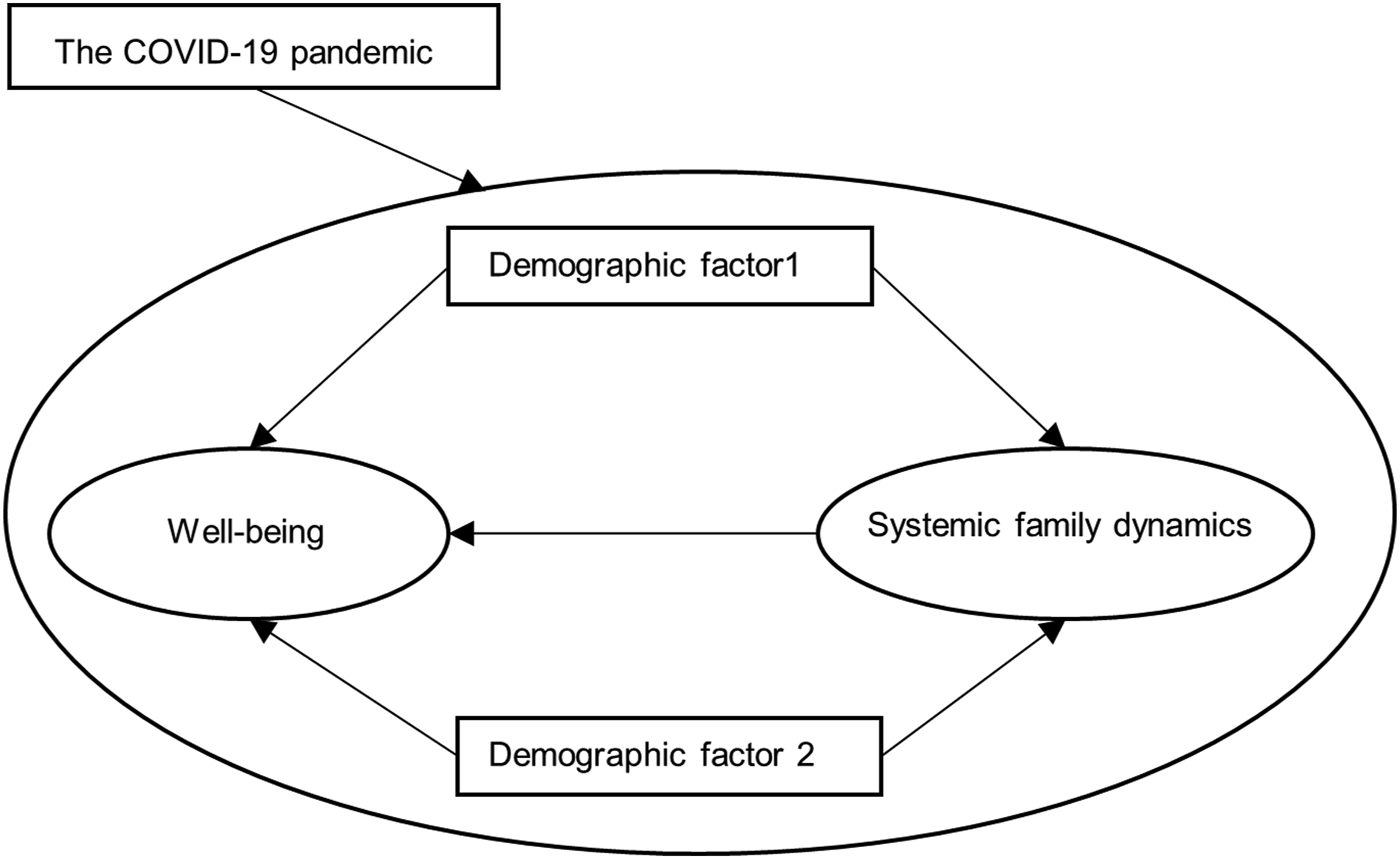
Methods
Participants
We conducted a cross-sectional survey of well-being and systemic family dynamics of participants in mainland China via convenience sampling. The participants were approached via WeChat which is China’s most popular messaging app with a monthly user base of more than one billion people, and data were collected online using Wenjuanxing platform from February 17 to March 23, 2020, during a period of stringent lockdown measures in mainland China. Data were collected by designed online questionnaires containing demographic characteristics and two self-rated scales about well-being and systemic family dynamics before and during the COVID-19 pandemic. Respondents were given information about the purpose and procedures of this study via an online WeChat notification and at the beginning of the online questionnaire. They could stop or quit the study at any time without facing any repercussions. All questionnaires were presented in a forced choice answer format. In this manner, there are no missing items in the data sets. Only one response to the questionnaire per person was permitted and participants under 16 years were excluded. Ethical approval of the study was granted by the ethics committee of Peking University Sixth Hospital (Institute of Mental Health) in China.
Measures
A demographic questionnaire was developed to collect information on gender, age, marital status, family income, education attainment, and occupation. The questions were presented in Chinese and are translated here. The question to determine age of the respondent was “How old are you? 1 = 16–30 years, 2 = 31–40 years, 3 = 41–50 years, 4 = 51 + years.” Age groups were based on the theory of the family life cycle, such as premarital stage (16–30), parent of a young child (31–41), parent of an adolescent child (41–50), and parent of adult child (51 and over). Marital status was assessed by the question “Are you married? 0 = no, 1 = yes.” Family income was evaluated by asking the question “How do you evaluate your family income? 0 = low, 1 = moderate or higher.” Income divisions were root in two ideas. First, well-being rises with income, but there was no further progress with high income (Kahneman & Deaton, 2010). Second, the links between the subjective socioeconomic status (SES) and subjective well-being (SWB) was larger than the objective SES-SWB association (Tan, Kraus, Carpenter, & Adler, 2020). The question on education attainment was “What is your education attainment? 1 = low than graduation from college, 2 = graduation from college and university, 3 = post-graduation+” The question about occupation is “Do you have professional background of medicine or psychology? 0 = no, 1 = yes.”
Index of Well-being (IWB) and Index of General Affect (IGA) was developed by Campbell, Converse and Rodgers and its Chinese version was used to assess participants’ well-being before and during the COVID-19 pandemic and consisted of nine items scored on a 7-point Likert scale that ranged from 1 (strongly disagree) to 7 (strongly agree) in this study. The Chinese version of the IWB & IGA was validated and demonstrated good internal reliability (Cronbach’s alpha was 0.85) (Fan, 1999).
The 23-item version of the Self-rating Scale of Systemic Family Dynamics (SSFD) was used to assess the systemic family dynamics before and during the COVID-19 pandemic with four dimensions: family atmosphere (8 items), individuation (6 items), system logic (5 items), and disease conception (4 items). Family atmosphere indicates the interpersonal communication and emotional dynamics within family structures; lower scores indicate a better and more relaxing dynamic among the family members. Individuation assesses the level of alienation in the attachments and behaviors of the family members. A lower score indicates a lower level of independence allowed by families. System logic refers to the value system of family members. Higher scores indicate greater use of a multidimensional thinking model such as “both-and thinking” to perceive the family system. Disease conception assesses the way in which individual family members exhibit self-responsibility/care in the process of treating sickness, Lower scores indicate that respondents can better adapt to the chaotic situations in the family. The scores range from “1” (very much like my family) to “5” (not at all like my family). The SSFD four subscales have been validated (Cronbach’s α = 0.69–0.86) (Xu & Zhao, 2017, 2018, 2019; Yu et al., 2014).
Data Analysis
Statistical analysis was performed by IBM Statistical Package for the Social Sciences (SPSS V20.0). The data of IWB & IGA and SSFD before and during the COVID-19 pandemic were compared applying ANOVAs with the demographic characteristics and other subscales of the identical scale as the covariates and effect sizes of mean differences were calculated using η2. Pearson’s product-moment correlation coefficient was used to calculate the strength of association between measures. Structural equation modeling was carried out using AMOS (Versions 24; Amos Development Corporation, Crawfordville, FL, USA). Multi-group modeling was used to determine the moderation of the COVID-19 pandemic on the hypothesized model (Figure 1). A p-value of <.05 was considered statistically significant.
Results
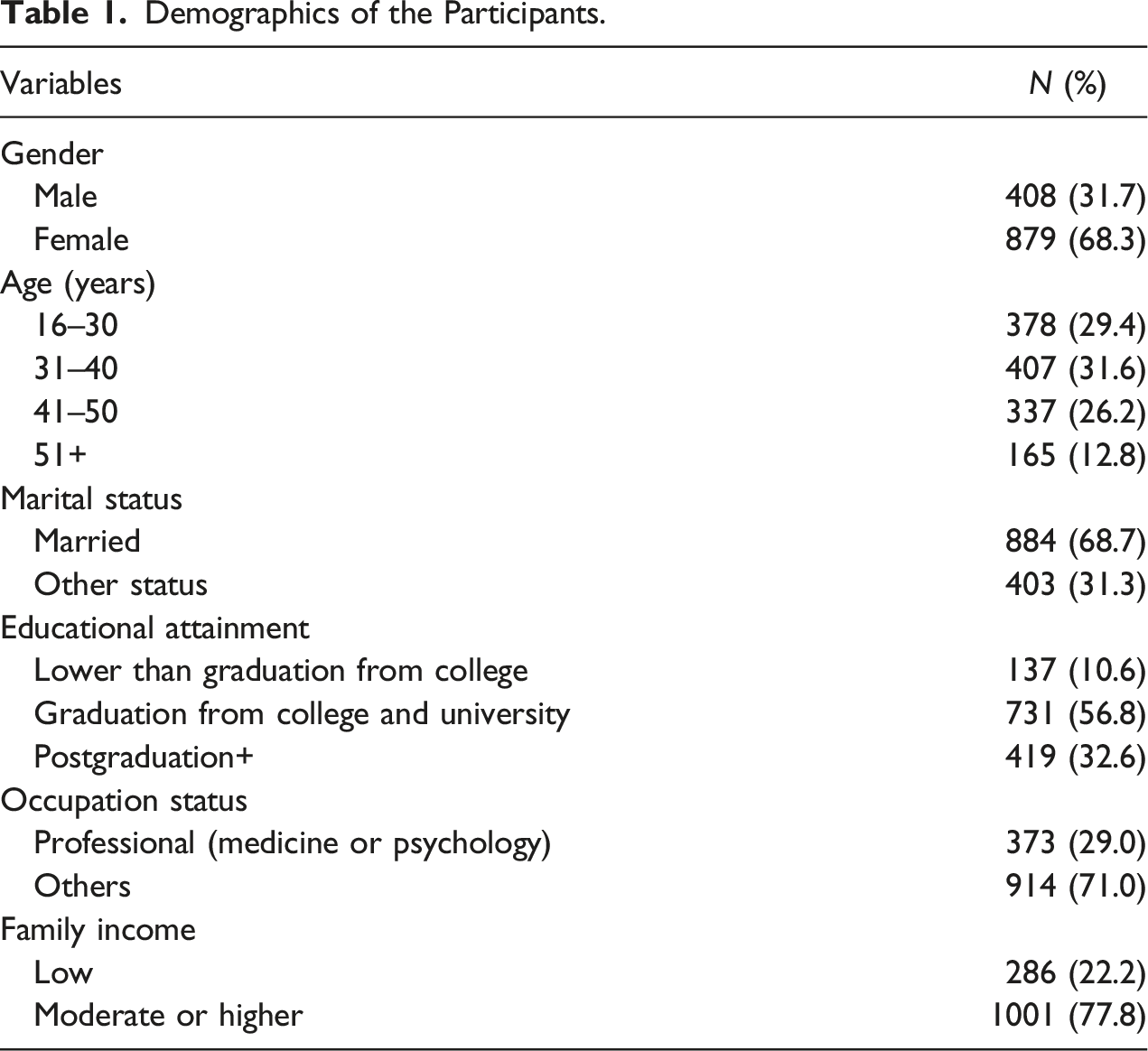
Sample Characteristics
Demographics of the Participants.
Decline of Well-Being and Systemic Family Dynamics From Before to During the COVID-19 Pandemic: Investigating Hypotheses 1
The scores of IWB (5.37 ± 1.28 vs. 4.74 ± 1.50, F = 52.99, p < .001, η2 = 0.040), the two subscales of SSFD family atmosphere (70.95 ± 16.61 vs. 70.61 ± 17.00, F = 14.28, p < .001, η2 = 0.011) and individuation (70.97 ± 15.09 vs. 65.36 ± 16.97, F = 4.80, p < .05, η2 = 0.004) were significantly different between before and during the COVID-19 pandemic. Despite the very close mean values of family atmosphere scores in the two surveys, using ANOVAs with the demographic characteristics and other subscales of the identical scale as the covariates, the first steps in the analyses were regressions on the covariates which generated predicated values of family atmosphere, where in turn were subtracted from the corresponding measured values. Therefore, these first steps resulted in different rather than very close change in the subscale family atmosphere. In other words, the analysis started with close original reported values while further computational process led to larger diverted values.
Associations Among Variables Across Time: Investigating Hypotheses 2
Pearson Product-Moment Correlations Before the Pandemic.
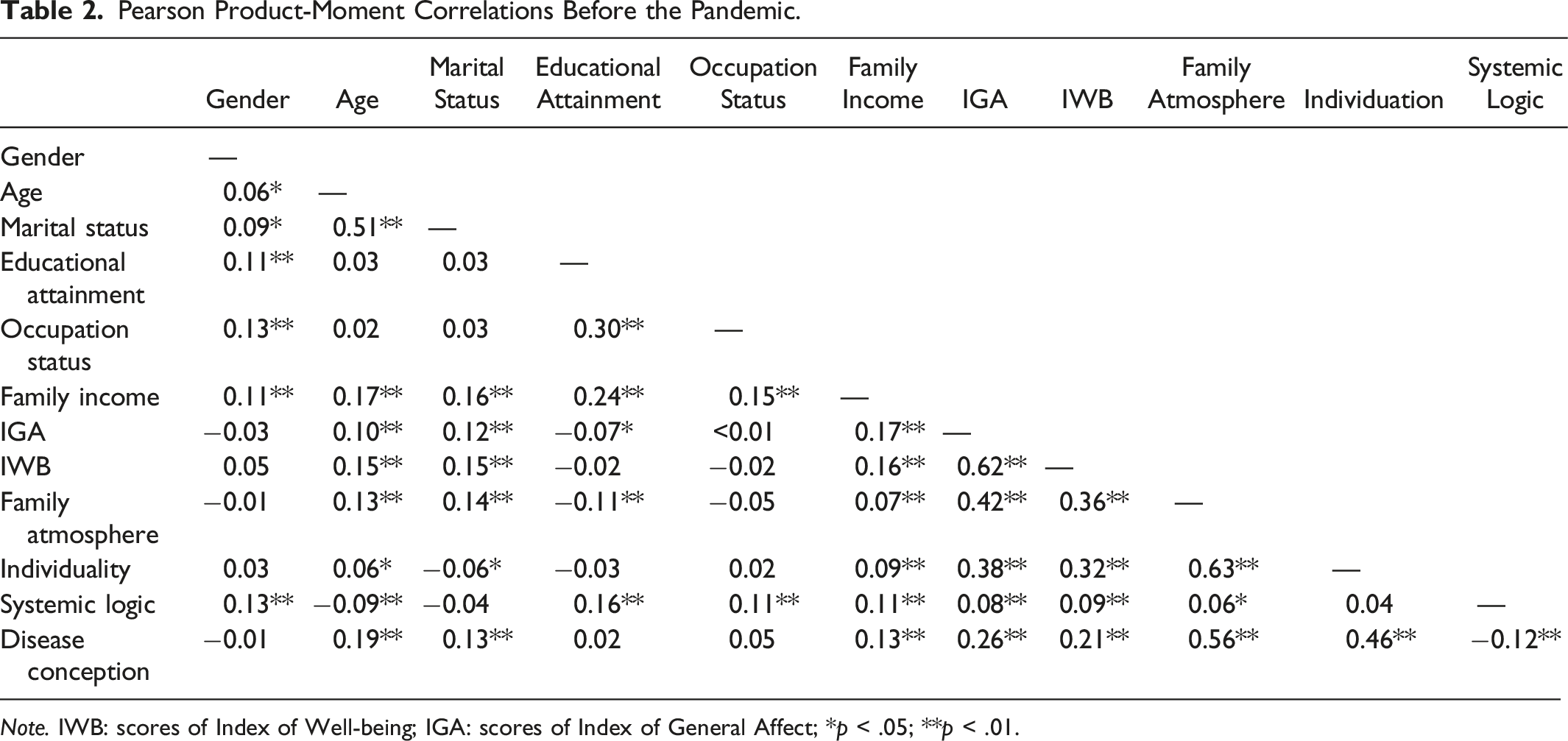
Note. IWB: scores of Index of Well-being; IGA: scores of Index of General Affect; *p < .05; **p < .01.
Pearson Product-Moment Correlations During the Pandemic.
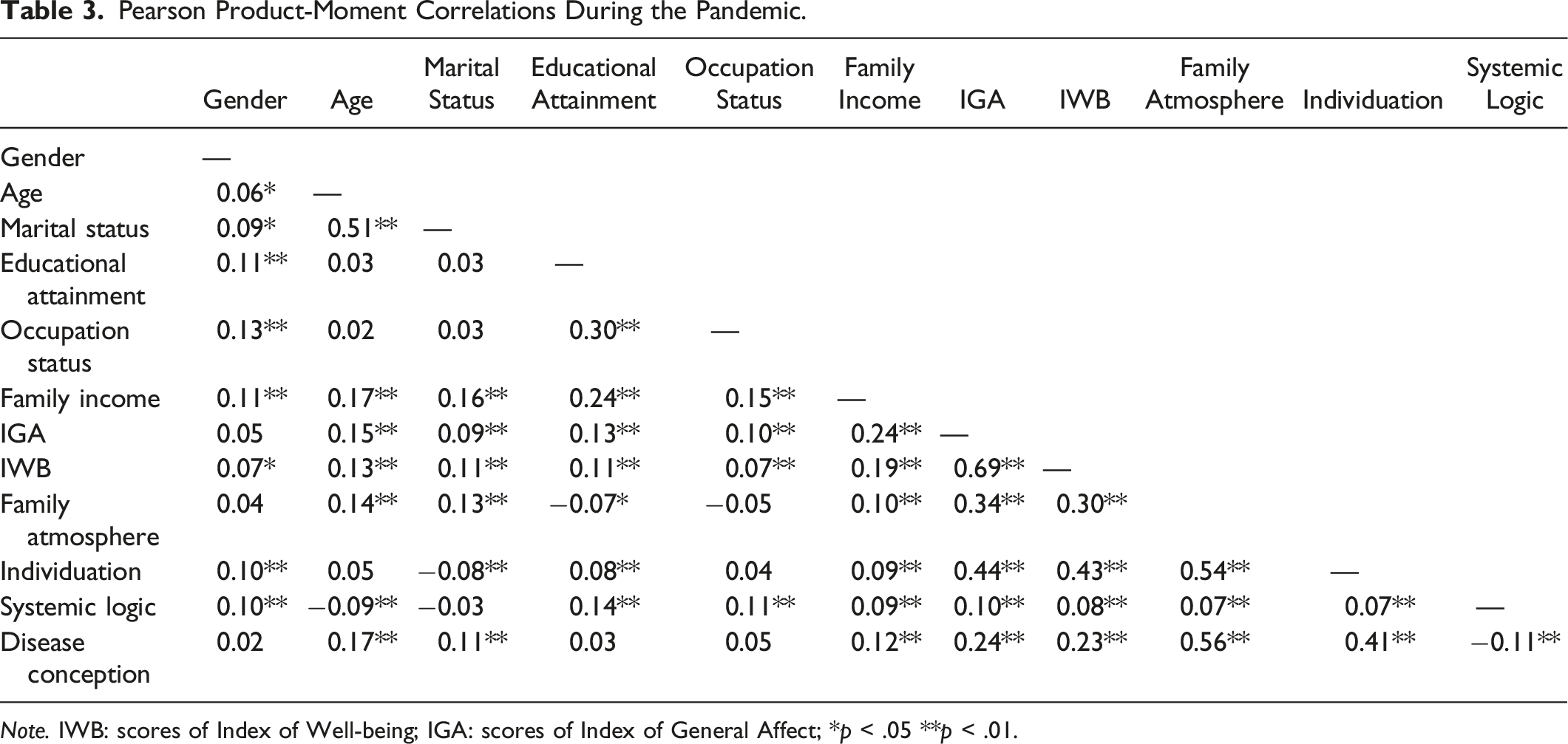
Note. IWB: scores of Index of Well-being; IGA: scores of Index of General Affect; *p < .05 **p < .01.
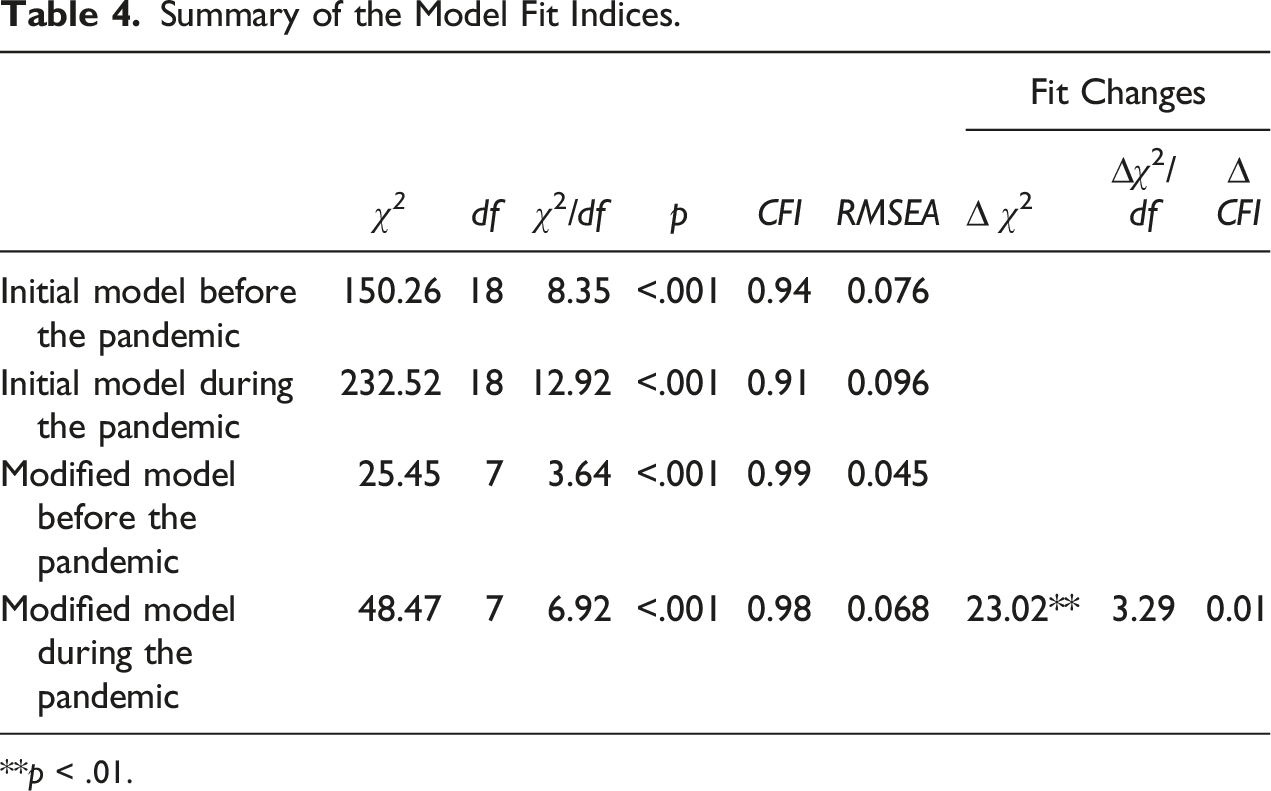
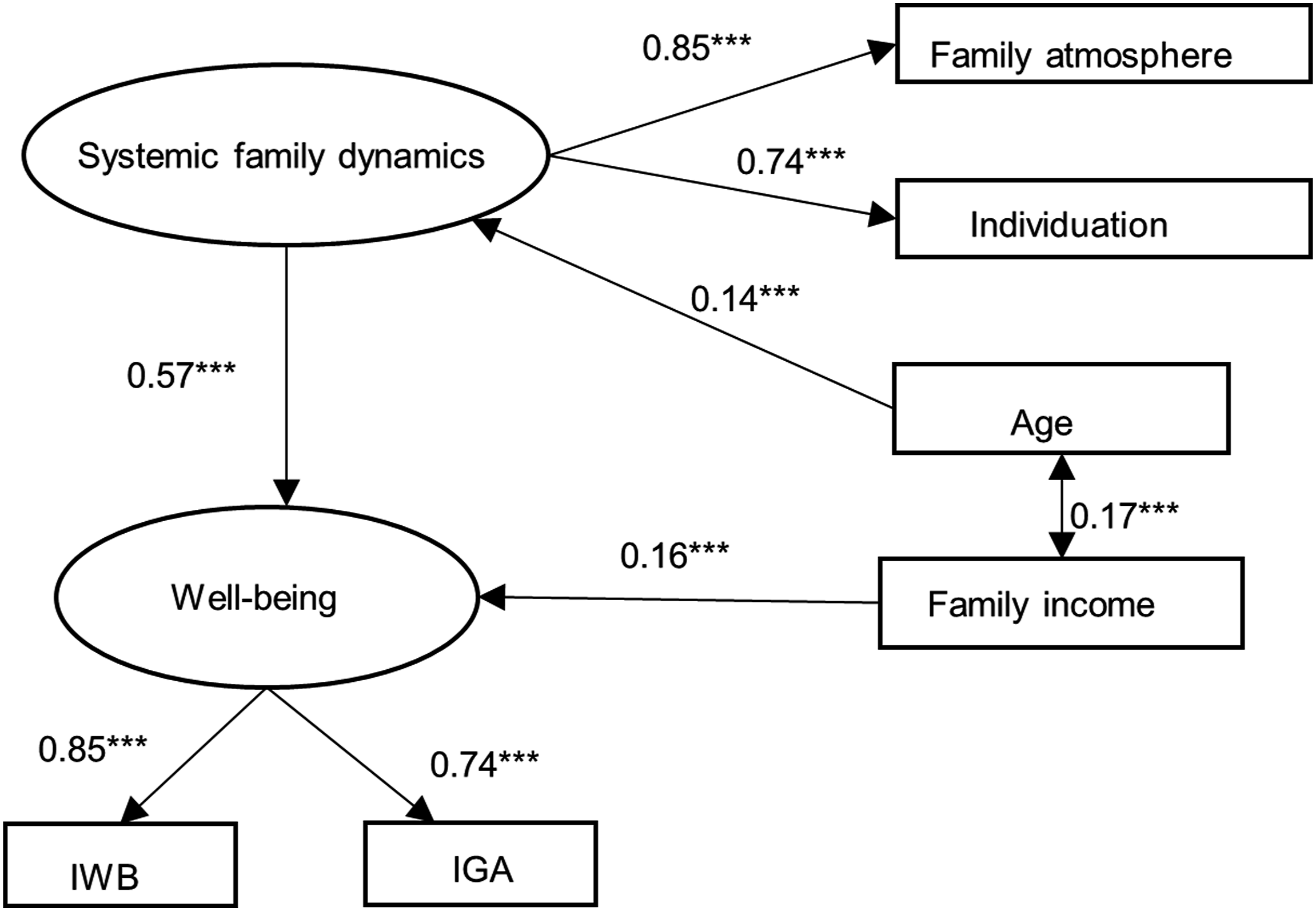
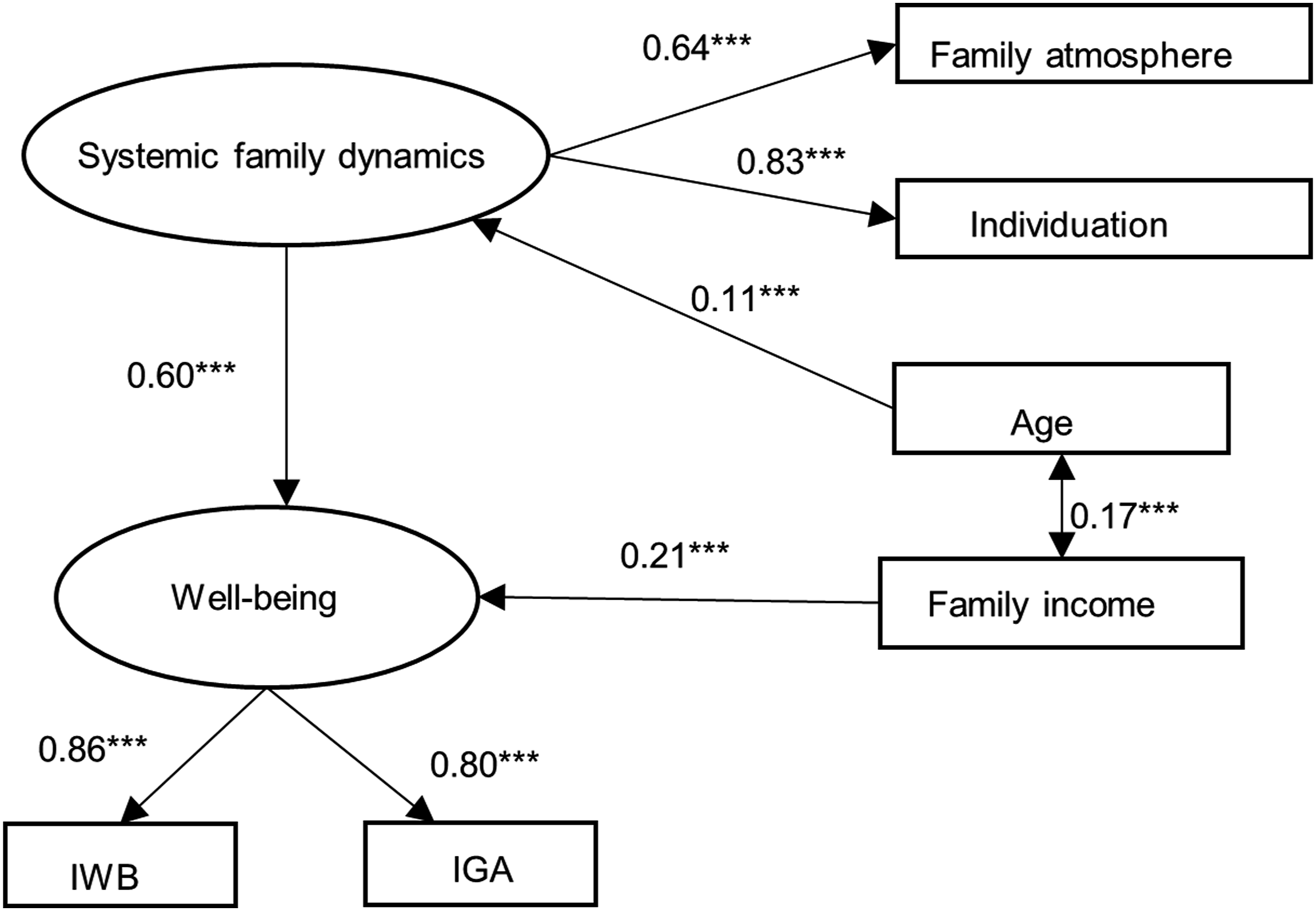
According to the hypothesized model as shown in Figure 1 and the modification indices provided by AMOS version 24, the initial model for the data before the pandemic in Figure 2 did not fit the data during the pandemic well (see Table 4). As we continued to explore a set of other models according to the modification indices provided by AMOS and the common paths, the modified model fit the pre-pandemic data (see Figure 3) and during the pandemic data in Figure 4 (see Table 4). The model before the COVID-19 pandemic in Figure 3 shows that well-being was positively associated with systemic family dynamics (β = 0.57, p < .001) and by family income (β = 0.16, p < .001). Furthermore, age was positively related to systemic family dynamics (β = 0.14, p < .001). The model during the COVID-19 pandemic in Figure 4 indicates that well-being was significantly associated with systemic family dynamics (β = 0.60, p < .001) and family income (β = 0.21, p < .001). Age had significant direct effects on systemic family dynamics (β = 0.11, p < .001). Age was related with family income in both models (r = 0.17, p < .01). Initial model for the data before the pandemic. Note: IWB: scores of index of well-being; IGA: scores of index of general affect. Summary of the Model Fit Indices. **p < .01. Modified model for the data before the pandemic. Note: IWB: scores of index of well-being; IGA: scores of index of general affect. ***p < .001. Modified model for the data during the pandemic. Note: IWB: scores of index of well-being; IGA: scores of index of general affect. ***p < .001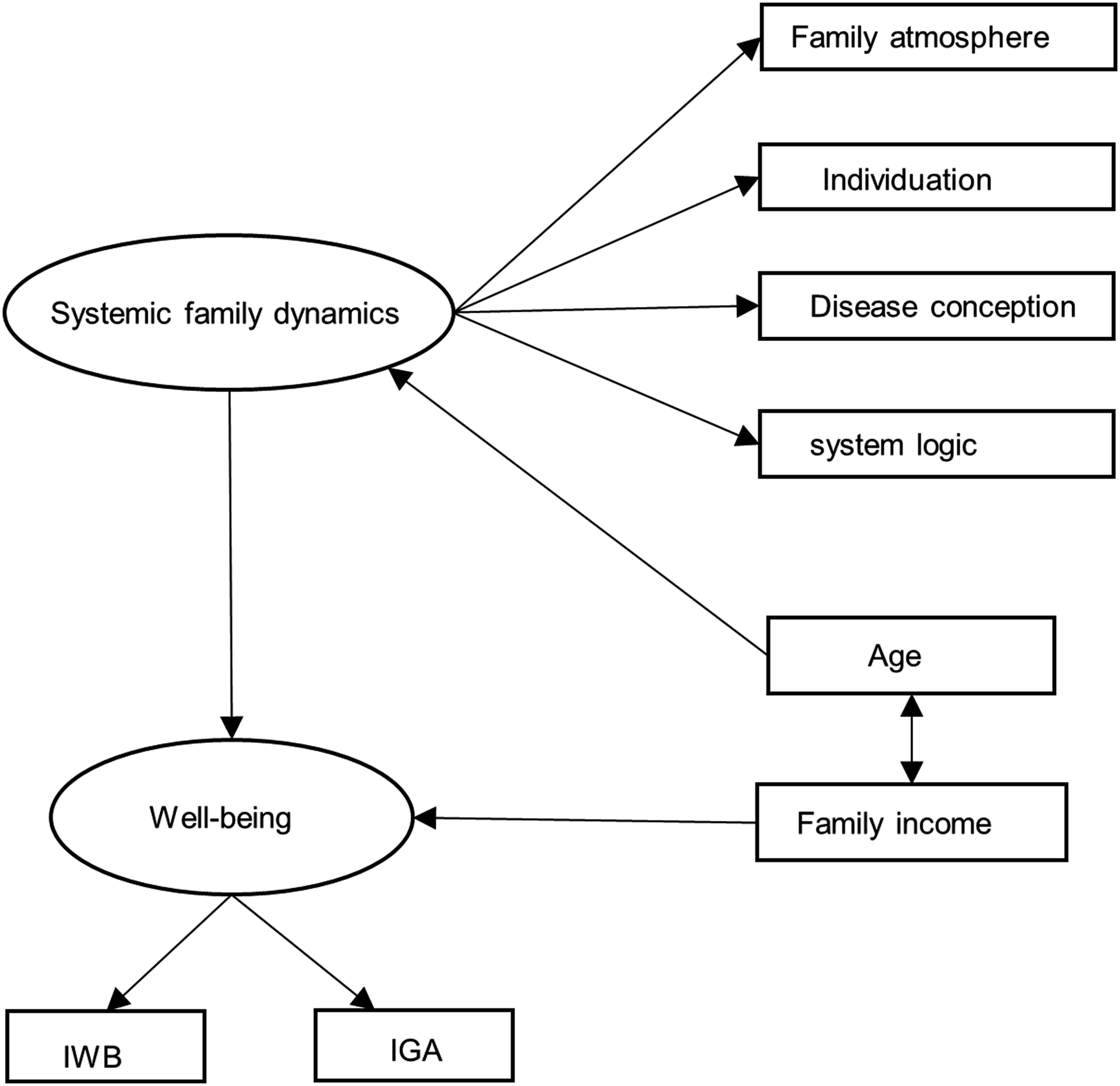
Significant Differences on Path Coefficients Between the Models: Investigating Hypotheses 3
A two-group model was performed to test whether the links were the same for both data before and during the pandemic. This procedure enabled us to constrain, in turn, each parameter of the model to be equal between the two groups and consequently to assess the difference in model fit that resulted. In total, we tested for differences in the path from age to systemic family dynamics, the path from systemic family dynamic to well-being and the path from family income to well-being. Out of these three, only one proved to be non-significant (the path from age to systemic family dynamics, C.R. = 0.36, p > .05). Two paths were significantly different for before and during the pandemic: systemic family dynamic to well-being (C.R. = 2.52, p < .05), and family income to well-being (C.R. = 2.02, p < .05). These results supported Hypothesis 3 (regarding the pandemic outbreak differences).
Discussion
In the early months of the COVID-19 pandemic with strict preventive measures, well-being and systemic family dynamics worsened. Well-being was positively correlated with family income and systemic family dynamics, and these associations were impacted by the COVID-19 pandemic, as previously hypothesized. The deterioration of IWB scores and two subscales scores of systemic family dynamics (such as family atmosphere and individuation) confirmed the previous findings that well-being and family dynamics of the general population was impacted by the COVID-19 pandemic. This was not consistent with a previous study of Gunther-Bel et al. (2020), which found increased (re)connection and conflict atmosphere in families in Spain during the pandemic. In contrast, the present study revealed a breakdown in family atmosphere and individuality. The current study extends previous research in this way. Our differing findings from the study in Spain may be related to the specific settings of the participants. Various countries and areas implemented different lockdown measures according to their varying rates of infection during the COVID-19 pandemic. The lockdown rules in China may have particular influences on family atmosphere and individuality in the Chinese families. During the COVID-19 outbreak, routine family life was disturbed, with significant impact on family relationships. Furthermore, much anxiety about uncertainty during the pandemic appeared in the general population, leading to strained family atmospheres. Drastic preventive measures against COVID-19 were implemented during February and March 2020 in China. People were advised to stay at home and work remotely, children could not attend school, and public activities were shuttered (Prime et al., 2020). Members of the same family, confined to their home, were forced to perform their routine activities all under one roof instead of in separate public places. Consequently, independence of family members was limited and interdependence was enhanced by these safety measures against COVID-19 spread, ultimately leading to a weakening in individuation of systemic family dynamics. However, IGA and two other dimensions of systemic family dynamics (such as systemic logic and disease conception) were not changed. Clinicians and practitioners should identify sensitive and insensitive dimensions of well-being and systemic family dynamics. Thus, they could make precision assessments and efficient interventions for clients and their families’ mental health and relationships during the pandemic. In addition, the scores of family atmosphere with close values in the two surveys were significantly different which is an interesting finding in our study. This finding can be explored in future research as it is beyond the scope of the current study.
The results of SEM revealed that before and during the pandemic, the same two subscales of systemic family dynamics (such as family atmosphere and individuation) were related to well-being. These results were similar to other studies on patients with chronic obstructive pulmonary disease (Chen et al., 2017) and on adolescents which demonstrated that the same two subscales of systemic family dynamics were related to well-being or self-esteem (Xu & Zhao, 2017, 2018, 2019). The other two subscales systemic logic and disease conception were indirectly associated with mental health, through their relations to family atmosphere and individuation (Xu & Zhao, 2017, 2018, 2019). Therefore, family atmosphere and individuation were the most important factors of systemic family dynamics that were directly related to well-being. This suggested that if clinicians primarily intervened in these two dimensions, clients and their families’ mental health and relationships may be improved more efficiently, regardless of the COVID-19 pandemic. Otherwise, the results of SEM contained the latent variables of well-being and systemic family dynamics and some sociodemographic factors. This was an extension to the model constructed by Xu and Zhao (2018) on adolescents which only included manifest variables of well-being and systemic family dynamics scales. Consequently, this extension could enrich practical guidance of clinical workers.
However, the results in this study were not consistent with the findings in another study in which instead of family dynamics, the fear to infect others and the fear to be infected were the only factor that associated with the positive variation in nurses’ symptoms of depression, anxiety, and stress during the COVID-19 outbreak (Sampaio, Sequeira, & Teixeira, 2020). In that study, family dynamics contained only one item “being displaced from home,” the sample included only nurses, and abnormal psychology was its research goal, instead of positive psychology. Consequently, the differences in findings from this study may be caused by different measures about family dynamics, different samples, and different research target.
Family income was related to well-being besides systemic family dynamics, and this result validated that financial stress could be related to mental health or well-being (Akkaya-Kalayci et al., 2020; Viana et al., 2013; Xu, Tian, Wang, & Lu, 2018; Zhang et al., 2020). Interestingly, family income was not directly related to systemic family dynamics. This suggests that financial support does not necessarily improve family relationships in low-income people. Rather, the combination of financial support and family-based interventions could promote well-being much more effectively. Being married and having professional background were excluded in our model. This was not consistent with the findings of other studies. For instance, they found that being married and having a background in medicine or psychology were protective factors for well-being (Cai et al., 2020; Chao, Xue, Liu, Yang, & Hall, 2020; Lopez et al., 2020; Morales-Vives, Dueñas, Vigil-Colet, & Camarero-Figuerola, 2020). For well-being, systemic family dynamics may be a more specific index of family relationships and support than being married, whereas family income may be a more important socioeconomic indicator than professional background; hence, these two variables were not included in the model.
According to the results of SEM, age was not associated with well-being, which was consistent with the finding in the previous study among older adults (Lopez et al., 2020). Meanwhile, age was related to systemic family dynamics. Aging may impact family relationships as the families may be more experienced and have more resources to cope with conflicts (Gomes, 2018). Apart from these results, age and family incomes were positively related with each other as it is more likely that the older an individual, the more work experience he/she has and therefore, a higher income.
Further statistically analyzed in this study, the associations between well-being and systemic family dynamics and between well-being and family income were impacted by the COVID-19 pandemic, as the quarantine measures may alter the normative associations patterns for the general population (Ebert, Bernstein, Carney, & Patrick, 2020). Systemic family dynamics and family incomes were significantly more strongly correlated with well-being during the pandemic than before the pandemic. The results suggested that family resources supported well-being during the pandemic among the geriatric population (Lopez et al., 2020). Because of the lockdown during the pandemic, people spent more time with families, and more attention was given to the family life as a result. Under these circumstances, systemic family dynamics acted a more important role for well-being. During the COVID-19 outbreak, financial income may be connected to our life security. Financial instability and insecurity often increase anxiety in individuals, thus feelings of uncertainty affect the state of mental health (Castro-de-Araujo & Machado, 2020; Misra, 2018). Therefore, family income was more related to well-being during the pandemic. This implied the need to pay more attention to mental health and well-being among the younger clients with poor family relationships and low family income during the pandemic. Based on this data, strategies focused on improving family dynamics can greatly decrease the risks and increase well-being. Family dynamics could actually be improved sometimes even without professional strategies (“The ripple effects of the pandemic,” 2020). For instance, the overall prevalence of improvement themes (such as increased reconnection, 61.7%) exceeded deterioration themes (such as conflict atmosphere, 41.0%) in a study of couples in Spain or family dynamics during lockdown (Gunther-Bel et al., 2020). During the pandemic, people could have more time to stay with families, and thereby more chances to improve family dynamics. The adoption of coping strategies is positively associated with mental health (Zhou, MacGeorge, & Myrick, 2020), thus interventions could be designed to support well-being even in the face of the financial uncertainty through improving family atmosphere and individuality and focusing on financial resources.
Some limitations in the study should be considered. First, because of recall bias due to assessing the variables before and during the pandemic at the same time in this cross-sectional and retrospective study (see the Supplementary Appendix Table S1 for variables correlations between before and during the pandemic), the data about psychological factors before the COVID-19 pandemic are not reliable. Despite the impact of recall bias, we assumed that these subjective gaps could indicate psychological state to a certain extent. If possible, a prospective and follow-up survey could be conducted in the future to measure objective gaps. Second, the sample is not highly representative. All participants were WeChat users and there were relatively few participants with low educational attainment, low incomes, or unemployed. Third, in consideration of the probable multicollinearity of variables concerning family conditions, we have focused on a few representative variables. Thus, several other family factors that we did not assess may be correlated to well-being and systemic family dynamics, such as family with or without younger children, whether participants actually lived with their families or not, etc. Their associations with well-being and systemic family dynamics necessitate further investigation.
In conclusion, well-being and systemic family dynamics changed during the early months of the COVID-19 outbreak. The associations between well-being and systemic family dynamics and between well-being and family income were moderated by the COVID-19 pandemic. Evidence-based intervention in the context of family therapy would possibly enhance well-being and mental health during the COVID-19 pandemic. Further research should continue to examine well-being and systemic family dynamics in a prospective and follow-up study during the COVID-19 pandemic.
Supplemental Material
Supplemental Material - Association of Systemic Family Dynamics and Well-Being During the COVID-19 Outbreak: A Cross-Sectional Survey
Supplementary Material for Association of Systemic Family Dynamics and Well-Being During the COVID-19 Outbreak: A Cross-Sectional Survey by Jia Xu, JingLi Yue, Tingting Zhang, Zhijiang Wang, Le Shi, Lin Lu, and Xudong Zhao in Journal of Family Issues.
Footnotes
Acknowledgments
Thank all of the participants for their willingness to participate in the study and the time that they devoted to the study.
Declaration of Conflicting Interests
The author(s) declared no potential conflicts of interest with respect to the research, authorship, and/or publication of this article.
Funding
The author(s) received no financial support for the research, authorship, and/or publication of this article.

Supplemental Material
Supplemental material for this article is available online.
References
Supplementary Material
Please find the following supplemental material available below.
For Open Access articles published under a Creative Commons License, all supplemental material carries the same license as the article it is associated with.
For non-Open Access articles published, all supplemental material carries a non-exclusive license, and permission requests for re-use of supplemental material or any part of supplemental material shall be sent directly to the copyright owner as specified in the copyright notice associated with the article.
