




Abstract
The present study assessed factors associated with maternal preferences for their children’s educational format (i.e., completely in-person, completely online/remote, or hybrid of in-person and online/remote) for return to school during the COVID-19 pandemic and whether these associations differed between full-time employed mothers and mothers who were not employed. Participants were 911 mothers of school-aged children from the United States (full-time employed, n = 650; not employed, n = 261). Recruitment took place online via social media during Summer 2020. Questionnaires on school modality preference, maternal work status, and demographic characteristics were filled out online through Qualtrics. Compared to mothers who were not employed, full-time employed mothers were more likely to endorse a preference for a hybrid in-person and online/remote educational format for their children and less likely to endorse a preference for a completely online/remote educational format for their children. The factor most strongly associated with maternal preferences for their children’s educational format for return to school in both groups of mothers was being worried about my child getting COVID-19 and their health being severely impacted (rs’s ranged from −56 to −58; p < .01). Regardless of maternal employment status, this factor continued to have the strongest association with a maternal preference for a completely online educational format in the polynomial regression analysis after controlling for relevant demographic variables (Odds Ratios ranged from 3.63 to 37.64; p < .01). These findings highlight that concerns about child health during the COVID-19 pandemic influence maternal preferences for their children’s educational format, regardless of maternal employment status.
The Coronavirus-2019 (COVID-19) pandemic has impacted the educational experience of children worldwide (Thorell et al., 2021). Many pediatric organizations, including the European Paediatric Association, have advocated for schools to remain open for in-person instruction during the pandemic largely based on data that suggest a low percentage of COVID-19 cases (<5%) are in children younger than 18 years old and children are more likely to contract COVID-19 in their homes than in school environments (Gras-Le Guen et al., 2021). School closures are also associated with emotional and social disturbances in children (Viner et al., 2021), which have the potential to have long-term effects on child development and well-being. Despite the recommendation for schools to remain open for in-person instruction, a large percentage of children continue to attend fully remote/online school during the pandemic. Data from the Department of Education’s National Assessment of Educational Progress found that among fourth graders in the United States attending school in February 2021, 39% were fully in-person, 18% were hybrid, and 42% were fully online/remote (Department of Education, 2021).
Since caregivers play a key role in determining their children’s instructional format, it is important to understand factors associated with caregiver preferences for their children’s educational format during the COVID-19 pandemic. In a study with 4436 American children and adolescents who were enrolled in pre-kindergarten through high school, Limbers (2021) found that concerns about child health and safety was the factor most strongly associated with caregiver preferences for an online learning environment for their children during Fall 2020 (Limbers, 2021). Findings from this study may have limited generalizability since the study was conducted within one large public school district in Texas. It was also not reported in this study which caregiver (mother, father, or another guardian) completed the study questionnaires. Recent research during the pandemic has highlighted that mothers have been disproportionately responsible for their children’s education when schools have closed (Lee, Ward, Chang, & Downing, 2021; Petts, Carlson, & Pepin, 2021). This has been true regardless of maternal employment status, which has resulted in greater negative employment outcomes for mothers compared to fathers during the pandemic (Lee et al., 2021). Taken together, these data suggest what influences maternal preferences for their children’s educational format during the pandemic may differ based on maternal employment status. The purpose of the present study was to assess factors associated with maternal preferences for their children’s educational format (i.e., completely in-person, completely online/remote, or hybrid of in-person and online/remote) for return to school during the COVID-19 pandemic and whether these associations differed between a national sample of full-time employed mothers and mothers who were not employed.
Methods
Participants
Participants were 911 mothers of school-aged children from the United States (full-time employed, n = 650; not employed, n = 261). To meet eligibility for the study, participants had to indicate being a mother from the United States of at least one child who would be school-aged (i.e., pre-kindergarten through high school) during Fall 2020. Mothers who were not literate in English or did not live with their child at least 50% of the time were excluded from participating in the study.
Measures
School Modality Preference
Participants completed a 16-item questionnaire that was in part based on a survey utilized in a previously published study (Limbers, 2021). The first question asked, “What best describes your child or children’s school environment?” Response options were, “public school, private school, homeschool, or other.” Participants were then asked, “When thinking about your child or children returning to school in Fall 2020, what modality do you prefer?” Response options were, “completely in-person, completely online/remote, or hybrid of in-person and online/remote.” Participants were presented with a prompt that read, “Please indicate if any of the below factors play a role in the modality you selected above or how you would prefer your child or children to return to school in Fall 2020,” and were instructed to respond, “no or yes,” to the following items: “Because I work, it is difficult to help my child with online/remote work; Because I have other children to take care of, it is difficult for me to help my child with online/remote work; My educational background makes it difficult for me to help my child with online/remote work; My child or someone else in my home has a compromised immune system or is in another high-risk group and I am concerned about their health; I do not have other child care options when in-person school is not in session; I do not feel that my child learns well in an online/remote learning format; I am concerned about the long-term impact of COVID-19 on my child’s education; There are high rates of COVID-19 in my area; My child has special education needs that can’t be adequately addressed through online/remote learning; It is not realistic to expect my child to social distance or wear a mask at school; I am worried about my child getting COVID-19 and his/her health being severely impacted; My family and I do not have the technology or technology support needed for online/remote school work.”
Maternal Work Status
To determine maternal work status, participants were asked, “Are you employed outside the home?” Mothers who responded, “yes,” to this question were then asked, “Which best describes your employment situation?” Response options were, “full time (a minimum 30 hr a week or more) or part-time (less than 30 hr a week).” The determination of full-time work status as at least 30 hr per week was based on the Internal Revenue Service’s (IRS) definition of full-time work status (Internal Revenue Service, 2021). Given the focus of the present study on assessing differences in preferences of educational format between mothers who were employed full-time and those who were not employed, only the responses of mothers who reported being employed full-time and mothers who reported not being employed outside the home were included.
Demographics
A questionnaire was completed by participants that evaluated number of children who were minors living in the home, ages of child/children, if they had a child with a chronic health condition, and annual household income (less than US$10,000, US$10,000–US$19,999, US$20,000–US$29,999, US$30,000–US$39,999, US$40,000–US$49,999, US$50,000–US$74,999, US$75,000–US$99,999, US$100,000–US$150,000, More than US$150,000). Mothers were also asked to report on their age, race (White, Black, Hispanic, Asian, Other), marital status (married, divorced, separated, widowed, other), highest level of education (high school degree, some college, college degree, master’s degree, doctoral degree), political party (Democrat, Republican, Independent, Other, I do not identify with a political party), and state they were living in.
Procedures
Online recruitment occurred via social media during Summer 2020. A brief description of the study was provided and mothers from the United States who had at least one school-aged child (pre-kindergarten through high school) who lived with them at least 50% of the time were invited to click on a link where the study consent form and a more detailed description of the study was provided. Participants indicated their consent to proceed with the study by clicking on a button that read, “I agree to participate.” Several screening questions were initially asked in order to ensure individuals met study inclusion criteria. Individuals who did not indicate being a mother from the United States of at least one child who would be school-aged (i.e., pre-kindergarten through high school) during Fall 2020, being literate in English, and living with their child at least 50% of the time on the screening questionnaires were thanked for their participation and exited from the survey. All other individuals were able to proceed with the full set of study questionnaires on Qualtrics. There was no financial compensation provided for participation in this study. All study procedures received approval from the authors’ University Institutional Review Board (IRB).
Statistical Analysis
Statistical Package for the Social Sciences (SPSS) Version 26 was used to perform the statistical analyses for this study. p values less than .05 were considered statistically significant. Descriptive statistics were computed for all study variables. Chi-square statistics and independent samples t-tests were performed to assess if there were systematic differences between full-time employed mothers and mothers who were not employed with regard to maternal preferences for their children’s educational format (i.e., fully virtual, hybrid in-person and virtual, fully in-person) and socio-demographic characteristics (i.e., maternal age, maternal race, maternal highest level of education, marital status, annual household income, number of children, political party, having a child with a chronic health condition).
Spearman correlations were computed between maternal preferences for their children’s educational format for return to school and factors influencing material preferences for their children’s educational format separately for full-time employed mothers and mothers who were not employed. Spearman correlations were classified as small (.10–.29), medium (.30–.49), and large (>.50).
Polynomial logistic regression analysis was utilized to assess the associations between maternal preferences for their children’s educational format for return to school and factors influencing material preferences for their children’s educational format. Socio-demographic characteristics that significantly differed between full-time working mothers and mothers who were not employed (i.e., number of children, marital status, education, political party identification, annual household income) were entered as control variables in the model. Factors that significantly correlated with maternal preferences for their children’s educational format for return to school in the Spearman correlation analysis (i.e., work makes it difficult to help my child with remote/online school, my other children make it difficult to help my child with online/remote work, not having other child care options, my child does not learn well in online/remote learning format, concerned about long-term impacts of COVID-19 on child’s education, my child or someone in home has compromised immune system and concerned about their health, high rates of COVID-19 in my area, not realistic to expect my child to social distance or wear mask at school, worried about my child getting COVID-19 and their health being severely impacted) were entered as independent variables in the model. Fully virtual was the referent group that hybrid in-person and virtual and fully in-person were being compared to in the polynomial logistic regression analysis. The analysis was performed separately for full-time employed mothers and mothers who were not employed.
Results
Sample Characteristics
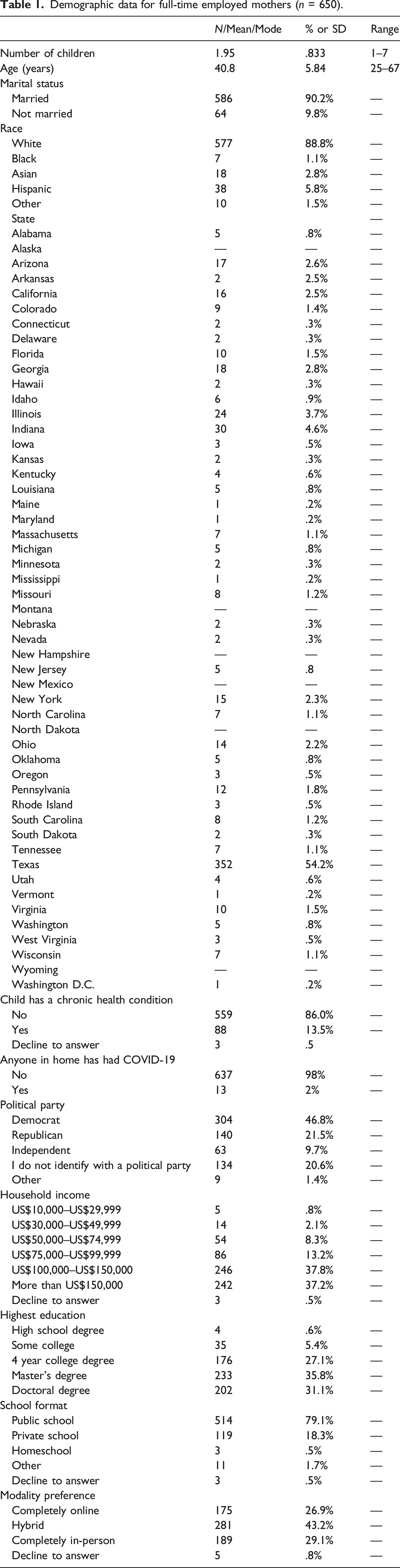
Demographic data for full-time employed mothers (n = 650).
Demographic data for unemployed mothers (n = 261).
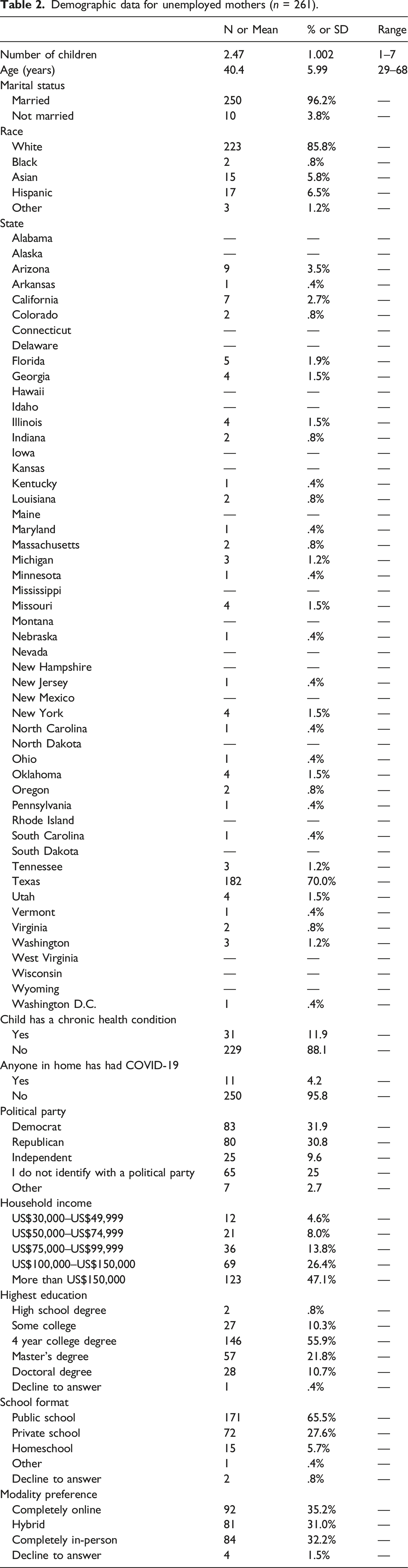
Mothers in the full-time employed group differed from mothers in the not employed group on preference for their children’s educational format for return to school (p < .01), number of children (p < .001), marital status (p < .01), education (p < .001), political party identification (p < .01), and annual household income (p < .05). Compared to mothers who were not employed, full-time employed mothers were more likely to endorse a preference for a hybrid educational format for their children and less likely to endorse a preference for a completely online/remote educational format for their children. Full-time employed mothers had fewer children and were less likely to be married, more likely to have a Master’s or Doctoral degree, more likely to identify politically as a Democrat, and less likely to have a household annual income of US$150,000 or greater compared to mothers who were not employed.
Spearman Correlations
Spearman correlation between modality preference and study variables for full-time employed mothers (n = 650).
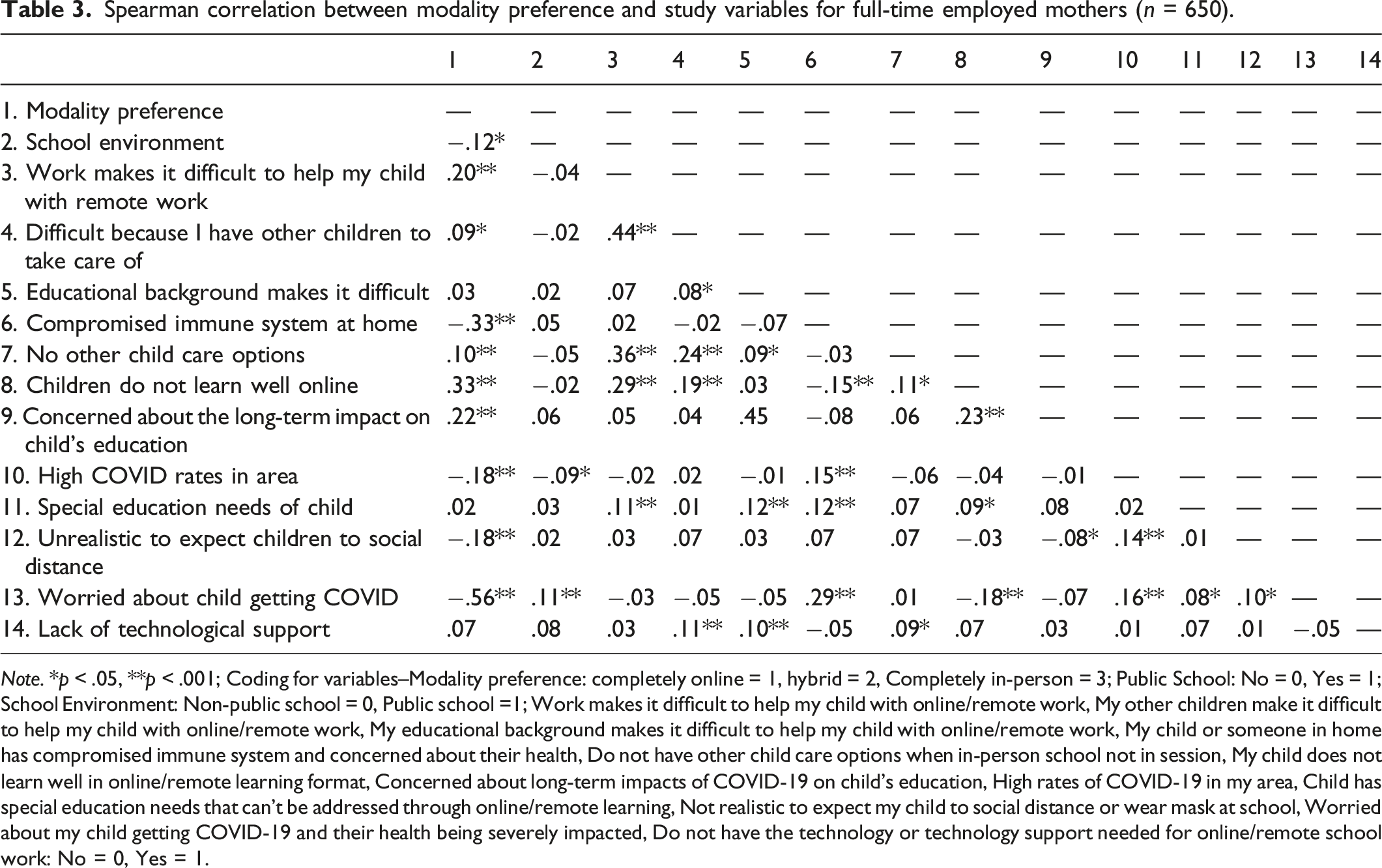
Note. *p < .05, **p < .001; Coding for variables–Modality preference: completely online = 1, hybrid = 2, Completely in-person = 3; Public School: No = 0, Yes = 1; School Environment: Non-public school = 0, Public school =1; Work makes it difficult to help my child with online/remote work, My other children make it difficult to help my child with online/remote work, My educational background makes it difficult to help my child with online/remote work, My child or someone in home has compromised immune system and concerned about their health, Do not have other child care options when in-person school not in session, My child does not learn well in online/remote learning format, Concerned about long-term impacts of COVID-19 on child’s education, High rates of COVID-19 in my area, Child has special education needs that can’t be addressed through online/remote learning, Not realistic to expect my child to social distance or wear mask at school, Worried about my child getting COVID-19 and their health being severely impacted, Do not have the technology or technology support needed for online/remote school work: No = 0, Yes = 1.
Preference for a fully online/remote educational format was associated with full-time employed mothers reporting that my child or someone in home has compromised immune system and concerned about their health (rs = −.33; p < .01), high rates of COVID-19 in my area (rs = −.18; p < .01), not realistic to expect my child to social distance or wear mask at school (rs = −.18; p < .01), attending a public school (rs = −.12; p < .05), and worried about my child getting COVID-19 and their health being severely impacted (rs = −.56; p < .01). All of these correlations were in the small range except my child does not learn well in online/remote learning format and my child or someone in home has compromised immune system and concerned about their health, which were in the medium range, and worried about my child getting COVID-19 and their health being severely impacted, which was a large correlation.
Spearman correlation between modality preference and study variables for mothers who are not employed (n = 261).
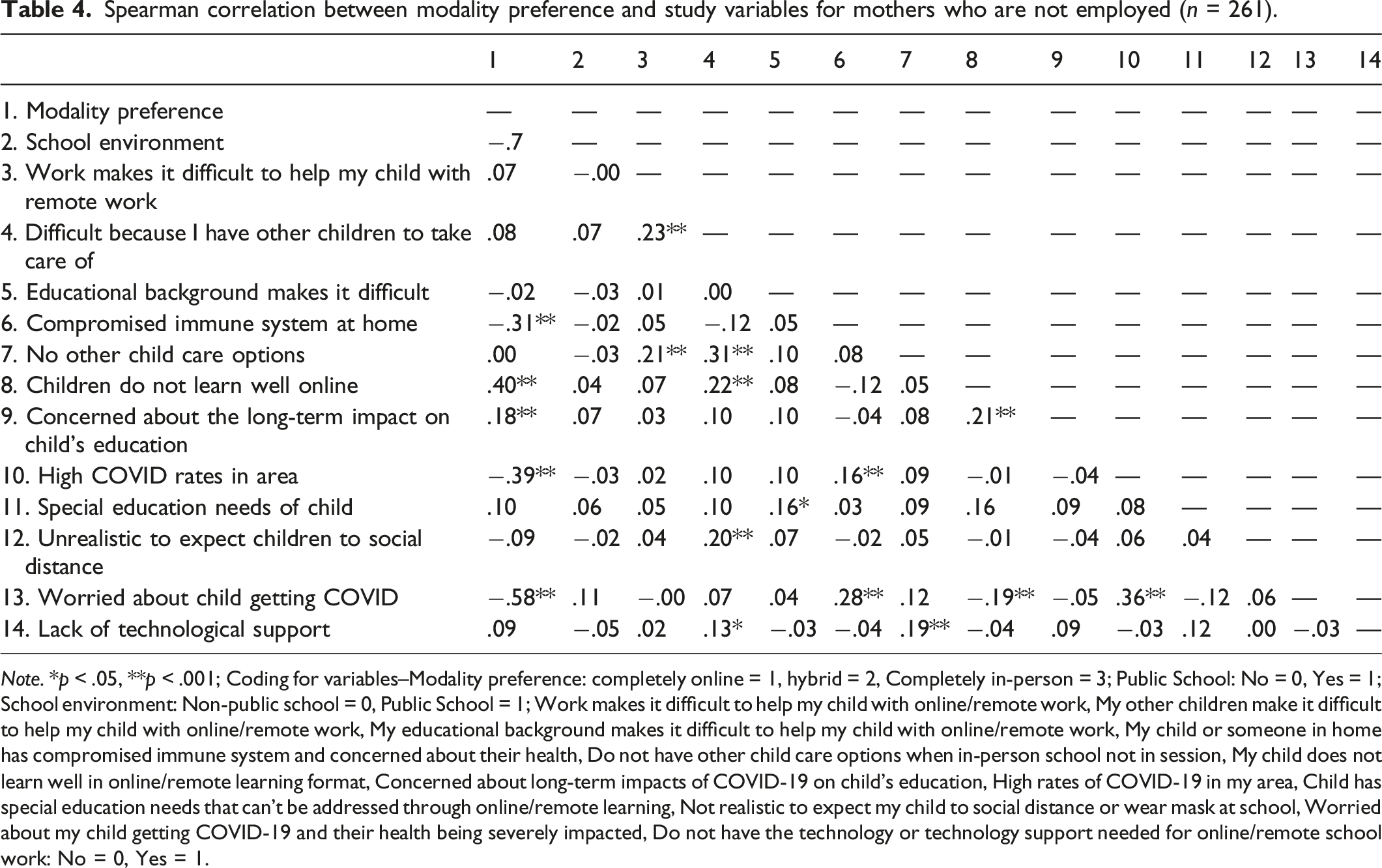
Note. *p < .05, **p < .001; Coding for variables–Modality preference: completely online = 1, hybrid = 2, Completely in-person = 3; Public School: No = 0, Yes = 1; School environment: Non-public school = 0, Public School = 1; Work makes it difficult to help my child with online/remote work, My other children make it difficult to help my child with online/remote work, My educational background makes it difficult to help my child with online/remote work, My child or someone in home has compromised immune system and concerned about their health, Do not have other child care options when in-person school not in session, My child does not learn well in online/remote learning format, Concerned about long-term impacts of COVID-19 on child’s education, High rates of COVID-19 in my area, Child has special education needs that can’t be addressed through online/remote learning, Not realistic to expect my child to social distance or wear mask at school, Worried about my child getting COVID-19 and their health being severely impacted, Do not have the technology or technology support needed for online/remote school work: No = 0, Yes = 1.
Polynomial Logistic Regression Analysis
Multinomial Logistic Regression Examining Modality Choice for Full-Time Employed Mothers (n = 650).
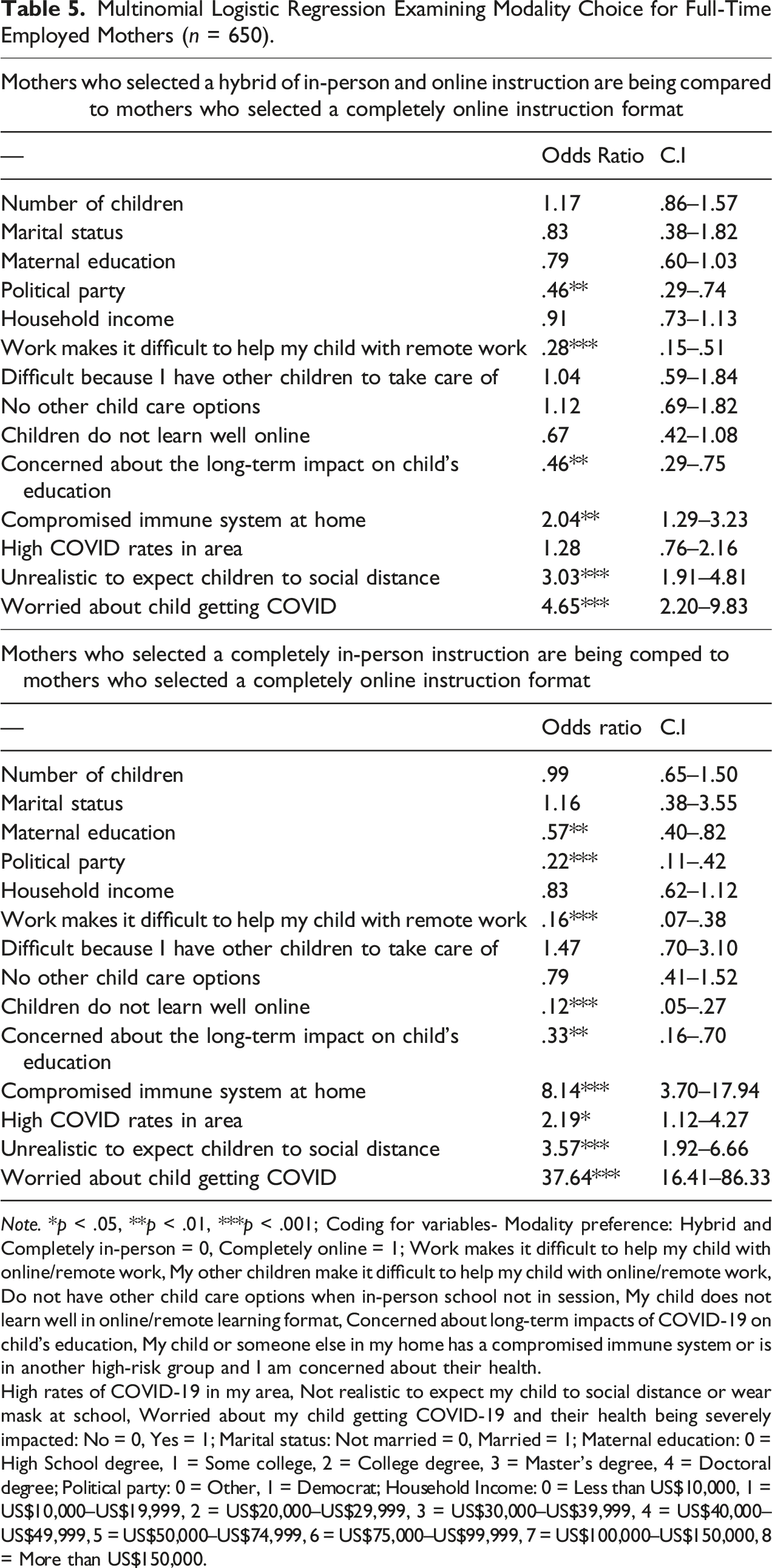
Note. *p < .05, **p < .01, ***p < .001; Coding for variables- Modality preference: Hybrid and Completely in-person = 0, Completely online = 1; Work makes it difficult to help my child with online/remote work, My other children make it difficult to help my child with online/remote work, Do not have other child care options when in-person school not in session, My child does not learn well in online/remote learning format, Concerned about long-term impacts of COVID-19 on child’s education, My child or someone else in my home has a compromised immune system or is in another high-risk group and I am concerned about their health.
High rates of COVID-19 in my area, Not realistic to expect my child to social distance or wear mask at school, Worried about my child getting COVID-19 and their health being severely impacted: No = 0, Yes = 1; Marital status: Not married = 0, Married = 1; Maternal education: 0 = High School degree, 1 = Some college, 2 = College degree, 3 = Master’s degree, 4 = Doctoral degree; Political party: 0 = Other, 1 = Democrat; Household Income: 0 = Less than US$10,000, 1 = US$10,000–US$19,999, 2 = US$20,000–US$29,999, 3 = US$30,000–US$39,999, 4 = US$40,000–US$49,999, 5 = US$50,000–US$74,999, 6 = US$75,000–US$99,999, 7 = US$100,000–US$150,000, 8 = More than US$150,000.
Multinomial logistic regression examining modality choice for mothers who are not employed (n = 261).
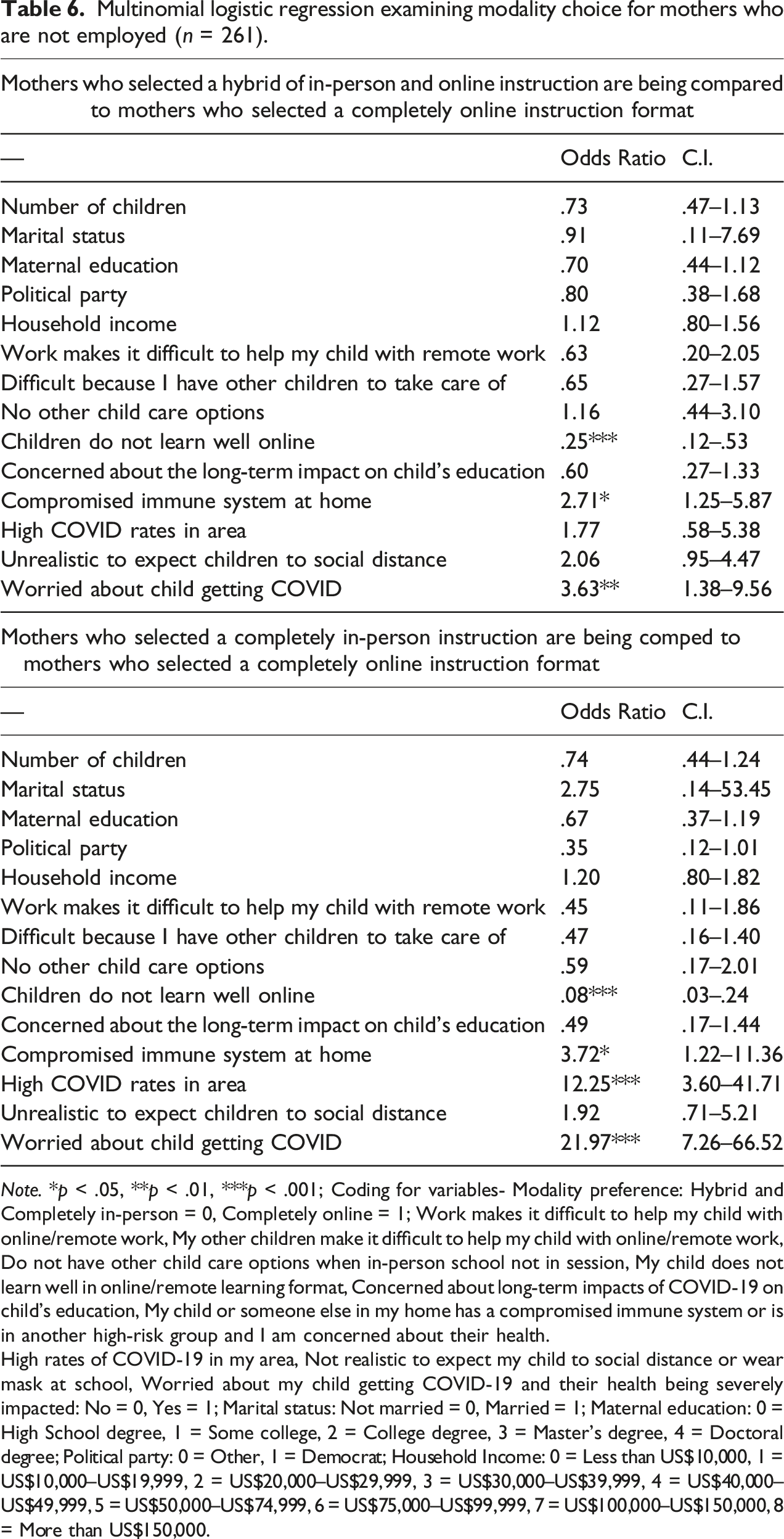
Note. *p < .05, **p < .01, ***p < .001; Coding for variables- Modality preference: Hybrid and Completely in-person = 0, Completely online = 1; Work makes it difficult to help my child with online/remote work, My other children make it difficult to help my child with online/remote work, Do not have other child care options when in-person school not in session, My child does not learn well in online/remote learning format, Concerned about long-term impacts of COVID-19 on child’s education, My child or someone else in my home has a compromised immune system or is in another high-risk group and I am concerned about their health.
High rates of COVID-19 in my area, Not realistic to expect my child to social distance or wear mask at school, Worried about my child getting COVID-19 and their health being severely impacted: No = 0, Yes = 1; Marital status: Not married = 0, Married = 1; Maternal education: 0 = High School degree, 1 = Some college, 2 = College degree, 3 = Master’s degree, 4 = Doctoral degree; Political party: 0 = Other, 1 = Democrat; Household Income: 0 = Less than US$10,000, 1 = US$10,000–US$19,999, 2 = US$20,000–US$29,999, 3 = US$30,000–US$39,999, 4 = US$40,000–US$49,999, 5 = US$50,000–US$74,999, 6 = US$75,000–US$99,999, 7 = US$100,000–US$150,000, 8 = More than US$150,000.
Discussion
The current study assessed factors associated with maternal preferences for their children’s educational format (i.e., completely in-person, completely online/remote, or hybrid of in-person and online/remote) for return to school during the COVID-19 pandemic and whether these associations differed between full-time employed mothers and mothers who were not employed. Compared to mothers who were not employed, full-time employed mothers were more likely to endorse a preference for a hybrid in-person and online/remote educational format for their children and less likely to endorse a preference for a completely online/remote educational format for their children. For both groups of mothers, the factor most strongly associated with preferences for their children’s educational format for return to school was being worried about my child getting COVID-19 and their health being severely impacted. Regardless of maternal employment status, concerns about my child or someone in the home has a compromised immune system and concerned about their health was also associated with a preference for a completely online/remote educational format. These findings are consistent with a previous study by Limbers (2021) conducted with caregivers of pre-kindergarten through high school students in a large public school district in Texas. Taken as a whole, our findings highlight that during a global pandemic, regardless of maternal employment status, concerns about child health play a prominent role in maternal preferences for their children’s educational format. These findings underscore the importance of school systems continuing to implement social distancing and other disease containment practices (e.g., mask wearing) that have the potential to mitigate the spread of COVID-19 in schools. As public health and medical professionals advocate for schools to remain open for in-person school during the pandemic, targeting maternal concerns about their child’s health and emphasizing the disease containment practices being used by schools to contain the spread of COVID-19 may be especially valuable. Our findings highlight the potential value of schools offering online alternatives for families who may not feel comfortable having their child attend in-person school due to concerns about their child’s health or the health of someone with a compromised immune system in the home. As COVID-19 vaccinations become available for children and adolescents, it will be important for researchers to study whether having a child who is vaccinated against COVID-19 lessens maternal concerns about their child’s health and in turn impacts preferences for their children’s educational format.
Concerns about children not learning well online was a factor associated with a preference for a completely in-person educational format in both groups of mothers. A study of Chinese parents of young children during the COVID-19 pandemic found that parents generally held an unfavorable opinion about online learning and preferred a traditional face-to-face learning format for their children (Dong, Cao, & Lia, 2020). Parents reported young children did not have the self-regulation skills necessary to engage in online learning and they did not feel adequately trained to support their children with remote learning (Dong et al., 2020). Findings from our study indicate that concerns about children not learning well online play a role in maternal decision making about their children’s educational format. This may be particularly relevant to mothers of young children and children with special needs who require extensive educational supports that are traditionally delivered in-person.
As expected, one factor that was only associated with maternal preferences for their children’s learning format in mothers who were employed full-time was work makes it difficult to help my child with remote work. The COVID-19 pandemic has magnified the disproportionate responsibility women have for domestic responsibilities, regardless of employment status, including their children’s education during school closures (Lee, Ward, Chang, & Downing, 2021; Power, 2020). Findings from our study suggest that even if concerns about children’s health play a prominent role in maternal decision making about their children’s educational format during the pandemic, mothers who are employed full-time also consider the impact of having their child in a fully online/remote educational format on their careers. This may be especially true of working mothers with younger children who need considerable assistance with completing remote school work.
There were a number of limitations to this study. While mothers in the sample were from across the United States, the largest percentage of mothers was from Texas, which may limit the generalizability of the findings. The generalizability of the findings may be further limited by the disproportionate percentage of White, highly educated mothers in the sample. Data collection occurred in Summer 2020 during a time when COVID-19 rates were high in most places in the US and vaccinations were not yet available. Finally, even though screening questions were utilized to ensure mothers met study inclusion criteria, the online data collection methodology prevented us from fully being able to confirm mothers’ demographic and familial characteristics, including having a school-aged child.
In conclusion, compared to mothers who were not employed, full-time employed mothers were more likely to prefer a hybrid in-person and online/remote educational format for their children and less likely to report a preference for a completely online/remote educational format for their children. The factor most strongly associated with maternal preferences for their children’s educational format for return to school in both groups of mothers was being worried about my child getting COVID-19 and their health being severely impacted.
Footnotes
Declaration of Conflicting Interests
The author(s) declared no potential conflicts of interest with respect to the research, authorship, and/or publication of this article.
Funding
The author(s) received no financial support for the research, authorship, and/or publication of this article.
