




Abstract
Family changes in China are characterized by a dual rise in marital disruption and remarriage. However, the implications of these changes for child well-being remain understudied. I analyze data from the 2015 China Education Panel Survey to profile and explain well-being disparities between children in intact, disrupted, and remarried families. Child well-being is poorer in disrupted than in intact families. Remarriage, particularly of both parents, is associated with further harm to children’s well-being. Mothers’ remarriage is associated with a broader range and greater extent of damage to children’s well-being than that of fathers. Neither social selection nor economic and non-pecuniary resources explain poorer child well-being in disrupted families and stepfamilies than in intact families. Household structure only explains why children in disrupted families, but not in stepfamilies, fare less well than those in intact families. Variations in child well-being with parents’ marital status are consistently explained by poor parent–child relations and parental conflict. Reflecting on the theories of selectivity, resource deprivation, and structural instability, the findings highlight the need to consider China’s distinctive sociocultural and institutional settings in configuring the implications of ongoing family changes for child well-being.
Keywords
Introduction
In the last few decades, marital instability has become an increasingly prominent feature of the Chinese family. In mainland China, the annual rate of divorce has increased by nearly eight times from 0.4 in 1985 to 3.0 in 2016, and the annual number of people registering remarriages increased from fewer than 1 million in 1990 to more than 2.8 million in 2010. Whilst only 3.0% of newly married people had previously married in 1985, this figure had increased to 16.3% by 2016 (National Bureau of Statistics of China, 2017). The rapid increase in divorce and particularly remarriage rates among Chinese adults has begun to garner scholarly attention (Hu & To, 2018; Liu et al., 2000; Wang & Zhou, 2010; Yeung & Park, 2016). In contrast, the implications of these changes for children’s well-being remain understudied.
Traditionally, an intact family with two biological parents was considered essential to ensuring children’s healthy and successful development (Huang, 2012; Yeung & Park, 2016). The negative stigmas attached to children growing up in disrupted single-parent families and remarried stepfamilies deterred Chinese parents from divorce and remarriage to protect their children’s well-being (Hu & To, 2018; Waltner, 1981). In recent decades, however, the prevalence and to some extent normalization of divorce and remarriage (National Bureau of Statistics of China, 2017), combined with the detraditionalization of family values (Hu, 2016), 1 have created a new context that warrants a systematic up-to-date examination of the implications of marital disruption and remarriage for child well-being.
In China, the limited research on the relationship between marital change and child well-being has had three major shortcomings, which I aim to remedy in this research. First, prior research drew on small-scale convenience or regional samples to illustrate the adverse impact of marital disruption and remarriage on children (Huang, 2012; Liu et al., 2000); nationally representative evidence is lacking. Second, although some studies have usefully assessed the well-being of children in single-parent families (Cheung & Park, 2016; Yeung & Park, 2016; Zhang, 2017), such efforts have not been matched by an attempt to examine child well-being in stepfamilies, despite the rapid increase in remarriage. Third, existing research on the impact of parents’ marital change on children’s well-being has largely been descriptive (Liu et al., 2000; Zhang, 2017). There is a lack of systematic investigation of potential explanations for such impact. This not only leaves contesting theories untested but also prevents families, policymakers, and practitioners from devising effective, targeted interventions.
Analyzing nationally representative data from the new 2015 China Education Panel Survey (CEPS), I comparatively investigate a comprehensive range of well-being outcomes for children in intact, disrupted, and remarried families. I uncover variations in children’s well-being with parents’ marital status and explore the extent to which these variations are explained by selection into marital disruption and remarriage, household structure, economic resource, non-pecuniary care, and quality of family relations. The findings shed new light on the distinct ways in which marital disruption and remarriage relate to child well-being. There is also evidence of considerable gender asymmetry in the well-being implications of mothers’ vis-à-vis fathers’ remarriage.
Marital Disruption, Remarriage, and Child Well-being
The detrimental impact on child well-being of marital disruption through divorce or widowhood has been extensively documented in Western societies (Amato, 2010; Anthony et al., 2014; Biblarz & Gottainer, 2000; Kim, 2011; Magnuson & Berger, 2009; Sun & Li, 2011; Sweeney, 2010). Marital disruption has been found to impair multiple child outcomes in both the short and the long term, including cognitive development (Kim, 2011), educational attainment and aspirations (Anthony et al., 2014; Havermans et al., 2014), mental health (Amato, 2016), deviant behavior (Fomby & Cherlin, 2007), social well-being (Amato, 2005), and social mobility (Sigle-Rushton et al., 2005).
The well-being implications of parents’ marital change for children have received less attention in mainland China (Liu et al., 2000; Yeung & Park, 2016; Zhang, 2017), in part because the prevalence of both divorce and remarriage is a recent phenomenon (Wang & Zhou, 2010). Traditionally, wedlock was the sole legitimate site for reproduction and childrearing (Hu, 2016). Against the backdrop of China’s drastic demographic and social transformations, marital disruption has become increasingly prevalent (Raymo et al., 2015). Nevertheless, Sigle-Rushton and colleagues (2005) found in the UK that the detrimental effect of marital disruption on children has not been crowded out by the fact that divorce has become more commonplace. If marital disruption operates independently of the contextual normalization of single parenthood in stymying children’s development (Sigle-Rushton et al., 2005), we would expect children’s well-being to be poorer in disrupted than intact families, as stated in Hypothesis 1 in Figure 1, which depicts the conceptual framework.
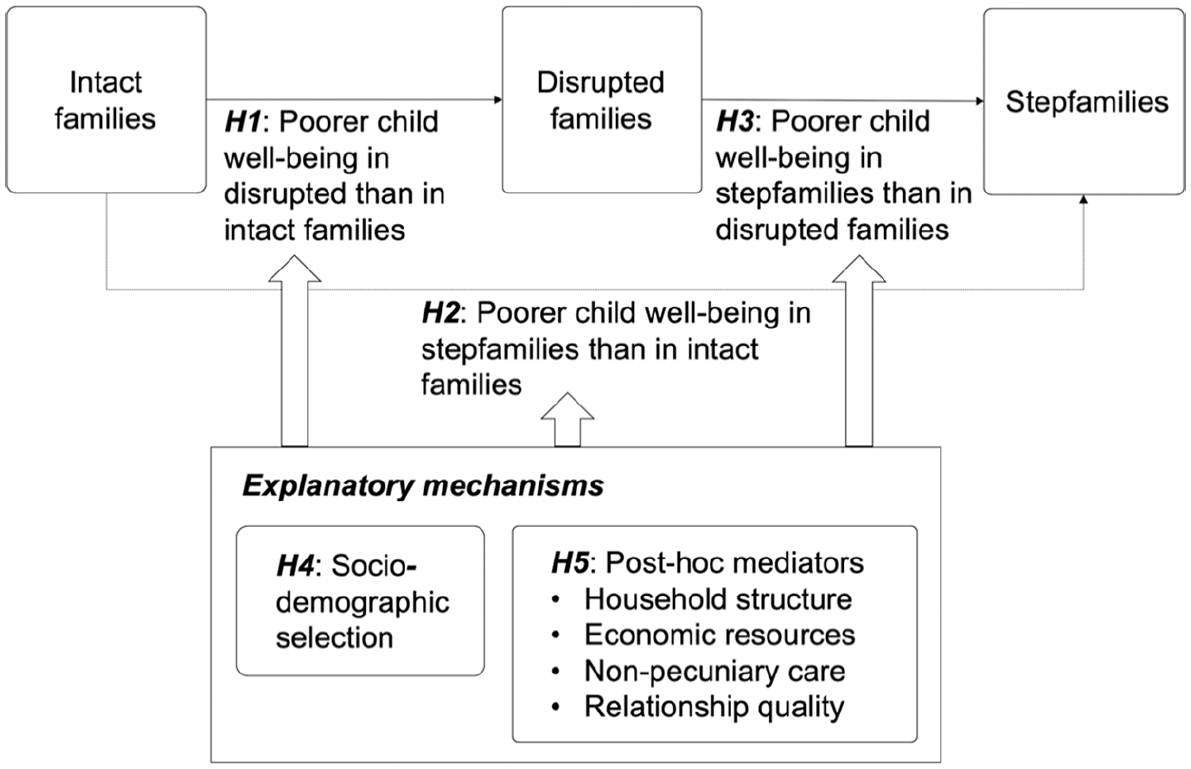
Conceptual framework and hypotheses.
Although existing evidence shows that children fare less well in stepfamilies than in intact families (Brown, 2011; Huang, 2012; Sweeney, 2010), as specified in Hypothesis 2, there is less of a consensus on whether remarriage does further damage to children over and above marital disruption. Some studies highlight the barriers faced by children to establishing intimate bonds with stepparents and stepsiblings (Becker et al., 2013; King, 2009). A stable family environment offers children a basic sense of security and accountability (Sun & Li, 2011), and frequent marital changes may cumulatively impair children’s well-being (Fomby & Cherlin, 2007). Thus, the number of marital transitions, including both marital disruption and remarriage, negatively predicts child well-being (Fomby & Cherlin, 2007). Due to persisting patrilineal traditions in China, remarriage also remains negatively stigmatized as many Chinese men are reluctant to foster someone else’s bloodline (Hu & To, 2018). Thus, child well-being may be poorer in stepfamilies than in disrupted families, as specified in Hypothesis 3.
Meanwhile, other studies have shown that a stable family environment and economic, and non-pecuniary resources secured through long-term remarriage could benefit children’s development (Kalmijn, 2013; Ozawa & Yoon, 2002). Traditionally, socioeconomically deprived parents and particularly mothers in China viewed remarriage as an economic necessity, due to the absence of state welfare and the exclusion of women from the labor force (Waltner, 1981). Although China’s socialist movements have enabled women to develop economic independence, the decline in women’s labor force participation rate over the last three decades means that single mothers may still turn to remarriage to secure economic resources (Ji et al., 2017). If the benefits of remarriage outweigh its detriments, we may expect the opposite of Hypothesis 3 to hold.
A further objective of this research is to explore whether and how the implications of remarriage for child well-being differ between the mother’s remarriage, the father’s remarriage, and both parents’ remarriage. The occupational gender segregation and wage penalty experienced by Chinese mothers may encourage single mothers to resort to remarriage for the sake of economic subsistence (Huang, 2012; Ji et al., 2017; Mu & Xie, 2016). However, as single mothers are negatively stigmatized and devalued in the marriage market, they often end up remarrying down the education ladder (Hu & Qian, 2019). This status downgrade may adversely influence children’s well-being. In contrast, the remarriage of single fathers is often motivated by a “need” for childcare fashioned by gender stigmas that fathers are less capable childcarers than mothers (Hu & To, 2018). Not only do social norms sanction men’s remarriage (Hu & To, 2018) but stepmothers’ provision of non-pecuniary care may also benefit children’s well-being. Furthermore, we know little about how the remarriage of both parents may affect children’s well-being. If the instability-stress theory—postulating that multiple marital changes cumulatively impair children’s well-being (Sun & Li, 2011)—holds true, the remarriage of both parents will be particularly harmful due to aggravated family instability.
Explanatory Mechanisms
Existing research has focused on both antecedent selection (Hypothesis 4) and post-hoc mediation mechanisms (Hypothesis 5) to explain the impact of marital disruption and remarriage on child well-being.
Social Selection
The selection hypothesis posits that well-being disparities between children in intact, disrupted, and remarried families can be ascribed to the systematic sorting of families with certain attributes (e.g., demographic characteristics and socioeconomic status) into marital disruption and remarriage (Furstenberg & Kiernan, 2001; Kim, 2011). In many Western and some East Asian societies, socioeconomically deprived parents are likely to divorce and remarry (Andreß et al., 2006; Kim, 2011; Park, 2007; Sweeney, 2010). Thus, antecedent parental traits such as low educational status, rather than marital change per se, may be responsible for impaired child well-being in disrupted families and stepfamilies (Fomby & Cherlin, 2007), compared with intact families. Feudal and imperial China saw a similar negative socioeconomic selection of women into remarriage (Waltner, 1981). In the modern era, however, education and labor force participation play a key role in eroding traditional family values (Raymo et al., 2015). As China’s socialist movements have mobilized women into education and paid work, educated and socioeconomically well-off parents today hold more supportive attitudes towards divorce and remarriage (Hu, 2016). In today’s China, there is a positive socioeconomic selection into marital disruption and remarriage (Hu & To, 2018; Wang & Zhou, 2010).
Household Structure
The theory of behavior modeling posits that the stable presence of parental figures in the household matters because they act as role models in shaping children’s behavior and aspirations (Sweeney, 2010). The instability-stress theory suggests that children derive a sense of ontological security from a stable household structure (Brown, 2011; Sun & Li, 2011; Thomson et al., 2001). With the persistence of patrilineal kinship and multigenerational co-residence in China, grandparents and relatives often move into the nuclear family to act as “surrogate” parents in the event of marital disruption (Chen et al., 2011). Moreover, remarriage establishes households that are akin to intact families in structure. As marital change does not necessarily entail the absence of parent figures in China, household structure may not explain the disadvantages to children’s well-being in disrupted families and stepfamilies, compared with those in intact families.
Economic Resources
Resource theories highlight the importance of economic capital to child well-being (Thomson et al., 1994). Economic deprivation during childhood adversely affects children’s immediate and long-term outcomes, particularly in resource-intensive areas such as education and concerted cultivation (Andreß et al., 2006; Havermans et al., 2014). In Western societies, economic hardship, and differential economic investment in children are a major explanation for disparities in child well-being between intact, disrupted, and remarried families (Andreß et al., 2006; Ozawa & Yoon, 2002; Smock et al., 1999). In China, extended family members such as grandparents often invest their resources in grandchildren in the event of marital disruption (Chen et al., 2011). The one-child policy, resulting in a smaller number of heirs, has also made it less onerous for extended families to provide economic support for children (Hu & Shi, 2018). Therefore, the economic resources enjoyed by children in China may not differ conspicuously with variation in parents’ marital status.
Non-pecuniary Care
In addition to families’ structural configuration and economic resources, what families do has been shown by scholars to play a key role in shaping child well-being (Cheung & Park, 2016; Liu et al., 2000; Thomson et al., 2001). Family members’ joint activities with children form a crucial site for behavior modeling (Chen et al., 2011; King, 2009). Adult supervision of and communication with children bolster children’s academic performance, cognitive development and self-efficacy (Anthony et al., 2014; Cheung & Park, 2016) and reduce their risk of deviant behaviors (Liu et al., 2000). Both the intensity and the quality of non-pecuniary care are likely to differ between intact, disrupted, and remarried families. Juggling economic and domestic roles, single parents often have limited time to provide their children with adequate care (Thomson et al., 2001). The role strain experienced by single parents also undermines the affective quality of parent–child contact (Meier et al., 2016). By contrast, remarried parents are less likely than single parents to experience time poverty and role strain in providing care for children (Becker et al., 2013; Kalmijn, 2013; King, 2009). However, in China, the intervention of extended family members in disrupted and remarried families may make up for the shortage of care provision.
Relationship Quality
A further line of research explores the ways in which poor family relations explain the adverse impact of marital change on child well-being. In both Western and Asian societies, children growing up in conflict-ridden families are more likely to experience mental distress, impaired cognitive development, poor academic performance, social dysfunction, and deviant behaviors (Fomby & Cherlin, 2007; Park, 2007; Yeung & Park, 2016). Marital disruption undermines the quality of the parent–child relationship (Ahrons & Tanner, 2003; Kalmijn, 2013). As long-term stable remarriage is required for children to establish close ties with stepparents (Kalmijn, 2013), close intergenerational relations are particularly difficult to achieve in stepfamilies (Ahrons & Tanner, 2003; Sweeney, 2010). Therefore, poor relationships—horizontally, between parent figures, and vertically, between children and parent figures—may explain well-being disparities between children in intact, disrupted, and remarried families.
Method
Data and Sample
Large-scale nationally representative data on children in disrupted families and stepfamilies are scarce in China. In this research, I took advantage of new data from Wave 2 (2015) of the CEPS (www.chinaeducationpanelsurvey.org). Conducted by the National Survey Research Center at Renmin University, the CEPS is the largest national social survey of children, their families, and schools in China. Wave 1 of the survey was conducted in 2014, but it did not include measures of parents’ marital status. Thus, only cross-sectional data from Wave 2 were analyzed, except for children’s migration status and ethnic minority status that were retrieved from Wave 1 as the variables were only included in the first wave. In Wave 1, a multistage stratified probability-proportional-to-size strategy was used to sample 10,279 first-year middle-school students from 438 classes in 112 schools across 28 Chinese regions, with a high response rate (98.74%). Apart from 830 students lost to attrition (8.1%), the same students were followed up in Wave 2 in 2015 (N = 9,449). Sampling and attrition weights were produced by the CEPS team and used in all of the analyses.
CEPS data are suitable for this research for a number of reasons. First, the survey provides an unprecedentedly large sample of Chinese children. Second, the survey encompasses multiple perspectives on children, parents, and school, providing a holistic view of children’s well-being. Third, the survey contains a rich array of well-being measures, ranging from subjective perceptions to objective indicators.
To construct the analytical sample, I listwise deleted 516 children with missing values for key variables (i.e., 5.5% of the original sample; see Supplemental Table S1 for the distribution of missing cases). Little’s missing-completely-at-random test was conducted (Li, 2013), and the results confirmed that the listwise deletion had been completely random. Multiple imputations of missing values were not used because it is not compatible with the treatment effects models used in this research. The final analytical sample comprised 8,933 second-year middle-school students, of whom 362 lived in disrupted single-parent families and 476 lived in remarried stepfamilies. As the CEPS is a school-based survey, the children were clustered in 112 schools across China.
Measures
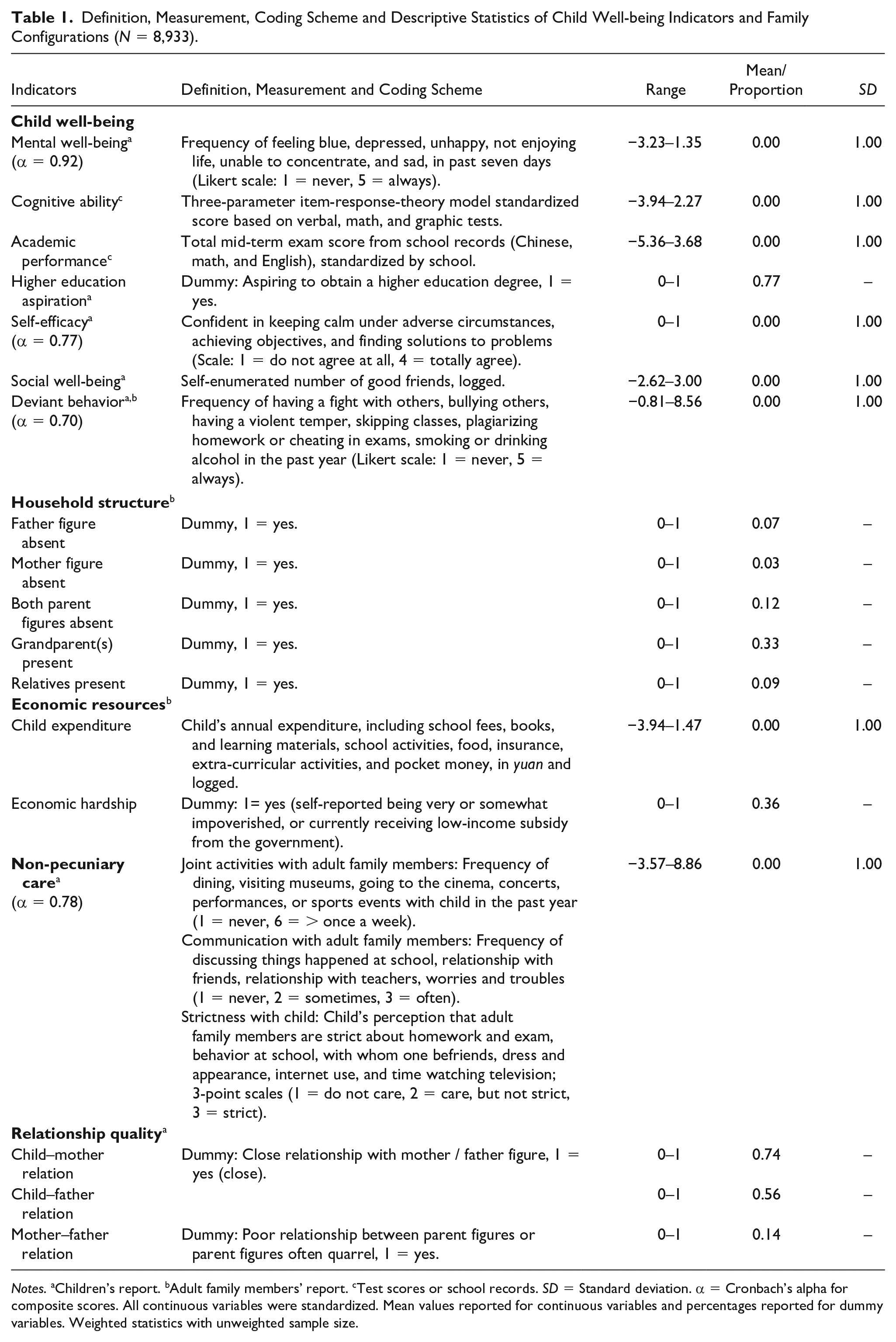
Table 1 presents the detailed measurements, definitions, coding schemes, and descriptive statistics for the key variables. All continuous indicators were standardized to a mean of 0 and a standard deviation of 1 to aid the interpretation of effect size. Notably, all variables—child well-being outcome, parents’ marital status, selection covariates, and post-hoc mediators—were measured at Wave 2 of the CEPS data in 2015.
Definition, Measurement, Coding Scheme and Descriptive Statistics of Child Well-being Indicators and Family Configurations (N = 8,933).
Notes. aChildren’s report. bAdult family members’ report. cTest scores or school records. SD = Standard deviation. α = Cronbach’s alpha for composite scores. All continuous variables were standardized. Mean values reported for continuous variables and percentages reported for dummy variables. Weighted statistics with unweighted sample size.
Child well-being
I examined a comprehensive range of child well-being outcomes. Mental well-being was calculated as a composite score of six five-point Likert scales based on children’s subjective self-reports (1 = never, 5 = always): in the seven days before the survey, how often one felt blue, depressed, unhappy, not enjoying life, unable to concentrate, and sad, respectively. Cognitive test was conducted as part of the CEPS, using psychometric measures adapted from the Taiwan Education Panel Survey (Yang et al., 2003). The CEPS generated a cognitive score using the three-parameters item-response-theory models. In the survey, academic performance was captured from children’s school records for their latest mid-term exam. I calculated the total score achieved by each child in the compulsory subjects of Chinese, math, and English. As different schools administered their mid-term exams differently, I standardized the total scores by school. The survey captured children’s self-reported educational aspiration using an ordinal measure, which I recoded into a dummy variable to distinguish whether a child aspired to obtain a higher education degree. Self-efficacy was calculated as a composite score of three four-point scales based on children’s self-reports (1 = do not agree at all, 4 = totally agree): the extent to which one was confident in keeping calm under adverse circumstances, achieving objectives, and finding solutions to problems, respectively. Children’s self-enumerated number of friends was used as proxy for their social well-being, which was log-transformed due to its skewed distribution. Lastly, children’s engagement in deviant behaviors was calculated as a composite score in terms of their frequency of having a fight with others, bullying others, having a violent temper, skipping classes, plagiarizing homework or cheating in exams, smoking or drinking alcohol, respectively, in the year before the survey (1 = never, 5 = always). As children may be influenced by social desirability to under-report their engagement in the deviant behaviors, the responses from both children and their guardians were used to calculate the composite score. For the variables calculated as composite scores, as preliminary tests showed that the constituent measures loaded more or less evenly on each composite indicator (i.e., mental well-being, self-efficacy, and deviant behavior), I calculated each indicator as the sum of its constituent measures divided by the number of measures, and then standardized. Cronbach’s alpha was obtained to verify the internal consistency of each indicator.
Marital status
Parents’ marital history was captured using a categorical variable distinguishing between “intact families” (birth parents had remained married, 90.9%), “disrupted families” (birth parents had experienced divorce and/or widowhood but had not remarried, 3.8%), and “stepfamilies” (one or both birth parents had remarried, 5.3%). I further distinguished cases in which the mother alone (2.3%), the father alone (1.6%) or both parents (1.4%) had remarried. Although divorce and widowhood represent distinct types of marital disruption (Hu & To, 2018; Stewart, 2006), I was unable to disaggregate the two due to the small sample size. However, I included a dummy covariate to control for widowhood (2%) as opposed to divorce in estimating the probability of remarriage.
Selection covariates
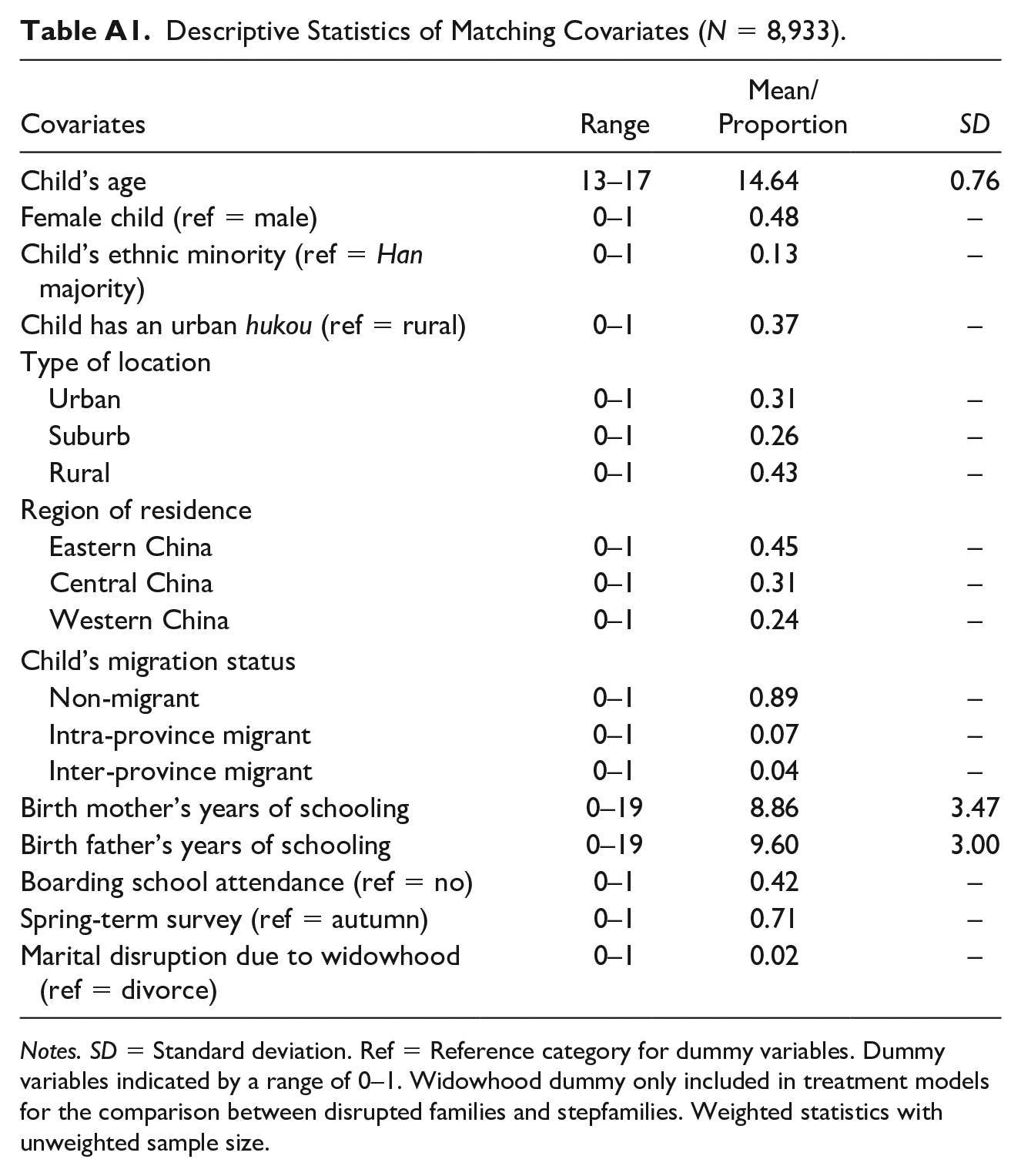
I took account of a wide range of covariates that may affect child well-being and the probability of marital disruption and remarriage (see Appendix Table A1). These include children’s age (M = 14.64), gender (male = 52%), and ethnic minority status (as opposed to Han majority, 13%). Given the considerable rural–urban and regional disparities in living standards and attitudes towards marriage and divorce across China (Hu, 2016), I distinguished children’s type of hukou (household registration; urban, 37%), type of location (urban, 31%; suburban, 26%; rural, 43%), and region of residence (eastern, central and western China; 45%, 31%, and 24%, respectively). I also distinguished between non-migrant (89%), intra-province (7%) and inter-province migrant children (4%). I took account of the mother’s (M = 8.86) and father’s (M = 9.60) number of years of schooling. I also controlled for boarding school attendance (42%). As the survey spanned two terms, I differentiated between autumn term and spring term.
Post-hoc mediators
First, household structure was captured using a series of dummy variables indicating the presence or absence in the household of a father figure (birth father or stepfather), mother figure (birth mother or stepmother), grandparent(s), and relatives, respectively. Second, economic resources were measured through a child’s annual expenditure, including school fees, extra-curricular activities, pocket money, etc.; adult family members’ self-reported economic hardship; and whether the family received a low-income subsidy from the government. Third, non-pecuniary care was measured using a composite score calculated based on children’s report of joint activities and communication with adult family members, and whether adult family members were strict about distinct domains of children’s lives, as perceived by children. The composite score was calculated by dividing the sum of the constituent measures by the number of measures, and then standardized. Notably, the survey did not distinguish the source of economic and care resources but rather measured the total amount of economic resources and non-pecuniary care enjoyed by a child in general, be it from residential or non-residential family members, birth parents or stepparents. Lastly, the relationship quality indicators captured whether children reported having close relationships with their mother figures and father figures, respectively, and whether children reported that their mother and father figures had poor relationships and often quarreled.
Analytic Strategy
To account for non-random selection into marital disruption and remarriage, I used doubly robust inverse probability of treatment weighting (IPTW) with regression adjustments (RAs) to estimate differences in child well-being between intact, disrupted, and remarried families and to determine whether any observed differences could be explained by antecedent selection and post-hoc mediation (Funk et al., 2011). Compared with regression analysis, doubly robust IPTW provides an efficient means of ensuring the comparability of the control and treatment groups; and IPTW is predicated on fewer assumptions and is less susceptible to misspecification than other matching methods (Funk et al., 2011). Moreover, robust standard errors were clustered at the school level to account for the nesting of children in the same schools (Cameron & Miller, 2015).
The doubly robust IPTW with RAs was implemented in three steps. First, a logistic regression model was fitted to estimate the probability of receiving the treatment based on the covariates, and the IPTW was calculated as the inverse of the probability of receiving the treatment. The IPTW procedure reweighs the sample based on the covariates in a matching equation to enhance the comparability of the control and treatment groups. Chi-squared over-identification tests were conducted, and the results confirmed that the covariates were balanced between the control and treatment groups after IPTW. Second, using the reweighted sample, a treatment model was fitted to estimate differences in child well-being between the control and treatment groups—the average treatment effects of marital disruption or remarriage on the treated (ATTs), net of covariates. Notably, in the doubly robust procedure, the matching covariates were included again in the treatment model to balance out any residual differences in covariates between the control and treatment groups. Third, ordinary least squares RAs were conducted by including each block of explanatory mediators in the treatment model (Funk et al., 2011). If child well-being differs between intact, disrupted, and remarried families due to differences in these mediators, their inclusion will reduce or eliminate the ATTs further to the IPTW. A linear specification was used for all well-being outcomes. For binary outcomes, ATTs can be directly interpreted on a probability scale. The teffects iwpra package in Stata 15 was used (StataCorp, 2015).
I conducted three sets of comparisons based on the full sample: intact families versus disrupted families, intact families versus stepfamilies, and disrupted families versus stepfamilies. For the latter two comparisons, I further distinguished between the remarriage of the mother, the father, and both parents. Due to the small sample size, only the doubly robust IPTW, not the RAs, was used in analyses based on the disaggregated remarriage samples. The small sample number of disrupted and remarried families also prevented me from further disaggregating the analyses by children’s gender.
Results
Intact, Disrupted, and Remarried Families: Differences in Family Configurations
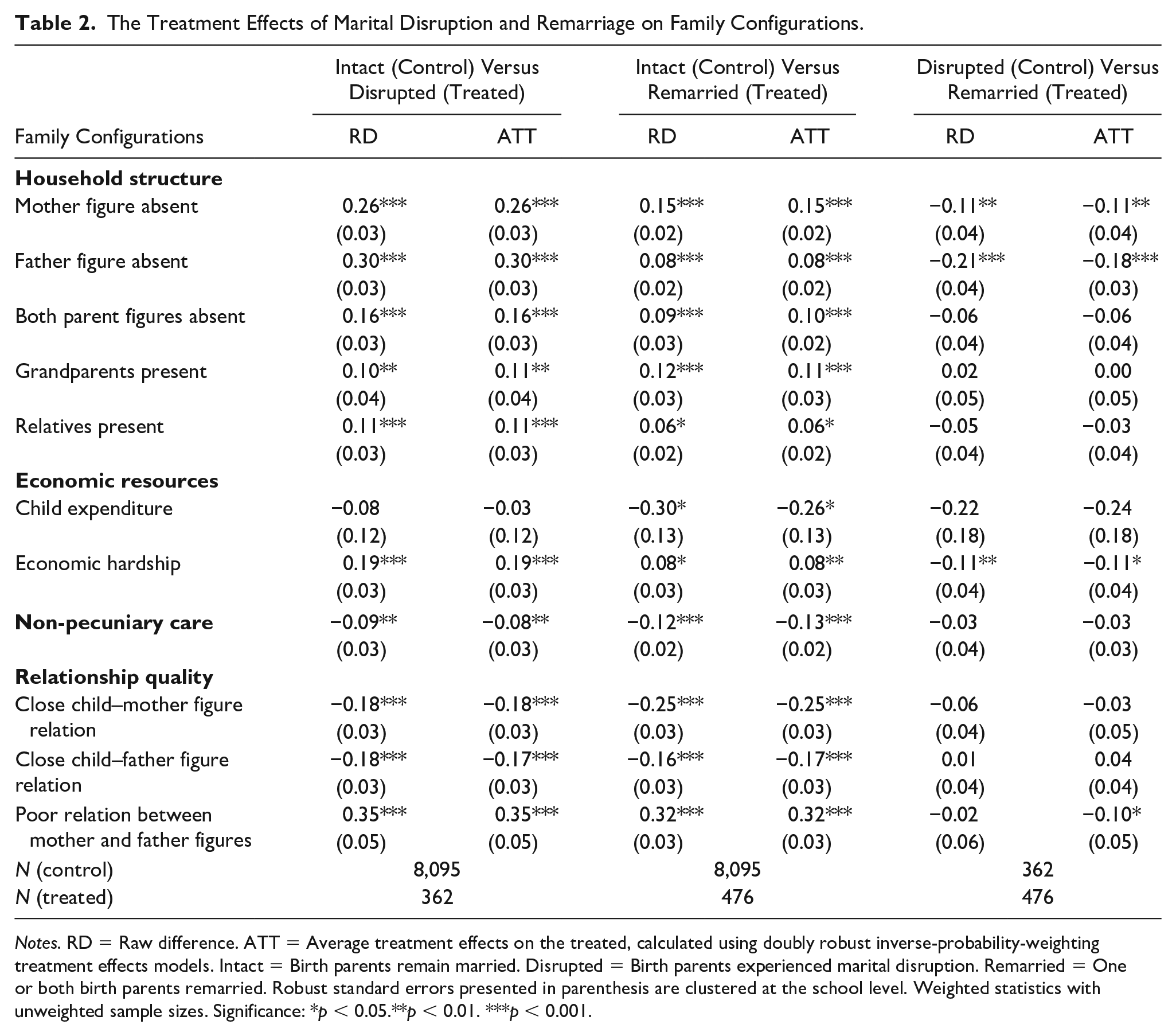
Table 2 presents the differences in the explanatory mediators between intact, disrupted, and remarried families. Western research has shown that differences in economic resources, non-pecuniary care, and relationship quality according to parents’ marital status are partly attributable to the systematic sorting of parents into divorce and remarriage (Fomby & Cherlin, 2007; Furstenberg & Kiernan, 2001; Kim, 2011). However, the results of this study show that major sociodemographic attributes such as parents’ education contribute very little in reducing the inter-group differences in China.
The Treatment Effects of Marital Disruption and Remarriage on Family Configurations.
Notes. RD = Raw difference. ATT = Average treatment effects on the treated, calculated using doubly robust inverse-probability-weighting treatment effects models. Intact = Birth parents remain married. Disrupted = Birth parents experienced marital disruption. Remarried = One or both birth parents remarried. Robust standard errors presented in parenthesis are clustered at the school level. Weighted statistics with unweighted sample sizes. Significance: *p < 0.05.**p < 0.01. ***p < 0.001.
Household structure varies considerably with parents’ marital status. Here, I focus on the presence or absence of parent figures who fulfill de facto parental roles (i.e., stepparents are counted as parent figures), as opposed to birth parents (Brown, 2011; Sun & Li, 2011; Thomson et al., 2001). Compared with children in intact families, children in disrupted families are 30%, 26%, and 16% more likely to experience the absence, from the household, of the father figure, the mother figure, and both parent figures, respectively. Although children in stepfamilies are less likely than children in disrupted families to experience the absence of the mother figure (ATT = −11%) and the father figure (ATT = −18%), the absence of parent figures is still more likely in stepfamilies than in intact families. Compared with children in intact families, children in disrupted families are 11% more likely to co-reside with grandparents and 11% more likely to co-reside with relatives. Meanwhile, extended family co-residence—with both grandparents (ATT = 11%) and relatives (ATT = 6%)—is also more likely in stepfamilies than intact families. These observations are consistent with the findings of prior research underlining the persistence of multigenerational extended family co-residence and the role played by grandparents and relatives in supporting disrupted and remarried families in China (Chen et al., 2011).
Although disrupted families are more likely to report economic hardship than intact families in China (ATT = 19%), children in the former do not enjoy less economic resources than those in the latter. This differs from the situation in Western societies, where children in disrupted families often suffer from economic deprivation (Andreß et al., 2006; Havermans et al., 2014). This result is not unexpected given the resilience of extended family support in China. Furthermore, compared with intact families, stepfamilies are more likely to report economic hardship (ATT = 8%). Children in stepfamilies also enjoy less economic resources than children in intact families (ATT = −0.26). As single parents often turn to remarriage as a source of economic capital (Huang, 2012), it is not surprising that remarried families are less likely to report economic hardship than disrupted families (ATT = −11%). However, this does not mean that children in stepfamilies enjoy more economic resources than children in disrupted single-parent families. Indeed, compared with children in disrupted families, children in stepfamilies enjoy less economic resources (ATT = −0.24), although the difference is not statistically significant at the 10% level, due partly to the small sample size.
In terms of non-pecuniary care, compared with children in intact families, children in disrupted families (ATT = −0.08), and stepfamilies (ATT = −0.13) receive a lower level of care. There is no statistically significant difference in the level of care enjoyed by children between stepfamilies and disrupted families.
Marital disruption and remarriage are both associated with poor relations between children and parent figures as well as heightened conflict between parent figures. Children in disrupted families are less likely to have close relationships with their mother figures (ATT = −18%) and father figures (ATT = −17%) than children in intact families. A similar pattern is observed on comparing children in intact and remarried families, as the latter are less likely to have close relationships with their mother figures (ATT = −25%) and father figures (ATT = −17%). Compared with children in intact families, children in disrupted families are more likely to experience conflict between parent figures (ATT = 35%). This is also the case for children in stepfamilies (ATT = 32%), albeit to a lesser extent than children in disrupted families (ATT = −10%).
Child Well-being in Intact, Disrupted, and Remarried Families
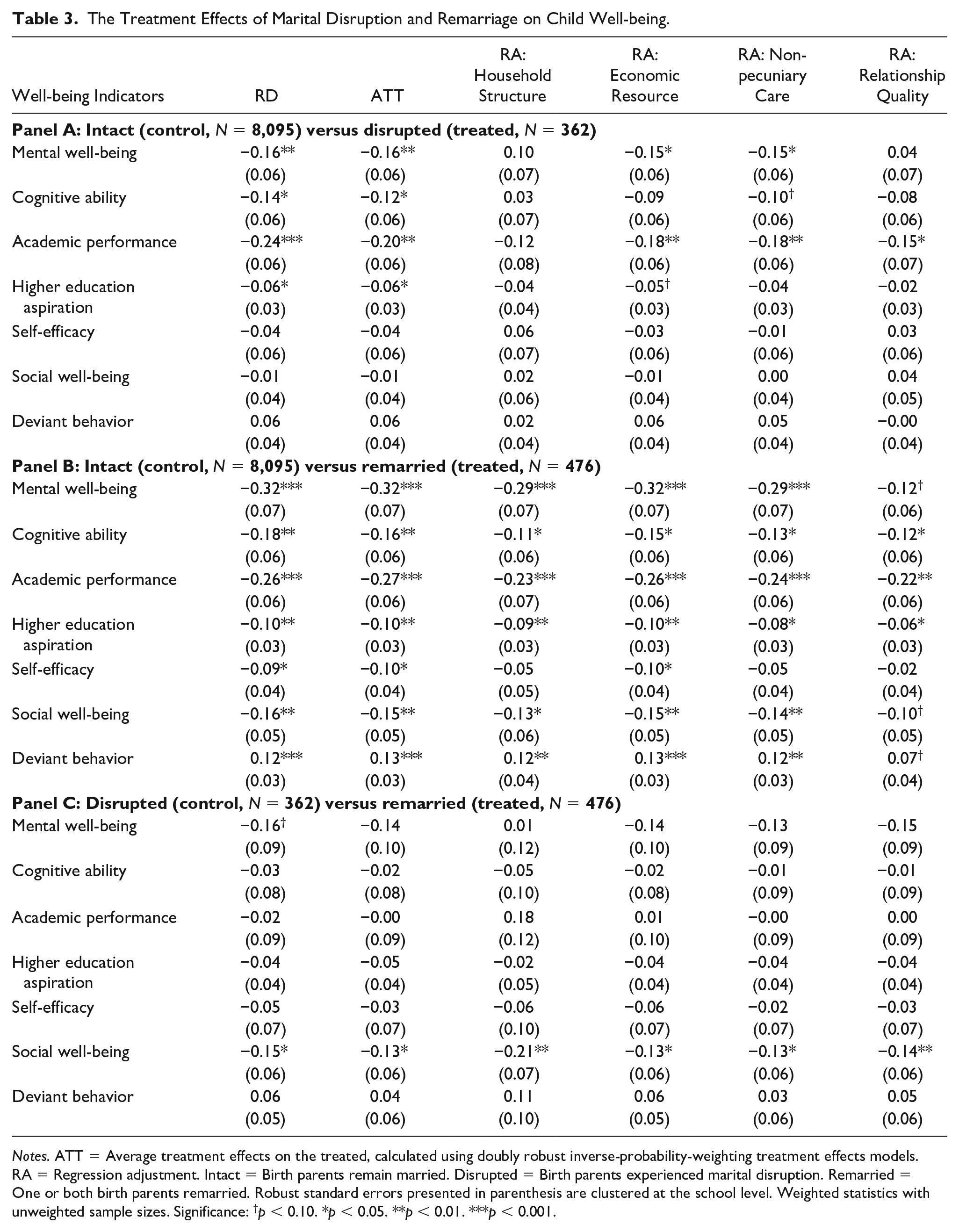
Table 3 presents the results for child well-being in intact, disrupted, and remarried families, and the roles played by social selection, household structure, economic resources, non-pecuniary care, and relationship quality in explaining variations in child well-being with parents’ marital status.
The Treatment Effects of Marital Disruption and Remarriage on Child Well-being.
Notes. ATT = Average treatment effects on the treated, calculated using doubly robust inverse-probability-weighting treatment effects models. RA = Regression adjustment. Intact = Birth parents remain married. Disrupted = Birth parents experienced marital disruption. Remarried = One or both birth parents remarried. Robust standard errors presented in parenthesis are clustered at the school level. Weighted statistics with unweighted sample sizes. Significance: †p < 0.10. *p < 0.05. **p < 0.01. ***p < 0.001.
The results shown in Panel A of Table 3 confirm Hypothesis 1: Compared with children in intact families, children in disrupted families suffer considerable well-being disadvantages. Comparison of children in intact and disrupted families reveals that the latter have lower levels of mental well-being (RD = −0.16), cognitive ability (RD = −0.14), and academic performance (RD = −0.24), and are less likely to aspire to attend higher education (RD = −6%). After adjusting for selective sociodemographic attributes associated with marital disruption and child well-being, the well-being disparities are slightly reduced, but remain statistically significant at the 5% level or below.
Further to the IPTW, the RA for household structure slightly mediates the differences in children’s academic performance (ΔATT = 0.08) and educational aspiration (ΔATT = 2%) between disrupted and intact families. It also reverses the direction of the treatment effects of marital disruption on children’s mental well-being (ΔATT = 0.26) and cognitive ability (ΔATT = 0.15). Thus, if it were not for differences in household structure, children in disrupted families would have higher levels of mental well-being and cognitive ability than children in intact families. Neither economic resources nor non-pecuniary care plays a notable role in mediating the treatment effects of marital disruption on child well-being. The RA for relationship quality considerably mediates and thus explains the detrimental treatment effects of marital disruption on children’s mental well-being (ΔATT = 0.20), cognitive ability (ΔATT = 0.04), and educational aspiration (ΔATT = 4%).
The results of comparing children in intact and remarried families (Panel B of Table 3) support Hypothesis 2: Compared with children in intact families, children in stepfamilies have lower levels of mental well-being (RD = −0.32), cognitive ability (RD = −0.18), academic performance (RD = −0.26), educational aspiration (RD = −10%), self-efficacy (RD = −0.09), and social well-being (RD = −0.16), and are at a higher risk of engaging in deviant behaviors such as fighting, smoking, and alcohol consumption (RD = 0.12). Although the disparities in well-being are reduced after taking account of selective sociodemographic attributes associated with remarriage, the disparities across all indicators remain statistically significant at the 5% level or below.
The RAs for household structure, economic resources, and non-pecuniary care make hardly any difference to the treatment effects of remarriage on child well-being across all of the indicators except for self-efficacy (ΔATT = 0.05). In contrast, the poor quality of relationship between children and parent figures and children’s perceived conflict between parent figures substantially reduce the disparities in children’s mental well-being (ΔATT = 0.20), educational aspiration (ΔATT = 4%), self-efficacy (ΔATT = 0.08), social well-being (ΔATT = 0.05), and deviant behaviors (ΔATT = 0.06) between intact families and stepfamilies.
As presented in Panel C of Table 3, comparison of children in disrupted and remarried families shows that remarriage is associated with additional well-being impairments across all indicators, which is consistent with Hypothesis 3. However, the negative treatment effects of remarriage, further to marital disruption, are not statistically significant at the 10% level for any of the domains of child well-being except social well-being (ATT = −0.13), which may be due to the inflation of standard errors caused by the small sample size.
In summary, Hypothesis 4, concerning the role played by sociodemographic selection in explaining well-being disparities between children in intact, disrupted, and remarried families, receives meagre support. Hypothesis 5, on the mediating effects of post-hoc explanatory mechanisms, receives some empirical support. Whilst household structure and relationship quality mediate the treatment effects of marital disruption on child well-being, the treatment effects of remarriage are only partly mediated by relationship quality.
Child Well-being and the Remarriage of the Mother, the Father, and Both Parents
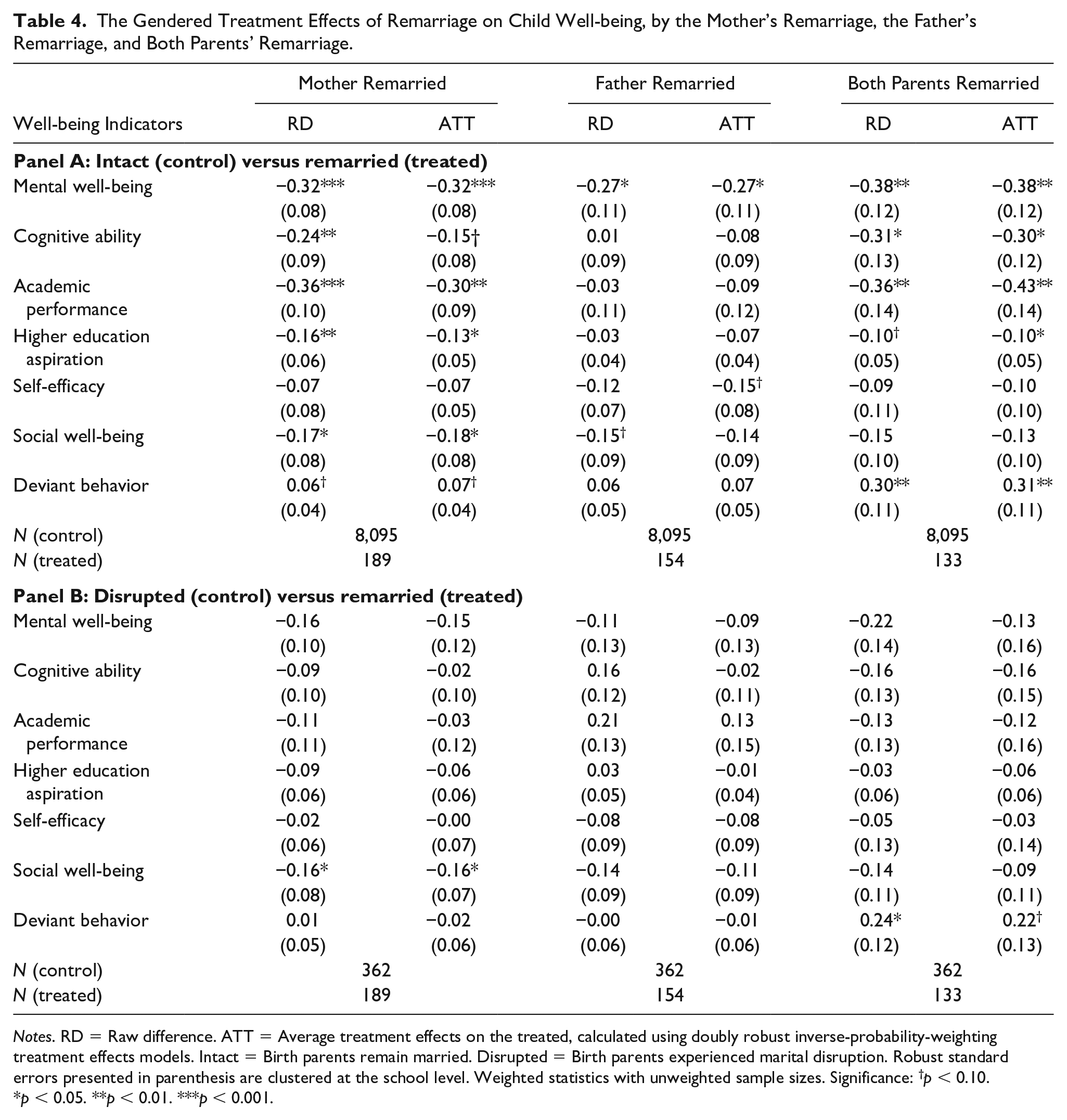
Table 4 provides more nuanced insights into the treatment effects of remarriage on child well-being by distinguishing the remarriage of the mother, the father, and both parents.
The Gendered Treatment Effects of Remarriage on Child Well-being, by the Mother’s Remarriage, the Father’s Remarriage, and Both Parents’ Remarriage.
Notes. RD = Raw difference. ATT = Average treatment effects on the treated, calculated using doubly robust inverse-probability-weighting treatment effects models. Intact = Birth parents remain married. Disrupted = Birth parents experienced marital disruption. Robust standard errors presented in parenthesis are clustered at the school level. Weighted statistics with unweighted sample sizes. Significance: †p < 0.10.
p < 0.05. **p < 0.01. ***p < 0.001.
The results uncover the gendered relationship between remarriage and child well-being. As shown in Panel A of Table 4, compared with fathers’ remarriage, mothers’ remarriage is associated with greater negative impacts on child well-being in a broader range of domains. The detrimental treatment effect of fathers’ remarriage on children, compared with children in intact families, is limited to mental well-being (ATT = −0.27) and self-efficacy (ATT = −0.15). In contrast, mothers’ remarriage is associated with impairments to children’s mental well-being (ATT = −0.32), cognitive development (ATT = −0.15), academic performance (ATT = −0.30), and higher education aspiration (ATT = −13%), and children whose mothers have remarried are also likely to have fewer friends (ATT = −0.18) and be at a heightened risk of deviant behaviors (ATT = 0.07).
The results show that the remarriage of both parents is particularly harmful to children’s well-being. Compared with children in intact families, children in families in which both parents have remarried have lower levels of mental well-being (ATT = −0.38), cognitive ability (ATT = −0.30), academic performance (ATT = −0.43), and educational aspiration (ATT = −10%), and a much higher risk of deviant behaviors (ATT = 0.31). Additionally, the results presented in Panel B of Table 4 show that the remarriage of both parents is adversely associated with all well-being indicators over and above marital disruption, despite a lack of statistical significance potentially due to the small sample size.
Discussion
Demographic and family changes in contemporary China are characterized by a dual rise in marital disruption and remarriage (Hu & Qian, 2019; Raymo et al., 2015; Wang & Zhou, 2010). As the first nationally representative comparative analysis of child well-being in intact, disrupted, and remarried Chinese families, this research provides up-to-date evidence of the implications of China’s new demographic conditions for child well-being. Reflecting on the gendered dynamics of remarriage (Hu & To, 2018) and the stability-stress theory of marital change (Fomby & Cherlin, 2007; Sun & Li, 2011), it uncovers distinct ways in which the remarriage of the mother, the father, and both parents relates to child well-being.
Before discussing the findings, it is important to note that the analysis based on cross-sectional data should be interpreted as variation in child well-being with parents’ marital status at an aggregate level. Future efforts should be made to analyze longitudinal data to examine the well-being trajectories of individual children throughout parents’ marital changes. This will require not only the inclusion of comparable measures (e.g., parents’ marital status and children’s well-being outcomes) in major national surveys going forwards but also the oversampling of disrupted families and stepfamilies. Indeed, even in large-scale national surveys such as the CEPS analyzed here and China Family Panel Studies, the sample sizes for children in disrupted families and stepfamilies are small. Unfortunately, the CEPS did not measure the timing of marital disruption and remarriage, although prior research suggests that this timing closely correlates with children’s age (Hu & To, 2018). Furthermore, the CEPS measured the economic and non-pecuniary resources enjoyed by children in a generalized fashion without distinguishing the source of such resources from co-residential and non-residential family members, birth parents and stepparents, and extended family members. Future efforts are required to disentangle the implications of the source of resource provision for the impact on children’s well-being of marital disruption and remarriage in China (cf. Stewart, 2010). Despite these limitations, this research makes a number of contributions to demographic and family studies, as follows.
The findings support and extend the instability-stress theory (Fomby & Cherlin, 2007; Sun & Li, 2011). Supporting the theory, the findings show that parents’ marital changes are cumulatively negatively associated with children’s well-being. Although marital change has become more commonplace in today’s China, the prevalence of marital disruption and remarriage has not crowded out the well-being disadvantages faced by children in single-parent families and stepfamilies, compared with those in intact families (cf. Sigle-Rushton et al., 2005). Compared with children in intact families, children in single-parent families report a lower level of mental well-being, perform less well academically, and are less likely to aspire to attend higher education. Remarriage is associated with further harm to children’s well-being. Whereas previous research drawing on the instability-stress theory has mainly focused on parents’ consecutive marital changes (Fomby & Cherlin, 2007; Kim, 2011; Sigle-Rushton et al., 2005; Sun & Li, 2011), this research adds that the remarriage of both parents renders children particularly vulnerable, potentially due to aggravated family instability.
This research demonstrates that remarriage is not just another marital transition. Rather, the post-hoc mechanisms by which marital disruption and remarriage relate to children’s well-being are different. In prior research, marital disruption and remarriage have been subsumed under the label of “marital change” (e.g., Amato, 2005; Fomby & Cherlin, 2007; Sun & Li, 2011; Sweeney, 2010). The results of this research show that whilst the disadvantages to well-being faced by children in disrupted families relative to intact families are largely explained by household structure, household structure does not explain why children fare less well in stepfamilies than in intact families. Therefore, policymakers and practitioners seeking to develop effective interventions should consider the distinct challenges faced by children in disrupted families and stepfamilies, instead of treating them as a homogeneous social group.
This research uncovers the gender asymmetry in the implications of mothers’ and fathers’ remarriage for children’s well-being in China. Compared with fathers’ remarriage, mothers’ remarriage is associated with a greater extent and a broader range of adverse well-being outcomes among children. Given the persistence of gender division in parental and care roles in China (Mu & Xie, 2016), single fathers often view remarriage as a source of care provision (Hu & To, 2018). Thus, stepmothers’ care provision may benefit children’s well-being. In contrast, as education plays a key role in detraditionalizing social attitudes to divorce and (re)marriage (Hu, 2016), China has seen the positive selection of educated mothers into divorce and remarriage. However, as Chinese women are structurally marginalized by wage penalty (Mu & Xie, 2016) and there is a lack of state welfare for single-parent families, even educated single mothers may be driven by economic needs into remarriage (Huang, 2012), particularly when there is a lack of support from extended family members. In such cases, the remarriage of highly educated mothers, potentially for the sake of economic subsistence, could send a negative signal to children regarding the value of education, thus undermining children’s academic performance and aspiration, as observed in my analysis.
The findings underscore the need to consider the role played by China’s distinctive sociocultural and institutional settings in configuring the explanatory mechanisms underpinning the well-being implications of marital disruption and remarriage for children. In Western countries, negative economic selection and economic deprivation are major factors responsible for the negative impact of parents’ marital disruption and remarriage on children’s well-being (Andreß et al., 2006; Dewilde & Uunk, 2008; Havermans et al., 2014). However, socioeconomic selection and resource deprivation do not seem to explain well-being disparities between children in intact, disrupted, and remarried Chinese families. Unlike in Western societies where remarriage is “incompletely institutionalized” against the backdrop of an increasingly individualized model of marriage (Cherlin, 1978, 2009), the resilience of the extended family and kinship seems to provide a “standard” solution for parents and children to cope with marital changes in China. As a result, even though disrupted families are more likely to report experiences of economic hardship than intact families, the actual economic resources enjoyed by children in disrupted families do not fall short. Although children in stepfamilies enjoy less economic resources than children in intact families, economic deprivation does not explain the former’s well-being disadvantages. In contrast, the quality of family relations is the most consistent explanation for the variation in child well-being with parents’ marital status. Resources are not everything. Interventions have the potential to usefully reduce conflict within the family and build strong ties between children and parent figures to mitigate the adverse impact of marital disruption and remarriage on children in China.
Supplemental Material
Supplemental_material – Supplemental material for Marital Disruption, Remarriage and Child Well-being in China
Supplemental material, Supplemental_material for Marital Disruption, Remarriage and Child Well-being in China by Yang Hu in Journal of Family Issues
Footnotes
Appendix
Descriptive Statistics of Matching Covariates (N = 8,933).
| Covariates | Range | Mean/Proportion | SD |
|---|---|---|---|
| Child’s age | 13–17 | 14.64 | 0.76 |
| Female child (ref = male) | 0–1 | 0.48 | – |
| Child’s ethnic minority (ref = Han majority) | 0–1 | 0.13 | – |
| Child has an urban hukou (ref = rural) | 0–1 | 0.37 | – |
| Type of location | |||
| Urban | 0–1 | 0.31 | – |
| Suburb | 0–1 | 0.26 | – |
| Rural | 0–1 | 0.43 | – |
| Region of residence | |||
| Eastern China | 0–1 | 0.45 | – |
| Central China | 0–1 | 0.31 | – |
| Western China | 0–1 | 0.24 | – |
| Child’s migration status | |||
| Non-migrant | 0–1 | 0.89 | – |
| Intra-province migrant | 0–1 | 0.07 | – |
| Inter-province migrant | 0–1 | 0.04 | – |
| Birth mother’s years of schooling | 0–19 | 8.86 | 3.47 |
| Birth father’s years of schooling | 0–19 | 9.60 | 3.00 |
| Boarding school attendance (ref = no) | 0–1 | 0.42 | – |
| Spring-term survey (ref = autumn) | 0–1 | 0.71 | – |
| Marital disruption due to widowhood (ref = divorce) | 0–1 | 0.02 | – |
Notes. SD = Standard deviation. Ref = Reference category for dummy variables. Dummy variables indicated by a range of 0–1. Widowhood dummy only included in treatment models for the comparison between disrupted families and stepfamilies. Weighted statistics with unweighted sample size.
Acknowledgements
An earlier version of this paper was presented at the conference “Old Bonds, New Ties: Understanding Family Transitions in Re-partnerships, Remarriages and Stepfamilies in Asia” at the Asia Research Institute, National University of Singapore, in November 2018. I gratefully acknowledge the constructive comments received at this conference.
Declaration of Conflicting Interests
The author declared no potential conflicts of interest with respect to the research, authorship, and/or publication of this article.
Funding
The author received no financial support for the research, authorship, and/or publication of this article.
Supplemental Material
Supplemental material for this article is available online.
Notes
References
Supplementary Material
Please find the following supplemental material available below.
For Open Access articles published under a Creative Commons License, all supplemental material carries the same license as the article it is associated with.
For non-Open Access articles published, all supplemental material carries a non-exclusive license, and permission requests for re-use of supplemental material or any part of supplemental material shall be sent directly to the copyright owner as specified in the copyright notice associated with the article.
