




Abstract
This is an article about the foundations of human well-being. It makes two integrated contributions. We first examine well-being around the contemporary world, finding a remarkable correlation between subjective and objective measures and a considerable variation in overall well-being among countries. We then argue that certain institutional conditions have laid the basis for these differences. Integrating insights from several research strands, we outline a new explanatory model of popular well-being that considers the interactions between three institutional provisions: a well-functioning democracy, advanced state capacity, and an encompassing social protection system. To test the relationships implied, we used a new dataset involving more than 100 countries in the contemporary world that extends six decades back in time. Our investigations indicated that all three factors play a role in promoting popular well-being. However, to understand how, we need to consider the ways in which they can complement, substitute and mutually reinforce each other.
An old argument
In his classic account in The Politics (Aristotle, 1981: 120–123), Aristotle maintained that a prime objective of the public community ought to be the fostering of well-being among its members. He was content in asserting that his own home state, the city state of Athens, had better potential to promote that goal than many other communities at the time. In his mind, accordingly, communities’ ability to safeguard good living conditions for ordinary citizens was unevenly developed, and a basic precondition, as he saw it, was the institutional structures that had been established.
This study follows up that contention, focusing on the contemporary situation. As we are all aware, more or less, there are considerable differences in living conditions in the world. The first aim of the article is to document the state of affairs, with respect to well-being across the globe, shedding new light both on the current situation and developments over time. The second aim is to propose, and make a first assessment of, a new explanatory model of the institutional foundations of popular well-being. Drawing on existing work from several fields of research, we outline an integrated model focusing on the impact of – and relationships between – three different factors of institutional nature: democracy, social protection and state capacity. Using this model, we carried out two sets of statistical analyses on contemporary and historical data from across the world. At odds with the assessment of Ross (2006) and others, our results indicate that all three institutional factors – including democracy – directly or indirectly play an important role in promoting popular well-being.
Global well-being across space and time
In the first part of the study, we mapped the levels of well-being enjoyed by citizens in different countries around the globe, in the present and over the last six decades. For the contemporary analysis, we used two kinds of indicators. The first was of objective character;it involves conditions that are regarded by experts as signs of a good standard of living. In the interest of obtaining a relatively broad representation of adequate indicators, we settled for the United Nations Development Programme (UNDP, 2018a) Human Development Index (HDI). This socioeconomic measure is based on data from three areas. The first is the population’s standard of living, represented in the HDI by an indicator of gross national income (GNI) per capita in constant purchasing power parity (PPP) terms. The second area concerns access to knowledge, represented by a joint measure of the average and expected years of schooling. The third is the prospect of a long and healthy life, gauged by an indicator of life expectancy at birth.
Some earlier research focused on one of these three dimensions. For instance, drawing on arguments put forward by Sen (1999), certain recent studies have concentrated on mortality rates or life expectancy measures (Gerring et al., 2016; Touchton et al., 2017). The upholding of life, no doubt, is a fundamental sign of well-being. In addition, concentrating on one aspect enhances measurement reliability. However, from the perspective of validity, we preferred to employ a broader measurement. From this perspective, moreover, it made sense to apply a mixed approach. Hence, we also included an indicator of subjective well-being. In this case, people are given the opportunity to state how their life conditions are. This information is gathered through standardized interviews with representative samples of people from countries around the world and is summarized yearly in the United Nations’ publication World Happiness Report (Helliwell et al., 2018). This country-level measure of subjective well-being is based on the average response among respondents when asked to evaluate their life situation by placing themselves on a ladder between 0 and 10.
When applying a mixed approach such as this, one risks ending up with an indicator marked by low coherence and thus by low measurement reliability. Therefore, it is important to note that, as shown in Figure 1, there is a remarkably strong relationship between the two variables assessing well-being globally in 2017 (r = 0.83). In other words, how people evaluate their own living conditions is strongly tied to their objective living conditions accounted for by the HDI. Hence, for our current purposes, it made sense to aggregate the two measures into a composite index of well-being. We did so by calculating, for each country, the mean of the two indicators in standardized form in 2017. Figure 2 provides a geographical overview of the results, while a grading of all countries is reported in Online Appendix I.
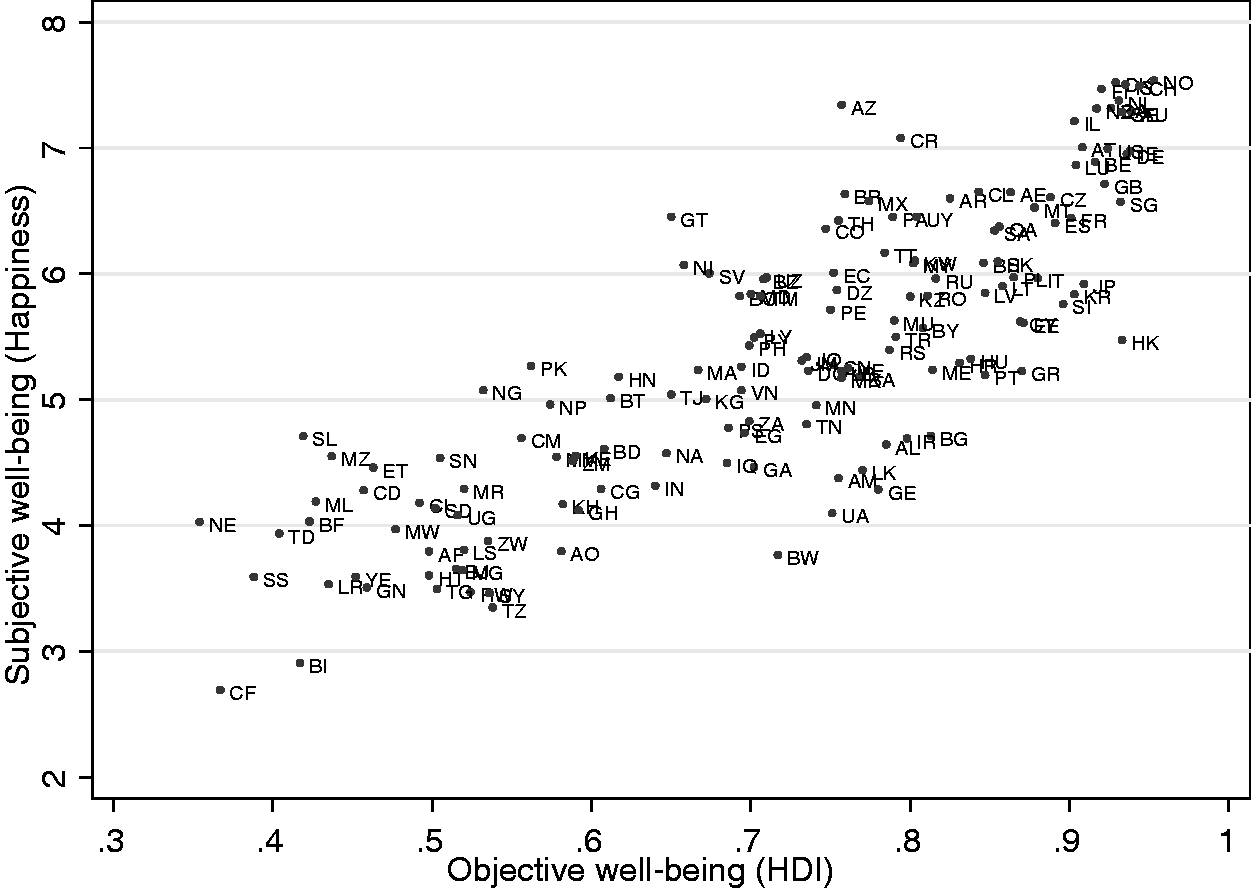
Relationship between subjective and objective well-being in 151 countries in 2017.
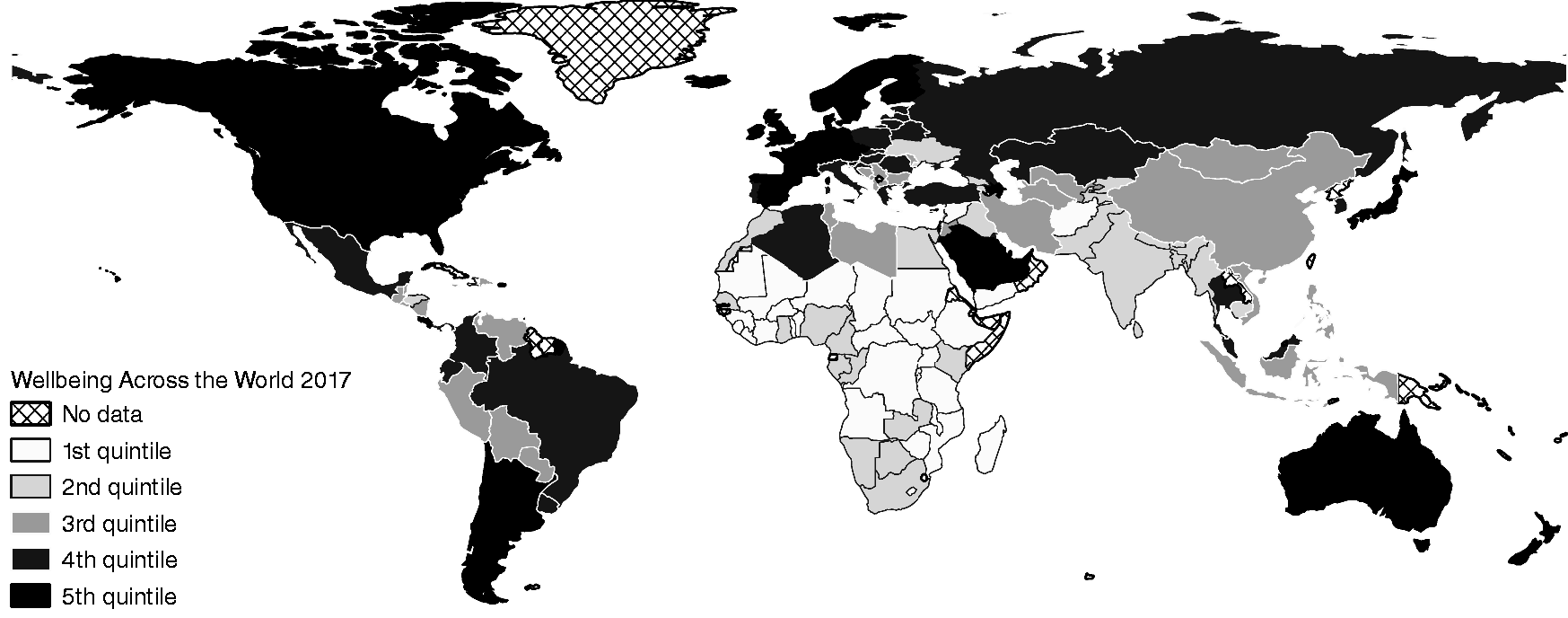
Well-being across the world in 2017.
A general impression from Figure 2 is the uneven geographical distribution that prevails, especially pertaining to Europe and sub-Saharan Africa. On the top-50 list, more than half – 26 countries – are European. Among the top 20 countries, the strong position of Europe is even more evident: 14 countries belong to this continent, whereas for the remainder, there is a common European connection in so far that they all have been British colonies. Among the countries with the lowest scores, we notice another – even more concentrated – geographical pattern, as 16 of the bottom-most 20 countries are located in sub-Saharan Africa. Widening the scope to the 50 countries with the lowest marks, 36 belong to that region.
We were also interested in investigating how popular well-being has developed over time. However, as the first World Happiness Report was only issued in 2012, we were confined in our longitudinal analyses to examining only objective well-being. 1 Moreover, the UNDP’s HDI data does not cover the years prior to 1990. Therefore, we created our own measure using corresponding data – on income, education, and health – every fifth year between (at most) 1960 and 2010 for a large set of countries. We followed the UNDP’s current method as closely as possible and found, reassuringly, that our measure was highly correlated with theirs for overlapping observations 2 (r = 0.98). Given the strong link between the subjective and objective indicators of well-being documented above, we considered the resulting HDI measure to be a suitable indicator of human development.
The box plots reported in Figure 3 show how the level and distribution of the HDI has developed over time in two subsamples for which complete time-series are available. One consists of 86 countries from 1965 to 2010, and the other includes 106 countries from 1970 to 2010. Both represent at least 93% of the world’s population at the start of the period, and both show similar trends: a steady upward development in the top, median and bottom segments. Interestingly, the latter two segments have experienced faster development than the top, indicating that an upward convergence in objective well-being occurs among these countries.
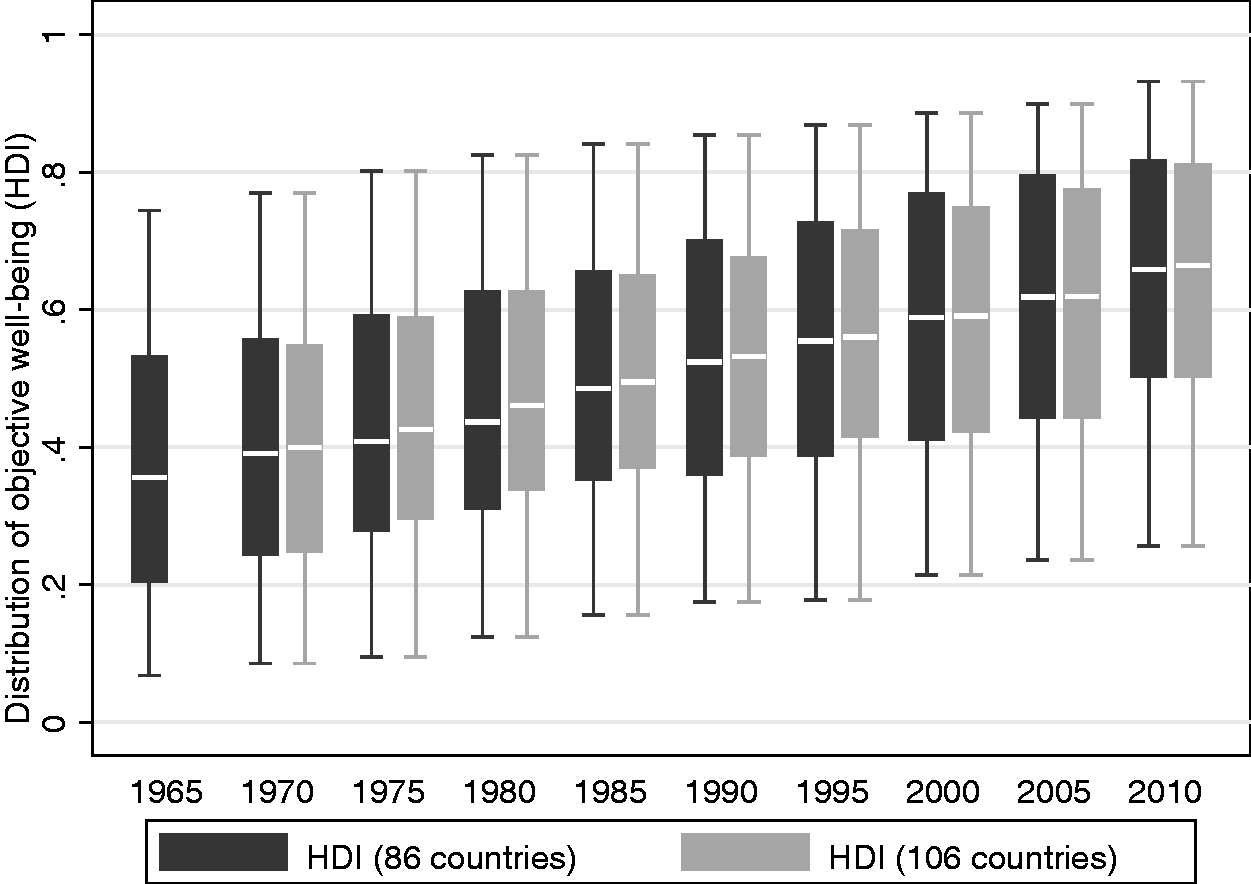
Objective well-being over time.
Institutional foundations of popular well-being: An integrated model
What, then, might explain the observed patterns in terms of well-being around the world? The remainder of the article will be devoted to this question. First, an explanatory model integrating three institutional factors will be proposed, followed by a discussion of how these factors could be measured. On this basis, we will subsequently conduct two empirical investigations: one by means of cross-sectional analyses of 137 countries in 2017 and another based on time-series cross-sectional analyses of up to 122 countries, going back (at most) to 1960.
As mentioned, we apply an institutional approach. In that endeavour, we are by no means original – explanatory factors of institutional nature have come to dominate modern research in this field. However, the configuration of our model is new. To our knowledge, we are the first to jointly consider democracy, social protection and state capacity as the main institutional explanations of variation in popular well-being. These institutional factors have figured prominently in existing research, but the relationships between them warrant further elaboration. In some cases, moreover, it is a matter of multidimensional concepts. Their exact meanings, and how they are best measured, thus need to be clarified.
Democracy
According to Aristotle, the striving for good living conditions among the members of a community is best promoted when the community (as in Athens) offers broad opportunities for participation and thus for directing the vital organs of public decision-making. On the one hand, this is a matter of social representation (albeit in Athens, it should be noted, just the male population had voting rights). Only through representation can the citizenry ensure their interests. On the other hand, as Aristotle saw it, such institutions of citizen participation also tend to enhance the quality of the decision-making process, as people involved in broad collective encounters become more open to proposals that could further society as a whole. 3
However, the Greek philosopher’s approach was also limited in ways that go beyond the constricted view of inclusion. In the modern world, we do not only account for the participatory side of popular rule. To function properly, it is now widely held that the link between the populace and the decision-making organs must be supplemented by institutions of contestation, broadly conceived – such as competitive elections, courts, audit offices, and the like – that make political actors accountable when they violate basic principles of the political game, such as the upholding of human rights and the constraints of power (Dahl, 1971; Hadenius, 1992; O’Donnell, 1998).
Given this qualification, it should be noted that arguments about democracy’s vital role in promoting popular well-being have been advanced on many occasions. The perhaps most frequently made point is the participation argument: a government that allows for broad popular inclusion and deliberation among social groups is more likely to direct attention and policy effort towards achieving good average living standards (see Touchton et al., 2017). However, others have emphasized the aforementioned institutions of contestation, arguing that thanks to them, democracies are more likely to promote leaders that have higher competence, are more likely to prioritize human development over other goals, and are more accountable and more incentivized to orient policies towards the broader citizenry (e.g. Besley and Kudamatsu, 2006; Gerring et al., 2016; Kudamatsu, 2012). As argued by McGuire (2010) in a study of welfare and health in Southeast Asia and Latin America, the prospects for a democratic impact are greatest when this regime has been maintained over a long period. The reason is that it takes time to build up the political institutions and organizational networks that give strength to popular demands.
In addition, important indirect effects of democracy have been observed. One has to do with economic resources, which can enable standard-enhancing efforts in both the public and private spheres. As has been argued by economic historians, open, democratic forms of government, involving constraining legal institutions, have tended over the long term to lay better ground for economic progress than more authoritarian ones. In this way, people in democracies have benefited from a generally higher standard of living, while their governments have been provided with strengthened economic muscles (Acemoglu and Robinson, 2012; see also North, 1992). In addition, as will be discussed below, other indirect effects of democracy are likely to manifest themselves.
Social protection
Another token of the modern era is the establishment of ever wider social protection systems in many parts of the world. Perhaps due to a lack of comprehensive data on such systems, they have not, until fairly recently, been observed in global analyses of well-being. However, normally the stated intention for introducing social protection has been precisely to raise the standard of living in society, and to the extent that they are properly designed and implemented, there are reasons to expect that these institutions can positively affect both objective and subjective well-being. On the one hand, social programmes that provide a source of income during old age or periods of sickness, unemployment, or child rearing may have direct effects on families’ income and health, as well as indirect effects on children’s school enrollment (see references in Gerring et al., 2016). On the other hand, people’s life satisfaction may increase if they are less subjected to the insecurities inherent in labour markets (Easterlin, 2013; Pacek and Radcliff, 2008). Furthermore, it has been argued that social programmes may promote a rewarding sense of belonging among citizens (Touchton et al., 2017). As we will elaborate below, we believe that the social protection system, in turn, is related to other explanatory factors in our model.
Historical studies suggest that the introduction of democracy has served as a triggering factor in this field. From the 19th century onward, there is evidence from many countries of expanded social spending due to franchise extensions (Ansell and Samuels, 2014; Lindert, 2004). Later experiences have provided support for the same conclusion (Besley and Kudamatsu, 2006; Haggard and Kaufman, 2008; Kudamatsu, 2012; Lindert, 2004). However, a deviant idea has recently been presented – and substantiated – by Knutsen and Rasmussen (2018). Looking particularly at old-age pensions, they found that such schemes are as likely to be introduced in nondemocracies; the rationale being that such endeavours increase the probability of regime survival.
State capacity
To understand what makes the state function properly in the field of social protection, as well as in other areas, there is reason to account for a third institutional factor, namely state capacity, which is broadly conceived as the state’s ability to take action in an appropriate and effective way (Hanson and Sigman, 2013: 2; Lindvall and Teorell, 2016: 4).
In recent years, several studies have examined the relationship between democracy and state capacity globally. The general conclusion has been that over time, democracy enhances the state’s ability to act effectively; the reason being that freedom of opinion and of the press, combined with independent legal/administrative organs of control, put intense pressure on state officials to perform well because if they do not, they risk losing their positions (e.g. Bäck and Hadenius, 2008; Wang and Xu, 2018). We presumed that the same logic would be manifested in the current study: high degrees of democratic performance would promote state capacity. The latter, in turn, would enhance the state’s potential to carry out activities that promote popular well-being.
The question of how that is done brings us to the conceptualization of state capacity. Oftentimes, this is seen as a multidimensional concept, among which capacities in the administrative, extractive (fiscal), and coercive aspects are the most commonly recognized (Hanson, 2018; Hanson and Sigman, 2013). Some empirical analyses of state capacity have relied primarily on one of these dimensions (e.g. Bäck and Hadenius, 2008), while others have incorporated all of them in a composite measure (e.g. Hanson and Sigman, 2013; Wang and Xu, 2018). We applied a more open approach that allowed us to scrutinize whether a broad composite measure or a more constricted indicator, that is, administrative or extractive capacity, had a stronger impact on well-being.
Administrative capacity, first, is commonly understood as indicating the presence of an effective and impartial bureaucratic apparatus. The organs in case should be marked by well-established chains of command, and officials should be recruited on the basis of merit and work in accordance with established procedural instructions. That way, patterns of personal and political dependency should be ruled out. There are primarily two ways in which administrative capacity may foster well-being in society. A well-developed bureaucracy may have a practical, concrete impact, as public efforts are carried out in an appropriate and effective manner. In addition, people can count on the premise that decision-makers are reliable and honest, which promotes feelings of trust and belonging in society (Helliwell and Huang, 2008; Tavits, 2008).
Turning to extractive capacity, this concept refers to the ability of the state to raise resources to finance its operations. First and foremost, this is a matter of bringing in tax revenues. Tax generation, it has been said, is the sine qua non of state capacity: ‘that which the state must be able to do if any other goals are to be pursued’ (Hendrix, 2010: 28; see also Besley and Persson, 2009: 1239). Indeed, in most fields of public activity, access to fiscal resources is a prerequisite of taking effective action. We expected, therefore, that an increased inflow of tax revenues could promote popular well-being. We assumed, moreover, that the marginal impact would decrease, so that a tax revenue increase would have a larger positive impact on well-being if it occurred at a low initial level.
As already elaborated, we expected the state’s ability to promote advancements in social protection to be particularly important for understanding how well-being can be fostered. In this regard, both administrative and extractive capacity may matter. Rothstein and Teorell (2008) have argued that an impartial and noncorrupt government administration is a precondition for citizens’ willingness to support public efforts in the social realm. Moreover, as argued by Mares and Carnes (2009), initiatives in this area may be a function of the extractive capacity of the state, as it increases the state’s ability to ensure the funding of social programmes.
In summary, we present an explanatory scheme outlined in Figure 4. As illustrated, it could be argued – as many since antiquity have done – that democracy has a direct, positive impact on the level of well-being in society. However, we also expected this mode of government to play a mediating role by promoting state capacity as well as efforts in the social protection realm, which both stimulate well-being. In addition, state capacity is likely to have an indirect effect by fostering developments in the field of social protection.
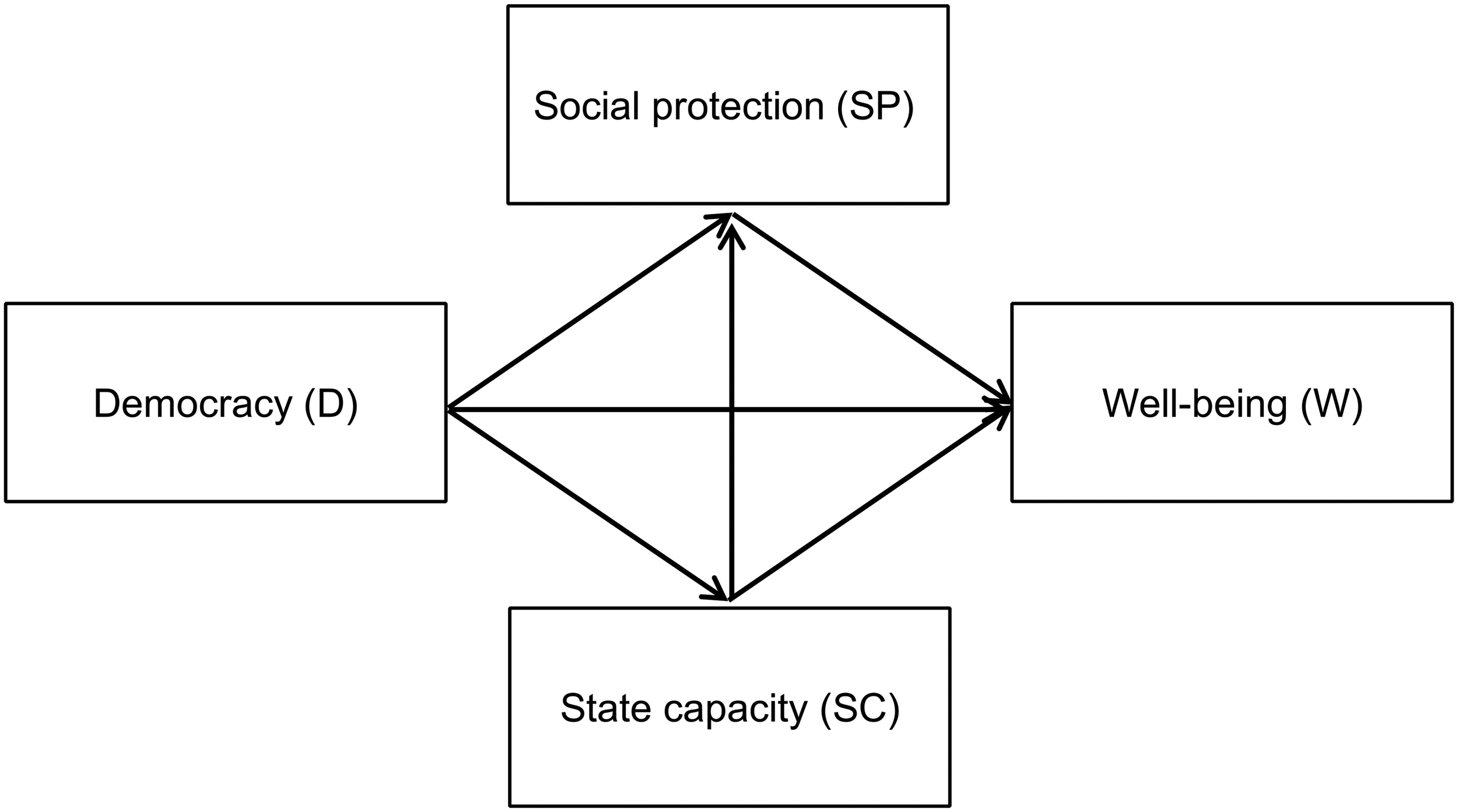
The institutional foundations of popular well-being: An integrated model.
However, a comprehensive institutional model of well-being should also consider the possibility that the institutions in question may serve as either substitutes for or complements to each other. As an example of the former possibility, Hanson (2015) found that democracy and state capacity substitute for each other in terms of promoting education, presumably because high state capacity can help identify and direct the policy agenda towards social needs – functions that we would otherwise expect to result from democratization. However, complementary relationships between the involved factors also seem plausible. For instance, we might expect that the effect of social protection on well-being would be higher at high levels of democracy and state capacity because these two factors could improve the inclusiveness and the implementation of such programmes once they are introduced.
Furthermore, we should consider the possibility that the relationships go in the opposite direction than initially expected. First, a strong argument has been made that the relationship between democracy and state capacity is opposite to the direction conjectured above (Fukuyama, 2005; Wang, 2003). Furthermore, it is conceivable that popular well-being spurs developments in the democratic sphere, as argued by the modernization theory of democratic development (e.g. Epstein et al., 2006). In addition, in the area of social protection, it is possible – due to a similar logic – that people may increase their demand for various provisions as their life expectancy increases. To the extent possible, we will explore the presence of such reinforcing mechanisms in alternative directions in our time-series–cross-sectional analyses.
Last, it should be observed that while we do expect our model to account for much of the variation in well-being observed globally, we do not rule out a possible impact from other factors. We will be able to consider at least some of the other factors discussed in previous development research, such as trade openness, agricultural/industrial development, and urbanization, in the empirical analyses.
Measurements and data
We conducted two sets of analyses, one contemporary cross-sectional and one time-series–cross-sectional, using similar measurements retrieved from partly different data sources.
As described above, we measured well-being (W) in two ways. In the contemporary analyses, our indicator incorporated both objective and subjective components. In the longitudinal analyses, we relied foremost on our own HDI-like measure of objective W. However, to extend the scope of our analyses to 12 additional countries – for which the data needed to create our own measure were not available – we used the UNDP’s (2018a) official HDI time-series in these cases.
To measure democracy (D), both analyses applied the electoral democracy index provided by the V-Dem Institute, based on assessments by country experts 4 (Coppedge et al., 2018; Teorell et al., 2016). The indicator is constructed from sub-indices of freedom of association, clean elections, freedom of expression, elected officials, and suffrage. Hence, it corresponds well to the democratic comprehension expressed by Dahl (1971) and his followers, outlined above.
To measure the scope of social protection (SP), our two analyses relied on different data sources. For the cross-sectional analysis, the International Labour Organization (ILO, 2017) provide the most comprehensive information about SP legislation around the world. Concerning developments over time, Knutsen and Rasmussen (2018) recently collected data on six main fields of SP in more than 150 countries, beginning in some cases in the 19th century. 5 Focusing on transfer programmes, we created a measure indicating how many of these six risk areas were covered by a major law. 6
While these new global data are advantageous in terms of coverage, a possible validity concern is that the presence of a law may say little about how large a share of the population is protected by it – which might affect popular W. Encouragingly, our analyses suggested that our measure of the scope of SP systems also captured their inclusiveness fairly well. ILO (2017) reports the proportion of the elderly receiving a pension for almost all observed countries in 2017. Its correlation with our measure was 0.64. In addition, Knutsen and Rasmussen’s (2018) data include an index of the overall degree of universalism in the six programmes considered, for approximately half of the observations in our longitudinal dataset. The correlation between this index and our indicator of SP was 0.87.
As for the capturing of state capacity, we did not rely on a single empirical marker. Our main indicator was Hanson and Sigman’s (2013) state capacity (SC) measure, which integrates 24 existing indexes of administrative, extractive and/or coercive capacity and thus involves a mix of objective and perception-based data. This indicator is available for more than 160 countries annually between 1960 and 2009. 7 However, we also included separate measures of extractive and administrative capacity.
To gauge the level of administrative capacity (AC) over the full period, we used the average of two related indicators developed by the V-Dem Institute (Coppedge et al., 2018), which measure (a) whether public officials are rigorous and impartial in the performance of their duties and (b) the extent to which public sector employees grant favours in exchange for material inducements and abuse public resources for personal or family use. In the case of extractive capacity (EC), we looked at tax revenues as a share of gross domestic product (GDP) (e.g. Besley and Persson, 2009). The indicator with the largest coverage is constructed by Kugler and Tammen (2012), combining data from the International Monetary Fund, the World Bank and the Organization for Economic Cooperation and Development. To account for the assumption that tax revenue has a decreasing marginal impact, we used a logged version of the tax revenue indicator in our main models.
All in all, our contemporary dataset consisted of 137 countries as observed in 2017, while the longitudinal dataset included 902 country-year observations from 122 countries, with 5-year intervals between (at most) 1960 and 2010. Summary statistics and correlation matrixes for the two resulting datasets are reported in Online Appendix II.
Results I: Contemporary cross-sectional patterns
We began our analysis by exploring the relationships between the factors under consideration in a cross-section of countries in 2017. To this end, we applied path analysis, using the structural equation modelling (SEM) framework, with all measures in standardized form. Figure 5 reports the results of this exercise.
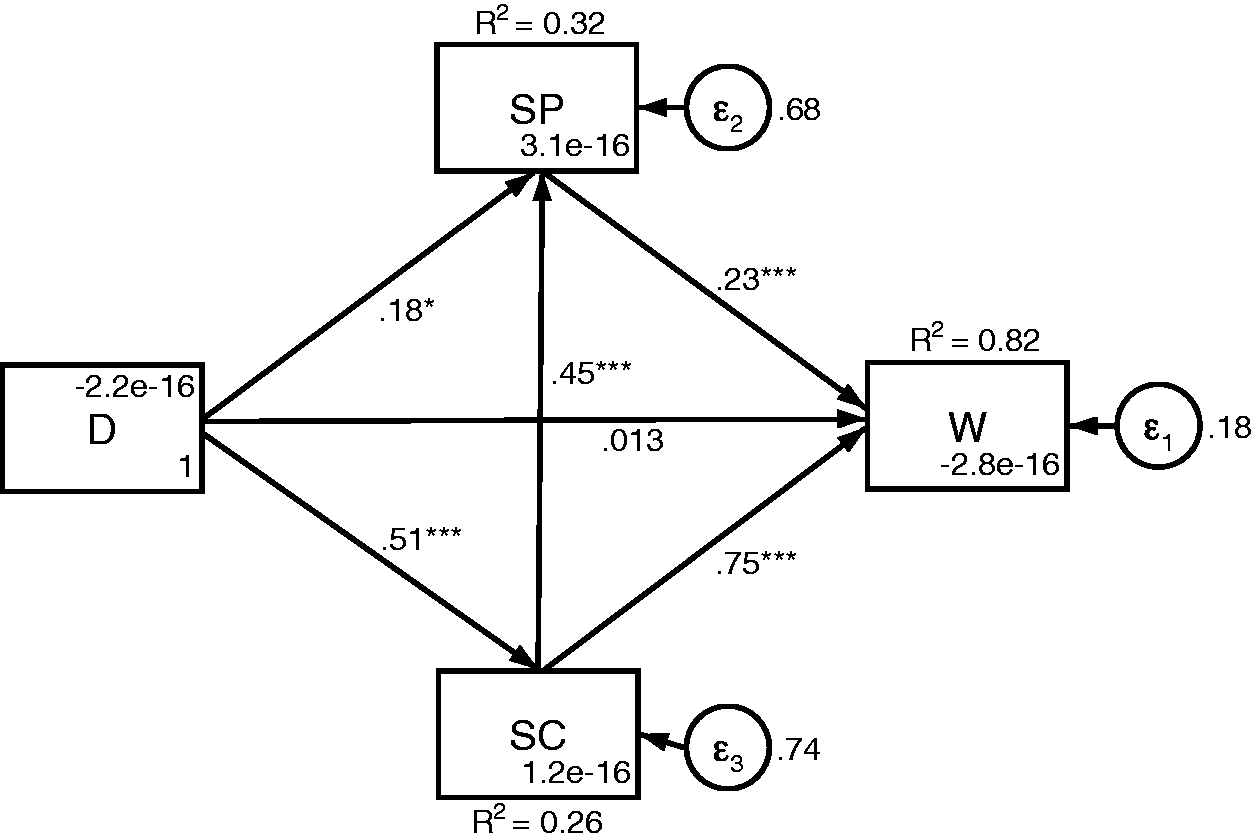
SEM path analysis of well-being (W) in 2017. N = 137. All variables are standardized. Robust standard errors are applied.
This analysis of contemporary relationships supported several expected relationships, while others were only weakly or not at all substantiated. First, consider the right-most part of the figure, which represents an ordinary least squares regression of W on SP, SC, and D. W was higher in countries with a wider scope of SP and higher levels of SC, conditional on the other factors. However, there was no difference in W between more and less democratic countries when SP and SC are accounted for.
Turning to SP, we found that countries with higher levels of SC offered a broader set of such programmes when D was held constant. However, regarding the difference in SP between more and less democratic countries, a connection of only modest significance was revealed when the level of SC was controlled for. Last, we observed that countries with higher democratic standards tended to have better SC.
These analyses indicated that the SP system as well as SC (broadly specified) were the primary direct drivers of W, while D had an important indirect role, chiefly of promoting SC. Moreover, the three institutional factors accounted for the lion’s share of the cross-national variation in W, as indicated by the R2 coefficient of 0.82. For the more parsimonious models of SP and SC, these coefficients were unsurprisingly lower, yet still substantial. However, these analyses cannot confirm the assumed direction of causality in our model and are vulnerable to bias of omitted variables that may have confounded the observed relationships. In an effort to remedy these problems, we next turned to investigate developments that have occurred in countries over time.
Results II: Time-series cross-sectional analyses
In this section, we analyse 122 countries, observed with an interval of 5 years between (at most) 1960 and 2010. The first set of analyses focuses on the topic of ultimate interest in our model, W, while the second set investigates the dynamics of SP, SC, and D. To assess the possibility of reverse causality and reinforcing dynamics between the discussed variables, we include each of these factors in each model. All specifications are based on the following partial adjustment (PA) model, with various restrictions and extensions:

Here,
Models of well-being
Table 1 reports the results from six models of W. First, to assess the substantive importance of the institutional factors in explaining variation in W over time, model W:1 includes only D, SP and SC, in addition to country-fixed effects. All three factors were strongly related to W, and the adjusted R2 coefficient (0.469) indicated that they can account for almost half of the within-country variation. To further isolate these relationships from potential confounders, our baseline specification W:2 adds period-fixed effects and a lagged dependent variable. This model estimated no direct average relationship between D and W. In contrast, an increase in SP of 1 standard deviation was associated, on average, with an increase of 0.029 standard deviations in W, and the coefficient for SC had a similar magnitude: 0.027. The lagged dependent variable allowed us to also estimate the long-term average effects of these two variables, which were considerably larger (0.17 and 0.16 respectively). 8
Time-series cross-sectional analyses of well-being, 1960–2010.
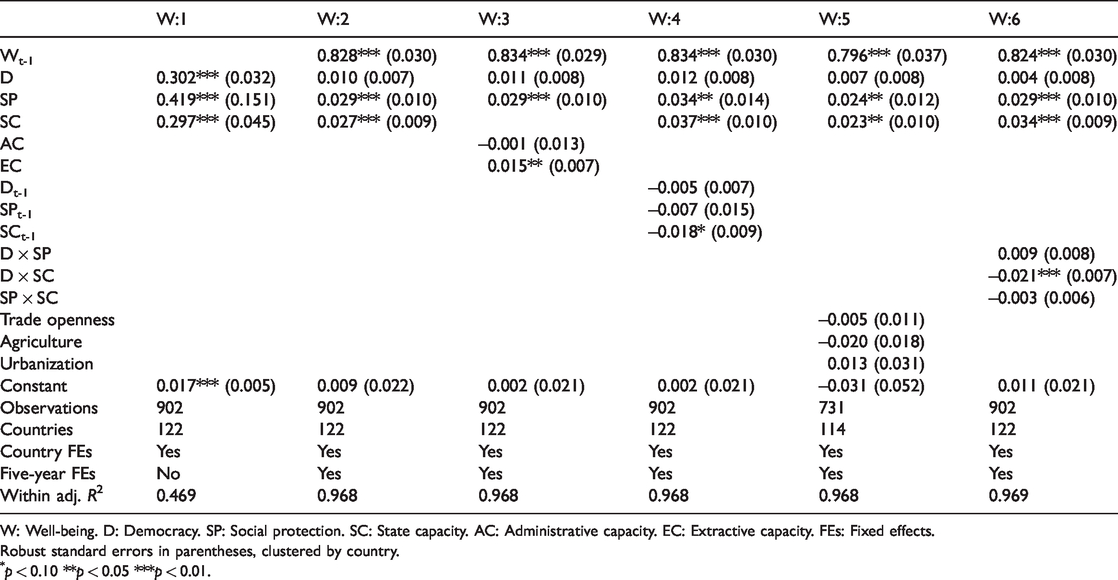
W: Well-being. D: Democracy. SP: Social protection. SC: State capacity. AC: Administrative capacity. EC: Extractive capacity. FEs: Fixed effects.Robust standard errors in parentheses, clustered by country.
p < 0.10 **p < 0.05 ***p < 0.01.
Furthermore, to explore through which mechanism SC promotes W, model W:3 replaces the composite measure (SC) with AC and EC. This model indicated that only developments in the extractive dimension mattered. 9
Model W:4 extends the baseline specification W:2 to a more flexible autoregressive distributed lag (ADL) model by adding lags of the three explanatory variables. However, none of these lags were statistically significant, so for the sake of parsimony, we stuck with the more restricted PA specification in W:2. Next, model W:5 adds three potentially confounding time-variant control variables: trade openness, agriculture’s share of GDP, and population density. We found, however, that none of them were significant or particularly influential. As they reduced the sample size substantially, we retained W:2 as our baseline specification.
Moving beyond average effects, the final model, W:6, investigated to what extent the three institutional factors complemented or substituted each other in their effects on W by adding interaction terms between the three pairs. To ease interpretation, consider Table 2, which reports this model’s estimates of the conditional short-term effects of each institutional factor on W, at one low (25th percentile) and one high (75th percentile) value of the two other factors. These results have two noteworthy implications. First, they support Hanson’s (2015) finding that D and SC are substitutes, as D now has a significant positive effect on W at low levels of SC, but no (or even a negative) effect at high levels. Conversely, SC has a positive effect only at low levels of D. Second, there are some indications that D and SP are complements, considering that only at high levels of D does the scope of SP have a significant effect on W.
Conditional short-term effects of institutions on well-being.
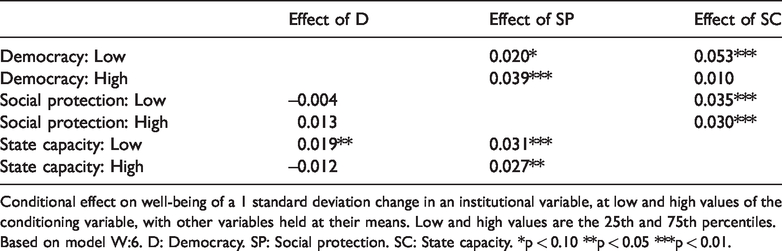
Conditional effect on well-being of a 1 standard deviation change in an institutional variable, at low and high values of the conditioning variable, with other variables held at their means. Low and high values are the 25th and 75th percentiles. Based on model W:6. D: Democracy. SP: Social protection. SC: State capacity. *p < 0.10 **p < 0.05 ***p < 0.01.
A complementary approach for assessing how the effects of the institutional factors depend on the surrounding developments is to interact the three variables with the lagged level of W (Wt-1). An analysis of this kind, reported in Online Appendix III, estimates that, for a country at an average level in terms of the other factors, increased D will have a significant positive impact on W only at low levels of lagged human development. Correspondingly, improved SC will have a positive effect on W at low and medium, but not high, levels of lagged human development, while the effect of expanded SP will appear subsequently, only at medium and high levels.
Online Appendix III also reports a set of robustness checks of our baseline model of W (W:2). These assess the sensitivity of the results to (a) bias due to correlation between the lagged dependent variable and the error term caused by the fixed effects, (b) influential observations, (c) adding linear time trends for groups of countries with different levels of initial development, and (d) multiple imputation of missing data. Overall, these models pose no threat to the main results reported above.
Models of social protection, state capacity, and democracy
Let us now shift focus to the specifications in Table 3, where the factors farther to the left in our explanatory model (Figure 4) constitute the dependent variables. Here, leaving out the lags of the explanatory variables turned out to be an invalid restriction, so we applied ADL models throughout. We did, however, omit the three aforementioned control variables, which again had little effect on our models other than depressing the sample size. To save space, Table 3 only reports the short- and long-term effect estimates (see Online Appendix IV for the full output).
Summary of autoregressive distributed lag models of institutions, 1960–2010.
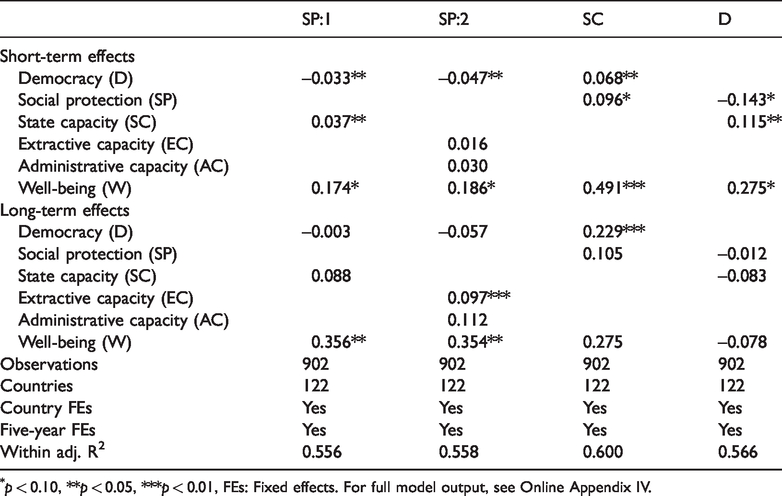
p < 0.10, **p < 0.05, ***p < 0.01, FEs: Fixed effects. For full model output, see Online Appendix IV.
Turning first to model SP:1, we found that the broad measure of SC had a positive impact on SP, at least in the short term. Next, SP:2, involving the two specified capacity measures, also indicated that it was the extractive component that counts, albeit only in the long term. In contrast, both analyses contested the notion that democratization promotes SP, as evidenced by the significant negative coefficients. Last, increasing W tended to spur expansions of SP.
Next, our analysis of SC supported our expectation that D would have a stimulating effect in both the short- and long term. Moreover, W appeared to promote SC, at least in the short term, which hints at another important incidence of reciprocity among the analysed factors. In the last column of Table 3, we investigated whether D was affected by any of the other factors in our analysis. Interestingly, we found another reciprocal effect of SC, although only in the short term.
Regarding AC, we had not seen any significant impact on the other factors under consideration. To further investigate its role, we analysed additional historical time-series data, extending the sample back to the year 1900. Reported in Online Appendix V, these analyses explore the relationships among D, SP and AC, where at least some reliable indicators are available. The results indicated that improved AC was linked to subsequent expansions in the scope of SP. However, for D (again) no such direct connection was observed.
Concluding discussion
As already argued by Aristotle, the presence of governance based on popular rule does indeed contribute to well-being in society. However, as we have found, focusing on the modern features of democracy, the relationship is not mainly of the kind, or of such a straightforward nature as Aristotle imagined. Having complicated the matter by including state capacity and social protection, as well as their modes of interaction, our analyses of contemporary and historical data indicate that democracy serves primarily as a background factor, spurring well-being mostly in an indirect way. Nevertheless, at low levels of state capacity and human development, it appears – as observed by Hanson (2015) – that the effect of democracy can also be more direct. 10
Contemporary scholars often hold that democracy’s role has been to bolster widened public engagement in the sphere of social protection, which in turn is argued to promote well-being. The latter conjecture has certainly been substantiated in our study. However, our analyses found no evidence that D has a direct impact on the scope of social protection – rather the opposite. This result supports Knutsen and Rasmussen’s (2018) finding that expansions in the scope of social protection are just as likely, or even more likely, to take place among authoritarian regimes. Having said that, the finding presented in Table 2 – indicating that the positive effect of social protection on well-being is higher in more democratic countries – is consistent with a refined model where the quality of the social protection system, rather than its scope, is promoted by democratization.
That, however, is not the full story. Social protection also tended to be promoted by state capacity, and for that to develop, democracy is found to be an encouraging factor. Hence, it appears that democracy does indeed spur expansion in the scope of SP, but this takes place mostly in a circuitous way, by fostering improvements in state capacity.
Another finding was that the broad measure of state capacity appears to have a direct effect on well-being in society, at least in countries with low or moderate levels of democracy and human development. 11 Our attempt to disentangle two specific dimensions of state capacity indicated that it is primarily extractive capacity that facilitates effective state action to the benefit of citizens’ well-being. However, our supplementary historical analysis indicated that administrative capacity does play a role in spurring expansions of social protection, which can in turn promote well-being in society. Furthermore, we found evidence of a (short-term) positive impact of state capacity on democracy. Consequently, taken together, our results suggest that the two factors are mutually reinforcing. Thus, in a sense, they reconcile the two arguments that improved state effectiveness facilitates the development of well-functioning democracy (Fukuyama, 2005; Wang, 2003) and that democratization promotes state capacity (Bäck and Hadenius, 2008; Wang and Xu, 2018).
We found a second relationship of a reciprocal nature in the case of social protection and well-being. As expected, extended social protection tended to stimulate well-being in society, at least at the later stages of human development. However, we have also seen that an improved level of W brings with it expansions in the scope of social protection. We read this as an indication in support of modernization theory, which maintains that improved living conditions prepare the ground for rising demands among the citizenry. In consequence – combining the two causal logics – expansion of social protection is likely to spur self-reinforcing developments.
Such expansions can take place, as we have seen, in democratic as well as authoritarian states. However, especially in countries with low initial levels of state capacity, it is the former mode of government that has the best chances of improving well-being among the citizenry. Given these findings, it is not surprising that certain European countries, particularly Nordic countries, come out so well in our global ranking of well-being. As noted by many before us and most recently by Fukuyama (2014: 25), these countries have long been renowned for their strong performance in the areas of democracy and state capacity. What our present analysis has added to that picture, however, is the ambitious efforts taken in the field of social protection in these countries.
To be clear, each institutional factor given focus in our study is decidedly multidimensional. While we took steps to analytically isolate two aspects of state capacity, a similar disentangling of distinct dimensions of democracy and social protection systems falls outside the scope of our present endeavours. More fine-grained analyses to pinpoint what aspects of democracy and what types of social programmes are most beneficial thus appear to be fruitful undertakings for future research, along with efforts to further strengthen causal inferences. These will be important undertakings, considering the plethora of different alternatives that policymakers and experts have to choose from when pondering institutional reforms to promote well-being. For the time being, the key takeaway from this study, for states scoring low in terms of W, is to strive in the indicated direction – towards strengthening democracy, state capacity, and social protection – while paying careful attention to the potential complementarities, substitutabilities, and reinforcing mechanisms that our present analyses have only begun to unravel.
Supplemental Material
sj-zip-1-ips-10.1177_0192512120917186 - Supplemental material for Institutional foundations of global well-being
Supplemental material, sj-zip-1-ips-10.1177_0192512120917186 for Institutional foundations of global well-being by Axel Cronert and Axel Hadenius in International Political Science Review
Supplemental Material
sj-pdf-2-ips-10.1177_0192512120917186 - Supplemental material for Institutional foundations of global well-being
Supplemental material, sj-pdf-2-ips-10.1177_0192512120917186 for Institutional foundations of global well-being by Axel Cronert and Axel Hadenius in International Political Science Review
Footnotes
Acknowledgements
We are grateful for helpful comments provided by seminar participants at Uppsala University, Sverker Gustavsson, Editor Marian Sawer, and the four anonymous reviewers.
Funding
The authors received no financial support for the research, authorship, and/or publication of this article.
Notes

Supplemental material
Supplemental material for this article is available online.
Author biographies
References
Supplementary Material
Please find the following supplemental material available below.
For Open Access articles published under a Creative Commons License, all supplemental material carries the same license as the article it is associated with.
For non-Open Access articles published, all supplemental material carries a non-exclusive license, and permission requests for re-use of supplemental material or any part of supplemental material shall be sent directly to the copyright owner as specified in the copyright notice associated with the article.
