




Abstract
Standing in front of perhaps the most crucial decade of the future to come, when mankind has just experienced three years of global pandemic, a raging war, extreme climate events and mass extinction of animals and plants, we have arrived at a crossroads. Decisions must be made on whether we charge at full speed to explore alternative social-ecological systems that lead to human well-being and regeneration of nature; or continue down a pathway built on resource extraction, unsustainable and unethical urbanization and destruction of nature and lives. Recently, as countries seek to recover from the pandemic, many are contemplating large-scale infrastructure schemes and projects, which have been tried and proven means to drive extraction-based economic growth. This highlights the importance of environmental justice and resistance – an area from which voices are not often heard loud enough, yet offers fertile ground where radical, sustainable alternatives may emerge among people and communities that refuse to comply with the unjust development imposed on them. Our work seeks to contribute to research studying the potential of such phenomena, by designing a framework to capture key organizational, political and ethical features that make resistance a transformative practice. The outcome of this effort is a Resistance-Based Transformative Alternative (ReBasTA) Framework, which can be employed to inform both desktop-based data collection and analysis on resistance practices, as well as in-depth field research on deep drivers and leverage points for transformation. Moreover, the framework makes longitude study of transformative practice possible, by using a consistent set of criteria. This paper introduces the conceptual and methodological approach underlying our framework and the collaborative process employed in designing it and its key criteria. In the final section, we also discuss possible applications, with particular reference to resistance movements triggered by large-scale infrastructures.
1. Introduction
1.1. Background and research questions
This research stems from the concern for the catastrophic loss of life planet Earth has been experiencing. 1 While rooted in a distant past, this trend has been accelerating enormously in the past five decades: the most recent Living Planet Index shows a 69% decline in population sizes of monitored mammals, birds, amphibians, reptiles and fish since 1970 (Westveer et al. 2022). The global advance of growth-led modernization has relentlessly encroached on spaces of biological and cultural diversity. These patterns have been backed by extractive economic and political structures and informed by one-size-fits-all recipes for development, disregarding the intrinsic and context-dependent value of nature, places and people. On a deeper level, this state of affairs is rooted in ego-centric mental models, which equate material development to well-being and self-realization (Foggin et al. 2021; Giang and Sui Pheng 2011; Laurance et al. 2009, 2015).
The destruction of habitats and the marginalization of traditional cultures are not only leaving future generations with a planet that is poorer in life and beauty, but are also damaging the resilience of mankind to civilizational challenges, such as climate change and global pandemics (Maffi 2007; Raygorodetsky 2012). Over the years, faith was put in many quarters on an imminent awakening of humanity to the need of systemic transformations, capable of addressing the root causes of the dire social-ecological state of the planet. In the early 1990s – a pivotal time for sustainability reflection – part of the sustainability community foresaw that the very idea of development would soon “stand like a ruin in the intellectual landscape” (Sachs 2010). After 30 years, it is now apparent that these expectations were misplaced. Despite all the knowledge humanity has produced about environmental destruction, things have been going in a quite different direction. To put it as Greta Thunberg did when addressing the audience of the Youth4Climate Pre-COP26 forum (2021), we are still stuck with the “blah blah blah” sustainability rhetoric that for decades has jeopardized deep reflection and meaningful action.
Against this background, humanity is in desperate need of visionary and yet actionable social-ecological discourses, ones that can give us not only hope, but also purpose and direction. There is some hope left: despite the overwhelming dominance of extractive approaches, transformative alternatives are still being explored by a wide range of individuals and communities. Soil is particularly fertile where local and indigenous communities are confronted with undesired development projects affecting their relationship with the places they inhabit and care for. Indeed, recent advancements in sustainability science, environmental justice and postcolonial studies show how considerable potential for transformation can be found in the visions, agency and action of resistance movements (Temper et al. 2018b).
The scientific production on the potential of resistance movements to offer alternatives to mainstream paradigms of development has re-emerged in recent years, albeit amidst unfavourable political conditions (Temper et al. 2018a. On the wider political context of the re-emergence of radical resistance, see: Mattei 2022). Yet, the focus of scientific research has been predominantly on the political and procedural aspects of mobilization – who participates, why and how – while overlooking the way alternatives are shaped and envisioned, as well as their deeper drivers and longer-term potential for transformation.
Our intent is to address this gap, by designing a Systems Thinking-informed framework to identify, assess and possibly enable resistance-based transformative alternatives. The framework is designed to address the following questions: How do resistance-based transformative alternatives manifest themselves? What are the key elements that make them transformative? How can we assess the transformative potential of these practices? What conditions enable such transformative alternatives to take place and what are the practical means to enable these alternatives to scale-out of their original context?
This paper outlines the methodology and process used to develop the framework, while also providing an overview of the framework, its components, logic and future applications. Section 1.2 covers literature review in two areas: the impacts on biodiversity from large infrastructure development; and the potential of environmental resistance to restrain damaging impacts of infrastructural development and to put forward radical alternatives. Section 2 outlines the design of the Resistance-Based Transformative Alternative (ReBasTA) Framework. The section is subdivided in three paragraphs: the first introduces the theoretical and conceptual foundation of our work. The second provides an overview of the collaborative process employed in designing the ReBasTA Framework, while the third introduces the framework architecture and criteria, as they have emerged from the design process. Finally, section 3 discusses a possible application of the ReBasTA Framework and shares a blueprint of next steps for our research.
1.2. Infrastructure construction and its impacts on biodiversity
It is projected that global infrastructure investment will mount to a record 60 trillion US dollars between 2019 and 2040 in 56 countries (“Global Infrastructure Outlook 2017-Infrastructure Investment Needs 50 Countries, 7 Sectors to 2040” 2017). One point two million square kilometres of land is estimated to be urbanized between the year 2000 and 2030 and 3–4.7 million kilometres of roads will be added by 2050 (Meijer et al. 2018; Seto et al. 2012). Currently one-third of all threatened species on the IUCN Red List are endangered by infrastructure (IUCN 2017).
On the other hand, infrastructure development has long been a driver of economic growth (Giang and Sui Pheng 2011). It is particularly preferred during times of uncertainty, to create jobs and stimulate demand. However, numerous studies have shown that infrastructure-led growth causes significant and often irreversible negative impacts on ecosystems and biodiversity conservation (Benítez-López et al. 2010; Laurance et al. 2009, 2015; Seto et al. 2012). Figure 1 visualizes the three cycles through which infrastructure development contributes to biodiversity loss. The three traps of infrastructure leading to biodiversity loss (authors).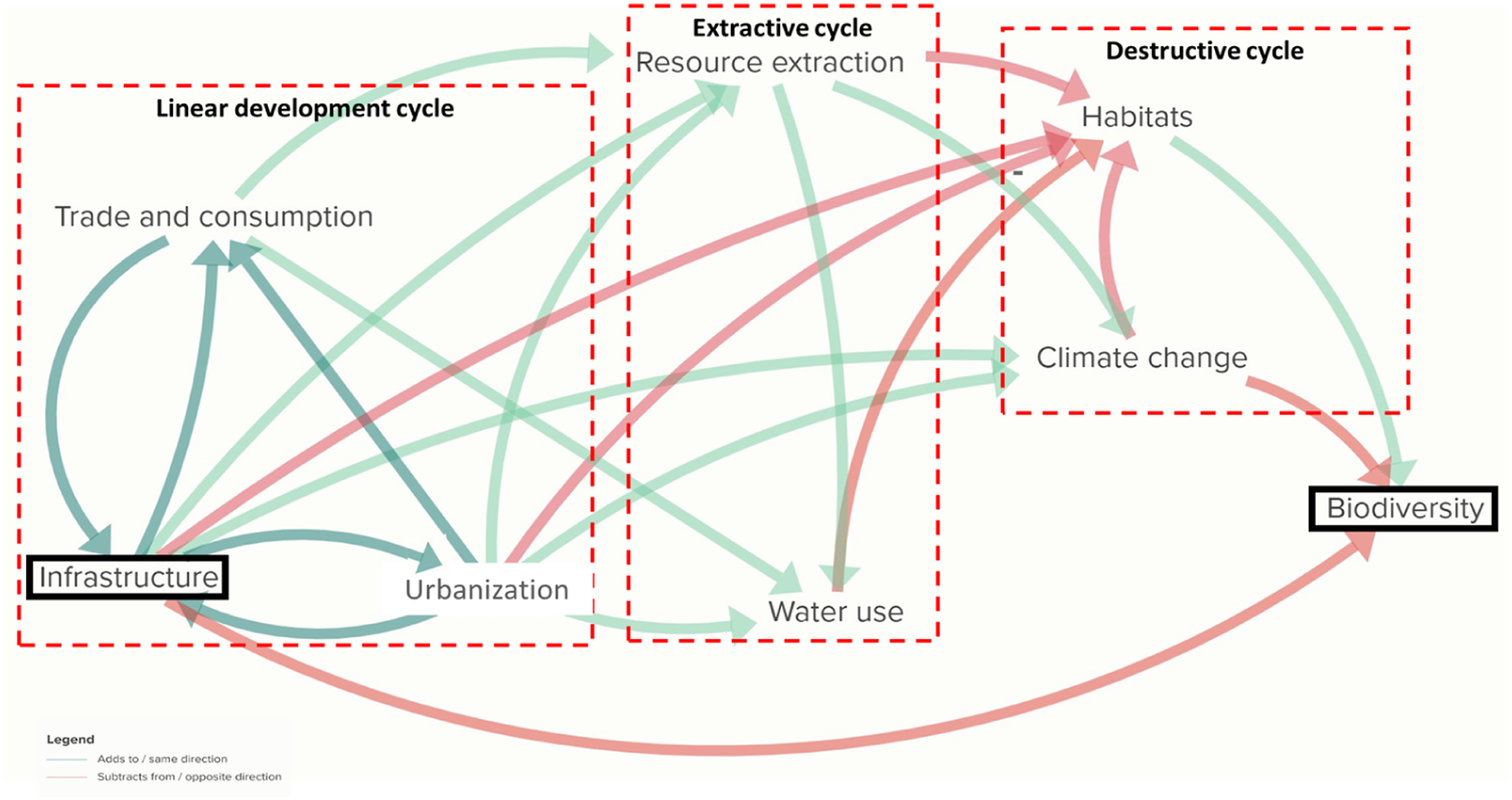
First, infrastructure propels a linear development cycle. In this cycle, infrastructure development drives trade and consumption, as well as urbanization. The latter increases demand for trade and consumption, which in turn require more infrastructure, forming a feedback loop. Without intervention, this feedback loop will continue to propel itself, forming the linear growth model. Urbanization and infrastructure construction lead to habitat loss and fragmentation, two key drivers of biodiversity loss (Hirsch et al. 2010). Infrastructure development also directly contributes to biodiversity loss, through road kills, environmental pollution and by facilitating poaching activities (Laurance et al. 2015).
Second, the linear development cycle inevitably amplifies the extractive cycle of minerals and materials, as well as excessive water usage. These phenomena are also responsible for the direct loss of habitats and pollution, while also exacerbating climate change. Extraction therefore contributes to three of the five principal pressures driving direct biodiversity loss, as identified by the Convention on Biological Diversity.
All of these ultimately translate into destruction. As shown in Figure 1, resource extraction, water use, climate change, urbanization and infrastructure construction all lead to the destruction of habitats. At the same time, resource extraction, urbanization and infrastructure development also contribute directly to climate breakdown, which further drives biodiversity loss at a massive scale.
1.3. The nexus between resistance and transformation
The mainstream narrative portrays infrastructure development as necessary for socioeconomic progress. This narrative is based on the notion that infrastructural and urban expansion is an inevitable process contingent to modernization, which in turn is the natural path every human society will eventually embark upon. Overall, such vision depicts western modernization as a one-size-fits-all process, either unconsciously or willingly overlooking cultural, historical and social-ecological peculiarities or the possibility that alternatives to this pathway may exist somewhere, sometime (on this logic, see Chakrabarty 2009). As a matter of fact, this claim is presumptuous at best, as shown by the vibrant opposition of many local communities and activists to infrastructural projects, both in the Global South and in the Global North. Based on the environmental justice conflicts data collected between 2011 and 2020 from the Environmental Justice Atlas team at the Universitat Autònoma de Barcelona, there are 248 environmental conflict cases against infrastructure development, accounting for 9% of total cases (Scheidel et al. 2020).
While often stigmatized as counterproductive, the concept and practice of resistance in environmental issues is important for a few reasons. First, it opposes destructive processes: when successful, it avoids harm being done to nature and communities. Even when it fails, it allows life to thrive a little longer, buying us – and the planet – a little more time. Second, the practice of resistance can be a safe space for expression, where power structures and dominant discourses are questioned, and new ideas emerge. Third, resistance offers a window for reflection and re-evaluation of one’s own culture, customs, relationships with others and their surroundings – prompting the community to ask the question: what is important to us? This is where difference is valued, doubt cultivated and alternatives rooted in local contexts nurtured. In other words, places of resistance can provide the ideal habitat for alternative discourses and practices, aimed at augmenting the diversity and richness in life, both humans and more than humans (on the various potentials of resistance, see Temper et al. 2018a).
To examine how resistance can lead to transformative alternatives, we also need to have a clear understanding of what transformative alternatives encompass. Indeed, a wide range of definition and description of transformation exists. One key distinction has been made that transformation describes actions that lie beyond the limits of incremental change and adaptation (Dow et al. 2013). According to Pelling et al. (2015), ‘transformation is presented as opening adaptive possibilities for organizations or individuals, either forced by systems failure or chosen in anticipation of collapse’, to evolve towards ‘a novel social-ecological systems state’. Other researchers focus on the characteristics and qualities of transformation, describing it as implying ‘radical, systemic shifts in deeply held values and beliefs, patterns of social behaviour and multi-level governance and management regimes’ (Olsson et al. 2014; Westley et al. 2011). Transformation therefore calls for ‘unruly politics’, ‘diverse knowledges’ and ‘multiple actors’ (p310, Scoones 2016). Some goes one step further with the term ‘radical transformation’, emphasizing the importance of transforming ‘power structures and relations, from a situation of domination, injustice and violence and unsustainability to one of reduced violence, increased equality and flourishing’, thus highlighting the nexus between transformation and justice (Temper et al. 2018a. On the more-than-human dimension of justice and power, see Tschakert 2020). From a socioeconomic development perspective, ‘transformation by definition needs to reconfigure the structures of development through changing overarching global political economy dominated by neoliberal capitalism with increasing authoritarian tendencies in our day (Temper et al. 2018a, Pelling 2011)’. O’Brien et al. (2013) called transformation ‘a shift in society’s value-normative system and shifting relations across the personal (i.e. beliefs, values, worldviews), political (i.e. systems and structures) and practical (i.e. behaviours and technical responses) levels simultaneously’.
Based on the above, for the purpose of our research we define transformative alternatives to be a far-reaching vision, future-oriented plan or lived practice that: (a) aims at transforming power structures and relations, from a situation of domination, injustice, violence and unsustainability to one of reduced violence, increased equality and flourishing, both for humans and more than humans; (b) reconfigures the structures of development through changing overarching global political economy dominated by neoliberal capitalism, into community-centric, culturally-sensitive and ecologically regenerative models; (c) envisions and engages in a shift in society’s value-normative system, leveraging relations across the personal (i.e. beliefs, values, worldviews), political (i.e. systems and structures) and practical (i.e. behaviours and technical responses) levels simultaneously, or in short, from an ego-centric value system to an eco-centric one as shown in Figure 2. Key features of transformation (authors).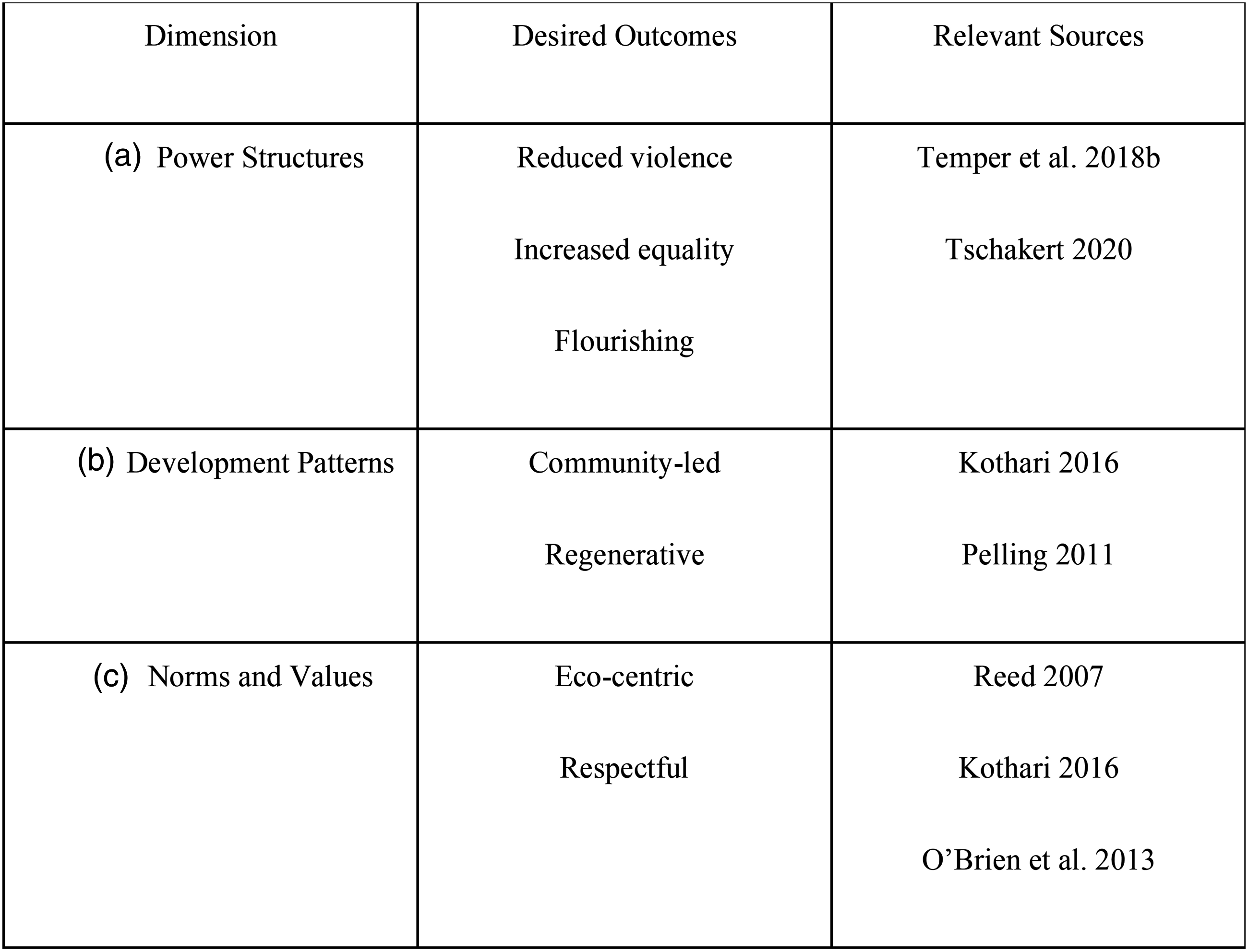
Transformative alternatives do not necessarily come from places and communities that are confronted with contentious large infrastructural projects. However, evidence indicates that imminent social-ecological threats from proposed infrastructures often trigger dynamics of participation and resistance, in which transformative alternatives are more likely to emerge. Indeed, among the 2743 environmental justice cases reported by the Environmental Justice Atlas project by 2020, in 29% of cases resistance by local communities had resulted in strengthened participation; and in one-third of cases resistance achieved some degree of success, either through court decisions (34% of cases) or via negotiated alternative solutions (10%) (Scheidel et al. 2020). Our work therefore focuses on such resistance movements, as the most promising pathway to nurturing and exploring transformations.
2. Design of a resistance-based transformative alternative framework
This section describes ReBasTA’s theoretical foundation, the collaborative process undertaken by authors to design it and the framework architecture.
2.1. Systems thinking and the theory of change
In the revised edition of “The Essential Guide to Critical Development Studies” (2017), Veltmeyer points out that the conclusion is “the failure of orthodox development approaches of both the past and present to grasp the root causes of the crisis and thus find a solution or a sustainable and workable – and liveable – alternative”. Conventional recipes to development and growth have indeed left us and the rest of nature in dire straits. To overcome this state of things, our research embraces the potential of systems thinking to inform the theory and practice(s) of social-ecological change (Eguren 2011; Scharmer 2016).
Donella Meadows has defined a system as ‘an interconnected set of elements that is coherently organised in a way that achieves something’ (Meadows 2008). Systems Thinking is an approach developed over time based on research done on complex systems modeling and how we can understand, anticipate and change complex system behaviours. It is widely regarded as one of the key tools to address sustainability issues that are inherently interconnected and complex (Arnold and Wade 2015). A system boundary is defined by its intended goal, or in other words, what would the system achieve. In designing of ReBasTA, the authors define each resistance case itself as its own system, with the goal to achieve a sustainable alternative pathway to the proposed infrastructure project. 2 Hence, the system includes the community(ies) involved in the resistance; the project the community(ies) are resisting against; the organizations behind/supporting the project (such as government bodies, research institutions etc.), those resisting it (such as non-government organizations, international communities, networks, alliances and other forms of organization); and the social-ecological context in which the project and the resistance are taking place.
Based on this scope, the framework was designed using the Theory of Change approach (Eguren 2011) as well as the ‘Guided Envisioning of a Sustainable World’ by Donella Meadows (Meadows 1994). The combination of the two approaches allowed us to explore beyond mainstream narratives of transformation, to also envision social-ecological paradigms leveraging the deep systems levers such as ethics, values and worldviews, both at individual and collective levels. 3
Using the questions from the ‘Guided Envisioning of a Sustainable World’ as a starting point, the authors created a set of ‘desired outcomes’ across the individual, community and local ecosystemic level, covering ecological, social and institutional dimensions. These ‘desired outcomes’ were organized using the systems thinking iceberg model, a resource widely used in the systems thinking community for the purpose of clustering concepts according to their leverage potential (Academy for Systems Change 2023). In our case, the iceberg model was adapted consistently with ReBasTA goals and structured as follows: A. B. C. D.
The adapted ReBasTA iceberg model is shown in Figure 3 with key aspects covered at each level of the model. Iceberg model of the aspects of transformation (Creative Commons Licence and authors).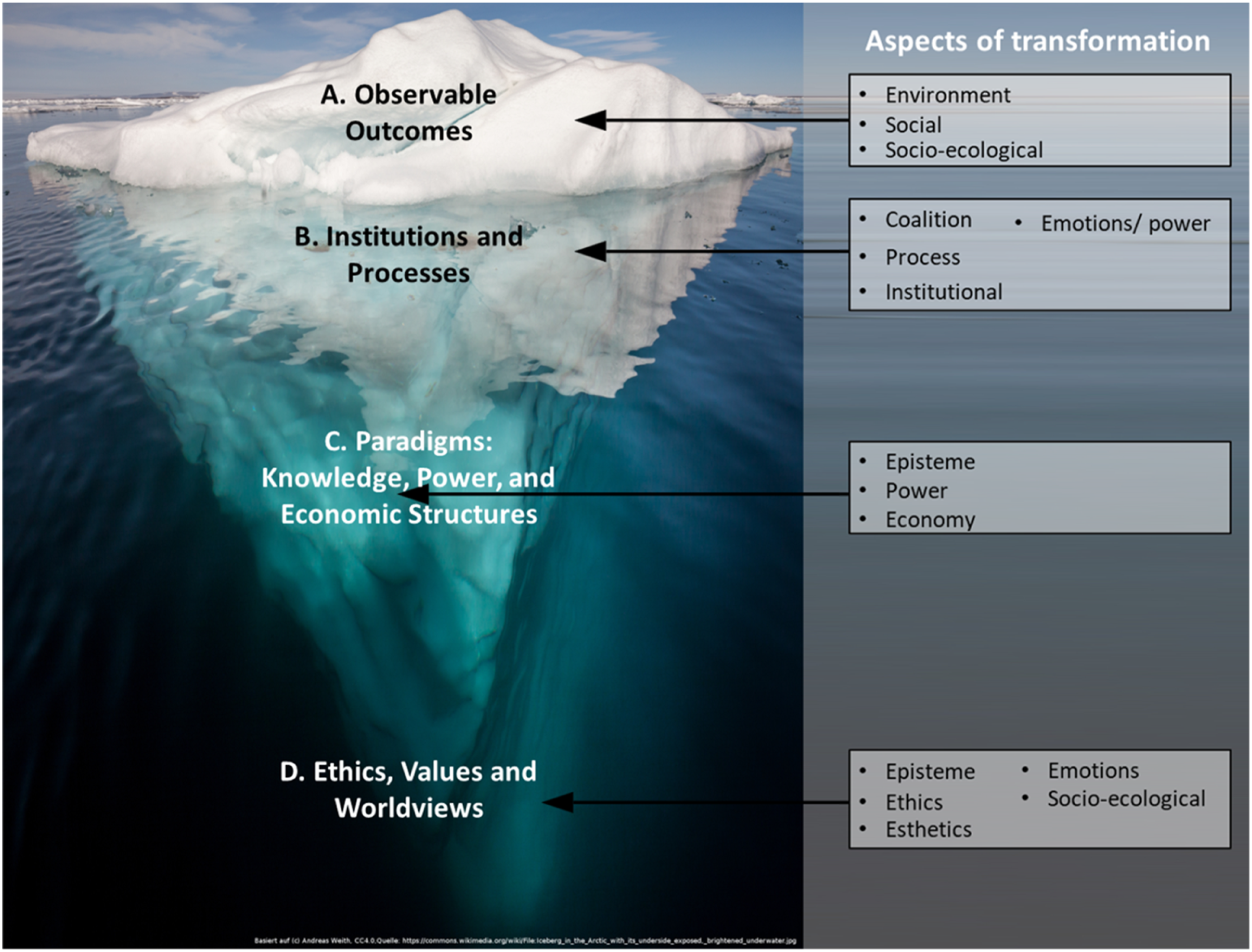
2.2. Process
The authors adopted an iterative and collaborative process to design ReBasTA, engaging an experts panel to provide additional input at critical junctures of the work. The panel combined expertise in development studies, environmental justice and sustainability transformations. 4 Albeit small (3p), the panel was representative also of diverse perceptions towards prospects for transformative change, ranging from disillusion to faith in human possibilities to reconnect with inner sources of inspiration and change. The process to design the framework broadly went through three stages: (1) desktop review of relevant analytical frameworks; (2) collaborative design and refinement; and (3) validation. The first two stages are introduced in this section, while the validation is introduced in the last part of this paper, alongside potential applications of this framework.
2.2.1. Review of available analytical frameworks
The review highlighted three main fields providing a potential contribution to our work. These include (a) environmental justice research and practice; (b) engaged scholarship on principles and characteristics of transformative alternatives; and (c) climate change adaptation research.
Environmental Justice (EJ) is a particularly fertile area of research and practice, which in recent years has produced meaningful insights on resistance-based social-ecological transformation and new models of governance. This review process also helped shape the definition of ReBasTA and the boundaries of the systems that the framework is describing. For what concerns our work, the most valuable contribution of EJ research is its capacity to shed light on resistance strategies, power dynamics and governance processes (Gobby et al. 2022; Temper et al. 2018b). These strategies and power dynamics informed some of the aspects of transformation and the criteria in the framework across the dimensions but particularly in Section C. Paradigms: Knowledge, Power and Economic Structures; and Section D. Ethics, Values and worldviews. Gobby et al. (2022) summarize six transformative strategies forged by the Canadian indigenous people as new means of governance, such as Strategy 3: Enacting Indigenous sovereignty, law and governance; Strategy 4: Winning the battle of ideas: Media, communications and new imaginaries; and Strategy 5: Transformative Alliances: Building support across cultures, sectors, movements and regions (Gobby et al. 2022). Temper et al. crystalized how power works in three ways through institutions, people and culture and how resistance addresses these power imbalances through creating new institutions, disseminating new knowledge among decision makers, reconstructing local culture and other means (Temper et al. 2018b). These research and their frameworks helped to highlight the importance of just and well-represented institutions, indigenous knowledge creation, local governance processes, cultural revival, alliances and networks (Brombal et al. 2017; Brombal et al. 2018). To ensure that these factors are addressed sufficiently in the Framework, the authors also reviewed public participation frameworks. The contribution provided by EJ research in conceptualizing power imbalances and their social-ecological relevance was complemented with work done in the field of public participation. The Public Participation Index (PPI) developed by Brombal et al. (2017) was particularly useful in this regard, as it provides guidance on process variables of participation, relevant to time, consultation arrangements, engagement of different categories of the public and information provision. While these aspects may seem trivial and highly procedural, in fact they are key to structuring political processes that are fair and accessible to the most vulnerable, in line with the ethical and scientific underpinning of EJ.
The conceptual and moral underpinning of EJ largely informs research on transformative alternatives. 5 Indeed, this research is rooted in the idea that to transform the social-ecological reality in ways to achieve sustainability we must also address the root causes of injustice and suffering across the individual, interpersonal and social dimensions. The work by Khotari, Demaria and Acosta (2014) is particularly effective in pointing out fundamental principles that should inform transformation. Such principles include ecological sustainability; social well-being and justice; direct political democracy; economic democracy; cultural and knowledge plurality (Kothari et al. 2014). A set of values were also identified as transformative, which include cooperation, collectivity, solidarity and ‘commons’, rights with responsibilities, the dignity of labour and livelihoods as ways of life, respect for subsistence and self-reliance, simplicity and sufficiency, respect for all life forms, non-violence, reciprocity, and pluralism and diversity (Kothari 2016). These aspects are aligned also with the theory and practice of transformative co-creation, with particular reference to the incorporation of more-than-human needs and perspectives in decisional processes (Pearson et al. 2018). In the design of ReBasTA, these principles and values have been key to defining criteria in the deepest parts of the iceberg, that is, Paradigms: and Ethics, Values and Worldviews. Besides these components, literature on transformative alternatives also recognizes the intrinsic value of biological and cultural diversity, therefore sharing the normative premises of strong sustainability (Foggin et al. 2021). This aspect has been of particular importance to design the Observable Outcomes dimensions of ReBasTA, as it allows to visualize with more clarity how a transformation would look like: communities thriving with human and more than human forms of life and expression. 6
The last strain of literature that has provided us with useful insights has been the one of climate change adaptation. In fact, this field is much concerned with long-term future scenarios, where complex systems interact in shaping the fate of life on our planet. Of particular interest were the Inequality and Transformation Analyses Framework (Tschakert et al. 2013) and the Resilience, Adaptation and Transformation Framework (Pelling et al. 2015), which highlight the importance of learning, engagement, social connectedness, power dynamics and decision-making processes, as well as the importance of incorporating ethical questions in shaping decision-making. A comprehensive review of 80 conceptual papers on climate adaptation revealed six common characteristics of transformative adaptation in ecological, social and social-ecological systems including ‘restructuring, path-shifting, innovative, multiscale, systemwide, and persistent’ (Fedele et al. 2019). The same work also provided a useful categorization of different implications and aspects of transformation, across their natural, social and social-ecological dimensions, which are key in guiding the early stage of ReBasTA design.
The outcome of the review was a list of dimensions and guiding questions, derived from different sources reviewed (Figure 4). Outcome of literature review for ReBaSTA (authors).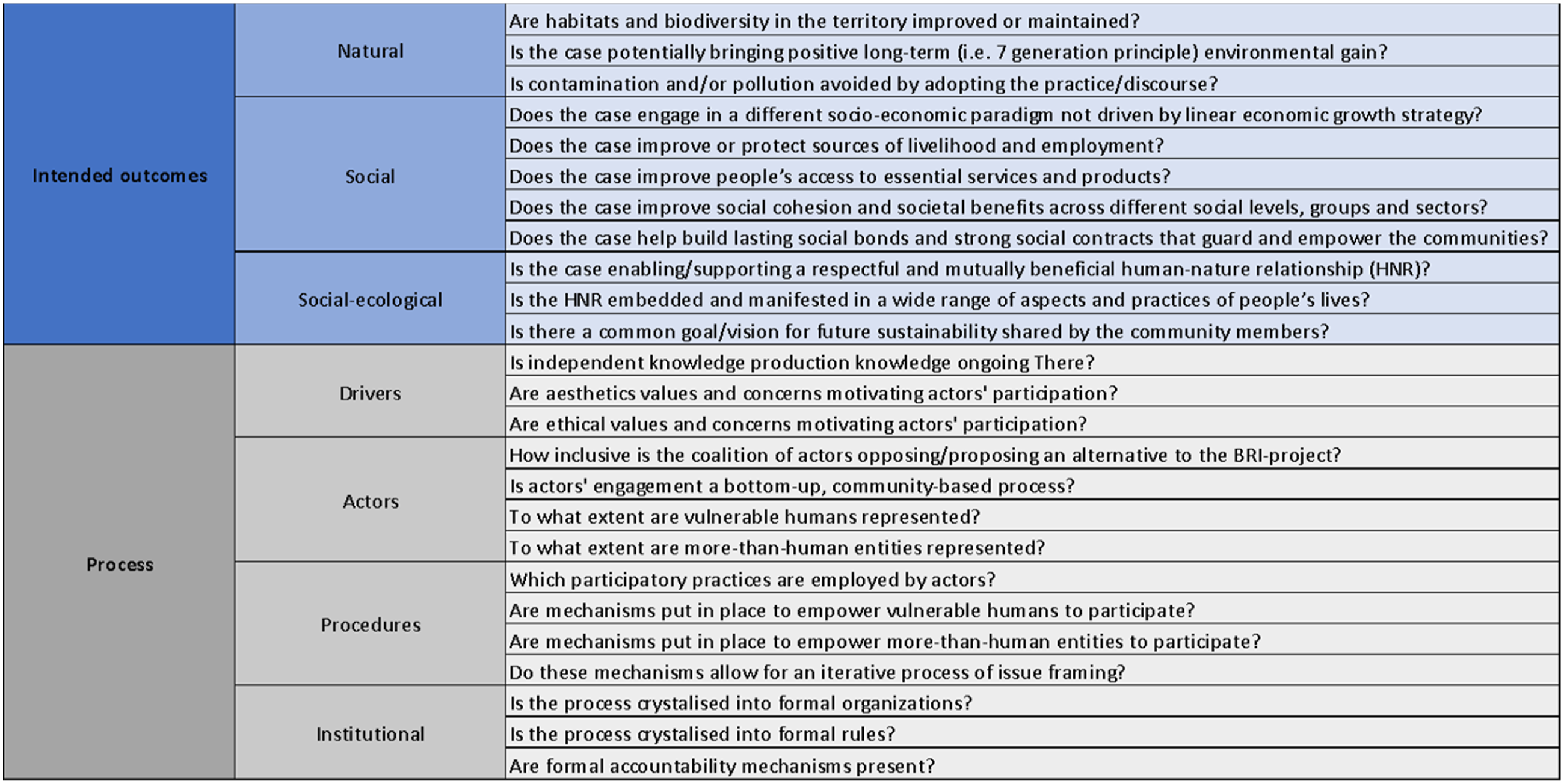
2.2.2. Collaborative design of ReBasTA
The draft framework went through an iterative process of collaborative review and design. Two sessions engaging panel experts were held in Spring 2022 at the Ca'Foscari University of Venice. Each was followed shortly thereafter by an intensive work session by the authors, to make sense of input received and redesign ReBasTA accordingly. Panel sessions were designed by employing the Theory-U approach (Gunnlaugson et al., 2014; Scharmer, 2016), mindful of the importance of acknowledging participants’ personal history, ethics and emotions to inform collaborative work that has any chance of being transformative. 7 In designing the collaborative sessions, the authors employed selected methods from the ‘Arts-Based Methods for Transformative Engagement’ toolkit by Pearson et al. (2018).
The first panel session 8 focused on ReBasTA overall architecture. The draft framework and criteria were discussed against different possibilities of structuring them, in ways consistent with the goal of identifying transformative features and prospects of resistance movements.
A key outcome of the first session was the decision to model ReBasTA based on the systems thinking iceberg model. In fact, this would allow to organize and benchmark criteria of analysis vis-a-vis their leverage for transformation. As a result, the framework went through a major reorganization, produced during a two-days intensive co-creative work retreat held by authors in April 2022 (see Figure 5 below). This resulted in ReBasTA version 1.0, which was no longer based on the desired outcomes, processes and features highlighted by the literature review (as shown in Figure 4), but rather anchored in well-defined systems thinking levels from observable outcomes, to ethics, values and worldviews. Authors co-creative session 1: Anchoring ReBasTA Framework in the iceberg model (authors).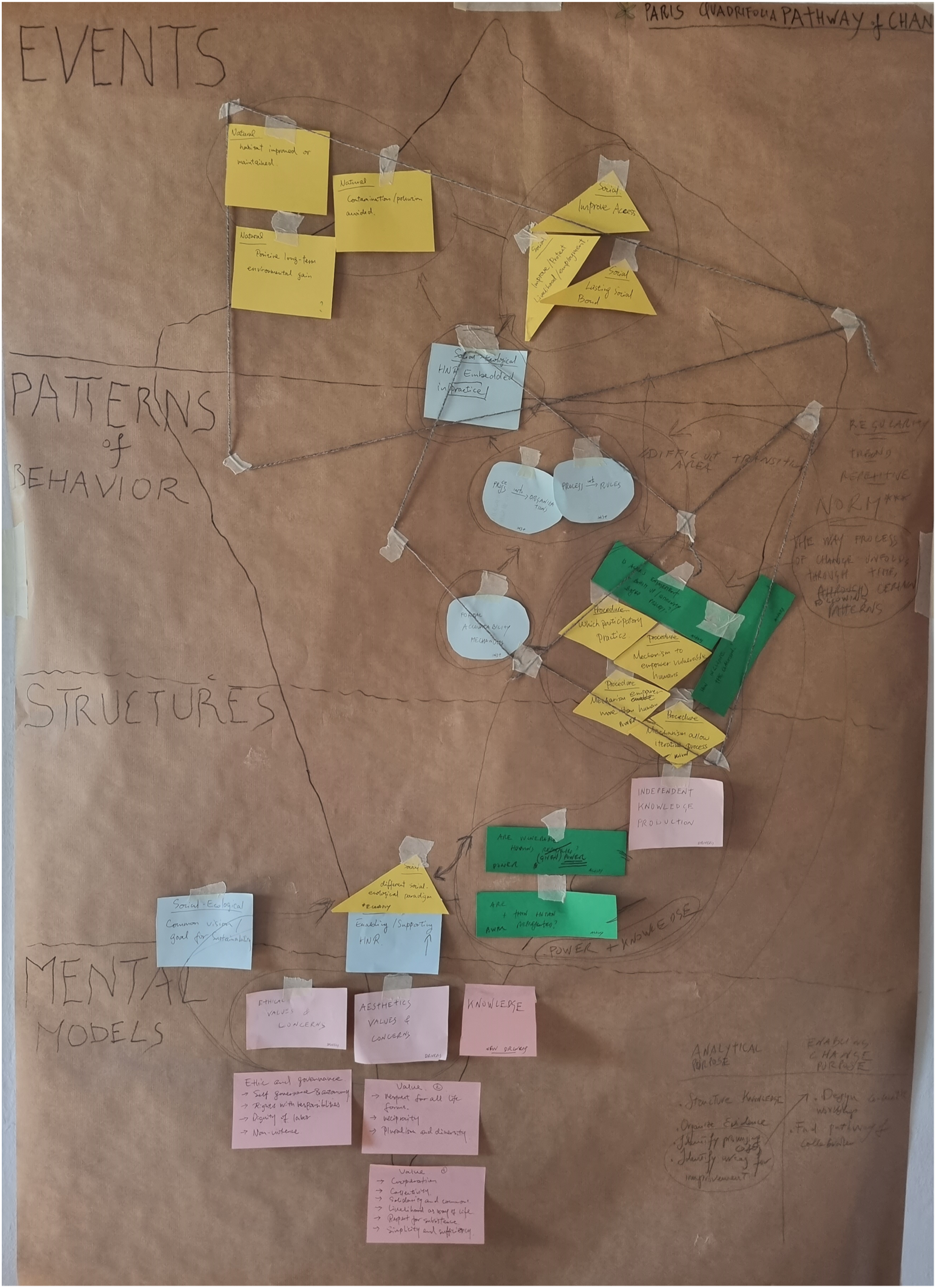
The second panel session was held with two researchers with a robust background on environmental justice, whose current research focuses on (a) transformative potential of resistance, and (b) the role of ethics and emotions in shaping individual and collective engagement in environmental struggles.
9
The session took place within the workshop ‘Unearthing and Enabling the Transformative Potential of Environmental Activism Along the Belt and Road Initiative’, held at Ca'Foscari University of Venice in April 2022. In the first part of the collaborative session, panel members were engaged in exercises designed to review and improve comprehensiveness, sensitivity (i.e. capacity to detect change) and clarity of criteria, as well as their consistency with the iceberg dimensions. The exercises – which were facilitated by one of the authors – were structured as a sequence of rounds of individual work, followed by plenary discussions. Participants were allowed to propose amendments to the criteria to, both their phrasing and positioning on the iceberg model as captured in Figure 6. Input shared by experts during the second panel session. Red notes are newly added or revisited criteria, orange notes are clarifying questions (authors).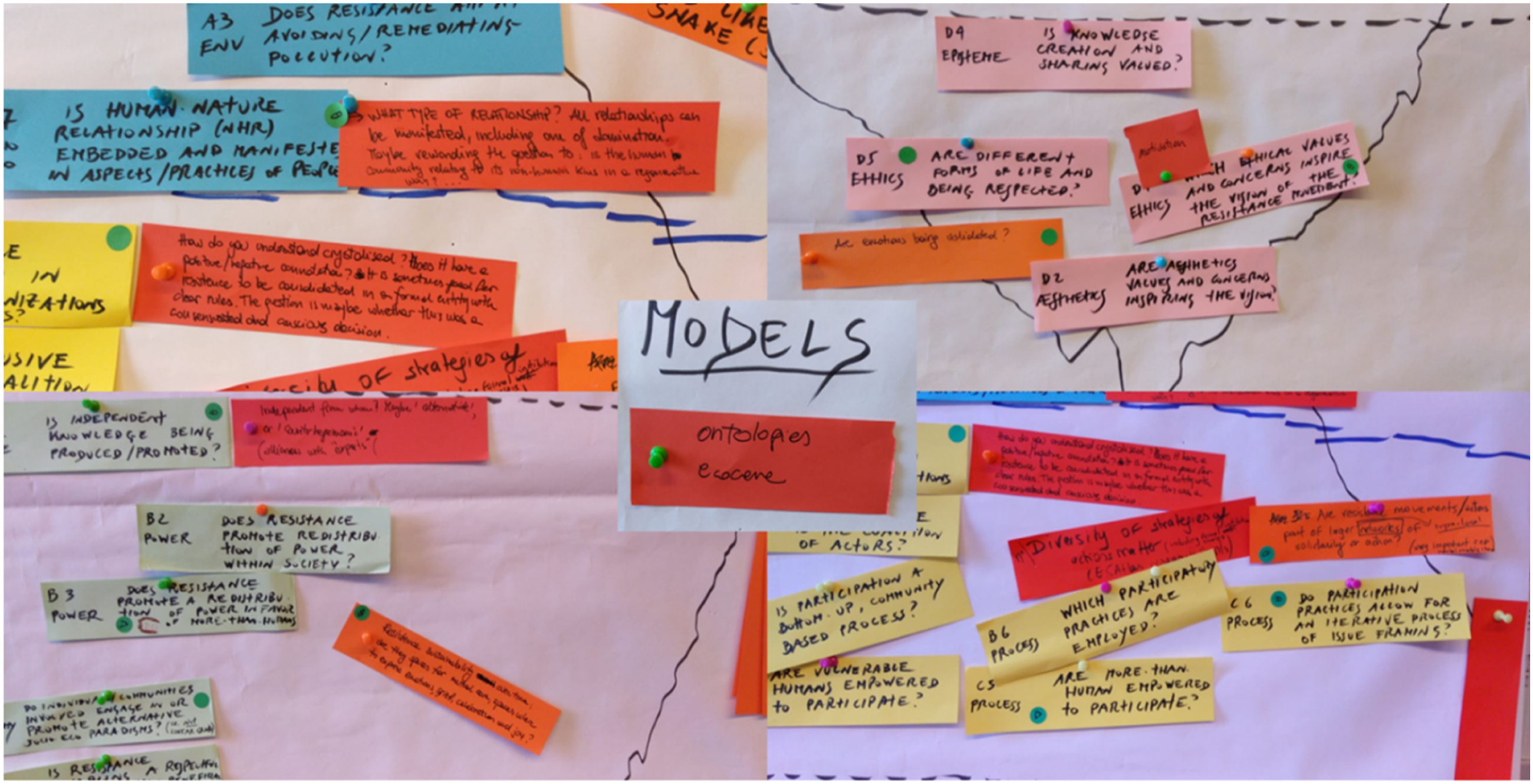
Once obtained a set of relatively stable and agreed upon criteria, in the last part of the workshop panel members were asked to identify the criteria they deemed as necessary preconditions for and characteristics of transformation, that is, to identify the veto criteria. A separate session for the identification of the veto criteria was held at a later stage with the third panel member, who could not take part in the second panel session. Results were subsequently processed in a second collaborative working session by the authors, who double checked for redundancies in suggestions submitted, summarized the workshop outcomes and normalized language and definitions employed in the panel session.
A preliminary version of the framework was presented in late May at the Venice Seminars 2022. 10 This provided an additional opportunity for the authors to test the logic of the framework with an audience who did not have any prior knowledge of this subject, to find out if the concept of transformative alternative was sufficiently explained, and if the systems-thinking-based framework was understandable. Feedbacks received during the discussion at the seminar were later on duly incorporated in this work. In particular, we normalized the wording used to define the iceberg levels and criteria, to improve readability and better reflect their content and nature. Moreover, we readjusted the order of criteria, to better capture the logic of resistance and transformation.
2.3. ReBasTA framework
2.3.1. Overview
The final outcome of the process described above was a significantly improved framework, composed by a total of 26 criteria, 7 under “A. Observable Outcomes”; 9 under “B. Institutions and Processes”; 4 under “C. Paradigms: Knowledge, Power and Economic Structure”; and 6 under “D. Ethics, Values and Worldviews”. Of these criteria, three had been added and an additional three significantly revised based on results of the second panel session. Of the three new criteria, two reflect the importance of relational and psychological dynamics within resistance movements, at the level of institutions and Processes (criterion B9 “Are processes in place to ensure that people feel safe to express themselves?”), and at the deeper level of Ethics, Values and Worldviews (criterion D6 “Are emotions being acknowledged?”). While often overlooked, these aspects are of vital importance both at a societal level – enabling transformations – and at an individual one. Resistance often takes a significant emotional toll on individuals, who may feel misunderstood by their own families, isolated or ridiculed by their communities or menaced in their security. Oftentimes they may also feel inadequate and desperate, as their struggle seems to stand no chance against large corporations or states with their overwhelming power and authority. Acknowledging, processing and possibly healing such psychological burden is a fundamental aspect of transformative change, as it relates to the core of our relationship with our own self, the others and the larger environment we are immersed in (Gonzales-Hidalgo et al. 2022. On the importance of care for transformation: Moriggi et al. 2020). The third criterion added is based on the outcomes of the second collaborative session. This is another process and institutional criterion, focussing on the connections across resistance movements and larger networks of solidarity and action (see criterion B4). This criterion stemmed from the participants’ first-hand experience in mapping environmental justice movements at a global level, which made them familiar with both the extent and potential of large, glocal networks of actors working for the same cause.
As for the selection of criteria highlighting the necessary preconditions for and/or characteristics of transformation to occur, 16 criteria were identified by at least one panel member as necessary, among them 4 criteria received 2 votes, and 3 criteria received all 3 votes. The authors decided to select the criteria with at least 2 votes to be used as the veto criteria. It is quite significant to note how the highest degree of transformative potential was attributed by panel experts to criteria covering the deepest part of the iceberg, that is, Ethics, Values and Worldviews.
11
Figure 7 ReBasTA Framework criteria with veto functions (authors).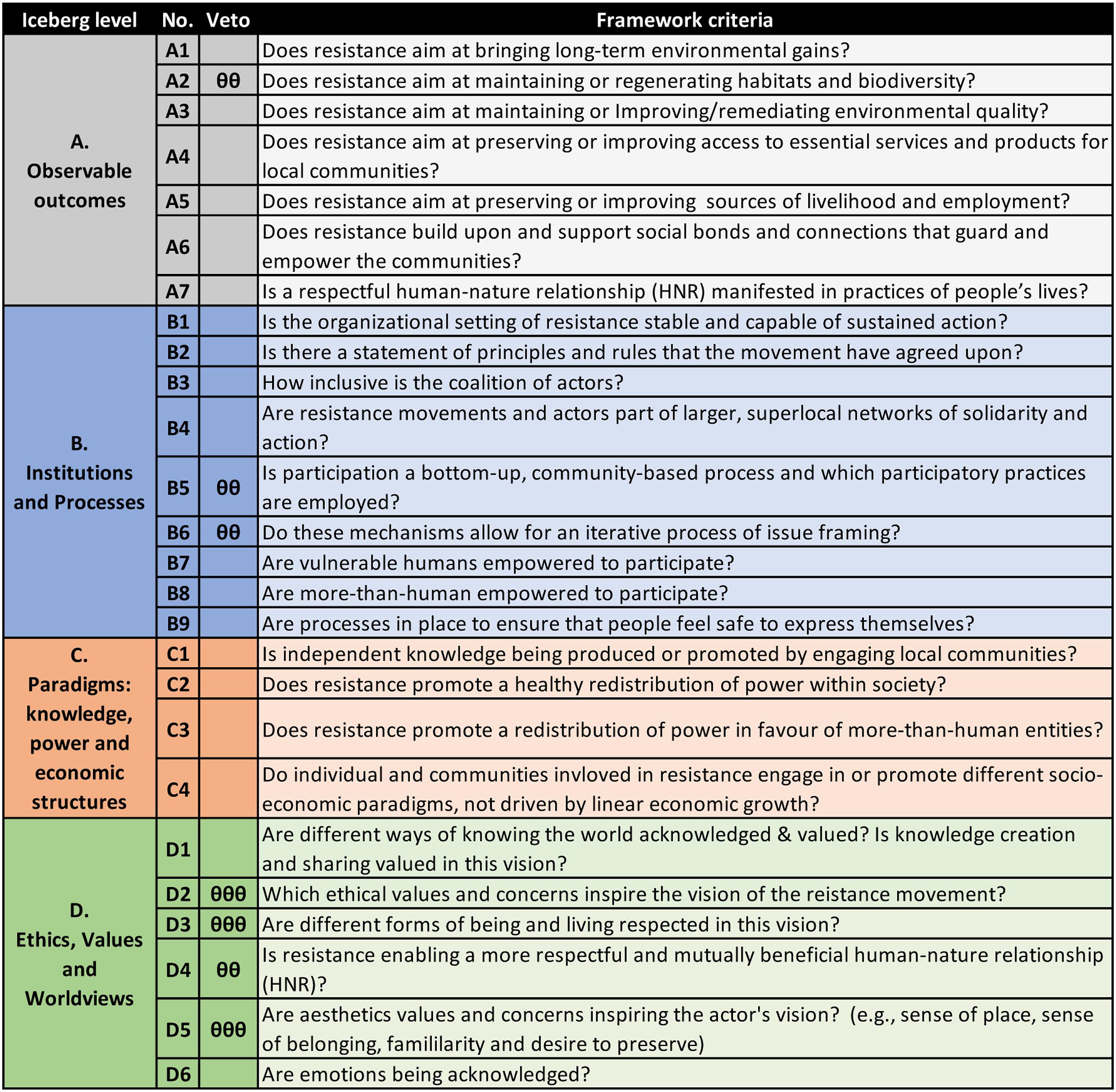
2.3.2. Summing up ReBasTA logic
ReBasTA builds on the assumption that the transformative potential of environmental resistance against large infrastructure projects can be identified, observed and investigated through a set of criteria and observable variables. ReBasTA can provide insights on the deeper drivers and the mechanisms that enable transformation to happen. Against this background, the framework we have designed proposes a normalized methodology to allow for comparative and longitude studies, where learning, cross-pollination and inspiration can happen to further propel these actions.
To summarize the design of the framework, the logic is as follows:
The first level of the iceberg model “A. Observable Outcomes”, represents the desired outcomes of resistance cases. These outcomes cover ecological, social and social-ecological aspects, highlighting those desirable from a transformative change standpoint (with particular reference to A2, which has been identified by panel experts as precondition to transformation).
The second level “B. Institutions and Processes” refers to the organizational, institutional and process aspects. The criteria in this section seek to understand what kind of organizing and managing mechanisms as well as processes are put in place to adapt, sustain and improve the resistance. Also on designing this part of the framework, a number of characteristics associated with transformative approaches emerged and were highlighted by panel experts, with particular reference to participatory processes that are open to the contribution of the most vulnerable humans – including marginalized minorities, and to the representation of more-than human stakeholders.
The third level “C. Paradigms” focuses on key aspects shaping the structural elements of our social, economic and political reality, acknowledging the interconnection between the realms of knowledge, power and the economy. It builds on a critical understanding of the way knowledge about large development projects is generated, the way powerful interests are over-represented in infrastructural development projects, and how all of this shapes economic systems, marginalizing possible alternatives. In the common understanding emerged from the process of designing ReBaSTA, to be transformative resistance movements must acknowledge and tackle these structural elements, as well as experiment with alternative economic mechanisms such as community-based exchange, reciprocal economic relationship and other forms that are outside the mainstream capitalist growth-driven linear model.
The final level “D. Ethics, Values and Worldviews” revolves around some of the fundamental questions that inform individual and collective motivations and choices. As noted earlier, this is the level with the highest transformative leverage, as also indicated by the number of criteria identified by panel experts as necessary preconditions for and/or characteristics of transformation. Its bottom line is that if transformation is not rooted in a value system radically departing from the dominant extractive and ego-centric model, any tentative transformation will be short-lived. While the most important level, this is arguably also the most difficult to investigate, and thus require accurate and deep knowledge of the cultural contexts where resistances take place, as well as access to the deepest feelings of peoples animating these movements.
3. ReBasTA validation and potential application
The work done so far in developing ReBasTA has produced a coherent framework to identify and highlight key transformative features associated with resistance movements. The next step of our work will consist of developing more concrete observable variables for each of the criteria, and testing ReBasTA with concrete cases (Figure 8). Design processes of the ReBasTA Framework (authors).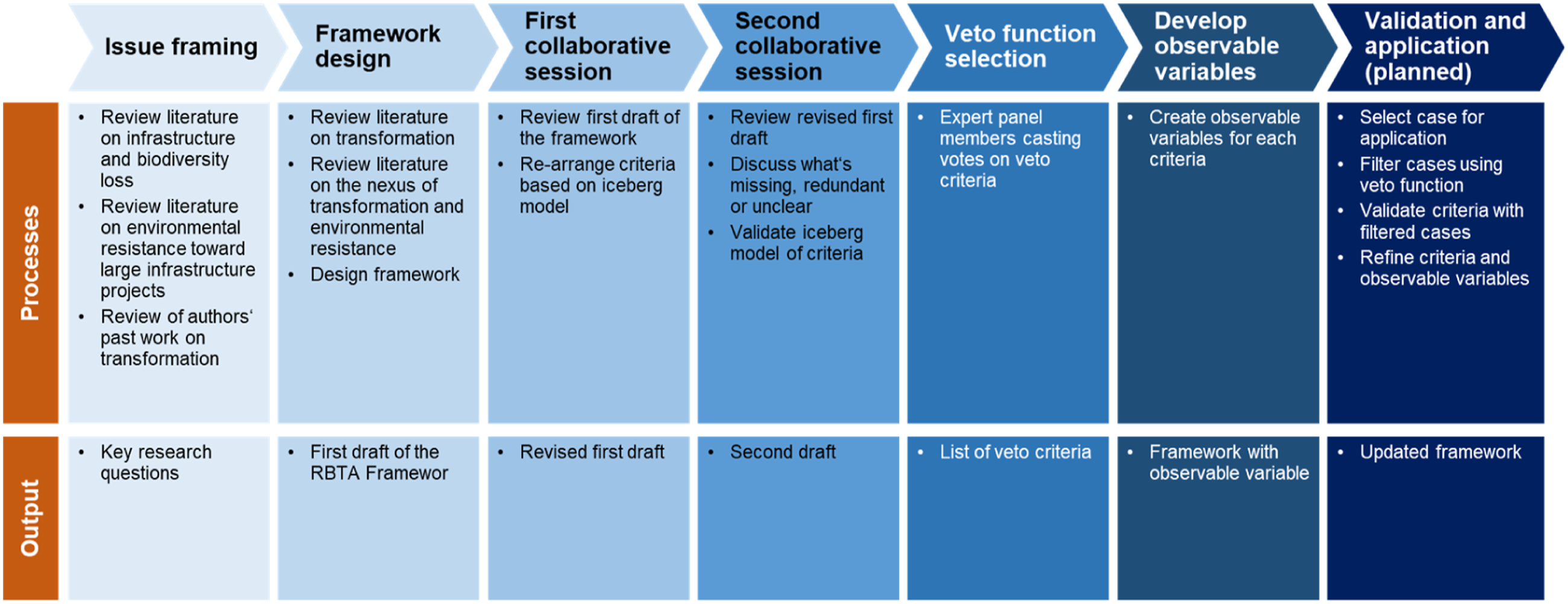
One possible application of the framework is thematic, focussing on one program or investment scheme. The authors aim to apply it first to the Belt and Road Initiative (BRI) due to its large-scale and potential impact on biodiversity.
Officially launched in 2013, BRI was conceived as the modern version of the historical Silk Road, which facilitated trade and cultural exchange across Eurasia for centuries. It is primarily intended to increase trade and connectivity among China, Central, South and Southeast Asia, the Middle East, Europe and Africa. There are five main components: policy coordination, transport connectivity, trade facilitation, currency convertibility and people-to-people exchanges. As of the end of June 2022, 147 countries and 32 international organizations are participating in BRI and the cumulative BRI engagement amounts to 936 billion US dollars (Nedopil 2022).
In the past 10 years, BRI has invested primarily in the sectors of energy, transport and resources in East Africa, Southeast Asia, Central Asia and the Middle East. Many of the projects are inherently extractive, destructive and unsustainable in nature. BRI poses particularly severe threats to biodiversity conservation at a global scale due to several reasons, three main ones are elaborated below.
First, the scale of investment is tremendous. In 2021, BRI financed a total value of USD 59.5 billion worth project developments, on par with the USAID budget at USD 60.4 billion in the same year (Nedopil 2022). BRI is revitalizing and reinforcing the extractive mainstream development discourse; triggering a global competition among international development actors to fund infrastructure projects and undermining the progress that has been made thus far to move away from this model. Second, many of the participating countries are lacking the governance practice that would protect human rights, equity and justice. This results in land grabbing, displacement of people, loss of livelihood and even deadly conflicts. Finally, many of the participating countries and much of the proposed corridors are located in ecologically sensitive areas and biodiversity hotspots areas, harbouring valuable traditional cultures. The impacts of large-scale development, opening up new trade routes and increasing demand for raw materials from these areas will likely have devastating consequences on habitats, biological and cultural diversity, rewinding the efforts made in the past few decades and pushing the ecosystems beyond tipping points.
It is because of these reasons the authors will first apply the framework to resistance cases along the BRI route, to seek out transformative alternatives that can help conserve biodiversity and improve local quality of life, hence enabling these places to embark on a different development pathway. It is also through the application of the framework the authors hope to shed light on what regenerative, just and equitable place-based conservation can look like, which may inspire future direction of BRI.
The application of the framework to BRI cases will be undertaken in 2023. So far, a sample of 32 BRI-related cases have been identified for ReBasTA application, by employing the Environmental Justice Atlas (https://ejatlas.org/) online database. Over the course of the next few months, we are going to apply the framework in two distinct phases: the first phase will consist in a desk review of cases, benchmarking evidence contained in secondary sources with framework criteria relevant to A. Observable outcomes; B. Institutions and Processes; and C. Paradigms. This phase should allow us to screen cases by using the veto function built into the framework; and identify those remaining ones who may present better prospects of transformation based on the rest of the criteria under level A, B and C. The second phase will consist fieldwork, aimed at exploring the degree of transformation of values, ethics and worldviews (framework level ‘D’.). The fieldwork will be carried out in one or two locations and territories identified in the previous stage as good prospects for transformations. In selecting the fieldwork case study(ies), this purposive sampling strategy will be coupled with field access considerations, that is, cases guaranteeing the highest degree of access to sources and the highest degree of safety for researchers shall be considered on top of the framework evaluation.