




Abstract
Firms increasingly express the strategic importance of creating social value in addition to financial and market value in their communications to investors. Yet, it is unclear what a strategic orientation towards social value creation entails and whether it differentiates firms in terms of their sustainability performance. This article provides a conceptualization of strategic social value orientation (SSVO) consisting of three behavioral components (leading business with purpose, support of stakeholders, focus on consequences) and one shared belief (mutuality). Utilizing a novel linguistic, content-analytic measure of strategic social value orientation, we analyse annual letters to shareholders and sustainability ratings across 1580 firm-year observations, indicating that firms with a stronger strategic social value orientation show greater sustainability performance. The article explores commensurability of strategic attention towards social value creation, suggesting that future research prioritize more fine-grained assessments of social value, sustainability strategies and performance. Our study makes two main contributions. First, we advance theory at the intersection of sustainability and strategic orientation literatures by introducing a new concept of a firm’s strategic orientation toward social value creation (i.e. SSVO). Second, we develop and validate an empirical measure at the firm level for analysing a firm’s strategic social value orientation, making an important contribution to the commensuration of sustainability. Our findings offer guidance to scholars and implications for practitioners.
Keywords
Introduction
Writing an extensive letter helps me clarify our strategy and put signposts on the map of where we’re trying to go in the long run.
For-profit firms are increasingly expected to play an active role in improving societal and environmental wellbeing by creating social value in addition to financial and market value. Indeed, most firms state some commitment to paying strategic attention to value dimensions beyond profitability with the implication that ‘organizational behavior towards more societally beneficial outcomes’ (Wijen, Hiatt, Durand, Walls, & Reinecke, 2021, p. 1) follows such strategic attention. Commonly referred to as a firm’s strategic orientation, such attention reflects a set of shared beliefs and principles among decision-makers (Noble, Sinha, & Kumar, 2002) that directs practices and activities facilitating the creation of value (Spanjol, Qualls, & Rosa, 2011) and the realization of organizational performance goals (Cappellaro, Compagni, & Dacin, 2024; Hakala, 2011). Although societal and environmental goals have become more frequent in annual letters to shareholders, 2 jumping from 10% in the early 1980s to more than 90% of letters stating such goals in 2020 across the largest 150 firms in the United States, it is not clear whether this increased attention has effectively translated into enhanced sustainability performance (Rajan, Ramella, & Zingales, 2023).
As interest in value creation to society and environment has grown in practice (Business Roundtable, 2019; Schwab, 2019) and academic circles (Harrison, Phillips, & Freeman, 2020; Lazzarini, 2021), the literature on corresponding strategic orientations (reflecting new foci and changing business contexts 3 ; Hakala, 2011) has also expanded and a variety of sustainability-related strategic orientations have emerged. Examples include environmental orientation (Fraj-Andrés, Martinez-Salinas, & Matute-Vallejo, 2009), stakeholder orientation (Flammer & Kacperczyk, 2016), environmental sustainability orientation (Roxas & Coetzer, 2012) and sustainability orientation (Calic & Mosakowski, 2016; Cheng, 2020), among others. The proliferation has been exponential: whereas 10 articles were published between 2009 and 2016 on sustainability orientation, 36 articles appeared in the following four years, i.e. 2017–2020 (Khizar, Iqbal, Khalid, & Adomako, 2022).
Two issues continue to challenge scholars. First, because of the rapid proliferation with which different strategic orientations reflecting societal and environmental foci have been introduced in the literature, it is difficult to synthesize or compare across studies. In other words, an assessment of commensurability of strategic attention towards non-economic aims is currently lacking. Conceptual and operational definitions of a sustainability orientation can differ substantially across studies. For example, for some scholars a sustainability orientation conceptually reflects prioritized performance dimensions, i.e. ‘embracing goals or objectives that “focus on the preservation of nature, life support, and community. . .for gain, where gain is broadly construed to include economic and non-economic gains to individuals, the economy, and society”’ (Calic & Mosakowski, 2016, p. 740). For others, it is an organizational system of ‘culture, principles, and behaviors that induce diversifying green entrants’ willingness to act on a variety of sustainability-related issues into their operations’ (Cheng, 2020, p. 396). Table 1 illustrates this diversity across a set of selected studies investigating strategic orientations towards sustainability (our focus in this study), highlighting the heterogeneity of conceptualizations and operationalizations.
Selected strategic orientations related to social value creation.
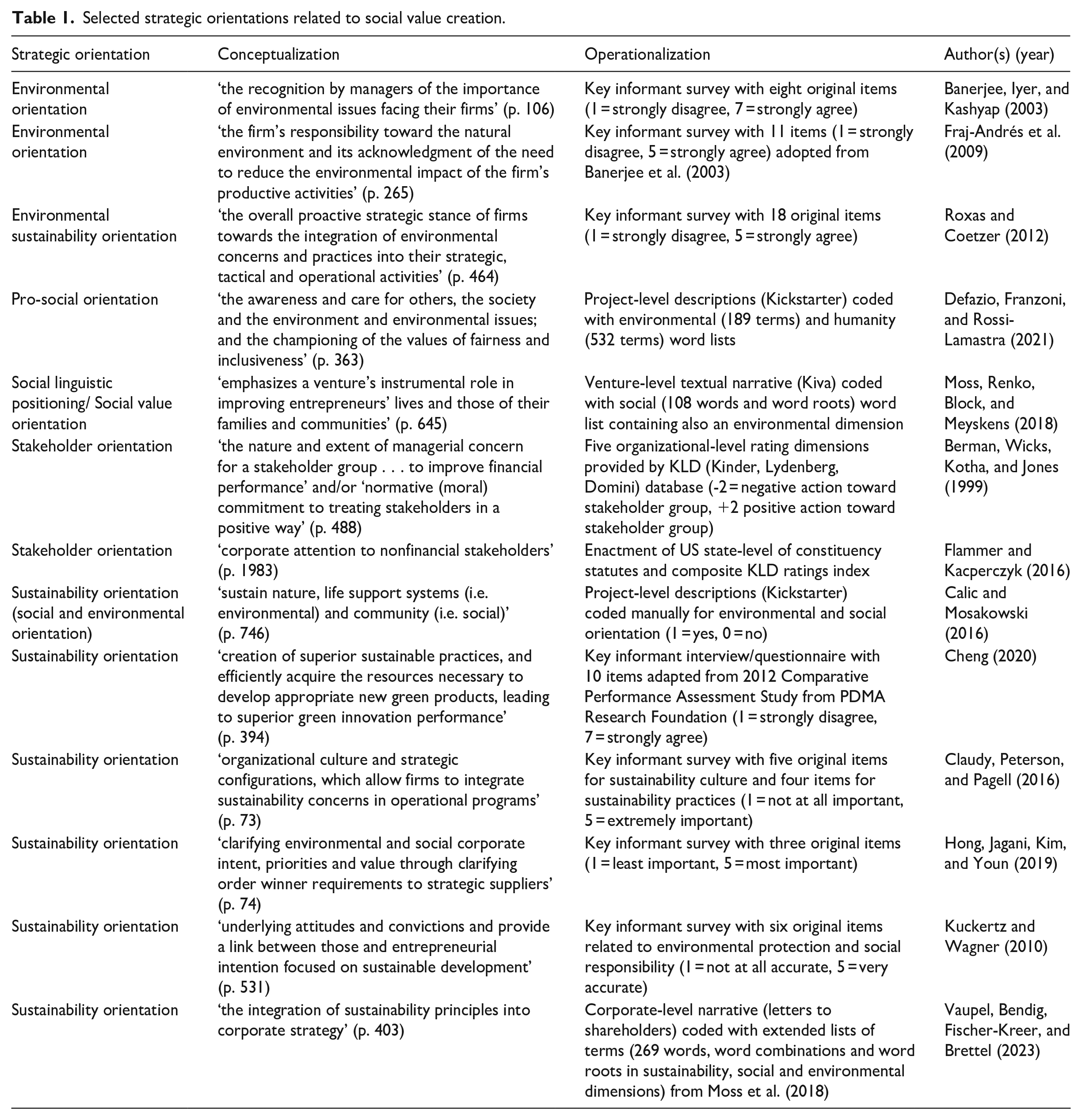
The second challenge relates to the differently scoped conceptual focus across studies. Although the creation of value for society and environment is at the core of sustainability (Gilbert, Rasche, & Waddock, 2011; Reinecke, Manning, & von Hagen, 2012), sustainability-related strategic orientations are often lacking a systematic treatment of the different value dimensions, instead focusing on organizational attention towards a singular stakeholder (e.g. employee orientation; De Bussy & Suprawan, 2012) or the natural environment more broadly (e.g. environmental sustainability orientation; Roxas & Coetzer, 2012). While existing, more focused sustainability-related strategic orientations serve the specific research questions and contexts well, a systematic and comprehensive conceptualization and operationalization of a strategic orientation reflecting the broader domain of value creation for society and environment is needed.
To address these two issues, we propose the novel concept strategic social value orientation (SSVO) and develop a content-analytic measure at the firm level premised on principles of commensuration 4 (Espeland & Stevens, 1998). We conduct an integrative literature review (Torraco, 2016) and content analysis (Gioia, Corley, & Hamilton, 2013) of social value conceptualizations in business literature. The literature review focuses on identifying what managers and firms might pay attention to in the domain of social value in order to develop a concept for a strategic orientation and inform our dictionary. In developing the content-analytic measure, we assess multiple validity dimensions following best practices (Belderbos, Grabowska, Leten, Kelchtermans, & Ugur, 2017; McKenny, Short, & Payne, 2013; Reid, McKenny, & Short, 2023; Short, Broberg, Cogliser, & Brigham, 2010). Analysing letters to shareholders from different samples using computer-aided text analysis, we confirm the predictive validity of strategic social value orientation by examining its relationship with firms’ sustainability performance.
Our research offers two main contributions. First, we advance theory at the intersection of sustainability and strategic orientation by proposing a new concept, as well as developing and validating a dictionary-based measure. Second, we contribute to the discussion of commensuration of sustainability by (a) comparing related dictionary-based measures (i.e. Defazio et al., 2021; Moss et al., 2018; Vaupel et al., 2023) and assessing the commensurability of strategic attention towards non-economic aims, and (b) evaluating the relationship of strategic social value orientation and related sustainability orientations to a firm’s sustainability performance. Our findings suggest that, despite different aims and contexts across studies, the examined set of dictionary-based measures is able to reasonably quantify a firm’s strategic orientation and predict its sustainability performance, with our measure providing greater explanatory power. In other words, we provide evidence across firms, industries and geographies for the meaningful contribution of strategic social value orientation (concept and construct) to the commensuration of sustainability and the prediction of sustainability performance. We discuss implications of our findings for theory and future research, as well as for practice.
Next, we present the theoretical foundation undergirding the concept of strategic social value orientation. We provide a description of the six-step methodology used to develop and validate the strategic social value orientation construct, including a comparison with related strategic orientations and predictive ability for sustainability performance. Finally, we conclude with a discussion of findings, theoretical contributions, implications for practice, limitations and opportunities for future research.
Conceptual Background
What an organization focuses its attention on (and therefore commits resources to and directs activities towards) is reflected by its strategic orientation(s). Strategic orientation represents a firm’s strategic focus determining managerial resource allocation (Berman et al., 1999) and influences how firms create value for customers and shareholders, for example by investing in the development of novel products (Spanjol et al., 2011; Zhou, Yim, & Tse, 2005). A number of strategic orientations have been identified and studied in terms of their impact on organizational performance, including market orientation (Kohli & Jaworski, 1990), technology orientation (Gatignon & Xuereb, 1997) and learning orientation (Baker & Sinkula, 1999), among others. While market (subsuming customer and competitor orientations) and technology orientations represent a firm’s relative focus on core market elements (Spanjol, Mühlmeier, & Tomczak, 2012), a learning orientation (Baker & Sinkula, 1999) reflects a firm’s focus on anticipating and reacting to market changes. Undergirding this literature is the argument that the alignment of strategic orientation with organizational and environmental conditions will produce superior financial and market performance (e.g. Ellis, 2006; Kirca, Jayachandran, & Bearden, 2005).
As firms have broadened their performance assessment to encompass societal and environmental value dimensions, sustainability-related strategic orientation studies have proliferated (Khizar et al., 2022). This proliferation has led to a lack of comparability in conceptualization and measurement of related strategic orientations, as well as their relationship to organizational sustainability performance. Furthermore, many studies examining sustainability performance (implicitly) assume that firms’ self-reported sustainability efforts (e.g. using the Global Reporting Initiative) or third-party assessments based on firms’ sustainability disclosures, accurately reflect a firm’s sustainability performance (e.g. Boiral & Heras-Saizarbitoria, 2017). 5 Thus, researchers have potentially confounded sustainability reporting with societal and environmental performance. This is particularly problematic as it limits the effectiveness of current measurement approaches.
To overcome the identified challenges, we develop a standardized construct to examine the strategic attention firms pay to social value creation (i.e. value to society and environment) based on textual analysis, and validate its relationship to sustainability performance explicitly. Next, we review relevant literature on social value in business to establish a conceptual foundation for strategic social value orientation.
Conceptualizing Social Value
The comparability of social value conceptualizations and measures remains difficult because social value is a concept that lacks consensus in the academic business literature (Rawhouser, Cummings, & Newbert, 2019; Saebi, Foss, & Linder, 2019), hindering a common understanding (Kroeger & Weber, 2014; Tello, 2020) among scholars. In principle, social value can be understood as an integrative concept that connects two foundational elements: social and value. While social refers to any mode of human coexistence differentiating between the collective and the individual (Leisering, 2013; Schatzki, 1988), value represents what is seen as desirable, influencing the selection of appropriate actions (Kluckhohn, 1951). Hence, in a simplified manner, social value creation in business can be broadly understood as a firm’s output that has a beneficial effect on people coexisting in a natural environment (Garst, Blok, Branzei, Jansen, & Omta, 2021; Martí, 2018). However, given the conceptual heterogeneity of social value, we review and consolidate relevant literature in leading business journals by first characterizing and later integrating the definitional landscape of social value along its two constituent elements.
What is value?
Value is a multilevel concept central to different disciplines, encompassing a wide array of meanings (Bourne & Jenkins, 2013; Kraatz, Flores, & Chandler, 2020). The concept of value in business relies on sociological and psychological perspectives. In sociology, Kluckhohn’s (1951) definition refers to value as an implicit or explicit conception of the desirable influencing selection among alternative actions. In psychology, Schwartz and Bilsky (1987) conceptualize value as a cognitive representation of beliefs about the desirable guiding human behavior.
Both origins are recognizable in the business literature, where value represents the beneficial character that firm activities have to customers and to the firm itself (e.g. McWilliams & Siegel, 2011), suggesting that the value concept is inevitably linked to value creation and value capturing concepts inherent to business making (e.g. Bowman & Ambrosini, 2000; Harris & Freeman, 2008).
Value in a business context can be created through the combination of multiple capabilities and resources to identify, develop and produce market offerings (such as new products) that provide benefits to the firm and the customer (e.g. Mizik & Jacobson, 2003). In contrast, value capturing represents the appropriation of financial and non-financial benefits from value creation by the firm itself and its stakeholders (e.g. employees, customers, broader society). Put differently, firms capture value by securing profits (financial mechanisms) while stakeholders capture value by experiencing benefits from the created value (Bowman & Ambrosini, 2000; Lepak, Smith, & Taylor, 2007).
What is social?
Social is a concept characterized by definitional ambiguity (Santos, 2012; Walker, 2016), referring on the one hand to the interaction between at least two persons or any mode of human coexistence, and on the other hand to the qualification of living conditions as (un)acceptable (Leisering, 2013; Schatzki, 1988). In business literature, the concept social utilizes both connotations, resulting in different meanings denoting, for example, a focus on individuals below certain living standards (Kroeger & Weber, 2014) or a relation to society (Freudenreich, Lüdeke-Freund, & Schaltegger, 2020).
In sum, social and value are concepts mirroring the interdependency between society and business (Harris & Freeman, 2008; Wicks, 1996). Importantly, how these concepts are understood by executives determines how firms interpret and enact their responsibility to contribute to society and environment – that is, a firm’s strategic social value orientation. To build the conceptualization and operationalization of strategic social value orientation, we thus inductively develop a theoretical foundation for a strategic orientation focused on social value, analysing and consolidating social value definitions along these four critical conceptual properties (see Table 3): (1) meaning of value, (2) value creation assumptions, (3) value capturing assumptions and (4) meaning of social.
Method and Results
Strategic social value orientation: Development and validation
We develop and validate strategic social value orientation following a six-step process (Figure 1) and using best practices outlined by Short et al. (2010), McKenny et al. (2013), Belderbos et al. (2017) and Reid et al. (2023). First, we conduct an integrative literature review and content analysis of leading business journals to create a foundational conceptualization of strategic social value orientation. Second, we use an iterative content development and validation approach using expert judgement, topic modelling and keyword-in-context analysis to generate a list of terms to build the strategic social value orientation dictionary. Third, we assess the external validity of the strategic social value orientation measure using CEO letters to shareholders, computer-aided text analysis and three different sampling frames for a six-year time period (2014–2019) enabling a comparative generalization (Tsang & Kwan, 1999) of the measure. Fourth, we use factor analysis to assess the dimensionality of strategic social value orientation. Fifth, we test convergent validity by correlating strategic social value orientation with three related content-analytical measures: pro-social orientation (Defazio et al., 2021), social value orientation (Moss et al., 2018) and sustainability orientation (Vaupel et al., 2023). In the sixth and final step, we evaluate predictive validity using hierarchical regressions and examine the effect of strategic social value orientation on CSRHub 6 sustainability ratings (i.e. an indicator of sustainability performance).
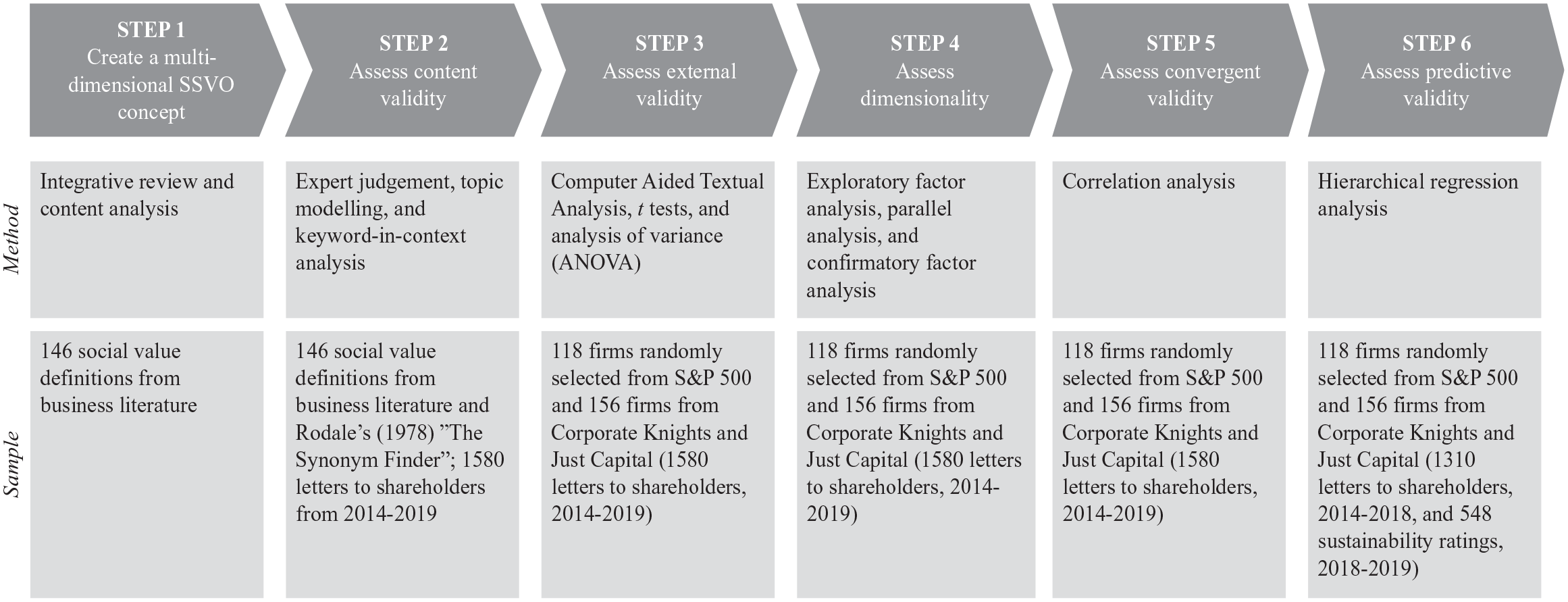
Stepwise development and validation of strategic social value orientation (SSVO).
Step 1: Conceptualizing strategic social value orientation
We conducted an integrative literature review of social value definitions in leading business journals employing replicable best practices (Elsbach & Knippenberg, 2020; Hiebl, 2023; Torraco, 2016; Tranfield, Denyer, & Smart, 2003) to conceptualize strategic social value orientation and inform our dictionary. Adopting a journal-driven approach, we used the Financial Times list of top 50 business journals as a starting point (Aguilera, Aragón-Correa, Marano, & Tashman, 2021) and distilled the list based on multiple journal ratings, 7 initially searching 15 journals (Table 2) across management, marketing, organization studies, accounting, business ethics and strategy domains, along with three specialized journals (Business & Society, Journal of Cleaner Production and Journal of Product Innovation Management) relevant to strategic orientation and social value creation.
Journals represented in the final literature review sample (articles = 146).
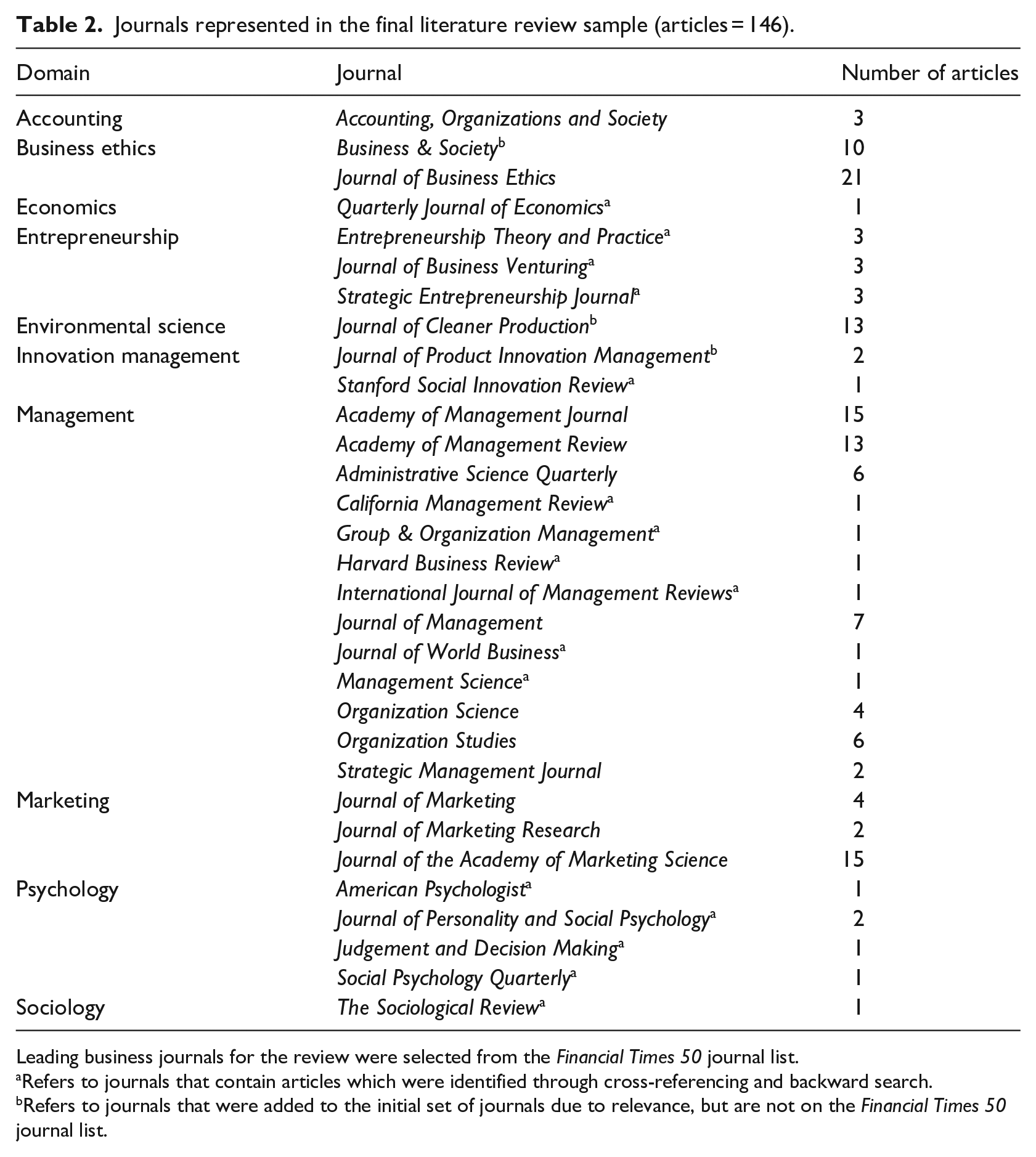
Leading business journals for the review were selected from the Financial Times 50 journal list.
Refers to journals that contain articles which were identified through cross-referencing and backward search.
Refers to journals that were added to the initial set of journals due to relevance, but are not on the Financial Times 50 journal list.
The article sampling procedure for the review consisted of three stages: pre-scanning, searching and screening (Figure 2). First, we conducted a literature pre-scan using the term ‘social value’ to collect diverse but representative articles and get a sense for differences in the meaning of the same word or the use of different words for the same meaning. We sharpened our sampling strategy by extending the search keywords with terms used interchangeably in literature, such as societal value, social impact or societal contribution. Second, we conducted a full-text search in the selected 15 journals using the Business Source Complete database (EBSCO) and individual journal sites, identifying 2913 relevant articles.
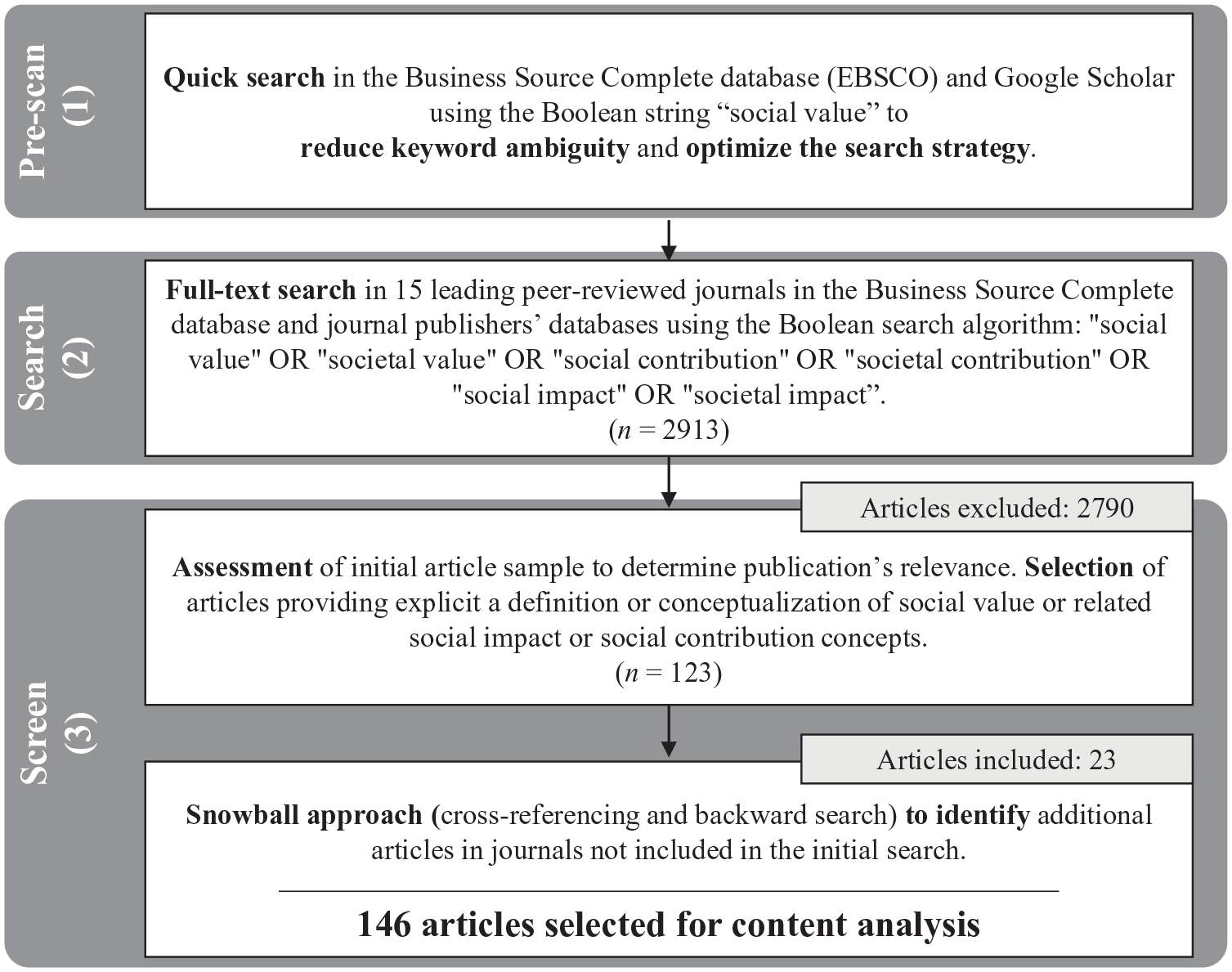
Review of social value definitions: Three-stage sampling approach.
Third, two authors simultaneously examined 5% of the initial sample (145 articles) and agreed on each article’s relevance (i.e. definition or conceptual description of social value is provided). Afterwards, the same two authors independently reviewed the remaining articles (half the sample each) to decide about inclusion into the final sample; ambiguous candidates were discussed and agreed on jointly. This step yielded 123 articles to be retained for analysis. We followed Hiebl’s (2023) recommendation to use snowballing techniques, considering outlets beyond the initial journal selection to capture different but relevant conceptualizations (e.g. societal outcome, prosociality) enhancing the review quality. The snowballing step yielded additional 23 articles in 16 journals. The final review sample comprised 146 articles from 31 journals (Table 2).
We adopted an inductive approach (Gioia et al., 2013; Krippendorff, 2004; Weber, 1990) to make sense of social value definitions, iteratively moving from social value conceptual properties to theoretical strategic orientation interpretations. For this purpose, we listed social value definitions in a data extraction form using context information (e.g. authors, journal and publication date) to develop and refine our coding and categorization scheme (Weber, 1990). We applied an open coding approach with phrases as the unit of text to be coded (Weber, 1990) using detailed coding rules (see Table 3) accounting for accuracy and transparency requirements pertinent to a content analysis (Krippendorff, 2004).
Content analysis coding scheme used to conceptualize strategic social value orientation.
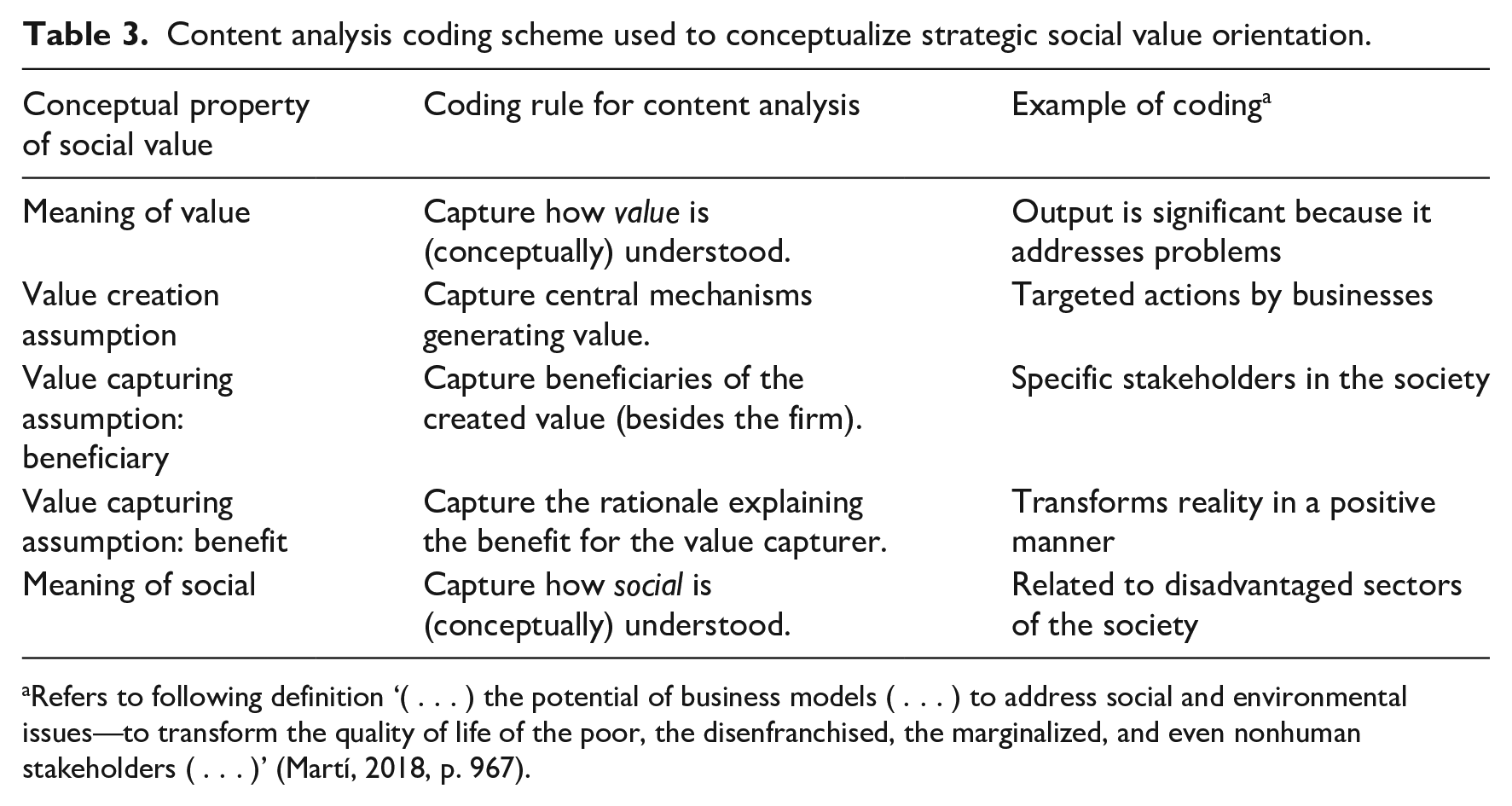
Refers to following definition ‘( . . . ) the potential of business models ( . . . ) to address social and environmental issues—to transform the quality of life of the poor, the disenfranchised, the marginalized, and even nonhuman stakeholders ( . . . )’ (Martí, 2018, p. 967).
Two authors reviewed the sample and agreed upon categorization in order to ensure reproducibility of the content analysis process and limit potential bias inherent to qualitative approaches (Neuendorf, 2002). We cycled multiple times through the open codes to generate a meaningful number of first-order codes. These capture the conceptual essence of social value, that is theoretically relevant to the strategic orientation literature, along the four conceptual properties (i.e. meaning of value, value creation and capturing assumptions, meaning of social). Given the interplay of these conceptual properties, the first-order concepts (definition-based) were aggregated into second-order themes (researcher-based) reflecting activities and beliefs (i.e. constituent elements of strategic orientations) inherent to the creation of social value. These could then be combined into aggregate dimensions representing theoretical themes of a strategic orientation focused on social value. We utilized the data structuring approach provided by Gioia et al. (2013) to generate a theoretical foundation of strategic social value orientation, building on similarities and differences among the perspectives on social value. Figure 3 visualizes the results of this process.
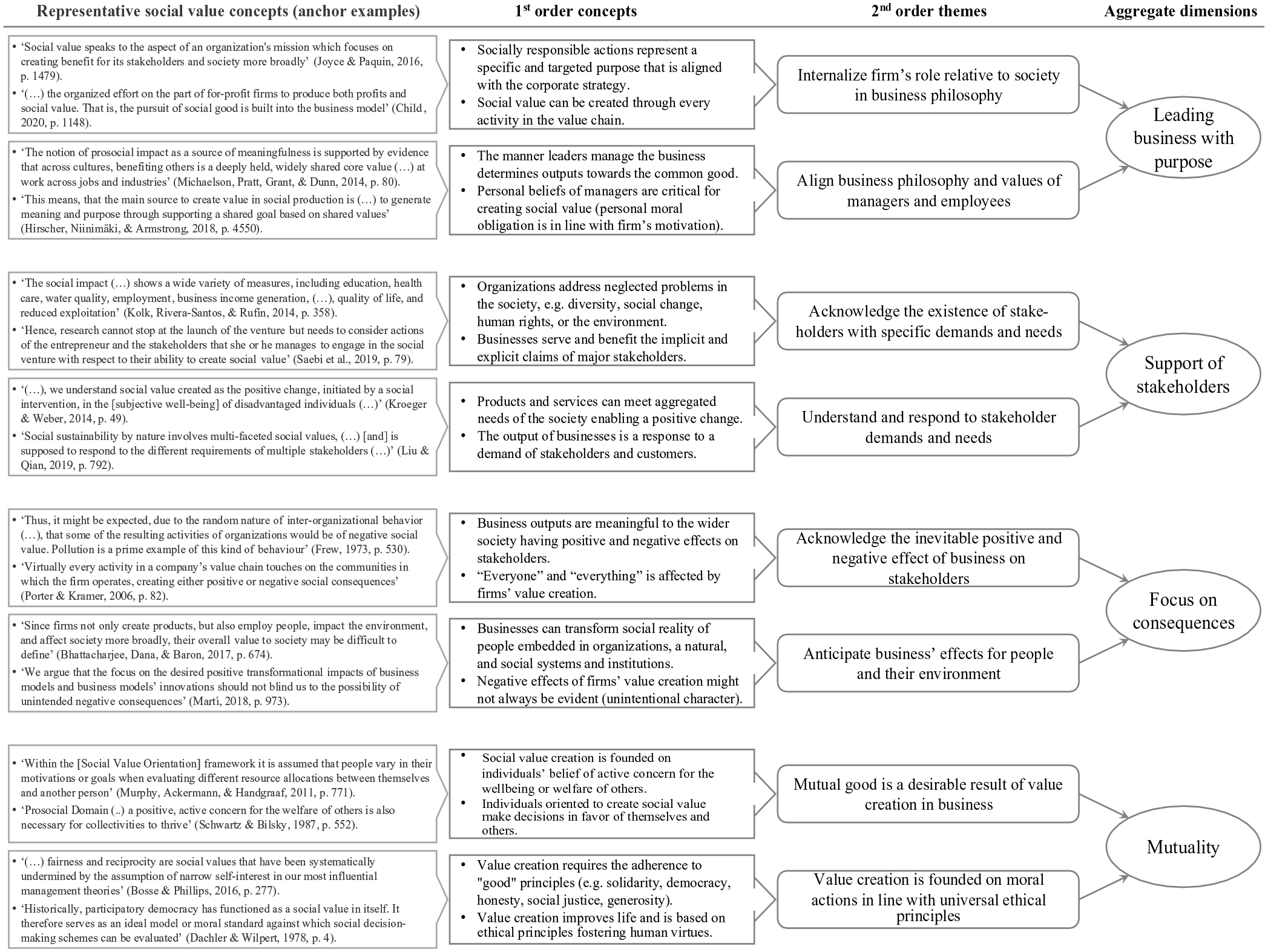
Strategic social value orientation (SSVO) conceptualization: Data structure.
Based on the content analysis, we define strategic social value orientation as a set of behaviors and shared beliefs directing business activities towards the promotion of better living conditions for people embedded in a natural and institutional environment. Hence, strategic social value orientation represents a firm’s orientation towards promoting the common good, providing individuals in the organization with corresponding beliefs and behaviors that influence strategic, tactical and operational activities. We propose three behavioral components (leading business with purpose, support of stakeholders and focus on consequences) and one shared belief (mutuality) that are conceptually related (see Figure 4).
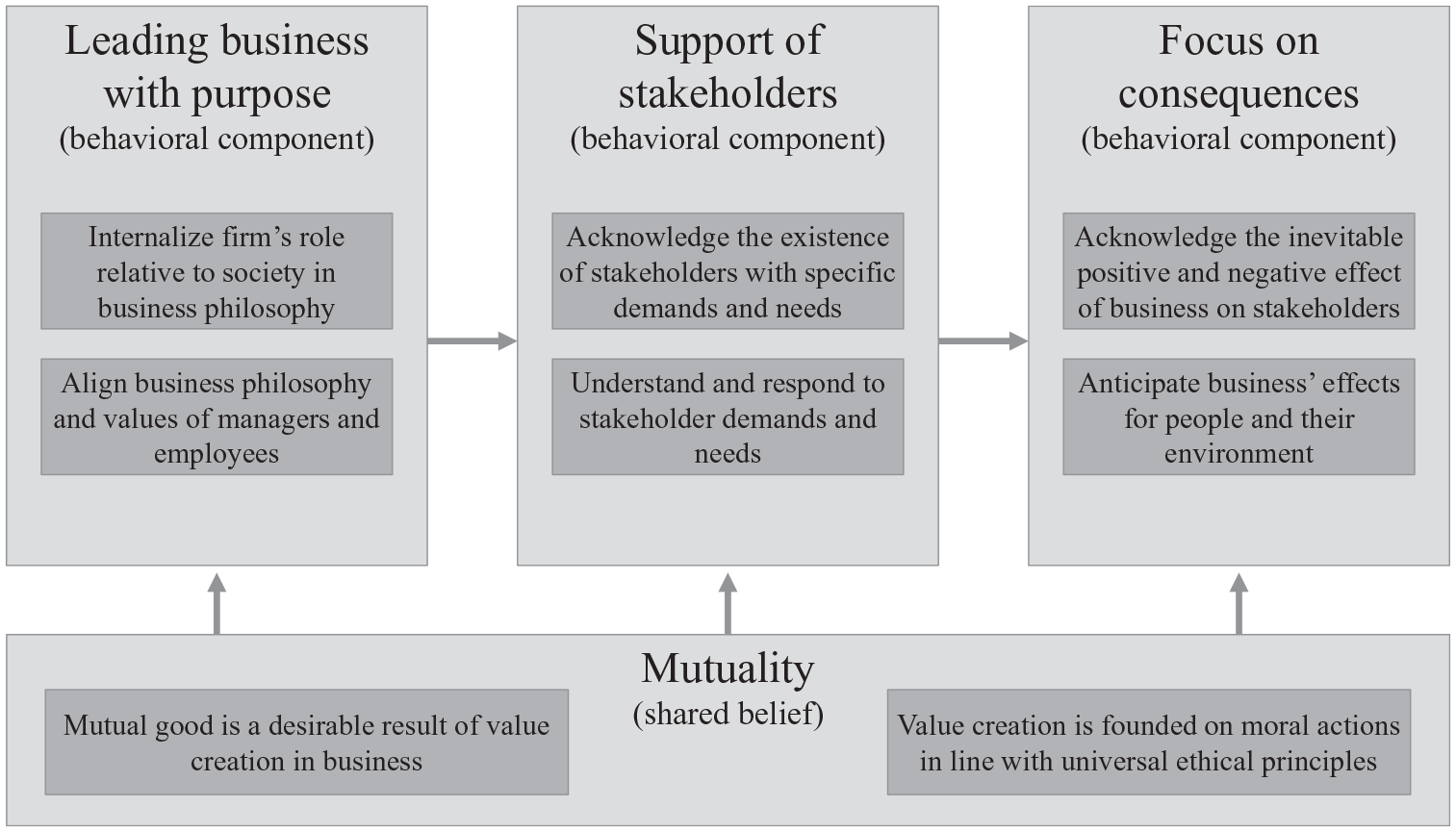
Strategic social value orientation dimensions.
Leading business with purpose, the first behavioral component of strategic social value orientation, refers to the fundamental understanding that every business is embedded in a societal, environmental and institutional system and consequently requires a definition of its role relative to this system. The clarity of a firm’s role determines its organizational identity, enabling the creation of value for different stakeholders (George, Haas, McGahan, Schillebeeckx, & Tracey, 2023) and the promotion of the common good (Hollensbe, Wookey, Hickey, George, & Nichols, 2014). Such social value creation can occur through business models (Freudenreich et al., 2020), products (Stephan, Andries, & Daou, 2019), partnerships (Vestergaard, Murphy, Morsing, & Langevang, 2020), or targeted interactions with stakeholders beyond the firm’s boundaries (Bridoux & Stoelhorst, 2016). Purpose-driven organizations are capable of integrating ‘doing good’ practices into leadership and management (Dillenburg, Greene, & Erekson, 2003) as well as into operations (Yawar & Seuring, 2018). The definition of a firm’s purpose and alignment with individual values represents the organization-wide social consciousness of the business and sense of duty (based on the assessment of which firm actions are ‘the right ones’), providing decision-makers with a value creation compass.
The second behavioral component, support of stakeholders, rests on three basic assumptions: (1) a firm’s systematic response to its stakeholder groups is critical to success (Freeman, 1994); (2) stakeholder groups differ in terms of their demands and needs and can be distinguished by their shared demands and needs (Crilly, Zollo, & Hansen, 2012); and (3) these demands and needs can be fulfilled through targeted firm actions (Saebi et al., 2019). A firm’s support of stakeholders implies the acknowledgement of stakeholders beyond the customers and employees, referring to other interest groups in general (Nason, Bacq, & Gras, 2018), specific interest groups affected by business actions or specific problems (Smith & Besharov, 2019), or a community’s social fabric (Zahra, Gedajlovic, Neubaum, & Shulman, 2009). An acknowledgement of broader stakeholder groups is accompanied by an understanding of and response to specific demands and needs (Kolk, Rivera-Santos, & Rufín, 2014; Saebi et al., 2019), enabling stakeholders to participate with dignity in society (Kruse, Goeldner, Eling, & Herstatt, 2019) that in turn promotes the overall betterment of the societal and environmental system.
Our review also suggests that organizations willing to create social value need to acknowledge that they have inevitable positive and negative effects on people embedded in a natural and institutional environment. Thus, the third behavioral component of strategic social value orientation suggests that organizations adopt a focus on consequences, referring to the anticipation of potential (intended and unintended) effects on society and environment that result from business goals, decisions and actions in order to steer the business towards beneficial consequences (Maas & Liket, 2011). The anticipation of potential effects (e.g. externalities of business activities) goes beyond the intentional fulfilment of customer needs through market offerings. This behavioral component is founded on the assumption that firms have unavoidable effects (e.g. use of resources, employment of personnel) on people, institutions and the natural environment, which are inherent to business making (Martí, 2018). Firms that anticipate potential consequences of their business activities are able to steer value creation towards meaningful effects on the wider society and environment that might enhance perceptions of wellbeing or life satisfaction (Huang & Rust, 2011) in the long run.
The final component of strategic social value orientation reflects an organizational belief, rather than a behavioral component, which we term mutuality. More specifically, studies have highlighted the importance of a moral imperative guiding decision-making (Robin & Reidenbach, 1986; Schwartz & Bilsky, 1987). Adherence to virtuous values such as generosity, honesty, solidarity or fairness (Hehenberger, Mair, & Metz, 2019; Melé, 2016) regulates human selfishness (Kraatz et al., 2020; Solinger, Jansen, & Cornelissen, 2020) and enables people, institutions and the natural environment to coexist. This normative component (Lazzarini, 2021) of strategic social value orientation represents a shared belief in organizations and supports the implementation of the three behavioral components. Mutuality suggests that actions guided by ethical standards and moral principles (Dachler & Wilpert, 1978) represent a purposeful decision in favor of the common, therefore creating value for society and environment. Mutuality can be linked to integrative social contracts theory (Donaldson & Dunfee, 1994) and organizational virtue orientation (Payne, Brigham, Broberg, Moss, & Short, 2011). It extends the transactional understanding of exchange of benefits by the morality aspect, enabling organizations to go beyond self-serving actions and towards the maximization of mutual payoffs (Donaldson & Walsh, 2015; Murphy, Ackermann, & Handgraaf, 2011).
Step 2: Assessing content validity of strategic social value orientation
Having conceptually defined strategic social value orientation, we propose that each of the four dimensions can be reliably measured with a comprehensive list of terms (linguistic, content-analytic measure). Hence, we matched social value definitions from the reviewed literature to each of the four dimensions and created deductively a collectively exhaustive and mutually exclusive list of terms (Short et al., 2010) for each dimension, including adverbs, adjectives, substantives (singular and plural), verbs (alternative tenses) and word combinations. We further enriched this list with synonyms found in Rodale’s (1978) The Synonym Finder.
To validate the degree to which the deductive list of terms (864 terms) match the theoretical definition of strategic social value orientation dimensions (Nunnally & Bernstein, 1994), we engaged two independent researchers 8 with relevant expertise. Both assessed independently whether each term captured the definition of the corresponding strategic social value orientation dimension. This validation step yielded an interim dictionary consisting of 317 terms. We observed a high interrater reliability (Holsti, 1969) of .87, demonstrating consistency between the raters and confirming the content validity of our interim dictionary (Short et al., 2010).
Next, we supplemented the interim dictionary with terms predominantly used in managerial practice by inductively drawing terminology from the CEO letters to shareholders (1580 firm-years). To do so, we first used the ‘generate inductive word list’ function of CAT Scanner yielding additional 17 terms (e.g. United Nations or ESG). Second, we examined the letters to shareholders using Latent Dirichlet Allocation (LDA), a probabilistic topic modelling approach (Blei, 2012; Hannigan et al., 2019). The LDA model (coherence value: 0.484; document-topic density: 0.31; word-topic density: symmetric) identified five topics related to energy, health and sustainability in general that we used to (a) cross-check the interim dictionary 9 and (b) learn about the contextualization of the wording 10 in the letters to shareholders.
A key challenge in measuring any concept with a dictionary is to handle polysemy correctly. That is, we need to avoid words that conceptually relate to strategic social value orientation but are often used in another context. At the same time, we need to allow for words that account for strategic social value orientation but were not derived from the concept. Thus, we iteratively optimized the interim list of terms using principles of map analysis (Carley, 1997) and conducting a keyword-in-context analysis (Manning & Schütze, 1999) to manually identify syntactic frames 11 and verify the appropriateness of keywords in the context of the documents in which they occur. To do so, we analysed how specific terms are used in actual sentences in a representative subset of 160 letters to shareholders (10% of the total sample, balancing years, countries and industries).
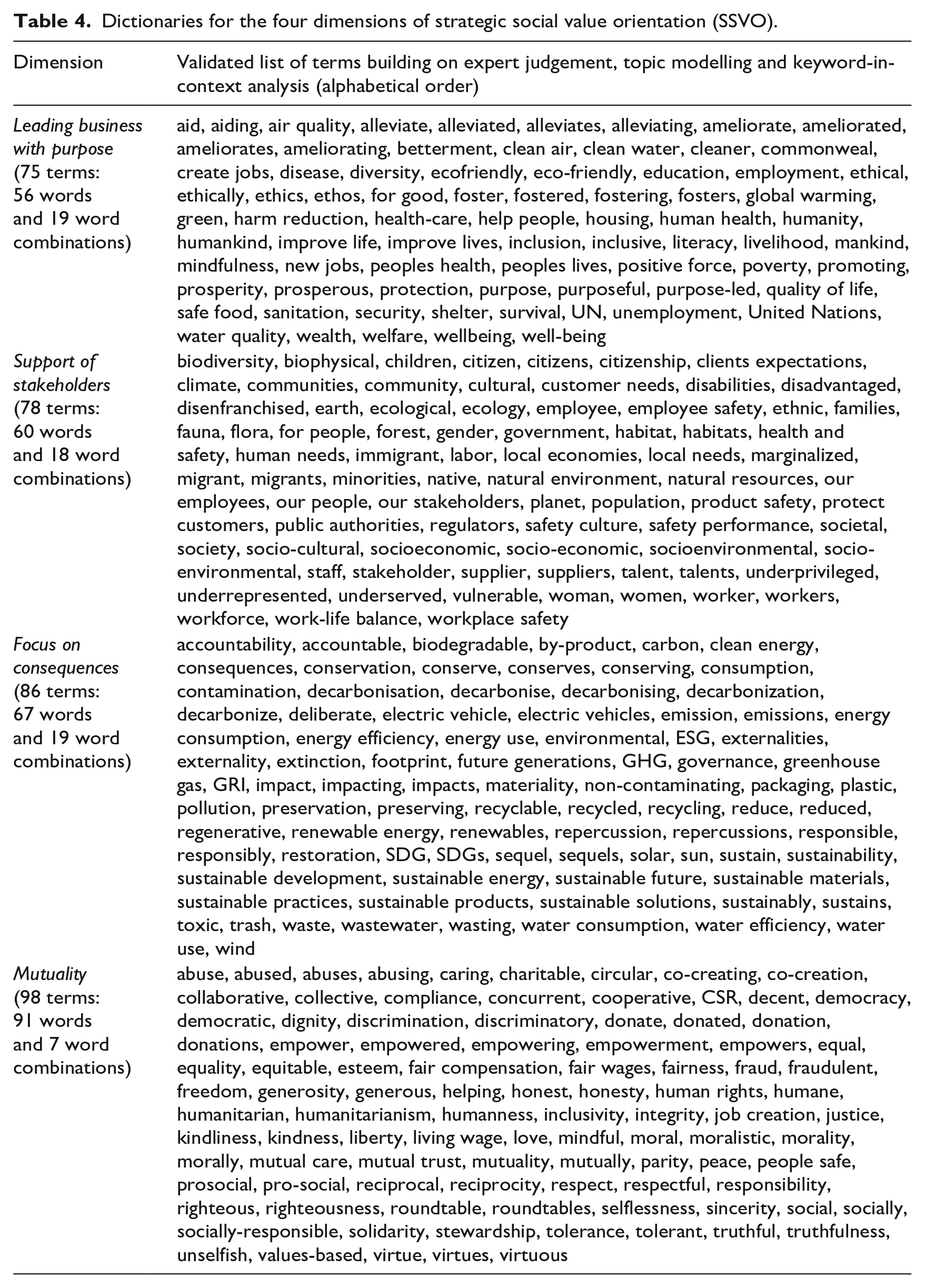
Keywords that were frequently (in more than 60% of the subset) used ambiguously or did not capture the intended meaning, were removed or adapted. For example, the word ‘environment’ is used mainly to address the commercial environment of a firm and not the natural environment as intended in our dictionary (e.g. Pool Corporation’s letter to shareholders in 2015: ‘All in all, a strong year in a challenging, external market environment’). Similarly, ‘nature’ is used mainly to address the character of objects, businesses or decisions (e.g. Amazon’s letter to shareholders in 2014: ‘We also like the fixed cost nature of original programming’). Consequently, we eliminated 32 terms and adapted 73 terms by constructing meaningful combinations of individual words, such as ‘water efficiency’ or ‘sustainable materials’. The final dictionary consists of 337 terms in total (274 words and 63 word combinations) capturing the meaning of each dimension (Table 4).
Dictionaries for the four dimensions of strategic social value orientation (SSVO).
Step 3: Assessing external validity of strategic social value orientation
To assess external validity of our content-analytic measure, we used the strategic social value orientation measure in three different firm samples as the application to different populations allows for empirical generalization (Tsang & Kwan, 1999). We built on a cross-industry sample with 160 firms having a sustainability emphasis randomly selected from JUST Capital (JC) and Corporate Knights (CK), and 120 firms having a financial emphasis randomly selected from S&P 500 (further details are provided in web appendix A).
We measured strategic social value orientation in CEO letters to shareholders from 2014 to 2019 using the developed dictionary and utilizing a non-commercial computer-aided text analysis tool designed by McKenny, Short, and Newman (2012; CAT Scanner), widely used in the management literature (Short, McKenny, & Reid, 2018). To control for the varying length of letters to shareholders, we counted the number of words related to strategic social value orientation and divided them by the total number of words in the focal letter (Payne et al., 2011). We excluded firms that only published a single letter to shareholders in the period 2014–2019 (e.g. Arista Networks, ServiceNow). This resulted in an overall sample of 274 firms and 1580 firm-year observations.
To confirm external validity across different firm orientations, we used data from CSRHub. We selected CSRHub’s measure that aggregates state-of-the-art ranking and ratings in order to avoid reputation management bias potentially resulting from relying on a single ranking or rating (e.g. Vigeo, Dow Jones Sustainability Index or KLD databases). Additionally, such an aggregated data source enables to compensate for strengths and weaknesses as well as for specificity and comprehensiveness of single rankings and ratings. We split the sample into high sustainability-oriented and low sustainability-oriented subsamples based on CSRHub sustainability rating (0 to 100 scale). For each year, we identified firms scoring above and below the median CSRHub sustainability ratings. Firms with a sustainability rating larger than the median in a given year were classified into the high sustainability-oriented subsample (184 firms). Firms with a sustainability rating equal to or smaller than the median were classified into the low sustainability-oriented subsample (179 firms).
First, we conducted one sample t-test (compared to a test statistic of zero) for the overall sample and the subsamples for each dimension of the focal construct. As shown in Table 5, all strategic social value orientation dimensions are significant at p < .01 indicating that shareholder letters in our overall sample and the two subsamples contain language consistent with our construct. Across the full sample, strategic social value orientation language represented on average 1.73% of the total language used in CEO letters to shareholders with focus on consequences the strongest dimension (0.61%).
Descriptive statistics & t-tests indicating language representing strategic social value orientation (2014–2019).
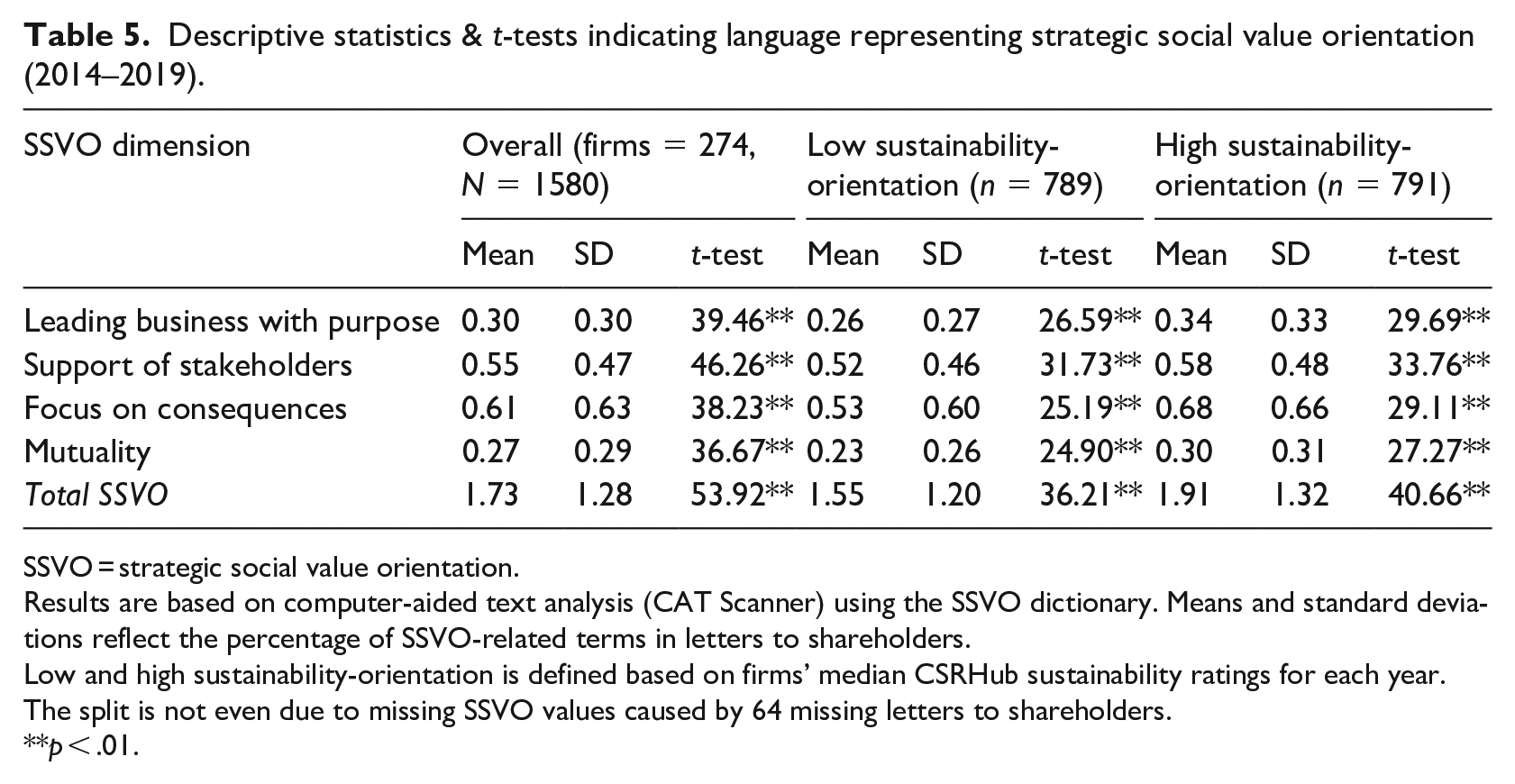
SSVO = strategic social value orientation.
Results are based on computer-aided text analysis (CAT Scanner) using the SSVO dictionary. Means and standard deviations reflect the percentage of SSVO-related terms in letters to shareholders.
Low and high sustainability-orientation is defined based on firms’ median CSRHub sustainability ratings for each year. The split is not even due to missing SSVO values caused by 64 missing letters to shareholders.
p < .01.
Further, we evaluated mean differences between the low sustainability-oriented and high sustainability-oriented subsamples using one-way analysis of variance (ANOVA). The results indicated significantly higher mean values of total strategic social value orientation scores for the high sustainability-oriented subsample (further details are provided in web appendix B).
Step 4: Assessing dimensionality of strategic social value orientation
We assessed the dimensionality of strategic social value orientation by examining the factor structure using CAT Scanner and our dictionary for the overall sample. In doing so, we followed best practices proposed by Reid et al. (2023) and applied by Anglin, Wolfe, Short, McKenny, and Pidduck (2018) and conducted exploratory factor analysis (EFA) followed by parallel analysis (PA) and confirmatory factor analysis (CFA). This allowed us to examine the observed relationships among different dimensions with a latent variable representing the overall strategic social value orientation construct (Brown, 2006). For the EFA, we retained eigenvalues greater than 1 (Kaiser, 1960) and used a factor loading of 0.40 to determine which measures to include (Anglin et al., 2018). Our loadings suggested a one-factor solution with leading business with purpose (loading = 0.54), support of stakeholders (loading = 0.70), focus on consequences (loading = 0.54) and mutuality (loading = 0.65) loading on one factor (eigenvalue = 1.49). We conducted parallel analysis following Horn’s approach (Dinno, 2009) to advance our criteria for deciding what factors to retain, considering normal sampling error, and identified an adjusted eigenvalue of 2.14 with an estimated bias of 0.05. Based on thresholds outlined by Brown (2006), the results of the CFA revealed that the model overall has a good fit (chi-square = 17.777, RMSEA = 0.071, CFI = 0.987, TLI = 0.962, SRMR = 0.021). The detailed results of the dimensionality analysis are provided in web appendix C.
Step 5: Assessing convergent validity of strategic social value orientation
Convergent validity was assessed by correlating strategic social value orientation to three related content-analytical measures: pro-social orientation (Defazio et al., 2021), social value orientation (Moss et al., 2018), and sustainability orientation (Vaupel et al., 2023). First, we confirmed that for all measures the t-statistic is significant (p < .01) indicating that our sample of letters to shareholders contains language consistent with the related measures. Further, the three measures significantly correlate (p < .01) with strategic social value orientation (Table 6) demonstrating convergent validity. Details on the comparison of strategic social value orientation to the three related content-analytical measures are provided in web appendix D.
Correlation matrix for related dictionary-based measures (2014–2019; firms = 274, N = 1580).
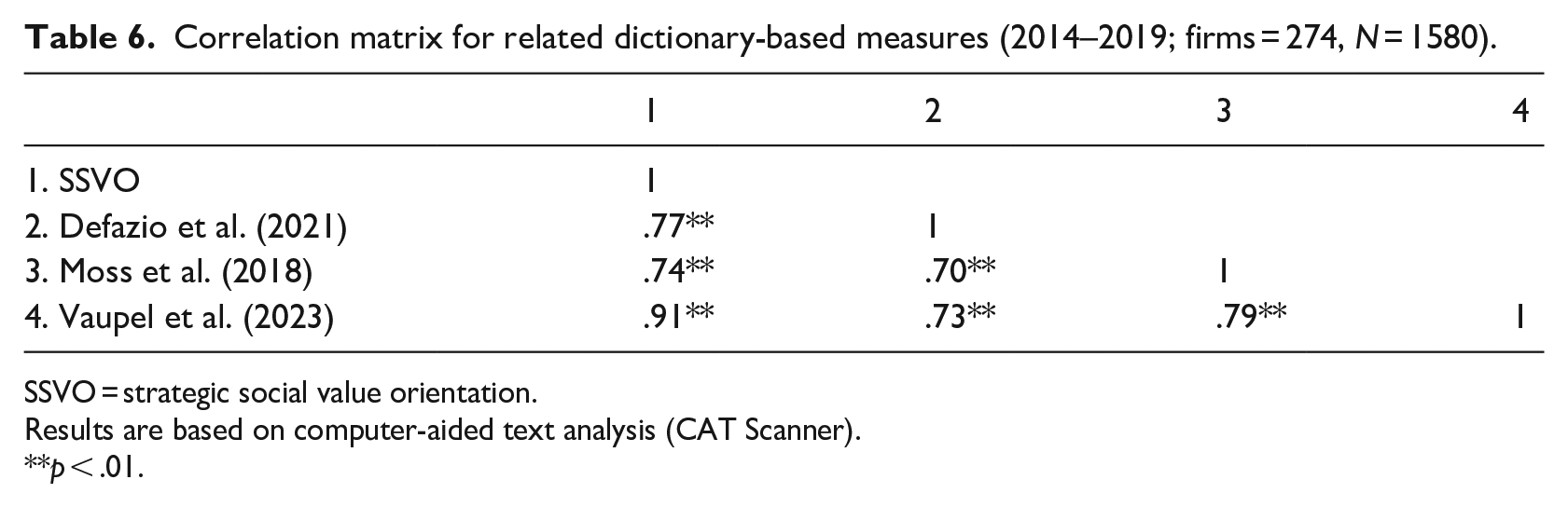
SSVO = strategic social value orientation.
Results are based on computer-aided text analysis (CAT Scanner).
p < .01.
Step 6: Assessing predictive validity of strategic social value orientation
We assessed the predictive validity of our strategic social value orientation measure, i.e. the extent to which the measure predicts other theoretically related constructs at a future point in time (Cronbach & Meehl, 1955; Kerlinger & Lee, 2000). More specifically, we examined the effect of strategic social value orientation on sustainability performance as a theoretically relevant construct (Zachary, McKenny, Short, & Payne, 2011).
Our sample continued to consist of 274 firms for which we measured strategic social value orientation in letters to shareholders from 2014 to 2018 (1310 firm-year observations). To reduce the influence of single year shocks, we took the five-year average of the measure (McKenny et al., 2013). We used CSRHub sustainability ratings to operationalize sustainability performance, averaging the ratings for 2018 and 2019 with a one-year lagged effect, to assess predictive power (McKenny et al., 2013; Short et al., 2010). We excluded the years 2020–2022 to eliminate any shocks caused by the Covid-19 pandemic.
We identified organizational size and financial performance as control variables, as they have been shown to be positively related to a firm’s sustainability performance (McWilliams & Siegel, 2001; Vishwanathan, van Oosterhout, Heugens, Duran, & van Essen, 2020). Organizational size was measured by the number of employees; taking the log allowed us to normalize the measure and account for outliers (Konrad & Mangel, 2000). Financial performance was measured by return on assets (ROA; Gómez-Mejia & Palich, 1997; Vishwanathan et al., 2020). Further, we included industry dummies (Radu & Smaili, 2022) based on CSRHub’s industry group classification. For organizational size and financial performance, we collected data from Wharton Research Data Services (WRDS) and Compustat taking averages for 2018–2019 to be consistent with the dependent variable. The descriptive statistics and correlations are presented in Table 7.
Descriptive statistics and correlations (based on firm averages, firms = 274).
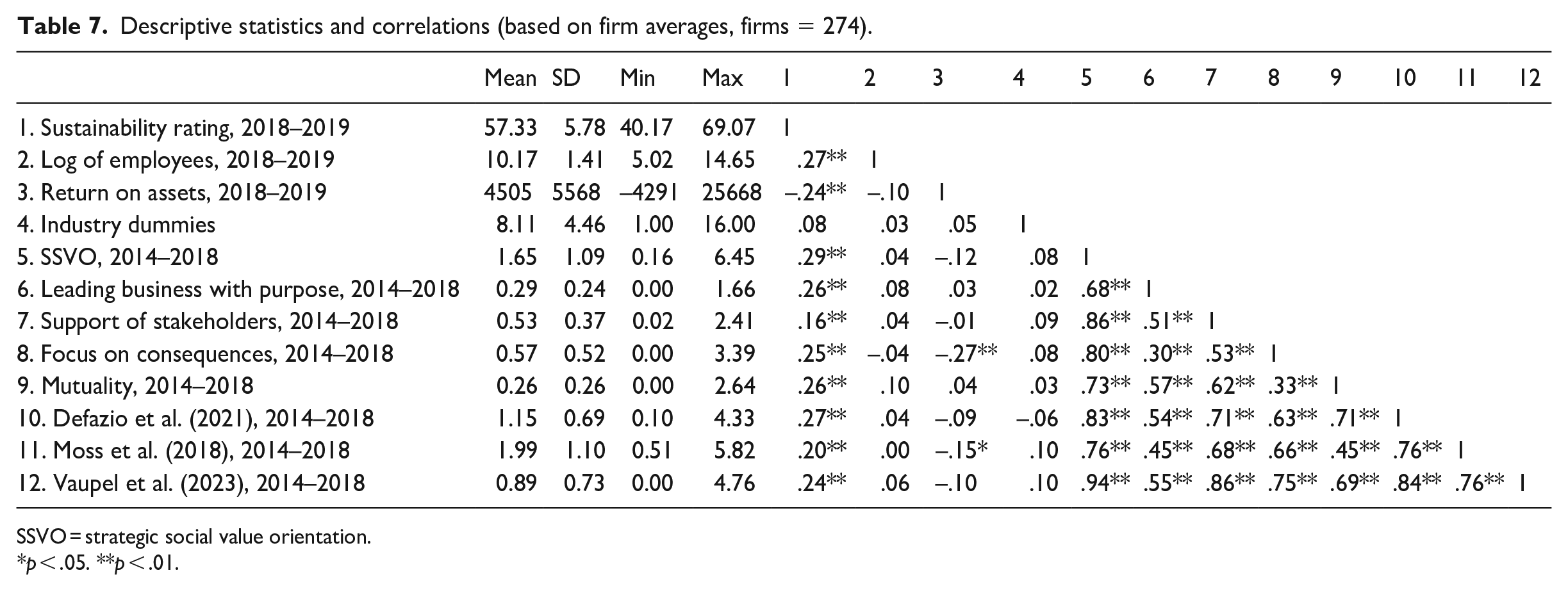
SSVO = strategic social value orientation.
p < .05. **p < .01.
To assess the relationship of a firm’s strategic social value orientation with its sustainability performance, we conducted a hierarchical regression (McKenny et al., 2013; Short et al., 2010). In the first model, we examined the relationship between CSRHub sustainability rating and the control variables. In the following models, we added strategic social value orientation (or its individual dimensions) as predictors. Results provide evidence for the predictive validity of strategic social value orientation (Table 8). Model 2A indicates that strategic social value orientation is a significant predictor of CSRHub sustainability rating (ß = 1.309, p < .01) and explains significantly more variance than model 1 (delta R-squared = 0.052, p < .01). Breaking strategic social value orientation down into its individual dimensions (model 2B) indicates that leading business with purpose (ß = 3.271, p < .05), focus on consequences (ß = 2.116, p < .05) and mutuality (ß = 3.731, p < .05) are significantly and positively associated with CSRHub sustainability rating. Support of stakeholders has no significant relationship with CSRHub sustainability rating. Further predictive validity tests are provided in web appendix E.
Predictive validity: Hierarchical regression results – full sample.
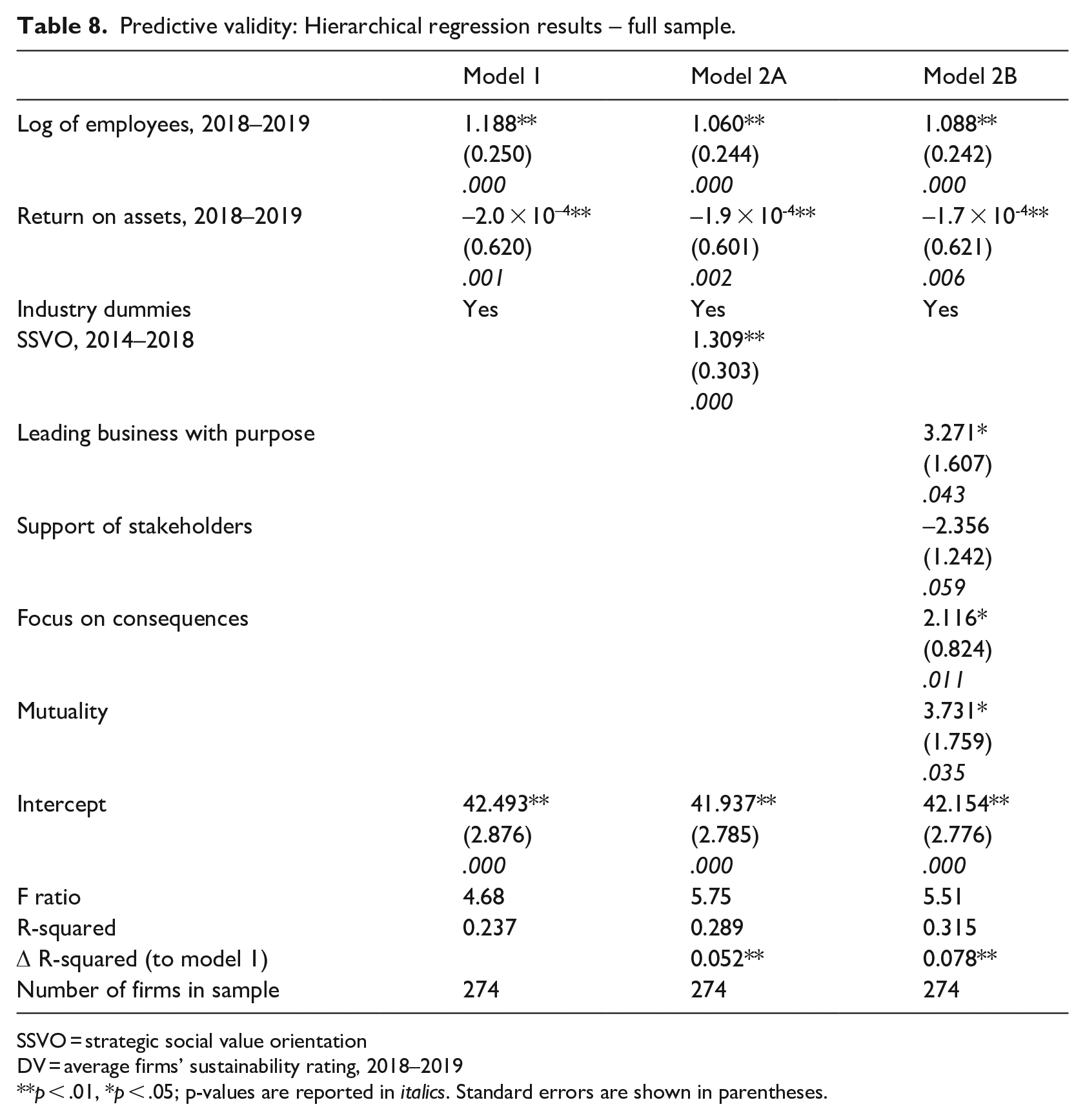
SSVO = strategic social value orientation
DV = average firms’ sustainability rating, 2018–2019
p < .01, *p < .05; p-values are reported in italics. Standard errors are shown in parentheses.
Finally, we compared predictive validity between strategic social value orientation and three related content-analytical measures (Table 9) relative to firm sustainability performance. Across all measures from Defazio et al. (2021), Moss et al. (2018) and Vaupel et al. (2023) there was a positive relationship to CSRHub sustainability rating and a significant increase in R-squared, which indicates an improvement in model fit. Strategic social value orientation provided a relatively and statistically significantly greater explanatory power than the other three related measures.
Predictive validity: Hierarchical regression results of different measures – full sample.
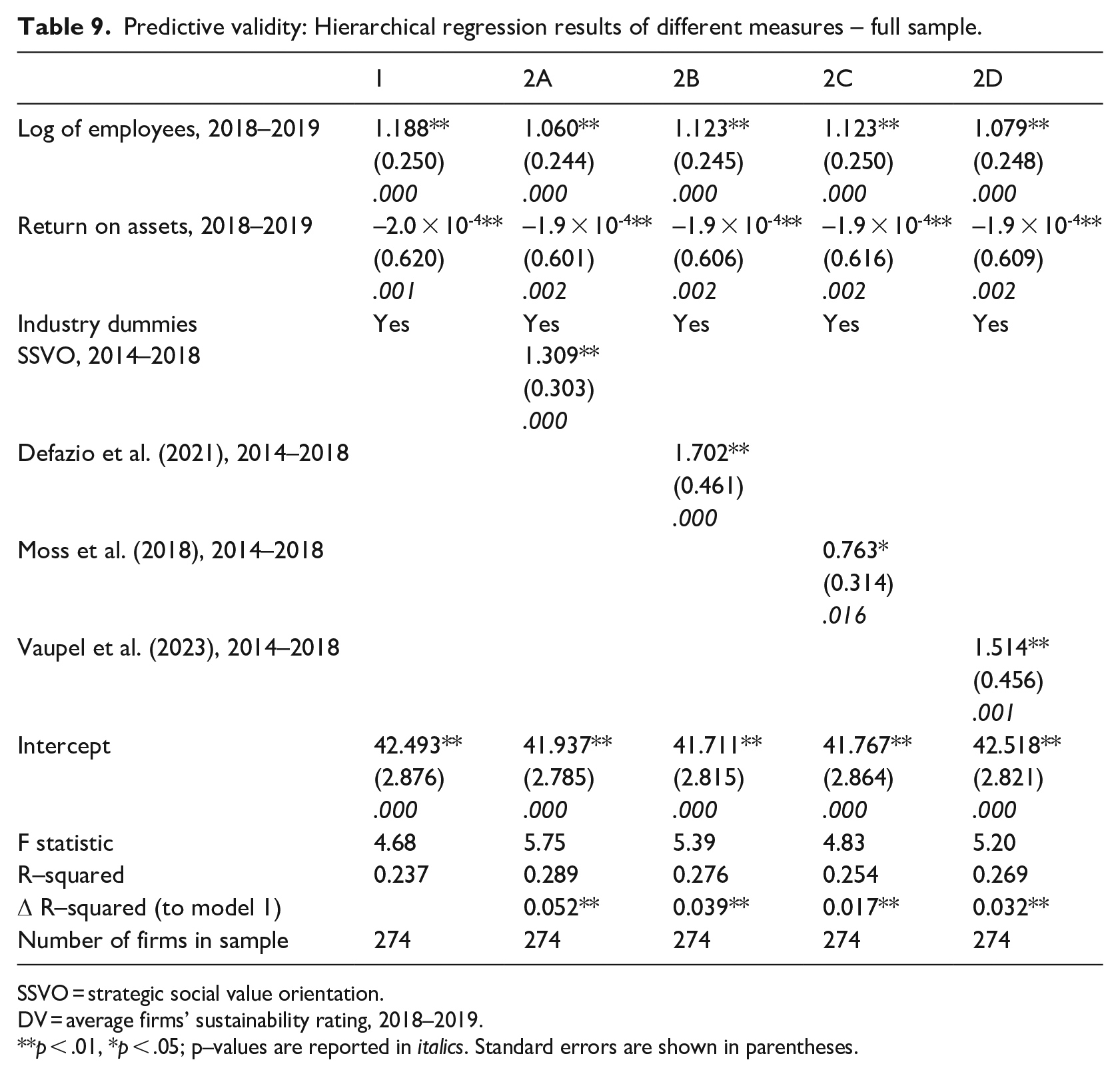
SSVO = strategic social value orientation.
DV = average firms’ sustainability rating, 2018–2019.
p < .01, *p < .05; p–values are reported in italics. Standard errors are shown in parentheses.
Discussion
Strategic social value orientation can be understood as part of a firm’s philosophy that influences mainstream operations and total firm activities going beyond social value creation efforts managed by single organizational units (e.g. corporate social responsibility) or specific sustainability initiatives. Building on a review of the leading business journals, we implemented a systematic development and validation of a linguistic, content-analytic measure of strategic social value orientation at the firm level, providing evidence of content and predictive validity.
From an empirical perspective, the validation procedure suggests that strategic social value orientation is not only a robust measure of firms’ strategic attention paid to non-financial value creation, but also a predictor of future sustainability performance. The empirical analysis thus supports our theoretical argument that the combination and interplay of dimensions, and thus the overall construct, effectively assesses a firm’s strategic social value orientation and predicts its sustainability performance. Moreover, the strategic orientation lenses underlying social value creation in our concept contribute to reduce the relevance of the enacting context of sustainability in a firm (e.g. adopted sustainability standards or practices) and to systematically simplify information into a metric that can be compared (Huault & Rainelli-Weiss, 2011), regardless of industry and geography. In other words, taking a strategic orientation perspective on social value creation in firms reduces the risk of a partial and/or noisy assessment resulting from varying sustainability standards or practices across firms. Hence, strategic social value orientation lays a strong conceptual foundation for the commensuration of sustainability, establishing a new interpretive framework (Espeland & Stevens, 1998) and providing a robust conceptual foundation for future studies.
Interestingly, our analysis also suggests that language accounting for the support of stakeholders dimension is not different between high and low sustainability-oriented firms and also not a significant predictor of sustainability performance. Research has shown that a firm’s managerial attention to stakeholder concerns and systematic stakeholder management are assumed to have a positive effect on the firm’s performance (e.g. Flammer & Kacperczyk, 2016). Hence, it is plausible that for-profit firms have integrated stakeholder management efforts in their business strategies independent of their overall strategic orientation towards social value creation. How effective this stakeholder management effort is, however, remains questionable, as pressure from stakeholders (e.g. customers, investors or industry associations) tends to encourage firms to adopt superficial or misleading sustainability practices that might result in greenwashing (e.g. Testa, Boiral, & Iraldo, 2015). In light of such evidence, it is perhaps not surprising that a significant relationship between this dimension and sustainability performance did not emerge in our data.
Theoretical Contributions and Practical Implications
First, this study advances theory at the intersection of sustainability and strategic orientation literatures by providing a theoretically grounded concept and measure accounting for firms’ strategic attention towards social value creation. Thus, we both extend the growing literature (Khizar et al., 2022) on sustainability-oriented strategic orientations in for-profit firms and conceptually clarify the domain.
Second, we contribute to the ongoing discussion of commensuration of sustainability by advancing the measurement methodology for firms’ strategic orientation towards social value. Specifically, we offer a theoretically grounded concept of strategic attention towards sustainability that helps to overcome obstacles to commensuration as it represents ‘a compromise across multiple logics of action’ (Huault & Rainelli-Weiss, 2011, p. 1400) associated with sustainability. Strategic social value orientation meaningfully quantifies the strategic importance of sustainability in organizations and supports reliability and replicability in research designs at the firm level. Deploying a content-analytic measure of strategic social value orientation provides a more comprehensive view into organizations than an individual survey respondent. This expands learning about organizations, hence enabling future investigations in domains such as organizational behavior (e.g. understanding organizational transformation towards sustainability), strategic management (e.g. understanding the relationship between sustainability and other performance dimensions) or organizational verbal behavior and narrative accounting (e.g. explaining sustainability impression management).
Importantly, our investigation offers reassurance that sustainability-related strategic orientation measures using a dictionary approach (i.e. strategic social value orientation; Defazio et al., 2021; Moss et al., 2018; Vaupel et al., 2023) – despite limited linguistic overlap and different definitions, research aims and contexts – appear to capture a common central strategic consideration of sustainability as they are all able to predict firms’ sustainability performance. Given that vocabularies can reflect institutional logics (Loewenstein, Ocasio, & Jones, 2012; Suddaby & Greenwood, 2005), our analysis suggests that an overarching ‘non-financial’ institutional logic reflects such commonality. In this vein, we argue that strategic social value orientation (as it outperforms existing sustainability orientations) might represent the backbone of assumptions and beliefs of such a ‘non-financial’ institutional logic, providing meaning to sustainability in organizations.
Our research also has several practical implications as it provides actionable insights to managers into how sustainability might be implemented in an organization to enable the creation of social value beyond market and financial value. First, managers might align strategic social value orientation dimensions with innovation portfolio decision-making as innovation portfolios directly reflect how organizations invest in their future markets and stakeholders. Second, incentive structures for senior management across functions might be assessed for alignment with strategic social value orientation dimensions, offering a path for legitimizing decision-making towards sustainability in daily business. Third, managers could use the openly accessible dictionary as a benchmark tool to check internal narratives of their firm as a self-assessment diagnostic. A comparison of this self-assessment with closest competitors as well as a comparison with self-perceptions (i.e. congruence of top management’s beliefs and communications to financial stakeholders via annual letters) might provide an opportunity to strategically align sustainability efforts. Lastly, managers might use the strategic social value orientation concept as a catalyst for organizational transformation towards sustainability. In this regard, our research points to the importance of creating (new) organizational values aligned to or derived from mutuality (e.g. respect or fairness) and the firm’s purpose as well as organizational norms (e.g. be fair to our stakeholders or act today thinking of tomorrow) that support employees in developing behaviors aligned with a strategic social value orientation. Moreover, senior leadership has a critical role in creating artifacts (Schein, 2010) that manifest and endorse the defined values and norms inherent in a strategic social value orientation. Such artifacts (e.g. metaphors referring to the role of purpose or stakeholders to achieve success) could provide employees with essential information about (new) expectations regarding their job-related behaviors.
Limitations and Future Research
As with any other study, findings and contributions of our research should be examined in the light of its limitations. First, although our review procedure aimed to be rigorous and comprehensive to inform our strategic attention concept and dictionary, it was not intended to provide an extensive, interdisciplinary synthesis of social value definitions or to build a universal definition and conceptual framework of social value in business. Hence, a broader literature might need to be examined for a fuller conceptualization of social value (De la Cruz & Spanjol, 2021). Second, the content-analytical development of strategic social value orientation is limited by drawbacks inherent to inductive research, in which the analysis might be influenced by researchers’ experiences and perceptions. Future research can take advantage of the transparency we strove for (e.g. through inclusion of additional materials in the web appendices). Third, the use of letters to shareholders represents a potential limitation as these documents may contain not only managerial cognitions but elements of impression management that represent a potential source of measurement error. We encourage future researchers to apply our construct to other organizational narratives, e.g. mission statements or internal documents. Furthermore, it might be interesting to triangulate the strategic social value orientation measure with sentiment analysis of public discourse of top management (e.g. top executive statements in social media) to explore the role of personal conviction and beliefs in driving strategic social value orientation in organizations. It might also be helpful for future research to develop a multi-item questionnaire based on our strategic social value orientation concept to enable additional insights through (coupled) individual-level surveys. Fourth, given the nature of CSRHub sustainability ratings as a broad measure encompassing many dimensions, future research should look for specific sustainability performance measures (e.g. quality-adjusted life years of employees or specific CO2 emissions).
Finally, future research might build on our approach to explore different implementation stages (Gebhardt, Carpenter, & Sherry, 2006) of strategic social value orientation in organizations in order to provide additional insights into social value creation in for-profit firms and its step-wise implementation. Additionally, it might be interesting to explore how organizations steer the implementation of strategic social value orientation and manage competing behaviors in mainstream operations resulting from other, coexisting dominant strategic orientations. An in-depth qualitative study can provide a more nuanced assessment of these aspects.
Conclusion
For-profit firms are increasingly being called on to effectively create value for society and environment. Thus, the need for strategic orientations accounting for this expanded view on for-profit firms’ value creation is increasing. The purpose of our research was to provide a theoretically grounded conceptualization of a novel strategic orientation directing organizational activities towards sustainability goals: strategic social value orientation. Following a rigorous multi-step approach, we reviewed and integrated 146 social value definitions from leading business journals into three behavioral (leading business with purpose, support of stakeholders, focus on consequences) and one shared belief (mutuality) components characterizing a business philosophy that influences firms’ organizational practices towards the creation of social value in addition to customer and financial value. Additionally, we created and validated a content-analytic measure of strategic social value orientation that can be readily applied by other scholars and practitioners, contributing to the commensuration of sustainability. Strategic social value orientation can facilitate future empirical studies on for-profit firms’ social value creation and represents an instrument for practitioners aiming to integrate social value creation into mainstream business activities. Our work thus contributes to the scholarly dialogue necessary to enable a meaningful engagement with sustainability (Ergene, Banerjee, & Hoffman, 2021) and is an important step in understanding the expanded view on for-profit firms’ value creation and the strategic orientation perspective on sustainability.
Supplemental Material
sj-docx-1-oss-10.1177_01708406241242900 – Supplemental material for Strategic Social Value Orientation and Sustainability Performance: A commensuration perspective
Supplemental material, sj-docx-1-oss-10.1177_01708406241242900 for Strategic Social Value Orientation and Sustainability Performance: A commensuration perspective by Marcelo F. de la Cruz Jara, Jelena Spanjol and Theresa Doppstadt in Organization Studies
Footnotes
Acknowledgements
Earlier versions of this paper were presented at the Annual Meeting of the Academy of Management (AOM), the European Group for Organizational Studies (EGOS) Colloquium, the Innovation and Product Development Management Conference (IPDMC) and the European Marketing Academy Conference (EMAC). We would like to thank the conference participants who provided helpful comments on the ideas expressed in this paper. Furthermore, we are grateful to seminar participants at the University of Sydney and the Free University of Bolzano for helpful feedback on earlier versions of this work. We particularly thank the Editor-in-Chief Renate Meyer and the Special Issue Editors Frank Wijen, Shon Hiatt, Rodolphe Durand, Judith Walls and Juliane Reinecke for the excellent advice and constructive editorial guidance, as well as the anonymous reviewers for their helpful suggestions.
Declaration of conflicting interests
The author(s) declared no potential conflicts of interest with respect to the research, authorship, and/or publication of this article.
Funding
The author(s) disclosed receipt of the following financial support for the research, authorship, and/or publication of this article: Open Access funding enabled and organized by Projekt DEAL.

Supplemental material
Supplemental material for this article is available online.
Notes
Author biographies
References
Supplementary Material
Please find the following supplemental material available below.
For Open Access articles published under a Creative Commons License, all supplemental material carries the same license as the article it is associated with.
For non-Open Access articles published, all supplemental material carries a non-exclusive license, and permission requests for re-use of supplemental material or any part of supplemental material shall be sent directly to the copyright owner as specified in the copyright notice associated with the article.
